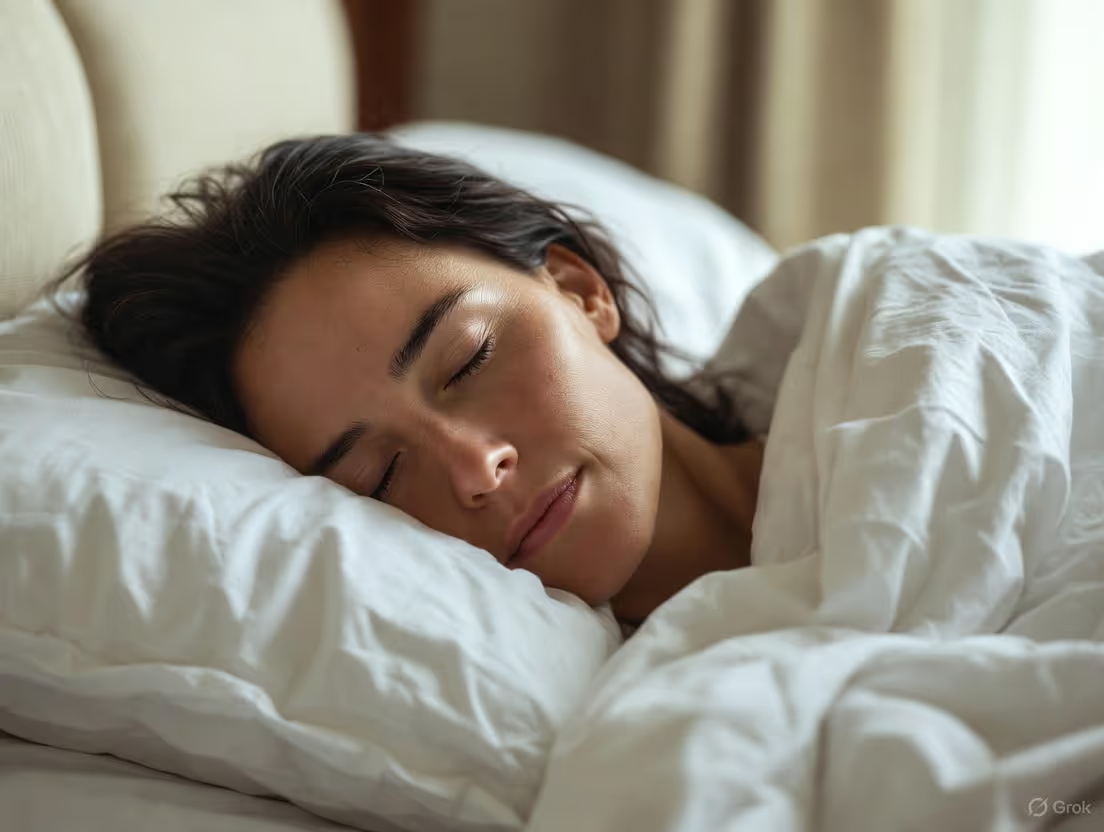
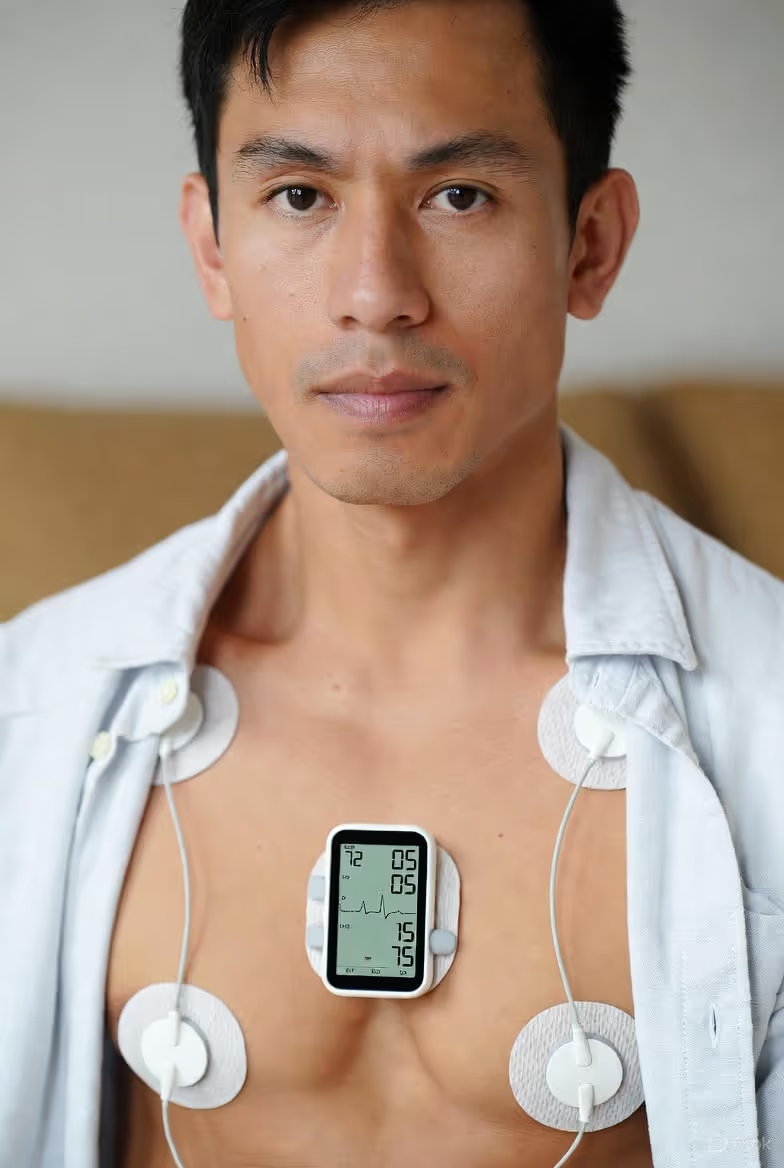
The best sleep tracking features for 2025 include advanced capabilities worth prioritizing. This buying guide highlights essential functions including stage detection, HRV monitoring, respiratory tracking, temperature sensing, smart alarms, and integration capabilities that separate superior devices from basic trackers.
The 2025 Guide to Smart Ring Sleep Tracking: How to Choose What’s Right for You
Sleep. For centuries, we’ve had to rely on the hazy, unreliable memories of our mornings to answer a simple question: “How did I sleep last night?” We’d gauge it by our energy levels, our mood, or the fog in our brain, with little concrete data about what truly happened during those critical hours of restoration. The rise of wearable technology promised to lift this veil, and in 2025, the smart ring has emerged as the definitive tool for unlocking the secrets of our slumber.
Unlike bulky smartwatches that can dig into your wrist or demand attention with screens and notifications, a smart ring is the epitome of passive, intelligent observation. It’s a discreet piece of wearable technology, often mistaken for a simple piece of jewelry, that works tirelessly in the background. While you go about your life and sleep, it gathers a continuous stream of physiological data—your heart’s rhythm, your body’s subtle temperature shifts, the oxygen in your blood. This data is then transformed into a clear, actionable story about your sleep quality, your recovery, and your overall readiness to face the day.
The importance of this insight cannot be overstated. In our modern, high-stress world, sleep is the non-negotiable foundation of health, yet it remains one of the most neglected pillars. Chronic poor sleep is linked to a host of issues, from impaired cognitive function and mood disorders to increased risk for cardiovascular disease and diabetes. A smart ring doesn’t just tell you that you slept poorly; it starts to show you why, empowering you with knowledge to make meaningful changes.
The year 2025 represents a pivotal moment for this technology. What began as a niche product has exploded into a mainstream health tool, worn by everyone from elite athletes and celebrities to busy professionals and health-conscious individuals. The market is more vibrant and competitive than ever, with industry leaders like Oura facing strong challenges from Samsung, Ultrahuman, RingConn, and others. This competition fuels rapid innovation, driving down costs and pushing the boundaries of what these small devices can detect, from circadian rhythm alignment to early signs of illness or breathing disturbances during sleep.
But with great choice comes great complexity. How do you navigate a market filled with rings that look similar but offer vastly different insights, accuracy, and costs? The key is to look beyond the marketing and understand the core features that define a truly valuable sleep-tracking companion. This guide is designed to be your roadmap. Over the following sections, we will dissect the ten most critical sleep-tracking features to look for in a 2025 smart ring. We’ll move from the foundational metrics of sleep stages and heart rate to the advanced frontiers of illness prediction and sleep apnea monitoring. Our goal is to equip you with the knowledge to move from a passive consumer to an informed buyer, capable of selecting the ring that will become your most trusted partner in the lifelong pursuit of better, more restorative sleep.
The Foundation of Rest: Unpacking Sleep Stage and Duration Tracking
Every journey into the architecture of sleep begins with its most fundamental blueprint: the sleep cycle. Understanding how a smart ring identifies and measures your time in light, deep, and REM sleep is the first step in evaluating its core competency. While no consumer device can replicate the precision of a clinical polysomnography (PSG) test that measures brain waves directly, the best smart rings of 2025 have become remarkably sophisticated at making educated, data-driven estimates.
How Your Ring "Sees" Your Sleep Stages
Modern smart rings have moved far beyond the simple motion detection of early trackers. They use a multi-sensor approach to build a picture of your night:
Heart Rate (HR) & Heart Rate Variability (HRV): This is the primary clue. Your heart rate follows a predictable pattern through the night: it gradually decreases as you move from wakefulness into light and then deep sleep, then increases and becomes more variable during REM sleep. HRV, the subtle variation in time between heartbeats, also changes—typically increasing during deep sleep (indicating parasympathetic "rest-and-digest" dominance) and decreasing during REM and wakefulness.
Movement (Accelerometer): While not definitive on its own, movement data helps corroborate the heart rate story. Periods of significant tossing and turning often align with transitions between stages or brief awakenings.
Respiratory Rate: The speed and regularity of your breathing also change with sleep stages, providing another layer of confirming data.
By fusing these data streams with advanced algorithms, the ring constructs a timeline of your night. For example, a period of very low, steady heart rate, high HRV, and minimal movement is strongly indicative of deep sleep. A subsequent period with a faster, more variable heart rate and rapid eye movements (inferred from specific pulse patterns) suggests REM sleep.
The Value of Each Sleep Stage
Why does this breakdown matter? Each stage serves a unique, non-negotiable purpose:
Light Sleep (Stages N1 & N2): This acts as a gateway between wakefulness and deeper sleep, making up about 50-60% of your night. It's crucial for memory consolidation and cognitive processing.
Deep Sleep (Slow-Wave Sleep): This is the most physically restorative phase. It’s when tissue growth and repair occur, the immune system is strengthened, and energy is restored. Disruptions here can leave you feeling physically drained.
REM Sleep: The stage most associated with vivid dreams, REM is essential for emotional regulation, memory integration, and learning. Your brain is almost as active as when you’re awake.
A quality smart ring won’t just show you a pie chart of these stages. It will help you understand what your personal patterns mean. Do you get enough deep sleep for recovery? Is your REM sleep fragmented? The best apps, like Oura’s, translate this data into a simple Sleep Score that factors in your time in each stage, sleep efficiency, and restfulness, giving you an immediate, holistic read on your night.
Accuracy and Limitations: A Realistic Perspective
It's vital to maintain realistic expectations. Studies on leading devices like the Oura Ring show they have high sensitivity (excellent at detecting when you’re asleep, around 96%) but more moderate specificity (can struggle to identify quiet wakefulness as being awake). This means if you lie still in bed awake, the ring might score that as light sleep. This is a known limitation for all consumer wearables.
Furthermore, sleep stage classification is an estimate. A validation study of the Oura Ring found its agreement with PSG was approximately 65% for light sleep, 51% for deep sleep, and 61% for REM sleep. The takeaway? Focus on trends, not absolute numbers. The immense value lies in observing how your sleep architecture changes over weeks and months in response to lifestyle factors like stress, alcohol, exercise timing, or changes in routine. This longitudinal tracking is where a smart ring shines, offering insights no single night in a sleep lab ever could.
When evaluating rings, look for brands that are transparent about their validation research and focus on providing clear, trend-based insights rather than presenting speculative data as clinical fact. This foundational feature sets the stage for all the deeper, more personalized insights a modern smart ring can provide.
The Heart of the Matter: Heart Rate (HR) and Heart Rate Variability (HRV) Monitoring
If sleep stages are the blueprint of your night, then your heart’s activity is the electrical current powering the entire system. Continuous monitoring of Heart Rate (HR) and, more importantly, Heart Rate Variability (HRV) throughout the sleep period provides a direct, real-time window into your autonomic nervous system and overall recovery status. In 2025, this isn’t just a feature of premium smart rings—it’s the absolute cornerstone of meaningful sleep and readiness analysis.
The Nightly Rhythm of Your Heart
Your resting heart rate during sleep is a powerful, basic vital sign. A lower nighttime resting heart rate generally indicates better cardiovascular fitness and efficient recovery. More importantly, its pattern is telling. As discussed, it should dip as you enter deep sleep and show variability during REM. A heart rate that remains elevated or spikes erratically throughout the night is a strong signal of disrupted sleep, potentially caused by stress, illness, alcohol, or an underlying sleep disorder like apnea.
HRV: The Ultimate Biomarker of Recovery and Resilience
While heart rate measures the average beats per minute, HRV measures the variation in time between each beat. Counterintuitively, a higher HRV is better. It indicates a healthy, responsive heart and a balanced autonomic nervous system with strong parasympathetic (“rest-and-digest”) activity.
During sleep, HRV dynamics are crucial:
Deep Sleep Association: HRV typically increases during deep sleep, reflecting the body’s intense state of physical restoration and parasympathetic dominance.
Recovery Metric: Your nightly HRV average, especially when compared to your personal baseline, is one of the most reliable indicators of your physiological recovery. A significantly lower-than-normal nightly HRV suggests your body is under strain—from physical overtraining, mental stress, or the onset of illness—and hasn’t fully recovered.
Readiness Indicator: This is why HRV is a key component of “Readiness” or “Recovery” scores in apps like Oura and Whoop. If your HRV is low, the app might recommend prioritizing rest over an intense workout.
Sensor Technology: The PPG Advantage
Smart rings measure HR and HRV using Photoplethysmography (PPG). Green LED lights shine into the capillaries in your finger, and a sensor measures the amount of light reflected back. With each heartbeat, blood volume in the capillaries pulses, changing the light absorption. This data, sampled hundreds of times per second, allows the ring to calculate both heart rate and the millisecond-level variations between beats (HRV).
There’s a compelling argument that the finger is an ideal location for PPG. The vascular density in the fingertip can provide a stronger, cleaner signal than the wrist, which can be affected by tendon movement and a looser fit. This is a key advantage rings have over many wrist-based wearables for overnight tracking accuracy.
Applying the Data for Better Sleep
A best-in-class smart ring doesn’t just log your HRV number. It contextualizes it. Look for features that:
Establish a Personal Baseline: The ring should learn your typical HRV range over several weeks.
Track Trends: It should show you multi-week or monthly trends, so you can see the impact of lifestyle changes.
Integrate with Holistic Scores: Your HRV data should be a primary input for a daily Readiness or Recovery score, providing actionable guidance.
For example, after a series of late nights and stressful workdays, you might see your nightly HRV trend downward and your readiness score drop. The ring’s app could then explicitly suggest an earlier bedtime or a focus on relaxation that evening. This transforms raw data into a personalized recovery roadmap, helping you align your daily activities with your body’s actual capacity. To explore how different devices integrate this critical data into a full wellness picture, you can compare wellness tracking devices and their approaches.
The Silent Guardian: Body Temperature and Illness Prediction
One of the most revolutionary features to evolve in smart rings is continuous body temperature sensing. Unlike taking a single, static temperature with a thermometer, a smart ring tracks your temperature trend—the subtle, circadian-driven ebbs and flows that occur throughout the day and night. Monitoring this trend, especially the distal temperature from your finger, provides a surprisingly powerful early-warning system for shifts in your health, from menstrual cycle phases to the very onset of illness.
Understanding Your Circadian Temperature Rhythm
A healthy body follows a predictable temperature cycle. It’s typically lowest in the early morning hours (around 4-6 AM) and highest in the late afternoon or early evening. This rhythm is governed by your circadian clock. A smart ring, by taking thousands of measurements overnight, establishes your personal baseline for this nocturnal low point. Significant deviations from this baseline are where the story gets interesting.
The Symptom Radar: Predicting Illness Before You Feel It
This is the flagship application of temperature tracking. By combining elevated temperature trends with other biomarkers like elevated resting heart rate and changes in HRV, advanced algorithms can detect physiological stress associated with infection.
How It Works: The ring isn’t diagnosing a specific disease. Instead, it identifies a “physiological anomaly.” For instance, if your nighttime temperature is 0.5°C higher than your baseline for two consecutive nights, paired with an elevated heart rate, the app might flag an increased likelihood of illness.
Proactive Benefit: This alert can come 1-3 days before you feel noticeable symptoms like a sore throat or fatigue. This “heads-up” is invaluable. It allows you to proactively prioritize rest, hydrate, reduce stress, and potentially mitigate the severity or duration of an oncoming cold, flu, or even COVID-19. It was this very capability that led the NBA to adopt Oura rings as part of its health monitoring protocols.
Insights into Menstrual Cycles and Recovery
For women, temperature tracking is indispensable for reproductive health insights. Basal body temperature (BBT) rises slightly after ovulation due to increased progesterone. Smart rings automate this tracking with incredible ease and accuracy.
Automated Cycle Tracking: The ring detects the sustained post-ovulatory temperature shift, allowing the app to predict menstrual cycles, confirm ovulation, and identify fertility windows without any manual input.
Holistic View: Leading apps don’t just chart the cycle. They integrate it with sleep and readiness data, showing how energy levels, recovery capacity, and sleep quality naturally fluctuate across different cycle phases. This empowers women to tailor their training, nutrition, and schedule to their body’s natural rhythm.
What to Look For in a Temperature-Tracking Ring
Not all temperature sensors are created equal. When evaluating this feature, consider:
Continuous vs. Spot-Checking: The best rings take frequent measurements (especially overnight) to build a precise trend line, not just a few random samples.
Algorithm Sophistication: The real value isn’t the raw data but the app’s ability to interpret it. Look for clear “Symptom Radar” or “Illness Prediction” features that provide straightforward alerts.
Personalization: The ring should take time (at least 2-4 weeks) to learn your unique baseline before providing meaningful trend analysis.
By turning your body’s subtle thermal signals into actionable intelligence, this feature transforms a smart ring from a sleep tracker into a true 24/7 health guardian. It exemplifies the shift from reactive healthcare to proactive, personalized wellness.
Breath of Life: Blood Oxygen (SpO₂) and Respiratory Rate Tracking
While your heart tells one story of the night, your breath tells another. Monitoring blood oxygen saturation (SpO₂) and respiratory rate has moved from a specialized medical metric to a standard feature in top-tier 2025 smart rings. These biomarkers provide critical insight into the quality of your breathing during sleep, acting as sentinels for sleep disruptions and overall respiratory health.
The Significance of Nocturnal SpO₂
Blood oxygen saturation measures the percentage of oxygen-carrying hemoglobin in your blood. For most healthy individuals at sea level, waking SpO₂ is consistently between 95-100%. During sleep, a slight dip is normal, but sustained or significant drops are not.
The Role in Sleep Apnea Detection: This is the most critical application. Obstructive Sleep Apnea (OSA) occurs when the airway collapses, blocking breathing for 10 seconds or more. Each event causes a corresponding drop in blood oxygen. A smart ring that tracks SpO₂ can identify these desaturation events. The Oxygen Desaturation Index (ODI), which counts how many times per hour your SpO₂ drops by 3% or more, is a key metric used alongside others to assess apnea risk.
General Wellness Indicator: Even without sleep apnea, frequent minor dips in SpO₂ can indicate poor sleep quality, potentially related to environmental factors like high-altitude or poor air circulation.
The Rhythm of Breath: Respiratory Rate
Your respiratory rate, or breaths per minute, is a fundamental vital sign that also changes with sleep stages. It typically slows and becomes very regular during deep sleep. Tracking this rate provides another layer of data for sleep staging algorithms. More importantly, a significant, sustained increase in your average nighttime respiratory rate can be an early indicator of physiological stress, such as the onset of a respiratory infection or heightened anxiety.
How Smart Rings Measure These Metrics
The same PPG sensor that measures heart rate pulls double duty for SpO₂. It uses red and infrared LEDs. Oxygenated and deoxygenated hemoglobin absorb these light wavelengths differently. By analyzing the reflected light, the ring can calculate the ratio and determine your SpO₂ percentage.
Respiratory rate is often derived indirectly but cleverly from the PPG signal through a process called modulation. The gentle pressure changes in your blood vessels caused by breathing create a rhythmic pattern in the heart rate data. Advanced algorithms can isolate this “respiratory sinus arrhythmia” to accurately estimate your breathing rate without needing a separate sensor.
From Data to Health Insights
The best implementations of these features go beyond simply displaying a number. Look for rings that:
Track Averages and Lows: Show both your average nightly SpO₂ and your lowest recorded value.
Highlight Trends: Graph your SpO₂ and respiratory rate over time, making it easy to spot deviations.
Integrate with Apnea Risk Assessment: Some rings, like the RingConn Gen 2, offer a dedicated sleep apnea monitoring mode that tracks SpO₂, ODI, and heart rate patterns over multiple nights to generate a detailed risk report. It is crucial to remember that a smart ring is not a medical diagnostic device. However, as one user found, it can reveal startling patterns: “The ring showed patterns I would’ve missed… significant drops in oxygen levels each night and frequent heart rate spikes” that prompted a successful visit to a doctor.
Provide Context: The app should explain what the metrics mean and when you might want to pay closer attention.
By vigilantly monitoring these respiratory biomarkers, a smart ring adds a vital dimension to your sleep profile. It helps answer not just “Did I sleep?” but “Did I breathe well while sleeping?”—a distinction that can have profound implications for daily energy and long-term health. For those looking to understand the full scope of their wellness data, including how respiratory metrics fit into the bigger picture, explore our blog for more wellness tips.
The Gold Standard Feature: Sleep Apnea Monitoring and Risk Assessment
Building directly on the capabilities of SpO₂ and heart rate tracking, dedicated sleep apnea monitoring represents the cutting edge of proactive health features in 2025 smart rings. Once the exclusive domain of expensive and uncomfortable lab tests, screening for this common but serious disorder is now possible from the comfort of your own bed. This feature exemplifies the transformative potential of wearable technology in preventive healthcare.
Understanding the Silent Disruptor: Sleep Apnea
Sleep apnea, particularly Obstructive Sleep Apnea (OSA), is characterized by repeated pauses in breathing during sleep. Each event triggers a micro-arousal—a brief awakening that fragments sleep and prevents the body from reaching and sustaining restorative deep sleep stages. The consequences are far-reaching: chronic daytime fatigue, morning headaches, cognitive fog, and an increased long-term risk for hypertension, heart disease, stroke, and type 2 diabetes. Millions of people have it and are completely unaware, as the symptoms occur silently at night.
How a Smart Ring Performs Apnea Risk Assessment
It’s essential to frame this correctly: A consumer smart ring cannot diagnose sleep apnea. That requires a formal medical evaluation. What it can do is monitor for signs and assess risk with impressive accuracy by tracking specific metrics over consecutive nights.
A specialized apnea monitoring mode, like the one on the RingConn Gen 2, typically works by manually initiating a 3-night monitoring cycle. During this period, it focuses on key indicators:
Apnea-Hypopnea Index (AHI): This is the primary metric. It calculates the average number of apnea (complete breathing stoppage) and hypopnea (shallow breathing) events per hour of sleep. The results are categorized:
Normal: AHI < 5
Mild Sleep Apnea: AHI 5–15
Moderate Sleep Apnea: AHI 15–30
Severe Sleep Apnea: AHI ≥ 30
Oxygen Desaturation Index (ODI): As mentioned, this counts how many times per hour blood oxygen drops by 3% or more, directly correlating with breathing disturbances.
Heart Rate Patterns: The ring looks for the classic "surge" pattern where heart rate spikes following a breathing event, as the brain triggers an arousal to restart breathing.
After the monitoring cycle, the app compiles these metrics into a clear report, giving you a data-backed understanding of your potential risk level.
The Game-Changing Value of At-Home Screening
This feature addresses a major healthcare gap. Traditional in-lab sleep studies (polysomnography) are expensive (often over $1,000), inconvenient, and can be unrepresentative because you’re sleeping in an unfamiliar environment. Many people with symptoms avoid getting tested because of these barriers.
A smart ring offers a low-friction, accessible first step. It allows for multi-night assessment in your natural sleep setting, capturing a more accurate picture of your habitual sleep breathing. As one reviewer noted, the data it provides can be the crucial evidence that motivates someone to seek professional help: “Armed with this detailed data, Ryan visited his doctor…”
What to Look For and Important Caveats
If this feature is important to you, verify the following:
Dedicated Mode: Ensure the ring has a specific, validated apnea monitoring function, not just general SpO₂ tracking.
Multi-Night Analysis: Screening should occur over several nights (e.g., 3+ nights) for a reliable assessment.
Comprehensive Reporting: The app should provide a clear report summarizing AHI/ODI and risk categorization.
Medical Disclaimer: Reputable brands will explicitly state the ring is not a diagnostic device and that findings should be discussed with a healthcare provider.
The inclusion of legitimate apnea risk assessment in a smart ring is a monumental leap. It democratizes access to a crucial health screening, empowering individuals to take charge of a hidden aspect of their health that directly impacts nearly every facet of their waking life.
The Intelligence Layer: AI-Driven Scores, Insights, and Personalized Guidance
Raw data—sleep stages, heart rate numbers, temperature graphs—can be overwhelming and, frankly, meaningless without interpretation. This is where the software intelligence of a smart ring separates the truly useful tools from simple data loggers. In 2025, the most advanced rings employ sophisticated algorithms and artificial intelligence to synthesize dozens of metrics into simple, actionable scores and personalized guidance. This layer of intelligence is what transforms a tracking device into a health coach.
The Core Triad: Sleep, Readiness, and Activity Scores
Most premium platforms center around three daily scores that provide an instant snapshot of your holistic status:
Sleep Score: A composite score (typically out of 100) that evaluates the quality of your night. It doesn’t just look at duration. It weighs factors like sleep efficiency (time asleep vs. time in bed), the balance of sleep stages, restfulness (how much you moved), and sleep latency (how long it took to fall asleep). A high score confirms good recovery; a low score prompts you to investigate the contributing factors in the detailed breakdown.
Readiness/Recovery Score: Arguably the most valuable score, it answers “Is my body ready to perform today?” It synthesizes your sleep data with other recovery markers like HRV, resting heart rate, and body temperature trend to assess your physiological stress and resilience. A low readiness score, often driven by low HRV or poor sleep, is a clear signal from your body to prioritize rest over intense strain.
Activity Score: This tracks your daily movement and exercise, ensuring the holistic view includes both strain and recovery. It often considers active calorie burn, workout intensity, and meeting personalized movement goals.
Beyond Scores: Personalized Behavioral Insights
The next evolution is AI-driven insights that connect your biometric data to your lifestyle. These aren’t generic tips; they are specific observations based on your unique patterns:
Circadian and Habit Insights: Rings like the Ultrahuman Ring Air specialize in analyzing your circadian rhythm. They might identify your ideal “caffeine window” based on when your body naturally clears adenosine or advise on the best times for light exposure and winding down.
Trend Analysis and “What If” Guidance: The app might detect that on nights you finish eating within 3 hours of bedtime, your deep sleep percentage drops. Or that your resting heart rate is consistently lower on days after you meditate. Oura’s platform, for example, has shifted focus to tracking health over time, offering insights into stress resilience and cardio fitness “age”.
Proactive Recommendations: Some apps include an AI coach (like Whoop’s) that provides direct, conversational recommendations: “Your recovery is low today. Consider a lower-intensity workout and aim for a 30-minute earlier bedtime tonight”.
The Human-Centric Design of Data
The best apps master the art of data presentation. They prioritize clarity, using clean graphs, color-coding, and intuitive navigation. They offer both a “Today” view for your quick check-in and deep “Trends” sections where you can observe monthly patterns. Crucially, they explain the “so what?” Every metric is accompanied by brief, educational context so you understand its significance.
When choosing a ring, spend time reviewing screenshots or videos of the companion app. The hardware collects the data, but the software delivers the value. A powerful, intuitive, and insightful app is what will keep you engaged and turning data into lasting behavioral change. This commitment to user-centered design and clear insight is often rooted in a company's core philosophy; you can read about Oxyzen's vision & values to see how this principle guides product development.
The Seamless Experience: Battery Life, Comfort, and Daily Usability
The most accurate sensors and brilliant algorithms are worthless if you don’t wear the ring. The ultimate test of a smart ring’s design isn’t conducted in a lab, but in the frictionless flow of your daily—and nightly—life. In 2025, leading smart rings have made tremendous strides in achieving a delicate balance: packing powerful technology into a form factor that is comfortable enough to forget you’re wearing it and reliable enough that you never have to think about it.
Battery Life: The Freedom from the Charger
For a device meant to be worn 24/7, frequent charging is a deal-breaker. It disrupts continuous data collection (especially for sleep) and adds daily hassle. The good news is that battery life has become a major competitive battleground with impressive results:
The Standard: Most premium rings now offer 5-8 days of battery life on a single charge. The Oura Ring 4, for example, lasts up to eight days, a noticeable improvement from earlier generations.
The Standouts: Some devices push this further. The RingConn Gen 2 Air boasts an exceptional 10.5-day battery life in testing, while the Samsung Galaxy Ring also lasts about a week.
The Impact: This longevity means you can charge at a convenient, predictable time (e.g., during a weekly shower or while at your desk on a Monday morning) without missing sleep data. It enables true continuous monitoring.
The Imperative of Comfort and Design
You must be able to sleep with it. This is the primary advantage over smartwatches for many people.
Weight and Profile: The best rings are incredibly lightweight (2.5g to 4g) and have slim, tapered profiles. The Ultrahuman Ring Air, at just 2.4g, and the slim Samsung Galaxy Ring are often praised for their barely-there feel. A bulky or heavy ring can press against adjacent fingers during sleep, causing discomfort.
Fit and Sizing: An accurate fit is non-negotiable for sensor accuracy. The ring must be snug enough not to spin freely (which can block sensors), but not so tight as to restrict circulation. Always use the brand’s sizing kit, which provides plastic replicas to wear for 24-48 hours before ordering. A proper fit ensures optimal PPG signal quality and prevents the ring from falling off.
Durability and Materials: Titanium is the material of choice for its strength, light weight, and scratch resistance. Most quality rings have a water resistance rating of at least 5ATM, meaning they can withstand swimming and showering. However, many users still prefer to remove them during heavy lifting or activities that could scratch or impact the ring against hard surfaces.
The Intangibles of Daily Usability
Small design choices have a big impact on long-term satisfaction:
Charging Ease: A simple, magnetic dock that the ring snaps onto effortlessly is ideal. Samsung’s charging case, which also holds extra charges, is a clever innovation.
Aesthetic Versatility: The ring should look like jewelry. Finishes like brushed titanium, matte black, gold, and ceramic options allow it to blend with personal style, from the gym to a formal event.
Sensor Placement: Some rings have an internal bump or dimple to orient them correctly. Testers have noted that this can sometimes be felt during certain grips, so a perfectly smooth interior may be preferable for some.
In essence, the hardware must disappear. When you stop noticing the ring on your finger—when it doesn’t interrupt your sleep, your workout, or your style—that’s when it seamlessly integrates into your life as a true health partner. This allows its most important job, gathering data and providing insights, to happen completely in the background. For any questions about device care, sizing, or daily use, our comprehensive FAQ section provides detailed support.
The Ecosystem and Integration: App Quality, Subscriptions, and Data Portability
The smart ring on your finger is only half of the product. The other half—arguably the more important half—lives on your smartphone. The companion app is the lens through which you view all your biometric data, the brain that generates your insights, and the bridge that connects your ring to the broader digital health world. In 2025, the quality of this ecosystem and its business model are critical factors in choosing a device.
The Hallmarks of a Best-in-Class App
A superior app transforms complex biometrics into understandable, actionable knowledge. Based on extensive testing, the apps from leaders like Oura and Ultrahuman are consistently praised for their polish and clarity.
Intuitive Navigation: Data should be organized logically. Oura’s app, for example, uses a clean three-tab structure: “Today” for your scores, “Vitals” for metric details, and “My Health” for long-term trends. You shouldn’t need a manual to find your sleep stages or HRV history.
Beautiful Data Visualization: Clean graphs, thoughtful color-coding, and at-a-glance summaries make data digestible. The difference between a confusing spreadsheet of numbers and an elegant, informative chart is the difference between frustration and engagement.
Educational Context: Every metric and score should include a brief, clear explanation of what it means and why it matters. This turns the app into a learning tool, helping you become more literate about your own body.
The Subscription Model Dilemma
This is one of the most significant decision points for consumers in 2025.
The Premium Model (e.g., Oura): To access the full insights, historical data, and advanced features (like the Symptom Radar or detailed trend analysis), you must pay a monthly or annual subscription fee (Oura charges $5.99/month). This funds continuous software development, new features, and clinical research. The argument for it is a premium, evolving experience.
The Subscription-Free Model (e.g., Samsung, RingConn, Ultrahuman): Many compelling competitors offer all their core tracking features and insights with a one-time hardware purchase and no ongoing fee. This is a major selling point for users frustrated by the “pay-to-access-your-own-data” model.
Hybrid & Tiered Models: Some brands use tiered subscriptions (like Whoop’s One, Peak, and Life plans) or offer a basic app for free while charging for advanced “Power Plug” insights (as Ultrahuman does for some features).
Your Takeaway: Decide what you value. If you want the most polished, research-backed, and continuously updated platform and are willing to pay for it, a subscription model may be justified. If you prioritize ownership of your data and predictable cost, a subscription-free alternative is an excellent choice. Always check the fine print to understand what, if anything, is locked behind a paywall.
Data Portability and Third-Party Integration
Your health data should not be trapped in a silo. The ability to share data with other apps creates a more complete health picture.
Health Platforms: Look for seamless integration with Apple Health (iOS) and Google Fit (Android). This allows your ring’s sleep, HRV, and activity data to populate your phone’s central health repository.
Fitness Apps: Integration with Strava, TrainingPeaks, or other workout apps can merge your daily readiness with your exercise log.
Openness: Consider the brand’s philosophy on data ownership and export options. Can you easily download your raw data?
The ecosystem is where the promise of the hardware is fulfilled. A beautiful, insightful app with a fair pricing model and open integrations ensures your smart ring investment pays dividends in knowledge and improved habits for years to come.
Accuracy and Validation: Trusting the Data on Your Finger
In a category filled with impressive claims, a critical question remains: Can you trust the numbers? When your ring tells you your deep sleep was low or your HRV is declining, how do you know it’s not just a sophisticated guess? For the 2025 consumer, understanding the concepts of accuracy, validation, and the inherent limitations of consumer wearables is essential for setting realistic expectations and making an informed purchase.
The Gold Standard and the "Good Enough" Standard
The clinical gold standard for sleep measurement is polysomnography (PSG), conducted in a sleep lab. It uses electroencephalography (EEG) to measure brain waves, directly defining sleep stages. No consumer ring has EEG sensors; therefore, no ring can match this accuracy for stage classification.
Instead, reputable brands validate their devices through peer-reviewed studies that compare their ring’s data against PSG or other accepted medical devices. These studies quantify performance using key metrics:
Sensitivity: The ability to correctly identify sleep. Top rings score very high here (~96%), meaning they rarely miss when you’re actually asleep.
Specificity: The ability to correctly identify wakefulness. This is the major challenge. Rings often score lower here (~48-61%), meaning they can mistake quiet wakefulness (lying still in bed) for light sleep. This is why they can overestimate total sleep time, especially for individuals with insomnia.
Real-World Performance of Leading Rings
Independent research provides a grounded perspective:
Oura Ring: A validation study found 96% sensitivity and 48% specificity compared to PSG. Its agreement on sleep stages was approximately 65% for light, 51% for deep, and 61% for REM sleep.
Wrist-Based PPG Devices (for comparison): Studies on devices like the Fitbit Charge 2 and Apple Watch show similar patterns—high sensitivity, moderate specificity, and varying accuracy for sleep stages.
The consensus from experts like Dr. Seema Khosla, medical director at a sleep center, is that these devices are powerful tools for tracking trends and relative changes, even if absolute precision on a single night has limitations.
Factors That Influence Accuracy
Several variables can affect the reliability of your ring’s data:
Fit: A loose ring that spins or slips will cause gaps or noise in the PPG signal.
Individual Physiology: Skin tone, tattoo presence on the finger, and vascular anatomy can influence PPG signal quality.
Motion Artifact: While less than on the wrist, excessive hand movement during
Factors That Influence Accuracy
Several variables can affect the reliability of your ring’s data:
Fit: A loose ring that spins or slips will cause gaps or noise in the PPG signal. A proper fit is non-negotiable for consistent data collection.
Individual Physiology: Skin tone, tattoo presence on the finger, and individual vascular anatomy can influence PPG signal quality. While modern sensors have improved across skin tones, performance may still vary.
Motion Artifact: While less than on the wrist, excessive hand movement during sleep can still create signal noise.
Environmental Factors: Extreme cold can reduce blood flow to the fingers, potentially weakening the PPG signal.
Algorithm Version: The software interpreting the raw sensor data is constantly being refined. Updates can improve (or occasionally slightly change) how your data is presented.
The Pragmatic Approach: Trust the Trends
This brings us to the most important principle for using any smart ring: Focus on long-term trends, not on single-night data points.
The immense value of these devices isn't in telling you with 100% certainty that you got 1 hour and 23 minutes of REM sleep last Tuesday. Instead, it’s in revealing patterns over weeks and months. For example:
Trend: “My average resting heart rate has decreased by 3 BPM over the last 8 weeks since I started regular cardio.”
Correlation: “On nights when I have alcohol within 3 hours of bedtime, my deep sleep percentage drops by an average of 40%.”
Change Detection: “My nighttime HRV has been trending downward and my temperature upward for two days before I felt the first symptoms of a cold.”
This trend-based insight is clinically valuable and actionable. It allows you to run personal experiments and see the direct biometric impact of lifestyle changes, which is far more powerful than any single night’s score.
When evaluating a ring, look for brands that are transparent about their validation research. Do they publish peer-reviewed studies? Do they clearly communicate the capabilities and limitations of their device? This transparency builds trust and helps you use the tool as it was intended—not as a medical diagnostic, but as a powerful guide to your personal wellness journey. For a deeper look at how one company approaches this commitment to science-backed design, you can learn more about smart ring technology and its development.
Section 9: Making It Personal: Lifestyle Integration and Behavioral Change
A smart ring can deliver the world's most accurate data, but if it doesn't inspire you to make positive changes, it becomes merely an expensive diary. The ultimate measure of a wearable's success is its ability to seamlessly integrate into your life and motivate sustainable behavioral change. In 2025, the leading platforms have evolved from passive trackers into interactive coaching systems designed to build better habits.
The Journey from Awareness to Action
The process of change facilitated by a smart ring typically follows a clear path:
Awareness: The ring makes the invisible visible. You become aware of your actual sleep duration, your body’s stress response (via HRV), and how behaviors directly impact your physiology. This is the foundational "aha" moment.
Insight: Algorithms help you understand the "why." The app might highlight that late caffeine consumption correlates with restless sleep or that high-stress days predict a low readiness score the next morning.
Personalized Recommendation: Based on your unique patterns, the system suggests a small, actionable step. This could be a gentle nudge like "Try finishing your last coffee 2 hours earlier today" or "Your recovery is high—it's a great day for a challenging workout."
Feedback Loop: You take the action, and the ring measures the outcome. Did an earlier bedtime improve your deep sleep? Did a rest day boost your HRV? This closed-loop system provides immediate, personal feedback, reinforcing positive behaviors.
Features That Drive Real Change
Look for these specific app features that enhance lifestyle integration:
Tagging or Journaling: The ability to log daily behaviors (e.g., "drank alcohol," "meditated," "late work stress," "took melatonin") is invaluable. Over time, the app can analyze these tags against your biometrics to show you personalized cause-and-effect relationships. Oura’s "Moment" feature is a prime example of this.
Circadian Rhythm Coaching: Rings like the Ultrahuman Ring Air provide explicit guidance on timing—the best windows for morning light, caffeine cutoff, evening wind-down, and meal times—tailored to stabilize your natural body clock.
Integrative Health Scores: A single, simple score like Oura’s "Readiness" or Whoop’s "Recovery" synthesizes complexity into one clear directive: Go hard, take it easy, or focus on rest. This reduces decision fatigue.
Goal Setting and Gentle Reminders: The ability to set personalized sleep or activity goals, paired with gentle, non-disruptive reminders (e.g., a bedtime notification on your phone), helps turn intention into routine.
The Psychological Factor: Avoiding Obsession and Anxiety
A critical caveat in the world of biometric tracking is the risk of "orthosomnia"—an unhealthy preoccupation with achieving perfect sleep data. This can ironically increase anxiety and worsen sleep.
The best platforms are designed to combat this:
They emphasize trends over perfection.
They sometimes include mindfulness or breathing exercises within the app to help users detach and relax.
They use encouraging, non-judgmental language. The tone should be that of a supportive coach, not a grading teacher.
Your relationship with the data should be curious and collaborative, not anxious and compulsive. The goal is to use the ring as a tool to develop intrinsic body awareness, so that eventually, you might not need to check the app to know if you're well-recovered—you'll feel it. This balanced, human-centric approach to wellness technology is often born from a company's core mission; to understand this philosophy better, you can discover how Oxyzen works to support holistic health.
Section 10: The Competitive Landscape: Top Smart Rings of 2025 Compared
The smart ring market in 2025 is no longer a one-horse race. While Oura pioneered the category and remains a leader, fierce competition has driven rapid innovation, giving consumers an array of excellent choices. Each major player has carved out a distinct position based on its strengths in design, algorithm focus, business model, or ecosystem integration. Here’s a detailed look at the top contenders and what they offer the sleep-focused user.
1. Oura Ring (Generation 4)
Positioning: The established, research-backed leader. Known for its polished user experience, strong clinical partnerships, and comprehensive health insights.
Key Sleep & Wellness Features:
Excellent Sleep Staging: Highly accurate sleep/wake detection and detailed stage breakdown.
Symptom Radar: Flags potential illness through body temperature and biometric trends.
Women's Health: Detailed menstrual cycle prediction and phase-based insights.
Oura Scores: Simple, intuitive Sleep, Readiness, and Activity scores.
Considerations:
Subscription Required: Full access to all historical data and advanced insights requires a $5.99/month membership.
Battery Life: Very good, up to 8 days.
Ecosystem: Strong Apple Health/Google Fit integration.
Best For: Users who want the most validated, full-featured platform and are willing to pay a subscription for a premium, continually updated experience.
2. Samsung Galaxy Ring
Positioning: The ecosystem power play. Designed to be the central hub for Samsung Galaxy users, deeply integrated into the Samsung Health platform and device universe.
Seamless Charging: Can be charged via compatible Samsung Galaxy phones or a compact charging case.
Considerations:
Ecosystem Lock-In: Features are richest when paired with a Samsung phone and other Galaxy devices.
Subscription: Advanced insights may move to a paid Samsung Health tier in the future.
Design: Exceptionally lightweight and comfortable with a smooth, minimalist aesthetic.
Best For: Dedicated Samsung Galaxy smartphone users who want deeply integrated, convenient health tracking within their existing device family.
3. Ultrahuman Ring Air
Positioning: The metabolic health and circadian rhythm specialist. Focuses on optimizing energy through the lens of glucose stability, sleep, and light exposure.
Key Sleep & Wellness Features:
Circadian Rhythm Analysis: Provides a "Circadian Rhythm Score" and explicit guidance on light, food, and caffeine timing.
Metabolic Insights: Can integrate with the Ultrahuman M1 continuous glucose monitor (CGM) for powerful nutrition feedback.
"PowerPlugs": AI-generated insights that connect lifestyle behaviors to biometric outcomes.
No Mandatory Subscription: All core tracking and insights are included; some advanced analytics are a paid add-on.
Considerations:
Niche Focus: The app's language is highly focused on metabolism and circadian science, which may appeal more to biohackers.
Lightweight Design: At ~2.4 grams, it’s one of the lightest rings available.
Best For: Data-savvy users, biohackers, and anyone specifically interested in metabolic health and fixing their circadian rhythm.
4. RingConn Gen 2 Air
Positioning: The value and battery life champion. Offers a robust feature set with exceptional hardware specs and no subscription.
Key Sleep & Wellness Features:
Sleep Apnea Monitoring: A dedicated, multi-night mode that provides an Apnea-Hypopnea Index (AHI) and detailed risk report.
Unmatched Battery Life: Consistently lasts 10+ days on a single charge.
Comprehensive Metrics: Tracks all standard metrics (sleep stages, HRV, SpO₂, temperature) with great depth in the app.
One-Time Purchase: No monthly fees to access your data.
Considerations:
Brand Recognition: A smaller brand compared to Oura or Samsung.
App Polish: The app is functional and detailed but may lack some of the ultra-refined UX of Oura.
Best For: Budget-conscious buyers who want maximum features (especially apnea screening) and battery life without an ongoing subscription.
5. Other Notable Contenders
Whoop: A bracelet, not a ring, but a major competitor in the recovery-focused wearable space. Its strength is its strain/recovery coaching and dedicated athletic community. Its upcoming Whoop 4.0 ring aims to bring this philosophy to the finger.
Circular Ring Slim: Focuses on providing actionable "Kines" (insights) and smart notifications on its tiny ring display. Strong on guiding daily habits.
How to Choose: A Decision Framework
With these options, use this framework to guide your choice:
Budget Model: Are you opposed to a monthly fee? If yes, immediately narrow your search to RingConn, Ultrahuman (core features), or Samsung.
Primary Goal: What's your #1 reason for buying?
General Wellness & Illness Prediction: Oura.
Sleep Apnea Risk Screening: RingConn.
Fixing Schedule & Metabolic Health: Ultrahuman.
Seamless Galaxy Ecosystem Use: Samsung.
Design Preference: Order sizing kits! Comfort is paramount. The Ultrahuman Ring Air and Samsung Galaxy Ring are often noted for their exceptional comfort.
The competition is a win for consumers, ensuring that no matter your priority—be it apnea screening, circadian coaching, or ecosystem synergy—there is a sophisticated ring designed for you. Reading real customer reviews and experiences can provide invaluable firsthand insights to complement these technical comparisons.
Conclusion of Part 1: Equipped for the Journey Ahead
We have now journeyed through the ten essential features that define a top-tier sleep-tracking smart ring in 2025. From the foundational analysis of sleep stages and the critical insights from heart rate variability, to the predictive power of body temperature and the vital screening capability of SpO₂ monitoring, we've seen how these devices synthesize complex physiology into understandable data.
We've explored how advanced features like dedicated sleep apnea risk assessment can have profound implications for long-term health, and how AI-driven scores transform that data into a daily guide for living. We've considered the practical realities of battery life, comfort, and app design that determine whether a ring becomes a cherished tool or a forgotten gadget. Finally, we've navigated the vibrant competitive landscape to help you match your personal needs and preferences with the right device.
The overarching theme is one of empowerment through awareness. A smart ring is not a magic solution for perfect sleep, but it is perhaps the most powerful tool ever created for personalized sleep education. It returns agency to you, providing the evidence you need to advocate for your own rest and recovery in a world that often prioritizes constant activity.
In the next portion of this comprehensive guide, we will build upon this foundation to explore even more advanced topics. We will delve into:
The future of smart ring technology: What sensors and capabilities are on the horizon?
Combining ring data with other health metrics (like glucose monitoring) for a 360-degree health view.
Detailed case studies: How real people have used smart ring data to diagnose issues, improve performance, and transform their health.
Advanced troubleshooting: How to interpret conflicting data and when to consult a healthcare professional.
A deep dive into the science of sleep itself, explaining why the metrics your ring tracks are so vitally important to your brain and body.
The journey to better sleep is a marathon, not a sprint. With the knowledge you now possess about what to look for in a 2025 smart ring, you are perfectly equipped to choose a companion that will illuminate your path forward, one night of restorative sleep at a time.
The Future of Sleep Technology: Advanced Integration, Personalized Science, and What Comes Next
In the first part of our comprehensive guide, we equipped you with the knowledge to evaluate the current landscape of smart ring sleep tracking. We dissected the ten core features—from sleep stage algorithms and HRV to apnea monitoring and ecosystem design—that separate leading devices from the rest. You now understand the metrics, the trade-offs, and the key players in a vibrant 2025 market.
But the story doesn't end with choosing and wearing a ring. The true frontier of personalized health lies in what you do with this continuous stream of data. How do you move beyond nightly scores to achieve lasting behavioral change? How can you integrate ring data with other biomarkers for a truly holistic view? And what groundbreaking technologies are set to redefine what's possible in the years to come?
This second part of our guide is dedicated to these advanced questions. We will explore the practical science of habit formation driven by biometric feedback, examine the powerful synergy of combining data streams like glucose and sleep, and peer into the near future to see the sensors and algorithms that will make today's technology look primitive. We'll also tackle the real-world challenges of data interpretation and provide a clear-eyed view of the limitations and ethics of this deeply personal technology.
Our goal is to transform you from an informed user into a master of your own data, capable of leveraging a smart ring not just as a tracker, but as a central component of a proactive, evidence-based health philosophy.
The Synergy Effect: Integrating Smart Ring Data with Other Health Metrics
A smart ring provides a magnificent, continuous readout of your body’s outputs—how your heart, nervous system, and breathing respond to the totality of your life. But to fully understand the inputs that drive those outputs, integration with other health and lifestyle data is key. In 2025, the most sophisticated wellness approaches don’t rely on a single device but create a symphony of data for a complete picture.
The Powerful Pairing: Sleep Data and Continuous Glucose Monitoring (CGM)
This is arguably the most transformative integration available to consumers today. Continuous Glucose Monitors (CGMs), like those from Dexcom, Abbott (FreeStyle Libre), or platforms like Nutrisense and Signos, provide a real-time view of your blood glucose levels.
When combined with smart ring sleep data, the insights are profound:
The Sleep-Glucose Connection: Poor sleep (especially short or fragmented sleep) is a well-established driver of insulin resistance and next-day glucose spikes. Your ring can show you a night of low deep sleep, and your CGM can reveal the direct metabolic consequence: a tumultuous, high-variability glucose day where your body struggles to manage energy.
Evening Meal Impact: By tagging a late or high-carb meal in your ring’s journal, you can see a two-fold effect: the ring shows reduced sleep quality and elevated nighttime heart rate, while the CGM shows elevated glucose throughout the night, preventing the metabolic "cleanup" that should occur during deep sleep.
Personalized Nutrition Timing: This combo allows for powerful personal experimentation. You might discover that your body tolerates carbohydrates better earlier in the day when your metabolic flexibility is higher (as suggested by a high readiness score), and that eating them close to bedtime reliably harms your sleep and next-morning glucose.
Devices like the Ultrahuman Ring Air are built for this synergy, allowing its app to directly display and correlate CGM data with sleep and readiness scores, creating a unified dashboard for metabolic health.
Combining with Fitness Trackers and Strength Training
While a ring excels at measuring recovery and sleep, wrist-based devices from Garmin, Apple, or Fitbit often have advantages in specific exercise tracking (GPS for runs, rep counting for strength, etc.).
The Strain-Recovery Feedback Loop: This is the classic "Whoop model," but you can create it yourself. Use your Garmin to measure detailed workout strain (intensity, load, heart rate zones). Then, let your ring measure the resulting recovery (nocturnal HRV, resting heart rate, sleep depth). The ring’s readiness score the next morning tells you if your body has adequately absorbed the training stress or needs a rest day.
Objective Strength & Recovery Mapping: By logging strength training sessions, you can observe how heavy leg days impact your deep sleep demand or how upper body sessions affect your nighttime heart rate. This data helps you periodize your training for optimal progress and avoid overtraining.
Lifestyle Logging: The Final Piece of the Puzzle
All wearable data exists in a vacuum without context. The habit of consistent tagging or journaling within your ring’s app is what unlocks cause-and-effect understanding.
Key Tags to Log: Alcohol consumption, caffeine timing, stress events, medication/supplement use, meal times, screen time before bed, and subjective mood.
The Analysis: After 30-60 days of consistent logging, you can review your trends. The app (or your own review) might reveal:
"On days tagged 'High Stress,' my average HRV drops 15%."
"Sleep scores are 12 points lower on nights tagged 'Alcohol.'"
"My deepest sleep follows days with a 3 PM caffeine cutoff vs. a 5 PM cutoff."
This integrated, multi-source approach moves you from guessing to knowing. It transforms your health from a mystery into a series of understandable, manageable relationships between your actions and your body’s responses. To explore more about how different wellness technologies can work together, you can explore our blog for more wellness tips on integrated health strategies.
The Science of You: How to Conduct Personal Experiments with Your Data
With an integrated data ecosystem in place, you graduate from a passive observer to an active scientist in your own "N-of-1" research lab. A smart ring is the perfect tool for personalized experimentation, allowing you to test hypotheses about what truly optimizes your sleep and recovery.
The Framework for a Personal Experiment
Follow this structured approach to gain clear, actionable insights:
Choose One Variable: The key to a good experiment is isolating a single factor. Examples: "What is the effect of a 2 PM vs. a 6 PM caffeine cutoff on my sleep?" or "Does a 10-minute evening meditation routine improve my sleep latency?"
Define Your Protocol: Be specific.
Intervention: "I will have my last coffee at 2 PM."
Control: "My normal habit is a coffee at 6 PM."
Duration: "I will test this for 7 consecutive days, then revert to my 6 PM habit for 7 days to compare."
Hold Other Factors Constant: As much as possible, try to keep your diet, exercise, stress, and bedtime consistent during the experiment. This ensures any changes you see are more likely due to the variable you're testing.
Measure Key Outcomes: Define what success looks ahead of time using your ring’s metrics.
Primary Metrics: Sleep latency (time to fall asleep), Deep sleep duration, Sleep score.
Secondary Metrics: Resting heart rate, HRV, Readiness score upon waking.
Analyzing the Results: Looking for the Signal in the Noise
After your experimental period, analyze the data in your app’s trend view.
Look for Averages: Don't focus on a single night. Did your average sleep latency improve during the experimental week?
Check for Consistency: Was the effect present on 5 out of 7 nights? Consistent patterns are more meaningful than a one-off change.
Consider the Magnitude: A 5-minute improvement in sleep latency might not be life-changing, but a 25% increase in deep sleep certainly is.
Case Study: The Alcohol Experiment
This is one of the most universally revealing experiments.
Hypothesis: "Even one glass of wine in the evening will degrade my sleep quality."
Data Outcome: For most people, the ring data shows a clear pattern: alcohol leads to a deceptively faster sleep onset but then causes a heart rate spike for the first half of the night, suppresses REM sleep dramatically, and fragments the second half of sleep with more awakenings. The result is often a higher sleep score (due to fast onset and low initial movement) but a much lower readiness score (due to the physiological stress and poor sleep architecture).
The Insight: The experiment provides irrefutable, personal evidence of alcohol's impact, which is far more motivating than a generic health article.
By conducting these simple experiments, you build a personalized guidebook for optimal living. You move from following generic advice ("avoid blue light") to possessing concrete, personal knowledge ("For me, using my iPad after 10 PM reduces my deep sleep by 15 minutes").
Beyond the Ring: The Future of Sleep and Recovery Technology (2025-2030)
The smart rings of 2025 are marvels of miniaturization, but they are merely a waypoint on a rapid trajectory of innovation. Driven by advances in sensor technology, artificial intelligence, and a deeper understanding of human physiology, the next five years promise features that will make today's devices seem basic. Here’s what’s on the horizon.
Next-Generation Sensor Fusion
Future rings will incorporate new sensor modalities to paint a higher-resolution picture of health:
Electrodermal Activity (EDA) for Stress: Already in some smartwatches, EDA measures subtle changes in skin conductance related to sympathetic nervous system ("fight-or-flight") arousal. In a ring, this could provide a continuous, passive measure of stress levels throughout the day and night, identifying stressful sleep periods unrelated to movement.
Advanced Biomarkers in Sweat: Emerging research is creating sensors that can measure key electrolytes (sodium, potassium), metabolites (lactate, cortisol), and other biomarkers from minuscule amounts of sweat. A future ring could non-invasively track hydration status, muscle fatigue, and even adrenal stress throughout a 24-hour cycle.
Direct Core Temperature vs. Skin Temperature: While current rings measure peripheral skin temperature, future iterations may use different methods to more accurately estimate core body temperature, improving illness prediction and circadian rhythm tracking.
AI and Predictive Health
The algorithms will become exponentially more sophisticated:
True Predictive Diagnostics: Beyond illness detection, AI trained on massive, anonymized datasets will move towards predictive insights. For example: "Based on a subtle 5-day trend in your HRV, temperature, and respiratory rate, combined with local illness prevalence data, there is a 70% probability you are incubating a viral infection. Recommended action: Prioritize sleep and hydration."
Personalized, Dynamic Biomarker Baselines: Your "normal" range for HRV or resting heart rate won't be static. AI will understand how your baselines should shift with age, fitness, menstrual cycle, and season, making anomalies far more meaningful.
Context-Aware Coaching: The AI coach will become more nuanced, considering your calendar ("You have a big presentation tomorrow, let's optimize sleep tonight"), travel itinerary ("Jet lag protocol activated for your trip to Tokyo"), and even local weather data ("High pollen count tonight may affect sleep; consider an air purifier").
Seamless and Invisible Integration
The hardware itself will continue to fade into the background:
Power from the Body: Research into kinetic and thermal energy harvesting could lead to rings that never need to be consciously charged, powered by the heat and motion of your body.
Fashion-First Designs: Collaboration with major jewelry and watch brands will produce rings indistinguishable from high-end fashion accessories, making them desirable for a broader audience.
Direct Health System Integration: With proper user consent, anonymized or aggregated ring data could contribute to large-scale public health research, and individual data streams could be securely shared with healthcare providers for remote patient monitoring, transforming preventive care.
The trajectory is clear: the future smart ring will be an invisible, always-on guardian that provides deeply personalized, predictive, and preventative health intelligence, seamlessly woven into the fabric of daily life.
Navigating Challenges: Data Interpretation, Limitations, and Ethical Considerations
As we embrace these powerful tools, it's crucial to maintain a balanced perspective. Smart rings are revolutionary, but they are not omniscient. Responsible use requires an understanding of their limitations, the psychological pitfalls of tracking, and the ethical dimensions of intimate data collection.
Common Data Interpretation Challenges
The "Bad Night" Panic: It is normal and expected to have occasional nights of poor sleep or low HRV. The human body is not a machine. The key is to look at the weekly average and the trend line. A single red score is not a crisis; a week-long downward trend is a signal to investigate.
Conflicting Signals: What does it mean if your Sleep Score is high (90) but your Readiness Score is low (65)? This is where understanding the metrics matters. The high sleep score might reflect good duration and efficiency, but the low readiness could be driven by a significantly depressed HRV, indicating your nervous system is still under strain from prior stress or exertion. The ring is telling you: "You slept well, but you're not fully recovered. Take it easy."
When to Ignore the Ring: If you feel energetic and great but the ring says your recovery is poor, or vice versa, trust your subjective feeling first. The ring measures physiological states, but your conscious perception is a valid and important data point. The device is a advisor, not an oracle.
Acknowledging Inherent Limitations
Not a Medical Device: This cannot be overstated. No consumer smart ring is FDA-approved to diagnose any medical condition. Sleep apnea risk assessments are screening tools. Illness predictions are likelihood indicators. They are designed to prompt a conversation with a healthcare professional, not to replace one.
The Placebo (and Nocebo) Effect: Belief is powerful. If you believe the ring's data absolutely, a "poor recovery" score could psychologically impair your performance (nocebo effect). Conversely, believing in a protocol might improve your sleep independently of the protocol's direct effect. Stay mindful of this interaction.
The Data Isn't Everything: Human health encompasses social connection, purpose, joy, and mental well-being—dimensions no sensor can quantify. A perfect sleep score in a life devoid of meaning is not true health.
Ethical Considerations and Data Privacy
Your biometric data is among the most sensitive personal information that exists. When choosing a ring, scrutinize the company's privacy policy:
Data Ownership: Who owns the data—you or the company?
Data Usage: Is your anonymized data sold or used for research? Is this opt-in or opt-out?
Data Security: How is your data encrypted in transit and at rest?
Commercialization: Could your data ever be used to influence health insurance premiums or marketing? Reputable companies will have clear, transparent policies that prioritize user privacy.
The most ethical approach is to choose companies that are transparent about their practices, give you control over your data, and are clear that you are the ultimate beneficiary—and owner—of your personal health information. For a deeper understanding of how one company approaches these crucial issues of trust and transparency, you can read about Oxyzen's vision & values.
Conclusion: Transforming Sleep from a Mystery into a Mastery
Our journey through the world of smart ring sleep tracking in 2025 has taken us from the foundational physics of PPG sensors to the speculative future of AI-driven health prediction. We have seen how a device that fits on a fingertip can illuminate the hidden architecture of our nights, reveal the direct impact of our daily choices, and even warn us of impending illness.
The central thesis is this: Sleep is no longer a black box. For the first time in human history, we have affordable, accessible, and remarkably accurate technology that allows us to observe, understand, and optimize this critical third of our lives. The smart ring is the key that unlocks this door.
The choice to use such a device is a choice for self-knowledge. It is a commitment to moving from reactive healthcare—waiting for symptoms or illness to strike—to a proactive model of wellness, where you are equipped with the data to make informed decisions every day. It turns abstract health principles into personal, visceral truths.
As you move forward, whether you're selecting your first ring or deepening your mastery with an existing device, remember the core principles:
Focus on trends, not single data points.
Use the data to run personal experiments and build your unique guidebook for health.
Integrate ring data with other lifestyle factors for a complete picture.
Let the data serve you, not define you. Your subjective well-being is paramount.
Choose a device and a company whose values—around privacy, transparency, and user empowerment—align with your own.
The pursuit of better sleep is one of the highest-yield investments you can make in your cognitive function, emotional resilience, physical health, and overall quality of life. In 2025, you have at your disposal a tool of unprecedented power to guide that pursuit. Use it wisely, listen to your body, and embrace the journey toward becoming the most restored, resilient, and ready version of yourself.
Your next night of sleep isn't just a period of rest; it's an opportunity for measurement, learning, and growth. The future of sleep is personalized, data-informed, and firmly in your hands.
For more detailed guides, user experiences, and the latest comparisons to help you on your wellness journey, be sure to visit our comprehensive blog. If you have specific questions about device functionality or data interpretation, our FAQ section provides detailed support.



%402x.svg)