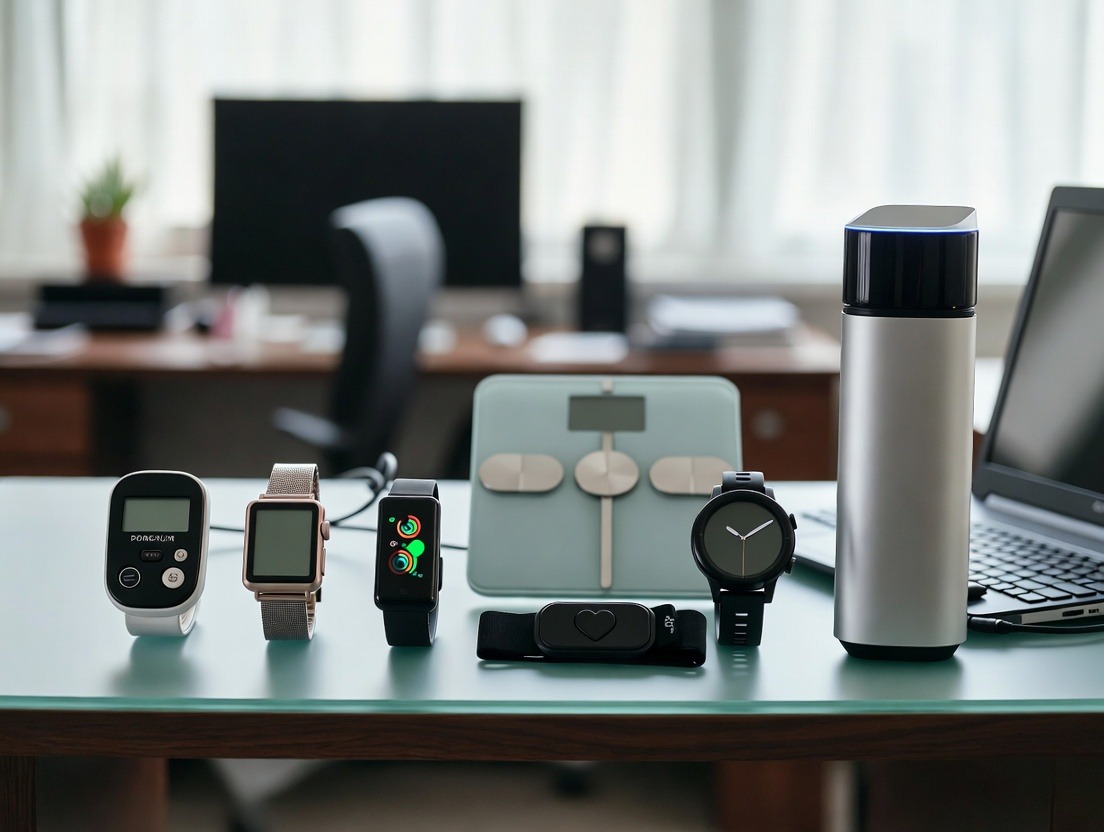
The Best Wearable Health Tech for Athletes and Fitness Enthusiasts
The best wearable tech for people focused on athletics and fitness.
The Ultimate Arms Race: Why Wearable Health Tech Is Now an Athlete's Most Critical Piece of Gear
For the modern athlete, the pursuit of excellence has moved beyond the grind of sweat-drenched sessions and into the quantifiable world of data. It’s no longer just about how hard you trained, but about how intelligently you recovered, how precisely you fueled your body, and how deeply you slept. The frontier of performance is no longer found solely on the track, the court, or the trail—it’s on your wrist, your finger, and in the invisible cloud of biometrics that tells the true story of your potential. Welcome to the era where wearable health technology has evolved from a simple step-counting novelty to an indispensable, mission-critical component of any serious fitness regimen.
Gone are the days when a stopwatch and a notebook sufficed. Today’s fitness enthusiasts and professional athletes alike are leveraging an arsenal of sensors and algorithms to optimize every facet of their physical being. This isn't about vanity metrics; it's about gaining a competitive edge that is measured in milliseconds of reaction time, percentage points of VO2 Max, and hours of quality sleep. The data harvested from these devices provides a continuous, objective feedback loop, turning the human body from a mysterious, feel-based organism into a finely-tunable engine.
But with a market flooded by smartwatches, fitness bands, chest straps, and the emerging category of smart rings, the question is no longer if you should use wearable tech, but which ecosystem is truly worthy of a place in your daily ritual. The right device can be the difference between overtraining and peak performance, between guessing at hydration and knowing your exact electrolyte needs, between a good workout and a truly groundbreaking one.
In this comprehensive exploration, we will dive deep into the landscape of wearable health technology designed for those who demand more from their bodies. We will move beyond basic features to understand the science of what makes a device truly valuable for athletic performance. From heart rate variability (HRV) as the north star of recovery to the groundbreaking potential of continuous core temperature monitoring, we will unpack the metrics that matter. We’ll trace the evolution from clunky pedometers to sleek, AI-powered health companions, and provide you with the framework to choose the technology that aligns with your specific goals—whether you’re a marathoner, a weightlifter, a CrossFit enthusiast, or a weekend warrior aiming to reclaim your peak.
This journey will reveal why the next giant leap in personal fitness won't come from a louder coach or a more punishing workout, but from the quiet, persistent stream of data collected by the device on your body. It’s time to equip yourself with knowledge as powerful as the technology itself. Let’s begin.
The Evolution of Fitness Tracking: From Pedometers to AI-Powered Health Guardians
The story of wearable fitness technology is a fascinating tale of miniaturization, sensor innovation, and a fundamental shift in how we perceive health data. It began not with silicon and Bluetooth, but with simple mechanics. The earliest "wearable" for step counting was the 18th-century pedometer, allegedly conceptualized by Thomas Jefferson to measure the distance of his walks. These mechanical devices, which evolved into the clip-on electronic pedometers of the 1990s and early 2000s, provided a single, crude data point: steps. They introduced the concept of a daily movement goal (often 10,000 steps, a figure with surprisingly marketing-driven origins) but offered no context—no intensity, no heart rate, no connection to overall health.
The first seismic shift arrived with the integration of accelerometers and connectivity. Fitness bands like the early Fitbit devices transformed the pedometer into a digital dashboard. They synced with smartphones, creating graphs and logs, and introduced the world to "activity tracking." This was the dawn of democratized data, making self-quantification accessible to the masses. Soon after, optical heart rate sensors migrated from chest straps to wrists, enabling continuous heart rate monitoring without an uncomfortable strap. While initially inaccurate during high-intensity exercise, this technology improved rapidly, providing a glimpse into workout intensity through zones (fat burn, cardio, peak).
The smartwatch era, championed by Apple, Samsung, and Garmin, marked the convergence of fitness tracking and connected living. These devices were no longer single-purpose tools; they became mini-computers on the wrist. For athletes, this brought GPS mapping for runners and cyclists, onboard music storage, and more sophisticated workout tracking. The ecosystem expanded, but so did the distractions—notifications, apps, and the constant pull of digital life.
Today, we are in the midst of the fourth wave: the era of AI-powered health guardianship. The focus has dramatically shifted from mere activity tracking to holistic health monitoring and prediction. Modern devices don't just record what you did; they analyze what it means for your body. This is powered by three key advancements:
Multi-Sensor Fusion: Devices now combine PPG (optical heart rate), accelerometers, gyroscopes, skin temperature sensors, and even electrodermal activity sensors. By fusing these data streams, they create a richer, more accurate picture of your physiology.
Biomarker Focus: The spotlight is on biomarkers that predict state, not just record output. Heart Rate Variability (HRV) has emerged as a critical, non-invasive window into your autonomic nervous system and recovery status. Nocturnal core body temperature trends can predict illness and hormonal changes. Blood Oxygen Saturation (SpO2) monitoring provides insights into respiratory health and altitude acclimation.
Contextual AI & Baselines: Advanced algorithms now establish your personal, dynamic baseline for these metrics. Instead of comparing you to population averages, the system learns your normal. It can then spot meaningful deviations, flagging potential overtraining, illness onset, or poor sleep quality before you feel symptoms.
This evolution has led to a new product category that prioritizes health insight over digital distraction: the smart ring. Devices like the Oura Ring and the emerging Oxyzen Smart Ring symbolize this shift. Worn on the finger, they offer a unique form factor that enables more consistent wear (especially during sleep and certain sports), and a location rich in vasculature for potentially more reliable biometric readings. They represent a move away from the "smartwatch as a second screen" toward a dedicated, unobtrusive health sentinel. As we explore the specific needs of athletes, understanding this journey from counting steps to interpreting nervous system tone is essential. It frames why today's best tools are less about logging your workout and more about ensuring your body is truly ready to perform when you ask it to. For a deeper look at the technology powering this new generation of wearables, you can explore our blog for more insights on sensor fusion and AI.
Beyond the Workout: Why Recovery Metrics Are Your New Secret Weapon
For decades, athletic culture glorified the "no days off" mentality. Pushing through pain, ignoring fatigue, and logging ever-increasing volume were seen as badges of honor. Modern sports science has completely inverted this paradigm. We now understand that performance is not forged in the workout, but in the recovery period that follows. Stress (the workout) is the stimulus; adaptation (becoming stronger, faster, more resilient) happens during rest. Therefore, optimizing recovery is not passive—it's the most active thing an athlete can do to improve.
This is where modern wearable tech shines its brightest. While any device can track your sprint time or lifted weight, the true game-changers are those that quantify your body's readiness to accept that stress. They move the focus from external output to internal input. Let's break down the cornerstone recovery metrics that have become the secret weapon for elite athletes and informed enthusiasts alike.
Heart Rate Variability (HRV): The Gold Standard of Recovery Readiness
HRV is arguably the most important metric your wearable can provide for recovery. Contrary to intuition, a healthy heart is not a metronome. The time interval between successive heartbeats (measured in milliseconds) constantly fluctuates. Higher HRV generally indicates a robust, adaptable autonomic nervous system—where your "rest and digest" (parasympathetic) system is dominant, promoting recovery. Lower HRV suggests your "fight or flight" (sympathetic) system is engaged, signaling stress from training, life, or illness.
For athletes, tracking HRV trends is revolutionary. A consistent, personalized HRV baseline is established over weeks. A significant drop below this baseline is a clear, objective red flag: your body is under-recovered. Pushing through with a high-intensity session on a low HRV day is not just suboptimal—it's a direct path to overtraining, injury, and burnout. Instead, a low HRV reading prompts a "green light" for a restorative day: light active recovery, focus on sleep, nutrition, and hydration. By respecting this data, you train with your body, not against it.
Sleep: The Non-Negotiable Foundation of Performance
Sleep is the ultimate performance-enhancing drug, and wearables now offer a detailed biochemical breakdown of your night. It's not just about duration; it's about architecture and quality.
Sleep Stages: Understanding time spent in Light, Deep, and REM sleep is crucial. Deep sleep is physical restoration; REM sleep is cognitive and emotional processing. Disruptions in these cycles impair recovery and next-day performance.
Restorative Sleep Score: Many devices synthesize sleep data, resting heart rate, HRV, and movement into a single, easy-to-interpret score. This provides an immediate gauge of how recovered you are from the previous day's stressors.
Sleep Latency & Disturbances: How long it takes you to fall asleep and how often you wake up are critical indicators of stress and lifestyle factors impacting recovery.
Resting Heart Rate (RHR) & Body Temperature
Your Resting Heart Rate, particularly your morning RHR, is a simple but powerful metric. A trend of increasing morning RHR can indicate accumulating fatigue, dehydration, or the onset of illness. Nocturnal core body temperature (measured at the finger or wrist) is another powerful predictor. A sustained elevation from your personal baseline is one of the earliest signs of physiological stress, often appearing before a sore throat or fatigue, giving you a heads-up to dial back training.
The Integrated Picture: The "Readiness" or "Readiness Score"
The most advanced wearables don't present these metrics in isolation. They use proprietary algorithms to combine HRV, RHR, sleep quality, and temperature into a single Readiness Score. This is your daily prescription. A high score means your body is primed for intensity. A moderate score suggests a steady-state or technique-focused day. A low score is a non-negotiable command for rest. This transforms subjective "how do I feel?" questions—which are notoriously unreliable, influenced by motivation and caffeine—into an objective, actionable plan.
By making the invisible visible, these recovery metrics empower you to practice strategic, not random, recovery. They are the core of training intelligently. To see how athletes are using these insights in real life, you can read authentic user experiences and testimonials from those who have made data-driven recovery a cornerstone of their regimen.
The Smartwatch Dominance: A Deep Dive into Garmin, Apple, Polar & Whoop
For most athletes, the wearable landscape is synonymous with the smartwatch. It's a versatile, screen-enabled command center that lives on the wrist. But within this category, philosophies diverge sharply. Let's analyze the major players, their strengths for the athletic user, and their inherent trade-offs.
Garmin: The Athlete's Ecosystem
Garmin has built an unparalleled fortress for the endurance athlete and outdoor adventurer.
Core Strengths: Unrivaled GPS accuracy and sport-specific tracking (from running and cycling to swimming, golf, and even tactical training). Features like Training Status (which labels your current state as "Peak," "Maintaining," "Recovery," or "Detraining") and Training Effect (measuring the impact of a workout on your aerobic and anaerobic systems) are incredibly valuable. The recently introduced Morning Report and HRV Status provide Garmin's take on readiness tracking.
Battery Life: A major advantage over smartwatches. Many models offer weeks in smartwatch mode and 20+ hours in full GPS mode, essential for ultrarunners and long-course triathletes.
Trade-offs: The interface can be complex, and the sheer volume of data can be overwhelming for beginners. The focus is heavily on the workout itself and the physiological output, with recovery metrics traditionally playing a secondary role (though this is changing rapidly). The form factor is distinctly sporty and can be intrusive for 24/7 wear, especially during sleep.
Apple Watch: The Connected All-Rounder
The Apple Watch is the gateway drug for millions into fitness tracking. Its strength is seamless integration and holistic health.
Core Strengths: A brilliant, intuitive interface and a massive app ecosystem. For the multi-sport athlete who also values connectivity, messaging, and music, it's a compelling single-device solution. The Apple Fitness+ service adds guided workouts. Health metrics like AFib history, ECG, and blood oxygen are medically-oriented features. With watchOS, Apple has introduced its own Training Load and Recovery Time estimates.
Battery Life: The Achilles' heel. Daily charging is a non-negotiable ritual, which often means you cannot wear it for continuous, 24/7 biometric tracking (missing critical sleep data unless you charge at another time).
Trade-offs: While excellent for general fitness and cardio, it lacks the deep, sport-specific analytics of a Garmin (e.g., advanced running dynamics from a chest strap). It is first and foremost a smartwatch, which means it's designed to interrupt you—a potential distraction during focused training or recovery.
Polar: The Science-First Approach
Polar has a storied history in heart rate monitoring and leans heavily on sports science.
Core Strengths: Renowned for chest-strap accuracy, which extends to their optical wrist-based HR. Their Nightly Recharge and Orthostatic Test are sophisticated, science-backed recovery tools. The Running Index and Fitness Test provide valuable VO2 Max and performance benchmarks. They excel at providing clear, actionable insights without excessive gadgetry.
Trade-offs: The ecosystem is smaller, and the devices are less feature-rich for non-fitness tasks. The design aesthetic is functional but may not appeal to those seeking a lifestyle device.
Whoop: The Subscription-Based Recovery Sentinel
Whoop represents a radical departure: a screenless band focused entirely on performance optimization via recovery.
Core Strengths: The Strain & Recovery model is elegant and powerful. Your daily "Strain" (a score from 0-21 quantifying cardiovascular load) is directly informed by your "Recovery" (a score from 0-100% based on HRV, RHR, and sleep). The app tells you exactly what Strain your body is ready for each day. The 24/7 form factor and 5-day battery are major pluses. It excels at fostering behavioral change around sleep and recovery habits.
Trade-offs: No GPS (it uses your phone's) or on-device display. You must subscribe to access your own data (typically $30/month). For those who want pace/distance on their wrist during a run or a watch for daily timekeeping, it's not a standalone solution. It's a dedicated biometric monitor, not a sports watch.
The Verdict
The "best" smartwatch depends entirely on your athletic persona. The data-obsessed endurance athlete lives in the Garmin ecosystem. The connected fitness enthusiast who values simplicity and ecosystem integration likely chooses Apple. The recovery-focused athlete who wants a pure, undistracted metric may gravitate to Whoop or Polar. Each represents a different point on the spectrum between a multi-tool smart device and a dedicated performance instrument. As you evaluate, consider: Do you want a tool for your workout, or a 24/7 coach for your entire physiological lifecycle?
The Rise of the Smart Ring: Unobtrusive, 24/7 Biometric Power
As the quest for seamless, continuous health monitoring intensifies, a new champion has emerged from an unlikely place: the finger. The smart ring category, pioneered by Oura and now joined by innovative players like Oxyzen, represents a fundamental rethink of the wearable form factor. It addresses many of the inherent compromises of the wrist-worn device, positioning itself not as a replacement for the sports watch, but as its perfect complement for the athlete dedicated to holistic optimization.
Why the Finger? The Form Factor Revolution
The wrist is a dynamic, bony area with tendons constantly moving under the skin. This can cause optical heart rate sensors to "lose lock" during high-movement activities, a phenomenon known as "wrist flick." The finger, however, is rich with capillaries and vasculature, offering a potentially more stable and reliable signal for photoplethysmography (PPG) sensors, especially for passive, background measurements like sleep HRV and resting heart rate.
Beyond sensor accuracy, the ring offers profound lifestyle benefits for the athlete:
Unobtrusive & Forgettable: A well-designed ring is barely noticeable. You can wear it while sleeping, swimming, lifting weights (with a proper protective band), or during contact sports where a watch would be dangerous or against the rules. It doesn't get caught on clothing or equipment.
24/7 Consistency: Because it's so easy to wear all the time, it guarantees continuous data collection. There's no "I took it off to charge" or "I don't wear it during my basketball game" gap. This creates a flawless, unbroken timeline of your physiology, which is critical for accurate baselines and trend analysis.
No Digital Distraction: It has no screen. This is a feature, not a bug. It cannot ping you with notifications, tempting you to check emails mid-recovery. It is a pure biometric sensor, working silently in the background to inform your choices, not interrupt your flow.
Core Athletic Features of Modern Smart Rings
Today's advanced smart rings are packing serious athletic intelligence:
Advanced Recovery & Readiness: Like the best wrist-based devices, they provide comprehensive Readiness Scores based on HRV, RHR, sleep, and temperature. This is their flagship feature.
Precision Sleep Tracking: They are widely considered the gold standard for consumer sleep staging due to their consistent wear and optimal sensor placement. Insights into sleep latency, disturbances, and time in each stage are exceptionally detailed.
Activity & Workout Tracking: While not replacing a GPS watch for pace/distance, modern rings automatically detect activity type and duration (walk, run, cycle) and can estimate calorie expenditure. Some allow for manual workout logging to tag strain to specific sessions.
Unique Biomarkers: The form factor enables interesting features like peripheral body temperature trends, which, as discussed, are a powerful predictor of illness, overtraining, and menstrual cycle phases for female athletes.
Long Battery Life: Most offer 4-7 days of battery, making charging a brief, weekly ritual rather than a daily hassle.
The Ideal Use Case: The One-Two Punch
For the serious athlete, the most powerful setup is often a combination. Wear a dedicated sports watch (like a Garmin) during your training sessions to capture precise workout metrics, GPS routes, and performance dynamics. Then, rely on a smart ring like Oxyzen for everything else: 24/7 recovery monitoring, impeccable sleep tracking, and constant physiological baselineing. The ring fills the massive gaps left by the watch—namely, sleep, daily non-exercise stress, and consistent overnight biomarkers. The watch provides the intense, sport-specific detail. Together, they provide a complete, 360-degree view of your performance engine.
This symbiotic relationship is the future of athletic wearables. The smart ring’s rise signals a maturation of the market, where purpose-built devices for specific aspects of the performance puzzle—stress vs. recovery, output vs. input—coexist harmoniously. To understand the philosophy behind this focused approach to health technology, you can learn more about our mission and vision at Oxyzen.
Key Metrics That Matter: HRV, Sleep, Temperature, Strain & More Decoded
With an array of devices collecting a firehose of data, it's easy to succumb to "analysis paralysis." The key is to focus on the signals that have the highest correlation with performance and health outcomes. Let's decode the essential metrics, moving beyond the surface to understand what they are truly telling you and how to act on them.
Heart Rate Variability (HRV): The Master Metric (Revisited)
We've touched on HRV, but let's go deeper. It's not about chasing a high number; it's about understanding trends and context.
Actionable Insight: Look at your weekly average and daily deviations. A single low reading after a hard workout or a night of poor sleep is normal. A sustained downward trend over 3-7 days is a clear signal of accumulating stress. Your response should be proactive: prioritize sleep nutrition, incorporate light movement like walking or yoga, and consider postponing a high-intensity session. Avoid alcohol, as it severely suppresses HRV.
Sport-Specific Note: Endurance athletes often have higher HRV baselines than power athletes, but the rule of trends applies to all.
The Sleep Breakdown: From Hours to Quality
Stop fixating on 8 hours. Start analyzing structure.
Deep Sleep (Slow-Wave Sleep): This is physical restoration. Growth hormone is released, tissue is repaired, and energy is restored. If your deep sleep is consistently low, despite adequate time in bed, examine your evening routine: reduce blue light exposure, avoid heavy meals and alcohol close to bedtime, and ensure your sleeping environment is cool and dark.
REM Sleep: This is cognitive restoration. It's vital for memory consolidation, learning motor skills (crucial for sport technique), and emotional regulation. Stress and alcohol can severely fragment REM.
Sleep Latency & Efficiency: Taking over 20-30 minutes to fall asleep or having a sleep efficiency (time asleep vs. time in bed) below 85% indicates poor sleep hygiene or elevated nervous system arousal before bed.
Body Temperature: The Early-Warning System
Continuous temperature monitoring is a superpower.
For Illness Prevention: A sustained elevation of 0.5-1.0°C above your personal baseline is one of the earliest signs of your body fighting something. Seeing this for two nights in a row is your cue to hydrate aggressively, rest, and dial back training intensity—potentially stopping a cold in its tracks.
For Female Athletes: Temperature tracking can help identify the different phases of the menstrual cycle (follicular vs. luteal), empowering athletes to tailor training and nutrition to their unique physiology—a concept known as "fuelling your cycle."
Strain & Training Load: Quantifying the Stress
This is where workout devices excel. The goal is to match "stress" with "recovery."
Acute Training Load (ATL): Often called "Strain" or "Fatigue," this is the short-term stress from recent training (usually over 7 days). It should be high when you are in a building phase.
Chronic Training Load (CTL): Often called "Fitness," this is the long-term average of your training (usually over 42 days). This is your baseline fitness level.
The Ratio (TSB): The Training Stress Balance (TSB) is typically CTL minus ATL. A positive TSB means you are fresh (low recent fatigue, high fitness)—ideal for a race or key workout. A negative TSB means you are fatigued (high recent fatigue)—this is normal during a training block but should be followed by a recovery period. The art of periodization is managing this ratio.
Resting Heart Rate (RHR): The Simple Sentinel
Track your morning RHR, taken while still in bed. A spike of 7+ beats per minute above your weekly average can indicate dehydration, incomplete recovery, or illness.
Putting It All Together: The Daily Check-In
Your morning ritual should involve a 60-second review of your key metrics from your wearable:
Readiness/Recovery Score: Your overall prescription for the day.
HRV Trend: Is it stable, rising, or falling relative to my baseline?
Sleep Score & Breakdown: Did I get enough restorative sleep?
Morning RHR: Any acute spike?
Temperature Deviation: Any signs of physiological stress?
This check-in transforms guesswork into strategy. It allows you to adapt your plan in real-time, practicing true "autoregulation"—letting your body's signals guide your training intensity. This is the pinnacle of intelligent athleticism. For more detailed guidance on interpreting these metrics and building your daily routine, our blog offers a wealth of actionable resources.
Specialized Tech for Different Sports: Running, Cycling, Strength, HIIT & More
The concept of a "one-size-fits-all" wearable is as flawed as a "one-size-fits-all" training plan. A marathoner's data needs are profoundly different from a powerlifter's or a CrossFit athlete's. The best wearable ecosystem adapts to your sport's unique demands. Let's explore the specialized tech and metrics critical across major athletic disciplines.
For the Runner: Beyond Pace and Distance
The runner’s wearable must be a precision running computer.
Essential Features: High-Fidelity GPS with multi-band/GNSS support for accuracy in cities or under tree cover. Running Dynamics from a chest strap (like Garmin HRM-Pro) or pod (like Stryd) are game-changers: Vertical Oscillation (how much you bounce), Ground Contact Time (GCT), and Cadence. Lower oscillation and shorter GCT often correlate with better running economy.
Advanced Metrics: Lactate Threshold detection and Race Predictor times based on current fitness. Real-Time Stamina during a long run (a feature on high-end Garmins) tells you how much "fuel" you have left.
Recovery Focus: HRV-based training suggestions and Heat & Altitude Acclimation metrics are invaluable for those training in challenging environments. A smart ring is a perfect companion for the runner, providing the recovery data to balance the intense load from their watch.
For the Cyclist: Power, Dynamics, and Navigation
Cycling wearables integrate with a vast ecosystem of external sensors.
Essential Features: Bluetooth/ANT+ connectivity to pair with power meters (the gold standard for cycling intensity), cadence sensors, and speed sensors. On-device navigation with turn-by-turn prompts and climb profiles is crucial for outdoor riders.
Advanced Metrics: Functional Threshold Power (FTP) tracking, Training Stress Score (TSS), and Intensity Factor (IF). For the triathlete, swimming metrics and multisport mode for seamless transitions are key.
Recovery Focus: Like runners, cyclists benefit massively from 24/7 recovery tracking off the bike. The vibration from handlebars can make wrist-based optical HR less reliable during rides, making a chest strap essential for workout accuracy and a ring ideal for 24/7 baselining.
For the Strength & Power Athlete (Weightlifting, CrossFit, etc.)
This group has been historically underserved by wrist-based tech, as gripping weights obstructs wrist sensors and many movements make optical HR highly erratic.
The Challenge: Traditional HR and calorie burn metrics are often inaccurate during strength training. The focus shifts from cardiovascular load to neuromuscular readiness and recovery.
Essential Features: HRV-based readiness scores become paramount. A device that reliably tracks sleep and overnight recovery is more critical than one that tracks the workout itself. The ability to manually log workouts (exercise, sets, reps, weight) in a connected app, and then see how that load impacts your recovery metrics, is the ideal workflow.
Form Factor Winner: The smart ring excels here. It doesn't interfere with grips, wrist wraps, or movements. It silently collects recovery data (HRV, temperature, sleep) which is the strength athlete's most valuable intel for managing systemic fatigue and preventing overtraining, which often manifests as stalled progress and joint pain rather than cardio fatigue.
For the HIIT & Functional Fitness Athlete
HIIT presents a unique challenge: rapid, varied movements that can confuse motion-based trackers and cause optical HR "dropouts."
Essential Features: A device with a fast-reacting optical sensor or, better yet, compatibility with a chest strap for true HIIT accuracy. The ability to recognize different exercises automatically (burpees, jumping jacks, kettlebell swings) is an emerging feature in some AI-powered systems.
Recovery Focus: HIIT places enormous stress on both the aerobic and anaerobic systems, creating a significant recovery debt. Tracking HRV suppression and temperature changes after a heavy HIIT day is critical to avoid the chronic fatigue common in this community.
The Common Thread: Recovery as the Universal Language
Across all sports, the specialization happens during the input (the workout tracking). But the output (the physiological response) is governed by universal recovery principles. Therefore, the most sophisticated setup for any serious athlete is a hybrid: a sport-specific tool for capturing the quality of the stress (a Garmin for running, a power meter for cycling, a simple logbook for lifting) combined with a dedicated, 24/7 health monitor like a smart ring to quantify the body's response and readiness for the next bout. This is how you move from simply practicing your sport to scientifically mastering your body's adaptation to it.
Accuracy & Limitations: The Truth About Sensor Tech and Data Interpretation
Embracing wearable data requires a critical, informed mindset. These are sophisticated consumer devices, not medical-grade instruments. Their power lies in tracking trends and providing relative insights about your own body, not in providing absolute, clinical truths. Understanding their limitations is what separates the savvy user from the blindly trusting one.
The Heart Rate Accuracy Spectrum
Heart rate data is the foundation of almost all other derived metrics (calories, strain, recovery). Its accuracy varies dramatically by activity.
Gold Standard: The chest strap (ECG). It measures the heart's electrical activity directly. It is near-medical-grade and essential for accuracy during high-intensity interval training (HIIT), cycling, or any activity with erratic or rapid motion.
Wrist-Based Optical (PPG): This measures blood flow changes under the skin by shining a light. It's excellent for resting heart rate, sleep tracking, and steady-state cardio like easy running. However, it struggles with:
HIIT & Strength Training: The "wrist flick" motion and changes in blood flow from gripping can cause significant dropouts or cadence lock (where the sensor reads your arm movement rate instead of heart rate).
Cold Weather: Vasoconstriction reduces blood flow to the wrists, degrading signal.
Smart Ring (PPG): Similar optical technology but on the finger. It is generally superior to the wrist for passive, continuous monitoring (sleep, daily RHR, HRV) due to better vasculature and less motion artifact during rest. However, during intense hand-gripping exercises, it can also suffer from signal interruption.
The Takeaway: Use a chest strap for the most accurate workout heart rate data. Trust your wrist or ring for recovery and sleep data. Never assume the calorie burn from a wrist-based reading during a weightlifting session is accurate.
The "Black Box" Algorithm Problem
Your readiness score, sleep stage breakdown, and training load are not direct measurements. They are the outputs of proprietary algorithms—essentially, the manufacturer's "secret sauce." These algorithms synthesize raw sensor data (heart beats, movement, temperature) into a user-friendly score.
The Risk: You are trusting a corporation's interpretation of your physiology. Different companies may weight metrics differently (e.g., Oura may prioritize sleep over HRV, while Whoop prioritizes HRV). A "good" score on one device could be "fair" on another.
The Solution: Use the scores as guides, not gospels. Correlate them with your subjective feelings ("How do I actually feel today?"). Over time, you'll learn how your body's subjective signals align with the algorithmic scores. The trend across a single platform is more valuable than the absolute number.
Calorie Burn: The Grand Estimation
Calorie expenditure is the least accurate metric on any consumer wearable. It's an estimation based on your heart rate, movement, and demographic data (age, weight, height). It can be off by 20-40%, especially for non-steady-state activities or for individuals with unique physiologies.
Athletic Application: Do not use wearable calorie burn to precisely dictate your food intake. Use it to understand relative energy expenditure (e.g., "My long run day burned roughly 2x what my rest day did") as one piece of the nutritional puzzle, not the definitive answer.
The Baseline is Personal
The magic of these devices is not in comparing your HRV of 60 to someone else's 80. It's in knowing that your baseline is 60, and today it's 45. That 25% drop is meaningful for you. It takes at least 2-4 weeks of consistent wear to establish a reliable personal baseline. Making decisions before that baseline is set is premature.
Embrace the Trend, Question the Instant
Become a trend-spotter, not a number-obsessor. A single bad night of sleep or a low HRV reading is noise. A week-long downturn in sleep quality combined with a rising RHR and falling HRV is a clear signal—a trend your device has brilliantly illuminated for you to act upon.
By approaching your wearable with this balanced perspective—respecting its insights while acknowledging its limits—you become a true partner with your technology, using it to augment your self-awareness, not replace it. For answers to common technical questions about how sensors work and data is processed, our FAQ resource provides clear explanations.
Battery Life, Design & Lifestyle: The Practicalities of 24/7 Wear
The most advanced sensor suite is worthless if you don't wear the device consistently. For athletes seeking a true 24/7 physiological timeline, compliance is paramount. This moves the discussion from pure specs to the practical realities of battery, design, and how a device integrates into—or disrupts—your daily life.
The Battery Life Trade-Off: Charge vs. Data
Battery anxiety is the silent killer of continuous tracking.
The Smartwatch Dilemma: Flagship smartwatches (Apple Watch, Samsung Galaxy Watch) typically require daily charging. This almost guarantees a data gap. Do you charge it in the evening and miss sleep tracking? Or charge it in the morning and miss all-day activity and stress monitoring? This cycling defeats the purpose of continuous baselining.
The Fitness Watch Advantage: Devices like Garmin's Forerunner or Venu series often last 5-14 days in smartwatch mode and still offer always-on heart rate. This is a major benefit for consistency.
The Specialist & Ring Advantage: Devices like Whoop (4-5 days) and smart rings like Oura and Oxyzen (typically 4-7 days) strike an excellent balance. Charging is a brief, weekly ritual. You can often charge without a full gap in data; many rings charge in under an hour, and some use a "reserve battery" mode to maintain core tracking during charging.
The Rule: For 24/7 readiness tracking, a device needs a minimum of 3-4 days of battery life to make charging convenient and data gaps minimal.
Design & Form Factor: The Unseen Impact on Compliance
A device must be something you want to wear all the time.
Size & Weight: A large, heavy sports watch can be uncomfortable for sleep, typing, or certain lifts. A sleek, lightweight ring or a slim band like Whoop dramatically increases the likelihood of constant wear.
Material & Durability: For athletes, this is non-negotiable. Watches need robust sapphire glass or Gorilla Glass and metal casings to survive bumps and scrapes. Rings need durable coatings like titanium with a scratch-resistant finish (e.g., PVD). Can it handle sweat, pool chlorine, and ocean water? Look for a minimum of 5ATM water resistance.
Style & Discreteness: Does the device look out of place with business attire or on a formal occasion? Many athletes own a "daily driver" wearable and a traditional watch for dressier events, which again creates a data gap. A subtle, jewelry-like smart ring or a minimalist band solves this by being virtually invisible.
The Lifestyle Integration Test
Ask yourself these questions:
Sleep: Can I sleep comfortably with this on my wrist/finger? Does it catch on sheets or feel bulky?
Training: Does it interfere with my sport? (e.g., a watch during kettlebell swings, a ring during rock climbing without a protective sleeve).
Daily Life: Does it get in the way of typing, writing, or manual work?
Charging Rhythm: Does its battery life fit naturally into my weekly routine, or is it a daily hassle?
The Synergy of a Multi-Device Approach
This is why the smart ring + sports watch combo is so compelling for the dedicated athlete. It decouples the lifestyle device from the workout device.
You wear the ring 24/7 for sleep, recovery, and daily biometrics. Its design and battery make this effortless.
You wear the sports watch during dedicated training sessions for GPS, advanced metrics, and as a workout display. You may even take it off afterwards.
This approach maximizes data completeness while optimizing each device for its primary function. The ring becomes your always-on health guardian, while the watch is your tactical performance dashboard. It’s a more expensive path, but for those committed to optimization, it provides the most comprehensive and compliant data ecosystem. The journey to creating a device that seamlessly fits into this always-on lifestyle is often a fascinating one; you can discover the story behind Oxyzen's approach to design and functionality.
Data Privacy & Security: Who Owns Your Biometric Blueprint?
As we eagerly strap and slide these sensors onto our bodies, beaming our heartbeats, sleep patterns, and temperature fluctuations to the cloud, a critical question emerges: What happens to this deeply intimate data? Your biometric profile is not just a series of numbers; it's a unique blueprint of your physiology, potentially revealing insights about your health, vulnerabilities, and lifestyle. In the age of data breaches and sophisticated algorithms, understanding privacy and security is not a secondary concern—it's a fundamental part of being an informed user.
The Value of Your Data
For companies, anonymized and aggregated user data is incredibly valuable. It fuels the improvement of their algorithms (e.g., "our sleep staging algorithm improved by training it on 10 million nights of user data"). It can also be used for broader health research. The ethical line is drawn at how data is anonymized, what it's used for, and whether you have control over it.
Key Questions to Ask Your Wearable Provider
Before you sync your first workout, investigate the company's stance. Look for their "Privacy Policy" and "Data Governance" or "White Paper."
Where is my raw data stored and processed? Is it on your phone, or is it sent to company servers (the cloud)? Cloud processing enables more powerful AI but increases exposure.
Is my data anonymized and aggregated? When used for research or improvement, is it stripped of all personally identifiable information (PII)?
Who does my data get shared with, and why? Does the company sell or license data to third parties (advertisers, health insurers, other tech companies)? This is a major red flag.
What security standards are in place? Look for mentions of end-to-end encryption (data is encrypted from your device to the server), data encryption at rest, and compliance with standards like GDPR (EU General Data Protection Regulation) or HIPAA (if making health claims, though most consumer devices are not HIPAA-compliant).
What control do I have? Can I download all my raw data? Can I delete it permanently from their servers? This is your right under regulations like GDPR and CCPA.
The Smart Ring & Health Data Specifics
Devices making strong health claims (like recovery readiness, illness prediction, menstrual cycle tracking) are handling particularly sensitive data. A responsible company in this space will be transparent, often publishing detailed white papers on their data practices. They should clearly state that you own your data, and that their business model is based on selling hardware and/or software subscriptions, not on monetizing your personal biometric information.
Practical Steps for the Athlete
Use Strong, Unique Passwords: For your wearable app and associated account. Enable two-factor authentication (2FA) if available.
Review App Permissions: Does the app need access to your contacts, photos, or location all the time? Limit permissions to only what is necessary.
Understand the Defaults: Often, sharing for "research" or "product improvement" is opt-in or opt-out. Make a conscious choice based on your comfort level.
Consider the Business Model: Be wary of "free" devices. If you're not paying with money, you are likely paying with your data.
The Bottom Line
Trust is the foundation of the wearable-athlete relationship. You are trusting a company with a continuous stream of your most personal information. Choose companies that are transparent, have a clear and respectful privacy policy, and align their business model with your interests as a user. Your biometric blueprint is your property. A trustworthy partner will help you guard it, not exploit it. For a clear explanation of how one company handles this profound responsibility, you can review Oxyzen's data privacy and security commitments.
The Future on Your Finger (and Wrist): AI, Predictive Health & Personalized Coaching
We are standing on the precipice of the next revolution in wearable technology. The current phase of monitoring and reporting is rapidly giving way to a future of prediction, prevention, and hyper-personalized guidance. Powered by advances in artificial intelligence (AI) and machine learning, the next generation of devices will transition from being dashboards to becoming proactive, AI-powered health coaches.
From Descriptive to Predictive Analytics
Today's devices are largely descriptive: "Your HRV was low last night." "Your sleep was disrupted." The near future is predictive: "Based on your declining HRV trend and elevated temperature, you have a 72% likelihood of developing upper respiratory symptoms in the next 48 hours. Recommended action: Increase sleep by 90 minutes tonight, prioritize vitamin C and zinc, and switch tomorrow's interval run to a Zone 2 recovery ride."
Illness Prediction: This is already in its infancy. By combining temperature, HRV, RHR, and sleep data, algorithms are learning to identify the physiological signatures of an oncoming cold or flu, giving you a critical head start to intervene.
Injury Risk Forecasting: By analyzing training load, recovery metrics, and movement symmetry (from wearable pods or even phone cameras), future systems may flag an elevated risk for specific overuse injuries, like a stress fracture or tendonitis, suggesting prehab exercises or load modification.
The Rise of the True AI Health Coach
Imagine a system that doesn't just track your food log but analyzes your biometric response to meals, suggesting optimal pre- and post-workout nutrition for your unique metabolism. Or a coach that dynamically adjusts your training plan each morning based on your readiness score, life stress, and sleep data, creating a truly autoregulated program.
Integrated Ecosystems: This will require wearables to break out of their app silos. The AI coach will need secure access to data from your wearable, your food logging app, your calendar (to see stress events), and even your continuous glucose monitor (CGM) if you use one. The synthesis of this multi-modal data is where profound personalization will occur.
Conversational & Contextual: Interaction will move beyond graphs. You'll be able to ask, "Why is my readiness low today?" and the AI will explain: "Primary factor: Your deep sleep was 40% below baseline due to the late dinner you logged. Secondary factor: Your HRV drop correlates with a high-stress work meeting on your calendar yesterday."
Advanced Sensor Fusion & New Biomarkers
The hardware will evolve to support this AI-driven future.
Non-Invasive Blood Biomarkers: Research is accelerating into using optical (PPG) and spectroscopic sensors to estimate biomarkers like blood glucose trends, hydration status (via blood osmolarity), and lactate levels—all without a single drop of blood. This would be transformative for endurance athletes and diabetics alike.
Stress & Mental Load: Beyond HRV, sensors measuring electrodermal activity (EDA)—tiny changes in skin sweat—are already being used to detect stress responses. Future devices may quantify cognitive load and mental fatigue, advising you to take a break before a crucial skill session.
Continuous Core Temperature: More accurate, non-invasive core temperature monitoring will become standard, solidifying its role as a primary diagnostic metric.
The Personalized "Digital Twin"
The ultimate horizon is the creation of your "digital twin"—a sophisticated computer model of your physiology. It would be calibrated by your lifelong wearable data and could be used to simulate scenarios: "What would happen to my marathon time if I increased my weekly mileage by 10% for 4 weeks?" or "How would a change to a plant-based diet affect my recovery metrics?" This virtual proving ground would allow for risk-free experimentation and hyper-optimized planning.
The Human Element Remains Key
Amid this exciting future, a crucial principle remains: Data informs, but wisdom decides. The AI coach will provide phenomenal insight, but the final decision—the spirit, the passion, the listen-to-your-gut instinct—will always belong to the human athlete. The goal of this technology is not to create robotic athletes but to empower informed humans to make better decisions, prevent setbacks, and unlock their full potential with greater precision and fewer guesswork sacrifices.
This future is not distant; its early foundations are being built in the algorithms of today's most advanced rings and watches. Choosing a platform that is committed to this AI-driven, privacy-focused future is an investment in your long-term athletic evolution. To stay at the forefront of these developments and understand how they are being implemented, following our blog is an excellent resource for continuous learning.
Choosing Your Ecosystem: A Step-by-Step Guide to Selecting Your Perfect Wearable
With a deep understanding of the metrics, the players, and the future landscape, the final—and most personal—step is to make a choice. The “best” wearable does not exist in a vacuum; it is the one that most seamlessly integrates into your life, aligns with your primary athletic goals, and provides insights you will actually understand and act upon. This decision-making guide will help you move beyond marketing hype and feature lists to find your perfect match.
Step 1: Diagnose Your Primary Athletic Identity & Goal
Start not with the device, but with yourself. Ask: “What is the single most important question I want this device to help me answer?”
The Performance Optimizer: “I want to get faster/stronger for my specific sport without overtraining.” (Prioritizes: Recovery/Readiness scores, Training Load balance, Sport-specific metrics).
The Health Sentinel: “I want a 24/7 health monitor to prevent illness, optimize sleep, and manage life stress.” (Prioritizes: Sleep staging accuracy, HRV trends, Temperature monitoring, Low-distraction form factor).
The Fitness Motivator: “I need accountability, daily activity goals, and guidance to build consistent habits.” (Prioritizes: Move reminders, Activity rings/streaks, Guided workouts, A vibrant community).
The Data-Driven Quantifier: “I love deep data dives and want every possible metric to analyze my own trends.” (Prioritizes: Data exportability, Extensive third-party app integration, Raw data access, Customizable dashboards).
The Connected Athlete: “I want my fitness device to also be my smart device for messages, music, and payments on the go.” (Prioritizes: Smartwatch features, LTE option, App ecosystem).
Your answer here will immediately narrow the field. The Performance Optimizer might look first at Garmin or Whoop. The Health Sentinel will be drawn to smart rings like Oura or Oxyzen. The Fitness Motivator might thrive with Apple Fitness+ or Fitbit. The Data-Driven Quantifier needs a platform with an open API. The Connected Athlete likely starts and ends with the Apple Watch.
Step 2: Evaluate the Form Factor & Lifestyle Fit
This is the practical reality check. Be brutally honest.
Wrist vs. Finger vs. Band:
Wrist (Watch): Do you already wear a watch? Are you willing to wear it 24/7, including to sleep? Will its size bother you during your sport (e.g., handstand push-ups, kettlebell cleans)?
Finger (Ring): Do you wear other rings? Is your finger size consistent? Are you willing to remove it for certain contact sports or heavy manual labor (or use a protective sleeve)? Is its subtle, screenless nature a pro or a con for you?
Band (e.g., Whoop): Do you prefer a dedicated sensor that you can swap between different wristbands or clothing clips? Is the lack of any screen acceptable?
Battery Life & Charging Ritual: Can you commit to daily charging? If not, rule out any device with less than 3-day battery. Does the device support quick charging so you can power up during a shower with minimal data loss?
Durability: For your sport and lifestyle, do you need a sapphire glass screen? A titanium casing? A 10ATM water resistance for serious swimming or diving?
Step 3: Audit the Key Features Against Your Sport
Cross-reference your sport from Section 6 with the must-have features.
Runner/Cyclist/Triathlete: Non-negotiable = High-quality GPS, long battery life in GPS mode, compatibility with external sensors (foot pod, power meter, chest strap). Strong bonus = mapping, climb profiles, performance condition metrics.
Strength/Power Athlete: Non-negotiable = Unobtrusive 24/7 wear for recovery, excellent sleep/HRV tracking. The workout tracking is secondary; manual logging capability is nice. The ring form factor is a major advantage here.
HIIT/CrossFit Athlete: Non-negotiable = Accurate heart rate during erratic movement (often requires a chest strap). Ability to recognize different workout types. Robust durability.
Swimmer/Water Athlete: Non-negotiable = Strong water resistance (5ATM+), swim stroke detection, pool length auto-recognition. Optical HR often fails in water, so post-workup calorie/effort estimates are less reliable.
Step 4: Consider the Ecosystem & Long-Term Costs
A device is not an island; it lives in an ecosystem.
The Platform: Do you live in Apple’s iOS world or Android? Some devices (Apple Watch) are heavily limited on Android. Others work cross-platform but may have better app experiences on one OS.
Subscription Model: This is critical. Is the device a one-time purchase (Garmin, Apple Watch, most smart rings), or does it require a monthly subscription to access your data and insights (Whoop, newer Fitbit models)? Calculate the 2-year total cost of ownership. A $300 device with a $30/month subscription is $1,020 over two years—more than a high-end Garmin.
Third-Party Integration: Do you want your data to automatically sync to platforms like Strava, TrainingPeaks, or Apple Health/Google Fit? Check compatibility. This is vital for athletes with coaches who use these platforms.
Step 5: Make Your Shortlist & Seek Real-World Reviews
Narrow down to 2-3 finalists. Then, go beyond spec sheets.
Find Niche Reviews: Don’t just read the mainstream tech sites. Search for “[Device Name] review marathon training” or “[Device Name] strength athlete.” Find reviewers who share your athletic focus.
Acknowledge Known Issues: Every device has trade-offs. Proactively search for “[Device Name] common problems” or “[Device Name] accuracy issues.” Is the optical HR known to be poor for HIIT? Is the GPS slow to acquire? Being aware manages expectations.
Check for Social Proof: Browse the brand’s social media or community forums (like Reddit’s r/AdvancedRunning or r/wearables). Look for real user patterns, not just complaints or praise.
The Hybrid Strategy: The Ultimate Solution for the Committed Athlete
If your budget allows, remember the most powerful setup identified earlier: the combination.
The Combo: A sports watch for training (Garmin, Coros, high-end Apple Watch) + a smart ring for 24/7 health & recovery (Oura, Oxyzen).
Why It Works: It separates the two primary, and often conflicting, functions: Workout Tracking and Health Monitoring. Each device excels in its domain. The watch captures the external stimulus with precision; the ring measures the internal response with consistency. They can often sync data via Apple Health/Google Fit, giving you a unified, holistic view.
Final Checklist Before You Buy:
My primary goal (Step 1) is clearly defined.
The form factor fits my lifestyle and sport 24/7.
The battery life meets my minimum requirement.
It has the non-negotiable features for my primary sport.
I understand the total cost (device + any subscription).
It works with my phone OS and syncs to my other apps (Strava, etc.).
I’ve read real-user reviews from athletes like me.
By following this process, you move from being a passive consumer to an active architect of your own biometric monitoring system. You choose tools, not toys. The right ecosystem becomes an extension of your athletic intent, a silent partner in your pursuit of peak performance and enduring health. For those considering a smart ring as their dedicated health sentinel, exploring the full details of how Oxyzen is designed can help inform this critical choice.
The Smart Ring Deep Dive: Oura, Circular, Ultrahuman, and the Emerging Contenders
The smart ring market has evolved from a one-horse race into a vibrant and competitive space. While Oura pioneered the category and set the standard, a new generation of rings is pushing the boundaries of design, functionality, and affordability. For the athlete evaluating this form factor, understanding the nuances between the key players is essential. Let’s dissect the current landscape.
Oura Ring (Gen 3): The Established Leader
Oura is synonymous with the smart ring. Its third-generation ring is the benchmark against which all others are measured.
Athletic Strengths: Unmatched sleep staging accuracy recognized by independent research. Excellent, intuitive Readiness Score that powerfully combines sleep, HRV, and temperature data. A vast body of longitudinal user data that refines its algorithms. A sleek, jewelry-grade design with multiple finishes.
Considerations for Athletes: Requires a monthly subscription ($5.99/month) to access all insights beyond the three scores. Its workout detection and heart rate tracking during activity are present but not its primary strength; it’s best used as a recovery complement to a dedicated sports watch. The initial cost is high.
Best For: The athlete who prioritizes world-class sleep and recovery insights above all else and is willing to pay a premium (upfront + subscription) for the most polished and researched experience.
Circular Ring: The Feature-Packed Challenger
Circular, a French contender, takes a different approach, packing a small LED screen and haptic feedback into the ring itself.
Athletic Strengths: The “Smart Alarm” that vibrates to wake you at an optimal sleep stage is a beloved feature. It offers on-device notifications (calls, messages, alerts) via its tiny screen and vibration—unique in the market. Provides similar core metrics (sleep, readiness, activity) without a mandatory subscription for basic features.
Considerations for Athletes: The added electronics for the screen and haptics may impact battery life compared to simpler designs. The form factor is slightly thicker to accommodate these features. As a newer player with a smaller user base, its algorithm maturity and long-term data trends may not be as robust as Oura’s.
Best For: The tech-savvy athlete who wants a ring that also provides discreet smart notifications and values the smart alarm feature, preferring a one-time purchase model.
Ultrahuman Ring Air & M1: The Metabolic Fitness Focus
Ultrahuman, originating from India, positions itself as a “metabolic fitness platform.” Its Ring Air is a lightweight titanium ring, and it also offers the M1, a sensor worn on the arm.
Athletic Strengths: Strong focus on recovery and “readiness to perform.” Unique feature: “Live HRV” monitoring during the day to see how activities impact your nervous system in real-time. Integrates with continuous glucose monitor (CGM) data (like Dexcom or Libre) for those who use them, creating a powerful picture of metabolic health. No subscription fee for core features.
Considerations for Athletes: The app and platform are heavily geared towards metabolic health and nutrition, which may be a pro or con depending on your focus. The design is functional but may be less jewelry-like than Oura. Its sleep and recovery algorithms are newer.
Best For: The biohacking athlete deeply interested in the intersection of metabolism, nutrition, and performance, especially if they already use a CGM.
Emerging Contenders: The Next Wave
The space is heating up with new entries promising unique value propositions.
RingConn: A subscription-free ring focusing on core health metrics (sleep, HRV, activity) at a more accessible price point. It appeals to those wanting Oura-like insights without the ongoing fee.
Movano Ring: Aims for FDA clearance for certain health measurements, targeting a more medical/clinical positioning. It’s designed with a focus on women’s health.
Oxyzen Smart Ring: Positioned as a holistic health companion, Oxyzen enters the market with a focus on actionable insights and user-centric design. By leveraging advanced sensor fusion and AI, it aims to provide not just data, but clear, personalized guidance for recovery and performance. Its commitment is to offer sophisticated health monitoring within a streamlined, subscription-optional model, making advanced biometrics accessible to a wider range of athletes. Understanding the philosophy behind such a new entrant is key; you can discover the vision and values driving Oxyzen’s development.
Key Decision Factors for the Athlete Choosing a Ring:
Algorithm Maturity vs. Innovation: Oura offers proven, researched algorithms. Newer rings may offer cutting-edge features (live HRV, glucose integration) but with less long-term validation.
Subscription Model: This is a major fork in the road. Are you comfortable with an ongoing fee for insights (Oura), or do you prefer a one-time purchase (Circular, Ultrahuman, RingConn, Oxyzen)?
Primary Use Case: Is it purely for sleep/recovery? Consider Oura or Oxyzen. Do you want smart features? Consider Circular. Are you metabolically focused? Consider Ultrahuman.
Design & Comfort: Sizing, weight, and profile differ. Some are thicker, some are wider. Virtual sizing kits are essential.
For the athlete, the ring is not about replacing a sports watch’s GPS or rep-counting. It’s about claiming the other 23 hours of the day—the recovery window—with uncompromising data quality. The choice ultimately hinges on which company’s philosophy, feature set, and business model best aligns with your goal of turning rest into results.
Beyond the Device: Integrating Data with Nutrition, Hydration & Mindfulness
A wearable device is a brilliant translator, converting your body’s analog signals into digital data. But data in isolation is inert. Its true power is unleashed only when it fuels action in the other pillars of performance: nutrition, hydration, and mental recovery. The most advanced athletes use their biometrics as a feedback loop to fine-tune these foundational elements, creating a truly holistic performance system.
Nutrition: Fueling by the Numbers (and Feel)
The old adage “you can’t out-train a bad diet” has evolved into “you can’t optimize recovery with poor fuel.” Your wearable provides critical clues about your nutritional needs.
Recovery Metrics as a Guide: A chronically low HRV or poor sleep score despite adequate rest can be a sign of underfueling or poor nutrient timing. If you’re in a heavy training block and your readiness scores are consistently tanking, your first intervention should be to examine your carbohydrate and protein intake, especially post-workout.
The Glycogen Connection: Intense training depletes muscle glycogen. Incomplete replenishment leads to persistent fatigue, elevated RHR, and suppressed HRV. Use your Training Load/Strain score as a proxy for glycogen demand. High strain days necessitate a deliberate increase in carbohydrate intake.
Data-Informed Experimentation: Use your recovery score as a biofeedback tool. Try eating a larger, carbohydrate-rich meal 2-3 hours before bed and note the impact on your deep sleep percentage and morning readiness. Conversely, note the effect of a late, heavy, or fatty meal. Track how adding a post-workout protein shake impacts your next-day muscle soreness (which can indirectly affect sleep quality). The goal is to move from generic meal plans to a personalized fueling strategy informed by your body’s daily response.
Hydration: The Silent Performance Killer
Even mild dehydration (a 2% loss of body weight) can impair cognitive function, increase perceived effort, and crucially for wearables, elevate your resting heart rate and lower your HRV.
The Wearable Hydration Signal: A sudden, unexplained spike in your morning RHR is very often a sign of dehydration from the day before. Similarly, a lower-than-normal HRV can be hydration-related.
Proactive Monitoring: Don’t wait for thirst. Use your wearable data proactively. If you see your RHR creeping up over a few days during a heatwave or intense training, it’s a direct command to increase your fluid and electrolyte intake. Some advanced wearables are experimenting with hydration sensors, but until then, RHR and HRV are your best proxies.
The Sleep Connection: Dehydration can cause nocturnal leg cramps and disrupt sleep architecture. Poor sleep then lowers recovery, creating a vicious cycle. Good hydration supports both physiological recovery and sleep quality.
Mindfulness & Stress Management: Calming the System
Physical training is only one form of stress. Work deadlines, relationship issues, and financial worries—termed “life stress”—elicit the same physiological fight-or-flight response, raising cortisol, spiking heart rate, and suppressing HRV. Your wearable cannot distinguish the source of stress; it only measures the total load on your nervous system.
The Unmasking of Non-Training Stress: This is a revolutionary insight. You may have a light training day, yet your HRV plummets and your RHR jumps. Your device is telling you, clearly and objectively, that you are under significant non-physical stress. Ignoring this and pushing through a planned hard workout is a recipe for burnout.
Using Data to Justify Recovery: This objective data gives you permission—no, a mandate—to engage in active recovery for your mind. When your readiness is low due to life stress, the prescribed “workout” becomes meditation, diaphragmatic breathing, a nature walk, or yoga nidra. These practices directly stimulate the parasympathetic nervous system, which is reflected in improved HRV.
Biofeedback for Mental Training: Use real-time HRV data during a breathing or meditation session. Apps that pair with wearables can guide you to “coherence”—a state where your heart rate rhythm becomes smooth and ordered, indicating nervous system balance. This turns mindfulness from an abstract concept into a trainable skill with immediate feedback.
The Synergistic Cycle
Imagine this optimized, data-informed cycle:
Morning: Check your Oxyzen Readiness Score. It’s moderate due to a high-stress workday yesterday.
Action: You swap your planned interval run for a Zone 2 aerobic session. You prioritize a protein-rich breakfast and consciously hydrate throughout the day. You schedule a 10-minute breathing exercise post-lunch.
Evening: You avoid screens before bed, noting their negative impact on your sleep latency in past data.
Night: Your ring tracks deep, restorative sleep.
Next Morning: Your readiness score has bounced back. You’re now primed for that interval session.
This is the pinnacle of integrated athleticism. Your wearable is the central nervous system of this operation, providing the objective feedback that connects your training load to your nutritional intake, your hydration status, and your mental well-being. It closes the loop, transforming isolated healthy actions into a coherent, self-reinforcing system for sustainable high performance. For practical tips on building these habits, our blog features numerous guides on integrating data with lifestyle.
The Cost of Optimization: Pricing, Subscriptions, and Value Analysis
Investing in wearable health tech is an investment in self-knowledge and performance. But like any investment, it requires a clear-eyed analysis of cost versus value. The market now spans from budget-friendly trackers to high-end ecosystems with ongoing fees, making it crucial to understand what you’re really paying for and whether it aligns with the value you’ll receive.
The Pricing Spectrum: From Entry-Level to Elite
Budget Tier (< $100): Basic fitness bands (e.g., older Fitbit models, Xiaomi Mi Band). They track steps, heart rate (often less accurately), and sleep at a surface level. Good for general awareness but lack the sensor fidelity and advanced analytics for serious athletic optimization. No subscriptions typically.
Mid-Range Tier ($100 - $400): This is the competitive heartland. It includes most smartwatches (Apple Watch SE, Garmin Forerunner 55/255, Samsung Galaxy Watch), and some smart rings (RingConn, some Ultrahuman packages). You get good GPS, solid optical HR, core wellness tracking (sleep stages, SpO2), and robust app ecosystems. This tier delivers tremendous value for most serious fitness enthusiasts.
High-End Tier ($400 - $1,000+): Flagship smartwatches (Apple Watch Ultra, Garmin Fenix/Epix, Garmin Enduro) and premium smart rings (Oura, higher-end Oxyzen configurations). This tier offers top-tier materials (titanium, sapphire), the most advanced sensors, longest battery life, and niche professional features (dive modes, night vision compatibility, multi-band GPS). You’re paying for durability, precision, and cutting-edge features.
The Subscription Layer: This operates on top of the hardware cost. It ranges from $0 to $30+ per month.
The Subscription Model Dilemma: Rent vs. Own Your Insights
The rise of subscriptions is the most significant financial consideration in the market today.
The Argument For Subscriptions: Companies argue it funds continuous software updates, algorithm improvements, new feature development, and customer support. It allows for a lower initial hardware cost (sometimes) and creates an ongoing relationship. For services like Whoop, the hardware is essentially "free," and you're paying for the coaching and analytics platform.
The Argument Against Subscriptions: Consumers, especially after a hefty upfront payment, often bristle at the idea of a "paywall" locking their own biometric data. It creates a forever cost. If you stop paying, your device may become a glorified (or even bricked) tracker. There’s a palpable sense of not truly "owning" your device.
The Athlete’s Calculation: You must factor this into your total cost of ownership.
Oura Ring ($300-$550 + $6/month): Over 2 years: $444 - $694.
Whoop (Hardware often "free" + $30/month): Over 2 years: $720. You own nothing at the end.
Apple Watch ($400 + $0/month): Over 2 years: $400. You own the watch, but it may have a shorter functional lifespan due to battery degradation.
Garmin Forerunner 955 ($500 + $0/month): Over 2 years: $500.
Subscription-Free Smart Ring (e.g., RingConn, Ultrahuman, Oxyzen ~$250-$350): Over 2 years: One-time cost.
Key Question: Does the value of the subscription-only insights (e.g., Whoop’s strain/recovery model, Oura’s detailed trends) justify an ongoing fee that often exceeds the hardware cost over time? Or do you prefer the certainty of a one-time purchase, even if it means a higher initial outlay?
Assessing Value: What Are You Actually Buying?
Break down the value proposition beyond features:
Accuracy & Reliability: High-end devices pay for better sensors (e.g., multi-band GPS chips, more LED arrays for HR) that yield more trustworthy data. This is a core value for athletes making decisions based on this data.
Durability & Longevity: A $700 Garmin Fenix with a sapphire screen and titanium case may last 5+ years with minimal battery degradation. A smartwatch with a non-replaceable battery may be functionally obsolete in 3-4 years. The cost-per-year is a useful metric.
Actionable Intelligence: The true value isn't in the raw data, but in the algorithmic synthesis that turns it into a simple readiness score or recovery advice. This is the "secret sauce" you're paying for, whether via a high upfront price (Garmin's Firstbeat algorithms) or a subscription (Whoop/Oura’s scores).
Ecosystem & Support: Access to a rich app store, robust training plans, and reliable customer service has value. Garmin’s Connect IQ store and training plans are a tangible part of its value.
Value: You get best-in-class workout tracking and navigation and best-in-class 24/7 recovery and sleep monitoring. No subscriptions. Over 4 years, this combo likely provides more continuous, actionable value than a $700 watch + a $720 (2-year) Whoop subscription.
Final Value Framework:
Before purchasing, ask:
Cost-Per-Use: If I wear this device 24/7 for 2 years, what is my daily cost? ($500 device / 730 days = $0.68/day).
Return on Investment: Will the insights from this device lead to tangible returns: fewer sick days, fewer injuries, more PRs, better sleep, reduced burnout? If so, even a high cost can be justified.
Alignment with Goals: Does the pricing model (subscription vs. purchase) and feature set directly serve my primary athletic identity from Section 10?
In the end, the cost of optimization is not just monetary. It’s the commitment to engage with the data, to learn its language, and to act on its guidance. The device that inspires that consistent engagement and provides clear, actionable value—regardless of its price tier—is the one that will deliver the highest return on your investment, both financial and physical. For a transparent look at one company’s approach to providing value without hidden ongoing fees, you can review the details and pricing of the Oxyzen Smart Ring.



%402x.svg)