Better Sleep Naturally After Coffee: Timing Your Caffeine Right
Strategic caffeine timing after drinking coffee preserves natural sleep quality. This practical guide explains caffeine metabolism, its half-life effects on sleep architecture, and reveals optimal consumption windows that let you enjoy coffee without sacrificing tonight's restorative rest or experiencing insomnia.
The Unspoken Rivalry: How Your Daily Ritual Quietly Steals Your Night’s Rest
For millions, the day doesn’t truly begin until that first sip. The rich aroma, the comforting warmth, the immediate sense of alertness—coffee is more than a beverage; it’s a ritual, a lifeline, a non-negotiable pillar of modern productivity. Yet, for an equally staggering number of people, the night ends with a familiar struggle: staring at the ceiling, mind racing, body exhausted but inexplicably awake. We blame stress, screens, or a noisy environment, rarely connecting the dots to the very elixir we cherish each morning.
This is the great caffeine paradox. We consume it to master our days, yet it often masters our nights, sabotaging the very recovery that makes alertness sustainable. The quest for better sleep naturally isn’t about giving up coffee; it’s about becoming a strategist rather than a passive consumer. It’s about understanding the intricate, invisible battle between adenosine and caffeine happening within your cells, and learning to time your maneuvers perfectly. The goal is to harness the power of caffeine without letting it hold your sleep hostage, achieving a state where vibrant days and restful nights are not mutually exclusive, but harmoniously connected. This guide is your deep dive into the science and art of timing, empowering you to enjoy your brew while reclaiming your sleep.
The Invisible Battle in Your Brain: Adenosine vs. Caffeine
To master caffeine timing, you must first understand the two key players in this 24-hour drama: adenosine and caffeine. They are locked in a silent, molecular tug-of-war for the title of “Who Controls Your Alertness?”
Adenosine: The Sleep Pressure Molecule Imagine adenosine as your body’s natural sleep debit card. From the moment you wake up, your brain begins producing and accumulating adenosine. This molecule steadily binds to adenosine receptors in your brain, particularly in areas governing arousal and sleep. As the day progresses and adenosine levels rise, its binding creates a phenomenon scientists call “sleep pressure.” You feel this as growing tiredness, mental fog, and the natural urge to sleep. When you finally do sleep, your brain performs a critical system clearance, breaking down and flushing out the day’s accumulated adenosine. This resets the pressure to zero, preparing you for a new day. It’s a beautiful, self-regulating cycle—when it’s allowed to function unimpeded.
Caffeine: The Deceptive Impostor Caffeine’s primary mechanism is devilishly simple yet profound: it’s an adenosine receptor antagonist. This means it has a molecular shape similar enough to adenosine to fit perfectly into the brain’s adenosine receptors, but different enough that it doesn’t activate them. Instead, it blocks them. By physically occupying these receptors, caffeine prevents adenosine from docking and transmitting its “you are tired” signal.
The result is an artificial state of alertness. The sleep pressure is still building—adenosine is still being produced—but you can’t feel its signal. It’s like putting a piece of tape over a warning light on your car’s dashboard. The underlying issue (fatigue) is still there, accumulating, but the alert is silenced.
This blockade also has a ripple effect. With adenosine signals muted, the release of other stimulating neurotransmitters like dopamine and glutamate increases, contributing to that familiar boost in mood, focus, and energy. However, the clock is ticking. The liver metabolizes caffeine at its own pace, and once caffeine molecules vacate the receptors, you face the dreaded “caffeine crash.” This is not just the absence of caffeine; it’s the sudden, unmitigated onslaught of hours’ worth of accumulated adenosine all binding at once. The sleep pressure you ignored comes due with high interest.
This fundamental battle explains why timing is everything. Consume caffeine too late, and you are essentially installing a biochemical barrier between yourself and sleep just as your body is trying to cash in its sleep pressure for rest. The goal of intelligent consumption is to support your natural energy rhythms, not wage war against your own biology.
Your Body’s Clock: Understanding Circadian Rhythms and the Cortisol Connection
Caffeine doesn’t operate in a vacuum. Its effects are dramatically influenced by your body’s master timekeeper: your circadian rhythm. This roughly 24-hour internal clock, governed by a tiny region in your brain called the suprachiasmatic nucleus (SCN), regulates everything from hormone release and body temperature to digestion and sleep-wake cycles.
The Cortisol Awakening Response Upon waking, a healthy circadian rhythm triggers a natural surge in cortisol, often called the “cortisol awakening response” (CAR). This isn’t bad stress; it’s your body’s built-in alarm system. This cortisol spike helps you feel alert, increases blood pressure to prepare for upright activity, and mobilizes energy. Crucially, this natural peak in alertness typically occurs between 30 minutes and 2 hours after waking.
Here lies a critical misstep in most caffeine routines: drinking coffee immediately upon rising.
When you consume caffeine during this natural cortisol peak, you are essentially adding a stimulant on top of a stimulant. This can lead to a few undesirable outcomes:
Diminished Returns: The alertness boost from caffeine is less perceptible because you’re already near your natural peak.
Tolerance Buildup: Your body may start to rely on the external cue (caffeine) rather than the internal cue (cortisol), potentially weakening your natural wake-up response over time.
Increased Anxiety: The combined effect of high cortisol and caffeine can heighten feelings of jitteriness and anxiety for some individuals.
The Ideal Caffeine Window The strategic approach is to align caffeine intake with the decline of your natural morning cortisol. For most people on a standard sleep schedule (waking between 6-8 AM), this creates an optimal caffeine window roughly 90 minutes to 2 hours after waking. By this time, cortisol is beginning its downward slope, and caffeine can provide a smooth, synergistic lift to carry you through the late morning and combat the first natural dip in alertness that often occurs in the early afternoon.
This isn’t just theory; it’s a scheduling hack that respects your endocrinology. It allows your body to execute its natural wake-up sequence before you introduce a supporting actor. Timing your first cup this way can lead to a more stable energy profile, reduced anxiety, and a lower risk of afternoon crashes. For a deeper understanding of how your personal daily rhythms affect your health, our blog features extensive resources on optimizing your circadian health for better performance.
The Long Shadow of Caffeine: Half-Life and Quarter-Life Explained
Most people know caffeine “lasts a while,” but few appreciate just how long its shadow is cast. This longevity is defined by two key pharmacological concepts: half-life and quarter-life. Understanding these is non-negotiable for protecting your sleep.
Half-Life: The 50% Rule The half-life of a substance is the time it takes for your body to eliminate half of it. For caffeine in a healthy adult, the average half-life is 5 to 6 hours. This is a powerful average, but it’s dangerously generic. It varies wildly based on genetics, liver function, medication use, and even whether you’re pregnant.
Here’s what that 6-hour half-life means in practice: If you drink a standard coffee containing 200 mg of caffeine at 3:00 PM, by 9:00 PM, approximately 100 mg of caffeine is still active in your system. That’s the equivalent of a small espresso shot coursing through your veins at bedtime. This residual caffeine continues to block adenosine receptors, muting your brain’s sleep signals.
Quarter-Life: The Lingering 25% The quarter-life is even more revealing. This is the time it takes to eliminate three-quarters of the caffeine. With a 6-hour half-life, the quarter-life is about 12 hours.
Using the same 3:00 PM, 200 mg coffee example:
At 9:00 PM (6 hours later): 100 mg remains (half-life).
At 3:00 AM (12 hours later): 50 mg remains (quarter-life).
While 50 mg may not feel like a full cup of coffee, it is a pharmacologically active dose for a brain that is trying to descend into the deep, restorative stages of sleep. This lingering caffeine can significantly reduce sleep quality by:
Increasing Sleep Latency: Taking longer to fall asleep.
Reducing Slow-Wave Sleep: The deep, physically restorative stage of sleep.
Fragmenting Sleep: Causing more awakenings and lighter sleep overall.
You might fall asleep, but you will not sleep as deeply or as restoratively. This is why focusing solely on “falling asleep” is a mistake. The goal is quality sleep architecture, and caffeine’s long tail is a notorious architect of disruption. If you’ve ever woken up after 8 hours feeling unrefreshed, and can’t pinpoint why, a late-afternoon coffee could very well be the silent culprit. For personalized insights into how substances affect your sleep stages, consider how a device like Oxyzen’s smart ring can track your sleep architecture and provide actionable data.
Personalizing Your Timeline: Genetics, Metabolism, and Lifestyle Factors
The 5–6 hour half-life is a population average, but you are an individual. Your personal caffeine timeline is written by your unique biology and lifestyle. Ignoring these factors is like using a map of the United States to navigate a specific city—it gives general direction but misses critical local details.
The Genetic Wild Card: CYP1A2 Your ability to process caffeine is largely determined by a liver enzyme called cytochrome P450 1A2 (CYP1A2). Your genes dictate whether you are a:
Fast Metabolizer: You break down caffeine quickly. You may feel its effects strongly and briefly, and it may have less impact on your sleep if consumed early enough. You might even be able to handle an after-dinner espresso.
Slow Metabolizer: You break down caffeine slowly. Its effects are more prolonged, and its disruptive potential on sleep is much higher. A morning coffee might still be interfering with your sleep cycle.
You can get a sense of your metabolism without a genetic test. Do you feel jittery for hours after one cup? Does caffeine severely disrupt your sleep even if consumed before noon? You are likely a slow metabolizer. Do you feel like you could drink coffee right before bed? You might be a fast metabolizer (though this is rare).
Key Lifestyle Modifiers Beyond genetics, your daily habits act as accelerators or brakes on caffeine metabolism:
Smoking: Nicuse accelerates caffeine metabolism dramatically, shortening its half-life. (This is why many heavy smokers are also heavy coffee drinkers.)
Oral Contraceptives and Pregnancy: These can slow caffeine metabolism by up to two to three times, making its effects last much longer.
Other Medications: Certain antibiotics, heart medications, and antidepressants can interfere with the CYP1A2 enzyme.
Liver Health: Any condition affecting liver function will impact caffeine clearance.
Age: Metabolism slows with age, meaning caffeine may linger longer as you get older.
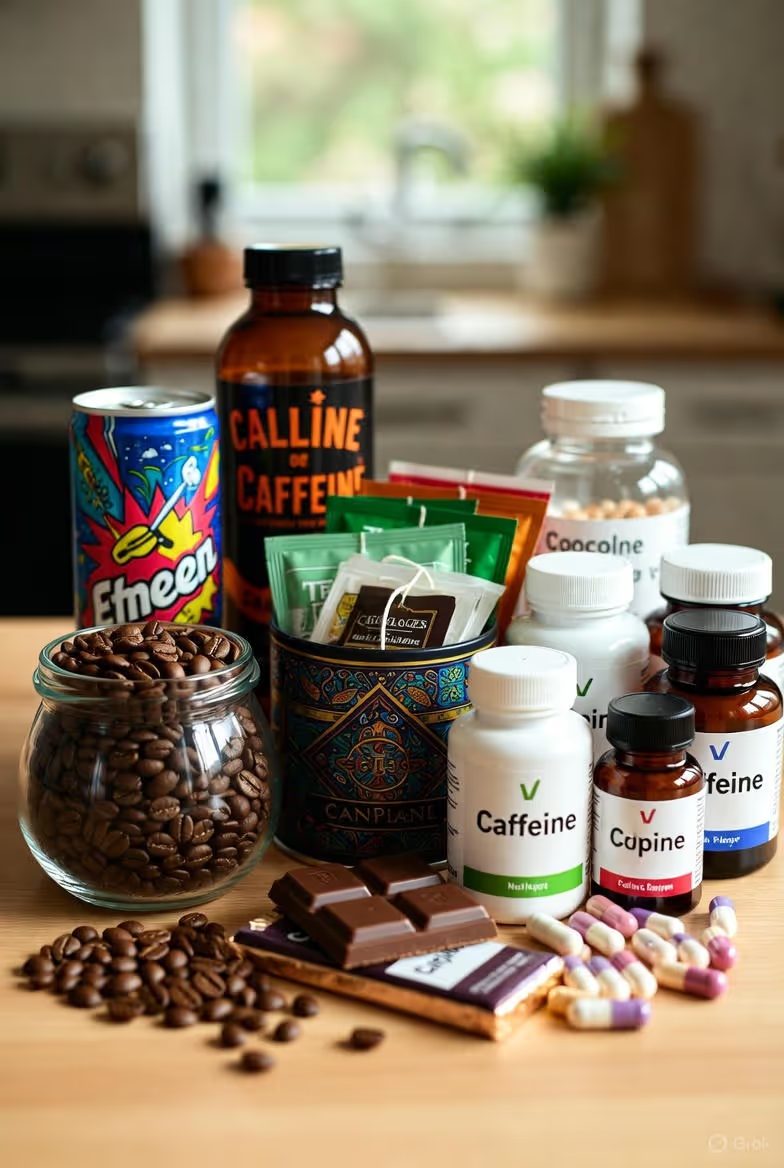
The Cumulative Load: It’s Not Just Coffee Finally, you must account for your total caffeine load. This includes:
Coffee: Varies widely (80–200 mg per 8 oz).
Tea: Black tea (~50 mg), green tea (~30 mg).
Soda: Cola (~40 mg per 12 oz).
Energy Drinks: Can range from 80 mg to 300+ mg.
Dark Chocolate: A 1.5 oz bar can have 30 mg.
Certain Medications: Like Excedrin Migraine (65 mg per tablet).
A “single” afternoon coffee, when added to a morning latte, a lunchtime green tea, and a piece of dark chocolate, represents a significant cumulative dose that will take many hours to clear. Tracking your total intake for a few days can be an eye-opening exercise in understanding your true exposure. For more guidance on navigating these personal health variables, you can always check our FAQ for common questions on metabolism and tracking.
The Golden Cutoff: Calculating Your Personal Caffeine Curfew
Armed with knowledge of half-lives and personal factors, we move from theory to practice: establishing your personal, non-negotiable caffeine curfew. This is the latest time you can consume caffeine without it significantly impairing your sleep quality. It’s not a suggestion; it’s a boundary you set for the sake of your rest.
The 10-Hour Minimum Rule A robust, conservative guideline for protecting sleep is to allow for at least 10 hours between your last caffeine intake and your intended bedtime. This timeframe aims to clear a substantial majority of caffeine from most people’s systems.
How to Calculate Your Curfew:
Determine Your Target Bedtime: When do you need to be asleep? (e.g., 10:30 PM).
Count Backwards 10 Hours: This gives you your strict curfew (e.g., 12:30 PM).
Apply Personal Modifiers: This is the crucial step.
If you are a suspected slow metabolizer, are pregnant, or on medication that slows clearance: Add a 2–3 hour buffer. New curfew: 9:30–10:30 AM.
If you are highly caffeine-sensitive or have insomnia: Consider a 12–14 hour window. New curfew: 8:30–10:30 AM.
If you are a fast metabolizer (and confirmed by experience): You might experiment with a 8-hour window. Curfew: 2:30 PM.
Example in Action: Sarah wants to be asleep by 11:00 PM. She’s a healthy adult but knows she’s sensitive to caffeine.
Base 10-hour rule: Last caffeine by 1:00 PM.
Sensitivity buffer: She opts for a 12-hour window.
Sarah’s Personal Caffeine Curfew: 11:00 AM.
This means her post-lunch coffee is now a decaf herbal tea. It may seem strict, but for Sarah, the difference between a 1 PM coffee and an 11 AM cutoff could be the difference between tossing and turning and achieving deep, restorative sleep.
The “Zero-Caffeine” Bedroom Rule Complement your curfew with an environmental rule: Your bedroom should be a caffeine-free zone, both in concept and in practice. This means no coffee mugs on the nightstand, no evening tea rituals in bed. The bed is for sleep and intimacy only. This psychological association strengthens your brain’s connection between the bedroom environment and sleep, making wind-down more effective. It’s a principle we champion in our holistic approach to wellness, which you can read more about in our company’s core philosophy.
Strategic Consumption: Optimizing Timing for Energy, Not Just Avoiding Sleep Loss
Mastering caffeine isn’t just about damage control at night; it’s about proactive energy optimization throughout the day. Think of yourself as a conductor, using caffeine to accentuate your natural rhythm, not to fight against it.
1. Delay Your First Cup (The 90-Minute Rule) As discussed, wait 90 minutes after waking to allow your cortisol awakening response to complete its natural cycle. Start your day with hydration (water, lemon water), sunlight exposure, and a light movement practice. Then, enjoy your coffee as a strategic boost to carry you through the late morning.
2. Leverage the Post-Lunch Dip The early afternoon (typically 1-3 PM) brings a natural dip in circadian alertness, often compounded by lunch digestion. This is a far better time for a strategic caffeine dose than the morning, assuming it still falls before your personal curfew. A small, controlled amount (e.g., a single espresso, a cup of green tea) here can provide a smooth lift through the afternoon slump without jeopardizing evening sleep.
3. The Power of Small, Strategic Doses Instead of one giant morning mug, consider splitting your total daily intake. For example:
9:30 AM: A medium coffee (150 mg).
1:30 PM: A single espresso or strong black tea (75 mg).
This approach maintains more stable plasma caffeine levels, avoiding the massive spike-and-crash cycle of a single large dose. It provides sustained, even energy and reduces the likelihood of afternoon anxiety or irritability.
4. Synergize with Natural Energy Boosts Don’t let caffeine replace healthy energy habits. Pair your strategic caffeine doses with other alertness-enhancing activities:
Before your afternoon cup: Take a 10-minute brisk walk outside for natural light and movement.
Feeling a dip? Try 5 minutes of deep breathing or a burst of physical activity (jumping jacks, stair climb) before reaching for caffeine. You may find you don’t need it.
Hydrate consistently. Dehydration is a primary cause of afternoon fatigue. Often, a glass of water is what your body is truly asking for.
By viewing caffeine as a precision tool in a larger toolbox—rather than a blunt instrument—you transform your relationship with it. You move from dependence to strategic use. This mindful approach to consumption is something our users often discover when they begin tracking their habits with detailed biometrics, as seen in the transformative stories shared by our community.
Beyond the Bean: The Hidden Caffeine in Your Diet and Medicine Cabinet
Your caffeine curfew is only as good as your awareness. One of the most common pitfalls is unintentional caffeine consumption from non-coffee sources, often consumed later in the day under the mistaken belief they are “caffeine-free.” This stealth caffeine can single-handedly sabotage an otherwise perfect sleep plan.
The Usual (and Not-So-Usual) Suspects:
Tea: All true tea (black, green, white, oolong) comes from the Camellia sinensis plant and contains caffeine. Herbal “teas” (like peppermint, chamomile) are tisanes and are generally caffeine-free. Key Takeaway: A comforting “sleepy-time” blend that contains black or green tea is counterproductive.
Decaf Coffee: It’s not caffeine-free. A typical 8-oz cup of decaf can contain 3–15 mg of caffeine. While low, for the extremely sensitive, multiple cups in the evening could still have an impact.
Chocolate & Cocoa: The darker the chocolate, the higher the caffeine. A 1.5-ounce bar of 70–85% dark chocolate can contain 40-50 mg of caffeine—half a cup of coffee! Hot cocoa also contains some caffeine.
Soda: Colas are obvious, but many citrus-flavored sodas, root beers, and even some orange sodas contain caffeine. Always check the label.
Energy & “Wellness” Drinks: Beyond the branded energy drinks, many “energy waters,” “focus shots,” and even some protein or workout supplements are laced with caffeine (sometimes listed as guarana, yerba mate, or green coffee bean extract).
Pain Relievers: Over-the-counter medications like Excedrin, Migraine formulas, and even some Midol varieties contain significant caffeine (often 65 mg per tablet) to enhance pain relief.
How to Be a Caffeine Detective:
Read Labels Meticulously: Look for “caffeine” in the ingredients or nutrition facts. Also watch for synonyms: guarana, yerba mate, guayusa, green tea extract, green coffee bean extract, cacao.
Audit Your Evening Routine: That piece of dark chocolate after dinner, the chai tea latte in the afternoon, the decaf coffee with dessert—add it all up. It might be crossing your personal threshold.
Choose Explicitly Caffeine-Free Alternatives: For evening beverages, opt for clearly labeled herbal teas (chamomile, rooibos, ginger), caffeine-free sodas, or simply warm water with lemon.
Check Your Medicine Cabinet: If you take any medication for headaches or PMS in the late afternoon or evening, ensure you’re choosing a caffeine-free formulation.
This level of vigilance is not about paranoia; it’s about empowerment. By eliminating hidden sources, you gain true control over your caffeine intake and its effects on your sleep. For a comprehensive look at how diet interacts with sleep and recovery, our blog offers a wealth of research-backed articles on nutritional strategies for better rest.
The Art of the Wind-Down: Creating a Caffeine-Resistant Sleep Sanctuary
Even with perfect caffeine timing, sleep doesn’t happen automatically. You must actively transition your nervous system from the alert, sympathetic “daytime” state to the restful, parasympathetic “nighttime” state. This wind-down routine is your final, critical defense against any residual caffeine effects and the stresses of the day.
The 60–90 Minute Pre-Bed Buffer Designate the last hour before bed as a sacred transition period. This is not idle time; it’s an active process of down-regulation.
1. Light is Your Most Powerful Lever:
Dim the Overheads: 2–3 hours before bed, start lowering ambient light. Use lamps with warm-colored bulbs (under 2700 Kelvin).
Embrace Blue Light Management: While the direct impact on sleep is sometimes debated, bright blue light from screens is undoubtedly alerting and disrupts melatonin production. Enable “Night Shift” or “Blue Light Filter” modes on all devices at sunset. Better yet, implement a digital sunset 60 minutes before bed. No phones, no laptops, no TVs.
Get Morning Light: Don’t forget the front end. Bright morning sunlight exposure is the single strongest cue to anchor your circadian rhythm, making you more alert in the day and ready for sleep at night.
2. Temperature Matters:
Cool the Core: Your body needs to drop its core temperature by about 1–2 degrees Fahrenheit to initiate sleep. A cool bedroom (65–68°F or 18–20°C) is ideal. Take a warm bath or shower 90 minutes before bed; as you exit, the rapid cooling of your body mimics the natural temperature drop and can induce drowsiness.
3. Calm the Nervous System:
Practice Relaxation, Not Stimulation: This is not the time for intense debates, work emails, or thrilling Netflix episodes. Opt for:
Gentle Reading: A physical book (not an e-reader).
Light Stretching or Yoga Nidra: Focus on relaxing, not working out.
Gratitude Journaling: Write down 3 things you were grateful for that day.
Deep Breathing or Meditative Practice: Simple 4-7-8 breathing (inhale 4, hold 7, exhale 8) is remarkably effective.
Create Ritual: Consistency signals safety to your brain. Performing the same sequence of calming activities each night creates a powerful conditioned response for sleep.
By constructing this robust wind-down routine, you accomplish two things: First, you actively lower your body’s arousal level, countering any minor stimulatory effects. Second, you increase your “sleep drive efficiency”—the ease with which you fall into deep, quality sleep. This is the kind of holistic sleep hygiene practice that aligns perfectly with our vision at Oxyzen, which was founded on the principle of using technology to enable these very human, natural rhythms. You can learn more about the inspiration behind this approach in our founding story.
Tracking and Iteration: Using Data to Perfect Your Personal Caffeine Formula
All the theory in the world is meaningless if it doesn’t work for you. Your body is your ultimate laboratory. The final step in mastering caffeine for sleep is to become a curious scientist of your own physiology, using observation and data to refine your personal formula.
The Sleep & Caffeine Journal Method For 2 weeks, keep a simple daily log. Each morning, record:
Yesterday’s Caffeine: Time, source, and estimated amount (mg) of every caffeine dose.
Sleep Metrics (Subjective): Time you went to bed, time you woke up, estimated time to fall asleep, number of awakenings, and most importantly, a 1-5 rating of Sleep Quality and Morning Refreshment.
Notes: Stress level, exercise, alcohol consumption, etc.
Pattern Recognition: After two weeks, look for patterns.
Do you see a clear correlation between caffeine after 2 PM and a “2” sleep quality rating?
Does that single morning coffee, even before your curfew, still cause fragmented sleep?
Does a day with two small doses lead to better energy and sleep than one large one?
Leveraging Technology for Deeper Insight While a journal is powerful, subjective recall has limits. This is where modern wellness technology, like a smart ring, becomes a game-changer. A device worn 24/7 can provide objective data that takes the guesswork out of the equation:
Sleep Architecture: It can show you how much deep sleep (slow-wave sleep) and REM sleep you’re actually getting, not just total time in bed.
Sleep Latency: Precisely how long it takes you to fall asleep.
Resting Heart Rate (RHR) & Heart Rate Variability (HRV): These are excellent biomarkers of recovery and nervous system state. You might notice that on days with later caffeine, your nighttime RHR is elevated and HRV is lowered, indicating your body is under more stress and recovering less effectively.
Body Temperature Trends: Some devices track subtle temperature changes, which are core to circadian rhythm timing.
With this data, you can run clean experiments. For example: “For one week, I will stick to a strict 12 PM curfew. Then, for one week, I will try an 11 AM curfew.” Compare the objective sleep scores, HRV, and RHR data between the two weeks. The results will give you undeniable, personalized evidence for what works for your unique biology.
This process of iteration—hypothesis, experiment, measurement, adjustment—is the cornerstone of personalized wellness. It turns abstract advice into a customized blueprint for your best sleep and energy. To explore how this kind of detailed biometric tracking can inform all aspects of your health, you can discover the capabilities of the Oxyzen smart ring on our homepage.
The Decaf Dilemma and Smart Swaps: Redefining Your Relationship with the Brew
For many, the mere suggestion of choosing decaf or an alternative elicits a visceral reaction—a sense of loss, a compromise on pleasure or ritual. But this mindset is the final barrier to true caffeine sovereignty. Moving beyond caffeine dependency isn't about deprivation; it's about expansion, discovery, and reclaiming control. It’s about having a rich repertoire of beverages and rituals that serve your body’s needs at different times of the day, without a single molecule dictating your sleep.
Decoding "Decaffeinated": What You're Actually Drinking Not all decaf is created equal, and understanding the process can help you choose better.
The Swiss Water Process: Considered the gold standard for chemical-free decaffeination. It uses only water, temperature, and time to remove caffeine, preserving the coffee's original flavor compounds remarkably well. Look for this label if you’re sensitive to chemicals or prioritize purity.
The Carbon Dioxide (CO2) Process: Another solvent-free method that uses pressurized CO2 to extract caffeine. It’s effective and retains good flavor.
Solvent-Based Processes: These use chemicals like methylene chloride or ethyl acetate to strip caffeine. While regulated and the chemicals are burned off, some residue may remain, and the process can strip more flavor. Many specialty coffee drinkers avoid these methods.
The key takeaway: Decaf still contains caffeine. As noted, a typical 8 oz cup has 3–15 mg. For most people, this is negligible, but for the extremely sensitive, multiple evening cups could still have a cumulative effect. The real goal of switching to decaf in the afternoon is to maintain the ritual—the warmth, the taste, the break—without the sleep-disrupting payload.
Curating Your Caffeine-Free Arsenal Building a satisfying "after-curfew" drink cabinet is an adventure in flavor and function.
For the Ritualist (The "I Need a Warm Mug" Person):
High-Quality Decaf: Invest in a beautifully roasted, Swiss Water Process decaf from a local roaster. Brew it with the same care as your regular coffee. The ritual remains sacred; only the caffeine is missing.
Rooibos Tea: Naturally sweet, nutty, and caffeine-free, rooibos (or "red bush") tea is robust enough to feel substantial. It’s also rich in antioxidants.
Cacao-based Elixirs: Pure ceremonial-grade cacao (not hot chocolate mix) whisked with hot water or milk creates a rich, slightly bitter, and deeply satisfying drink. It contains theobromine, a mild stimulant related to caffeine but with a much more gentle, mood-elevating effect that doesn’t interfere with sleep for most.
Golden Milk (Turmeric Latte): A blend of warm milk (or plant milk), turmeric, ginger, cinnamon, and a hint of black pepper and sweetener. Anti-inflammatory, soothing, and perfect for signaling wind-down time.
For the Function-Seeker (The "I Need an Afternoon Lift" Person):
Matcha (in the morning/early afternoon only): While it contains caffeine (about 70 mg per serving), its effects are markedly different. The presence of L-theanine promotes a state of "calm alertness"—focused yet relaxed—without the jitters or crash. Due to its caffeine content, it still needs to abide by your personal curfew.
Yerba Mate (morning/early afternoon): Another caffeinated alternative that offers a different chemical profile, often described as providing clear-headed energy. Use with the same timing rules as coffee.
Peppermint or Ginger Tea: These herbal powerhouses don’t contain stimulants, but their invigorating aromas and flavors can provide a refreshing sensory "reset" that combats afternoon sluggishness.
Sparkling Water with Citrus: Sometimes, the act of drinking something cold, crisp, and bubbly is enough to revive the senses and hydrate you out of a slump.
The Psychological Shift: From Deprivation to Empowerment The most critical swap is mental. Instead of thinking, "I can’t have coffee after noon," reframe it to: "I am choosing rooibos/herbal tea/decaf after noon to protect my sleep and ensure I wake up refreshed." This is the essence of a proactive wellness strategy. You are not being restricted by a rule; you are wielding a tool. You are making a conscious trade: the fleeting pleasure of a late-day latte for the profound, sustained benefit of deep, restorative sleep. This empowered choice is what our community members often report as the most significant shift in their journey—using insights not as a constraint, but as a liberating guide. You can read their stories of transformation and newfound control.
The Vicious Cycle: How Poor Sleep Fuels Caffeine Dependence (and Vice Versa)
We’ve focused primarily on how caffeine disrupts sleep. But to solve this puzzle completely, we must examine the reverse: how disrupted sleep creates a greater perceived need for caffeine, locking you into a self-perpetuating cycle of fatigue. Breaking this loop is the ultimate goal.
The Sleep-Deprived Brain: A Perfect Customer for Caffeine When you don’t sleep well, several things happen that make you reach for the coffee pot:
Increased Sleep Pressure: You wake up with residual adenosine from the previous night still in your system. Your brain is already in a deeper sleep debt.
Circadian Misalignment: Poor sleep weakens the signal of your internal clock. Your morning cortisol surge may be blunted or mistimed, so you don’t get that natural, clean wake-up signal.
Cognitive Impairment: Sleep deprivation directly reduces cognitive performance, attention, and memory. You feel foggy and inefficient.
Emotional Dysregulation: The amygdala (the brain's fear center) becomes more reactive, and the prefrontal cortex (the rational, decision-making center) is impaired. This makes you more prone to stress, irritability, and poor judgment.
In this compromised state, caffeine isn’t a luxury; it feels like a medical necessity. You need an external chemical to blast through the adenosine fog and artificially stimulate the cognitive functions that sleep should have restored. You drink more, and you drink it earlier, just to feel functional.
How This Fuels the Cycle:
You need more caffeine to feel the same effect (tolerance builds faster on a background of sleep debt).
You consume it later to combat the intensified afternoon crash from both sleep deprivation and caffeine withdrawal.
This later, higher dose further fragments your sleep, reducing sleep quality and quantity.
You wake up even more sleep-deprived, with a higher adenosine load, and reach for a stronger, earlier cup...
This is the fatigue trap. You are using caffeine to borrow alertness from tomorrow, at a high interest rate paid in sleep quality. The loan comes due every night, and if you can’t pay it back, the debt compounds.
Breaking the Loop: The Strategic Reset Escaping this cycle requires a deliberate, perhaps uncomfortable, intervention. You must prioritize sleep repayment over caffeine loans.
The First Step is Awareness: Acknowledge the cycle. Use your journal or tracker data to see it in black and white: poor sleep scores followed by earlier/larger caffeine intake days.
Commit to a "Sleep First" Week: For one week, make sleep your non-negotiable priority. Move your bedtime earlier by 60 minutes. Perfect your wind-down routine. Protect your sleep window fiercely.
Gradually Pull Back Caffeine Timing: In tandem, begin moving your caffeine curfew earlier by 15-30 minutes each day. Don’t cut amount drastically yet; just move it earlier in the day to start clearing it from your system before sleep.
Embrace the Temporary Dip: The first 3-5 days might be hard. You may feel more tired as your body adjusts to functioning on real sleep recovery rather than a chemical crutch. This is normal. Support yourself with bright morning light, moderate exercise, and strategic hydration.
Observe the Shift: As sleep quality begins to improve (often visible in tracking data as more deep sleep, higher HRV), you’ll likely find your need for caffeine decreases. You may naturally want less, or find that a single, well-timed cup is sufficient.
Breaking this cycle is the most profound step you can take for your long-term energy and health. It moves you from a state of managed deficit to one of sustainable vitality. It’s a challenging but rewarding process that we’ve designed our technology and resources to support, as detailed in our comprehensive FAQ on managing sleep and energy transitions.
Special Scenarios: Shift Work, Jet Lag, and the "Night Owl" Chronotype
The standard "no caffeine after 2 PM" advice falls apart for millions of people whose circadian rhythms are forcibly or naturally out of sync with the 9-to-5 world. For shift workers, frequent travelers, and dedicated night owls, caffeine timing requires a bespoke strategy centered around one principle: Anchor caffeine to your personal wake-up time, not the clock on the wall.
For the Shift Worker (Especially Night Shifts) Night work is a profound circadian challenge. You are fighting against deeply ingrained evolutionary cues for sleep at night. Caffeine is a necessary tool for vigilance and safety, but it must be used with surgical precision.
Strategic Dosing for Alertness: Plan a moderate caffeine dose at the start of your shift to combat the natural circadian dip that occurs in the early morning hours (2-5 AM). A second, smaller dose might be used at the mid-point of the shift.
The Critical "Stop" Time: Establish a caffeine curfew at least 6-8 hours before your intended sleep time after your shift. If you finish at 7 AM and plan to sleep by 1 PM, your last caffeine should be no later than 5-7 AM. This is difficult but essential.
Post-Shift Wind-Down: After your shift, use light-blocking sunglasses to minimize sunrise light exposure, which will signal your brain to wake up. Go home, eat a light meal, and engage in a deliberate wind-down routine in a darkened room before your daytime sleep.
For the Frequent Flyer (Managing Jet Lag) Caffeine can be a useful ally in resetting your clock, but timing is everything based on direction of travel.
Traveling East (Losing Hours): You need to advance your clock (sleep earlier). Use caffeine strategically in the morning of your new timezone only. It can help you push through the morning grogginess. Absolutely avoid caffeine in the afternoon and evening of the new timezone, as it will further delay your ability to fall asleep earlier.
Traveling West (Gaining Hours): You need to delay your clock (stay up later). Caffeine can be useful in the mid-to-late afternoon of the new timezone to help you stay alert until a later local bedtime. Avoid it in the morning, as you want to adapt to the local morning light signal.
The Golden Rule: On travel day, stay hydrated with water, not coffee. Use caffeine only as a strategic tool aligned with your destination’s schedule once you arrive.
For the Confirmed "Night Owl" (Delayed Sleep Phase) If your natural tendency is to fall asleep after 1 AM and wake after 9 AM, societal norms are constantly misaligned with your biology.
Respect Your Personal Rhythm: Your "morning" is later. Therefore, your 90-minute post-wake caffeine window and your 10-hour pre-bed curfew should be calculated based on your natural wake time. If you wake at 10 AM, your first coffee is at 11:30 AM, and your curfew is 12 PM (midnight bedtime) or earlier.
Use Light as Your Primary Anchor: To help gently nudge your rhythm earlier if desired, get bright light exposure immediately upon waking (even if that's 10 AM), and strictly avoid bright screens and overhead lights after 8 PM. Caffeine timing should support this light strategy.
Advocate for Your Schedule: If possible, negotiate later work start times. Fighting your chronotype with excessive early morning caffeine is a losing battle for sleep quality.
In all these scenarios, the constant is personalization. Your caffeine schedule must be a slave to your sleep schedule, not the sun’s schedule or society’s. This level of personalized rhythm management is at the heart of modern biohacking and is a core focus of advanced wellness tracking. Understanding your unique biological blueprint is the first step, a concept we explore in depth in our resources on personalized health optimization.
Beyond Timing: The Synergistic Role of Diet, Hydration, and Exercise
Caffeine does not act in isolation. The foundation upon which your caffeine strategy is built—your overall lifestyle—determines its ultimate impact on your sleep and energy. You can have perfect caffeine timing, but if the rest of your system is out of balance, sleep will remain elusive.
Diet: The Building Blocks of Sleep Neurotransmitters What you eat provides the raw materials for sleep-regulating chemicals.
Tryptophan & Magnesium: The amino acid tryptophan (found in turkey, dairy, nuts, seeds) is a precursor to serotonin, which is then converted to melatonin. Magnesium (leafy greens, nuts, seeds, legumes) is a natural muscle relaxant and supports GABA function, a calming neurotransmitter. A diet deficient in these can undermine sleep regardless of caffeine timing.
Blood Sugar Stability: Large, heavy, or sugary meals close to bedtime force your body to focus on digestion, not rest. Spikes and crashes in blood sugar can also cause nighttime awakenings. Finish eating 2-3 hours before bed.
Alcohol: The Deceptive Depressant: While alcohol may help you fall asleep initially, it severely fragments the second half of the sleep cycle, obliterating restorative REM sleep. It also dehydrates you, worsening sleep quality. Combining late alcohol with even moderate afternoon caffeine is a guarantee of poor, non-restorative sleep.
Hydration: The Double-Edged Sword Caffeine is a mild diuretic, meaning it increases urine production.
The Dehydration-Fatigue Link: Even mild dehydration can manifest as fatigue, brain fog, and headaches—symptoms we often misinterpret as needing more caffeine. This can lead to overconsumption.
The Nighttime Disruption Risk: If you consume caffeine (or even large volumes of liquid) too close to bedtime, you risk nocturia—waking up to use the bathroom—which fragments your sleep.
The Strategy: Front-load your hydration during the first half of the day. Aim to meet the majority of your water intake well before your caffeine curfew. After your last caffeinated drink, switch to small sips of water or herbal tea as needed.
Exercise: The Ultimate Regulator Physical activity is one of the most powerful tools for improving sleep and reducing reliance on caffeine.
Timing Matters: Regular exercise, especially in the morning or afternoon, reinforces a strong circadian rhythm, increases sleep pressure (adenosine buildup), and reduces anxiety. However, vigorous exercise within 1-2 hours of bedtime can be overly stimulating for some people due to increases in core body temperature and adrenaline.
The Caffeine-Exercise Interaction: Many use pre-workout caffeine. This is fine, but ensure it’s timed so that the caffeine has cleared your system well before bedtime. A 5 PM intense workout fueled by a 4:30 PM pre-workout drink is a direct threat to 11 PM sleep.
The Sleep-Quality Dividend: Consistent exercise increases the amount of slow-wave deep sleep you get. Better deep sleep means you wake more refreshed, reducing your baseline need for artificial stimulation.
Think of lifestyle as the bedrock, caffeine timing as the structure built upon it. A weak bedrock (poor diet, dehydration, sedentary life) will cause even a perfectly engineered structure (caffeine timing) to crack and falter. By strengthening all pillars simultaneously, you create a resilient system for energy and sleep. This holistic, systems-based approach to wellness is fundamental to our mission at Oxyzen, which you can learn more about here.
Long-Term Adaptation: Tolerance, Breaks, and Sustainable Use
Your relationship with caffeine is not static. With chronic use, your brain adapts, leading to tolerance. This adaptation is the reason the initial magic of one cup fades, pushing you toward larger or more frequent doses to achieve the same effect. Managing this long-term relationship is key to preventing a creeping escalation that inevitably harms sleep.
Understanding Tolerance: Your Brain’s Counter-Move When you chronically block adenosine receptors with caffeine, your brain doesn’t just stand by. It responds in two main ways:
Upregulation of Adenosine Receptors: Your brain may create more adenosine receptors. This means more receptors need to be blocked to achieve the same effect, and when caffeine wears off, there are more receptors available for adenosine to bind to, intensifying the withdrawal crash and fatigue.
Changes in Neurotransmitter Systems: The delicate balance of dopamine and other neurotransmitters can be altered with chronic high-dose use.
The result? You need more caffeine to feel "normal," and you feel worse without it. This state directly opposes your goal of natural energy and sound sleep.
The Power of the Strategic Caffeine "Reset" or "Fast" To combat tolerance and resensitize your system, periodic resets are incredibly effective. This isn't about permanent abstinence, but about a short-term break to clear the adaptation.
The Method: A complete caffeine break for 7-14 days. This allows adenosine receptor levels to return to baseline and your natural neurotransmitter balance to restore.
The Process: The first 2-3 days are the hardest, often marked by headaches, fatigue, irritability, and even flu-like symptoms as your brain re-adjusts. This is temporary. Support yourself with extra sleep, hydration, light exercise, and perhaps a small dose of over-the-counter pain reliever (caffeine-free) if needed.
The Reward: After the reset, you become exquisitely sensitive to caffeine again. A single small cup will provide a pronounced, clean boost. This allows you to re-establish use at a much lower, more effective, and less sleep-disruptive dose.
Building a Sustainable, Low-Tolerance Protocol After a reset (or even without one), you can adopt habits that minimize tolerance buildup:
Adhere to the Minimum Effective Dose: Never use more caffeine than you need to achieve the desired focus or alertness. Start with half a cup.
Maintain Your Curfew Religiously: Protecting your sleep is the number one way to reduce your baseline need for caffeine, breaking the dependency cycle.
Incorporate Regular "Low-Caffeine" Days: Designate 1-2 days per week (e.g., weekends) where you have zero caffeine or only a single, small morning dose. This prevents your brain from fully adapting to a constant daily presence.
Cycle Your Sources: Occasionally swap coffee for tea or matcha. The different phytochemical profiles and slightly lower doses can provide a benefit without contributing to the same linear tolerance pathway.
This long-term view transforms caffeine from a daily crutch into a precision performance tool you control. It ensures that your enjoyment of coffee or tea remains a pleasure, not a necessity, and that it never becomes the primary obstacle to the deep, natural sleep your body craves. For those interested in the journey of optimizing their biology over the long term, the narrative of our own brand’s development reflects this commitment to sustainable wellness.
Conclusion of This Portion: Integrating Knowledge into a Actionable Daily Protocol
We have journeyed from the microscopic battle at your adenosine receptors to the macroscopic influence of your lifestyle, from the strict mechanics of half-lives to the fluid art of the wind-down ritual. This knowledge is powerful, but it only becomes transformative when synthesized into a simple, repeatable daily protocol. Here is your integrated action plan, a blueprint for enjoying caffeine while championing your sleep.
Your Daily Caffeine-for-Sleep Optimization Protocol:
Morning (Upon Waking - 10:00 AM):
Hydrate First: Drink a large glass of water.
Seek Light: Get 10-15 minutes of bright outdoor light (or use a light therapy lamp if necessary) to anchor your circadian rhythm.
Delay Your Dose: Wait at least 90 minutes after waking before your first caffeine.
Consume Strategically: Enjoy your first coffee/tea between 9:30 AM - 10:30 AM (adjust based on your wake time). Make it a mindful ritual.
Afternoon (12:00 PM - Your Personal Curfew):
Lunch Light: Have a balanced meal, focusing on protein, fiber, and healthy fats to stabilize energy.
Post-Lunch Movement: Take a 10-minute walk outside if possible.
Afternoon Lift (Optional & Early): If needed, a small, strategic caffeine dose (espresso, green tea) before 2:00 PM (or your calculated curfew, whichever is earlier). First, try a glass of water or deep breathing.
Declare Curfew: Know your hard stop time (e.g., 1:00 PM) and honor it. Switch to decaf, herbal tea, or water.
Evening (2 Hours Before Bed - Bedtime):
Digital Sunset: Begin dimming lights and power down screens. Use blue-light filters.
Wind-Down Ritual: Engage in your consistent, calming sequence: reading, gentle stretching, journaling, meditation.
Environment Check: Ensure your bedroom is cool, dark, and quiet.
Bed for Sleep Only: Get into bed when you are sleepy, not just to rest. This strengthens the mental association.
Weekly/Monthly Habits:
Track: Use a journal or wearable for 2 weeks to identify personal patterns.
Audit: Check labels for hidden caffeine in medications, sodas, and snacks.
Reset (Quarterly Consideration): Plan a 7-10 day caffeine reset every few months if you feel tolerance building.
Refine: Continuously use your sleep quality as feedback to tweak your curfew or habits.
This protocol is not a rigid prison; it’s a framework for freedom. It frees you from the anxiety of sleepless nights and the desperation of morning fatigue. It allows you to participate fully in the culture and pleasure of coffee or tea without becoming its victim. By taking control of the timing, you dissolve the paradox. You can have both: the vibrant, focused day and the deep, restorative night.
The journey to better sleep naturally, even after coffee, is a journey of self-knowledge. It’s about listening to the subtle signals of your body, respecting its innate rhythms, and using tools like caffeine with intelligence and intention. You now have the map. The path to restful nights and energized days is clear.
The Social Cup: Navigating Coffee Culture Without Sacrificing Your Sleep
For many, coffee is more than a personal ritual; it's a social glue. It’s the “let’s grab a coffee” invitation, the conference room carafe, the after-dinner espresso shared among friends. This cultural dimension adds a significant layer of complexity to managing caffeine for sleep. Saying “no” can feel awkward, antisocial, or unprofessional. But protecting your sleep is a form of self-respect that, with a little strategy, doesn’t have to come at the cost of connection.
The Psychology of the Social Offer A coffee invitation is rarely about the beverage itself. It’s a bid for connection, a pause in the day, a signal of “I want to talk to you.” The pressure to accept the coffee is often pressure to accept the connection, not the caffeine. Recognizing this distinction is the first step to a graceful decline. You are rejecting the stimulant, not the person or the moment.
Building Your Arsenal of Graceful Declinations Have a few prepared, polite scripts ready for different scenarios. The key is to be positive and offer an alternative that keeps the social ritual intact.
For the Casual "Grab a Coffee" Invitation:
“I’d love to! I’m actually cutting off caffeine for the day, but I’m definitely in for a decaf/herbal tea/match for a walk. Where should we meet?”
“That sounds great. Can we make it a tea? I’m trying to sleep better these days.”
For the Business Meeting:
When the server comes, simply say, “I’ll have a decaf coffee, please,” or “Just a sparkling water for me, thanks.” You rarely need to justify your order. If a colleague comments, a simple, “I’m fine, just keeping it light this afternoon,” suffices.
If you’re in charge of ordering, be a hero: “I’m getting a round of drinks—coffee, decaf, and tea. What’s everyone’s preference?” This normalizes the choice for everyone.
For the Dinner Party or Host’s Home:
When offered an after-dinner espresso or coffee, smile and say, “That sounds lovely, but I’ll have to pass tonight. I’d love a decaf or a tea if you have it, though.”
A great proactive move is to bring a contribution: “I brought some amazing decaf beans/herbal tea to try after dinner. Would anyone like to join me?” This positions you as a connoisseur, not a refuser.
The Power of "I" Statements and Positive Framing Frame your choice around your positive goals, not a deprivation. This is more relatable and less likely to invite debate.
Instead of: “I can’t, caffeine keeps me up.”
Try: “I’m really focusing on my sleep hygiene these days, so I’m sticking to decaf after noon. I’ve been waking up feeling amazing!”
Or: “I’ve found I enjoy my morning coffee so much more when I stop earlier in the day.”
This shifts the narrative from what you’re denying yourself to what you’re gaining—better sleep, more energy, a more mindful routine. You might even inspire others to reflect on their own habits.
Turning the Tables: Becoming a Connoisseur of Alternatives This is your opportunity to elevate the social experience beyond just caffeine. Become an advocate for the ritual itself.
Discover and Share: Find a fantastic decaf roast from a local roaster (the Swiss Water Process ones are often excellent). Be the person who says, “You have to try this decaf—it tastes just as good without the jitters.”
Explore the World of Herbal Teas: Introduce friends to a fragrant peppermint, a soothing chamomile with honey, or a spicy ginger-turmeric blend. Frame it as a delicious, functional wind-down.
Reframe the “Nightcap”: In evening social settings, suggest a caffeine-free alternative as the sophisticated choice. “How about we finish with a pot of peppermint tea? It’s so refreshing and digestif.”
By taking this proactive, positive stance, you disarm social pressure. You demonstrate that mindful consumption is a choice aligned with a high-quality life, not a restriction. It’s a subtle form of leadership in wellness. As our community members often discover, this kind of mindful habit formation is easier with support and shared experiences, which you can find by connecting with others on a similar journey.
From Bean to Brew: How Roast, Preparation, and Serving Size Change the Game
You’ve mastered the clock, but do you know the true dose in your cup? The caffeine content of your beverage is not a fixed number. It’s a variable influenced by the bean, the roast, the grind, the brew method, and the volume you pour. Understanding these levers allows for finer control, letting you potentially enjoy the flavor later in the day with a significantly reduced stimulant payload.
The Great Roast Myth: Dark vs. Light A pervasive myth is that dark roast coffee is stronger in caffeine. The opposite is generally true.
The Physics: When coffee beans are roasted longer (to a dark roast), they lose more mass through water evaporation and the breakdown of organic compounds. By weight, dark roast beans are less dense. Therefore, if you measure your coffee by scoops (by volume), you will use more dark roast beans to fill the same scoop, potentially leading to more caffeine. However, if you measure by weight (the professional standard), the caffeine content between roasts for the same weight of beans is quite similar, with a slight edge to light roasts because the roasting process degrades caffeine very slowly.
Key Takeaway: The roast level primarily affects flavor (light = brighter, acidic; dark = bolder, bitter), not caffeine content in a dramatic way. Don’t choose a dark roast thinking it will have less caffeine.
Brew Method: The Ultimate Extractor This is where the biggest differences lie. Caffeine extraction depends on water temperature, contact time, and grind size.
Espresso: While intense in flavor, a single shot (1 oz) typically contains only 60-80 mg of caffeine. The very fine grind and high pressure extract flavors and caffeine quickly, but the small serving size limits the total dose. A doppio (double) is 120-160 mg.
Drip Coffee: The champion of caffeine volume. An 8-oz cup can range from 80-200+ mg, depending on the coffee-to-water ratio and brew time. The longer contact time of water with the grounds extracts more caffeine.
French Press/Cold Brew: These methods often use a higher coffee-to-water ratio and very long steep times (4-24 hours for cold brew), resulting in a highly concentrated brew. A serving of cold brew can easily exceed 200 mg of caffeine. Dilution is key.
Instant Coffee: Generally contains less caffeine per cup, around 60-80 mg, due to the processing.
The Hidden Variable: The "Standard" Cup Doesn't Exist The single greatest source of caffeine miscalculation is serving size. When research says “a cup of coffee,” it typically means 8 fluid ounces. But what does your mug hold?
A “grande” at many coffee shops is 16 oz. That’s two “cups” by research standards.
Your favorite ceramic mug at home might hold 12 oz.
You might habitually fill your travel tumbler to the brim with 20 oz.
If you’re basing your curfew on the assumption of one 100 mg “cup,” but you’re actually drinking 16 oz of strong drip coffee (≈250 mg), your calculations are off by a factor of 2.5. This error alone could explain persistent sleep issues.
Actionable Steps for Precision:
Know Your Vessel: Measure the volume of your favorite mug and travel cup.
Brew with a Scale: If you brew at home, using a simple kitchen scale to measure coffee beans (grams) and water (grams/ml) is the gold standard for consistency and allows you to better estimate your dose.
Ask or Research: For chain coffee shops, caffeine information is often available online. For independents, you can ask what their standard recipe is (e.g., how many grams per shot or per batch).
When in Doubt, Assume Strong: If you don’t know, err on the side of assuming a higher caffeine content, especially for large servings of drip, cold brew, or French press.
This knowledge transforms you from a passive consumer to an active formulator. You can choose a single espresso for a late-morning lift with a known, smaller dose, or opt for a large, lightly brewed tea. It’s not about avoidance; it’s about informed selection. For more detailed explorations of how everyday choices impact your biochemistry, our blog is a resource for deep dives into this kind of practical science.
Life Stages and Transitions: Adapting Your Caffeine Strategy for Pregnancy, Menopause, and Beyond
Your body’s relationship with caffeine is not static across a lifetime. Hormonal shifts, changes in metabolism, and evolving health priorities demand that your caffeine strategy evolve too. What worked in your twenties may sabotage your sleep and health in your forties or during key life transitions.
Pregnancy and Lactation: The Era of Ultra-Slow Clearance This is the most critical period for caffeine modification. The enzyme (CYP1A2) that metabolizes caffeine is significantly suppressed by pregnancy hormones, slowing clearance by up to three times. Caffeine also freely crosses the placenta, and the fetus lacks the enzymes to process it.
Updated Half-Life: A 5–6 hour half-life can stretch to 15–18 hours. A coffee at 8 AM could have a quarter of its caffeine still active in your system at midnight.
Health Guidelines: Most health authorities recommend limiting caffeine intake to 200 mg per day or less during pregnancy. This is not just about sleep; higher intake has been associated with increased risks.
Strategic Timing Becomes Paramount: If you choose to consume caffeine, the “10-hour rule” becomes a 15–20 hour rule. The only truly safe window is a single, small dose first thing in the morning (and even then, waiting 90 minutes post-wake is still wise for cortisol rhythm). For many, switching entirely to decaf or eliminating caffeine is the simplest and safest path during this season.
Perimenopause and Menopause: Navigating Insomnia and Sensitivity The hormonal rollercoaster of perimenopause and the sustained low estrogen of menopause frequently bring sleep disturbances—hot flashes, night sweats, and increased anxiety. Caffeine can exacerbate every single one of these issues.
Amplified Stimulation: Lower estrogen levels may increase sensitivity to caffeine’s stimulating effects, making you feel more jittery or anxious from the same dose.
Thermoregulation Disaster: Caffeine can act as a vasodilator and may trigger or worsen hot flashes for some women.
The Fragile Sleep Foundation: With sleep already under siege, caffeine’s disruptive effects on sleep architecture are magnified. Losing even 30 minutes of deep sleep is more consequential when you’re struggling to get any.
The New Strategy: This is a time for extreme gentleness. Consider moving your curfew to before 10 AM. Drastically reduce your dose. Experiment with eliminating caffeine for 30 days to see if it reduces frequency of hot flashes or improves sleep continuity. Herbal alternatives like chicory root or rooibos become invaluable.
Aging and Slowing Metabolism As we age, our liver metabolism naturally slows down. The average half-life of caffeine may gradually lengthen. Furthermore, older adults are more likely to be on medications that interact with caffeine (for blood pressure, heart conditions, etc.).
The Silent Accumulation: That lifelong habit of a 3 PM coffee may suddenly start causing noticeable nighttime wakefulness or anxiety in your 50s or 60s because it’s no longer clearing as efficiently.
Medication Interactions: Many common medications compete for the CYP1A2 enzyme. These include certain antidepressants (fluoxetine, fluvoxamine), heart medications, and antibiotics (ciprofloxacin). This can dramatically increase caffeine’s potency and duration.
The Wise Approach: Treat caffeine with increased respect. Re-evaluate your timing and dose every few years. Have an open conversation with your doctor or pharmacist about potential interactions with any medications. Embrace the ritual of decaf or tea.
In each of these stages, the core principle is listen and adapt. Your body sends clear signals. Worsening sleep, new anxiety, or hot flashes are data points. Use them to experiment and adjust your protocol. This respectful, responsive approach to your changing biology is a cornerstone of personalized health, a philosophy we detail in our guide to adapting wellness strategies through life’s chapters.
The Deep-Dive FAQ: Answering Your Nuanced Caffeine and Sleep Questions
Even with a comprehensive guide, specific, nuanced questions always arise. Let’s tackle some of the most common and complex queries that sit at the intersection of caffeine science and practical sleep hygiene.
Q1: I can drink an espresso after dinner and fall asleep fine. Does caffeine just not affect me? This is a common claim, but it’s important to distinguish between sleep latency (time to fall asleep) and sleep architecture (the quality and structure of your sleep). You may fall asleep due to high sleep debt or habit, but caffeine in your system almost certainly reduces the amount of deep, slow-wave sleep and REM sleep you get. You might sleep, but not restoratively. The only way to know for sure is to compare objective sleep data (from a tracker that measures sleep stages) on nights with and without late caffeine. Chances are, you’ll see a difference in restfulness, even if you don’t recall waking up.
Q2: Does adding milk or fat to my coffee slow the absorption of caffeine? Minimally, and not in a clinically significant way for sleep timing. While fat can slow gastric emptying slightly, caffeine is a small, highly absorbable molecule. The difference in peak plasma concentration time is likely a matter of minutes, not hours. Don’t rely on a fatty meal or creamer to mitigate a late coffee; it won’t change the half-life or the ultimate impact on your adenosine receptors.
Q3: What about “half-caf” or blending regular with decaf? This is an excellent strategy for dose control! It allows you to maintain the ritual and flavor while halving (or quartering) the caffeine dose. You can enjoy a larger, more satisfying cup in the late morning or early afternoon without a massive stimulant load. It’s a perfect middle path for those who are sensitive but not ready to go fully decaf.
Q4: How does caffeine interact with melatonin supplements? They work in direct opposition. Caffeine blocks adenosine to promote alertness; melatonin is the hormone that signals darkness and prepares the body for sleep. Taking caffeine too late effectively tells your brain it’s still daytime, undermining the signal of your melatonin supplement. If you use melatonin, it’s even more critical to have a wide buffer (10+ hours) between your last caffeine and your supplement time. Otherwise, you’re sending your brain conflicting chemical memos.
Q5: I’ve heard L-Theanine (in tea) helps. Can I take it with coffee to reduce jitters and sleep impact? L-Theanine, an amino acid abundant in green tea, promotes alpha brain waves associated with relaxed focus. Combining it with caffeine (in a ~2:1 L-Theanine to caffeine ratio, e.g., 200mg L-Theanine with 100mg caffeine) can indeed smooth out the stimulant effect, reducing jitters and anxiety for many. This can create a more focused, calm energy. However, it does not shorten caffeine’s half-life or eliminate its adenosine blockade. You will still have active caffeine in your system for the same duration, potentially disrupting sleep architecture if consumed too late. It improves the quality of the alertness, not the sleep safety window.
Q6: Does exercise help “burn off” caffeine faster? Not directly. Caffeine is metabolized almost exclusively by the liver. However, exercise can subjectively make you feel better if you’re over-caffeinated (by burning off nervous energy) or in withdrawal (by releasing endorphins). Furthermore, regular exercise improves overall sleep quality and circadian strength, making you more resilient to sleep disruptions from all sources, including smaller amounts of caffeine.
Q7: My smart ring shows a higher resting heart rate on days I have afternoon coffee. Why? This is a fantastic example of using data. Caffeine is a stimulant—it reliably increases heart rate and blood pressure. If you consume it late enough that it’s still active during your early sleep period, your resting heart rate (which should drop to its lowest point during deep sleep) will remain elevated. This means your nervous system is not fully downshifting into “rest and digest” (parasympathetic) mode. It’s a clear, objective biomarker that your caffeine timing is interfering with physiological recovery. This kind of precise feedback is exactly what makes devices like the Oxyzen ring so powerful for personal experimentation. You can discover how this technology provides these precise insights.
The Mindful Sip: Cultivating a New Relationship with Your Ritual
Ultimately, the journey from caffeine-induced sleep disruption to harmonious energy management is as much about the mind as it is about the molecule. It’s about transitioning from automatic, compulsive consumption to mindful, intentional choice. This final shift in perspective is what seals all the tactical knowledge into a lasting lifestyle change.
From Reactivity to Intention Most people drink coffee reactively: “I’m tired,” “It’s 3 PM,” “Everyone else is having one,” “It’s just what I do.” Mindful consumption asks you to insert a pause between the impulse and the action.
The Pause: Before you brew or order, ask: “Why am I choosing this right now? What need am I trying to meet?” Is it true fatigue, boredom, habit, or social ease?
The Check-In: “Where am I in my daily timeline? Have I passed my personal curfew?” “How did I sleep last night?” (Poor sleep last night means you need more sleep, not more caffeine today).
The Conscious Choice: Based on that check-in, you choose. Maybe you choose a full-caf coffee at 10 AM. Maybe you choose a decaf at 2 PM. Maybe you choose a glass of cold water and a 5-minute walk at 4 PM. The power is in the conscious selection.
The Ritual, Redefined The beauty of the coffee ritual—the grind of the beans, the aroma, the warmth of the mug, the pause—does not belong to caffeine. You can transfer that ritual to any beverage.
Create a Decaf/Herbal Tea Ritual: Use a beautiful teapot, a special cup, a specific quiet moment. The mindfulness and comfort remain intact.
Savor the First Sip: Whether it’s caffeine or not, drink slowly. Taste it fully. Let that moment be a true break, not just a fuel stop.
Embracing the Nuance: It’s a Spectrum, Not a Binary The goal is not caffeine puritanism. It’s optimization. Some days you’ll have a later coffee at a special social event. The world won’t end. The key is that it’s a conscious, occasional choice, not an unthinking daily habit. You understand the trade-off (slightly less deep sleep that night) and accept it knowingly. The next day, you return to your protocol.
This mindful approach fosters a gentle, curious relationship with your own body. You become an observer, a collaborator, rather than a frustrated opponent fighting against fatigue. You learn to trust your body’s signals again, supported by data and knowledge. This journey of mindful optimization is at the very heart of why Oxyzen was created—to provide the clarity needed to make these informed, empowering choices every day. You can learn more about this vision and our mission.
Conclusion and Your Personalized Action Plan
We have traversed the complete landscape of caffeine and sleep, from cellular pharmacology to social dynamics, from biological clocks to life stages. You now hold the knowledge to dismantle the caffeine-sleep paradox. Let’s crystallize this into your final, personalized, and actionable roadmap.
Your Comprehensive Caffeine & Sleep Optimization Plan:
Phase 1: The Knowledge Audit (Week 1)
Calculate Your Baseline: For 7 days, log EVERY caffeine source (time, type, estimated mg) and your subjective sleep quality (1-5 scale). Use a notes app or journal.
Determine Your Chronotype: Are you a natural early riser, a night owl, or in between? Note your natural wake-up time without an alarm on a free day.
Identify Personal Factors: Do you suspect you’re a slow metabolizer? Are you on any medications? Are you in a key life stage (pregnancy, menopause)?
Phase 2: The Strategic Implementation (Week 2-3)
Set Your Personal Caffeine Curfew: Using the 10-hour rule and your personal factors from Phase 1, calculate your hard stop time. Write it down. (Example: “Caffeine Curfew: 1:00 PM”).
Delay Your First Dose: Commit to waiting 90 minutes after waking for your first caffeinated beverage. Hydrate and get light first.
Measure Your Dose: Understand the true volume and caffeine content of your usual drinks. Consider switching to “half-caf” or smaller servings.
Craft Your Wind-Down: Establish a 60-minute pre-bed routine without screens. Incorporate relaxation (reading, stretching, meditation) in dim light.
Communicate Your Plan: Politely inform close friends/family of your new timing to manage social expectations.
Phase 3: Refinement and Long-Term Mastery (Ongoing)
Track Objectively (If Possible): Use a sleep tracker (like a smart ring) for 2-4 weeks to see the objective impact on your sleep stages, resting heart rate, and HRV. Look for improvements in deep sleep and morning readiness scores.
Tweak Based on Data: If sleep isn’t improving, move your curfew 30 minutes earlier. If you’re feeling great, note what’s working.
Plan Quarterly Resets: If you feel your tolerance increasing (needing more for the same effect), schedule a 7-10 day full caffeine break.
Embrace Alternatives: Build a repertoire of satisfying decaf and herbal options for post-curfew and social moments.
Re-Evaluate with Life Changes: Revisit this plan during any major life transition, change in medication, or as you age.
The Ultimate Goal: Sovereignty The destination of this journey is caffeine sovereignty. You are no longer at the mercy of a molecule or a cultural habit. You are the architect of your own energy and sleep. You can enjoy the rich culture and pleasure of coffee and tea, not as a crutch, but as a conscious choice within a framework designed to serve your highest health and vitality.
You possess the map and the tools. The path to better sleep naturally, even after coffee, is now yours to walk. Begin tonight, not with a drastic change, but with a single, mindful choice. Perhaps it’s choosing a herbal tea after dinner. That single choice is the first step toward reclaiming your night and revitalizing your day.



%402x.svg)