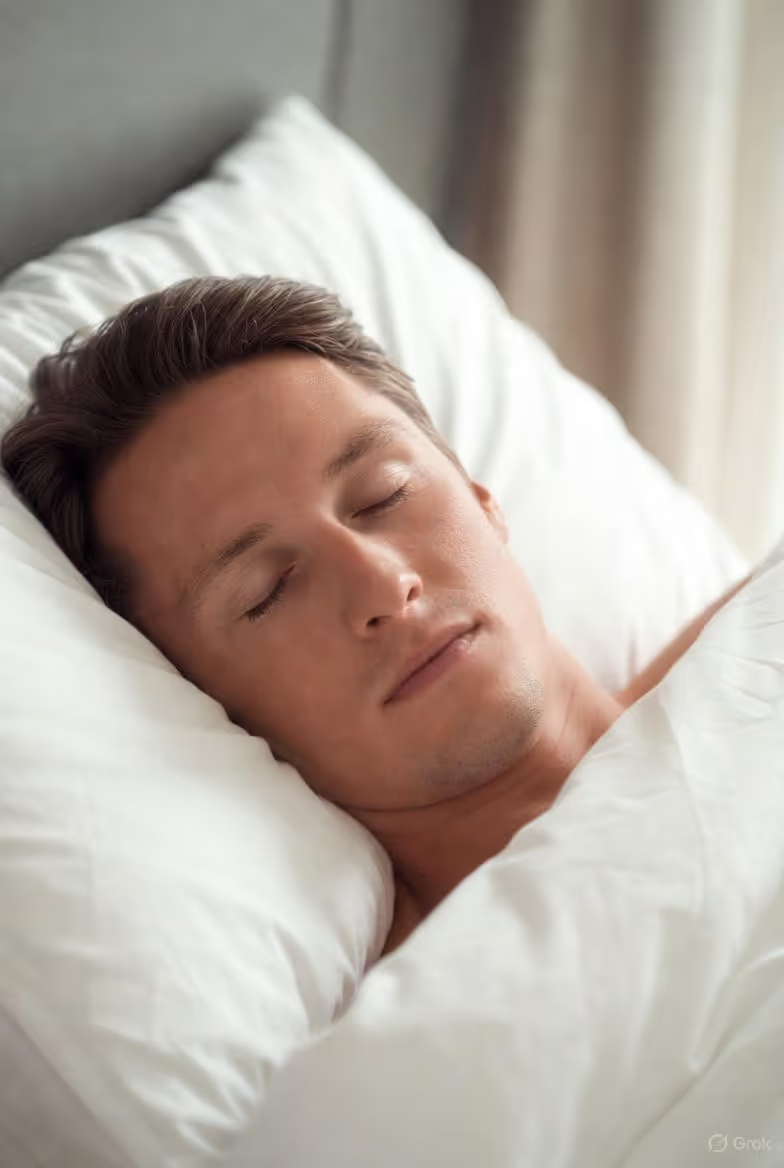
Better Sleep Naturally: Ancient Wisdom Meets Modern Science
Ancient sleep wisdom combined with modern scientific understanding creates powerful natural rest strategies. This guide bridges traditional practices from various cultures with current sleep research, validating time-tested methods and explaining their mechanisms for enhanced credibility and effectiveness.
Better Sleep Naturally: Ancient Wisdom Meets Modern Science
In the quietest hours of the night, a silent epidemic rages. We toss, we turn, we stare at the ceiling, counting not sheep but the dwindling hours until our alarm screams. We’ve tried the pills, the podcasts, the perfect pillow, yet true, restorative sleep feels like a relic of a simpler past. We’re a generation armed with more sleep science than ever, yet we’re more exhausted than ever. What are we missing?
The answer might lie not in a forward leap, but in a profound glance backward—and a precise look at our own data.
For millennia, across every culture, sleep was not an isolated biological function to be optimized, but a sacred rhythm woven into the fabric of life, governed by the sun, the seasons, and sacred rituals. Ancient Greek physicians prescribed dream incubation in temples of Asclepius. Ayurvedic texts from India detailed precise nightly routines (ratri-charya) for balancing life forces. Traditional Chinese Medicine mapped sleep quality to the flow of Qi through organ systems at specific night hours.
These traditions understood something we have forgotten: sleep is a holistic state of being. It is deeply connected to what we eat, when we move, how we breathe, and what we believe. It is not just about the night; it’s about the entire day that precedes it.
Modern science, armed with EEGs, polysomnography, and advanced biometric sensors, is now arriving at the same conclusion—but from the opposite direction. Neuroscience validates the critical importance of deep sleep and REM for memory consolidation and emotional processing. Endocrinology confirms how light exposure dictates our melatonin curve. Chronobiology reveals our individual, genetically influenced sleep-wake patterns. The data is unequivocal: poor sleep is a primary driver of inflammation, metabolic dysfunction, cognitive decline, and emotional fragility.
So, we stand at a unique crossroads in human history. For the first time, we can marry the timeless, holistic principles of ancient sleep wisdom with the precise, personalized feedback of modern wearable technology. This isn’t about choosing tradition over technology, or nature over data. It’s about fusion. It’s about using a tool like the Oxyzen smart ring—which tracks your heart rate variability, blood oxygen, skin temperature, and sleep stages with clinical-grade precision—to objectively measure whether those ancient practices actually work for you.
This journey is about reclaiming your birthright to deep, natural sleep. We will delve into the forgotten rituals, dissect the cutting-edge science, and provide a actionable blueprint for integration. The goal is not just more sleep, but better sleep—the kind that leaves you truly renewed.
The Ancient Architecture of Sleep: How Our Ancestors Mastered Rest
Before artificial light severed our bond with the sunset, before the constant ping of notifications fractured our attention, humanity slept in a rhythm dictated by the cosmos. This wasn’t primitive ignorance; it was an elegant adaptation to the natural world. Understanding this "ancient architecture" is the first step to rebuilding our own restorative sleep.
The Primacy of Circadian Rhythms (Before They Had a Name) Our ancestors didn’t need to read studies about blue light; they lived by the ultimate Zeitgeber—the sun. Waking with dawn and winding down at dusk inherently synchronized their internal clocks. This solar alignment regulated not just sleepiness, but digestion, hormone release, and cellular repair. Seasonal changes further modulated sleep duration, with longer nights in winter inviting more rest—a natural form of what we now call "sleep extension" for immune support.
The Myth of the Monolithic Eight-Hour Block Historical records, including seminal work by historian A. Roger Ekirch, reveal a fascinating pattern: segmented sleep (or biphasic sleep). People in many pre-industrial European societies commonly experienced a "first sleep" of a few hours after dusk, followed by a wakeful period of an hour or more (often used for quiet reflection, intimacy, or prayer), and then a "second sleep" until morning. This pattern suggests our biology may be naturally inclined toward a segmented rhythm, challenging the modern pressure for a single, unbroken eight-hour coma. The anxiety of nighttime wakefulness may, in part, stem from fighting this inherent pattern.
Ritual as a Neurological Wind-Down Every ancient culture embedded sleep within ritual. These were not mere superstitions; they were behavioral triggers for the nervous system.
Ayurvedic Ratri-Charya: This "night routine" includes practices like a light evening walk (shair), a warm oil massage (abhyanga), and meditation. The science behind this is profound: the massage and warmth signal safety to the vagus nerve, activating the parasympathetic ("rest and digest") nervous system.
Chinese Medicine & The Organ Clock: This system posits that energy (Qi) flows through different organ meridians at specific two-hour intervals. The hours of 11 PM - 1 AM, for instance, are governed by the Gall Bladder (decision-making), and 1 AM - 3 AM by the Liver (detoxification and emotion processing). Disrupted sleep during these windows was seen as a sign of imbalance in the corresponding organs—a concept that intriguingly parallels modern insights into the body's nightly detoxification and repair cycles.
Evening Storytelling & Community: Gathering by firelight for stories or song wasn't just entertainment. It served as a communal processing of the day’s events, reducing cognitive load and anxiety. The social connection released oxytocin, reducing cortisol and creating a state of psychological safety conducive to sleep.
The core takeaway from this ancient architecture is that sleep was contextual and prepared for. It was the natural result of a day lived in sync with light, community, and deliberate ritual. We cannot return to a pre-industrial world, but we can interrogate our own modern context. What is our evening "ritual"? Often, it’s a barrage of stimulating news, work anxiety, and the blue glow of screens—a direct neurological assault on the very state we seek.
To move forward, we must first appreciate the sophisticated, time-tested design of the sleep we’ve lost. As we explore the science of what happens in our brains and bodies at night, the genius of these ancient practices will come into ever-sharper focus. For those interested in how modern devices can help you rediscover your natural rhythm, the Oxyzen blog offers deep dives into circadian health tracking.
The Modern Sleep Crisis: Why Science Says We’re Failing at Rest
If our ancestors built an elegant architecture for sleep, the modern world has become its demolition crew. We live in a state of constant "circadian disruption," a term scientists use to describe the profound mismatch between our evolutionary biology and our engineered environment. The result isn’t just fatigue; it’s a systemic breakdown of health.
The Data of Deprivation: A Public Health Emergency The numbers paint a stark picture. The Centers for Disease Control and Prevention (CDC) has declared insufficient sleep a "public health epidemic." Chronic sleep deprivation (less than 7 hours per night for adults) is linked to a staggering increase in risk:
A 48% increased risk of developing coronary heart disease.
A 36% increased risk of obesity, due to dysregulation of hunger hormones ghrelin and leptin.
A 33% greater likelihood of developing dementia, as the brain’s glymphatic system, which clears metabolic waste like beta-amyloid plaques during deep sleep, becomes impaired. This isn't about feeling groggy; it's about a shortened, diminished lifespan.
The Enemies of Sleep: Light, Anxiety, and Misalignment
Light Pollution – The Primary Zeitgeber Hijacked: Our eyes contain intrinsically photosensitive retinal ganglion cells (ipRGCs) that detect light, specifically blue wavelengths, and signal directly to the brain’s master clock, the suprachiasmatic nucleus (SCN). Evening exposure to screens and LEDs tricks the SCN into thinking it’s perpetual daytime, suppressing melatonin production sometimes by over 50%. We’ve canceled biological night.
Cognitive Hyperarousal – The Never-Off Brain: The constant cognitive load of work emails, social media comparisons, and 24/7 news cycles keeps our sympathetic nervous system in a low-grade fight-or-flight state. This elevates cortisol at a time when it should be falling. As sleep expert Dr. Matthew Walker notes, "You can’t be anxious and asleep simultaneously." The brain interprets the flood of evening information as unresolved threats.
Social Jet Lag – Living Out of Sync: This occurs when our social/work schedule forces us to wake at 6 AM on weekdays but sleep until 10 AM on weekends—a four-hour shift equivalent to flying across time zones. This confuses our internal clock, leading to metabolic chaos and a perpetual feeling of being "off."
The Quantified Self Paradox Here lies the cruel irony of the modern wellness movement: in our quest to optimize sleep with apps and trackers, we often induce more anxiety—"orthosomnia." The obsession with perfect sleep scores can become yet another performance metric, creating pressure that directly inhibits sleep. The key is to move from anxiety-driven tracking to curiosity-driven insight. This is where a tool designed for holistic understanding, not just data reporting, becomes crucial. The mission at Oxyzen is rooted in this principle: providing clarity, not clutter, to guide genuine behavioral change.
The crisis is clear. But so is the path forward. By understanding the precise mechanisms that science has uncovered—from the role of core body temperature to the architecture of sleep stages—we can begin to craft a modern solution that respects our ancient biology. The goal is not to add more to your to-do list, but to strategically remove the obstacles standing between you and natural, regenerative sleep.
The Pillars of Sleep Science: Decoding What Happens After Dark
To rebuild our sleep, we must first understand the magnificent, complex physiological process we’re trying to cultivate. Modern science has deconstructed sleep into measurable pillars, each with a non-negotiable function for our survival and thriving. This isn't abstract biology; it's the owner's manual for your most critical recovery system.
The Sleep Cycle Symphony: From Light Sleep to REM Sleep is not a monolithic state but a dynamic journey through 90-minute cycles, each with distinct stages:
N1 & N2 (Light Sleep): The gateway. This is where we drift off. Muscle activity slows, and heart rate begins to dip. N2, which comprises about 50% of the night, is crucial for memory consolidation and synaptic pruning—deciding what to keep from the day’s learning.
N3 (Deep Sleep or Slow-Wave Sleep): The physical restoration phase. This is when growth hormone is released (vital for tissue repair and muscle growth), the immune system is bolstered, and the brain’s glymphatic system kicks into high gear, power-washing away metabolic debris. You are hardest to awaken here.
REM (Rapid Eye Movement) Sleep: The mental and emotional integration phase. The brain is nearly as active as when awake, but the body is paralyzed (a safety mechanism). This is where dreaming occurs, and it is essential for emotional processing, creative problem-solving, and long-term memory formation.
A healthy night’s sleep involves several complete cycles, with deep sleep dominating the first half of the night and REM periods lengthening toward morning. Disrupting this architecture—via alcohol, apnea, or erratic schedules—robs us of specific, irreplaceable benefits.
The Hormonal Dance: Melatonin, Cortisol, and Adenosine Sleep is governed by a precise hormonal ballet:
Adenosine: The "sleep pressure" chemical. It builds up in your brain from the moment you wake, creating a homeostatic drive for sleep. Caffeine works by blocking adenosine receptors, temporarily masking this pressure.
Melatonin: The "darkness hormone." Secreted by the pineal gland in response to diminishing light, it doesn’t put you to sleep but signals to your body that "it is night," initiating the physiological preparations for sleep.
Cortisol: The "alertness hormone." It should follow a diurnal rhythm, peaking in the morning to help you wake (in response to light and a small rise in body temperature) and reaching its lowest point around midnight. Chronic stress flattens this rhythm, leaving you wired at night and exhausted in the morning.
The Temperature Tango: Core vs. Skin One of the most powerful, yet overlooked, sleep regulators is body temperature. To initiate sleep, your core temperature must drop by about 1-2 degrees Fahrenheit. This is achieved through a clever mechanism: your body increases blood flow to the extremities (hands and feet), radiating heat away from the core. This is why cool rooms (around 65°F or 18°C) are ideal and why warm feet (via socks) can actually aid this heat dissipation by dilating blood vessels.
Understanding these pillars allows us to evaluate both ancient practices and modern hacks with a critical eye. Does a warm bath before bed help? Absolutely—it raises your core temperature slightly, leading to a more pronounced compensatory drop when you get out, speeding up sleep onset. This is the sweet spot where timeless ritual meets empirical science. For a deeper look at how technology can monitor these physiological signals, our FAQ page details the sensors and metrics used.
The Digital Campfire: How Technology Can Bridge the Gap
Given that technology is a primary culprit in our sleep crisis, it may seem paradoxical to suggest it as part of the solution. But just as fire provided light and warmth while also enabling evening community for our ancestors, modern technology, when used intentionally, can be our "digital campfire"—a tool for connection, insight, and ritual, rather than distraction.
From Data Anxiety to Insightful Guidance The first role of technology is to illuminate the invisible. Most of us are terrible subjective judges of our sleep quality and its drivers. Wearable technology, like a smart ring, acts as an objective biofeedback device. It can reveal:
Whether your late-afternoon coffee truly disrupts your deep sleep.
How a 15-minute meditation impacts your heart rate variability before bed.
If your "8 hours in bed" actually translates to 6.5 hours of true sleep with frequent awakenings. This moves you from guessing to knowing. The pivotal shift is in interpretation. The goal isn't a perfect score of 90+ every night; it’s observing patterns and understanding the "why" behind the numbers. As many users share in their Oxyzen testimonials, this data becomes a powerful motivator for consistent, small changes.
Curating the Sensory Environment Technology can also be harnessed to actively create an environment conducive to ancient sleep wisdom:
Smart Lighting: Systems that automatically dim and shift to amber hues after sunset, mimicking the dying of the natural light, support melatonin production.
Soundscapes: Apps offering non-rhythmic, natural sounds (forest streams, steady rain) or brainwave entrainment audio can mask disruptive noises and guide the brain into slower wave states.
Digital Sunrises: Alarm clocks that simulate a gradual dawn can support a more natural, cortisol-gentle awakening, especially in dark winter months.
The Smart Ring: An Unobtrusive Window into Your Biology Among wearables, the smart ring is uniquely positioned for sleep tracking. Worn on the finger, it can access rich vascular data (heart rate, HRV, blood oxygen) with high accuracy, is less obtrusive than a wrist device, and is rarely removed—providing continuous, 24/7 data. This holistic view is key. It can show how your daytime stress (via HRV) impacts your nighttime sleep latency, or how your resting heart rate trends over weeks of improved sleep hygiene. It provides the "modern science" feedback loop to test the "ancient wisdom" inputs.
The technology itself is not the end goal; it is the translator. It takes the vague advice of "get better sleep" and turns it into a personalized, empirical journey. It answers questions like: Does my body prefer a 10 PM bedtime or an 11 PM one? Does vigorous exercise in the evening help or hurt my sleep? This personalized feedback is the cornerstone of a modern approach to an ancient need. For those curious about the journey behind creating such a purpose-driven device, you can read our story here.
Ritual Redux: Designing Your Personal Evening Wind-Down
Armed with both ancient principles and modern understanding, we arrive at the most practical step: crafting a personalized evening wind-down. This is not a rigid prescription, but a customizable "ritual redux" designed to signal safety to your nervous system and align your biology with the coming night. Think of it as hacking your own neurochemistry to invite sleep.
The 90-Minute Pre-Sleep Buffer Your ritual should begin 60 to 90 minutes before your target sleep time. This buffer zone is non-negotiable for allowing cortisol to drop and melatonin to rise. Its cornerstone is The Light Mandate: Dim overhead lights and activate blue-light filters on all devices (or, ideally, put them away). Consider amber-tinted glasses if screen use is unavoidable.
Elements of a Modern Sleep Ritual (Choose Your Adventure)
The Thermal Paradox: Take a warm bath or shower 60-90 minutes before bed. The rise and subsequent fall in core body temperature is a potent sleep-onset signal, often improving sleep efficiency by 10-15%.
The Digital Sunset: Make this a concrete ritual. At a set time, charge your phone outside the bedroom. Use this physical act as a psychological "end of day" marker.
The Vagus Nerve Reset: Engage in practices that stimulate the parasympathetic nervous system.
Gentle, Restorative Yoga: Poses like legs-up-the-wall or child’s pose.
Deep, Diaphragmatic Breathing: The "4-7-8" technique (inhale 4, hold 7, exhale 8) is a powerful neural brake.
Gratitude Journaling: Writing down 3 specific things you’re grateful for shifts cognitive focus from anxiety to safety, lowering cortisol.
The Sensory Drawbridge: Gradually lower sensory input.
Sound: Switch from stimulating podcasts or TV to calming music, an audiobook you know well, or silence.
Smell: Use lavender or chamomile essential oils in a diffuser. Studies show lavender can increase slow-wave sleep.
Taste: A small, blood-sugar-stabilizing snack like a handful of almonds or tart cherry juice (natural melatonin source) if needed.
Personalization Through Observation This is where your modern tool, like a smart ring, informs your ancient practice. Try one new ritual element for a week. Observe not just how you feel, but what the data says. Did your sleep latency (time to fall asleep) decrease? Did your deep sleep percentage increase? This turns ritual from a vague wellness concept into a validated, personal protocol.
The ritual is the bridge. It carries you from the high-stimulus, high-demand modern world into the quiet, restorative state your biology expects. It’s the deliberate practice of becoming ancient again, for a few hours each night.
Daylight & Darkness: Mastering Your Circadian Rhythm
Sleep is not an island. Its quality is fundamentally determined by your actions during the day, specifically your relationship with light and dark. Getting this rhythm right is the single most effective thing you can do to sleep better naturally. It’s about giving your internal clock strong, clear signals.
Morning Light: The Cortisol Catalyst Within 60 minutes of waking, aim for at least 10-30 minutes of bright, outdoor light exposure. This is not a gentle suggestion; it’s a biological command. Morning light, rich in blue wavelengths, does several critical things:
It sharply halts melatonin production, clearing it from your system.
It triggers a healthy cortisol spike, promoting alertness and setting the timer for when cortisol will drop again 12-14 hours later.
It precisely synchronizes your suprachiasmatic nucleus (SCN), your master clock, to a 24-hour cycle. On overcast days, the light intensity is still sufficient. This practice is more effective than caffeine for establishing daytime alertness and a subsequent sleep drive.
Daytime Syncing: Movement and Meal Timing
Move Early: Vigorous exercise is best performed in the morning or afternoon. It raises core body temperature and energizes you, reinforcing the awake phase of your cycle. Late-evening intense exercise can be too stimulating for some, though gentle movement like walking is beneficial.
Eat with the Sun: Aligning meals with daylight supports circadian rhythms. A nutrient-rich breakfast and lunch, with a lighter dinner finished at least 2-3 hours before bedtime, allows digestion to complete before sleep, minimizing disruptions. The ancient Ayurvedic principle of making lunch the largest meal aligns with when our metabolic processes are most active.
The Evening Darkness Defense As the sun sets, your goal is to become a darkness concierge.
The Dimming Rule: As night falls, mimic the natural environment. Dim household lights. Use lamps instead of overhead lights.
Red Light Advantage: For necessary night lights (e.g., in a bathroom), use red or amber bulbs. These wavelengths have the least impact on melatonin suppression.
Create a Cave: Your bedroom must be pitch black. Even small amounts of light from chargers, streetlights, or cracks in the blinds can fragment sleep. Use blackout curtains and tape over or remove any LED indicators.
By becoming militant about light, you stop fighting your biology and start cooperating with it. You build a powerful, natural sleep drive that makes falling asleep feel inevitable, not like a struggle. For more resources on structuring your day for perfect sleep, explore our blog for articles on chrono-nutrition and light hygiene.
The Fuel of Sleep: Nutrition and Herbs for Restoration
"You are what you eat" extends powerfully into the night. The foods and substances you consume act as direct modulators of your sleep neurotransmitters, hormones, and inflammation levels. We can use nutrition not as a sleeping pill, but as a foundational support for the sleep architecture we’ve been building.
The Big Three Sleep Disruptors
Caffeine: With a half-life of 5-6 hours, that 3 PM coffee means 50% of its caffeine is still in your system at 8-9 PM, blocking adenosine receptors. Consider a "caffeine curfew" of 12-2 PM.
Alcohol: It may induce initial drowsiness, but it is a potent REM sleep suppressant. It fragments the second half of the night, leading to non-restorative sleep and often causing mid-night awakenings as its sedative effects wear off.
Heavy, Late-Night Meals & Sugar: Digesting a large meal raises core temperature and forces your body to work when it should be resting. Spikes in blood sugar can lead to reactive hypoglycemia during the night, triggering awakenings.
Sleep-Supportive Nutrients and Foods
Tryptophan -> Serotonin -> Melatonin: This is the biochemical pathway. Tryptophan-rich foods (turkey, pumpkin seeds, milk) are more effective when paired with complex carbohydrates, which help shuttle tryptophan into the brain. A small pre-bed snack like whole-grain crackers with almond butter can leverage this.
Magnesium: The "relaxation mineral." It regulates GABA, a calming neurotransmitter. Deficiencies are linked to insomnia. Sources include leafy greens, nuts, seeds, and avocados. An Epsom salt bath provides transdermal absorption.
Glycine: An amino acid shown to improve sleep quality and reduce core body temperature. Found in bone broth and collagen.
Ancient Herbal Wisdom, Scientifically Reviewed
Chamomile: Contains apigenin, an antioxidant that binds to GABA receptors, promoting calm. A cup of tea is a classic, effective ritual.
Ashwagandha (Adaptogen): Shown in studies to reduce stress and anxiety (lowering cortisol), thereby improving sleep quality, particularly for those with insomnia related to stress.
Valerian Root: Increases levels of GABA. Meta-analyses suggest it can reduce sleep latency and improve sleep architecture, though effects can vary.
The Hydration Balance Dehydration can cause nighttime leg cramps and dry mouth, disrupting sleep. However, drinking large volumes right before bed guarantees disruptive bathroom trips. The key is consistent hydration throughout the day, tapering off in the last 90 minutes.
Nutrition for sleep is about consistency and timing, not magic bullets. It’s about building a daily diet that provides the raw materials for sleep chemistry while avoiding the blunt-force disruptors. It’s a perfect example of a holistic practice where tracking your response—perhaps noting how a magnesium-rich dinner impacts your deep sleep score—can provide powerful personal validation.
The Mind-Body Bridge: Using Breath and Meditation to Hack Your Nervous System
If light sets the stage for sleep, then your nervous system is the conductor of the orchestra. You cannot will yourself to sleep, but you can engineer the physiological state that sleep requires: parasympathetic dominance. The most direct tools for this are free, portable, and backed by millennia of practice and modern neuroscience: your breath and your focused attention.
The Autonomic Nervous System: The On/Off Switch for Sleep Your sympathetic nervous system (SNS) is "fight or flight"—high alert, high heart rate, high cortisol. Your parasympathetic nervous system (PNS) is "rest and digest"—calm, slow heart rate, restorative. Sleep is a PNS state. The vagus nerve is the main information superhighway of the PNS. The goal of an evening wind-down is to stimulate (or "tone") the vagus nerve, flipping the switch from SNS to PNS.
Breath: The Remote Control for Your Brain State Breathing is unique—it’s an automatic function you can consciously control to influence the autonomic system. Slow, deep, diaphragmatic breathing is a direct vagus nerve stimulant.
The Physiological Sigh: Popularized by Dr. Andrew Huberman, this is a double-inhalation through the nose (to fully inflate the lungs), followed by a long, slow exhalation. This is a rapid and potent way to reduce acute stress and lower heart rate.
Box Breathing (4-4-4-4): Inhale for 4, hold for 4, exhale for 4, hold for 4. This pattern creates rhythmicity and cognitive focus, crowding out anxious thoughts.
The 4-7-8 Method: As mentioned, inhale for 4, hold for 7, exhale for 8. The extended exhale is key, as exhalation is intrinsically linked to PNS activation.
Meditation & Mindfulness: Quieting the Cognitive Noise The "monkey mind" of rumination and planning is a primary driver of sleep-onset insomnia. Meditation trains the mind to observe thoughts without getting caught in their narrative.
Body Scan: Lying in bed, systematically bring gentle attention to each part of your body, from toes to head, releasing tension. This marries mindfulness with a powerful physical relaxation signal.
Non-Sleep Deep Rest (NSDR)/Yoga Nidra: A guided practice that brings you into a state of conscious deep relaxation, a twilight zone between wakefulness and sleep. Studies show it can significantly reduce sleep latency and improve sleep quality, acting as a "deep sleep simulator."
Progressive Muscle Relaxation (PMR) This involves tensing and then relaxing different muscle groups in sequence. By creating and releasing tension, you teach your body the visceral feeling of relaxation and increase body awareness, making it easier to spot and release holding patterns.
These practices are skills. Their efficacy compounds with consistency. They are the ultimate fusion of ancient and modern: monks and yogis developed them, and fMRI studies now show they physically change brain structure, strengthening regions associated with emotional regulation. They are the software update for a brain overloaded by modern life. When users share their success stories in the Oxyzen testimonials, a common thread is the revelation of how practices like breathwork directly translate to measurable improvements in sleep metrics like HRV and restfulness.
The Sleep Sanctuary: Engineering Your Bedroom Environment
Your bedroom should have one primary function: to be a sanctuary for sleep (and intimacy). Every element of its environment should be curated to support the physiological processes we’ve outlined. This goes beyond a good mattress—it’s about engineering a habitat for Homo sapiens to sleep as nature intended, within a modern home.
The Holy Trinity: Dark, Cool, and Quiet
Darkness (Revisited & Enforced): Invest in total blackout. Blackout curtains or shades are essential. Cover or remove every tiny LED light (alarm clocks, electronics). Consider using a comfortable sleep mask if total darkness isn’t achievable. Your brain should perceive zero photons.
Cool Temperature: The science is clear: 65°F (18.3°C) is the ideal starting point for most people. A cool room facilitates the necessary drop in core body temperature. Your bedding should allow you to maintain a microclimate—consider moisture-wicking sheets and breathable layers.
Quiet & Consistent Sound: Sudden noise spikes are disruptive. Use a white noise machine, a fan, or a phone app with continuous, non-rhythmic sound to mask disruptions like traffic or a partner’s snoring. The consistency is key.
The Bed Itself: Foundation Matters
Mattress & Pillow: These are highly personal. Support is critical for spinal alignment. Don’t underestimate the importance of a pillow that keeps your neck neutral. If you wake with aches, it’s a sign to reassess.
Clean Air & Allergens: A room with dust, pet dander, or mold can cause low-grade inflammation and congestion, disrupting breathing and sleep quality. Use a HEPA air purifier, wash bedding weekly in hot water, and consider hypoallergenic covers for pillows and mattresses.
The Psychology of Space: Cognitive Cues
The Bed is for Sleep (and Sex) Only: If possible, avoid working, watching stressful TV, or scrolling social media in bed. You want your brain to associate the bed with one thing: rest. This strengthens the conditioned response.
Declutter: A chaotic, cluttered room can subconsciously contribute to a chaotic mind. A tidy, serene space promotes mental calm.
Biophilic Touches: Incorporating elements of nature—a plant, wood textures, earthy colors—can have a subtly calming effect, connecting us to an environment our brains associate with safety.
Creating this sanctuary is a non-negotiable project. It is the physical manifestation of your commitment to sleep. It tells your nervous system, upon entering, "You are safe here. It is time to shut down and restore." It is the final, critical piece of external infrastructure. For questions on how environmental factors might affect your sleep data or device usage, our support FAQ is a helpful resource.
When You’re Still Awake: The Art of the Graceful Reset
Despite our best efforts with ritual, light, and sanctuary, there will be nights when sleep eludes you. The worst thing you can do is lie in bed for hours, frustration mounting, associating your bed with wakefulness. This is where a pre-planned, graceful reset protocol is essential. It’s a safety net for your sanity and your sleep drive.
The 20-Minute Rule (The Golden Rule of Insomnia) If you haven’t fallen asleep within approximately 20 minutes of lights-out, or if you wake up and can’t return to sleep after 20 minutes: Get out of bed. This breaks the negative cycle of anxiety and bed-as-a-battlefield.
The Reset Protocol: Low-Stimulation Activities Leave the bedroom. Go to a dimly lit (warm light only) space. Engage in a quiet, monotonous, and slightly boring activity that occupies the cognitive mind without stimulating it. The goal is to mimic the drowsy state you feel on a couch before bed.
Read a physical book (nothing too thrilling or work-related).
Listen to a calm, familiar audiobook or podcast with a monotone voice.
Do a simple, repetitive task like folding laundry.
Practice a gentle breathing exercise or meditation in a chair.
The Absolute Don’ts
Do NOT look at your phone, computer, or TV. The blue light will reset your melatonin clock.
Do NOT check the time obsessively. Clock-watching fuels anxiety about lost sleep. Turn clocks away.
Do NOT eat a large snack or have caffeine.
Do NOT start working or solving problems.
When to Return to Bed Only return to bed when you feel genuinely sleepy—eyelids heavy, head nodding. This might take 20-45 minutes. The act of returning when sleepy helps re-associate the bed with sleep onset.
This protocol is a form of cognitive behavioral therapy for insomnia (CBT-I) known as "stimulus control." It is evidence-based and highly effective. It teaches your brain that bed equals sleep, not frustration. It turns a potential night of spiraling anxiety into a managed, calm interlude. By having this plan, you remove the fear of wakefulness itself, which is often the very thing that perpetuates it.
This concludes the foundational portion of our exploration. We have laid the bedrock by merging ancient wisdom with modern science, and providing actionable steps for environment, behavior, and mindset. The journey continues as we delve into advanced optimization, the role of movement, managing modern stressors, and long-term sleep health—building upon this integrated framework for a lifetime of better sleep.
Movement as Medicine: How Exercise Resets Your Sleep Clock
Our bodies are designed for dynamic equilibrium—periods of exertion followed by periods of profound rest. Physical activity is not merely a tool for fitness; it is a direct, potent regulator of your sleep architecture and circadian biology. When harnessed correctly, movement becomes one of the most reliable prescriptions for deeper, more consolidated sleep.
The Dual-Phase Impact of Exercise on Sleep Exercise influences sleep through two primary, time-dependent mechanisms:
The Thermoregulatory Effect: As with a warm bath, vigorous exercise raises your core body temperature significantly. The subsequent decline, which occurs over the next 60-90 minutes, mirrors the natural pre-sleep temperature drop, promoting sleepiness. This effect is most pronounced with exercise completed in the late afternoon or early evening.
The Adenosine Boost: Exercise accelerates the buildup of adenosine, the brain chemical that creates "sleep pressure." A good workout essentially increases your body's sleep debt in a healthy, predictable way, making the drive to sleep stronger and more natural at day's end.
The Stress-Buffering Effect: Regular physical activity is a powerful modulator of the hypothalamic-pituitary-adrenal (HPA) axis. It helps normalize cortisol rhythms, making the body more resilient to daily stressors and preventing the elevated evening cortisol that sabotages sleep.
Timing & Type: Crafting Your Movement Protocol
Morning (Within 1-2 Hours of Waking): This is ideal for high-intensity interval training (HIIT), running, or vigorous strength training. It capitalizes on your natural cortisol peak, enhances alertness for the day, and sets a strong circadian signal. The thermoregulatory effect will have long dissipated by bedtime.
Afternoon/Early Evening (3-7 PM): This is the "sweet spot" for most people. Your body temperature and hormone levels are optimal for performance. The subsequent temperature drop aligns well with a typical bedtime. For many, this timing yields the most significant improvements in sleep quality, particularly in deepening slow-wave sleep.
Late Evening (Within 2-3 Hours of Bed): The guidance here is nuanced. Gentle, restorative movement is beneficial; intense exercise can be disruptive for some. Yoga, tai chi, gentle stretching, or a leisurely walk are excellent. They promote parasympathetic activation without the stimulating hormonal surge of intense training. Listen to your data: if you use a smart ring and see elevated nighttime heart rates or reduced HRV after evening workouts, adjust your timing.
The Ancient-Modern Movement Synergy Ancient systems never separated movement from rest; they were two sides of the same coin.
Yoga: The practice of asana (postures) directly prepares the body for pratyahara (withdrawal of the senses) and deeper states of rest. Inversions and forward folds are particularly calming for the nervous system.
Tai Chi & Qigong: These "moving meditations" focus on breath, flow, and gentle movement, explicitly designed to cultivate and balance Qi (vital energy). Studies show they significantly improve sleep quality, especially in older adults, by reducing anxiety and improving bodily awareness.
Walking in Nature ("Shinrin-Yoku"/Forest Bathing): This Japanese practice combines light movement with immersion in a natural environment. It reduces cortisol, lowers blood pressure, and puts the mind in a state of soft fascination, away from rumination.
Recovery as Part of the Cycle Crucially, sleep is when the adaptive benefits of exercise—muscle repair, memory consolidation of motor skills—occur. Without quality sleep, your efforts in the gym or on the trail are significantly undermined. This creates a virtuous cycle: consistent exercise improves sleep, and high-quality sleep enhances exercise recovery and performance. Tracking this relationship with a device like the Oxyzen ring can be revelatory, showing you how a restful night predicts a stronger workout, and how a tough workout, when properly timed, predicts deeper sleep. This feedback loop is the essence of modern, data-informed self-care.
Digital Detox & Cognitive Hygiene: Quieting the Noise for a Quieter Mind
If light pollution disrupts our hormonal pathways, then "information pollution" disrupts our cognitive and emotional pathways. The modern mind is perpetually "on," engaged in a low-grade state of threat surveillance (checking notifications), social comparison (scrolling feeds), and task-switching. This cognitive hyperarousal is the antithesis of the quiet, present mind required for sleep. A true digital detox isn't about Luddism; it's about strategic cognitive hygiene.
The Cognitive Cost of Constant Connectivity
Attentional Fragmentation: Each ping, buzz, or notification creates a micro-interruption, forcing your brain to disengage and re-engage. This trains the brain for fractured attention, making the sustained, unfocused attention needed for sleep onset difficult.
The "Moral Panic" of the News Cycle & Social Media: Evening exposure to distressing news or engaging in social comparison activates the brain's threat detection centers (like the amygdala) and stimulates dopamine-driven reward loops, both of which are antagonistic to winding down.
Blue Light & Cognitive Engagement: Even with blue-light filters, the content itself is stimulating. Reading a work email activates problem-solving networks; watching an exciting show triggers emotional arousal.
Implementing a Cognitive Curfew This goes beyond a "screen time" rule. It's about the type of mental engagement you permit as bedtime approaches.
Schedule Worry Time: A powerful technique from Cognitive Behavioral Therapy (CBT). If anxious thoughts plague you at night, schedule a 15-minute "worry appointment" earlier in the day (e.g., 5 PM). During this time, write down all concerns and potential solutions. When worries arise at night, you can mentally defer them: "I've already addressed that during my worry time."
The Input Cutoff: Establish a firm time (e.g., 8 PM) after which you consume no new, potentially agitating information. No news, no social media, no intense podcasts or books. Switch to re-reading, calming music, or conversation.
Create Friction for Bad Habits: Charge your phone in another room. Use website blockers on your laptop during evening hours. The goal is to make the undesired behavior (mindless scrolling) more difficult and the desired behavior (relaxation) easier.
The Art of the Mental Download Our ancestors processed the day through storytelling or journaling. We can adapt this.
The Evening Inventory: Take 5 minutes to write down three things you accomplished that day (closing open loops) and three things you're looking forward to tomorrow. This provides cognitive closure and a positive forward gaze.
Gratitude Journaling (Revisited): The neuroscience is compelling: focusing on gratitude actively downregulates stress circuits in the brain and can increase pre-sleep calmness. It’s a direct cognitive intervention.
Embracing Boredom A crucial, lost skill is the ability to be comfortably bored. The transition from wakefulness to sleep is a gentle descent through states of mild boredom. Relearning to sit quietly, to gaze out a window, or to simply be without input is a form of neural retraining. It strengthens the brain's capacity to enter idle states, which is the gateway to sleep.
By practicing cognitive hygiene, you are not just protecting your sleep; you are reclaiming your mental sovereignty. You are choosing what occupies the precious landscape of your mind in the hours before rest. For more strategies on managing digital life for better wellness, our blog offers continuous insights.
Advanced Sleep Optimization: Temperature, Wearables, and Personalized Biohacks
With the fundamentals in place, we can explore the frontier of personalized sleep optimization. This is where self-experimentation, guided by data, allows you to fine-tune your environment and habits to match your unique biology. It transforms sleep from a vague health goal into a precise personal science.
Mastering the Thermal Environment for Sleep We know a cool room is essential, but we can optimize further:
The Chilipad & BedJet: These are active cooling/warming systems for your bed. They allow you to set an exact temperature for your sleep surface. The science is powerful: facilitating the core-to-periphery heat dump can significantly increase slow-wave sleep. For those who sleep hot or have hormonal fluctuations, this can be game-changing.
Strategic Bedding: Use moisture-wicking materials (like Tencel lyocell or high-quality cotton) for sheets. Layer blankets so you can adjust easily. A weighted blanket can provide deep pressure stimulation, increasing serotonin and melatonin for some, but it may be too warming for others—trial is key.
The Sock Paradox: As mentioned, warm feet help dilate blood vessels, aiding heat loss. If your feet are cold, wearing socks can paradoxically help you fall asleep faster by improving circulation.
Using Wearable Data for Hypothesis Testing This is the core of the modern science approach. Your wearable is a lab on your finger.
Test One Variable at a Time: Does magnesium glycinate improve your deep sleep? Try it for 3 nights, then 3 nights off, and compare the average scores in your app. Is a 4 PM coffee hurting your sleep efficiency? Cut it for a week and observe.
Look Beyond Sleep Scores: Dive into the biomarkers.
Heart Rate Variability (HRV): Your nightly HRV trend is a powerful indicator of recovery and autonomic balance. If it's rising, your regimen is working. If it's dipping, you may be overstressed or fighting an illness.
Resting Heart Rate (RHR): A downward trend in your overnight RHR generally indicates improving cardiovascular fitness and recovery.
Respiratory Rate & Blood Oxygen (SpO2): Monitoring these can provide early insights into sleep disturbances like nascent sleep apnea or the impact of allergies.
Identify Your Chronotype Refined: Data can reveal your personal "nadir"—the time of night your body temperature is lowest and sleep drive is highest. Aligning your bedtime with this window can make sleep initiation effortless.
Nootropics & Supplements: A Cautious, Evidence-Based Approach Beyond foundational nutrients, some compounds show promise for specific sleep issues:
Apigenin: The active flavonoid in chamomile, available as a supplement. It's a positive allosteric modulator of GABA receptors and has been shown in studies to promote sleep without next-day grogginess.
L-Theanine: An amino acid found in green tea. It promotes alpha brain waves (associated with relaxed alertness) and can reduce anxiety-related sleep disruption.
Glycine (Supplemental): 3 grams before bed has been shown in studies to lower core temperature and improve subjective and objective sleep quality.
A Critical Note: Always consult a healthcare professional before starting any new supplement regimen. Use data to inform your discussions and to validate the effects post-consultation.
Optimization is a lifelong, gentle tweaking. It prevents stagnation and keeps you engaged in your own well-being. The story of Oxyzen is rooted in this empowerment through data, which you can discover more about here. The goal is not perfection, but a deeper, more intuitive understanding of your own unique sleep biology.
Sleep Across the Lifespan: Adapting to Changing Needs
Our sleep needs and patterns are not static. From the polyphasic sleep of an infant to the lighter, more fragmented sleep of older age, our biology dictates different rhythms at different life stages. Understanding these shifts allows for grace and appropriate adaptation, rather than frustration at changing sleep.
Infancy & Childhood: The Foundation of Circadian Biology
Newborns: They have no established circadian rhythm, sleeping in short bursts around the clock. The primary parental role is to gently introduce light/dark cues.
Childhood: The sleep need is enormous (9-12 hours). Deep sleep is plentiful, crucial for physical growth and brain development. Establishing rock-solid routines (consistent bedtime, calming rituals) during this period sets a lifelong template for healthy sleep hygiene.
Adolescence: The Great Phase Delay Teenagers experience a biological shift in their circadian rhythm, secreting melatonin later at night. This makes early-to-bed, early-to-rise schedules physiologically punishing. This, combined with academic pressures and screen saturation, creates a perfect storm for chronic sleep deprivation, impacting mood, learning, and development. Solutions involve later school start times and educating teens on sleep's role in social and academic performance.
Adulthood: The Balancing Act This is the stage we primarily focus on, where lifestyle choices (career, family, stress) most directly conflict with sleep biology. The key is proactive management—protecting the sleep sanctuary, enforcing wind-down routines, and using technology as a ally for insight, not an enemy of attention.
Pregnancy & Postpartum: The Survival Mode Reset Sleep architecture changes dramatically due to hormonal shifts, physical discomfort, and later, infant care. This period requires a radical shift in expectations:
Prioritizing Sleep Quality Over Quantity: Maximizing the efficiency of any sleep window becomes critical.
Sleep When the Baby Sleeps: This ancient, communal wisdom is sound neurobiology. Fragmented sleep is better than no sleep.
Partner/Support Sharing: Tag-teaming nighttime duties is not just practical; it's essential for preventing severe parental sleep deprivation.
Menopause & Andropause: The Hormonal Transition Falling estrogen and progesterone levels in women can lead to hot flashes, night sweats, and increased insomnia. In men, declining testosterone can affect sleep quality and contribute to sleep apnea.
Thermoregulation is Key: This is where bedroom cooling systems and moisture-wicking bedding become non-negotiable.
Re-evaluating Rituals: Stress-reduction practices like yoga and meditation become even more critical to counteract the increased anxiety and sleep reactivity common in this stage.
Older Age: Lighter, but Still Vital Sleep naturally becomes more fragmented, with less deep sleep and more awakenings. However, the need for 7-8 hours of rest remains. The focus shifts:
Morning Light & Daytime Activity: These become paramount to strengthen a potentially weakening circadian signal.
Managing Health Conditions: Pain, medication side effects, and frequent bathroom trips often disrupt sleep. Addressing these with a doctor is part of sleep hygiene.
Embracing Naps: A short, early-afternoon nap (20-30 minutes) can help compensate for lost nighttime sleep without interfering with the next night's sleep drive.
Recognizing that sleep is a dynamic process throughout life removes the pressure to achieve an idealized, unchanging "perfect sleep." It allows for self-compassion and strategic adaptation at every turn.
When Nature Needs a Nudge: Understanding Sleep Disorders & Professional Help
Despite our best holistic efforts, some sleep struggles are rooted in clinical disorders that require professional diagnosis and intervention. Distinguishing between poor sleep hygiene and a true sleep disorder is critical. Natural methods are the foundation, but they are not a substitute for medical care when needed.
Common Sleep Disorders: Signs You Should Look Deeper
Insomnia Disorder: Not just difficulty sleeping, but a persistent inability to fall or stay asleep, despite adequate opportunity, causing daytime impairment. If lifestyle changes over 2-3 months bring no relief, seek help. Cognitive Behavioral Therapy for Insomnia (CBT-I) is the gold-standard, first-line treatment—a structured program that is more effective and durable than sleep medication.
Sleep Apnea (Obstructive & Central): Characterized by repeated pauses in breathing during sleep, often accompanied by loud snoring and gasping. It fragments sleep and deprives the body of oxygen. Key signs: Excessive daytime sleepiness, morning headaches, a partner witnessing breathing pauses. It is a serious cardiovascular risk factor. Diagnosis requires a sleep study.
Restless Legs Syndrome (RLS): An irresistible urge to move the legs, usually accompanied by uncomfortable sensations, that worsens at rest and in the evening. It can severely delay sleep onset. It often has a genetic component and may be linked to iron deficiency.
Circadian Rhythm Disorders: When your internal clock is permanently misaligned with the 24-hour day (e.g., Delayed Sleep-Wake Phase Disorder—extreme "night owls"; Advanced Sleep-Wake Phase Disorder—extreme "larks"). These often require specialized light therapy and chronotherapy under professional guidance.
The Role of a Sleep Specialist & Sleep Study If you suspect a disorder, a consultation with a sleep specialist is the next step. They may recommend:
Polysomnography (In-Lab Sleep Study): The comprehensive gold standard, monitoring brain waves, oxygen levels, heart rate, breathing, and leg movements.
Home Sleep Apnea Test (HSAT): A simplified device to screen for obstructive sleep apnea.
Actigraphy: Wearing a movement sensor (like a fancy wearable) for 1-2 weeks to assess sleep-wake patterns in your natural environment.
Integrative Approaches: Combining Professional Care with Holistic Practice Even when managing a clinical disorder, the ancient-modern framework is invaluable.
For Sleep Apnea: Using a CPAP machine is the primary treatment. However, complementing it with weight management (nutrition), positional therapy (sleeping on your side), and nasal breathing exercises can improve outcomes.
For Insomnia: A CBT-I therapist will incorporate stimulus control (the 20-minute rule), sleep restriction, and cognitive therapy alongside the relaxation and mindfulness techniques we've discussed.
The Data Bridge: Your wearable data can be a valuable conversation starter with your doctor. Showing trends in your resting heart rate, oxygen variations, or sleep fragmentation can provide concrete evidence to support further investigation.
Seeking help is not a failure of natural methods; it is an intelligent step in a comprehensive approach to health. Your journey to better sleep is deeply personal, and sometimes the wisest path involves guided expertise. For common questions about how wellness tracking intersects with medical advice, our FAQ section provides some guidance.
The Social Fabric of Sleep: How Relationships and Community Impact Rest
Sleep is often viewed as a solitary act, but it is profoundly social. Our relationships—with partners, family, and our community—create an emotional and psychological environment that either supports or sabotages our rest. From the ancestral fire circle to the modern shared bed, sleep exists within a social context.
Co-Sleeping & Partnered Sleep: The Shared Sanctuary Sharing a bed can be a source of deep comfort and security, or a significant disruptor.
The Synchrony Effect: Studies show that co-sleeping partners often synchronize their sleep architecture and even their movements throughout the night. This synchronization is associated with increased feelings of safety and relationship satisfaction.
Navigating Disruptions: Snoring, different schedules (the "night owl" and "lark" couple), and different temperature preferences are common challenges.
Solutions: Open communication is key. Consider a larger mattress, dual-zone cooling systems (like a BedJet for each side), earplugs, white noise, or even separate blankets. The goal is a "sleep divorce" in arrangement, not affection, if it preserves the relationship and individual sleep health.
Intimacy & Touch: Physical intimacy and non-sexual touch (cuddling, holding hands) release oxytocin and reduce cortisol, promoting feelings of connection and safety that are conducive to sleep.
The Impact of Social Stress & Loneliness Chronic relational conflict, loneliness, and lack of social support are potent drivers of hypervigilance and anxiety, which directly translate into poor sleep. The brain, evolutionarily wired for tribe membership, interprets social isolation as an existential threat, keeping the nervous system on alert.
Creating a Sleep-Supportive Community
Respect Sleep Boundaries: Cultivate friendships and a family culture that values and respects sleep time. This means not calling or expecting responses late at night, and understanding when someone needs to leave an event to protect their rest.
The Power of Shared Rituals: Establish small, shared wind-down routines with a partner or family. This could be a cup of herbal tea together, 10 minutes of shared gratitude talk, or reading side-by-side. It builds shared rhythm.
Daytime Social Connection: Investing in positive, fulfilling social interactions during the day builds emotional resilience and reduces evening rumination. It satisfies our core social needs, making it easier to feel "safe" enough to surrender to sleep at night.
Work Culture & Societal Expectations The modern "hustle culture" that glorifies sleep deprivation as a badge of honor is toxic and biologically irrational. Advocating for a sane schedule, modeling good sleep hygiene, and discussing sleep openly helps shift cultural norms. Companies that encourage proper rest see gains in productivity, creativity, and employee health.
By tending to the social fabric of our lives, we create an external ecosystem that supports the internal state required for sleep. It reminds us that the journey to better rest is not just about individual rituals, but about the quality of our connections. Real people integrating these principles into their shared lives often share their experiences in platforms like the Oxyzen testimonials page, highlighting how mutual respect for sleep can transform a household.
The Long Game: Building a Sustainable Sleep Legacy
This journey does not end with a single good night's sleep, or even a good month. The ultimate goal is to weave these principles so seamlessly into the fabric of your life that they become unconscious competence—a sustainable sleep legacy. This is about moving from effortful practice to embodied habit, and understanding sleep as the foundational pillar of a long, healthy, and vibrant life.
From Discipline to Desire: The Habit Loop Initially, building a sleep ritual requires discipline. Over time, through positive reinforcement (feeling better, seeing improved data), the behavior shifts.
Cue: The time on the clock (e.g., 9:30 PM) or the completion of an evening task.
Routine: Your personalized wind-down sequence (dim lights, tea, meditation, etc.).
Reward: The profound feeling of calm, the ease of falling asleep, and the refreshed awakening. As this loop strengthens, the desire for the reward begins to drive the behavior. You start to crave your wind-down because you associate it with feeling good.
Seasonal and Life-Phase Flexibility Your sleep practice must be resilient, not rigid. It should flex with:
Seasons: Embracing slightly earlier bedtimes in winter and allowing for more daylight evening activity in summer aligns with natural light shifts.
Travel: Having a "sleep travel kit" (eye mask, earplugs, portable white noise, your favorite tea bags) helps maintain cues in new environments. Using light strategically to combat jet lag is a direct application of circadian science.
Times of Stress or Illness: During these periods, sleep needs may increase, and routines may need to be simplified. The goal becomes protection of the sleep opportunity above all else, even if efficiency dips temporarily.
Sleep as Foundational, Not Secondary In a culture that treats sleep as the thing we do after everything else is done, we must flip the script. Sleep is the foundation upon which cognitive performance, emotional regulation, physical health, and creativity are built. Scheduling your sleep time first—and building your day around it—is a radical and transformative act. It is the ultimate declaration that your well-being is non-negotiable.
Leaving a Legacy Your sleep habits influence those around you—your children, your partner, your friends. By modeling a healthy relationship with rest, you pass down a legacy of self-care and biological respect. You contribute to a cultural shift that values depth of rest as much as depth of achievement.
This long game is supported by tools that grow with you. A device like the Oxyzen smart ring isn't just for initial discovery; it's for lifelong observation. It helps you navigate different life stages, understand your body's changing needs, and maintain that vital connection between your daily choices and your nightly restoration.
We have now built a comprehensive framework, from philosophy to practice, from troubleshooting to long-term sustainability. The final portion of this guide will bring it all together into a actionable plan, address lingering myths, and inspire you to begin your own unique experiment in reclaiming the night.
Bringing It All Together: Your 30-Day Sleep Integration Blueprint
Knowledge is only powerful when applied. This 30-day blueprint is designed to systematically integrate the ancient wisdom and modern science into your life without overwhelm. It's a phased approach, focusing on layering one powerful habit upon another. Consider this your practical map.
Phase 1: Days 1-7 – The Foundation (Light & Time)
Primary Focus: Fix the Light.
Daily Action:
Morning: Get 15 minutes of morning sunlight within 60 minutes of waking. No sunglasses if safe.
Evening: At sunset, dim overhead lights. Use lamps. Activate "Night Shift" or equivalent on all devices by 8 PM.
Night: Ensure your bedroom is pitch black. Install blackout curtains or use a high-quality sleep mask.
Weekly Action: Establish a consistent wake-up time (within 30 minutes), even on weekends. This is your anchor.
Phase 2: Days 8-14 – The Ritual (Wind-Down & Mind)
Primary Focus: Create a Buffer Zone.
Daily Action: Begin a 60-minute digital sunset/wind-down ritual. No news, no work, no stressful inputs. Choose 2-3 activities from: warm bath, light stretching, breathwork (5 mins of 4-7-8), reading a physical book, gratitude journaling.
Weekly Action: Practice the "20-Minute Rule" if you can't sleep. Get out of bed and do a quiet activity until sleepy.
Phase 3: Days 15-21 – The Environment & Fuel (Body)
Primary Focus: Optimize Your Cave and Kitchen.
Daily Action:
Check bedroom temperature (aim for 65°F/18°C).
Implement a caffeine curfew (no caffeine after 2 PM).
Finish eating at least 3 hours before bedtime.
Weekly Action: Audit your bedroom for noise and allergens. Introduce a white noise machine if needed. Wash bedding in hot water.
Phase 4: Days 22-30 – The Personalization & Data (Integration)
Primary Focus: Observe and Refine.
Daily Action: If using a wearable, spend 2 minutes reviewing your sleep data each morning. Don't judge, just observe.
Weekly Action: Run one experiment. Based on your observations, test one change:
If you have trouble falling asleep: Try taking a magnesium supplement or using a weighted blanket.
If you wake up hot: Try moisture-wicking pajamas or a cooling pillow.
If sleep is light/fragmented: Introduce 20 minutes of afternoon/evening gentle walking or yoga.
If stress is high: Double your evening breathwork time or try a guided NSDR/Yoga Nidra session.
Tracking Your Progress Do not rely solely on memory. Use a simple journal or notes app to track:
Your consistent wake time.
Your wind-down activities.
Your one experimental variable.
A 1-10 subjective score for sleep quality and daytime energy.
Any notable data points from your wearable (like HRV or deep sleep %).
By the end of 30 days, these actions will have moved from conscious effort toward automatic habit. You will have a clear, personal understanding of what your body needs to sleep well. You will have built not just a routine, but a resilient sleep system. For ongoing support and deeper dives into each of these phases, the Oxyzen blog is a continually updated resource.
Conclusion of This Portion: Your Invitation to Begin
We have traveled from the fire-lit sleep of our ancestors to the data-rich insights available on our smartphones. We've seen that the path to better sleep naturally is not a rejection of the modern world, but a conscious integration of its best tools with timeless truths.
The core revelation is this: Sleep is not a passive state you "get," but an active state you cultivate across all 24 hours of the day. It is the final expression of a day lived in greater harmony—with light, with your body, with your community, and with your own nervous system.
You now hold the framework:
The Ancient Wisdom that teaches us to respect rhythm, ritual, and context.
The Modern Science that gives us precision, personalization, and objective feedback.
The Practical Blueprint to start building, one habit at a time.
The journey begins not with a perfect night, but with a single, intentional choice tonight. Perhaps it's turning off the TV 30 minutes earlier and sitting in dim light. Maybe it's charging your phone outside the bedroom. Or simply stepping outside to look at the morning sun tomorrow.
This is your invitation to start your own experiment. To become both the ancient sage, honoring the natural law of rest, and the modern scientist, curiously testing what works for your unique biology. The goal is within reach: to reclaim the night, not as a time of struggle, but as a sanctuary of guaranteed restoration. To wake up not just awake, but truly renewed.
Myth-Busting & Mindset: Reprogramming Your Beliefs About Sleep
Our relationship with sleep is often poisoned by pervasive cultural myths. These beliefs create anxiety, foster counterproductive habits, and make sleep an adversary. To truly succeed, we must confront and rewrite these narratives with science and self-compassion.
Myth 1: "I can catch up on sleep on the weekend."
The Science: Sleep debt is a real neurobiological phenomenon, but it is not like a bank loan you can repay in a lump sum. While weekend recovery sleep can alleviate some acute symptoms of fatigue, it does not reverse the metabolic, cognitive, and genetic disruptions caused by chronic weekday deprivation. A 2019 study found that "recovery" sleep over the weekend did not normalize impaired glucose metabolism from weekday sleep loss. This "social jet lag" further confuses your circadian clock.
The New Belief: Consistency is king. Prioritizing a regular sleep schedule 7 nights a week is the single most effective sleep "hack."
Myth 2: "I'm just a bad sleeper—it's in my genes."
The Science: While genetics play a role in chronotype (night owl vs. morning lark) and susceptibility to certain disorders like restless legs, the behavioral and environmental drivers of poor sleep are far more powerful. Insomnia is often a learned pattern of hyperarousal. Neuroplasticity means you can re-train your brain's sleep-wake associations.
New Belief: "I may have a predisposition, but my sleep quality is largely within my control through my daily habits and environment."
Myth 3: "Watching TV in bed helps me unwind."
The Science: This is the ultimate confusion of mental passivity with physiological relaxation. While your mind may feel numb, the content (even if mundane) maintains cognitive engagement, and the blue light directly suppresses melatonin. It trains your brain to associate the bed with stimulation, not sleep.
New Belief: "My bed is for sleep and intimacy only. I unwind elsewhere, then come to bed ready to sleep."
Myth 4: "If I wake up at night, I've ruined my sleep."
The Science: Nocturnal awakenings are a normal part of the sleep architecture, often occurring at the end of a 90-minute cycle. The problem isn't the awakening itself, but the anxiety and clock-watching that follows. Historical evidence of segmented sleep suggests our biology may even be adapted to it.
New Belief: "Brief awakenings are normal. I will stay calm, implement my reset protocol if needed, and trust my body to return to sleep."
Myth 5: "Alcohol is a good nightcap."
The Science: Alcohol is a sedative, not a sleep aid. It obliterates REM sleep—the critical stage for emotional regulation and memory—and fragments the second half of the night as its effects wear off. It also relaxes throat muscles, worsening sleep apnea.
New Belief: "I will finish my last drink at least 3 hours before bed to allow my body to metabolize it and protect my sleep architecture."
Cultivating a Sleep-Positive Mindset Replace anxiety with curiosity. Instead of "I need to sleep," try "I'm going to allow sleep to come." Use your wearable data not as a report card, but as a source of insight. This shift from performance to partnership with your own body is the ultimate mindset hack. For more on developing a healthy relationship with sleep data, the insights shared by our community in their Oxyzen testimonials can be very revealing.
Travel, Time Zones, and Disruption: The Art of Sleep Resilience
Life happens. Travel, changing work shifts, family emergencies, and celebrations will disrupt your perfect routine. Sleep resilience is not about avoiding disruption, but about having a toolkit to navigate it and recover quickly. This is where strategic application of light, timing, and supplements becomes a superpower.
Conquering Jet Lag: A Proactive Protocol Jet lag is a battle between your internal circadian clock and the external light-dark cycle of your new location. You must aggressively reset your clock.
Before Travel (3 Days Prior): Gradually shift your sleep and meal times 60-90 minutes per day toward your destination's schedule.
During Flight:
Hydrate aggressively; avoid alcohol and caffeine.
Use light-blocking glasses (amber lenses) if you need to sleep on the plane when it's daytime at your destination.
Set your watch to the destination time immediately upon boarding and behave accordingly (e.g., eat on their meal schedule if possible).
Upon Arrival:
The Golden Rule: Seek bright light exposure during the local morning, and avoid bright light during the local evening. This is non-negotiable. For eastward travel, get morning light; for westward travel, get afternoon light.
Meal Timing: Eat meals at local times, especially breakfast, to provide a strong secondary circadian cue.
Short-Term Aid: Consider 0.5-1 mg of melatonin taken at local bedtime for the first few nights to help nudge your clock. (Consult a doctor first).
Managing Shift Work This is one of the most severe challenges to circadian health. The goal is to create stability within an unstable schedule.
Consistency on the Same Shifts: If you work nights, try to keep the same sleep schedule even on your days off. This minimizes social jet lag.
Strategic Light Management:
After a Night Shift: Wear blue-light-blocking glasses on your commute home. Use blackout curtains and a sleep mask to make your daytime sleep as dark as possible.
Before a Night Shift: Seek bright light exposure during your shift, especially in the first half, to promote alertness and shift your clock.
The Power of Naps: A strategically timed 20-30 minute nap before your shift can improve alertness and performance.
The "Sleep Bank" Strategy for Known Disruptions If you have a known late night (a wedding, a project deadline), you can prophylactically "deposit" sleep.
In the 2-3 nights before the event, go to bed 60 minutes earlier than usual or sleep in 60 minutes later. This builds a small reserve of sleep credit.
The night after the event, prioritize a full, uninterrupted recovery night without an early alarm.
The Recovery Day After any major disruption, designate the next day as a "low-stress recovery day." Prioritize:
Morning light.
Gentle movement (a walk).
Nutrient-dense meals.
An early, wind-down-focused evening.
No guilt. Understand that one night does not define your sleep health. The system you've built will bring you back to baseline.
Resilience is the mark of a sustainable practice. It means your sleep health isn't fragile, but antifragile—it can withstand shocks and even grow stronger from the adaptation process.
The Overnight Fast: Sleep, Metabolism, and Cellular Cleanup
One of the most profound intersections of ancient wisdom and modern science is the concept of the overnight fast. From Ayurvedic principles advising an early, light dinner to the modern science of autophagy, the period of sleep is not just for mental rest, but for a deep, physiological cleansing and metabolic reset.
The Metabolic Symphony of the Night During sleep, your body shifts its energy priorities:
From Glucose to Fat Burning: Insulin sensitivity improves, and the body transitions to burning stored fat for energy. Disrupted sleep impairs this switch, promoting fat storage and insulin resistance, a precursor to type 2 diabetes.
Hormonal Recalibration: Growth hormone, crucial for repair, peaks during deep sleep. Cortisol hits its nadir. Leptin (the "I'm full" hormone) rises, and ghrelin (the "I'm hungry" hormone) falls. Poor sleep flips this, increasing hunger and cravings for high-calorie foods the next day by up to 45%.
Autophagy: The Cellular "Spring Cleaning" This Nobel Prize-winning concept is critical. Autophagy (from Greek: "self-eating") is the process by which cells break down and recycle damaged components, clearing out debris and dysfunctional proteins. This cellular cleanup is upregulated during sleep, particularly in the brain, where it helps clear beta-amyloid plaques associated with Alzheimer's disease.
The Fasting Connection: Autophagy is stimulated by fasting. The 12-14 hour overnight window between your last meal and breakfast is a potent, natural trigger. This is the science behind the ancient practice of not eating late at night—it allows the body to focus on repair, not digestion.
Optimizing the Overnight Fast for Sleep
The 3-Hour Rule: Aim to finish your last meal or substantial snack at least 3 hours before bedtime. This allows digestion to complete, blood sugar to stabilize, and the body to enter a fasted state for sleep.
What About a Bedtime Snack? If needed, a small, blood-sugar-friendly snack about 60 minutes before bed is okay. Opt for a combination of protein and healthy fat or complex carbs (e.g., a handful of almonds, a small apple with nut butter, tart cherry juice). Avoid sugar and refined carbs.
Morning Break-Fast: "Breaking the fast" with a protein-rich breakfast within 1-2 hours of waking reinforces a strong circadian signal for metabolism and energy.
This understanding elevates sleep from a rest period to a vital metabolic and detoxification process. You are not just resting your mind; you are cleansing your cells and resetting your metabolic engine. This holistic view is central to the philosophy behind tools designed for whole-body insight, a principle you can learn more about in our story.
Dreams: The Forgotten Landscape of Sleep
In our focus on sleep stages and biomarkers, we often overlook the most mysterious and subjectively rich aspect of sleep: dreaming. Ancient cultures saw dreams as messages from gods or glimpses into the spirit world. Modern neuroscience sees them as a critical cognitive and emotional process. Re-engaging with your dream life can deepen your connection to sleep and provide unexpected personal insights.
The Science of Dreaming Dreams occur most vividly during REM sleep, but can also happen in N2. Their functions appear to be:
Emotional Regulation: The brain, specifically the amygdala (emotional center) and hippocampus (memory center), is highly active during REM. Dreams are thought to help process and integrate emotional experiences from the day, stripping away the raw emotional charge while preserving the memory. This is why sleep is therapy.
Memory Consolidation & Creativity: REM sleep facilitates the fusion of new information with existing knowledge networks, leading to insight and creative problem-solving. The loose, associative nature of dreams can forge novel connections. Famous examples include Mendeleev's dream of the periodic table and Paul McCartney's dream of the melody for "Yesterday."
Threat Simulation (Theory): Some evolutionary psychologists propose dreaming acts as a nocturnal rehearsal for potential dangers, keeping our threat-response systems tuned.
Remembering and Engaging with Dreams If your dream life feels absent, it's likely you're not reaching or recalling sufficient REM sleep, or you're waking with an alarm that jolts you out of deeper stages.
Set an Intention: Before sleep, gently tell yourself, "I will remember my dreams."
Keep a Dream Journal: Place a notebook and pen (or voice recorder) by your bed. The moment you wake up, before you even move or think about your day, write down any fragment, image, or feeling. Consistency builds recall.
Wake Gently: Use a gradual sunrise alarm instead of a blaring sound. Abrupt awakenings from deep sleep can erase dream memories.
Lucid Dreaming: The Frontier of Consciousness Lucid dreaming—becoming aware you are dreaming while still in the dream—is a fascinating intersection of ancient Tibetan dream yoga practices and modern cognitive science. Techniques to encourage it include:
Reality Checks: Perform simple checks during the day (like looking at a clock, looking away, then looking back—in dreams, text and time often change). This habit may carry over into dreams.
MILD Technique (Mnemonic Induction of Lucid Dreams): Upon waking from a dream, rehearse it in your mind, then visualize yourself recognizing you are dreaming the next time.
Engaging with your dreams fosters a sense of sleep as a meaningful, productive state, not just a void. It adds a layer of richness and curiosity to the pursuit of better sleep.
The Ripple Effect: How Better Sleep Transforms Every Aspect of Your Life
Investing in sleep is the ultimate leverage point. It is the foundational habit that elevates all others. The benefits cascade outward, creating positive feedback loops that reinforce your commitment. Let's trace the ripple effect.
1. Cognitive & Creative Dominoes
Sharper Focus & Memory: With consolidated sleep, prefrontal cortex function improves. Working memory, decision-making, and attention span all increase. You learn faster and forget less.
Enhanced Creativity: The problem that seemed insurmountable at midnight often solves itself after a night of REM-rich sleep, as the brain makes novel connections.
Result: You become more efficient and innovative at work and in personal projects, achieving more with less perceived effort.
2. Emotional & Social Waves
Emotional Resilience: A well-rested amygdala is less reactive. You respond to stressors with greater equanimity and recover from upsets more quickly. Anxiety and depression risk decrease.
Improved Social Cognition: Sleep deprivation impairs your ability to read facial expressions and emotional cues. With good sleep, your empathy and social intuition improve, leading to deeper, more harmonious relationships.
Result: Your personal and professional relationships become more fulfilling and less draining.
3. Physical Health Currents
Metabolic Health: As covered, sleep normalizes hunger hormones, improves insulin sensitivity, and supports a healthy weight.
Immune Fortification: Deep sleep strengthens the immune system. Studies show that people who sleep less than 7 hours are almost 3 times more likely to catch a cold.
Systemic Inflammation Reduction: Chronic poor sleep elevates inflammatory markers like CRP. Good sleep is anti-inflammatory.
Result: You get sick less often, have more stable energy, and build a formidable defense against chronic disease.
4. The Performance Vortex This is where it all comes together. Better sleep → better recovery → better workouts → better body composition → better self-image → less stress → better sleep. It creates a virtuous cycle that pulls you upward.
Athletic Performance: Reaction time, accuracy, motivation, and muscular endurance all improve. Injury risk decreases.
Personal Performance: You have the energy to engage fully in your hobbies, parenting, and passions after your "work" is done.
This transformative ripple effect is the real reason to pursue better sleep. It's not about adding hours to your life in a spreadsheet; it's about adding life to your hours. Witnessing this transformation firsthand is what motivates our team, a journey you can read about here.
Troubleshooting Common Sticking Points
Even with the best framework, specific challenges can persist. Here are targeted solutions for the most common sticking points.
“My mind won’t shut off when my head hits the pillow.”
Solution: This is cognitive hyperarousal. Implement the "Evening Dump." 60-90 minutes before bed, spend 10 minutes with a notebook. Write down every thought, task, and worry. Make a simple to-do list for tomorrow. Close the book and physically set it aside. This externalizes the thoughts, closing open loops.
“I fall asleep fine but wake up at 3 AM every night.”
Solution: This is often a sign of blood sugar dysregulation or stress hormone imbalance.
Nutrition Check: Ensure your dinner includes protein, fat, and fiber—no sugary desserts or high-glycemic carbs. Try a small protein-rich snack 60 mins before bed.
Stress & Cortisol: High afternoon/evening stress can cause a cortisol spike in the early morning. Intensify your wind-down ritual. Consider adaptogens like ashwagandha (with professional guidance).
The 3 AM Liver Time (TCM): While not literal, this traditional association reminds us that this is a detoxification window. Support your liver with reduced alcohol, plenty of water, and cruciferous vegetables.
“I have to get up to use the bathroom multiple times a night.” (Nocturia)
Solution:
Front-load Hydration: Drink most of your water earlier in the day. Drastically reduce fluids 90 minutes before bed.
Limit Diuretics: Avoid alcohol and caffeine in the afternoon/evening.
Elevate Legs: Sit with your legs elevated for 20-30 minutes in the early evening. This helps redistribute fluid so your kidneys process it before bed.
Check with a Doctor: Rule out medical causes like sleep apnea or prostate issues.
“My partner’s habits (snoring, different schedule) ruin my sleep.”
Solution: Prioritize your own sanctuary within the shared space.
Earplugs & White Noise: High-fidelity earplugs and a consistent white noise machine can mask a great deal.
Separate Blankets/Beds: This is a practical, not emotional, solution. It can save relationships.
Encourage Partner Screening: Gently encourage a sleep apnea evaluation if snoring is loud and punctuated by pauses.
Advocate for Your Sleep: Have a calm, daytime conversation about the importance of sleep for both of you and brainstorm cooperative solutions.
For more nuanced questions and community-sourced solutions, our comprehensive FAQ section is an excellent resource to explore.
The Future of Sleep: Emerging Science and Technology
The fusion of ancient wisdom and modern science is an accelerating frontier. What we consider cutting-edge today will be foundational tomorrow. Here’s a glimpse at the horizon of sleep optimization.
Personalized Chronotherapy As genetic testing becomes more accessible, we will move beyond generic "night owl" labels to precise genetic profiles (PER, CLOCK genes) that dictate our optimal timing for sleep, meals, medication, and even exercise. Your wearable data will integrate with this profile to provide hyper-personalized daily schedules.
Advanced Biometric Integration The next generation of wearables, like smart rings, will move beyond HRV and SpO2 to non-invasive, continuous biomarkers:
Cortisol Tracking: Salivary cortisol strips or optical sensors could provide a real-time diurnal rhythm readout.
Blood Glucose Monitoring: Non-invasive glucose sensors will reveal the direct impact of food timing and composition on sleep quality.
Core Body Temperature: More precise, continuous core temperature monitoring will optimize the thermal environment dynamically.
Neuromodulation & Sleep Enhancement
Transcranial Direct Current Stimulation (tDCS): Gentle electrical stimulation to boost slow-wave sleep is showing promise in studies.
Auditory Closed-Loop Systems: Devices that play soft, pulsed sounds precisely synchronized with your detected brain waves to deepen and extend slow-wave sleep.
The Integration with Smart Environments Your wearable won't just collect data; it will orchestrate your environment.
It will signal your smart home to begin dimming lights as your melatonin rise begins.
It will adjust your bed's temperature throughout the night based on your sleep stage.
It will integrate with your calendar to protect your sleep time and suggest optimal winding-down periods before important events.
The Return to Communal Wisdom (Digitally Enhanced) We will see a resurgence of community-based sleep support—digital circles for accountability, shared wind-down meditations in VR spaces, and platforms where aggregated, anonymized data helps identify new, universal insights into sleep health. This brings us full circle: using the ultimate modern tool—global connectivity—to restore the communal support for rest that our ancestors took for granted.
The future is not about more complicated technology for its own sake, but about technology that becomes so intuitive and integrated that it fades into the background, effortlessly supporting the ancient, simple human need for deep, regenerative rest.
Your Personal Sleep Manifesto: A Call to Action
This journey culminates here, not with a final instruction, but with an invitation to write your own declaration. A Sleep Manifesto is a personal statement of belief, intent, and boundaries regarding your rest. It solidifies your commitment and serves as a touchstone when life pulls you off course.
How to Write Your Sleep Manifesto Take time to reflect and write this down. Keep it where you can see it.
My Core Belief:
Example: "I believe that sleep is the non-negotiable foundation of my health, creativity, and happiness. It is not a luxury, but a biological necessity I honor."
My Commitments (To Myself):
Example: "I commit to protecting my sleep sanctuary. I commit to a consistent wind-down ritual. I commit to seeking morning light. I commit to viewing sleep data with curiosity, not judgment."
My Boundaries (With the World):
Example: "My sleep time is sacred. I will not allow work or social obligations to routinely encroach upon it. I will communicate my sleep needs to my partner, family, and friends with clarity and without apology."
My Philosophy on Challenges:
Example: "When sleep is difficult, I will respond with kindness and my reset protocol, not anxiety. I understand that resilience is built through consistent practice, not perfection."
Living Your Manifesto Your manifesto is a living document. Revisit it quarterly. Does it still resonate? Has your life stage changed it? Share it with someone you trust to help hold you accountable.
This act of creation is powerful. It moves you from a passive recipient of sleep advice to an active author of your own restorative narrative. You are now the architect, the scientist, and the guardian of your sleep.
Conclusion: Reclaiming the Night, Embracing the Day
We began this exploration facing a silent epidemic of exhaustion, caught between the pressures of modern life and a deep, biological longing for true rest. We have traveled through the sophisticated sleep architecture of our ancestors, decoded the precise science of sleep stages and hormones, and built a practical toolkit that bridges millennia.
The central thesis is now clear: The path to better sleep naturally is not a rejection of modernity in favor of a mythical past, nor a cold, robotic optimization of biology. It is a wise and intentional integration. It is using the Oxyzen ring on your finger to discover that a 4,000-year-old Ayurvedic practice actually lowers your nighttime heart rate. It is using blackout curtains and a white noise machine to recreate the profound dark and quiet of a pre-industrial night. It is using your understanding of cortisol to protect your evening peace as fiercely as our ancestors protected their fire from the wind.
You now hold the keys:
The key of Rhythm (light, time, consistency).
The key of Ritual (wind-down, mindfulness, preparation).
The key of Environment (cool, dark, quiet, safe).
The key of Nourishment (food, movement, community).
And the master key of Mindset (curiosity over anxiety, partnership over performance).
This is not a destination, but a manner of traveling through your days and nights. Some nights will be deep and seamless; others will be fragmented and frustrating. The mastery lies not in perfect sleep, but in returning, always, to the principles that support it—with compassion and consistency.
The night is not your adversary. It is your most loyal ally in the pursuit of a vibrant, healthy, and meaningful life. It is the daily, democratic reset button offered to every single human. By reclaiming the night, you do not shrink from the day; you empower yourself to meet it with more energy, more clarity, more creativity, and more joy.
So tonight, begin. Not with everything, but with one thing. Step outside and look at the morning light tomorrow. Write down three things you're grateful for before bed. Charge your phone outside the bedroom. Take one single step across the bridge that connects our frantic present to the timeless, restorative wisdom of sleep.
Your journey to better sleep naturally starts now, and it lasts a lifetime. Sweet dreams.



%402x.svg)