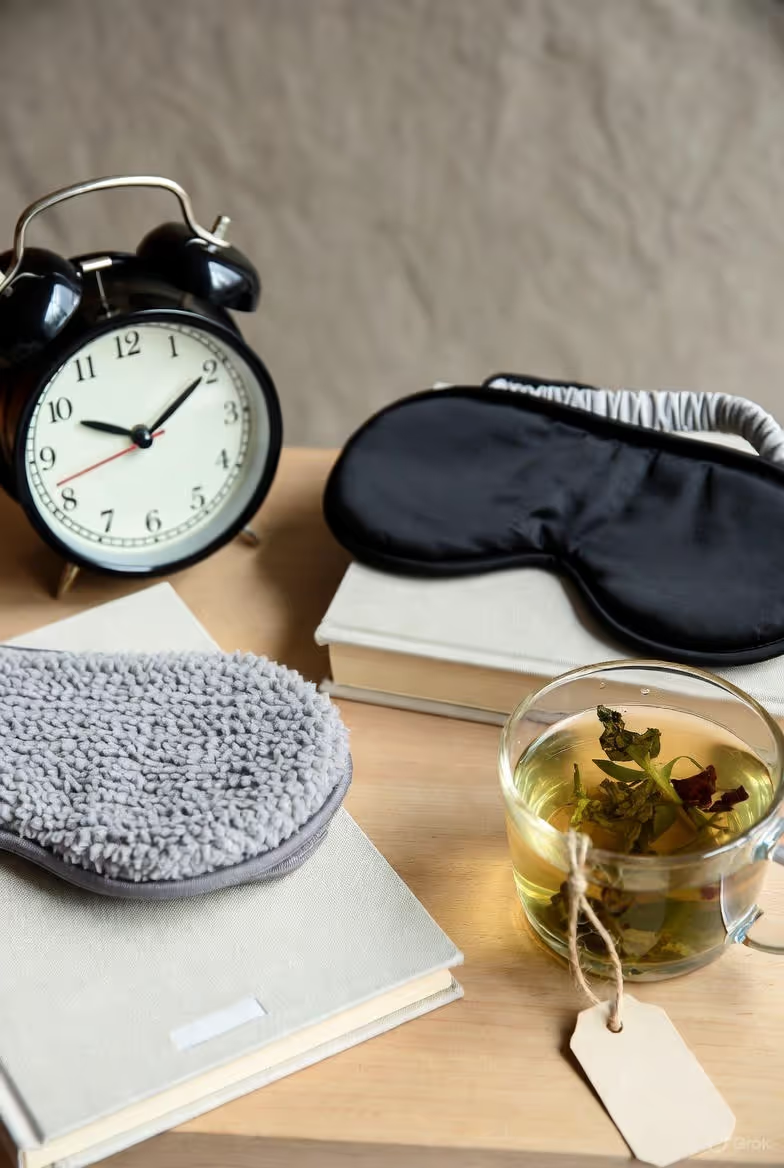
Better Sleep Naturally: Your 12-Week Transformation Plan
This comprehensive 12-week natural sleep transformation plan provides structured, progressive improvement for sustainable results. The quarter-long program builds sequentially from foundations through advanced optimization, addressing all aspects of sleep quality for thorough, lasting enhancement without overwhelming changes.
Better Sleep Naturally: Your 12-Week Transformation Plan
You know that heavy, foggy feeling all too well. The alarm screams, but your body feels glued to the mattress. You drag yourself through the day, fueled by caffeine and sheer willpower, your mind in a constant haze. You’re not just tired—you’re depleted. The pursuit of a good night's sleep has become a nightly battle, filled with tossing, turning, and clock-watching anxiety. What if you could break free? What if, instead of chasing sleep, you could cultivate it, transforming your nights and, by extension, your entire life?
This isn't about a quick fix or another fad. This is a complete, science-backed, natural transformation. Welcome to your 12-Week Plan for better sleep. This journey will move you from simply understanding sleep to truly mastering it, rewiring your habits, your environment, and your relationship with rest. We'll ditch the myth that sleep is a passive state and embrace it as the most active and regenerative process your body performs. Imagine, twelve weeks from now, waking up feeling refreshed, alert, and genuinely restored. Imagine having the energy to tackle your goals, the clarity to make better decisions, and the resilience to handle stress. This is not a fantasy; it is a very achievable reality.
The modern world is brilliantly designed to disrupt sleep. Blue light from our devices mimics the sun, confusing our internal clocks. Chronic stress keeps our nervous systems in overdrive. Our schedules are packed, leaving rest as an afterthought. We've forgotten how to truly wind down. This plan is your antidote. It’s a structured, supportive pathway that prioritizes sleep not as a luxury, but as the non-negotiable foundation of your health, productivity, and happiness. We’ll leverage the latest research in sleep science, chronobiology, and behavioral psychology, and we’ll integrate modern tools, like advanced wellness trackers from innovators like Oxyzen, to provide personalized feedback and turn insights into action.
This first part of our extensive guide lays the crucial foundation. We will explore the profound "why" behind sleep, diagnose your current sleep landscape, and begin building the pillars of sleep hygiene that will support your entire 12-week journey. Consider this your orientation—a deep dive into the mechanics of sleep and the initial, powerful steps to reclaim your nights. Let’s begin.
The Silent Superpower: Why Sleep Is Your Greatest Health Asset
We often glorify burnout and undervalue rest, treating sleep as a negotiable commodity. This is a catastrophic error in judgment. Sleep is not the absence of wakefulness; it is a complex, active, and essential physiological state. It is the silent superpower underpinning every aspect of your being—from your cellular repair to your cognitive genius.
During sleep, your brain doesn't shut off; it shifts gears. It enters a state of intense activity, engaging in a nightly "clean-up" process. The glymphatic system, essentially the brain's wastewater system, kicks into high gear, flushing out metabolic toxins like beta-amyloid, a protein closely linked to Alzheimer's disease. This is why after a poor night's sleep, you feel mentally foggy—your brain is literally operating in a toxic environment.
Simultaneously, sleep is the prime time for memory consolidation and learning. The neural pathways formed during the day are strengthened and integrated during deep sleep (Slow-Wave Sleep) and REM (Rapid Eye Movement) sleep. That complex problem you’ve been wrestling with? The new skill you’re trying to learn? Your brain is working on it overnight, often leading to the proverbial "aha!" moment upon waking. Furthermore, sleep is a master regulator of your hormones. It balances ghrelin and leptin, the hormones controlling hunger and satiety. Poor sleep disrupts this balance, increasing cravings for high-calorie, high-carbohydrate foods and directly contributing to weight gain. It also manages cortisol (the stress hormone) and optimizes insulin sensitivity, impacting your metabolic health.
The physical restoration is equally staggering. Growth hormone, essential for tissue repair, muscle growth, and cell regeneration, is predominantly secreted during deep sleep. Your immune system produces and distributes key cells and cytokines during sleep, making a solid night's rest one of your best defenses against illness. Chronic sleep deprivation, defined as consistently getting less than 7 hours, is now irrefutably linked to a heightened risk for a host of serious conditions: heart disease, stroke, type 2 diabetes, depression, and a weakened immune system. In essence, by prioritizing sleep, you are not just avoiding grogginess; you are actively investing in your long-term vitality, mental sharpness, and emotional resilience. It is the single most effective thing you can do for your health, and it's completely free. To truly appreciate the data your own body provides on this process, many find value in using a detailed wellness tracker. For those curious about how technology can illuminate these nightly cycles, you can discover how Oxyzen works to provide insights into sleep stages and overall recovery.
Diagnosing Your Sleep: Becoming a Detective of Your Own Rest
Before you can fix something, you must understand its current state. You cannot manage what you do not measure. The first, critical step in your 12-week transformation is to become a compassionate detective of your own sleep. This isn't about judgment or creating anxiety; it's about gathering objective data and subjective feelings to establish a true baseline.
Begin with a simple, one-week sleep journal. Each morning, before the day clouds your memory, note down:
Time you got into bed.
Estimated time you fell asleep.
Number and duration of nighttime awakenings.
Final wake-up time.
Time you got out of bed.
Subjective sleep quality (rate 1-10).
Mood and energy upon waking.
Notes: Did you consume caffeine/alcohol? Were you stressed? Did you exercise?
This log will reveal patterns you might miss. You may discover that a late-afternoon coffee consistently fragments your sleep or that a stressful workday leads to prolonged sleep latency (the time it takes to fall asleep).
Next, augment your journal with technology. While not strictly necessary, a reliable sleep tracker can provide data that subjective feeling cannot. It can estimate your sleep stages (light, deep, REM), track your resting heart rate and heart rate variability (HRV)—a key marker of your nervous system's recovery state—and even monitor your blood oxygen levels. This data is powerful. For instance, you might feel you slept 8 hours, but your tracker could reveal you got very little deep sleep, explaining your persistent fatigue. This objective feedback loop is invaluable for testing the impact of the changes you'll implement. Many users find that seeing the direct correlation between a new bedtime routine and improved sleep scores on their device is a massive motivator. If you're considering a tool for this purpose, you can read our complete guide on selecting and using wellness technology effectively.
Finally, conduct a holistic lifestyle audit. Sleep doesn't exist in a vacuum. Ask yourself:
Environment: Is your bedroom dark, cool, and quiet?
Diet: Are your meals timed well? Do you go to bed too full or too hungry?
Stress: What are your major stressors? Do you have a wind-down practice?
Mindset: Do you view your bed with anxiety ("Will I sleep tonight?") or with anticipation ("Time to restore")?
By combining the subjective (journal, feelings) with the objective (tracker data) and the contextual (lifestyle), you create a comprehensive picture of your starting point. This diagnostic phase is the map that will guide your entire 12-week journey. For common questions on how to interpret sleep data or start a journal, our support and FAQ section offers detailed guidance.
The Science of Circadian Rhythms: Aligning with Your Body's Master Clock
At the core of great sleep is rhythm. Not just a nighttime routine, but a deep, biological rhythm that governs nearly every function in your body: your circadian rhythm. This internal "master clock," a group of nerve cells in the brain called the suprachiasmatic nucleus (SCN), operates on a roughly 24-hour cycle. It dictates not only when you feel sleepy and awake but also influences hormone release, body temperature, digestion, and cellular function. Your mission is not to fight this clock, but to synchronize with it—a process known as entrainment.
The most powerful cue for your circadian rhythm is light. Specifically, bright blue-wavelength light. When light hits your eyes in the morning, it signals to the SCN to suppress melatonin (the sleep hormone) and ramp up cortisol (for alertness). This sets your clock for the day. Conversely, as darkness falls, the SCN triggers the pineal gland to release melatonin, preparing your body for sleep. The problem of modern life is obvious: we bombard ourselves with artificial light long after the sun has set, effectively telling our brain it's still daytime.
Your Week 1-2 focus is to become a master of light management:
Morning Light Crusade: Within 30-60 minutes of waking, get bright light exposure. Go outside for 10-15 minutes without sunglasses. If that's impossible, consider a high-quality light therapy lamp for 20-30 minutes. This is the single most effective signal to anchor your rhythm.
Daytime Light Optimization: Seek plenty of natural light throughout the day. Take walking meetings, eat lunch outside, or sit near a window. This reinforces the wakeful part of your cycle.
The Digital Sunset: This is non-negotiable. Starting 90 minutes before bed, begin dimming the lights in your home. Most critically, eliminate screen exposure from phones, tablets, TVs, and computers. The blue light they emit is melatonin's nemesis. If you must use a device, enable a "night shift" or blue light filter at maximum strength, but better yet, put it away.
Bedroom Darkness: Your sleep space should be pitch black. Invest in blackout curtains, cover or remove any LED indicators (chargers, smoke detectors), and consider using a comfortable sleep mask. Even small amounts of light can fragment sleep architecture.
Beyond light, other timekeepers include meal timing and consistent routines. Try to eat your meals at roughly the same times each day, and avoid large, heavy meals within 3 hours of bedtime. Most importantly, go to bed and wake up at the same time every single day—yes, even on weekends. A consistent sleep schedule is the bedrock of a strong circadian rhythm. This consistency trains your body to expect sleep at a certain time, making falling asleep easier and improving sleep quality. The story of understanding and harnessing this biological rhythm is central to our modern approach to wellness, something deeply embedded in the vision and values of companies striving to harmonize technology with human biology.
Crafting Your Sleep Sanctuary: The Environmental Overhaul
Your bedroom should have one primary function: sleep (and intimacy). It is not a home office, a entertainment center, or a dining room. It is a sanctuary dedicated to restoration. Your environment has a profound psychological and physiological impact on your ability to fall and stay asleep. In Weeks 2-3, you will transform your bedroom into a cave optimized for slumber.
The ideal sleep environment obeys the "Cold, Dark, and Quiet" rule:
Temperature: The science is clear: a cool room, between 60-67°F (15.5-19.5°C), is optimal for initiating and maintaining sleep. As you fall asleep, your core body temperature naturally drops. A cool room facilitates this process. Experiment with thermostat settings, use breathable cotton or linen bedding, and consider a cooling mattress pad if you tend to sleep hot.
Darkness: As discussed, darkness is critical for melatonin production. Re-evaluate your room at night. Is there streetlight bleeding around the blinds? Light from a hallway? Use blackout curtains or shades, apply blackout film to windows, and cover all electronic lights. A sleep mask is a simple, portable, and highly effective tool.
Quiet: Sudden or consistent noise can cause micro-arousals, pulling you out of deep sleep even if you don't fully wake up. If you can't control noise (traffic, neighbors), use white noise or pink noise. A fan, a dedicated sound machine, or a simple app can generate a consistent, soothing soundscape that masks disruptive noises. Earplugs are another excellent option for many.
Clutter & Psychology: A cluttered, chaotic room can lead to a cluttered, chaotic mind. Make your bed each morning. Put away clothes. Keep surfaces clear. The goal is to create a space that feels peaceful, orderly, and serene. This sends a powerful signal to your brain that this is a place of calm, not stress.
The Bed Itself: Invest in the best mattress, pillows, and bedding you can afford. You spend a third of your life in bed—it's a worthy investment. Your mattress should support your spine's natural alignment. Pillows should support your head and neck comfortably. Choose natural, breathable fabrics for sheets and pajamas.
Remove all sleep-incompatible items. Take the TV out. If you must have a phone in the room for an alarm, place it across the room, face down, and on "Do Not Disturb" mode. Better yet, use a traditional alarm clock. The goal is to eliminate the temptation and the association of your bed with alertness-inducing activities. This environmental overhaul isn't just about physical comfort; it's about creating a powerful psychological cue. When you step into your cool, dark, quiet sanctuary, your brain receives an unambiguous message: It is time to shut down and restore. For inspiration on creating a holistic wellness environment, you can explore our blog for more wellness tips that extend beyond the bedroom.
The Wind-Down Ritual: Teaching Your Nervous System to Shift Gears
In our high-speed world, we cannot go from 100 mph to 0. Attempting to collapse into bed after being mentally engaged until the last second is like slamming the brakes on a speeding car—it’s jarring, inefficient, and stressful on the system. Your nervous system needs a gradual off-ramp. A consistent, calming wind-down ritual, practiced 60-90 minutes before your target bedtime, is that off-ramp. This is not a luxury; it is a critical signal to your brain and body that the transition to sleep is beginning.
Your wind-down ritual should be personalized, but it must adhere to one core principle: it should be actively relaxing and screen-free. Passive scrolling does not qualify. Here is a framework to build your own:
The Digital Curfew (T-90 minutes): This is the start signal. All screens go off or into another room. Remember, this is non-negotiable for your circadian rhythm.
The Light Dimming (T-90 minutes): As screens go off, lower the overhead lights in your home. Use lamps with warm-toned bulbs. Candlelight (safely) is excellent.
The Tension Release (T-60 minutes): Engage in a gentle activity to release physical tension. This could be 10-15 minutes of gentle yoga or stretching, a leisurely walk outside (enjoying the dim light), or taking a warm bath or shower. The rise and subsequent drop in core body temperature from a warm bath can mimic the natural pre-sleep temperature drop, promoting drowsiness.
The Mental Unloading (T-45 minutes): Quiet the "mental chatter." This is the time for a mindfulness practice. You might try:
Journaling: A "brain dump" where you write down all lingering thoughts, worries, or to-dos for the next day. Get them out of your head and onto paper.
Gratitude Practice: Write down three things you are grateful for from the day. This shifts your mental state from stress to positivity.
Meditation or Deep Breathing: Even 5-10 minutes of focused breathing (try the 4-7-8 technique: inhale for 4, hold for 7, exhale for 8) activates the parasympathetic "rest-and-digest" nervous system.
The Comforting Routine (T-30 minutes): Engage in a simple, comforting, low-stimulation activity. Read a physical book (nothing too thrilling). Listen to calming music or an audiobook with a sleep timer. Practice light tidying. Drink a small cup of caffeine-free herbal tea, like chamomile or valerian root.
The Final Cue (In Bed): Once in bed, keep the activity consistent. Perhaps read for 10 more minutes (with a small, dim reading light), then lights out. The act of turning off the light should be the final signal.
The power of this ritual lies in its consistency. By repeating the same sequence of calming events night after night, you create a powerful Pavlovian response. Your brain begins to associate these activities—the dim light, the herbal tea, the journaling—with the impending state of sleep, making the transition faster and more natural. This ritual is your daily gift to your nervous system. To see how others have successfully implemented these practices, you can read real customer reviews and experiences for motivation and ideas.
Fueling for Sleep: The Dietary Protocol for Optimal Rest
You are what you eat, and you sleep how you eat. The timing, composition, and quantity of your food and drink have a direct and significant impact on your sleep architecture. The goal isn't just to avoid a stomachache; it's to provide your body with the right nutrients at the right times to support the hormonal and chemical processes of sleep.
What to Avoid and When:
Caffeine: This adenosine receptor antagonist is a powerful stimulant. Its half-life is about 5-6 hours, meaning at 10 p.m., half of a 2 p.m. coffee is still in your system. Establish a strict caffeine curfew by 2 p.m., or earlier if you're sensitive.
Alcohol: The great deceiver. While it may induce initial drowsiness, alcohol is a sedative that profoundly disrupts sleep architecture. It suppresses REM sleep (the stage crucial for memory and mood) and leads to fragmented, non-restorative sleep in the second half of the night. Avoid alcohol within 3-4 hours of bedtime.
Heavy, Fatty, or Spicy Meals: A large meal close to bedtime forces your digestive system to work overtime, which can cause discomfort, acid reflux, and elevate core body temperature—all enemies of sleep. Finish large meals at least 3 hours before bed.
Excessive Fluids: Hydration is vital, but guzzling water right before bed will guarantee disruptive trips to the bathroom. Taper fluid intake in the last 90 minutes.
What to Embrace:
Sleep-Supportive Nutrients: Certain foods contain compounds that aid sleep.
Tryptophan: An amino acid precursor to serotonin and melatonin. Found in turkey, chicken, nuts, seeds, and dairy.
Magnesium: A mineral that acts as a natural relaxant, helping to calm the nervous system and muscles. Found in leafy greens, nuts, seeds, avocados, and bananas.
Melatonin: Found naturally in tart cherries, walnuts, and tomatoes.
The Ideal Evening Snack: If you need a small snack before bed (to avoid being kept awake by hunger), combine a complex carbohydrate with a protein or healthy fat. This helps stabilize blood sugar and provides tryptophan. Examples: a small bowl of oatmeal, a banana with a tablespoon of almond butter, whole-grain crackers with cheese, or Greek yogurt.
Timing is Everything: Aim for consistent meal times. A protein-rich breakfast and lunch can help stabilize energy, while a lighter dinner, emphasizing vegetables and lean protein, is easier to digest.
This isn't about a restrictive diet; it's about strategic fueling. Think of your body as a finely tuned machine. You wouldn't put low-grade fuel in a race car right before a pit stop. Give your body the clean, supportive nutrients it needs to perform its nightly restorative work efficiently. For more detailed resources on nutrition and wellness synergy, our blog offers a wealth of related articles.
Movement as Medicine: How Exercise Orchestrates Sleep
Physical activity is one of the most potent, evidence-based sleep promoters available. It works through multiple mechanisms: it helps to reduce anxiety and depressive symptoms, it tires the body physically, it promotes a healthy drop in core body temperature post-exercise, and it helps to regulate your circadian rhythm. However, like most things with sleep, timing and type matter greatly.
The Overall Effect: Regular exercisers consistently report better sleep quality and fewer insomnia symptoms than non-exercisers. Aerobic exercise, in particular, has been shown to increase the amount of deep sleep you get—the most physically restorative stage. Exercise also helps to stabilize mood and decompress the mind, making it easier to mentally "let go" at night.
The Timing Conundrum:
Morning/Afternoon Exercise: This is ideal. Exercising in natural daylight provides a double circadian bonus. It raises your body temperature sharply, and the subsequent drop hours later can help facilitate sleep. It also exposes you to morning light, reinforcing your master clock.
Evening Exercise: The old advice to never exercise before bed is being nuanced. The key factor is intensity and your personal response. A vigorous, heart-pumping workout within 60-90 minutes of bed can be overstimulating for some, raising core temperature and releasing stimulants like adrenaline. However, for many, even evening exercise improves sleep as long as it's not too close to bedtime. Listen to your body.
The Evening Compromise: If you only have time to exercise in the evening, opt for gentler, more relaxing movement. A leisurely walk, restorative yoga, or gentle stretching can be wonderful parts of your wind-down ritual. These activities promote relaxation rather than stimulation.
Creating Your Movement Plan for Sleep:
Consistency Over Intensity: Aim for at least 30 minutes of moderate aerobic activity most days. A daily walk is a fantastic, accessible starting point.
Find What You Enjoy: You're more likely to stick with it if it's not a chore. Dance, swim, bike, hike—the options are endless.
Use It to Manage Stress: View exercise as a moving meditation. Focus on your breath and the sensation of movement to pull you out of cyclical worry.
Track the Impact: This is where a wellness device becomes incredibly useful. Notice the correlation on days you exercise. Does your deep sleep increase? Does your sleep latency decrease? Does your HRV improve? This direct feedback is a powerful motivator. Understanding this data-driven connection is at the heart of the mission of modern wellness tech companies.
The goal is to integrate movement into your life not as a punishment, but as a celebration of what your body can do and a direct investment in your sleep quality.
Mastering Your Mind: Cognitive Strategies for a Quiet Brain
Often, the biggest barrier to sleep isn't physical—it's mental. The "monkey mind" swings from branch to branch, replaying the day's events, worrying about tomorrow's tasks, or generating endless to-do lists. You can have the perfect environment and routine, but if your mind is racing, sleep will remain elusive. Weeks 4-5 focus on training your brain to quiet itself.
Cognitive Behavioral Techniques for Insomnia (CBT-I): This is the gold-standard, first-line treatment for chronic insomnia, and its principles are invaluable for anyone struggling with sleep-related anxiety. You don't need a formal diagnosis to use these tools.
Stimulus Control: This reinforces the bed-sleep connection. The rule is simple: The bed is only for sleep and intimacy. If you are in bed and unable to sleep for more than 20 minutes, get up. Go to another dimly lit room and do a quiet, boring activity (read a physical book, listen to calm music) until you feel drowsy. Then return to bed. This breaks the association of the bed with frustration and wakefulness.
Sleep Restriction: This sounds counterintuitive but is highly effective for those who spend long hours in bed not sleeping. It involves temporarily limiting your time in bed to closely match your actual sleep time (based on your sleep journal). This builds a strong sleep drive and increases sleep efficiency. Note: This technique is best undertaken with guidance or after thorough research.
Cognitive Restructuring: This involves challenging and changing the unhelpful beliefs and anxieties you have about sleep. Catastrophic thoughts like "I'll never get to sleep, and tomorrow will be ruined" are identified and replaced with more balanced ones like "My body will get the rest it needs, even if it's not perfect. I can handle tomorrow."
Practical Mind-Quieting Tools:
The "Brain Dump" Journal: Keep a notebook by your bed. Before your wind-down ritual, spend 10 minutes writing down every single thing on your mind—tasks, worries, ideas. The act of externalizing them gets them out of your cyclical mental space.
Guided Sleep Meditations & Body Scans: These audio guides are incredibly effective at directing your focus away from thoughts and into bodily sensations, promoting deep relaxation. They are widely available on apps and streaming services.
The Military Sleep Method: A technique reportedly used by the U.S. Army to fall asleep in two minutes. It involves a combination of deep breathing and systematically relaxing every muscle group in your body, combined with visualizing a calming scene for 10 seconds.
Gratitude Reframing: When anxious thoughts arise, consciously pivot to gratitude. Mentally list three specific, small things you are grateful for. This shifts your neurochemistry from stress (cortisol) to contentment (serotonin).
Mastering your mind for sleep is a skill, and like any skill, it requires practice. Be patient with yourself. The goal isn't to achieve a completely blank mind—that's impossible. The goal is to observe the thoughts without engaging with them, to let them float by like clouds, while you anchor your attention to your breath or the feeling of the sheets. For those seeking additional support and community in this practice, you can often find questions and answers in our community FAQ.
The Weekend Dilemma: Maintaining Rhythm Without Deprivation
Here lies one of the most common pitfalls in any sleep transformation plan: the weekend. After a disciplined week of early bedtimes and morning light, the temptation to "catch up" on sleep by staying out late Friday and sleeping in until noon Saturday is powerful. This is known as social jet lag, and it can be as disruptive to your circadian rhythm as flying across time zones.
When you sleep in on the weekends, you delay your body's exposure to morning light, effectively shifting your internal clock later. Come Sunday night, when you try to go to bed at your "weekday" time, your body is not ready. It's still on "weekend time." This leads to difficulty falling asleep, poor sleep quality, and the dreaded "Monday morning drag," which is essentially a form of jet lag.
The Sustainable Weekend Strategy:
The 60-Minute Rule: Allow yourself to sleep in, but no more than 60 minutes past your normal weekday wake-up time. If you usually get up at 6:30 a.m., don't stay in bed past 7:30 a.m. This small concession is enough to feel restorative without massively disrupting your clock.
Prioritize Morning Light, Even on Weekends: Get outside for your morning light exposure within an hour of waking, even on lazy days. This is the anchor that keeps your rhythm set.
Be Smart with Social Schedules: If you have a late social event, try to get your normal morning wake-up light, even if you go back to sleep for a short nap later. When you get home late, still follow your wind-down ritual (in abbreviated form if necessary) before getting into bed.
The Power of the Nap: If you are genuinely sleep-deprived from a late night, a short, strategic nap is far better than a massive sleep-in. Limit naps to 20-30 minutes, and take them before 3 p.m. This can provide rejuvenation without dipping into deep sleep (which can cause sleep inertia) or affecting nighttime sleep drive.
Sunday Reset: Make Sunday a day of rhythm reinforcement. Stick to your schedule, get plenty of daytime light and activity, and have a stellar wind-down ritual. This sets you up for a successful week.
The philosophy here is consistency with compassion. Rigidity can make the plan feel like a prison, leading to rebellion. But complete abandon sabotages your progress. The 60-minute rule and strategic napping offer a balanced, sustainable middle path that allows for social life and recovery while protecting the precious circadian rhythm you've worked so hard to cultivate. This balanced approach to sustainable wellness is a core part of the journey and story of creating lasting health change.
The Biometrics of Sleep: Leveraging Data for Personalized Insight
Knowledge is power, but personalized knowledge is transformative power. For centuries, we had only subjective feelings to judge our sleep. Now, we can augment our intuition with objective data, turning the black box of the night into a detailed report card. This is the realm of biometrics—using technology to measure physiological signals—and it represents a quantum leap in our ability to understand and optimize sleep.
Wearable technology, particularly advanced devices worn on the finger like the Oxyzen smart ring, offers a non-intrusive window into your nocturnal physiology. By continuously tracking key metrics, these devices move you from asking "How did I sleep?" to understanding how you slept, why you might feel a certain way, and what you can do about it.
Key Sleep Metrics and What They Truly Mean:
Sleep Stages (Light, Deep, REM): Your sleep is a cyclical symphony of different stages, each with a distinct purpose. Trackers use movement and heart rate variability (HRV) to estimate these stages.
Deep Sleep (Slow-Wave Sleep): This is your physical restoration phase. It’s when tissue repair, muscle growth, immune strengthening, and the clearing of metabolic waste from the brain occur. Low deep sleep can leave you feeling physically exhausted.
REM Sleep: The stage of vivid dreams, crucial for memory consolidation, emotional processing, and learning. Disrupted REM (often due to alcohol or inconsistent schedules) can impact mood and cognitive function.
Understanding Your Architecture: A good night isn't just about total time; it's about the right balance and progression of these cycles. Data can show if you're getting sufficient deep sleep or if your REM is truncated.
Resting Heart Rate (RHR): Your heart rate at its most calm state. A lower RHR generally indicates better cardiovascular fitness and efficient autonomic nervous system function. Your RHR typically dips during deep sleep. Observing your nighttime RHR trend can show overall recovery; a consistently elevated nighttime RHR can be a sign of underlying stress, illness, or overtraining.
Heart Rate Variability (HRV): This is arguably the most insightful metric for recovery and sleep quality. HRV measures the subtle variations in time between each heartbeat. A higher HRV indicates a resilient, adaptable nervous system that can smoothly shift between stress (sympathetic) and rest (parasympathetic) modes. During deep sleep, HRV should be high. Chronic stress, poor sleep, and illness depress HRV. Tracking your HRV trend is like having a direct line to your nervous system's recovery status; it can tell you if your body is ready to perform or desperately needs rest, often before you consciously feel it.
Blood Oxygen (SpO2): Some advanced devices monitor blood oxygen saturation overnight. While typically stable in healthy individuals, significant, sustained dips can indicate sleep-disordered breathing, like sleep apnea, and are a critical flag to discuss with a healthcare provider.
Sleep Latency & Efficiency: How long it takes you to fall asleep and what percentage of your time in bed you are actually asleep. This data directly validates (or challenges) the effectiveness of your wind-down ritual and stimulus control practices.
Turning Data Into Action: The magic isn't in the numbers themselves, but in their trends and correlations.
The Experimentation Loop: Notice that on nights you took a warm bath, your deep sleep increased by 15%? That's a powerful, personalized insight. See that your HRV plummets and your RHR spikes after late-night alcohol? That's objective feedback on a habit. Data allows you to run personalized experiments: test different dinner times, evening exercise types, or meditation apps and see the direct impact on your sleep scores.
Avoiding Data Anxiety: It’s crucial to use this tool wisely. Don't become a slave to a single night's score. Look at weekly and monthly trends. Some nights will be poorer—that's life. The goal is not a perfect 100/100 every night; it's to understand the why behind the scores and use that knowledge to make better choices that improve your overall trend toward better recovery. For those new to this data-driven approach, our FAQ section offers great guidance on how to interpret metrics without stress.
By integrating biometric feedback, you graduate from following general sleep advice to becoming the architect of your own unique sleep blueprint. This personalized insight is the cornerstone of the next phase of your transformation. To see how this plays out in real life, you can explore real user experiences and reviews of using data to transform sleep.
Stress & Sleep: The Vicious Cycle and How to Break It
Stress and sleep exist in a bidirectional, often vicious, relationship. Acute stress (a looming deadline) can cause a bad night's sleep. But more insidiously, chronic stress dysregulates your entire system, making quality sleep elusive. Conversely, poor sleep elevates stress hormones, reduces emotional resilience, and makes you more reactive to daily hassles, thus creating more stress. Breaking this cycle is paramount.
Chronic stress keeps your sympathetic nervous system ("fight-or-flight") subtly activated. Cortisol, which should follow a sharp peak in the morning and a gentle decline into the evening, can become dysregulated—flatter during the day and elevated at night. This high evening cortisol directly opposes melatonin, telling your body it's still time to be on alert, not to rest.
Advanced Stress-Decoupling Strategies:
Diaphragmatic Breathing: This is not just "deep breathing." It's a physiological intervention. By breathing deeply into your belly, you stimulate the vagus nerve, the command center of your parasympathetic nervous system. Practice for 5 minutes, 2-3 times a day (not just before bed): inhale for a count of 4, expanding your belly; hold for 4; exhale slowly for a count of 6 or 8. This builds resilience over time.
Progressive Muscle Relaxation (PMR): A systematic tensing and relaxing of muscle groups. This teaches your body to recognize the profound difference between tension and relaxation, a skill that becomes automatic over time. It's particularly effective when done as part of your wind-down ritual.
Non-Sleep Deep Rest (NSDR) & Yoga Nidra: These guided practices induce a state of conscious deep relaxation that is neurologically similar to sleep. A 10-20 minute NSDR session in the afternoon can lower cortisol and recharge your nervous system without the sleep inertia of a nap.
Scheduled Worry Time: Give your anxious mind a designated, limited outlet. Set a timer for 15 minutes in the late afternoon. During this time, you are allowed—even encouraged—to worry, plan, and problem-solve. Write it all down. When the timer goes off, you consciously close the book on it. If worries arise later, you gently remind yourself, "I have a process for that. It's not time now."
Digital Fasting: Information overload is a massive, chronic stressor on the brain. Implement strict "Do Not Disturb" hours on your phone. Designate one day a week (e.g., Sunday) as a low-information day: minimal news, social media, and email. This gives your cognitive load a chance to reset.
Your biometrics are your guide here. A depressed HRV and elevated nighttime RHR are direct biomarkers of a stressed system. Use the strategies above to actively improve these numbers. Watch how a week of consistent diaphragmatic breathing or daily NSDR can nudge your HRV baseline upward. This tangible feedback proves you're not just "managing stress"—you're physiologically rewiring your resilience. The mission to fuse such ancient relaxation techniques with modern biometric validation is a fascinating part of the broader wellness tech story.
The Supplement Question: Natural Aids and When to Consider Them
In an ideal world, perfect sleep hygiene would be all you need. But the real world involves travel, stress, and occasional disruptions. This is where natural sleep supplements can play a supportive, temporary role. They are adjuncts, not solutions. Think of them as training wheels—helpful while you build the foundational skill, but not a replacement for the bike itself.
Evidence-Based Natural Supplements:
Melatonin: This is a chronobiotic (timing agent), not a sedative. It's most effective for resetting circadian rhythms in cases of jet lag, shift work, or a significantly delayed sleep phase. The key is micro-dosing. Typical over-the-counter doses (3-10mg) are pharmacologic and can cause morning grogginess. A more physiological dose is 0.3-1 mg, taken 30-60 minutes before your desired bedtime. It signals "nighttime" to your brain.
Magnesium Glycinate or Bisglycinate: Magnesium is a cofactor in hundreds of enzymatic processes, including those regulating GABA, a calming neurotransmitter. The glycinate form is highly bioavailable and gentle on the stomach. It can promote muscle relaxation and calm the nervous system. A dose of 200-400 mg about an hour before bed can be helpful.
L-Theanine: An amino acid found in green tea. It promotes relaxation and alpha-wave brain activity (associated with wakeful relaxation) without sedation. It can be particularly useful for quieting a racing mind. A common dose is 100-400 mg.
Glycine: Another amino acid that has a mild calming effect and can help lower core body temperature. Studies suggest 3 grams before bed can improve sleep quality.
Adaptogenic Herbs (with caution): Herbs like Ashwagandha and Rhodiola Rosea can help modulate the body's stress response over time, thereby indirectly supporting sleep. They are not acute sleep aids but taken daily to improve baseline resilience.
Critical Rules for Supplement Use:
Consult Your Doctor First: Always, especially if you have health conditions or take other medications.
The Foundation First: Supplements are the last piece of the puzzle. If your light hygiene is poor, your room is bright and warm, and you're scrolling in bed, a supplement is a Band-Aid on a bullet wound.
Test Individually: Introduce one supplement at a time, at a low dose, and monitor its effects (and any side effects) for at least a week. Your biometric data can be invaluable here—does it improve your sleep latency or deep sleep score?
Avoid Dependency: Use them strategically for specific challenges (a period of high stress, jet lag) or as a short-term bridge while you solidify your behavioral habits. The goal is to eventually not need them.
The world of sleep supplements is vast and often misleading. The approach here is one of skeptical, science-informed minimalism. For more detailed research and discussions on specific ingredients and their mechanisms, our blog provides ongoing analysis.
Navigating Common Sleep Disruptors: Travel, Shift Work, and Life Events
Your 12-week plan builds resilience, but life happens. The true test of your sleep mastery is not maintaining perfection in a bubble, but navigating real-world disruptions with skill and minimizing their impact.
Mastering Jet Lag: Jet lag is a brute-force attack on your circadian rhythm. Your strategy must be proactive and light-focused.
Pre-Travel Adjustment: 2-3 days before an eastward trip, go to bed and wake up 1 hour earlier each day. For a westward trip, shift 1 hour later each day.
The Flight Strategy: As soon as you board the plane, set your watch to your destination time. Use the flight to begin adjusting. If it's nighttime at your destination, use an eye mask and earplugs to try to sleep. If it's daytime, stay awake, use bright light (if possible), and avoid alcohol.
The First 48 Hours Rule: Upon arrival, light exposure is your most powerful drug. If you arrive in the morning after an overnight flight, get outside into bright sunlight immediately. This is non-negotiable. It will anchor your new rhythm. If you arrive in the evening, avoid bright light, wear blue-light-blocking glasses if you're outside, and allow yourself to go to bed at a local time.
Strategic Melatonin: As discussed, micro-dose melatonin (0.5mg) at destination bedtime for the first few nights can help nudge your clock.
The Shift Work Challenge: This is one of the hardest scenarios for sleep health. The goal is to create stability within the instability.
Create a Consistent "Night": Even if your "night" is 9 a.m. to 5 p.m., treat it with the same sanctity. Use blackout curtains, white noise, and a strict "do not disturb" policy. Your bedroom must be a fortress against daytime light and noise.
Light Manipulation is Key: After a night shift, wear blue-light-blocking glasses on your commute home to prevent the morning sun from telling your brain it's morning. Before your next shift, seek bright light exposure (a light therapy lamp can be essential) to signal "wake time."
Prioritize Anchor Sleep: Even on days off, try to maintain a similar sleep window to avoid constant, brutal shifting of your clock.
Life Events & Stressors: Illness, grief, a new baby, or work crises will disrupt sleep. The mindset shift here is critical.
Lower the Bar: Release the expectation of 8 hours of perfect sleep. In a crisis, sleep maintenance is the goal. Focus on the non-negotiables you can control: a dark, cool room; avoiding caffeine; and protecting even short, consolidated chunks of sleep.
Embrace Fragmentation: With a newborn, sleep will be in 2-3 hour blocks. The priority becomes sleep efficiency—maximizing the quality of each block. This is where your wind-down ritual, even if abbreviated to 10 minutes, becomes a sacred act to ensure you fall back asleep quickly.
Practice Radical Self-Compassion: Berating yourself for not sleeping during a hard time only adds stress. Remind yourself: "This is temporary. My body is doing its best. I am using all my tools to support it."
Success here is measured not by perfect sleep scores during a transatlantic flight or with a newborn, but by how quickly you can return to your baseline rhythm once the disruption passes. Your cultivated habits are your homing beacon, guiding you back to rest. For community support and shared stories on navigating these challenges, many find solace in reading about others' journeys.
Building Your Personalized 12-Week Action Plan
Now, we synthesize everything into your bespoke roadmap. A generic plan fails; a personalized plan succeeds. This is where you move from learning to doing, constructing your weekly focus areas based on your diagnostic findings from the beginning.
The Phased Approach:
Weeks 1-3: The Foundation Phase (Habit Stacking)
Focus: Light Hygiene & Sleep Sanctuary. These are your highest-leverage actions.
Weekly Actions:
Week 1: Implement a digital sunset (no screens 90 min before bed) and a consistent wake-up time ±30 mins.
Week 2: Optimize your bedroom for cold, dark, and quiet. Buy blackout curtains, set your thermostat, get a sound machine.
Week 3: Establish your 60-minute wind-down ritual. Start with just two activities (e.g., dim lights + read).
Weeks 4-6: The Behavioral Phase (Mind & Body Integration)
Focus: Wind-Down Ritual Mastery, Dietary Tweaks, and Movement.
Weekly Actions:
Week 4: Refine your ritual. Add a 5-minute journaling or meditation practice.
Week 5: Implement your caffeine curfew (2 p.m.) and experiment with your final meal/snack timing.
Week 6: Schedule 30 minutes of daily movement, preferably in morning light.
Weeks 7-9: The Optimization Phase (Data & Refinement)
Focus: Biometric Tracking and Advanced Stress Techniques.
Weekly Actions:
Week 7: Begin consistently tracking sleep with your journal or device. Note one correlation (e.g., late dinner -> lower deep sleep).
Week 8: Introduce a daily diaphragmatic breathing or NSDR practice to directly impact HRV.
Week 9: Use your data to run one experiment (e.g., "Does a magnesium supplement improve my sleep latency score?").
Weeks 10-12: The Mastery & Resilience Phase
Focus: Consistency, Troubleshooting, and Planning for Disruptions.
Weekly Actions:
Week 10: Practice the "weekend rule" (no more than 60 min sleep-in). Review your 9-week data trend.
Week 11: Write down your personal protocol for handling a known upcoming disruptor (e.g., a future work trip).
Week 12: Conduct a final "sleep audit." Compare your current subjective feeling and objective data to your Week 1 baseline. Celebrate your progress and identify one ongoing area for gentle attention.
The Golden Rules of Your Plan:
Start Small: One change per week is sustainable. Ten changes at once is a recipe for abandonment.
Anchor to Existing Habits: "After I brush my teeth, I will dim the house lights." This is habit stacking.
Use a Tracker or Journal Religiously: This provides the positive reinforcement and course-correction data you need.
Practice Self-Compassion: You will have off nights. This is not failure; it's data. The goal is progress, not perfection.
This structured yet flexible plan is your scaffold. It provides direction while allowing you to fill in the details with what works for your unique life, physiology, and goals. For additional resources and deep dives on each phase, our blog is a continual source of support.
The Long Game: Sustaining Your Sleep Transformation for Life
The final, most critical piece of the puzzle is not the 12-week plan itself, but what happens on Day 85 and beyond. A transformation that reverts is merely an experiment. The goal is to make exceptional sleep a permanent, non-negotiable feature of your life—a core part of your identity.
Cultivating a Sleep-First Identity: The most powerful sustainer is how you see yourself. Shift from "I'm trying to sleep better" to "I am someone who prioritizes and protects my sleep." This identity-level change influences decisions automatically. You don't "skip" your wind-down ritual; it's simply what you do, as surely as brushing your teeth.
Language Matters: Say "I don't look at screens before bed" (a declarative identity statement) instead of "I can't look at screens" (a statement of deprivation).
Building a Support System:
Communicate Your Needs: Tell your partner, family, or roommates about your sleep sanctuary rules and why they matter to you. Enlist them as allies, not obstacles.
Find Your Community: Connect with others who value sleep and recovery. Share tips, celebrate wins, and normalize the conversation around prioritizing rest in a hyper-productive world. Online communities, often connected to wellness platforms, can provide this.
Embracing Periodization: Your sleep needs are not static. There will be seasons of life—intense work projects, family demands, training for an athletic event—where sleep may be more challenged. This is where your foundational resilience pays off. In high-stress seasons, you might consciously protect sleep (defending your 8-hour window fiercely). In more relaxed seasons, you can optimize it (focusing on perfecting your deep sleep scores). This flexible, intentional approach prevents burnout and all-or-nothing thinking.
The Lifelong Feedback Loop: Continue to use your tools. Your sleep journal or wearable device isn't just for the 12 weeks; it's a lifelong health dashboard. Check in with your data monthly. A sustained dip in HRV or rise in RHR is an early warning signal to double down on stress management and sleep hygiene before a bigger problem emerges.
Revisiting and Revising: Your life will change. Your sleep plan should evolve with it. Every 6-12 months, do a brief audit. Has your schedule shifted? Have new stressors emerged? Tweak your rituals and habits accordingly. The principles are constant; the application is dynamic.
This journey you've begun is about more than sleep. It is about reclaiming your energy, your clarity, and your vitality. It is about understanding that by honoring your need for rest, you become more capable, present, and alive during your waking hours. The company behind tools that enable this understanding, like Oxyzen, is often driven by a deeply personal mission and story to empower this very transformation.
You now possess the knowledge, the structure, and the tools. The path forward is one of consistent, compassionate action. Night after night, you are not just sleeping; you are building a foundation for a brighter, more resilient, and fully energized life. Your 12-week transformation is the launchpad for a lifetime of restorative rest.
Troubleshooting the Stubborn Sleep Problems
Even with a flawless plan and unwavering dedication, you may encounter specific, persistent sleep problems. This section is your diagnostic manual and solution toolkit for those stubborn issues. Consider this the advanced clinic where we address the root causes, not just the symptoms.
Problem 1: "I Fall Asleep Instantly, But Wake Up at 3 A.M. and Can't Get Back to Sleep." This is often the most frustrating pattern. You're exhausted, fall asleep quickly (a sign of high sleep drive, possibly from cumulative sleep debt), but then your eyes snap open in the dead of night with a mind suddenly racing.
The Culprits:
Blood Sugar Dysregulation: A significant drop in blood glucose levels during the night can trigger a cortisol release, waking you up.
Cortisol Awakening Response (CAR) Gone Haywire: Your cortisol should naturally begin to rise in the early morning hours to prepare you to wake. If it spikes too early or too high, it acts as an internal alarm clock.
Stress & Unprocessed Emotions: The quiet of the night provides no distraction from subconscious worries.
Sleep Apnea or Other Medical Issues: Waking gasping or with a pounding heart merits a doctor's visit.
The Solutions:
The Protein-Powered Bedtime Snack: Try the classic tablespoon of almond butter or a small serving of full-fat Greek yogurt 30 minutes before bed. The protein/fat combination provides slow-burning fuel to stabilize blood sugar overnight.
The 4-7-8 Breath When Awake: The moment you realize you're awake and anxious, do not check the clock. Immediately begin the 4-7-8 breathing technique (inhale 4, hold 7, exhale 8). Do this for 4 cycles. This directly counteracts the stress response.
The "Mental Bookcase" Visualization: Imagine a bookcase. As a worry arises, visualize putting it neatly on a shelf. Tell yourself, "I will address that tomorrow. For now, it's on the shelf." This cognitive distancing technique is powerful.
Strict Stimulus Control: If after 20 honest minutes of relaxation attempts you're still awake, get up. Go to a dimly lit room and do a boring, non-screen activity until drowsiness returns.
Problem 2: "My Mind Just Won't Shut Off When My Head Hits the Pillow." This is classic sleep-onset insomnia, where the transition from wake to sleep is blocked by mental static.
The Culprits:
Insufficient Wind-Down: Going from cognitive work directly to bed.
Conditioned Arousal: The bed has become associated with mental activity (worry, planning) rather than sleep.
Caffeine or Stimulant Timing: Even if you fall asleep, stimulants can reduce sleep depth, making the initial "shut off" harder.
The Solutions:
Extend and Enrich Your Wind-Down: Move your digital curfew to 2 hours before bed. Add a 15-minute "worry download" journaling session earlier in your evening, not right before bed.
The "5-4-3-2-1" Grounding Technique: In bed, name: 5 things you can see (the curtain pattern, the door handle), 4 things you can feel (the sheets, your breath), 3 things you can hear (the fan, distant traffic), 2 things you can smell (laundry detergent, your own skin), 1 thing you can taste (the mint from toothpaste). This sensory bombardment pulls your brain from abstraction to the present.
Audio Guidance: Use a guided sleep meditation or body scan as you lie down. Let another voice guide your mind away from its own loops.
Problem 3: "I Sleep 8+ Hours, But Wake Up Exhausted and Unrefreshed." This indicates a problem with sleep quality, not quantity. Your architecture is likely fragmented or imbalanced.
The Culprits:
Poor Sleep Architecture: Inadequate deep or REM sleep due to alcohol, medications, or an undiagnosed sleep disorder.
Environmental Disruptions: Noise, light, or temperature fluctuations causing constant micro-arousals you don't remember.
Underlying Health Issues: Thyroid problems, anemia, depression, or chronic pain.
The Solutions:
Biometric Investigation is Crucial: This is where a sleep tracker's stage analysis is invaluable. Are you getting less than 15-20% deep sleep? Is your REM truncated? Data provides the clue.
The Alcohol Experiment: Commit to 14 nights of zero alcohol. Monitor your "feeling refreshed" score and your tracker's deep/REM sleep graphs. The difference can be staggering.
Extreme Environment Optimization: Revisit your sanctuary. Use a decibel meter app to check for low-frequency noise (like a fridge or HVAC). Ensure total darkness. Consider a mattress topper if pressure points are causing unconscious tossing and turning.
Medical Consultation: Persistent unrefreshing sleep is a valid medical complaint. Bring your sleep journal and any biometric data to your doctor to investigate potential root causes like sleep apnea or restless legs syndrome.
Problem 4: "My Sleep Schedule Is Totally Inconsistent Due to Life/Work." This is about damage control and creating pockets of rhythm within chaos.
The Culprits: Shift work, parenting young children, erratic work demands.
The Solutions:
Anchor Sleep: Identify one 4-5 hour block that you can always protect, no matter what. This is your non-negotiable core sleep. Build your other sleep (naps, additional hours) around it.
Nap Strategy: Master the 20-minute power nap (for alertness) and the 90-minute "full cycle" nap (for cognitive repair, but expect sleep inertia). Time them based on your circadian dip (typically early afternoon) or before a night shift.
Light as Your Lever: For night shifts, use bright light therapy lamps at "work" and absolute light-tight darkness at "home." For early mornings, a dawn simulator alarm can gently raise cortisol instead of shocking you awake.
Radical Acceptance and Self-Compassion: In seasons like newborn parenting, release the goal of consolidated sleep. The goal becomes sleep efficiency—maximizing the quality of every sleep fragment you get through perfect environment and rapid wind-downs between feeds.
Remember, troubleshooting is a process of systematic elimination. Change one variable at a time, observe for 3-5 nights (using your journal and tracker), and note the effect. You are the scientist of your own sleep. For persistent, complex issues, don't hesitate to seek a professional—a sleep-specialized psychologist or a board-certified sleep physician. You can often find support and answers to common questions about when to seek professional help.
Sleep Synergy: How Rest Powers Weight Management, Athletic Performance, and Creativity
Sleep is not an isolated pillar of health; it is the foundation that makes all other pillars stronger. When you optimize sleep, you create a powerful synergy that amplifies your efforts in weight management, fitness, and creative or professional pursuits.
Sleep & Metabolic Health / Weight Management: The link is not merely about having more willpower when tired; it's hormonal biochemistry.
The Hormonal Cascade: Sleep deprivation (even one partial night) increases ghrelin (the "hunger hormone") and decreases leptin (the "satiety hormone"). This creates a physiological drive to eat more, especially calorie-dense carbohydrates.
Insulin Resistance: Poor sleep makes your cells more resistant to insulin, leading to higher blood sugar and increased fat storage, particularly visceral fat.
The Willpower Drain: The prefrontal cortex—responsible for executive function, decision-making, and impulse control—is severely impaired by sleep loss. That means you're not just hungrier; your brain's ability to say "no" to the donut is offline.
The Synergy Strategy: Prioritizing 7-9 hours of quality sleep is arguably more important than a perfect diet for weight management. It regulates the hormones that control appetite and provides the cognitive clarity to make healthy choices. Track your sleep and notice how your food choices naturally improve on high-recovery days.
Sleep & Athletic Performance / Recovery: For anyone who trains, sleep is the ultimate performance-enhancing drug. It's when the actual adaptation occurs.
Human Growth Hormone (HGH) Release: The majority of HGH, essential for muscle repair, bone building, and fat metabolism, is secreted during deep sleep.
Glycogen Restoration: Muscles replenish their energy stores (glycogen) during sleep.
Motor Memory Consolidation: The neural pathways for new skills (a golf swing, a dance move) are strengthened and made automatic during REM and slow-wave sleep.
Injury Prevention: Fatigue from poor sleep leads to decreased reaction time, poor coordination, and compromised form, increasing injury risk.
The Synergy Strategy: Athletes should track HRV and RHR diligently. A downward trend in HRV or an elevated RHR is a direct indicator of under-recovery, signaling the need for a rest day or extra sleep, not a harder workout. Sleep is not time off from training; it is the most critical part of the training cycle. To understand how elite and everyday athletes use data for this purpose, you can discover how Oxyzen works for recovery tracking.
Sleep & Cognitive Performance / Creativity: The "aha!" moment isn't a cliché; it's a neurobiological event often incubated during sleep.
Memory Integration: During sleep, the brain moves memories from the short-term hippocampus to the long-term neocortex, freeing up mental RAM for new learning.
Divergent Thinking: REM sleep, in particular, is associated with making novel connections between disparate ideas—the essence of creativity.
Cognitive Housekeeping: The glymphatic system's nightly cleanse removes metabolic debris that impairs neural function, allowing for sharper focus and problem-solving the next day.
Emotional Regulation: Sleep-deprived brains have a heightened amygdala response (the fear/emotional center) and a weakened connection to the rational prefrontal cortex. This leads to poor decisions, irritability, and reduced resilience.
The Synergy Strategy: Before a big creative project or problem-solving session, prioritize sleep for the preceding three nights. The solution often emerges not from grinding longer, but from sleeping deeper. Notice how your ability to navigate complex social or work situations improves with sustained sleep quality.
This synergy transforms sleep from a passive state into an active tool. You are not just "getting rest"; you are strategically enhancing every other investment you make in your body and mind. For more on integrating these principles into a holistic life, our blog explores these connections in depth.
Your Sleep Toolkit: Resources, Tech, and Community Support
Embarking on this transformation is easier with the right tools and support. This toolkit provides a curated list of resources to aid your journey, from apps and devices to books and communities.
Technology & Tracking:
Smart Rings/Wearables: Devices like the Oxyzen ring offer continuous, comfortable tracking of sleep stages, HRV, RHR, and temperature trends. The finger is an ideal location for consistent, medical-grade sensor contact without the discomfort of a wrist device during sleep.
Light Management Tools: Blue-light-blocking glasses (look for ones that block >90% of blue light), smart bulbs that can be programmed to dim and shift to amber hues in the evening, and high-quality light therapy lamps for morning simulation.
Environment Enhancers: White/pink/brown noise machines (or free apps), smart thermostats to keep the bedroom cool, and wearable sleep masks for total darkness.
App-Based Guidance: Meditation apps with specific sleep content (body scans, sleep stories), CBT-I apps that guide you through sleep restriction and stimulus control, and journaling apps for your sleep log.
Knowledge & Education:
Foundational Books:
Why We Sleep by Matthew Walker, Ph.D. - The seminal popular science book on sleep's critical importance.
The Sleep Solution by W. Chris Winter, M.D. - A practical, engaging guide from a sleep neurologist.
Say Good Night to Insomnia by Gregg D. Jacobs, Ph.D. - The classic self-help guide to CBT-I techniques.
Podcasts & Experts: Follow sleep scientists like Dr. Matthew Walker, Dr. Allison Siebern, and the work of institutions like the Sleep Foundation. Podcasts dedicated to health often have excellent sleep-focused episodes.
Professional Organizations: The American Academy of Sleep Medicine (AASM) and The Sleep Research Society are hubs for the latest science.
Community & Support:
Online Forums & Groups: Dedicated subreddits (e.g., r/sleep, r/Biohackers), and community forums attached to wellness platforms can provide peer support, idea sharing, and motivation.
Professional Support: A board-certified sleep physician (often a pulmonologist, neurologist, or psychiatrist) for medical issues. A psychologist specializing in CBT-I for behavioral and cognitive issues.
Accountability Partners: Share your 12-week plan with a friend or partner. Check in weekly on your progress. Having someone to celebrate your wins with makes the journey more sustainable.
Integrating Your Toolkit: Don't try to use everything at once. Start with the diagnostic tools (journal, basic tracker). Add environment enhancers. Then, layer in educational resources and community. The story behind many of these modern tools is rooted in a desire to make this deep health data accessible and actionable for everyone.
Conclusion of the 12-Week Transformation: A New Dawn
Twelve weeks ago, you began with a diagnosis—a investigation into your restless nights and foggy days. You learned that sleep is not a passive void but an active, essential, and complex physiological process—your silent superpower. You understood the master conductor, your circadian rhythm, and learned to conduct it with light. You transformed your bedroom from a multi-purpose room into a sacred sanctuary for restoration. You built a bridge from the busy day to the peaceful night with a wind-down ritual, and you learned to fuel and move your body in harmony with sleep's needs.
You grappled with your own thoughts, learning to quiet the monkey mind with cognitive tools and compassion. You navigated the pitfalls of weekends and life's disruptions with strategy, not surrender. You explored the world of data, using biometrics to move from guesswork to personalized insight. You tackled stubborn problems head-on and discovered how sleep synergistically amplifies every other aspect of your health and performance.
Now, you stand at the end of this structured beginning. The transformation is not that you will never have a bad night's sleep again. You will. Life will see to that. The transformation is in your relationship with sleep and your capacity to manage it.
You have shifted from being a victim of poor sleep ("I'm just a bad sleeper") to being the architect of your own rest.
You have moved from anxiety about sleep to curiosity about it.
You have traded random actions for a personalized toolkit of proven strategies.
You understand that sleep is not the enemy of productivity or fun, but its foundational source.
This 12-week plan was the scaffolding. Now, the scaffolding can come down, revealing the strong, resilient structure of a sleep-first lifestyle that remains. You have built habits that are now part of your identity. You are someone who values and protects their recovery.
As you move forward, remember the core principles: Light anchors your rhythm. Your sanctuary is sacred. Your wind-down is non-negotiable. Your mind can be trained. Your body speaks through data. Check in with these principles regularly. Use your tools when you need them. Be gentle with yourself when you stumble.
The goal was never perfection. The goal was vitality. The goal was to wake up more often than not feeling truly restored, ready to engage with your life with energy, clarity, and joy. That goal is now within your grasp, every single night.
Your journey to better sleep naturally is a lifelong path of self-care. You have equipped yourself with the map and the skills. The path ahead is yours to walk, one restful night at a time. For ongoing inspiration and to see how this journey continues to unfold for others, we invite you to explore real stories and testimonials from our community. Here’s to your rest, your recovery, and your awakened life.



%402x.svg)