


Beyond Temporary Relief: Building Permanent Stress Response Adaptations
It matters because it underpins mental health, relationship quality, decision-making, and physical health by reducing chronic stress.
It matters because it underpins mental health, relationship quality, decision-making, and physical health by reducing chronic stress.
%402x.svg)
You’ve tried the breathwork apps, the meditation podcasts, the soothing playlists. In the moment, they help. Your heart rate slows, the tightness in your chest eases. But by 3 PM, when the emails pile up, your child calls from school, and the deadline looms, the familiar, jagged edge of stress slices right back through that temporary calm. You’re not resetting your baseline; you’re just hitting the pause button.
This is the universal frustration of modern stress management: we’re excellent at applying band-aids but have never been taught how to heal the wound itself. We seek temporary relief from symptoms while leaving the underlying system—our dysregulated stress response—fundamentally unchanged. It’s like constantly bailing water out of a leaky boat instead of repairing the hull.
But what if you could do more than just calm down? What if you could fundamentally rewire your nervous system’s reaction to pressure, transforming it from a hair-trigger alarm into a measured, resilient response? This isn’t about eliminating stress—an impossible and counterproductive goal—but about evolving your relationship with it. To build permanent stress response adaptations is to upgrade your biological and psychological firmware. It moves you from a state of constant reactivity to one of grounded agency, where challenges are met with resources, not depletion.
The journey requires a shift from external, episodic coping to internal, systematic training. And for the first time in human history, we have a powerful ally in this endeavor: continuous, precise, biometric feedback. Devices like the Oxyzen smart ring are not just trackers; they are personal mirrors for your nervous system, revealing in real-time the hidden rhythms of your heart rate variability (HRV), sleep, and recovery. This data is the missing link between intention and transformation, allowing you to move beyond guesswork into the realm of measurable, lasting change.
This exploration is your blueprint. We will dismantle the myth of quick fixes and lay the foundation for durable resilience, where your default state is one of balance, ready to meet life’s demands not with panic, but with power.

We live in the golden age of the wellness hack. A ten-minute meditation here, a few yoga poses there, a calming tea before bed. The market is saturated with promises of instant zen, perpetuating a dangerous narrative: that stress is a series of isolated fires to be extinguished, not a climate to be understood and navigated.
This “quick fix” paradigm fails us for a profound biological reason. Our stress response isn’t a software glitch; it’s a deeply embedded, hardware-level survival system honed over millennia. The hypothalamic-pituitary-adrenal (HPA) axis and the autonomic nervous system (ANS) don’t care about your inbox. They react to perceived threats. When you constantly use shallow, external tools to quell the surface symptoms (a racing heart, anxious thoughts) without addressing the system’s heightened baseline alertness, you’re teaching it nothing. The underlying tension remains, like a spring coiled tight, waiting for the next trigger.
“The problem isn’t stress itself, but a lack of restoration,” explains Dr. Leah Carter, a neurobiologist specializing in resilience. “The quick-fix model encourages ‘stress and forget’—we experience the spike, apply a momentary salve, and then immediately re-immerse ourselves in the same high-demand environment without ever completing the biological stress cycle. The body never receives the all-clear signal.”
This cycle has tangible consequences. Chronically elevated cortisol disrupts sleep architecture, impairs cognitive function, and weakens immune response. Sympathetic nervous system dominance (the “fight-or-flight” state) becomes the default, starving the body of the restorative, parasympathetic “rest-and-digest” state it needs to repair. You might feel briefly better after a meditation session, but if your overnight HRV—a key metric of nervous system flexibility and resilience—remains in the gutter, your system is telling you a different story: it is still stuck in survival mode.
The quick fix also keeps us outwardly focused, looking for the next tool, the next podcast, the next guru. It fosters dependency rather than mastery. True adaptation is an inside job. It requires moving from being a passenger of your physiology to its informed pilot. This is where objective data becomes revolutionary. Instead of asking “Do I feel less stressed?”—a question vulnerable to daily bias—you can ask, “Is my nervous system showing signs of greater resilience?” You can see the direct impact of that difficult meeting not just in your mood, but in the granular data of your heart rate recovery time. To begin this journey of moving beyond symptoms, you must first understand the very system you aim to transform, which starts with your body’s brilliant, if often misunderstood, built-in alarm network.
To build a better system, you must first understand the original equipment. Your stress response isn’t a flaw; it’s a masterpiece of evolutionary engineering. Two primary systems run the show: the Hypothalamic-Pituitary-Adrenal (HPA) Axis and the Autonomic Nervous System (ANS). Think of them as your body’s command center and its rapid-response team.
The HPA axis is the hormonal cascade. It starts in the hypothalamus (a region of your brain), which signals the pituitary gland, which in turn signals the adrenal glands to release cortisol, the primary “stress hormone.” This process is deliberate, powerful, and designed for sustained threats. Cortisol mobilizes energy (raising blood sugar), modulates inflammation, and heightens alertness. A healthy HPA axis is like a well-tuned thermostat, carefully adjusting cortisol levels in a diurnal rhythm—high in the morning to help you wake, tapering off by evening to allow for rest.
The ANS is the electrical wiring, operating largely below conscious awareness. It has two critical branches:
Here’s the key to adaptation: Resilience is not a sympathetic or parasympathetic state; it is the flexible, dynamic balance between the two. A resilient person can powerfully engage the SNS to crush a presentation or meet a deadline, and then efficiently engage the PNS to recover, digest, and sleep deeply. A dysregulated system gets stuck: either in a constant state of SNS overdrive (burnout, anxiety) or, conversely, in a PNS-dominated state of lethargy and low motivation (often seen in depression).
This is where the concept of allostatic load becomes crucial. It’s the cumulative “wear and tear” on the body from repeated cycles of stress and, critically, inadequate recovery. Every stressful event asks your body to adapt. If you adapt successfully and then fully recover, you maintain stability. But if the demands are too frequent, too intense, or last too long without sufficient recovery, the allostatic load increases. The system becomes overloaded, leading to breakdowns—insomnia, hormonal imbalances, anxiety disorders, and chronic illness.
Understanding this framework shifts the goal. The objective is no longer to avoid pressing the accelerator, but to ensure you can just as effectively press the brake. It’s about enhancing the system’s flexibility—its ability to ramp up and wind down with efficiency. To measure that flexibility, we need to move beyond subjective feeling and into the realm of objective, physiological truth. This requires a window into your nervous system that you’ve never had before.

If you could only have one number to gauge the health of your stress response system, it should be Heart Rate Variability (HRV). Despite its name, HRV has nothing to do with how fast your heart beats. Instead, it measures the subtle, millisecond variations in the time intervals between each heartbeat. This nuance is everything.
A healthy, resilient heart is not a metronome. It is dynamically and responsively guided by the constant tug-of-war between your sympathetic (accelerator) and parasympathetic (brake) nervous systems. When you inhale, your heart rate slightly increases (SNS influence); when you exhale, it slightly decreases (PNS influence). This creates a variable, slightly irregular rhythm that is the hallmark of a flexible, adaptive system. A higher HRV generally indicates greater parasympathetic tone and nervous system flexibility—the cornerstone of resilience. A low, stagnant HRV suggests a nervous system stuck in a dominant state, often sympathetic overdrive, and is a strong predictor of burnout, fatigue, and increased vulnerability to stress.
Think of HRV as your body’s “readiness to perform” score. It’s not about being calm all the time; it’s about having a system with a wide dynamic range. An athlete with high HRV can push their body to its limits and then recover swiftly. A leader with high HRV can navigate a high-stakes negotiation and then return to a state of calm clarity. Their systems are adaptable.
This is the revolutionary power of modern wellness technology like the Oxyzen smart ring. Worn continuously, it provides a 24/7 biofeedback loop, translating the silent language of your ANS into actionable data. You’re no longer guessing. You can see:
This objective feedback closes the loop between action and outcome. Instead of a vague “I should meditate more,” you have a precise correlation: “On days when my morning HRV is low, a 10-minute breathing session improves my afternoon focus by 30%.” It transforms resilience from an abstract concept into a trainable, trackable skill. For a deeper dive into the science of HRV and how it’s measured, our blog features a complete guide to understanding your biometrics.
With this direct line to your nervous system established, the path forward becomes clear. We must engage in practices that don’t just offer a fleeting sense of calm, but that actively train and strengthen your physiological brake—the parasympathetic nervous system. This is the foundation of all lasting adaptation.
Knowing about your PNS is one thing. Learning to consciously activate it on demand is the first, non-negotiable step toward permanent adaptation. This is system-level training, not a mood hack. The goal is to strengthen the neural pathways associated with the “brake” so that engaging it becomes easier, faster, and more automatic.
The most direct route to the PNS is through the vagus nerve, the longest cranial nerve in the body, which acts as a superhighway carrying signals between the brain and major organs (heart, lungs, gut). “Vagal tone” refers to the activity of this nerve. Higher vagal tone is associated with better emotional regulation, faster recovery from stress, and improved overall health. We can deliberately stimulate it through what’s known as “vagal maneuvers.”
Deep, Diaphragmatic Breathing (Especially with Extended Exhalation): This is the cornerstone. The rhythm of breathing directly influences heart rate via the “respiratory sinus arrhythmia.” Exhalation specifically stimulates the PNS. A practice like the 4-7-8 technique (inhale for 4, hold for 7, exhale for 8) is powerful because the prolonged exhale sends a strong signal to the brainstem to downshift into rest-and-digest mode. It’s a physiological override switch.
Cold Exposure: A brief, controlled cold stimulus (like 30-60 seconds of cold water at the end of a shower) triggers the “diving reflex,” which immediately stimulates the vagus nerve, slowing heart rate and promoting a calm, focused alertness. It’s a potent workout for your nervous system’s flexibility.
Humming, Chanting, or Singing: The vagus nerve is connected to your vocal cords. Activities that create vibration in the back of the throat can increase heart rate variability and promote relaxation. It’s one reason why practices like chanting “om” have persisted for millennia.
Progressive Muscle Relaxation: Systematically tensing and then releasing muscle groups teaches the body to recognize and consciously release physical tension, a direct symptom of sympathetic arousal. This builds the mind-body connection necessary for interception—noticing internal states.
The critical difference between using these as a “quick fix” and as “training” lies in consistency and context. Training means practicing them proactively, during low-stress periods, not just reactively during a crisis. It’s like doing bicep curls not when you need to suddenly lift a heavy box, but every day so you’re always strong enough. A daily 5-minute breathing practice, tracked via your Oxyzen ring, allows you to see its cumulative impact on your overnight HRV and sleep quality, proving you’re not just practicing—you’re progressing.
While training the brake is essential, a high-performance system also requires knowing when and how to apply the accelerator effectively. Resilience isn’t passive calm; it’s the ability to engage fully with challenge without losing your center. This is where we move from restoration to strategic stress.

If the idea of deliberately seeking out stress seems counterintuitive, you’re missing a fundamental biological principle: hormesis. This is the phenomenon whereby a low-to-moderate dose of a stressor or toxin triggers a beneficial adaptive response, making the organism stronger and more resilient. Think of it as a physiological vaccination.
Exercise is the most familiar example. You intentionally stress your musculoskeletal and cardiovascular systems through lifting weights or running. This causes micro-tears and metabolic disruption (the stress). Provided you follow it with adequate nutrition and rest (the recovery), your body doesn’t just repair itself—it overcompensates. You build stronger muscles, denser bones, and a more efficient heart. The stressor, in the right dose, was the catalyst for growth.
The same principle applies directly to your nervous system. By deliberately engaging in controlled, manageable stressors, you teach your HPA axis and ANS to mount a robust, appropriate response and then return efficiently to baseline. You expand your capacity. This is Strategic Stress Exposure.
Practical Applications of Hormetic Conditioning for the Nervous System:
The golden rule of hormesis is the dose makes the poison. The stress must be acute, manageable, and followed by deliberate recovery. An overwhelming, chronic stressor (like a toxic work environment) increases allostatic load. A strategic, hormetic stressor (like a challenging workout) builds allostatic capacity.
This is where biometric feedback becomes your essential dosing guide. Your Oxyzen ring data helps you answer critical questions: Was that workout challenging enough to stimulate adaptation, or was it so intense it cratered your HRV for two days? Did that 14-hour fast leave you feeling sharp, or did it spike your resting heart rate, indicating it was too much for your current state? You move from blind experimentation to precise, personalized training. For those new to these concepts, our FAQ page addresses common questions on safely integrating practices like fasting and cold exposure.
Training your physiology with strategic stress is powerful, but it’s only one side of the coin. The thoughts and beliefs that swirl in your mind are perhaps the most frequent and potent activators of your stress response. To build a truly permanent adaptation, you must address the software running on your biological hardware.
Your brain is a meaning-making machine. It doesn’t respond directly to events, but to its interpretation of those events. Two people can face the same deadline: one sees it as a threatening catastrophe, triggering a flood of cortisol and anxiety; the other sees it as a challenging but manageable opportunity to excel, triggering focused arousal and engagement. The stimulus is identical; the stress response is not.
This is the power of cognitive reframing and the revolutionary work of psychologists like Dr. Alia Crum on stress mindset. Her research has shown that viewing stress as a enhancing (a challenge to be met) rather than debilitating (a threat to be avoided) can fundamentally alter its physiological impact. People with a “stress-is-enhancing” mindset have healthier cortisol profiles, more adaptive cardiovascular responses, and report greater life satisfaction.
Building this mindset is a active, daily practice of neuroplasticity—rewiring the brain’s default pathways.
Techniques for Building a Resilient Stress Mindset:
This isn’t positive thinking. It’s accurate thinking. It’s recognizing that the arousal you feel is your body’s ancient preparation for performance. By changing the narrative, you change the chemical cascade. You allow the energy of stress to be channeled into focused action, not wasted in panicked paralysis. As you practice this, you can literally watch your physiology align with your mindset—seeing your heart rate recover faster after a reframed challenge on your Oxyzen data, providing powerful positive reinforcement for your new mental habits.
Yet, even the best-trained mind and body can be undone by a silent, pervasive thief of resilience: poor sleep. Recovery is not the absence of training; it is the very mechanism of adaptation. Without it, every effort is ultimately self-defeating.
You cannot build permanent stress response adaptations on a foundation of sleep deprivation. Sleep is not downtime; it is the most critical phase of the adaptation cycle. It is when the brain cleans metabolic waste via the glymphatic system, when memories are consolidated, when the HPA axis resets its cortisol rhythm, and when the PNS does its deepest restorative work.
Chronic sleep restriction (even just 6 hours per night vs. 7-8) creates a state of permanent, low-grade biological stress. It:
In a state of sleep debt, you are biologically primed to perceive threats, react impulsively, and recover poorly. You are trying to build a firewall while actively pouring gasoline on the fire.
Therefore, optimizing sleep is not a wellness tip—it is the foundational prerequisite for all other adaptations. This goes far beyond just hours in bed. It’s about sleep quality and architecture: the cyclical progression through light, deep, and REM sleep stages.
Actionable Strategies for Sleep as Strategic Recovery:
By making sleep your number one priority, you ensure that the work you do in your waking hours—the PNS training, the strategic stress, the cognitive reframing—actually “sticks.” The adaptations are literally cemented into your neural and cellular biology during these critical hours of restoration. To see how this principle is core to our mission, you can read about our story and why recovery is at the heart of what we do.
With a solid foundation of recovery in place, we can turn to the fuel that powers this entire system: nutrition. What you eat directly programs your stress chemistry, inflammation levels, and ultimately, your resilience.
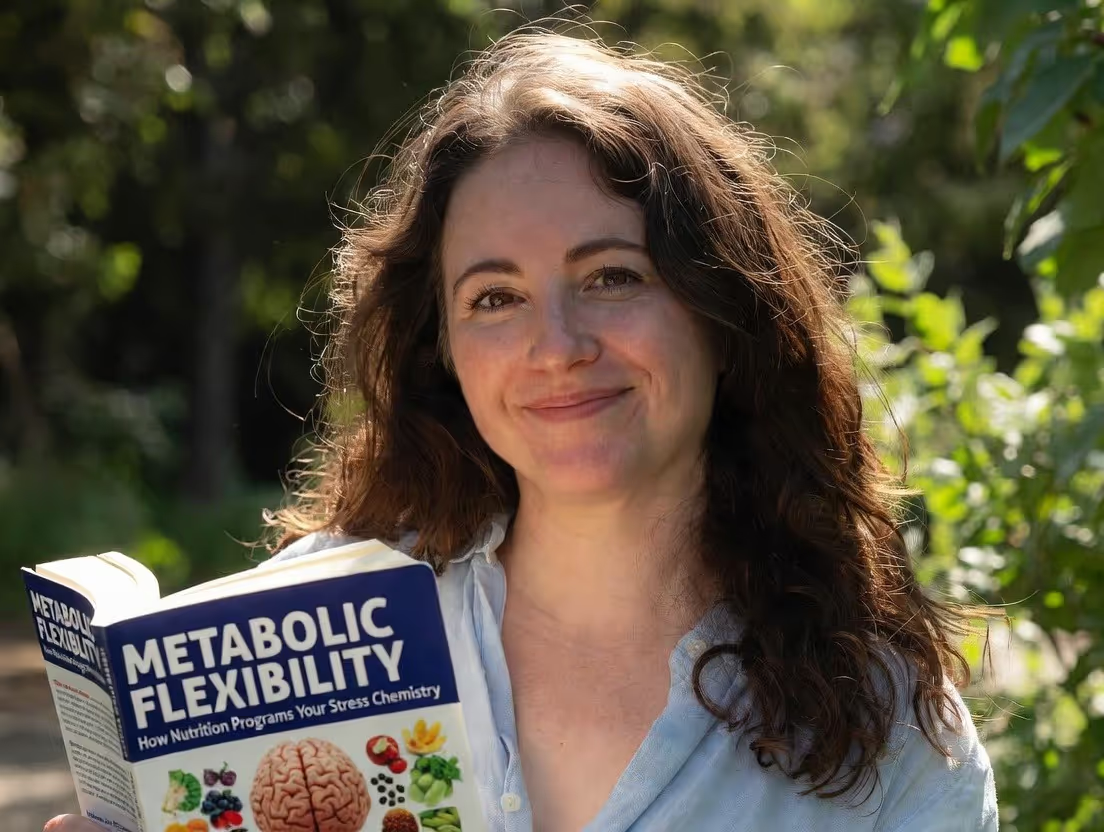
Your brain and your adrenal glands are metabolically expensive organs. How you fuel them determines whether they function from a place of stable abundance or precarious scarcity. The goal is metabolic flexibility—your body’s ability to efficiently switch between using different fuel sources (primarily glucose and fats) based on availability and demand. A metabolically inflexible person on a blood sugar rollercoaster is setting their nervous system up for constant, internal stress signals.
The Blood Sugar-Stress Cycle: When you consume a meal high in refined carbohydrates and sugar, your blood glucose spikes rapidly. Your pancreas releases insulin to shuttle glucose into cells. A sharp spike often leads to a subsequent crash (hypoglycemia). This crash is perceived by your brain as an emergency, triggering the release of cortisol and adrenaline to liberate stored glucose. You feel anxious, shaky, and foggy—classic stress symptoms driven purely by biochemistry. This cycle, repeated daily, chronically elevates cortisol and keeps the SNS on high alert.
Building an Anti-Stress Plate: Nutrition for resilience focuses on stability, nourishment, and signaling.
The link between your gut and your brain—the gut-brain axis—cannot be overstated. An estimated 90% of serotonin, a key neurotransmitter for mood and calm, is produced in the gut. A diverse, healthy gut microbiome helps regulate inflammation and produces neurotransmitters that directly communicate with the brain via the vagus nerve. Feeding your gut with prebiotic fiber (from plants) and potentially probiotic foods is not just about digestion; it’s a direct intervention in your stress physiology.
Tracking this can be profound. You might notice that on days you eat a balanced lunch, your afternoon energy is sustained and your evening HRV is higher. Conversely, a high-sugar snack might show up as a noticeable dip in heart rate variability two hours later. This biofeedback turns nutrition from a vague ideology into a precise tool for building biological resilience, a principle that guides our holistic approach to wellness at Oxyzen.
But resilience isn’t built in a vacuum. We are social creatures, and our connections can be either a monumental source of stress or our most powerful buffer against it. The next adaptation requires us to look outward.
The famous Tend-and-Befriend response, identified by psychologist Dr. Shelley Taylor, offers a crucial complement to the fight-or-flight model. Under threat, humans—especially, but not exclusively, women—also have a biological imperative to seek social connection, nurture others, and build alliances. This isn’t just psychological; it’s physiological. Positive social engagement releases oxytocin, a neurohormone that modulates the stress response, dampening cortisol production and promoting feelings of trust and calm.
Conversely, social isolation and loneliness are among the most potent chronic stressors for a human being. They are associated with increased inflammation, higher blood pressure, reduced immune function, and a significantly elevated risk for all-cause mortality—a physiological state akin to being under constant threat.
Therefore, cultivating high-quality social connections is not a soft “self-care” item; it is a core protocol for stress system adaptation. Safe, supportive relationships act as a biological buffer.
How to Actively Build Your Social Buffer:
Your biometrics can even reflect this. You might see a higher HRV reading after an evening spent laughing with close friends, or a lower resting heart rate during a weekend away with a partner. These are not coincidences; they are measurable signs of a system that feels safe and connected. For inspiration, you can read testimonials from users who’ve seen their data transform as they improved work-life balance and connection.
With our inner and outer worlds aligned for resilience, we must address the environment that often triggers the cycle in the first place. The final foundational adaptation is about proactively designing your life to minimize unnecessary friction and create space for what matters.
Your willpower and cognitive reframing skills are finite resources. Relying on them to constantly battle against a chaotic, demanding, and friction-filled environment is a losing strategy. The final, master-level adaptation is environmental design—proactively shaping your physical and digital spaces, your schedule, and your habits to make resilience the default, easy choice and drain unnecessary stress.
This is about reducing “decision fatigue” and eliminating micro-stressors that cumulatively create a high allostatic load.
Principles of Resilient Environmental Design:
When your environment is designed for ease, you free up massive cognitive and emotional resources. You stop fighting your day and start flowing with it. The stress that remains is more likely to be the “good” kind—the challenging, meaningful engagement that leads to growth, not the frustrating, unnecessary friction that leads to depletion. This philosophy of designing for human performance is central to who we are; you can learn more about our approach and mission on our about page.
We have now laid out the nine foundational pillars for building permanent stress response adaptations. But knowledge without integration is just trivia. The final step is to weave these threads together into a sustainable, personalized practice—a living system that evolves with you, guided not by dogma, but by the undeniable data from your own body. This is where the journey truly begins.
Understanding the nine foundational adaptations is a cognitive achievement. Living them is the transformative work. The bridge between the two is a Personalized Resilience Protocol—a living system of habits, checks, and feedback loops tailored specifically to your biology, your life, and your goals. It moves you from a scattered collection of “shoulds” to a coherent, self-reinforcing practice.
The core mistake people make is attempting to overhaul everything at once, leading to overwhelm and abandonment. The protocol is built not through force, but through strategic, sequential habit stacking and the intelligent use of keystone habits. A keystone habit is one that, when established, creates positive ripple effects across multiple areas of your life. For most, sleep is the ultimate keystone habit. Improving sleep often naturally improves nutrition choices, emotional regulation, and willpower for exercise.
Building Your Protocol: A Phased Approach
The golden rule is “Introduce, Observe, Integrate.” After adding a new element, use your biometric data for 2-3 weeks to observe its effect. Does your HRV trend upward? Does your sleep become more consistent? Does your resting heart rate drop? The data tells you if the practice is serving your system. If metrics stagnate or decline, you adjust the dose (shorter workout, different meal timing) before adding more.
This process inherently cultivates the most important meta-skill of all: self-awareness. You move from being reactive to your feelings to being responsive to your physiology. The question shifts from “Why do I feel so tired?” to “My HRV has been low for three days, and my sleep has been shallow. What has changed? Let me investigate.” You become the expert and guardian of your own resilience.
In the journey of permanent adaptation, subjective feeling is an unreliable narrator. You can feel fine while your nervous system is quietly drowning in allostatic load. Conversely, you can feel anxious on a day your HRV is actually high, indicating your body is handling the challenge well. Biometric feedback closes this perceptual gap, providing an objective, real-time dialogue with your inner state.
This is the paradigm shift offered by continuous wearable technology. It’s not about obsessive tracking; it’s about informed introspection. The data serves as a mirror, reflecting the consequences of your choices and the state of your system with unflinching honesty.
How to Intelligently Use Your Data:
This feedback loop transforms you from a passive recipient of stress to an active architect of your resilience. The Oxyzen ring becomes less of a “tracker” and more of a resilience compass, always pointing toward true north—your unique state of balance and readiness. For those curious about the technology that enables this, our FAQ details how the Oxyzen ring captures and interprets this vital data.
With a protocol in place and a compass in hand, you will inevitably encounter obstacles. Life is not a controlled lab. The true test of your adaptations is not how you function in calm seas, but how you weather the storm and, crucially, how you rebuild afterward.
Progress is never linear. On the path to building permanent adaptations, you will experience the resilience dip—a period where your biometrics and your mood decline despite your efforts. This is not failure; it is an expected, even necessary, part of the process.
The dip can be triggered by external factors: a family crisis, a pressing work deadline, an illness, or travel. It can also be triggered by the adaptation process itself, as your system undergoes a kind of “rewiring” that can temporarily feel destabilizing. The critical skill is learning to distinguish between a normal dip and a sign that you are veering into overtraining or burnout.
Signs of a Normal Resilience Dip vs. Overtraining:
The Art of the Strategic Comeback:
When you hit a dip, the instinct is often to double down on discipline, to push harder. This is exactly wrong. The adaptive response is to strategically pull back and prioritize foundational recovery.
The ability to navigate these dips—to fall, recover, and rise again—is resilience in action. Each cycle, when handled with awareness, deepens your adaptation. You learn that setbacks are not permanent, and your trust in your own capacity to recover grows. This embodied knowledge is more valuable than any streak of “perfect” days.
As you master the navigation of your own inner world, you begin to radiate that stability outward. Your cultivated resilience ceases to be a private project and starts to influence your work, your leadership, and your most important relationships. It becomes your most impactful contribution.
Stress is contagious. So is calm. When you build a stable, resilient nervous system, you are not just benefiting yourself; you become a source of regulation for the systems you inhabit—your team, your family, your community. In leadership, this is often called “leading from the inside out” or “emotional contagion,” but it is fundamentally a biological phenomenon: the process of co-regulation.
A leader whose own stress response is dysregulated—whose HPA axis is erratic and whose ANS is stuck in sympathetic overdrive—unconsciously broadcasts threat signals. This triggers defensive, reactive states in those around them, stifling creativity, collaboration, and psychological safety. Conversely, a leader with high HRV and a well-regulated system projects a field of calm agency. They can hold space for complexity, listen deeply, and make decisions from a place of clarity, not fear. This creates an environment where others feel safe enough to perform at their best.
Practical Impacts of a Resilient Leader:
In personal relationships, the effect is equally profound. When you are not constantly on the edge of your own capacity, you have the emotional and physiological resources to show up for your partner, children, and friends. You can engage in active listening without being hijacked by your own need to fix or deflect. You can handle conflict as a shared problem to be solved, not a threat to be neutralized. Your stable presence becomes a safe harbor for your loved ones.
This ripple effect validates the work of personal adaptation as more than self-improvement; it is a form of relational and social stewardship. You are building a more resilient node within your network, which strengthens the entire web. The story of Oxyzen itself emerged from this understanding—that individual well-being is the foundation for collective thriving. You can read our story to learn more about this foundational belief.
As your resilience solidifies and begins to impact your world, you move into a new phase of the journey: not just managing stress, but channeling its energy toward a life of purpose, growth, and meaningful achievement. This is the state of sustainable performance.
The ultimate goal is not to live in a flatline of calm. It is to thrive in the dynamic, stimulating, and sometimes demanding flow of a meaningful life. This is the realm of sustainable performance and eustress—the good stress that challenges us to grow, learn, and achieve.
Eustress is the hormonal and neurological cousin of distress, but with a key difference: it occurs within our window of tolerance and is coupled with a sense of agency and optimism. The same cortisol and adrenaline are released, but instead of signaling “Danger!”, they signal “Challenge! Opportunity!” The cardiovascular response is one of efficient, focused engagement (like a skilled athlete’s) rather than panicked, chaotic arousal.
Your work in building the foundational adaptations has, in fact, been about widening your window of tolerance—the physiological and emotional zone in which you can handle stress without becoming dysregulated. A narrow window means even small setbacks cause overwhelm. A wide window means you can take on significant challenges, experience the intense energy of stress, and still remain grounded and effective.
Signs You Are Operating in a State of Sustainable Performance:
To cultivate this, you must actively seek challenges that align with your growth edges. This could be taking on a complex project at work, training for a physical event, or learning a deeply challenging new skill. The key is to frame it consciously: “This is difficult, and I am capable. This stress is the feeling of my limits expanding.”
In this state, your smart ring data transitions from a recovery monitor to a performance optimizer. You can ask: “What patterns in my sleep and HRV predict my most productive, creative days?” “How can I structure my week to align my most demanding tasks with my biological peaks?” You are no longer just surviving stress; you are orchestrating it in the service of your highest goals.
This holistic integration of body, mind, and purpose represents the zenith of stress response adaptation. It is a lifelong practice, but one that yields compounding returns. To see how this philosophy translates into real-world impact, explore the experiences of others who have embarked on this journey.
Building permanent stress response adaptations is not a program with an end date. It is the cultivation of a resilient identity—a way of moving through the world where awareness, recovery, and purposeful challenge are woven into the fabric of your daily life. It is the shift from “I am a stressed person trying to cope” to “I am a resilient person who navigates challenges with skill and returns to balance with ease.”
This identity is reinforced every time you:
Your Oxyzen ring and the data it provides become a long-term companion in this identity, not a short-term critic. Its role evolves from a teacher showing you the basics to a trusted advisor helping you refine the nuances of your unique physiology over years and decades.
Remember, the target is not perfection. The target is progress, awareness, and agency. There will be seasons of life that demand more and offer less time for protocol—the birth of a child, caring for an aging parent, launching a company. In these seasons, your baseline of adaptation will be your saving grace. The neural pathways you’ve built, the physiological flexibility you’ve earned, will allow you to endure and adapt to extremes that would have shattered a less-prepared system.
And when those intense seasons pass, you will have the knowledge and the tools to guide yourself back to equilibrium, wiser and more resilient than before.
This is the promise of moving beyond temporary relief. It is an invitation to engage in the most important project you will ever undertake: the intentional, scientific, and compassionate stewardship of your own human potential. It begins with a single breath, a single night of good sleep, a single moment of choosing awareness. And it continues for a lifetime.
To support you on this ongoing journey, we are constantly adding resources, insights, and community wisdom. Our blog is a living library of knowledge dedicated to exploring every facet of sustainable performance and well-being. The path is yours to walk, but you don’t have to walk it alone.
The quest to master our internal state is not a new one. For millennia, across cultures, humans have developed sophisticated systems to cultivate inner peace, resilience, and performance. From the contemplative practices of Buddhism and Stoicism to the movement arts of Tai Chi and Yoga, ancient wisdom traditions have long understood the connection between breath, mind, and the body’s equilibrium. What’s revolutionary today is not the practices themselves, but our ability to validate and personalize them with scientific precision. We stand at a powerful convergence: the timeless “why” meets the modern “how much.”
Ancient systems were built on keen observation and subjective experience. A yogi learned to correlate specific breathing patterns (pranayama) with states of calm or energy. A monk understood through decades of meditation how mental focus could steady the body. This wisdom was profound but often required a lifetime of dedicated practice to master, with progress measured in subtle, internal shifts that were difficult to quantify or communicate.
Modern biometrics illuminates these internal shifts in real-time, translating subtle physiological changes into clear, objective data. This creates a powerful feedback loop that accelerates mastery and demystifies the process.
Case Studies in Convergence:
This convergence allows us to approach ancient practices not as vague spiritual exercises, but as targeted neurobiological training protocols. We can dose them correctly, understand their specific effects on our unique systems, and integrate them into a holistic resilience plan with confidence. It bridges the gap between the monastery and the laboratory, offering a deeply practical, personalized path to the states of being these traditions have always pointed toward.
If you want to build a resilient stress response, you must tend to your gut. This is not a metaphorical suggestion; it is a biochemical imperative. The gut-brain axis is a complex, bidirectional communication network linking your enteric nervous system (the “second brain” in your gut) with your central nervous system. This highway is trafficked by hormones, immune cells, and most significantly, the vagus nerve. It means your digestive system doesn’t just process food—it profoundly influences your mood, cognition, and stress reactivity.
At the center of this axis lies the gut microbiome, the vast ecosystem of trillions of bacteria, viruses, and fungi residing in your intestines. A diverse, balanced microbiome is a pillar of resilience. An imbalanced one (dysbiosis) is a constant, low-grade source of inflammation and stress signaling.
How Your Gut Programs Your Stress Response:
Building a Resilience-Focused Gut:
Tracking the gut-brain connection can be subtle but profound. You might notice that periods of poor eating coincide not just with digestive discomfort, but with poorer sleep scores, lower HRV, and higher resting heart rates. Conversely, a week of prioritizing fibrous vegetables and fermented foods might show up as a gradual uptick in your recovery metrics. It’s a powerful reminder that resilience is built not just in the mind and the cardiovascular system, but in the depths of the digestive tract. For more on holistic health foundations, our blog explores the science of the gut-brain connection in depth.
Your stress response system does not operate in a vacuum; it is conducted by a master timekeeper: your circadian rhythm. This roughly 24-hour internal clock, centered in the brain’s suprachiasmatic nucleus (SCN), governs the daily ebb and flow of nearly every physiological process—hormone release (cortisol, melatonin), body temperature, digestion, and, crucially, the balance of your autonomic nervous system.
When your lifestyle is synchronized with this innate rhythm, resilience feels effortless. Your cortisol peaks naturally in the morning to help you wake alert, declines steadily through the day, and reaches its nadir at night, allowing melatonin to rise and usher in restorative sleep. The SNS and PNS harmonize with this cycle. When you fight your circadian rhythm—through irregular sleep, excessive artificial light at night, or erratic eating—you create constant, low-grade stress known as circadian disruption. This misalignment is a primary driver of HPA axis dysfunction and poor stress resilience.
The Non-Negotiables of Circadian Alignment:
How Circadian Alignment Builds Permanent Adaptation: A well-timed system is an efficient, predictable system. When your cortisol curve is optimal, you have steady energy and focus during the day, preventing the erratic energy crashes that trigger stress-eating and impulsive decisions. A robust melatonin rise ensures deep, restorative sleep, which is when all the day’s stress adaptations are cemented. You break the cycle of using stimulants (caffeine) to prop up a dysregulated morning and sedatives (alcohol, sleep aids) to quiet a dysregulated night.
Your Oxyzen ring provides the ultimate feedback on your circadian health. Consistently high sleep scores and a stable, low resting heart rate at night are signs of good alignment. A elevated nighttime heart rate or frequent wake-ups can signal circadian disruption. By using light, timing, and consistency as your primary tools, you work with your biology, not against it, building a foundational rhythm that makes all other resilience practices more effective. This principle of working in harmony with natural biology is central to our philosophy at Oxyzen.
In the serious pursuit of resilience, we often overlook two of the most potent and pleasurable regulators of the human nervous system: play and awe. These are not frivolous diversions; they are evolved psychological states that produce distinct, beneficial physiological signatures, counteracting the narrow, threat-focused tunnel vision of chronic stress.
Play: Defined as a voluntary, enjoyable activity done for its own sake, without a specific goal. It can be physical (a pickup soccer game, dancing), social (board games, charades), or imaginative (building, creative arts).
Awe: The feeling of encountering something vast that transcends your current understanding of the world. It can be triggered by nature (a starry night, a mountain vista), art (a symphony, a masterpiece), or profound human achievement.
Integrating Play and Awe as Adaptive Practices:
The biometric signature of play and awe might be a significant, acute spike in HRV during the activity, followed by a lower resting heart rate that evening. Subjectively, you feel “lightened” or “reset.” These practices are essential because they rebuild the neural pathways for joy, connection, and wonder—pathways that chronic stress actively erodes. They remind your nervous system that the world is not only a place of demand, but also a source of delight and mystery. For stories of how reconnecting with joy transforms well-being, our testimonials page offers real-world inspiration.
Your smartphone is not a neutral tool. It is a potent delivery system for micro-doses of dopamine, cortisol, and cognitive fragmentation. Digital hygiene—the conscious management of your technology use—is not a lifestyle hack; it is a critical protocol for reducing the chronic, low-grade allostatic load of modern life. The constant barrage of notifications, the infinite scroll, the context-switching between apps, and the exposure to curated (and often distressing) global news create a state of continuous partial attention, which is profoundly stressful to the brain and nervous system.
The Physiological Cost of Poor Digital Hygiene:
Building a Digitally Resilient Environment:
The impact of digital hygiene on your biometrics can be dramatic. Implementing a strict digital sunset may be the single most effective intervention for improving sleep depth and HRV. Reducing notification interruptions can lead to a lower average daytime resting heart rate. This isn’t about rejecting technology; it’s about commanding it to serve your biology, rather than letting it hijack it. For support in setting up these boundaries, our FAQ covers common challenges in disconnecting.
We introduced diaphragmatic breathing as foundational PNS training. But breath is far more than a basic brake. It is the master lever of the autonomic nervous system, offering the most direct and rapid route to shifting your physiological and emotional state on demand. By mastering a palette of breathing techniques, you equip yourself with tools for energy, focus, calm, and even sleep induction.
Beyond the Basics: A Toolkit of Breath Protocols:
The Data-Driven Breath Practice: With a smart ring, you can move from abstract practice to precision training. Set a 5-minute timer for coherent breathing (5.5 sec inhale, 5.5 sec exhale). Watch your live heart rate graph. Does it begin to smooth and descend? That’s direct biofeedback. Try box breathing before a meeting and note your HRV reading afterward versus a day you didn’t. You begin to build a personal database: “This breath pattern reliably drops my heart rate by 10 bpm in 90 seconds.”
Breath mastery turns you from a passenger of your physiology into its pilot. It is the most portable, immediate, and powerful technology for stress adaptation you possess. By expanding your respiratory toolkit, you ensure you’re never without a way to navigate back to center, no matter what the day brings.
In the pursuit of biometric excellence, a dangerous pitfall awaits: optimization fatigue. This is the state of becoming so obsessed with daily scores, so anxious about a low HRV reading, that the pursuit of resilience becomes yet another source of stress. The ring’s data, meant to liberate, becomes a tyrant. This is the antithesis of adaptation.
To avoid this, you must learn to play the long game. Your nervous system adapts over seasons and years, not days and weeks. The goal is not a perfect graph, but a positive trajectory and, most importantly, a felt sense of increased capacity and ease in your life.
Shifting from Micro-Monitoring to Macro-Tracking:
The ultimate sign of permanent adaptation is when the habits become so ingrained that you need the data less, not more. You intuitively know when you need rest. You automatically choose the nourishing meal. You catch your shallow breathing and correct it. The ring becomes a periodic check-in, a trusted advisor for fine-tuning, not a constant overseer. This journey, as you’ll see in the stories of those who’ve walked it, is about reclaiming your innate biological wisdom, with technology as a guide, not a crutch. To see how this long-term approach unfolds, explore the journeys shared in our community testimonials.
While the journey of stress adaptation is deeply personal, it need not be solitary. Throughout human history, transformation has happened in communities—tribes, monasteries, guilds, and support groups. A community of resilience provides three irreplaceable elements: normalization, inspiration, and shared intelligence.
Finding or Building Your Community:
At its best, a resilience community shifts the culture from one of silent suffering and competitive burnout to one of open support and sustainable thriving. It embodies the principle that we recover and grow better together. This belief in collective elevation is woven into the story of our founding and vision.
As we integrate these final layers—from ancient wisdom and gut health to digital boundaries and community—the picture of permanent adaptation becomes rich and complete. It is a mosaic of science and soul, of individual discipline and collective support. The final portion of this exploration will bring it all together, offering a synthesis and a vision for a life lived not in fear of stress, but in mastery of it, ready to contribute your unique energy to a world that needs resilient, whole humans more than ever.
Your Trusted Sleep Advocate: Sleep Foundation — https://www.sleepfoundation.org
Discover a digital archive of scholarly articles: NIH — https://www.ncbi.nlm.nih.gov/
39 million citations for biomedical literature :PubMed — https://pubmed.ncbi.nlm.nih.gov/
Experts at Harvard Health Publishing covering a variety of health topics — https://www.health.harvard.edu/blog/
Every life deserves world class care :Cleveland Clinic - https://my.clevelandclinic.org/health
Wearable technology and the future of predictive health monitoring :MIT Technology Review — https://www.technologyreview.com/
Dedicated to the well-being of all people and guided by science :World Health Organization — https://www.who.int/news-room/
Psychological science and knowledge to benefit society and improve lives. :APA — https://www.apa.org/monitor/
Cutting-edge insights on human longevity and peak performance:
Lifespan Research — https://www.lifespan.io/
Global authority on exercise physiology, sports performance, and human recovery:
American College of Sports Medicine — https://www.acsm.org/
Neuroscience-driven guidance for better focus, sleep, and mental clarity:
Stanford Human Performance Lab — https://humanperformance.stanford.edu/
Evidence-based psychology and mind–body wellness resources:
Mayo Clinic — https://www.mayoclinic.org/healthy-lifestyle/
Data-backed research on emotional wellbeing, stress biology, and resilience:
American Institute of Stress — https://www.stress.org/


