


The Commute Stress Solution: Travel Time Transformation
Handle gossip by not participating, changing the subject, or addressing it directly if it's harmful, while focusing on your own work.
Handle gossip by not participating, changing the subject, or addressing it directly if it's harmful, while focusing on your own work.
%402x.svg)
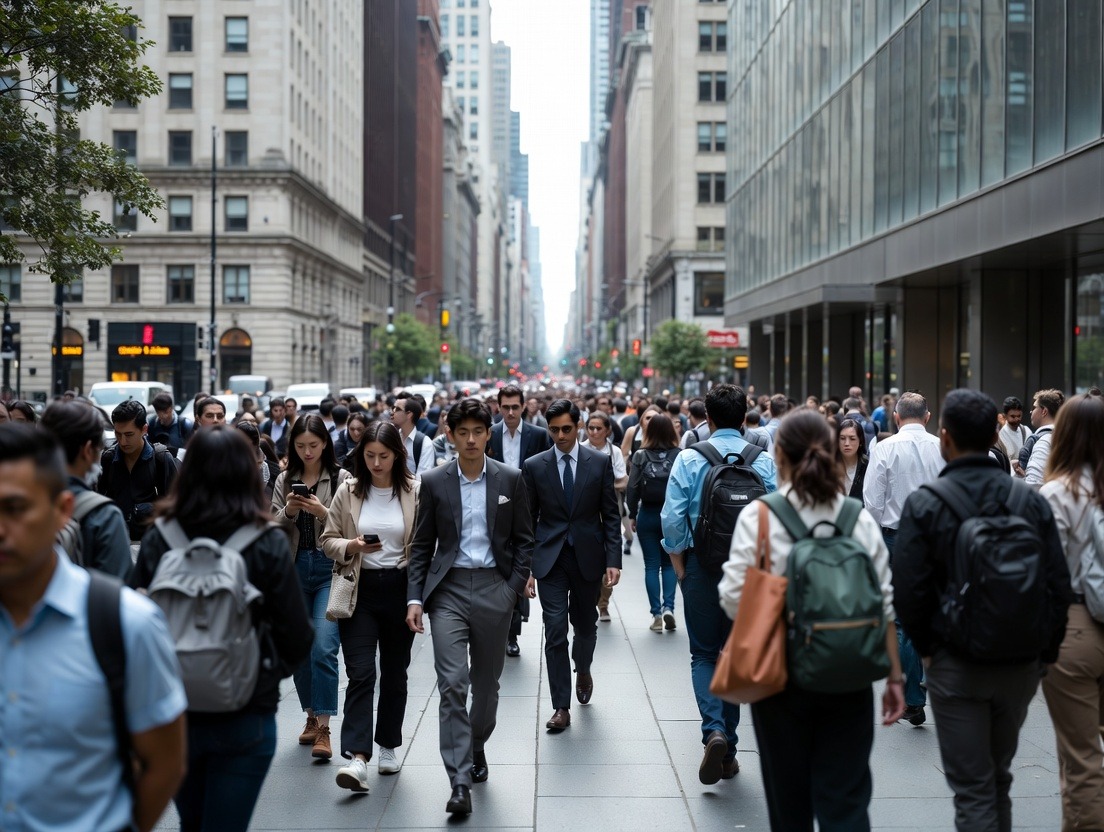
You know the feeling. That low-grade hum of dread as you glance at the clock. The sigh that escapes before you’ve even stood up from your desk. The tightening in your shoulders as you join the stream of bodies heading for the train, or the line of taillights stretching to the horizon. The daily commute. For millions, it’s not just travel; it’s a daily attrition of time, energy, and peace of mind—a non-negotiable tax on our well-being.
We’ve accepted this stolen time as an inevitable cost of modern life. But what if we’ve been looking at it all wrong? What if the hours spent in transit aren’t a barren wasteland to be endured, but a hidden landscape of potential, waiting to be cultivated?
This article isn’t about shaving ten minutes off your journey with a dubious shortcut. It’s about a fundamental Travel Time Transformation—a paradigm shift that converts the most stressful part of your day into a cornerstone of your wellness, productivity, and personal growth. We’ll dismantle the science of commute stress, explore transformative frameworks for mindset and activity, and introduce how cutting-edge technology, like the intelligent wellness tracking from Oxyzen smart rings, provides the real-time data and insights to make this transformation not just theoretical, but deeply personal and achievable.
Your journey to reclaiming your commute starts here.

We often measure a commute in minutes and miles, but its true cost is tallied in cortisol spikes, depleted willpower, and missed opportunities. Before we can transform this time, we must understand the profound, multi-layered impact it has on our lives.
The stress of commuting is physiological. Studies consistently show that longer commutes correlate with higher blood pressure, increased risk of obesity, elevated cortisol (the primary stress hormone), and reduced sleep quality. The unpredictability of traffic or delays triggers a fight-or-flight response, flooding your system with adrenaline for a threat you can neither fight nor flee. This chronic, low-grade stress is insidious, contributing to systemic inflammation and long-term health risks.
Beyond the body, the mind pays a heavy toll. Psychologists identify the “commuter’s dilemma”: the constant need for vigilance in navigation and crowd navigation depletes our finite cognitive resources, a state known as ego depletion. By the time you arrive at work or home, you have less mental bandwidth for complex tasks, emotional regulation, and meaningful interaction. This drain contributes to the phenomenon of “commute spillover,” where the frustration of the journey negatively affects performance at work and harmony at home.
The time cost is staggering. The average round-trip commute in many metropolitan areas now exceeds 60 minutes. That’s 250 hours a year—over six full 40-hour workweeks—spent in a state of suspended animation. This is time robbed from family, hobbies, exercise, and rest. The economic value of this lost time is immense, but the human cost—the experiences not had, the connections not made—is immeasurable.
Yet, within this stark analysis lies the seed of opportunity. If the commute holds such power to degrade our well-being, then strategically transforming it must hold an equal, opposite power to enhance it. The first step is moving from passive endurance to active reclamation. As we’ll explore next, this begins not with an app or a podcast, but with a fundamental shift in perspective.
The most powerful tool for transforming your commute isn’t a piece of technology or a specific activity; it’s your perspective. The language we use creates our reality. Labeling your commute as “wasted time” or “a necessary evil” programs your brain for resentment and passivity. The transformation begins with a conscious reframing: this is “Found Time.”
“Found Time” is a psychological concept that treats otherwise captive periods—like commutes, waiting rooms, or queues—as unexpected gifts of minutes and hours, ripe for intentional use. This isn’t naïve positivity; it’s strategic cognitive reframing. By viewing the train carriage or the driver’s seat as a personal studio, a mobile library, or a meditation chamber, you shift from being a victim of circumstance to the architect of your experience.
How do you enact this shift? Start with a simple audit. For one week, simply observe your commute without judgment. Notice the thoughts that arise (“I’m so tired,” “This traffic is insane,” “I could be home right now”). Then, gently challenge them. Ask: “If this 30 minutes were suddenly gifted to me in the middle of my day, how would I choose to use it?” The answers become your blueprint for transformation.
Next, set a micro-intention before each journey. This takes 10 seconds as you gather your things. It could be: “I will use this drive to listen to an inspiring audiobook and arrive energized,” or “I will use this train ride for focused planning so I feel in control of my day,” or simply, “I will use this time to decompress and arrive home present for my family.” This tiny act of pre-commitment wires your brain to seek out the opportunity within the constraint.
This mindset is the foundation upon which all other strategies are built. It turns the commute from a problem to be solved into a resource to be managed. And managing any resource effectively requires data. This is where modern wellness technology moves from being a gadget to a crucial ally, providing the biometric feedback to tailor your “Found Time” strategy to your body’s actual needs, not just your guesses. You can discover how Oxyzen works to provide this kind of personalized, real-time insight.

To strategically use your “Found Time,” you must first understand how your body is reacting to the commute environment in the moment. This isn’t abstract science; it’s a real-time physiological drama playing out in your nervous system, and you can learn to direct it.
Let’s break down the commute’s assault on your physiology. The moment you’re cut off by another car or hear an announcement about a delay, your sympathetic nervous system (SNS) engages. Your amygdala sounds the alarm, prompting your hypothalamus to signal your adrenal glands: release cortisol and adrenaline. Your heart rate and blood pressure increase, blood is shunted to your muscles, and your digestion halts. You’re primed for a threat—but you’re sitting in a sealed metal box. This “fight-or-flight” energy has no physical outlet, leaving you jittery, anxious, and fatigued.
Conversely, the restorative parasympathetic nervous system (PNS)—the “rest-and-digest” system—is suppressed. This is why you can’t relax even when traffic is finally moving. Your body is stuck in a stress loop. Over time, this pattern teaches your body to see the commute itself as a threat, triggering the stress response even before you leave the house—a conditioned reaction known as anticipatory stress.
The environment exacerbates this. Poor air quality in tunnels or packed stations, unnatural lighting, prolonged sitting with poor posture, and constant low-grade noise pollution all send additional stress signals to the brain. Your body is under a multi-front assault.
The key to intervention lies in intercepting this stress cascade. You can’t control the traffic, but you can control your physiological response to it. Techniques like paced breathing (e.g., 4-7-8 breath: inhale for 4, hold for 7, exhale for 8) directly stimulate the vagus nerve, the main highway of the PNS, signaling safety to the brain. Simple isometric exercises (like squeezing and releasing your glutes or gripping the steering wheel and releasing) can give that pent-up muscular energy a controlled outlet.
But how do you know what you need? Is your body craving calming breaths or an energizing audio session? This is the revolutionary insight provided by continuous biometric devices. A smart ring, for instance, can detect that your heart rate variability (HRV) is low and your stress levels are elevated the moment you step onto the crowded platform, prompting you to begin a breathing exercise before you even feel consciously stressed. This biofeedback loop turns guesswork into precision. For a deeper look at the science behind this technology, explore our blog for more wellness tips on stress physiology.
With the right mindset and an understanding of your body’s signals, the “Found Time” of your commute becomes a blank canvas. But without structure, it’s easy to default to mindless scrolling. The Four-Zone Framework provides that structure, offering four intentional categories for how you can use your travel time based on your needs, energy, and goals.
Think of these zones not as rigid boxes, but as tools in your toolkit. The most effective commuters learn to fluidly move between them based on real-time conditions—both external (a quiet train vs. a chaotic one) and internal (feeling drained vs. feeling alert).
This zone is for recovery and mental decluttering. Its goal is to down-regulate your nervous system and arrive calmer.
This zone transforms your commute into a mobile classroom or inspiration engine.
This zone is for active thinking and productivity, turning transit into a strategic planning session.
This zone leverages the often-overlooked potential for genuine human connection or personal admin.
The power of this framework is its flexibility. Tomorrow’s crowded, noisy bus ride might be a Zone 1 day. Today’s smooth, quiet train could be perfect for Zone 2 enrichment. The goal is to move from default reaction to intentional choice.

In the quest for a transformed commute, generic advice only gets you so far. What soothes one person might bore another; what energizes you on Tuesday might overwhelm you on Thursday. True personalization requires data, and this is where the modern ecosystem of wearable technology—specifically the discreet, powerful smart ring—becomes the ultimate co-pilot for your Travel Time Transformation.
Unlike phones that distract or smartwatches that buzz with notifications, a device like the Oxyzen ring operates in the background, providing a continuous, passive stream of biometric intelligence. It measures what you cannot consciously feel until it’s too late: the early rise in heart rate signaling stress, the dip in heart rate variability indicating nervous system fatigue, the changes in skin temperature and blood oxygen. This is your body’s unvarnished truth about the commute.
Imagine these real-world applications:
This technology also helps you measure the efficacy of your Four-Zone activities. Did that new meditation app actually lower your physiological stress, or did it just feel like it? Did listening to an exciting audiobook energize you or add cognitive load? The data provides objective feedback, allowing you to refine your personal toolkit. To understand the philosophy behind creating such a human-centric device, you can delve into our brand journey and founding story.
The smart ring becomes the bridge between intention and outcome, between guessing and knowing. It transforms wellness from a concept you think about to a system you can manage.
For a significant number of people, the commute itself can be transformed from a sedentary stressor into the day’s primary source of movement and vitality. The Active Commute—walking, cycling, even combining public transit with a walk—isn’t just about physical health; it’s a potent, multi-spectrum antidote to almost every negative effect of passive travel.
The benefits are profound and immediate. Physical activity is a direct release valve for the pent-up stress hormones that a car or train commute generates. It stimulates the release of endorphins and neurotransmitters like dopamine and serotonin, literally flipping the biochemical script from dread to pleasure. The rhythmic nature of walking or cycling can induce a meditative, flow-like state, clearing the mind and fostering creative thinking. Furthermore, it returns a sense of autonomy and control—you are propelling yourself forward, not just being passively conveyed.
But let’s be realistic. A full 20-mile bike ride or 5-mile walk isn’t feasible for everyone. The principle of the Active Commute is about intentional movement integration, not all-or-nothing extremism.
The role of technology here is to validate and motivate. A wellness ring tracks the tangible outputs of your active commute: not just steps, but the positive impact on your cardiovascular readiness, sleep score, and stress resilience. Seeing the direct correlation between cycling to the station and a deeper sleep that night creates a powerful positive feedback loop. It answers the “Was it worth it?” question with hard data.
Even if a fully active commute isn’t possible, the mindset is portable: seek micro-opportunities for movement within any commute. Stand instead of sit. Take the stairs at the interchange. Pace while on a phone call. Each of these acts is a small rebellion against the passive stress of traditional travel.
Whether you’re in a car, on a train, or on a bus, your commute vehicle is a temporary personal space. Most of us default to its often-chaotic sensory setting: the blare of horns, the shuffle and chatter of strangers, harsh lighting, and stale air. The Sanctuary Strategy is the deliberate curation of this sensory environment to support your chosen Zone for the journey, effectively building a mobile cocoon of well-being.
Your senses are gateways to your nervous system. By controlling what you see, hear, and even smell, you can directly influence your physiological state, making your chosen activity (restoration, enrichment, etc.) more effective and deepening the transformation.
This is your most powerful tool. Replace the jarring, unpredictable noise of transit with intentional sound.
Where you direct your eyes dramatically affects your mental state.
These are advanced sanctuary techniques.
Curating your sanctuary turns your commute into a ritual of self-care. It signals to your brain, “This time and space are mine.” For more ideas on creating personalized wellness rituals, our community often shares their unique approaches, which you can find alongside real customer reviews.
In our hyper-connected world, the commute often becomes a time of frantic digital catch-up: scrolling social media, blasting through emails, reading the news. While this feels productive, it often constitutes a Digital Flood, adding to the very cognitive load and stress we’re trying to mitigate. The Digital Detox Commute is a strategic, periodic practice of intentionally disconnecting to reconnect with your own mind and environment.
The constant switching between apps, messages, and media fragments attention, a state neuroscientists call “attentional residue.” Each switch leaves a part of your brain stuck on the previous task, reducing overall cognitive capacity and increasing mental fatigue. Furthermore, consuming stressful or negative news and social media content during a commute compounds the physiological stress response, layering psychological distress onto the existing transit stress.
A Digital Detox Commute doesn’t mean staring blankly at the seat in front of you (unless that’s your goal for Zone 1!). It means engaging with content and activities that are monothematic, deep, and non-reactive.
The benefits are profound. You allow your default mode network—the brain’s “resting” state—to activate. This network is crucial for creativity, introspection, and memory consolidation. You arrive at your destination not with more information stuffed into your head, but with a clearer, more integrated mind.
Your wellness wearable can be a helpful partner in this detox, not a distraction. Set it to track your stress or focus mode, then review afterward. You’ll likely see a cleaner, calmer biometric readout, giving you concrete evidence of the detox’s value. It’s a fascinating way to learn more about smart ring technology as a tool for measuring mental, not just physical, states.
The stereotype of the commute is one of anonymous isolation—a train car full of people staring at phones, avoiding eye contact. Yet, as humans, we are wired for connection, and even micro-interactions can buffer stress and increase feelings of safety and belonging. The Social Commute explores how to mindfully and appropriately foster positive social connections during travel, transforming a space of isolation into one of subtle community.
This isn’t about forcing conversations on unwilling strangers. It’s about moving from a default state of social threat-avoidance to one of open, neutral, or even warm awareness.
The psychological benefit is significant. Positive social interaction, even minor, triggers the release of oxytocin, a hormone that reduces anxiety and improves stress resilience. It counters the dehumanizing aspect of crowded transit.
For those who work remotely or have solitary jobs, the Social Commute can be a vital, low-stakes source of daily micro-interactions that feed our social brains. It’s a reminder that we are part of a community, even in transit. This human-centric approach to wellness aligns closely with our core vision & values, which focus on holistic well-being in a modern context.
Perhaps the most profound transformation you can enact is to stop viewing your commute as a barrier between life segments, and start seeing it as the essential ritual of transition. In traditional societies, rituals marked the passage from one state to another (sacred to profane, work to home). Our modern life lacks these buffers, and we suffer for it. Your commute can be reclaimed as this personal ritual, allowing you to mentally, emotionally, and physiologically “download” the day behind you and “upload” the appropriate state for what lies ahead.
Without this buffer, we engage in “role spillover.” The frustrated driver arrives home and snaps at their family. The anxious professional lies in bed mentally rehearsing a work meeting. The commute, treated intentionally, creates the space to prevent this.
The Evening/Homeward Ritual (Shedding the Day):
The Morning/Workward Ritual (Gearing Up with Intention):
By treating your commute as this sacred buffer, you protect your home life from work stress and your work life from home worries. You arrive as yourself, not as a bundle of reactions from your journey. This psychological segmentation is a master skill for well-being in the modern world. For further reading on creating sustainable life rituals, our blog offers a wealth of related articles.
The journey from a state of commute stress to one of empowered transformation is profound, but how do you know it’s working? Subjective feelings are important—“I feel calmer”—but they can be swayed by a single bad day. The true mark of lasting change is objective, measurable progress. This is where you become The Quantified Commuter, using data not for self-judgment, but for insightful navigation and powerful reinforcement.
Moving from intuition to insight means tracking the key biomarkers that your commute directly impacts. A comprehensive wellness wearable like a smart ring provides a continuous, passive stream of this data, allowing you to see the invisible patterns and make precise adjustments.
This data-driven approach removes the guesswork and provides powerful positive reinforcement. Seeing a graph that visually demonstrates your calmer state is more motivating than any abstract tip. It turns wellness into a tangible, manageable project. For support on interpreting your data and maximizing your device’s potential, our comprehensive FAQ and support section is an invaluable resource.
Even with the best frameworks and technology, some commutes will test your resolve. A major accident, a broken-down train, a screaming child in the seat behind you, or simply a day when your own resilience is low—these are the moments that can derail your transformation if you’re not prepared. The key is to have a pre-rehearsed toolkit of micro-interventions for these high-stress scenarios.
The goal here is not to achieve Zen-like calm, but to prevent a total physiological meltdown and to regain a sense of agency. Think of these as emergency protocols for your nervous system.
Having these protocols ready transforms you from a reactive victim of circumstance to a proactive captain of your own state. You may not control the delay, but you control your response to it, and that makes all the difference.
A transformed commute for one week is a victory. A transformed commute as a sustainable lifestyle is a revolution in daily well-being. The final stage of mastery is moving from conscious effort and experimentation to automated habit formation integrated into your long-term health philosophy. This is where your Travel Time Transformation becomes as natural and non-negotiable as brushing your teeth.
Habits are formed through consistent cues, routines, and rewards. Your goal is to wire your new commute behaviors into this loop so deeply that deviating from them feels uncomfortable.
Your commute is not an isolated segment. It is a pillar of your daily energy management system. When you view it this way, it connects to other pillars:
This holistic view is at the heart of modern wellness technology. It’s not about tracking one metric in isolation, but understanding the interconnected system of your body. A device like the Oxyzen ring is designed to provide this ecosystem view, helping you see how your transformed commute positively ripples out to improve sleep, recovery, and overall readiness. You can explore our blog for more wellness tips on building these interconnected healthy systems.
By making your transformed commute a non-negotiable habit, you cease fighting against a part of your day and begin to wield it as one of your most powerful tools for building a resilient, energized, and fulfilling life. The journey is the destination, reimagined.
Beyond managing stress and reclaiming time, your commute holds untapped potential as a cognitive gymnasium. The Cognitive Commute is a dedicated practice of using travel time to strengthen specific mental faculties—focus, memory, creativity, and strategic thinking—turning passive transit into active brain training. This approach is especially powerful for knowledge workers, students, or anyone looking to maintain a sharp, agile mind.
The brain, much like a muscle, responds to targeted exercise. The captive, often monotonous environment of a commute is ironically ideal for focused cognitive work, provided you structure it correctly to avoid cognitive overload.
1. The Focus Forge:
This module is designed to combat the fractured attention of modern life by practicing sustained, deep focus.
2. The Memory Palace:
Leverage the spatial nature of your commute route to practice ancient mnemonic techniques.
3. The Creative Incubator:
The state of mild sensory deprivation (like staring out a train window) is famously fertile ground for creative insight. This module structures that incubation.
The Cognitive Commute requires more mental energy than passive listening, so it's best suited for times when your biometrics show you have the capacity—perhaps in the morning after a good night's sleep, as indicated by a high recovery score on your wellness tracker. Learning to match cognitive demand to physiological readiness is a master skill in sustainable performance. This kind of personalized insight is central to the mission at Oxyzen.ai, where technology is designed to empower smarter daily decisions, not just track them.
A cornerstone of commute stress is the fear of the unknown—the paralyzing worry about delays, cancellations, and disruptions. This anxiety often outweighs the disruption itself. The Contingency Commute strategy proactively dismantles this fear by building a personalized "Commute Resilience Plan." It’s not about pessimism; it’s about pragmatic empowerment. Knowing you have options transforms anxiety into preparedness.
A well-crafted contingency plan does two things: it provides immediate, actionable alternatives, and it creates a psychological safety net that reduces anticipatory stress. You board the train or start your car knowing that if something goes wrong, you are not helpless.
Step 1: Map Your Multi-Modal Network
Don’t just know one way to get to work. Actively research and test alternatives.
Step 2: Create Your "Disruption Protocol"
Pre-write the decision tree so you don't have to think under stress.
Step 3: Curate Your "Contingency Kit"
Your go-bag isn’t just for disasters. A small commute kit turns disruptions into minor inconveniences.
Step 4: Reframe the Disruption
When a delay happens, activate your plan, then use the unexpected "Found Time." This is the ultimate reframe.
This strategy turns you from a passive passenger of fate into an active logistics manager of your own life. The psychological relief is profound. For those who thrive on feeling prepared and in control, this approach is as valuable as any meditation app. Sharing and comparing resilience plans can also be a great community builder; you can see how others problem-solve in our real customer reviews and community stories.
For a growing number of people, the stress of the commute is compounded by a layer of eco-anxiety—the psychological distress caused by climate change and environmental degradation. The daily drive in a single-occupancy vehicle can feel like a personal contribution to the problem, creating a background hum of guilt. The Environmental Commute addresses this directly by integrating sustainability into your transformation strategy, turning travel time into an active practice of environmental stewardship that alleviates personal anxiety.
This isn't about prescribing a car-free life for everyone, but about making conscious, incremental choices that reduce your carbon footprint while often simultaneously improving your personal well-being. The data shows that active and shared commutes are almost always wins for both planet and person.
Level 1: The Efficient Solo Commuter (If Driving is Unavoidable)
Level 2: The Shared Commuter
Level 3: The Multi-Modal Commuter
Level 4: The Active Commuter (The Gold Standard)
Track your progress on two dashboards:
Seeing the positive impact on both fronts is powerfully motivating. It transforms the commute from a selfish act of consumption into a contributive act of care. This alignment of personal values with daily action is a profound antidote to eco-anxiety. Our company was founded on the belief that technology should help us live better, in harmony with ourselves and our world—a principle you can learn more about in our company mission and vision.
While we often experience our commutes as isolated individuals, we are, in fact, participating in a temporary, mobile community. The Communal Commute explores the possibility—and power—of shifting the culture of this shared space from one of mutual annoyance to one of subtle, collective well-being. Your calm can be contagious, and small acts of communal awareness can reduce the ambient stress level for everyone, making the journey more pleasant for all.
This strategy moves beyond personal habits to consider your role as a member of a transit ecosystem. It’s about exercising "commute citizenship."
1. Practice Non-Aggression and Predictability:
Your behavior sends signals. Erratic movements, loud phone conversations, and space invasions trigger threat responses in others. By moving calmly, using headphones, and respecting personal space, you become a neutral or calming presence. This is the foundation of a less stressful shared environment.
2. Master the Art of the Subtle Kindness:
These are tiny, non-intrusive acts that acknowledge shared humanity.
3. Model Calm in Crisis:
When a delay or disruption happens, the group mood is set by the most visible reactions. If you sigh loudly, complain to a stranger, or radiate frustration, you contribute to a collective panic. If you calmly take out your book, put on a podcast, or simply take a deep breath and observe, you model resilience. Others may unconsciously follow suit.
4. Leverage Technology for the Collective Good:
The cumulative effect of many people practicing Commute Citizenship is a tangible improvement in the travel atmosphere. It creates a virtuous cycle: a calmer environment makes it easier for you to maintain your personal calm, which in turn reinforces the environment. This concept of interconnected well-being—where individual actions contribute to a collective state—is a powerful one. It echoes the holistic approach we take at Oxyzen, where we believe understanding your personal data is the first step to optimizing your interactions with the world around you. For more on this philosophy, you can delve into our founding story and values.
The transformation of the commute is not a static achievement; it's an evolving practice alongside rapidly changing technology. The Future-Forward Commute looks ahead at the emerging trends—from autonomous vehicles to the maturation of the Metaverse—and considers how we can proactively shape our habits and mindsets to harness these changes for well-being, rather than be overwhelmed by them. The core principles of intentionality and data-driven self-awareness will only become more critical.
1. The Autonomous Vehicle (AV) Commute: Your Mobile Wellness Pod:
When driving becomes optional, your car transforms from a task requiring full attention to a private mobile room. This represents the ultimate "Found Time" expansion.
2. The Hyperloop & High-Speed Transit: Compressing Time, Managing Intensity:
As point-to-point travel speeds increase dramatically, the psychological experience shifts. A 30-minute commute might become a 10-minute hyperloop journey.
3. The Virtual & Augmented Reality Commute: Redefining "Presence":
With advanced VR/AR, the physical environment of a train or bus could become irrelevant. You could "commute" by walking on a virtual beach while attending a meeting in a virtual boardroom.
The Constant: The Need for Self-Awareness:
In every future scenario, the individual who thrives will be the one who uses technology with intention, not by default. The foundational work done now—understanding your stress triggers, knowing what activities truly restore or energize you, and using data to guide your choices—will be the bedrock for navigating these new frontiers. Staying informed on these trends is key; you can explore our blog for more wellness tips on the intersection of well-being and emerging tech.
By future-proofing your mindset today, you ensure that no matter how you travel tomorrow, you remain the author of your experience, not just a passenger.
For a significant number of people, the commute itself can be transformed from a sedentary stressor into the day’s primary source of movement and vitality. The Active Commute—walking, cycling, even combining public transit with a walk—isn’t just about physical health; it’s a potent, multi-spectrum antidote to almost every negative effect of passive travel.
The benefits are profound and immediate. Physical activity is a direct release valve for the pent-up stress hormones that a car or train commute generates. It stimulates the release of endorphins and neurotransmitters like dopamine and serotonin, literally flipping the biochemical script from dread to pleasure. The rhythmic nature of walking or cycling can induce a meditative, flow-like state, clearing the mind and fostering creative thinking. Furthermore, it returns a sense of autonomy and control—you are propelling yourself forward, not just being passively conveyed.
But let’s be realistic. A full 20-mile bike ride or 5-mile walk isn’t feasible for everyone. The principle of the Active Commute is about intentional movement integration, not all-or-nothing extremism.
The role of technology here is to validate and motivate. A wellness ring tracks the tangible outputs of your active commute: not just steps, but the positive impact on your cardiovascular readiness, sleep score, and stress resilience. Seeing the direct correlation between cycling to the station and a deeper sleep that night creates a powerful positive feedback loop. It answers the “Was it worth it?” question with hard data.
Even if a fully active commute isn’t possible, the mindset is portable: seek micro-opportunities for movement within any commute. Stand instead of sit. Take the stairs at the interchange. Pace while on a phone call. Each of these acts is a small rebellion against the passive stress of traditional travel.
Whether you’re in a car, on a train, or on a bus, your commute vehicle is a temporary personal space. Most of us default to its often-chaotic sensory setting: the blare of horns, the shuffle and chatter of strangers, harsh lighting, and stale air. The Sanctuary Strategy is the deliberate curation of this sensory environment to support your chosen Zone for the journey, effectively building a mobile cocoon of well-being.
Your senses are gateways to your nervous system. By controlling what you see, hear, and even smell, you can directly influence your physiological state, making your chosen activity (restoration, enrichment, etc.) more effective and deepening the transformation.
This is your most powerful tool. Replace the jarring, unpredictable noise of transit with intentional sound.
Where you direct your eyes dramatically affects your mental state.
These are advanced sanctuary techniques.
Curating your sanctuary turns your commute into a ritual of self-care. It signals to your brain, “This time and space are mine.” For more ideas on creating personalized wellness rituals, our community often shares their unique approaches, which you can find alongside real customer reviews.
In our hyper-connected world, the commute often becomes a time of frantic digital catch-up: scrolling social media, blasting through emails, reading the news. While this feels productive, it often constitutes a Digital Flood, adding to the very cognitive load and stress we’re trying to mitigate. The Digital Detox Commute is a strategic, periodic practice of intentionally disconnecting to reconnect with your own mind and environment.
The constant switching between apps, messages, and media fragments attention, a state neuroscientists call “attentional residue.” Each switch leaves a part of your brain stuck on the previous task, reducing overall cognitive capacity and increasing mental fatigue. Furthermore, consuming stressful or negative news and social media content during a commute compounds the physiological stress response, layering psychological distress onto the existing transit stress.
A Digital Detox Commute doesn’t mean staring blankly at the seat in front of you (unless that’s your goal for Zone 1!). It means engaging with content and activities that are monothematic, deep, and non-reactive.
The benefits are profound. You allow your default mode network—the brain’s “resting” state—to activate. This network is crucial for creativity, introspection, and memory consolidation. You arrive at your destination not with more information stuffed into your head, but with a clearer, more integrated mind.
Your wellness wearable can be a helpful partner in this detox, not a distraction. Set it to track your stress or focus mode, then review afterward. You’ll likely see a cleaner, calmer biometric readout, giving you concrete evidence of the detox’s value. It’s a fascinating way to learn more about smart ring technology as a tool for measuring mental, not just physical, states.
The stereotype of the commute is one of anonymous isolation—a train car full of people staring at phones, avoiding eye contact. Yet, as humans, we are wired for connection, and even micro-interactions can buffer stress and increase feelings of safety and belonging. The Social Commute explores how to mindfully and appropriately foster positive social connections during travel, transforming a space of isolation into one of subtle community.
This isn’t about forcing conversations on unwilling strangers. It’s about moving from a default state of social threat-avoidance to one of open, neutral, or even warm awareness.
The psychological benefit is significant. Positive social interaction, even minor, triggers the release of oxytocin, a hormone that reduces anxiety and improves stress resilience. It counters the dehumanizing aspect of crowded transit.
Your Trusted Sleep Advocate: Sleep Foundation — https://www.sleepfoundation.org
Discover a digital archive of scholarly articles: NIH — https://www.ncbi.nlm.nih.gov/
39 million citations for biomedical literature :PubMed — https://pubmed.ncbi.nlm.nih.gov/
Experts at Harvard Health Publishing covering a variety of health topics — https://www.health.harvard.edu/blog/
Every life deserves world class care :Cleveland Clinic - https://my.clevelandclinic.org/health
Wearable technology and the future of predictive health monitoring :MIT Technology Review — https://www.technologyreview.com/
Dedicated to the well-being of all people and guided by science :World Health Organization — https://www.who.int/news-room/
Psychological science and knowledge to benefit society and improve lives. :APA — https://www.apa.org/monitor/
Cutting-edge insights on human longevity and peak performance:
Lifespan Research — https://www.lifespan.io/
Global authority on exercise physiology, sports performance, and human recovery:
American College of Sports Medicine — https://www.acsm.org/
Neuroscience-driven guidance for better focus, sleep, and mental clarity:
Stanford Human Performance Lab — https://humanperformance.stanford.edu/
Evidence-based psychology and mind–body wellness resources:
Mayo Clinic — https://www.mayoclinic.org/healthy-lifestyle/
Data-backed research on emotional wellbeing, stress biology, and resilience:
American Institute of Stress — https://www.stress.org/


