


The Cost-Benefit Analysis of Sleep Improvement Methods
A cost-benefit analysis weighs the expense and effort of sleep solutions (e.g., blackout curtains, therapy, trackers) against the profound health and productivity returns.
A cost-benefit analysis weighs the expense and effort of sleep solutions (e.g., blackout curtains, therapy, trackers) against the profound health and productivity returns.
%402x.svg)
We live in an age of quantified everything. We track our steps, monitor our heart rate, log our calories, and analyze our productivity. Yet, for a third of our lives, we enter a data blackout: sleep. For generations, sleep was a mystery, a passive state we surrendered to each night. Today, science has ripped back the curtain, revealing sleep as the single most potent performance enhancer, metabolic regulator, and cognitive fortifier at our disposal. It’s the foundation upon which mental health, physical vitality, and longevity are built. Yet, paradoxically, in our pursuit of optimal health, we often invest in boutique gym memberships, organic superfoods, and mindfulness apps while neglecting the bedrock of wellbeing that is sleep.
The quest for better sleep has spawned a multi-billion dollar industry, offering solutions ranging from a $5 box of chamomile tea to a $10,000 high-tech mattress. This leaves the modern wellness seeker with a bewildering question: What actually works, and is it worth the cost? Is a $400 white noise machine 80 times more effective than a $5 fan? Does a $3,000 sleep trackers provide 100 times the insight of paying attention to your own energy levels? The answer is rarely straightforward, because the "cost" of a sleep solution isn't just its price tag. It encompasses time investment, lifestyle disruption, consistency required, and potential side effects. The "benefit" isn't just an extra hour of shut-eye; it's measured in improved mood, sharper cognition, reduced disease risk, and enhanced daily performance.
This article is your definitive, evidence-based guide through the labyrinth of sleep improvement. We will dissect, analyze, and compare the most popular and promising methods for enhancing sleep quality. We’ll move beyond anecdotal advice and dive deep into the financial, temporal, and behavioral economics of each approach. Our mission is to equip you with the framework to make intelligent, personalized investments in your sleep—investments that yield the highest return for your health, wealth, and overall quality of life. The journey to better sleep begins with a clear-eyed look at what you’re really buying.

Before we analyze the solutions, we must fully understand the problem's staggering cost. Sleep deprivation is not a personal inconvenience; it's a silent public health crisis and a profound economic drain. When we frame poor sleep as a "debt," we begin to see its compounding interest in every domain of our lives.
Financially, the impact is colossal. The RAND Corporation estimates that sleep deprivation costs the U.S. economy up to $411 billion annually in lost productivity. That’s more than 2% of the country's GDP. On an individual level, a study published in the Journal of Occupational and Environmental Medicine found that workers with insomnia lost the equivalent of 11.3 days of productivity per year compared to their well-rested peers. This "presenteeism"—being at work but operating at sub-optimal capacity—is a far greater cost to employers than absenteeism. For the individual, this can translate to stalled careers, missed opportunities, and lower lifetime earnings.
The health costs are even more direct and devastating. Chronic sleep deprivation (less than 6-7 hours per night for adults) is a confirmed risk factor for a harrowing list of conditions:
The personal and social costs are immeasurable but profoundly felt. Sleepy people are more irritable, less empathetic, and have slower reaction times. The National Highway Traffic Safety Administration attributes over 6,000 fatal car crashes annually to drowsy driving. Relationships fray under the weight of chronic fatigue, and the simple joys of life become harder to access.
This is the "cost of inaction." Every night of poor sleep is a withdrawal from your cognitive, emotional, and physical bank account. The subsequent sections will explore the investments you can make to reverse this debt. But first, you must appreciate the bankruptcy that poor sleep invites. Understanding this foundational economic model is the first step in valuing the solutions we are about to explore. For a deeper exploration of how sleep data can reveal these hidden costs, many find value in the personal stories shared by users on our testimonials page, where the impact of measurement becomes clear.
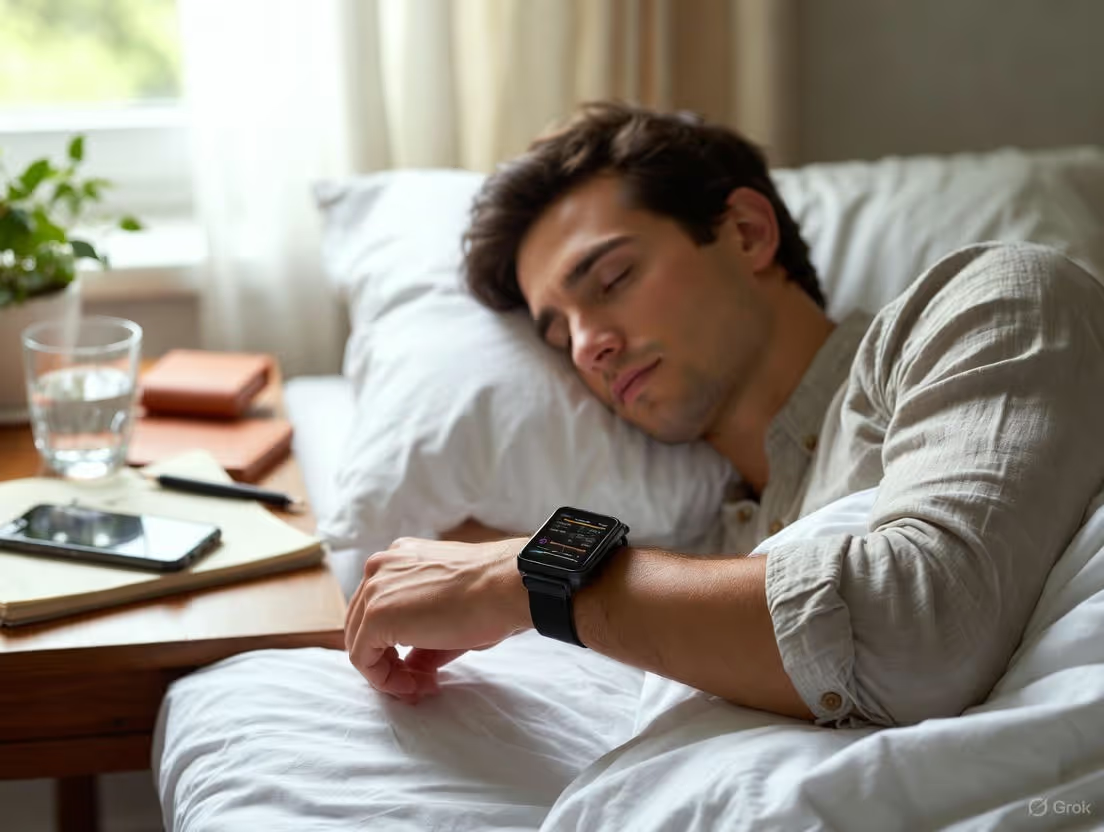
The most logical place to start improving sleep is where it happens: your bedroom. Environmental engineering is about creating a sanctuary primed for slumber. This method's cost spectrum is vast, from nearly free to extravagantly expensive.
The Core Variables: Light, Sound, Temperature, and Comfort.
Overall Cost-Benefit Verdict on Environment Engineering:
This category offers some of the highest ROI sleep interventions available. Small, strategic changes—like total darkness, a cool room, and masking disruptive sounds—provide foundational benefits that make all other methods more effective. It's wise to master the low-cost basics here before moving to more complex or expensive solutions. For more tips on crafting the perfect sleep sanctuary, our blog regularly covers environmental optimization strategies.
If the bedroom is the sleep theater, your daily behaviors are the rehearsal. This method costs little in money but requires significant investment in consistency and self-discipline. The payoff, however, is arguably the greatest of any method.
The Science of Sleep Pressure and Circadian Rhythm.
Two internal biological systems govern sleep: the circadian rhythm (your 24-hour internal clock) and sleep-wake homeostasis (sleep pressure). Behavioral methods work by powerfully aligning both.
The Time Investment vs. Payoff.
These methods are free but not easy. They require a long-term view. You are essentially "paying" with your time and habit formation to earn a more reliable, high-yield sleep system. The initial 2-4 weeks require conscious effort—the "cost" of change. The lifelong benefit is a self-sustaining sleep pattern that is resilient to life's disruptions.
Overall Cost-Benefit Verdict on Behavioral Methods:
This is the bedrock of sustainable sleep health. The monetary cost is near zero, but the "cost" of consistency is high. For those willing to invest in ritual and discipline, the benefits—free, durable, drug-free sleep improvement—are unparalleled. It is the ultimate high-skill, high-reward approach to sleep. To understand the philosophy behind building health through consistent, measured habits, you can explore our company's foundational principles on our about-us page.
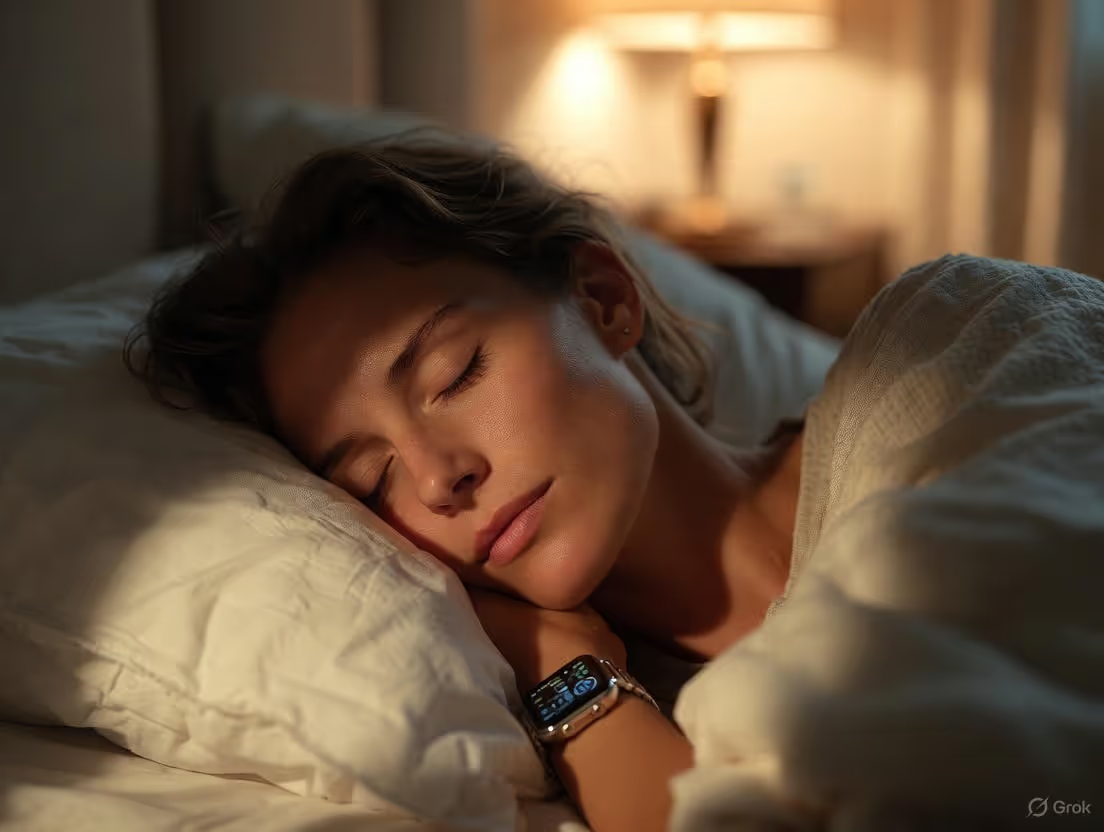
We now enter the realm of technology. The promise of sleep trackers is objective insight: moving from "I feel tired" to "I got 45 minutes of deep sleep and my resting heart rate variability was low." But does more data lead to better sleep, or just more anxiety?
Wearables vs. Nearables: The Data Fidelity Spectrum.
The Real Cost: Data Anxiety and the Placebo of Tracking.
The hidden cost of digital tools is psychological. For some, tracking becomes a source of nightly performance anxiety, which is antithetical to sleep. The key is to use the data for gentle curiosity and trend-spotting over weeks—not nightly self-judgment. The benefit is realized when data informs action, like realizing your optimal bedtime or seeing the tangible impact of a new wind-down ritual.
Overall Cost-Benefit Verdict on Digital Tools:
A mid-to-high monetary cost with a variable benefit that depends entirely on the user's psychology. For the data-driven, curious individual who can avoid obsession, a high-quality tracker can be an excellent investment that provides feedback and motivation for behavioral changes. It serves as a coach, not a judge. For those prone to health anxiety, it may do more harm than good. To see how this technology integrates into a holistic wellness system, you can learn more about smart ring technology and its applications.
This method seeks to hack sleep chemistry through what we ingest. The market is flooded with options, from ancient herbs to modern synthetic hormones. The cost ranges from pennies to dollars per night, but efficacy and safety vary wildly.
The Evidence-Based Contenders:
The Hype vs. Reality of "Sleep" Foods.
Tart cherry juice (source of natural melatonin and anti-inflammatory compounds), kiwi fruit (serotonin and antioxidants), and fatty fish (vitamin D and omega-3s) have preliminary research supporting a sleep benefit. The cost is incorporating them into your diet; the benefit, while likely mild, comes with general nutritional upside.
The High Cost of Poor Choices: Sugar, Heavy Meals, and Hidden Stimulants.
The negative cost-benefit here is stark. A late, heavy, or sugary meal costs you digestive disruption and elevated blood sugar during the night, directly impairing sleep quality. The benefit of avoiding this is free and immediate.
Overall Cost-Benefit Verdict on Nutritional Aids:
A moderate monetary cost for generally mild-to-moderate benefits. Supplements should be seen as adjuncts, not foundations. The most impactful nutritional intervention is what and when you avoid eating before bed. For those with specific deficiencies or acute issues (like jet lag), targeted supplements like magnesium or micro-dose melatonin can offer good ROI. For general sleep maintenance, your money and focus are often better spent on behavioral and environmental methods first. For common questions on how lifestyle and technology interact with these choices, our FAQ addresses many user inquiries.

This is the most direct, but often most costly, intervention in both dollars and potential side effects. It treats the symptom (can't sleep) but rarely the cause.
Over-the-Counter (OTC) Sleep Aids:
Prescription Medications:
The Critical Analysis: Short-Term Gain vs. Long-Term Debt.
Pharmacological sleep is often shallow, chemically altered sleep. It may provide more time unconscious but not more restorative sleep. The true "cost" is the opportunity cost of not addressing underlying behavioral, psychological, or medical issues causing the insomnia. It's like taking a painkiller for a broken leg without setting the bone.
Overall Cost-Benefit Verdict on Pharmacological Methods:
Potentially high short-term benefit for acute crises (e.g., after a traumatic event). Catastrophically poor long-term ROI for chronic insomnia. The side effects, dependency risks, and financial costs outweigh the degrading benefits. These should only be used under strict medical supervision for the shortest duration possible, while concurrently pursuing non-pharmacological root-cause solutions like CBT-I.
If pills are the sledgehammer, Cognitive Behavioral Therapy for Insomnia (CBT-I) is the master key. It's considered the gold-standard, first-line treatment for chronic insomnia by every major sleep medicine academy. Its "cost" is in effort and engagement; its benefit is a durable cure.
Deconstructing CBT-I: The Components.
CBT-I is a multi-component program, typically 6-8 weeks, often delivered by a therapist or via digital platforms.
The Cost Structure: Time, Money, and Discomfort.
The Unmatched Benefit: Durability.
Unlike medication, the benefits of CBT-I persist long after treatment ends. Studies show it improves sleep onset, sleep maintenance, and sleep quality for over 80% of patients, with benefits lasting years. You are not buying a night of sleep; you are buying the skill to sleep well for life.
Overall Cost-Benefit Verdict on CBT-I:
Highest long-term ROI of any method for chronic insomnia. The upfront costs (financial, time, effort) are significant, but they purchase a permanent solution. It is an investment in skill acquisition, not a consumable product. For anyone serious about solving chronic sleep issues, this should be the central pillar of their strategy.
Your circadian rhythm is not a suggestion; it's the conductor of your biology. This method involves using light—the most powerful zeitgeber (time-giver)—to realign your internal clock with your desired schedule. It's particularly powerful for shift workers, jet lag sufferers, and those with Delayed Sleep Phase Disorder (night owls forced to live in a morning lark world).
The Mechanism: Suprachiasmatic Nucleus (SCN) Priming.
Light hitting photoreceptors in your eyes sends a direct signal to your SCN, the brain's master clock. Morning light advances the clock (helps you wake earlier); evening light delays it (makes you stay up later).
Practical Applications and Their Cost-Benefit:
Chronotype Acceptance vs. Fight.
Your chronotype (genetically predisposed sleep-wake preference) is not a flaw. The cost of constantly fighting it is chronic social jet lag and sleep deprivation. The benefit of aligning your life to it as much as possible (e.g., negotiating later work start times) is profound wellbeing. Technology like smart lighting can help mediate between your chronotype and societal demands.
Overall Cost-Benefit Verdict on Light Management:
A phenomenally high-ROI category. The free interventions (morning sun, evening dimness) are profoundly effective. The monetary cost for therapeutic tools like light boxes is moderate and justified for those with specific circadian challenges. This is a foundational biological lever that is massively under-pulled in modern life.
This method uses the body's physical state to drive sleep. The principle is simple: a well-regulated, healthily fatigued body sleeps more soundly.
Exercise: The Dual-Phase Benefit.
Deliberate Heat Exposure (Sauna):
Emerging research suggests passive heating (sauna, hot bath) 1-2 hours before bed can significantly improve sleep onset and depth by mimicking the body's natural thermoregulatory drop.
Bodywork (Massage, Foam Rolling):
Aims to reduce physical tension and pain that can interfere with sleep.
Overall Cost-Benefit Verdict on Physical Interventions:
Exercise is arguably the highest-ROI activity for human health, full stop. Its sleep benefits are a massive free bonus atop its other virtues. The cost is non-negotiable time and sweat. Deliberate heat and bodywork are excellent adjuncts, especially for specific populations (e.g., pain sufferers, athletes). Their cost is more justifiable if sleep (and recovery) is a primary goal.
This category encompasses practices that work through less conventional, often parasympathetic ("rest-and-digest") pathways. Their evidence base varies but is growing.
Meditation and Mindfulness-Based Stress Reduction (MBSR):
Acupuncture:
Traditional Chinese Medicine practice of inserting fine needles.
Autonomous Sensory Meridian Response (ASMR):
The experience of calming, tingling sensations in response to specific auditory or visual triggers (whispering, tapping).
Overall Cost-Benefit Verdict on Alternative Modalities:
Mindfulness/Meditation stands out as a high-ROI, evidence-backed practice with benefits far transcending sleep. Its cost is time and practice. Acupuncture is a higher-cost, variable-benefit option that may work where conventional methods stall. ASMR is a near-zero-cost experiment worth trying. These are best used as complementary tools within a broader sleep strategy.
This addresses the critical scenario where poor sleep is a symptom, not the primary disease. The cost of skipping this step can be catastrophic.
Sleep Disorders That Demand Diagnosis:
The High Stakes of Self-Diagnosis.
Using OTC sleep aids or struggling through undiagnosed sleep apnea is like pouring water into a boat with a gaping hole. You are addressing the wrong problem at a high ongoing cost to your health. A professional evaluation is the ultimate cost-benefit analysis: a significant but finite financial cost to identify and treat a problem that could otherwise incur infinite health costs.
Overall Cost-Benefit Verdict on Professional Diagnosis:
Non-negotiable for persistent, unexplained sleep issues. If you snore loudly, gasp for air at night, have overwhelming daytime sleepiness, or have unrelenting insomnia despite good habits, this is your first and only rational investment. The benefit is correct treatment and potentially adding years to your life. To understand how consumer technology can complement professional diagnosis, our our-story page details the journey of integrating health monitoring into daily life.
We conclude our initial analysis with the frontier: an integrated system where your environment, tracking, and behaviors communicate to automate sleep optimization. This is the high-tech, high-cost vision of the future.
The Vision: A Self-Regulating Sleep Sanctuary.
Imagine: Your wearable detects your bedtime ritual starting (lowered heart rate, less movement). It signals your smart home to gradually dim the lights, lower the thermostat, and start playing your sleep soundtrack. As you enter deep sleep, it ensures no notifications break through. In the morning, it uses ambient light to gently wake you at the optimal point in your sleep cycle.
Current Components and Their Costs:
The Analysis: Automation vs. Over-Engineering.
Overall Cost-Benefit Verdict on Integrated Tech Ecosystems:
A luxury-grade, high-cost intervention currently in its early adopter phase. For the tech enthusiast with disposable income who values automation and data, it offers a compelling and fun path to optimization. For the average person seeking better sleep, the core benefits (darkness, quiet, cool, routine) can be achieved at <10% of the cost through manual methods. The ecosystem's true value may lie in its ability to enforce consistency effortlessly, which, for some, is worth the premium. It represents the ultimate convergence of the methods we've discussed, a topic we frequently explore in depth on our blog for those interested in the cutting edge of wellness technology.
Having meticulously dissected eleven distinct pathways to better sleep, we now face the critical task of synthesis. Rarely does a single method operate in a vacuum. True sleep optimization—the kind that yields resilient, restorative rest night after night—emerges from a strategic combination of interventions. This is where we move from analysis to application, from theory to a personalized blueprint.
Think of your sleep health as a financial portfolio. A wise investor doesn’t put all their capital into a single, volatile stock. They diversify across asset classes—some foundational and stable (bonds), some for growth (stocks), and some speculative (alternative investments)—to balance risk and reward, and to ensure stability through market fluctuations. Your sleep portfolio requires the same strategic diversification.
The art lies in allocating your finite resources—money, time, and mental energy—across these categories to build a portfolio that matches your unique "sleep economy": your chronotype, your lifestyle constraints, your specific sleep disruptions, and your psychological makeup.
The true magic happens when methods are layered to create synergistic effects, where the combined impact is greater than the sum of their individual parts. Let's examine powerful synergies:
Synergy 1: Data (Method 3) Informs Behavior (Method 2) and Environment (Method 1).
Synergy 2: CBT-I (Method 6) Provides the Framework, Mindfulness (Method 9) Provides the Tool.
Synergy 3: Exercise (Method 8) Enhances the Drive for an Optimized Environment (Method 1).
Synergy 4: Light Management (Method 7) Reinforces Chronotype Alignment, Reducing Need for Supplements (Method 4).
Identifying and cultivating these synergies is the hallmark of a sophisticated approach. It’s about creating a self-reinforcing system where each element supports and amplifies the others. For those navigating this integration, many find community and shared experiences in the user journeys documented on our testimonials page.
Let’s move from theory to practice by constructing hypothetical portfolios for different sleep archetypes. Each allocates resources differently based on primary constraints and goals.
Each blueprint illustrates that there is no one-size-fits-all "best" method. The optimal portfolio is a function of personal context. The journey to discover your ideal mix is part of the process, a topic we often explore with different case studies on our blog.
We have analyzed discrete costs and benefits. Now, let's zoom out to the multi-decade horizon and consider sleep as the ultimate compounding asset in your life's portfolio. The returns are not linear; they are exponential.
The Compound Interest Analogy:
Imagine two individuals, both 30 years old.
Let's project the compounding over 30 years.
1. Healthcare Cost Compounding:
Person A's robust sleep strengthens their immune system, regulates hormones, and reduces systemic inflammation. They likely avoid or delay the onset of chronic diseases strongly linked to poor sleep: Type 2 Diabetes, hypertension, cardiovascular events, and certain cancers.
Person B's sleep debt accumulates as biological wear and tear. They have a significantly higher statistical probability of developing one or more of these expensive conditions earlier in life.
2. Career & Earning Power Compounding:
Person A's consistent sleep yields superior cognitive function: better memory consolidation, sharper focus, enhanced creativity, and improved emotional intelligence. They make fewer errors, are more resilient under stress, and are perceived as more reliable and promotable.
Person B operates with chronic cognitive impairment—the equivalent of showing up to work mildly intoxicated. They are more prone to burnout, have slower cognitive processing, and may hit career ceilings earlier.
3. Life Quality & "Time" Compounding:
This is the most profound compound return. Person A has more usable, energetic waking hours each day. Over 30 years, that adds up to thousands of extra high-quality hours for relationships, hobbies, learning, and presence. Their mood is more stable, their relationships richer, their experience of life more vibrant.
Person B spends a significant portion of their waking life in a state of fatigue, irritability, and low-grade struggle. The cost is paid in missed moments, shorter tempers, and a reduced capacity for joy.
The Net Present Value of Sleep:
When you run the numbers—not just on a nightly basis, but across a lifetime—the case becomes indisputable. Investing 2-5% of your annual income into a strategic sleep portfolio (a good mattress, a supportive pillow, a tracking device, blackout curtains, CBT-I if needed) is not an expense. It is a capital investment in your human infrastructure with an estimated annualized return that dwarfs the stock market's historical average. It is investing in the very instrument that generates all your other income and life satisfaction: you. To see how a focus on foundational health can shape a company's mission, you can read about our core philosophy on our about-us page.
In our quest for perfect sleep, a dangerous trap awaits: orthosomnia. Coined by researchers in 2017, orthosomnia is "the preoccupation with or fixation on achieving perfect sleep that, ironically, leads to worsening sleep-quality insomnia." It is the dark side of the quantified self-movement, where the tool becomes the tormentor.
Symptoms of Sleep Optimization Disorder:
The High Cost of Perfectionism:
The pitfall here is that the relentless pursuit of perfect sleep actively generates the state of hyper-arousal and anxiety that is the core pathophysiology of insomnia. You have transformed your sanctuary into an arena for nightly graded evaluation. The cost is your peace of mind; the "benefit" you sought evaporates.
How to Practice "Good Enough" Sleep Hygiene:
The healthiest sleep portfolio includes an allocation for psychological flexibility. It understands that sleep is a natural biological process, not a manufactured product. You can cultivate the conditions for it to flourish, but you cannot force it to happen. This balance between effort and surrender is the final, and perhaps most important, skill in the sleep optimizer's toolkit. For those struggling with this balance, our FAQ addresses common concerns about data interpretation and maintaining a healthy relationship with tracking.
With the comparative analysis complete and archetype blueprints in hand, the final step is systematic execution. Transforming knowledge into consistent, high-quality sleep requires a structured approach. This is not about a dramatic overnight overhaul, which often leads to burnout and abandonment. It is about intentional, sequential engineering—laying a foundation, reinforcing it, and then adding sophisticated layers only when the basics are solid.
Before you invest a single dollar or minute in a new solution, you must understand your starting point. This phase is about objective and subjective measurement.
Step 1: Conduct a Subjective Self-Assessment.
For one week, keep a simple pen-and-paper sleep diary each morning. Do not use a digital device for this initial step. Record:
This builds mindfulness and provides a subjective baseline free from the influence of tracking data.
Step 2: Perform an Environmental Audit.
One evening, lie in your bed at your planned bedtime. Engage your senses:
Step 3: Establish One "Keystone" Non-Negotiable.
Based on your audit, choose the single most impactful, easiest-to-implement change from the "Blue Chip" foundation methods. This is your keystone habit. Examples:
Commit to this one thing with 100% consistency for two weeks. Do not add anything else. The goal here is to prove to yourself that change is possible and to experience a small win.
With your foundation habit solid, you can now begin to strategically allocate resources based on your archetype and the gaps identified in your audit.
Step 4: Allocate Your "Sleep Budget."
Determine your investment tolerance across three currencies:
Step 5: Make Your Primary Tool Investment.
Choose one primary tool or method from the "Growth" or "Specialized" categories that addresses your core disruptor. Purchase or commit to it fully.
Implement this tool alongside your keystone habit. Give it 3-4 weeks to integrate into your life and to gather meaningful data or experience.
Step 6: Layer in a Complementary Behavior.
Once your primary tool feels integrated, add one complementary behavioral layer that creates synergy.
This phased, layered approach prevents overwhelm and allows you to isolate what is working.
This is the maintenance and fine-tuning phase, where you manage your portfolio for long-term returns.
Step 7: Review and Rebalance Quarterly.
Every three months, conduct a brief review:
Based on this review, you might:
Step 8: Embrace Adaptive Flexibility.
Your sleep portfolio is not a rigid contract. It is a living system. It must adapt to:
The goal is not robotic perfection, but resilient adaptability. You are building a robust system that can withstand life's inevitable disruptions. For ongoing support and new insights as you navigate this journey, a wealth of resources can be found on our blog.
As we stand at the confluence of neuroscience, biotechnology, and artificial intelligence, the horizon of sleep optimization is expanding at a breathtaking pace. The future moves beyond tracking and environment to direct, closed-loop interaction with the sleeping brain and body.
1. Closed-Loop Acoustic Stimulation.
Current technology detects sleep stages. The next generation will influence them. Early research and emerging devices use precisely timed auditory pulses (pink noise or specific tones) delivered via headphones or bedside speakers. These pulses are synchronized with the brain's slow-wave oscillations during deep sleep. The result? Studies show an increase in the duration and amplitude of deep sleep, leading to improved memory consolidation and next-day cognitive performance. The future iteration of your white noise machine won't just mask sound; it will actively enhance your sleep architecture.
2. Wearable-Integrated Autonomic Nervous System Regulation.
Future wearables will move beyond reporting HRV (heart rate variability) to actively guiding its improvement. Imagine a device that detects stress-induced sympathetic ("fight-or-flight") dominance in real-time and prompts you with a personalized, biofeedback-driven breathing exercise on your phone or via a gentle haptic nudge. The wearable wouldn't just tell you you're stressed; it would initiate the precise intervention to shift your nervous system into the parasympathetic ("rest-and-digest") state required for sleep initiation.
3. Advanced Non-Contact Sensing and Ambient Intelligence.
The bed itself will become a sensitive diagnostic instrument. Advanced mattress pads or under-mattress sensors using ballistocardiography and radar technology will be able to measure heart rate, respiration rate, sleep stages, and even predict potential health events like sleep apnea episodes or atrial fibrillation—all without a single wearable. This data will feed into your home's ambient AI, which will learn your patterns and autonomously adjust the thermostat, lighting, and even suggest optimal bed and wake times.
4. Personalized Nutraceutical and Chronobiotic Formulations.
The supplement industry will be revolutionized by personal biometrics. Instead of taking a generic melatonin pill, you will take a capsule formulated in real-time based on that day's data: your wearable-detected stress load, your sleep debt from the previous night, and your upcoming circadian challenges (e.g., an early flight). This "sleep stack" might include a precise ratio of magnesium threonate, L-theanine, apigenin, and micro-dosed melatonin, tailored not just to "help sleep," but to address your specific physiological deficit for that specific night.
5. Neurostimulation and Targeted Memory Reactivation.
More speculative but heavily researched, techniques like transcranial direct current stimulation (tDCS) or targeted memory reactivation (TMR) during sleep could move from the lab to the consumer sphere. TMR uses specific odors or sounds associated with learning during wakefulness, replayed during sleep, to selectively strengthen memories. The ethical and practical boundaries are vast, but the potential to use sleep for directed cognitive enhancement is a powerful frontier.
The Cost-Benefit of the Frontier:
These technologies promise a leap in efficacy, moving from passive observation and general recommendations to active, personalized enhancement. However, the initial costs will be extremely high, both financially and in terms of complexity. The risks involve over-reliance on technology, privacy concerns with deeply intimate biometric data, and the potential for new forms of "performance anxiety." The early adopters will pay a premium to be part of the experiment. For the majority, the established, high-ROI methods discussed in this article will remain the core of a healthy sleep portfolio for years to come, with frontier tech slowly integrating as it becomes more accessible and validated. The story of this technological evolution is a core part of our mission, which you can explore in our story.
Our exhaustive journey through the cost-benefit analysis of sleep improvement reveals a fundamental truth: in the modern economy of attention and achievement, rest is not a sign of weakness; it is the ultimate act of strategic sophistication. It is the dark matter of performance—invisible, but constituting the bulk of what determines success and wellbeing.
We have priced the tools, from the humble box fan to the advanced smart ring. We have quantified the benefits, from reduced disease risk to compounded financial gain. We have mapped the personalized paths for the executive, the parent, the shift worker, and the athlete. The evidence is overwhelming and incontrovertible.
Yet, the final and most significant barrier is not financial, temporal, or even physiological. It is cultural.
We live in a society that glorifies "hustle," that wears sleep deprivation as a badge of honor, that views time spent in bed as time wasted. This cultural narrative is a catastrophic miscalculation. It is a Ponzi scheme borrowing from your future health, happiness, and productivity to pay for an illusion of present-tense busyness.
Therefore, the most powerful sleep improvement method of all may be a philosophical shift. It is the internal decision to reprioritize.
Investing in sleep is a radical declaration of self-worth. It says: "My long-term vitality is more important than the next episode on Netflix. My clarity of mind tomorrow is more valuable than answering one more email tonight. My emotional resilience is more crucial than being perceived as perpetually available."
This is not an invitation to self-absorbed biohacking. It is a call to recognize sleep as a foundational human right and a public good. Well-rested people are better colleagues, more patient partners, more present parents, and more creative problem-solvers. They are less prone to anger and more capable of empathy. A society that sleeps well is a safer, healthier, and more innovative society.
You now hold the map. The journey begins not with a massive purchase, but with a single, curious observation.
Tonight, or tomorrow morning, start with Phase 1, Step 1. Pick up a notebook. Write down three simple things: what time you went to bed, what time you woke up, and how you feel. Do this for three days.
That simple act of noticing is the first, and most important, deposit into your new sleep portfolio. It is the moment you move from being a passive victim of fatigue to an active investor in your own restoration.
From there, the path unfolds. Perhaps you’ll invest in darkness. Perhaps you’ll reclaim 30 minutes of pre-bed tranquility. Perhaps you’ll seek a professional to rule out sleep apnea. Each step is an intelligent allocation of your resources towards the highest-yield asset you will ever own: your awakened, energetic, fully-lived life.
The analysis is complete. The data is clear. The return on investment is guaranteed. The only question that remains is: When will you start paying yourself the dividend of rest?
Your Trusted Sleep Advocate: Sleep Foundation — https://www.sleepfoundation.org
Discover a digital archive of scholarly articles: NIH — https://www.ncbi.nlm.nih.gov/
39 million citations for biomedical literature :PubMed — https://pubmed.ncbi.nlm.nih.gov/
Experts at Harvard Health Publishing covering a variety of health topics — https://www.health.harvard.edu/blog/
Every life deserves world class care :Cleveland Clinic - https://my.clevelandclinic.org/health
Wearable technology and the future of predictive health monitoring :MIT Technology Review — https://www.technologyreview.com/
Dedicated to the well-being of all people and guided by science :World Health Organization — https://www.who.int/news-room/
Psychological science and knowledge to benefit society and improve lives. :APA — https://www.apa.org/monitor/
Cutting-edge insights on human longevity and peak performance:
Lifespan Research — https://www.lifespan.io/
Global authority on exercise physiology, sports performance, and human recovery:
American College of Sports Medicine — https://www.acsm.org/
Neuroscience-driven guidance for better focus, sleep, and mental clarity:
Stanford Human Performance Lab — https://humanperformance.stanford.edu/
Evidence-based psychology and mind–body wellness resources:
Mayo Clinic — https://www.mayoclinic.org/healthy-lifestyle/
Data-backed research on emotional wellbeing, stress biology, and resilience:
American Institute of Stress — https://www.stress.org/


