The Coworker Relationship Guide: Social Stress at Work
Take mental health days without guilt by viewing them as necessary maintenance for sustained performance, like physical sick days.
The Invisible Load: Understanding and Conquering Social Stress at Work
You’ve prepared meticulously for the 10 AM meeting. Your data is bulletproof, your presentation is sleek, yet a familiar knot tightens in your stomach. It’s not the work itself—it’s the people. The thought of navigating John’s passive-aggressive comments, managing Sarah’s chronic negativity, or simply making small talk by the coffee machine feels more draining than the quarterly report you just finalized.
This isn’t just a “bad day at the office.” This is social stress—the chronic, often invisible psychological strain that arises from our complex web of workplace relationships. While deadlines and deliverables are the visible architecture of our jobs, the quality of our coworker interactions is the invisible foundation. When that foundation cracks, everything becomes harder, less enjoyable, and ultimately, less productive.
Modern work is a social experiment. We are asked to collaborate with personalities we didn’t choose, align with values we don’t share, and project harmony even during discord. The toll is quantifiable. Research consistently shows that toxic work relationships are a leading predictor of burnout, often surpassing workload. They hijack our cognitive resources, leaving less mental bandwidth for focused, deep work. The emotional labor of “managing up,” navigating peer dynamics, and mitigating conflict creates a silent tax on our energy and well-being.
But what if we could move from merely surviving these interactions to strategically thriving within them? What if we could decode the hidden patterns of workplace behavior, build genuine resilience, and transform social stress from a debilitating drain into a manageable—even insightful—aspect of professional life?
This guide is not about office politics or manipulative tactics. It’s a evidence-based roadmap for cultivating healthier, more sustainable coworker relationships. We’ll dissect the anatomy of social stress, from the overt clash of personalities to the subtle, corrosive drip of micro-stressors. We’ll explore how our own biology reacts to these pressures and provide actionable frameworks for communication, boundary-setting, and conflict navigation.
Furthermore, we are entering an era of unprecedented self-awareness. The rise of wearable technology, like the advanced biometric tracking offered by smart rings from Oxyzen, provides a tangible window into our stress responses. Imagine objectively seeing how a tense meeting spikes your heart rate variability or how a positive collaboration stabilizes your nervous system. This data moves us from subjective feeling (“I’m stressed”) to objective insight (“My body entered a high-stress state for 90 minutes post-confrontation”). It empowers us to connect specific social triggers with physiological outcomes, creating a powerful feedback loop for personal change.
Our journey begins by pulling back the curtain on the very nature of the stress we face. Let’s define our challenge before we master it.
What Exactly Is "Social Stress" in the Modern Workplace?
Social stress is the physiological and psychological response to real or perceived threats within our interpersonal environments. At work, these threats are rarely physical. Instead, they are psychological: threats to our competence, our social standing, our autonomy, or our sense of fairness and belonging.
Unlike a discrete, acute stressor like a looming deadline, social stress is often chronic and ambient. It’s the low-grade hum of anxiety from a manager who communicates through cryptic criticism. It’s the defensive posture you assume before entering a cross-departmental project with historically territorial team members. It’s the exhaustion after a day of performing emotional agreeableness with a colleague you fundamentally distrust.
This stress operates on multiple levels:
The Biological Level: When your brain perceives a social threat—a dismissive comment, exclusion from a key email thread, public criticism—it triggers the same primal fight-or-flight cascade as a physical threat. Cortisol and adrenaline flood your system. Your heart rate increases, muscles tense, and non-essential functions (like higher-order thinking and creativity) are deprioritized. Repeated activation of this system leads to allostatic load—the cumulative wear and tear on the body that underpins burnout, weakened immunity, and mental fatigue.
The Cognitive Level: Social stress consumes working memory. Instead of focusing on solving a problem, your mind is preoccupied with decoding tone, replaying conversations, and forecasting potential conflicts. This “cognitive tunneling” severely impairs decision-making, problem-solving, and innovative thinking. You are literally using your brain’s processing power for social surveillance instead of task execution.
The Emotional Level: This manifests as persistent feelings of irritability, anxiety, dread, or helplessness. You may feel emotionally depleted, finding it harder to experience genuine enthusiasm or connection. Over time, this can lead to cynicism, detachment, and emotional exhaustion—the core dimensions of burnout.
The Behavioral Level: Ultimately, internal stress manifests externally. You might become avoidant, skipping optional meetings or communicating only via email. You might become hyper-vigilant, over-explaining or over-documenting to preempt criticism. Or, in some cases, you might mirror the aggression, becoming snappish or passive-aggressive yourself.
Understanding social stress as this multi-system response is crucial. It’s not “all in your head.” It’s a whole-body experience with real performance and health costs. By recognizing its signatures, we can begin to intervene strategically. For a deeper dive into how technology can help you identify these physiological signatures, our blog features ongoing research on the intersection of biometrics and workplace well-being.
The High Cost of Ignoring Workplace Dynamics: More Than Just a Bad Vibe
The impact of unaddressed social stress extends far beyond individual discomfort. It creates a tangible drag on organizational health, innovation, and the bottom line. Ignoring these dynamics isn’t a neutral act; it’s an expensive one.
The Human Capital Cost:
Burnout and Turnover: Employees don’t leave jobs; they leave toxic cultures. The cost of replacing a mid-level employee can range from 150% to 200% of their annual salary when factoring in recruitment, onboarding, and lost productivity. Chronic social stress is a primary driver of this exodus.
Presenteeism vs. Absenteeism: While absenteeism is visible, presenteeism—being physically present but mentally disengaged or impaired due to stress—is far more costly. A stressed employee is at their desk but operating at a fraction of their capacity, making more errors and contributing less.
Health Care Expenditures: Studies have linked stressful work environments, particularly those with low social support, to a significantly increased risk of health problems, from hypertension and cardiovascular disease to depression and anxiety disorders. This translates directly into higher insurance premiums and more sick days.
The Performance and Innovation Cost:
Collaboration Breakdown: Innovation thrives on psychological safety—the belief that one can take risks and voice ideas without punishment. Social stress erodes this safety. When people fear embarrassment or retribution, they stop sharing half-formed ideas, asking “stupid” questions, or challenging the status quo. The result is groupthink and stagnation.
Decision-Making Paralysis: In high-stress social environments, decisions are often made based on political capital or fear rather than data and merit. Teams get bogged down in CYA (Cover Your Ass) documentation and consensus-seeking that masquerades as collaboration but is really risk aversion.
Erosion of Trust: Trust is the currency of efficient teamwork. It allows for quick coordination, delegated authority, and benevolent interpretation of mistakes. Social stress, fueled by gossip, blame, and inconsistency, burns through this currency rapidly. Without trust, every process becomes slower, more bureaucratic, and more exhausting.
Consider the case of a mid-sized tech company that launched an anonymous engagement survey. While compensation and benefits scored highly, questions about “trust in leadership,” “fairness of treatment,” and “ability to voice concerns” scored dismally. The company was facing high project failure rates and a steady trickle of top talent to competitors. The root cause wasn’t the work; it was the web of distrust and political maneuvering that made doing the work needlessly difficult. The financial cost was in the millions—lost projects, recruitment fees, and missed market opportunities.
This data underscores a critical point: investing in healthy coworker dynamics isn’t a “soft” HR initiative. It’s a hard-nosed business strategy for protecting your most valuable assets—your people and their collective potential. The journey toward a healthier dynamic starts with self-awareness, a topic we explore in depth in our resources on personalized wellness tracking.
From Fight-or-Flight to Tend-and-Befriend: A Biological Lens on Work Relationships
To master our social environment, we must first understand the ancient hardware running the software of our modern reactions. Our nervous system did not evolve for boardrooms and Slack channels; it evolved for survival on the savanna. When applied to workplace dynamics, this biological backdrop explains so much of our involuntary stress.
The classic fight-or-flight response, mediated by the sympathetic nervous system, is easily triggered by social threats. “Fight” might look like aggressive debating, territorial defensiveness over projects, or public criticism of a colleague. “Flight” manifests as avoidance—ghosting on difficult conversations, mentally checking out in meetings, or habitually working from home to escape a toxic office atmosphere. There’s a third, less-discussed response: freeze. This is the deer-in-headlights paralysis during a public dressing-down, the inability to formulate a coherent response when put on the spot unfairly.
However, humans also possess a powerful, often overlooked system for managing social stress: the tend-and-befriend response. Primarily associated with the neuropeptide oxytocin, this system encourages protective and affiliative behaviors. In a work context, “tend” might be mentoring a junior colleague, offering support to a struggling teammate, or smoothing over a minor conflict. “Befriend” is the act of building strategic alliances, finding common ground with a difficult person, or simply strengthening bonds through casual coffee chats.
The critical insight is that we can consciously cultivate tend-and-befriend responses to counterbalance our primal fight-or-flight impulses. Building a sense of shared purpose, expressing appreciation, or asking for help can trigger oxytocin release, which has been shown to dampen cortisol production and promote calmness.
This is where modern technology offers a revolutionary feedback tool. A device like a smart ring, which tracks heart rate variability (HRV), skin temperature, and sleep, provides objective data on your nervous system state. You might notice that your HRV—a key marker of resilience and recovery—plummets on days filled with contentious meetings. Conversely, you might see it stabilize after a positive, collaborative work session. This isn’t just trivia; it’s biofeedback. It allows you to connect specific social interactions with their physiological cost or benefit, moving from guesswork to guided strategy. Understanding your unique biological story is part of the mission at Oxyzen—to translate data into actionable well-being.
The 8 Primary Archetypes of Difficult Coworkers (And How to Identify Them)
Navigating social stress becomes more manageable when we can categorize and understand the behaviors we’re facing. While people are complex, difficult workplace behaviors often fall into recognizable patterns. Identifying these archetypes isn’t about labeling people pejoratively; it’s about diagnosing the behavior so you can choose the most effective response strategy, much like a doctor identifying an illness to prescribe the correct treatment.
1. The Passive-Aggressive Pal
Signature Trait: Indirect resistance and masked hostility. They say “yes” but mean “no,” and their actions never align with their agreeable words.
Tell-tale Signs: The “forgotten” email on a task they dislike, backhanded compliments (“Great job on the presentation… for someone who’s never done one before”), agreeing in a meeting then undermining the plan later via gossip, and prolific use of the “per my last email” phrase in a condescending tone.
Core Need Often Driving the Behavior: A desire to avoid direct conflict while still expressing disapproval or maintaining a sense of control. Underneath may lie insecurity or a fear of not being liked if they express disagreement openly.
2. The Chronic Complainer (The Energy Vampire)
Signature Trait: Pervasive negativity that focuses on problems without any interest in solutions. They drain the optimism and energy from any room.
Tell-tale Signs: Every new initiative is “doomed to fail,” every leader is “incompetent,” every process is “broken.” They respond to potential solutions with “Yes, but…” and bond with others over shared misery rather than shared goals.
Core Need Often Driving the Behavior: A craving for connection and attention. Complaining is their primary social currency. It may also be a dysfunctional coping mechanism for feeling powerless, giving them a sense of being the “wise critic” in a foolish world.
3. The Credit Claimer
Signature Trait: Appropriates collective or individual achievements as their own. They are first to report “wins” to leadership, using “I” where “we” is accurate.
Tell-tale Signs: Their project summaries mysteriously omit key contributors’ names. In meetings with higher-ups, they reframe your idea as “the direction I provided” or “the concept we built on my initial framework.” They have a selective memory for their role in successes versus failures.
Core Need Often Driving the Behavior: Deep-seated insecurity and a fear of being seen as inadequate. Their professional self-worth is so fragile it depends on constant external validation, leading them to hoard credit.
4. The Boundary Bulldozer
Signature Trait: A profound disrespect for others’ time, workload, and autonomy. Your priorities are always subordinate to their “emergency.”
Tell-tale Signs: Slack messages at 10 PM expecting an immediate reply, scheduling meetings without checking calendars, dumping urgent “quick tasks” on your plate minutes before a deadline they failed to plan for, and treating “no” as an opening for negotiation rather than an answer.
Core Need Often Driving the Behavior: A misguided sense of their own importance or a chaotic, reactive work style. They may believe their work is so critical that normal rules don’t apply, or they may be so disorganized that they create perpetual crises.
5. The Micro-Manager
Signature Trait: An excessive need for control and oversight that stifles autonomy and growth. They trust processes over people.
Tell-tale Signs: Requests for daily, granular status updates. Insists on approving every minor decision or email. Revises your work not for substantive improvement, but to conform to their personal style. Creates rigid, complicated procedures for simple tasks.
Core Need Often Driving the Behavior: Anxiety and a fear of failure—both their own and the failure of others reflecting poorly on them. Control is their antidote to uncertainty.
6. The Gossip & Rumor Monger
Signature Trait: Uses confidential or speculative information as social capital, trading in secrets to create alliances and divisions.
Tell-tale Signs: Frequently begins conversations with “Don’t tell anyone I told you, but…” or “Did you hear about…?”. They seem to have insider knowledge on everything from reorganizations to personal details. You often feel you’ve shared something in confidence only to find it’s common knowledge.
Core Need Often Driving the Behavior: A desire for social power and inclusion. Being the “source” makes them feel important and central. It can also be a way to deflect attention from their own performance by keeping office drama focused on others.
7. The Contrarian (The “Devil’s Advocate”)
Signature Trait: Automatically opposes ideas, not based on merit, but as a default mode of interaction. They often hide behind the label of “critical thinking.”
Tell-tale Signs: Shoots down proposals in the ideation phase with a litany of potential (and often far-fetched) problems. Rarely, if ever, offers alternative solutions. Derails brainstorming sessions into pessimistic debates. Uses the phrase “I’m just playing devil’s advocate” as a shield for consistent negativity.
Core Need Often Driving the Behavior: A need to be seen as the smartest person in the room. By poking holes in others’ ideas, they position themselves as the discerning intellectual. It can also stem from a risk-averse personality that mistakes cynicism for wisdom.
8. The Unconscious Bias Carrier
Signature Trait: Perpetuates stereotypes and inequities through subtle, often unintentional, words and actions. This creates a climate of “micro-inequities” that cumulatively cause significant stress for marginalized groups.
Tell-tale Signs: Consistently mispronouncing a colleague’s name after corrections. Attributing a woman’s idea to a male peer in a meeting. Asking only employees of a certain background to organize social events. Using gendered or culturally insensitive language (“guys,” “spirit animal,” etc.).
Core Need Often Driving the Behavior: This is less about a conscious “need” and more about a lack of awareness, education, and empathy. It stems from unchallenged internalized norms and a failure to consider perspectives different from one’s own.
Recognizing these patterns is the first step toward disarming them. In the following sections, we will build a toolkit of communication and psychological strategies designed to effectively engage with each of these archetypes, transforming conflict from a source of dread into an opportunity for professional growth. Many of our users at Oxyzen share their own stories of how data-driven awareness helped them identify stress patterns linked to specific workplace interactions.
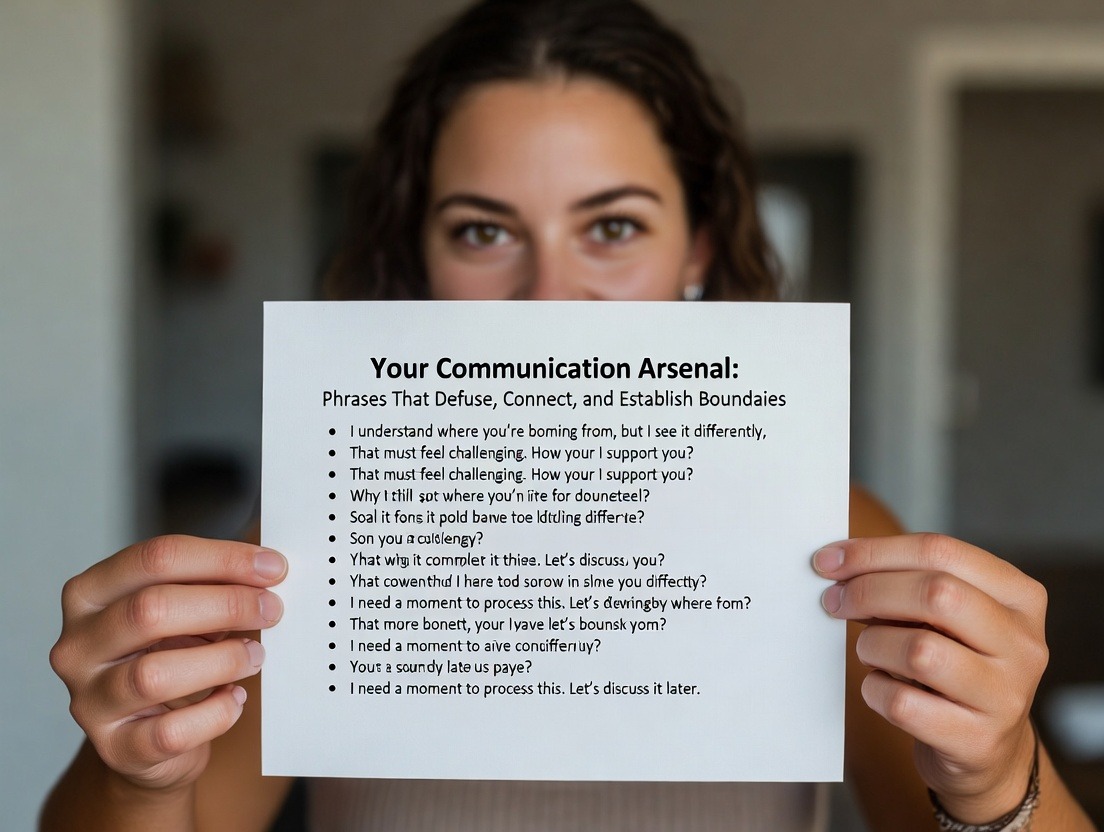
Your Communication Arsenal: Phrases That Defuse, Connect, and Establish Boundaries
Words are your primary tools for shaping your social ecosystem. Having a prepared repertoire of clear, firm, and respectful phrases can prevent you from being hijacked by emotion in the moment. This is your verbal toolkit for maintaining control, clarity, and professionalism.
For Setting Clear Boundaries (Especially with the Boundary Bulldozer):
The “Yes, and” or “No, but” Framework: Avoid a blunt “no” that can escalate tension. Instead, affirm their need while protecting your own. “Yes, I understand this is urgent for Project X, and I am at capacity until Thursday. I can start it then, or we can discuss with [Manager] what current priority should be deprioritized to make room.”
The “Working Hours” Clarifier: For after-hours intrusions. “I saw your message from last night. I’ll review that first thing when I start my workday at 9 AM and will have a response for you by 10.” This sets a expectation without apology.
The Priority Negotiation: “I have three key deliverables due this week. To take this on, I need to understand where it falls in priority relative to A, B, and C. Can we align on that?” This moves the conflict from you vs. them to a shared problem of resource allocation.
For Disarming Passive-Aggression and Gossip:
The “Call for Clarity”: Bring the hidden message into the light with neutral curiosity. “In the meeting, you said ‘I guess that could work.’ I want to make sure I’m addressing any concerns fully. Do you have specific reservations we should discuss?”
The Gossip Blocker: Politely refuse to engage without being self-righteous. “Oh, I haven’t heard that, and I’d probably want to talk to [Person] directly if I had questions about it. Anyway, how’s the [Project Name] dashboard coming along?” Change the subject to work.
The Public Credit Redirect: When a Credit Claimer takes undue praise. In a calm, factual tone: “I’m glad that aspect landed well. The entire team, especially [Name] and [Name], put in incredible work on the data modeling and design to make it happen.”
For Engaging with Chronic Negativity and Contrarians:
The “Problem-to-Solution” Pivot: Acknowledge and immediately redirect. “You’re right to identify that as a potential risk. What’s one step you see we could take to mitigate it?” If they have no solution: “Let’s table that concern for now and focus on generating potential paths forward. We can assess risks once we have a few options on the table.”
The “Devil’s Advocate” Reframe: “I appreciate you pushing us to think critically. To make it productive, can you take the next two minutes to argue for the idea? That will help us see its full potential before we critique.” This forces cognitive flexibility.
For Managing Up and Across with a Micro-Manager:
The Proactive Update Strategy: Beat them to the ask. “I’ll send you a brief EOD update every Friday with status, next steps, and any blockers. Does that cadence work for you?” This gives them a sense of control on your terms.
The “Trust-Building” Ask: “To move faster on this, I’d like to handle the next three vendor emails autonomously and just flag any unusual responses for you. Would that be okay?” Frame it as an efficiency gain.
The Universal Power Phrase: “Help Me Understand…” This is perhaps the most potent tool in your arsenal. It is non-confrontational, invites dialogue, and forces the other person to articulate their position. Use it when you’re confused, frustrated, or sense an unfair criticism.
“Help me understand the gap you’re seeing between my report and the requirements.”
“Help me understand why this needs to be done by 5 PM today versus first thing tomorrow.”
“Help me understand the concern behind that feedback.”
These phrases are not magic spells, but they are structural supports. They give you a script when your brain might default to fight-or-flight. The goal is to keep conversations factual, focused on work, and moving toward solutions. For more tactical advice on communication and stress management, our FAQ section covers common questions about maintaining well-being in high-pressure environments.
The Art of Psychological Detachment: How to Not Take Work Stress Home
Your ability to mentally and emotionally disengage from work during off-hours—known as psychological detachment—is a critical predictor of recovery from stress and prevention of burnout. When social stressors replay on a loop in your mind after hours, they continue to activate your stress response system, preventing true restoration. Mastering detachment is not about apathy; it’s about creating a necessary firewall for your well-being.
Why Detachment Fails: The “Zeigarnik Effect” Blame your brain’s wiring. The Zeigarnik Effect is a psychological phenomenon where people remember uncompleted or interrupted tasks better than completed ones. An unresolved conflict with a colleague or an unfinished, tense negotiation is the ultimate “uncompleted task” for your social brain. Your mind will cling to it, trying to “solve” it subconsciously, which feels like rumination.
Strategies for Effective Detachment:
The Ritualized Shutdown: Create a definitive end-of-work ritual. This signals to your brain that work mode is over. It should be sensory and deliberate.
Physical: Tidy your desk, close all browser tabs and applications, turn off work-specific notifications on your phone.
Mental: Take five minutes to write a “braindump” list of everything on your mind—unfinished tasks, lingering worries about interactions, tomorrow’s priorities. Then, literally close the notebook. Tell yourself, “This is now captured. I can pick it up tomorrow.”
Verbal: Say something aloud, even if to yourself: “Workday is complete.” The auditory signal reinforces the transition.
Cognitive Reframing of Rumination: When a stressful interaction intrudes, don’t try to brute-force it away. Instead, institute a “worry appointment.” Tell yourself, “I am not going to solve this right now. I will think about it deliberately tomorrow at 10 AM.” This honors the concern while containing it. Often, by the appointed time, the emotional charge has dissipated.
Engage in Mastery and Recovery Activities: Detachment isn’t just about not doing work; it’s about doing something else that fully engages you. Optimal activities are those that provide a sense of mastery (learning a hobby, exercising, cooking a complex meal) or promote recovery (mindfulness, walking in nature, listening to music). These activities generate positive psychological states that crowd out work-related rumination.
Leverage Biometric Feedback for Awareness: This is where objective data becomes a powerful ally in detachment. By wearing a device that tracks physiological markers of stress and recovery, you get an unvarnished report card on how well you’re truly disengaging.
Are your resting heart rate and HRV significantly worse on nights after high-social-stress days?
Does your sleep score plummet following a conflict?
This data moves detachment from an abstract concept to a measurable goal. You can start to experiment: *“If I do a 10-minute meditation after a tense day instead of scrolling news, does my sleep depth improve?”* It turns well-being into a personalized science project. The story behind Oxyzen is rooted in this very idea—using technology to make the invisible, visible, so you can take concrete action.
Building Your Social Resilience: The Four Pillars of a Stress-Proof Mindset
Resilience isn’t about being immune to stress; it’s about weathering it effectively and bouncing back stronger. Social resilience is your specific capacity to navigate interpersonal challenges without being derailed. It’s built on four core pillars.
Pillar 1: Internal Locus of Control This is the belief that your actions and choices significantly influence your outcomes, as opposed to feeling at the mercy of external forces (like a difficult coworker). Resilient individuals focus on their sphere of influence—what they can control.
Applied: You cannot control a colleague’s negativity, but you can control your response, the boundaries you set, and how much time you spend with them. You can’t make someone respect you, but you can consistently deliver excellent, reliable work that commands respect. Redirect energy from “Why are they like this?” to “What is my most effective move?”
Pillar 2: Realistic Optimism & Cognitive Reappraisal This is the practice of intercepting negative interpretations of social events and reframing them in a more balanced, less personal, and often more temporary light.
The Process: Notice the thought (“John ignored my suggestion because he doesn’t think I’m competent”). Challenge it (“Is there any other explanation? Could he have been distracted? Did he not understand it?”). Reappraise (“He may have been focused on his own point. I’ll follow up with him one-on-one to reiterate the idea.”). This breaks the cycle of personalizing and catastrophizing.
Pillar 3: Purposeful Connection (Not Just Networking) Social resilience is not built in isolation. It requires a network of supportive, low-stress connections. This isn’t about transactional networking; it’s about cultivating 2-3 genuine “ally” relationships at work.
How to Build It: Find someone you naturally click with. Offer support without being asked. Share a useful resource. Have a non-work related conversation. These relationships create “psychological safety pockets” in the larger organization—people with whom you can be authentic, vent strategically, and get honest feedback.
Pillar 4: Emotional Granularity This is the ability to identify and label your specific emotions with precision. Most people in social stress default to “I’m stressed” or “I’m angry.” High granularity means distinguishing between feeling disrespected, frustrated, anxious, embarrassed, or powerless. Each of these has a different cause and implies a different solution.
Practice: Use an emotion wheel. When you feel a social stress reaction, pause and find the most precise word. “I’m not just ‘mad’ at my manager; I feel undervalued because she didn’t acknowledge my contribution.” Naming it tames it and directs your next action—perhaps a conversation about seeking more visible recognition.
Building these pillars is a daily practice. They form the internal architecture that allows you to apply the communication tools and detachment strategies effectively, creating a comprehensive defense against the erosive effects of social stress.
The Neuroscience of Conflict: Why Your Brain Hates That One Coworker
It feels viscerally personal. The mere sight of a certain colleague's name in your inbox triggers a clench in your jaw. The sound of their voice in a meeting instantly spikes your anxiety. While it's tempting to label this as a simple personality clash, the truth is far more profound and rooted in the intricate wiring of your brain. This isn't just a disagreement; it's a neurological event.
At the core of your reaction is the amygdala, your brain's ancient threat-detection alarm system. It scans your environment for danger at lightning speed, long before your conscious, rational cortex gets involved. When you have repeated negative interactions with someone, your amygdala effectively "tags" them as a threat. Their face, voice, or even digital avatar becomes a conditioned stimulus for a stress response. This is why you can have a physical reaction before they've even said anything objectionable—your brain has already sounded the alarm based on pattern recognition.
This process is reinforced by the neurochemistry of negative interactions. A conflict or snub can trigger a cascade of cortisol and adrenaline, sharpening your focus on the threat (that person) while simultaneously releasing norepinephrine, which sears the memory of the event into your brain with high priority. This is an evolutionary advantage for remembering physical dangers like predators, but a distinct disadvantage for remembering Steve from accounting's sarcastic remark from six months ago. Yet, your brain does remember, with vivid, emotionally charged clarity.
Conversely, positive social interactions release oxytocin and dopamine. Oxytocin promotes bonding, trust, and feelings of warmth, while dopamine provides a reward sensation, encouraging you to seek out that interaction again. With a difficult coworker, this positive reinforcement loop is broken or never established. You get none of the neurochemical "reward" from engaging with them, only the stress chemicals of a perceived threat. Your brain, quite logically from a survival standpoint, begins to categorize them in the same neural neighborhood as other things to be avoided.
Furthermore, mirror neurons—brain cells that fire both when you perform an action and when you observe someone else performing it—play a subtle role. They are the foundation of empathy, allowing us to intuitively understand others' intentions and emotions. However, in a high-stress or distrustful relationship, this system can malfunction. You may unconsciously mirror their negative emotional state (their frustration becomes your frustration), or in cases of deep animosity, your brain may actually suppress mirror neuron activity toward that specific person, creating an "empathy gap" that makes it harder to see their perspective or humanize them.
Understanding this neural landscape is empowering. It depersonalizes the reaction. That knot in your stomach isn't a sign of weakness; it's a sophisticated, if sometimes overly sensitive, biological alert system. The goal isn't to shut it off, but to train your higher brain—the prefrontal cortex—to intervene. Through conscious techniques like labeling your emotion (which reduces amygdala hijack) and cognitive reappraisal, you can begin to send new signals, slowly teaching your brain that this person, while challenging, is not a mortal threat. Over time and with deliberate practice, you can weaken the old neural pathway of instant stress and build a new one of calibrated, strategic response.
Mastering Non-Verbal Communication: The Silent Language of Power and Rapport
While we meticulously craft our emails and rehearse our talking points, a vast, unspoken conversation is happening simultaneously. Non-verbal communication—body language, tone, facial expressions, and even the timing of our responses—accounts for an estimated 70-93% of the meaning conveyed in social interactions. In the high-stakes arena of workplace dynamics, misreading or mismanaging this silent language is a primary source of social stress.
The Foundational Elements of Professional Non-Verbal Cues:
Posture and Presence: An open, upright posture (uncrossed arms, shoulders back, feet planted) projects confidence and receptivity. A closed, contracted posture (crossed arms, hunched shoulders, leaning away) signals defensiveness, discomfort, or disengagement. Simply adjusting your posture can not only change how others perceive you but can also influence your own neurochemistry, increasing feelings of power and reducing cortisol.
Eye Contact: In most Western professional contexts, steady, moderate eye contact (about 60-70% of the time while speaking or listening) conveys honesty, engagement, and confidence. Darting eyes can suggest nervousness or deceit, while an unbroken stare can feel aggressive and domineering. Be mindful of cultural differences, as norms around eye contact vary significantly.
Facial Expressions: Micro-expressions—fleeting, involuntary facial movements—can betray our true feelings in a fraction of a second. While you can't fully control these, cultivating a baseline of neutral pleasantness is key. A slight, genuine smile (which engages the muscles around the eyes, not just the mouth) is a universal signal of approachability. A constant frown or expressionless mask can unintentionally broadcast hostility or boredom.
Proxemics (Use of Space): Respect personal and professional space. Invading someone's "bubble" (typically 1.5 to 4 feet for social distance) can trigger subconscious threat responses. Conversely, being overly distant in a one-on-one conversation can feel cold. In meetings, where you sit matters: sitting directly across from someone can feel more confrontational, while sitting at a 90-degree angle or beside them feels more collaborative.
Paralanguage (How You Speak): This is the music behind your words—tone, pitch, pace, volume, and fluency. A monotone voice can kill engagement. Speaking too quickly suggests anxiety; too slowly can seem condescending or unprepared. Strategic pauses convey thoughtfulness and power. A rising, questioning tone at the end of declarative sentences can undermine your authority. Paying attention to the paralanguage of others is also crucial: a colleague agreeing with you in a flat, hesitant tone is likely signaling reservations they aren't voicing.
Aligning the Verbal and Non-Verbal: The single greatest source of distrust is incongruence—when your words say one thing but your body says another. Telling your team "I'm open to all ideas" while crossing your arms, leaning back, and glancing at your watch communicates the exact opposite. This incongruence creates cognitive dissonance in your listeners, forcing them to choose which signal to believe. Humans are hardwired to trust the non-verbal, as it's perceived as less controllable and therefore more honest.
Practical Application for Stressful Scenarios:
In a Heated Discussion: Consciously lower the volume and slow the pace of your speech. This physiologically calms your nervous system and forces a slower, more rational tempo for the exchange. Maintain an open posture even if you feel defensive.
When Receiving Unfair Criticism: Hold steady eye contact and a neutral facial expression. Nod slightly to show you are processing the words (this does not mean you agree with them). This non-verbal response projects professionalism and prevents you from appearing rattled.
To Build Rapport with a Difficult Person: Subtly mirror their posture and energy level (not in a mocking way, but in a gentle, lagging fashion). This builds subconscious affinity. Use the "social gaze," focusing on the triangle between their eyes and mouth, which feels engaging but less intense than direct eye contact.
Mastering this silent language transforms you from a passive participant in social exchanges to an active conductor. It allows you to project the confidence you may not feel, to detect hidden resistance before it erupts, and to create an atmosphere of trust and professionalism that inherently lowers the temperature of social stress. For more insights on how self-awareness tools can help you understand your own stress signals, explore the resources at Oxyzen.
The Digital Dimension: Navigating the Minefield of Remote & Hybrid Communication
The modern workplace is no longer confined to four walls. Emails, Slack channels, video calls, and project management tools constitute a vast digital landscape where social stressors proliferate in new and insidious ways. The absence of non-verbal cues, the ambiguity of tone, and the expectation of perpetual availability create a perfect storm for misunderstanding and anxiety.
The Primary Stressors of Digital Communication:
Tone Deafness: The classic "per my last email" debacle. Without vocal inflection or facial expression, brief, efficient messages are easily interpreted as cold, angry, or passive-aggressive. A period where an exclamation point might have been used can feel like a digital slam of a door.
Context Collapse: On platforms like public Slack channels or all-hands email threads, your message is received by a diverse, unseen audience—your boss, your peers, other departments. A casual comment meant for one person can be misinterpreted by another, stripping away the nuanced context of a private conversation.
The Async Anxiety: The beautiful promise of asynchronous work ("respond when you can") clashes with the human need for closure and the fear of being perceived as unresponsive. Seeing a colleague read your message (via the dreaded "read receipt") and not reply for hours can trigger rumination: "Are they ignoring me? Are they mad? Is my idea that bad?"
Video Call Exhaustion (Zoom Fatigue): This is a scientifically validated phenomenon. The constant, grid-like eye contact, the cognitive load of processing frozen or delayed non-verbal cues, and the self-consciousness of staring at your own face are profoundly taxing on the brain. It forces a hyper-vigilance that in-person interaction does not require.
Strategies for Digital Communication Sanity:
The "Tone Toolbox": Proactively combat ambiguity.
Use Emojis Strategically: A simple 🙂 or 👍 can instantly soften a request or signal friendly intent. Reserve them for appropriate, non-formal communication. Overuse undermines professionalism.
Lead with Context: Instead of jumping straight to a demand, frame it. “Hope you’re having a productive week. When you have a moment, could you please review the attached doc? Looking for your expert eye on the financial projections section.”
Read Aloud Before Sending: If a message feels at all charged, read it in a neutral tone out loud. Would it sound harsh? Rewrite.
Channel Discipline: Choose the right medium for the message.
Complex/Emotional = Video Call: Anything requiring nuance, debate, or delivering sensitive feedback should not be handled over text.
Quick Clarification = Instant Message: Use for simple, time-sensitive questions.
Formal/Record = Email: Use for decisions, approvals, and communication that needs a paper trail.
Rule of Thumb: If an email thread exceeds three rounds back-and-forth, it’s a conversation. Pick up the phone or schedule a brief video chat.
Set and Respect Digital Boundaries:
Broadcast Your Norms: In your email signature or Slack profile, you can note: "I typically respond to messages within 24 hours during the workweek."
Schedule Sends: Use the "schedule send" feature for emails written outside of standard hours to avoid pressuring others to match your schedule.
Mute Relentlessly: Aggressively mute non-essential channels and notifications. Designate 2-3 focused times per day to process async communication in batches.
Master the Video Call:
Hide Self-View: Once you’ve checked your framing, hide your own video feed to reduce self-monitoring stress.
Use Audio-Only Breaks: For long meetings, suggest a 5-minute "audio only" stretch break in the middle to give everyone’s brain a rest from visual processing.
Normalize "Camera Off" Moments: It’s okay to say, “I’m going to turn my camera off for a bit to concentrate on taking notes.”
The digital dimension requires a new literacy. By treating written and video communication with the same intentionality we (should) bring to in-person conversation, we can transform these tools from sources of stress into engines of clarity and connection. The chronic stress of constant digital ping can be objectively tracked; many users find that reviewing data from their wellness tracker helps them see the direct impact of notification-heavy days on their heart rate and sleep, prompting them to set healthier digital boundaries. You can learn more about this approach through real-world case studies.
From Bystander to Upstander: How to Safely Navigate Office Politics and Cliques
Office politics are often framed as a dirty game to be avoided. But in reality, "politics" is simply the informal, unofficial process of how decisions get made, influence is wielded, and power dynamics play out in any human group. Avoiding it entirely is impossible; navigating it skillfully and ethically is a critical professional competency. Similarly, cliques—exclusive social subgroups—can create feelings of isolation and inequity. Moving from a passive bystander to an active, ethical "upstander" is key to managing the stress these dynamics produce.
Reframing Politics: It's About Network Intelligence Ethical navigation isn't about manipulation; it's about understanding the landscape. Who are the true influencers, regardless of title? How does information really flow? What are the unspoken values and histories that shape decisions? This is network intelligence. Gathering it requires observation and genuine curiosity, not scheming.
Principles of the Ethical Upstander:
Build Broad, Bridging Ties: Instead of embedding yourself deeply in one clique, consciously build genuine, lightweight connections across multiple groups and departments. Be a "bridge." This makes you less vulnerable to the whims of any single group, gives you a broader perspective, and increases your value as a connector of information and resources.
Focus on Common Goals, Not Personalities: When political tensions arise, anchor conversations to shared objectives. "I know we have different views on the approach, but we all want Project Phoenix to succeed with our client. How can we structure this to make that happen?" This depersonalizes conflict and redirects energy toward problem-solving.
Give Credit Publicly, Provide Feedback Privately: This is the golden rule of building trust and goodwill. Amplify others' contributions in meetings and group emails. If you have criticism or concern, deliver it one-on-one, with constructive intent. This demonstrates integrity and ensures you are never seen as someone who undermines colleagues for personal gain.
Document and Align: In ambiguous or politically charged environments, create a paper trail (email summaries after verbal agreements) and seek alignment proactively. "Just to make sure we're all aligned after that conversation, I'll send a quick summary of action items and decisions." This creates transparency and protects you from revisionist history.
Intervening in Unhealthy Clique Behavior: When cliques become exclusionary or gatekeep opportunities, it creates social stress for those on the outside. As an upstander, you can subtly counter this without direct confrontation.
In Meetings: If you notice the same few people always speaking, explicitly invite quieter or excluded voices. "Thanks for those thoughts, John. Sam, you've been working on the backend data—what's your perspective on this?"
In Social Settings: If a clique is dominating a lunch table or post-work gathering, make a point to sit with or engage someone who is on the periphery. A simple, "Mind if I join you?" can break a powerful pattern of exclusion.
In Information Sharing: If you become aware that key information is being hoarded within a clique, gently redistribute it in an appropriate forum. "I heard some updates about the timeline shift that might be helpful for everyone. Let me forward the email to the whole team."
Managing Upward Politics: Dealing with a manager who plays favorites or makes decisions based on relationships is particularly stressful.
Seek Objective Criteria: Frame requests and discussions around data, metrics, and business impact rather than personal need or fairness. "Based on the Q3 goals of increasing market share, I believe taking the lead on this client pitch aligns because of my experience in that vertical."
Build a Coalition of One: Your best defense is your own reputation for consistent, excellent, and reliable work. Deliver such undeniable value that your manager's personal feelings become less relevant to your standing.
Understand Their Motivations: Often, political managers are driven by their own insecurity or pressure from above. Try to understand what they need to look good or feel secure, and see if you can help deliver that in a way that also serves your own legitimate goals.
Being an upstander requires courage and social skill, but it pays enormous dividends in reduced stress. You replace the helplessness of a bystander with the agency of someone who shapes their environment. You build a reputation for fairness and integrity, which becomes your most valuable political capital. The journey of building a company culture that minimizes these stressors is a challenging one, as reflected in the founder's story behind Oxyzen, which emphasizes creating technology that empowers individuals amidst complex environments.
The Recovery Protocol: Scientifically-Backed Methods to Reset After a Stressful Interaction
A difficult conversation has ended. The meeting is over. You’ve closed the Slack window. But your body and mind are still buzzing with the residual energy of conflict—elevated heart rate, racing thoughts, simmering anger or anxiety. The quality of your recovery from these acute stress spikes is what determines whether social stress accumulates into chronic burnout or remains a manageable series of discrete events. A deliberate recovery protocol is non-negotiable for resilience.
Phase 1: The Immediate Physiological Reset (The First 5 Minutes) Your goal here is to signal safety to your nervous system and halt the stress hormone cascade.
Box Breathing (Navy SEAL Technique): Inhale slowly through your nose for a count of 4. Hold your breath for a count of 4. Exhale slowly through your mouth for a count of 4. Hold empty for a count of 4. Repeat for 2-3 minutes. This rhythmic breathing directly stimulates the vagus nerve, triggering the parasympathetic nervous system (your "rest and digest" mode) to counter the sympathetic ("fight or flight") activation.
The "5-4-3-2-1" Grounding Technique: Engage your senses to pull your brain out of its ruminative loop and into the present moment. Acknowledge:
5 things you can see (e.g., the pattern on your mug, a plant, a book spine)
4 things you can feel (e.g., the chair against your back, your feet on the floor, the texture of your sleeve)
3 things you can hear (e.g., distant traffic, the hum of your computer, your own breath)
2 things you can smell (e.g., coffee in the air, your own hand lotion)
1 thing you can taste (e.g., the aftertaste of your last drink)
Get Vertical & Move: If possible, stand up and walk for just 60 seconds, even if it's to the bathroom or to get a glass of water. Movement helps metabolize the circulating stress hormones like cortisol and adrenaline.
Phase 2: The Cognitive & Emotional Processing (Within 60 Minutes) Once your physiology is calmer, you can process the event without being hijacked by it.
The "Worry Dump" Journal: Open a notes app or a physical journal. Set a timer for 5-7 minutes and do a stream-of-consciousness write of everything you’re feeling about the interaction. Don’t edit, don’t judge grammar, just expel it. The act of externalizing the thoughts gets them out of your cyclical mental space.
The "Three Perspectives" Reframe: After the dump, engage in a more structured analysis.
Your Perspective: What happened, and how did it make you feel? (You've just done this in the dump).
Their Perspective: Attempt a charitable hypothesis. What might have been driving their behavior? Fear? Pressure from their boss? Misinformation? (This is not to excuse poor behavior, but to understand it, which reduces the feeling of personal attack).
The Fly-on-the-Wall Perspective: How would a neutral, objective observer describe the interaction? What were the facts, stripped of emotion?
Decide on a Single, Small Action (or Inaction): Based on your reframe, decide on one tiny next step. It might be: "I will send a clarifying email tomorrow morning." Or "I will let this go, as engaging further has more cost than benefit." Or "I will mention this pattern to my manager in our next 1:1." The key is to make a decision, which restores a sense of control. Often, the action is simply "No further action required."
Phase 3: The Long-Term Recovery Integration (Ongoing) This is about building habits that increase your overall stress resilience buffer.
Prioritize Sleep Above All Else: Social stress recovery happens during deep, slow-wave sleep. This is when your brain clears out the metabolic byproducts of stress and consolidates memories away from their emotional charge. Protect your sleep hygiene ruthlessly.
Cultivate Micro-Moments of Positivity: Intentionally seek or create small positive social interactions throughout your day—a genuine compliment to a barista, a cheerful greeting to a friendly colleague, a funny meme exchange with a friend. These "positivity snacks" boost oxytocin and dopamine, counterbalancing the negative neurochemical hits.
Leverage Data for Insight: Use a wellness tracker to observe your recovery patterns objectively. You might discover that conflicts before 3 PM allow you to recover fully by bedtime, while those after 5 PM wreck your sleep. This insight can help you schedule difficult conversations strategically or double down on your reset protocol after late-day stress. Seeing a tangible "recovery score" improve after using your breathing techniques can also be powerfully reinforcing. For those curious about how this data-driven recovery works, our FAQ provides detailed explanations.
A deliberate recovery protocol turns you from a passive victim of stress into an active healer. It ensures that no single bad interaction gets to define your day, your week, or your perception of your job. You build the confidence that comes from knowing you have a reliable, science-backed toolkit to handle the inevitable friction of working with other humans.
The Architect of Your Environment: Proactive Strategies to Shape Your Social Workscape
You are not a passive leaf blown about by the winds of office drama. While you cannot control others, you possess immense, often untapped, power to architect the immediate social environment around you. By shifting from a reactive to a proactive stance, you can design workspaces, rituals, and communication patterns that inherently reduce stress and foster healthier dynamics. This is about engineering your social ecosystem for well-being.
1. Design Your Physical & Digital Workspace for Calm Your environment directly impacts your nervous system. A cluttered, chaotic space contributes to cognitive load and irritability.
The "Clean Slate" Ritual: Begin each day with a 3-minute reset of your physical desk and digital desktop. Close all unnecessary browser tabs, file loose papers, and create a clear, ordered space. This visual clarity translates to mental clarity, reducing the background stress that makes social friction feel more overwhelming.
Curate Your Sensory Input: Use noise-canceling headphones with neutral soundscapes (white noise, ambient coffee shop sounds) to create an auditory bubble when you need focus. Introduce a small plant or a personal item that evokes calm (a smooth stone, a family photo). These act as subtle anchors to a positive emotional state.
The "Notification Sanctuary": Transform your digital workspace. Turn off ALL non-essential notifications—email pop-ups, Slack pings, social media alerts. Schedule 2-3 specific times per day to batch-process messages. This single act eliminates the constant, dopamine-driven interruptions that fracture focus and prime you for reactive, stressed responses.
2. Initiate Positive Rituals You set the tone for interaction by what you initiate. Introduce simple, low-effort rituals that build positive social capital.
The "Micro-Connection" Habit: Make it a rule to open any 1:1 meeting (even a quick stand-up) with one non-work question. "How was your weekend?" "Did you catch that game/show?" "Any fun plans tonight?" This 60-second investment builds a human connection buffer that can absorb future friction.
The "Appreciation Broadcast": Once a week, send a short, specific thank-you or praise to a colleague, copying their manager if appropriate. "Thanks, Maria, for catching that error in the report—your attention to detail saved us a major client headache." This not only boosts others but also trains your brain to scan for the positive, creating a more optimistic social lens.
The "Agenda & Objective" Email: Before scheduling any meeting, send a brief email with a clear objective and agenda. "Objective: Decide on Q4 marketing channel mix. Agenda: 1. Review data (10 min), 2. Brainstorm options (15 min), 3. Vote on top two (5 min)." This preempts rambling, unproductive meetings, a universal source of social frustration.
3. Master the Art of the Pre-Mortem & Pre-Frame Anticipate and defuse conflict before it begins.
For Collaborative Projects: The Relationship Pre-Mortem: At the very start of working with a new team or a difficult colleague, have a conversation. "So we can work together effectively, I want to align on how we'll communicate. I tend to prefer updates via Slack for quick things, and I'm trying to be better about not emailing after 6 PM. What works best for you? How do you like to receive feedback?" This normalizes talking about process and prevents assumptions from becoming conflicts.
The Pre-Frame for Difficult Conversations: When you need to address a thorny issue, don't ambush. Pre-frame the conversation. "Hey Sam, I wanted to talk about the workflow on the Thompson project. I have some ideas on how we could streamline it to hit our deadline. When you have 15 minutes today or tomorrow, could we chat? I want to make sure we're aligned." This gives the other person psychological preparation, reducing defensiveness.
4. Cultivate Strategic Neutrality In politically charged environments, your greatest power is often the refusal to take sides. This isn't passivity; it's a deliberate, strategic position.
The "Data Diplomat" Stance: When asked to weigh in on interpersonal disputes, anchor your responses in observable facts and shared goals. "I can't speak to the history there, but what I see is that both teams need the Q3 report to be accurate. How can we focus on that deliverable?"
The Deflective Acknowledge: When someone tries to pull you into gossip or negativity, use a line that acknowledges them without endorsing the content. "Hmm, that sounds like a frustrating situation for you," or "I appreciate you sharing your perspective." Then, change the subject or exit the conversation.
By becoming the architect of your environment, you reclaim agency. You stop waiting for others to create a pleasant atmosphere and instead build it deliberately, brick by brick, through your own actions, rituals, and communication choices. This proactive stance is the ultimate antidote to the helplessness that fuels chronic social stress. The principles behind this proactive design mirror the philosophy of proactive health management that drove the creation of Oxyzen's technology.
The Limits of Self-Management: When to Escalate and How to Do It Effectively
No amount of personal resilience, communication skill, or environmental design can solve every problem. Some workplace dynamics are systemic, some behaviors are pathological, and some conflicts require formal intervention. Persisting in trying to "self-manage" a situation that is beyond your pay grade or influence is a direct path to burnout. Knowing when and how to escalate is a critical, often overlooked, component of professional wisdom.
The Bright Red Lines: When Escalation is Non-Negotiable Escalate immediately if you experience or witness:
Harassment or Discrimination: Any behavior related to protected characteristics (race, gender, religion, age, disability, etc.) that creates a hostile environment.
Bullying or Verbal Abuse: Persistent, targeted intimidation, humiliation, or shouting.
Unethical or Illegal Conduct: Requests to falsify data, violate safety protocols, or break the law.
Gaslighting or Severe Manipulation: When someone systematically denies your reality, twists your words, or uses psychological manipulation to control or confuse you.
The Faded Yellow Lines: When to Consider Escalation After Self-Help Fails These are more common and trickier to judge. Consider escalation when:
You Have Exhausted Direct Communication: You have used your "I" statements, set clear boundaries, and attempted problem-solving conversations multiple times with no change in behavior.
The Behavior is Impacting Work Output: The social stress is causing measurable declines in project quality, missed deadlines, or team morale.
There is a Clear Power Imbalance: The person is your manager or has significant organizational influence, making direct resolution impossible.
Your Health is Suffering: You have objective data (from a doctor or a wellness tracker showing chronic sleep disruption, elevated resting heart rate) or subjective experience (panic attacks, dread, constant anxiety) that the situation is damaging your well-being.
The Art of Effective Escalation: A Step-by-Step Guide Poorly handled escalation can look like whining or tattling. Well-handled escalation looks like responsible risk management.
Document Meticulously: Before you speak to anyone, create a private, factual log. For each incident, note: Date, Time, Context, Exact Words/Behaviors (as verbatim as possible), Impact (e.g., "delayed project timeline by one day," "caused Team Member X to withdraw from discussion"), and any Witnesses. Keep it objective, not emotional. This log is your evidence and your script.
Choose the Right Escalation Path: Who do you go to?
Your Manager (Usually the First Stop): Unless they are the problem. Frame it as you seeking their counsel and support as a leader.
HR (Human Resources): For issues of policy violation, harassment, discrimination, or when your manager is unresponsive or part of the problem. HR's primary role is to protect the company from legal risk, but a good HR partner will do this by ensuring a safe, functional workplace.
A Skip-Level Manager or Trusted Senior Leader: Use this if your direct manager is ineffective and you have a strong, trusting relationship with their boss.
Frame the Conversation for Success:
Schedule a Private Meeting: Don't ambush someone in the hallway.
Lead with Business Impact, Not Emotion: "I'm coming to you because I'm concerned about the impact [Person's Behavior] is having on the timeline and quality of the Orion Project. I've tried to resolve it directly, but I need your help as a leader to find a solution."
Present Facts, Not Feelings: Use your documentation. "For example, on three occasions last week (I have the dates here), John publicly dismissed Sarah's data in team meetings using dismissive language. This led to Sarah, our key data analyst, disengaging from the project, which has stalled the modeling phase."
Focus on Desired Outcome, Not Punishment: "My goal is to get the Orion Project back on track in a respectful, collaborative environment. What guidance or support can you offer to help us get there?"
Be Prepared for Next Steps: They may ask to mediate, to speak to the other person, or to implement a new process. Be open to these solutions.
What to Do If Escalation Fails: Sometimes, the system is broken. If you escalate appropriately and see no meaningful action or, worse, experience retaliation, you face a harder choice. This is when you must conduct a clear-eyed cost-benefit analysis. Is the personal cost of staying—to your health, your integrity, your career trajectory—higher than the cost of leaving? Updating your resume, discreetly networking, and exploring the market is not betrayal; it's intelligent contingency planning. Your well-being is your most important project. Reading about others' journeys through similar crossroads can provide perspective, as seen in some of the user experiences shared in our testimonials section.
The Long Game: Building a Career Immune System Through Strategic Relationship Mapping
Viewing coworker relationships as a series of daily fires to put out is exhausting and short-sighted. The master strategist plays the long game, building what can be termed a Career Immune System—a robust network of diverse, high-quality relationships that protect you from shocks, amplify your success, and make the workplace inherently more rewarding and less stressful. This is done through deliberate Strategic Relationship Mapping.
The Concept of Relationship Portfolios: Just as you diversify financial investments, you should diversify your social capital at work. A healthy portfolio contains:
Allies (Core Holdings): 3-5 people you deeply trust. These are your go-to for advice, venting (strategically), and mutual support. You invest significant time here.
Operational Partners (Growth Stocks): Colleagues in other departments you work with regularly. You build strong, respectful working relationships. They are critical for getting things done.
Mentors & Sponsors (Blue-Chip Bonds): Experienced individuals who provide guidance (mentors) and actively advocate for your advancement (sponsors). These require cultivation and demonstrated value.
Informational Nodes (Market Intelligence): People in key positions (executive assistants, IT, finance) who have a pulse on organizational flow. Maintain positive, grateful relationships with them.
Energy Givers (Dividend Stocks): Colleagues who are simply positive, kind, and enjoyable to be around. These relationships replenish you and should not be underestimated.
How to Create and Maintain Your Map:
Audit: List key people in your organization across these categories. Rate the current health of the relationship (Strong, Neutral, Strained).
Identify Gaps: Do you have no sponsor? Are all your allies in your own department, leaving you siloed?
Plan Strategic Nurture: Don't leave relationships to chance. Schedule it.
For a Key Operational Partner: "I realize we only talk when there's a crisis. Let's have a virtual coffee every other month just to sync on our respective roadmaps."
For a Potential Mentor: "I so admired your handling of the Q3 presentation. Would you be open to a 30-minute chat sometime where I could ask you a few questions about developing executive communication skills?"
For an Informational Node: A simple, sincere thank-you note when they help you: "Thanks so much for rushing that IT ticket. You saved my afternoon!"
Give Before You Ask: The currency of strong relationships is generosity. Share useful articles, offer your help on a small task, make introductions. Be a source of value.
The Immune System in Action: When a stressful event occurs—a reorganization, a conflict with a difficult colleague, a missed promotion—your robust relationship portfolio provides support. An ally gives you perspective. An operational partner provides cover. A sponsor advocates for you behind closed doors. An energy giver boosts your mood. You are not facing the storm alone; you are sheltered by a network you built with intention.
This long-game mindset transforms social stress from a personal burden into a professional puzzle to be solved through strategic connection. It replaces anxiety with agency, knowing that you are actively weaving a safety net of your own design. For more on building sustainable professional habits and systems, our blog offers a wealth of continuing resources.
Conclusion to Part One: Integrating Awareness, Strategy, and Self-Preservation
We have journeyed through the complex landscape of social stress at work, moving from understanding its biological and psychological roots to assembling a comprehensive toolkit for navigation. This first portion of our guide has laid the essential foundation: Awareness, Strategy, and Self-Preservation.
You now possess a new lens. That knot in your stomach before a meeting is not just nerves; it’s a measurable amygdala response. A colleague’s difficult behavior is not an inscrutable mystery; it can often be categorized into an archetype with predictable drivers, allowing for a strategic rather than emotional response. The exhaustion you feel is not a personal failing; it’s the cumulative cost of cognitive and emotional labor, a cost you can now track and manage through deliberate recovery protocols.
The core philosophy we’ve established is one of agency. You are not powerless. You are an architect, a negotiator, a neuroscientist of your own experience. You can:
Architect your immediate environment and rituals to foster calm.
Communicate with phrases designed to defuse, clarify, and set boundaries.
Detach psychologically using science-backed methods to protect your off-hours recovery.
Navigate politics by being an ethical upstander who builds bridging connections.
Escalate with professionalism when a situation exceeds your capacity to resolve.
Build a long-term relationship portfolio that functions as your career immune system.
This is not about achieving a conflict-free utopia—an impossible and potentially stagnant goal. It is about developing stress tolerance and relationship agility. The goal is to reduce the frequency and intensity of negative interactions, and, crucially, to drastically improve your ability to recover from them, leaving you resilient and ready to engage again.
In the next portion of this comprehensive guide, we will delve even deeper. We will explore advanced techniques for transforming entrenched conflicts, fostering psychological safety across entire teams, and leveraging organizational tools for culture change. We’ll examine the role of leadership in mitigating social stress and provide frameworks for having the most difficult conversations of all. The journey continues toward not just managing social stress, but mastering the human dimension of work to unlock greater collaboration, innovation, and personal fulfillment.
Remember, the pursuit of professional well-being is an ongoing practice. For support, insights, and the tools to bring data-driven awareness to this pursuit, the team at Oxyzen is dedicated to being a resource on your journey.



%402x.svg)