


How to Create a Mental Wellness Plan That Fits Your Life
Create a personalized plan that includes daily practices, social support, professional resources, and goals tailored to your values and life.
Create a personalized plan that includes daily practices, social support, professional resources, and goals tailored to your values and life.
%402x.svg)
We live in an age of relentless optimization. We track our steps, monitor our sleep, and quantify our nutrition, all in the pursuit of a healthier physical life. But what about the health of our minds? Our mental landscape—the swirling thoughts, fluctuating emotions, and underlying stress—often operates in the dark, unmeasured and unmanaged until a crisis forces us to pay attention. Just as you wouldn’t embark on a fitness journey without a plan, cultivating lasting mental wellness requires more than good intentions. It requires a personalized, actionable, and sustainable strategy: a Mental Wellness Plan.
This isn’t another rigid, one-size-fits-all program destined to collect dust. This is about constructing a living framework that adapts to your unique life, rhythms, and challenges. It’s about moving from reactive coping to proactive thriving. In this guide, we will dismantle the overwhelm and walk you through a step-by-step process of building a plan that truly fits. You’ll learn how to audit your current mental landscape, define what wellness authentically means for you, select evidence-based practices that resonate, and—critically—how to leverage modern technology, like smart wearables from Oxyzen, to gain the objective insights needed to stay on track. Think of this as your blueprint for building a more resilient, peaceful, and focused you.

For decades, the mainstream dialogue around mental health has been dominated by generic advice. “Practice mindfulness.” “Get more sleep.” “Exercise regularly.” While this guidance is scientifically sound, its delivery often misses the mark. It assumes we all start from the same baseline, face identical obstacles, and are motivated by the same goals. This “one-size-fits-all” model is not just ineffective; it can be demoralizing. When you try a popular meditation app but find your mind racing even more, or you force yourself into intense workouts that drain you, the implicit message is: You’re doing it wrong. You’re broken.
The truth is, human neurobiology, psychology, and personal circumstance create a vast spectrum of normal. Your stress triggers, your energy cycles, your emotional responses, and your sources of joy are uniquely yours. A plan that works for a single, twenty-something in a quiet apartment will likely crumble for a parent of toddlers managing a high-pressure career. The corporate wellness program offering weekly yoga may not touch the deep-seated anxiety of an entrepreneur facing financial uncertainty.
The failure of generic solutions creates a dangerous cycle. People try, fail, feel shame, and disengage, often concluding that they are beyond help or that “wellness” is a luxury they cannot access. This is where the paradigm must shift. Effective mental wellness is not about conforming to a prescribed set of activities; it’s about a process of self-discovery and personalized integration. It requires diagnosing your own unique patterns before you can prescribe your own solutions.
Modern technology is now enabling this precise shift. Just as personalized fitness trackers revolutionized physical health, advanced biometric devices are doing the same for mental well-being. By tracking physiological markers like heart rate variability (HRV), sleep stages, and body stress, tools like the Oxyzen smart ring provide a data-driven window into your nervous system's state—offering clues no generic checklist ever could. This move from guessing to knowing is the first, crucial step in building a plan that doesn’t just look good on paper, but works in the messy reality of your daily life. To understand how this technology is changing the game, you can explore our blog for deeper dives on the science of biometric tracking.
Before we dive into the step-by-step construction, it’s essential to understand the foundational architecture. A sustainable Mental Wellness Plan isn’t a random collection of tips; it’s a structure built on interdependent pillars. Think of these as the load-bearing walls of your mental home. If one is weak, the entire structure becomes vulnerable.
Pillar 1: Self-Awareness & Assessment. This is the non-negotiable bedrock. You cannot manage what you do not measure. This goes beyond simply noting you feel "stressed." It involves developing a nuanced understanding of your emotional triggers, physical stress signals, thought patterns, and energy fluctuations throughout the day and week. It’s the diagnostic phase.
Pillar 2: Personalized Practices & Tools. With awareness in hand, you can curate a toolkit of interventions that actually work for you. This could blend clinical techniques (like CBT exercises), somatic practices (like breathwork or yoga), creative outlets, social connection, and digital tools. The key is intentional selection based on your diagnosed needs, not trendiness.
Pillar 3: Integration & Habit Stacking. A tool is useless if it stays in the toolbox. This pillar is about the art and science of weaving your chosen practices seamlessly into your existing life. It leverages concepts like habit stacking (attaching a new practice to an existing routine) and environmental design to reduce friction and increase adherence.
Pillar 4: Measurement & Adaptation. A static plan is a dead plan. Life changes, and so must your approach. This pillar establishes a feedback loop. Are your practices moving the needle? How do you know? This is where quantitative data (from biometrics) and qualitative reflection (from journaling) combine to inform continuous refinement. It turns your plan into a living document.
Pillar 5: Compassion & Flexibility. Perhaps the most critical pillar. It is the acceptance that you will have off days, weeks, or even months. Rigidity breeds failure. This pillar builds in grace, self-kindness, and the flexibility to scale practices up or down based on your current capacity. It ensures that your plan is a supportive guide, not a harsh critic.
These pillars work in concert. Self-awareness informs your personalized tools, which you integrate into habits, whose effectiveness you measure, all while navigating the process with compassion. The journey we’re about to embark on will show you how to fortify each one. For a look at how a company’s mission can align with this holistic view, you can read about our foundational principles in our story of building a human-centric wellness tool.

You are about to become the cartographer of your own inner world. This audit is not about judgment; it’s about observation with the curiosity of a scientist. We’re gathering data. For the next 5-7 days, your primary job is to notice and record. You’ll need a notebook, a notes app, or a dedicated journal.
Step 1: Track Your Energy & Focus. Three times per day (morning, afternoon, evening), pause and rate your mental energy and focus on a scale of 1-5. Note the context: What were you doing just before? Who were you with? What had you eaten? The goal is to identify your natural peaks and troughs. You may discover your focus is sharpest two hours after breakfast or that you consistently hit a wall at 3 PM.
Step 2: Log Your Emotional Weather. At the end of the day, jot down the 2-3 predominant emotions you experienced (e.g., anxious, content, irritable, joyful). Next to each, note the trigger or situation. Don’t just write “stress”; try to pinpoint it: “Stress triggered by an ambiguous email from my boss at 4 PM.” This builds your personal trigger catalog.
Step 3: Monitor Your Physical Stress Signals. Your body often sounds the alarm before your mind acknowledges stress. Pay attention to: jaw clenching, shoulder tightness, stomach knots, headaches, shallow breathing, or restless sleep. Record these physical notes alongside your emotional log.
Step 4: Document Your Current "Wellness" Activities. Honestly list what you’re already doing that you consider supportive. This includes everything from your nightly skincare routine (a moment of calm) to your weekly phone call with a friend. This shows you your existing assets.
The Biometric Layer: Objective Data. While your subjective notes are invaluable, they can be influenced by your mood in the moment. This is where a device like the Oxyzen smart ring becomes a game-changer. Worn continuously, it tracks:
By the end of your audit week, you’ll have a powerful combination: your subjective experience mapped onto objective biometric data. You might see that on days you logged “evening anxiety,” your afternoon HRV was particularly low. Or that your noted “3 PM crash” consistently follows a night of poor deep sleep. This audit transforms vague feelings into actionable insights. For common questions on how this technology works in practice, our FAQ section provides clear, detailed answers.
“Mental wellness” is an abstract term. To build a plan, you must give it a concrete, personal definition. What does it look, feel, and sound like specifically for you? Without this vision, you’ll lack direction and a way to measure progress.
Let’s move beyond clichés. “I want to be happy” is too broad. Instead, engage in this vision-casting exercise:
Imagine a Future State: Project yourself 6 months from now. Your personalized mental wellness plan is working beautifully. Describe a typical day:
Extract Your Core Values & Goals: From this narrative, pull out 3-5 core desired outcomes. These become your personalized wellness goals. Examples:
Create a Wellness Statement: Now, synthesize this into one or two sentences. This is your touchstone.
This statement isn’t set in stone; it will evolve. But it provides a North Star. Every practice you consider from this point forward should be evaluated against a simple question: “Will this move me closer to this vision?” If the answer is no, it’s likely not the right tool for you right now. This clarity is what separates a purposeful plan from a scatter-shot collection of wellness trends. For inspiration on how others have defined their journey, the real-world experiences shared by our users can be profoundly illuminating.

With your self-audit data and personal vision in hand, you now move from diagnosis to prescription. This section is your menu of evidence-based practices. Do not try to order everything. Select 1-2 from categories that directly address the gaps or challenges identified in your audit.
If your audit revealed rumination, brain fog, or reactive thinking:
If your audit highlighted emotional volatility, overwhelm, or low resilience:
If your audit showed poor sleep, low energy, or high physical stress:
The key is to start embarrassingly small. Choose ONE practice from the most relevant category. Master showing up for that for two weeks before adding anything else. This builds confidence and sustainable habit loops. To find more specific techniques and the science behind them, our blog is continuously updated with research-backed resources.
This is where most plans fail. A beautiful, well-researched plan that lives in a notebook is useless. Integration is the process of embedding your chosen practices into the existing structures of your day so they require minimal willpower.
The master strategy is Habit Stacking, a concept popularized by James Clear. The formula is simple: After/Before [CURRENT HABIT], I will [NEW WELLNESS PRACTICE].
Using your audit, identify strong, existing habits (the “anchors”) and attach your new practices to them. Examples:
Environmental Design: Modify your surroundings to make the right action easy and the wrong action hard.
Scale Your Practice: Your capacity will change daily. Your plan must have built-in flexibility. Define the “minimum viable dose” for each practice.
Integration acknowledges that you are not adding hours to your day; you are re-purposing and enhancing moments that already exist. It’s the difference between building a new road and adding carpool lanes to your current commute.
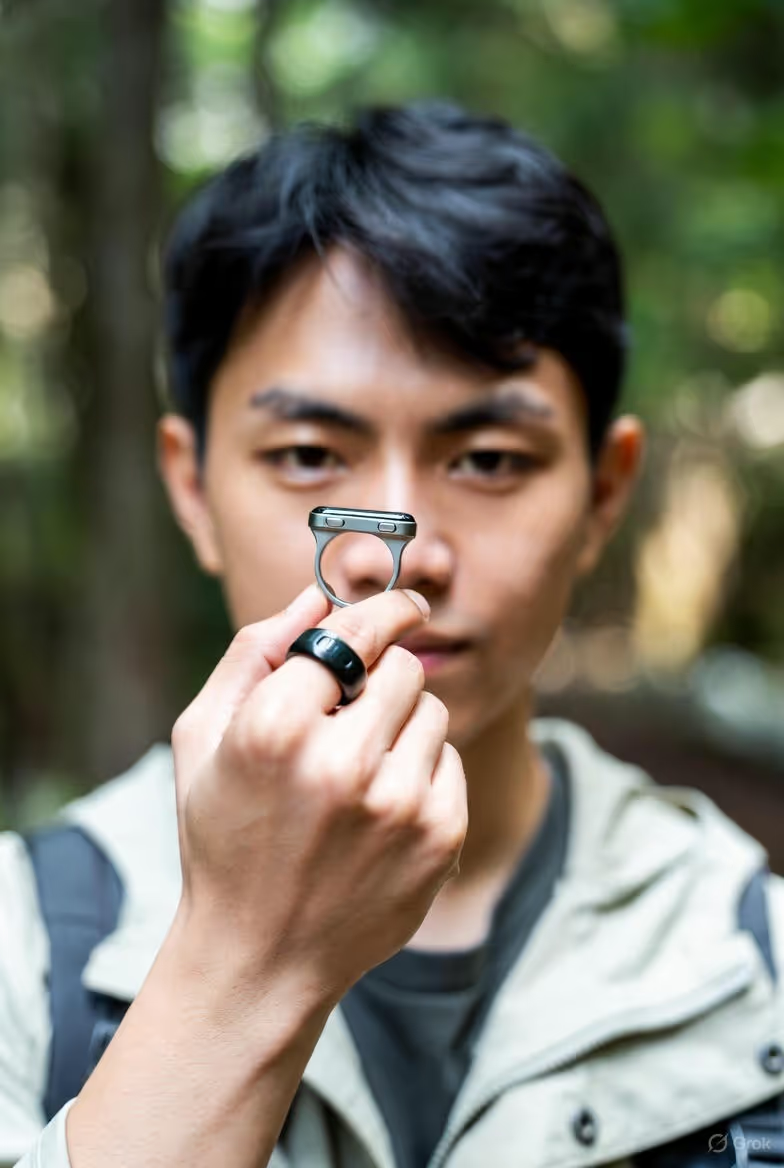
In our quest for mental wellness, our subjective feelings are vital, but they can be misleading. We might feel fine while our physiology shows signs of simmering stress, or we might feel anxious without a clear physical correlate. This is where biometric technology transitions from a fancy gadget to an essential co-pilot in your wellness journey.
A sophisticated wellness wearable, like the Oxyzen smart ring, provides an objective, 24/7 readout of your nervous system. Here’s how to actively use this data to inform and adapt your plan:
1. From Reactive to Proactive Management: Instead of waiting until you feel overwhelmed, you can see a rising “Body Stress” score or a dipping HRV trend throughout the afternoon. This is your early warning signal. Your plan can now include proactive interventions: “If my stress score is above X by 2 PM, I will take a 10-minute walking break instead of more coffee.”
2. Validating What Works (The Feedback Loop): You start a new wind-down routine. Does it actually improve your Sleep Score and Deep Sleep percentage? The data provides undeniable feedback. If scores improve, you’re motivated to continue. If not, you know to tweak the routine without guessing. This turns your plan into a series of personal experiments.
3. Understanding Your Unique Patterns: The data reveals your personal physiology. Perhaps your data shows you consistently enter a high-recovery state (high HRV) on days you see a particular friend. That’s quantitative proof of that relationship’s positive impact. Conversely, you might see a pattern of poor sleep every Sunday night, highlighting “Sunday Scaries” you hadn’t fully acknowledged. This allows for targeted planning, like a specific Sunday evening relaxation ritual.
4. Taking the Guesswork Out of Self-Care: On a day you feel lethargic and unproductive, should you push through with a workout or prioritize rest? Check your Recovery Score. A low score suggests your body needs genuine recovery (gentle movement, stretching, rest). A high score might indicate your lethargy is more mental, and a brisk walk could actually boost your mood and focus.
By integrating this data layer, your Mental Wellness Plan becomes dynamic, responsive, and deeply personalized. It helps you move from “I think this might be helping” to “I know this is working because my data shows it.” It externalizes the internal, giving you a partnership with technology to better understand yourself. To see the technology behind this approach and our commitment to it, you can learn more about Oxyzen’s mission and development.
A plan built on practices is only as strong as the boundaries that protect the time and energy to perform them. Your “Non-Negotiables” are the pillars of your plan that you defend fiercely. They are not selfish; they are the prerequisites that allow you to show up effectively for everything else.
Identifying Your Non-Negotiables: Look at your vision and audit. What are the 2-3 foundational activities that, if skipped, cause your entire system to destabilize? For many, this is:
The Art of Setting Boundaries: A boundary is simply a clear line that defines what you will and will not do to protect your non-negotiables. It requires communication.
Practicing the “Graceful No”: You don’t need a dramatic excuse. A simple, “Thank you for thinking of me, but I can’t commit to that right now,” or “I have a prior commitment to myself at that time” is sufficient. Remember, when you say “no” to something that doesn’t serve your wellness, you are saying a powerful “YES” to your vision.
This stage transforms your plan from a private activity into a communicated part of your life’s operating system. It ensures your wellness isn’t the first thing sacrificed when life gets busy.
Willpower is a finite resource. Lasting change is almost always supported by external structures of accountability and community. You are not an island; building a support system is a strategic move, not a sign of weakness.
Choose Your Accountability Mechanism: Different styles work for different people.
Cultivate Your Support Network: Identify people in your life who fill specific, positive roles.
Reframe Your Environment: Your “system” includes your physical and digital spaces. Unfollow social media accounts that make you feel inadequate. Follow accounts that educate and inspire you about mental wellness. Fill your podcast feed with supportive content. This curates a continuous stream of positive reinforcement.
Accountability isn’t about punishment; it’s about connection. It’s about having a mirror held up—by data, by a person, or by a professional—that helps you stay honest and celebrate your progress on the path you’ve chosen. When you feel connected to a purpose or a community, showing up for your plan feels less like a chore and more like a contribution to the person you are becoming.
The ultimate promise of aligning exercise with your stress physiology isn't just a better workout next Tuesday. It’s about fundamentally altering your health trajectory, compressing morbidity, and extending your healthspan—the number of years you live in good health. Chronic, unmanaged stress and chronic, mismatched exercise are two of the most potent accelerants of aging at the cellular level. Conversely, managing them in tandem becomes a powerful longevity protocol.
Telomeres, Mitochondria, and the Aging Clock
At the cellular level, aging is characterized by two key processes: telomere shortening and mitochondrial dysfunction.
The stress-aware model directly optimizes for these anti-aging effects. By using biomarkers to guide you toward restorative movement on high-stress days, you reduce the inflammatory load that shortens telomeres. By strategically applying high-intensity stimuli only when your system is resilient, you maximize mitochondrial biogenesis without the accompanying oxidative damage. This is precision medicine for aging.
The Cumulative Effect: Building a Resilient System
Think of each day where you align movement with stress as a deposit into your "resilience bank." Over months and years, these deposits compound. The result is a nervous system that bounces back faster from all stressors—physical, mental, or immunological. You don't just get fitter; you become more adaptable. This systemic resilience is the bedrock of longevity. It means your body handles a virus better, recovers from injury faster, and maintains cognitive and physical function later into life. This long-term vision of empowering sustained vitality is at the core of our mission at Oxyzen.
Life is not a controlled lab experiment. There will be vacations, illness, work crunches, family emergencies, and periods of grief. A rigid fitness plan shatters under these pressures, often leading to total abandonment. A stress-informed framework, however, is inherently flexible and designed to weather these storms.
Handling Sickness: The Ultimate Red Light
When you are sick, especially with a fever or systemic infection, your body is allocating all resources to the immune battle. Exercise is a profound misallocation of those resources. This is where your biometrics offer undeniable clarity. A fever will show up clearly in temperature and heart rate data. The rule is simple: No exercise during acute illness. Respect the red light. The return to movement should be gradual, using your HRV and RHR as guides. Wait until they have normalized, then begin with gentle movement like walking before resuming any intensity.
Vacations and Breaks: Stress in Disguise?
Travel can be a paradoxical stressor—mentally relaxing but physically taxing (jet lag, disrupted routine, different food). Your framework adapts beautifully. Use your ring to monitor sleep and stress during travel. You might plan for "Yellow Light" movement—a hike, a swim, a bodyweight workout—instead of trying to replicate your home gym routine. Often, the mental break and novel movement patterns (dancing, surfing, walking tours) provide incredible physical and neurological benefits without the need for structured intensity.
Emotional Stress and Grief
Psychological trauma and deep emotional stress create a profound physiological load that can dwarf the impact of physical training. During such times, forcing workouts can feel like a violation. Your data will often show severely depressed HRV for extended periods. Here, the definition of "exercise" must expand. The most supportive movement may be a quiet walk in nature, restorative yoga, or simply sitting and breathing. The goal is not fitness adaptation but nervous system support. Being able to see your stress quantified can also validate your need for rest, combating the internal guilt that often arises during these periods.
The framework’s power is that it never tells you to "do nothing." It simply redefines what "something" is based on your current capacity. It provides a compassionate, data-informed structure that keeps you engaged with your wellbeing even when life is at its most challenging. For support on adjusting your approach during specific life events, our FAQ section addresses many common scenarios.
To trust the data, it helps to understand the sophisticated technology packed into a discreet device like the Oxyzen ring. This isn't a simple heart rate monitor; it's a continuous, clinical-grade biosensing platform.
The Sensor Suite: More Than Meets the Eye
A modern smart ring typically houses:
The Magic is in the Algorithm and Context
Raw sensor data is meaningless without intelligent interpretation. This is where advanced machine learning comes in. The algorithms:
The ring form factor is key for compliance. It's comfortable to wear 24/7, even while sleeping, providing the continuous data necessary to see the full picture of your stress and recovery cycles. This seamless integration of technology into daily life is what makes personalized, stress-aware fitness finally accessible to everyone. To discover how Oxyzen's specific technology achieves this, a look at the engineering behind it reveals a focus on medical-grade accuracy in a wearable form.
Your workout is just one hour of your day. To truly optimize your body for exercise, you must manage the other 23 hours. Stress-aware fitness naturally expands into a holistic lifestyle practice, because you begin to see direct cause-and-effect between your daily habits and your readiness to perform.
Nutrition as Fuel and Recovery Agent
Food is information that either increases or decreases your allostatic load.
Sleep as Non-Negotiable Infrastructure
We’ve touched on sleep, but its primacy cannot be overstated. It is during deep sleep that growth hormone is released for repair, and the brain's glymphatic system clears metabolic waste. Your smart ring provides objective proof of how alcohol, caffeine, late-night screen time, or an erratic schedule degrade sleep quality. This feedback loop is powerful for motivating behavior change. You start to protect your sleep not as an abstract "good habit," but as the foundational pillar of your fitness and health.
Digital Hygiene and Mental Space
Constant notifications, endless scrolling, and the pressure of digital connectivity are a novel, pervasive stressor. They keep the mind in a state of alert, which the body interprets as low-grade threat. Scheduling digital detox periods, using app timers, and creating tech-free zones (especially the bedroom) are direct interventions to lower sympathetic nervous system tone. The resulting mental calm is reflected in improved HRV.
The Synergistic Effect
When you manage nutrition, sleep, and digital stress, you arrive at your workout session with a lower allostatic load and a higher adaptive capacity. The workout then becomes more effective. This creates a virtuous cycle: better workouts lead to better sleep, which improves stress resilience, which leads to better nutrition choices, and so on. The smart ring acts as the central dashboard, showing you the positive impact of these holistic changes in real-time, keeping you motivated. For a deeper exploration of these interconnected topics, our blog is a dedicated resource.
Adopting a stress-aware approach to exercise delivers profound psychological benefits that reinforce the physical ones. It fundamentally changes your relationship with your body and with fitness itself.
Reducing Exercise Anxiety and Guilt
For many, a missed workout triggers guilt, and a rigid schedule can create anxiety. This framework eliminates that. There is no "missing" a workout—only "choosing" the right one for the day. If the data says "red light," taking a walk is not failure; it is the most successful and disciplined execution of your plan possible. This reframes rest as an active, intelligent component of progress.
Building Body Trust and Interoceptive Awareness
By consistently checking in with data and then correlating it with how you feel ("My HRV is low, and yes, I do feel run down"), you sharpen your interoception—your sense of the internal state of your body. Over time, you may find you can intuitively sense your readiness before even looking at the data. You rebuild trust with your body, seeing it as a partner to communicate with, not an adversary to be conquered.
Empowerment and Agency
This approach puts you in the driver's seat. You are no longer blindly following a generic plan or the latest fitness fad. You are using personalized data to make informed decisions about your own health. This sense of agency is incredibly empowering and is linked to better adherence and overall wellbeing.
From Performance to Nourishment
The ultimate psychological shift is moving from viewing exercise solely as a performance metric (burn calories, get faster, look better) to seeing it as a fundamental practice of self-nourishment. On a green-light day, that nourishment might be the exhilaration of a hard effort. On a red-light day, it is the gentle, restorative act of mindful movement. Both are equally valuable. This creates a sustainable, positive relationship with physical activity that can last a lifetime. Hearing how others have experienced this shift can be inspiring, as shared in many user stories and testimonials.
The integration of continuous biometrics into fitness is just beginning. The future points toward even more seamless, predictive, and holistic systems.
Hyper-Personalized AI Coaches
Future algorithms will move beyond daily recommendations to designing entire adaptive training cycles. An AI coach will analyze months of your stress, sleep, and performance data to periodize your training, automatically deloading when it predicts overreach based on your historical patterns, or suggesting a peak effort when it detects a window of super-compensation.
Integration with Other Data Streams
Imagine your fitness AI having access to (with your permission) your calendar stress (e.g., a big presentation block), your continuous glucose monitor data, or even your genetic profile. It could advise: "Based on your elevated cortisol pattern yesterday and your genetic propensity for slow cortisol clearance, today's session should be Zone 2 only to protect your recovery."
Predictive Health Interventions
The line between fitness tracking and health monitoring will blur. By establishing a deeply understood baseline of your physiology, deviations could signal the very earliest onset of illness, overtraining, or metabolic issues long before symptoms appear, allowing for pre-emptive action.
The Mainstreaming of Nervous System Fitness
Concepts like HRV and autonomic nervous system balance will become as commonplace as counting calories or steps. Gyms and group fitness classes may offer "stress-informed" sessions where intensity is self-selected based on real-time biometric feedback. The cultural conversation will shift from "How hard did you go?" to "How well did you recover?"
This exciting future is built on the foundation we are laying today: the understanding that fitness is not separate from our overall stress load, but intimately connected to it. By adopting these practices now, you are not just optimizing your current workouts; you are preparing to leverage the next wave of personal health technology. The journey of innovation in this space is continuous, and it’s a journey we are deeply committed to, as part of our ongoing story.
Ready to transform theory into practice? This 30-day challenge is designed to build the habits and awareness without overwhelm.
Phase 1: Weeks 1-2 — Observe and Learn
Phase 2: Weeks 3-4 — Introduce Flexibility
Keys to Success:
By the end of 30 days, the morning check-in and the concept of dynamic exercise selection will begin to feel natural. You will have collected invaluable personal data that proves to you, unequivocally, that you are not the same every day—and that's your greatest advantage.
We have journeyed from the fundamental science of stress and adaptation to the practical application of using biometrics as a daily guide. We've seen how this approach enhances performance, protects against injury and burnout, supports longevity, and fosters a healthier psychological relationship with movement.
The core truth is this: Your optimal exercise intensity is not a fixed number. It is a dynamic range that dances in direct relationship with the ever-fluctuating state of your nervous system. Ignoring this relationship is like sailing a ship without regard for the weather—you might force your way forward for a while, but you risk being capsized by a storm you could have seen coming.
Technology like the Oxyzen smart ring gives you the barometer and the radar. It allows you to see the weather inside your own body. But you are still the captain. The data informs, but you decide. This partnership between human intuition and objective insight is where the future of true personalized health resides.
This is not the end of the exploration, but a powerful beginning. The principles laid out here create a framework that can be deepened and expanded endlessly—into nutrition periodization, advanced recovery modalities, and specific applications for different sports and life stages. The journey continues as we build a more responsive, resilient, and vibrant you.
If exercise is a stressor that must be tailored to your nervous system, then nutrition is the fuel and building material for both the stress response and the recovery process. The concept of "nutritional periodization"—changing what and when you eat based on your physical demands—is well-known in elite sports. Now, we elevate it by synchronizing it with your daily stress state. This creates a powerful triad: Stress Data → Exercise Prescription → Nutritional Support.
The Hormonal Symphony: Cortisol, Insulin, and Recovery
Your food choices directly influence the hormonal environment that either amplifies or mitigates stress.
Practical Application: The Daily Food Menu
Just as you have an exercise menu for Green/Yellow/Red days, create a loose nutritional theme:
By aligning nutrition with your stress-exercise state, you ensure your body has the precise resources it needs to handle the day's demands, turning food into targeted medicine. For more on creating a personalized nutrition strategy, our blog features ongoing research and tips.
Once you've aligned exercise and nutrition with your stress biomarkers, you can amplify recovery through targeted modalities. These are not magic bullets, but tools that can influence physiology. Their effectiveness can often be gauged by—you guessed it—your stress and recovery metrics.
Cold Exposure (Cryotherapy, Cold Plunges)
Heat Therapy (Sauna, Infrared)
PEMF (Pulsed Electromagnetic Field) Therapy
Massage and Compression
The Golden Rule: Track the Impact. Use your smart ring to see how these modalities affect your next-morning HRV and sleep. Does an evening sauna improve your deep sleep? Does an aggressive massage temporarily lower your HRV (as your body deals with the minor inflammation) before raising it? You become your own best case study, learning which tools genuinely serve your unique biology. When exploring new modalities, always consult trusted resources and FAQs for safe practices.
The stress-aware framework is universal, but its application looks different for a marathoner versus a powerlifter versus a weekend tennis player. Let’s translate the principles.
For Endurance Athletes (Runners, Cyclists, Triathletes):
For Strength and Power Athletes (Weightlifters, CrossFit, Powerlifters):
For Team-Sport & Interval Athletes (Soccer, Basketball, HIIT Enthusiasts):
For the General Fitness Enthusiast:
Traditional periodization divides training into macrocycles (years), mesocycles (months), and microcycles (weeks) with planned progressions of volume and intensity. A stress-aware periodization model adds a dynamic layer: it allows life stress to modulate the plan in real-time. Your periodized plan becomes a living document, not a rigid contract.
Step 1: Create Your "Ideal" Macro Plan
Outline your goal (e.g., run a half-marathon, gain 10lbs of muscle, maintain general fitness for 6 months). Design a traditional plan with phases: Base/Build, Intensity/Peak, Taper/Deload, Active Recovery.
Step 2: Identify the "Stress-Sensitive" Sessions
In each microcycle (week), flag the 1-2 most demanding sessions—the key runs, heavy lifting days, or high-intensity intervals. These are non-negotiable Green Light sessions. The other sessions are your "flex" days.
Step 3: Implement the Dynamic Microcycle
Each day, you use your biometric feedback to execute the plan:
Step 4: Plan Deloads Proactively and Reactively
This method ensures you get the maximum benefit from your planned structure while honoring the reality of your life. It turns setbacks into strategic adjustments. This philosophy of adaptable, intelligent planning reflects the broader vision behind creating responsive health technology.
You will have days where you feel great but your HRV is low, or you feel tired but your data is green. This dissonance isn't a failure of the system; it's a learning opportunity. Here’s how to troubleshoot.
Scenario 1: "I Feel Great, But My HRV is Low."
Scenario 2: "I Feel Wrecked, But My HRV is High."
Scenario 3: "My Data is All Over the Place. No Clear Trends."
The Rule of Threes: Look for trends over 3 consecutive days, not isolated data points. The trend is the truth. Your device's support and FAQ can also provide guidance on ensuring accurate readings and interpreting common patterns.
Your physiology does not exist in a vacuum. The people you interact with and the spaces you inhabit exert a powerful influence on your stress biomarkers and, consequently, your fitness capacity.
Social Stress and Support:
Environmental Stressors:
Nature as a Reset Button:
By managing your social and environmental inputs, you actively create conditions that are more likely to produce a body ready for productive, positive physical stress. It's about engineering your ecosystem for resilience.
In a stress-aware fitness model, your progress dashboard expands far beyond the weight on the bar or your 5k time. These performance metrics are still important, but they are now contextualized within a framework of sustainability and health.
1. The Biomarker Dashboard (Your Foundation):
2. The Performance Dashboard (Your Output):
3. The Subjective Dashboard (Your Experience):
The Holistic Report Card:
A successful month might look like this: *"Average HRV up 8%. No missed workouts due to illness. Hit a rep PR on squats on a well-timed Green Day. Felt energized for 85% of the days. Slept through the night 22/30 days."* This is a richer, more meaningful picture of fitness than any single number. Sharing and learning from these holistic progress stories is a key part of the journey, as seen in our community testimonials.
Adopting this approach requires a mindset shift. Let’s address the internal resistance that often arises.
"But I Have a Plan! I Can't Skip/Move a Workout!"
"Won't I Lose Fitness/Get Weak if I Take it Easy?"
"This Feels Complicated. I Just Want to Exercise."
"The Ring Says I'm Red, But I Have a Race/Game/Class Tomorrow!"
"I Feel Guilty on Rest Days."
By anticipating and reframing these mental blocks, you solidify the behavioral change. This journey is as much about training your mind as it is about training your body. For ongoing support and perspectives on cultivating this mindset, our blog offers a wealth of content.
We have now built a complete, cyclical model for intelligent fitness:
This is not a minimalist approach; it is a maximalist approach to longevity and sustained performance. It demands more awareness, not less effort. It replaces blind hustle with intelligent effort. The reward is a fitness journey that bends with the winds of life rather than breaking, that builds you up holistically instead of burning you out in one dimension.
The partnership between you and your data creates a powerful feedback loop of self-knowledge. You are no longer guessing. You are collaborating with your own biology. This is the future of personal health—not generic advice, but a personalized, dynamic dialogue with the only body you have.
Your Trusted Sleep Advocate: Sleep Foundation — https://www.sleepfoundation.org
Discover a digital archive of scholarly articles: NIH — https://www.ncbi.nlm.nih.gov/
39 million citations for biomedical literature :PubMed — https://pubmed.ncbi.nlm.nih.gov/
Experts at Harvard Health Publishing covering a variety of health topics — https://www.health.harvard.edu/blog/
Every life deserves world class care :Cleveland Clinic - https://my.clevelandclinic.org/health
Wearable technology and the future of predictive health monitoring :MIT Technology Review — https://www.technologyreview.com/
Dedicated to the well-being of all people and guided by science :World Health Organization — https://www.who.int/news-room/
Psychological science and knowledge to benefit society and improve lives. :APA — https://www.apa.org/monitor/
Cutting-edge insights on human longevity and peak performance:
Lifespan Research — https://www.lifespan.io/
Global authority on exercise physiology, sports performance, and human recovery:
American College of Sports Medicine — https://www.acsm.org/
Neuroscience-driven guidance for better focus, sleep, and mental clarity:
Stanford Human Performance Lab — https://humanperformance.stanford.edu/
Evidence-based psychology and mind–body wellness resources:
Mayo Clinic — https://www.mayoclinic.org/healthy-lifestyle/
Data-backed research on emotional wellbeing, stress biology, and resilience:
American Institute of Stress — https://www.stress.org/


