


The Culture of Sleep Patterns: How Geography Affects Rest
Cultural norms around napping, work hours, and meal times in different geographies significantly influence collective sleep patterns and habits.
Cultural norms around napping, work hours, and meal times in different geographies significantly influence collective sleep patterns and habits.
%402x.svg)
We spend roughly one-third of our lives asleep, yet we often treat this vital function as a universal constant—a simple, biological imperative unaffected by the world beyond our bedroom walls. We chase a mythical "eight hours," obsess over blue light, and optimize our mattresses, all while operating under a fundamental misconception: that sleep is a purely personal, physiological act. In reality, our slumber is a profound dialogue with our environment, a ritual sculpted as much by latitude and longitude as by melatonin and circadian rhythms.
This is the culture of sleep patterns, a fascinating tapestry where geography dictates the tempo of rest. From the siesta-silenced streets of Seville to the 24/7 glow of Tokyo’s Shinjuku district, from the communal sleep of Arctic communities during the polar night to the segmented sleep patterns once common in pre-industrial Europe, how we sleep is a story of human adaptation. It’s a narrative written in sunlight and temperature, in social norms and economic pressures, in ancient traditions and modern disruption.
Understanding this global sleep-scape is more than an academic curiosity. In our hyper-connected, globalized world, our innate sleep biology often wars with our geographical and cultural context, leading to a pandemic of poor rest. We fly across time zones, work against our natural chronotypes, and live in environments bathed in perpetual artificial light. The result is a collective tiredness, a fog that impacts health, creativity, and happiness.
This exploration is not just about observation; it’s about reclamation. By mapping how geography affects rest, we can begin to design lives—and leverage technology—that harmonize with our biological needs, rather than fighting against them. The journey starts by looking at the most powerful geographical sleep regulator of all: the sun.

At the core of all sleep patterns lies the circadian rhythm, our internal 24-hour biological clock. This clock isn’t set by willpower or habit; it is meticulously synchronized by external cues, the most powerful being the daily cycle of light and dark. The sun, therefore, is the planet’s primary sleep conductor, and its score changes dramatically with latitude.
Near the equator, the script is consistent. Days and nights are roughly equal in length year-round, with sunrise and sunset varying by only minutes. This stability breeds remarkably consistent sleep-wake cycles. Studies of traditional communities in equatorial regions, from parts of Africa to Southeast Asia, often show sleep onset shortly after sunset and waking close to sunrise, yielding a solid, consolidated block of night-time sleep. The darkness is profound and the light is bright, providing a clean, unambiguous signal to the brain’s suprachiasmatic nucleus (SCN)—the master clock.
Move towards the poles, however, and the plot twists. In temperate zones, the changing length of daylight across seasons forces adaptation. The long, light-filled evenings of summer can naturally delay sleep onset, leading to later bedtimes and potentially shorter sleep duration, a phenomenon documented in epidemiological studies across Northern Europe and North America. Conversely, the short, dark days of winter pull for earlier sleep and can contribute to seasonal affective disorder (SAD), where the lack of light disrupts mood and sleep architecture.
The extreme case is found within the Arctic and Antarctic Circles, where the sun doesn’t set for months in summer (midnight sun) and doesn’t rise for months in winter (polar night). Here, the maestro’s baton disappears entirely for long periods. Indigenous populations and modern residents alike must find new timekeepers. Historically, and in some communities today, social rhythms and routines become paramount. Sleep patterns may become more fluid or shift dramatically with the seasons. Research on individuals in Svalbard, Norway, shows a tendency for sleep duration to increase during the polar night and decrease during the midnight sun period, alongside significant variations in sleep quality. The body’s innate, free-running circadian rhythm—which is slightly longer than 24 hours—can drift without the solid anchor of sunlight, leading to insomnia and fatigue.
This geographical lottery of light has direct implications for modern sleep health. A person living in Seattle, with its gloomy, light-deprived winters, faces a fundamentally different circadian challenge than someone in Miami. It underscores why a one-size-fits-all approach to sleep advice is futile. It also highlights the critical role of light hygiene—mimicking the strong light-dark signals our biology expects. This is where technology, thoughtfully applied, can intervene. Advanced wearable devices, like the smart rings from Oxyzen, can track these subtle shifts in light exposure and their impact on sleep stability, offering personalized insights far beyond simple step counting. By understanding your personal circadian response to your specific latitude, you can use tools like strategic light therapy or darkness simulation to compensate for geographical disadvantages, a topic we explore in depth on our blog for more wellness tips.
Ultimately, latitude writes the first draft of our sleep story. But the sun is not the sole author. As we’ll see, another potent physical force—temperature—plays a co-starring role in the drama of rest.
If light is the conductor of sleep timing, temperature is the regulator of its depth and quality. Our ability to fall and stay asleep is exquisitely tied to thermoregulation, a dance between our core body temperature and the environment that is deeply influenced by climate.
The physiology is precise: Sleep onset is triggered by a deliberate drop in core body temperature. This decline, facilitated by increased blood flow to the skin’s surface (particularly the hands and feet), signals the brain that it’s time for rest. Throughout the night, this lower temperature must be maintained for optimal sleep progression through vital REM and deep sleep stages. Therefore, the ambient temperature of our sleeping environment is not a mere comfort; it’s a biological constraint.
In hot, humid tropical climates, this natural cooling process is challenged. High ambient temperatures impede the body’s ability to dissipate heat. The result is often difficulty falling asleep, frequent awakenings, and a reduction in the restorative slow-wave and REM sleep. Cultures in these regions have developed ingenious architectural and behavioral adaptations. Houses are designed for maximum airflow, with high ceilings, open courtyards, and sleeping areas positioned to catch breezes. The use of breathable natural fibers like cotton and bamboo for bedding is standard. The timing of sleep itself may shift, with a preference for later evenings when the air is coolest, often following a pattern of a restful break during the peak afternoon heat—a concept we’ll explore further in the next section.
Conversely, cold climates present a different set of challenges. While a cool room (around 18.5°C or 65°F) is ideal for sleep, excessively cold environments force the body to expend energy to maintain its core temperature, which can also disrupt sleep. The traditional response is one of insulation and communal warmth. Thick duvets, layered bedding, and historically, shared sleeping spaces were common. The Nordic practice of “cold sleeping,” where one sleeps in a well-ventilated room or even outdoors in sub-zero temperatures bundled in a warm sleeping bag, is believed by proponents to promote deeper sleep by creating a stark temperature gradient that the body finds easy to manage.
Modernity, with its climate control, has ostensibly freed us from these geographical thermal constraints. But this freedom comes at a cost. Air conditioning in the tropics and central heating in colder zones can create artificially static environments that may not perfectly align with our physiology. Moreover, the energy cost of this separation from our natural climate is immense. There’s a growing movement towards “bioclimatic design” in architecture, which seeks to use natural ventilation, shading, and thermal mass to create ideal sleeping temperatures with minimal mechanical intervention, effectively letting geography work for, not against, our sleep.
Understanding your personal thermal comfort zone for sleep is crucial. It varies from person to person, influenced by factors like age, sex, and metabolism. A detailed analysis of your sleep quality in relation to nighttime temperature fluctuations, something a precise wellness tracker can provide, is invaluable. By reviewing real customer reviews and user experiences with Oxyzen’s smart ring, you’ll find many users report discovering their ideal sleep temperature range, allowing them to adjust their thermostat or bedding for significantly improved rest. Climate is a powerful sleep scriptwriter, but human culture is a prolific editor, creating structured responses to these thermal and luminous realities.
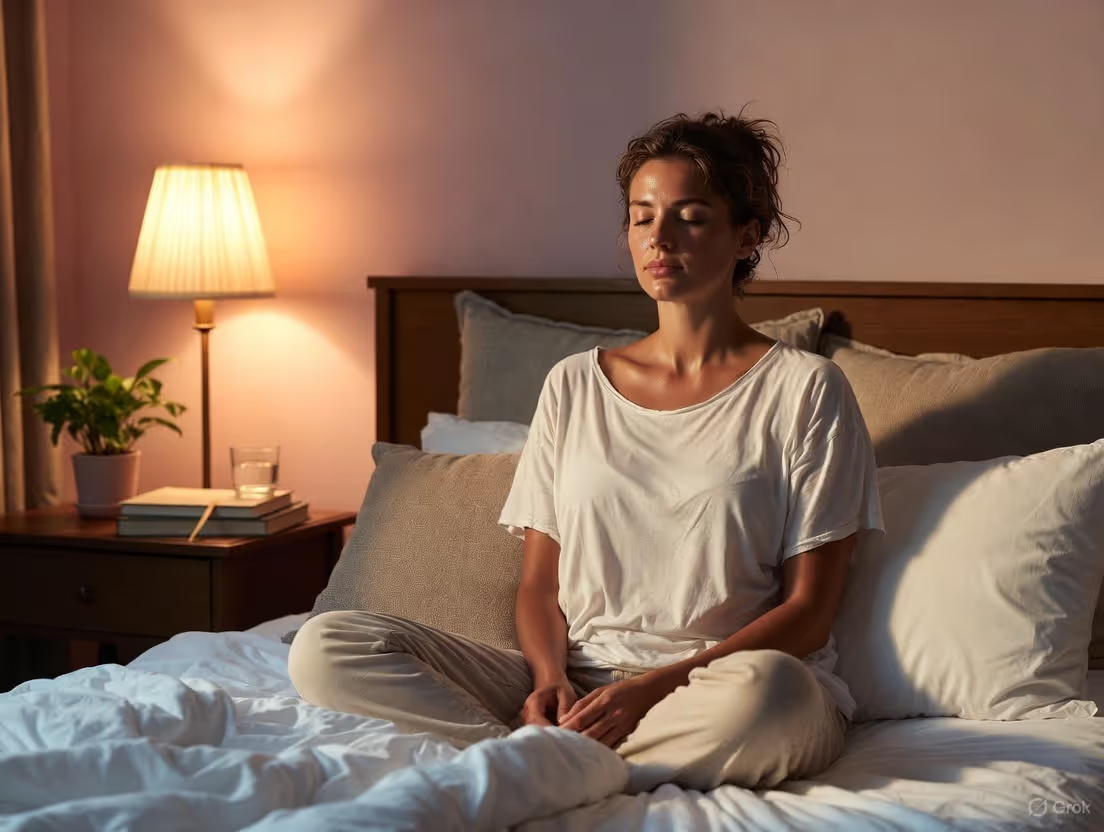
Perhaps no sleep tradition is more geographically iconic—or more misunderstood—than the siesta. Commonly stereotyped as a lengthy, lazy midday nap, the authentic siesta, particularly in Mediterranean and Latin American cultures, is a sophisticated cultural adaptation to a specific geographical reality: intense afternoon heat.
The practice is rooted in pragmatism. In regions where the midday sun makes outdoor labor dangerous and inefficient, retreating indoors during the peak thermal load is a sensible survival strategy. This period of pausa (pause) often involves a large meal followed by rest. The sleep taken during a true siesta is typically short, around 20-30 minutes—a power nap that aligns perfectly with the human body’s natural dip in alertness in the early afternoon (the post-lunch circadian slump). This brief rest allows for cognitive reset and body cooling, enabling a return to productive activity during the cooler evening hours. Consequently, the daily rhythm in these cultures often features later bedtimes and later morning starts, forming a biphasic sleep pattern synchronized with the sun and temperature.
But the siesta is just one star in a galaxy of global napping customs. In Japan, the practice of inemuri (“being present while asleep”) is a culturally accepted form of napping in public or at work, seen not as laziness but as a sign of exhaustion from hard work and dedication. It’s a quiet, often seated nap that demonstrates a person is so committed they’ve worked themselves to sleep, with the understanding they will return to their duties refreshed.
In parts of China, the post-lunch xiuxi (rest) is an institutionalized practice in many schools and workplaces, with dedicated time set aside for a break. Similarly, in India, a short afternoon nap may be traditional, especially in hotter regions. Even in the historically monophasic sleep culture of the United States, the concept of the “power nap” has been co-opted by corporate wellness programs, stripped of its cultural context but acknowledging the biological benefit.
These rituals highlight a critical point: the human sleep pattern is not inherently a single, consolidated 8-hour block. Historian Roger Ekirch’s seminal work revealed that pre-industrial Western Europeans commonly practiced “segmented” or “biphasic sleep”—a first sleep after dusk, a period of wakefulness in the middle of the night for reflection, prayer, or socializing, followed by a second sleep until morning. The erosion of this pattern coincided with urbanization and artificial lighting.
The modern lesson from these cultural adaptations is the validation of the nap as a legitimate tool for performance and well-being, not a sign of deficiency. It acknowledges the natural biphasic tendency of our alertness system. For those locked into a rigid 9-to-5 schedule in a culture that stigmatizes sleep, this can feel inaccessible. However, technology can help bridge the gap. By tracking your own circadian rhythm and identifying your personal alertness dips, you can strategically plan a short nap for maximal benefit. For more on harnessing your body’s natural rhythms, our blog offers a wealth of resources on chronobiology and performance.
The siesta and its cousins show how culture formalizes biological need. But beyond daily rhythms, geography also shapes the very structure of our sleeping spaces and social relationships around sleep, which in turn profoundly affects its quality.
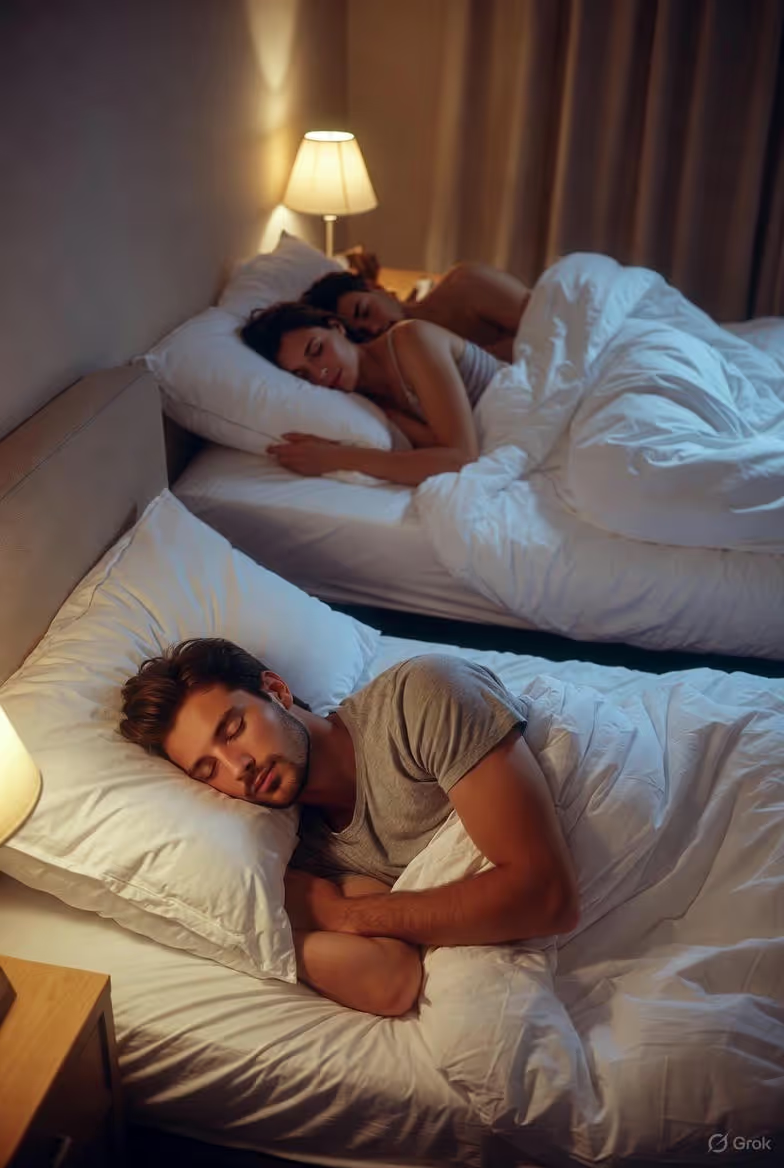
Where and with whom we sleep is a decision deeply etched by cultural and geographical norms, carrying significant implications for sleep quality, psychological comfort, and family dynamics. The Western ideal of the solitary sleeper in a private, soundproofed room is a historical and global anomaly.
In much of the world, co-sleeping is the default. In Japan, the practice of soine, where family members sleep on futons laid out in a shared room, fosters a sense of security and family bonding. Throughout Southeast Asia, Africa, and parts of South America, it is common for children to sleep with parents, and for multiple generations to share sleeping quarters. This is driven by practical factors like limited space in dense urban environments or the need for warmth in cooler highland regions, but also by collectivist cultural values that prioritize family cohesion and interdependence over individual privacy.
In contrast, the modern Western model of solitary sleep for infants and children emerged alongside ideals of individualism, privacy, and self-reliance, amplified by post-war suburban architecture that normalized separate bedrooms for each family member. This geography of the home directly shapes sleep behavior and attitudes. A child raised to sleep alone may develop a strong association between sleep and solitude, while a child raised in a co-sleeping culture may associate sleep with safety and connection.
The impact on sleep quality is complex and highly personal. Proponents of co-sleeping cite studies showing it can regulate infant breathing and heart rate, facilitate breastfeeding, and reduce anxiety for both child and parent. Critics point to potential sleep disruptions from movement or noise, and safety concerns if not practiced carefully. For adults, couple co-sleeping can enhance intimacy and feelings of security, but can also lead to fragmented sleep if partners have different schedules, chronotypes, or habits (e.g., snoring).
Geography influences this beyond culture. In colder climates, shared sleeping conserved body heat—a practical necessity. In small, traditional dwellings, separate rooms were a physical impossibility. The global spread of Western-style housing and parenting advice is, in a way, a geographical homogenization of sleep space, but one that clashes with the ingrained practices of many communities.
The modern challenge is navigating these often-conflicting norms. There is no “correct” answer, only what works for a specific family or individual in their specific context. The key is intentionality and adaptation. For those exploring their sleep partnerships, whether with a child or a romantic partner, data can depersonalize conflicts. Objective tracking can show how sleep architecture is truly being affected by sharing a bed, allowing for informed decisions about sleep arrangements. Discovering how Oxyzen works to provide individual sleep scores and disturbance logs can offer couples a neutral ground for discussion, moving the conversation from “you’re stealing the covers” to “we both have more light sleep after 2 AM, let’s adjust the room temperature.”
This journey from the macro forces of sun and climate to the micro-geography of the bedroom shows how deeply our rest is embedded in place. Next, we turn to how the very economy of a region—its industry and work patterns—imposes another layer of structure on our slumber.
While the sun and climate set the natural stage for sleep, the economic engines of a region often write the demanding script that actors must follow. Work schedules, shift patterns, and commuting realities—all products of a place’s economic geography—can violently override biological sleep cues, creating what researchers call “social jetlag.”
Consider the classic 9-to-5 workday, a product of the industrial revolution designed to synchronize human labor with factory machinery. This schedule, now exported globally, is biologically arbitrary. It favors the moderate “lark” chronotype and disadvantages the “owl,” whose natural sleep-wake cycle is delayed. When an owl in an office job in London or New York must wake at 6:30 AM for a long commute, they are effectively living in a time zone that does not match their internal one, accumulating chronic sleep debt. This misalignment is linked to obesity, diabetes, depression, and impaired cognitive performance.
But economic geography creates more extreme scenarios. In global financial hubs like Hong Kong, London, and New York, the culture of long hours and “face time” in white-collar jobs leads to chronically late nights and early mornings, compressing sleep into an insufficient window. The pervasive use of digital devices, as we will explore later, exacerbates this by further delaying natural sleep signals.
Shift work represents the most brutal assault on circadian biology. It is the economic geography of necessity: hospitals must run 24/7, factories maximize capital investment, and global supply chains never sleep. Night shifts, rotating shifts, and early morning shifts force workers to sleep during their biological day, fighting against every cue from the SCN. The health consequences are severe and well-documented, including dramatically higher risks for cardiovascular disease, metabolic disorders, and certain cancers. The geographical distribution of these jobs is often non-uniform, concentrated in industrial zones, ports, and hospital districts, creating localized populations with profoundly disrupted sleep health.
Commuting, a function of urban sprawl and housing economics, steals time directly from the sleep reservoir. The “megacity commute” in places like Mexico City, Tokyo, or Mumbai can routinely exceed two hours per day. This time is taken from either end of the sleep period, leading to shorter, more stressed sleep. The experience of a packed train or traffic jam is itself psychologically activating, making the transition to sleep more difficult even once home.
Some regions are pushing back with policy shaped by an understanding of these harms. Countries like France have legally enshrined the “right to disconnect” from work emails after hours. Nordic countries, with their strong emphasis on work-life balance, often have shorter standard workweeks and more flexible start times, allowing for better alignment with personal chronotypes.
The individual in a demanding economic system is not powerless, however. The first step is radical awareness. Using a wellness tracker to meticulously log sleep against work and commute times can reveal the exact cost of your job on your rest. This data is a powerful tool for self-advocacy. It can inform conversations about flexible hours or remote work days. It can also guide a personal strategy of “circadian hygiene”—using timed light exposure, melatonin, and strategic napping to mitigate the damage of shift work. For support in building such a strategy, our FAQ section provides answers to common questions on using technology to manage sleep amidst a challenging work schedule.
The economic world demands synchronization with its clock, but our biology marches to a different rhythm. Navigating this conflict is a defining challenge of modern sleep. Compounding this challenge is a new, universal geographical force: the digital landscape.
We have explored how physical geography—light, heat, space—shapes sleep. But in the 21st century, a new, non-physical geography has emerged that profoundly affects rest: the digital landscape. This always-on, globally connected realm effectively creates a universal, artificial time zone that competes with, and often overpowers, our local solar time.
The mechanism is twofold: psychological stimulation and physiological disruption. Our devices—smartphones, tablets, laptops—are portals to endless engagement: social media feeds, work emails, streaming videos, and news cycles. This content is often psychologically activating, triggering stress (from work emails), social comparison (from social media), or emotional arousal (from drama or exciting content). Engaging with this in the hour before bed prevents the wind-down of the cognitive and nervous systems necessary for sleep onset.
More insidiously, the light emitted by these screens is rich in blue wavelengths. Blue light is particularly effective at suppressing the production of melatonin, the hormone that signals darkness and primes the body for sleep. When we gaze at a bright screen at 10 PM, our brain receives a signal akin to a bright afternoon sun, convincing the SCN that it’s not yet time to prepare for rest. This delays the circadian clock, pushing sleep onset later and fragmenting sleep architecture.
This phenomenon is geographically ubiquitous but its impact is magnified in certain contexts. In high-latitude regions during dark winters, evening screen time may be one of the brightest light sources an individual encounters, making its disruptive effect even more potent relative to the natural environment. In dense urban environments where artificial light pollution already obscures the night sky, the screen is just one more source in a sea of circadian confusion.
Furthermore, the digital economy fuels the “hustle culture” that glorifies minimal sleep. The entrepreneur grinding until 3 AM, the freelance gig worker across multiple time zones, the social media influencer constantly engaged—all are living in the demanding geography of the digital realm, where the sun never sets.
Reclaiming sleep in this environment requires creating digital boundaries—a personal “geography” of disconnection. This includes:
The irony is that technology, the disruptor, can also be part of the solution. Smart wearables can detect the periods of high activity and light exposure that precede poor sleep, providing tangible feedback. By reviewing your own data, you can see the direct correlation between late-night screen use and a low sleep score or reduced REM sleep, turning an abstract warning into a personal, data-driven motivation for change. To learn more about building a sleep-supportive relationship with technology, explore our blog for articles on digital wellness and sleep hygiene.
As we manage these modern disruptions, it’s enlightening to look back at how our ancestors slept in harmony with their world, and what we’ve lost—and gained—in the transition.
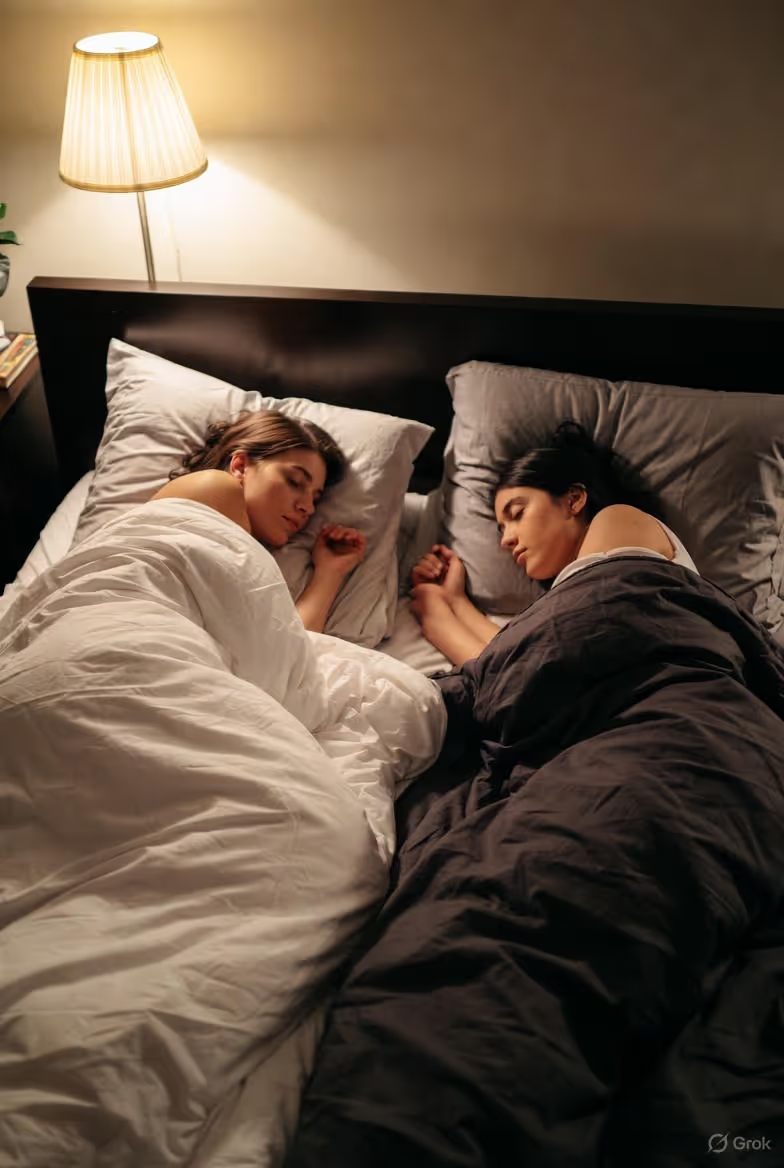
To fully grasp the cultural nature of sleep, we must step out of our modern, monophasic mindset and into the sleep patterns of the past. Historical evidence, from court records and diaries to medical texts and literature, reveals a rich tapestry of sleep behaviors that were intimately tied to the natural environment and pre-industrial social structures—a stark contrast to our current norm.
The most significant revelation, popularized by historian A. Roger Ekirch, is the prevalence of segmented sleep (or biphasic sleep) in pre-industrial Europe and likely in many other parts of the world. The pattern was often called "first sleep" and "second sleep." People would retire to bed shortly after dusk (first sleep), wake for a period of one to several hours around midnight, and then return to sleep until morning.
This wakeful period, known as "the watch," was not a sign of insomnia but a normal, expected part of the night. It was a time of remarkable quiet and intimacy. People would use this time for activities poorly suited to daylight hours: prayer, reflection, writing, reading by candlelight, simple chores like adding fuel to the fire, or engaging in intimate conversation or sexual intercourse with a partner. Diaries from the era describe this time as uniquely peaceful and conducive to deep thought.
This pattern was a direct adaptation to the geography of darkness. Without cheap, abundant artificial light, the 12-14 hours of winter darkness were simply too long to sleep through in one consolidated block. Segmented sleep was the body’s natural response, synchronized with the long nights of temperate and polar latitudes. It began to disappear with the advent of widespread artificial lighting—first street lamps and then, decisively, with indoor electric light—which compressed and consolidated the sleep period into a single, shorter block to accommodate longer evening wakefulness.
Other historical patterns were shaped by geography and labor. In agricultural societies, sleep often followed the sun and seasons, with longer sleep in winter and shorter in summer. Sleep was also more communal and public. In medieval households, it was common for servants and family to sleep in the same hall. The very concept of a private bedroom is relatively modern.
What have we lost? Perhaps a more fluid, less anxious relationship with nighttime wakefulness. The modern pressure to achieve "perfect" unbroken sleep can itself create anxiety that fuels insomnia. The historical record suggests that waking at night is, in fact, quite normal. We’ve also lost a dedicated, quiet period for reflection and connection that existed in the heart of the night.
What have we gained? Consistency and, in theory, efficiency. Consolidated sleep fits the industrial and now digital economic model. We have more predictable evenings for socializing and entertainment. The challenge is that this gain came at the cost of disconnecting from a natural biological rhythm.
The lesson is not that we must return to a pre-electric lifestyle, but that our current model is not the only "natural" one. It gives us permission to be flexible. If you find yourself awake in the middle of the night, rather than panicking, you might embrace it as a modern "watch"—a time for quiet reflection, reading, or meditation, trusting that sleep will return. It also validates the cultural napping rituals we see elsewhere as alternative, healthy distributions of rest. Understanding this history is part of our brand journey at Oxyzen, where we believe technology should help us reconnect with our biological roots, not further separate us from them.
As we move from the historical to the contemporary, we see that geography still dictates sleep, but now through the man-made environment of our cities and the pollution they create.
The transition from historical to modern sleep has been most violently realized in the urban landscape. Cities, the epicenters of economic and social life, have engineered a geography that is fundamentally hostile to natural sleep patterns through two primary pollutants: artificial light at night (ALAN) and noise.
Light Pollution: The Eternal Twilight
Walk through New York, Shanghai, or Dubai at midnight, and you can often read a book by the ambient light. This perpetual glow is light pollution, and it has effectively erased true darkness for a majority of the world’s population. For our circadian systems, this is catastrophic.
The SCN uses darkness as its primary "off" signal. Chronic exposure to even low levels of light at night—from streetlights sneaking around blinds, digital clocks, or hallway lights—can suppress melatonin production, delay sleep onset, and reduce sleep quality. Epidemiological studies consistently link higher levels of outdoor nighttime light in a community with shorter sleep duration, later sleep timing, and increased reports of fatigue among its residents. The geographical "hotspots" for this are, unsurprisingly, dense urban cores and sprawling suburban corridors.
This creates a cruel paradox. The very amenities and opportunities that draw people to cities are the ones degrading their sleep. The geography of ambition becomes a geography of exhaustion. Furthermore, light pollution disrupts ecosystems, affecting the sleep and behaviors of urban wildlife, creating a feedback loop that changes our entire environment.
The Sonic Geography of Sleeplessness
If light tells your brain it’s not night, noise tells your body it’s not safe. The urban soundscape is a cacophony of sleep disruptors: traffic, sirens, air conditioners, nightlife, and neighbors. Even noises that don’t fully wake us can cause micro-arousals—brief shifts to a lighter stage of sleep—fragmenting the sleep architecture and preventing deep, restorative rest. The constant low-level activation of the stress-response system by noise can elevate cortisol levels, making it harder to fall asleep and stay asleep.
The distribution of this sonic pollution is uneven. Apartments facing major arteries, neighborhoods near airports or nightlife districts, and poorly insulated buildings create "sleep sacrifice zones" where residents are subjected to a nightly assault on their rest.
The 24-Hour Economy
Cities are also the home of the non-stop service economy. The demand for all-night convenience stores, transportation, and entertainment creates a culture where sleep can feel like an inconvenient anachronism. The social pressure to be "out" late is powerful in many urban cultures, from the nightlife of Berlin to the late dining culture of Buenos Aires.
The urban dweller’s defense requires a proactive redesign of the personal micro-environment:
Here, personal technology becomes a crucial sensor. A device that tracks sleep can quantify the impact of your urban environment. You might see that your sleep efficiency drops and your resting heart rate elevates on weekend nights when street noise is higher, providing objective data to justify investments in better soundproofing or a change of apartment orientation. For those curious about how precise tracking can illuminate these environmental impacts, reading our complete guide to sleep metrics is an excellent starting point.
The city doesn’t have to be a sleep desert. By understanding its disruptive geography, we can carve out oases of rest. But our adaptation goes even deeper, to the genetic level, where our ancestry primes us for specific sleep patterns.
Our sleep story is not only written by where we live now, but also by where our ancestors lived. Deep in our DNA are genetic adaptations—legacies of thousands of years of evolution in specific geographical and cultural contexts—that continue to influence our chronotype, sleep structure, and vulnerability to sleep disorders. This is the intersection of genetic ancestry and the historical geography of human migration.
One of the most compelling examples is a genetic variant in the gene DEC2, sometimes called the "Thatcher Gene" (after the former British Prime Minister known for sleeping only four hours a night). This rare mutation allows carriers to function normally on significantly shorter sleep durations. While extremely rare, its existence points to a genetic basis for natural short sleepers.
More broadly, population genetics studies have begun to uncover variations in circadian clock genes (PER, CLOCK, CRY) across different ethnic and geographical groups. For instance, some research suggests that genetic adaptations in populations from equatorial regions, where daylight is consistent year-round, may lead to more robust and stable circadian rhythms compared to populations from high latitudes who had to adapt to extreme seasonal variations in light.
The prevalence of certain sleep disorders also has a geographical and ethnic component. For example, Obstructive Sleep Apnea (OSA) has a higher prevalence in certain populations, influenced by craniofacial structure (which can have genetic and ethnic links), and is exacerbated by modern factors like obesity. Restless Legs Syndrome (RLS) prevalence varies across regions and ethnic groups, with higher rates reported in populations of Northern European descent.
Perhaps the most dramatic example is Seasonal Affective Disorder (SAD), which is essentially a geographical disorder. It is far more prevalent in populations living at high latitudes, where winter photoperiods are very short. While not purely genetic, an individual’s vulnerability to SAD is influenced by their genetic sensitivity to light and melatonin regulation, which were shaped by their ancestral environment.
This doesn’t mean our fate is sealed by our DNA. Gene expression is heavily influenced by environment—a field known as epigenetics. A person with a genetic predisposition for a delayed chronotype (an "owl") living in a sunny, outdoor-oriented culture might adapt better than the same genetic profile in a dark, 9-to-5 urban setting. The modern mismatch occurs when our genetic sleep predispositions, forged in one geographical context, are placed in a radically different one.
Understanding this ancestral layer adds nuance to the sleep conversation. It helps explain why a "one-size-fits-all" sleep solution is biologically naive. It encourages a personalized approach: what works for a person of Scandinavian descent living in Minnesota may not be optimal for someone of East African descent living in the same city.
This is the frontier of personalized wellness technology. The future lies in devices and platforms that don’t just track sleep, but integrate that data with other biomarkers and even genetic insights (with user consent) to provide hyper-personalized recommendations. Imagine a system that knows your genetic chronotype tendency and adjusts its advice based on your local sunrise time and light exposure data. This personalized, geography-aware approach to well-being is core to our vision & values at Oxyzen, where we see technology as a bridge back to our individual biological truths.
With this understanding of the deep forces—from the sun to our genes—that shape sleep, we arrive at a pivotal question. In our globalized, disconnected world, how can we use modern tools not to fight our geography, but to harmonize with it?
We have journeyed through the layers of geographical influence on sleep: from the cosmic (solar latitude) to the climatic (temperature), from the cultural (siestas, co-sleeping) to the economic (work shifts), and from the environmental (light pollution) to the ancestral (genetics). The overwhelming narrative is one of mismatch. Modern life, especially in urban centers, has created a profound disconnect between our innate sleep biology and the environments we have built.
But this is not a counsel of despair. It is a call to intentional, informed adaptation. We cannot all move to the equator or adopt a pre-industrial lifestyle, but we can use the very tools of modernity to craft a personal sleep ecology that respects our biological needs. This is the art of re-synchronization.
1. Become a Student of Your Own Rhythm.
The first step is data-driven self-awareness. You cannot manage what you do not measure. A sophisticated wellness tracker is no longer a gadget; it is a essential tool for navigating the modern sleep landscape. Look for metrics beyond simple duration: sleep stages (REM, Deep, Light), sleep consistency (bedtime/waketime variance), resting heart rate, heart rate variability (HRV), and respiratory rate. These biomarkers tell the real story of your sleep quality. By correlating this data with your daily log (work stress, caffeine intake, evening screen time, outdoor light exposure), you can identify your personal disruptors and enhancers.
2. Engineer Your Light Environment.
Since light is the master Zeitgeber (time-giver), take control of it.
3. Respect Thermal Geography.
Optimize your sleep temperature. Start with the recommended 18.5°C (65°F) and adjust based on your tracker’s data. Use breathable bedding. Consider a cooling mattress pad if you live in a hot climate without AC, or layer effectively if you live in a cold one.
4. Create Sound Boundaries.
Use white noise or brown noise to mask the inconsistent sounds of urban or suburban life. Invest in good earplugs or soundproofing if needed. Advocate for quieter communities.
5. Advocate for Flexibility.
Use your sleep data to advocate for work-life integration. Propose flexible start times to align with your chronotype, or work-from-home days to eliminate a sleep-stealing commute. Data makes the request objective, not personal.
6. Embrace Context-Appropriate Rest.
If your culture and schedule allow, don’t fight the afternoon dip. A short, 20-minute nap can be a powerful reset. If you wake at night, don’t panic. Practice the "historical" watch with quiet, non-stimulating activity until drowsiness returns.
Having established the foundational forces—from solar cycles to genetic heritage—that shape our slumber, we now turn our gaze to the vivid, living tapestry of sleep practices around the world. This is not merely travelogue anthropology; it is a diagnostic tool. By examining specific "sleep hotspots," regions with distinctive and often deeply ingrained sleep cultures, we can better understand the spectrum of human adaptation and identify elements that might be integrated or avoided in our own lives. These case studies reveal the complex, and sometimes contradictory, outcomes when tradition, modernity, biology, and geography collide.
The Nordic nations—Norway, Sweden, Denmark, Finland, and Iceland—present a fascinating sleep paradox. Geographically, they are among the most sleep-challenging environments on Earth, subject to extreme seasonal light variation. Yet, consistently, these countries rank highly in global happiness and quality of life reports. The secret to their resilience, and their sleep health, lies not in fighting their harsh geography, but in cultivating a cultural philosophy that embraces it: a concept best encapsulated by the Norwegian word koselig (or the Danish hygge).
The Geographical Challenge: During the depths of winter, cities like Oslo or Helsinki may receive only 5-6 hours of dim daylight. The pervasive darkness is a potent trigger for circadian disruption and Seasonal Affective Disorder (SAD). Conversely, the summer months bring the midnight sun, where bright light floods the evening, threatening to delay sleep and compress rest.
The Cultural Adaptation: Nordic cultures don’t just endure winter; they actively create comfort and light within it. Koselig is the practice of creating warmth, coziness, and connection. This translates directly into sleep-supportive behaviors:
The Modern Tension: Even here, modernity exerts pressure. The 24/7 digital world and the demands of global business clash with traditional rhythms. Yet, the strong cultural framework of koselig provides a powerful counter-narrative. The lesson is profound: sleep health in a challenging climate is not just about individual habits, but about building a culture that values rest, comfort, and environmental harmony. For anyone struggling with winter blues, exploring the principles of koselig can be transformative. Discover more about creating a restful environment in our guide to building your sleep sanctuary.
If the Nordic model is about finding light in darkness, the traditional Mediterranean rhythm—spanning southern Spain, Italy, Greece, and parts of the Middle East—is about escaping heat and stretching the day to accommodate social life. This model is famously centered on the siesta, but that is only one movement in a larger, symphonic daily structure.
The Geographical Driver: The intense midday sun and high temperatures made outdoor work and activity not just unpleasant, but hazardous. The siesta originated as a practical thermal adaptation.
The Traditional Rhythm: The classic pattern involves an early morning start, a long pause in the early afternoon (from roughly 2 PM to 5 PM), and a late, vibrant evening. This break is not solely for sleep. It encompasses comida, the main meal of the day, followed by rest—which could be a short nap, quiet reading, or time with family. Businesses close, streets quieten. The evening then comes alive, with dinner often occurring at 9 PM or later, and social activities stretching late into the night. Sleep is typically later (midnight or beyond) but morning starts are also later where possible, creating a shifted, biphasic rhythm.
The Benefits and Costs: This rhythm aligns well with the human body’s natural afternoon dip in alertness. A short, 20-30 minute nap can improve cognitive function and mood. The late, communal dinners foster strong social bonds, a known protector of mental health and stress resilience. However, this model is in direct conflict with the standardized 9-to-5 work schedule of the globalized economy. As multinational corporations and modern urban sprawl reshape cities like Madrid and Rome, the traditional siesta is shrinking, preserved more in smaller towns and among the older generation.
The Modern Hybrid: The result is often a stressful clash. Workers may still have a late social culture but must wake early for a conventional job, leading to chronic sleep restriction. The lesson here is not that everyone should adopt a three-hour break, but to recognize the biological validity of the afternoon lull. Even in a rigid schedule, a 20-minute "power nap" or a period of quiet rest can be a powerful tool for resilience. It also highlights the importance of aligning meal times and social expectations with sleep goals—a late, heavy dinner followed immediately by bed is problematic for digestion and sleep quality. For those navigating the conflict between social life and sleep, tracking the impact of late meals and alcohol on your sleep score can provide eye-opening data, a feature many users detail in their real customer reviews.
The sleep culture in industrious East Asian nations like Japan and South Korea presents another stark model, one where sleep is often sacrificed at the altar of productivity, yet culturally clever adaptations have emerged.
The Geographical & Economic Context: While climate varies, the dominant factor here is not sun or heat, but immense population density and fiercely competitive, high-achievement work and academic cultures. Long work hours (karoshi, or "death by overwork," is a recognized phenomenon in Japan) and lengthy commutes in megacities like Tokyo and Seoul leave little room for ample sleep.
The Cultural Adaptation - Inemuri: This is where the unique practice of inemuri ("being present while asleep") comes in. It is the culturally sanctioned act of napping in public—on a train, in a meeting, in a library. Unlike the private, deliberate siesta, inemuri is a nap of exhaustion seized in the midst of duty. Its social meaning is crucial: it is not seen as laziness, but as a sign that a person has worked themselves to the point of collapse for the collective good. It is a public performance of dedication, with the unspoken rule that the sleeper will rouse and return to productive duty.
The Sleep Deficit Reality: Despite inemuri, sleep duration in these countries is among the lowest in the OECD. The pressure to succeed creates a society of chronically sleep-deprived individuals. The response has been a booming market for sleep technology, "nap cafes," and even specialized hotels offering short-term sleeping pods. Sleep is often framed as a functional necessity to recharge for more work, rather than a valued state of restoration in itself.
The Lesson in Awareness: The East Asian model serves as a global cautionary tale. It shows how economic and social pressures can override biological needs to a dangerous degree. It also demonstrates a cultural ingenuity in allowing micronaps to mitigate some of the damage, however insufficiently. For the global professional, it underscores the non-negotiable need to protect sleep time against encroaching work demands. Using objective data to demonstrate the performance decline associated with chronic short sleep can be a powerful argument for workplace change. Understanding how technology can quantify this trade-off is part of how Oxyzen works to turn subjective fatigue into objective insight.
In many parts of Africa, Southeast Asia, and Latin America, sleep is often a profoundly collectivist act. The Western ideal of a solitary child in a private room is the exception, not the rule. Here, co-sleeping—with parents, siblings, or extended family—is the norm from infancy through childhood and often beyond.
The Drivers: This practice stems from a combination of practical and cultural factors. Practically, limited space in dwellings makes separate rooms a luxury. In rural settings, sharing body heat can be efficient. Culturally, values of family interdependence, attachment parenting, and community safety take precedence over early independence training.
The Sleep Implications: Research presents a nuanced picture. Proponents highlight benefits: regulated infant physiology, ease of breastfeeding, strong attachment bonds, and a deep-seated sense of security that may lead to lower baseline anxiety. The child learns to sleep amidst the natural sounds of life. Critics point to potential sleep fragmentation for parents, challenges in establishing independent sleep routines later, and safety concerns if safe co-sleeping guidelines aren't followed.
The Modern Clash: As Western media and parenting advice permeate these cultures, a "right way" to sleep is often presented, creating anxiety and confusion for parents caught between traditional wisdom and modern recommendations. The key takeaway is that there is no single biologically "correct" sleep arrangement. The social geography of sleep—who is in the room—is as important as the physical one. The collectivist model teaches that sleep can be a deeply connected, secure experience. For parents everywhere, the lesson is to make intentional, informed choices that fit their family’s values and context, rather than following a prescribed dogma. Data can help here, too, by showing whether a given arrangement is leading to sufficient deep sleep for all parties.
Our journey through these hotspots reveals that every cultural sleep pattern is a rational, if not always optimal, adaptation to a set of geographical and social conditions. But what happens when these traditional patterns break down under the force of rapid modernization? The next section examines the frontier of this change.
We now arrive at the bleeding edge of the geography-sleep relationship: the hyper-urbanized, digitally mediated, economically precarious modern environment. This is the landscape of the megacity, the gig economy, and the "always-on" professional, where traditional geographical and cultural sleep anchors have been demolished, often without replacement.
The Geography of the Megacity: Cities like Lagos, Mumbai, and São Paulo are ecosystems of constant stimulus. They combine all the sleep disruptors we've discussed at maximum intensity: severe light pollution, relentless noise, grueling commutes, dense living quarters, and extreme social and economic pressure. The natural day-night cycle is obliterated by a 24-hour artificial one. In these environments, sleep becomes a casualty of survival and aspiration. It is often fragmented, short, and of poor quality, taken in shifts or whenever possible.
The Temporal Geography of the Gig Economy: Platforms like Uber, Deliveroo, and freelance marketplaces have created a new work geography unmoored from place and time. The "gig" worker may drive nights, write code for a client in another time zone, or deliver food during peak meal times. Their schedule is unpredictable and dictated by algorithmically managed demand, not circadian biology or personal choice. This represents the ultimate form of social jetlag, where the sleep-wake schedule changes daily, preventing any stable rhythm from forming. The health consequences of such shift work are severe, and this new economy is exporting these risks to a massive, decentralized workforce.
The Always-On Professional: Even for salaried workers, the smartphone has erased the boundary between office and home, creating a "cognitive commute" that never ends. The expectation to answer emails at night or join late calls with global teams extends the workday indefinitely, compressing the window for wind-down and sleep.
The Erosion of Community Rhythms: In traditional societies, communal activities—evening meals, religious observances, social gatherings—provided external timekeepers that helped synchronize a community's sleep. In the fragmented, individualistic life of the modern city, these synchronizing forces are weak or absent. Everyone is on their own schedule, watching their own screen.
This "accelerated culture" creates a perfect storm for a sleep deprivation epidemic. The adaptive response here cannot be a return to a non-existent past; it must be the deliberate, tech-enabled construction of personal micro-rhythms. This involves:
Navigating this landscape requires a profound understanding of one's own biology and the tools to protect it. It is the hardest sleep geography to master, but also the most common for millions. For support in building structure in a structureless world, our FAQ section addresses many common questions on using wearables for shift work and irregular schedules.
Having mapped the global landscape of sleep, both traditional and modern, we turn to the toolkit for navigation. The next sections delve into the practical science and technology we can use to rebuild a harmonious relationship with rest, no matter where we are.
Amidst all these external geographical forces—latitude, climate, culture—lies a powerful internal geography: your chronotype. This is your genetically influenced predisposition for when you naturally prefer to sleep and be awake. Understanding your chronotype is the master key to personalizing all other sleep advice, as it determines how you interact with your external environment.
The Spectrum of Chronotypes: Think of chronotypes not as rigid types, but as a continuous distribution, often visualized on a scale from extreme "larks" (morning types) to extreme "owls" (evening types), with a majority falling into an intermediate range.
The Geographical Mismatch: Your chronotype is your internal "time zone." An owl living on Eastern Standard Time in New York may have a biological clock that aligns more with Mountain Time. When society demands they be at a desk by 9 AM, they are functioning in a state of permanent, mild jetlag. This mismatch, known as social jetlag, is associated with increased risk for depression, obesity, and cardiovascular disease.
Determining Your Chronotype: While genetic tests exist, you can get a strong sense through self-observation. The Munich Chronotype Questionnaire (MCTQ) is a standard research tool adapted for public use. More simply, track your natural sleep tendencies over a week of vacation without alarms or strict commitments. When do you naturally fall asleep and wake up? This "midpoint of sleep" is a key indicator.
Leveraging Your Chronotype:
Modern wellness technology is revolutionizing chronotype awareness. Advanced algorithms in devices like smart rings can analyze your sleep onset, wake time, and movement data over weeks to estimate your natural rhythm, even within the constraints of a forced schedule. This data is empowering; it moves the problem from "I'm lazy" to "my biology is misaligned with my schedule," a far more constructive starting point for change. To learn more about the science of chronotypes and personalized schedules, explore our blog for detailed guides.
To navigate the complex geography of modern sleep, we need a reliable compass. This is the role of sleep tracking technology. It has evolved from simple movement-based estimates into a sophisticated window into our sleep architecture—the cyclical progression through different stages of sleep that is critical for restoration.
The Evolution of Tracking:
Understanding Sleep Architecture:
A good tracker doesn't just tell you "you slept 7 hours." It reveals the structure of that sleep:
The Power and Pitfalls of Data:
The power lies in correlation and awareness. You can see, indisputably, that the night you drank alcohol, your deep sleep plummeted. That the week you started a new meditation practice, your HRV rose and your sleep score improved. That your sleep is consistently worse when your bedroom temperature is above 21°C (70°F).
The pitfall is orthosomnia—an unhealthy obsession with perfect sleep data. The score is a guide, not a grade. It's meant to reveal trends and triggers, not to be a source of nightly anxiety. The goal is to use the data to inform gentle lifestyle adjustments, not to become a slave to a metric.
For the modern individual living in a disruptive geographical context, this data is transformative. It turns the invisible—the impact of your urban environment, your work stress, your late-night screen habit—into visible, actionable insight. It allows you to conduct personal experiments: "If I use blackout curtains this week, what happens to my deep sleep?" This empirical approach is at the heart of modern, personalized wellness. Reading about real customer experiences with this kind of data-driven discovery can illuminate its true value.
With an understanding of your external geography and internal chronotype, and armed with data, you can now undertake the most impactful project: designing your personal sleep sanctuary. This is the intentional creation of a micro-geography—your bedroom—that defends against the external world and signals powerfully to your brain and body that it is time for deep, restorative rest.
The Non-Negotiable Pillars:
The Sensory Layer:
Creating this sanctuary is an act of declaring that your sleep matters. It is your geographical fortress against the chaos of modern life. The return on investment is not just better sleep, but better days. For inspiration on creating your perfect sleep environment, our blog is filled with tips on everything from choosing the right mattress to the best white noise sounds.
But a perfect environment is only half the battle. We must also prepare the occupant—our own nervous system—to receive its benefits. This brings us to the art of the wind-down ritual.
You cannot go from the cognitive intensity of a work project or the emotional stimulation of a dramatic show directly into the peaceful waters of sleep. The transition requires a bridge—a deliberate wind-down ritual. This is the temporal and behavioral geography you create in the 60-90 minutes before bed, a "buffer zone" that guides your nervous system from sympathetic (fight-or-flight) dominance to parasympathetic (rest-and-digest) dominance.
The Physiology of Wind-Down: The goal is to lower core body temperature, reduce cortisol (the stress hormone), increase melatonin, and quiet mental chatter. A ritual provides predictable cues that condition your brain to expect sleep.
Elements of an Effective Ritual (Customize to Your Chronotype & Culture):
Consistency is Key: The power of the ritual lies in its repetition. Doing the same sequence of calming activities each night trains your brain to recognize the pattern as a precursor to sleep, making the transition faster and easier. Your wind-down should feel like a gift to yourself, not a chore. It is the daily practice of self-care that makes high-quality sleep possible.
Technology can support this ritual, not just disrupt it. You can use smart home systems to automatically dim lights at a set time. A wearable device can remind you when your ideal wind-down window begins based on your sleep history. And by reviewing your sleep data, you can see the tangible benefit of sticking to your ritual—nights with a consistent wind-down will likely show higher sleep scores and more balanced sleep architecture. For questions on integrating technology seamlessly into a healthy wind-down, our support FAQ has helpful guidance.
With our sanctuary prepared and our nervous system primed, we must finally address the ultimate disruptor and restorer: the mind itself. Our beliefs and anxieties about sleep often become the very barrier to achieving it.
In our productivity-obsessed culture, we have begun to "optimize" sleep with the same relentless energy we apply to work. We track it, score it, and strive to perfect it. This has given rise to a modern paradox: sleep performance anxiety—the more desperately we try to sleep "well," the more elusive good sleep becomes. This is the psychological geography of sleep, and for many, it is the most difficult terrain to cross.
The Mechanics of Sleep Anxiety:
The process of falling asleep is a passive surrender. It requires a quiet mind and a deactivated sympathetic nervous system. When you lie in bed worrying about whether you'll sleep, counting the hours until the alarm, or ruminating on the consequences of another bad night, you are engaging in cognitively arousing, stress-inducing activity. This releases cortisol and adrenaline, which are biochemical signals for wakefulness. The brain's "sleep switch" cannot be flipped by force of will; it is engaged only when the conditions of safety and relaxation are met. Anxiety creates the opposite conditions.
The Performance Trap: The individual with sleep anxiety often engages in behaviors that backfire:
Strategies to Dissolve the Anxiety:
The journey to better sleep is not linear. It requires patience and self-compassion. The goal is to cultivate a peaceful relationship with sleep itself, viewing it as a natural process that you can invite and facilitate, but not control. This shift from striving to allowing is often the final, most liberating step in the journey. For those on this path, reading about others' experiences and insights can provide reassurance and community.
Your Trusted Sleep Advocate: Sleep Foundation — https://www.sleepfoundation.org
Discover a digital archive of scholarly articles: NIH — https://www.ncbi.nlm.nih.gov/
39 million citations for biomedical literature :PubMed — https://pubmed.ncbi.nlm.nih.gov/
Experts at Harvard Health Publishing covering a variety of health topics — https://www.health.harvard.edu/blog/
Every life deserves world class care :Cleveland Clinic - https://my.clevelandclinic.org/health
Wearable technology and the future of predictive health monitoring :MIT Technology Review — https://www.technologyreview.com/
Dedicated to the well-being of all people and guided by science :World Health Organization — https://www.who.int/news-room/
Psychological science and knowledge to benefit society and improve lives. :APA — https://www.apa.org/monitor/
Cutting-edge insights on human longevity and peak performance:
Lifespan Research — https://www.lifespan.io/
Global authority on exercise physiology, sports performance, and human recovery:
American College of Sports Medicine — https://www.acsm.org/
Neuroscience-driven guidance for better focus, sleep, and mental clarity:
Stanford Human Performance Lab — https://humanperformance.stanford.edu/
Evidence-based psychology and mind–body wellness resources:
Mayo Clinic — https://www.mayoclinic.org/healthy-lifestyle/
Data-backed research on emotional wellbeing, stress biology, and resilience:
American Institute of Stress — https://www.stress.org/


