


Daily Health Optimization: Movement Quality Over Quantity
Focusing on the quality, not just the quantity, of daily movement.
Focusing on the quality, not just the quantity, of daily movement.
%402x.svg)
We are a culture obsessed with counting. Steps taken. Calories burned. Hours slept. Miles run. We wear these numbers like badges of honor, quantifying our health into neat, digestible metrics. For years, the wellness mantra has been a simple equation: more movement equals better health. Ten thousand steps a day. Thirty minutes of cardio. Hit your activity goal, and you’ve won.
But what if we’ve been measuring the wrong thing? What if, in our relentless pursuit of quantity, we’ve sacrificed the very essence of what makes movement healing, sustainable, and truly transformative? What if the secret to lifelong vitality, resilience, and pain-free living lies not in how much you move, but in how you move?
Welcome to the paradigm shift in personal wellness: the era of movement quality.
This is not an argument against exercise. It is a deeper conversation about motion as nourishment. It’s about recognizing that the 5,000 steps you take with mindful posture, balanced gait, and engaged muscles are infinitely more valuable to your body than 15,000 steps taken while hunched over, compensating with your joints, and disconnected from your physical self. It’s about understanding that a single, perfectly executed squat with full range of motion does more for your functional strength and joint health than a hundred half-reps under load.
The consequences of ignoring quality are all around us, often masquerading as the inevitable “wear and tear” of aging. Chronic lower back pain from sedentary postures. Knee replacements necessitated by years of poor movement patterns. Shoulder impingements from repetitive, unbalanced workouts. These are not simply accidents; they are often the direct result of accumulated movement debt—the compounded cost of prioritizing quantity over quality, day after day.
This article is your guide to repaying that debt and investing in a future of fluid, powerful, and pain-free movement. We will dismantle the "more is better" myth and rebuild a framework for intelligent, intuitive, and optimized physicality. We’ll explore the science of biomechanics and neuroplasticity, proving that your movement patterns are not fixed but are skills you can hone. We’ll delve into the role of modern technology, like advanced smart rings, which are shifting from mere step-counters to sophisticated coaches for movement quality.
This journey begins with a single, revolutionary idea: Every motion is an opportunity. From how you rise from your chair to how you carry your groceries, from your gym session to your walking commute, the quality of these micro-moments determines the macro trajectory of your health. Let’s learn to optimize them all.
The origin story of our collective step-count obsession is both fascinating and arbitrary. The 10,000-step goal wasn’t born from rigorous clinical research; it was a 1960s Japanese marketing campaign for a pedometer called the "manpo-kei," which literally translates to "10,000-step meter." The number was catchy, round, and ambitious—a perfect slogan. It stuck, and decades later, it was hardwired into the firmware of every fitness tracker on the planet.
This singular metric created a powerful, but dangerously simplistic, behavioral trigger. The goal became external and numerical: reach the target, close the ring, earn the badge. The human body, however, is not a simple pedometer. It is a complex, adaptive system that responds to signals of load, intention, and variety. When we reduce its needs to a step count, we commit several critical errors.
First, we equate all steps as equal. A step taken on a flat treadmill while watching TV is not the same as a step taken on a hiking trail, navigating roots and inclines. The latter requires proprioception (your body’s sense of its position in space), ankle stability, lateral micro-adjustments, and varied muscle recruitment. It’s neurologically rich. The former is often passive and repetitive. The tracker counts them the same, but your nervous system and musculoskeletal system do not.
Second, we promote compensation over correction. When the primary driver is a quantity target, the path of least resistance is to achieve it by any means necessary. This leads to “cheating” your own body. You might walk with a slumped posture to finish your steps, further entrenching poor spinal alignment. You might run through knee pain to hit a distance goal, accelerating joint degeneration. The metric rewards completion, not quality, silently encouraging harmful patterns.
Third, and most importantly, we ignore the critical component of intensity and recovery. Ten thousand slow, meandering steps provide a different physiological stimulus than a 20-minute high-intensity interval training (HIIT) session or a heavy strength training workout. Our bodies need a spectrum of stimuli: strength, stability, mobility, power, and endurance. A step count measures only one narrow slice of the endurance pie, and even then, without context on pace or terrain.
The fallout is a population that may be more active, but not necessarily more healthy. We see individuals who proudly hit their daily step goal but still suffer from poor posture, weak glutes, tight hips, and chronic aches. They are moving more, but they are not moving better. The data from wearable devices is beginning to reflect this disconnect. People are hitting their targets but not seeing correlating improvements in biomarkers of metabolic health, body composition, or injury resilience.
This isn’t to say walking is bad—it’s profoundly beneficial. The problem is the monotheistic worship of a single, flawed metric. True daily health optimization requires a more nuanced dashboard. It asks: How well did I move? not just How much? It values the depth of a squat, the stability of a single-leg balance, the smoothness of your gait, and the symmetry of your posture. It understands that five minutes of focused, high-quality mobility work can have a more profound impact on your long-term function than an extra thirty minutes of distracted, low-quality cardio.
Shifting from a quantity to a quality mindset is the foundational step. It liberates you from the tyranny of the arbitrary number and reconnects you with the intelligent, biofeedback-driven wisdom of your own body. It’s the difference between training for a tracker and training for life.

If we are to move beyond counting, we must have a new framework for assessment. Movement quality is the measurable degree of efficiency, safety, and effectiveness in any given motion. It is the intersection of proper biomechanics and neurological control. We can break it down into five interdependent pillars that form the foundation of all healthy human movement.
Mobility is often confused with flexibility, but they are distinct partners. Flexibility is the passive ability of a muscle to lengthen. Mobility is the active control of a joint through its full, intended range of motion. You might be flexible enough to sink into a deep squat (passively), but do you have the hip, ankle, and core stability to control yourself at the bottom of that squat and push back up (actively)? That’s mobility.
High-quality movement requires optimal mobility at key joints: ankles for gait, hips and thoracic spine for rotation, and shoulders for overhead reach. Restrictions here force compensations elsewhere—tight ankles lead to knee valgus (caving in), a stiff thoracic spine forces excessive lumbar (lower back) extension during overhead movements.
While mobility is about moving through a range, stability is about controlling or preventing unwanted movement. It’s the strength of your “pillar”—your core and proximal muscles—to create a solid base from which your limbs can move powerfully and safely.
Consider a push-up. The motion occurs at your elbows and shoulders, but the quality is determined by your core’s ability to prevent your hips from sagging or your lower back from arching. This is motor control: your nervous system’s ability to fire the right muscles, at the right time, with the right intensity. Poor stability turns efficient movements into energy leaks and injury risks.
The human body is designed for symmetry, but modern life is asymmetrical. We carry bags on one shoulder, sleep on one side, kick a soccer ball with one foot. Over time, these patterns create muscular imbalances—one side stronger or tighter than the other.
Movement quality demands attention to symmetry. Does your right hip drop when you stand on your left leg? Does your left shoulder hike during a pull-up? These asymmetries are not just cosmetic; they are precursors to overuse injuries, as the stronger side works harder to compensate for the weaker. Similarly, balance—both static and dynamic—is a non-negotiable skill for longevity, preventing falls and ensuring fluid movement through space.
Coordination is the seamless integration of multiple muscle groups and joints to produce fluid motion. Proprioception is your body’s internal GPS—the sense that tells you where your hand is without looking. Together, they form the neurological sophistication of movement.
High-quality movement looks graceful because it is neurologically efficient. It has rhythm and flow. Poor coordination looks jerky and effortful because the brain is struggling to orchestrate the motor program. Training proprioception—through balance drills, uneven surfaces, or closed-eye exercises—sharpens this internal map, leading to more precise and reactive movement.
This is the most overlooked, yet most human, pillar. Quality movement is attentive movement. It is the difference between mindlessly plodding on a treadmill while scrolling social media and taking a mindful walk in nature, feeling the ground beneath your feet, noticing your breath, and engaging your senses.
Intent transforms exercise from a task into a practice. When you move with mindfulness, you are present in the feedback loop. You notice when a knee twinges, when your form breaks down, when you’re holding your breath. This awareness allows for real-time correction and prevents you from drilling poor patterns. It connects the physical act to a mental state of focus and presence, reducing stress and increasing the neuroplastic benefits of the activity.
These five pillars do not exist in isolation. A mobility restriction at the ankle (Pillar 1) will compromise stability at the knee (Pillar 2), leading to an asymmetry in gait (Pillar 3), which requires awkward coordination to manage (Pillar 4), all while you remain completely unaware of the cascade (Pillar 5).
Assessing your movement quality begins with auditing these pillars. It’s a humbling and enlightening process that reveals not what you can do, but how you do what you can. This is the bedrock upon which all durable fitness and lifelong vitality are built.
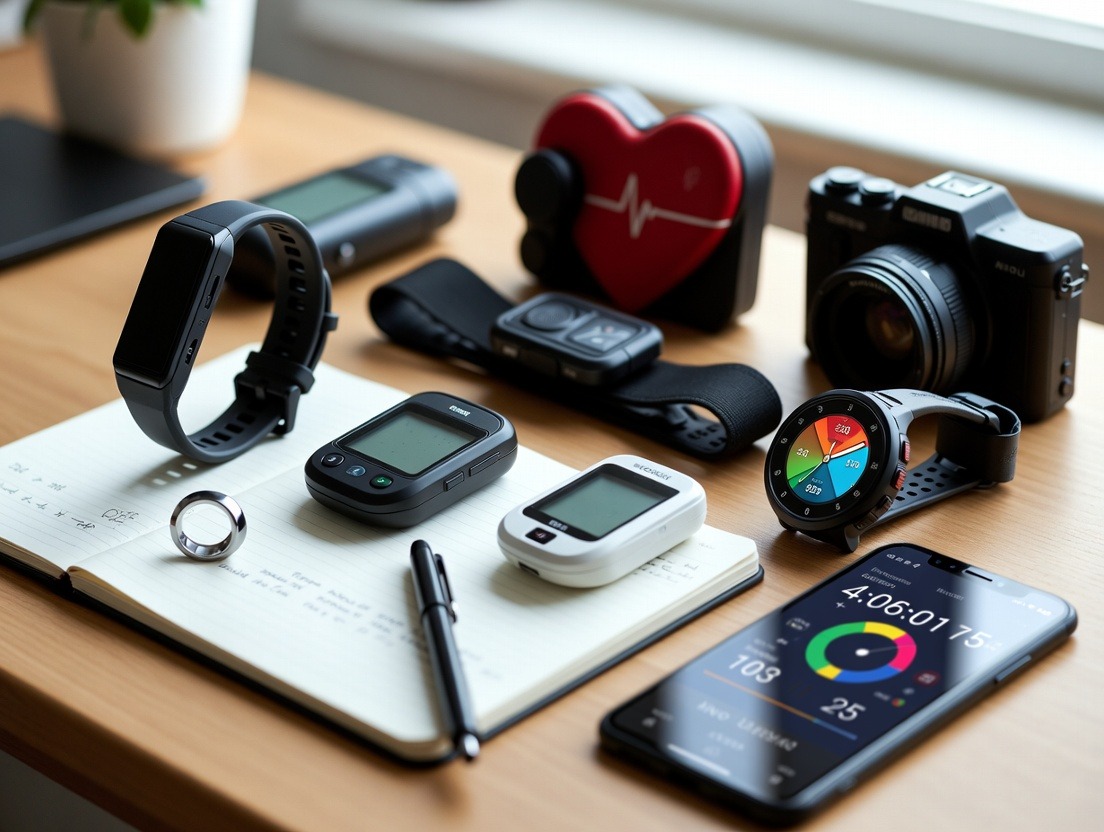
The evolution of wearable technology mirrors our own journey in this article: a transition from pure quantification to sophisticated qualification. The first fitness trackers were pedometers on your wrist. Then came heart rate monitors, GPS, and pulse oximeters. Today, the cutting edge is not on your wrist, but on your finger: the smart ring.
Why the finger? The finger hosts a rich vascular bed, allowing for remarkably precise photoplethysmography (PPG) sensors to measure heart rate, heart rate variability (HRV), blood oxygen, and even skin temperature with clinical-grade accuracy. But for the movement quality revolution, the ring’s secret weapon is its combination of a 3-axis accelerometer, gyroscope, and advanced machine learning.
This is where the magic happens. A smart ring like the OxyZen is no longer just counting macro-movements (steps). It’s analyzing the micro-movements and patterns within them. By sitting on a point that is highly sensitive to whole-body kinematics (the science of motion), it can infer an astonishing amount about the quality of your activity.
Here’s how the science translates into coaching:
Gait Analysis: It can assess the symmetry of your walk or run. Does one foot strike with more impact than the other? Is your stride length balanced? Are you showing a subtle limp or favoring one side? This data can flag muscular imbalances or early signs of overuse before they become pain.
Activity Form Inference: While it won’t replace a personal trainer’s eye, advanced algorithms can analyze movement patterns during common exercises. For a bodyweight squat, the ring’s sensors can track the rhythm and smoothness of the descent and ascent. A jerky, uneven pattern suggests poor stability or mobility, while a smooth, controlled motion indicates quality. It can provide a simple “form score” for repetitive movements.
Recovery & Readiness Feedback: This is the critical link between movement quality and overall health optimization. By integrating movement data with physiological markers like HRV, resting heart rate, and sleep data, the ring can provide a “Readiness” or “Recovery” score.
Let’s say you had a heavy strength training session yesterday. The ring’s night-time sensors detect poor sleep quality and a depressed HRV—clear signs your nervous system is stressed and your body is in repair mode. In the morning, your Readiness score is low. The intelligent recommendation isn’t “hit 10,000 steps,” but rather “prioritize mobility and recovery.” It might suggest a gentle yoga flow or a walking session focused on mindful posture, directly steering you toward quality movement that aids recovery, not hinders it.
This transforms the device from a passive logger to an active guide. It contextualizes your movement within your body’s current state. It helps you answer the most important question: What is the right kind of movement for me today? This is personalized health optimization in action.
Furthermore, the form factor of a ring is uniquely suited for 24/7 wear. Unlike a wrist-based device that can be obtrusive during sleep or certain exercises, a ring is unobtrusive and collects data continuously. This provides a seamless, holistic picture of your daily movement patterns—not just your workouts. It captures how you move at your desk, how you sleep, and your general activity levels, creating a true baseline of your movement quality in life.
The technology is becoming a bridge between subjective feeling and objective data. You might feel stiff; the ring can confirm that with reduced nighttime movement and provide a prompt to do a specific mobility routine from its partnered app. This closed-loop system—detect, inform, act, reassess—is the future of proactive wellness, helping you train your movement quality as diligently as you once trained your step count.
Consider this sobering math: If you sleep 8 hours and exercise for 1 hour, you have 15 waking hours left in the day. For most people, a significant portion of that time—often 8-10 hours—is spent in one of two positions: sitting or standing. This means your posture during these activities is, by sheer volume, your most frequent and impactful "workout."
Every minute spent slumped in a chair, with a forward-head posture and rounded shoulders, is a minute spent drilling a catastrophic movement pattern. You are actively lengthening and weakening the muscles of your upper back (rhomboids, lower traps) while shortening and tightening the muscles of your chest and neck (pecs, anterior scalenes). This isn’t passive rest; it’s active de-conditioning. It directly undermines any quality movement you try to achieve in your dedicated exercise hour.
Therefore, optimizing daily health is impossible without addressing posture. We must reframe posture not as a static position to "hold," but as a dynamic, mindful practice—a low-grade, continuous exercise in movement quality.
The Neuroscience of Posture: Posture is a brain-based skill. Your body defaults to the positions you reinforce most frequently because your nervous system creates efficient neural pathways for them. The slouched "C-curve" of a desk worker is a deeply grooved pathway. Changing it requires conscious, repetitive practice to build a new pathway for a tall, stacked spine. It is literal neuroplasticity in action.
The Three Key Postural Alignments to Practice:
This aligned stack—feet, pelvis, ribs, head—should feel tall, open, and effortless, not rigid. You’re not "holding" it with muscle clenching; you’re "allowing" it by releasing the compensatory tensions that pull you out of alignment.
Making It a Practice: You cannot maintain perfect alignment for 8 hours straight. The practice is in the frequent micro-resets.
The payoff is immense. Improved posture enhances breathing capacity, improves digestion, reduces chronic neck and back pain, and projects confidence. More importantly, it ensures that the 15+ hours you spend outside the gym are supporting, not sabotaging, your movement quality goals. It turns your daily life into a continuous, low-dose training session for a healthier body. For those struggling with tension that disrupts rest, integrating these postural practices can be a powerful natural alternative to sleeping pills, addressing the root cause of discomfort rather than masking it.
Walking is our most fundamental movement pattern. It is also the most wasted opportunity in most people's fitness regimen. We treat it as a means to an end—transportation, or a number to hit. But when approached with intention, a simple walk becomes a potent, accessible, and daily practice for ingraining high-quality movement patterns. Let’s reimagine the walk.
The Anatomy of a Quality Step:
A proper gait cycle is a symphony of mobility and stability. It begins with a heel strike, followed by a smooth roll through the foot as it loads weight (requiring ankle mobility and foot strength). As you push off through your toes, your glutes and hamstrings engage to propel you forward. Simultaneously, your opposite arm swings naturally, your torso rotates slightly, and your head stays level. Every joint is absorbing and distributing force efficiently.
Now, contrast this with the common dysfunctional walk: a flat-footed stomp with minimal push-off (under-active glutes), arms held stiffly or buried in pockets (reduced counter-rotation), and a forward-head gaze (neck strain). This pattern reinforces stiffness and weakness.
How to Engineer a Higher-Quality Walk:
By applying this framework, a 30-minute walk transforms from a calorie-burning chore into a comprehensive movement session. You’ve trained mobility, stability, balance, coordination, and mindfulness—all five pillars. This kind of walk doesn’t just add to your step count; it upgrades the operating system those steps run on. It builds the foundational movement literacy that makes every other activity safer and more effective. A high-quality walk in the afternoon is one of the most effective, underrated natural sleep preparations for a perfect evening wind down, as it regulates circadian rhythms without overstimulating the nervous system.
For millions, the greatest threat to movement quality is the chair. Prolonged sitting is not merely an absence of activity; it’s an active promoter of a specific, harmful physical adaptation: the "flexion dominant" body. Hips, knees, and elbows are held in flexion. The spine rounds into flexion. The shoulders and neck protract forward. Over hours and years, the body molds to this shape, losing the capacity for extension, rotation, and healthy upright posture.
Combatting this requires a two-pronged strategy: strategic interruptions to break the sedentary pattern, and targeted correctives to reverse its effects. You don’t need an hour at the gym to fight 8 hours at a desk. You need intelligent, frequent micro-doses of the right movements.
The "Movement Snack" Protocol: Set a non-negotiable timer for every 25-30 minutes. When it goes off, you perform one of the following "snacks" for 60-90 seconds. This frequency is more important than duration; it prevents the nervous system from settling into the dysfunctional sitting pattern.
The Desk-As-Gym Correctives (for longer breaks):
On a 5-10 minute break, level up your snack to a corrective "mini-meal."
The goal is not to replace your workout, but to create a movement-rich environment that supports it. These micro-movements and correctives maintain joint health, improve circulation, reduce stiffness, and keep your nervous system primed for quality movement. They ensure that when you do leave your desk for a walk or a workout, your body is not starting from a profound deficit. It is ready to move well. This approach is especially crucial for those over 40, as maintaining joint mobility and muscle activation becomes paramount; it's a core component of what your body needs now for better sleep and vitality.
The fitness industry has long been seduced by the numbers on the barbell. Personal records (PRs), one-rep maxes, and the constant pursuit of "more weight" dominate the narrative. Yet, in the pursuit of these quantitative goals, the qualitative aspect of each repetition is often the first casualty. This trade-off is where injuries are born and progress is ultimately stalled.
The principle of Strength Training with Precision posits that the quality of your movement under load is the single greatest determinant of long-term success, safety, and functional carryover. A perfect rep is not just an aesthetic ideal; it is a neurological and physiological imperative.
The Neurological Blueprint: Every time you perform a movement, you are strengthening a neural pathway in your brain. When you perform a squat with poor form—knees caving in, heels lifting, spine rounding—you are not doing a "bad squat." You are perfectly mastering a dysfunctional, dangerous motor pattern. You are telling your nervous system, "This is how we squat." The weight on the bar simply reinforces this flawed blueprint, making it harder to unlearn.
Conversely, a perfect rep—with full, controlled range of motion, optimal joint alignment, and proper muscle sequencing—etches a blueprint for efficiency and resilience. It teaches your body to distribute force correctly, protecting passive structures (ligaments, joints) and maximizing the contribution of active structures (muscles, tendons).
The Rules of a "Perfect Rep":
The "Form-First" Progression Model: Abandon the linear model of "add 5 pounds every week." Adopt a skill-based progression:
This approach requires patience and ego management. The rewards, however, are monumental: consistent, injury-free progress, balanced muscular development, and strength that translates seamlessly to real-world movements. You are not just building muscle; you are building a body that moves with integrity under stress. The discipline learned here—of listening to your body and prioritizing control—is the same discipline that leads to training your body to sleep better naturally, as you learn to regulate your nervous system's state of arousal.

The fitness landscape is finally giving mobility its due, but misconceptions still abound. For many, "mobility work" is synonymous with static stretching—holding a hamstring stretch for 30 seconds. While this has value for flexibility, true mobility is a more dynamic, active, and integrated capacity. It is the ability to express your flexibility under control, through strength and stability.
Think of your hip's potential range of motion as a circle. Flexibility determines the circumference of that circle—how big it is. Mobility is your ability to actively, consciously, and powerfully move your leg to trace the entire edge of that circle, and to stop and hold any point along it. You can be flexible enough to do the splits (passive range) but lack the mobility to control your leg in a high kick (active range).
For daily health optimization, we need mobility. We need joints that are not just loose, but usable.
Key Joints for Focus & Simple Daily Drills:
Integrating Mobility into Your Day: The best approach is "greasing the groove." Perform these drills not as a single 30-minute block, but dispersed throughout the day.
By cultivating active mobility, you are not just preventing stiffness; you are expanding your movement vocabulary. You are ensuring that when life demands you reach, twist, squat, or run, your body has both the passport (flexibility) and the visa (strength and control) to visit those ranges safely and effectively. It is the ultimate investment in movement longevity.
In the "no pain, no gain" era, we were taught to ignore our body's signals. To push through. To treat pain as a psychological barrier to be overcome. This philosophy has left a trail of chronic injuries in its wake. The movement quality paradigm requires a radical re-education in somatic literacy—learning to understand and respect the nuanced language of your body's biofeedback.
Not all discomfort is created equal. The ability to discern between "good pain" (productive training stimulus) and "bad pain" (a warning of damage) is the most critical skill in sustainable fitness.
Decoding the Sensations:
The "Stop, Challenge, Change" Protocol: When you encounter a negative signal, engage this decision tree.
Listening also extends to energy and readiness. Some days you feel springy and powerful; others, you feel heavy and sluggish. A high-quality movement practice honors this. On a low-energy day, it might mean swapping a heavy strength session for a long, mindful walk or a gentle mobility flow. This is not laziness; it is intelligent periodization based on internal biofeedback, a concept central to working with your natural sleep patterns, not against them, for overall health.
Your body is not a machine to be commanded, but an ecosystem to be conversed with. Pain and discomfort are its primary language. Learning to listen, interpret, and respond appropriately is the master skill that allows you to pursue intensity without inviting injury, and to train for a lifetime, not just for a season.
Adopting a movement quality mindset doesn't mean scrapping your current running, cycling, or gym routine. It means upgrading it. It means layering intentional, quality-focused practices onto and into your existing regimen to make it more effective, sustainable, and resilient. Here’s how practitioners of common activities can make the shift.
For the Runner (Shifting from "Miles" to "Mileage + Mechanics"):
The running industry is steeped in distance and pace. To integrate quality:
For the Cyclist (Beyond the Pedal Stroke):
Cycling locks the body into a fixed, repetitive position, creating extreme muscle imbalances (powerful quads, often weak glutes and tight hip flexors).
For the Gym-Goer (The "Exercise vs. Training" Mindset):
Going to the gym to "work out" is different from going to the gym to "train" movement quality.
For all athletes, the integration point is the warm-up and cool-down. Transform these from afterthoughts into the most valuable parts of your session. The warm-up prepares your body for quality movement; the cool-down consolidates it and addresses imbalances. This holistic approach ensures your primary activity enhances your overall movement health, rather than detracting from it. For the busy professional, this integrated mindset is as crucial for performance as the 10 natural sleep hacks busy professionals swear by are for recovery.
We often frame recovery as the absence of movement—a passive state of rest that occurs after the real work is done. This is a profound misunderstanding. In the context of movement quality, recovery is not the opposite of training; it is its essential, active continuation. It is the phase where the body literally reconstructs itself based on the signals you gave it during activity. Poor recovery guarantees poor subsequent movement.
Think of your movement practice as writing a program for your body. The workout is the code—the specific instructions for adaptation (build strength here, improve mobility there). Recovery is the compilation and execution of that code. If you interrupt the process with poor sleep, chronic stress, and nutritional deficits, you get errors, glitches, and system crashes in the form of stalled progress, persistent soreness, and injury.
The Three Pillars of Active Recovery for Movement Quality:
Practical Integration: The Daily Recovery Audit. At the end of each day, ask yourself three questions related to your movement goals:
Recovery is where the magic of adaptation happens. By viewing it as an active, non-negotiable component of your movement practice—as important as the workout itself—you ensure that every rep, step, and stretch is building toward a more capable, higher-quality you. For those struggling to achieve this state of rest, exploring natural ways to combat sleep deprivation starting today can be a game-changer for both recovery and movement.
We've entered an era where biofeedback is no longer confined to a laboratory. Wearable technology, particularly the advanced sensors in devices like the OxyZen smart ring, creates a continuous, personalized feedback loop that can exponentially accelerate your journey toward movement quality. This isn't about being ruled by data; it's about using data as a wise consultant to inform intuitive, body-led decisions.
This feedback loop operates in three key stages: Measure, Interpret, Act.
1. Measure: Capturing the Right Signals
Modern wearables go far beyond step count. For movement quality, the relevant metrics include:
2. Interpret: Context is Everything
Data in isolation is meaningless. The power lies in trends and context.
3. Act: Making Intelligent, Personalized Adjustments
This is where data transforms into better movement. Let’s walk through two scenarios:
By following this feedback loop, you move from a pre-programmed, calendar-based training plan ("I deadlift every Tuesday") to a responsive, biofeedback-driven practice ("My body is ready for a demanding pull today, so I'll deadlift"). This prevents digging yourself into a hole of overtraining, reduces injury risk, and ensures that your highest-quality efforts are performed when your body is most capable of executing them. It turns guesswork into guided work. This responsive approach is akin to working with your natural sleep patterns, not against them, but applied to your entire movement ecosystem.
Understanding the principles is one thing; implementing them is another. This section provides a concrete, step-by-step framework to build your own personalized "Movement Quality Dashboard"—a set of daily and weekly practices that systematically address all five pillars. Think of it as your operating manual for a higher-quality physical life.
Phase 1: The Self-Assessment (Week 1)
Before you build, you must survey the land. Dedicate this week to observation, not change.
Phase 2: Foundation & Integration (Weeks 2-4)
Now, build non-negotiable daily habits. Do not add intense workouts yet.
Phase 3: Targeted Loading & Refinement (Week 5 Onward)
With a solid foundation of daily movement hygiene, you can now strategically add intensity.
Your Dashboard: Your dashboard is now active. It consists of:
This plan is not about adding more to your plate; it’s about changing the nature of what’s already on it. It replaces mindless activity with mindful practice. It replaces random exertion with strategic reconstruction. By following this framework, you systematically upgrade your body’s movement software, ensuring every action, from the mundane to the intense, contributes to a lifetime of fluid, powerful, and pain-free motion. This holistic self-care is particularly vital for anxious minds seeking calm, as the structure and mindfulness directly counter ruminative stress.
Our pursuit of movement quality often focuses inward—on our bodies, our form, our routines. Yet, we are not isolated biomechanical machines; we are social animals deeply influenced by our environment. The spaces we inhabit and the people we move with exert a powerful, often unconscious, pull on the quality of our motion. To fully optimize, we must look outward and engineer our social and physical landscapes to support, rather than sabotage, our goals.
The Social Scaffold: Community, Coaching, and Mirror Neurons
Human beings are wired for mimicry. Our brains contain mirror neurons that fire not only when we perform an action, but also when we observe someone else performing it. This is the neural basis for learning—and it’s a potent tool for movement quality.
The Designed Environment: Making the Healthy Choice the Easy Choice
Your environment is a constant, silent nudge. By thoughtfully designing it, you can make high-quality movement a default, effortless part of your day.
By curating your social circle and sculpting your environment, you reduce the cognitive load required to make high-quality choices. Movement becomes woven into the fabric of your life, supported by the people around you and the spaces you move through. This holistic design thinking extends to your rest, where principles for optimizing your bedroom for a natural sleep environment serve a parallel purpose: creating a space that effortlessly guides you toward restorative behaviors.
The true value of a movement quality practice isn’t fully revealed in your 30s or 40s, when resilience is high and recovery is swift. Its dividend is paid in your 50s, 60s, 70s, and beyond. While the fitness industry often sells aesthetics and performance, the most profound benefit of moving well is autonomy—the ability to live life on your own terms, free from pain and physical limitation, for as long as possible. This is the anti-fragility dividend of prioritizing quality.
Preventing the "Aches and Pains" Narrative: Society accepts joint pain, stiffness, and loss of mobility as inevitable parts of aging. This is a myth of passive deterioration. In reality, these are often the results of active decay—the cumulative effect of decades of movement compensations, muscular imbalances, and lost ranges of motion. A knee doesn’t "wear out" from use; it breaks down from misuse. By maintaining full, active ranges of motion at your joints and balanced strength around them, you ensure that force is distributed as nature intended, preserving cartilage and ligament integrity.
The Critical Role of Strength & Power: Sarcopenia (age-related muscle loss) and dynapenia (loss of strength and power) are primary drivers of frailty. But not all strength is equal. The strength to heave a heavy barbell with a rounded back is not the strength that keeps you safe. The functional strength cultivated through quality movement—the strength to get up off the floor with control, to catch yourself from a stumble, to lift a grandchild with a braced core and neutral spine—is the strength that preserves independence. Power (strength x speed) is even more predictive of longevity and fall prevention. Quality movement trains your nervous system to recruit muscles quickly and efficiently, maintaining that explosive capacity.
Balance: The Non-Negotiable Skill: Falls are a leading cause of injury and loss of independence in older adults. Balance is not a gift; it is a perishable skill maintained through consistent practice. The single-leg balances, gait variations, and proprioceptive drills embedded in a movement quality practice are direct, ongoing training for this critical system. You are literally maintaining your internal gyroscope.
Cognitive Benefits: The Moving Brain: The mind-body connection is a two-way street. High-quality, mindful movement is cognitively demanding. It requires focus, spatial awareness, and sequencing—all of which stimulate neuroplasticity. Practices like tai chi and yoga, which deeply integrate movement quality with breath and awareness, have been shown to improve memory, executive function, and even slow cognitive decline. You are not just maintaining muscle and bone; you are maintaining the neural networks that command them.
The Philosophy of "Train for the Nursing Home Test": A useful heuristic for aging well is the ability to pass simple, functional tests. Can you:
A movement quality practice, by its very nature, keeps you proficient at these tasks. It ensures your fitness is functional, not just ornamental. It recognizes that the goal is not to have the body of a 25-year-old at 65, but to have the body of a capable, vigorous, and resilient 65-year-old. This long-view approach to physical health is perfectly complemented by a long-view approach to rest, understanding what your body needs now for better sleep naturally after 40 as a parallel pillar of longevity.
The initial phase of focusing on movement quality can feel revolutionary. You experience quick wins: pain disappears, movements feel smoother, you discover new ranges of motion. But like any practice, you will eventually hit plateaus. The novelty wears off, progress slows, and the siren song of chasing quantitative metrics (a heavier lift, a faster mile) can return. Sustaining a lifelong commitment requires a specific mindset: the mindset of mastery.
Redefining "Progress": Abandon the linear model. In the mastery mindset, progress is not always adding more weight or going faster. Progress can be:
Embrace the "Plateau" as the Practice: In skill acquisition, plateaus are not stagnation; they are periods of consolidation. Your nervous system is automating the new pattern, making it more robust. This is where the deep learning happens. Instead of forcing a breakthrough by piling on intensity, use the plateau to explore variations. If your squat form is solid, try a pause squat, a tempo squat (5 seconds down), or a single-leg variation. You’re not changing the goal (quality), you’re changing the context to deepen the skill.
The Power of Micro-Goals: When macro-goals (e.g., "move perfectly") feel distant, set daily or weekly micro-goals aligned with your dashboard.
Cultivate Curiosity, Not Judgment: When you notice your form breaking down or you skip a movement snack, respond with curiosity, not self-criticism. Ask: "What's happening? Am I tired? Stressed? Rushed?" This investigative approach yields useful data for your feedback loop. Judgment shuts down learning; curiosity opens the door to it. This same compassionate curiosity is vital when dealing with sleep disruptions, fostering the calming strategies for better sleep naturally for anxious minds.
Reconnect to "Why": Periodically revisit your deepest motivation. Is it to play with your kids or grandkids without pain? To hike mountains at 70? To simply feel capable in your own skin? Write it down. Place that "why" somewhere visible. When the grind of practice feels tedious, this deeper purpose provides the fuel to continue. The mastery mindset understands that the practice itself—the daily attention, the refinement, the conversation with your body—is not a means to an end. In many ways, it is the end. A life of mindful, capable movement is the reward.
The impact of movement quality reverberates far beyond your joints and muscles. It fundamentally alters your relationship with yourself and your experience of the world. This is the often-overlooked psycho-emotional layer of the practice, where the physical becomes a pathway to mental and emotional resilience.
From Disassociation to Embodiment: Modern life encourages disassociation—living "in our heads," disconnected from the physical sensations of the body. This disconnect is a root cause of anxiety, stress-eating, and poor interoceptive awareness (the ability to sense internal states like hunger, fatigue, and emotion). A movement quality practice, by its very nature, demands embodiment. It forces you to inhabit your body, to feel the stretch of a muscle, the alignment of a joint, the rhythm of your breath. This regular practice of tuning in builds a stronger, more compassionate mind-body connection. You become more attuned to all your body's signals, not just those related to movement.
Building Self-Efficacy and Confidence: Mastering your body’s movement is a profound source of competence. When you learn to control what once felt uncontrollable—to stabilize a wobbly single-leg balance, to achieve a deep squat with an upright torso—you build self-efficacy. This is the belief in your ability to handle challenges. This confidence spills over into other domains of life. The knowledge that you can consciously improve your physical self translates to a belief that you can learn, adapt, and overcome obstacles mentally and emotionally as well.
Reduction of Anxiety and Depression: The mechanisms here are multifaceted. First, high-quality, mindful movement is a form of moving meditation. The intense focus required to maintain form quiets the "default mode network" in the brain—the circuit responsible for rumination and worry. Second, by improving posture, you directly affect your neurochemistry. Adopting an upright, open "power posture" has been shown to reduce cortisol (the stress hormone) and increase testosterone (linked to confidence and well-being). Third, the proprioceptive and vestibular input from coordinated movement has a regulating effect on the nervous system, similar to the grounding effect of using natural sounds for deeper sleep.
The Joy of Mastery and Flow: There is a unique, quiet joy in performing a complex movement with grace and efficiency. This is the state of "flow"—complete immersion in an activity where time seems to dissolve. Movement quality practice is a direct conduit to this state. Whether it’s the flow of a smooth swimming stroke, the rhythm of a perfectly paced run, or the balance in a yoga pose, these moments are pockets of profound presence and satisfaction. They are antidotes to the fragmented attention of digital life.
A New Relationship with Pain and Limitation: For many, the body is a source of pain and frustration. The movement quality journey reframes this relationship. Pain becomes information, not an enemy. A limitation becomes a puzzle to be solved with patience and curiosity, not a permanent sentence. This fosters resilience and self-compassion. You learn to work with your body, not against it, building a partnership based on listening and respectful challenge. This respectful partnership is exactly what’s needed for parents seeking natural sleep solutions when you can't sleep through the night, applying the same principles of adaptation and compassion to the realm of rest.
In the end, optimizing movement quality is not just a fitness strategy. It is a holistic practice of self-care, self-knowledge, and self-mastery. It rebuilds the connection between mind and body, cultivates resilience, and infuses daily life with moments of presence and capability. It is the art of living fully in the vehicle you’ve been given, ensuring it remains a source of joy and freedom for all the miles of your journey.
Your Trusted Sleep Advocate: Sleep Foundation — https://www.sleepfoundation.org
Discover a digital archive of scholarly articles: NIH — https://www.ncbi.nlm.nih.gov/
39 million citations for biomedical literature :PubMed — https://pubmed.ncbi.nlm.nih.gov/
Experts at Harvard Health Publishing covering a variety of health topics — https://www.health.harvard.edu/blog/
Every life deserves world class care :Cleveland Clinic - https://my.clevelandclinic.org/health
Wearable technology and the future of predictive health monitoring :MIT Technology Review — https://www.technologyreview.com/
Dedicated to the well-being of all people and guided by science :World Health Organization — https://www.who.int/news-room/
Psychological science and knowledge to benefit society and improve lives. :APA — https://www.apa.org/monitor/
Cutting-edge insights on human longevity and peak performance:
Lifespan Research — https://www.lifespan.io/
Global authority on exercise physiology, sports performance, and human recovery:
American College of Sports Medicine — https://www.acsm.org/
Neuroscience-driven guidance for better focus, sleep, and mental clarity:
Stanford Human Performance Lab — https://humanperformance.stanford.edu/
Evidence-based psychology and mind–body wellness resources:
Mayo Clinic — https://www.mayoclinic.org/healthy-lifestyle/
Data-backed research on emotional wellbeing, stress biology, and resilience:
American Institute of Stress — https://www.stress.org/


