


Daily Health Optimization: Small Changes, Massive Results (Ring Proof)
How small daily changes lead to big results, with proof from ring data.
How small daily changes lead to big results, with proof from ring data.
%402x.svg)
We live in a world obsessed with the quick fix. The 30-day transformation. The radical detox. The life-hacking biohack that promises to reinvent you overnight. Yet, for most of us, these grand gestures crumble under the weight of daily reality. They’re unsustainable, often extreme, and leave us feeling defeated when the promised massive results fail to materialize.
But what if the true secret to profound, lasting health wasn’t found in a dramatic overhaul, but in the quiet, consistent power of tiny, daily decisions? What if the most sophisticated “biohack” available is simply the cumulative effect of small, intelligent choices, repeated day after day? This isn’t a theory of moderation for its own sake. It’s a principle backed by compound interest—the same force that turns modest savings into a fortune can transform minor health investments into a lifetime of vitality, resilience, and peak performance.
The challenge, historically, has been invisibility. How do you measure the impact of drinking one more glass of water, going to bed 15 minutes earlier, or managing a moment of stress with a deep breath? Without data, these changes feel like guesses. We’re flying blind, hoping our efforts matter.
This is where the paradigm shifts. Enter the era of the smart ring—a discrete, always-on personal health sensor that turns your body’s subtle signals into a clear, actionable language. Devices like the Oxyzen smart ring provide the missing “proof” in our equation. They illuminate the direct line between your small daily choices and their massive impact on your core biomarkers: sleep quality, heart rate variability (HRV), resting heart rate (RHR), blood oxygen saturation (SpO2), body temperature, and activity levels.
This article is your evidence-based guide to Daily Health Optimization. We will move beyond generic advice and into the realm of personalized, data-informed micro-adjustments. You will learn how to leverage precise, biometric feedback to identify which small changes your body needs most, implement them with confidence, and witness their verified, compound effect on your wellbeing. This isn't about a rigid program; it's about cultivating a responsive, intelligent relationship with your own physiology, guided by the objective insights on your finger. The journey to massive results begins not with a leap, but with a single, measured step. Let's take it.
We understand the power of compounding in finance. Save a small amount regularly, and over decades, it grows exponentially. Health operates on an identical principle, yet we often fail to apply it. Choosing stairs over the elevator today doesn’t reshape your cardiovascular system tomorrow. But that single choice, compounded by 300 similar decisions over a year, dramatically alters your fitness trajectory, disease risk, and energy levels.
The brain, however, is wired for immediate gratification. It discounts future rewards in favor of present comfort. This is why the “big bang” approach to health often wins our initial enthusiasm—it promises a rapid, noticeable payoff. When that payoff doesn’t come fast enough, we abandon ship. The compound strategy requires a shift in perspective: from seeking immediate, dramatic change to trusting in the silent, cumulative power of micro-habits.
Consider the body as a complex system constantly adapting to inputs. A poor night's sleep (input) leads to elevated cortisol and sugar cravings the next day (adaptation). A week of poor sleep entrenches these patterns. Now, flip it. One night of excellent, deep sleep (input) leads to better mood and willpower the next day (adaptation). A week of excellent sleep begins to lower baseline stress, improve metabolic function, and strengthen immune response. The system adapts positively, building upon itself.
But without a way to see these adaptations, our motivation wanes. This is the revolutionary role of biometric tracking. When your smart ring shows your Resting Heart Rate dropping by 2 beats per minute over four weeks of consistent, slightly earlier bedtimes, the compound effect is no longer an abstract concept. It’s a graph. It’s proof. That visible proof reinforces the behavior, creating a positive feedback loop: small action → measurable data → positive reinforcement → repeated action.
The goal of Daily Health Optimization is to become the architect of your own positive compound cycles. By making small, sustainable adjustments to sleep, movement, nutrition, and recovery—and using a device like the Oxyzen ring to monitor their systemic impact—you stop guessing and start engineering. You move from hoping you’re healthier to knowing you are, one data-verified micro-habit at a time. To explore the core technology that makes this possible, you can discover how Oxyzen works at a fundamental level.
Before we can optimize, we must measure. The smart ring, worn continuously, acts as a 24/7 biometric truth serum, cutting through perception and revealing objective physiological reality. You might feel you slept well, but your ring’s data on sleep stages, disturbances, and resting heart rate tells the precise story. You might think a work crisis didn’t affect you, but a plummeting Heart Rate Variability (HRV) score reveals the hidden metabolic cost of that stress.
Let’s decode the key biomarkers this technology tracks and what they truly indicate:
The magic is in the correlation. By reviewing your data dashboard after experimenting with a small change—say, a 10-minute evening stretching routine—you don’t have to wonder. You can see if it improved your deep sleep, raised your morning HRV, or lowered your RHR. This transforms health from a philosophy into a personal science experiment. For a deeper dive into how users interpret this data, you can read real customer reviews and experiences on how biometric feedback changed their daily decisions.
Sleep is the non-negotiable bedrock of health. Optimizing it offers the highest return on investment of any wellness habit. “Micro-sleep” upgrades are small, pre-bed and in-bed adjustments that compound to transform sleep quality.
H3: The 60-Minute Wind-Down Protocol
Your sleep begins long before you close your eyes. A consistent, technology-conscious wind-down routine signals to your nervous system that it’s time to shift into recovery mode.
H3: The In-Bed Alignment Tweaks
Once in bed, tiny physical adjustments can prevent major sleep disruptions.
H4: Ring Proof in Action
This is where your data tells the story. After implementing a 60-minute no-screens wind-down, you might see on your Oxyzen data:
Tracking these metrics validates the effort, turning a subjective feeling of “better sleep” into an objective, gratifying reality. For more tailored strategies and insights, our resource hub offers additional articles on sleep optimization and other wellness topics.

Nutrition isn’t just what you eat, but when you eat. Small adjustments to your eating schedule can reduce metabolic stress, improve energy, and enhance sleep without drastic dieting.
H3: The 12-Hour Overnight Fast
One of the simplest, most powerful micro-habits is compressing your daily eating window. Aim to finish your last bite 3-4 hours before bedtime and break your fast 12-14 hours later. This isn’t extreme fasting; it’s simply giving your digestive system a meaningful daily rest period.
H3: The Pre-Sleep Glucose Guard
The single biggest dietary disruptor of sleep is a spike in blood sugar close to bedtime. When blood sugar crashes a few hours later, it can release cortisol and adrenaline, pulling you out of deep sleep.
H4: Ring Proof in Action
By implementing a consistent 12-hour overnight fast and guarding your pre-sleep glucose, your ring data may show:
The "all or nothing" mindset kills fitness. You don’t have 60 minutes for the gym, so you do nothing. The "movement snack" philosophy dismantles this. It’s the practice of embedding tiny bursts of purposeful movement throughout your day. These snacks improve circulation, break up sedentary time, reduce stiffness, and cumulatively contribute significantly to your weekly activity goals.
H3: The Sedentary Breaker
The human body is not designed for prolonged sitting. Every 30-45 minutes, take a 2-5 minute break.
H3: The Post-Meal Glucose Mop
A 10-15 minute walk within 60-90 minutes after a meal, especially a larger one, is one of the most potent micro-habits for metabolic health.
H4: Ring Proof in Action
Your smart ring is exceptional at capturing the impact of these non-exercise activities.
Chronic, low-grade stress is a silent health tax. You can’t eliminate stress, but you can radically improve your body’s ability to recover from it through small, daily "stress resets." The goal is to frequently tap the parasympathetic nervous system (“rest and digest”) to counterbalance the sympathetic drive (“fight or flight”).
H3: The Physiological Sigh
Discovered by Stanford researchers, this is a fastest-known hard reset for the nervous system. It takes about 15 seconds.
H3: The 5-Minute Sensory Grounding
When your mind is racing, bring it powerfully into the present through your senses.
H4: Ring Proof in Action
This is where HRV becomes your most trusted guide. After practicing a stress reset technique, you don’t have to guess if it worked.
Understanding the science behind stress and recovery is part of our core mission. You can learn more about our philosophy and the values that drive us to create tools for measurable well-being.
Hydration is fundamental to every cellular process, yet we often treat it as an afterthought. Small, strategic tweaks to how and when you drink water can optimize cognition, physical performance, and even sleep.
H3: The First-Liter First Thing
Your body is dehydrated after 7+ hours of sleep. Rehydrating immediately upon waking jump-starts your metabolism, flushes toxins, and improves morning alertness.
H3: The Electrolyte Edge
Pure water is great, but for optimal absorption and cellular function, you need electrolytes—especially sodium, potassium, and magnesium. Drinking excessive plain water without electrolytes can actually dilute them.
H4: Ring Proof in Action
Hydration’s effects are systemic and visible in your biometrics.
Light is the most powerful cue for your internal clock, or circadian rhythm. Managing your light exposure is a free, small-behavior superpower that regulates energy, mood, and sleep.
H3: Morning Sun Feast
Within 30-60 minutes of waking, get 5-15 minutes of direct, outdoor morning sunlight (without sunglasses if safe). The low-angle morning light is rich in specific blue-spectrum frequencies that signal to your brain’s suprachiasmatic nucleus (SCN) that “day has begun.”
H3: Evening Light Famine
As discussed in sleep, this is critical. After sunset, mimic the natural environment. Dim artificial lights. Use candlelight or very low, warm lamps. Your smartphone’s night mode is not enough—the sheer brightness is still a signal. The micro-habit is simple: when the sun goes down, the indoor lights go way down.
H4: Ring Proof in Action
Your ring’s data on sleep timing and quality is the direct report card for your light diet.
Our digital devices are engineered to hijack attention and disrupt biology. A complete detox is unrealistic, but strategic micro-boundaries can reclaim significant cognitive space and improve physiological health.
H3: The 30/30 Rule
For every 30 minutes of focused work or leisure, give yourself 30 seconds to look at something 20+ feet away. This small habit resets eye muscles, reduces digital eye strain, and briefly disengages the hyper-focused cognitive state.
H3: The Phone Bedroom Banishment
This is a non-negotiable micro-habit with macro results. Your phone does not sleep in your bedroom. Period.
H4: Ring Proof in Action
The impact of a digital micro-detox is profound in your sleep data.
For practical tips on implementing these and other tech-life balance strategies, our community often shares insights and frequently asked questions on our support page.
Here is the core synthesis of everything we’ve covered. You do not need to implement all these micro-habits at once. In fact, that would be counterproductive. The goal is to build your personalized Health Stack—a small set of 3-5 micro-habits that you can perform with near 100% consistency.
H3: The Stacking Method
H4: Ring Proof as Your Compass
Your smart ring is the compass for this entire journey. It removes the guesswork from:
This data-driven, micro-habit approach is the essence of modern, sustainable health optimization. It’s the antithesis of chaotic, effort-intensive overhauling. It is calm, consistent, and intelligent. To see how this philosophy comes to life through a dedicated product, you can explore the mission and people behind Oxyzen.
The final stage is transcendence—moving from being a slave to the data to using it as a wise advisor. The goal of all this tracking is not to become obsessed with graphs, but to develop such a refined internal awareness that you often know what your data will show. The ring becomes a verification tool for your own intuition.
You begin to feel the correlation between a poor night's sleep and a low HRV. You notice how afternoon caffeine subtly fragments your sleep architecture. You sense the energizing effect of a post-lunch walk. The data trained you, and now your embodied wisdom guides you.
The small changes cease to be chores and become automatic, intelligent expressions of self-care. The massive results are no longer a distant hope but a lived, cumulative reality: sustained energy, emotional resilience, a stronger immune system, and a profound sense of being in tune with your body’s needs.
This is Daily Health Optimization: a journey of a thousand tiny steps, each one validated, each one compounding, leading you to a summit of wellbeing you could never have reached in a single, exhausting leap. Your ring is your proof, your partner, and your guide on the path. The next step is to begin building your stack, one micro-habit at a time, and watch the story unfold in your own data.
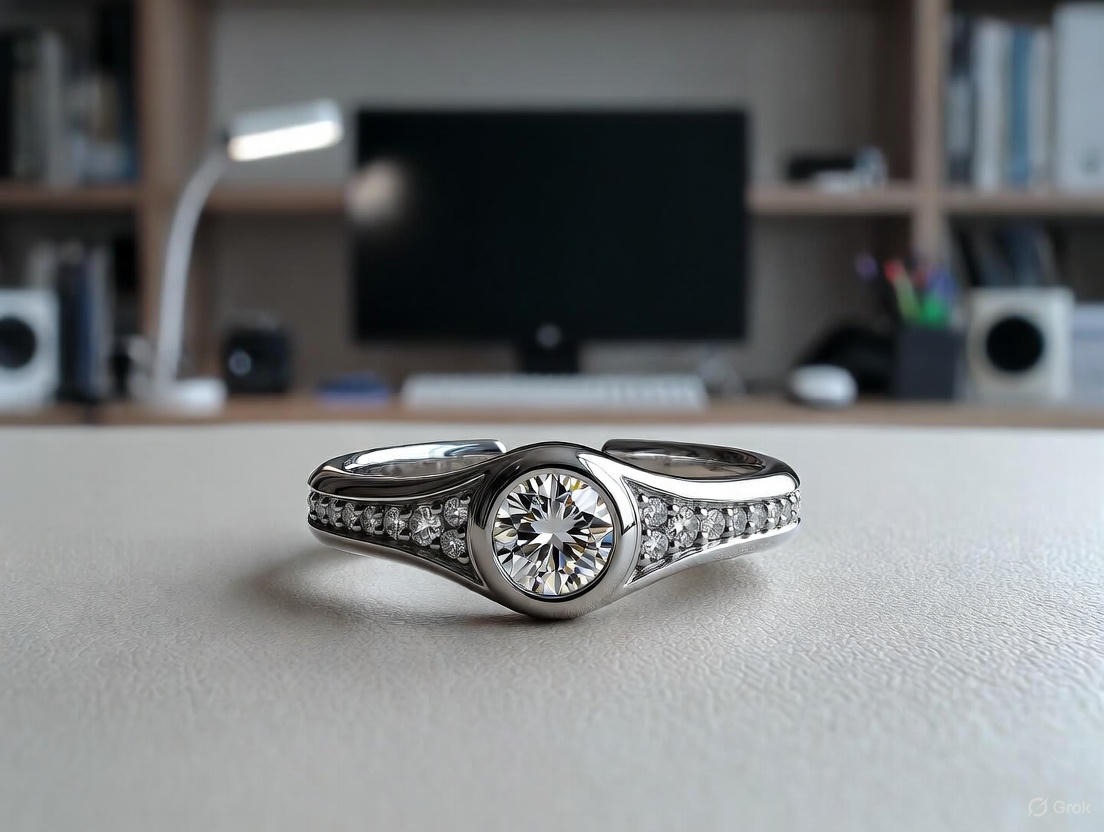
The journey through micro-habits and biometric feedback has equipped you with the fundamental toolkit for transformation. But knowledge alone isn’t power; it’s the applied, consistent knowledge that reshapes your biology. Now, we move from establishing your foundational health stack to mastering the nuanced art of integration, personalization, and long-term sustainability. This is where the true compounding begins, where your daily data becomes a dynamic conversation with your body, guiding you through life’s inevitable variables—stress, travel, aging, and changing goals. Let’s dive deeper.
Willpower is a finite resource, easily depleted by decision fatigue. The genius of the micro-habit lies not just in its small size, but in its potential to become automatic—to bypass the need for willpower altogether through intelligent design. This is "habit hooking" or "habit stacking," a method of anchoring a new, desired behavior to an existing, rock-solid habit.
H3: The Neuroscience of Automation
Every habit has a neurological loop: Cue → Routine → Reward. To build a new habit, you must identify a reliable cue and attach a satisfying reward to the routine. A micro-habit’s smallness ensures the routine is never daunting, making the loop easy to complete and reinforce.
H3: Practical Hook Formulas
Use these templates to build your health stack seamlessly into your day.
H4: Ring Proof in Action: The Feedback Reward
The ultimate, sophisticated reward for a health habit is the biometric confirmation it worked. This transforms the habit loop from psychological to physiological.
For more on building systems for lasting change, our community shares strategies and related articles on sustainable habit formation.
As you become more adept, you’ll learn to read beyond the headline scores (Sleep Score, Readiness Score) and interpret the subtle narratives in your data. These "whispers" allow for hyper-personalized, daily adjustments.
H3: The Story of a Resting Heart Rate (RHR) Curve
Your nightly RHR isn’t a flat line; it’s a story with chapters.
H3: HRV Trends vs. Daily Numbers
Obsessing over a single day’s low HRV is a mistake. The true signal is in the trend.
H4: The Temperature Tale
Basal temperature is a slow, powerful signal.
Learning to listen to these whispers allows you to be proactive, not reactive. It’s the difference between pushing through a workout when your body is fighting a virus (and getting sick for a week) and taking a rest day because your elevated temperature and low HRV told you to. This nuanced understanding is central to our vision of empowered self-care, which you can read more about in our founding story and values.
Your biometric data exists in a vacuum without context. The final piece of the optimization puzzle is correlation: pairing your objective ring data with your subjective notes. This creates an irrefutable cause-and-effect map unique to you.
H3: The 5-Minute Evening Journal Protocol
This is the simplest, highest-yield practice. Before bed, spend five minutes logging a few key items from the day in your phone’s notes app or a physical journal.
H3: The Weekly Review: Connecting Dots
Once a week, sit down with your ring’s weekly data summary and your lifestyle log.
H4: Ring Proof in Action: The "Aha!" Moment
This is where personalization becomes scientific. You move from generic advice ("don't eat late") to your truth ("If I eat after 8:15 PM, my deep sleep drops by an average of 12%, and my next-day HRV is 8% lower"). This empowers you to make informed trade-offs. Maybe you choose to enjoy a late dinner out on Friday, knowing it will impact your sleep, but you consciously protect your sleep schedule the next two nights to recover. The data gives you the freedom of informed choice, not the restriction of rigid rules.
For users navigating their own data patterns, we’ve compiled a resource of frequently asked questions on interpreting metrics for clearer insights.
A rigid health protocol shatters under real-world pressure. An optimized, adaptable system bends and recovers. Your ring is your anchor during life’s turbulent phases.
H3: The Travel Protocol
Travel disrupts circadian rhythms, hydration, and movement. Use micro-habits to mitigate the damage.
H3: The High-Stress Survival Mode
When work deadlines or personal crises hit, your goal shifts from "optimization" to "support and damage control."
H4: Ring Proof in Action: The Illness Indicator
Your ring can often signal illness before you feel symptoms.
Once your foundational stack is automatic, you can explore finer-tuning for peak performance and deeper insights.
H3: Caffeine & Alcohol: The Personalized Audit
Generic advice says "avoid caffeine after 2 PM" and "limit alcohol." Your data personalizes it.
H3: The Sauna & Cold Plunge Effect
These hormetic stressors (good stress that makes you stronger) have pronounced effects.
H4: Ring Proof in Action: The Perfect Day
After months of experimentation, you can define what a "perfect" optimized day looks like for you, biometrically.
Health optimization is not static. Your body and your goals change. Your ring data provides a longitudinal health journal, tracking your evolution.
H3: Embracing Healthy Aging
Aging naturally changes some baselines, but optimization can dramatically slow the rate of decline.
H3: Pivoting for New Goals
Your micro-habit stack should shift with your objectives.
H4: Ring Proof as Your Health Biography
Over years, your data becomes one of your most valuable possessions—a detailed biography of your body. You can look back and see:
To understand the technology designed to accompany you on this long-term journey, you can discover how Oxyzen is built for continuous, lifelong tracking.
Paradoxically, the final stage of mastery is knowing when to take the ring off—figuratively and literally. Data is a servant, not a master. Obsession leads to orthorexia, sleep anxiety ("chasing a score"), and a disconnect from lived experience.
H3: The Signs of Data Obsession
H3: The Rules of Disconnection
H4: The Ultimate Goal: Embodied Awareness
The pinnacle of Daily Health Optimization is reached when your internal sense of wellbeing and your biometric data are in harmonious alignment 90% of the time. You feel the low HRV before you see it. You know you slept deeply without checking the graph. The ring becomes a periodic check-in, a system diagnostic, rather than a constant monitor. It has done its job: it has helped you rewire your habits and tune your awareness so finely that you have become your own most sensitive instrument. This journey from data-dependence to data-informed intuition is the ultimate proof of success.
You have now moved from foundational concepts through advanced integration to philosophical mastery. The remaining portion of this guide will address creating your personal optimization blueprint, troubleshooting common plateaus, and envisioning the future of personalized health. The path is laid out; your data awaits your story.

You are now armed with a deep understanding of the why and the how. You’ve learned to listen to your body’s whispers, hook tiny habits into your life, and navigate real-world variables with data as your compass. Now, we arrive at the most critical phase: synthesis. This is where you stop following a generic map and start drawing your own. We will build your personalized, dynamic, and sustainable Daily Health Optimization Blueprint—a living system that evolves as you do, ensuring the massive results you’ve begun to see are not a fleeting peak but a permanent plateau of elevated wellbeing.
A blueprint is not a rigid set of orders; it’s a flexible architectural plan. Your Health Stack is the core structure. Let’s construct it deliberately.
H3: Phase 1: The Diagnostic Week (Observe, Don’t Judge)
For the next seven days, your only job is to wear your ring consistently and live your normal life. Do not try to change anything. The goal is to establish an honest baseline. Each morning, note your Readiness Score (or equivalent), Sleep Score, RHR, and HRV. In your evening log, briefly note your day’s activities, stress, and diet. By day seven, you will have a clear, data-driven answer to this question: What is my body’s biggest bottleneck to better health?
H3: Phase 2: Singular Focus (The One-Habit Engine)
Based on your Diagnostic Week, identify the one area with the most room for improvement. Choose one micro-habit from the corresponding section of this guide that feels laughably easy.
Commit to this single habit for 14 days. Use your ring data to witness its impact. The goal here is not perfection in the habit, but perfection in not adding anything else. You are building the neural pathway for consistency.
H3: Phase 3: Sequential Stacking (The Compound Engine)
Once your first habit is automatic (you do it without thinking), you add a second, complementary micro-habit. Crucially, you hook it to the first.
You add habits one at a time, only after the previous one is cemented. This slow, sequential build is the antithesis of New Year’s resolution frenzy. It is the engineer’s method for building an unshakeable structure. For inspiration on which habits to stack, many find value in the related articles and deep dives on our blog.
H4: Ring Proof in Action: The Blueprint Validation
Your ring’s role shifts from passive observer to active validation tool. After implementing your first micro-habit, you’re looking for a directional shift, not perfection. Did your Sleep Latency decrease by an average of 5 minutes? Did your Nightly RHR curve become slightly smoother? This positive feedback validates your blueprint’s first line. It proves the design works, fueling you to add the next line. Without this proof, the blueprint is just theory. With it, it’s a confirmed construction plan for a healthier you.
Progress is rarely a straight line. You will hit plateaus—periods where your metrics stall despite consistent effort. This is normal and a sign to engage your problem-solving skills, not to abandon ship.
H3: The Three Types of Plateaus & Their Solutions
H4: Ring Proof in Action: The Plateau Breakthrough
A user notices their HRV has been stuck between 45-50 ms for three weeks despite excellent sleep hygiene and regular exercise. They implement a “Micro-Variation”: they replace one of their moderate-intensity workouts per week with a long, very slow walk in nature. The next week, their average HRV climbs to 53 ms. The ring data confirmed the plateau and then validated the solution. This transforms frustration into an engaging puzzle, with your own physiology as the board. For common questions on navigating such data standstills, our FAQ section offers support and insights.
Human health is not an isolated phenomenon. We are social creatures deeply influenced by our environment and relationships. Your optimization blueprint must account for this dimension.
H3: The Contagion of Habits (Social Proof)
Health behaviors are socially contagious. Your micro-habits can positively influence your partner, family, or friends without you ever preaching.
H3: Environmental Design for Automatic Success
Willpower is overrated; environment is everything. Design your spaces to make good choices effortless and bad choices difficult.
H4: Ring Proof in Action: The Shared Journey
Couples or friends using tracking devices together can create a powerful positive feedback loop. They can observe how shared habits—like a weekend hike or a consistent mutual bedtime—positively impact both sets of data. Seeing a partner’s sleep score improve when you both commit to a digital curfew provides mutual reinforcement that is more powerful than individual willpower. This shared journey towards better health, verified by data, strengthens bonds and makes the path more enjoyable. Reading about real user experiences and testimonials often highlights this powerful social component.
The most advanced technology is useless without the correct mental operating system. Daily Health Optimization requires a specific mindset: one of curious patience, self-experimentation, and radical self-compassion.
H3: From “Good vs. Bad” to “Data Points”
The language you use with yourself matters. Eliminate moral judgments from your health journey.
H3: The 80/20 Principle of Optimization
Aim for consistency, not perfection. The goal is to execute your health stack 80% of the time. The 20% margin of error is where life happens: birthdays, travel, emergencies, and sheer exhaustion. The 80% consistency is what drives the compound effect. The 20% flexibility is what prevents burnout and makes the system humane and sustainable. If you hit 80%, you are winning spectacularly.
H4: Ring Proof in Action: The Long-Term Trend is King
This mindset is built into the data itself. When you look at your monthly or yearly trends, the single “bad” day disappears into the noise. What stands out is the beautiful, upward-sloping line of your HRV average or the downward slope of your RHR. The ring’s long-term view teaches you patience. It visually demonstrates that progress is not linear but trend-linear. It rewards consistency over time, which is the very essence of the optimizer’s mindset. This philosophy of long-term, compassionate improvement is at the heart of our company’s mission and vision.
Where does this journey lead? The end goal is not a number on a ring, but a lived experience. Let’s define the vision and the strategy for maintaining it.
H3: Defining Your “Optimized Self”
What does success look and feel like, beyond the metrics? Get specific.
H3: The Maintenance Protocol: Lifelong Optimization
Once you’ve reached a stable plateau of high-level functioning, your protocol shifts from building to maintaining. This involves:
H4: Ring Proof as Your Legacy Dataset
In five or ten years, your historical data will be a treasure trove. It will allow you to see, with crystal clarity, the long-term ROI of the small changes you made today. It will show you how you actively shaped your health trajectory. This dataset becomes a legacy of self-care—proof that you chose to be the architect of your wellbeing, one micro-habit, one day, one data point at a time. It is the ultimate "Ring Proof" of a life well-optimized.
You now possess the complete framework: the science, the tactics, the personalization strategies, and the sustaining mindset. The final portion of this definitive guide will bring it all together, offering a recap of the most potent micro-habits, a look at the evolving landscape of biometric technology, and a powerful call to begin your own proven journey. The blueprint is complete. The tools are in your hands. The data awaits your story.
Your Trusted Sleep Advocate: Sleep Foundation — https://www.sleepfoundation.org
Discover a digital archive of scholarly articles: NIH — https://www.ncbi.nlm.nih.gov/
39 million citations for biomedical literature :PubMed — https://pubmed.ncbi.nlm.nih.gov/
Experts at Harvard Health Publishing covering a variety of health topics — https://www.health.harvard.edu/blog/
Every life deserves world class care :Cleveland Clinic - https://my.clevelandclinic.org/health
Wearable technology and the future of predictive health monitoring :MIT Technology Review — https://www.technologyreview.com/
Dedicated to the well-being of all people and guided by science :World Health Organization — https://www.who.int/news-room/
Psychological science and knowledge to benefit society and improve lives. :APA — https://www.apa.org/monitor/
Cutting-edge insights on human longevity and peak performance:
Lifespan Research — https://www.lifespan.io/
Global authority on exercise physiology, sports performance, and human recovery:
American College of Sports Medicine — https://www.acsm.org/
Neuroscience-driven guidance for better focus, sleep, and mental clarity:
Stanford Human Performance Lab — https://humanperformance.stanford.edu/
Evidence-based psychology and mind–body wellness resources:
Mayo Clinic — https://www.mayoclinic.org/healthy-lifestyle/
Data-backed research on emotional wellbeing, stress biology, and resilience:
American Institute of Stress — https://www.stress.org/


