


Daily Health Optimization: Using HRV to Guide Your Day
Using Heart Rate Variability (HRV) data to make daily decisions.
Using Heart Rate Variability (HRV) data to make daily decisions.
%402x.svg)
You wake up feeling… okay. Not great, not terrible. Just okay. It’s a feeling most of us accept as the default soundtrack of modern life. You have a vague sense that you could be performing better, recovering faster, and feeling more energized, but the path from “okay” to “optimal” seems shrouded in mystery. You’re left guessing. Should you push for that intense workout today, or would a gentle walk be wiser? Is that morning fog a sign you need more coffee, or a signal your body is fighting something? For decades, answering these questions required a lab, a white coat, and a small fortune.
But what if your body was already broadcasting a precise, real-time signal that held the answers? A signal that acts as a direct window into your nervous system, your recovery status, and your resilience. Not a step count, not a calorie burn, but a fundamental biomarker of your inner readiness. This signal exists. It’s called Heart Rate Variability (HRV), and we are on the cusp of a revolution where this deep physiological data moves from the clinic to your wrist—or more elegantly, to your finger.
Imagine ending the guesswork. Instead of plowing through your day on autopilot, you make decisions informed by your body’s actual state. You learn that on days when your personal HRV score is high, you’re primed for challenge, deep work, and physical intensity. On days when it dips, your body is asking for gentleness, recovery, and perhaps an early night. This isn’t science fiction; it’s the cutting edge of biohacking and personalized wellness, made effortless by modern technology like the smart rings from Oxyzen.
This article is your definitive guide to transforming HRV from a complex medical term into your most trusted daily guide. We will demystify the science, explore the practical applications, and show you how to weave this powerful metric into the fabric of your life. This is not about achieving a perfect score; it’s about starting a conversation with your body. It’s about moving from reactive health care to proactive health optimization, one beat of your heart at a time.

To understand why HRV is so revolutionary, we must first dismantle a common misconception: a healthy heart is not a metronome. We often think a steady, unchanging ba-bump, ba-bump is the sign of a strong heart. In reality, the opposite is true. A healthy, resilient heart is constantly making micro-adjustments to the timing between each beat. This subtle, millisecond-scale variation is your Heart Rate Variability.
Think of it this way: your heart rate is like the average speed of a car on a long trip—say, 60 miles per hour. HRV is the constant, subtle acceleration and deceleration the driver makes to maintain that speed while navigating hills, curves, and traffic. A skilled driver (a resilient nervous system) makes many small adjustments. A less responsive driver (a stressed or fatigued system) makes fewer, more jerky corrections.
The Biological Orchestra Conductor
These tiny variations are orchestrated by your autonomic nervous system (ANS), the autopilot that controls your involuntary bodily functions. The ANS has two primary branches engaged in a constant, dynamic dance:
HRV is the direct output of this tug-of-war. High HRV indicates a balanced, adaptable system where the PNS can effectively apply the brakes, allowing for rapid recovery and resilience. Your body can shift gears smoothly between stress and rest. Low HRV suggests the SNS is dominant—your foot is stuck on the gas. This state, if chronic, is associated with fatigue, burnout, poor recovery, and increased risk for a host of health issues.
A Deeper Signal Than Heart Rate Alone
This is what sets HRV apart from simple heart rate monitoring. Your resting heart rate might be a respectable 60 beats per minute whether you’re well-rested or exhausted. But your HRV will tell the true story. The exhausted version of you will have a much lower HRV, revealing an nervous system under strain, even if the surface-level metric (heart rate) looks identical. As one researcher famously put it, "HRV gives us a quantifiable readout of our mind-body connection." It’s a biomarker of your overall capacity to handle life’s stressors.
For a deeper dive into the fascinating physiology behind biomarkers like HRV, our blog features a series of articles written by our team of experts. The key takeaway here is that HRV is not a random number; it’s a coherent, meaningful language. Learning to interpret it is the first step in moving from simply tracking your body to truly understanding it. It transforms you from a passenger in your health journey into the pilot, with a sophisticated dashboard you can finally read.
Heart Rate Variability is not a new discovery. Its scientific roots stretch back to the 18th century, but it was in the mid-20th century that medical researchers began to truly grasp its profound implications. For decades, HRV was the exclusive domain of clinicians and researchers. It was measured in intensive care units to predict outcomes in critically ill patients, used by cardiologists to assess risk after a heart attack, and studied in labs to understand the physiological impact of stress and anxiety. The equipment was cumbersome—involving multi-lead ECG machines and complex software analysis—and the interpretation required specialized training.
The journey from the hospital bedside to the consumer’s wrist is a story of technological convergence. The pivotal breakthrough was the development of reliable, consumer-grade photoplethysmography (PPG) sensors. In simple terms, PPG uses a tiny LED light on the back of a device to measure blood volume changes in your capillaries with each heartbeat. While not as clinically precise as an ECG, advanced algorithms can now extract incredibly accurate HRV data from this PPG signal, especially during periods of stillness like sleep.
The Wearable Revolution and the Rise of the Smart Ring
This sensor evolution powered the first wave of HRV awareness through fitness trackers and smartwatches. However, these devices presented inherent challenges for consistent HRV measurement. Watches can shift on the wrist, and hand movements during the day introduce “noise” into the data. For the most consistent, medically-significant HRV readings—particularly the gold-standard measurement derived from nighttime sleep—a device needs to be stable, comfortable for 24/7 wear, and positioned on a part of the body with reliable blood flow.
Enter the smart ring. This elegant form factor solves many of these problems. Worn on your finger, it is naturally less prone to motion artifacts during sleep and daily life. It’s unobtrusive, encouraging all-day and all-night wear, which is critical for capturing the continuous data needed to establish a true personal baseline. Companies like Oura led the charge in popularizing this form factor, and now, a new generation of rings, like those developed by Oxyzen, are pushing the boundaries of accuracy, affordability, and user-centric design. Our commitment at Oxyzen isn't just to provide data, but to provide understanding, a philosophy you can read more about in our story.
This democratization means that a biomarker once used to save lives in the ICU is now available to help you optimize your life. You don’t need a doctor’s order or a lab coat; you need a device designed for your life and a desire to listen to what your body is saying. The power to monitor your nervous system balance, once a futuristic fantasy, is now a nightly ritual, quietly humming away on your finger as you sleep.
Now that you have access to your HRV data, the first and most critical rule of engagement is this: Do not compare your HRV score to anyone else’s. This is perhaps the most common and damaging mistake newcomers make. HRV is profoundly personal. Your absolute number is influenced by a myriad of factors that are unique to you: age, genetics, sex, fitness level, and even the specific algorithm your device uses.
A 25-year-old elite athlete might have a waking HRV (measured in a common metric called RMSSD) of 80 milliseconds, while a healthy, fit 50-year-old might have a baseline of 40 milliseconds. If the 50-year-old compares themselves to the athlete, they will feel discouraged, despite both numbers being perfectly normal for their individual physiology. The athlete’s 80 is not “better” than the 50-year-old’s 40 in a universal sense.
The True Power Lies in the Trend
Your mission is not to chase a mythical high number. Your mission is to discover your normal range and then observe how your life moves the needle within that range. This is your personal baseline. Establishing it requires consistent tracking over time—at least two to four weeks of nightly wear—to account for natural daily fluctuations and see your body’s unique rhythm.
Once your baseline is established, deviations become meaningful data stories. A sustained upward trend in your HRV is one of the best objective signs you can get that your body is adapting positively to your lifestyle. It signals improved recovery, better nervous system balance, and growing resilience. Conversely, a sustained dip below your personal baseline is a clear, quantifiable red flag. It’s your body’s early warning system, often sounding the alarm before you consciously feel symptoms of overtraining, impending illness, or chronic stress.
The Story of Two Workouts
Let’s make this practical with an example. Imagine two people, Alex and Sam, both with a similar HRV baseline of around 50 ms.
Without HRV, Alex and Sam only have subjective feeling to go on. With HRV, they have an objective guide. Sam would have seen the dip and known to opt for a restorative yoga session or a walk in nature instead. This is the essence of daily health optimization: using data to align your actions with your body’s actual readiness. For common questions on establishing and interpreting your baseline, our comprehensive FAQ page is an invaluable resource.
If you only measure your HRV once a day, there is one non-negotiable time to do it: during your deepest sleep. While spot-check “morning readiness” scores from a minute-long measurement have value, the most reliable, clinically-relevant HRV data comes from a long, undisturbed period of sleep. Think of sleep as your body’s daily board meeting, where repair, restoration, and memory consolidation are the main agenda items. During this time, especially during deep sleep (Slow-Wave Sleep) and REM sleep, your parasympathetic nervous system should be dominantly in charge. This is when your body applies the brakes most fully, your heart rate drops, and—crucially—your HRV should naturally rise.
Why Sleep is the Gold Standard:
Interpreting Your Nightly Score
When you put on your smart ring and wake up to your HRV score in your app, you are not just looking at a number. You are looking at the outcome of last day’s choices. That glass of wine with dinner, the intense late-day workout, the stressful argument, or the extra hour of sleep—they all leave their fingerprint on your sleep HRV.
A consistent pattern of low sleep HRV, even with adequate sleep duration, is a major clue that something is amiss in your lifestyle or health. It could point to:

Seeing your HRV score is step one. The real magic—and the core of daily optimization—begins when you learn which buttons to press to influence it. HRV is not a fate you passively accept; it’s a dynamic system you can actively nurture. Think of these as the primary “levers” you can pull to build a more resilient nervous system. By experimenting with these levers and observing your HRV trends, you engage in the most personalized science experiment possible: the study of you.
Lever 1: Sleep Hygiene (The Foundation)
This is the most powerful lever for most people. Consistent, high-quality sleep is non-negotiable for high HRV. It’s not just about duration (7-9 hours), but about regularity and depth. Going to bed and waking up at consistent times, even on weekends, powerfully stabilizes your circadian rhythm, which in turn optimizes autonomic balance. Creating a dark, cool, and quiet sleep environment and instituting a “digital sunset” an hour before bed are proven strategies to boost sleep quality and, by extension, your overnight HRV recovery score.
Lever 2: Nutritional Fuelling
You are not just what you eat; your HRV reflects it, too. The general principles are clear:
Lever 3: Strategic Movement & Recovery
Exercise is a paradoxical stressor: it acutely lowers HRV (as the sympathetic system drives your workout), but with proper recovery, it creates a positive adaptation that raises your baseline HRV over time. The keyword is strategic.
Lever 4: The Mind-Body Connection
Your thoughts and emotions are not separate from your physiology. They are direct drivers of it. Chronic anxiety, worry, and anger keep the sympathetic nervous system engaged, wearing down your HRV. Conversely, practices that activate the parasympathetic system are like direct deposits into your HRV bank account:
Pulling these levers isn’t about perfection. It’s about awareness. Did that late-night work session crush your sleep HRV? Did a weekend of hiking and good food send it soaring? This feedback loop is where knowledge becomes power. Every choice becomes a data point, and you become the architect of your own resilience. To see how real people are applying these levers in their lives, browse the inspiring journeys shared in our customer testimonials.
This is where theory meets practice. You’ve tracked your baseline, you understand the levers, and you wake up to a specific HRV score in your app. Now what? This number is your daily readiness indicator, your body’s suggested itinerary for the next 16 hours. Learning to respond to it turns data into decisive, confidence-boosting action.
Creating Your Personal Response Protocol
Instead of rigid rules, think in terms of flexible guidelines based on where your score lands relative to your personal baseline. Here is a practical framework:
Zone 1: HRV Significantly Above Baseline (+15% or sustained upward trend)
Zone 2: HRV Within Normal Range (+/- 10-15% of Baseline)
Zone 3: HRV Significantly Below Baseline (-15% or sustained downward trend)
The Power of the Pivot
The most transformative aspect of this practice is the empowered pivot. Imagine you have an intense interval workout scheduled, but you wake up in Zone 3. Instead of pushing through on grit alone (and risking injury or deeper fatigue), you confidently pivot to a restorative yoga video. You’ve just used objective data to make a smarter, healthier decision. This builds long-term sustainability and prevents burnout. It replaces guilt with intelligent self-management.
In our culture, stress is often worn as a badge of honor. We brag about being “so stressed” as a proxy for importance and productivity. But stress is not a monolithic experience, and your subjective feeling of being “stressed” can be misleading. You might feel mentally amped and ready to go, while your HRV reveals a nervous system that is drowning. Conversely, a challenging event you mentally handled well might show only a fleeting dip in HRV, confirming your resilience. HRV cuts through the subjective noise, providing an objective audit of your stress load.
Distress vs. Eustress: The Physiological Difference
Not all stress is bad. Hans Selye, the pioneer of stress research, distinguished between:
Your HRV data helps you distinguish between the two in your own life. That new high-intensity workout program might cause an initial dip in HRV (the stressor), but if after a few weeks your baseline HRV is trending upward, it’s a clear sign of positive adaptation (eustress). If your HRV continues to plummet, it’s a sign you’ve tipped into distress and need to pull back.
The Silent Stress of Modern Life
HRV is exceptionally good at revealing the hidden, low-grade stressors that we often ignore because they don’t feel like a “crisis.” These include:
By tracking your HRV, you can run experiments. Try a “digital detox” for two hours before bed for a week and see if your sleep HRV improves. Notice if your HRV is consistently lower on days you have a certain meeting or interaction. This turns vague feelings of being “drained” into specific, actionable insights. You stop blaming yourself for feeling tired and start identifying the external and internal factors that are truly costing you energy. Understanding this mind-body link is central to the mission behind Oxyzen: to provide tools that illuminate these hidden connections.

For anyone engaged in regular physical training—from the weekend warrior to the competitive athlete—HRV is arguably the most important tool in the optimization toolkit. It provides a direct line to the elusive concept of “recovery,” turning it from a feeling into a measurable state. The old paradigm of training was based on rigid schedules and pushing through pain. The new paradigm, informed by HRV, is dynamic, responsive, and personalized. This is often called “autoregulated” training.
The Overtraining Alarm System
Overtraining Syndrome (OTS) is a state of prolonged fatigue and performance decline caused by an imbalance between training stress and recovery. Before HRV, athletes often only realized they were overtrained after weeks of poor performance, illness, or injury—the damage was already done. HRV acts as an early-warning system. A consistent downward trend in your baseline HRV, despite adequate sleep, is one of the earliest and most reliable objective signs of non-functional overreaching, the precursor to OTS.
Practical Application for Athletes:
A Case Study in Responsive Training
Consider a marathon runner in peak training. Their schedule calls for a long, hard tempo run on Saturday. They track their HRV all week. After a tough Tuesday workout and a stressful work week, their Friday morning HRV is 20% below their baseline. The old approach: “The schedule says tempo run, so I do it, no matter what.” The HRV-informed approach: They see the data, recognize their body is still digging out from the week’s stress, and pivot Saturday’s run to a relaxed, easy-paced long run. They prioritize sleep and nutrition. By Monday, their HRV has rebounded above baseline. They then execute a strong, productive tempo run on Tuesday, actually gaining fitness instead of risking injury or burnout by forcing it on Saturday.
This approach transforms training from a brute-force endeavor into a nuanced dialogue between stress and recovery. It maximizes gains by ensuring you work hard when you’re capable and rest when you need it. It’s the difference between driving a car with only a speedometer (heart rate) and driving with a full dashboard that includes engine diagnostics (HRV).
The connection between a healthy body and a sharp mind is intuitive. HRV provides the quantitative link. Your brain is the most metabolically demanding organ in your body, and its function is exquisitely tied to the state of your autonomic nervous system. High HRV is associated with a brain that is flexible, adaptable, and resilient—a state neuroscientists call “high neurovisceral integration.”
The HRV-Cognition Link:
Optimizing Your Brain’s Workday
You can use your HRV not just to plan your physical day, but your cognitive one as well.
Furthermore, you can use HRV biofeedback as a direct cognitive training tool. Engaging in a brief, 5-minute diaphragmatic breathing session before a mentally demanding task can acutely raise your HRV, calm your nervous system, and prime your prefrontal cortex for peak performance. It’s like a warm-up for your brain. This holistic view of performance, encompassing both body and mind, is a topic we frequently explore with practical tips on the Oxyzen blog.
While the daily and weekly applications of HRV are powerful for optimization, its true significance shines when we zoom out. In epidemiological and clinical research, low Heart Rate Variability is not just a marker of bad days; it is a robust, independent predictor of future health risks and all-cause mortality. This elevates HRV from a biohacking tool to a fundamental vital sign for long-term wellness.
The Predictive Power of a Low HRV:
A substantial body of research has consistently linked low HRV to:
Why is this? Because HRV is a measure of systemic resilience. It reflects your body’s overall ability to maintain homeostasis—to regulate itself, adapt to change, and repair damage. A system with low HRV is rigid, fragile, and less able to withstand the inevitable stresses and insults of life. It’s like a tree with shallow roots; the first major storm is more likely to topple it.
Your HRV Trajectory: The Ultimate Health Dashboard
This long-term view reframes the goal. You are no longer just trying to boost your score for tomorrow’s workout. You are actively investing in your “healthspan”—the number of years you live in good health. By using the daily levers (sleep, nutrition, exercise, stress management) to nurture a higher, more stable HRV baseline, you are effectively:
You are building a more resilient organism. Tracking your HRV over months and years allows you to see the impact of major life changes—a new job, a dietary shift, a consistent meditation practice, becoming a parent, entering menopause. It provides objective feedback on whether your lifestyle is, on balance, building you up or wearing you down. In this context, your smart ring is not a gadget; it’s a long-term investment in self-knowledge and preventive health, aligning perfectly with our vision for empowering proactive wellness which you can discover more about here.
As with any powerful tool, wisdom lies in understanding its limitations. HRV is an incredibly rich data stream, but it is not an oracle. A mindful approach prevents you from becoming a slave to the number or misinterpreting its messages.
Important Limitations to Keep in Mind:
Common Pitfalls to Avoid:
By embracing these nuances, you move from a rigid, data-driven mindset to a wise, data-informed mindset. The number serves you; you do not serve the number. It becomes a compassionate guide in your health journey, not a harsh judge. For more technical details on how our specific technology handles these nuances, you can always refer to our support and FAQ section.
Understanding the science and theory of HRV is the foundation. The transformation, however, happens in the consistent, daily practice of integrating this data into your life. This is the bridge between knowing and doing. Building a sustainable HRV habit is less about sheer willpower and more about designing your environment and routines to make the insightful use of this data effortless and rewarding.
The 5-Minute Morning Ritual That Changes Everything
The most powerful habit starts the moment you wake up. Instead of reaching for your phone to scroll through the news or email, institute a new ritual. Give yourself just five minutes:
This ritual takes less time than brewing your coffee but sets a tone of self-awareness and responsiveness that pays dividends all day long.
The Weekly Review: Connecting the Dots
While daily checks are for guidance, the weekly review is for wisdom and pattern recognition. Once a week, perhaps on a Sunday evening, spend 15 minutes looking at your weekly HRV trend in your app.
This review turns random data points into a coherent story about your life. You stop seeing a low score as a failure and start seeing it as a clue in an ongoing investigation into what makes you thrive. Many of our users share how this weekly review has helped them make profound connections; you can read some of their stories in our testimonials.
The Power of the “N of 1” Experiment
This is where you move from passive tracking to active optimization. An “N of 1” experiment is a personal, single-subject trial. You formulate a question, make a change, and observe the effect on your primary biomarker—your HRV.
Other powerful experiments could test the impact of a 10-minute evening meditation, an earlier bedtime, a 20-minute afternoon walk, or a week without alcohol. The key is to test one variable at a time and give it enough time (at least 1-2 weeks) to see a trend beyond daily noise. This approach cultivates a mindset of curiosity and personal agency, which is at the very heart of the Oxyzen philosophy.
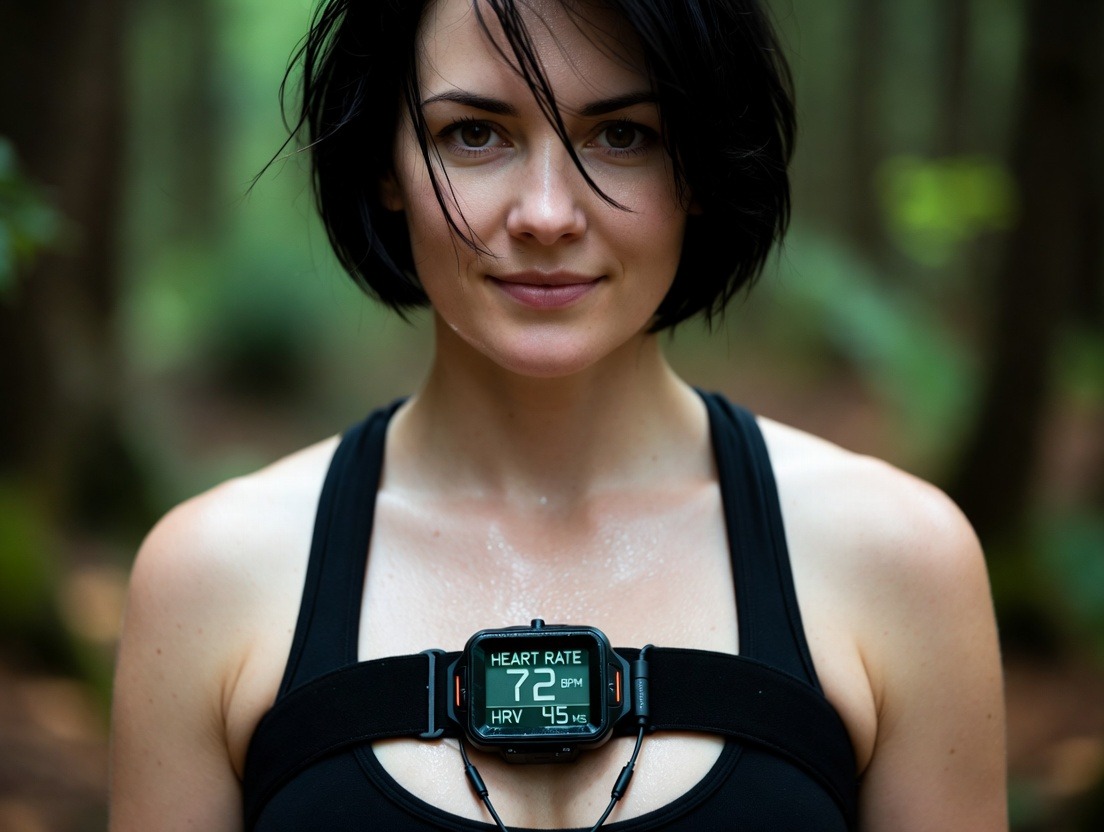
Health optimization is often portrayed as a solitary pursuit—the lone biohacker in a lab of one. Yet, we are inherently social beings, and the quality of our connections has a profound, measurable impact on our nervous system. HRV provides a fascinating lens through which to view our interactions and the health of our relationships.
Co-Regulation and Connection
Co-regulation is the process by which one person’s nervous system influences another’s to become more stable. A calm parent can soothe an anxious child. A supportive partner can help regulate the other’s stress response. This happens through subtle cues: tone of voice, facial expressions, touch, and even synchronized breathing. High HRV is both a prerequisite for and a result of healthy co-regulation. When you are internally balanced (high HRV), you are better equipped to be a calming, supportive presence for others. In turn, positive, secure social interactions—feeling seen, heard, and valued—stimulate the vagus nerve and can boost your HRV.
The HRV Impact of Different Social Interactions
You can begin to notice how different social settings affect you physiologically.
Using HRV to Enhance Your Social World
This awareness isn’t about becoming antisocial or blaming others for a low score. It’s about making intentional choices to cultivate a “pro-HRV” social environment.
By extending your HRV awareness to your social sphere, you move beyond optimizing just your body to optimizing the ecosystem in which it lives. You start to see health not as a solo project, but as a network effect.
Travel—whether for business or pleasure—is one of the greatest disruptors of our daily routines and, consequently, our HRV. The combination of disrupted sleep, unfamiliar food, time zone changes, and the general stress of logistics is a perfect storm for nervous system chaos. But with planning, you can use your HRV data to navigate travel not just as a survivor, but as a resilient adventurer.
Pre-Travel Preparation: The Proactive Boost
In the days leading up to your trip, you can “bank” resilience.
The In-Transit Strategy: Damage Control
Airports and long journeys are HRV minefields.
Adapting at Your Destination
This is where your daily HRV reading becomes your most trusted travel advisor.
The Return Home: The Dedicated Recovery Window
The most common mistake is jumping back into “normal life” at full speed the day after returning. Your HRV data will show you the truth: you need a recovery window.
Travel becomes a master class in listening to your body. Instead of returning home needing a vacation from your vacation, you learn to integrate adventure and recovery, returning resilient and enriched. For more practical tips on using wearables for lifestyle optimization, our blog is a continual resource.
While the core principles of HRV apply to everyone, the context changes dramatically through different phases of life and specific health conditions. Understanding these nuances allows for more compassionate and accurate interpretation of your data.
For Women: Navigating the Menstrual Cycle and Menopause
Female physiology adds a beautiful, complex layer to HRV tracking. Hormonal fluctuations across the menstrual cycle have a predictable impact for many women.
For the Aging Population: HRV as a Vitality Metric
HRV naturally declines with age, but the rate of decline is heavily influenced by lifestyle. For older adults, HRV becomes less about peak performance and more about maintaining autonomy, cognitive function, and resilience against disease.
For Individuals with Chronic Stress or Anxiety
For those managing anxiety disorders or chronic stress, HRV biofeedback isn’t just an optimization tool; it can be a core part of therapeutic practice.
In all these cases, HRV serves as a neutral, non-judgmental mirror. It reflects the unique realities of your body’s journey, providing a guide that is personalized not just to you, but to you in this specific chapter of your life. It fosters a dialogue with your physiology that is based on observation and curiosity, rather than comparison or criticism.
Your smart ring is a powerful hub for data, but its true potential is unlocked when its insights are integrated with the rest of your health and wellness practices. HRV should not exist in a silo; it is the connective tissue that gives deeper meaning to other metrics and qualitative experiences.
Syncing with Other Metrics
The Qualitative Journal: The Missing Link
Numbers tell the “what,” but your journal tells the “why.” Pairing your HRV data with brief daily notes is a game-changer.
Sharing with Professionals: Becoming an Informed Partner
Bringing your HRV trends to a healthcare professional—a doctor, physical therapist, therapist, or nutritionist—can elevate the conversation.
As we invite these intimate streams of physiological data into our lives, important questions about ethics, privacy, and mindset naturally arise. Navigating this new frontier with awareness is crucial for a healthy relationship with the technology.
The Privacy Imperative: Your Data, Your Ownership
The data from your smart ring—your sleep patterns, your stress levels, your physiological readiness—is among the most personal data that exists. It’s a biometric diary. Therefore, the policies of the company you choose are paramount.
Cultivating the Right Mindset: Tool, Not Tyrant
The greatest risk of any optimization tool is that it becomes a source of anxiety or obsessive control. This is a mindset issue that you have the power to manage.
The Future We’re Building: From Tracking to True Intelligence
The future of HRV and wearable technology is not about more graphs; it’s about smarter, more contextual, and more actionable insights.
This is the exciting horizon: a shift from retrospective tracking to prospective coaching, where technology acts as a compassionate, intelligent partner in your health journey. It’s a future where the device disappears, and all that remains is a deeper, more responsive connection to the wisdom of your own body. We are passionately building towards this future, and you can learn more about our vision and journey here.
Understanding HRV is one thing; actively training it is another. This is the realm of HRV biofeedback—a structured practice where you use real-time or near-real-time HRV data to consciously influence your autonomic nervous system. Think of it as strength training for your vagus nerve. Unlike passive tracking, biofeedback is an active workout that builds your capacity for resilience, giving you direct control over one of your body’s most fundamental systems.
The Foundation: Resonant Frequency Breathing
The most accessible and evidence-based HRV biofeedback technique is resonant frequency breathing. Everyone has a specific breathing rate—typically between 4.5 and 6.5 breaths per minute—that naturally creates the largest possible oscillations in their heart rate, maximizing HRV. This rate synchronizes your heart, lungs, and circulatory system, a state known as resonance, which powerfully stimulates the parasympathetic nervous system.
How to Find Your Resonant Frequency (A Simple Protocol):
The 10-Minute Daily HRV Workout
Consistency beats duration. A daily 10-minute practice can yield more benefit than an hour once a week.
Advanced Tactics: Coherence Training and Visualization
Once you’ve mastered the breathing, you can layer in cognitive elements to enhance the effect.
Measuring Your Progress
You don’t need a screen for every session. The primary measure is subjective: Do you feel calmer, more centered, clearer? Over time, however, look for these objective signs in your broader data:
This toolkit turns HRV from a metric you observe into a capacity you build. It empowers you with a portable, always-available skill to downshift your nervous system before a big presentation, after a stressful argument, or to prepare for restful sleep. For a variety of guided exercises and deeper dives into mindfulness techniques, our blog offers a growing library of resources.
Food is information. Every meal sends instructions to your genes, your immune system, and crucially, your autonomic nervous system. While we covered the broad levers earlier, we now dive into the nuanced interplay between specific dietary patterns, timing, and their measurable impact on your HRV.
The Inflammation-Obesity-HRV Triad
Chronic, low-grade inflammation is one of the most potent suppressors of HRV. Many dietary patterns affect HRV primarily through their impact on inflammation.
Intermittent Fasting and Time-Restricted Eating: Stress or Adaptation?
The HRV response to fasting is a perfect example of the hormetic principle: a mild stressor that triggers a beneficial adaptation.
Hydration: The Overlooked Fundamental
Dehydration causes a reduction in blood volume, forcing your heart to work harder and your sympathetic nervous system to activate to maintain blood pressure. This directly and immediately lowers HRV.
Personalized Food Reactivity
Beyond general patterns, you may have specific food sensitivities. Unlike life-threatening allergies, these can cause subtle, delayed inflammation. An elimination diet, guided by HRV tracking, can be illuminating. If removing gluten or dairy, for example, is followed by a significant and sustained rise in your weekly average HRV and a drop in resting heart rate, it’s strong objective evidence that your body functions better without it. This turns subjective “I feel better” into quantifiable, personalized nutrition science.
Your Trusted Sleep Advocate: Sleep Foundation — https://www.sleepfoundation.org
Discover a digital archive of scholarly articles: NIH — https://www.ncbi.nlm.nih.gov/
39 million citations for biomedical literature :PubMed — https://pubmed.ncbi.nlm.nih.gov/
Experts at Harvard Health Publishing covering a variety of health topics — https://www.health.harvard.edu/blog/
Every life deserves world class care :Cleveland Clinic - https://my.clevelandclinic.org/health
Wearable technology and the future of predictive health monitoring :MIT Technology Review — https://www.technologyreview.com/
Dedicated to the well-being of all people and guided by science :World Health Organization — https://www.who.int/news-room/
Psychological science and knowledge to benefit society and improve lives. :APA — https://www.apa.org/monitor/
Cutting-edge insights on human longevity and peak performance:
Lifespan Research — https://www.lifespan.io/
Global authority on exercise physiology, sports performance, and human recovery:
American College of Sports Medicine — https://www.acsm.org/
Neuroscience-driven guidance for better focus, sleep, and mental clarity:
Stanford Human Performance Lab — https://humanperformance.stanford.edu/
Evidence-based psychology and mind–body wellness resources:
Mayo Clinic — https://www.mayoclinic.org/healthy-lifestyle/
Data-backed research on emotional wellbeing, stress biology, and resilience:
American Institute of Stress — https://www.stress.org/


