


Daily Stress Management for High-Performers: Sustaining Peak Performance
High-performers sustain themselves by viewing stress management as essential fuel for performance, not as separate from success.
High-performers sustain themselves by viewing stress management as essential fuel for performance, not as separate from success.
%402x.svg)
The alarm screams at 4:45 AM. Before the first sip of premium coffee, your mind is already racing through the day’s critical meetings, looming deadlines, and high-stakes decisions. You are a high-performer—an executive, a founder, a surgeon, a creator operating at the edge of your potential. Your currency is focused output, strategic insight, and relentless execution. Yet, there’s a silent tax on this excellence: a simmering, pervasive stress that, left unmanaged, becomes the architect of your burnout, the thief of your clarity, and the single greatest threat to sustaining the very peak performance you’ve worked so hard to achieve.
Conventional wisdom sells us simplistic solutions: “just meditate” or “take a vacation.” But for those whose minds are their most valuable asset, these are often inadequate tools for a complex, high-RPM engine. The modern high-performer doesn’t need stress elimination—an impossible goal in a demanding world—but rather stress optimization. This is the art of transforming stress from a debilitating foe into a calibrated fuel, using precise, data-informed strategies to protect your cognitive edge, emotional resilience, and physical vitality for the long run.
This comprehensive guide is built on a foundational truth: you cannot manage what you cannot measure. In the new paradigm of elite performance, biometric intelligence is non-negotiable. This is where technology like the Oxyzen smart ring transitions from a luxury gadget to an essential performance tool. By delivering continuous, clinical-grade data on your nervous system—tracking Heart Rate Variability (HRV), sleep architecture, body temperature, and physiological stress responses—it provides the objective feedback loop needed to move beyond guesswork. Imagine having a personal performance dashboard that whispers when your body is primed for deep work, warns of impending overload before you consciously feel it, and validates which recovery protocols actually move the needle. This is the future of sustainable excellence.
Our journey will deconstruct daily stress management into a actionable, science-backed system. We will explore the unique neurobiology of the high-performer’s stress, establish non-negotiable foundational pillars, and dive into precise tactical protocols for energy, focus, and recovery. This is not about adding more to your plate; it’s about strategic subtraction and intelligent integration, creating a personalized operating system for enduring success.
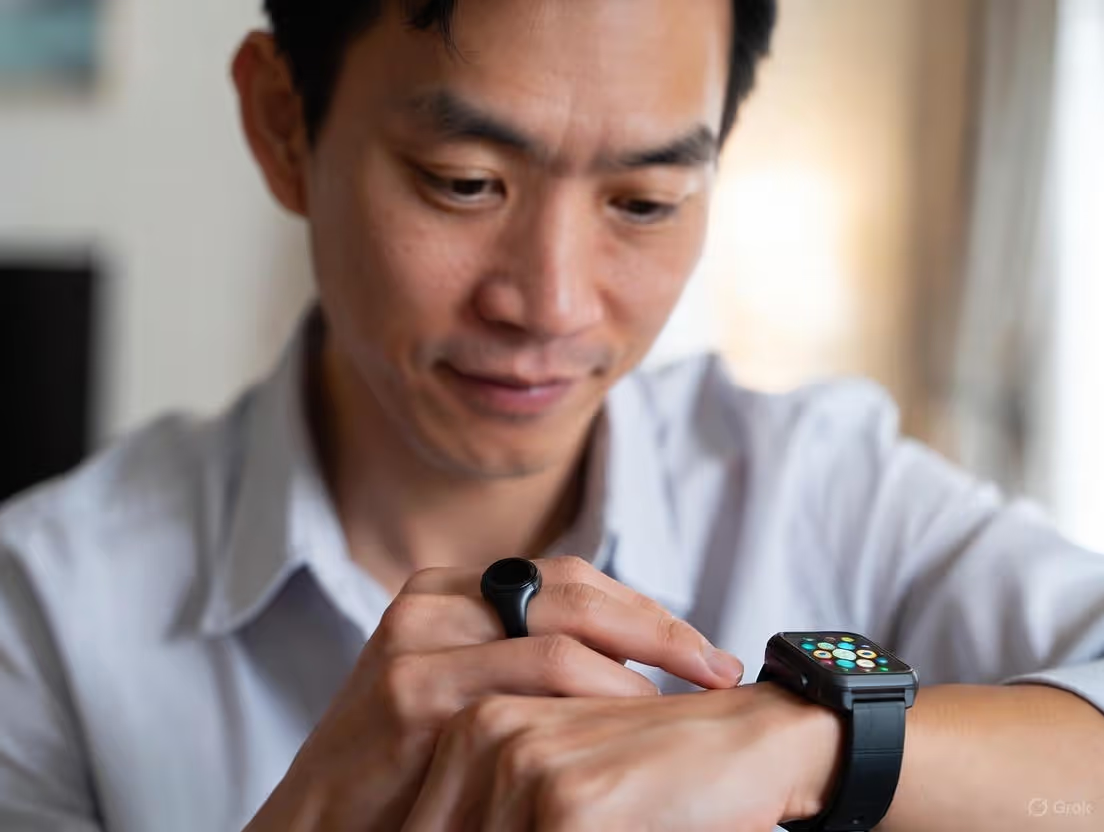
We celebrate the grind. Culture glorifies the 100-hour work week, the sleepless hustle, the ability to operate under immense pressure. For high-achievers, stress is often worn as a badge of honor—a proof of commitment and importance. This mindset creates a dangerous paradox: the very behaviors that drive short-term success systematically dismantle the capacity for long-term, sustainable performance.
The issue isn’t stress itself. Acute stress, the “challenge response,” is evolution’s performance enhancer. It sharpens focus, mobilizes energy, and heightens senses—ideal for a critical presentation or a strategic negotiation. The killer is chronic, unmanaged stress: the relentless, low-grade hum of cortisol and adrenaline that never fully abates. For the high-performer, this often manifests not as overt anxiety, but as a suite of stealthy symptoms: diminishing returns on work hours, creeping cynicism, emotional volatility over small triggers, difficulty accessing creative flow, and a nagging sense of being perpetually "on" yet never truly engaged.
The Physiology of Burnout
At a biological level, chronic stress hijacks your operating system. The hypothalamic-pituitary-adrenal (HPA) axis, your central stress response system, becomes dysregulated. Cortisol, the primary stress hormone, loses its healthy diurnal rhythm—it’s too high at night (disrupting sleep) and too low in the morning (robbing you of get-up-and-go). This dysregulation directly impairs prefrontal cortex function, the brain region responsible for executive function, decision-making, and emotional regulation. In essence, the part of your brain you rely on most to perform at a high level is chemically suppressed by the very state your lifestyle may be promoting.
Meanwhile, Heart Rate Variability (HRV)—a key metric of nervous system resilience and recovery capacity—plummets. Low HRV signals a sympathetic-dominant state (fight-or-flight), indicating your body has limited bandwidth to handle additional stress. It’s a powerful, objective biomarker that your “performance tank” is nearing empty, long before you consciously admit fatigue. Devices like the Oxyzen ring provide 24/7 HRV tracking, offering an unblinking look at your physiological readiness. As noted in our analysis of user trends on the Oxyzen.ai blog, high-performers who begin tracking HRV often experience a revelation: their perceived energy levels frequently misalign with their actual physiological state, leading to chronic overreach.
Breaking the Cycle
The first step out of the paradox is a radical reframe: Recovery is not the opposite of performance; it is an integral, non-negotiable component of it. You would not expect an elite athlete to compete daily without periodized training, nutrition, and rest. Your cognitive and emotional output demands the same strategic support.
“Peak performance is a cycle of stress and recovery, not a linear path of endless exertion. The quality of your recovery determines the quality of your stress.”
The modern solution lies in moving from subjective feeling to objective data. By understanding your unique stress signatures—what triggers a dive in your HRV, how your sleep quality correlates with next-day focus—you gain agency. You stop “pushing through” based on sheer willpower and start making informed, strategic adjustments to your workload, schedule, and recovery rituals. This is the cornerstone of intelligent performance management.
If you manage a team, you likely review KPIs and dashboards to gauge health and progress. If you manage investments, you scrutinize market data and financial reports. Yet, when it comes to managing your most critical asset—your own capacity—most high-performers rely on introspection and vague feelings of “being tired” or “stressed.” This is akin to flying a fighter jet blindfolded. The foundational pillar for modern stress management is Biometric Intelligence: the continuous, accurate measurement of your body’s physiological signals to inform daily decisions.
This isn’t about biohacking for its own sake; it’s about creating a closed-loop feedback system. You apply an intervention (e.g., a new sleep protocol, a meditation practice, a change in workout timing), and you receive objective data on its impact on your nervous system. This eliminates the placebo effect and confirms what truly works for your biology.
The Critical Metrics: Your Personal Performance Dashboard
From Data to Wisdom: The Oxyzen Advantage
A smart ring like Oxyzen is uniquely positioned for this role. Unlike wrist-worn devices that can be bulky and prone to motion artifacts, a ring provides a stable, proximal measurement from the finger’s vasculature. It’s also wearable 24/7, capturing data during sleep—a critical period for recovery assessment—without discomfort. The seamless integration of this data into a companion app transforms raw numbers into actionable insights.
For instance, you might notice that on days following evenings with more than two glasses of wine, your deep sleep plummets and your morning HRV drops by 30%. Or, you may discover that your 6 AM high-intensity workout, though it feels productive, consistently leaves your nervous system stressed for the rest of the workday, as shown by a suppressed HRV. Conversely, you could validate that the 20-minute afternoon walk you’ve been taking correlates with a measurable calming of your physiological stress response before evening.
This level of insight is transformative. It moves you from generic advice (“get more sleep”) to personalized prescription (“prioritize achieving 90 minutes of deep sleep tonight to recover from today’s high-cortisol meeting”). To understand how this technology seamlessly integrates into a high-performance lifestyle, you can explore the story behind Oxyzen’s development and its focus on actionable data. By building this pillar of biometric intelligence, you establish the objective ground truth from which all other stress management strategies will be built and evaluated.

For the high-performer viewing sleep as lost productivity, here is the unequivocal truth: Sleep is the most powerful, legally-sanctioned, performance-enhancing drug in existence. It is the master reset for your brain and body. During sleep, particularly deep (slow-wave) and REM sleep, a critical cleansing and restoration process occurs. Cerebrospinal fluid flushes metabolic waste products like beta-amyloid (linked to cognitive decline) from your brain. Memories are consolidated and sorted. The HPA axis is recalibrated, bringing cortisol back into balance. Growth hormone is released, repairing tissues and bolstering the immune system.
Sacrificing sleep doesn’t give you more time; it drastically reduces the quality of every waking hour that follows. Research from the University of California, San Francisco, found that sleep deprivation impairs prefrontal cortex function similarly to alcohol intoxication. Would you make a major business decision or lead a key team meeting while intoxicated? The cognitive deficit from poor sleep is just as real, if less perceptible to the individual experiencing it.
Optimizing the Sleep Performance Cycle
Managing stress is impossible without mastering sleep. Using your biometric data, you can move beyond counting hours to engineering quality.
Leveraging Your Data
Your smart ring becomes your sleep coach. Don’t just look at your “sleep score.” Drill down. Did you get sufficient deep sleep for physical recovery? Was your REM sleep adequate, suggesting your brain processed the day’s emotional and cognitive stimuli? A high resting heart rate during sleep can indicate systemic stress or inflammation. By correlating your daily habits with this granular data, you stop guessing and start engineering your recovery. For common questions on optimizing sleep tracking, our FAQ page provides detailed guidance on interpreting your data. When sleep is treated as a strategic pillar, you wake up not just rested, but genuinely restored and ready to perform at your peak.
You would never put low-grade jet fuel in a fighter plane and expect elite performance. Yet, high-performers routinely fuel their complex neurobiology with sugary snacks, processed meals, and erratic eating patterns that guarantee energy crashes, brain fog, and amplified stress responses. Food is not just calories; it is information that directly instructs your hormones, neurotransmitters, and inflammatory pathways. The goal of nutritional neurochemistry is to eat in a way that stabilizes energy, sustains focus, and dampens physiological stress.
The Blood Sugar Roller Coaster: The Primary Adversary
The single most disruptive dietary pattern for stress management is the cycle of blood sugar spikes and crashes. Consuming high-glycemic carbohydrates (sugary drinks, pastries, white bread, many “healthy” bars) causes a rapid surge in blood glucose. This triggers a corresponding insulin spike to shuttle glucose into cells, often leading to a reactive hypoglycemia (a blood sugar crash) 60-90 minutes later. This crash is a profound stress event. Your body perceives it as an emergency, secreting cortisol and adrenaline to liberate stored glucose. You experience this as anxiety, irritability, mental confusion, and intense cravings for more sugar—perpetuating the cycle. This constant HPA axis activation is a direct contributor to chronic stress dysregulation.
Dietary Protocols for Nervous System Stability
Biofeedback & Personalization
This is where your biometric data shines. Notice how your HRV and sleep scores respond to different meal timings and compositions. You might find that a heavy lunch leads to a measurable dip in afternoon focus and a higher physiological stress load. Or, you may discover that ensuring adequate magnesium intake correlates with more restorative deep sleep. Use your body’s signals—not just a generic diet plan—to craft your optimal nutritional protocol. This personalized approach to fueling is a core component of building a resilient system, a philosophy central to Oxyzen’s mission of empowering individuals with self-knowledge.

For the high-performer, the first hour after waking is arguably the most consequential. This period sets the neurochemical and emotional tone for the entire day. Reactively checking email, social media, or news headlines immediately upon waking surrenders your mental state to external demands—it’s a recipe for fragmented attention and elevated cortisol before you’ve even left your bedroom. In contrast, a deliberate, intentional Morning Anchor ritual is an act of sovereignty. It allows you to activate your desired state, rather than inherit one from the outside world.
This ritual is not about adding more tasks; it’s about a sequence of purposeful transitions that bring your nervous system from sleep to peak operating capacity with stability and clarity.
Phase 1: Hydration & Physiological Awakening (Minutes 0-10)
Phase 2: Mindfulness & Intention Setting (Minutes 10-25)
Phase 3: Fuel & Strategic Planning (Minutes 25-60)
The Data-Backed Impact
When you adhere to this Morning Anchor, your biometrics will tell the story. You’ll likely see a healthier cortisol awakening response (a natural, sharp rise in cortisol that provides morning energy), more stable HRV throughout the morning, and improved focus metrics. By claiming the first hour, you build a buffer of resilience that helps you navigate the inevitable stresses of the day from a place of centered strength, rather than reactive frazzle. This ritual is a keystone habit that makes all other stress management practices more effective.
The high-performer’s classic mistake is managing time as a linear, inexhaustible resource. You schedule back-to-back meetings, block “work time,” and grind through tasks until exhaustion. This approach ignores the fundamental nature of human energy: it is cyclical, fluctuating, and exists in multiple dimensions. True productivity is not about hours logged; it’s about aligning your most demanding tasks with your natural peaks of cognitive and physical energy. This is the art of managing your Energy Symphony.
Understanding Your Ultradian Rhythms
Beyond the 24-hour circadian rhythm, your body operates on 90-120 minute ultradian cycles throughout the day. Within each cycle, you experience a natural climb to a peak of alertness and focus, followed by a descent into a trough where concentration wanes and fatigue rises. Ignoring these rhythms by trying to power through a trough with caffeine or willpower leads to diminishing returns, errors, and accumulated stress. The strategic approach is to sprint and recover.
The Tactical Protocol: The 90-Minute Focus Block
Managing the Multidimensional Energy Portfolio
Your energy isn’t just mental. It’s a portfolio with four key accounts: Physical, Emotional, Mental, and Spiritual. Chronic stress drains all four. You must make strategic deposits:
A low balance in any account affects overall performance. A high-performer feeling mentally sharp but emotionally drained from conflict will still underperform. Regularly audit your energy accounts. Your biometric data, especially HRV and sleep, is a direct readout of your physical (and indirectly, emotional) energy balance. By shifting from time management to energy cycle management, you work with your biology, not against it, achieving more with less strain and far greater sustainability. For more on structuring productive rhythms, our blog features several deep dives on integrating data into daily work habits.
Waiting until the evening or the weekend to “de-stress” is like waiting for your car’s engine to overheat before adding coolant. By then, damage is already occurring. The high-performer’s secret weapon is the strategic use of Micro-Recoveries—brief, 30-second to 5-minute interventions deployed throughout the day to intercept rising stress, reset the nervous system, and prevent the accumulation of tension that leads to burnout. These are tactical tools designed for the busiest schedules, requiring no special equipment or environment.
The Science of the Stress Reset
Acute stress activates the sympathetic nervous system (SNS). Micro-recoveries work by stimulating the parasympathetic nervous system (PNS)—the “rest and digest” counterbalance—through specific physiological levers: the breath, the body, and sensory focus. By consciously activating the PNS, you can lower your heart rate, reduce cortisol secretion, and clear stress hormones from your bloodstream more rapidly, restoring cognitive function and emotional equilibrium.
The Toolkit: Choose Your Reset
Integrate 2-3 of these practices at natural transition points: between meetings, before starting a new task, after a difficult conversation, or when you feel mental fatigue setting in.
Integration & Measurement
The key is consistency, not duration. Set reminders if you must. The true power of these tools is revealed in your biometric data. After several weeks of practice, you may see your daytime HRV become more stable, indicating better stress buffering. You might notice your resting heart rate recover more quickly after a stressful event. These micro-moments are cumulative, teaching your nervous system resilience and preventing the slow leak of energy that defines unsustainable performance. They are the daily maintenance that keeps your elite engine running smoothly.
The high-performer’s environment is a minefield of cognitive traps: the endless ping of notifications, the bottomless scroll of information, the expectation of instantaneous response. This constant digital intrusion is not merely distracting; it is a primary driver of chronic stress and fractured attention. Digital Hygiene is the deliberate practice of managing your technology to serve your focus and well-being, rather than allowing it to hijack your nervous system. It’s about reclaiming your most scarce resource: deep, uninterrupted cognitive bandwidth.
The Cognitive Cost of Context Switching
Every notification—even if you don’t immediately respond—triggers a miniature stress response and a “context switch” in your brain. Research from the University of California, Irvine, found it takes an average of 23 minutes and 15 seconds to return to the original task after an interruption. Multitasking is a myth; what you’re actually doing is “task-switching,” which incurs a massive cognitive tax, increases errors, and depletes mental energy at an alarming rate. This fractured attention state keeps your brain in a persistent low-level fight-or-flight mode, elevating cortisol and eroding your capacity for the deep work that drives real results.
A Protocol for Digital Sovereignty
Measuring the Impact
The benefits of Digital Hygiene are profound and measurable. You will complete deep work in less time and with higher quality. Subjectively, you’ll feel less mentally frazzled. Objectively, your biometric data may show improved HRV during work hours and a clearer wind-down period in the evening as your brain isn’t artificially stimulated by blue light and anxious scrolling before bed. This practice is a direct defense against the ambient stress of the modern world, protecting the quiet mental space where breakthrough ideas and calm leadership are born. For support in establishing these boundaries with technology, our community often shares strategies on Oxyzen’s testimonials page, where users discuss reclaiming their focus.

For the high-performer whose mind is a relentless engine, the greatest challenge is often not starting the day, but stopping it. You cannot abruptly shift from high-speed cognitive engagement to restful sleep. The Evening Unwind is a deliberate, gradual decompression protocol—a “cool down” for your brain—designed to bridge the gap between the demands of performance and the state of recovery. This 60-90 minute ritual is the critical bookend to your Morning Anchor, signaling to your nervous system that work is complete and restoration is now the priority.
The Down-Regulation Sequence
An effective unwind ritual systematically lowers physiological and cognitive arousal. It should be sequential, moving from more active to more passive states.
Phase 1: The Shutdown Ritual (Minutes 0-15)
Phase 2: Light Physical & Sensory Transition (Minutes 15-45)
Phase 3: Cognitive & Emotional Quieting (Minutes 45-60+)
Leveraging Biometric Feedback
Your smart ring is the ultimate validator of your unwind ritual’s effectiveness. Track how different evening activities impact your Sleep Latency (how quickly you fall asleep) and your Deep Sleep percentage. You might find that reading fiction leads to faster sleep onset than watching a drama series. You may see that on nights you skip your walk, your resting heart rate remains elevated for the first few hours of sleep. This data allows you to refine your ritual into a precision recovery tool.
By honoring this transition period, you stop carrying the cognitive and emotional weight of the day into your sleep. You grant your brain the space it needs to process, consolidate, and reset, ensuring you wake up truly recovered—not just less tired. This disciplined transition is what separates those who survive the grind from those who sustainably thrive within it.
The most sophisticated stress management protocol is useless if your mind interprets every challenge as a threat. For high-performers, a significant portion of stress isn’t generated by external events, but by internal narratives—the stories we tell ourselves about pressure, failure, and our own capacity. The Resilience Mindset is the cognitive framework that allows you to perceive stressors not as debilitating forces, but as manageable signals and even opportunities for growth. This isn’t naive positivity; it’s the deliberate, practiced skill of cognitive reframing that builds psychological durability from the inside out.
Threat vs. Challenge: The Neurobiological Fork in the Road
When faced with a high-stakes situation—a board presentation, a critical negotiation, a product launch—your body’s initial physiological arousal (increased heart rate, heightened senses) is identical. The pivotal moment is your appraisal of that arousal. Label it as a Threat (“I’m not ready,” “This could ruin my reputation,” “I might fail”), and the stress response cascades into fear, tunnel vision, and impaired executive function. Reframe it as a Challenge (“This is an opportunity to showcase our work,” “My preparation has me ready,” “This is a chance to learn and excel”), and that same arousal fuels focus, motivation, and peak performance.
Harvard research illustrates this powerfully. When participants were taught to reinterpret pre-performance anxiety as excitement (“I am excited” rather than “I am calm”), they performed significantly better on tasks ranging from public speaking to math tests. The physiological state is similar, but the cognitive label changes its impact entirely.
Building the Mindset: Practical Cognitive Tools
Biometric Validation and The Growth Loop
Your resilience mindset is reflected in your physiology. As you practice reframing, you can watch your biometric data for validation. A successful reframe in the face of a stressor might manifest as a quicker HRV recovery after the event. Instead of a sustained spike in resting heart rate, you might see a shorter, sharper peak that returns to baseline rapidly. This creates a powerful positive feedback loop: your cognitive work improves your physiological response, and seeing that improvement in your data (e.g., on your Oxyzen dashboard) reinforces the efficacy of your mindset work, building true confidence.
This internal work is what separates temporary coping from lasting transformation. It’s the software that ensures the hardware of your body and routines operates optimally. For those seeking to understand the philosophy behind building such durable systems, it’s deeply connected to Oxyzen’s core mission of fostering sustainable self-mastery through awareness.
For the high-performer, exercise is often approached with the same driven, goal-oriented intensity as everything else: more miles, heavier weights, faster times. While beneficial for fitness, this mindset can inadvertently add to your allostatic load (the cumulative burden of stress) if not strategically managed. The enlightened view of Strategic Movement recognizes that physical activity is a powerful dial you can turn to either upregulate or downregulate your nervous system. The key is matching the type, intensity, and duration of movement to your current physiological state, not just a predetermined weekly schedule.
Movement Modalities as Tools:
The Data-Driven Movement Protocol:
The Mind-Body Connection in Motion:
Beyond physiology, movement is a potent cognitive reset. The state of “flow” is often more accessible during physical activity than at a desk. A walk without a podcast can allow for diffuse thinking, where the brain makes novel connections and solves problems subconsciously. Rhythmic movement like running or rowing can become a moving meditation, quieting the default mode network responsible for anxious rumination.
By viewing movement as a strategic dial for your nervous system state—rather than a box to check—you transform it from a potential source of additive stress into one of your most precise tools for energy management and resilience building. This intelligent approach ensures your fitness regimen supports, rather than sabotages, your primary performance goals.
In the pursuit of peak performance, relationships can be relegated to the periphery, viewed as a luxury or a distraction. This is a catastrophic error in the stress management calculus. Humans are neurobiologically wired for connection; our nervous systems co-regulate with those around us. Social Scaffolding refers to the intentional cultivation of relationships that provide emotional support, practical assistance, and positive regulation for your nervous system. For the high-performer operating under pressure, this network isn’t just nice to have—it’s a critical infrastructure for psychological survival and sustained excellence.
The Physiology of Loneliness and Connection:
Isolation is a profound stressor. Chronic loneliness elevates cortisol and pro-inflammatory cytokines to levels comparable to major psychological stress. Conversely, positive social interaction—feeling seen, heard, and valued—triggers the release of oxytocin, serotonin, and endorphins. Oxytocin, in particular, is a powerful anxiolytic. It reduces amygdala activity (fear center) and enhances the PNS, directly counteracting the stress response. A supportive conversation, a moment of shared laughter, or even a brief, empathetic touch can measurably lower blood pressure and heart rate.
Building Your High-Performance Support Network:
This goes beyond having friends. It’s about strategically identifying and nurturing different types of supportive connections:
The Practice of Strategic Connection:
Connection must be proactive, not passive.
Data and Boundaries:
Your biometrics can reveal the impact of your social world. Notice how interactions with certain individuals affect your stress levels—you might see a tangible calming effect (improved HRV) after a call with a mentor, or a dysregulating effect after a conflict-ridden meeting. This data empowers you to set healthier boundaries with energy-draining individuals and intentionally invest more time in regulating connections. Furthermore, a strong social scaffold provides the safety net that allows you to take calculated risks and endure setbacks, knowing you are not alone. This human element is the core of any sustainable performance journey, a truth reflected in the real-world experiences shared by our community.
Your physical environment is not a passive backdrop; it is an active participant in your nervous system’s state. From the lighting in your office to the clutter on your desk, environmental cues constantly signal safety or threat, focus or distraction. Environmental Engineering is the deliberate design and management of your primary spaces—your workspace, your home, even your digital desktop—to minimize stress triggers and promote states of calm, clarity, and sustained focus. For the high-performer, this is not interior design for aesthetics alone; it is cognitive ergonomics for peak mental performance.
The Sensory Levers of Stress and Calm:
Protocols for Key Environments:
Measuring the Ambient Load:
You can gauge the stress impact of your environment through your biometrics. Do you notice a higher resting heart rate or lower HRV during hours spent in a noisy, chaotic open office versus a quiet, controlled space? Does your sleep data improve after you’ve blacked out your bedroom windows? This feedback allows you to make targeted, evidence-based adjustments. By taking command of your sensory inputs, you remove dozens of tiny, daily stressors that cumulatively drain your resilience, creating spaces that actively support your performance and well-being. For more ideas on creating a performance-optimized lifestyle, our blog offers continuous exploration of these principles in action.
For the high-performer, the line between work and life has not just blurred; it has been erased by the very technology designed to create efficiency. The smartphone, a miracle of productivity, has also become a leash tethering your nervous system to a perpetual state of low-grade alert. True recovery—the kind that rebuilds cognitive capacity and emotional resilience—requires more than just not working. It requires Strategic Disconnection: the deliberate, periodic, and complete severing from the digital feeds, communication channels, and performance identities that define your daily life. This isn’t about deleting apps for a day; it’s about architecting periods of profound psychological and physiological restoration.
The Myth of Multitasking and the Cost of Context
The fundamental promise of the connected world—that you can be everywhere at once—is a neurological fantasy. As previously explored, task-switching carries a massive cognitive tax. But beyond the immediate cost, the constant availability it enables creates a hidden background stressor: the Ambient Accountability. Even when you’re not actively checking email, part of your psyche remains "on call," monitoring the possibility of a crisis, a request, or a social obligation. This prevents the full down-regulation of the sympathetic nervous system. It’s like keeping your car engine idling all night "just in case" you need to go somewhere—it wastes fuel and creates wear.
Designing Effective Disconnection: Beyond the Weekend
A Saturday without email is a start, but for the high-performer whose mind runs at high RPM, it often takes longer for the mental "spin-down" to occur. Effective disconnection must be both regular and long enough to break the addictive feedback loops of notification and response.
The Challenge of True Recreation
For the achiever, even leisure can become performative (e.g., crushing a Peloton leaderboard, optimizing a hobby). Strategic disconnection requires engaging in True Recreation—activities that literally "re-create" you. These are characterized by:
Validating Restoration with Data
This is where your biometric intelligence becomes fascinating. During a successful macro-detox, you may witness a phenomenon known as The DIP and Recovery. The first 24-48 hours might show a drop in HRV and an increase in restless sleep as your nervous system, accustomed to constant stimulation, goes through a form of withdrawal. Then, if sustained, you should see a dramatic rebound: HRV climbs to new highs, deep sleep increases significantly, and resting heart rate reaches a new baseline low. This is the objective signature of systemic recovery. It provides irrefutable proof that the disconnection was not a luxury, but a necessary recalibration. Tracking this can motivate you to protect these periods fiercely. To see how others structure their recovery, the shared journeys on our testimonials page often highlight the transformative power of intentional disconnection.
By mastering the art of strategic disconnection, you cease to be a reactive node in a network and reclaim your sovereignty. You return to your work not just rested, but with renewed perspective, creativity, and a nervous system capable of handling the next wave of challenges with grace, not gritted teeth.
We’ve established sleep as a foundational pillar. Now, we delve into the dynamic, bidirectional relationship that forms the core of daily resilience: the Stress-Sleep Feedback Loop. It’s a vicious cycle or a virtuous one, depending on your management. High stress → poor sleep → diminished recovery → lower stress tolerance → higher stress. Breaking this loop is the master key to preventing the slow, insidious slide into burnout. Conversely, by strategically managing daytime stress, you engineer higher-quality sleep, which in turn elevates your next day’s stress resilience, creating a positive, self-reinforcing spiral.
The Day’s Stress as Nighttime Saboteur:
Your daytime physiological and emotional experiences don’t end at 5 PM. They echo through your neuroendocrine system, directly influencing sleep architecture.
Interventions to Break the Cycle:
Using Sleep to Fortify Against Tomorrow’s Stress:
Quality sleep is proactive stress armor. During deep sleep, the brain’s glymphatic system clears metabolic waste, including the beta-amyloid and other proteins associated with stress-induced inflammation. During REM sleep, the emotional charge of the previous day’s experiences is processed and integrated in a safe, neurochemical environment, reducing next-day reactivity.
The Data-Informed Feedback Loop:
Your smart ring provides the closed-loop evidence. Here’s the actionable protocol:
By actively managing this loop—attacking it from both the day and night side—you stop being a victim of the cycle and become its architect. Each good night’s sleep becomes a strategic investment in tomorrow’ resilience, and each day of managed stress becomes a down payment on tonight’s restoration.
Breath is the remote control for your autonomic nervous system. While basic breathwork is part of the micro-recovery toolkit, Advanced Breathwork involves specific, potent protocols used with clear intention to produce targeted physiological and cognitive states. For the high-performer, these are precision tools: to rapidly induce calm before a high-stakes moment, to elevate energy and focus during an afternoon slump, or to trigger a profound recovery state. This moves beyond “taking a deep breath” into the realm of deliberate physiological engineering.
The Science of Intentional Breathing:
Breathing is unique—it’s an autonomic function you can voluntarily override. By changing the rate, depth, and pattern of your breath, you send direct signals via the vagus nerve to your brainstem, influencing heart rate, blood pressure, and the balance between the SNS and PNS. Different patterns create different outcomes.
Protocols for Specific Performance States:
1. For Instant Calm & SNS De-escalation (The Emergency Brake):
2. For Energy & Focus (Controlled SNS Activation):
3. For Recovery & Vagal Nerve Stimulation (Deep PNS Dive):
Integration into a High-Performance Day:
Biometric Correlation:
Use your wearable to see the direct impact. Perform 5 minutes of Coherent Breathing and watch your live heart rate drop and HRV increase in the app. Notice how Kapalabhati causes a temporary heart rate spike followed by a lower resting rate. This feedback turns an abstract practice into a tangible, measurable skill. You learn exactly which "button" to press for your desired state. Mastering your breath is mastering the dials of your own physiology, granting you agency over your reactions and resilience in any situation.
Peak performance is not a perpetual state; it is the apex of a carefully managed cycle. Elite athletes would never attempt to compete at their maximum level day after day, year after year. They use periodization—the strategic planning of training and recovery cycles to peak for key events. The high-performer must adopt this same model for cognitive and emotional output to avoid the ultimate performance killer: burnout. This is The Long Game—designing your year not as a linear grind, but as a series of seasons with varying intensity, focused on sustaining excellence over decades, not just quarters.
Understanding the Burnout Spectrum:
Burnout is not a binary switch; it’s a continuum. It begins with Overload (working harder to meet demands), moves to Strain (physical and emotional fatigue, cynicism, reduced efficacy), and culminates in Exhaustion (a complete depletion of mental and physical resources, often accompanied by detachment and a sense of ineffectiveness). The goal of periodization is to operate primarily in a healthy "challenge" zone, dip into overload strategically, and never allow strain to become chronic.
Designing Your Annual Performance Cycle:
Using Biometrics to Guide the Cycle:
Your data is your coach, telling you what phase you’re actually in, regardless of your plan.
The Mindset of the Long Game:
This requires rejecting the cult of perpetual busyness. It means being able to say, "I am in a building phase, so I will not take on that extra project," or "I just finished a peak phase, so my priority this week is restoration, not new initiatives." It views recovery not as downtime, but as the essential, strategic process that makes the next peak possible.
By periodizing your year, you move from being reactive and at the mercy of demands to being the proactive architect of your own sustainable success. You honor the cyclical nature of human energy, and in doing so, you build a career that is not a sprint to burnout, but a marathon of mastery and impact. For inspiration on building this kind of intentional lifecycle, our founding story explores the journey toward creating sustainable systems for high achievement.
For the high-performer in a leadership role, your personal stress management is only half the equation. The environment you create—the team culture—is a massive multiplier or reducer of collective stress. A Stress-Aware Culture is one where psychological safety is high, sustainable performance is modeled and valued, and the human need for recovery is respected. This isn’t about creating a low-pressure environment; it’s about creating an intelligent one that enables high performance without human attrition. Your ability to manage your own stress is the first step; teaching and enabling your team to do the same is the mark of evolved leadership.
The Ripple Effect of a Leader’s State:
Your nervous system is contagious. As a leader, your stress, anxiety, or calm radiates through the team via emotional contagion and mirror neurons. A leader who is chronically stressed, sending emails at midnight, and glorifying burnout implicitly sets that as the cultural standard. Conversely, a leader who is calm under pressure, respects boundaries, and openly discusses recovery creates permission for others to do the same.
Practical Pillars of a Stress-Aware Culture:
Measuring Cultural Health:
Just as you measure individual health with biometrics, measure team health with surveys and metrics. Regularly check on psychological safety, workload perception, and work-life balance through anonymous pulses. Track voluntary turnover. Listen for the language used: Is "busy" a badge of honor? Is "tired" a common greeting?
The High-Performance Payoff:
A stress-aware team is not a soft team; it is a resilient, agile, and loyal team. It reduces costly burnout and turnover. It fosters innovation because a calm, safe mind is a creative mind. It improves decision-making because cognitive resources aren’t depleted by chronic anxiety. As a leader, by extending your mastery of stress management to your team’s culture, you scale your impact. You build an organization capable of sustained excellence, where people can perform at their best because they are not constantly fighting against a system designed to exhaust them.
This leadership approach completes the ecosystem. You are not just an individual optimizing your own engine; you are a gardener tending the soil in which many others grow. The final portion of this guide will focus on integration—weaving all these strands into a seamless, personalized operating system—and looking forward to the future of human performance.
Your Trusted Sleep Advocate: Sleep Foundation — https://www.sleepfoundation.org
Discover a digital archive of scholarly articles: NIH — https://www.ncbi.nlm.nih.gov/
39 million citations for biomedical literature :PubMed — https://pubmed.ncbi.nlm.nih.gov/
Experts at Harvard Health Publishing covering a variety of health topics — https://www.health.harvard.edu/blog/
Every life deserves world class care :Cleveland Clinic - https://my.clevelandclinic.org/health
Wearable technology and the future of predictive health monitoring :MIT Technology Review — https://www.technologyreview.com/
Dedicated to the well-being of all people and guided by science :World Health Organization — https://www.who.int/news-room/
Psychological science and knowledge to benefit society and improve lives. :APA — https://www.apa.org/monitor/
Cutting-edge insights on human longevity and peak performance:
Lifespan Research — https://www.lifespan.io/
Global authority on exercise physiology, sports performance, and human recovery:
American College of Sports Medicine — https://www.acsm.org/
Neuroscience-driven guidance for better focus, sleep, and mental clarity:
Stanford Human Performance Lab — https://humanperformance.stanford.edu/
Evidence-based psychology and mind–body wellness resources:
Mayo Clinic — https://www.mayoclinic.org/healthy-lifestyle/
Data-backed research on emotional wellbeing, stress biology, and resilience:
American Institute of Stress — https://www.stress.org/


