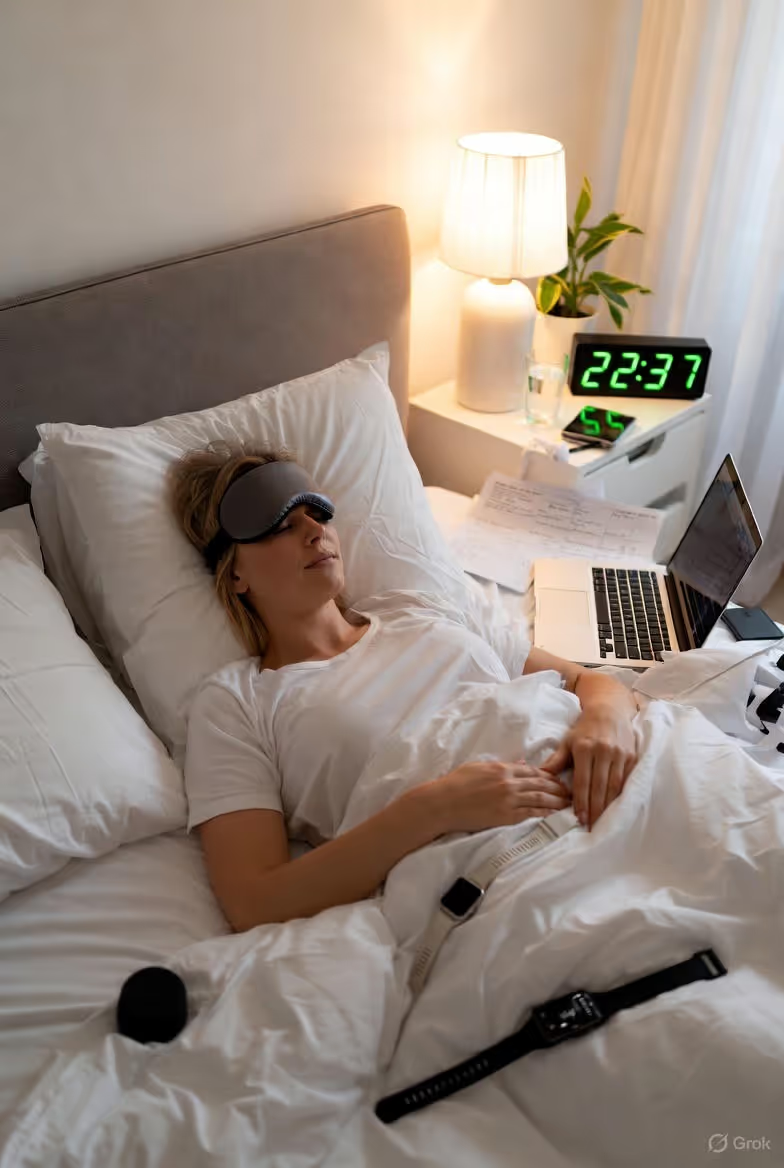
Deep Sleep for Busy Professionals: Maximizing Limited Sleep Time
Busy professionals need deep sleep optimization to maximize limited sleep time. Learn strategies to increase slow-wave sleep percentage when total hours are constrained for recovery.
Deep Sleep for Busy Professionals: Maximizing Limited Sleep Time
Every weekday morning, the world’s most driven professionals face the same silent, recurring conflict. The alarm blares, pulling you from the only true respite you’ve had in the last sixteen hours. For a moment, in that foggy space between sleep and wakefulness, you’re faced with a choice: hit snooze and steal nine more minutes of precious rest, or will your body upright to begin the daily race. You know you need more sleep—the research is unequivocal, the fatigue is constant—but the relentless demands of your career, your clients, your family, and your own ambitions conspire against it. Sleep is treated as the most negotiable line item in a packed schedule, the first sacrifice at the altar of productivity.
But what if we’ve been thinking about this all wrong? What if quality sleep—specifically, the deepest, most restorative phases of it—isn’t the enemy of high performance but its most powerful, untapped ally?
For the modern professional, the equation is brutally simple and fundamentally flawed: More waking hours are presumed to equal more output. This belief fuels a culture of chronic sleep deprivation with staggering costs. Nearly one-third of American adults regularly get less than the recommended seven hours of sleep, leading to a workforce where 38% of employees report recent fatigue on the job . The consequences ripple outward. A 2025 survey by the National Sleep Foundation found that 70% of adults reported their work productivity suffered due to poor sleep, with 69% struggling to think clearly and 58% unable to do work carefully . The financial toll is monumental, with fatigue costing U.S. employers an estimated $136 billion annually in lost productivity and healthcare costs .
This article is not another lecture telling you what you already know—that you should sleep more. That’s an unrealistic fantasy for many. Instead, this is a strategic guide for the reality-driven professional. It is dedicated to a single, transformative premise: When you cannot extend the quantity of your sleep, you must master its quality.
The secret lies in deep sleep—the mysterious, restorative third stage of non-REM sleep. This is the period when your body repairs tissue, strengthens its immune system, consolidates memories, and clears metabolic waste from the brain . It’s the foundation upon which cognitive clarity, emotional resilience, and physical vitality are built. For the busy professional, maximizing deep sleep isn't a wellness luxury; it's a critical performance optimization strategy.
This first part of our comprehensive guide will dismantle the myth that sleep is passive downtime. We will explore the precise, measurable science of the sleep cycle, uncover the severe professional and personal toll of neglecting deep rest, and lay the foundational principles for what we call "Sleep Efficiency." You will learn that by understanding and hacking your sleep architecture, you can achieve more restoration in six hours than you currently do in eight.
The journey begins by confronting a hard truth: your success is being silently eroded by the very hours you spend working instead of sleeping. But the solution is within your grasp. By shifting from fighting for more time asleep to engineering better sleep within your limited time, you can break the cycle of exhaustion and unlock a level of focused energy, creative insight, and professional performance you thought was lost to your busy life.
The High Cost of Sleep Debt: Your Career’s Silent Saboteur
We live in a society that often wears sleep deprivation like a badge of honor—a symbol of dedication and hustle. Yet, beneath this cultural bravado lies a cascade of cognitive and physiological failures that systematically undermine the very goals we’re sacrificing sleep to achieve. For the ambitious professional, sleep debt is not just a personal health issue; it’s a career-limiting liability that operates with stealth and precision.
Cognitive Impairment: The Invisible Drag on Performance
When you cut sleep short, you’re not just saving time; you’re fundamentally altering how your brain operates. The frontal cortex, the command center for executive functioning responsible for decision-making, risk assessment, and complex planning, is particularly vulnerable to sleep loss . Research shows that sleep-deprived individuals shift from deliberative, evidence-based decision-making to impulsive, risky choices .
In practical terms, this translates directly to the workplace:
Diminished Focus and Micro-Sleeps: The struggle to stay awake consumes mental energy, leading to lapses in attention known as microsleeps—brief, involuntary episodes of non-responsiveness that can last mere seconds but cause significant errors .
Slowed Reaction Time and Increased Errors: Whether you’re analyzing data, responding to emails, or operating machinery, sleep deprivation slows your reaction time and increases the likelihood of both errors and omissions . A study in JAMA Network Open directly links sleep impairment in physicians to self-reported clinically significant medical errors .
Crippled Memory and Learning: Sleep is when the brain consolidates and catalogs memories. Without it, the transfer of information from short-term to long-term memory is disrupted, making it harder to learn new skills, remember key details from a meeting, or master complex protocols . As one expert notes, being sleep-deprived is like having a librarian trying to shelve books during a riot—nothing ends up where it should .
The Emotional Tax: Irritability, Burnout, and Broken Relationships
The impact isn’t confined to cold cognition. Sleep deprivation strikes at the core of our emotional regulation. The amygdala, the brain’s fear and emotion center, becomes hyperreactive when we’re tired . Meanwhile, the neural pathways that temper our emotional responses weaken.
The result is what sleep expert Dr. David F. Dinges calls the "‘who was at my desk or who touched my coffee cup?’ phenomenon" . Minor stressors that would normally be brushed off trigger disproportionate feelings of irritation, anger, or vulnerability. Research confirms that sleep-deprived individuals respond to low-stress demands with the intensity typically reserved for high-stress crises .
For professionals, this emotional volatility has severe consequences:
Degraded Communication and Team Dynamics: You become less empathetic, more impatient, and prone to misinterpretation. The National Sleep Foundation survey found 48% of people reported poor sleep hurt their ability to control their temper at work . This erodes trust, collaboration, and psychological safety within teams.
The Fast Track to Burnout: The relationship between sleep loss and burnout is particularly vicious in high-stress fields like healthcare, law, and finance. It creates a debilitating cycle: stress causes poor sleep, and poor sleep lowers resilience to stress, accelerating the path toward emotional exhaustion and cynicism .
The Physical and Economic Fallout
The body keeps score. Chronic sleep deprivation is linked by a "growing body of evidence" to a horrifying array of disorders: hypertension, obesity, type-2 diabetes, cardiovascular disease, and impaired immune function . For organizations, the cost is quantified in staggering terms. Beyond the $136 billion annual U.S. productivity loss, fatigue costs individual employers nearly $2,000 per employee each year .
The message from the data is unambiguous: sacrificing sleep to work more is a catastrophic false economy. You are trading focused, high-quality output for more hours of error-prone, emotionally unstable, and physically costly effort. Before we can fix this, we must understand exactly what we’re missing when we cut our sleep short. We must look under the hood of the night itself, to the architecture of sleep.
Sleep Architecture 101: Understanding the Nightly Repair Cycle
To optimize something, you must first understand how it works. Sleep is not a monolithic state of unconsciousness; it is a highly structured, cyclical process of distinct stages, each with a unique physiological purpose. This sleep architecture is the master blueprint for nightly restoration, and deep sleep is its most crucial load-bearing wall .
The Four Stages of Sleep
Throughout the night, your brain cycles through four stages approximately every 90 to 110 minutes, repeating this cycle four to six times . These stages are categorized as Non-Rapid Eye Movement (NREM) sleep (Stages 1-3) and Rapid Eye Movement (REM) sleep (Stage 4).
Stage 1 (N1 - Light Sleep): This is the gateway to sleep, lasting just one to seven minutes. Your body begins to relax, brain waves start to slow (showing theta waves), and you can be easily awakened. It acts as a buffer between wakefulness and deeper sleep, making up about 5% of your night .
Stage 2 (N2 - Deeper Sleep): Your journey into truly restorative sleep begins here. Body temperature drops, heart rate slows, and muscles relax further. The brain shows bursts of activity called sleep spindles and K-complexes, which are critical for memory consolidation and protecting sleep stability . N2 is the workhorse of the sleep cycle, constituting about 45% of your total sleep time.
Stage 3 (N3 - Deep Sleep or Slow-Wave Sleep): This is the pinnacle of physical restoration. Brain waves slow to a synchronized, rhythmic pattern of high-amplitude delta waves. It is extremely difficult to wake someone from this stage. This is when the body executes its most critical repair work: releasing growth hormone for tissue repair and muscle growth, bolstering the immune system, and clearing metabolic waste from the brain . Experts believe this stage is "critical to restorative sleep" and contributes to insightful thinking and creativity . Early in the night, N3 periods can last 20-40 minutes, but they shorten with each successive cycle. In adults, it makes up about 20-25% of total sleep .
Stage 4 (REM Sleep): Approximately 90 minutes after falling asleep, you enter the first REM period. Here, the brain erupts with activity similar to being awake (showing beta waves), your eyes dart rapidly (hence the name), and vivid dreaming occurs. To protect you from acting out dreams, your body enters a state of temporary muscle paralysis (atonia). REM sleep is essential for cognitive functions like memory integration, learning, emotional processing, and creativity. As the night progresses, REM periods become longer, with the final one lasting up to an hour. REM constitutes another 20-25% of total sleep .
The Critical Role of Deep Sleep (N3)
For the performance-focused professional, deep sleep is non-negotiable. It’s the difference between waking up feeling restored versus simply not being asleep anymore.
Physical Rebuild: It’s the primary time for cellular repair and recovery. If you’re pushing your body with travel, stress, or exercise, this is when it heals and strengthens .
Cognitive Foundation: Deep sleep is crucial for cementing declarative memories—facts, figures, and information learned during the day. It’s when the brain’s "librarian" effectively shelves the day’s knowledge for long-term access .
Metabolic and Immune Regulation: This stage plays a key role in regulating glucose metabolism and supporting immune function. Skimping on deep sleep is linked to increased hunger hormones, insulin resistance, and greater susceptibility to illness .
The architecture follows a predictable pattern: the first half of the night is dominated by deep N3 sleep, while the second half features longer periods of REM sleep . This is why getting at least four to five hours of uninterrupted sleep is a bare minimum—it ensures you complete the cycles containing your most crucial deep sleep. If your sleep is fragmented by stress, poor environment, or a misaligned schedule, you may never properly cycle into or maintain these deep, restorative stages, leaving you functionally exhausted no matter how long you’re in bed.
Understanding this blueprint leads us to the core principle for the busy professional: Sleep Efficiency.
The Sleep Efficiency Mindset: Quality Over Quantity
For the individual who cannot magically add two hours to their night, the traditional advice of "get more sleep" is not just unhelpful—it’s demoralizing. This is where we make a fundamental pivot in strategy. Instead of focusing exclusively on sleep duration, we must prioritize sleep quality and efficiency.
Sleep Efficiency is the measurable ratio of time spent actually asleep to the total time spent in bed. It is the cornerstone of making every minute count. A person who spends eight hours in bed but only sleeps for six due to frequent awakenings has a sleep efficiency of just 75%. Our goal is to engineer an environment and routine that pushes that efficiency as close to 90% or higher as possible, ensuring the time you do allocate is packed with restorative, uninterrupted sleep cycles.
Why "Catching Up" Is a Myth
A critical piece of the efficiency mindset is discarding the dangerous belief in "sleep debt forgiveness" over the weekend. Research is clear: "catching up" on sleep is a myth . Ten hours of sleep on Saturday does not fully reverse the neurological, hormonal, and cognitive damage incurred from getting only six hours per night during the week. While a weekend recovery sleep can alleviate some acute sleepiness, it does not restore optimal performance or fully mitigate the long-term health risks associated with chronic short sleep, such as impacts on metabolism and immune function .
Consistency, therefore, is not a luxury—it’s a non-negotiable component of efficiency. Going to bed and waking up at roughly the same time every day (even on weekends) strengthens your circadian rhythm, the internal 24-hour clock that regulates sleepiness and alertness. A stable rhythm makes falling asleep faster and promotes more robust, consolidated sleep cycles. This is the single most powerful tool for improving sleep quality, even when total time is limited .
The Non-Negotiable Foundation: The 7-Hour Benchmark
While we focus on quality, we cannot ignore the minimum quantitative threshold for health and performance. Decades of research point to a "sweet spot" for the average healthy adult: 7 to 7.5 hours per night . When sleep duration consistently falls below seven hours—and especially toward six hours or less—the prevalence of cognitive impairment, emotional dysregulation, and health disorders begins to rise sharply .
This 7-hour benchmark is your baseline target. The Sleep Efficiency strategies we will develop are designed to ensure that those seven hours (or whatever you can consistently achieve above a bare minimum of six) are as restorative as humanly possible. It’s about protecting the integrity of your sleep cycles from the myriad forces that fragment them.
For the busy professional, the greatest of these disruptive forces isn’t noise or light—it’s the unrelenting stress of modern work life and the technology that binds us to it 24/7. To defend your sleep, you must first understand and manage this powerful adversary.
The Professional’s Adversary: Stress, Technology, and the 24/7 Work Culture
The pursuit of sleep efficiency for a busy professional is, in many ways, a battle against the very culture of modern work. Two primary, interconnected forces stand as the chief architects of sleep disruption: chronic psychological stress and pervasive technology. Together, they create a "shoreline of indifference" to sleep, as sleep researcher Dr. David F. Dinges describes it, where sleep is "regarded as an annoying interference" in a world that operates 24/7 .
The Stress-Sleep Vicious Cycle
Stress and poor sleep are locked in a self-perpetuating, destructive loop. The pressures of deadlines, high-stakes decisions, and constant performance evaluation activate the body’s sympathetic nervous system—the "fight-or-flight" response. This floods your system with cortisol and adrenaline, hormones designed for acute alertness, not relaxation.
Physiological Sabotage: Elevated stress hormones raise your core body temperature, increase your heart rate, and keep your mind in a state of hyper-vigilant rumination. This is the direct opposite of the cool, calm, and quiet physiological state required to initiate sleep (controlled by the parasympathetic nervous system).
Cognitive Intrusion: Stress leads to what sleep experts call "cognitive hyperarousal." As soon as your head hits the pillow, your mind races through the day’s problems and tomorrow’s to-do list. This mental chatter prevents the shift from alpha (relaxed wakefulness) to theta (light sleep) brain waves .
The Emotional Amplifier: As we’ve established, lack of sleep heightens emotional reactivity. Thus, a stressful day leads to poor sleep, and poor sleep makes you less equipped to handle stress the next day, creating a downward spiral toward burnout . For shift workers, especially in healthcare, this cycle is exacerbated by the fundamental misalignment of work hours with the body’s natural circadian rhythm, leading to even more severe sleep disturbances and health risks .
The Blue Light Betrayal: Technology’s Role
Our primary tools for managing work—laptops, smartphones, and tablets—are also precision instruments for sleep sabotage. The harm is twofold:
Circadian Disruption: These devices emit high levels of blue wavelength light, which is exceptionally effective at suppressing the production of melatonin, the hormone that signals to your brain that it’s time for sleep . Checking email or finishing a presentation at 10 p.m. essentially tells your internal clock that it’s still midday, delaying sleep onset and compromising sleep quality.
Psychological Tethering: Perhaps more insidious than the light itself is the cognitive and emotional engagement. Reading a stressful email or seeing a Slack notification activates your mind, tying you back to workplace anxieties and making true psychological detachment before bed impossible. The Deloitte insights report on sleep highlights that the inability to detach from work is a major barrier to recovery and sleep .
The "Always-On" Expectation
This blend of stress and technology fuels an "always-on" work culture, where boundaries between professional and personal life have dissolved. The expectation to be perpetually responsive, coupled with the globalization of teams across time zones, pressures professionals into working late nights or early mornings, directly stealing from core sleep hours . The National Sleep Foundation survey starkly illustrates the outcome: 55% of respondents said poor sleep hurt their ability to work their required hours, and 72% struggled to "get going" at the beginning of the day .
To reclaim your sleep, you must first declare psychological and technological independence from your work at night. This begins with a fundamental, proactive skill: mastering the wind-down.
Mastering the Wind-Down: The 90-Minute Pre-Sleep Ritual
If you expect to transition from a high-stress, screen-saturated work environment directly into deep, restorative sleep, you are expecting a physiological miracle. The human nervous system does not have an "off" switch; it has a dimmer. The purpose of a deliberate wind-down ritual is to slowly and systematically turn that dimmer down, guiding your body and mind from a state of alertness to one of receptiveness to sleep. For the busy professional, this isn’t self-indulgence—it’s a critical operational procedure for cognitive recovery.
Your goal is to create a predictable, 60- to 90-minute buffer zone between your last work task and your attempt to sleep. This ritual should be as non-negotiable as your most important morning meeting.
Phase 1: The Digital Sunset (T-90 Minutes)
This is your first and most critical command. Set a firm time—ideally 90 minutes before bed—after which you will not interact with work or stimulating content.
Device Curfew: Silence all non-essential notifications. Use "Do Not Disturb" modes. If possible, charge your phone outside the bedroom.
Blue Light Mitigation: If you must use a screen, enable "Night Shift" or "Blue Light Filter" settings at maximum strength. Better yet, switch to an e-ink reader or a physical book.
Communicate Boundaries: If your workplace culture expects late-night replies, consider setting an email signature or Slack status that gently communicates your offline hours. Some forward-thinking companies are instituting policies to limit after-hours emails to protect employee well-being and, ironically, next-day productivity .
Phase 2: The Physiological Cooldown (T-60 Minutes)
Your body needs to shed the day’s physical tension and lower its core temperature to initiate sleep.
Temperature Regulation: Take a warm bath or shower. The rise and subsequent drop in your core body temperature as you cool down afterward is a powerful somnogenic (sleep-inducing) signal.
Light, Non-Strenuous Movement: Gentle stretching, restorative yoga, or a slow walk can help release muscular tension. Avoid vigorous exercise, which can be activating.
Environment Prep: Dim the lights in your living space. This supports natural melatonin production. Ensure your bedroom is cool (around 65°F or 18°C), dark, and quiet.
Phase 3: The Cognitive and Emotional Off-Ramp (T-30 Minutes)
This phase is about calming the "monkey mind" and transitioning from doing to being.
Practice Mindfulness or Gratitude: A short, guided meditation (using an app like Calm or Headspace) or simply writing down three things you’re grateful for from the day can shift your mental state from anxiety to appreciation.
Engage in "Analog" Relaxation: Read a physical book (fiction is ideal), listen to calming music or a sleep story, or practice light journaling to "download" worries from your mind onto paper.
Consume Sleep-Supportive Nutrition: A small snack containing tryptophan (like a banana or a handful of almonds) or a caffeine-free herbal tea (chamomile, valerian root) can be soothing. Avoid alcohol, which fragments sleep architecture, and heavy, spicy, or sugary foods .
Why Ritual Beats Willpower
A ritual works because it relies on cue-based habit loops, not finite willpower. By consistently performing the same sequence of calming activities, you train your brain to associate these actions with the impending state of sleep. Over time, starting your ritual automatically triggers a cascade of physiological changes—slowed heart rate, relaxed muscles, quieted mind—that pave a smooth highway into sleep.
This controlled wind-down is your primary defense against the chaos of the day. However, to build a truly fortified sleep sanctuary, you must also optimize the physical space where sleep happens. Your bedroom environment must be engineered for one purpose only.
Optimizing Your Sleep Sanctuary: Engineering the Perfect Environment
Your bedroom should be a temple dedicated to sleep and intimacy alone—not a secondary office, entertainment center, or dining room. For the brain to fully surrender to sleep, it must receive unambiguous signals that this time and place are safe for profound rest. Every element of your sleep environment should be meticulously curated to send that signal. This is environmental engineering for peak human recovery.
The Holy Trinity: Dark, Cool, and Quiet
These three factors are non-negotiable pillars of sleep hygiene, directly influencing your ability to fall asleep quickly and cycle effectively through deep and REM stages.
Pitch Darkness: Light exposure is the most powerful regulator of your circadian rhythm. Even small amounts of ambient light from a streetlamp, a charging LED, or a digital clock can penetrate your eyelids and suppress melatonin.
Action Plan: Invest in blackout curtains or a high-quality sleep mask. Remove or cover all electronic light sources. Consider using a red-toned nightlight if you need to navigate at night, as red light has the least impact on melatonin.
Cool Temperature: Your core body temperature needs to drop by about 1-2 degrees Fahrenheit to initiate and maintain sleep. A room that’s too warm disrupts this process.
Action Plan: Set your thermostat between 65-68°F (18-20°C). Use breathable, natural-fiber bedding (like cotton or linen). Consider a cooling mattress pad or pillow if you tend to sleep hot. The goal is to feel slightly cool when you first get into bed.
Profound Quiet: Unexpected noises cause micro-arousals—brief awakenings you may not remember—that fragment your sleep architecture and rob you of deep and REM sleep.
Action Plan: Use earplugs or a white noise machine. White noise or pink noise creates a consistent auditory blanket that masks disruptive sounds like traffic, plumbing, or a partner’s snoring. Many apps and smart speakers also offer these sounds.
The Bed Itself: Your Performance Investment
You spend a third of your life in bed. For a professional, viewing your mattress, pillow, and sheets as tools for performance recovery reframes this purchase from a home furnishing expense to a critical investment.
The Mattress: It should support spinal alignment and relieve pressure points. There is no single "best" mattress; it depends on your sleep position and body type. The key is to replace it every 7-10 years and test it thoroughly when buying.
The Pillow: Your pillow’s job is to keep your neck in a neutral position aligned with your spine. Side sleepers generally need a thicker, firmer pillow; back and stomach sleepers need something thinner and softer.
Bedding: Choose natural, breathable fabrics. High-thread-count cotton, linen, or bamboo sheets can significantly improve comfort and temperature regulation.
The "Brain-Off" Rule: Banishing Work and Worry
Perhaps the most important environmental rule is psychological: The bedroom is not a command center. The presence of work materials—a laptop on the nightstand, a stack of files, even a smartphone charging nearby—creates a subconscious association between your sleep space and cognitive arousal.
Action Plan: Remove all work-related items. Do not check email, take work calls, or even think about work projects while in bed. If an urgent idea strikes, jot it on a notepad by the door and forget it until morning. This reinforces the bed as a cue for sleep, not stress. For more insights on creating a holistic environment for wellness, you can explore related strategies on the Oxyzen blog [citation:].
By rigorously controlling your environment, you remove external obstacles to great sleep. Yet, the most sophisticated sleep sanctuary can be undone by what you put into your body. Your nutrition and substance use are direct levers you can pull to dramatically enhance—or destroy—your sleep efficiency.
Fueling for Sleep: Nutrition, Substances, and Timing
The adage "you are what you eat" extends powerfully into the night. Every substance you consume—from your afternoon coffee to your evening snack—acts as a chemical signal to your brain and body, either promoting the conditions for restorative sleep or actively fighting against them. For the professional seeking efficiency, mastering this chemistry is a direct line to better sleep quality.
The Caffeine Conundrum: Respect the Half-Life
Caffeine is a powerful adenosine antagonist. Adenosine is a neurotransmitter that builds up in your brain throughout the day, creating "sleep pressure." Caffeine blocks its receptors, making you feel alert.
The Rule: Caffeine has a half-life of 5-6 hours. This means if you drink a cup of coffee containing 200mg of caffeine at 3 p.m., about 100mg is still active in your system at 9 p.m., potentially disrupting sleep onset and architecture.
Action Plan: Establish a caffeine curfew. For most people, this should be at least 8-10 hours before bedtime. If you’re highly sensitive, consider moving your last cup to before noon.
Alcohol: The Deceptive Sedative
Alcohol is perhaps the most misunderstood sleep saboteur. While it may help you fall asleep faster due to its sedative effects, it devastates sleep architecture.
The Science: Alcohol suppresses REM sleep early in the night. As it metabolizes, it causes a "REM rebound" later on, leading to fragmented, restless sleep and vivid, often unpleasant dreams . It also relaxes throat muscles, worsening snoring and sleep apnea.
Action Plan: Avoid alcohol within 3-4 hours of bedtime. Understand that while it may induce sleep, the sleep you get is far less restorative. For truly efficient sleep, it’s best to limit consumption significantly.
The Dinner and Snack Strategy: Light and Early
Digestion is an active process that raises your core body temperature and stimulates metabolic activity—the opposite of what you want for sleep.
Timing: Aim to finish your last large meal at least 3 hours before bed. This gives your body ample time to complete the bulk of digestion.
Composition: Avoid heavy, fatty, spicy, or acidic foods in the evening, as they can cause discomfort, heartburn, and indigestion. Focus on balanced meals with lean protein, complex carbohydrates, and vegetables.
The Sleep-Supportive Snack: If you need a pre-bed snack (about 60-90 minutes before sleep), choose something small that combines a complex carbohydrate with a bit of protein or healthy fat. This can help stabilize blood sugar and provide precursors to sleep-supportive neurotransmitters. Good examples include:
A small bowl of oatmeal
A banana with a tablespoon of almond butter
A handful of cherries (a natural source of melatonin)
A small serving of Greek yogurt
Hydration: Balanced and Timed
Dehydration can lead to nighttime awakenings, but drinking too much fluid right before bed guarantees disruptive trips to the bathroom.
Action Plan: Stay well-hydrated throughout the day. Begin tapering your fluid intake 1-2 hours before bedtime. Have a small sip if you’re thirsty, but avoid large glasses of water.
By treating your body with the right fuel at the right time, you set a stable biochemical stage for sleep. However, even with perfect nutrition and environment, an erratic schedule can undermine everything. This is especially true for the millions of professionals engaged in shift work, whose battle for sleep is fought against their own biology.
The Shift Worker’s Dilemma: Strategies for Beating Circadian Misalignment
For nurses, doctors, pilots, first responders, and many others, the concept of a "normal" sleep schedule is a fantasy. Shift work, especially night shifts, represents the ultimate challenge to sleep efficiency because it forces you to sleep when your circadian rhythm—powered by the suprachiasmatic nucleus (SCN) in your brain—is screaming that it’s time to be awake . This misalignment leads to Shift Work Sleep Disorder, characterized by excessive insomnia when trying to sleep and excessive sleepiness when needing to be alert . The health and performance consequences are severe, including higher risks of gastrointestinal and cardiovascular problems, metabolic disorders, mood disturbances, and a significantly increased risk of errors and accidents .
If you are a shift worker, your strategy must be more aggressive and deliberate. The goal is to manipulate your environment and behavior to coax your circadian rhythm into a new, stable pattern.
Strategic Light Exposure: Your Most Powerful Tool
Light is the primary "zeitgeber" (time-giver) for your SCN. You must use it with military precision.
During the Night Shift: Seek bright light exposure, especially during the first half of your shift. This tells your brain it is "daytime." Use bright overhead lights at your workstation if possible.
After the Night Shift (The Critical Period): On your drive home, wear blue-light-blocking sunglasses (amber-tinted). This prevents the morning sun from resetting your clock to a daytime schedule. Your goal is to convince your brain that "nighttime" is now when you get home.
At Home for Sleep: Your home must be a light-proof cave. Use blackout curtains, aluminum foil on windows, or a high-quality sleep mask. Any light leakage will sabotage your efforts.
The Sleep Schedule: Consistency is Armor
Even with rotating shifts, strive for as much consistency as possible.
Cluster Shifts: If you have control, try to cluster night shifts together rather than alternating rapidly between days and nights. This gives your body a chance to adapt to a pattern, however inverted.
Protect Your Sleep Time: After a night shift, go straight to bed. Treat this sleep period as sacred and non-negotiable. Communicate its importance to family and friends to prevent disturbances.
Strategic Napping: A short nap (20-30 minutes) before a night shift can improve alertness. A nap after a shift, before your main sleep, can also help if you have a long commute. However, keep naps short to avoid deep sleep inertia and to protect your ability to fall asleep later for your main rest period .
Other Tactical Adjustments
Caffeine Timing: Use caffeine strategically at the start of your shift to boost alertness, but strictly enforce a cutoff several hours before your planned sleep time.
Meal Timing: Try to eat your "main meal" at the beginning of your shift (treating it as your "lunch") and have lighter snacks during the shift. Avoid heavy meals right before your sleep period.
Advocate for Health-Conscious Scheduling: If possible, engage with management or unions to advocate for schedules that support sleep health, such as forward-rotating shifts (morning → evening → night) and sufficient time off between shift changes. Research from organizations like Harvard's Division of Sleep Medicine shows that limiting consecutive shifts and allowing for recovery sleep significantly improves safety and reduces errors in critical fields like healthcare .
Mastering your sleep as a shift worker is an act of defiance against human biology. It requires extreme discipline, but the payoff is immense: better health, sharper performance, and a dramatically reduced risk of catastrophic error. Whether you work days or nights, the final piece of the modern sleep optimization puzzle involves technology. Used wisely, it can be a powerful ally instead of an enemy.
Leveraging Technology: From Sleep Tracker to Sleep Coach
In the quest for sleep efficiency, ignorance is not bliss—it’s a liability. For decades, our understanding of our own sleep was based on rough estimates and morning grogginess. Today, technology offers us an unprecedented window into the objective reality of our nights. For the data-driven professional, this is a game-changer. The key is to move from passive tracking to active, insight-driven coaching.
What Modern Sleep Tech Can Tell You
Advanced sleep trackers, particularly those using multi-sensor arrays, move beyond simple movement detection. By combining accelerometers with optical heart rate monitors, skin temperature sensors, and even pulse oximeters, they can provide nuanced insights into your sleep architecture.
Sleep Stages Estimation: While not as precise as a clinical polysomnogram, good consumer devices provide a reasonable estimate of your time in Light, Deep, and REM sleep, showing you the structure of your night .
Sleep Latency and Efficiency: They measure how long it takes you to fall asleep and calculate your actual sleep efficiency percentage—the core metric for our philosophy.
Resting Heart Rate (RHR) and Heart Rate Variability (HRV): These are powerful biomarkers of recovery and autonomic nervous system balance. A lower nighttime RHR and a higher HRV generally indicate better recovery and less physiological stress.
Sleep Disruptions: They can log potential disturbances, helping you correlate environmental factors (like a noisy street) or lifestyle choices (like late alcohol) with a fragmented sleep graph.
From Data to Action: The Feedback Loop
Raw data is useless without interpretation and action. This is where you become the scientist of your own sleep.
Establish a Baseline: Wear your tracker consistently for two weeks without trying to change anything. This establishes your personal baseline for duration, efficiency, and deep sleep percentage.
Run Experiments: Use the scientific method.
Hypothesis: "If I stop drinking coffee after 2 p.m., my sleep latency will decrease and my deep sleep will increase."
Experiment: Implement the caffeine curfew for one week.
Analyze: Compare the data from your experimental week to your baseline.
Conclusion: Did it help? If yes, make it a permanent rule. If not, formulate a new hypothesis (e.g., "Maybe my pre-bed screen time is the issue").
Identify Personal Triggers: You might discover that evening workouts improve your deep sleep, while a late, heavy dinner destroys it. These personalized insights are invaluable.
The Rise of the Smart Ring: Unobtrusive, All-Night Insight
While wrist-worn devices are common, a new category of wearable is gaining traction for sleep optimization: the smart ring. Worn on your finger, it offers several potential advantages for serious sleep tracking:
Unobtrusive Comfort: For many, a ring is more comfortable to sleep in than a watch, leading to higher compliance.
Potential for Accurate Biomarkers: The finger is a rich source of vascular data. Advanced rings can provide continuous, medical-grade readings of body temperature (a key circadian signal) and blood oxygen saturation, which can be critical for spotting potential issues like sleep apnea.
24/7 Wearability: Because it’s easy to wear all the time, it can seamlessly capture daytime activity and stress data, providing a holistic picture of your daily strain and nightly recovery.
Choosing the right tool is part of the journey. At Oxyzen, we believe in the power of technology to illuminate the path to better rest. Discover how our approach to intelligent wellness tracking can provide these precise insights [citation:].
Technology provides the map, but you are the driver. It tells you what is happening, but the strategies we’ve covered—the wind-down ritual, the optimized sanctuary, the careful fueling—are the how you fix it. With data in hand, you can move from guessing to knowing, transforming your sleep from a random occurrence into a deliberately engineered process. This sets the stage for our final, integrative concept: building a personal sleep protocol that endures.
Building Your Personal Sleep Protocol: A 7-Day Action Plan
Knowledge is only potential power. Power is realized when knowledge is translated into consistent, habitual action. This section is your blueprint for building a Personal Sleep Protocol—a customized set of rules and routines that will defend and enhance your sleep efficiency. We’ll break it down into a manageable 7-day action plan to initiate lasting change.
Think of this protocol as the standard operating procedure for your most important daily recovery process. It should be written down, reviewed, and treated with the same seriousness as your key work projects.
The Foundational Pillars of Your Protocol
Your protocol will be built on the core pillars we’ve established:
Consistency (The Schedule): Your set bed and wake times, even on weekends.
Preparation (The Wind-Down): Your 60-90 minute pre-sleep ritual.
Environment (The Sanctuary): Your dark, cool, quiet, and tech-free bedroom.
Fuel (The Chemistry): Your rules on caffeine, alcohol, food, and hydration timing.
Measurement (The Feedback): Your method for tracking sleep (e.g., a tracker or journal).
Your 7-Day Sleep Transformation Action Plan
Day 1: Assessment & Commitment
Action: Complete a honest sleep audit. For one day, jot down: your caffeine/alcohol intake and times, your evening screen use, your pre-bed activity, your estimated sleep time and wake-up feeling.
Goal: Establish your "why." Write down three specific professional or personal reasons why improving your sleep is critical (e.g., "to make clearer decisions in afternoon meetings," "to have more patience with my team," "to recover from my workouts").
Day 2: Set the Schedule
Action: Based on your non-negotiable wake-up time, calculate your target bedtime to get at least 7 hours in bed. Set a firm alarm for 30 minutes before this bedtime to signal the start of your wind-down.
Goal: Commit to this schedule for the next 7 days, no excuses.
Day 3: Engineer the Environment
Action: Spend 20 minutes optimizing your bedroom. Install blackout solutions, set the thermostat to 65-68°F, remove all visible work items and electronics (charge your phone elsewhere).
Goal: Create a bedroom that is visually and functionally dedicated only to sleep.
Day 4: Implement the Digital Sunset
Action: Tonight, shut down all screens (phone, laptop, TV) at the start of your wind-down period. Place your phone in another room on Do Not Disturb.
Goal: Experience one evening of true disconnection. Read a book, listen to music, or talk with a partner.
Day 5: Refine the Chemistry
Action: Enforce your caffeine curfew (no caffeine after 2 p.m.). If you drink alcohol, skip it tonight or have your last drink at least 3 hours before bed. Eat dinner earlier if possible.
Goal: Observe the direct impact of substances on your ability to fall asleep and your sleep quality.
Day 6: Practice Active Recovery
Action: During your wind-down, introduce a 10-minute activity: gentle stretching, a short meditation (use an app like Calm or Headspace), or writing in a gratitude journal.
Goal: Actively shift your nervous system from "fight-or-flight" to "rest-and-digest."
Day 7: Review and Systemize
Action: Review your week. What felt easier? What was hard? What differences did you notice in your energy or mood? Synthesize what worked best into a written, one-page "My Sleep Protocol" document.
Goal: Formalize your personalized plan. Post it somewhere visible. For more inspiration and to see how others have built their routines, you can read real user experiences and testimonials [citation:].
Embracing the Journey
Transforming your sleep is a practice, not a perfect achievement. Some nights will be better than others. The goal is not to achieve a perfect score every night, but to build resilience and awareness. When you travel, face a stressful deadline, or have a social obligation that disrupts your protocol, you won’t collapse. You’ll understand the cost, and you’ll have a clear roadmap back to your efficient routine.
You have now been equipped with the fundamental science, strategies, and mindset to begin reclaiming your nights. You understand the high cost of sleep debt, the architecture of restorative sleep, and the precise levers you can pull—from wind-down rituals to environmental design—to maximize every minute you spend in bed.
This concludes the first part of our deep dive into deep sleep for busy professionals. We have laid the essential groundwork, focusing on the foundations of sleep efficiency: mindset, biology, environment, and personal ritual. In the next portion of this guide, we will build upon this foundation by exploring advanced topics. We will delve into the science of napping for cognitive recharge, examine stress resilience techniques that directly improve sleep quality, investigate the connection between exercise timing and deep sleep, and provide a detailed guide on interpreting sleep tracker data to become your own best sleep coach. The journey to mastering your limited sleep time has just begun.
Advanced Sleep Strategies: Optimizing Deep Sleep and Recovery
Introduction: From Foundation to Mastery
The first part of our journey established the non-negotiable foundations of sleep efficiency—the science, environment, and basic rituals that transform random rest into deliberate recovery. You've learned to protect your sleep sanctuary and initiate the wind-down process. Now we move from defense to offense, from establishing basics to implementing advanced strategies that specifically target and enhance the most valuable phase of sleep: deep sleep (Stage N3).
For the high-performing professional, sleep optimization becomes increasingly nuanced. It's no longer just about getting any sleep, but about engineering the right kind of sleep—sleep that delivers maximal cognitive restoration, emotional processing, and physical repair within your constrained timeframe. This phase of our exploration focuses on the precise, proactive interventions that influence sleep architecture itself. We will explore how strategic daytime behaviors—from the timing of your workouts to the structure of your naps—directly program your nights. We'll examine how to use technology not just to track, but to actively coach your sleep. Most importantly, we'll address the single greatest thief of deep sleep: unresolved stress and an unstoppable mind.
This is where sleep optimization becomes a true performance discipline. By understanding and implementing these advanced strategies, you move from being a passive recipient of sleep to an active architect of your recovery, capable of extracting greater restoration from the same limited hours. The goal is to make every minute in bed count toward rebuilding the mental sharpness, creative capacity, and resilient energy required to excel in your demanding professional life.
Strategic Napping: The Art of the Power Recharge
In a culture that often views napping as a sign of laziness or lack of discipline, we must reframe it as what it truly is: a strategic performance tool. For the sleep-restricted professional, a well-executed nap can serve as a powerful countermeasure to the afternoon energy dip, boosting alertness, improving mood, and enhancing cognitive function without jeopardizing nighttime sleep. The key lies in understanding the different "flavors" of naps and deploying them with precision.
The Science of the Nap: Why Short Wins
Napping works by reducing sleep pressure—the build-up of adenosine in the brain. However, entering different stages of sleep comes with different benefits and potential costs.
The 10-20 Minute "Power Nap": This is the gold standard for workplace recharge. Confined to Stage N1 and early N2 sleep, it provides restorative benefits without sleep inertia—the groggy, disoriented feeling upon waking. Studies show that a 10-minute nap produces immediate improvements in alertness and cognitive performance lasting 2.5+ hours . The benefits are felt almost immediately after waking.
The 30-60 Minute Nap: This longer nap risks entering deep sleep (Stage N3). Waking from deep sleep causes significant sleep inertia that can impair performance for 30 minutes or more, potentially negating the nap's benefits. However, if you have time to sleep through this inertia (e.g., a 90-minute full-cycle nap), the inclusion of deep sleep enhances memory consolidation for facts and information learned earlier in the day .
The 90-Minute "Full Cycle" Nap: This allows you to complete a full sleep cycle (N1 → N2 → N3 → REM). It avoids sleep inertia by allowing you to wake from lighter sleep and provides benefits across all domains: physical restoration (from deep sleep) and cognitive/emotional processing (from REM). This is ideal for creative problem-solving or recovering from significant sleep debt, but is often impractical in a standard workday.
The Professional's Nap Protocol
To integrate napping effectively, follow this protocol:
Timing is Everything: The post-lunch dip between 1 p.m. and 3 p.m. is biologically natural and often the most effective and socially acceptable time to nap. Avoid napping after 4 p.m., as it can reduce sleep pressure enough to delay nighttime sleep onset.
Keep it Short: For daily use, aim for 10-20 minutes. Set an alarm. This is sufficient to clear adenosine and boost alertness without inertia.
Create a Conducive Environment: If possible, nap in a dark, quiet, and cool place. Use an eye mask and earplugs. If you're at the office, a closed office, a dedicated wellness room, or even your car can work. The goal is disconnection.
The "Caffeine Nap" Hack: For an extra boost, drink a cup of coffee immediately before your 20-minute nap. Caffeine takes about 20-25 minutes to hit your bloodstream. You'll wake up just as the caffeine's effects begin, combining the adenosine clearance of the nap with the stimulant effect for a powerful double benefit.
Be Consistent: If you make napping a regular part of your schedule, your body will adapt, making it easier to fall asleep quickly and wake up refreshed.
Used strategically, napping is not a sign of weakness but of sophisticated self-management. It directly combats the performance-sapping effects of sleep restriction. However, to fundamentally improve the quality of your nighttime sleep, you must address the stress that follows you home. The next frontier is stress resilience—building a nervous system that can truly power down.
Stress Resilience Techniques for Better Sleep
Chronic stress is the arch-nemesis of deep sleep. It keeps the sympathetic nervous system ("fight-or-flight") engaged, flooding your body with cortisol and adrenaline when it should be transitioning to the parasympathetic state ("rest-and-digest"). This isn't just about feeling anxious; it's a physiological state incompatible with the synchronized, slow brain waves of deep sleep. Therefore, building daytime stress resilience is not separate from sleep hygiene—it is a direct and powerful form of sleep engineering.
Diaphragmatic Breathing: The Instant Off-Switch
This is the most accessible and rapid way to activate the parasympathetic nervous system. Also called "belly breathing," it stimulates the vagus nerve, slowing heart rate and promoting calm.
The Technique: Lie down or sit comfortably. Place one hand on your chest, the other on your abdomen. Inhale slowly and deeply through your nose for a count of 4-5 seconds, allowing your abdomen to rise while your chest remains relatively still. Exhale slowly through your mouth for a count of 6-7 seconds. Feel your abdomen fall.
Application: Practice for 5-10 minutes during your wind-down ritual, or use it as a mini-reset during stressful moments in the day. This practice trains your nervous system to shift states on command, making the transition to sleep easier.
Stress manifests as physical tension, which the brain interprets as a state of alertness. PMR systematically releases this tension, sending a clear signal to the brain that it's safe to rest.
The Technique: Lying in bed, starting with your toes, deliberately tense the muscle group as tightly as you can for 5 seconds. Then, completely release the tension for 30 seconds, noticing the sensation of relaxation and heaviness. Work your way up through your body: feet, calves, thighs, glutes, abdomen, chest, hands, arms, shoulders, neck, and face.
Application: This is an ideal pre-sleep activity. It forces you to focus on bodily sensations rather than racing thoughts and culminates in a state of profound physical relaxation that is highly conducive to sleep onset.
Mindfulness and Sleep-Specific Meditation
Mindfulness meditation reduces cognitive hyperarousal—the racing thoughts that prevent sleep. It cultivates the ability to observe thoughts and worries without engaging with them, allowing them to pass by like clouds.
Body Scan Meditation: This involves slowly bringing your attention to each part of your body, from head to toe, observing any sensations without judgment. This combines the focus of mindfulness with the physical awareness of PMR.
Non-Sleep Deep Rest (NSDR)/Yoga Nidra: A guided practice that induces a state of conscious deep relaxation, often described as "yogic sleep." Research suggests it can produce brain wave states similar to deep sleep and significantly reduce anxiety, making it a powerful tool for improving subsequent nighttime sleep . A 20-30 minute NSDR session can be a game-changer for sleep efficiency.
Gratitude Journaling: A simple, 5-minute practice of writing down three things you are grateful for from the day. This actively shifts cognitive focus from threats and problems (which activate stress pathways) to safety and positivity (which activate calm pathways), directly countering the pre-sleep worry cycle.
By making these techniques part of your daily routine—not just a crisis intervention—you build a more resilient nervous system that can decouple from the stress of the workday, creating the internal quiet necessary for deep sleep to flourish. To see how integrating technology with these practices can create a seamless wellness system, you can learn more about Oxyzen's holistic approach to recovery [citation:].
Exercise as a Sleep Drug: Timing, Type, and Intensity
Physical activity is one of the most potent, evidence-based promoters of sleep quality and duration. It increases sleep pressure (adenosine buildup), helps regulate circadian rhythms through body temperature fluctuations, and reduces anxiety and depressive symptoms. However, for the sleep-optimizing professional, the devil is in the details: when and how you exercise can dramatically affect its impact on your sleep architecture.
The Deep Sleep Connection
Regular aerobic exercise has a particularly strong association with increased slow-wave sleep (deep sleep). The proposed mechanism is that exercise creates a need for physical repair and energy restoration, which the body addresses during the deep sleep phase. Furthermore, exercise is a powerful stress-buffering activity; by reducing baseline levels of cortisol and adrenaline, it removes a primary barrier to deep sleep initiation.
The Golden Window and the Danger Zone
The relationship between exercise timing and sleep is not linear; it follows a curve based on core body temperature and physiological arousal.
The Morning/Midday Advantage: Exercising in the morning or afternoon is generally most sleep-friendly. It provides a strong circadian signal, boosts daytime alertness, and allows the body's temperature and arousal to cycle back down fully by bedtime.
The Evening Consideration (The 90-Minute Rule): The old rule of "no exercise before bed" is overly simplistic. The key variable is finishing vigorous exercise at least 90 minutes before bedtime. This allows your elevated core temperature and heart rate to return to baseline and endorphin levels to settle. For many, moderate-intensity exercise ending 60-90 minutes before bed does not harm and may even improve sleep.
The Danger Zone: Extremely intense, competitive, or novel workouts completed within 60 minutes of bedtime can be overly stimulating for both body and mind, increasing core temperature and sympathetic nervous system activity, thereby delaying sleep onset and potentially reducing deep sleep.
The Professional's Exercise Prescription for Sleep
Prioritize Consistency Over Timing: The overall benefits of regular exercise far outweigh the minor nuances of timing. If your only available time is late evening, do it—just stick to moderate intensity and respect the 90-minute buffer.
Align Type with Time:
Morning/Afternoon: Ideal for high-intensity interval training (HIIT), vigorous strength training, competitive sports, or long cardio sessions.
Evening (within 2-3 hours of bed): Opt for moderate-intensity cardio (a brisk walk, light jog), mobility work, yoga, or gentle stretching. These activities promote relaxation without excessive stimulation.
Listen to Your Personal Response: Use your sleep tracker or journal. Do you sleep better or worse on days you exercise in the evening? This biofeedback is more valuable than any generic rule. Some individuals are more sensitive to evening exercise than others.
Don't Forget Low-Intensity Movement: Non-exercise activity thermogenesis (NEAT)—walking, taking stairs, light gardening—throughout the day contributes to overall sleep pressure and metabolic health, supporting better sleep.
By treating exercise as a strategic tool for sleep enhancement, you create a virtuous cycle: better sleep improves workout recovery and performance, and well-timed exercise leads to deeper, more restorative sleep. To further refine your approach, the next step is to become an expert interpreter of the data your efforts generate.
Decoding Your Data: A Guide to Sleep Trackers and Biomarkers
In the world of sleep optimization, subjective feeling is important, but objective data is transformative. Modern sleep technology provides a dashboard for your nocturnal biology. However, data without interpretation is just noise. This section will help you move from simply glancing at a "sleep score" to understanding the key biomarkers that reveal the true quality of your recovery.
Key Metrics and What They Really Mean
Sleep Stages (Light, Deep, REM):
Understanding: Consumer devices estimate these stages using movement and heart rate variability (HRV) patterns. They are estimations, not medical-grade readings, but trends over time are highly valuable.
What to Look For: A healthy adult typically spends 10-25% of total sleep in deep sleep and 20-25% in REM. Focus on weekly averages, not single-night fluctuations. A consistent decline in deep sleep percentage could indicate overtraining, illness, or increased stress.
Resting Heart Rate (RHR):
Understanding: This is your heart rate during sleep, typically its lowest point of the day. A well-rested, recovered body has a lower RHR.
What to Look For: Track your nightly average RHR. A trend of increasing RHR over several days can be an early sign of insufficient recovery, impending illness, or accumulated stress. A sudden spike might follow alcohol consumption or a very late, heavy meal.
Heart Rate Variability (HRV):
Understanding: HRV measures the subtle variations in time between heartbeats. It is the single best non-invasive biomarker of your autonomic nervous system balance. A higher HRV indicates greater parasympathetic ("rest-and-digest") dominance and better recovery. A lower HRV suggests sympathetic ("fight-or-flight") dominance and higher stress.
What to Look For: Your nightly average HRV is the most important reading. Look at the long-term trend (weekly/monthly average). A rising trend indicates improving fitness and resilience. A sharp drop or a sustained low trend is a red flag for overreaching, poor recovery, or high stress, and often correlates with poor sleep quality.
Sleep Latency & Efficiency:
Understanding: Sleep latency is how long it takes you to fall asleep. Ideal is 10-20 minutes. Consistently under 5 minutes may indicate severe sleep deprivation; over 30 minutes suggests hyperarousal. Sleep efficiency (time asleep/time in bed) is your core efficiency metric. Target >85%.
What to Look For: Use these to test your wind-down and environment. Did a new relaxation practice reduce your latency? Did making your room darker improve your efficiency by reducing awakenings?
Body Temperature:
Understanding: Advanced wearables (like some smart rings) can track distal body temperature trends. A distinct drop in skin temperature is a key signal for sleep onset, and a stable, low temperature is maintained during deep sleep.
What to Look For: A blunted temperature drop or elevated nighttime temperature can indicate circadian misalignment, poor sleep environment (too warm), or inflammation.
How to Use the Data: The Weekly Review
Don't get lost in daily numbers. Once a week, do a 10-minute review:
Note Averages: Check your weekly averages for Total Sleep, Deep Sleep %, RHR, and HRV.
Correlate with Lifestyle: Look at the best and worst nights. What did you do differently? Late work? Alcohol? A perfect wind-down? An evening workout?
Form a Hypothesis: "My deep sleep was lowest on Thursday when I had that 9 p.m. client call. The blue light and stress probably disrupted my rhythm."
Test and Iterate: "Next week, I'll block my calendar after 8 p.m. and see if my Thursday deep sleep improves."
This feedback loop turns you into a scientist of your own sleep. For a deeper look at the technology that enables this kind of precise tracking and what to look for in a device, explore our comprehensive FAQ on wellness wearables [citation:].
With data guiding your habits, you can now tackle one of the most common and frustrating sleep challenges: those nights when, despite perfect conditions, sleep simply won't come.
Managing Insomnia and Sleep Anxiety
At some point, every busy professional encounters a night of frustrating wakefulness. For some, this becomes a pattern, morphing into psychophysiological insomnia—a conditioned state where anxiety about not sleeping becomes the very thing that prevents sleep. The bed, instead of being a cue for relaxation, becomes a cue for performance anxiety and wakefulness. Breaking this cycle requires cognitive and behavioral strategies that go beyond basic sleep hygiene.
Cognitive Strategies: Quieting the Anxious Mind
Stimulus Control Therapy (The Gold Standard):
The Rule: The bed is only for sleep and sex. If you are awake for more than 20 minutes (don't watch the clock, estimate), get out of bed.
The Action: Go to another dimly lit room. Do something quiet, boring, and non-stimulating (read a physical book, listen to calm music, do light stretching). Do not get on your phone, work, or watch exciting TV. Return to bed only when you feel sleepy. Repeat as necessary. This rigorously re-associates the bed with sleepiness, not wakefulness.
Cognitive Restructuring:
Challenge Catastrophic Thoughts: The anxious mind believes, "If I don't sleep tonight, tomorrow will be a disaster." Challenge this. Remind yourself that you have functioned on little sleep before. The anxiety about poor performance is often more debilitating than the sleep loss itself.
Reframe the Goal: Shift from "I must sleep 8 hours" to "I will allow my body to rest." Lying quietly in a dark room with your eyes closed, even if not asleep, is still restorative. Taking the pressure off can paradoxically allow sleep to arrive.
Scheduled Worry Time:
The Practice: If racing thoughts are the problem, schedule 15-20 minutes of "worry time" in the early evening. Write down every worry, to-do, and problem. Then, tell yourself, "It's on the paper. I've addressed it for now. I can return to it tomorrow." When worries intrude at night, remind yourself, "I have a plan for that during my worry time tomorrow."
Behavioral and Environmental Tweaks
Sleep Restriction (Paradoxical Intention):
The Concept: Under clinical guidance, this involves temporarily restricting your time in bed to closely match your actual sleep time (e.g., if you sleep 6 hours but lie in bed for 8, your time in bed is restricted to 6.5 hours). This increases sleep pressure, consolidates sleep, and improves efficiency. As efficiency improves, time in bed is gradually increased. This is a powerful technique but should be researched carefully or done with a sleep specialist.
The "Reverse Alarm Clock":
The Tactic: If clock-watching fuels your anxiety, turn your clock around or put it in a drawer. Use only your morning alarm. Eliminating time-checking removes a source of performance pressure ("It's already 2 a.m., I've only got 4 hours left!").
Acceptance and Mindfulness in Bed:
The Practice: Instead of fighting wakefulness, practice acceptance. Mentally note, "I am awake right now." Then, focus on the physical sensations of resting: the feel of the sheets, the rhythm of your breath. Listen to the quiet sounds in the room. This mindful resting is far more rejuvenating than an hour of frustrated, anxious tossing and turning.
Mastering these strategies builds sleep confidence—the knowledge that even on a difficult night, you have tools to manage it. This confidence itself reduces pre-sleep anxiety. As your sleep becomes more stable, you can begin to explore how dietary choices go beyond evening snacks to systemically support your sleep-wake cycle.
Nutritional Supplements and Sleep: Evidence-Based Additions
While a balanced diet and proper timing form the bedrock of sleep-supportive nutrition, certain supplements have credible evidence for enhancing sleep quality, particularly when addressing specific deficiencies or temporary challenges. For the professional considering this route, it's crucial to adopt a "food-first, supplement-second" philosophy and prioritize safety and evidence. Always consult with a healthcare provider before starting any new supplement regimen.
The Well-Researched Contenders
Magnesium:
The Evidence: Magnesium plays a role in regulating neurotransmitters that calm the nervous system (GABA) and in muscle relaxation. Studies suggest magnesium supplementation, particularly forms like magnesium glycinate or bisglycinate, can improve sleep quality, especially in those with low dietary intake, reduce sleep latency, and increase sleep time .
Professional Consideration: Stress depletes magnesium. If your diet is low in leafy greens, nuts, and seeds, and you have high stress, this may be a supportive supplement. A dose of 200-400 mg about 30-60 minutes before bed is common.
Melatonin:
The Evidence: Melatonin is a hormone, not a sedative. It signals timing to your circadian clock. It is most effective for circadian rhythm disorders (jet lag, shift work, delayed sleep phase) and can help with sleep onset.
Professional Caution: Less is more. Doses of 0.3-1 mg are often as effective as higher doses and reduce the risk of morning grogginess or next-day desensitization. It is not a long-term solution for general insomnia. Use it strategically for travel or schedule resets.
L-Theanine:
The Evidence: An amino acid found in green tea, L-theanine promotes relaxation and alpha brain wave activity without drowsiness. Research indicates it can improve sleep quality and reduce anxiety-induced sleep disturbances .
Professional Consideration: This can be excellent for the professional whose sleep is disrupted by a racing, anxious mind. It can be taken in the evening (100-400 mg) or even during the day to take the edge off stress.
Glycine:
Evidence: This amino acid acts as an inhibitory neurotransmitter. Supplementation (3 grams before bed) has been shown to lower core body temperature, improve subjective sleep quality, and reduce daytime sleepiness .
Professional Consideration: Glycine may be particularly useful for improving sleep efficiency and next-day alertness when under high cognitive load.
Supplements to Approach with Caution
Valerian Root: While traditionally used, clinical evidence is mixed. It may help some but can cause vivid dreams or next-day drowsiness in others.
High-Dose Melatonin (>5mg): Often leads to side effects and is rarely necessary. Can disrupt your natural production if used chronically.
Unregulated "Sleep Blends": Proprietary mixes can contain multiple ingredients at unclear dosages, making it hard to identify what works or causes side effects.
The goal of supplementation is to provide gentle, physiological support, not to force sleep pharmacologically. When combined with the behavioral strategies already outlined, they can help navigate periods of high demand. As your personal protocol solidifies, you'll inevitably face situations that disrupt it—most notably, travel across time zones.
Mastering Sleep While Traveling: Conquering Jet Lag
For the global professional, frequent travel is a major sleep disruptor. Jet lag occurs when your internal circadian rhythm is out of sync with the local light-dark cycle. The resulting fatigue, insomnia, and cognitive impairment—"brain fog"—can undermine the very purpose of your trip. Overcoming jet lag quickly is a competitive advantage, and it requires a proactive, light-based strategy.
The Strategic Use of Light: Your Primary Tool
Light exposure is the most powerful lever for resetting your circadian clock. The goal is to get light at the "right" biological time to shift your rhythm in the desired direction.
General Principle: To adjust to an earlier time zone (eastward travel), seek morning light and avoid afternoon/evening light at your destination. To adjust to a later time zone (westward travel), seek afternoon/evening light and avoid morning light.
The Practical Algorithm:
Calculate the Shift: Determine the time difference between home and destination.
Use a Jet Lag App: Apps like Timeshifter or Jet Lag Rooster provide personalized, hour-by-hour plans detailing when to seek/avoid light, and when to use caffeine or melatonin, based on your flight details and sleep patterns.
Pre-Travel and In-Flight Tactics
Gradually Adjust Before You Go: If possible, shift your sleep schedule 60-90 minutes per day toward your destination's time zone for 2-3 days before departure. Even a partial shift reduces the shock.
Hydrate Relentlessly: Cabin air is extremely dehydrating, which worsens fatigue. Avoid alcohol and caffeine on the plane, and drink plenty of water.
Control Light on the Plane: Use sunglasses and an eye mask strategically to simulate the "night" of your destination during the flight. If it will be daytime upon arrival, try to stay awake and get light exposure.
Upon Arrival: The 48-Hour Reset Protocol
Get Immediate Light Exposure (or Avoidance): Based on your plan, get outside in the sunlight as soon as possible after landing, or wear blue-light-blocking sunglasses if you need to avoid light.
Anchor Your Schedule: Eat meals at local times immediately. This provides a secondary cue to your circadian system.
Use Melatonin Strategically: For eastward travel, taking 0.5-1 mg of melatonin at local bedtime for the first few nights can help advance your clock. For westward travel, it's less critical but can be used if you have trouble falling asleep at the later local time.
Prioritize Your First Night's Sleep: Use all your environmental tools—eye mask, earplugs, white noise—to protect your first full night's sleep in the new time zone. Even if it's short, a consolidated block of sleep is invaluable.
By treating jet lag as a biological engineering problem with a clear solution, you can cut recovery time in half and perform at your best from day one of your trip. Each of these advanced strategies—napping, stress resilience, data interpretation, and travel hacking—adds a layer of sophistication to your sleep protocol. The final step is to weave them all into a resilient, personalized system that withstands the pressures of professional life.
Conclusion: Integrating Your Advanced Sleep Protocol
You have now moved beyond the basics of sleep hygiene into the realm of high-performance recovery. You possess a toolkit of advanced strategies:
The strategic use of power naps to recharge cognitive batteries.
Stress resilience techniques (breathing, PMR, mindfulness) to quiet the nervous system.
The precise timing and type of exercise to promote deep sleep.
The skill to decode sleep tracker data and use it for iterative improvement.
Cognitive-behavioral tactics to manage insomnia and anxiety.
Evidence-based use of nutritional support.
A science-based protocol to rapidly overcome jet lag.
The final task is integration. Your Personal Sleep Protocol document should now expand to include these advanced levers. It might have sections like:
Daily Non-Negotiables: Consistent wake time, digital sunset, 20-minute wind-down meditation.
Situational Strategies: "If I have a high-stress day → add 10 minutes of diaphragmatic breathing before bed." "If I can only exercise after 8 p.m. → choose a brisk walk, not HIIT." "If I'm traveling east → use my jet lag app plan."
Weekly Review: Every Sunday, check my HRV trend and deep sleep average. Correlate with my workout log and stress levels.
This protocol is a living document. It will evolve as your life, job, and body change. The ultimate goal is sleep resilience—the capacity to maintain high-quality sleep despite professional demands, and to recover it quickly when it’s disrupted.
You began this journey learning that sleep is not the enemy of productivity but its foundation. You now understand it as something more: the most sophisticated, renewable performance-enhancing "technology" at your disposal. By mastering it, you don't just survive your busy life; you gain the restored clarity, creativity, and energy to truly thrive within it.
For more insights on building a holistic wellness system that incorporates these advanced sleep strategies with other aspects of performance, visit our blog for ongoing research and practical guides [citation:]. The journey to mastering your sleep and your potential is continuous, and we are here to support it with science, strategy, and community.



%402x.svg)