The Deep Sleep Formula: Temperature, Timing, and Habits
The deep sleep formula combines optimal temperature, strategic timing, and supportive habits for maximum restorative rest. This systematic guide provides specific recommendations for each factor, explains the science behind why they work, and shows how to implement all three elements coordinately.
The Deep Sleep Formula: Temperature, Timing, and Habits
You know the feeling. It’s 2:17 AM, and the glow of the clock is the only light in the room. The world is silent, but your mind is a roaring engine, replaying conversations, compiling tomorrow’s to-do list, and wondering why sleep—this most basic biological function—feels like a skill you’ve lost. You’re not just tired; you’re frustrated. You’ve tried the apps, the melatonin, the weighted blanket. Yet, the deep, restorative slumber that seems to come so easily to others remains elusive. What if the problem isn’t you, but the formula you’re using?
For decades, sleep advice has been fragmented—a tip about caffeine here, a suggestion for a bedtime routine there. But groundbreaking research in chronobiology, thermoregulation, and neuroscience is converging to reveal that sleep isn’t a single on/off switch. It’s a complex symphony, orchestrated by three master conductors: Temperature, Timing, and Habits. When these three elements are in perfect harmony, your body and brain unlock a state of profound restoration known as deep sleep. This is where tissue repairs, memories consolidate, hormones balance, and your cognitive battery is fully recharged.
We are on the cusp of a new era in personalized wellness, where technology meets biology. Devices like the Oxyzen smart ring are moving sleep optimization from guesswork to precision science, providing the data needed to crack your personal sleep code. This article is your comprehensive guide to the new science of slumber. We will dissect the Deep Sleep Formula, moving beyond generic advice to provide you with an actionable, personalized blueprint for achieving the best sleep of your life. Forget counting sheep. It’s time to engineer your sleep.
The Silent Epidemic: Why Your Sleep Debt is Crippling Your Potential
We live in a culture that often wears sleeplessness as a badge of honor—a symbol of dedication and hustle. But this mindset is fueling a silent public health crisis. The American Academy of Sleep Medicine declares sleep a biological necessity, yet the CDC reports that over a third of American adults routinely fail to get the recommended minimum of 7 hours. This isn’t just about yawning through meetings. Chronic sleep deprivation is a systemic poison, eroding our health, cognition, and emotional stability from the inside out.
The consequences are staggering, both personally and societally. On a physiological level, skimping on sleep dysregulates the hormones ghrelin and leptin, turning you into a hunger machine primed for weight gain and insulin resistance. It weakens your immune system, leaving you vulnerable to everything from the common cold to more serious infections. Long-term, the sleep-deprived brain struggles to clear beta-amyloid plaques, a key toxic protein linked to Alzheimer’s disease. Your cardiovascular system isn’t spared either; chronic short sleep is a proven risk factor for hypertension, heart attack, and stroke.
The cognitive and emotional toll is immediate. A single night of poor sleep impairs your prefrontal cortex—the brain’s CEO—responsible for decision-making, emotional regulation, and focus. Your reaction time slows to a degree comparable to being legally drunk. Creativity and problem-solving abilities plummet, and emotional volatility soars. You become more reactive, less empathetic, and prone to negative thinking. In the workplace, this translates to diminished productivity, increased errors, and higher rates of burnout.
Perhaps most insidiously, we become terrible judges of our own impairment. The sleep-deprived brain loses the metacognitive ability to accurately assess its own performance. You might feel like you’re functioning fine on five hours of sleep, but objective testing would reveal a significant deficit. This creates a dangerous cycle where we accumulate "sleep debt" without a clear alarm bell telling us to stop.
The old adage "I’ll sleep when I’m dead" is not a mantra of productivity; it’s a fast track to making that day come sooner. Reclaiming your sleep isn’t an act of laziness—it’s the single most effective performance-enhancing, health-protecting, and life-extending investment you can make. It’s the foundation upon which all other wellness goals are built. To understand how to fix it, we must first listen to the ancient, internal rhythm that governs it: our circadian clock.
Your Body’s Hidden Conductor: Demystifying the Circadian Rhythm
Deep within the hypothalamus of your brain, a tiny cluster of about 20,000 neurons called the suprachiasmatic nucleus (SCN) acts as your body’s master clock. This is the command center of your circadian rhythm—the roughly 24-hour biological cycle that governs not just sleep and wakefulness, but nearly every physiological process you have. From hormone release and body temperature fluctuation to digestion and cellular repair, your circadian rhythm is the conductor of your body’s daily symphony.
For millions of years, this clock was perfectly synchronized by one powerful, unwavering cue: the rising and setting of the sun. Light, especially the blue-wavelength light of a morning sky, hits specialized cells in your retina, sending a direct signal to the SCN that says, "Day has begun." The SCN then broadcasts this message throughout your body via neural and hormonal signals. It tells your pineal gland to halt production of the sleep hormone melatonin. It cues a rise in cortisol (the healthy, alertness-promoting kind) and core body temperature. Your metabolism kicks into gear, preparing you for activity, foraging, and thought.
As evening approaches and light fades, the process reverses. The SCN signals the pineal gland to ramp up melatonin production, which starts the gentle cascade toward sleep. Core body temperature begins its critical decline—a process we’ll explore in depth later. Digestive activity slows. This elegant system ensured our ancestors were alert during the day and resting at night, in harmony with their environment.
The modern world, however, has declared war on this ancient rhythm. We spend our days under artificial lighting, our evenings bathed in the blue glow of screens, and we can access food and stimulation at any hour. This creates what scientists call "circadian misalignment" or "social jet lag." Your body’s internal clock says it’s 9 PM and time to wind down, but your bright living room and Netflix binge are telling your SCN it’s still midday. This confusion suppresses melatonin, delays your temperature drop, and pushes your entire sleep cycle later.
The consequences are profound. Shift workers, who represent the extreme of circadian misalignment, face significantly higher risks for obesity, diabetes, cardiovascular disease, and certain cancers. But even the average office worker experiences a milder, chronic form of this misalignment, struggling with evening alertness and morning grogginess. The first step to fixing your sleep is to get back in sync with your conductor. This requires respecting the two most powerful timekeepers for your clock: light and darkness. It’s a principle supported by the data-driven approach of devices like the Oxyzen ring, which track your physiological signals to help you identify your personal rhythm, a topic we explore further in resources available on our blog.
The Thermostat of Sleep: How Your Body’s Temperature Drop Unlocks Deep Restoration
If your circadian rhythm is the conductor, then body temperature is the first violin—a lead player that dramatically signals the shift from wakefulness to sleep. The connection between temperature and sleep is one of the most robust and actionable findings in sleep science, yet it remains underutilized in most people’s nightly routines.
Here’s the critical mechanism: To initiate and maintain sleep, especially deep, slow-wave sleep, your core body temperature must drop by about 1-2 degrees Fahrenheit (0.5-1 degree Celsius). This isn’t a symptom of sleep; it’s a prerequisite for it. The drop in core temperature is initiated by your circadian clock as evening approaches, but it is executed through a fascinating process called distal vasodilation.
As bedtime nears, your body begins to shuttle heat from its core to its extremities—your hands and feet. Blood vessels in your skin dilate, increasing blood flow to these surfaces and allowing heat to radiate away. This is why you might notice your hands and feet feel unusually warm right before you fall asleep. It’s not a random occurrence; it’s your body’s highly efficient cooling system kicking into gear. The rapid cooling of the brain, facilitated by this heat redistribution, is strongly correlated with faster sleep onset and increased deep sleep duration.
This process explains why your sleep environment is so crucial. A room that is too warm prevents this necessary heat dissipation. Your body struggles to lower its core temperature, leading to restlessness, more frequent awakenings, and fragmented, shallow sleep. Conversely, a cool room (the widely recommended range is 60-67°F or 15-19°C) facilitates this natural cooling, acting as a catalyst for sleep.
But the temperature-sleep relationship is a two-way street. The structure of sleep itself is also responsible for regulating your body’s thermoregulation. During REM (dream) sleep, your body loses the ability to thermoregulate almost entirely—a reason why drastic room temperature swings can pull you out of this vital stage. Understanding this intricate dance allows you to hack your environment for better sleep. It’s a principle at the heart of modern wellness tracking, where understanding your personal thermal profile can be key. For those curious about how technology can illuminate these personal patterns, you can learn more about smart ring technology and its applications.
The implications are profound. It’s not just about setting the thermostat. It’s about warm baths before bed (which, by pulling blood to the skin’s surface and then causing a compensatory cool-down as you exit, actually aid the temperature drop), choosing breathable bedding, and even timing exercise correctly. Mastering your thermal environment is a direct lever you can pull to influence the quality of your slumber.
Chronotypes: Are You a Bear, Wolf, Lion, or Dolphin? Finding Your Biological Bedtime
Generic advice like "go to bed by 10 PM" is not just unhelpful for many—it can be destructive. It ignores the fundamental genetic diversity in human sleep-wake patterns, known as chronotypes. Popularized by sleep researcher Dr. Michael Breus, the chronotype model categorizes our natural tendencies into four animal archetypes, moving beyond the simple "morning lark" and "night owl."
Lions (The Early Risers): Lions wake up bright-eyed, often before dawn. Their energy and focus peak in the morning, making them highly productive before lunch. However, their energy typically dips in the late afternoon, and they are ready for bed early, often by 9 or 10 PM. They represent about 15-20% of the population.
Bears (The Sun Followers): The most common chronotype, bears (about 50-55% of us) have a sleep-wake cycle that closely follows the sun. They wake easily with natural light, are most productive before noon, experience a post-lunch dip, and have a second wind in the early evening. Their optimal sleep window is typically between 11 PM and 7 AM.
Wolves (The Night Owls): Wolves struggle with traditional morning schedules. They hit snooze repeatedly, feel groggy until noon, and come alive in the evening. Their creativity and energy surge later in the day, often making them ideal for evening work or social activities. Their natural bedtime is often midnight or later. They make up 15-20% of the population.
Dolphins (The Anxious Insomniacs): Named for the light, unihemispheric sleep of aquatic mammals, dolphins are light sleepers with low sleep drive. They are often intelligent, neurotic, and wake to the slightest disturbance. They may struggle with consistent sleep schedules and rarely feel fully rested. This group represents about 10% of people.
Your chronotype is primarily genetic, wired into your PER3 gene, which influences the length of your intrinsic circadian period. Fighting your chronotype is like swimming against a powerful current—it’s exhausting and largely futile. A Wolf forced into a Lion’s schedule will perpetually suffer from social jet lag, even if they get 8 hours in bed.
The power of knowing your chronotype lies in scheduling alignment. It informs your ideal work blocks, your best times for creative thinking versus administrative tasks, when to exercise, and even when to consume caffeine. Most importantly, it tells you your true biological bedtime—the window when your circadian-driven melatonin rise and temperature drop naturally occur. Going to bed within this window is the difference between falling asleep easily and lying awake for hours. Discovering your chronotype is a journey of self-awareness that can be accelerated with precise data. For a deeper dive into personal rhythm discovery, our FAQ addresses how modern tools can assist in this process.
The 90-Minute Rule: Syncing with Your Sleep Cycles for Waking Refreshed
Sleep is not a monolithic state. Throughout the night, your brain cycles through distinct stages: light sleep (Stages N1 & N2), deep slow-wave sleep (Stage N3), and REM (Rapid Eye Movement) sleep. Each full cycle—from light to deep to REM—lasts, on average, about 90 minutes. This isn’t a random number; it’s a fundamental rhythm of human biology, often called the ultradian rhythm.
Waking up in the middle of a deep sleep or REM stage is a recipe for grogginess, known as sleep inertia—that feeling of being in a mental fog, sometimes for 30 minutes or more. Your brain is abruptly yanked from a profoundly restorative state, leaving you disoriented and sluggish. However, waking at the end of a cycle, during a period of light sleep, is dramatically easier. You feel more alert, refreshed, and ready to start your day.
This is the genius of the 90-minute rule. Instead of focusing only on a bedtime, you plan your wake-up time and work backward in 90-minute increments. For example, if you need to wake up at 6:30 AM, counting backward in 90-minute blocks gives you optimal bedtimes of 9:00 PM (6 cycles), 10:30 PM (5 cycles), or 12:00 AM (4 cycles). This method increases the statistical probability that your alarm will sound during a light sleep phase, minimizing inertia.
Of course, this is a guideline, not a rigid law. Cycle length can vary between 70-120 minutes per individual and can change throughout the night (early cycles are rich in deep sleep, later cycles in REM). The goal is to prioritize a full night of completed cycles. This is where the old "8-hour rule" often fails—it may land you right in the middle of a cycle. Seven and a half hours (5 cycles) might leave you feeling better than eight.
Implementing this rule requires a degree of consistency. A wildly fluctuating schedule makes it impossible for your body to settle into a predictable cycle rhythm. It also underscores why "catching up" on sleep on weekends is a flawed concept. While you can repay some sleep debt, the fragmentation of your schedule confuses your circadian clock, leading to a phenomenon akin to weekly jet lag. The most refreshing sleep comes from regularity, allowing your 90-minute cycles to stabilize and strengthen. To understand how real users have leveraged data to perfect their sleep cycle alignment, you can read their experiences in our testimonials.
The Pre-Sleep Sanctuary: Building a 60-Minute Wind-Down Ritual That Works
Your transition from wakefulness to sleep should be a gentle descent, not a crashing landing. The hour before your targeted biological bedtime is a sacred window—a "sleep sanctuary" you must deliberately construct. This ritual isn’t about being rigid; it’s about sending a consistent, unmistakable signal to your brain and body that the time for alertness is over and the time for restoration is beginning. This ritual directly addresses the three pillars of our formula: it helps regulate temperature, reinforces circadian timing, and establishes powerful habits.
Phase 1: The Digital Sunset (T-60 minutes). This is the non-negotiable first step. The blue light from phones, tablets, laptops, and TVs is a potent melatonin suppressant. It tricks your SCN into thinking it’s still daytime, halting the sleep cascade. Implement a hard stop on screens. If you must use a device, employ blue-light filtering software (like Night Shift or f.lux) at its warmest setting, but better yet, put it in another room. Replace scrolling with a analog activity: read a physical book (preferably not a thriller!), listen to calming music or a podcast, or engage in light conversation.
Phase 2: The Thermal Transition (T-45 minutes). This is where you actively assist your body’s temperature drop. A warm bath or shower 60-90 minutes before bed is remarkably effective. The warm water dilates blood vessels in your skin, pulling heat to the surface. When you step out, the rapid evaporation and radiation of that heat mimic and accelerate the natural pre-sleep cooling process. Studies show this can improve both sleep onset latency and deep sleep quality. Put on socks if your feet are cold initially (they will warm as heat redistributes), but ensure your bedroom is cool.
Phase 3: The Mental & Emotional Unload (T-30 minutes). This phase is for quieting the "monkey mind." The goal is to offload the anxieties and mental clutter that fuel nighttime wakefulness. Two highly effective practices are:
Journaling: Perform a "brain dump." Write down everything on your mind—tasks for tomorrow, worries, ideas. The act of externalizing these thoughts onto paper tells your brain it can stop clinging to them.
Gratitude Practice: Write down three specific things you are grateful for from the day. This simple act shifts your nervous system from a state of stress (sympathetic) to a state of safety and connection (parasympathetic), which is the state required for sleep.
Phase 4: The Final Calm (T-15 minutes). Enter your cool, dark, quiet bedroom. You might engage in very gentle stretching or deep breathing exercises, like the 4-7-8 method (inhale for 4, hold for 7, exhale for 8). The only goal here is relaxation. Get into bed with the intention to rest, not to force sleep. This final step in your sanctuary solidifies the habit loop, conditioning your body that this specific sequence of events leads to slumber. For more structured guidance on creating such routines, our blog offers a wealth of related articles and step-by-step guides.
Fueling for Slumber: The Nighttime Nutrition Protocol
You are what you eat, and you sleep how you eat. The timing, composition, and quantity of your evening nourishment have a direct and significant impact on your ability to fall asleep, stay asleep, and cycle through restorative stages. Navigating nighttime nutrition is about avoiding landmines and strategically including sleep-supportive nutrients.
The Landmines to Avoid:
Caffeine: Its half-life is about 5-6 hours. That means if you have a coffee at 4 PM, at 10 PM, 50% of that caffeine is still active in your system, antagonizing adenosine (the sleep-pressure chemical) and disrupting deep sleep. For most, a strict cutoff by 2 PM is wise.
Alcohol: The great deceiver. While it may induce initial drowsiness, alcohol is a sedative that fragments sleep architecture. It suppresses REM sleep in the first half of the night and causes rebound wakefulness and light sleep in the second half as your body metabolizes it. It also relaxes throat muscles, worsening snoring and sleep apnea.
Heavy, High-Fat Meals: Digesting a large, rich meal close to bedtime keeps your core temperature elevated (from the thermic effect of food) and your digestive system active when it should be winding down. This can lead to discomfort, acid reflux, and disrupted sleep. Aim to finish your last large meal at least 3 hours before bed.
Excessive Fluids: Hydration is crucial, but guzzling water right before bed guarantees disruptive trips to the bathroom (nocturia). Taper fluid intake in the last 90 minutes before bed.
The Sleep-Supportive Allies:
Complex Carbohydrates + Tryptophan: The classic "sleepy" Thanksgiving meal has science behind it. Tryptophan is an amino acid precursor to serotonin and melatonin. To cross the blood-brain barrier effectively, it benefits from insulin, which is released in response to carbohydrates. A light snack of complex carbs with a bit of protein 60-90 minutes before bed can be helpful (e.g., a small bowl of oatmeal, a banana with a spoonful of almond butter, whole-grain crackers with cheese).
Magnesium: This essential mineral acts as a natural relaxant, helping to calm the nervous system and muscles. Magnesium-rich foods include leafy greens, nuts, seeds, and avocados. A supplement or an Epsom salt bath (magnesium sulfate) can be beneficial for many.
Tart Cherry Juice: A natural source of melatonin and phytochemicals that may improve sleep quality and duration. A small glass in the evening can be a useful part of your ritual.
The goal is to enter the night in a state of stable blood sugar—not too high from a recent meal, not too low from hunger, which can also cause awakenings. This nuanced approach to fueling is part of a holistic wellness philosophy, much like the one that guided the creation of Oxyzen, a story you can explore in our our-story page.
The Morning Lever: How Your Wake-Up Routine Sets Your Sleep Tonight
The formula for deep sleep doesn’t begin at night; it begins the moment you open your eyes. Your morning routine is the most powerful lever you have to set your circadian clock for the day, which in turn dictates the quality of your sleep 16 hours later. A chaotic, dark, or rushed morning creates a domino effect of misalignment that is hard to correct by bedtime.
Light: The Prime Zeitgeber. Within the first 30-60 minutes of waking, seek bright light exposure. This is non-negotiable. If possible, go outside for 10-15 minutes of natural morning light. The intensity of outdoor light, even on a cloudy day, is far greater than indoor lighting and provides the clearest signal to your SCN that the day has begun. This instantly suppresses melatonin, boosts cortisol (in a healthy, rhythmic pattern), and starts the countdown for its evening release. If you wake before sunrise, use a bright light therapy lamp.
Movement and Temperature. Following light, gentle movement reinforces the wake-up signal. A short walk, some stretching, or light yoga helps increase core body temperature, further cementing your transition into the active phase of your cycle. A cool shower can also provide an invigorating temperature shock that promotes alertness.
Consistency is King. Waking up at roughly the same time every day, even on weekends, is arguably more important than a consistent bedtime. A fixed wake-up time anchors your circadian rhythm. It makes your melatonin onset and temperature drop more predictable each evening. When you sleep in on weekends, you’re essentially giving yourself jet lag every Sunday night, making it harder to fall asleep and setting up a difficult Monday morning.
Caffeine Strategy. If you consume caffeine, delay it for 60-90 minutes after waking. Your body naturally produces a wave of cortisol upon waking—this is your natural energy boost. Drinking caffeine immediately can interfere with this production and lead to a greater tolerance and more severe afternoon crash. Let your natural rhythm work first, then use caffeine as a strategic tool later if needed.
By mastering your morning, you don’t just start your day with more energy; you write a prescription for easier sleep onset and more consolidated deep sleep that night. You are proactively aligning your biology, rather than reactively fighting it at 11 PM. This proactive philosophy is central to the mission of companies dedicated to holistic wellness. To understand the vision behind this approach to health technology, you can learn more about our mission.
The Dark Side of Light: Managing Your Exposure for Circadian Health
Light is the single most powerful input for your circadian system—a "zeitgeber" (time-giver). But not all light is created equal, and its impact is wholly dependent on timing. Managing your light exposure across the 24-hour day is perhaps the most effective free tool you have for sleep optimization.
Morning (6 AM - 10 AM): Seek and Soak. This is your golden window for bright light exposure. Aim for at least 20-30 minutes of outdoor light. This resets your clock, improves daytime alertness and mood, and ensures a robust melatonin signal later. Think of it as charging your circadian battery to full capacity.
Daytime (10 AM - Sunset): Sustain. Continue to seek bright, natural light throughout the day. Work near a window if possible. High light levels during the day reinforce a strong day/night contrast, which improves sleep depth and stabilizes mood. It also helps mitigate the negative effects of unavoidable evening light exposure.
Evening (Sunset - Bedtime): Defend and Dim. As the sun sets, your goal is to mimic the natural progression into darkness. This is a battle against the modern environment.
Dim Overhead Lights: Switch bright overhead lights to dimmable lamps with warm-white bulbs (2700K or lower). Red or amber light is ideal, as these wavelengths have the least impact on melatonin.
Screen Hygiene: Implement a strict digital sunset. Use software filters, but better yet, put devices away. If you must use a phone or tablet, consider wearing blue-blocking glasses that filter wavelengths below 500nm.
Bedroom Sanctity: Your bedroom should be pitch black. Even small amounts of light from chargers, streetlights, or cracks in the door can be processed by photoreceptors in your eyes, disrupting sleep architecture. Invest in blackout curtains, electrical tape over LEDs, and consider a sleep mask.
The Sound of Silence (and Pink Noise): Crafting Your Acoustic Sleep Environment
While we strive for visual darkness, the pursuit of auditory stillness is equally critical, yet often more challenging. Our brains remain active sentinels to sound during sleep, particularly during lighter stages. A sudden noise—a door slamming, a dog barking, a partner snoring—can trigger a micro-arousal or even a full awakening, pulling you out of precious deep or REM sleep and fragmenting your sleep architecture. The goal isn’t necessarily absolute silence, but the creation of a consistent, non-threatening soundscape.
This is where the science of sound masking comes in. The most effective tool for this is continuous, monotonous noise, which helps to drown out unpredictable, disruptive sounds. Not all noise is created equal, however.
White Noise: Contains all audible frequencies at equal intensity. It’s like the static from an old TV or a fan. It can be effective but some find its high-frequency hiss to be harsh or irritating over time.
Pink Noise: The superstar of sleep acoustics. Pink noise emphasizes lower frequencies and sounds deeper, smoother, and more even—like steady rainfall, wind, or waves on a beach. Research, including a study published in Frontiers in Human Neuroscience, has shown that playing pink noise during sleep can increase the duration and stability of deep sleep (slow-wave sleep) and improve memory recall upon waking. It’s believed to synchronize with the brain’s slow waves, enhancing their power.
Brown Noise: An even deeper rumble, with even more emphasis on low frequencies (like a strong waterfall or distant thunder). It can be excellent for masking low-frequency urban noises like traffic or humming appliances.
The mechanism is twofold. First, a constant sound creates a predictable auditory blanket that reduces the contrast between background noise and a sudden disruptive spike, making those spikes less likely to trigger an arousal. Second, as with pink noise, certain soundscapes may have a direct neuromodulatory effect, encouraging the brain’s descent into deeper, more synchronized sleep states.
Practical application is key. You can use a dedicated sound machine, a smartphone app (placed away from your bed), or a simple fan. The volume should be set to a level that masks disruptions but isn’t itself intrusive—typically around the level of a soft shower. If you sleep with a partner, this can be a harmonious solution for differing noise sensitivities or snoring. By taking control of your sound environment, you transform your bedroom from a space vulnerable to auditory chaos into a cocoon of consistent, sleep-promoting calm. It’s one of the simplest, most affordable "hacks" in the sleep optimization toolkit, and when combined with temperature regulation, it creates an incredibly powerful one-two punch for sleep continuity.
Movement as Medicine: How Exercise Timing Influences Sleep Depth
The relationship between physical activity and sleep is a virtuous cycle: regular exercise promotes better sleep, and better sleep enhances exercise performance and recovery. But the timing of your movement is a critical variable in the Deep Sleep Formula, primarily due to its powerful effects on core body temperature and circadian alignment.
Exercise is a potent thermogenic activity. It significantly raises your core body temperature during the activity and for a period afterward. Following this rise, however, is a compensatory drop that occurs several hours later. This post-exercise cooling effect can be strategically leveraged to reinforce your body’s natural pre-sleep temperature decline. This is the cornerstone of the timing recommendation.
Morning Exercise (The Circadian Anchor): Working out in the morning, especially outdoors, is a powerhouse strategy. It combines light exposure (your primary zeitgeber) with movement, providing a dual signal to your master clock that the day has begun. The temperature rise in the morning is congruent with your circadian rhythm’s natural upward climb. The residual metabolic and hormonal benefits last all day, and the distant cooling effect can subtly support your evening wind-down.
Afternoon/Early Evening Exercise (The Thermal Optimizer): For many, this is the sweet spot. Exercising roughly 3 to 6 hours before your target bedtime allows you to harness the post-exercise temperature drop perfectly. As you finish your workout and begin to cool, that decline aligns with and amplifies your body’s endogenous evening cooling process. This can lead to faster sleep onset and potentially deeper sleep. A study in the Journal of Sleep Research found that participants who cycled in the early evening experienced more slow-wave sleep compared to those who exercised at other times.
Late-Night Exercise (The Potential Disruptor): Vigorous exercise within 60-90 minutes of bedtime is generally discouraged for most people. The intense sympathetic nervous system activation (the "fight or flight" system), the spike in stimulatory hormones like adrenaline and cortisol, and the elevated core temperature can all work directly against the physiological state required for sleep initiation. Your body is revved up, not winding down.
The caveat is individual response, which is where personal data becomes invaluable. Some chronotypes, particularly Wolves, may tolerate or even benefit from later exercise. The key is intensity: gentle, restorative movement like yoga, stretching, or tai chi in the evening can actually be deeply calming and promote parasympathetic ("rest and digest") activation. Listening to your body and tracking your sleep response to different exercise timings is the ultimate guide. This level of personal insight is what modern wellness technology is built to provide. To see how others have used detailed tracking to optimize their routines, our testimonials share real-world experiences.
The Caffeine and Alcohol Conundrum: Re-evaluating Your Favorite Drinks
Caffeine and alcohol are the twin pillars of modern adult consumption—one to launch us into the day, the other to help us unwind from it. Yet, both are master manipulators of sleep architecture, and their effects are often misunderstood or underestimated. Optimizing your relationship with them is not about total abstinence for most, but about strategic, informed use.
Caffeine: The Long Shadow of a Morning Brew. Caffeine works by antagonizing adenosine receptors in the brain. Adenosine is a neurotransmitter that accumulates throughout the day, creating "sleep pressure." By blocking these receptors, caffeine masks feelings of tiredness. However, the adenosine continues to build. Once the caffeine metabolizes, you can experience a crash as the pent-up adenosine floods unblocked receptors.
The real issue is caffeine’s half-life—approximately 5-6 hours. This means:
A 3 PM coffee still has 50% of its caffeine active in your system at 8-9 PM.
It can significantly reduce total sleep time, increase sleep latency (time to fall asleep), and, crucially, diminish deep sleep quality, even if you don’t perceive waking up.
The Strategic Protocol:
Delay Your First Dose: Wait 60-90 minutes after waking to allow your natural cortisol rhythm to peak without interference.
Establish a Hard Cutoff: For most, ceasing all caffeine intake by 2 PM is a safe rule. For those very sensitive or with earlier bedtimes, a noon cutoff may be necessary.
Mind Your Source: Be aware of hidden caffeine in dark chocolate, certain medications, and some teas.
Alcohol: The Deceptive Sedative. Alcohol is a central nervous system depressant, which is why it induces initial drowsiness. However, its metabolism creates a cascade of sleep-disruptive effects:
REM Suppression: It profoundly suppresses REM sleep in the first half of the night. REM is critical for emotional regulation, memory consolidation, and creativity.
Rebound Arousal: As alcohol is metabolized later in the night, it causes a rebound effect, leading to fragmented, light sleep and frequent awakenings in the second half. This is why you often wake up at 3 AM after drinking.
Muscle Relaxation: It relaxes the muscles of the upper airway, exacerbating snoring and sleep apnea, leading to oxygen desaturations and further sleep fragmentation.
Diuretic Effect: Leads to nocturia (nighttime bathroom trips).
The Strategic Protocol:
The 3-Hour Rule: Finish your last drink at least 3 hours before bedtime to allow for significant metabolism before you attempt to sleep.
Hydration Buffer: Follow each alcoholic drink with a full glass of water to mitigate dehydration and its effects.
Quantity Matters: The more you drink, the more severe the disruption. Moderation is key, and having several alcohol-free nights per week is highly beneficial for sleep quality.
Understanding these substances not as simple pleasures but as powerful neurochemical agents allows you to make conscious choices. You can decide: is the evening glass of wine worth the cost in fragmented sleep and suppressed REM? Is that late-afternoon espresso trading an hour of alertness now for an hour of deep sleep later? Data from a device like the Oxyzen ring can provide objective feedback on how these choices directly impact your personal sleep metrics, removing the guesswork. For more on how our technology helps decode these personal patterns, visit our FAQ.
Stress and the Sleep-Saboteur: Cortisol’s Role and How to Quiet It
If melatonin is the hormone of sleep, cortisol is its circadian counterpart—the hormone of wakefulness. In a healthy rhythm, cortisol peaks sharply in the morning to help you launch the day, gradually declines throughout the afternoon, and reaches its lowest point around midnight. This nightly trough is essential for uninterrupted sleep. The modern plague of chronic stress, however, completely dysregulates this rhythm.
When you perceive a threat—be it a work deadline, a financial worry, or an argument—your hypothalamic-pituitary-adrenal (HPA) axis activates, flooding your system with cortisol. This is the classic "fight or flight" response. In acute situations, this is life-saving. But when stress becomes chronic, the HPA axis can become stuck in the "on" position. Elevated evening cortisol levels directly oppose melatonin, creating a state of hyper-arousal at the very time you need to be winding down. Your body is physiologically prepared for battle, not for bed.
This creates a vicious cycle: poor sleep increases emotional reactivity and lowers stress tolerance the next day, leading to higher cortisol, which then leads to another poor night of sleep. Breaking this cycle requires proactive daytime and evening strategies to signal safety to your nervous system.
Daytime Stress Management:
Scheduled Worry Time: Paradoxically, containing worry can help. Set a 15-minute timer in the late afternoon to actively write down and process anxieties. When worries arise later, remind yourself you have a designated time to address them.
Mindful Breaks: Incorporate short "breathing breaks" throughout your day—60 seconds of deep, diaphragmatic breathing can downregulate the stress response.
Physical Activity: As discussed, exercise is a potent stress buffer, helping to metabolize stress hormones and promote neuroplasticity.
Evening De-Arousal Techniques (The Antidote to Cortisol):
The 4-7-8 Breath: Developed by Dr. Andrew Weil, this is a powerful nervous system reset. Inhale quietly through your nose for 4 seconds, hold the breath for 7 seconds, and exhale slowly through your mouth for 8 seconds. Repeat 4-6 times. This stimulates the parasympathetic nervous system.
Progressive Muscle Relaxation (PMR): Systematically tense and then relax each muscle group in your body, starting from your toes and moving up to your forehead. This teaches your body to recognize and release physical tension, a direct correlate of mental stress.
Body Scan Meditation: Lie in bed and bring gentle awareness to each part of your body, noticing sensations without judgment. This practice cultivates present-moment awareness and pulls you away from future-oriented anxiety.
By actively managing cortisol through these practices, you are not just "relaxing"; you are performing essential biological maintenance on your sleep-wake system. You are clearing the hormonal pathway for melatonin to rise and for sleep to descend unimpeded. This commitment to holistic mental well-being is at the core of our philosophy, a journey detailed in our our-story page.
The Bedroom as a Biophilic Retreat: Designing Your Space for Deep Sleep
Your bedroom environment is more than just a place to lie down; it is the primary cockpit for your sleep journey. Every sensory input it provides—sight, sound, touch, and even smell—sends signals to your brain. The principles of biophilic design, which seeks to connect our innate affinity for nature with the built environment, offer a perfect blueprint for creating a sleep sanctuary. The goal is to engineer a space that is inherently calming, cool, dark, and quiet.
The Sensory Blueprint:
Sight (The Visual Palette):
Color: Opt for calming, muted, and cool-toned colors. Earthy tones like soft greens, pale blues, warm grays, and off-whites are proven to lower heart rate and blood pressure. Avoid stimulating bright reds or oranges.
Clutter: A cluttered room leads to a cluttered mind. Ensure surfaces are clean and minimal. The visual chaos of clothes, papers, and miscellaneous items can subconsciously increase anxiety and cognitive load.
Lighting: As covered, darkness is paramount. Beyond blackout curtains, consider motion-activated, dim nightlights for safe bathroom trips (red light is best). Remove all electronic LEDs with tape or covers.
Touch (The Tactile Experience):
Bedding: Invest in natural, breathable fabrics like cotton, linen, or bamboo. They help wick moisture and facilitate the body’s temperature regulation. Your mattress and pillow should provide proper support—a sagging mattress is a major culprit for poor sleep posture and pain.
Weight: Weighted blankets (typically 10% of your body weight) have gained popularity for good reason. The deep touch pressure they provide can increase serotonin and melatonin while decreasing cortisol, promoting a sense of safety and calm, similar to a therapeutic hug.
Smell (The Olfactory Atmosphere):
Essential Oils: Scents like lavender, chamomile, sandalwood, and cedarwood have been shown in studies to reduce anxiety and promote sleepiness. Use a diffuser (turned off before sleep to avoid disturbance) or apply a diluted oil to your wrists or pillow.
Fresh Air: Whenever possible, ventilate your bedroom. Stale air can feel oppressive. A cool, slightly fresh atmosphere is ideal.
Sound (The Acoustic Shell):
As previously detailed, use sound masking with pink or brown noise. For a truly biophilic touch, use nature soundscapes like forest rain, ocean waves, or a babbling brook.
The ultimate principle is dedication. Your bedroom should have one primary purpose: sleep (and intimacy). Remove televisions, laptops, and work materials. By doing so, you create a powerful psychological association: this room equals rest. Entering it triggers a conditioned relaxation response. This holistic approach to environmental design reflects a comprehensive view of wellness, a topic we frequently explore in depth on our blog.
The Power of Consistency: Why Your Sleep Schedule is Your Greatest Asset
Amidst all the advanced tactics and nuanced protocols, one simple, free, and profoundly effective strategy stands above nearly all others: consistency. Going to bed and, more importantly, waking up at the same time every single day—weekends included—is the bedrock of circadian health. It is the single most reliable way to strengthen your sleep-wake cycle, improve sleep efficiency, and reduce sleep onset latency.
Think of your circadian rhythm not as a rigid clock, but as a predictable, powerful wave. A consistent schedule allows you to surf that wave perfectly each day. Your body learns to anticipate sleep. Melatonin production begins at a predictable time. Core body temperature starts its descent on cue. The brain begins to power down its alert networks. When you vary your schedule, particularly by sleeping in on weekends, you are essentially asking your internal biology to surf a different, conflicting wave. This creates "social jet lag."
Social jet lag is the difference between your body’s biological time (dictated by your circadian rhythm) and your social time (dictated by your alarm clock). Sleeping in two hours later on Saturday and Sunday shifts your entire circadian phase later. Come Sunday night, when you try to fall asleep at your "normal" time for work, your body is still two hours behind. It’s physiologically equivalent to flying two time zones east every weekend. The result is Sunday night insomnia and Monday morning exhaustion, a phenomenon so common it has its own name.
The Protocol for Consistency:
Prioritize Wake Time: Focus first on a fixed wake-up time. This is the anchor. Set your alarm for the same time 7 days a week. Yes, even Saturday and Sunday.
Let Bedtime Flow Naturally: Your bedtime will naturally vary slightly based on your daily sleep debt and activity. Let it be guided by your sleepiness cues, but always with the fixed wake-up time as your north star. If you had a poor night, resist the urge to sleep in; instead, go to bed a bit earlier the next night.
The 20-Minute Rule: If you are struggling to fall asleep, don’t lie in bed frustrated. Get up, go to another dimly lit room, and do a quiet, non-stimulating activity (like reading a boring book) until you feel sleepy. This preserves the association between your bed and successful sleep.
The payoff for this discipline is immense. You will fall asleep faster, experience more consolidated sleep cycles, and wake up feeling more refreshed—often without an alarm. Your energy, mood, and cognitive function will stabilize. Consistency turns sleep from a nightly struggle into a self-reinforcing, automatic habit. It is the ultimate expression of respecting your biology. For those seeking to understand and commit to this level of biological harmony, learning more about tools that track consistency can be a great first step, which you can do by visiting our homepage.
Beyond Counting Sheep: When to Seek Professional Help
While the Deep Sleep Formula empowers you to optimize the vast majority of factors under your control, it is crucial to recognize when persistent sleep issues may signal an underlying medical condition. Self-help strategies are powerful, but they are not a substitute for professional diagnosis and treatment. If you have implemented consistent, evidence-based practices for a month or more and still experience the following, it is time to consult a healthcare provider or a sleep specialist:
Chronic, loud snoring accompanied by gasping, choking, or observed pauses in breathing (potential Sleep Apnea).
An overwhelming, irresistible urge to move your legs, often accompanied by uncomfortable sensations, in the evening or at night (potential Restless Legs Syndrome).
Difficulty falling or staying asleep at least 3 nights per week for 3 months, causing significant daytime distress (potential Chronic Insomnia Disorder).
Falling asleep at inappropriate or dangerous times (e.g., while driving, in meetings), despite getting adequate nighttime sleep (potential Narcolepsy or Idiopathic Hypersomnia).
Acting out dreams—physically shouting, thrashing, or punching during REM sleep (potential REM Sleep Behavior Disorder).
Seeking help is a sign of strength, not failure. A sleep specialist can conduct a thorough evaluation, which may include a polysomnogram (an overnight sleep study) conducted in a lab or at home. This gold-standard test records your brain waves, blood oxygen level, heart rate, breathing, and eye and leg movements throughout the night, providing an unambiguous map of your sleep architecture and identifying any disruptions.
Treatments are highly effective. For sleep apnea, Continuous Positive Airway Pressure (CPAP) therapy is life-changing. For insomnia, Cognitive Behavioral Therapy for Insomnia (CBT-I) is the first-line treatment and is more effective and durable than medication in the long term. It addresses the thoughts and behaviors that perpetuate sleeplessness.
Pursuing this path does not negate the Deep Sleep Formula; it complements it. A CPAP user will still benefit immensely from a cool, dark room and a consistent schedule. A patient undergoing CBT-I will use many of the behavioral strategies discussed here as part of their therapy. Professional intervention clears the pathological roadblocks, allowing your own optimization efforts to work to their full potential. For support and answers to common questions about integrating wellness technology with professional care, our FAQ is a helpful resource.
This concludes the first foundational portion of our comprehensive guide. We have laid the groundwork by exploring the core pillars of temperature, timing, and habits, and addressed common lifestyle factors and environmental design. In the next portion, we will delve into advanced optimization, the role of cutting-edge technology, and personalized protocols for different lifestyles and chronotypes, building upon this solid foundation to craft your ultimate sleep blueprint.
The Tech-Enabled Sleeper: How Smart Rings and Wearables Are Revolutionizing Sleep Science
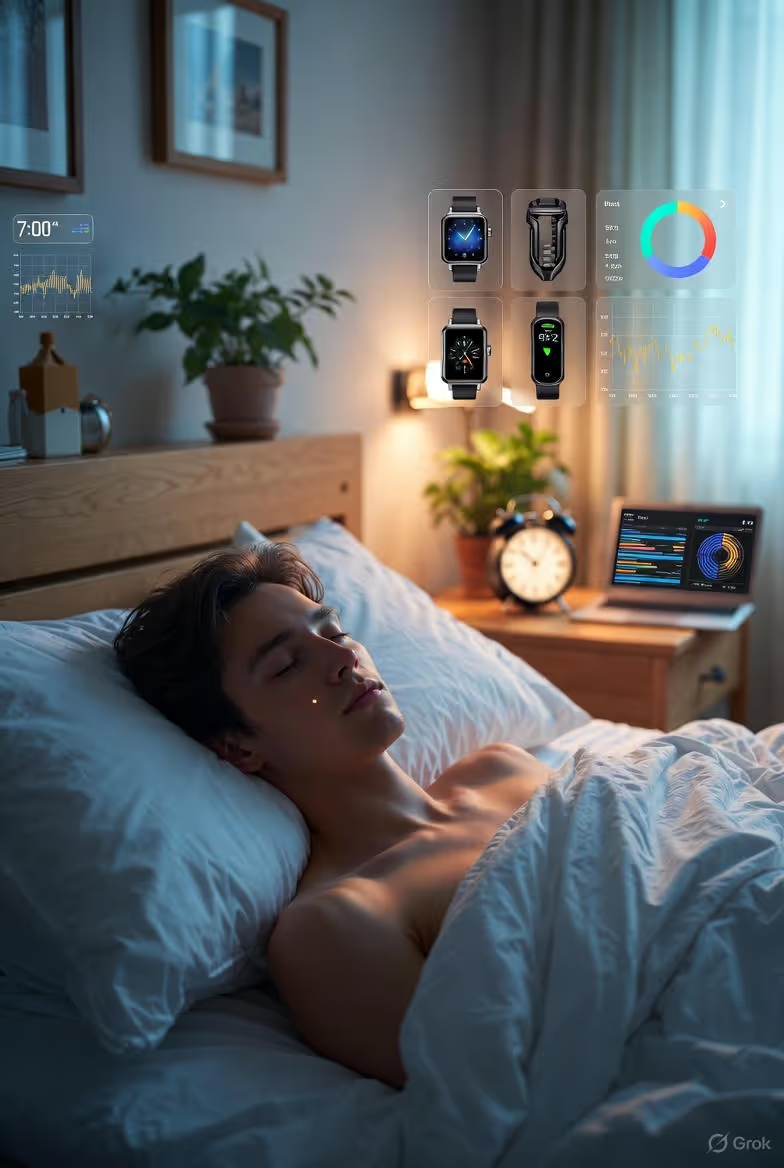
For centuries, understanding our sleep was an exercise in guesswork—relying on subjective feelings of fatigue or the vague memory of a restless night. The rise of consumer-grade biosensing wearables, particularly the sophisticated smart ring, has changed the game entirely. These devices move us from anecdotal evidence to objective, personalized data, transforming sleep from a mysterious black box into a transparent, optimizable system.
Smart rings like Oxyzen represent a significant leap forward. Worn on the finger, they leverage the rich vascularity of the finger to continuously track key physiological signals with clinical-grade sensors:
Heart Rate (HR) and Heart Rate Variability (HRV): Your nocturnal HR pattern is a direct window into your autonomic nervous system. The predictable dip in heart rate as you fall asleep and its rise toward morning are key markers of circadian alignment. HRV—the beat-to-beat variation—is a powerful indicator of recovery and sleep quality. High HRV during deep sleep suggests strong parasympathetic ("rest and digest") activity and effective restoration.
Blood Oxygen Saturation (SpO2): Continuous overnight SpO2 monitoring can identify subtle, recurring drops in oxygen levels that may indicate sleep-disordered breathing, such as sleep apnea, even in otherwise healthy individuals. This is a crucial metric for long-term cardiovascular and cognitive health.
Skin Temperature: Tracking the precise trajectory of your peripheral temperature throughout the night provides direct insight into your thermoregulatory process. It can show you exactly when your body initiates its cooling phase and how environmental factors or late meals impact it.
Movement (Accelerometry): While less precise than brainwave data, advanced algorithms can use movement, combined with heart rate patterns, to accurately distinguish between sleep stages (light, deep, REM) and identify periods of wakefulness.
The power of this data is not in the individual metrics alone, but in their synthesis. An app dashboard might reveal that on nights you exercised after 8 PM, your skin temperature remained elevated for two hours, your deep sleep percentage dropped by 15%, and your morning HRV was low. This creates a clear, cause-and-effect feedback loop that generic advice cannot provide.
This technology demystifies personal quirks. You can finally answer: Does that evening cup of herbal tea really help? Does reading on a tablet versus a paper book make a measurable difference for me? It turns self-experimentation into a science. By providing an objective baseline, these devices empower you to become the expert on your own sleep, making informed adjustments to the Temperature, Timing, and Habits formula with precision. To discover how this technology works in practice, you can learn more about smart ring technology.
Decoding Your Data: A Practical Guide to Your Sleep Metrics
With great data comes the need for great interpretation. The numbers and graphs from a sleep tracker can be overwhelming. Here’s a practical guide to understanding the key metrics and, more importantly, what actions to take based on them.
1. Sleep Stages (Light, Deep, REM, Awake):
What It Is: The architectural blueprint of your night. A healthy sleep cycle involves cycling through these stages every 90 minutes or so.
What to Look For: Aim for balance, not perfection. A typical adult spends about 50% in light sleep, 20-25% in deep sleep, and 20-25% in REM. Deep sleep dominates the first half of the night; REM periods lengthen in the second half.
Actionable Insight:
Low Deep Sleep: Often linked to high evening cortisol, late exercise, alcohol consumption, or a sleep environment that is too warm. Focus on cooling strategies, stress reduction, and earlier cutoffs for stimulants.
Low REM Sleep: Strongly associated with alcohol use, certain medications (like SSRIs), and sleeping with light or noise disruption. Protect the second half of your sleep, ensure darkness, and reconsider evening alcohol.
High Awake Time: Could indicate poor sleep hygiene, caffeine/alcohol timing, stress, or an underlying sleep disorder like apnea. Look for patterns linking wake-ups to bathroom trips, partner snoring, or anxious thoughts.
2. Resting Heart Rate (RHR) & Nournal Dip:
What It Is: Your heart rate during sleep. A healthy pattern shows a significant "dip" (10-20% below daytime RHR) shortly after falling asleep, remaining low throughout the night, with a gradual rise toward morning.
What to Look For: A lower sleeping RHR generally indicates better cardiovascular fitness and recovery. The absence of a clear dip suggests your body isn’t fully entering a restorative state.
Actionable Insight: A higher-than-normal sleeping RHR or a blunted dip can be an early sign of illness, dehydration, excessive stress, or overtraining. It’s a signal to prioritize rest, hydration, and stress management.
3. Heart Rate Variability (HRV):
What It Is: The variation in time between heartbeats. A higher HRV indicates a resilient, adaptable nervous system—one that can smoothly shift from stress (sympathetic) to recovery (parasympathetic) mode.
What to Look For: Your personal baseline is key. Track the trend, not the daily number. A rising trend suggests good adaptation to your lifestyle; a sharp or sustained drop is a red flag for excessive stress, poor recovery, or impending illness.
Actionable Insight: If your HRV is consistently low or dropping, it’s a non-negotiable sign to dial back: scale back intense workouts, double down on sleep and nutrition, and incorporate more meditation or gentle yoga. It’s your body’s most honest whisper of overload.
4. Respiratory Rate & Blood Oxygen (SpO2):
What It Is: Your breaths per minute and the oxygen level in your blood during sleep.
What to Look For: Respiratory rate should be stable. Significant, repeated dips in SpO2 (typically below 90%) are a major concern.
Actionable Insight: Frequent SpO2 dips are the hallmark of sleep apnea. If you see this pattern, especially paired with loud snoring and daytime fatigue, it is critical to consult a sleep physician. No amount of sleep hygiene can correct a mechanical breathing issue.
The goal is not to obsess over a single night’s data but to identify trends over weeks and months. This longitudinal view reveals what truly works for your unique biology, turning abstract principles into a personalized sleep optimization manual. For more detailed interpretations and case studies, our blog offers ongoing analysis and guides.
Advanced Temperature Hacking: From Cooling Mattresses to Strategic Supplements
We’ve established that core body temperature drop is a prerequisite for deep sleep. Beyond the basics of a cool room and a warm bath, a new frontier of "temperature hacking" is emerging, leveraging technology and targeted nutrition to optimize this critical process.
Technological Thermoregulation:
Bed-Cooling Systems: Devices like the Chilipad, Eight Sleep Pod, or Ooler are active cooling (and heating) systems that circulate water through a pad on your mattress. This allows for precise temperature control throughout the night. You can program them to start cool to aid sleep onset, maintain a specific temperature during deep sleep, and even gently warm in the morning to support a natural wake-up. For those who are serious about temperature optimization, this is the most direct intervention available.
Smart Thermostats: A more accessible tool. Smart thermostats like Nest or Ecobee can be programmed to lower your bedroom temperature an hour before bedtime and raise it just before your wake-up time, syncing perfectly with your circadian rhythm without wasting energy all day.
Nutritional and Supplemental Support:
Certain nutrients can influence thermoregulation and the underlying biochemistry of sleep:
Magnesium Glycinate: This highly bioavailable form of magnesium acts as a gentle neuromuscular relaxant and vasodilator, potentially aiding the distal vasodilation necessary for heat loss. Taken 60-90 minutes before bed, it can support both the physical and mental aspects of the wind-down.
Acetyl-L-Carnitine and Alpha-Lipoic Acid: Some emerging research suggests this combination may improve mitochondrial function and, intriguingly, help reset the circadian body temperature rhythm, particularly in aging populations.
Avoid Thermic Spikes: The most important nutritional rule remains avoiding large, protein-heavy meals close to bedtime. The thermic effect of digesting protein can raise core temperature for hours, directly counteracting the desired cooling trend.
Low-Tech, High-Impact Practices:
The Sock Strategy: If you have cold feet, wearing socks to bed can actually help. By warming the extremities, you prevent vasoconstriction (tightening of blood vessels), which allows for more efficient heat redistribution overall. Once your feet are warm, the socks can often be removed.
Strategic Bedding Layers: Use natural-fiber layers (cotton, wool, bamboo) that you can easily kick off or pull on. A warm duvet with cool, breathable sheets creates a microclimate you can adjust.
The philosophy here is one of dynamic support: using tools and nutrients not to override your body’s natural processes, but to create the ideal conditions for them to flourish. It’s a partnership with your physiology. This nuanced, tech-informed approach to wellness is reflective of the vision behind modern health devices, a vision you can explore in our about-us section.
The Chronotype Workaround: Tailoring Your World When You Can’t Tailor Your Schedule
Not everyone has the luxury of designing their life perfectly around their chronotype. A Wolf may have a job that starts at 7 AM. A Lion may have social or family obligations that keep them up late. The goal then becomes damage control and strategic adaptation—creating "chronotype workarounds" to minimize misalignment and its health costs.
For the Wolf (Night Owl) in a Lion’s World:
Light is Your Lever: You must be militant about morning light to phase-advance your clock. Use a dawn simulator alarm clock that gradually increases light before you wake. Get outside for 15-30 minutes of morning sunlight immediately upon waking, or use a 10,000-lux light therapy box while you have breakfast.
Aggressive Evening Darkness: Wear blue-blocking glasses starting 2-3 hours before your desired (not natural) bedtime. Make your bedroom an absolute cave of darkness.
Caffeine with Extreme Precaution: Have one morning coffee after your light exposure, and then no more. Caffeine after noon will further delay your clock, making the next morning even harder.
The Strategic Nap: If possible, a short 20-minute power nap in the early afternoon can help mitigate sleep debt without further disrupting nighttime sleep.
For the Lion (Early Bird) in a Wolf’s World:
Protect Your Morning Darkness: Use blackout curtains to avoid being woken too early by light on weekends or days off. Resist the urge to jump out of bed at 5 AM if you were up late; try to stay in a dark, restful state until a compromise time.
Evening Light Exposure: To gently delay your clock for social events, seek moderate light exposure in the late afternoon or early evening. An evening walk can help.
The Pre-Event Nap: Before a late night out, a 60-90 minute nap (long enough to get some deep sleep) in the late afternoon can build up your sleep buffer, making it easier to function late without complete exhaustion.
Prioritize Recovery: After a late night, get back on schedule the next night. Don’t sleep in excessively; instead, go to bed at your regular time or slightly earlier.
The Universal Rule: Anchor Your Wake-Up Time Regardless of chronotype clash, the single most stabilizing action is to keep your weekday wake-up time absolutely fixed, even on weekends. The compromise happens on the bedtime side. A Wolf waking at 6:30 AM daily, even if they go to bed at 1 AM on Saturday, will find it easier to readjust by Sunday night than if they had slept until noon.
The key is self-compassion. Recognize that when you are operating against your chronotype, you are swimming upstream. Your energy and willpower will be lower at certain times. Schedule demanding cognitive work for your personal peak hours and administrative tasks for your troughs. This isn’t about fighting your nature, but about navigating the modern world with it as gracefully as possible. Real people share their stories of making these adaptations while using data to guide them in our testimonials.



%402x.svg)