Deep Sleep Improvement: Results You Can Feel in One Week
Feel noticeable deep sleep improvement results within just one week. Discover highest-impact interventions that quickly increase restorative sleep with realistic timelines and expectations for improvements.
Deep Sleep Improvement: Results You Can Feel in One Week
You know that fog. It’s the 3 PM crash that feels like a lead blanket. It’s the morning alarm that feels like a physical assault, no matter how many hours you were "in bed." It's reaching for a third coffee just to feel baseline functional, while your memory feels patchy and your mood perpetually frayed. You’re not alone. In our always-on, blue-lit world, a staggering one in three adults fails to get the recommended seven hours of sleep, and the quality of that sleep is often pitifully shallow.
But what if I told you that the single most powerful upgrade to your health, cognition, and daily vitality isn't a new supplement, a brutal workout regimen, or a radical diet—it’s unlocking the power of deep sleep? And what if you could start feeling legitimate, tangible results in as little as one week?
This isn't about merely spending more time in bed. This is a targeted, science-backed mission to improve the architecture of your sleep, specifically targeting the most restorative phase: deep sleep, or slow-wave sleep. This is when your body performs its most critical repair work, your brain washes away toxic waste, memories are cemented, and growth hormone is released. It’s the foundation upon which every other aspect of your wellness is built.
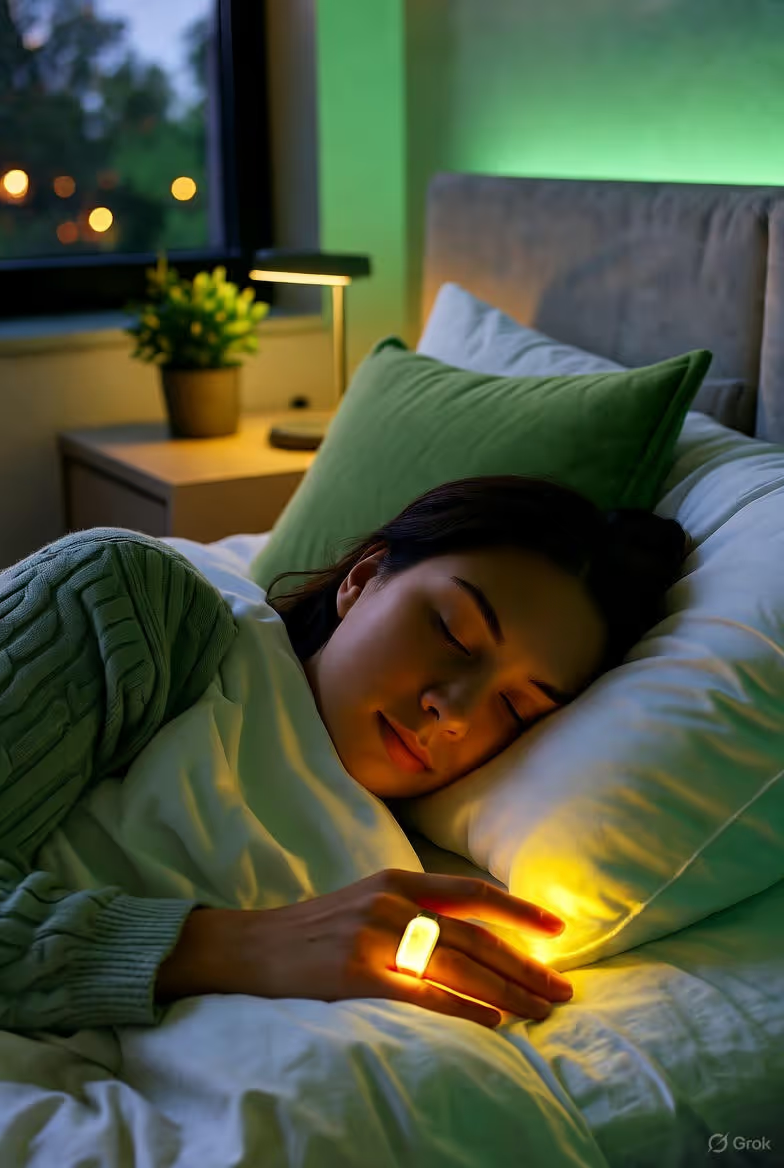
For years, optimizing this crucial phase felt like guesswork. You’d try a tip, wait a month, and wonder if anything changed. But the era of vague self-experimentation is over. The rise of precise, wearable technology—like the advanced sensors in a modern smart ring—has given us a revolutionary tool: immediate, objective feedback. No more wondering. Now, you can measure, track, and strategically improve your deep sleep night by night.
This comprehensive guide is your roadmap. We’re going beyond the standard "avoid screens" advice (though that’s in here too). We will dive into the neurology of sleep cycles, deconstruct the five pillars of deep sleep hygiene, and introduce a precise 7-Day Deep Sleep Reset Protocol. You’ll learn not just what to do, but why it works and, most importantly, how to measure your progress with the kind of technology that turns hope into data, and data into real-world results. The goal isn't perfection. The goal is progress you can feel by this time next week. Let's begin.
The Deep Sleep Imperative: Why This One Phase Dictates Your Waking Life
We often think of sleep as a monolithic state—a period of unconsciousness where we recharge. But sleep is a dynamic, highly structured journey through distinct stages, each with a unique purpose. Think of it like a nightly symphony with four movements, and deep sleep is the powerful, restorative adagio at its heart.
Understanding the Sleep Cycle Symphony: A full sleep cycle lasts about 90-120 minutes and repeats four to six times per night. It consists of:
Stage 1 (N1): The dozing-off phase, lasting several minutes. Easy to wake from.
Stage 2 (N2): Light sleep. Your heart rate slows, body temperature drops. This occupies about 50% of your night.
Stage 3 (N3): Deep Sleep. This is the gold. Brain waves slow to deep, rhythmic delta waves. It’s extremely difficult to wake from; if you are roused, you’ll feel groggy and disoriented.
REM Sleep: The stage of vivid dreams, rapid eye movement, and brain activity akin to being awake. Crucial for memory processing and emotion regulation.
While all stages are important, deep sleep is non-negotiable for physical restoration. During this phase, your body undertakes its most critical maintenance work:
Cellular Repair & Growth Hormone Release: Up to 75% of human growth hormone is secreted during deep sleep. This hormone is essential for muscle repair, bone building, and cellular regeneration.
The Brain’ Glymphatic System Activation: Your brain’s waste-clearance system goes into overdrive, flushing out metabolic toxins like beta-amyloid proteins, which are associated with Alzheimer’s disease. It’s essentially a nightly power-wash for your mind.
Memory Consolidation: Declarative memories (facts and information) are transferred from the short-term hippocampal storage to the long-term cortex, literally cementing what you learned that day.
Immune System Reboot: Cytokines, proteins that fight infection and inflammation, are produced and released during deep sleep. Skimp on it, and you become far more susceptible to illness.
The High Cost of a Deep Sleep Deficit When you don’t get enough deep sleep, the bill comes due in every aspect of your life. It’s not just about fatigue.
Cognitive Impairment: Brain fog, impaired judgment, decreased attention, and poor decision-making. Studies show that losing deep sleep impairs cognitive performance as much as alcohol intoxication.
Metabolic Chaos: Insulin sensitivity plummets. Your body becomes less efficient at processing glucose, increasing cravings for sugary, high-carb foods and raising the risk for type 2 diabetes.
Emotional Volatility: The amygdala, your brain’s fear center, becomes hyper-reactive, while connections to the prefrontal cortex (your rational brake) weaken. This leads to increased anxiety, irritability, and emotional fragility.
Accelerated Aging & Disease Risk: Chronic deep sleep deprivation is linked to hypertension, cardiovascular disease, and a compromised immune response.
The stark reality is this: you cannot out-supplement, out-exercise, or out-diet poor deep sleep. It is the bedrock. The good news? Your body is desperate to achieve it. By aligning your habits with your biology and using technology to guide you, you can reclaim this vital phase of your life. For a deeper dive into the science of sleep architecture, our blog features a library of research-backed articles.
From Guesswork to God Mode: How Technology Finally Makes Sleep Optimization Precise
For decades, the pursuit of better sleep was shrouded in mystery and frustration. You’d read an article, try sleeping in a colder room, and then… wait. How would you know if it worked? Did you get more deep sleep, or did you just sleep more lightly? The only tools were subjective morning grogginess and hope. This lack of feedback made progress slow, demotivating, and often impossible.
The advent of consumer sleep trackers was a revelation, but early devices had significant limitations. Wrist-based wearables could confuse restless lying in bed with actual sleep and often struggled with the granular accuracy needed to distinguish between light and deep sleep stages reliably.
Enter the next generation of technology: the advanced smart ring. Worn on your finger, this form factor unlocks a new level of precision for 24/7 wellness tracking, especially for sleep. Here’s why it’s a game-changer for deep sleep optimization:
1. The Optimal Vascular Access Point: Your finger is home to some of the body’s most dense and accessible capillary networks. This allows photoplethysmography (PPG) sensors in a ring to get a stronger, cleaner signal for measuring heart rate, heart rate variability (HRV), and blood oxygen saturation (SpO2) than many wrist-based devices, which can be affected by arm position and tendon movement.
2. Unobtrusive, All-Night Comfort: Unlike a bulky watch, a well-designed ring is something you forget you’re wearing. There’s no uncomfortable lump on your wrist digging into you as you toss and turn. This means you’re more likely to wear it consistently, and it’s less likely to cause sleep disruption, giving you truer data.
3. Comprehensive Physiological Triangulation: A sophisticated smart ring like Oxyzen doesn’t rely on a single data point. It uses a constellation of sensors to triangulate your sleep state:
Accelerometer: Measures movement to determine restlessness and sleep/wake states.
PPG Sensor: Continuously tracks heart rate and HRV. During deep sleep, your heart rate reaches its lowest, most steady rhythm of the day, and HRV often follows a predictable pattern. This is a key biomarker for identifying deep sleep phases.
Temperature Sensor: Monitors subtle changes in skin temperature, which drops as you enter deep sleep and rises before you wake.
SpO2 Sensor: Tracks blood oxygen levels, crucial for identifying disruptions like sleep apnea that can shatter deep sleep cycles.
By fusing this multi-sensor data with advanced algorithms, you get a detailed, quantified map of your night. You don't just see "8 hours in bed." You see a timeline showing exactly when you entered deep sleep, how long each cycle lasted, and what interruptions occurred.
This transforms the optimization process. It turns it from a monthly guessing game into a daily feedback loop. Try the 4-7-8 breathing technique before bed? Check your deep sleep graph tomorrow. Adjust your dinner time? Observe the change in your sleep latency and deep sleep percentage. This is the "God Mode" for biohacking your rest—you finally have the dashboard to see what’s actually working. To understand the full potential of this technology, you can discover how Oxyzen’s precise sensing platform works.
Your Deep Sleep Dashboard: Decoding the 5 Key Metrics That Matter Most
Data is only powerful if you understand it. Waking up to a "Sleep Score" of 82 is fine, but to truly optimize, you need to know what levers pulled that score up or down. When focusing on deep sleep improvement, these five metrics become your essential dashboard. Learning to read them is the first step to taking control.
1. Deep Sleep Duration (The Raw Total) This is the most straightforward metric: the total minutes spent in deep sleep each night. While needs vary by individual, a typical adult should aim for roughly 1.5 to 2 hours of deep sleep per night (about 20-25% of total sleep time). The key here is trends. Is your duration consistently below an hour? Is it fluctuating wildly? Your goal with any protocol is to see a steady, upward trend in this number over your one-week reset.
2. Deep Sleep Percentage (The Efficiency Gauge) This metric contextualizes your duration. It’s the percentage of your total sleep time that was spent in deep sleep. A high percentage (e.g., 25% of a 7-hour sleep is 105 minutes) indicates efficient, high-quality sleep architecture. If your duration is okay but your percentage is low, it might mean you’re spending too much time in light sleep or awake in bed, pointing to issues with sleep efficiency.
3. Sleep Latency (The Gateway Metric) How long does it take you to fall asleep? Ideally, this should be between 10 and 20 minutes. A latency consistently under 5 minutes can indicate severe sleep deprivation. A latency over 30 minutes signals difficulty initiating sleep, which can be caused by stress, poor sleep hygiene, or timing issues. Improving latency is often the fastest win in your first week, as it opens the door to longer, more complete sleep cycles.
4. Resting Heart Rate (RHR) & Heart Rate Variability (HRV) (The Autonomic Nervous System Report Card) These are not sleep-stage metrics per se, but they are profound indicators of your recovery state, heavily influenced by deep sleep.
RHR: Your heart rate during sleep should dip significantly below your daytime average. A lower nighttime RHR generally indicates better cardiovascular fitness and recovery. Deep sleep is when it reaches its lowest point. If your sleep RHR is elevated or shows little dip, it’s a sign your body is under stress (physical, mental, or inflammatory) and struggling to enter true restoration mode.
HRV: This measures the subtle variations in time between each heartbeat. Higher HRV generally indicates a resilient, adaptable autonomic nervous system (with a healthy balance between "fight-or-flight" sympathetic tone and "rest-and-digest" parasympathetic tone). HRV typically increases during deep sleep. Tracking your nightly HRV trend is one of the best ways to see if your lifestyle and sleep interventions are truly improving your body’s capacity to recover. An upward trend over your week is a powerful sign of success.
5. Sleep Consistency (The Foundation of All Progress) This might be the most important metric of all. Going to bed and waking up at wildly different times each day (even on weekends) throws your circadian rhythm into chaos. It’s like giving your body jet lag without leaving home. Consistency in your sleep schedule is the single most effective way to increase both deep sleep duration and quality. Your dashboard should show you your bedtime and wake time variability—your goal is to tighten that window.
By monitoring these five metrics daily, you move from feeling tired to understanding why. You can start to connect the dots: "Ah, on the night I had a late, heavy dinner, my deep sleep percentage dropped 15% and my RHR was 8 BPM higher." This is the power of the quantified self. For answers to common questions on interpreting this data, our comprehensive FAQ resource is an excellent place to start.
The Circadian Rhythm Reset: Syncing Your Body with the Sun for Deeper Sleep
Your body isn’t designed to simply "decide" to sleep. It follows a powerful, innate 24-hour biological clock known as your circadian rhythm. This rhythm, governed by a master clock in your brain’s hypothalamus, regulates not just sleep-wake cycles, but also hormone release, body temperature, digestion, and cellular function. When your lifestyle is out of sync with this rhythm—a state known as circadian misalignment—deep sleep is often the first casualty.
Think of your circadian rhythm as the conductor of your sleep symphony. If the conductor is confused, the music falls apart. To maximize deep sleep, your goal is to become a maestro of your own rhythm, reinforcing its natural signals.
Light: The Prime Zeitgeber (Time-Giver) Light exposure, especially blue-wavelength light, is the most powerful cue for your circadian system. Light hitting photoreceptors in your eyes sends a direct signal to your brain’s master clock, suppressing the sleep hormone melatonin and promoting alertness.
Morning Strategy (The Anchor): Get bright light exposure within 30-60 minutes of waking. This is non-negotiable. Aim for at least 10-15 minutes of outdoor morning sunlight (without sunglasses, if safe). On cloudy days or before sunrise, a bright light therapy lamp (10,000 lux) can work. This morning light anchors your rhythm, triggering a cascade that will promote melatonin release roughly 14-16 hours later.
Evening Defense (The Shield): As the sun sets, you must become vigilant. Begin dimming indoor lights 2-3 hours before bed. Most critically, implement a strict digital sunset. The blue light from phones, tablets, and computers is especially potent at suppressing melatonin. Use blue light filters (like Night Shift or f.lux) but understand they are a backup, not a solution. The goal is to reduce overall light intensity and engage in calming, screen-free activities.
Temperature: The Silent Sleep Signal Your core body temperature follows a circadian curve. It peaks in the late afternoon and then begins to drop in the evening, reaching its lowest point during deep sleep in the middle of the night. This drop is a critical signal for sleep initiation.
Evening Ritual: Facilitate this drop by taking a warm bath or shower 60-90 minutes before bed. This might seem counterintuitive, but heating your skin’s surface causes blood vessels to dilate, which then promotes rapid heat loss after you get out, accelerating the core temperature drop.
Sleep Environment: Keep your bedroom cool. The ideal range for most people is between 60-67°F (15.5-19.5°C). A cool room supports your body’s natural thermoregulation and makes it easier to enter and maintain deep sleep.
Food & Meal Timing: The Metabolic Cue When you eat sends signals to peripheral clocks in your organs, especially your liver. Late-night eating can confuse these clocks, keeping your body in a metabolically active "daytime" state when it should be winding down.
The 3-Hour Rule: Aim to finish your last substantial meal at least 3 hours before your target bedtime. This allows digestion to complete, so your body isn’t busy processing food when it should be prioritizing cellular repair.
Mind Your Macros: Heavy, high-fat meals right before bed can disrupt sleep. Conversely, a small, sleep-supportive snack if needed (like a banana, a handful of almonds, or tart cherry juice) about 60 minutes before bed can be okay for some, as it may provide tryptophan or melatonin precursors.
Consistency: The Ultimate Lever All these strategies are amplified tenfold by consistency. Waking up at the same time every day—yes, even on weekends—is the single most effective way to strengthen your circadian rhythm. It sets your biological clock for the day, making evening sleepiness predictable and reliable. Use your smart ring to track your bedtime and wake time consistency, and aim for a variation of no more than 30 minutes.
By deliberately managing light, temperature, and food in a consistent daily pattern, you stop fighting your biology and start working with it. You create the perfect internal environment for deep sleep to flourish. To learn more about the philosophy behind designing technology that harmonizes with human biology, you can explore the vision and values that drive our work at Oxyzen.
The Pre-Sleep Power Down: A 60-Minute Ritual to Signal "Safe to Rest"
In our hyper-connected lives, the transition from "go" to "slow" doesn’t happen automatically. We often sprint mentally and emotionally right up to the moment we close our eyes, leaving our nervous system buzzing with unresolved stress, endless to-do lists, and the cognitive residue of the day. This state—characterized by high sympathetic ("fight-or-flight") nervous system activity—is the arch-nemesis of deep sleep.
Your body needs a clear, unambiguous signal that it’s safe to shift into the restorative, parasympathetic ("rest-and-digest") state. This is the purpose of a deliberate, non-negotiable pre-sleep power-down ritual. It’s not about filling time; it’s about creating a predictable neurological bridge from wakefulness to deep, restorative sleep.
Minute 60 to 30 Before Bed: The Digital Detox & Environment Prep This first half-hour is about removing antagonistic stimuli and setting the stage.
Enforce a Digital Curfew: This is the linchpin. Place all phones, tablets, and laptops in another room to charge. If you must use your phone as an alarm, enable "Do Not Disturb" and place it face down and out of arm’s reach. The goal is to eliminate the temptation to "just check one thing," which inevitably leads to 20 minutes of stimulating content and blue light exposure.
Dim the Lights: Use lamps with warm bulbs instead of overhead lights. Consider smart bulbs that can be scheduled to dim automatically in the evening.
Prepare Your Environment: Set the room temperature to cool (65°F is a great target). Lay out your clothes for the next day. Do a quick tidy. This reduces decision fatigue and potential stressors in the morning, creating a sense of order and closure.
Minute 30 to 10 Before Bed: Active Decompression & Mindfulness Now, actively engage in practices that lower physiological arousal.
Gentle, Restorative Movement: This is not exercise. Think 10 minutes of very gentle yoga (yin or restorative poses), static stretching, or tai chi. The focus is on releasing physical tension, not raising your heart rate.
The "Brain Dump": Take 5 minutes with a physical notebook (not a device) and write down everything on your mind. This isn't a journaling session; it’s a download. List worries, tomorrow’s tasks, ideas, anything. The act of externalizing these thoughts gets them out of your cognitive loop and onto paper, where they can wait safely until morning.
Gratitude Reflection: Follow the brain dump with 2-3 minutes of mentally noting a few specific things you are grateful for from the day. This simple practice has been shown to reduce anxiety and promote a positive, calm mental state conducive to sleep.
The Final 10 Minutes: Physiological Quieting This is where you directly target your nervous system to trigger the relaxation response.
4-7-8 Breathing Technique: Popularized by Dr. Andrew Weil, this is a potent tool. Inhale quietly through your nose for 4 seconds. Hold your breath for 7 seconds. Exhale completely through your mouth, making a whoosh sound, for 8 seconds. Repeat this cycle 4-5 times. This practice increases parasympathetic activity and can feel like a natural sedative.
Progressive Muscle Relaxation (PMR): Starting at your toes, tense the muscles tightly for 5 seconds, then completely release for 30 seconds, noticing the sensation of letting go. Work systematically up through your calves, thighs, abdomen, hands, arms, shoulders, and face.
The Consistency of the Cue The specific activities matter less than the consistency. By performing the same sequence of calming actions each night, you are creating a powerful conditioned response. Over the course of your one-week reset, your brain will begin to associate this ritual with the imminent onset of sleep, making the transition faster and more seamless. The data from your smart ring will likely show a direct improvement in your sleep latency metric as this ritual becomes ingrained.
Nutrition as a Sleep Catalyst: What (and When) to Eat for Optimal Sleep Architecture
You are not just what you eat; you sleep how you eat. The food you consume, and more critically, when you consume it, acts as a series of instructions to your hormones, neurotransmitters, and circadian system. Strategic nutrition can support the production of sleep-promoting chemicals and avoid the metabolic disruptions that fracture deep sleep.
The Macronutrient Balance for Sleep
Complex Carbohydrates: Consuming complex carbs (like sweet potatoes, oats, or quinoa) at your evening meal can be beneficial for some. They help shuttle the amino acid tryptophan into the brain. Tryptophan is a precursor to serotonin, which is then converted into melatonin, the sleep hormone. The key is to pair them with protein.
Protein: Provides the tryptophan. Good sources include turkey, chicken, fish, eggs, nuts, and seeds. A moderate amount of protein at dinner supports satiety and stable blood sugar through the night.
Fats: Healthy fats (avocado, olive oil, fatty fish, nuts) are essential for hormone production and can help slow digestion, promoting stable energy. However, very high-fat meals right before bed can be hard to digest and disruptive for some.
Key Micronutrients & Sleep-Supportive Foods
Magnesium: Known as the "relaxation mineral," it plays a role in regulating neurotransmitters that calm the nervous system and promote sleep. Deficiency is linked to insomnia. Sources: Leafy greens, pumpkin seeds, almonds, avocados, dark chocolate.
Glycine: This amino acid has been shown in studies to improve subjective sleep quality and reduce daytime sleepiness. It may lower core body temperature. Sources: Bone broth, collagen protein, skin-on chicken.
Tart Cherry Juice: A natural source of melatonin and phytochemicals that may improve sleep duration and efficiency. A small glass in the evening can be a useful part of a ritual.
The Critical Timing Rules
The 3-Hour Meal Finish Line: As mentioned, give yourself a solid 3-hour gap between your last meal and bedtime. This allows for the bulk of digestion to occur while you’re still awake, preventing reflux, metabolic activity, and blood sugar spikes/dips from interfering with sleep onset and deep sleep cycles.
Beware the Sleep Saboteurs:
Caffeine: Its half-life is about 5-6 hours. That means if you have a coffee at 3 PM, at 9 PM, 50% of that caffeine is still in your system. Establish a firm caffeine curfew—ideally by 2 PM, or at least 8 hours before bed.
Alcohol: This is a major deep sleep destroyer. While it may sedate you and help you fall asleep faster, it dramatically suppresses REM sleep and fragments the second half of your sleep, often causing multiple mini-awakenings and severely reducing deep sleep quality. It’s a net loss for restoration.
High-Sugar Foods & Heavy Spices: Can cause blood sugar fluctuations and indigestion, leading to restlessness and night wakings.
A Sample Sleep-Supportive Evening Timeline:
7:00 PM: Dinner featuring grilled salmon (protein, omega-3s), a large roasted sweet potato (complex carbs, magnesium), and sautéed spinach (magnesium, glycine).
9:30 PM (if needed): A small, intentional snack. Example: A tablespoon of almond butter, a few tart cherries, or a cup of caffeine-free herbal tea like chamomile or passionflower.
10:00 PM: Begin your power-down ritual. No more food.
By aligning your nutrition with your sleep goals, you use food as a functional tool, not just fuel. Pay attention to how changes in your diet reflect in your smart ring data—particularly your resting heart rate and HRV overnight. A lighter, earlier dinner often leads to a lower, more stable RHR, indicating a system focused on repair, not digestion. For more insights on how daily habits influence nightly recovery, our blog is filled with actionable wellness strategies.
Movement & Recovery: How Daytime Activity Primes Your Nervous System for Nightly Restoration
The relationship between exercise and sleep is profound and bidirectional. Daytime physical activity is one of the most reliable, drug-free promoters of deep sleep. However, it’s not simply about being tired. The type, intensity, and timing of your movement send specific signals to your body about energy expenditure, stress adaptation, and the need for recovery—signals that culminate in more robust sleep architecture.
The Deep Sleep Benefits of Regular Movement:
Sleep Pressure: Exercise increases your body’s homeostatic sleep drive, also known as "sleep pressure." It builds up a healthy need for recovery that makes falling asleep easier and can deepen sleep.
Temperature Regulation: The rise and subsequent fall in core body temperature following exercise mimics the natural circadian temperature drop, reinforcing your body’s sleep-wake signals.
Anxiety & Stress Reduction: Physical activity is a powerful modulator of stress hormones like cortisol. It also promotes the release of endorphins and supports the balance of neurotransmitters like serotonin, which improves mood and reduces anxiety—a common barrier to sleep.
Circadian Rhythm Reinforcement: Morning or afternoon exercise, especially outdoors, provides strong light and activity cues that help anchor your circadian clock.
Optimizing Exercise for Sleep: The Type & Timing Matrix Not all exercise is equal when it comes to sleep optimization. Here’s how to strategize:
Aerobic Exercise (Cardio): Activities like running, cycling, swimming, and brisk walking are champions for increasing deep sleep. They promote greater sleep efficiency and duration. Ideal Timing: Morning or early afternoon. This gives your body ample time to cool down, metabolize stress hormones released during the workout, and build sleep pressure for the evening.
Resistance Training (Strength): Lifting weights or bodyweight training improves overall health and can enhance sleep quality. It may cause more acute muscle tissue damage, requiring repair during deep sleep. Ideal Timing: Afternoon. Similar to cardio, avoid finishing a heavy session too close to bedtime.
High-Intensity Interval Training (HIIT): While excellent for fitness, the intense metabolic and hormonal surge from HIIT can be overly stimulating if done too late. Ideal Timing: Absolutely no later than 4-5 hours before bed. Morning or lunchtime is ideal.
Mind-Body & Restorative Movement: Yoga (especially gentle forms), tai chi, and stretching are exceptional evening activities. They directly promote parasympathetic activation, reduce muscular tension, and calm the mind, making them perfect inclusions in your pre-sleep power-down ritual.
The Critical "When": The 90-Minute Rule As a general principle, conclude any moderate-to-high intensity exercise at least 90 minutes before your target bedtime. This allows your core temperature, heart rate, and adrenaline levels to return to a true baseline. Violating this rule can leave your sympathetic nervous system too activated, increasing sleep latency and reducing sleep quality.
Listening to Your Data: Overtraining vs. Optimal Training This is where your smart ring becomes an indispensable coach. Resting Heart Rate (RHR) and Heart Rate Variability (HRV) are your primary biomarkers for recovery.
If your morning RHR is elevated by 5-7+ BPM above your personal baseline for several days, it’s a classic sign your body is under-recovered. This could be from overtraining, life stress, or poor sleep itself.
If your HRV shows a consistent downward trend, it indicates your nervous system is struggling to adapt to the stress load.
Seeing these signals is a clear instruction to prioritize recovery: dial back workout intensity, focus on sleep and nutrition, and incorporate more restorative practices. Ignoring them and pushing harder is a direct ticket to poorer sleep, injury, and burnout. By using your movement to intelligently stress the system and your recovery (especially sleep) to rebuild it stronger, you create a virtuous cycle. Witnessing this cycle in your own data—seeing a hard workout day followed by a night of increased deep sleep and a strong HRV rebound—is incredibly motivating and turns abstract advice into a personal science experiment. To see how real users have transformed their training and recovery with precise data, browse through the powerful testimonials from our community.
Mastering Your Mind: Cognitive and Behavioral Techniques to Quiet the Brain at Night
You’ve set the stage with light, temperature, food, and movement. But what about the relentless narrator in your head? The replaying of awkward conversations, the anxiety about tomorrow’s presentation, the mental to-do list that seems to grow at midnight? Cognitive hyperarousal is arguably the most common thief of deep sleep in the modern world. Fortunately, we have powerful, evidence-based psychological tools to disarm it.
Cognitive Strategies: Reframing the Narrative These techniques target the content of your thoughts.
Stimulus Control Therapy: This classic insomnia treatment is based on a simple, powerful rule: The bed is only for sleep and intimacy. If you are in bed and not asleep (or not engaging in intimacy), get up after 20 minutes. Go to another room and do something quiet and boring in dim light (like reading a physical book—no screens). Return to bed only when you feel sleepy. This breaks the association between bed and frustration/awake time, rebuilding it as a strong cue for sleep.
Scheduled Worry Time: Give your anxieties a dedicated appointment earlier in the day, far from bedtime. Set a 15-minute timer in the late afternoon. During this time, write down every worry, problem, and "what-if" scenario. Brainstorm possible solutions. When the timer goes off, close the notebook. If those thoughts arise at night, you can calmly tell yourself, "I’ve already addressed that during my worry time. I can let it go until tomorrow."
Cognitive Restructuring: Challenge catastrophic sleep thoughts. Thoughts like "If I don’t fall asleep right now, tomorrow will be a disaster" create performance anxiety around sleep itself. Replace them with more realistic, calming thoughts: "My body knows how to sleep. Even if I rest quietly, my body is still recovering."
Behavioral & Mindfulness Techniques: Changing Your State These techniques focus on changing your state of being rather than engaging with thought content directly.
Mindfulness Meditation & Body Scans: Regular mindfulness practice, even for 10 minutes a day, reduces activity in the brain's default mode network (the "monkey mind" that ruminates). A body scan—where you slowly bring attention to each part of the body from toes to head—is particularly effective at bedtime. It draws focus away from thoughts and into physical sensation, promoting relaxation.
Paradoxical Intention: For sleep-onset anxiety, try trying to stay awake. Get in bed, keep your eyes open in the dark, and tell yourself you must stay awake. Often, the performance pressure is removed, and sleep can sneak in naturally.
Autogenic Training: This is a self-relaxation technique where you repeat a series of mental phrases to induce feelings of heaviness, warmth, and calm in the body (e.g., "My right arm is heavy and warm..."). It’s a form of self-hypnosis that directly lowers autonomic arousal.
The Power of Acceptance Sometimes, the harder we try to sleep, the more elusive it becomes. Sleep is a passive process, not an active achievement. Practicing sleep effortlessness is a skill. When you find yourself striving, remind yourself: "The goal is not to force sleep. The goal is to provide the best possible conditions for it to occur, and then let go."
Over your one-week reset, incorporate one or two of these cognitive-behavioral techniques into your power-down ritual. The goal isn't to master them all at once, but to find which tool helps your mind quiet down. Your smart ring data will provide the proof. As you gain mastery over your mental chatter, you should see measurable improvements in your sleep latency and fewer periods of "awake" time during the night, leading to a more consolidated, deeper sleep profile. For further support and answers on implementing these strategies, remember that our FAQ center is always available.
The 7-Day Deep Sleep Reset: Your Actionable Protocol for Rapid Results
Theory is essential, but transformation requires action. This 7-Day Deep Sleep Reset Protocol is designed to integrate the principles from the previous sections into a manageable, step-by-step plan. You will not do everything perfectly. The goal is consistent, deliberate effort, using your technology to guide and motivate you. Each day builds on the last, layering habits to create a compound effect by the end of the week.
Pre-Reset Prep (The Day Before):
Set Your Baseline: Wear your smart ring for a full night's sleep. Do not change any habits yet. This night’s data is your "before" picture. Note your key metrics: Deep Sleep Duration, Sleep Latency, and Resting Heart Rate.
Set Your Schedule: Decide on a fixed bedtime and wake time for the next 7 days, allowing for 7-8 hours in bed. Write it down.
Environment Check: Ensure your bedroom is cool, dark (consider blackout curtains), and quiet (use earplugs or a white noise machine if needed).
The Daily Protocol:
Day 1: The Light Anchor & Digital Sunset
Morning Action: Within 30 minutes of waking, get 15 minutes of direct morning sunlight (or use a light therapy lamp).
Evening Action: Implement a strict digital sunset 90 minutes before bed. No phones, tablets, or computers. Read a physical book or magazine instead.
Tonight’s Focus: Observe your sleep latency in tomorrow's data. Simply removing evening blue light can have a rapid effect.
Day 2: The Consistent Schedule
Action: Go to bed and wake up at your predetermined times, no exceptions. Even if you slept poorly, get up at the set time.
Evening Addition: Begin your 60-minute power-down ritual, starting with dimming the lights.
Tonight’s Focus: The act of consistency begins to reset your master clock. Check your sleep consistency score.
Day 3: The Pre-Sleep Ritual Deepening
Action: Formalize your ritual. Choose one calming activity from the cognitive/mindfulness section (e.g., 5-minute brain dump, 4-7-8 breathing, or a short body scan) to add to the last 15 minutes of your power-down.
Nutrition Check: Ensure your last meal is at least 3 hours before bed.
Tonight’s Focus: Combining schedule consistency with a calming ritual. Look for improvements in your HRV trend.
Day 4: The Caffeine & Alcohol Audit
Action: Enforce a 2 PM caffeine curfew. If you consume alcohol, commit to skipping it tonight. Note how you feel in the evening.
Action: Add 20-30 minutes of moderate activity (a brisk walk, light cycling) earlier in the day.
Tonight’s Focus: Removing chemical sleep disruptors. This can lead to noticeably less restlessness and more consolidated deep sleep cycles.
Day 5: The Temperature & Meal Timing Optimization
Action: Take a warm bath or shower 60-90 minutes before bed.
Action: If you had a late dinner on previous nights, make a concerted effort to eat earlier. Opt for a sleep-supportive dinner with magnesium-rich foods.
Tonight’s Focus: Facilitating the core temperature drop. This is a powerful deep sleep signal.
Day 6: The Movement & Recovery Integration
Action: Engage in a more vigorous workout (cardio or strength) in the morning or early afternoon, respecting the 90-minute rule before bed.
Evening Action: Spend the last 30 minutes before your ritual in complete quiet—no podcasts, no music with lyrics, just silence or calming instrumentals.
Tonight’s Focus: See how your body responds to daytime exertion. A good workout should be followed by increased deep sleep duration and a strong HRV response if you’re recovered.
Day 7: The Consolidation & Reflection
Action: Follow the full protocol seamlessly: morning light, consistent schedule, clean nutrition, daytime movement, full evening power-down ritual.
Action: Before bed, review your sleep data from the past 6 nights. Look for trends, not just a single night.
Tonight’s Focus: Cementing the habits. This night’s data is your first major checkpoint.
Throughout the week, your role is that of a curious scientist and a compassionate coach. The data from your smart ring is your lab journal. It tells the unbiased story of what’s working. The ultimate goal of this week is not just to feel better (though you likely will), but to prove to yourself, with data, that you have direct agency over the quality of your rest. To understand the philosophy behind creating a product that enables this kind of personal discovery, you can read about the journey and mission that led to the creation of Oxyzen.
The Day 8 Breakthrough: Interpreting Your Data and Cementing Your Gains
You’ve completed the 7-Day Reset. You’ve diligently followed the protocol, navigated the evening rituals, and perhaps even surprised yourself with your own discipline. Now, you wake up on Day 8. This is the moment of truth—not based on a vague feeling, but on a week’s worth of objective data. The real work of optimization begins not with action, but with analysis. Learning to interpret the story your data tells is how you move from a one-week experiment to a lifetime of improved sleep.
The Holistic Review: Looking Beyond a Single Night The most common mistake is to fixate on a single bad night. Sleep is inherently variable. Stress, a minor illness, an unusual meal, or even a compelling dream can affect one night's metrics. The power lies in the trend. Open your sleep tracking app and look at the weekly or monthly view. What patterns do you see?
The Deep Sleep Trajectory: Draw a mental line through your nightly deep sleep duration or percentage. Is the line sloping upward? Even a 5-10 minute average increase is a significant biological win. Did it become more stable, with fewer wild swings?
The Latency Learning Curve: Your sleep latency metric should show a decrease in both the average time and the variability. The goal is a predictable, swift transition into sleep, which the Reset ritual aims to create.
The Recovery Metrics (RHR & HRV): This is where the magic of consistency shows. Has your nighttime resting heart rate established a lower, more stable baseline? More importantly, look at your HRV trend. An upward trajectory or a stabilization at a higher level is one of the clearest indicators that your nervous system is becoming more resilient and that your recovery processes are improving.
Connecting the Dots: The Cause-and-Effect Exercise Now, cross-reference your data with your lifestyle log (even a mental one). Be a detective.
“On Tuesday, I had to work late and ate dinner at 9 PM. My deep sleep graph shows fragmentation at 1 AM. Connection: Late digestion disrupted my sleep cycle.”
“On Thursday, I took a 20-minute walk in the morning sun and did my full ritual. My deep sleep duration peaked, and my HRV was the highest of the week.”
“On Saturday, I slept in. While I got more total sleep, my deep sleep percentage was lower, and I felt groggy. My circadian rhythm was confused.”
These connections are your personal sleep blueprint. They tell you what your unique biology prioritizes and what it rejects. Perhaps you discover you’re extremely sensitive to caffeine after 10 AM, or that a warm shower is non-negotiable for you, or that even 30 minutes of screen time before bed halves your deep sleep. This knowledge is empowering—it turns sleep from a mystery into a manageable equation.
The "Keeper" Habits: Building Your Personal Sleep Protocol Based on your data-driven insights, identify the 3-4 interventions from the Reset that yielded the clearest positive results. These are your non-negotiable “Keeper” habits. For most people, this core stack includes:
A Consistent Wake Time (the most powerful circadian anchor).
A Digital Sunset (removing the greatest modern antagonist to melatonin).
The 3-Hour Meal Finish Line (protecting sleep from metabolic work).
Your Most Effective Pre-Sleep Ritual Element (e.g., 4-7-8 breathing or the brain dump).
Your goal for the coming weeks is not to maintain the intensity of the full Reset, but to religiously uphold these 3-4 core habits. They form the unshakable foundation. The other strategies become tools you can deploy as needed—using a light therapy lamp on dark winter mornings, scheduling a worry time during a stressful project, or prioritizing a morning workout after a subpar night’s sleep.
The Iterative Mindset: Sleep Optimization is a Practice, Not a Destination Day 8 is not an end; it’s a new beginning. You now have a baseline, a set of proven tools, and a method for measuring outcomes. This establishes an iterative feedback loop:
Implement a small, focused habit.
Measure its impact with your tracking data.
Learn from the correlation.
Adapt your protocol accordingly.
This is the sustainable path. It prevents burnout from trying to do everything perfectly forever. It allows for life to happen—a social dinner, a late flight, a period of high stress—without derailing you entirely. You simply return to your core “Keeper” habits and use your data to guide your recovery. For ongoing support and new insights as you continue your journey, exploring our blog for more wellness tips can provide fresh perspectives and advanced strategies.
Beyond the Basics: Advanced Biohacks for the Deep Sleep Enthusiast
Once your foundational habits are solid and you’re seeing consistent data improvements, you may wish to explore more advanced, niche strategies. These "biohacks" delve deeper into environmental manipulation, nutritional supplementation, and technology-assisted conditioning. They are not substitutes for the basics but can be powerful adjuvants for those seeking an extra edge.
Environmental Fine-Tuning:
Grounding (Earthing): The theory suggests that direct physical contact with the Earth's surface electrons (walking barefoot on grass, soil, or sand) can reduce inflammation and improve sleep by stabilizing the body's circadian rhythms. While more research is needed, anecdotal reports and some small studies suggest benefits. A practical, indoor version is using a grounding sheet or mat on your bed.
Specific Frequency Sound: Beyond white noise, certain sound frequencies are purported to encourage brainwave states conducive to sleep. Pink noise (deeper, flatter than white noise) has been shown in studies to improve stable deep sleep and enhance memory consolidation in older adults. Delta wave binaural beats (listened to with headphones) aim to gently entrain the brain toward the delta wave pattern of deep sleep.
Weighted Blankets: The deep touch pressure provided by a weighted blanket (typically 10% of your body weight) has been shown to increase melatonin production and reduce cortisol, lowering anxiety and creating a cocoon-like feeling of safety that can decrease sleep latency and reduce nighttime awakenings.
Targeted Nutritional Supplementation:
Note: Always consult with a healthcare professional before beginning any new supplement regimen.
Magnesium Glycinate or L-Threonate: These highly bioavailable forms of magnesium are particularly noted for their ability to cross the blood-brain barrier. They can promote muscle relaxation and calm the nervous system. A dose of 200-400 mg taken 30-60 minutes before bed is common.
Apigenin: A flavonoid found in high concentrations in chamomile tea. It acts as a positive allosteric modulator of GABA-A receptors, similar to how some sedative drugs (but much milder and safer) work, promoting calm and sleepiness.
L-Theanine: An amino acid found in green tea. It promotes alpha brain waves (associated with relaxed alertness) and can reduce anxiety without causing drowsiness, making it useful for calming an overactive mind before bed. Often taken in combination with magnesium.
Glycine: As discussed, 3 grams before bed has been shown in studies to improve subjective sleep quality and reduce daytime sleepiness, potentially by lowering core body temperature.
Technology-Assisted Conditioning:
Heart Rate Variability (HRV) Biofeedback: Using a sensor (like your smart ring) and a guided app, you can practice breathing at your resonant frequency—the breath pace that maximizes your HRV amplitude. Training in this for 10-20 minutes daily has been shown to significantly improve autonomic nervous system balance, reduce anxiety, and improve sleep over time.
Temperature-Linked Sleep Systems: The most advanced sleep environments now include bedding systems with dual-zone temperature control that actively cool or warm each side of the bed, tracking your sleep phases to provide cooling as you enter deep sleep and warming as you approach wake time, perfectly supporting your circadian temperature rhythm.
The Principle of Prudence: The world of biohacking is fascinating, but it requires a discerning mind. The rule of thumb is to introduce one new advanced intervention at a time, for at least one week, while holding all other variables constant. Use your smart ring data to assess its impact objectively. Does your deep sleep duration increase? Does your HRV improve? Does your sleep latency drop further? If not, it may not be for you. The goal is personalized optimization, not collecting every hack available. The foundation—light, timing, food, and ritual—will always deliver 80% of the results. These advanced methods are for fine-tuning the final 20%. To see how others have integrated advanced data into their wellness routines, the real-world experiences shared in our testimonials can be illuminating.
Navigating Common Sleep Disruptors: Solutions for Insomnia, Apnea, and Restless Nights
Even with a perfect protocol, you may encounter persistent obstacles. Recognizing and addressing common sleep disorders is critical, as they can completely undermine your efforts. Your smart ring is not a medical diagnostic device, but it can serve as an incredibly valuable screening tool and progress monitor, providing data that can empower a conversation with a healthcare professional.
1. Insomnia: When the Mind (or Body) Won’t Shut Off Insomnia—difficulty falling or staying asleep—is often a symptom of hyperarousal. If your data consistently shows high sleep latency (>30 minutes) and frequent, long periods of "awake" time during the night, consider these steps:
Double-Down on CBT-I: The cognitive and behavioral techniques outlined earlier (Stimulus Control, Sleep Restriction, Paradoxical Intention) are the first-line, gold-standard treatment for chronic insomnia, often more effective long-term than medication. Consider seeking a therapist specializing in Cognitive Behavioral Therapy for Insomnia (CBT-I).
The Sleep Restriction Technique (Under Guidance): This powerful CBT-I method involves temporarily restricting your time in bed to closely match your actual sleep time (e.g., if you only sleep 6 hours but are in bed for 8, your initial time in bed is set to 6 hours). This builds intense sleep pressure, increases sleep efficiency, and gradually, as sleep consolidates, the time in bed is extended. This should be done with guidance from a professional or a structured app.
Rule Out Medical Causes: Thyroid disorders, chronic pain, acid reflux, and medication side effects can all cause insomnia. Your ring data showing elevated nighttime heart rate could be a clue pointing toward a physiological rather than purely psychological cause.
2. Sleep Apnea: The Silent Deep Sleep Killer Sleep apnea involves repeated pauses in breathing during sleep, often accompanied by loud snoring or gasping. Each apnea event causes a micro-arousal, pulling you out of deep sleep. It’s devastating to sleep quality and a major risk factor for cardiovascular disease.
The Smart Ring as a Screening Ally: This is where the SpO2 (blood oxygen saturation) sensor in a ring becomes critically important. While not as precise as a clinical polysomnogram, it can detect significant dips in your blood oxygen levels throughout the night. A pattern of repeated desaturations (drops of 4% or more from your baseline) is a strong red flag.
Other Data Clues: Look for a highly elevated and variable resting heart rate during sleep, along with frequent movement. Despite long time in bed, deep sleep percentage will be very low.
The Next Step: If you see these patterns—especially if you have risk factors like being overweight, a large neck circumference, or a family history—it is essential to consult a sleep specialist. They can order a home sleep test or an in-lab study for a definitive diagnosis. Treatment (like a CPAP machine) can be life-changing, instantly restoring deep sleep and daytime energy.
3. Restless Legs Syndrome (RLS) & Periodic Limb Movement Disorder (PLMD) RLS involves an uncontrollable urge to move the legs, usually in the evenings, while PLMD involves involuntary leg jerks or kicks during sleep. Both fragment sleep.
Data Signature: Your accelerometer will show high levels of movement, particularly in the legs, often in clusters throughout the night. This can correlate with awakenings or shifts to lighter sleep.
Potential Triggers & Solutions: Iron deficiency (especially ferritin levels) is a common cause. Caffeine, alcohol, and certain medications can exacerbate it. Increasing dietary iron, taking magnesium, and practicing leg stretches or massage before bed can help. Again, a healthcare provider can diagnose and recommend treatments, which may include medication.
The Role of Your Tracker in Professional Care When you visit a doctor about a sleep concern, coming with data is a game-changer. Instead of saying “I’m tired,” you can say: “Over the past month, my data shows my average SpO2 drops to 88% with 15+ events per night, my deep sleep is under 10%, and my heart rate is highly variable. Here are the graphs.” This objective evidence can fast-track you to appropriate testing and care. For any technical questions about the data your device provides in these contexts, our FAQ section offers detailed support.
The Long Game: How to Make Deep Sleep Optimization a Sustainable Lifestyle
The 7-Day Reset provides a launchpad. The advanced biohacks offer fine-tuning. But the ultimate prize is integrating these principles so seamlessly into your life that they cease to be a "protocol" and become simply how you live. This is the art of sustainable sleep hygiene. It requires flexibility, self-compassion, and a focus on systems over sheer willpower.
Building Habit Stacking and Environmental Design: Willpower is a finite resource. The goal is to design your environment and routines so that the right choice is the easy choice.
Habit Stacking: Attach new sleep habits to existing, ingrained ones. For example: "After I brush my teeth (existing habit), I will plug my phone in to charge in the kitchen (new habit)." Or, "When I get into bed (existing habit), I will immediately begin my 4-7-8 breathing for one minute (new habit)."
Environmental Design: Make your bedroom a sanctuary for sleep only. Remove work materials, exercise equipment, and clutter. Invest in high-quality blackout curtains, a comfortable mattress, and cool, breathable bedding. Use smart plugs to automatically dim lights at a set time. These physical cues reinforce the behavioral intention.
The 80/20 Rule for Sleep: Aim for consistency 80% of the time. This allows for 20% of life to happen—a celebratory dinner that runs late, a weekend trip across time zones, a night out with friends. When you deviate, do so mindfully and without guilt. Enjoy the late-night conversation or the special meal. Then, the next day, you simply return to your core “Keeper” habits. Your established rhythm and the sleep pressure you’ve built will make it easier to get back on track. The data from your ring will show a temporary dip, followed by a recovery—a pattern that teaches resilience.
Seasonal and Life-Stage Adjustments: Your sleep needs and challenges will change. New parents, shift workers, menopausal women, and aging adults all face unique circadian and hormonal shifts.
The Power of the Nap: If nighttime sleep is unavoidably shortened (e.g., with a newborn), a strategically timed 20-30 minute nap before 3 PM can help mitigate deep sleep debt without disrupting the following night’s sleep.
Adapting to Menopause: Night sweats and hormonal fluctuations can destroy sleep continuity. Here, environmental control becomes paramount: moisture-wicking bedding, a fan, and even mattress cooling systems can be worth their weight in gold. Tracking temperature and HRV can help identify patterns.
Aging and Sleep Architecture: It’s normal for deep sleep quantity to decrease slightly with age. The focus shifts even more to quality and protecting the deep sleep you do get through impeccable hygiene and consistent scheduling.
Using Data for Motivation, Not Obsession: It’s possible to become overly fixated on the numbers, a phenomenon sometimes called "orthosomnia." Remember, the goal of tracking is to improve your felt experience of life—your energy, mood, and health. If you find yourself anxious about hitting a specific sleep score, take a step back. Perhaps wear the ring every other night, or focus only on the weekly trends. The data is a servant, not a master. Its purpose is to provide insight and confirm that your healthy efforts are paying off, not to become a source of nightly performance anxiety.
By adopting this long-term, flexible mindset, you protect the gains you’ve made. You learn to listen to both your body’s signals and your device’s data, creating a harmonious dialogue that guides you toward sustained well-being. This journey of aligning lifestyle with biology is at the very heart of our mission, which you can learn more about on our about page.
The Future of Sleep Science: Emerging Trends and What’s Next for Personalized Recovery
We stand at the precipice of a revolution in personal health optimization. The convergence of advanced sensor technology, artificial intelligence, and a deepening understanding of human physiology is set to transform our relationship with sleep from reactive to profoundly predictive and personalized.
From Descriptive to Predictive Analytics: Current sleep trackers are largely descriptive: they tell you what happened last night. The next generation will be predictive. By analyzing longitudinal data—weeks, months, and years of your sleep, activity, heart rate, and HRV—AI algorithms will be able to identify subtle patterns that precede a poor night’s sleep or a drop in resilience.
Example: Your device might alert you: "Based on your elevated resting heart rate and lower HRV today, combined with a high-strain workout and late caffeine intake, your predicted deep sleep recovery is 40% below your baseline. Consider an extended power-down ritual and 10 minutes of HRV biofeedback tonight."
Illness Prediction: Early research suggests that changes in resting heart rate and HRV can signal the onset of illness (like a common cold or even COVID-19) before symptoms appear. A future sleep system might provide an early warning, suggesting you prioritize rest and hydration.
Closed-Loop Sleep Environments: Imagine your bedroom dynamically responding to your real-time sleep physiology.
The bed gently warms as you begin your pre-sleep ritual to initiate the temperature drop, then cools during deep sleep phases, and slowly warms again to simulate dawn as you approach your wake time.
The lighting in your home follows a precise, personalized curve throughout the evening, tuned to your circadian chronotype (are you a natural early bird or night owl?), automatically dimming and shifting color temperature.
Soundscapes adapt in real-time: playing pink noise during your light sleep phases to stabilize them, then shifting to a different frequency as you enter deep sleep to extend its duration, and finally integrating gentle, gradual sounds to wake you at the optimal point in your sleep cycle.
Nutrigenomics and Sleep: The field of nutrigenomics explores how your unique genetic makeup influences your response to nutrients. In the future, a DNA test combined with your continuous physiological data could yield hyper-personalized nutritional recommendations for sleep.
"Your genetic profile shows a reduced efficiency in converting tryptophan to serotonin. Therefore, a direct supplement of 5-HTP before bed may be more effective for you than simply eating turkey."
"You have a fast caffeine metabolism variant. A coffee at 4 PM is unlikely to affect your sleep, but you are highly sensitive to alcohol's impact on sleep architecture."
Brain-Computer Interfaces (BCI) and Sleep Optimization: While further on the horizon, non-invasive BCIs (like advanced EEG headbands) could provide direct feedback on brainwave states. This could lead to neurofeedback training protocols specifically designed to increase an individual’s propensity for deep sleep, essentially "teaching" the brain to more easily access and sustain this restorative state.
The Central Role of the Smart Ring: In this future, the smart ring is poised to be the central hub of personal physiological data. Its 24/7 wearability, combined with its ability to measure core biomarkers (pulse, HRV, temperature, SpO2), makes it the ideal, uninterrupted data stream to feed these intelligent, predictive systems. It becomes less of a tracker and more of a personal sleep and recovery coach, integrated into the very fabric of your daily and nightly life.
This future is not about technology for technology’s sake. It’s about using these tools to remove guesswork, personalize solutions, and finally give us the clarity and control we need to master the one-third of our lives that dictates the quality of the other two-thirds. To stay at the forefront of these developments and the technology that enables them, you can discover how Oxyzen is innovating in this space.
Conclusion of Part One: Your Invitation to a Restored Life
We began this journey with the familiar fog of fatigue—the 3 PM crashes, the groggy mornings, the sense that you’re running at a deficit. We’ve traveled through the essential science of deep sleep, understanding its non-negotiable role as the body’s master repair shift. We’ve demystified the technology that now allows us to move from guesswork to precise feedback, turning our nights into a personal laboratory for optimization.
You now possess a comprehensive toolkit:
The knowledge of how light, temperature, food, and timing orchestrate your sleep symphony.
A proven 7-Day Reset Protocol to catalyze rapid, tangible change.
The skill to read your data, connecting lifestyle choices to physiological outcomes.
Advanced strategies to explore and solutions for common disruptors.
A sustainable framework for making deep sleep optimization a lifelong pillar of health.
The most critical step remains: to begin. Not perfectly, but consistently. Start with your morning light. Defend your digital sunset. Choose one ritual and practice it for three nights in a row. Put on your smart ring and let it show you, incontrovertibly, that your efforts are working.
This is more than a sleep improvement plan. It is a recalibration of your foundational health. When you improve your deep sleep, you are not just fighting fatigue; you are upgrading your brain’s clarity, your body’s resilience, your emotional stability, and your metabolic efficiency. You are investing in the very substrate of your human potential.
The data is waiting to tell your story of improvement. The morning energy is waiting to be claimed. The restored version of you is waiting to wake up. Your journey to deeper sleep—and a more vibrant waking life—starts tonight.
We are honored to be a part of your journey toward better rest and richer days. To see how others have transformed their lives by taking that first step, we invite you to read the inspiring stories from our community of users.



%402x.svg)