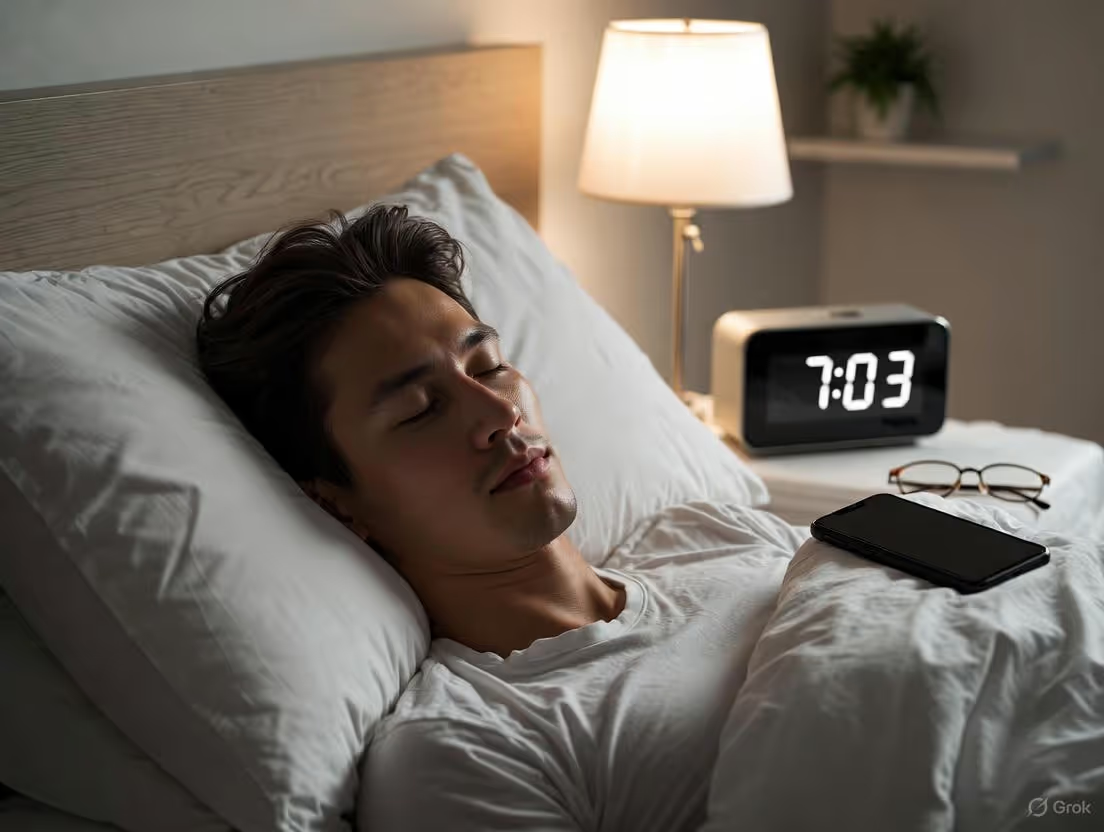
Deep Sleep Optimization for Shift Workers (Special Strategies)
Optimize deep sleep for shift workers with special strategies for irregular schedules. Discover evidence-based interventions that maximize restorative rest despite non-traditional sleep timing and circadian challenges.
The Shift Worker's Ultimate Guide to Deep Sleep: Rewiring Your Body Clock for True Rest
For over 22 million Americans—the nurses, police officers, factory workers, and countless others who keep our society running 24/7—sleep isn't a simple matter of turning off the lights. It's a constant, exhausting battle against the sun, the schedule, and their own biology.
You know the feeling all too well. Lying in bed after a night shift, your body aching for rest, but your mind is buzzing and sunlight is seeping around the blackout curtains. Or the heavy-lidded dread of driving home at dawn, fighting to stay alert. This isn't just "being tired." This is a profound biological mismatch known as Shift Work Sleep Disorder (SWSD), a condition affecting 10% to 40% of the shift-working population. It robs you of the deep, restorative sleep your body desperately needs to repair, rejuvenate, and stay healthy.
But here's the powerful truth most shift workers are never told: Deep sleep optimization is possible, even on the most challenging schedule. It doesn't require you to quit your job or live like a hermit. It requires a strategic, science-backed understanding of your own circadian rhythms and a set of specialized tools designed for your life, not a 9-to-5 world.
This guide is the first comprehensive roadmap built specifically for you. We'll move beyond generic "sleep hygiene" tips that often contradict your reality (like "avoid all naps") and dive into the specialized strategies that work. We'll explore how cutting-edge, discreet technology—like the Oxyzen Smart Ring—can provide the personalized data you need to finally take control of your sleep. Think of it as your operator's manual for achieving deep, healing sleep against the clock.
Introduction: The High Stakes of Sleep in a 24/7 World
Imagine a world where the most essential services—hospitals, power plants, emergency lines—simply shut down at sunset. It's unthinkable. Shift work is the backbone of our modern society, with nearly one in five workers in the United States participating in some form of non-traditional schedule. These men and women sacrifice the conventional rhythm of life to keep us safe, healthy, and connected.
Yet, this essential service comes at a tremendous personal cost. The human body is governed by a master clock in the brain—the suprachiasmatic nucleus (SCN)—that orchestrates a 24-hour symphony of hormonal releases, temperature fluctuations, and alertness signals, all exquisitely tuned to the rising and setting of the sun. When you work through the night and sleep during the day, you are not just fighting drowsiness; you are fighting a fundamental biological imperative.
The result is more than just fatigue. Shift workers lose an average of two to four hours of sleep per day compared to day workers. This chronic sleep debt isn't merely about feeling groggy. It manifests as a state of "internal desynchronization," where your central body clock, your peripheral organ clocks, and even your genetic expression fall out of sync with each other and the outside world. Your liver might be preparing for activity while your brain is signaling for sleep, creating a physiological chaos that undermines your health at the deepest level.
The consequences are severe and well-documented:
Cognitive Impairment: Diminished attention, concentration, reaction time, and memory.
Mood Disorders: Increased risk of irritability, depression, and an inability to cope with stress.
Sky-High Accident Risk: Impaired alertness leads to a greater risk of errors at work and drowsy driving accidents, with the hours between midnight and 6 a.m. being particularly dangerous.
Long-Term Health Decline: Substantially higher risks for cardiovascular disease, obesity, metabolic disorders (like diabetes), gastrointestinal issues, and even certain cancers.
This isn't meant to alarm you, but to validate what your body has been telling you. The struggle is real, and it's rooted in hard science. The old advice of "just try harder to sleep" is not only unhelpful—it's ignorant of the profound challenge you face.
However, a new era of understanding and technology is dawning. Researchers are now developing tailored sleep guidelines specifically for shift workers, recognizing that standard advice is often impractical. Simultaneously, wearable technology has evolved from clunky wrist gadgets to sleek, intelligent devices that provide real-time insights into your unique sleep architecture. This is where a strategic approach, powered by personalized data, becomes your greatest weapon in the fight for deep, restorative sleep.
The Circadian Crucible: Why Your Body Fights Daytime Sleep
To conquer shift work sleep disorder, you must first understand the enemy: your own magnificent, stubborn, sun-worshipping biology. Every cell in your body operates on a roughly 24-hour cycle, a rhythm dictated by a complex genetic mechanism so fundamental that its discoverers won a Nobel Prize.
Your Internal Symphony: Central and Peripheral Clocks
Think of your circadian system not as a single alarm clock, but as an orchestra. The suprachiasmatic nucleus (SCN) in your brain is the conductor, keeping time based on the most powerful cue of all: light. When light hits specialized cells in your eyes at dawn, it signals the SCN to suppress melatonin (the sleep hormone) and ramp up cortisol (the awakening hormone). As darkness falls, the SCN reverses the process, cueing melatonin release to prepare your body for sleep.
But here’s the crucial part: you also have "peripheral clocks" in almost every organ and tissue—your liver, gut, heart, and muscles. These are the instrumental sections of the orchestra. Under normal conditions, the SCN conductor keeps them all in harmonious sync. Shift work, however, throws a wrench into the performance. The conductor is getting one signal (daylight during your sleep), while you're demanding the orchestra play a different tune (sleep now, be alert tonight).
This leads to internal desynchronization. A 2021 review highlighted that during night work, different bodily systems adapt at wildly different rates. Your central melatonin rhythm might stubbornly refuse to shift, while metabolites in your blood may change timing more quickly. It's as if the string section is playing a waltz and the brass section is playing jazz. The result is the profound bodily confusion and poor sleep quality you experience.
The Light Dilemma: Your Greatest Ally and Foe
Light is the conductor's baton. For a day worker, morning light is energizing and evening darkness is calming. For you, this relationship is turned on its head.
The Morning Commute Home: After a night shift, exposure to bright morning sunlight on your drive home is a catastrophic signal to your SCN. It screams, "Wake up! It's time to start the day!" utterly sabotaging your ability to wind down for sleep.
The Sleep Environment: Daylight leaking into your bedroom continues to send "wakefulness" signals, suppressing melatonin and keeping your sleep light and fragmented.
Conversely, strategic use of light during your night shift can be a powerful tool to boost alertness and gradually persuade your circadian system to adapt. Specialized bright light therapy boxes or lamps used at the beginning of your shift can help signal to your brain that this is now your "day". This isn't just about seeing better; it's about actively managing the most powerful timekeeper you possess.
Understanding this crucible—the clash between your scheduled life and your sun-seeking biology—is the first step. It moves the problem from a personal failing ("Why can't I just sleep?") to a physiological challenge with a set of strategic solutions. In the following sections, we will build your personalized toolkit to master this environment, starting with the foundation of all shift work sleep: crafting a sanctuary in a world that’s awake.
Forging a Sleep Sanctuary: Mastering Your Daytime Environment
If your body is programmed to be alert during daylight, then sleeping during the day requires you to become an architect of artificial night. This goes far beyond pulling a curtain shut. It's about creating a sensory-deprivation chamber that actively convinces your brain and nervous system that it's time for deep, uninterrupted rest.
The Absolute Non-Negotiables: Darkness and Silence
Darkness is not a preference; it is a biological imperative. Melatonin, the cornerstone hormone for sleep initiation and maintenance, is photophobic—it flees from light. Even small amounts of ambient light, especially blue-spectrum light from electronics, can significantly suppress its production.
Invest in Professional-Grade Blackout: Do not rely on standard curtains. Install blackout blinds or shades that seal tightly against the window frame. For a complete solution, layer them with blackout curtains. Test your room at noon: if you can see your hand in front of your face, it's not dark enough.
Embrace the Eye Mask: A high-quality, contoured sleep mask that doesn't press on your eyelids is a portable sanctuary. Look for masks with 100% light-blocking capabilities and comfortable memory foam. This is especially useful for travel or sleeping in less-than-ideal conditions.
Eliminate Digital Light: Every tiny LED on a charger, smoke detector, or electronic device is a pinprick of light pollution. Use black electrical tape to cover them. Make your bedroom a "cave."
Silence is the partner to darkness. Daytime is filled with predictable and unpredictable noise—lawnmowers, delivery trucks, children playing, household activities. This noise triggers micro-arousals, pulling you out of deep sleep stages even if you don't fully remember waking up.
White Noise as a Shield: A white noise machine or a dedicated app doesn't just "mask" sound; it creates a consistent, bland auditory blanket that makes intermittent noises less jarring and disruptive. The steady hum of a fan can serve a similar purpose.
The Power of Earplugs: High-fidelity musician's earplugs or custom-molded options can reduce overall decibel levels while still allowing you to hear critical alarms. They are a critical tool for the shift worker's toolkit.
Communicate Your Needs: This is perhaps the hardest but most vital step. You must clearly and consistently communicate with household members. Ask them to use headphones for media, avoid vacuuming or running loud appliances during your core sleep, and respect a "Do Not Disturb" sign on your door. Frame it as a medical necessity for your health and safety—because it is.
Temperature and Atmosphere: Setting the Stage for Sleep
Your body's core temperature naturally dips to initiate sleep. A warm room works against this process.
Cool It Down: Aim for a bedroom temperature between 60-67°F (15-19°C). Use air conditioning, a fan (which also provides white noise), or a cooling mattress pad. A cool room helps facilitate the drop in core body temperature that signals sleep readiness.
The Pre-Sleep Ritual (For Your New "Night"): Just because you're going to bed at 8 a.m. doesn't mean you should skip a wind-down routine. Develop a consistent 30-60 minute ritual that you perform before every sleep period, regardless of the time. This signals to your brain that sleep is imminent. This ritual should occur in your darkened sanctuary and could include:
Gentle stretching or yoga
Meditation or deep-breathing exercises
Reading a physical book (not a backlit tablet)
Taking a warm bath or shower (the subsequent cooldown aids the body's temperature drop)
Creating this sanctuary is your declaration of independence from the daytime world. It is the physical foundation upon which all other sleep strategies are built. Without it, you are trying to build a castle on sand. For more ideas on creating the perfect rest environment, you can explore related articles on our blog at https://oxyzen.ai/blog.
Strategic Sleep Scheduling: Finding Rhythm in the Chaos
For the day worker, the mantra is consistency: same bedtime, same wake time. For you, this classic advice can feel like a cruel joke. Your schedule may rotate, your "night" may change weekly, and your days off are a precious window of normalcy. The key is not rigid consistency with the clock, but strategic consistency relative to your shift. This is where you move from being a victim of your schedule to being the commander of your sleep.
The Fixed Shift Anchor: Embracing Your Reverse Life
If you work a permanent night or evening shift, you have a powerful opportunity that rotating shift workers envy: you can train your body to a new, stable rhythm.
The Golden Rule: Stick to Your Schedule, Even on Days Off. This is the single most important but most difficult strategy for fixed-shift workers. If you sleep from 9 a.m. to 5 p.m. on work days, try to maintain a similar schedule on your days off. Yes, this means missing daytime social events. The payoff, however, is monumental: your circadian system can begin to adapt to this new, stable routine, leading to deeper, more consolidated sleep. Constantly flipping back to a night schedule on your days off forces your body to re-adapt every week, perpetuating jet lag.
The Split-Sleep Compromise: For some, a solid 7-8 hour block of daytime sleep is impossible due to family commitments or sheer biology. The split-nap schedule is a validated alternative. This involves sleeping for a core period (e.g., 4-5 hours) immediately after your shift, staying awake for family time or errands in the afternoon/evening, and then taking a second "anchor" nap (2-3 hours) directly before your next shift begins. This can help meet your total sleep need while accommodating life's demands.
Mastering the Rotating Shift Transition
For those on rotating schedules (like the DuPont, Panama, or Southern Swing systems), life is a constant state of adaptation. The goal here is to manage the transition, not fight it.
Gradually Shift Your Sleep Window: If you're moving from a day shift to a night shift, don't make the jump in one night. In the 2-3 days leading up to the rotation, gradually delay your bedtime and wake time by 1-2 hours each day. If possible, delay your meals and light exposure along with this shift. This "phase delay" is easier for your body than trying to suddenly fall asleep 8 hours later.
Understand Schedule Quality: Not all rotations are created equal. Research suggests that rotating shifts "forward" (Day ? Evening ? Night) is more in tune with your body's natural tendency to delay slightly each day and is easier to adjust to than rotating "backward" (Night ? Evening ? Day). Furthermore, faster rotations (every 2-3 days) may be less damaging than slow rotations (every 5-7 days), as they don't allow your body to partially adapt only to be wrenched back. If you have any influence over your schedule, advocate for these healthier patterns.
The Strategic Nap: For the rotating shift worker, strategic napping is a lifeline, not a luxury. A 20-minute "power nap" during a night shift break can provide a critical boost in alertness without causing severe sleep inertia. Even more effective can be a "prophylactic nap" of 60-90 minutes before you start a night shift. This pre-loads your system with some sleep, reducing your sleep debt before your shift even begins.
Finding your rhythm is an act of self-preservation. It requires planning and sometimes sacrifice, but the reward is a significant reduction in the physiological whiplash that defines shift work disorder. To see how real people implement these strategies and make them work, you can read their stories and experiences at https://oxyzen.ai/testimonials.
The Alertness Toolkit: Staying Safe and Sharp on the Job
Your sleep strategy doesn't end when you wake up; it extends directly into your work performance and safety. Fighting off sleepiness during a night shift is about more than willpower—it's about deploying a tactical set of countermeasures to boost your alertness when your circadian rhythm is at its lowest ebb (typically between 3 a.m. and 5 a.m.).
Caffeine: The Strategic Stimulant
Caffeine is a shift worker's most common tool, but used haphazardly, it can ruin your post-shift sleep. The key is strategic timing and dosage.
Time It Right: View caffeine as a performance enhancer with a specific half-life. Have your first cup at the start of your shift or during the early part when alertness begins to dip. Then, use small, moderate doses (e.g., a few sips of coffee, half a can of soda) every 1-2 hours to maintain a steady level.
The Critical Cutoff: Establish a strict caffeine cutoff time, 3-4 hours before your planned bedtime. This allows your body sufficient time to metabolize most of the caffeine, preventing it from interfering with sleep initiation. Drinking a large coffee at 6 a.m. before a 7 a.m. bedtime is a recipe for restless sleep.
The "Coffee Nap" Hack: For a powerful one-two punch, try the caffeine nap. Drink a cup of coffee quickly, then immediately take a 15-20 minute nap. You'll wake up just as the caffeine is entering your bloodstream, combining the restorative power of a short nap with the alertness boost of caffeine.
Movement and Micro-Breaks
When you feel the drowsy fog rolling in, the worst thing you can do is sit still and stare blankly.
Get Your Blood Moving: Even brief physical activity can trigger a surge in alertness. On a break, take a brisk 5-10 minute walk around the building, do some jumping jacks, or climb a few flights of stairs. The increase in heart rate and blood flow sends a wake-up signal to your brain.
Engage Your Mind and Senses: If movement isn't possible, engage other senses. Splash cold water on your face and wrists. Listen to upbeat, stimulating music (if safe for your job). Have a brief, engaging conversation with a coworker. The goal is to break the monotony that lulls the tired brain.
The Ultimate Safety Directive: Conquering the Drowsy Drive
The commute home is one of the most dangerous parts of a shift worker's life. The National Highway Traffic Safety Administration highlights the post-midnight hours as peak times for drowsy driving accidents.
Nap Before You Drive: If you are dangerously sleepy at the end of your shift, do not get behind the wheel. If your workplace has a rest area, take a 20-45 minute nap before leaving. If not, nap in your car in a safe, well-lit parking lot. This short investment in time can be lifesaving.
Recognize the Red Flags: If you experience microsleeps (brief nods where you "lose time"), can't remember the last few miles, are drifting out of your lane, or find yourself yawning constantly, you are in the danger zone. Pull over immediately.
Use Your Community: Carpool with other shift workers when possible. Having someone to talk to can help, and the most alert person can drive. It also creates a system of accountability for safe practices.
Your alertness toolkit turns you from a passive recipient of fatigue into an active manager of your wakefulness. It empowers you to perform your job safely and protects you and others during the vulnerable transition home.
Nutrition and Hydration: Fueling for the Flip-Flop Life
Your digestive system has its own circadian rhythm. When you eat at night, you're asking your stomach and pancreas to work during their biological "down time," which can lead to the heartburn, indigestion, and constipation commonly reported by shift workers. What and when you eat plays a surprisingly direct role in your sleep quality and next-shift alertness.
Meal Timing: Creating Predictable Cues
In the absence of reliable light cues, meal times can serve as secondary timekeepers for your body clock.
Aim for Consistency: Try to eat your "main" meals at roughly the same times relative to your shift, even if those times are unconventional. For a night worker, this might mean "breakfast" at 5 p.m. before work, "lunch" during a midnight break, and "dinner" as a light meal after work around 8 a.m.
The Pre-Sleep Rule: Avoid large, heavy, or high-fat meals within 3 hours of your planned bedtime. Digestion raises your core body temperature and requires energy, both of which are counterproductive to sleep onset. A small, carbohydrate-rich snack (like a banana or a piece of toast) 60-90 minutes before bed can promote sleepiness by aiding tryptophan uptake.
Strategic Food Choices
During Your Shift (For Alertness): Focus on lean proteins and complex carbohydrates that provide sustained energy without a crash. Think grilled chicken salad, yogurt with fruit, or whole-grain sandwiches. These help stabilize blood sugar, preventing the energy dips that exacerbate fatigue.
Before Your Sleep (For Wind-Down): Avoid spicy foods, acidic foods (like tomatoes or citrus), and gas-producing foods that can cause discomfort while lying down. The old advice of warm milk has merit—it contains tryptophan and can be psychologically soothing.
Hydration with Care: Dehydration worsens fatigue, so drink water consistently throughout your shift. However, taper fluid intake 1-2 hours before bed to minimize disruptive trips to the bathroom during your precious sleep period.
The Alcohol Trap
It's tempting to use a "nightcap" to unwind after a stressful shift. Alcohol is a sedative and may help you fall asleep faster, but it is disastrous for sleep architecture. It suppresses REM sleep (the mentally restorative stage), causes more frequent awakenings in the second half of the night, and worsens sleep apnea symptoms. Relying on alcohol for sleep is a shortcut that leads to poorer quality rest and deeper next-day fatigue.
Harnessing Light: The Ultimate Circadian Reset Tool
If light is the most powerful driver of your circadian system, then controlling your exposure to it is the most powerful tool you have to reshape your sleep-wake cycle. This isn't just about avoiding light; it's about strategically dosing yourself with specific types of light at specific times to send intentional signals to your brain.
Blocking the "Wrong" Light: Defensive Strategy
This is non-negotiable for daytime sleepers. Your goal is to simulate a natural nighttime environment from the moment your shift ends until you wake up.
Sunglasses Are Sleep Gear: Invest in a pair of high-quality blue-light blocking or amber-tinted sunglasses for your commute home in the morning. This simple act blocks the powerful "wake up" signal of morning sunlight, protecting your sleep drive. Put them on before you leave the building.
The Digital Sunset: In the hour before your planned daytime sleep, avoid all screens (phone, computer, TV). The blue light they emit is particularly potent at suppressing melatonin. If you must use a device, enable a "night shift" or blue-light filter at maximum strength, or wear blue-light-blocking glasses.
Using the "Right" Light: Offensive Strategy
You can also use bright light to actively promote alertness and shift your clock.
Light Therapy for Alertness: Exposure to bright light (at least 2,000 lux, ideally 10,000 lux) during the first half of your night shift can boost alertness and performance. Special light therapy boxes, lamps, or even light-emitting goggles can be used at your workstation (if safe and permissible).
Timing is Everything: The effect of light depends entirely on when you use it. For a permanent night worker wanting to adapt, light exposure during your shift tells your brain, "This is my day." For a rotating worker, using bright light at the beginning of a new night shift block can help accelerate the adjustment process. Conversely, if you want to avoid shifting your clock (e.g., on your last night shift before days off), you would strictly avoid bright light during the shift.
Light and the Return to Days: On your days off from a night shift block, if you wish to participate in daytime life, get plenty of bright morning light exposure as soon as you wake up. This will vigorously pull your clock back toward a daytime schedule.
Mastering light is like learning a new language to communicate with your internal clock. It takes practice and intentionality, but it gives you direct control over the most fundamental driver of your sleep and wakefulness. For more technical details on how light impacts your physiology and the science behind our approach, you can learn about our mission and research at https://oxyzen.ai/about-us.
Beyond the Basics: Advanced Recovery and Long-Term Health
Optimizing sleep as a shift worker isn't just about surviving your next shift. It's about protecting your long-term health from the well-documented increased risks associated with circadian disruption. Think of your recovery period as an active process of repair, not just passive downtime.
Strategic Exercise: Timing is Key
Exercise is a potent circadian signal and stress reliever, but its timing relative to sleep is crucial.
Avoid High-Intensity Workouts Before Bed: Vigorous exercise within 2-3 hours of your planned sleep time can raise your core body temperature and stimulate your nervous system, making it harder to fall asleep.
The Ideal Window: The best time for more intense exercise is at the "beginning" of your day. For a night worker, this could be right before or after starting your shift. It can enhance alertness and help reinforce that this is your active period.
Gentle Movement for Wind-Down: In the hours leading to sleep, focus on gentle, restorative movement like stretching, yoga, or a leisurely walk. This can relieve physical tension and promote relaxation without the stimulating effects.
Managing Stress and Mental Load
The psychological strain of living out-of-sync can be as draining as the physical fatigue. Chronic stress elevates cortisol, which directly opposes sleep.
Mindfulness and Meditation: Daily practice, even for 10 minutes, can downregulate the nervous system's stress response. Apps or simple breathing exercises (like the 4-7-8 technique) can be powerful tools to use before sleep or during a break.
Protecting Your Days Off: It's tempting to pack your days off with chores and social obligations. While some are necessary, intentionally schedule blocks of true rest and recreation. Give yourself permission to do nothing without guilt. Your body needs this psychological recovery as much as physical sleep.
Seek Community: Connect with other shift workers who understand the unique challenges. Online forums or workplace groups can provide invaluable tips, empathy, and a sense that you're not alone in this struggle.
Monitoring Your Health Biomarkers
This is where modern technology becomes a game-changer. You can't manage what you don't measure. Long-term shift work increases risks for conditions like hypertension, metabolic syndrome, and cardiovascular issues. Proactive monitoring is essential.
Regular Check-Ups: Be explicit with your healthcare provider about your shift work. Request regular screenings for cholesterol, blood pressure, blood sugar (HbA1c), and vitamin D levels.
Track Your Sleep Data: This is no longer just about counting hours. Advanced wearables can provide insights into your Heart Rate Variability (HRV)—a key marker of your nervous system's recovery status and resilience to stress. Tracking your resting heart rate and body temperature trends can also reveal early signs of illness or overtraining.
By adopting these advanced recovery strategies, you shift from a defensive posture ("just get through this") to an offensive one ("thrive despite this"). You are not just a shift worker; you are a high-performance human operating in a demanding environment, and your recovery protocol should reflect that.
The Tech Revolution: How Smart Rings Are Changing the Game for Shift Workers
For years, shift workers have been flying blind. You might know you're tired, but you don't know why your sleep was poor last Tuesday versus decent on Thursday. You're guessing at the impact of a late meal or an extra cup of coffee. Smart ring technology is ending that era of guesswork, providing the objective, personalized data you need to become the expert on your own sleep.
Why a Ring? The Unobtrusive Advantage
Smartwatches have limitations for the shift worker. They can be bulky to sleep in, their screens emit sleep-disrupting light, and their batteries often need daily charging. A smart ring, like the Oxyzen Smart Ring, is the ideal form factor for 24/7 health monitoring.
Unparalleled Comfort for Sleep: Weighing as little as 2-4 grams and only 2.7mm thick, you'll quickly forget you're wearing it. This makes it perfect for capturing accurate sleep data without causing discomfort or forcing you to change your habits.
24/7 Wearability: With an IP68 waterproof rating, you can wear it in the shower, while washing hands, or even swimming. There's no need to take it off, ensuring a continuous data stream that watches can't match due to charging needs.
Discreet and Professional: Its minimalist, jewelry-like design looks at home in any professional or social setting, unlike a sporty smartwatch.
The Data That Matters: From Hours to Quality
A smart ring moves you beyond simple step counting. It uses sensors like photoplethysmography (PPG) to measure key biomarkers directly from the blood vessels in your finger—a surprisingly accurate location. For a shift worker, this data is revolutionary:
Sleep Staging Analysis: It doesn't just tell you you slept 6 hours. It analyzes how much of that was Light, Deep, and REM sleep. Deep sleep is physically restorative, while REM is crucial for memory and mood. Seeing these breakdowns helps you understand if your sleep is truly restorative or just fragmented light sleep.
Resting Heart Rate (RHR) & Heart Rate Variability (HRV): Your nighttime RHR and HRV are gold-standard indicators of recovery and autonomic nervous system balance. A trending higher RHR or lower HRV can signal accumulated stress, poor recovery, or an oncoming illness—allowing you to proactively rest or adjust your schedule.
Body Temperature Trends: Shifts in your nocturnal skin temperature are a sensitive marker of circadian rhythm and can even provide early signs of physiological stress or ovulation for women's health tracking.
Blood Oxygen (SpO2): Monitoring SpO2 during sleep can help identify potential breathing disturbances, which are often worsened by shift work and fatigue.
Personalized Insights: Your Bio-Feedback Loop
This is where the magic happens. With consistent wear, the ring's app learns your personal baselines. It can then provide actionable insights:
"Your deep sleep was 15% lower last night. You consumed caffeine 4 hours before bed—try extending that to 6 hours."
"Your readiness score is low today after 3 consecutive night shifts. Consider a strategic nap before your shift and prioritize light meals."
"Your data shows your body temperature rhythm is shifting. You're adapting to the night schedule."
This turns abstract sleep advice into a personalized, data-driven coaching system. It answers the critical question: "What works for me?" For common questions on how this technology works and how to get the most from it, our comprehensive https://oxyzen.ai/faq page has you covered.
Building Your Personal Sleep Protocol: A Step-by-Step Action Plan
Knowledge is only power when it's applied. Let's now synthesize everything into a concrete, actionable plan you can start implementing today. Think of this as building your personal shift work sleep protocol—a living document you can tweak based on your schedule and the feedback from your own body (and your smart ring data).
Phase 1: The Foundation (Weeks 1-2)
Audit Your Sleep Sanctuary: Spend a weekend assessing your bedroom at noon. Identify all light leaks and sound intrusions. Order blackout supplies, a white noise machine, and a quality sleep mask.
Establish Your "New Night" Ritual: Design a 45-minute pre-sleep routine. Write it down. It must end in your dark bedroom. Commit to following it before every sleep period, no matter the time.
Get Serious About Light Management: Buy a pair of amber-lens sunglasses for your morning commute. Commit to wearing them every single time. Install a blue-light filter app on your phone and set it to activate 1 hour before your planned sleep.
Start a Simple Sleep Log: Even before you get a smart ring, track: bedtime, wake time, estimated sleep time, and a 1-5 rating of sleep quality and next-day alertness.
Phase 2: Strategic Implementation (Weeks 3-4)
Implement Your Schedule Strategy:
Fixed Shift: Commit to keeping one weekend day on your work sleep schedule. Protect that sleep block fiercely.
Rotating Shift: On your next rotation, plan ahead. Use the gradual 1-2 hour delay/advance method for your bedtime in the days leading up to the change.
Refine Your Nutrition: Plan and prep your "shift meals" for the week. Establish your caffeine cutoff time and stick to it. Experiment with having your largest meal at the "start" of your day, not the end.
Deploy Your Alertness Tools: Plan your caffeine strategy for your next night shift. Schedule a 5-minute brisk walk for your first break. Identify a safe place where you could take a 20-minute nap if needed.
Phase 3: Optimization and Long-Term Health (Ongoing)
Introduce Technology: Consider a device like the Oxyzen Smart Ring to move from subjective logging to objective data. Use it to establish your baselines for sleep stages, RHR, and HRV.
Analyze and Adapt: Review your ring data weekly. Look for correlations: Does a late meal correlate with less deep sleep? Does a pre-shift nap correlate with a higher HRV? Use these insights to fine-tune your protocol.
Schedule Health Defense: Book your annual physical. Be your own advocate and ask for the specific screenings mentioned earlier. Start incorporating 10 minutes of mindfulness or gentle stretching into your wind-down ritual.
Build Your Support System: Have a conversation with your household about your sleep needs, using the data from your ring to show them this is a serious health pursuit. Connect with one coworker about shared strategies for safety and alertness.
This protocol is not a rigid cage. It's a framework of empowerment. Some days you will follow it perfectly, and other days life will intervene. The goal is not perfection, but progressive mastery. Each small step you take—a darker room, a well-timed nap, a strategic meal—is a victory that chips away at the sleep debt and health risks of shift work.
You have embarked on the most important work shift of all: the shift towards reclaiming your sleep, your health, and your vitality. The road is challenging, but you are now equipped with a map and the tools for the journey. Deep, restorative sleep is not a privilege reserved for the day walker. It is your biological right, and with strategy, persistence, and the right technology, it is within your grasp.
The Hormonal Balancing Act: Cortisol, Melatonin, and Beyond
Your energy, mood, hunger, and sleep are all directed by a powerful ensemble of hormones. For shift workers, this delicate hormonal orchestra is often playing out of tune. Understanding the key players allows you to conduct them toward better harmony.
The Day-Night Duel: Cortisol vs. Melatonin
These two hormones are in a constant, inverse relationship, and light is their primary conductor.
Cortisol - The Awakening Hormone: Often mislabeled as merely a "stress hormone," cortisol’s healthy, natural function is to be your biological alarm clock. It should peak in the early morning (around 8 a.m. for day workers), promoting alertness, focus, and energy mobilization. For a night worker, this natural peak occurs when they are trying to sleep, creating a profound internal conflict. Chronic misalignment leads to a flattened cortisol rhythm—you don't get a proper alertness peak when you need it (at work) and you don't get a proper low when you need it (for sleep).
Melatonin - The Darkness Hormone: Secreted by the pineal gland in response to darkness, melatonin is the chemical embodiment of night. It lowers body temperature, reduces alertness, and prepares the body for sleep. Light, especially blue light, is its off switch. Daytime light exposure during your sleep window annihilates melatonin production, leaving you lying in bed awake but biologically "daytime."
Actionable Strategy: To resynchronize these two, you must become a master of contrast. Aggressively defend darkness for melatonin production during your sleep window. Conversely, to build a robust cortisol peak for your "day" (your shift), seek bright light exposure at the start of your work period. This active management helps reinforce your new, desired rhythm.
Supporting Cast: Insulin, Ghrelin, and Leptin
Your sleep-wake cycle dictates your hunger hormones, which is why shift workers struggle with weight and metabolic health.
Ghrelin & Leptin: Ghrelin (the "hunger hormone") increases, and Leptin (the "satiety hormone") decreases with sleep deprivation. This is a biological one-two punch that drives you to consume more calories, particularly from high-carbohydrate, high-fat "comfort foods."
Insulin Sensitivity: Your body's ability to manage blood sugar follows a circadian rhythm, being most sensitive (most effective) in the morning and least sensitive at night. Eating large, carbohydrate-rich meals during your biological night (e.g., at 2 a.m. on a break) forces your pancreas to work overtime when it's least efficient, raising the risk for insulin resistance and weight gain.
Actionable Strategy: This hormonal insight makes your meal timing from the previous section even more critical. By consuming the bulk of your calories during the first half of your "biological day" (e.g., before and during the first part of your shift) and eating lightly before sleep, you work with your insulin rhythm, not against it. This can help curb inappropriate hunger and support metabolic health.
The Growth and Repair Crew: Growth Hormone and Testosterone
The deepest stages of sleep (N3, or Slow-Wave Sleep) are when your body releases pulses of Growth Hormone (GH), which is essential for tissue repair, muscle growth, and immune function. Testosterone also follows a strong circadian rhythm, with its peak secretion linked to sleep onset and the first REM period. Fragmented, poor-quality sleep directly robs you of these critical restorative hormonal pulses.
The Bottom Line: Optimizing for deep sleep isn't just about feeling rested. It's about ensuring your body gets its vital nightly dose of physical restoration and hormonal recalibration. Protecting your deep sleep is protecting your long-term metabolic, muscular, and immune health.
Chrononutrition: Eating in Sync with Your Shift
Chrononutrition is the science of when to eat to align with your circadian biology. For shift workers, this is a more powerful lever than diet composition alone. It’s about turning meal timing into a therapeutic tool.
The Fasting Window: Your Metabolic Reset
Intermittent fasting isn't just a weight-loss trend; it's a way to give your digestive system a circadian-aligned rest period.
The Goal: To create a consistent 12-14 hour overnight fasting window that coincides with your sleep period, regardless of the clock. For a day sleeper, this means your "nightly" fast might be from 8 a.m. to 8 p.m.
The Benefit: This prolonged period without food allows insulin levels to fall, promotes cellular repair processes (autophagy), and helps reinforce the signal to your peripheral organ clocks that it's "nighttime" and time for rest and repair. It can significantly improve metabolic markers.
Meal Composition and Timing for Alertness & Sleep
Structure your meals like fuel for a long-haul flight.
Pre-Shift "Breakfast" (The Main Meal): This should be your largest, most nutrient-dense meal. Focus on lean protein, healthy fats, and fiber-rich complex carbs (e.g., eggs with avocado and spinach, grilled chicken with quinoa and roasted vegetables). This provides sustained energy release throughout your shift.
Mid-Shift "Lunch" (The Sustaining Meal): Keep this moderate. A balance of protein and carbs—like a turkey sandwich on whole-grain bread, a salad with chickpeas, or Greek yogurt with nuts. Avoid massive, heavy meals that divert blood flow to your gut and increase drowsiness.
Post-Shift "Dinner" (The Wind-Down Meal): This must be light and easy to digest. A small portion of protein with non-starchy vegetables is ideal (e.g., a small piece of fish with broccoli, a vegetable soup). The goal is to satisfy hunger without burdening your digestion as you prepare for sleep.
The Sleep-Promoting Snack: If needed, a small snack 60-90 minutes before bed can be helpful. Focus on foods containing tryptophan (a precursor to melatonin) and complex carbohydrates which help shuttle it to the brain. Examples: a small banana, a few almonds, a slice of turkey, or a cup of tart cherry juice (which naturally contains melatonin).
Hydration Strategy for Shift Workers
Hydration impacts cognitive function and sleep.
Front-Load Fluids: Drink the majority of your water during the first half of your shift. This supports alertness and performance when you need it most.
The Strategic Taper: Begin to consciously reduce fluid intake 2-3 hours before your planned bedtime. This minimizes disruptive nocturia (nighttime urination) during your core sleep period. Sip small amounts if thirsty, but avoid large glasses of water.
Electrolytes Are Key: If you sweat during work or feel chronically fatigued, consider adding a sugar-free electrolyte supplement to your water. Proper electrolyte balance aids cellular function and can prevent headaches and muscle cramps.
By treating your meal schedule as intentionally as your sleep schedule, you transform eating from a potential source of circadian disruption into a powerful tool for synchronization and sustained energy.
Advanced Biometric Tracking: Interpreting Your Body's Data Language
You now understand the theory. But how do you know what your cortisol rhythm looks like? Or if your deep sleep is truly restorative? This is where advanced biometric wearables, particularly smart rings, transition from being fancy gadgets to essential medical-grade insight tools.
Beyond Steps and Hours: The Key Metrics for Shift Workers
A sophisticated device tracks the following, which are far more revealing than simple sleep duration:
Heart Rate Variability (HRV): This is the gold-standard, non-invasive measure of your autonomic nervous system (ANS) balance and recovery status. It measures the subtle variations in time between each heartbeat. A higher HRV (relative to your baseline) indicates a resilient, recovered state where your body is ready for stress ("fight or flight" is balanced with "rest and digest"). A lower HRV indicates systemic stress—from poor sleep, emotional strain, illness, or overtraining. For shift workers, tracking HRV trends can tell you if your schedule is crushing you or if you're adapting well. It provides a scientific reason to take a rest day or prioritize recovery.
Resting Heart Rate (RHR): Your heart rate during deep sleep is your true resting rate. A trending increase in RHR over days or weeks is a clear warning sign of accumulating fatigue, dehydration, stress, or the onset of illness. It’s one of the first physiological signs that your body is under strain.
Sleep Staging (Deep & REM): Seeing the actual minutes of Deep (N3) and REM sleep is revolutionary. You can correlate this data with your behaviors:
Did alcohol the night before obliterate your REM sleep?
Did a perfectly dark, cool room and a consistent wind-down ritual increase your Deep sleep by 20%?
This moves you from guessing to knowing what works for your biology.
Nocturnal Skin Temperature: Your core body temperature naturally drops to initiate sleep. A smart ring tracking the temperature trend on your finger provides a proxy for this. Disruptions in this curve can signal circadian misalignment, poor sleep quality, or even the early stages of a viral infection.
Blood Oxygen (SpO2) & Breathing Rate: Undiagnosed sleep apnea is a major risk for fatigued shift workers. A downward trend in nocturnal SpO2 or an elevated/irregular breathing rate can be an early indicator of breathing disturbances, prompting a vital conversation with your doctor.
Creating Your Personal Baseline and Trend Analysis
The power is not in a single night's data, but in the trends over weeks and months.
Establish Your Baseline: Wear your device consistently for 2-3 weeks during a period you consider "stable" (even if stable is fatigued). This establishes your personal normal for HRV, RHR, and sleep stages.
Become a Data Detective: Use the journal function in your app. Log your shift type, meal times, caffeine intake, exercise, and stress levels. Then, look for correlations:
"Every time I work three nights in a row, my HRV drops by 15%."
"My deep sleep is consistently higher on nights I do 20 minutes of gentle yoga before bed."
"My RHR is 5 bpm higher on days I don't drink enough water."
Make Informed Adjustments: This data allows for precision intervention. If your data shows poor recovery, you don't have to guess—you can strategically deploy a nap, adjust your workout intensity, or prioritize a longer wind-down routine based on what your body is telling you.
This objective feedback loop is what finally breaks the cycle of guesswork. It empowers you to have informed, data-backed conversations about your health and needs, whether with your family or your doctor. To see the technology behind this data-driven approach and our commitment to accurate insights, learn about the journey and science that led to its creation at https://oxyzen.ai/our-story.
Navigating Social and Family Life on an Opposite Schedule
The psychological toll of shift work is often rooted in social isolation and the strain on relationships. You miss dinners, birthdays, weekend activities, and the simple, spontaneous connections of daily life. Protecting these relationships is as critical to your well-being as protecting your sleep.
Communication: The Foundation of Understanding
Your family and friends cannot understand what they have not been educated about.
Educate, Don't Complain: Share the science in simple terms. Explain your "circadian rhythm" like an internal sun that you're trying to turn upside down. Show them data from your smart ring: "See how my deep sleep drops when we have a loud morning? This is why I need the house quiet until 2 p.m."
Schedule "Connection Appointments": Proactively schedule quality time. If you sleep from 9 a.m. to 5 p.m., schedule "family dinner" for 6 p.m. before you leave for work. Block out your first afternoon off for a dedicated date or family activity. Put these appointments in a shared calendar and treat them with the importance of a work shift.
Manage Expectations: Be clear about what you can and cannot do. "I can't make Sunday brunch, but I would love to have a special breakfast with you on Saturday at 5 p.m. before my shift." This is more positive and constructive than a last-minute cancellation or grumpy attendance.
Creative Solutions for Shared Time
The Overlap Window: Identify the golden hours where your schedules naturally overlap—perhaps late afternoons on your days off, or mornings before they go to school/work and you go to sleep. Protect and maximize these windows for meaningful interaction, even if it's just having coffee together.
Asynchronous Connection: Leave notes, send voice messages during your break, or have a shared journal. Use technology to bridge the time gap. A quick "thinking of you" text during their day can mean a lot.
Celebrate Your "Weekend": Your days off are your weekend, even if they fall on a Tuesday/Wednesday. Plan special activities on those days. Go to a museum, have a lunch date, see a movie. This reinforces the value and normalcy of your time off, preventing you from feeling like your life is on permanent hold.
The Partner's Role: How to Be an Ally
For partners of shift workers, support is actionable.
Become the Gatekeeper of Sleep: Take pride in protecting their sleep sanctuary. Manage noise, intercept deliveries, and advocate for their need for darkness and quiet with other family members or neighbors.
Share the Mental Load: On days they work nights, take on more household management so they can preserve energy for their job and recovery. A shift worker's "work day" is often more physiologically taxing.
Connect on Their Terms: Be flexible and willing to connect during their "evening" (which might be your morning). The small effort of adjusting your rhythm occasionally shows profound support.
A successful shift work life requires a team effort. By bringing your loved ones into the strategy—educating them, scheduling creatively, and appreciating their support—you build a fortress of understanding that makes the challenging schedule sustainable.
Collaborating with Healthcare Providers
Walking into a doctor's office as a shift worker can be frustrating. Symptoms are often dismissed as "just fatigue," and standard advice is useless. You must become an empowered, informed advocate for your own health.
Preparing for Your Appointment
Document Your Reality: Don't just say "I'm tired." Come with a 1-2 week sleep/work log. Include: shift times, sleep times (attempted and actual), wake-ups, caffeine/alcohol intake, and symptom notes (e.g., "3 a.m. extreme drowsiness," "10 a.m. heartburn," "persistent headache").
Bring Your Data: If you use a smart ring or other tracker, bring printed or easily viewable graphs of your sleep staging, HRV trends, and RHR. This transforms your subjective complaint into objective, clinical-style data. A graph showing a flatlined HRV is powerful evidence of systemic stress.
Know Your Risks: Mention the specific, elevated health risks associated with shift work: "I'm concerned about my long-term metabolic/cardiovascular health due to my schedule. Can we monitor for X, Y, and Z?"
Asking the Right Questions
Steer the conversation towards solutions tailored for you.
"Given that I sleep during the day, what are the best practices for managing light exposure to improve my circadian alignment?"
"Are there specific times, relative to my shift, that would be optimal for taking medication like [your medication] to maximize efficacy and minimize side effects like drowsiness?"
"My biometric data shows consistently low recovery (low HRV). What are your recommendations for improving my resilience beyond just 'get more sleep'?"
"Can we schedule blood work for the end of my 'weekend' to get the most stable baseline reading, rather than right after a series of night shifts?"
Exploring Professional Support and Therapies
Cognitive Behavioral Therapy for Insomnia (CBT-I): This is the gold-standard psychological treatment for chronic insomnia and has adapted protocols specifically for shift workers. It can help you challenge unhelpful thoughts about sleep and build stronger, schedule-specific sleep habits.
Consulting a Sleep Specialist: Seek out a board-certified sleep physician, preferably one who lists "circadian rhythm disorders" or "shift work" as an interest. They are more likely to be knowledgeable about therapies like timed melatonin supplementation or light therapy prescriptions.
Nutritionist/Dietitian: A professional versed in chrononutrition can help you design a meal-timing plan that supports your energy, sleep, and metabolic goals.
Your doctor is a consultant, but you are the CEO of your health. By arriving prepared with data and informed questions, you elevate the conversation from generic advice to a collaborative partnership focused on your unique physiological challenge.
Special Populations: Women, Age, and Long-Term Shift Workers
The impact of shift work is not uniform. Biological sex, age, and duration of exposure create unique vulnerabilities and requirements for tailored strategies.
Women and Shift Work: Navigating Hormonal Complexity
Female biology adds layers of circadian complexity due to the menstrual cycle and menopause.
The Menstrual Cycle: The phases of the cycle (follicular and luteal) influence core body temperature, sleep architecture, and circadian phase. Some women find sleep is more disturbed in the luteal phase (post-ovulation). Tracking your cycle alongside your sleep data can reveal personal patterns, allowing you to anticipate and adapt—perhaps by being extra vigilant with sleep hygiene in a vulnerable week.
Fertility and Pregnancy: Shift work is associated with increased risks for menstrual irregularity, subfertility, miscarriage, and preterm birth. If planning a pregnancy, it is crucial to optimize circadian rhythms as much as possible beforehand. During pregnancy, discuss schedule adjustments with your employer if feasible, as the physiological demands are immense.
Menopause: The vasomotor symptoms of menopause (hot flashes, night sweats) are often triggered by the body's natural nighttime temperature drop and can be severely exacerbated by circadian disruption. Managing the sleep environment (cool temperature, moisture-wicking bedding) becomes even more critical.
The Aging Shift Worker: Adapting Strategies Over Time
Circadian rhythms naturally change with age. Older adults tend to have earlier circadian phases (feel sleepy earlier, wake earlier) and a reduced amplitude (less robust difference between peak alertness and deep sleep). For an older shift worker, this can mean:
Night shifts become exponentially harder as the ability to delay sleep phase (stay up late) diminishes.
The need for sleep consistency is even greater. The aging brain is less resilient to circadian shocks.
Prioritizing sleep quality over quantity becomes key. Focusing on deepening sleep through perfect environment and wind-down routines is essential, as total sleep time may naturally decrease.
Strategy Shift: Older workers should, if possible, advocate for schedules that align more with a natural phase advance, like early morning shifts, and avoid frequent backward rotations (Night → Evening → Day). The emphasis on data (HRV, RHR) to monitor recovery is paramount.
The Veteran Shift Worker: Mitigating Decades of Disruption
If you've worked shifts for 10, 20, or 30 years, your goal shifts from prevention to mitigation and active repair.
Health Surveillance is Non-Negotiable: Regular, thorough health screenings are your first line of defense. Be relentless about them.
Focus on Resilience Metrics: Your HRV and RHR data are critical indicators of your systemic health. Use them to guide your recovery. If your data shows you are no longer recovering well from night shifts, this is powerful evidence to discuss a potential schedule change with your employer.
Embrace a "Prehabilitation" Mindset: This means actively building your body's resilience through consistent, moderate exercise (like strength training and walking), a high-quality protein-rich diet to combat sarcopenia (age-related muscle loss), and stress-reduction practices. You are actively fighting the accelerated aging associated with long-term circadian disruption.
Recognizing that a one-size-fits-all approach fails these groups is the first step. The next is applying the core principles of this guide—light management, sleep scheduling, data tracking—through the specific lens of your age, sex, and career stage for a truly personalized defense.
Technological Aids and Tools: Building Your Shift Work Arsenal
You don't have to do this alone. Beyond advanced wearables, a suite of affordable, accessible technology can automate and enhance your sleep optimization strategies.
Light Management Tech
Smart Lighting Systems (e.g., Philips Hue): Program your bedroom lights to mimic a sunset in the hour before your bedtime (gradually dimming to red/amber tones) and a sunrise 30 minutes before your wake-up time. This provides consistent circadian cues regardless of the sun outside.
Dawn Simulators: These are alarm clocks that use light. For a day sleeper needing to wake at 3 p.m., a dawn simulator can gradually fill your (blacked-out) room with light, providing a much more natural waking signal than a jarring alarm in the dark.
Blue-Blocking Glasses: For serious use, consider glasses with orange or red lenses that block 100% of blue light (like those from Swanwick or Spectra479). Wearing these for the last 2-3 hours of your night shift and during your commute home is a powerful way to protect your melatonin production.
Sound and Environment Tech
Smart White Noise Machines: Devices like the LectroFan allow you to fine-tune the sound profile (from white to brown noise) and can be put on timers or controlled via app.
Smart Home "Sleep Mode": Use smart plugs or systems like Alexa/Google Home routines. Create a "Sleep Mode" command that turns off all non-essential lights, lowers the thermostat, starts white noise, and enables Do Not Disturb on your phone.
Sleep Tracking and Analysis Apps
Comprehensive Apps: While a smart ring provides seamless tracking, apps like Sleep Cycle or Rise Science can use your phone's microphone or motion to provide good sleep stage estimates and offer personalized "energy" schedules.
Correlation Tools: Apps like Exist.io or Bearable allow you to manually correlate your mood, energy, diet, exercise, and sleep data from various sources to find personal insights, which is invaluable even without a high-end wearable.
The Strategic Use of Melatonin Supplements
Melatonin is a hormone, not a herb. Its use should be strategic and ideally discussed with a doctor.
It's a Timing Signal, Not a Knock-Out Drug: Low-dose (0.5mg - 3mg) melatonin taken 30-60 minutes before your desired bedtime (e.g., 7 a.m. for a day sleeper) acts as a chemical signal of "darkness," helping to pull your circadian phase in the desired direction.
Prolonged-Release Formulas: For shift workers who struggle with sleep maintenance (waking up after 3-4 hours), a prolonged-release formula may be more effective than a fast-dissolving tablet, as it mimics the body's natural longer secretion.
Avoid Dependency and Morning Grogginess: Start with the lowest effective dose. Do not use it as a daily crutch without a plan. The goal is to use it periodically to reinforce a new schedule (e.g., for the first week of a night shift block) or on days where your wind-down was disrupted.
Your toolkit should work for you, not create more complexity. Choose 2-3 technologies that solve your biggest pain points—perhaps a smart light for waking and blue-blockers for your commute—and master their use. For answers to common technical and usage questions about integrating technology into your sleep strategy, a great resource is our dedicated support page at https://oxyzen.ai/faq.
Mindset and Psychological Resilience: The Mental Game of Shift Work
Finally, we address the captain of the ship: your mind. Your psychological approach can amplify or negate all the physiological strategies you implement. Shift work can breed a sense of victimhood, isolation, and frustration. The goal is to cultivate a mindset of resilient pragmatism.
Reframing the Challenge
From "I'm Exhausted" to "My Body is Giving Me Data": Instead of complaining about tiredness, view fatigue as a neutral data point. "My low HRV score today is feedback that I need to prioritize recovery." This depersonalizes the struggle and makes it solvable.
Embrace Your Expertise: You are becoming a world-class expert in a niche field: your own circadian biology. This is a powerful and unique form of self-knowledge that most people will never need to develop.
Find the "Upside": There are advantages—avoiding rush hour traffic, having weekdays off for appointments, experiencing a quiet world at night. Consciously acknowledging these can improve your outlook.
Building Mental Resilience Practices
Micro-Meditations: You don't need 30 minutes. A 60-second breathing exercise during a bathroom break—inhaling for 4 counts, holding for 7, exhaling for 8—can downregulate your stress nervous system in the middle of a shift.
Gratitude Journaling for Shift Workers: At the end of your shift, write down one thing that went well, one thing you learned, or one small moment of connection. This trains your brain to scan for positives in a challenging environment.
Compartmentalization: Develop a ritual to psychologically "clock out." This could be changing out of your work clothes immediately, taking a shower, or listening to a specific playlist on the drive home. This symbolic act helps prevent work stress from contaminating your recovery space.
Combating Social Isolation
Find Your Tribe: Seek out online communities (like Reddit's r/Nightshift or dedicated Facebook groups) where you can vent, share tips, and feel understood without explanation.
Be the Planner: Don't wait for invitations to daytime events. Become the person who organizes the weekday evening BBQ or the Saturday night game night. You control the social calendar on your terms.
Practice Self-Compassion: Some days, the protocol will fail. You'll sleep poorly, eat junk food, and feel irritable. On those days, practice self-compassion. Acknowledge the difficulty without judgment, and simply commit to the next right action—perhaps just a perfect wind-down routine for the next sleep.
Your mindset is the operating system that runs all your other apps (sleep, nutrition, light). By cultivating one of curiosity, data-driven problem-solving, and compassionate pragmatism, you ensure that the entire system runs smoothly, even under the heavy load of a non-traditional schedule.



%402x.svg)