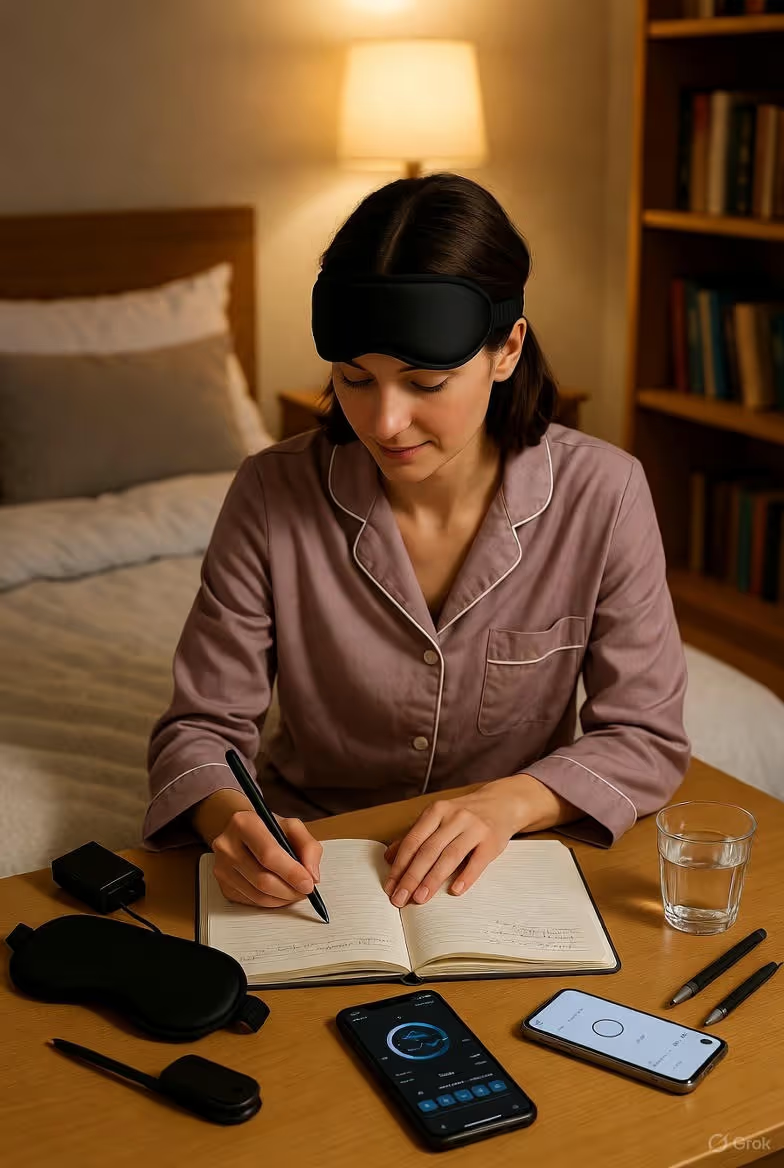
Discover the perfect deep sleep routine with pre-bed habits that trigger restorative rest. Learn the structured evening sequence that prepares your body for maximum slow-wave sleep.
The Deep Sleep Routine: Pre-Bed Habits That Work
You know the feeling. The clock glows 2:17 AM. Your mind, however, races at a speed that would shame a supercomputer, replaying a conversation from three years ago, composing a work email you’ll never send, and worrying about the faint, unidentified noise from downstairs. Exhaustion weighs down your bones, but true, restorative sleep feels like a distant, mythical land. You are not alone. In our always-on, blue-lit world, chronic sleep deprivation is a silent epidemic, eroding our health, cognitive sharpness, and emotional resilience one restless night at a time.
But what if the solution isn't found in a stronger prescription or a more expensive mattress? What if the secret to unlocking consistent, deep, healing sleep lies not in what happens after you close your eyes, but in the deliberate, science-backed rituals you perform before?
Welcome to the art and science of the Deep Sleep Routine. This is not about quick fixes or life-hacks. It’s a fundamental reconstruction of your evening—a carefully curated series of pre-bed habits designed to signal to your primal biology that it is time to power down, repair, and rejuvenate. We’re moving beyond vague advice like "sleep more" and diving into the actionable, physiological levers you can pull to guide your nervous system from a state of "fight-or-flight" to "rest-and-digest."
This journey is about reclaiming the one-third of your life spent in slumber and transforming it into your most powerful wellness asset. And in this modern age, we have a unique advantage: precise, personal data. Imagine having a silent sentinel on your finger, tracking not just the duration, but the quality of your sleep—your heart rate variability, blood oxygen saturation, and sleep stages. A device like the Oxyzen smart ring turns guesswork into knowledge, allowing you to see exactly how your new pre-bed habits translate into measurable, improved recovery. It’s the feedback loop that turns intention into lasting transformation.
Over the next several thousand words, we will build your ultimate Deep Sleep Routine from the ground up. We’ll explore the biology of the wind-down, dismantle the greatest enemies of modern sleep, and construct a nightly practice that works. Your journey to deeper sleep starts now.
The Biology of the Wind-Down: Why Your Body Needs a Ritual
Type image caption here (optional)
Before we prescribe the solution, we must understand the problem at a biological level. Sleep is not an on/off switch. It’s a carefully orchestrated hormonal cascade, a delicate dance between neurotransmitters and circadian rhythms. Your ability to slip into deep, restorative sleep is dictated by two primary systems: your circadian rhythm and your sleep-wake homeostasis.
Your circadian rhythm is your body's internal 24-hour clock, primarily governed by the suprachiasmatic nucleus (SCN) in your brain. This master clock is exquisitely sensitive to light, especially blue wavelength light. When your eyes detect morning light, the SCN signals the pineal gland to suppress melatonin, the "hormone of darkness," and triggers cortisol release to make you alert. As daylight fades, the process should reverse: melatonin rises, ushering in a state of drowsiness, while body temperature drops slightly to initiate sleep.
Sleep-wake homeostasis, on the other hand, is like a pressure system. The longer you’re awake, the stronger the homeostatic sleep drive builds, compelling you to rest. A successful wind-down routine works in harmony with both these systems. It protects your evening melatonin surge from modern interruptions and supports the natural buildup of sleep pressure.
The villain of this story is often the sympathetic nervous system—your "fight-or-flight" response. A stressful work deadline, a heated social media thread, or an intense late-night workout can flood your system with cortisol and adrenaline. This biochemical state is the polar opposite of what’s needed for sleep. Your wind-down routine is, in essence, a deliberate activation of the parasympathetic nervous system—your "rest-and-digest" mode.
This transition doesn't happen automatically amidst the chaos of modern life. It requires a cue. This is the foundational principle of the Deep Sleep Routine: consistency is the signal. By performing the same sequence of calming activities at roughly the same time each night, you create powerful Pavlovian cues for your brain. You tell your biology, in a language it understands, "The world is safe. The work is done. Now, we restore."
Think of it as pulling into the driveway after a long road trip. You don’t slam the car from 70 miles per hour into park. You take your foot off the gas, you coast, you brake gently, and then you come to a full, calm stop. Your nervous system deserves the same courtesy. Without this deliberate deceleration, you’re essentially asking your brain to crash from high alert into unconsciousness—a request it will often refuse, resulting in the all-too-familiar experience of lying wide awake in a dark room.
The goal of the following sections is to give you the tools for that gentle, effective deceleration. We’ll move from the macro environment to the micro habits, building a routine that resonates with your personal life. And as you implement these changes, technology like the Oxyzen ring can provide the crucial validation, showing you the tangible improvements in your sleep latency (how fast you fall asleep), increased deep sleep duration, and overall sleep score. It turns the abstract into the actionable, a concept we explore in depth on our blog in articles about building a data-informed wellness practice.
The Digital Sunset: Reclaiming Your Evenings from Blue Light
Our first and most critical battle for deep sleep is fought against the glow of our screens. The term "digital sunset" is more than a catchy phrase—it's a non-negotiable pillar of sleep hygiene. The science is unequivocal: exposure to blue light, particularly in the 1-2 hours before bed, is devastating to melatonin production.
Here’s what happens: the photoreceptor cells in your eyes, called intrinsically photosensitive retinal ganglion cells (ipRGCs), are specifically tuned to detect blue light. When they do, especially after the sun goes down, they send a direct alert to your SCN: "It's still daytime! Stay alert!" The SCN, confused by this false dawn, slams the brakes on melatonin production. One study from Harvard researchers found that blue light exposure suppressed melatonin for about twice as long as green light and shifted circadian rhythms by twice as much (3 hours vs. 1.5 hours).
But it’s not just the light. The content itself is stimulating. Scrolling through a curated social media feed triggers social comparison and FOMO. Reading work emails activates stress and problem-solving networks. Watching an intense thriller or drama elevates heart rate and emotional arousal. You are essentially giving your brain a double dose of sleep disruption: a biochemical block via blue light and a psychological stimulus via engaging content.
Implementing Your Digital Sunset:
Set a Firm Time: Your digital sunset begins 60-90 minutes before your target bedtime. This is your hard stop for work-related tasks and stimulating content. Put it in your calendar as a non-negotiable appointment with yourself.
Enable Night Shift & Use Software: Don’t rely on willpower alone. Use technology to help. Enable Night Shift (iOS), Night Light (Windows/Android), or install a system-wide application like f.lux. These tools automatically warm your screen's color temperature after sunset, reducing blue light emission. While not a perfect solution (brightness and content are still issues), it's a good first layer of defense.
Create a Physical Barrier: The most effective strategy is physical separation. Charge your phone and laptop outside of your bedroom. Invest in a traditional alarm clock to remove the "need" for your phone by your bed. This single act breaks the endless cycle of last-minute checking and early-morning scrolling.
Find Analog Alternatives: The void left by your screens must be filled with calming activities. This is the perfect time to pick up that book (a physical one, or an e-ink reader without a backlight), listen to a calming podcast or music on a dedicated device, practice gentle stretching, or engage in conversation.
Transform Your Lighting: As you banish screens, transform your environment. Swap bright overhead lights for dim, warm-toned lamps, preferably with bulbs under 3000 Kelvin (often labeled "warm white" or "soft white"). Consider smart bulbs that can be programmed to dim and redden automatically as your bedtime approaches, mimicking a true natural sunset.
This habit is the cornerstone. It’s often the most challenging because of our digital dependency, but its impact is profound. As you implement this, you may notice a quieter mind almost immediately. For those curious about the broader impact of technology on wellness, from sleep to stress, our story of creating Oxyzen was driven by a desire to harness technology for good, not let it dominate our well-being.
The Temperature Tango: Cooling Your Way to Deeper Sleep
If light is the primary signal to your brain's sleep clock, temperature is the primary signal to your body. The connection between core body temperature and sleep propensity is one of the most robust findings in sleep science. To fall and stay asleep, your core temperature must drop by about 1-2 degrees Fahrenheit (0.5-1 degree Celsius).
This process is part of your circadian rhythm. In the evening, as melatonin rises, blood flow is redirected from your core to your extremities (hands, feet, and face) to dissipate heat. This is why you might have cold feet before bed—it’s actually a sign your body is preparing for sleep. A cool sleeping environment (generally between 60-67°F or 15-19°C) facilitates this heat loss. A room that’s too warm disrupts it, leading to more frequent awakenings and less restorative slow-wave sleep.
Your pre-bed routine should actively support this natural cooling process, a dance we call the Temperature Tango.
Mastering the Temperature Tango:
Lower the Thermostat: This is your first and most effective move. Aim to keep your bedroom around 65°F (18°C). This cool environment acts as a constant cue to your body.
The Strategic Warm Bath: Paradoxically, one of the best ways to cool your core is to warm your skin. Taking a warm bath or shower 60-90 minutes before bed causes vasodilation—your blood vessels expand, bringing more hot blood from your core to the surface of your skin. When you step out, the rapid evaporation and heat loss from this surface blood causes a swift and significant drop in core temperature, sending a powerful "sleep now" signal. Research has shown this can improve both sleep onset and deep sleep quality.
Bedding as a Thermoregulator: Ditch heavy, insulating comforters in favor of breathable, moisture-wicking materials like cotton, linen, or bamboo. Layer lightweight blankets that you can adjust throughout the night. Consider a cooling mattress pad or pillows designed for heat dissipation.
Mind Your PJs: Avoid flannel or synthetic materials that trap heat. Opt for loose-fitting, breathable cotton or moisture-wicking sleepwear. For many, sleeping naked is the optimal choice for temperature regulation.
Cool the Pulse Points: If you tend to run hot, applying a cool, damp cloth to your wrists, neck, or forehead can provide rapid, localized relief and help lower your overall perception of heat.
This isn't about being uncomfortably cold; it's about being neutrally cool. When you get it right, you’ll notice falling asleep feels effortless. A smart ring like Oxyzen can provide fascinating feedback on this, as you’ll be able to correlate nights with better temperature management (like after a warm bath) with objective improvements in your sleep continuity and deep sleep percentage, offering concrete proof that the Tango works. For more insights on how your body’s metrics tell the story of your health, you can always explore the Oxyzen blog.
The Caffeine and Alcohol Paradox: The Hidden Sleep Disruptors
Perhaps no area of pre-bed habit is more fraught with misconception than what we consume. Two of the most socially accepted substances—caffeine and alcohol—are also among the most deceptive saboteurs of deep sleep.
The Caffeine Culprit: Caffeine is an adenosine antagonist. Adenosine is a neurotransmitter that builds up in your brain throughout the day, creating "sleep pressure." Caffeine works by blocking adenosine receptors, effectively masking feelings of tiredness. The problem is caffeine's remarkably long half-life—about 5-6 hours. This means if you have a cup of coffee at 3 PM, by 9 PM, about half of that caffeine is still active in your system, continuing to block adenosine. For individuals who are slow metabolizers (a genetic trait), this effect is even more pronounced. The result? You may still fall asleep due to homeostatic sleep pressure, but your sleep architecture is fractured—less deep sleep, more frequent micro-awakenings, and reduced overall sleep quality. You wake up feeling unrefreshed, prompting you to reach for more coffee, creating a vicious cycle.
The Alcohol Illusion: Alcohol is a sedative. It depresses the central nervous system, which can indeed help you fall asleep faster. This is the illusion. As your body metabolizes the alcohol, hours into your sleep, it causes a rebound effect characterized by a surge in sympathetic nervous system activity. This leads to fragmented sleep in the second half of the night, severely suppressing crucial REM (Rapid Eye Movement) sleep—the stage vital for memory consolidation, emotional processing, and creativity. Furthermore, alcohol relaxes the muscles in your airway, exacerbating or causing sleep apnea events, which starve your brain of oxygen and further destroy sleep quality.
Building a Sleep-Smart Consumption Plan:
Observe a Caffeine Curfew: Establish a firm cutoff time, ideally at least 8-10 hours before bedtime. For a 10 PM bedtime, your last coffee should be no later than 12-2 PM. Be mindful of hidden sources: black tea, green tea, dark chocolate, soda, and even some medications.
Hydrate Strategically: After your caffeine curfew, switch to non-caffeinated herbal teas like chamomile, valerian root, or tart cherry juice (which contains natural melatonin precursors). Stay hydrated with water, but taper intake 60-90 minutes before bed to minimize nighttime bathroom trips.
Reframe Alcohol as a Sleep Tax: If you choose to drink, do so with awareness. Consider alcohol a "sleep quality tax." Have your last drink at least 3-4 hours before bed to allow for significant metabolism before you hit the pillow. Follow the "one-for-one" rule: for every alcoholic drink, have a full glass of water.
The Last Supper Timing: Your final meal should be concluded 2-3 hours before bedtime. A large, rich, or spicy meal too close to sleep forces your digestive system to work overtime, elevating core body temperature and potentially causing discomfort or acid reflux, which can keep you awake.
Navigating these dietary nuances can be complex, and personal tolerance varies widely. This is where personalized data is invaluable. By tracking your evening consumption alongside your sleep metrics with a device like Oxyzen, you can move from general rules to personal insights. You might discover that even a 2 PM coffee disrupts your deep sleep, or that a single glass of wine with dinner has a negligible effect. This level of personalization is at the heart of modern wellness, a topic we discuss in our FAQ on how to interpret your wellness data.
The Mindful Unwind: Taming the Racing Mind with Ritual
You've dimmed the lights, cooled the room, and minded your consumption. Yet, the most persistent obstacle to sleep often remains: the racing mind. The mental clutter of unfinished tasks, unresolved anxieties, and the endless to-do list doesn't automatically switch off. The Mindful Unwind is a toolkit of cognitive and behavioral techniques designed to park these thoughts for the night, creating mental stillness.
This is not about emptying your mind—a near-impossible task—but about gently guiding your focus away from stress-inducing loops and toward sensations of safety and presence.
Tools for the Mindful Unwind:
The Brain Dump: 60-90 minutes before bed, take 10 minutes with a notebook. Write down everything on your mind—tasks for tomorrow, worries, ideas, random thoughts. The act of externalizing these thoughts onto paper signals to your brain, "It is noted. You do not need to hold this overnight." It’s a cognitive closure practice.
Gratitude Journaling: Following or instead of the brain dump, write down three specific things you are grateful for from the day. This simple practice, backed by neuroscience, actively shifts your neurochemical state from one of stress (cortisol-focused) to one of appreciation (dopamine and serotonin-focused), priming your nervous system for peace.
Gentle, Intentional Movement: This is not exercise. This is somatic release. Practices like 10-15 minutes of very gentle yoga (think Yin or Restorative), Qi Gong, or simple stretching on a mat help release physical tension that holds mental stress. Focus on deep, diaphragmatic breathing during these movements to engage the vagus nerve and stimulate the parasympathetic nervous system.
Guided Meditation or Breathwork: Using an app or audio track for a guided body scan meditation or a simple 4-7-8 breathing pattern (inhale for 4, hold for 7, exhale for 8) can be profoundly effective. These practices train your attention to reside in the body and the breath, creating a powerful anchor away from anxious thoughts.
Sensory Grounding: Engage your senses deliberately. This could be applying a calming essential oil like lavender to your wrists, sipping a warm herbal tea and truly tasting it, or listening to a piece of ambient music or nature sounds. The "5-4-3-2-1" technique (name 5 things you see, 4 you can touch, 3 you can hear, 2 you can smell, 1 you can taste) is a powerful emergency brake for anxiety.
The key is consistency and personalization. Find the one or two practices that resonate most with you and make them non-negotiable. Over time, they become such potent sleep cues that simply starting your gratitude journal or rolling out your yoga mat will trigger a physiological relaxation response. For many of our users at Oxyzen, seeing a direct correlation between nights they practice meditation and a lower nighttime heart rate or higher HRV is the motivation they need to make it a permanent ritual.
The Sleep Sanctuary: Engineering Your Bedroom for Optimal Sleep
Your bedroom environment should be a physical manifestation of your wind-down intention—a sanctuary designed for one purpose only: sleep and intimacy. Every element, from sight to sound to smell, should conspire to promote tranquility. This goes far beyond a comfortable mattress.
Engineering Your Sanctuary:
The Prime Directive: Darkness: We addressed light pollution from screens, but ambient light is equally disruptive. Even small amounts of light from street lamps, LED indicators on electronics, or a crack under the door can interfere with melatonin production and fragment sleep. Achieve tomb-like darkness:
Invest in high-quality blackout curtains or shades.
Use electrical tape to cover any small LED lights on chargers, air purifiers, or other devices.
Consider a comfortable sleep mask as a final, portable layer of darkness.
The Sound of Silence (or the Right Noise): Sudden, intermittent noises—a car alarm, a barking dog, a partner's snoring—can trigger micro-arousals, pulling you out of deep sleep even if you don't fully remember waking. Solutions include:
A white noise machine or a fan: These create a consistent, soothing auditory blanket that masks disruptive sounds. Pink or brown noise (deeper sounds) can be even more effective for some.
Earplugs: High-fidelity musician's earplugs or moldable silicone ones can be game-changers for light sleepers.
Calming Soundscapes: Apps or devices that play gentle rain, ocean waves, or forest sounds.
The Scent of Serenity: Your sense of smell is directly wired to the limbic system, the emotional center of your brain. Leverage this with aromatherapy:
Use a diffuser with lavender essential oil, which numerous studies have shown can reduce anxiety and improve sleep quality.
Other calming scents include chamomile, cedarwood, and sandalwood.
Ensure the scent is very subtle; you don't want it to be overpowering.
Order and Calm: Clutter is visual noise. A messy room can subconsciously signal unfinished business and create low-grade stress. Make your bed each morning and take 5 minutes each evening to tidy surfaces. The visual calm of an ordered space is a powerful psychological cue for relaxation.
Reclaim the Association: Most importantly, strive to make your bed a place only for sleep and intimacy. Avoid working, eating, or watching stimulating TV in bed. You want your brain to have one, unwavering association: Bed = Sleep.
Crafting this sanctuary is an act of self-respect. It declares that your sleep is a priority worthy of time, investment, and intention. As you optimize each variable, you remove potential obstacles, making the path to deep sleep as frictionless as possible. For inspiration on how others have transformed their spaces and routines, you can read real user testimonials on how environmental changes tracked with their Oxyzen data to revolutionize their rest.
The Consistent Cue: How a Fixed Schedule Programs Your Sleep Biology
Of all the habits discussed, this may be the most powerful yet underrated: going to bed and waking up at the same time every single day—yes, even on weekends. While "catching up on sleep" Saturday morning feels like a deserved reward, it is, in fact, a form of biological jet lag.
Here’s why: Your circadian rhythm thrives on predictability. When you sleep in on Sunday, you effectively delay your internal clock. Come Sunday night, when you need to be sleepy at 10 PM for the workweek, your body is still operating on a later schedule. You can't fall asleep, have a poor night's rest, and then drag yourself out of bed Monday morning feeling terrible. You've spent the weekend sabotaging your week.
A fixed schedule is the ultimate signal to your SCN. It removes the guesswork. It tells your hormonal systems precisely when to ramp up melatonin and when to suppress it. It regulates your core body temperature drop with precision. The result is that you begin to feel drowsy naturally about 30-60 minutes before your set bedtime, and you wake up feeling refreshed just before your alarm—a state known as wake maintenance.
Implementing a Rock-Solid Schedule:
Set Your Non-Negotiables: First, determine your non-negotiable wake-up time based on your life (e.g., 6:30 AM for work, 7:30 AM on weekends is okay). Then, count backwards 7-9 hours (your needed sleep duration) to find your target bedtime (e.g., 10:00 PM - 6:30 AM).
The 7-Day Commitment: Adhere to this bedtime and wake time for all seven days of the week. Allow yourself a maximum variance of 30-45 minutes on weekends. If you stay up an hour later on Saturday, still get up within 45 minutes of your weekday time. "Pay back" any sleep debt with a 20-minute afternoon nap, not by sleeping in.
The Pre-Bed Buffer: Your wind-down routine (all the previous steps) should start 60-90 minutes before your fixed bedtime. The bedtime is lights out, eyes closed—not the time to start reading or taking a bath.
Leverage Morning Light: To supercharge this schedule, get bright light exposure within 30-60 minutes of waking. Go outside for 10-15 minutes. This anchors your circadian rhythm for the day, reinforcing the "day" phase and making the "night" phase stronger and more predictable later on.
The power of this habit cannot be overstated. It is the framework upon which all other habits hang. It turns your sleep from a reactive event into a predictable, reliable physiological process. Tracking this consistency with a smart ring provides profound satisfaction; you’ll see your sleep graph begin to look beautifully regular, and metrics like Sleep Consistency Score become a source of pride, not anxiety. Understanding these core biological principles is part of our mission at Oxyzen—to empower you with both knowledge and tools.
The Stress Surrender: Evening Practices to Dissolve the Day’s Tension
Physical tension is the body’s ledger for mental and emotional stress. At the end of a demanding day, this tension often resides in your jaw, shoulders, neck, and lower back. If you don’t actively release it, you bring it to bed with you, where it can manifest as tossing, turning, teeth grinding (bruxism), and a general state of physical unease that prevents true rest.
The Stress Surrender is a dedicated practice of physical and nervous system release. It moves beyond the mental unwind to address the somatic component of stress.
Practices for Total Surrender:
Progressive Muscle Relaxation (PMR): This is a classic and highly effective technique. Lying in bed, systematically tense and then relax each muscle group in your body, starting from your toes and working up to your forehead. The intense contrast between tension and release teaches your body what true relaxation feels like and reveals where you are unconsciously holding stress.
Foam Rolling or Self-Massage: Spending 5-10 minutes with a foam roller or a massage ball (like a lacrosse ball) on your calves, glutes, upper back, and chest can release fascial adhesions and muscular knots. Follow this with gentle stretching for the major muscle groups—hamstrings, hip flexors, chest, and shoulders.
Vagus Nerve Stimulation: The vagus nerve is the superhighway of your parasympathetic nervous system. Activating it is a direct line to calm. Techniques include:
Humming or Chanting: The vibration stimulates the nerve.
Gargling with Water: A strong gargle activates the muscles connected to the vagus nerve.
Slow, Diaphragmatic Breathing: The ultimate vagal stimulant. Place a hand on your belly and ensure it rises on the inhale and falls on the exhale, aiming for 5-6 breaths per minute.
Yoga Nidra or "Non-Sleep Deep Rest (NSDR): This guided practice, often 10-30 minutes long, leads you through a state of conscious deep relaxation. It’s not meditation; it’s a systematic journey of body awareness and intention that has been shown to lower cortisol, reduce anxiety, and improve sleep as effectively as some pharmacological interventions. It is a masterclass in surrender.
Integrating even one of these somatic practices into your final 30 minutes before bed can be transformative. It bridges the gap between a calm mind and a calm body. Users often report that after incorporating PMR or Yoga Nidra, their Oxyzen ring data shows a more rapid decline in heart rate upon getting into bed and a more stable heart rate throughout the night—direct biometric evidence of a successful Stress Surrender.
The Personal Audit: Finding Your Unique Sleep Formula
We have now laid out a comprehensive, science-backed framework for a Deep Sleep Routine. However, the final and most crucial step is personalization. You are not a generic model. Your genetics, lifestyle, stress profile, and even your chronotype (whether you're a natural night owl or early bird) mean that while the principles are universal, the perfect application is unique.
This is where you move from following a protocol to becoming the architect of your own sleep. The Personal Audit is an ongoing process of gentle experimentation and data-informed observation.
How to Conduct Your Personal Sleep Audit:
Start with a Baseline: Before changing everything, track your current sleep for a week. Note your natural bedtime, wake time, and how you feel upon waking. If you have a device like Oxyzen, this provides your objective baseline data: sleep score, deep/REM sleep, resting heart rate, and HRV.
Implement One Change at a Time: Do not overhaul your entire life on Monday. Choose one pillar from this guide to focus on for 7-10 days. For example, Week 1: Implement a strict Digital Sunset. Week 2: Add the Temperature Tango with a warm shower. Week 3: Introduce a Mindful Unwind with gratitude journaling.
Observe and Record: Keep a simple sleep journal or rely on your smart ring data. How do you feel? Is falling asleep easier? Do you wake up less? How is your energy at 3 PM? Look for subjective improvements and correlate them with objective data.
Identify Your Keystone Habit: Through this process, you will likely find one or two habits that have an outsized impact on your sleep. For one person, it might be the digital sunset. For another, it might be the 4-7-8 breathing. Double down on what works for you.
Troubleshoot with Data: If you're struggling, use your data to investigate. Is your resting heart rate elevated on nights you had a late dinner? Does your HRV crash after alcohol, even 4 hours before bed? Do you get less deep sleep when your room is above 70°F? Let the data ask the questions, then experiment with the answers.
This audit turns sleep from a mystery into a fascinating personal science project. It empowers you. You are no longer a passive victim of poor sleep but an active researcher and engineer of your own restoration. For support on this journey of discovery and to see how others have navigated their personal audits, our comprehensive FAQ is a great resource for common questions and detailed insights.
Putting It All Together: A Sample 90-Minute Deep Sleep Routine
Theory is essential, but practice is everything. Let’s synthesize everything into a cohesive, flowing 90-minute sequence—a sample blueprint you can adapt. Assume a target bedtime of 10:30 PM.
9:00 PM - The Digital Sunset & Transition
Put work away. Silence work notifications on your phone.
Enable "Do Not Disturb" mode.
Begin charging your phone/laptop outside the bedroom.
Dim the overhead lights and turn on warm, low lamps.
9:15 PM - The Temperature Tango & Physical Unwind
Take a 15-20 minute warm bath or shower.
After, spend 5-10 minutes in loose clothing doing gentle, non-stimulating stretching or foam rolling for major muscle groups.
9:30 PM - The Mindful Unwind & Stress Surrender
Sit comfortably with a notebook. Perform a 5-minute "Brain Dump" of all lingering thoughts.
Write down 3 specific things you are grateful for.
Practice 10 minutes of guided Yoga Nidra, a body scan meditation, or diaphragmatic breathing.
9:50 PM - The Final Sanctuary Prep
Prepare a small cup of caffeine-free herbal tea (e.g., chamomile) if desired.
Ensure the bedroom is cool (65-68°F), dark (blackout curtains closed, LEDs covered), and quiet (white noise machine on).
Apply a drop of lavender oil to your wrists or use a diffuser.
10:00 PM - The Wind-Down Read
Get into bed with a physical book or e-ink reader (no backlight). Read something enjoyable, calming, or uplifting—nothing work-related or overly stimulating.
This final 20-30 minutes of reading in your prepared sanctuary is a powerful associative cue.
10:25 PM - Lights Out
Close the book. Turn out the light.
Settle into your preferred sleeping position and focus on the sensation of your breath, or simply let your mind wander gently, trusting that your routine has done its work.
The Symphony of Sleep Cycles: Understanding and Optimizing Your Nightly Architecture
To truly master your sleep, you must move beyond duration and into architecture. Think of a night of sleep not as a single state, but as a symphony—a beautifully orchestrated, cyclical performance of distinct movements, each with its own purpose. This symphony is composed of multiple 90-minute cycles, each containing four distinct stages. Disrupting this architecture, even if you sleep for eight hours, leaves you feeling like you’ve attended a concert where the movements were played out of order: technically complete, but profoundly unsatisfying.
The four stages are divided into two broad categories:
Non-Rapid Eye Movement (NREM) Sleep (Stages 1-3)
Stage 1 (N1): The drowsy transition from wakefulness to sleep, lasting 1-5 minutes. Your muscles relax, heartbeat and breathing slow. This is light sleep from which you can be easily awakened.
Stage 2 (N2): The true onset of sleep, comprising about 50% of your night. Your body temperature drops further, eye movements stop, and brain waves slow with characteristic bursts of activity called sleep spindles and K-complexes, which are believed to be crucial for memory consolidation and sensory processing.
Stage 3 (N3): Deep Sleep or Slow-Wave Sleep (SWS). This is the most restorative, physically reparative stage. It’s characterized by slow, high-amplitude delta waves. During N3, human growth hormone is released, tissue repair occurs, the immune system is strengthened, and the brain clears out metabolic waste via the glymphatic system. It’s hardest to be awakened from this stage, and if you are, you’ll feel groggy and disoriented. This stage dominates the first half of the night.
Rapid Eye Movement (REM) Sleep
This is the stage of vivid dreams, characterized by rapid eye movements (hence the name), brain activity nearly identical to wakefulness, and temporary paralysis of your voluntary muscles (atonia) to prevent you from acting out your dreams. REM is critical for emotional regulation, memory consolidation (particularly for procedural and emotional memories), and creativity. REM periods become longer and more prominent in the second half of the night.
A healthy sleep cycle flows from N1 -> N2 -> N3 -> N2 -> REM, then repeats. The composition changes throughout the night: the first cycles are rich in deep N3 sleep, while the later cycles are dominated by REM sleep.
Optimizing Your Sleep Architecture:
The pre-bed habits we’ve established are designed to enable healthy cycles. But specific strategies can further fine-tune this architecture:
Protect Your Deep Sleep (N3) Window: Since N3 is concentrated in the first 3-4 hours of sleep, protecting this window is paramount. This is why the pre-bed wind-down is non-negotiable. Alcohol is a particular enemy here, as it severely suppresses early-night REM but can increase N3 initially, followed by a devastating rebound of light, fragmented sleep later. Consistency in bedtime is key to ensuring you reliably enter this golden repair period.
Don’t Steal from REM: Chronic sleep deprivation, while hurting all stages, creates a specific "REM debt." When you finally get a chance to sleep longer, your brain will prioritize deep sleep first, then stage 2, and only then will it binge on extended REM in the later morning hours (the reason for intense, memorable dreams when you sleep in). This REM rebound, while necessary, indicates an underlying deficit. The goal is consistent, sufficient sleep to meet all needs every night.
Leverage Your Chronotype: Fighting your natural inclination is a losing battle for sleep quality. A true "night owl" forced onto a 5 AM schedule will consistently get less REM sleep, which is pushed into the later, truncated part of their night. While you can shift your chronotype gradually with light therapy, aligning your sleep schedule as closely as possible to your natural tendency will yield better, more architecturally sound sleep.
The Power of the Full Cycle: Waking up in the middle of a deep sleep (N3) stage causes sleep inertia—that awful groggy feeling. Ideally, you want to wake up at the end of a cycle, during lighter N1 or N2 sleep, or even REM. Since cycles are roughly 90 minutes, timing your sleep in multiples of 90 minutes can help (e.g., 6 hours, 7.5 hours, 9 hours). A smart ring like Oxyzen takes this further by using algorithms to track your sleep stages and attempt to wake you with a gentle vibration during a light sleep phase within a designated window, making morning alertness smoother.
Understanding this architecture transforms your relationship with sleep. You’re no longer just "knocked out"; you are guiding your nervous system through a vital, structured renewal process each night. Seeing this data—the clear blocks of deep blue for N3 and the REM periods charted across the night—provides a profound sense of achievement and a clear visual on what your habits are building. For a deeper dive into what these metrics mean, our blog features detailed guides on interpreting sleep stage data.
Beyond the Basics: Advanced Nutritional Tactics for Sleep Support
While avoiding caffeine and large late meals is Sleep 101, the frontier of sleep nutrition explores specific compounds that can act as precursors, co-factors, and modulators for sleep-related neurotransmitters and hormones. This isn't about popping pills, but about strategically supporting your biology with food and targeted supplementation.
Key Nutrients and Their Roles:
Tryptophan & Serotonin: The journey to melatonin begins with the amino acid tryptophan. Found in turkey, chicken, milk, pumpkin seeds, and nuts, tryptophan crosses the blood-brain barrier and is converted into 5-HTP, then serotonin (the "feel-good" neurotransmitter), and finally, in the darkness of evening, into melatonin. Consuming tryptophan-rich foods as part of a balanced afternoon or early dinner, alongside complex carbohydrates, can facilitate this process. The carbs trigger insulin release, which clears competing amino acids from the bloodstream, allowing more tryptophan to reach the brain.
Magnesium: The Relaxation Mineral: Magnesium is a co-factor in over 300 enzymatic reactions, many involved in nervous system regulation. It helps activate the parasympathetic nervous system, binds to GABA receptors (GABA is the brain's primary calming neurotransmitter), and regulates melatonin. Deficiency is linked to insomnia and restless legs. Dietary sources include leafy greens, nuts, seeds, avocados, and dark chocolate. An evening supplement of magnesium glycinate or bisglycinate (highly bioavailable and gentle on the stomach) is a cornerstone of advanced sleep nutrition for many.
Glycine: This amino acid acts as an inhibitory neurotransmitter, lowering core body temperature and promoting feelings of calm. Studies have shown that 3 grams of glycine before bed can improve subjective sleep quality and reduce daytime sleepiness. It’s found in collagen, bone broth, and gelatin.
Tart Cherry Juice: A natural source of melatonin and phytochemicals that may reduce inflammation and slightly elevate tryptophan availability. Studies on tart cherry juice concentrate have shown modest improvements in sleep duration and efficiency.
Adaptogens for Stress Modulation: Herbs like ashwagandha, rhodiola rosea, and holy basil (tulsi) don't directly induce sleep but help modulate the body's stress response system (the HPA axis), lowering elevated evening cortisol that can block sleep onset. These are best taken earlier in the day or afternoon, not right before bed.
Building Your Sleep-Supportive Nutrition Plan:
Afternoon Focus: Ensure your lunch or afternoon snack includes tryptophan sources and magnesium-rich foods.
The Sleep-Promoting Snack: If needed, a small pre-bed snack 60-90 minutes before sleep could combine a tryptophan source with a complex carb—think a small bowl of oatmeal with almond butter, a banana with a handful of walnuts, or a slice of whole-grain toast with turkey.
Supplement Strategically: If considering supplements like magnesium, glycine, or a low-dose melatonin (0.3-1 mg, best used as a circadian reset tool, not a nightly crutch), introduce them one at a time and track the effects. More is not better.
The Gut-Brain Axis: Emerging research highlights the gut microbiome's role in producing sleep-influencing neurotransmitters like GABA and serotonin. Supporting gut health with a fiber-rich diet, fermented foods, and probiotics may have downstream benefits for sleep quality.
Nutritional strategies are highly individual. What works wonders for one person may do nothing for another. This is another area where objective tracking shines. You might experiment with magnesium glycinate for two weeks and use your Oxyzen data to see if it correlates with an increase in your deep sleep percentage or a lower resting heart rate. This empirical approach moves you from following trends to crafting a personalized sleep-support protocol. For questions on how lifestyle changes interact with your biometrics, our FAQ section offers detailed support.
Mastering the Exception: Protocols for Shift Work, Jet Lag, and Disrupted Schedules
The ideal of a consistent 10 PM bedtime in a pitch-black, cool room is a fantasy for millions. Nurses, pilots, first responders, and international travelers must learn to sleep when biology screams "WAKE UP!" The goal here shifts from perfect optimization to intelligent damage control and rapid circadian adaptation.
For the Shift Worker:
The core challenge is fighting the entire world's light-dark cycle and social schedule. The key is to create an uncompromisingly dark sleep environment and use light as a weapon.
Light as Your Lever: Upon waking for a night shift, seek bright light exposure immediately. Use a light therapy box (10,000 lux) for 20-30 minutes to forcefully signal "daytime" to your SCN. During your shift, if possible, maintain bright light exposure. Conversely, the moment your shift ends, protect yourself from morning light. Wear wraparound blue-light blocking sunglasses (amber or red lenses are most effective) on your commute home. This is non-negotiable.
The Fortress of Darkness: Your daytime sleep must be guarded. Use blackout curtains, aluminum foil on windows, or a sleep mask. Use white noise to mask daytime sounds. Consider a "Do Not Disturb" sign on your door.
Schedule and Caffeine Discipline: Establish a consistent sleep time, even on your days off, as much as possible. Use caffeine strategically at the start of your shift, but institute a strict curfew several hours before your planned sleep time.
Melatonin as a Timing Tool: Taking a small dose (0.5-1 mg) of melatonin 30-60 minutes before your desired daytime sleep time can help nudge your circadian rhythm and improve sleep quality. Do not use it as a high-dose sedative.
For Conquering Jet Lag:
Jet lag occurs when your internal circadian rhythm is out of sync with the local time zone. Eastward travel (losing time) is typically harder than westward travel (gaining time). The strategy is to proactively shift your clock.
Pre-Travel Adjustment: 2-3 days before travel, gradually shift your sleep and meal times toward the destination schedule. For eastward travel, go to bed and wake up earlier; for westward, later.
Master the Flight: During the flight, set your watch to the destination time immediately. Use the following framework:
If it's NIGHT at your destination: Try to sleep. Use a neck pillow, eye mask, earplugs, and consider a melatonin supplement to encourage sleep. Avoid alcohol and heavy meals.
If it's DAYTIME at your destination: Stay awake. Read, watch movies, walk the aisle. Use bright light if possible.
Arrival Strategy: Upon arrival, use light exposure with surgical precision. If you need to shift your rhythm later (westward travel), seek bright afternoon light. If you need to shift earlier (eastward travel, which is harder), get bright morning light. Melatonin taken at local bedtime can continue to aid adjustment for the first few nights.
Anchor Your Schedule: Adopt local meal times and social activities immediately. Even if you're exhausted, resist the urge to nap longer than 20 minutes during the local daytime, as it will anchor you to the old time zone.
For both shift workers and travelers, a wearable like Oxyzen becomes an invaluable coach. It can show you the tangible impact of your strategies—how well you actually slept during the day, how your body is adapting to a new time zone, and when your core body temperature rhythm is beginning to align. It provides objective feedback in a disorienting situation, turning a biological challenge into a manageable experiment. Understanding the human capacity for adaptation is part of the Oxyzen story and mission—to provide insight even when life is irregular.
The Partner Problem: Synchronizing Sleep in a Shared Bed
One of the most common yet delicate sleep challenges occurs not within you, but beside you. Divergent schedules, different chronotypes, snoring, restless legs, or duvet-hogging can turn the shared bed from a sanctuary into a battleground, degrading sleep quality for both parties. Navigating this requires empathy, communication, and sometimes, creative compromise.
Strategies for Harmonious Shared Sleep:
The Foundation: Open, Non-Judgmental Communication: Have a conversation about sleep during the day, not in the frustrated middle of the night. Frame it as a shared project for mutual health and happiness: "How can we both get better sleep together?"
Address the Physical Disruptors:
Snoring: This is a major issue. Encourage evaluation for sleep apnea, especially if snoring is loud and interrupted by gasps. Other solutions include nasal strips, mandibular advancement devices, or positional therapy. For the light sleeper, high-quality earplugs or a white noise machine are essential.
Motion: If one partner tosses and turns, a larger mattress (king-size) or even two separate twin XL mattresses on a single frame (a "split king") can isolate motion. Weighted blankets for the restless partner can also reduce movement.
Temperature Preference: This is a common divide. The solution can be dual-zone everything: separate duvets or blankets of different thicknesses, dual-zone electric mattress pads, or mattress toppers with different cooling technologies.
Respect Different Schedules and Chronotypes:
If one partner is an early bird and the other a night owl, establish quiet hours. The early bird agrees to use a gentle light (like a book light) and avoid disturbing screens if reading in bed earlier. The night owl agrees to come to bed quietly and use a sleep mask.
Consider a compromise on weekend schedules to maintain some sync.
The Bedroom as a Shared Sanctuary: Reinforce the "bed is for sleep and intimacy" rule for both parties. No phones, no work, no stressful conversations in bed. This strengthens the associative cue for both brains.
The Radical, Loving Solution: Separate Beds or Bedrooms. This is not a sign of a failing relationship; it can be the ultimate act of care and pragmatism. If sleep disturbances are causing chronic resentment and exhaustion, having your own sleep space ensures you both get the restorative sleep you need to be healthy, happy partners during the waking hours. You can still have intimacy and "couple time" before retiring to your separate spaces.
Using objective data can defuse arguments. If both partners use sleep trackers, you can move from "you kept me up all night" to "look at our data—my sleep was fragmented starting at 2 AM, which coincides with your recorded snoring episodes. Maybe we should both look into that." It turns a blame game into a collaborative problem-solving session. Seeing the mutual benefit of a solution is powerful motivation, a principle reflected in the real-world experiences shared in our testimonials.
When Habits Aren't Enough: Recognizing and Addressing Sleep Disorders
Despite a flawless Deep Sleep Routine, some individuals still struggle profoundly. This is a critical message: Insomnia and fatigue are symptoms, not diagnoses. When expert-level sleep hygiene fails to bring relief, it is time to consider the possibility of an underlying sleep disorder. Persisting without evaluation can lead to unnecessary suffering and health consequences.
Common Sleep Disorders to Know:
Insomnia Disorder: Characterized by persistent difficulty falling asleep, staying asleep, or waking too early, despite adequate opportunity for sleep, causing daytime impairment. Chronic insomnia often involves a cycle of anxiety about sleep itself ("psychophysiological insomnia").
Sleep Apnea (Obstructive): Repeated episodes of complete or partial upper airway obstruction during sleep, leading to breathing pauses (apneas) or shallow breathing (hypopneas). Each event causes a micro-arousal to restart breathing, fragmenting sleep. Classic signs include loud, chronic snoring, witnessed breathing pauses, and excessive daytime sleepiness despite long time in bed. It is a major risk factor for hypertension, heart disease, and stroke.
Restless Legs Syndrome (RLS): An irresistible urge to move the legs, often accompanied by uncomfortable sensations (creeping, crawling, tingling), that begins or worsens during periods of rest or inactivity in the evening, and is temporarily relieved by movement.
Circadian Rhythm Sleep-Wake Disorders: Beyond shift work, this includes Delayed Sleep-Wake Phase Disorder (extreme night owls) and Advanced Sleep-Wake Phase Disorder (extreme early birds), where the individual's internal clock is permanently misaligned with societal demands, causing insomnia and sleepiness at unwanted times.
Parasomnias: Unusual behaviors during sleep, such as sleepwalking, night terrors, or REM Sleep Behavior Disorder (where the muscle atonia of REM fails, allowing people to act out vivid, often violent dreams).
The Path to Evaluation and Treatment:
Start with a Sleep Diary and Data: Before seeing a doctor, maintain a detailed 2-week sleep diary. Include bedtime, wake time, estimated sleep latency, nighttime awakenings, and daytime symptoms. Bring data from your Oxyzen ring, which can show restlessness, potential oxygen desaturation dips (a possible flag for apnea), and heart rate patterns.
Consult Your Primary Care Physician: Present your findings. They can screen for medical conditions (like thyroid issues or anemia) and medications that disrupt sleep, and refer you to a specialist.
See a Sleep Specialist: A board-certified sleep medicine physician can conduct a thorough evaluation. The gold standard for diagnosing sleep apnea and other disorders is an in-lab polysomnogram (PSG), or a home sleep apnea test (HSAT) for uncomplicated cases.
Embrace Evidence-Based Treatment:
For Chronic Insomnia, Cognitive Behavioral Therapy for Insomnia (CBT-I) is the first-line treatment, more effective and durable than sleep medications. It addresses the thoughts and behaviors that perpetuate insomnia.
For Sleep Apnea, Continuous Positive Airway Pressure (CPAP) therapy is the frontline treatment, keeping the airway open throughout the night.
For RLS, medications and iron supplementation (if deficient) can be effective.
A smart ring is not a diagnostic device, but it is a powerful screening and monitoring tool. Noting a consistently low blood oxygen saturation (SpO2) graph or a highly elevated resting heart rate can provide the objective clue needed to seek professional help. It empowers you to be an informed advocate for your own health. Understanding the limits of self-help and the importance of professional care is a key part of a holistic wellness journey, a topic we address in our resources and blog.
The Tech-Enabled Feedback Loop: Using Data to Cement Your Routine
We have repeatedly alluded to the power of data. Now, let's examine how this feedback loop actually works to create lasting behavior change. Knowledge is power, but personalized knowledge is transformation. A device like a smart ring closes the loop between action and outcome, making the invisible visible.
How Data Drives Sustainable Habit Change:
From Subjective to Objective: "I slept badly" is vague. "My sleep efficiency was 78%, with 45 minutes of wakefulness after sleep onset, and my deep sleep was only 12% of my total sleep time" is specific and actionable. Data removes the emotional guesswork.
Revealing Hidden Patterns: You may not consciously connect that late afternoon coffee or a stressful work meeting to your sleep three nights later. Longitudinal data can reveal these subtle correlations. The ring tracks not just sleep, but daytime stress (via HRV), activity, and temperature, allowing you to see the precursors to a poor night.
Providing Positive Reinforcement: This is the most powerful mechanism. When you implement a digital sunset for a week and see your "Time to Fall Asleep" metric drop from 25 minutes to 10 minutes, and your "Sleep Score" climb from 72 to 85, you get a dopamine hit of success. This positive reinforcement makes you want to continue the habit. It turns a chore into a game.
Facilitating Personalization: As in your Personal Audit, data allows you to answer questions definitively. "Does magnesium help me?" "Is 7 hours enough for me, or do I need 8.5?" "What is my optimal bedtime?" Over months of data, your personal baselines and optimal ranges become clear.
Motivation Through Trends: A single bad night is demoralizing. But seeing a 30-day trend line that clearly shows your average sleep score improving, your resting heart rate decreasing, and your HRV increasing provides a powerful macro-view of progress that keeps you motivated through daily fluctuations.
Integrating Data Wisely:
Avoid Orthosomnia: This is the paradoxical obsession with perfect sleep data, which itself becomes a source of anxiety and insomnia. The data is a guide, not a judge. Use it to observe trends over weeks, not to stress over a single night's score.
Focus on a Few Key Metrics: Don't get lost in dozens of data points. Pick 2-3 that matter most to you (e.g., Sleep Score, Deep Sleep Duration, Resting Heart Rate) and watch those.
Let the Data Ask Questions, Not Just Give Answers: A low HRV reading prompts you to ask, "What stressed my system yesterday?" A high resting heart rate asks, "Did I recover poorly? Am I getting sick?" This reflective practice is where true insight lives.
This tech-enabled approach represents the future of proactive wellness. It shifts healthcare from reactive to preventive, from generic to personal. At Oxyzen, this philosophy is core to our design—creating not just a tracker, but a companion for your lifelong wellness journey, providing the insights needed to make your Deep Sleep Routine not just a theory, but a living, evolving, and deeply personal practice.
The Long-Term View: Sleep as the Foundation of Lifelong Health
We have spent thousands of words optimizing the how of sleep. Now, we must fully internalize the why. Deep, consistent sleep is not a luxury or a passive state. It is the single most potent, under-leveraged performance enhancer and health prophylactic in existence. Viewing sleep through the long-term lens reveals it not as a nightly recharge, but as the foundational maintenance program for your entire organism—a non-negotiable investment in your future self.
The Systemic Impact of Chronic Sleep Debt:
When you consistently short-change your sleep, you are not just accruing fatigue. You are systematically degrading every major system in your body, increasing your all-cause mortality risk.
The Brain & Cognitive Decline: During deep NREM sleep, the brain’s glymphatic system kicks into high gear, clearing out metabolic waste like beta-amyloid proteins. These proteins are the very plaques implicated in Alzheimer's disease. Chronic sleep deprivation means leaving this toxic debris to accumulate night after night, effectively accelerating the brain’s aging process. Long-term, this is linked to a significantly higher risk of dementia and cognitive decline.
The Cardiovascular System: Sleep is when your heart rate and blood pressure naturally dip, giving your cardiovascular system a reprieve. Insufficient sleep disrupts this dip, keeping your system under constant strain. It increases inflammation, raises cortisol, impairs glucose metabolism, and leads to arterial stiffness. The landmark data is stark: routinely sleeping less than 6 hours a night is associated with a 48% increased risk of developing or dying from heart disease and a 15% greater risk of stroke.
The Metabolic Engine & Weight: Sleep is a master regulator of appetite hormones. Sleep deprivation reduces leptin (the "I'm full" hormone) and increases ghrelin (the "I'm hungry" hormone), driving cravings for high-calorie, high-carbohydrate foods. It also creates a state of insulin resistance, where your cells stop responding effectively to insulin, forcing your pancreas to produce more and setting the stage for type 2 diabetes and weight gain. One study found that just one week of sleeping 5 hours a night altered participants’ hormones so significantly that they gained an average of 2 pounds.
The Immune System: You are literally more vulnerable when you are sleep-deprived. Deep sleep is when the immune system releases cytokines, proteins that target infection and inflammation. Skimping on sleep reduces the production of these protective cytokines and infection-fighting antibodies. Research has shown that people who sleep less than 7 hours are almost three times more likely to develop a cold than those who sleep 8 hours or more. Long-term, this state of chronic, low-grade inflammation is a fertilizer for virtually every modern disease, from cancer to autoimmune conditions.
Mental and Emotional Resilience: REM sleep is the overnight therapy session where the emotional charge of the day’s experiences is processed and filed away. Without sufficient REM, the amygdala (the brain’s fear center) becomes hyper-reactive, while connections to the prefrontal cortex (the rational regulator) weaken. This neural imbalance makes you more emotionally volatile, less resilient to stress, and significantly increases the risk for mood disorders like anxiety and depression. The link is so strong that insomnia is now considered a primary causal factor, not just a symptom, of these conditions.
Reframing Sleep as an Investment:
This is not fear-mongering; it is a recalibration of priority. We invest in retirement accounts, gym memberships, and healthy food for our future. Sleep is the highest-yield investment of all, with compounding returns.
For the Athlete: Sleep is the ultimate legal performance-enhancing drug. It’s when human growth hormone peaks, repairing muscle micro-tears. It’s when motor skills are consolidated, turning practice into permanent neural pathways. Poor sleep reduces VO2 max, anaerobic power, and increases injury risk. Elite athletes now prioritize sleep as rigorously as their training diet.
For the Professional: Sleep is the cornerstone of executive function. It underpins focus, memory consolidation, creative problem-solving, and emotional intelligence. A well-rested leader makes better decisions, manages teams with more empathy, and exhibits greater strategic thinking. The cost of "presenteeism"—being at work but cognitively impaired—dwarfs the cost of absenteeism.
For the Creative: REM sleep fosters novel neural connections, the bedrock of creativity and insight. It’s the reason you so often "sleep on a problem" and wake with a solution. Artists, writers, and innovators throughout history have harnessed this power intuitively.
Your Deep Sleep Routine is, therefore, the most important health ritual you will ever establish. It is the keystone habit that makes all other healthy behaviors easier and more effective. Protecting your sleep is protecting your very capacity to live a long, vibrant, and productive life. For a deeper exploration of how sleep integrates into holistic health, our blog is a repository of research and insights on this interconnected system.
The Ripple Effect: Children, Family, and Building Healthy Sleep Habits Early
The power of a Deep Sleep Routine extends far beyond the individual; it creates a positive ripple effect throughout a household, especially when children are involved. A child’s sleep (or lack thereof) dictates the sleep—and sanity—of their caregivers. More importantly, the sleep habits formed in childhood set a neurological and behavioral trajectory for life. This makes establishing healthy sleep hygiene in the family one of the highest-impact forms of preventive care a parent can provide.
Why Childhood Sleep is Non-Negotiable:
Sleep is the primary activity of a developing brain. In early childhood, the brain is undergoing explosive growth and organization. Deep sleep and REM sleep are not just restorative here; they are constructive.
Learning and Memory: Sleep is when the day’s learning is transferred from the short-term hippocampus to the long-term cortex, solidifying knowledge. A child who is well-rested learns more efficiently and retains information better.
Emotional and Behavioral Regulation: Just as in adults, a sleep-deprived child has an overactive amygdala and an underdeveloped prefrontal cortex connection. This manifests as hyperactivity, impulsivity, tantrums, irritability, and difficulty managing emotions—symptoms that can be mistaken for ADHD.
Physical Growth and Health: The majority of human growth hormone is secreted during deep sleep. Consistent sleep supports a robust immune system, reducing the frequency of childhood illnesses.
Establishing the Circadian Rhythm: A child’s internal clock is developing. A consistent routine with clear light/dark and activity/rest boundaries helps set this clock accurately, creating a lifelong predisposition for healthy sleep.
Building a Family Sleep Sanctuary:
The principles are the same as for adults, but applied with age-appropriate consistency and warmth.
The Unbreakable Routine: A predictable, calming 30-45 minute pre-bed sequence is paramount for children. This might include: bath, brushing teeth, putting on pajamas, reading 1-2 books in a dim room, a brief cuddle, and lights out. The routine itself is the sleep cue.
The Digital Sunset is Critical: Screen time is arguably more disruptive for young brains. Implement a firm screen curfew at least 60 minutes before bed. Keep TVs, tablets, and phones out of the child’s bedroom entirely. The blue light and stimulating content are a potent cocktail for sleep disruption.
The Sleep-Conducive Environment: A cool, dark, and quiet room is essential. Use blackout curtains, a white noise machine to mask household sounds, and ensure the room is not cluttered with stimulating toys.
Consistent Timing: Set a fixed bedtime and wake time, even on weekends. This regularity is the scaffolding upon which their circadian rhythm is built.
Model the Behavior: Children learn by imitation. When they see parents prioritizing and valuing their own sleep—turning off screens, dimming lights, and adhering to a routine—they internalize sleep as an important, positive part of family life.
The challenge, of course, is that a parent’s ability to maintain their own Deep Sleep Routine is often sabotaged by their child’s sleep struggles. This is where a data-informed approach can help parents as well. For example, noticing on a device like Oxyzen that your own sleep is consistently fragmented at 5 AM can help you problem-solve your child’s early waking patterns. It moves the issue from an exhausting mystery to a solvable puzzle. The journey of creating a healthy family is full of such challenges and triumphs, something we understand intimately, as reflected in our own company’s story and values.
On the Horizon: The Future of Sleep Science and Technology
We are at the dawn of a revolution in how we understand, diagnose, and optimize sleep. The future moves beyond simply tracking sleep to actively diagnosing disorders, personalizing interventions in real-time, and even enhancing the sleep state itself. The convergence of biometric sensing, artificial intelligence, and neurotechnology is creating possibilities that were science fiction just a decade ago.
Emerging Frontiers:
Hypersonic Diagnostics: Future wearables and ambient sensors (like under-mattress pads or bedside devices) will move beyond proxies to measure the gold-standard metrics of a sleep lab at home. Think of continuous, medical-grade EEG to map brain waves, precise breathing effort, and even core body temperature—all non-invasively. This will make the diagnosis of conditions like sleep apnea, insomnia subtypes, and narcolepsy far more accessible and comfortable.
Closed-Loop Sleep Optimization: Imagine a system that doesn’t just track but responds. A smart environment that detects you are in a light sleep stage and is too warm, then subtly lowers the thermostat. A wearable that senses an elevated heart rate indicative of a nightmare and delivers a gentle, subliminal audio cue to shift your sleep stage. A pillow that uses phased acoustic waves to gently encourage slow-wave deep sleep. This is the promise of closed-loop systems: real-time biometric feedback driving automated environmental or sensory adjustments to steer sleep toward optimal architecture.
Sleep-Directed Memory Consolidation & Learning: Research is exploring "targeted memory reactivation" (TMR). The concept: exposing a learning subject to a specific scent or sound while they learn, and then gently re-presenting that same cue during slow-wave sleep. Studies show this can significantly enhance the retention of that specific information. In the future, students or professionals might use sleep as an active part of their training regimen.
Personalized Chronotherapy and Nutrigenomics: As genetic testing becomes more sophisticated, we will be able to pinpoint an individual’s precise circadian genotype, predicting their optimal sleep window, light sensitivity, and even their metabolic response to sleep loss. Nutrigenomics could recommend specific dietary supplements (e.g., the exact form and dose of magnesium) based on your genetic profile to correct individual biochemical deficits that impact sleep.
The Neurotechnology of Sleep Enhancement: Non-invasive brain stimulation techniques like transcranial direct current stimulation (tDCS) or acoustic stimulation are being studied for their ability to enhance slow-wave sleep. Early research shows that applying gentle pink noise or specific electrical pulses in sync with a person’s detected brain waves can increase the amplitude and duration of deep sleep, leading to better next-day cognitive performance.
The Role of the Modern Smart Ring:
In this future, the smart ring is poised to be the central hub—the continuous, comfortable biometric sensor that collects the foundational data stream. It will measure heart rate, HRV, blood oxygen, skin temperature, and possibly future metrics like galvanic skin response. This data will feed the AI that powers the closed-loop environment, informs the personalized therapy, and validates the effectiveness of new sleep enhancement tools.
Devices like Oxyzen represent the critical first step in this journey: establishing a high-fidelity, longitudinal dataset of your unique sleep biology. This dataset is your personal benchmark, the essential baseline against which all future innovations and personal experiments will be measured. Staying informed about these advancements is key, and we are committed to exploring them in our ongoing research and articles on the Oxyzen blog.
The Mindset of Mastery: Cultivating a Sleep-Positive Identity
Ultimately, the most sophisticated technology and the most detailed routine are powerless without the correct underlying mindset. Lasting change occurs not when you simply do different things, but when you become a different person. To make your Deep Sleep Routine permanent, you must cultivate a Sleep-Positive Identity.
This means shifting your core beliefs about sleep. It’s not:
A waste of time when you could be "productive."
A sign of laziness or weakness.
The first thing to sacrifice when life gets busy.
An inconvenient biological necessity.
Instead, a Sleep-Positive Identity embraces these truths:
Sleep is the most productive hours of your day for long-term health and creativity.
Prioritizing sleep is a sign of strength, discipline, and self-respect.
Protecting sleep is protecting your capacity to handle a busy life effectively.
Sleep is a vital, enjoyable, and nourishing pillar of a high-performance life.
How to Cultivate This Identity:
Reframe Your Language: Stop saying, "I have to go to bed." Start saying, "I get to go to bed and recharge." Or, "I’m investing in my recovery." The words you use shape your beliefs.
Celebrate Sleep Wins: Just as you would celebrate a fitness PR or a work achievement, celebrate sleep wins. "My sleep score average hit 90 this week!" "I consistently got 90 minutes of deep sleep!" Share these non-scale victories with a partner or a community that understands. At Oxyzen, we see users share their progress and celebrate each other’s journeys in our community, reinforcing this positive identity.
Set Boundaries with Confidence: When a late-night work request comes in or a friend pushes for one more drink, your sleep-positive identity allows you to decline with conviction. "I’d love to help, but I’m offline after 9 PM to protect my sleep. I’ll tackle this first thing in the morning with a fresh mind." This is not an excuse; it’s a professional and personal boundary rooted in science.
Visualize the Benefits: Connect the act of going to bed early not with "missing out," but with waking up clear-headed, patient with your children, crushing your workout, and bringing your best self to your work and relationships. Attach a vivid, positive future outcome to the present action.
Practice Self-Compassion: You will have off-nights. Travel, illness, stress, or simply life will disrupt your routine. A sleep-positive identity is not brittle; it is resilient. It allows you to view a bad night not as a failure, but as a data point, a reason to gently return to your routine the next evening without guilt or anxiety.
This mindset is the final, crucial piece. It is the software that runs the hardware of your routine and your technology. When you truly see yourself as someone who values and excels at sleep, the habits cease to be a struggle and become a natural expression of who you are.
Conclusion: Your Invitation to a Restored Life
We began this journey in the familiar desperation of the 2 AM wakefulness, feeling severed from the restorative power of sleep. We have traveled through the biology of the wind-down, dismantled the digital and dietary saboteurs, engineered personal and shared sanctuaries, and explored the profound long-term implications of this one-third of our lives.
You now hold the blueprint for a Deep Sleep Routine. It is a comprehensive, layered approach:
The Foundational Habits: The Digital Sunset, the Temperature Tango, the mindful management of Caffeine and Alcohol.
The Environmental Mastery: Creating your Sleep Sanctuary, whether solo or shared.
The Physiological Fine-Tuning: Understanding Sleep Cycles, leveraging Advanced Nutrition, and mastering exceptions like Shift Work.
The Investigative Layer: Knowing when to seek help for Sleep Disorders.
The Technological Lever: Using the Data Feedback Loop to personalize and motivate.
The Expansive View: Recognizing sleep as the Foundation of Lifelong Health and its critical role for Families.
The Future-Oriented Perspective: Anticipating coming advancements in Sleep Science.
The Core Shift: Adopting the Mindset of Sleep Mastery.
This is not a prescription to be followed rigidly, but a toolkit to be adapted. Your mission is to conduct your Personal Audit, to experiment, to observe, and to build the routine that resonates with your unique biology and life.
The promise on the other side of this commitment is nothing less than a transformation in your lived experience. It is more energy, sharper focus, steadier emotions, a stronger body, a more resilient mind, and a profound sense of daily renewal. It is the difference between merely coping with life and truly thriving in it.
Your journey starts tonight. Not with a perfect 90-minute routine, but with one single change. Turn off your screens 30 minutes earlier. Take a warm shower. Write down three gratitudes. Lower your thermostat.
Observe what happens.
Let that small success be the seed from which your new, sleep-positive life grows. And as you navigate this path, know that you have tools and a community to support you. Whether you’re looking for more detailed guides, want to understand the technology that can illuminate your progress, or need to connect with others on the same journey, we are here to help.
The deepest, most restorative sleep of your life is not a distant dream. It is a possibility waiting on the other side of your first conscious, consistent, caring pre-bed habit. Begin.



%402x.svg)