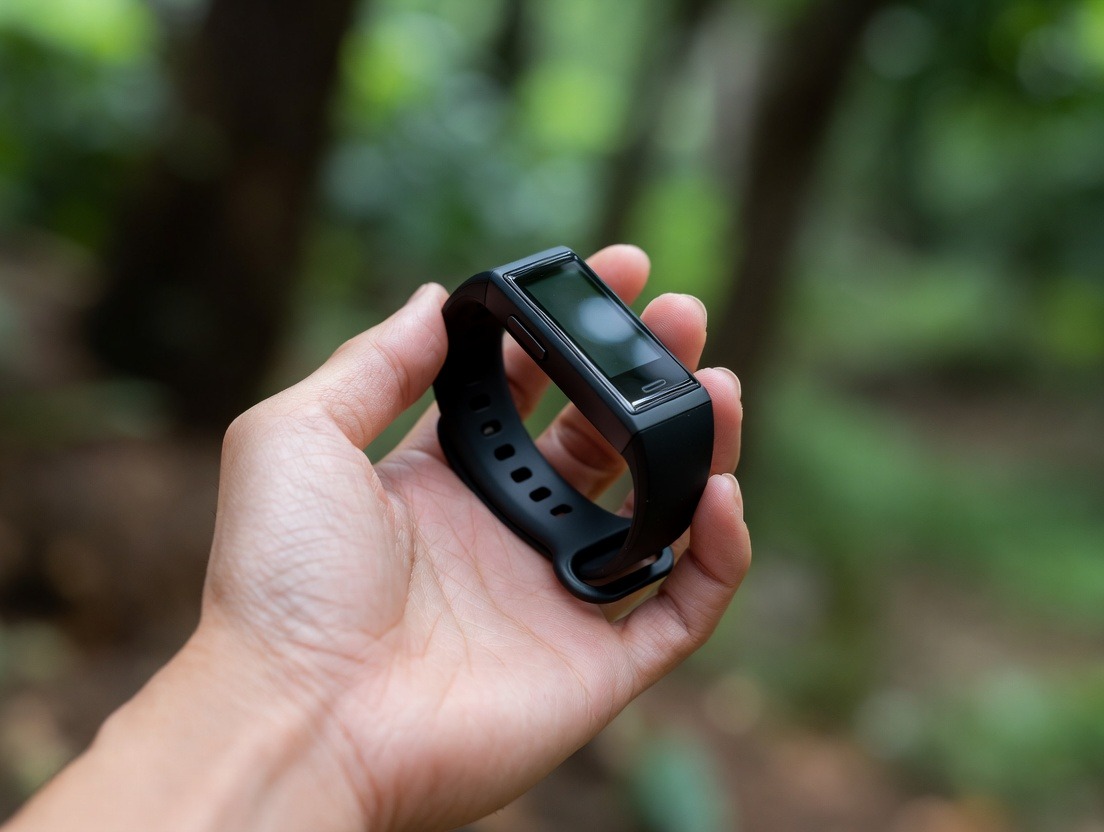
The environmental footprint of manufacturing and disposing of wearables.
The Hidden Footprint: Uncovering the Environmental Impact of Wearable Health Tech
In an age where wellness has become a personal religion and data-driven health our new scripture, wearable technology has quietly positioned itself as the central altar. From discreet rings monitoring our heart rhythms to sleek wristbands charting our sleep architecture, these devices promise unprecedented insights into our bodies' most intimate functions. We celebrate their convenience, marvel at their precision, and integrate them seamlessly into our pursuit of optimal living. Yet, as we eagerly track our recovery scores and stress levels, we rarely pause to consider another vital metric: the environmental footprint these devices leave behind.
The modern wellness revolution has brought health monitoring to our fingertips—literally—with devices like the OxyZen smart ring offering continuous biometric tracking without the bulk of traditional wearables. Users worldwide are discovering how these tools can transform sleep, manage stress, and optimize performance, as evidenced by the countless stories on our testimonials page. But beneath the polished titanium and ceramic surfaces lies a complex environmental narrative that intersects with global supply chains, energy consumption, and electronic waste streams.
Consider this: The very devices designed to enhance our personal wellbeing may be inadvertently compromising planetary health. From the extraction of rare earth minerals for sophisticated sensors to the energy demands of cloud-based data processing that powers our daily readiness scores, wearable technology carries environmental consequences that remain largely invisible to the conscious consumer. This paradox forms the core challenge of our technological age: How do we reconcile personal health optimization with ecological responsibility?
As we embark on this exploration of wearable technology's environmental impact, we'll journey through the entire lifecycle of these devices—from their material origins to their ultimate disposition. We'll examine not just the problems, but also the emerging solutions and sustainable alternatives that forward-thinking companies are pioneering. The wellness of tomorrow depends not only on how well we understand our bodies, but on how thoughtfully we design our tools to harmonize with the living systems that sustain us all.
The Materials Dilemma: What's Really in Your Wearable?
Beneath the sleek surfaces of our health-tracking devices lies a complex tapestry of materials, each with its own environmental narrative. Modern wearables like smart rings and fitness trackers are essentially miniature electronics laboratories, packing sensors, batteries, processors, and transmitters into spaces smaller than a coin. This engineering marvel comes at a material cost that extends far beyond the titanium or ceramic we see and touch.
The sensor arrays alone—those marvels that measure heart rate variability, blood oxygen saturation, and skin temperature—rely on specialized components containing rare earth elements. Elements like neodymium, dysprosium, and terbium are crucial for creating the miniaturized magnets, lasers, and phosphors that enable precise biometric measurements. The extraction of these materials is notoriously destructive, involving:
Open-pit mining that scars landscapes
Chemical-intensive separation processes that contaminate water systems
Energy-intensive refinement that contributes significantly to carbon emissions
For the uninitiated, here are some key environmental concerns associated with wearable device materials:
Mining impacts: Extracting metals like gold (used in connectors) and lithium (for batteries) generates substantial habitat destruction and water pollution
Manufacturing footprint: The precision manufacturing of tiny components requires specialized facilities with high energy consumption
Material diversity: The combination of metals, plastics, ceramics, and glass complicates recycling efforts at end-of-life
Resource scarcity: Some materials essential to advanced sensors exist in limited quantities, driving exploration in increasingly fragile ecosystems
The casing materials themselves present another layer of complexity. Titanium, favored by premium brands including OxyZen for its durability and hypoallergenic properties, requires extraction through the Kroll process—an exceptionally energy-intensive method that contributes substantially to the device's embedded carbon footprint. Ceramic alternatives, while avoiding some mining concerns, demand high-temperature kilns operating for extended periods.
Even the "invisible" components carry weighty environmental implications. The batteries that power continuous monitoring—often lithium polymer or lithium-ion—embed substantial energy in their production. The semiconductor chips that process biometric data contain silicon refined through processes requiring extreme heat and chemical treatments. Every adhesive, coating, and protective layer adds to the material complexity that ultimately challenges circular economy principles.
As we consider companies like OxyZen that emphasize sensor accuracy and user comfort in their design philosophy, we must acknowledge that these priorities—while valuable for user experience and data reliability—often compete with material minimalism. The sophisticated multi-sensor architecture that enables precise HRV tracking and sleep stage detection necessitates more components than simpler devices, creating inherent tension between performance and sustainability.
This materials dilemma forms the foundation of wearable technology's environmental impact, establishing the baseline from which all other considerations flow. As consumers become increasingly aware of these hidden costs, forward-thinking companies are beginning to reimagine what sustainable biometric monitoring might look like—exploring recycled materials, modular designs, and material innovations that reduce dependence on virgin resources. The journey toward truly sustainable wearables begins with seeing not just what these devices do for us, but what their creation asks of our planet.
Manufacturing Realities: Energy, Water, and Emissions
The transformation of raw materials into the polished health devices we wear involves manufacturing processes with environmental footprints that often remain obscured from consumer view. From specialized facilities in technology hubs to assembly lines across continents, the creation of wearable health tech represents a convergence of precision engineering, advanced materials science, and global logistics—each layer adding to the ecological ledger.
Semiconductor fabrication, the process that creates the chips processing our biometric data, stands as one of the most resource-intensive stages in wearable production. These "fabs" require:
Ultra-pure water in quantities that can exceed 2,000 gallons per chip
Specialized chemicals including acids, solvents, and gases with significant environmental handling requirements
Cleanroom environments maintained through substantial HVAC energy consumption 24/7
High-temperature processes that contribute directly to the carbon footprint of each device
Consider the journey of creating a device like the OxyZen ring, which our company story describes as evolving through multiple prototypes and refinements. Each iteration required new manufacturing runs, test batches, and quality assurance procedures—all consuming resources before a single consumer-ready device was produced.
The assembly phase presents its own environmental profile. The precise fitting of sensors into miniature casings, the delicate wiring of components, and the waterproof sealing processes all demand specialized facilities with controlled environments. These manufacturing spaces typically require:
Continuous climate control for temperature and humidity regulation
Sophisticated air filtration systems to prevent particulate contamination
Lighting systems operating around the clock in many global manufacturing regions
Transportation networks for components arriving from specialized suppliers worldwide
An examination of industry practices reveals several key manufacturing impacts:
Energy intensity: Electronics manufacturing consumes approximately 3-6% of global electricity, with wearable production contributing to this substantial share
Chemical management: The use of solvents, adhesives, and surface treatments requires careful handling to prevent environmental release
Water utilization: Beyond semiconductor production, water is used extensively for cooling, cleaning, and various chemical processes
Waste generation: Manufacturing yields imperfect components, test batches, and byproducts that often become industrial waste
For context, the creation of a single smart ring or fitness tracker may involve components passing through facilities in multiple countries before final assembly. This distributed manufacturing model, while efficient from a specialization standpoint, increases transportation emissions and complicates environmental accountability across the supply chain.
Companies adopting more sustainable approaches are beginning to implement several key strategies:
Renewable energy integration: Some manufacturers are powering facilities with solar or wind energy, reducing the carbon intensity of production
Closed-loop water systems: Advanced facilities implement water recycling and treatment to minimize freshwater withdrawal
Lean manufacturing principles: Reducing material waste through precision cutting and efficient component utilization
Localized production: Some brands are exploring regional manufacturing to reduce transportation impacts
The environmental consciousness of a company manifests not just in the final product, but in the manufacturing ethos that brings it into being. As noted in OxyZen's approach to wellness, the philosophy behind the device matters—and increasingly, consumers are extending that expectation to include environmental philosophy as well. The manufacturing realities of wearable tech present both significant challenges and opportunities for innovation, pointing toward a future where our health monitoring tools might be created in harmony with the planetary systems they ultimately depend upon.
Shipping and Distribution: The Carbon Cost of Convenience
Once manufactured, wearable health devices embark on a global journey from factory to wrist (or finger), traversing oceans, continents, and local delivery routes before reaching their eager users. This distribution phase—often overlooked in environmental assessments—contributes substantially to the overall carbon footprint of our wellness gadgets, turning the simple act of receiving a package into the culmination of a complex logistical ballet with measurable ecological consequences.
Consider the typical journey of a smart ring ordered online: Components may originate in specialized facilities across Asia, assemble in a central plant, ship to regional distribution centers, and finally travel via ground transportation to individual consumers. Each transition between transportation modes—ship to plane, plane to truck, truck to delivery vehicle—represents not just a handoff of physical goods, but an accumulation of carbon emissions.
International shipping, the backbone of global electronics distribution, presents a particularly complex environmental picture:
Container ships, while efficient per ton-mile compared to air freight, collectively account for approximately 2-3% of global CO₂ emissions
Shipping fuels (often heavy fuel oil) produce not just CO₂ but also sulfur oxides, nitrogen oxides, and particulate matter affecting air quality in port communities
"Last mile" delivery—the final journey from local distribution center to consumer doorstep—has intensified with the rise of e-commerce, multiplying vehicle trips through residential neighborhoods
The packaging that protects these sensitive devices during transit adds another layer to the environmental equation. Typical wearable device packaging includes:
Outer shipping boxes (often corrugated cardboard)
Product presentation boxes (sometimes with elaborate structural elements)
Protective foam or molded pulp inserts
Plastic wraps and protective films
Instruction manuals and promotional materials
Charging cables and accessories in separate packaging
This multi-layered approach, while ensuring devices arrive undamaged, generates substantial waste that often goes straight to recycling bins (or worse, trash cans) upon unboxing. The very convenience of direct-to-consumer shipping—a hallmark of modern wearable companies—thus carries hidden environmental costs in packaging materials and transportation emissions.
Several concerning trends have emerged in electronics distribution:
Accelerated shipping options like next-day or same-day delivery often prioritize speed over efficiency, resulting in partially filled vehicles and increased emissions per package
Free returns policies encourage overordering and trial of multiple devices, with many returned items being discarded rather than resold
Global distribution networks optimized for speed rather than carbon efficiency, with air freight used even when sea shipping would suffice with better planning
Packaging designed for retail appeal rather than minimalism or compostability
Forward-thinking companies are exploring more sustainable distribution models:
Regional warehousing to reduce long-distance shipping for individual orders
Consolidated shipping that groups multiple products heading to the same area
Carbon-neutral shipping options where emissions are calculated and offset
Minimalist, recyclable packaging that protects without excess
Local pickup options at partner locations to reduce last-mile delivery
For consumers interested in minimizing their distribution footprint, several strategies can help:
Opt for standard shipping rather than expedited options when possible
Combine orders rather than making multiple small purchases
Choose brands that offer carbon-neutral shipping or transparent emissions reporting
Consider the actual necessity before utilizing liberal return policies
Properly recycle all packaging materials according to local guidelines
The distribution journey of our wearable devices mirrors in miniature the broader challenges of globalized commerce. As we track our personal health metrics with increasing precision, we might also consider tracking the journey our devices took to reach us—and supporting companies that are making that journey more sustainable. The carbon cost of convenience need not be an unchangeable reality, but rather a design challenge for innovative companies committed to wellness in the broadest sense—including the health of our shared planet.
Energy Consumption: The Invisible Footprint of Continuous Monitoring
While the physical materials and manufacturing processes of wearable health tech capture much environmental attention, an equally significant impact occurs invisibly, constantly, and cumulatively: the energy required to operate these devices and process the torrents of data they generate. From the battery that powers continuous biometric sensing to the server farms that analyze sleep patterns and stress responses, our pursuit of quantified self creates an energy demand that follows us—literally—day and night.
Device operation represents the most immediate energy consideration. Modern wearables balance impressive functionality against battery limitations through sophisticated power management:
Sensor activation strategies that intelligently cycle between high-frequency monitoring and lower-power states
Bluetooth communication protocols optimized for brief, efficient data transmission
Processor architectures designed specifically for low-power operation
Battery technology improvements that gradually increase energy density
Yet despite these advancements, the fundamental reality remains: Continuous health monitoring requires continuous power. A device tracking heart rate variability, blood oxygen, skin temperature, and movement 24/7 represents an engineering marvel of efficiency, but still consumes energy at a rate far exceeding simpler devices like basic pedometers or analog watches.
The data ecosystem surrounding wearables represents an even larger, though less visible, energy consumer:
Cloud storage of historical biometric data for trend analysis and pattern recognition
Algorithm processing that transforms raw sensor readings into meaningful health insights
App synchronization that allows users to view their data across multiple devices
Update delivery for firmware improvements and feature enhancements
Consider the energy implications of processing detailed sleep architecture data from millions of users worldwide—identifying REM cycles, deep sleep phases, micro-awakenings, and breathing irregularities. This computational work, often powered by artificial intelligence and machine learning algorithms, occurs in data centers with substantial energy demands for both processing and cooling.
Key aspects of wearable technology's energy footprint include:
Direct device energy use: The electricity (via charging) required to power the wearable itself
Data transmission energy: The cellular or Wi-Fi network infrastructure supporting data sync
Cloud processing energy: The server farm computation that transforms data into insights
Ancillary device energy: The smartphones, tablets, or computers used to view and interact with health data
Several concerning trends have emerged in wearable energy consumption:
Increasing sensor sophistication enabling more detailed monitoring inevitably requires more processing power
User expectations for continuous, real-time data access rather than periodic sync
Expansion of health metrics tracked, with new parameters continually added to device capabilities
Growth in user base as wearables transition from niche gadgets to mainstream health tools
Companies committed to reducing energy impacts are implementing various strategies:
On-device processing that performs initial data analysis locally, reducing cloud computation needs
Efficient data transmission protocols that minimize the frequency and volume of cloud sync
Renewable energy partnerships for powering data centers and corporate operations
User education on charging practices that extend battery lifespan and reduce replacement frequency
Modular power systems that allow battery replacement rather than full device disposal
For consumers, several practices can help minimize the energy footprint of wearable use:
Optimize charging cycles: Avoid keeping devices perpetually at 100% charge, which stresses batteries
Select sync settings: Choose less frequent data synchronization when real-time access isn't necessary
Manage notifications: Reduce unnecessary alerts that trigger screen activation and data transmission
Extend device lifespan: Careful use and maintenance to maximize time between replacements
Support renewable energy: Choose electricity providers offering renewable options to power your charging
As we consider companies like OxyZen that emphasize meaningful insights over mere data collection, we might extend that philosophy to energy use as well—valuing not just what insights we gain, but the efficiency with which we obtain them. The invisible energy footprint of our wearables represents a design challenge and opportunity, pointing toward a future where our health monitoring might become not just more insightful, but more energy-wise as well.
E-Waste Epidemic: When Wellness Devices Become Waste
Perhaps the most visible and troubling environmental impact of wearable health technology emerges at the end of its useful life, when yesterday's cutting-edge wellness companion becomes today's electronic waste. The accelerated pace of technological innovation, coupled with consumer upgrade cycles and device durability limitations, has created a growing stream of discarded wearables entering global waste systems with concerning environmental consequences.
The disposability dilemma of modern wearables stems from several intersecting factors:
Rapid technological evolution that makes devices functionally obsolete within 2-3 years
Battery degradation that diminishes performance over time, often driving replacement before other components fail
Integration challenges that make repair difficult or economically unfeasible
Fashion and status dynamics that encourage upgrading to newer models
Planned obsolescence practices, whether intentional or incidental to design choices
Consider the anatomy of a typical discarded wearable: A sealed casing houses a lithium battery fused to a circuit board populated with specialized sensors and chips, all bonded together with adhesives and miniaturized connections. This elegant integration during manufacturing becomes a recycling nightmare at end-of-life, as valuable materials become difficult to separate and recover.
The scale of the problem is substantial and growing:
50 million metric tons of electronic waste generated globally each year, with wearables contributing an increasing share
Less than 20% of e-waste formally recycled, with the remainder landfilled, incinerated, or informally processed
Toxic substances like lead, mercury, and brominated flame retardants leaching from landfills into soil and water
Informal recycling in developing countries exposing workers to hazardous materials without proper protection
Lost resources as precious metals and rare earth elements go unrecovered from discarded devices
The environmental justice dimensions of e-waste deserve particular attention. Much of the world's electronic waste, including discarded wearables, follows a one-way journey from affluent nations where devices are purchased and discarded to communities in the Global South where informal recycling operations attempt to extract value under dangerous conditions. This transfer of environmental burden represents a profound ethical challenge for the wearable industry and its consumers.
Specific challenges in wearable device recycling include:
Miniaturization that makes disassembly and material separation particularly difficult
Material composites that combine metals, plastics, and ceramics in ways resistant to separation
Specialized components containing materials not easily processed by standard recycling streams
Data security concerns that may discourage device return even when hardware still functions
Economic disincentives as the cost of responsible recycling often exceeds recovered material value
Companies adopting more circular approaches are pioneering several strategies:
Modular designs that allow component replacement rather than full device disposal
Battery accessibility enabling replacement to extend device lifespan
Take-back programs that ensure proper end-of-life processing
Durability emphasis creating devices meant to last through multiple upgrade cycles
Material transparency that facilitates recycling through clear identification of components
Refurbishment programs that extend device usefulness through cleaning and minor repairs
Consumer behavior plays a crucial role in addressing the e-waste challenge:
Extend device lifespan through careful use, proper charging, and protective cases
Explore repair options before assuming replacement is necessary
Participate in take-back programs when devices truly reach end-of-life
Consider refurbished devices when purchasing, supporting circular economy models
Advocate for right-to-repair legislation that enables user maintenance and third-party service
Resist upgrade cycles driven by fashion rather than functional need
As we track our personal health journeys with increasing precision, we might also track the journey of our devices beyond our use—ensuring they don't become someone else's environmental burden. The e-waste epidemic represents not just an environmental crisis, but a design challenge and opportunity to reimagine how we create, use, and ultimately release the tools of our wellness pursuits.
Data Centers and Cloud Storage: The Environmental Cost of Our Digital Health
Behind every personalized readiness score, sleep analysis, and stress trend notification lies a vast digital infrastructure quietly humming in climate-controlled facilities around the world. The transition of wearable health technology from simple local tracking to sophisticated cloud-based analytics has created an environmental footprint that extends far beyond the devices on our bodies, embedding our pursuit of wellness within the energy-intensive world of data centers and cloud computing.
Data center operations represent a significant and growing portion of global energy use, with estimates suggesting they consume approximately 1-2% of worldwide electricity—a percentage that continues to climb as digital services expand. The infrastructure supporting wearable health data contributes to this demand through:
Server operation 24/7 to receive, process, and serve biometric data
Storage systems maintaining historical health records for millions of users
Cooling requirements to prevent equipment overheating in densely packed facilities
Networking equipment managing data flows between users, devices, and processing systems
Backup systems ensuring data resilience through redundant infrastructure
Consider the computational work involved in transforming raw sensor data from a device like the OxyZen ring into meaningful health insights. The continuous streams of heart rate variability measurements, blood oxygen readings, temperature fluctuations, and movement patterns must be:
Cleaned and validated to filter artifacts and errors
Processed through algorithms that identify patterns and correlations
Compared against baselines and normative datasets
Transformed into visualizations and simplified scores for user consumption
Analyzed longitudinally to detect trends and changes over time
This computational work, while delivering valuable personal insights, carries an energy cost that accumulates with each additional user and each additional metric tracked. As wearable companies expand their user bases and enhance their analytical capabilities, the supporting data infrastructure must scale accordingly—with proportional increases in energy demand.
Several factors intensify the environmental impact of wearable data ecosystems:
Real-time processing expectations that require continuous computation rather than batch processing
Expanding data types as wearables add new sensors and measurement capabilities
Historical retention maintaining years of detailed biometric records for individual users
AI and machine learning applications that require substantial computational resources for training and inference
Global accessibility requiring data redundancy across geographically distributed centers
The water footprint of data centers represents another often-overlooked impact. Large-scale facilities require substantial water for cooling systems, with estimates suggesting some data centers use millions of gallons daily—a concerning demand in water-stressed regions where these facilities are often located for economic reasons.
Companies committed to sustainable data practices are implementing several strategies:
Renewable energy procurement powering data centers with solar, wind, or other clean sources
Efficiency optimization through advanced cooling systems, server virtualization, and workload management
Carbon-aware computing that schedules intensive processing during times of abundant renewable energy
Edge computing that performs more processing on devices themselves, reducing cloud transmission
Data minimization strategies that retain only essential information in energy-intensive formats
Transparent reporting on data center energy use and carbon emissions
For consumers, understanding the data implications of wearable use can inform more sustainable choices:
Review data retention settings and consider whether indefinite historical storage is necessary
Opt for local processing when devices offer on-device analysis options
Consolidate devices rather than using multiple wearables with overlapping data collection
Support companies with transparent sustainability reporting for their data operations
Question the necessity of real-time cloud sync versus periodic data upload
As we consider the future of wearable health technology, the data infrastructure supporting these devices represents both a significant environmental challenge and an opportunity for innovation. The same technological sophistication that enables detailed health insights might also be directed toward minimizing the planetary impact of obtaining those insights. In an increasingly quantified world, perhaps the most important metric we might track is the efficiency with which we gain understanding—ensuring that our pursuit of personal wellness doesn't come at an unsustainable cost to our shared digital infrastructure.
Short Product Lifecycles: The Upgrade Culture Conundrum
The accelerating rhythm of wearable technology releases—each promising more sensors, better accuracy, and enhanced insights—has fostered an upgrade culture that significantly amplifies environmental impacts. What begins as a carefully engineered device designed for durability often becomes a short-lived accessory in a cycle of perpetual replacement, transforming potential tools of longevity into contributors to disposability.
Market dynamics drive much of this acceleration. The wearable health sector operates within the broader consumer electronics ecosystem, where:
Competitive pressure encourages frequent releases to maintain market visibility
Investor expectations often prioritize growth metrics tied to new product sales
Media attention focuses disproportionately on "next-generation" announcements
Consumer psychology responds to novelty and the fear of missing out on improvements
Technological pacing follows Moore's Law-like acceleration in sensor and processor capabilities
Consider the typical lifecycle of a premium smart ring or fitness tracker: Within 18-24 months of release, manufacturers typically announce an upgraded version with marginal improvements—slightly better battery life, a new sensor type, or refined algorithms. This announcement often diminishes support for previous models, whether through slowed software updates, reduced cloud service integration, or simply shifting marketing attention to the newer device.
Several factors specific to health wearables intensify upgrade pressures:
Medicalized marketing that frames newer devices as more "clinically relevant" or "medically accurate"
Feature exclusivity where certain health insights are only available on latest-generation hardware
Algorithm advancements that theoretically provide better interpretation of biometric data
Integration dependencies with evolving smartphone operating systems and health platforms
Community dynamics within quantified self and biohacking circles that value cutting-edge capabilities
The environmental consequences of short product lifecycles are substantial:
Accelerated e-waste generation as functional devices are retired prematurely
Increased manufacturing demands to produce replacement devices
Resource depletion through more frequent extraction of virgin materials
Energy intensification from more frequent manufacturing cycles
Transportation multiplication as new devices ship globally to replace still-functional ones
Companies adopting more sustainable lifecycle approaches are exploring several alternatives:
Modular upgrade paths allowing component swaps rather than full device replacement
Long-term support commitments guaranteeing software updates and service for extended periods
Trade-in programs with genuine refurbishment and remarketing of returned devices
Leasing models that maintain manufacturer responsibility for device end-of-life
Feature licensing that enables software enhancements without hardware replacement
Transparent roadmaps helping users make informed decisions about upgrade timing
Consumer behavior plays a crucial role in resisting unsustainable upgrade cycles:
Question necessity before upgrading—do you truly need the new features?
Maximize usefulness of current devices through careful maintenance and battery management
Support right-to-repair initiatives that extend device lifespans through maintenance
Consider refurbished when upgrades are truly necessary
Advocate for longevity in product reviews and feedback to manufacturers
Value durability over marginal feature improvements when making purchase decisions
As we track our personal health metrics with increasing precision, we might also track the lifespan of our tracking tools—valuing not just what they do for us today, but how long they might serve us tomorrow. The upgrade culture conundrum represents a fundamental challenge to sustainable wearable technology, pointing toward a future where our health devices might be designed not for planned obsolescence, but for enduring usefulness in our wellness journeys.
Sustainable Alternatives and Innovations
Amidst the concerning environmental narrative of wearable health technology, a parallel story of innovation and alternatives is emerging. Forward-thinking companies, researchers, and designers are reimagining what sustainable health monitoring might look like—creating devices and systems that deliver valuable insights while dramatically reducing ecological impacts. These pioneering approaches demonstrate that personal wellness and planetary health need not be opposing priorities, but can instead be integrated through thoughtful design and conscious innovation.
Material innovations represent one of the most active frontiers in sustainable wearables:
Bio-based polymers derived from renewable sources like corn starch, algae, or mushroom mycelium
Recycled metals recovered from electronic waste or industrial byproducts
Modular materials designed for easy separation at end-of-life
Self-healing composites that extend product lifespan through damage repair
Biodegradable electronics using organic semiconductors and substrates that break down safely
Companies like OxyZen that emphasize balance and harmony in their wellness philosophy are increasingly extending that philosophy to material choices, exploring how premium performance might be achieved through more sustainable means. The journey toward truly sustainable materials involves not just substitution, but rethinking fundamental design principles to minimize material complexity while maintaining functionality.
Design innovations are transforming how wearables are conceived and created:
Modular architectures allowing component replacement rather than full device disposal
Repairability emphasis through accessible components and standardized connections
Energy harvesting from body heat, movement, or ambient light to reduce battery dependence
Minimalist approaches that prioritize essential functions over feature proliferation
Adaptive durability creating devices that withstand real-world use conditions
Business model innovations are perhaps the most transformative sustainable alternatives:
Product-as-service models where users subscribe to monitoring capabilities rather than owning devices
Leasing arrangements that maintain manufacturer responsibility for device lifecycle
Trade-in ecosystems with genuine refurbishment and remarketing processes
Community sharing models for specialized devices used only periodically
Open-source designs enabling local repair and customization
Technological innovations are reducing environmental impacts throughout the wearable lifecycle:
Edge computing that processes more data on-device, reducing cloud energy demands
Efficient sensors that provide accurate readings with minimal power consumption
Wireless charging standardization reducing cable waste and enabling shared infrastructure
Predictive maintenance algorithms that identify issues before they become failures
Blockchain applications for transparent material sourcing and lifecycle tracking
Several promising sustainable wearable concepts are emerging:
Fully recyclable devices designed for complete material recovery at end-of-life
Biodegradable wearables for temporary monitoring applications like post-surgical care
Solar-powered trackers that never need plug-in charging
Community monitoring tools shared among groups rather than individually owned
Minimalist designs focusing on one or two key metrics with maximum efficiency
The path toward sustainable wearables involves several key principles:
Lifecycle thinking considering impacts from material extraction through end-of-life
Radical transparency about environmental footprints and improvement efforts
Collaborative innovation across companies, researchers, and users
Balanced performance avoiding over-engineering beyond what delivers genuine health value
Consumer education about sustainable use and disposal practices
For consumers seeking more sustainable options, several considerations can guide choices:
Prioritize durability and repairability in purchase decisions
Support companies with transparent sustainability reporting and goals
Consider device sharing for specialized monitoring needs
Advocate for sustainability through reviews and customer feedback
Participate in circular programs like trade-ins and take-backs
Value simplicity when complex features don't align with actual health needs
The sustainable alternatives emerging in wearable technology represent not just incremental improvements, but a fundamental reimagining of how we might monitor our health in harmony with planetary systems. As these innovations mature and scale, they offer a vision of wellness technology that enhances both personal and planetary wellbeing—a future where our most intimate technologies might become our most ecological ones as well.
The Role of Consumers: Making Conscious Choices
While companies bear significant responsibility for the environmental impacts of wearable health technology, consumers wield considerable influence through their purchasing decisions, usage patterns, and disposal behaviors. The collective choices of millions of wearable users create market signals that shape industry practices, either reinforcing unsustainable patterns or encouraging more responsible approaches. Understanding this power—and wielding it consciously—represents one of the most effective pathways toward more sustainable wearable ecosystems.
Informed purchasing serves as the foundational consumer action for sustainability:
Research before buying investigating not just features and reviews, but company environmental policies
Prioritize durability favoring devices designed for longevity over those with marginal feature advantages
Consider refurbished options giving functional devices extended life rather than purchasing new
Evaluate actual needs avoiding over-engineered devices with capabilities you won't genuinely use
Support sustainable innovators voting with your wallet for companies leading in environmental responsibility
Several key questions can guide more sustainable purchasing decisions:
What is the company's policy on software support duration?
Are replacement parts (especially batteries) available and reasonably priced?
Does the company offer take-back or trade-in programs?
What materials are used, and are any recycled or bio-based?
Is the device designed for repairability with accessible components?
What energy efficiency claims are made, and how are they verified?
How does the company report on environmental impacts and goals?
Conscious usage extends the environmental benefits of sustainable purchasing:
Maximize device lifespan through careful handling, proper charging, and protective cases
Optimize settings to balance functionality with energy consumption
Resist unnecessary upgrades when current devices still meet your needs
Participate in repair rather than replacement when issues arise
Share devices within households or communities when continuous personal use isn't necessary
Responsible end-of-life management ensures devices don't become environmental burdens:
Explore all repair options before considering disposal
Participate in manufacturer take-back programs when available
Utilize certified e-waste recyclers for proper material recovery
Remove personal data thoroughly before passing devices to others
Consider donation if devices remain functional for others' use
Advocacy and feedback amplify individual actions into systemic change:
Provide feedback to companies about sustainability priorities
Share sustainable practices within user communities and forums
Support right-to-repair legislation that enables user maintenance
Review products with attention to durability and environmental aspects
Participate in brand sustainability surveys and consultations
Community engagement creates collective leverage beyond individual actions:
Organize device sharing for specialized monitoring needs within communities
Establish repair workshops to extend device lifespans locally
Advocate for institutional policies supporting sustainable electronics in workplaces and organizations
Participate in citizen science projects that use wearable data for environmental health research
Support educational initiatives about sustainable technology use
Several promising trends in consumer behavior are emerging:
Growing interest in product longevity and repairability
Increasing skepticism about frequent upgrade cycles
Expanding market for refurbished and renewed devices
Heightened expectations for corporate sustainability transparency
Collaborative consumption models for shared device use
Companies responsive to these consumer trends, like OxyZen with its emphasis on user empowerment and data ownership, are increasingly extending that empowerment to environmental dimensions as well. As noted in their FAQ section, helping users make informed decisions represents a core value—one that naturally extends to environmental considerations as consumer awareness grows.
The role of consumers in shaping sustainable wearable futures cannot be overstated. Each purchase represents not just a transaction, but an endorsement of certain practices and principles. Each usage decision either extends or shortens device lifespan. Each disposal choice either contributes to circular systems or linear waste streams. Through conscious engagement at each of these points, consumers become active participants in creating wearable technology ecosystems that support both personal wellness and planetary health—proving that the most sustainable feature of any device might ultimately be the consciousness of the person using it.
Industry Responsibility and Regulation
While individual actions matter, the scale of wearable technology's environmental impact demands systemic solutions that only industry-wide responsibility and thoughtful regulation can provide. The companies creating these devices, the investors funding them, and the governments overseeing global electronics markets all play crucial roles in shaping whether wearable health technology evolves toward sustainability or continues on environmentally problematic paths. The intersection of corporate accountability, investment priorities, and regulatory frameworks will largely determine the ecological footprint of our quantified selves.
Corporate responsibility encompasses several key dimensions:
Transparent reporting on environmental impacts across the product lifecycle
Science-based targets for reducing emissions, waste, and resource use
Extended producer responsibility taking accountability for products through end-of-life
Sustainable design principles integrating environmental considerations from concept stage
Supply chain management ensuring environmental standards through complex global networks
Leading companies are demonstrating what comprehensive responsibility can look like:
Full lifecycle assessments quantifying impacts from material extraction through disposal
Circular business models designing for reuse, refurbishment, and recycling
Renewable energy commitments for operations and data centers
Material innovation investments developing sustainable alternatives to problematic components
Repairability initiatives providing parts, tools, and documentation for user maintenance
Investment and financing play a powerful role in steering industry direction:
Development support for sustainable electronics infrastructure worldwide
Companies like OxyZen that emphasize innovation and user-centered design in their product development have opportunities to extend those strengths to environmental dimensions as well. The same creative problem-solving that delivers sophisticated health insights can be directed toward minimizing ecological impacts—turning sustainability challenges into innovation opportunities.
The path toward industry-wide responsibility involves several key shifts:
From voluntary to expected sustainability practices becoming standard rather than exceptional
From incremental to transformative moving beyond efficiency gains to fundamental redesign
From opaque to transparent with environmental impacts visible throughout value chains
From linear to circular designing out waste and maximizing resource value
From peripheral to integrated with sustainability considerations embedded in all business decisions
As wearable technology continues its rapid evolution, the frameworks of responsibility and regulation surrounding it will largely determine whether this evolution supports or undermines broader environmental health. The devices tracking our personal wellness metrics exist within planetary systems that ultimately sustain all life—making their environmental footprint not just an externality to be managed, but a fundamental dimension of their design and use. Through thoughtful industry responsibility and regulation, wearable health technology might yet become not just a tool for personal optimization, but a model for sustainable innovation in the digital age.
Conclusion: Toward a Sustainable Wellness Technology Future
As we reach the conclusion of this exploration into wearable technology's environmental impacts, we find ourselves at a crossroads between two compelling narratives. On one path lies the continuation of current practices—rapid innovation cycles, frequent upgrades, complex global supply chains, and growing e-waste streams. On the other path emerges a more sustainable vision: devices designed for longevity, materials chosen for circularity, business models prioritizing access over ownership, and consumption patterns valuing sufficiency alongside innovation.
The journey toward sustainable wearable technology isn't about abandoning health monitoring or returning to analog alternatives. Rather, it involves reimagining how we might pursue quantified self in harmony with planetary systems. It recognizes that personal wellness cannot be sustainably pursued through means that compromise environmental health—that the air we breathe, the water we drink, and the ecosystems that sustain us represent the ultimate foundation of any individual health journey.
Several principles can guide this transition:
Holistic measurement that values environmental metrics alongside health metrics
Long-term thinking that designs devices for years rather than months of use
Radical simplicity that focuses on essential insights rather than feature proliferation
Community orientation that explores sharing models for specialized monitoring needs
Transparent accounting that makes environmental impacts visible and actionable
The companies that will lead this transition are those that recognize sustainability not as a constraint, but as a design challenge and innovation opportunity. They understand that the same creativity that miniaturizes sensors and refines algorithms can be directed toward minimizing material footprints and maximizing energy efficiency. They see that user empowerment—a value championed by companies like OxyZen in their approach to wellness technology—naturally extends to environmental dimensions as well.
For consumers, the sustainable wearable future involves both conscious choices and reasonable expectations. It means valuing durability over novelty, supporting companies with genuine sustainability commitments, participating in circular systems through repair and proper disposal, and recognizing that sometimes the most sustainable device is the one already on your wrist or finger. It involves asking not just what a wearable can do for you, but what its existence asks of the world.
The regulatory landscape will play a crucial role in creating frameworks where sustainable choices become easier choices. Extended producer responsibility, right-to-repair legislation, material restrictions, and efficiency standards can create the guardrails within which innovation flourishes toward more sustainable ends. International coordination will be essential for addressing the global nature of electronics production and disposal.
Perhaps most fundamentally, the sustainable wearable future involves expanding our definition of wellness itself. True health encompasses not just individual biometrics, but the vitality of the communities and ecosystems we inhabit. The most sophisticated readiness score cannot compensate for degraded environments, just as the most detailed sleep analysis matters little in a world where environmental stressors increasingly disrupt rest.
As wearable technology continues its rapid evolution, we have an opportunity to steer this innovation toward ends that enhance both personal and planetary wellbeing. We can create devices that track our health while respecting the health of the systems that sustain us. We can build ecosystems where data flows not just from bodies to clouds, but in feedback loops that inform more sustainable choices and behaviors.
The future of wearable health technology need not be a story of environmental compromise, but one of integrated wellbeing—where the tools we use to understand ourselves become expressions of care for the world we share. As we continue to quantify our lives in pursuit of wellness, perhaps the most important metric we might track is how lightly we tread in the process, ensuring that our pursuit of personal health leaves the planet healthier as well.
Corporate Sustainability Initiatives: Leaders and Laggards
The landscape of corporate sustainability in the wearable technology sector reveals a stark contrast between progressive companies embracing circular principles and those continuing with business-as-usual linear models. As environmental concerns move from peripheral corporate social responsibility reports to central business strategy, the divide between leaders and laggards in sustainable wearables is widening, offering instructive case studies for the entire industry.
Sustainability leaders in the wearable space typically share several distinguishing characteristics:
Transparent lifecycle assessments quantifying environmental impacts from material extraction through end-of-life
Ambitious science-based targets for emissions reduction aligned with climate science
Circular design principles embedded in product development from concept stage
Extended producer responsibility programs taking accountability for product end-of-life
Supply chain transparency with environmental standards enforced through complex global networks
These companies demonstrate that sustainability and business success need not be opposing forces. By integrating environmental considerations into core operations, they're discovering efficiencies, building brand loyalty, and future-proofing against evolving regulations and consumer expectations.
Consider the sustainability journey of a company like OxyZen, whose founding story emphasizes listening to the body's natural rhythms. As detailed in their company narrative, this philosophy of harmony and balance naturally extends to environmental considerations, suggesting a holistic approach to wellness that encompasses both personal and planetary health. Companies with such foundational principles are often better positioned to evolve toward sustainability, as environmental responsibility aligns with rather than contradicts their core mission.
Emerging best practices among leading sustainable wearable companies include:
Modular design architectures enabling component replacement and upgrade without full device disposal
Take-back and refurbishment programs with genuine circular outcomes rather than greenwashed disposal
Renewable energy commitments for manufacturing, data centers, and corporate operations
Material innovation partnerships developing sustainable alternatives to problematic components
Repair ecosystems providing parts, tools, and documentation for extended product lifespan
Carbon insetting investments in sustainable practices within their own value chains
Biodiversity commitments addressing the ecosystem impacts of material extraction and manufacturing
Industry laggards, by contrast, often exhibit predictable patterns of resistance:
Incremental approaches focused on efficiency gains rather than systemic redesign
Voluntary initiatives without accountability mechanisms or transparent reporting
Greenwashing tactics emphasizing minor improvements while maintaining fundamentally unsustainable practices
Resistance to regulation opposing extended producer responsibility and right-to-repair legislation
Supply chain opacity with environmental impacts obscured through complex subcontracting
Short-term focus prioritizing quarterly results over long-term sustainability
The financial implications of these divergent approaches are increasingly significant. Sustainability leaders are discovering that:
Operational efficiencies from reduced material use and energy consumption directly improve margins
Brand differentiation in crowded markets attracts environmentally conscious consumers
Regulatory preparedness minimizes compliance costs as environmental standards tighten
Investor appeal grows as ESG (Environmental, Social, Governance) factors influence capital allocation
Innovation opportunities emerge from sustainable design challenges
Employee engagement strengthens when company values align with personal ethics
Several transformative business models are emerging among sustainability leaders:
Product-as-service models where users subscribe to monitoring capabilities rather than owning devices
Leasing arrangements maintaining manufacturer responsibility for device lifecycle
Performance-based models where companies are compensated for health outcomes rather than device sales
Open-platform approaches enabling third-party innovation while maintaining sustainability standards
Collaborative consumption models facilitating device sharing within communities
The role of certification and standards in distinguishing leaders from laggards is growing increasingly important. Credible certifications like:
Cradle to Cradle assessing materials, recyclability, renewable energy use, water stewardship, and social fairness
EPEAT for electronics sustainability with specific criteria for wearables
Fairphone's modularity standard emphasizing repairability and longevity
TCO Certified addressing environmental and social responsibility throughout product lifecycles
B Corp certification measuring overall social and environmental performance
For consumers seeking to support sustainability leaders, several indicators can guide purchasing decisions:
Transparent reporting on environmental impacts with third-party verification
Ambitious commitments with clear timelines and accountability mechanisms
Circular services like take-back, refurbishment, and repair programs
Material transparency with detailed disclosure of components and sourcing
Long-term support with software updates and parts availability for extended periods
Advocacy engagement supporting progressive environmental policies and regulations
Companies like OxyZen that emphasize user empowerment and data ownership, as reflected in their approach to wellness technology, have natural opportunities to extend that empowerment to environmental dimensions. By providing transparent environmental information and sustainable choices, they can help users align their wellness pursuits with planetary health considerations.
The divide between sustainability leaders and laggards in wearable technology is likely to widen as several converging trends accelerate:
Regulatory evolution with increasingly stringent environmental standards for electronics
Consumer awareness growing regarding the environmental impacts of technology
Investor pressure intensifying for credible ESG performance and reporting
Resource constraints making circular approaches economically advantageous
Innovation competition where sustainability becomes a dimension of technological advancement
The wearable companies that will thrive in coming years are those recognizing that environmental responsibility is not an optional add-on, but a fundamental dimension of product excellence and business resilience. By learning from sustainability leaders and avoiding the patterns of laggards, the entire industry can evolve toward models that deliver health insights without ecological harm—proving that the most sophisticated wearable technology might ultimately be that which enhances both personal and planetary wellbeing.
Biodegradable and Eco-Friendly Materials Revolution
The quest for sustainable wearable health technology is sparking a materials revolution, as researchers and companies explore alternatives to the conventional metals, plastics, and rare earth elements that dominate current devices. This emerging frontier of biodegradable and eco-friendly materials represents one of the most promising pathways toward wearables that monitor personal health without compromising environmental health, transforming both what these devices are made of and what happens to them at end-of-life.
Bio-based polymers are leading this materials transformation, offering renewable alternatives to petroleum-based plastics:
Polylactic acid (PLA) derived from corn starch or sugarcane, used for device casings and structural components
Chitosan-based composites created from crustacean shells, offering antimicrobial properties valuable for wearables
Mycelium materials grown from fungal networks, providing lightweight, protective structures
Alginate polymers extracted from seaweed, forming flexible, biocompatible substrates for sensors
Cellulose nanocrystals from plant fibers, creating transparent, flexible films for displays and touch interfaces
These bio-based alternatives offer several environmental advantages:
Renewable sourcing reducing dependence on finite fossil resources
Lower carbon footprints through biological carbon sequestration during growth
Biodegradability enabling safe decomposition at end-of-life under appropriate conditions
Reduced toxicity avoiding hazardous chemicals in production and disposal
Circular potential with possibilities for composting or anaerobic digestion
Sustainable metals and minerals represent another crucial frontier:
Recycled titanium and aluminum recovered from industrial waste streams or end-of-life products
Responsibly sourced rare earth elements with verified supply chains minimizing environmental and social harms
Bioleaching approaches using microorganisms to extract metals with lower energy and chemical inputs
Urban mining recovering valuable materials from electronic waste rather than virgin extraction
Material substitution replacing problematic elements with more abundant, less impactful alternatives
Advanced material innovations specifically for wearable applications include:
Stretchable conductors made from liquid metal alloys or conductive polymers for flexible circuits
Biodegradable substrates that dissolve after useful life, leaving only minimal, recoverable components
Self-healing materials that repair minor damage, extending device lifespan
Phase-change materials that regulate temperature while harvesting body heat for energy
Programmable matter with properties that can be altered during use or at end-of-life
The development of these sustainable materials faces several significant challenges:
Performance requirements for medical-grade accuracy in health monitoring
Durability needs for devices worn continuously in varying conditions
Manufacturing compatibility with existing production systems and quality standards
Cost competitiveness against established materials with optimized supply chains
Regulatory approval for materials in contact with skin and measuring health parameters
User acceptance of novel materials with different aesthetics and tactile qualities
Companies pioneering sustainable materials are adopting several strategic approaches:
Gradual integration introducing bio-based components in non-critical applications first
Hybrid designs combining conventional and sustainable materials where performance demands
Open innovation collaborating across industries to accelerate material development
Lifecycle testing ensuring materials perform through use and degrade safely afterward
Consumer education explaining the benefits and proper handling of novel materials
Several particularly promising material innovations for wearables are emerging:
Transient electronics designed to dissolve or degrade after a predetermined period
Edible sensors using food-grade materials for ultra-short-term monitoring applications
Paper-based electronics with circuits printed on biodegradable cellulose substrates
Silk protein substrates offering biocompatibility and programmable degradation rates
Wood-derived nanomaterials providing strength, flexibility, and biodegradability
The environmental benefits of these material innovations extend beyond end-of-life considerations:
Reduced extraction impacts through renewable sourcing or waste recovery
Lower manufacturing energy as many bio-based materials require less processing
Decreased chemical use avoiding hazardous substances in production
Enhanced recyclability through material simplicity and compatibility
Carbon sequestration as bio-based materials store atmospheric carbon
For consumers, the emergence of sustainable wearable materials creates both opportunities and considerations:
Expanding choices with devices that align with environmental values
Performance trade-offs that may require balancing sustainability with functionality
Care requirements for materials with different durability characteristics
End-of-life options that may include home composting for some components
Cost implications as novel materials may carry price premiums during early adoption
Companies like OxyZen that emphasize harmony with natural rhythms in their wellness philosophy, as reflected in their product development approach, have natural affinities with material innovations that harmonize with natural systems rather than opposing them. The same attention to how technology interfaces with biological systems can extend to how materials interface with ecological systems.
The biodegradable and eco-friendly materials revolution represents not just incremental improvement, but fundamental reimagining of what wearable technology is made of and how it relates to living systems. As these innovations progress from laboratory curiosities to commercial products, they offer a vision of health monitoring devices that are not merely less harmful, but positively aligned with ecological cycles—creating wearables that nourish personal wellness while respecting planetary boundaries.
Repair and Right-to-Repair Movements
The repair and right-to-repair movements represent a powerful challenge to the disposable culture surrounding wearable technology, advocating for devices designed to be maintained, repaired, and upgraded rather than discarded and replaced. These interconnected movements are transforming consumer expectations, influencing legislation, and compelling wearable companies to reconsider fundamental design principles—potentially reducing environmental impacts while empowering users and creating new economic opportunities.
The right-to-repair movement centers on several core principles:
Access to parts enabling consumers and independent repair providers to obtain components
Availability of tools both physical and digital needed to perform repairs
Access to documentation including repair manuals, schematics, and diagnostic information
Design for repairability with devices constructed to facilitate maintenance and component replacement
Software freedom ensuring repairs aren't blocked by digital locks or proprietary software restrictions
For wearable technology specifically, right-to-repair advocacy focuses on several critical issues:
Battery replacement as the most common repair need for devices with non-removable batteries
Screen repair for wearables with integrated displays vulnerable to damage
Sensor calibration and replacement when components degrade or fail
Water resistance restoration after device opening for repairs
Software support ensuring security updates and compatibility beyond typical 2-3 year support periods
Legislative progress on right-to-repair is advancing across multiple jurisdictions:
European Union regulations requiring repairability indexes and availability of spare parts
U.S. state initiatives with successful legislation in New York, California, and other states
Australian repair reforms introducing consumer guarantees favoring repairability
Canadian right-to-repair bills moving through provincial and federal legislative processes
International standards development through organizations like IEEE and ISO
The environmental benefits of enhanced repairability are substantial:
Extended product lifespans reducing the frequency of manufacturing new devices
Reduced e-waste generation keeping functional devices in use rather than disposal
Conserved resources by maximizing utility from materials already extracted and processed
Lower carbon emissions from avoiding manufacturing and distribution of replacement devices
Economic opportunities in local repair businesses and component remanufacturing
Repair ecosystems for wearables are evolving through several parallel developments:
Independent repair businesses specializing in wearable device maintenance
Component suppliers offering aftermarket parts for common repair needs
Repair documentation platforms where technicians share knowledge and procedures
Tool manufacturers creating specialized equipment for wearable disassembly and repair
Community repair events where volunteers help users fix their devices
Educational programs training the next generation of repair technicians
Companies responding positively to repair movements are implementing various strategies:
Modular designs with components that can be independently replaced
Battery accessibility through removable covers or specialized but available tools
Spare parts programs selling components directly to consumers and repair shops
Repair documentation providing guides, videos, and technical specifications
Authorized repair networks with reasonable terms for independent businesses
Software unlocking allowing calibration and configuration after component replacement
Design for repairability involves several specific principles increasingly adopted by forward-thinking wearable companies:
Modular architecture with components connected via standardized interfaces
Accessible fasteners using common screw types rather than proprietary or hidden connectors
Component labeling identifying parts for easy ordering and replacement
Serviceability considerations in initial design phases rather than as afterthoughts
Diagnostic capabilities built into devices to identify failing components
Planned upgradability allowing performance enhancements without full replacement
Several challenges specific to wearable repair deserve attention:
Miniaturization tensions between compact design and repairable construction
Water resistance requirements creating barriers to device opening and resealing
Sensor calibration needs that may require specialized equipment or software access
Proprietary components specifically designed to prevent third-party replacement
Adhesive-intensive assembly making disassembly difficult without damage
Integrated components where multiple functions are combined in single modules
The economic implications of enhanced repairability are complex but promising:
New business models based on repair services, parts sales, and refurbishment
Extended revenue streams for manufacturers through parts sales and authorized repair
Job creation in local repair economies rather than centralized manufacturing
Consumer savings from repair rather than replacement of expensive devices
Insurance implications with potentially lower premiums for repairable devices
Resale value enhancement for devices with known repair pathways
For consumers, the growth of repair options offers several practical benefits:
Cost savings from extending device lifespan through maintenance
Customization opportunities through component upgrades and modifications
Reduced downtime when devices can be repaired locally rather than shipped for service
Skills development through learning basic repair and maintenance techniques
Environmental alignment with values of conservation and waste reduction
Community connections through participation in repair events and networks
Companies like OxyZen that emphasize user empowerment and control in their approach to wellness technology, as evidenced in their product philosophy, have natural affinities with repair movements that extend user control to device maintenance and longevity. The same principles that advocate for user ownership of health data logically extend to user ability to maintain the tools that generate that data.
The repair and right-to-repair movements represent more than just technical or economic developments—they embody a philosophical shift toward stewardship rather than disposability, toward empowerment rather than dependency, toward circularity rather than linear consumption. As these movements gain momentum, they're reshaping not just how wearable devices are maintained, but how they're conceived, designed, and valued—pointing toward a future where our health monitoring tools might be companions for years rather than months, their longevity becoming a feature as valuable as their functionality.
Second-Hand Markets and Device Refurbishment
The growth of second-hand markets and professional refurbishment programs for wearable health technology represents a significant development in extending device lifespans, reducing electronic waste, and making sophisticated health monitoring more accessible. These parallel ecosystems—one driven by peer-to-peer exchanges and the other by systematic professional renewal—are transforming how wearable devices circulate through economies, offering environmental benefits while creating new business models and expanding access to health technology.
The second-hand wearable market has evolved through several distinct channels:
Peer-to-peer platforms like eBay, Facebook Marketplace, and specialized forums where individuals sell used devices directly
Refurbisher marketplaces where professionally renewed devices are sold with warranties and quality assurances
Trade-in programs operated by manufacturers or retailers, often linked to new device purchases
Business-to-business exchanges where companies resell used devices from corporate wellness programs
Nonprofit redistribution through organizations providing health technology to underserved communities
Several factors are driving growth in second-hand wearable markets:
High initial costs of premium devices making used options financially attractive
Rapid upgrade cycles creating supply of relatively current used devices
Increased durability of modern wearables allowing multiple use cycles
Growing consumer comfort with used electronics, especially when professionally refurbished
Environmental consciousness motivating consumers to extend product lifespans
Accessibility goals making health monitoring available to broader economic segments
Professional refurbishment transforms used wearables through systematic processes:
Comprehensive testing of all device functions including sensors, battery, and connectivity
Component replacement of worn parts like batteries, bands, or casings
Deep cleaning and sanitization using appropriate methods for wearable devices
Software restoration including updates, resetting to factory settings, and diagnostic checks
Quality certification with grading systems indicating device condition and remaining lifespan
Warranty provision offering consumer protection comparable to new devices
The environmental benefits of robust second-hand and refurbishment ecosystems are substantial:
Extended product utilization maximizing value from materials already extracted and processed
Reduced manufacturing demand decreasing the need for new device production
Lower e-waste generation keeping functional devices in circulation rather than disposal
Decreased resource extraction as fewer virgin materials are required
Reduced transportation impacts when devices are redistributed locally or regionally
Energy conservation avoiding the manufacturing energy required for new devices
Quality assurance challenges in second-hand wearables require careful attention:
Sensor accuracy verification ensuring health metrics remain reliable after previous use
Battery health assessment determining remaining capacity and safe operation
Water resistance testing confirming seals remain intact for devices rated as waterproof
Component wear evaluation identifying subtle degradation that may affect performance
Software integrity ensuring no residual personal data and proper functionality
Hygiene standards particularly for devices worn continuously against skin
Companies engaging constructively with second-hand markets are implementing various approaches:
Certified refurbishment programs offering renewed devices with manufacturer backing
Trade-in incentives encouraging device return for professional processing
Parts harvesting recovering components from end-of-life devices for repair use
Software support extending updates to older devices still in circulation
Transfer processes facilitating secure data wiping and new user setup
Warranty extensions offering limited coverage for second owners
Economic dimensions of second-hand wearable markets reveal complex value flows:
Price erosion management balancing new and used markets to maintain brand value
Revenue diversification through trade-in programs and refurbished sales
Market expansion reaching price-sensitive segments without diluting premium positioning
Circular economy potential capturing value at multiple points in product lifecycles
Job creation in refurbishment, testing, and resale operations
Insurance and financing products tailored to used device markets
Several concerns specific to health wearables in second-hand markets deserve attention:
Data privacy ensuring complete removal of previous user's health information
Regulatory considerations for devices making health claims or measurements
Calibration requirements for medical-grade sensors that may drift over time
Hygiene standards beyond typical electronics given skin contact and continuous wear
Support limitations when manufacturers restrict service for second-hand devices
Accuracy warranties that may not transfer to subsequent owners
For consumers, second-hand wearable markets offer several considerations:
Cost savings often 40-60% below new device prices for recent models
Environmental benefits from extending product lifespan and reducing waste
Access to premium features that might otherwise be financially out of reach
Quality variance requiring careful evaluation of seller reputation and device condition
Warranty limitations often shorter or less comprehensive than for new devices
Update uncertainty regarding how long software support will continue for older models
Companies like OxyZen that emphasize making health insights accessible, as reflected in their mission to democratize wellness technology, might naturally explore how refurbishment and second-hand markets could expand access while aligning with environmental values. The same principles that drive innovation in sensor technology and data interpretation could be applied to developing robust lifecycle management systems.
The growth of second-hand markets and professional refurbishment represents a maturation in how we value and utilize wearable technology. These developments acknowledge that the environmental and economic costs of these devices extend beyond initial purchase, and that maximizing their utility requires systems that support multiple use cycles. As these ecosystems develop, they're helping transform wearable technology from disposable gadgets into durable tools—pointing toward a future where health monitoring devices might circulate through economies for years, their value extracted fully before materials are finally recovered and renewed.
Energy Harvesting Technologies for Wearables
Energy harvesting technologies represent a promising frontier in reducing the environmental footprint of wearable health devices, potentially liberating them from conventional battery dependence and the associated cycles of charging, replacement, and eventual disposal. By converting ambient energy from the wearer's body and surroundings into electrical power, these technologies could enable truly sustainable wearables that operate indefinitely without external charging or battery replacement—transforming both how these devices are powered and their relationship to broader energy systems.
Body energy harvesting leverages the human body as a continuous energy source through several mechanisms:
Thermoelectric generation converting body heat to electricity using temperature differentials
Piezoelectric systems generating power from mechanical stress during movement
Triboelectric nanogenerators creating electricity from friction between materials
Biofuel cells generating power from chemical reactions with bodily fluids
Electromagnetic induction harvesting energy from body motion through magnetic systems
Each approach offers distinct advantages and challenges for wearable applications:
Thermoelectric systems provide continuous baseline power but require significant temperature differentials
Piezoelectric harvesters generate pulses of energy during movement but may interfere with natural motion
Triboelectric devices can be highly efficient for specific motions but may wear over time
Biofuel cells offer direct biochemical conversion but raise biocompatibility concerns
Electromagnetic systems provide reliable energy from repetitive motions but add bulk and weight
Environmental energy harvesting supplements body energy with power from surroundings:
Photovoltaic cells integrated into device surfaces or clothing capturing indoor and outdoor light
Radio frequency harvesting converting ambient electromagnetic signals from Wi-Fi, cellular, and broadcast sources
Vibration harvesting capturing energy from environmental vibrations in urban or industrial settings
Airflow energy conversion generating power from movement through air during activities
Salinity gradient cells potentially harvesting energy from sweat for on-skin devices
Hybrid systems combining multiple harvesting approaches show particular promise:
Complementary harvesting using different sources that peak at different times or conditions
Cascaded systems where one harvesting method charges a buffer for another less consistent source
Adaptive architectures that dynamically optimize harvesting based on current conditions and power needs
Multi-modal devices with different components powered by different harvesting methods
Hierarchical power management directing harvested energy based on priority and storage status
The environmental benefits of effective energy harvesting are substantial:
Battery reduction or elimination decreasing dependence on resource-intensive batteries
Extended device lifespan by avoiding battery degradation as a failure mechanism
Reduced charging infrastructure decreasing manufacturing of chargers, cables, and power adapters
Lower electronic waste by eliminating batteries as a disposable component
Decreased energy consumption from grid electricity for device charging
Material conservation by reducing or eliminating battery materials like lithium, cobalt, and nickel
Technical challenges for energy harvesting in wearables remain significant:
Power density limitations with most harvesters generating microwatts to milliwatts versus device needs
Intermittency issues as body motion and environmental conditions fluctuate unpredictably
Size constraints requiring miniaturization to fit wearable form factors
Efficiency requirements needing to maximize conversion from scarce energy sources
Integration challenges incorporating harvesters without compromising device function or comfort
Cost considerations for novel technologies without established manufacturing scale
Durability needs for systems worn continuously in varying conditions
Companies and researchers are addressing these challenges through several innovative approaches:
Ultra-low-power electronics reducing device energy requirements to match harvesting capabilities
Adaptive sampling varying measurement frequency based on available power
Energy-aware algorithms optimizing computational processes for energy efficiency
Intermediate storage using micro-supercapacitors or thin-film batteries as energy buffers
Material innovations developing more efficient harvesting materials compatible with wearables
System integration co-designing harvesters with devices rather than adding them as afterthoughts
Application-specific harvesting strategies are emerging for different wearable types:
Smart rings focusing on thermoelectric and limited piezoelectric harvesting from finger motion
Wrist-worn devices utilizing more substantial piezoelectric and electromagnetic harvesting from arm motion
Hearing aids employing both motion harvesting and specialized acoustic energy conversion
Skin patches exploring biofuel cells and flexible photovoltaics
Smart clothing integrating larger-scale harvesters throughout garments
The development timeline for practical energy-harvesting wearables involves several phases:
Current stage: Hybrid devices with harvesting supplementing but not replacing batteries
Near-term (2-5 years): Devices with harvesting meeting baseline needs, batteries for peak demands
Mid-term (5-10 years): Mostly self-powered devices with minimal backup energy storage
Long-term (10+ years): Fully autonomous devices with no conventional batteries
For consumers, energy-harvesting wearables would offer several practical benefits:
Elimination of charging routines providing truly continuous monitoring without interruption
Reduced maintenance by avoiding battery replacement as devices age
Enhanced durability with fewer points of failure and better sealing without charging ports
Environmental alignment with values of resource conservation and waste reduction
Convenience improvements particularly for travel or situations without reliable power access
Cost savings over device lifespan by avoiding battery replacement services
Companies like OxyZen that emphasize seamless integration of technology into daily life, as reflected in their approach to wellness tracking, might find natural synergies with energy harvesting approaches that eliminate the friction of regular charging. The same design thinking that minimizes device bulk and maximizes wearability could be extended to creating self-powered systems that operate continuously without user intervention.
Energy harvesting technologies represent more than just technical solutions to power challenges—they embody a philosophical shift toward wearables that exist in symbiotic relationship with their wearers and environments. Rather than consuming external resources, these devices would leverage energy flows already present in daily life, creating monitoring systems that are not just less environmentally impactful, but fundamentally aligned with natural energy cycles. As these technologies mature, they offer a vision of health wearables that are truly sustainable—not just in materials or manufacturing, but in their fundamental operational relationship to the world around them.
The Psychology of Sustainable Tech Consumption
The transition toward environmentally sustainable wearable technology involves not just technical innovation and regulatory frameworks, but fundamental shifts in consumer psychology—how people perceive, value, and relate to their health monitoring devices. Understanding the psychological dimensions of sustainable tech consumption reveals both barriers to change and pathways toward more environmentally conscious relationships with our wearable tools, highlighting the complex interplay between personal wellness aspirations and planetary health considerations.
Cognitive barriers to sustainable wearable consumption are numerous and deeply rooted:
Present bias favoring immediate benefits (new features, status) over long-term environmental impacts
Optimism bias assuming one's own consumption has negligible environmental effects
Status quo bias preferring familiar patterns of frequent upgrading and replacement
Single-action bias taking one sustainable action (like recycling) while neglecting broader behavioral changes
Narrative reframing viewing device longevity as an achievement rather than deprivation
Identity integration seeing sustainable tech use as part of personal wellness journey
Companies like OxyZen that emphasize holistic wellness and balance, as reflected in their wellness philosophy, have opportunities to extend that holistic perspective to include environmental dimensions. The same integrated thinking that connects sleep, stress, activity, and recovery could potentially encompass how device choices relate to broader ecological systems—helping users see personal and planetary health as interconnected rather than separate concerns.
The psychology of sustainable tech consumption reveals that changing our relationship with wearable technology involves more than just providing better environmental options—it requires addressing deeply rooted patterns of thinking, feeling, and relating to our devices. By understanding these psychological dimensions, companies, advocates, and users can develop more effective approaches to creating wearable ecosystems that support both personal wellness and planetary health—recognizing that the most sustainable technology might ultimately be that which fosters not just efficient monitoring, but mindful relationships with the tools we use to understand ourselves.



%402x.svg)