


The Future of Wearable Health Tech: 2025 and Beyond
Predictions for the future of wearable health technology.
Predictions for the future of wearable health technology.
%402x.svg)
A silent revolution is unfolding on our wrists, fingers, and clothing. It’s not powered by the loudest speakers or the brightest screens, but by the subtle, persistent pulse of our own biology. Wearable health technology has evolved from simple pedometers counting steps to sophisticated guardians of our well-being, capable of detecting atrial fibrillation, predicting stress, and monitoring blood oxygen while we sleep. But as we stand on the threshold of 2025, this evolution is accelerating into a transformation that will redefine our relationship with our own health.
The coming era moves beyond passive tracking to proactive, predictive, and deeply personalized health management. It’s a future where your ring doesn't just tell you you had a poor night's sleep—it understands the complex hormonal cascade that caused it and suggests a personalized nutritional adjustment. It’s a world where your wearable acts as a seamless interface between your body and a vast, AI-driven healthcare ecosystem, catching anomalies long before symptoms arise. This convergence of miniaturized sensors, advanced biometrics, artificial intelligence, and decentralized healthcare models promises to make us the true CEOs of our health.
For companies at the forefront, like Oxyzen, this future is not an abstraction but a daily pursuit. The mission is to craft technology that fades into the background while bringing profound health insights to the foreground. You can learn more about this vision and the driving principles behind it from the founders themselves. As we delve into the next frontier, we’ll explore the key trends, breakthrough technologies, and ethical considerations that will shape wearable health tech in 2025 and far beyond.

The foundational shift in wearable health tech is the dramatic expansion of measurable biomarkers. A biomarker, or biological marker, is an objective measure of what’s happening inside the body. Early wearables mastered a handful: step count (movement), heart rate (optical PPG), and later, heart rate variability (HRV). The future lies in moving from these generic metrics to a comprehensive, multi-layered biomarker profile that offers a holistic picture of metabolic, cardiovascular, and nervous system health.
By 2025, the biomarker portfolio of a leading-edge wearable will look more like a miniature clinical lab. Continuous Glucose Monitoring (CGM) integration, no longer exclusive to diabetic care, will become a mainstream wellness tool for understanding metabolic flexibility and energy dynamics. Advanced photoplethysmography (PPG) sensors will enable non-invasive blood pressure monitoring, moving from spot checks to all-day trends. Electrodermal activity (EDA) sensors, which measure tiny changes in skin sweat, are becoming sophisticated enough to provide nuanced insights into sympathetic nervous system arousal, far beyond simple "stress" scores.
Perhaps the most significant leap will be in the field of non-invasive blood chemistry. Spectroscopy—using light to analyze molecular composition—is advancing rapidly. Imagine a device that can estimate key biomarkers like hemoglobin levels (for anemia), electrolytes like sodium and potassium, or even markers of dehydration and lactate buildup. While not replacing full venous blood draws for diagnostic purposes, these continuous trends will be revolutionary for preventative health. They provide a dynamic, real-time story of how lifestyle choices—diet, exercise, sleep, stress—directly impact our internal biochemistry.
This explosion of data creates both opportunity and challenge. The value is not in the individual data points but in the correlations and patterns between them. For instance, how does a spike in cortisol (potentially inferred from HRV and EDA) correlate with a subsequent rise in resting heart rate and a dip in sleep quality? This interconnected, systems-biology approach is where true insight lies. Brands committed to this depth of analysis, such as those developing comprehensive wellness platforms, are building the infrastructure for this future. You can explore our blog for a deeper dive on interpreting complex biomarker data and transforming it into actionable health strategies.
The era of the single-metric tracker is over. The future belongs to integrated biomarker ecosystems, painting a living portrait of our health that is as unique as our fingerprint.
Data is inert without intelligence. The second monumental shift is the infusion of sophisticated, context-aware Artificial Intelligence (AI) and Machine Learning (ML) into wearable platforms. This transforms the device from a historian that records the past into a coach that anticipates the future.
Today’s AI offers generic tips: "You slept 6 hours, aim for 8." Tomorrow’s AI health coach will deliver hyper-personalized guidance: "Based on your elevated nocturnal heart rate and reduced HRV, your body is fighting a minor immune response. Your sleep need tonight is 8.5 hours. Consider the zinc-rich meal plan suggested, and postpone your high-intensity training session scheduled for tomorrow to a lower-stress mobility workout."
This predictive power comes from longitudinal learning. The AI doesn't just know population averages; it learns your personal baselines. It understands what your "normal" heart rate looks like during different sleep stages, how your body temperature fluctuates across your menstrual cycle, and what combination of biomarkers precedes your tension headaches. By establishing these deeply personal patterns, the AI can detect subtle deviations that signal an impending issue—be it illness, overtraining, or a period of elevated mental health strain.
Furthermore, this AI will become conversational and proactive. Instead of you digging through apps, your coach will surface insights via natural language: "I noticed your recovery score is low after three consecutive days of intense work meetings. Your EDA shows elevated stress markers. Would you like to run a guided breathing session now, or shall I schedule a 20-minute mindfulness block for this evening?" This interface moves health management from a chore to a dialogue.
Crucially, the best AI will adopt a "closed-loop" system for certain interventions. It could integrate with smart home systems to gradually brighten your lights for a cortisol-friendly wake-up based on your sleep cycle. It might prompt you to hydrate via a smart bottle when it detects biomarkers of dehydration. It could even adjust the temperature of your home for optimal sleep preparation. This creates a health-optimizing environment around you, managed by an intelligence that knows you better than you know yourself.
For users, this raises essential questions about trust and transparency. How does the AI arrive at its conclusions? Companies that prioritize explainable AI—showing the "why" behind every recommendation—will build the deepest trust. At Oxyzen, we believe in empowering users with knowledge, not just data. Our FAQ section details our approach to data privacy and AI transparency, ensuring you remain in control of your health journey.
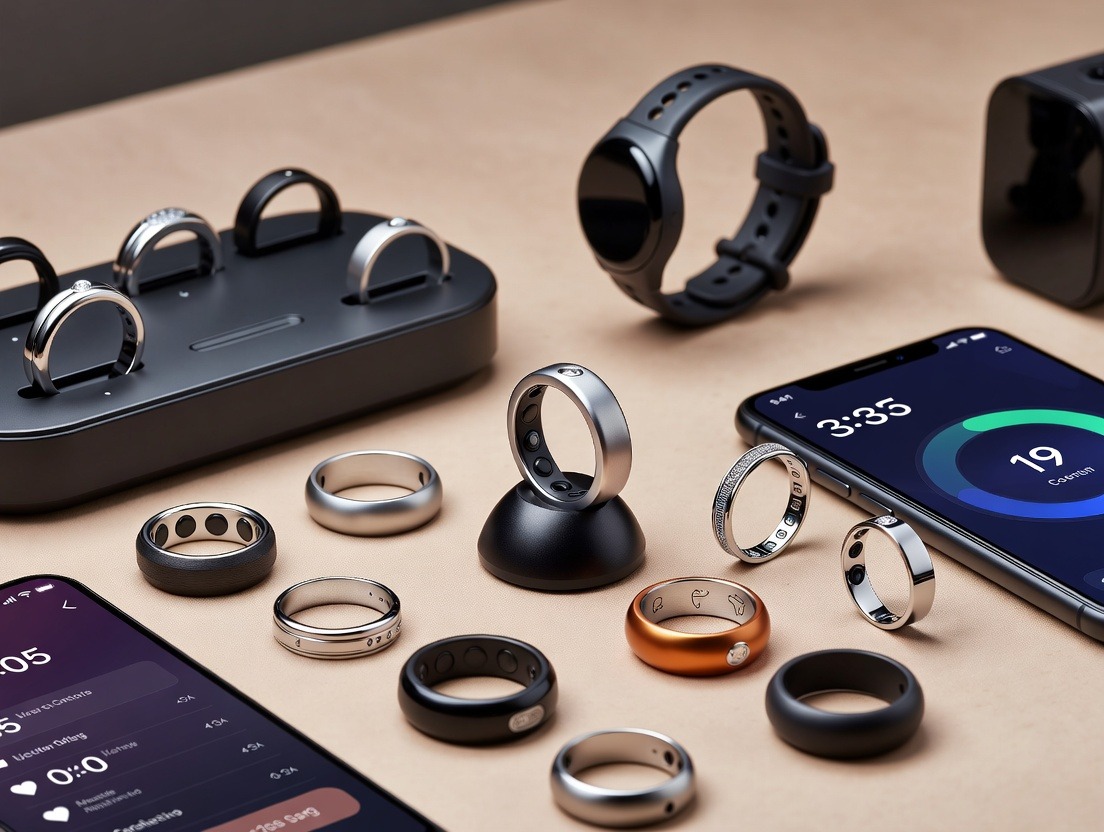
If the "what" (biomarkers) and the "why" (AI) are changing, so too is the "where." The future of wearables is not on the wrist; it is anywhere and everywhere, with a strong trend toward minimalism and invisibility. The dominant form factor is poised to shift from the bulky, screen-centric smartwatch to discrete, sensor-first devices.
The smart ring is leading this charge. By moving sensors to the finger’s base, rings like the Oura Ring and emerging competitors tap into richer vasculature, allowing for more robust heart rate, HRV, and blood oxygen (SpO2) data, especially during sleep. Rings are unobtrusive, comfortable for 24/7 wear, and bypass the "smartwatch dilemma" of constant notifications that can increase stress. They are pure health devices. Their success underscores a major user preference: health monitoring should be effortless and silent.
Looking beyond 2025, the form factor will continue to dissolve:
This proliferation means health monitoring will become ambient and contextual. You’ll have a ring for core metrics, clothing for workout biomechanics, and a patch for specific medical monitoring—all feeding into a unified AI health profile. The focus for companies will be on seamless integration and data synthesis across these devices. The winner won't be the company with the best single device, but the one with the most cohesive and insightful ecosystem. To discover how one innovative company is approaching this integrated future, exploring a philosophy where technology enhances life without interrupting it, is to see this principle in action.
The goal is clear: to make health sensing as natural as wearing clothes, and ultimately, invisible.
The impact of next-generation wearables will ripple far beyond personal wellness into the very fabric of public health and medical research. By creating massive, real-world datasets of continuous physiological information, these devices offer an unprecedented window into human health at a population scale.
Imagine tracking the spread of a seasonal virus not by doctor visits or lab tests, but by anonymized, aggregated data showing anomalous rises in resting heart rate and decreases in sleep quality across a geographic region—days before symptoms appear. Public health officials could identify hotspots earlier, target resources more effectively, and monitor the effectiveness of interventions in near real-time. This concept of "digital epidemiology" transforms our personal devices into a collective early-warning system.
The most profound transformation, however, will occur in the world of pharmaceutical and medical research through Decentralized Clinical Trials (DCTs). Traditional trials are slow, expensive, and burdensome for participants, often requiring frequent in-person clinic visits. This limits diversity, increases dropout rates, and slows down the pace of medical innovation.
Wearables are the engine of the DCT revolution. A participant in a trial for a new heart failure drug can now be monitored continuously from home. Researchers receive a constant stream of objective data on heart rate, HRV, activity levels, sleep, and perhaps even blood pressure and cardiac rhythm—far richer than occasional ECG snapshots in a clinic. This enables:
This shift democratizes medical research and will lead to faster development of therapies tailored to how people actually live. For the wearable industry, it creates a new imperative for clinical validation. Devices used in research must meet stringent regulatory standards for accuracy and reliability. This will separate clinical-grade wearables from consumer wellness gadgets. Companies that invest in rigorous validation, like those with a mission to bridge consumer wellness and medical-grade insights, will be positioned as crucial partners in this new research paradigm.
As wearables become more powerful, they collect the most intimate dataset in existence: the continuous story of your body. This data can reveal not just your fitness level, but your sleep disorders, your stress patterns, your potential early-stage diseases, and even predictors of mental health states. This creates the central ethical challenge of the wearable revolution: the Privacy Paradox. We seek deep insights, but at what cost to our personal sovereignty?
The current model is often problematic. Many free apps and devices monetize user data by selling aggregated, anonymized insights to third parties—or worse. "Anonymized" data can often be re-identified, and health data is among the most valuable on the black market. Users frequently click through lengthy terms of service without understanding how their biomarker data may be used for advertising, insurance profiling, or other commercial purposes.
The future must be built on a new paradigm: User Sovereignty and Data Ownership. This means:
This isn't just an ethical imperative; it's a competitive advantage. As consumers become more aware of digital privacy, they will gravitate toward brands they can trust with their most sensitive information. Building this trust requires unwavering commitment. For a look at how one company views this solemn responsibility, you can read about our core values and commitment to user privacy. The companies that will thrive are those that treat user data not as a commodity to be mined, but as a sacred trust to be protected.

For decades, medicine treated the mind and body as separate entities. The next generation of wearables is proving they are inextricably linked, building a quantified bridge between our psychological state and our physiological metrics. This is giving rise to the most personal application yet: the wearable as a mental health mirror.
Mental states manifest physically. Anxiety can trigger a spike in heart rate and electrodermal activity. Depression can correlate with reduced physical activity, lower heart rate variability, and disrupted sleep architecture. Chronic stress elevates cortisol, which can be inferred from a combination of HRV, skin temperature, and sleep data. Wearables are now sensitive enough to detect these patterns, offering objective, measurable insights into our subjective well-being.
By 2025, advanced wearables will move from detecting stress to differentiating between types of arousal. Is the elevated heart rate from excitement (eustress) or anxiety (distress)? The pattern of HRV and respiratory rate (inferred from heart rate data) can provide clues. This allows for more nuanced interventions. Instead of a generic "you seem stressed" notification, the device might say, "Your physiology shows signs of productive focus. Consider maintaining this flow state for another 25 minutes," or "Your biomarkers indicate passive anxiety. A 5-minute guided grounding exercise is recommended."
The frontier lies in predictive mental health support. By learning an individual's baseline, an AI could detect the early physiological signatures of a depressive episode or an anxiety spike—sometimes before the individual is consciously aware of it. It could then prompt pre-emptive coping strategies, suggest a digital therapy session, or even, with user consent, send an alert to a trusted contact or therapist.
This application also includes optimizing for positive states like mindfulness, focus, and resilience. Devices could guide biofeedback sessions to help you learn how to consciously increase your HRV (a marker of resilience). They could identify the times of day you are naturally most focused and help you protect that time. This transforms the wearable from a sickness detector to a tool for flourishing.
Of course, this is incredibly sensitive territory. The ethical considerations are paramount. These tools are for awareness and support, not diagnosis. They must be designed to empower, not to create anxiety about one's own anxiety. The role of human connection in mental health remains irreplaceable; the wearable is a supportive tool, not a replacement for therapy. For those interested in how technology can support holistic well-being, our blog features discussions on the mind-body connection and practical ways to use data for mental fitness.
The future of wearable health is not a single, perfect device. It is a constellation of specialized sensors—a ring for sleep, clothing for workouts, a patch for a specific condition, hearables for focus—all working in concert. The critical linchpin that makes this vision a reality is interoperability: the seamless, secure, and user-controlled sharing of data between devices, apps, and healthcare providers.
Today, we suffer from "data silos." Your fitness tracker data lives in one app, your nutrition log in another, your electronic health record in a third, inaccessible system. This fragmentation renders the data far less powerful. The true potential is unlocked when your smart ring’s sleep data informs your morning meditation app’s session length, which then adjusts your smart kitchen display’s suggested breakfast for optimal cognitive fuel, while also providing a comprehensive report to your cardiologist.
By 2025, pressure from consumers and forward-thinking healthcare systems will force the industry to adopt universal data standards, such as Fast Healthcare Interoperability Resources (FHIR). This will allow your wearable data to flow, with your explicit permission, into a Unified Health Profile (UHP). This UHP is your lifelong, patient-controlled health record that aggregates data from every source: wearables, genomic tests, lab results, doctor's notes, and medication history.
This UHP, powered by AI, becomes your health command center. It can:
For wearable companies, success will depend on being a good citizen in this ecosystem. Open APIs (Application Programming Interfaces) that allow data to be safely exported will become a standard feature, not a luxury. Companies that try to lock users into a closed "walled garden" will be left behind. The winning value proposition shifts from "we have the most data" to "we provide the most insightful synthesis of all your data." To see how a focus on user-centric integration is being prioritized, you can learn more about the Oxyzen platform's approach.
As wearables become more accurate and their claims more ambitious, they are inevitably colliding with the world of medical regulation. The line between a "general wellness" product and a regulated "medical device" is becoming blurred, and this regulatory frontier will be one of the most significant shaping forces of the market from 2025 onward.
A "wellness" device makes claims about overall well-being (e.g., "helps you understand your sleep"). A "medical device," as defined by agencies like the FDA in the US or the EMA in Europe, is intended for the diagnosis, cure, mitigation, treatment, or prevention of disease. When a wearable claims to detect atrial fibrillation (AFib), as the Apple Watch and others now do, it enters the medical device realm and requires regulatory clearance (like FDA 510(k) clearance).
The future will see an expansion of these medical-grade features on consumer wearables. We can expect regulatory clearances for:
This trend presents a dual path for companies. Some will pursue full regulatory approval for specific features, branding themselves as health-monitoring tools with clinical credibility. Others will remain in the wellness lane, focusing on lifestyle and fitness. There will also be a hybrid model: a device that operates in "wellness mode" by default but can unlock a "medically-validated mode" for specific features, often in partnership with healthcare providers.
This regulatory shift brings immense responsibility. False positives (alerting someone to a condition they don't have) can cause unnecessary anxiety and costly medical follow-ups. False negatives (missing a real condition) can have serious health consequences. Therefore, the bar for accuracy, clinical validation studies, and clear user communication will be extremely high.
For consumers, this means a new level of discernment is required. It will be crucial to look beyond marketing claims and understand what features are "clinically validated" or "FDA-cleared" versus those that are "investigational" or for "general wellness." Companies that are transparent about the intended use and limitations of their technology will earn long-term trust. For answers to common questions about the capabilities and intended use of advanced wearables, resources like our comprehensive FAQ can provide clarity and set realistic expectations.
One of the most impactful applications of future wearable health tech will be in supporting the global aging population. The desire to "age in place"—to live independently, safely, and healthily in one's own home for as long as possible—is almost universal. Next-generation wearables and ambient sensors will make this not just a wish, but a manageable reality, creating a personalized longevity blueprint.
This goes far beyond today's basic medical alert pendants. It involves a multi-sensor ecosystem that provides both health monitoring and safety assurance, all while preserving dignity and autonomy:
This ecosystem creates a "digital safety net" for families and caregivers. Instead of worrying about daily check-in calls, an adult child can receive a secure, weekly wellness report or only be alerted if biomarkers deviate significantly from a parent’s baseline. This reduces caregiver burnout while improving outcomes.
The business model here may also shift, with insurance companies and healthcare providers subsidizing wearables for high-risk populations, as the cost of the device is far lower than the cost of a fall-related hospital stay or a move to assisted living. This aligns the incentives of technology companies, healthcare payers, and patients towards preventative care. For real-world examples of how technology is already providing peace of mind and independence, you can read testimonials from users who have integrated these tools into their lives and the lives of their loved ones.

If we are to wear sensors 24/7 for decades and have them communicate data continuously, the current paradigm of daily or weekly charging is a fundamental bottleneck. The next great hurdle for wearable tech isn't a new sensor; it's a new power source. The race is on to develop sustainable, "fit-and-forget" energy solutions that can last for months, years, or even the lifetime of the device.
The innovation is happening on multiple fronts:
The endpoint of this quest is the "Zero-Power" Wearable—a device that, under normal use, never needs to be intentionally charged by the user. It harvests enough energy from its environment to perform its core functions perpetually. This is what will make health monitoring truly invisible and effortless.
This shift also carries a major sustainability benefit. Reducing or eliminating charging cycles extends device lifespan and reduces electronic waste. It also diminishes the carbon footprint associated with electricity consumption. Companies that lead in this area will not only solve a major user pain point but will also align with the growing consumer demand for sustainable technology. For a company deeply invested in creating seamless, sustainable wellness technology, the energy challenge is central to its R&D, a part of the larger journey you can explore here.
Amidst the dazzle of AI predictions and biomarker breakthroughs, a critical question emerges: What becomes of the human connection at the heart of healing? The most successful future for wearable health tech is not one where algorithms replace doctors, but where they augment and enrich the sacred doctor-patient relationship, making it more data-informed, proactive, and collaborative.
Today, a typical 15-minute doctor's appointment relies heavily on patient recall ("How have you been sleeping?" "Have you been stressed?") and a snapshot of vitals taken in an often-anxious clinical setting. This is akin to a meteorologist trying to predict the weather based on a single, blurry photograph. Wearables provide the continuous, high-resolution satellite imagery.
In the future, you will arrive at your appointment with a Patient-Generated Health Data (PGHD) report. This isn't a raw data dump, but an AI-synthesized summary of the relevant trends from the last quarter: your sleep efficiency trend, your resting heart rate and HRV during a period of high work stress, your activity levels recovering from an injury, or your nocturnal SpO2 readings. This transforms the conversation from "I think I've been sleeping poorly" to "My data shows my sleep efficiency dropped 15% starting three weeks ago, coinciding with a measurable increase in my stress biomarkers."
This allows the physician to:
The wearable and its AI act as a continuous "physician's assistant," monitoring between visits and flagging only the issues that require human clinical judgment. It handles the routine monitoring, freeing up the doctor's time for complex diagnosis, empathy, and counseling—the uniquely human skills machines cannot replicate.
For this to work, the technology must be designed for clinical utility. Data visualizations must be clear and standardized for quick interpretation by busy professionals. Seamless, secure data-sharing pathways into Electronic Health Records (EHRs) are essential. The goal is to create a virtuous cycle where technology deepens trust and understanding between patient and provider, leading to better outcomes and more satisfying care for both. For more insights on how technology is designed to support, not supplant, human-centric care, you can discover the philosophy behind our approach.
The gleaming promise of advanced health wearables—with their clinical-grade sensors and sophisticated AI—carries a stark shadow: the risk of exacerbating global health inequities. If this technology remains a luxury commodity for the wealthy, it will create a "health data divide," where the privileged benefit from predictive, personalized care while the majority of the world’s population is left with outdated, reactive systems. The true measure of this revolution’s success will not be the features in flagship devices, but in how its benefits are democratized.
The challenge is multifaceted. Current high-end wearables are prohibitively expensive for most of the world. They rely on constant connectivity (4G/5G, WiFi) and smartphone pairing, which are not universally available. Their algorithms are often trained on data from homogeneous, Western, and relatively healthy populations, making them less accurate—or even dangerous—when applied to diverse genetic backgrounds, skin tones, and disease profiles.
The path to equity requires intentional, disruptive innovation:
The potential impact is monumental. In regions with a shortage of doctors, wearables can triage care, allowing community health workers to prioritize the most urgent cases. They can monitor adherence to tuberculosis or hypertension treatment. They can provide early warning of malnutrition in children or pregnancy-related complications. This isn't about importing Western wellness gadgets; it's about co-creating Global Public Health Tools.
Companies that embrace this challenge will do more than tap into new markets; they will fulfill the foundational promise of health tech: to improve lives everywhere. This mission-driven approach is core to many organizations looking to scale impact. To understand how one company views its role in this larger ecosystem, you can learn about our mission and broader vision. The future must be built with and for the many, not just the few.
A wearable can detect a biomarker anomaly and deliver a perfectly reasoned recommendation, but it is powerless if the user ignores it. The greatest bottleneck in health improvement is not a lack of data, but a lack of sustained engagement and behavior change. The next generation of wearables will succeed or fail based on their mastery of human psychology, evolving from data dashboards into sophisticated Engagement Engines.
The old model of gamification—badges for 10,000 steps or streaks for logging sleep—is now table stakes and often leads to burnout or gaming the system. The future lies in Personalized Behavioral Science, which uses data to understand a user's unique psychological drivers and deliver interventions that actually work for them.
This involves several advanced strategies:
Crucially, these systems will be designed with compassionate disengagement. They will recognize signs of user fatigue or discouragement and adapt. If you miss a goal, the feedback won't be a reprimanding "You failed!" but an inquiry: "I notice your sleep schedule shifted this week. Was there a change in your routine? Would you like to adjust your goal to be more achievable right now?" This builds self-efficacy, not guilt.
The ultimate goal is to use the wearable as a catalyst to internalize healthy habits, so the device itself eventually fades into the background. The technology's success is measured by how little you need to rely on it because its lessons have become a seamless part of your life. For ongoing tips and insights on building sustainable wellness habits, our blog features regular content on behavioral science and engagement.
If your wearable data becomes the key to your personalized health future, it also becomes a uniquely attractive target for malicious actors. A credit card number can be changed; the immutable blueprint of your heartbeat rhythm, sleep neurobiology, and stress response cannot. Therefore, the security of health data is not a feature—it is the absolute bedrock upon which the entire industry stands. A single, high-profile breach of intimate health data could shatter public trust for a generation.
The threat landscape is complex. Data is vulnerable at multiple points: on the device itself (device-level attacks), during transmission to the cloud (man-in-the-middle attacks), and while at rest in company servers (database breaches). Threats range from individual blackmail ("Pay up or we reveal your sleep disorder to your employer") to large-scale ransomware attacks on health tech companies, to nation-states seeking population-level health intelligence.
The security architecture of 2025 and beyond must be "Fortress Grade," implementing a multi-layered defense:
Furthermore, the industry must prepare for the era of Quantum-Resistant Cryptography. While still years away, quantum computers will one day be able to break today's standard encryption. Forward-looking companies are already planning for this transition, ensuring that the health data collected today remains secure for decades to come.
For consumers, evaluating a company's security posture must become as routine as checking its battery life. Look for transparency reports, independent security audits (like SOC 2 Type II certification), and clear, plain-language privacy policies. Your health data is your most sensitive asset; entrust it only to those who guard it like a fortress. For detailed answers on how data is protected and managed, our FAQ addresses these critical security and privacy concerns.
While rings and patches represent the near future, the horizon points toward a more profound integration: technology that moves from on the body to within the body. This frontier of implantables and advanced biosensors blurs the line between tool and tissue, raising profound questions about human augmentation, identity, and the very definition of "wearable."
This is not speculative fiction. The foundations are already here:
Looking beyond 2025, research points toward:
The implications are staggering for chronic disease management, post-operative care, and performance optimization. But the ethical and social questions are equally vast. Who owns the data from a device inside your body? How do we prevent coercive use (e.g., by employers or insurers)? What are the long-term biological effects of permanent implants? Where do we draw the line between therapy and enhancement?
This frontier demands a new covenant of "Bionic Ethics"—principles developed through inclusive public dialogue, not just by engineers and CEOs. Transparency, absolute user sovereignty, and rigorous long-term safety studies are non-negotiable. The story of human integration with technology is being written now, and it requires careful, deliberate authorship. To follow the journey of companies thoughtfully navigating this complex landscape, you can explore our story and guiding philosophy.
The vision of billions of people wearing and regularly upgrading sophisticated electronic devices creates a looming environmental crisis. If not addressed, the health tech revolution could generate mountains of e-waste, deplete rare earth elements, and contribute significantly to carbon emissions from manufacturing, data centers, and shipping. The industry’s responsibility, therefore, extends beyond human health to planetary health. The future must be circular, not linear.
Today’s model is largely "take, make, dispose." A device is used for 2-3 years, then discarded, often ending up in a landfill where its toxic components leach into the environment. The circular economy model aims to eliminate waste by design, keeping products and materials in use for as long as possible.
For wearables, this translates to several key strategies:
Furthermore, the software and AI must be optimized for energy efficiency to extend battery life and reduce charging-related energy consumption. Data center operations for cloud processing should be powered by renewable energy.
Consumers are increasingly voting with their wallets for sustainable brands. A wearable that helps you live a healthier life should not come at the cost of a sicker planet. Companies that lead in circular design will not only meet regulatory pressures but will build deep loyalty with a conscious customer base. For a company committed to responsible innovation, this ethos is woven into its core. You can read about our commitment to sustainability and responsible design.
As wearables generate data that influences personal health decisions and even integrates with clinical care, a fundamental question arises: Can we trust it? The shift from "interesting trend" to "actionable insight" hinges on rigorous scientific validation. The market will inevitably bifurcate into clinically-validated tools and consumer wellness estimates, and the distinction must be crystal clear to users.
Clinical validation is a demanding, multi-step process:
The outcome of this process can lead to Regulatory Clearance (like FDA 510(k) or CE Marking as a medical device) for specific claims. This is a powerful signal of trustworthiness. However, the pace of innovation often outstrips the slow pace of regulatory review. This creates a space for "Research-Grade" validation—devices and algorithms that are backed by peer-reviewed studies published in reputable scientific journals, even if they haven't yet pursued full regulatory clearance.
Furthermore, the data generated by millions of users in the real world—Real-World Evidence (RWE)—is itself becoming a validation tool. RWE can show how wearable metrics correlate with long-term health outcomes, potentially uncovering new digital biomarkers for disease risk. For example, large-scale RWE could prove that a specific pattern of HRV deterioration consistently precedes a clinical diagnosis of depression by six months.
For consumers and professionals, navigating this landscape requires literacy. Look for statements like "FDA-cleared for AFib detection" or "Clinically validated for sleep staging per a study published in Sleep Medicine." Be wary of vague claims like "clinically accurate" without citation. The most trustworthy companies are transparent about their validation journey, publishing their study protocols and results. To see how user data and real-world experiences contribute to an understanding of a device's impact, you can explore authentic user testimonials and experiences.
After exploring the sensors, the AI, the form factors, the ethics, and the science, we arrive at the ultimate human question: What does it all add up to? The synthesis of next-generation wearable health tech is not a frantic life of bio-hacking and data obsession. Paradoxically, it is the opposite: effortless awareness leading to empowered simplicity. It is the technology-enabled ability to live in deeper harmony with your body’s needs, freeing up mental and physical energy for what truly matters.
In this optimized future, health management becomes ambient and intuitive. You are no longer a passive patient waiting for symptoms or an anxious self-tracker glued to charts. You are a partner in a continuous, gentle dialogue with your own biology. The wearable ecosystem handles the monitoring, the AI provides contextual understanding, and you make informed choices that feel natural, not forced.
Consider a day in this life:
This is a life of Preventative Flourishing. The goal shifts from fixing problems to building resilience, from treating illness to cultivating vitality. The technology’s greatest success is when you barely think about it, because its insights have been internalized into a healthier, more attuned lifestyle.
This journey is personal and ongoing. It’s about finding the tools and knowledge that resonate with you. For continuous learning and exploration of what a health-optimized life can look like, our blog is a dedicated resource for your journey. The future of wearable health tech is not a destination, but a pathway to a more conscious, empowered, and vibrant human experience.
The next logical integration for wearable health tech lies not with another physical device, but with a new digital plane: Virtual and Augmented Reality (VR/AR). While today’s VR is largely for gaming and AR for navigation, their fusion with real-time biometrics will create profound new paradigms for therapy, training, and human connection—a true Metaverse of Health.
This convergence creates a powerful feedback loop: the wearable senses your body’s state, and the immersive environment responds in real time to guide you toward a desired physiological goal.
The key to this future is seamless data interchange. Your smart ring or patch must communicate effortlessly with your AR glasses or VR headset, creating a unified biometrically-aware digital layer over reality. This isn't about escaping the physical world, but about enhancing our interaction with it through the lens of our own biology. Companies building the infrastructure for integrated wellness will be key players in this space. To see how foundational health data platforms are being developed for such integrations, you can explore the Oxyzen platform.
Data that predicts health outcomes is of immense interest to those who pay for healthcare: insurance companies and employers. This is catalyzing a monumental shift from a reactive, fee-for-service model to a proactive, value-based model powered by wearable data. The future of health insurance may not be about penalizing sickness, but about rewarding verifiable wellness.
This transformation is already budding with insurance discounts for logging steps or gym visits. By 2025 and beyond, it will evolve into sophisticated, personalized partnerships:
The ethical pitfalls here are deep and must be navigated with extreme care. Participation must be 100% voluntary, with robust opt-outs. Data must be aggregated and anonymized for population insights, and individual data must never be used for punitive measures, discrimination, or employment decisions. The model must be "carrot," never "stick." Transparency is non-negotiable. For a clear explanation of how user data can and cannot be used, resources like our FAQ on data privacy and use are essential.
When done ethically, this alignment of incentives can be powerful. It positions the individual, the payer, and the employer as partners in a shared goal: maintaining health and preventing costly disease.
The AI health coach we’ve described is only as good, and as fair, as the data it’s trained on. This presents one of the most critical challenges of the entire wearable revolution: algorithmic bias. If an AI is trained predominantly on data from young, white, athletic males, its recommendations for a 65-year-old Black woman or a South Asian diabetic may be ineffective or even harmful. An algorithm might fail to detect skin cancer in darker skin tones, or misinterpret heart rhythm variations common in certain ethnic groups.
Bias can creep in at every stage: in who is recruited for clinical studies, in the marketing that determines who buys the device, and in the historical medical data used to train diagnostic models. Left unchecked, these technologies could worsen health disparities, providing superior care only to the populations already best served by the system.
Building ethical, unbiased AI requires a proactive, multi-faceted crusade:
The goal is Health Equity by Design. Ethical AI isn't a compliance hurdle; it's a quality and safety imperative. It ensures the wearable revolution lifts all boats. Companies that lead here will build unparalleled trust across a global user base. For organizations committed to this principle, it's a core part of their identity. You can read about our foundational values and commitment to equitable health technology.
Human beings are not islands of data. We are social creatures whose health is profoundly influenced by connection, support, and shared purpose. The next evolution of wearable platforms will harness this power, moving from individual dashboards to connected health communities that provide motivation, context, and accelerate discovery.
This community layer will manifest in several powerful ways:
This social fabric turns health from a solitary pursuit into a shared journey. It combats the loneliness that can accompany chronic conditions and provides real-world context for your data. Seeing that others with similar HRV trends benefited from a specific type of yoga, for instance, is more compelling than an AI-generated suggestion.
For companies, facilitating these connections requires building robust, privacy-first community architectures where users control exactly what is shared and with whom. The platform becomes not just a tool, but a destination for belonging and growth. To see how shared experiences and user stories build this sense of community, you can explore real user testimonials and journeys.
The final frontier of wearable sensing is not the heart, but the brain. While today's wearables infer mental state from heart and skin, the next decade will see the rise of accessible, non-invasive neurotechnology that measures brain activity directly, opening a window into cognition, focus, and mental well-being that was previously the domain of lab-based EEG machines.
This will be powered by breakthroughs in dry-electrode EEG sensors that can be embedded in headsets, headbands, and even hearables. While not providing the granular detail of medical EEG, they will reliably measure key brainwave states (alpha, beta, theta, gamma) and their ratios.
The applications are transformative:
The ethical and privacy implications here are paramount. Brain data is the ultimate private data. The potential for misuse—by employers, advertisers, or malicious actors—is unprecedented. The development of neuro-wearables must be governed by the strictest possible ethical frameworks, emphasizing absolute user ownership, local processing, and transparent use policies. It is a frontier that must be approached with a balance of awe for its potential and solemn respect for its risks.
As we integrate these threads—the immersive interfaces, the new insurance models, the ethical AI, the connected communities, and the neural frontiers—what emerges is not a dystopia of surveillance, but a potential utopia of empowered human flourishing.
This is the ultimate synthesis: A world where technology gives us a deep, intuitive, and continuous understanding of our unique biology. It connects that understanding to our environment, our social circles, and our healthcare system in a virtuous cycle of support and prevention. The line between "healthcare" and "life" dissolves. Wellness becomes not a chore or a destination, but the foundational condition from which we live, work, love, and create.
In this future:
This vision is not inevitable. It is a choice. It will be built by companies that prioritize long-term human benefit over short-term data extraction, by regulators who foster innovation while fiercely protecting citizens, and by consumers who demand transparency, efficacy, and fairness.
The journey from the first pedometer to the AI-powered, implantable biosensor has been swift. The journey ahead—into the very fabric of our biology and consciousness—will be even more profound. As we embrace these tools, let us do so with wisdom, ensuring that the future of wearable health tech remains, unequivocally, human. For ongoing exploration, discussion, and resources on navigating this future, our blog is dedicated to being your guide. This is our shared path to a healthier world.
As we have explored, the horizon of wearable health technology is vast and dynamically interconnected. We are moving from isolated metrics to a symphony of biomarkers, from reactive tracking to predictive coaching, from conspicuous devices to invisible sensing. This future promises a revolution in personal empowerment, preventative medicine, and even the structure of medical research.
Yet, this future is not automatic. It will be built by companies that prioritize clinical validation, user privacy, seamless interoperability, and ethical design. It will be adopted by consumers who become discerning partners in their health, understanding both the power and the limitations of the data they generate. And it will be integrated into healthcare systems that are courageous enough to embrace new models of data-informed, proactive care.
The journey ahead is as much about human values as it is about technological specs. It’s about trust over convenience, insight over information, and empowerment over dependency. The stream of data flowing from our bodies is becoming a river; learning to navigate it wisely is the next great step in our collective wellness journey. To continue exploring specific applications, deeper dives into biometrics, and the practicalities of integrating this technology into your life, our blog serves as a continually updated resource as we all step into this stream together.
Your Trusted Sleep Advocate: Sleep Foundation — https://www.sleepfoundation.org
Discover a digital archive of scholarly articles: NIH — https://www.ncbi.nlm.nih.gov/
39 million citations for biomedical literature :PubMed — https://pubmed.ncbi.nlm.nih.gov/
Experts at Harvard Health Publishing covering a variety of health topics — https://www.health.harvard.edu/blog/
Every life deserves world class care :Cleveland Clinic - https://my.clevelandclinic.org/health
Wearable technology and the future of predictive health monitoring :MIT Technology Review — https://www.technologyreview.com/
Dedicated to the well-being of all people and guided by science :World Health Organization — https://www.who.int/news-room/
Psychological science and knowledge to benefit society and improve lives. :APA — https://www.apa.org/monitor/
Cutting-edge insights on human longevity and peak performance:
Lifespan Research — https://www.lifespan.io/
Global authority on exercise physiology, sports performance, and human recovery:
American College of Sports Medicine — https://www.acsm.org/
Neuroscience-driven guidance for better focus, sleep, and mental clarity:
Stanford Human Performance Lab — https://humanperformance.stanford.edu/
Evidence-based psychology and mind–body wellness resources:
Mayo Clinic — https://www.mayoclinic.org/healthy-lifestyle/
Data-backed research on emotional wellbeing, stress biology, and resilience:
American Institute of Stress — https://www.stress.org/


