


The Gradual Sleep Improvement Approach vs Quick Fixes
Gradual approaches create sustainable habit change, while quick fixes often fail long-term because they don't address underlying behaviors and environments.
Gradual approaches create sustainable habit change, while quick fixes often fail long-term because they don't address underlying behaviors and environments.
%402x.svg)
You know that deep, gravitational pull towards your pillow at the end of a truly exhausting day? The blissful surrender as your head hits the cool fabric? Now, contrast that with the brittle, anxious stare at a glowing ceiling at 3:17 AM, your mind racing through a highlight reel of daily stresses and tomorrow’s to-dos. In that chasm between these two experiences lies a multi-billion dollar industry and a fundamental question about modern well-being: Do we chase a quick fix for our sleep, or do we embark on the quieter, more profound journey of gradual improvement?
We live in an age of instant solutions. A notification disrupts our focus—we silence it. Hunger pangs strike—we tap an app for a delivered meal. Yet, our biology, particularly the ancient, intricate symphony of sleep, resists such simplistic overrides. The pursuit of perfect sleep has become a paradox: armed with more data, gadgets, and "hacks" than ever before, global sleep satisfaction is plummeting. We’re trapped in a cycle of seeking overnight miracles, often left more frustrated and fatigued when they fail to deliver.
This article isn't just another list of sleep tips. It's a deep exploration of two opposing philosophies in the quest for restorative rest. On one side, the Gradual Sleep Improvement Approach: a holistic, systems-based journey that treats sleep as a skill to be mastered, woven into the fabric of your life. On the other, the realm of Quick Fixes: the pills, potions, extreme protocols, and tech promises offering immediate relief. We will dissect the neuroscience, psychology, and real-world outcomes of each path.
Understanding this choice is critical. Your approach to sleep improvement doesn't just affect your nights; it recalibrates your days, your healthspan, your cognitive resilience, and your emotional equilibrium. With the advent of sophisticated personal biometric devices like the Oura Ring or the advanced sensors in the Oxyzen smart ring, we now have unprecedented visibility into what’s actually happening in our bodies overnight. This data is powerful, but it’s meaningless without the right philosophy to interpret and act upon it. Will you use this insight to chase a single number, or to cultivate a sustainable ecosystem for rest?
The path you choose will define not only how you sleep but also how you live. Let’s begin.
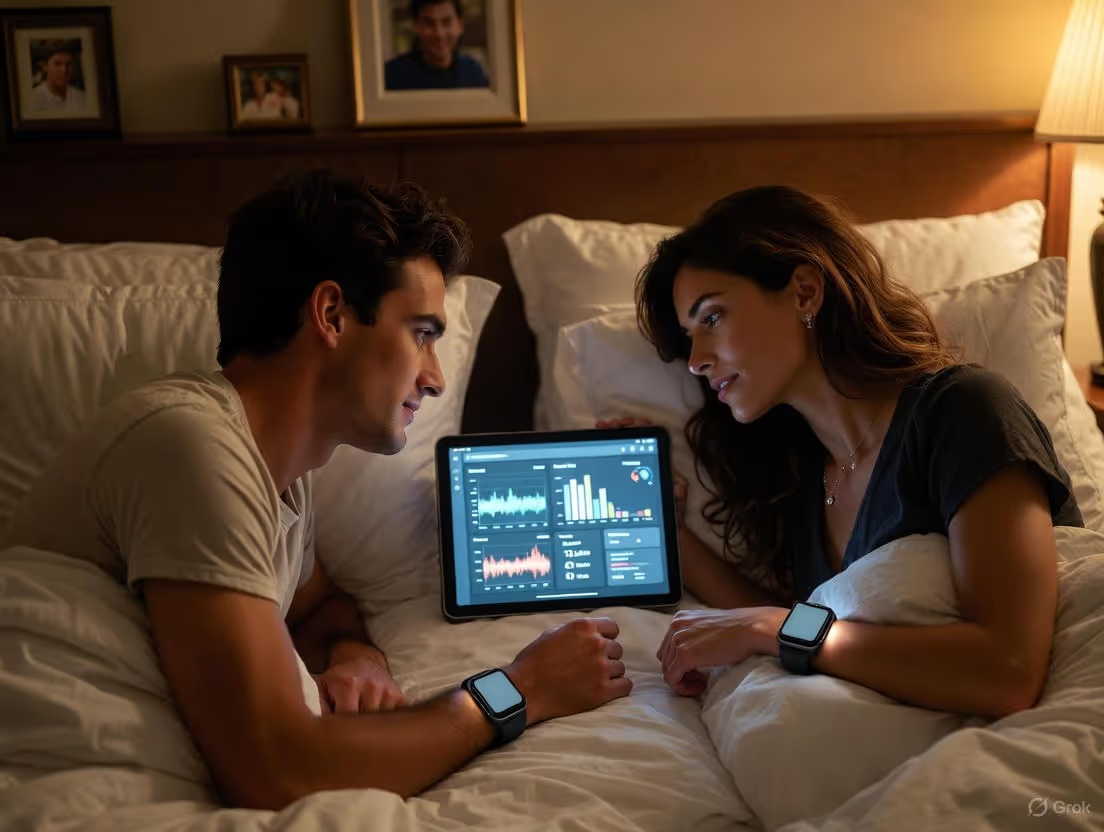
We are neurologically wired for immediacy. The human brain, shaped by millennia of evolution where immediate threats demanded immediate responses, prioritizes short-term rewards. This ancient wiring collides spectacularly with the complex, delayed-gratification needs of sleep health. When we're exhausted, our prefrontal cortex—the seat of rational, long-term planning—is impaired. In that state of fatigue-induced desperation, the promise of a "one-and-done" solution is neurologically irresistible.
Our modern culture supercharges this instinct. Digital ecosystems thrive on instant feedback. Social media offers instant validation, streaming services provide instant entertainment, and e-commerce promises instant possession. This conditions us to expect similar immediacy in solving our physiological problems. The wellness industry, often straddling the line between genuine science and savvy marketing, happily meets this demand. The landscape is cluttered with "sleep optimization" hacks: a proprietary magnesium blend that promises "deep sleep within 30 minutes," a bizarre TikTok trend advocating ice baths before bed, or an app that claims to "entrain" your brain into delta waves in a single session.
The psychology here is rooted in the "action bias." When faced with a problem (poor sleep), we feel a compelling need to do something, anything, tangible and immediate. Taking a supplement feels like decisive action. Purchasing a new gadget feels like progress. This action, even if ineffective, temporarily reduces the anxiety of feeling helpless. It’s a cognitive band-aid. Furthermore, we fall prey to the "single-cause fallacy"—the comforting but flawed idea that our complex sleep disruption has one simple cause (e.g., "not enough melatonin") and thus one simple solution.
This quest for quick fixes isn't just ineffective; it can be actively harmful. It leads to a phenomenon sleep researchers call "sleep performance anxiety." The very act of trying so hard to sleep, of monitoring your sleep score with obsessive dread, activates the sympathetic nervous system—the "fight or flight" system—which is the precise opposite state required for slumber. The bed ceases to be a place of rest and becomes a proving ground for biohacking success, a recipe for chronic insomnia. For those seeking a deeper understanding of how data can either serve or sabotage your sleep journey, our comprehensive blog on sleep analytics explores this delicate balance.
The quick fix promises liberation from sleep struggles but often ends up building a more intricate cage. It outsources the solution to an external pill or protocol, disempowering us from learning the subtle language of our own bodies. Before we can appreciate the alternative, we must fully understand the mechanisms we’re trying to shortcut.
To understand why quick fixes often fail, we must first respect the sublime complexity of the system they're trying to cheat. Sleep is not a monolithic state of "brain off." It is a dynamically cycling, intensely active, and non-negotiable physiological process orchestrated by a symphony of brain structures, neurotransmitters, and hormones.
The process begins with your circadian rhythm, your body's master 24-hour clock located in the suprachiasmatic nucleus of the hypothalamus. This clock is set primarily by light exposure, especially blue-wavelength light, and dictates the timing of melatonin release from the pineal gland. Melatonin is not a "sleep knockout pill"; it's a hormonal signal of darkness, a whisper to your systems that it's time to prepare for rest. A quick fix like slamming a high-dose melatonin supplement attempts to shout this whisper, often leading to dysregulation of your natural production, morning grogginess, and bizarre, vivid dreams.
Then comes the sleep-wake homeostasis, governed by the neurotransmitter adenosine. Think of adenosine as sleep pressure. It builds up in your brain from the moment you wake up. Caffeine works by blocking adenosine receptors, masking this pressure—a classic quick fix with a brutal payback in disrupted sleep architecture when it wears off. True sleep pays off this "adenosine debt." A quick fix tries to falsify the accounting.
Once asleep, your brain cycles through meticulously structured stages:
Each 90-minute cycle through these stages is a delicate dance. Quick fixes, particularly alcohol and many sleep medications, brutally disrupt this choreography. They may sedate you (inducing a crude mimic of NREM sleep), but they severely suppress vital REM and deep NREM sleep. You get unconsciousness, not restoration. You wake up feeling unrefreshed because your brain didn't get to complete its essential nocturnal work.
The brain's glymphatic system, a recently discovered waste-clearance system, kicks into high gear during deep NREM sleep, flushing out neurotoxic waste products like beta-amyloid (associated with Alzheimer's disease). Disrupt your deep sleep with a quick fix, and you're not just losing rest—you're halting your brain's overnight detox.
This complex neurochemical ballet cannot be hacked with a single variable. It requires a conductor—a consistent, predictable rhythm of light, dark, activity, and nourishment. The gradual improvement approach works because it respectfully collaborates with this biology, not against it. It understands that the goal is not just to fall asleep, but to successfully navigate the entire nocturnal journey, night after night. For a deeper look at the technology now available to track these intricate stages, you can discover how Oxyzen works to provide insights into your personal sleep architecture.
If quick fixes are a violent override of the system, the gradual approach is a gentle retuning. It moves the focus from intervention to lifestyle, from what you take to how you live. This method is rooted in behavioral psychology and the neuroscience of habit formation. It understands that sustainable sleep is not an isolated event but the product of hundreds of small, daily decisions that either build towards or erode your sleep pressure and circadian alignment.
The core principle is sleep hygiene, a term that is often oversimplified but is profoundly powerful when applied comprehensively and consistently. It's the architecture of your day designed to serve your night. Unlike a pill that works on you, sleep hygiene is a practice you cultivate within you.
Physiologically, this approach works by strengthening the two pillars we discussed: circadian rhythm and sleep-wake homeostasis. It does this through powerful, natural levers:
Psychologically, this method reduces sleep effort and performance anxiety. By focusing on the process (the relaxing routine, the consistent wake time) rather than the outcome (forcing yourself to sleep), you remove the pressure. The bed becomes associated with calmness again, not with anxious striving. This is a fundamental rewiring of your relationship with sleep.
The magic—and the challenge—lies in consistency. It's the repetition of these subtle behaviors, day after day, that gradually lowers your overall stress load (reducing cortisol, a sleep-disrupting hormone), strengthens your circadian rhythm, and builds what sleep experts call a "high sleep drive." It transforms sleep from a fragile state you chase into a resilient resource you cultivate. For those curious about the tools that can help track and reinforce these consistent habits, our FAQ section addresses how modern wearables integrate into this holistic process.

We stand at a unique crossroads in human history: for the first time, we can peer into the black box of our own sleep with clinical-grade detail, from our wrists or fingers. Devices like smart rings and watches provide metrics on sleep stages, heart rate variability (HRV), resting heart rate, respiratory rate, and body temperature. This is a monumental advancement. But data, like any powerful tool, can be used to build or to bludgeon. Its role in your sleep journey depends entirely on whether you approach it with a quick-fix or a gradual-improvement mindset.
In the quick-fix paradigm, data becomes a scoreboard for nightly performance anxiety. The user wakes up and immediately scrutinizes their "Sleep Score," attaching their self-worth and daily mood to a number generated by an algorithm. A "bad" score (often driven by imperfect sensor data or arbitrary algorithmic weighting) can cast a shadow over the entire day, creating stress that will likely poison the next night's sleep—a vicious cycle. This user is looking for a "hack" to spike their score tomorrow night, treating symptoms (e.g., "how do I increase my deep sleep percentage?") without understanding root causes.
In the gradual-improvement paradigm, data is used as a compassionate guide and a long-term trend analyzer. The educated user understands that night-to-night variability is normal. Instead of fixating on a single night's score, they look at weekly or monthly trends. They use data to form hypotheses and run personal experiments: *"When I finish eating 3 hours before bed instead of 2, my resting heart rate during sleep is 2-3 BPM lower."* Or, "On the days I get 30 minutes of morning sunlight, my sleep latency (time to fall asleep) decreases over the following week."
Key metrics take on new meaning:
This approach requires a shift from being a passive consumer of scores to an active investigator of your own biology. The technology is not the master; it is the microscope. The goal is not to game the algorithm but to understand the underlying organism—you. This philosophy of using technology as an empowering partner is central to our vision, which you can learn about in our story of merging human-centric design with advanced biometrics.
The data dilemma ultimately asks: Will you let this technology make you more anxious, or more aware? The answer defines whether it becomes a tool for liberation or another link in the chain of quick-fix frustration.
Let's crystallize these two philosophies with a hypothetical, yet deeply relatable, case study. Meet Alex, a 38-year-old knowledge worker plagued by fragmented sleep, 2:00 AM awakenings, and constant fatigue.
Alex Chooses the Magic Bullet (Quick Fix Path):
Frustrated, Alex invests in a popular over-the-counter sleep aid containing diphenhydramine. Night 1: He falls asleep faster, feeling a sedative heaviness. He wakes up groggy but attributes it to "finally sleeping." By Night 5, the grogginess is pervasive, and he notices constipation (a common anticholinergic side effect). By Night 10, the medication's effectiveness has diminished—a phenomenon known as tachyphylaxis. His sleep is once again fragmented, but now with an added chemical hangover. He feels defeated and physically worse. He may then jump to another solution—a new supplement, a different pill—perpetuating the cycle of dependence and diminishing returns. The root causes of his stress, poor light hygiene, and erratic schedule remain unaddressed.
Alex Chooses the 30-Day "Sleep Reset" (Gradual Improvement Path):
Alex decides to view the next month not as a search for a cure, but as a observational experiment and gentle recalibration. He doesn't aim for perfection, but for consistency in a few key levers. His plan, guided by gradual principles:
The results are not dramatic on Day 2. But by the end of Week 2, he notices it's easier to put his phone down. By Week 3, he's occasionally falling asleep during his reading. By Day 30, his sleep isn't "perfect," but his data shows a 15% increase in sleep consistency, a downward trend in his sleep latency, and he subjectively feels more rested. Most importantly, he feels a sense of agency. He has built a scaffold of habits that support sleep, which is more durable than any pill. He understands his own rhythms. For inspiration from others who have undertaken similar journeys, Alex might explore real user experiences and testimonials to see the varied paths to success.
This case study highlights the core difference: the quick fix seeks to delete the symptom of poor sleep, often with side effects. The gradual approach seeks to strengthen the system that creates good sleep, with compounding, side-effect-free benefits.
The appeal of quick fixes is undeniable, but their shadow side is substantial and often under-discussed. Moving beyond mere ineffectiveness, some pose genuine risks to physical and psychological health.
1. Pharmacological Dependency and Tolerance: Prescription sleep medications (like zolpidem/Ambien) and even many OTC options work by depressing the central nervous system. The brain, in its quest for homeostasis, adapts. This leads to tolerance (needing more for the same effect) and dependence (experiencing withdrawal symptoms, including rebound insomnia that is worse than the original problem, upon cessation). The line between use and dependency can blur frighteningly fast. Furthermore, drugs like benzodiazepines, sometimes prescribed for sleep, are associated with long-term cognitive decline and increased dementia risk.
2. The Disruption of Natural Sleep Architecture: As outlined in the neuroscience section, sedatives often create a state of unconsciousness that lacks the restorative quality of natural sleep. They suppress crucial REM and deep NREM sleep. Long-term, this can contribute to memory issues, learning difficulties, and a weakened immune system because the essential functions of those sleep stages are being chronically neglected.
3. The Placebo Roller Coaster (and Nocebo Effect): The supplement industry is a wild west. Many "proprietary blends" for sleep rely heavily on the placebo effect—a powerful, real neurological phenomenon where belief triggers a therapeutic outcome. This isn't inherently bad, but it becomes problematic when it masks underlying issues or drains your wallet. The inverse is the nocebo effect: reading about potential side effects can actually cause you to experience them. More sinister is the issue of contamination and inconsistent dosing found in some supplements, where the real "quick fix" might be a hidden, unlisted pharmaceutical ingredient.
4. Psychological Disempowerment: This may be the most insidious long-term cost. Every time you reach for an external substance to force sleep, you implicitly tell your brain, "You cannot do this on your own. You need this crutch." This erodes sleep self-efficacy—the fundamental belief that you are capable of sleeping well. It creates a learned helplessness, making you more vulnerable to sleep disruption in the future because you haven't built any internal resilience.
5. Masking Underlying Disorders: Poor sleep is often a symptom, not the disease. It can be a flag for sleep apnea, restless leg syndrome, clinical anxiety, depression, or other medical conditions. A quick fix silences the alarm without putting out the fire. Someone with untreated sleep apnea, for example, might use a sedative and succeed in staying "asleep" but will continue to stop breathing hundreds of times a night, placing enormous strain on their cardiovascular system, all while believing they've "solved" their sleep problem.
The gradual approach avoids these pitfalls by definition. It cannot create dependency because it is built on self-generated habits. It cannot disrupt sleep architecture because it works with natural biology. It empowers rather than disables. It encourages investigation of root causes rather than suppression of symptoms. Making an informed choice requires understanding these risks, which we detail in our resource library on responsible wellness tracking.
If we abandon the quest for a silver bullet, where do we start? The gradual improvement approach is built on a foundation of non-negotiable pillars. These are not "hacks" but fundamental prerequisites for a healthy sleep system. Ignoring them is like trying to build a house on sand; no amount of advanced technique will create stability.
Pillar 1: Circadian Rhythm Regulation (The Master Clock)
Pillar 2: Sleep-Wake Schedule Consistency (The Rhythm)
This is arguably the most important behavioral lever. Your wake time is the anchor.
Pillar 3: The Sleep Environment (The Sanctuary)
Your bedroom must be a temple for sleep, and nothing else.
Pillar 4: Daytime Behaviors (The Foundation)
Sleep is built during the day.
Mastering these four pillars alone can resolve a significant majority of sleep complaints. They are not glamorous, but they are profoundly effective. They require no purchase, only commitment. They form the immutable base upon which all other subtle refinements—tracking, advanced biohacking, personalized nutrition—can be successfully layered. For a deeper exploration of how to optimize each of these pillars, our expert-guided blog content offers continuous, evidence-based updates.
Our societal understanding of sleep is riddled with well-intentioned but biologically incorrect myths. These misconceptions often drive us towards quick-fix behaviors and away from the consistent, gradual practices that truly work.
Myth 1: You Can "Catch Up" on Sleep Over the Weekend.
This is perhaps the most pervasive and damaging belief. Sleep debt is not like a financial loan you can repay in a lump sum. While sleeping in on weekends can provide acute relief from severe exhaustion, it does not fully reverse the metabolic, cognitive, and hormonal disruptions incurred during the week. Furthermore, the "social jetlag" caused by shifting your sleep schedule by 2+ hours on Friday and Saturday night severely disrupts your circadian rhythm. Come Sunday night, you're essentially in a new time zone, making it incredibly hard to fall asleep at your "normal" time, thus perpetuating the cycle of weekday debt. The gradual approach prioritizes consistency over compensation.
Myth 2: Watching TV in Bed Helps You Relax.
The bed is for sleep. Full stop. Watching stimulating content (even "relaxing" shows often have plot tension, dramatic music, and commercials) engages your cognitive and emotional centers. The blue light from the screen directly suppresses melatonin. This habit creates a powerful associative link in your brain between the bed and alert, entertained wakefulness. It's one of the quickest ways to undermine your sleep drive. The gradual method insists on removing screens and reserving the bed for sleep and intimacy only.
Myth 3: If You Can't Sleep, Just Lie There and Try Harder.
This instruction is torture for an insomniac and stems from a misunderstanding of sleep effort. The "trying" itself—the clock-watching, the mental calculation of hours left, the frustration—activates the stress response. The golden rule of sleep psychology is: If you haven't fallen asleep within 20-30 minutes, get out of bed. Go to another dimly lit room and do something quiet and boring (read a physical book, listen to calm music, practice gentle breathing). Only return to bed when you feel sleepy. This breaks the association of the bed with frustration and re-establishes it with drowsiness.
Myth 4: Older Adults Need Less Sleep.
Sleep architecture changes with age (lighter sleep, more awakenings), but the need for 7-8 hours of total sleep time does not magically disappear. The perception that seniors need less sleep is often because they have more difficulty obtaining it due to health issues, medications, and lifestyle changes, not because their biological requirement has diminished. Accepting this myth can lead to neglecting treatable sleep disorders in the elderly.
Myth 5: A Nightcap is a Good Sleep Aid.
As previously mentioned, alcohol is a sedative, not a sleep aid. It fragments sleep architecture, suppresses REM, dehydrates you, and can worsen snoring and sleep apnea. Relying on alcohol for sleep is a classic quick fix that degrades sleep quality over time and carries significant health risks.
Dismantling these cultural myths is a critical first step in embracing a gradual philosophy. It clears the mental clutter, allowing space for evidence-based practices to take root. This commitment to scientific truth over cultural convenience is a core part of our mission at Oxyzen, where we aim to provide not just data, but the education needed to use it wisely.

With the foundation of the four pillars firmly set, we can now intelligently integrate technology. The goal is to transform raw data into personalized insight, moving from "What is my score?" to "What is my body telling me?" Here’s how to adopt a gradual, insight-driven approach to sleep data.
Step 1: Choose the Right Metrics, Ignore the Noise.
Don't get overwhelmed by every data point. For the gradual improver, these trend-based metrics matter most:
Step 2: Adopt a Scientist's Mindset: Observe, Hypothesize, Experiment, Analyze.
This is the core of the gradual method.
Step 3: Embrace the 80/20 Rule and the "Good Enough" Night.
Eighty percent of your sleep quality will come from 20% of the actions: consistent light, a regular schedule, and a good environment. Obsessing over the remaining 20% (e.g., optimizing your deep sleep from 18% to 20%) is a path to diminishing returns and anxiety. Some nights will be "good enough," and that is a success. The gradual approach values sustainable good sleep over perfect sleep.
Step 4: Use Data to Connect, Not Criticize.
Instead of using a low HRV reading to berate yourself for being "stressed," use it as a cue for self-compassion. "My body is showing signs of strain. What can I do today to support recovery? Maybe an extra 10 minutes of meditation, or a lighter workout?" This reframes data from a judge into a compassionate messenger from your own physiology.
Step 5: Take Regular Data "Breaks."
To avoid performance anxiety, schedule periods where you don't look at your sleep score at all—perhaps one weekend a month. Just practice the habits and feel how you feel. This reconnects you with your subjective experience and prevents you from becoming a slave to the algorithm.
By following this framework, tools like the Oxyzen smart ring become powerful allies in your gradual journey. They provide the objective feedback loop needed to validate what’s working and gently correct what isn’t, all while keeping you grounded in the larger philosophy of systemic, sustainable improvement.

The most advanced sleep tracker cannot measure a critical component of the gradual approach: the state of your mind. Chronic sleep struggles are often entwined with a hyper-aroused, worried, and controlling mindset. Therefore, cultivating mindfulness and radical acceptance is not a supplementary "wellness tip"; it is a fundamental skill for sleep mastery.
Mindfulness: Disidentifying from the "Story of Sleeplessness."
When you can't sleep, the mind spins a compelling, anxious narrative: "I'll be a wreck tomorrow. This is ruining my health. Why can't I do this simple thing? What's wrong with me?" Mindfulness teaches you to observe these thoughts as passing mental events, not absolute truths. A simple practice is, when in bed, to focus on the physical sensations of the breath entering and leaving your nostrils, or the feeling of your body against the sheets. When the anxious narrative arises (and it will), you gently note, "Ah, there's the story about tomorrow," and without judgment, return your attention to the breath. This breaks the cycle of thought-emotion-physiological arousal that keeps you awake. It's a gradual retraining of attention.
Acceptance: The Paradoxical Power of "Giving Up" on Sleep.
Sleep is a passive process. You cannot will it into existence. In fact, the effort to make sleep happen is the very thing that prevents it—a classic psychological paradox. Acceptance and Commitment Therapy (ACT) for insomnia focuses on this core principle: stop trying to sleep. Instead, commit to resting peacefully in bed. Shift your goal from "I must achieve 8 hours of unconsciousness" to "I will give my body and mind a quiet, restorative rest." This complete release of the effort paradoxically creates the conditions for sleep to arrive on its own. It dissolves the performance anxiety.
Practical Mindfulness Tools for the Bedtime Routine:
Integrating these practices transforms your pre-sleep period from a battle to a sanctuary. It aligns perfectly with the gradual philosophy because it is a skill that deepens with consistent practice. The first night you try meditation, your mind may race. The hundredth night, you may find stillness more easily. This is the epitome of gradual improvement: building not just a sleep habit, but a sleep identity as someone who rests peacefully, regardless of the immediate outcome. This holistic view of wellness, integrating mind and body, is central to the vision behind our technology.
We arrive at a critical juncture in the gradual sleep journey: the myth of the universal blueprint. The internet is saturated with “the perfect sleep routine” endorsed by biohackers, celebrities, and wellness gurus. They prescribe specific temperatures, rigid supplement stacks, and exact bedtimes as if human biology were a monolith. This is a seductive trap—another form of quick fix disguised as optimization. The true power of the gradual approach is its capacity for deep personalization. Your sleep is as unique as your fingerprint, shaped by genetics, lifestyle, chronotype, stress profile, and even your gut microbiome.
The first step is identifying your chronotype—your genetically influenced predisposition for sleep and wake times. Popularized by Dr. Michael Breus, chronotypes go beyond "morning lark" or "night owl." They are often categorized as:
Forcing a Wolf to adopt a Lion’s 5:00 AM wake-up call is a recipe for chronic circadian misalignment and misery. The gradual approach respects your chronotype. A Wolf’s “consistent schedule” might be 11:30 PM to 7:30 AM, not 9:30 PM to 5:30 AM. Data from a device like the Oxyzen ring can help objectively identify your natural rhythm by tracking your body temperature minimum and activity patterns without the bias of societal expectations.
Next, consider your personal stress signature. How does anxiety manifest in your body at night? For some, it’s a racing mind (cognitive hyperarousal). For others, it’s physical tension in the jaw, neck, or gut (somatic hyperarousal). Your wind-down routine must be tailored accordingly. The cognitive hyperaroused individual may benefit most from journaling or a “brain dump” to empty anxious thoughts onto paper before bed. The somatically hyperaroused person may find greater relief in progressive muscle relaxation, gentle yoga, or a warm Epsom salt bath.
Nutritional sensitivity plays a massive, individualized role. General advice says “avoid large meals before bed,” but the specifics vary. Does protein-rich food keep you awake? Does a small, complex carbohydrate snack (like a few almonds or a banana) promote sleepiness? Does dairy cause congestion that disrupts breathing? Tracking your evening food intake alongside your sleep quality and morning resting heart rate can reveal powerful, personal correlations.
The process of personalization is a lifelong, gentle experiment. It requires the patience of a gardener tending to a unique plant, not the rigidity of an engineer following a schematic. You might experiment with:
This is where a smart ring’s data becomes invaluable for the gradualist. By observing long-term trends, you can move from generic advice (“exercise is good for sleep”) to personalized insight (“90 minutes of heart-rate-elevating exercise ending before 6:00 PM correlates with a 12% increase in my deep sleep, but similar exercise after 7:00 PM increases my sleep latency”). This nuanced self-knowledge is the antithesis of a quick fix; it cannot be bought, only cultivated. For those ready to begin this journey of self-discovery, a wealth of personalized tracking insights can be found in our detailed FAQ on data interpretation.
Adopting the gradual approach is not a linear ascent to perfect sleep. It is a winding path with inevitable setbacks: a stressful work project, a sick child, travel across time zones, a period of grief. Furthermore, after initial improvements, you will hit plateaus—periods where despite doing “everything right,” your sleep quality doesn’t seem to improve. These moments are not failures; they are the defining tests of your philosophy. The quick-fix mindset collapses here, reaching for a stronger pill. The gradualist sees them as integral parts of the journey.
Reframing Setbacks: The "Reset" vs. "Ruin" Mentality.
A night of poor sleep, or even a bad week, is not evidence that the system has failed. It is data. The gradualist asks: “What disrupted my system?” rather than “What can I take to override this disruption?” A setback is an opportunity to practice resilience and compassion, not self-criticism. The key is the 80/20 rule applied over time. If you adhere to your foundational habits 80% of the time, the 20% of life’s inevitable chaos will not unravel your progress. The goal is to return to your baseline habits with ease, not to achieve perfection.
Strategies for Common Setbacks:
Breaking Through Plateaus:
When progress stalls, it’s time to investigate, not escalate. A plateau often means you’ve reaped the low-hanging fruit and now need to examine subtler levers.
The ability to navigate these ebbs and flows with equanimity is the hallmark of sleep mastery. It transforms sleep from a fragile commodity you protect into a resilient resource you trust. This journey of resilience and adaptation reflects the very values embedded in our company’s story—a commitment to long-term wellness over short-term gains.
The benefits of the gradual sleep approach are not confined to the night. They create a powerful, positive ripple effect that recalibrates your entire existence. This is where the investment in patience pays compounding dividends. While a quick fix might grant you a few hours of unconsciousness, gradual mastery enhances the quality of every waking hour.
Cognitive and Emotional Metamorphosis:
Deep, consistent sleep is cognitive fertilizer. The gradual improvement in sleep architecture leads to:
Physical Vitality and Metabolic Health:
The body repairs itself during sleep. A gradual approach ensures it has the time and quality to do so.
The Transformation of Your Relationship with Time and Energy:
Perhaps the most profound shift is subjective. When you are no longer chronically exhausted, your perception of life changes. You have more patience with loved ones. You have more creative energy for hobbies and projects. You approach challenges with agency rather than avoidance. The constant background hum of fatigue is replaced by a stable baseline of vitality. This isn’t about feeling “amped up”; it’s about feeling fundamentally rested, which is a different and more sustainable form of energy.
This holistic payoff is the ultimate argument for the gradual path. It aligns with the wisdom of systems thinking: fix the foundation, and everything built upon it becomes stronger. It’s why we believe so deeply in providing tools that support this comprehensive view of health, as highlighted in our mission to empower holistic well-being. The data from your smart ring isn’t just a sleep score; it’s a vital sign of your overall system’s health, a beacon guiding you toward a more vibrant waking life.
We have traversed the landscape from the seductive cliffs of quick fixes to the fertile ground of gradual improvement. We’ve explored the neuroscience, the psychology, the tools, and the mindset. Now, it’s time to synthesize this knowledge into a actionable, living blueprint—one that is inherently flexible and uniquely yours.
This is not a 30-day challenge with an end date. It is a lifestyle architecture for sustained vitality. Here is how to build it, step by gradual step:
Phase 1: The Foundation Audit (Weeks 1-2)
Phase 2: Pillar Implementation (Weeks 3-8)
Phase 3: Data-Informed Personalization (Month 3+)
Phase 4: Integration and Resilience (Ongoing)
Your blueprint will live and breathe. It will adapt to new jobs, new relationships, new seasons of life. The tools you choose, like a sophisticated wellness tracker, should serve this flexible, investigative process. They should provide clarity, not anxiety. To see how others have successfully navigated this journey, exploring real-world testimonials and experiences can provide both inspiration and relatable context.
The journey of gradual sleep improvement is, in essence, a journey of self-reclamation. It is a quiet rebellion against a culture that prizes hustle over health, immediacy over integrity, and intervention over understanding. It is the decision to become the author of your own restoration, one consistent, gentle choice at a time.
The decision between a quick fix and a gradual approach to sleep is often framed as a personal wellness choice. However, its implications ripple outward, imposing staggering costs on our healthcare systems, economies, and social fabric. Understanding this macro-scale impact reinforces why the gradual, systemic solution is not just a personal preference, but a societal imperative.
The Economic Drain of Sleeplessness:
Chronic sleep deprivation and disorders are a stealth tax on productivity and a drain on national resources.
The Social and Relational Erosion:
Sleep is the bedrock of emotional regulation and social cohesion. A sleep-deprived society is an irritable, distrustful, and less empathetic one.
The quick-fix mentality, when scaled, only addresses these societal symptoms with more pills and more individual consumer spending, failing to touch the systemic roots. The gradual approach, however, points toward systemic solutions: public health campaigns that educate on sleep hygiene, corporate policies that respect circadian biology (e.g., limiting after-hours communication, offering flexible schedules aligned with chronotypes), urban planning that reduces light and noise pollution, and medical training that takes sleep as seriously as nutrition or exercise. It reframes sleep from a personal luxury to a public good. Our commitment to this broader vision is part of the story behind our work to make sleep and recovery metrics accessible and actionable.
For the individual committed to the gradual path, a new generation of advanced tools is emerging that move beyond basic tracking into the realm of active biofeedback and personalized intervention. These are not quick fixes; they are sophisticated instruments for deepening self-awareness and fine-tuning your system.
Biofeedback and Neurofeedback:
These techniques teach you to consciously influence your own physiological states, directly targeting the hyperarousal that disrupts sleep.
Advanced Environmental Controllers:
The gradualist’s sanctuary can become a dynamically responsive ecosystem.
The Future: Closed-Loop Sleep Systems
The frontier lies in closed-loop systems that sense your state and respond automatically. Imagine a smart ring that detects prolonged wakefulness after bedtime and triggers your bedroom speaker to play a personalized, subliminal soundscape proven to ease you back to sleep. Or a device that notices your core temperature isn’t dropping at the expected time and signals your smart mattress pad to begin a gentle cooling cycle. This is the ultimate marriage of data and gradual, systemic improvement: technology that seamlessly supports your biology’s natural processes. Staying informed on these emerging technologies is a key part of the gradualist’s journey, and resources like our blog on future wellness tech can help you separate genuine innovation from hype.
These tools are powerful accelerants, but they are not the foundation. They are the "fine-tuning" instruments for someone who has already built the bedrock habits of consistent scheduling, light management, and a wind-down routine. They exemplify the gradual philosophy: using technology not to shock the system into submission, but to create an environment ever more perfectly aligned with its innate needs.
A common objection, often used to justify surrender to poor sleep or dependence on quick fixes, is the belief that “I’m just a bad sleeper. It’s in my genes.” While genetics do play a role in chronotype (Lion vs. Wolf) and susceptibility to certain disorders like restless leg syndrome, the science of epigenetics reveals a far more hopeful and dynamic truth: your lifestyle choices directly influence how your sleep-related genes are expressed. Your sleep system has profound plasticity.
How Lifestyle Writes on Top of Genetic Code:
Your DNA isn’t a fixed blueprint; it’s more like a vast library. Epigenetic processes act as librarians, determining which "books" (genes) are read and expressed. Your daily behaviors—light exposure, stress, diet, exercise—send signals that directly influence these epigenetic markers.
The Concept of "Sleep Debt" vs. "Sleep Capacity":
The quick-fix mindset sees only sleep debt—a negative balance to be erased with a single payment. The gradual, epigenetic-informed mindset focuses on building sleep capacity—the resilience and robustness of your entire sleep-wake system.
This understanding is liberating. It means you are not a prisoner of a "bad sleeper" identity. You are the steward of a malleable, responsive biological system. Every positive choice is a gentle edit to your body’s operating code, moving you toward greater sleep resilience. This empowering perspective is central to the education we aim to provide alongside our technology, as detailed in our company's mission to empower users. The data from your smart ring isn’t a judgment on your genetics; it’s feedback on how your current lifestyle is influencing your physiology, giving you the power to write a new story.
The gradual sleep improvement approach inevitably leads you to examine your daytime fuel. The connection between diet and sleep is a profound, bidirectional relationship often oversimplified as "avoid caffeine." In reality, your gut and your brain are in constant conversation via the gut-brain axis, and this dialogue heavily influences sleep quality.
Macro and Micronutrients as Sleep Modulators:
The Gut Microbiome: Your Internal Sleep Pharmacist:
Your gut bacteria produce a plethora of neurotransmitters and metabolites that directly affect your brain and sleep.
The gradualist investigates this axis not with restrictive fad diets, but with curious, incremental changes. They might ask: “If I increase my intake of fermented foods and leafy greens for a month, do I see a trend toward higher HRV or fewer nighttime awakenings?” or “Does moving my largest meal to lunch instead of dinner affect my deep sleep percentage?” This is a world away from taking a melatonin pill; it’s about nourishing the entire system that produces sleep naturally. For those seeking to explore this complex relationship further, our blog features deep dives into nutrition and recovery.
Even within the framework of gradual, nighttime-focused sleep improvement, the question of daytime napping arises. The quick-fix mindset might see naps as a way to "cheat" and compensate for poor nights. The gradualist, however, views napping as a strategic tool to be used with precision and rules, one that can either support or sabotage the broader goal of sleep consolidation.
The Science of the Effective Nap:
The key is understanding sleep inertia and sleep architecture. A brief nap (10-20 minutes) primarily consists of light NREM Stage 1 and 2 sleep. This provides a boost in alertness and cognitive performance without entering deep sleep (Stage 3), from which awakening leads to sleep inertia—that groggy, disoriented feeling.
The Gradualist's Rules for Strategic Napping:
The power nap, used wisely, is a testament to the gradual philosophy: it’s about working with your body’s natural rhythms, not against them. It’s a tool for maintaining consistent daytime energy, which in turn supports better stress management and decision-making, creating a positive feedback loop that benefits nighttime sleep. It requires the discipline to set an alarm and get up, even when the couch feels impossibly comfortable—a small act of commitment to the larger system.
The gradual sleep improvement approach is powerful, but it is not a substitute for professional medical diagnosis and treatment. A core tenet of this philosophy is intelligent self-experimentation within the bounds of safety. Knowing when your sleep issues cross the line from a lifestyle mismatch to a potential medical disorder is crucial. Persisting with self-directed quick fixes or even rigorous gradual habits in the face of an underlying disorder can be ineffective and dangerous.
Red Flags That Warrant a Sleep Specialist Consultation:
How a Gradualist Partners with a Sleep Doctor:
When you seek help, you come not as a passive patient, but as an informed partner. The data from your gradual journey—your sleep logs, your observations, and the long-term trends from your wearable—becomes invaluable clinical information. You can say, “I’ve maintained a consistent 10:30 PM bedtime and 6:00 AM wake time for two months. I get morning light, my room is 65°F, and I don’t consume caffeine after noon. Despite this, my device shows consistent sleep fragmentation, and my resting heart rate remains elevated. I’m still experiencing unrefreshing sleep and daytime fatigue.” This level of detail accelerates diagnosis and demonstrates your commitment, moving the conversation past basic lifestyle advice.
The gradual approach empowers you to be the best possible steward of your health and the most effective collaborator with a medical professional. It is the opposite of Dr. Google and self-prescription; it is informed self-care that knows its limits. For common questions about how wearable data can interface with professional care, our FAQ section provides helpful guidance.
Your Trusted Sleep Advocate: Sleep Foundation — https://www.sleepfoundation.org
Discover a digital archive of scholarly articles: NIH — https://www.ncbi.nlm.nih.gov/
39 million citations for biomedical literature :PubMed — https://pubmed.ncbi.nlm.nih.gov/
Experts at Harvard Health Publishing covering a variety of health topics — https://www.health.harvard.edu/blog/
Every life deserves world class care :Cleveland Clinic - https://my.clevelandclinic.org/health
Wearable technology and the future of predictive health monitoring :MIT Technology Review — https://www.technologyreview.com/
Dedicated to the well-being of all people and guided by science :World Health Organization — https://www.who.int/news-room/
Psychological science and knowledge to benefit society and improve lives. :APA — https://www.apa.org/monitor/
Cutting-edge insights on human longevity and peak performance:
Lifespan Research — https://www.lifespan.io/
Global authority on exercise physiology, sports performance, and human recovery:
American College of Sports Medicine — https://www.acsm.org/
Neuroscience-driven guidance for better focus, sleep, and mental clarity:
Stanford Human Performance Lab — https://humanperformance.stanford.edu/
Evidence-based psychology and mind–body wellness resources:
Mayo Clinic — https://www.mayoclinic.org/healthy-lifestyle/
Data-backed research on emotional wellbeing, stress biology, and resilience:
American Institute of Stress — https://www.stress.org/


