


How Health Tracking Technology Adapts to Individual Baselines
Explains how wearables learn what's "normal" for you to provide personalized alerts and insights.
Explains how wearables learn what's "normal" for you to provide personalized alerts and insights.
%402x.svg)
In the crowded, noisy world of health technology, a silent revolution is taking place. For years, wearables have bombarded us with data: steps counted, heart rates measured, sleep stages logged. We've been handed universal benchmarks—10,000 steps, a resting heart rate below 60, eight hours of sleep—and told to conform. But what if these one-size-fits-all goals are not just unhelpful, but fundamentally flawed? What if your optimal health doesn't look like anyone else's?
The next frontier in wellness technology isn't about collecting more data; it's about understanding your data. It's the shift from population-based averages to deeply personal baselines. Imagine a device that doesn't judge you against a 25-year-old marathon runner, but instead learns the intricate, unique patterns of your body. It knows that your "rested" heart rate is naturally higher, that your most restorative sleep occurs in a specific cycle, and that your stress response is tied to particular daily events. This is the promise of adaptive health tracking: technology that moves beyond generic metrics to provide a personalized, dynamic, and truly meaningful picture of your well-being.
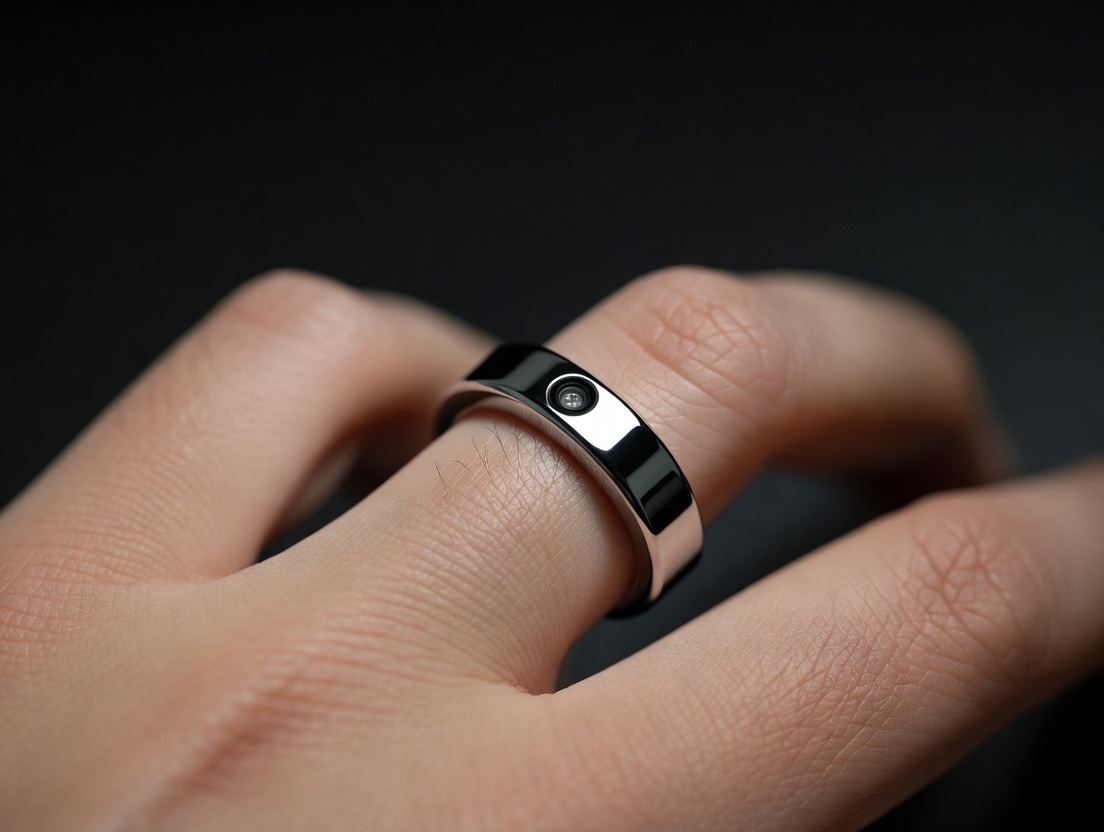
This article delves into the sophisticated science and engineering behind this shift. We’ll explore how modern devices, particularly advanced wearables like the smart rings emerging from innovators such as Oxyzen, are leveraging artificial intelligence, longitudinal data analysis, and physiological science to map individual baselines. We will uncover why your personal normal is the most important health metric you have, and how understanding it is the key to unlocking preventive health, optimized performance, and a deeper connection to your own body.

For decades, health guidelines have been built on a foundation of averages. The infamous 10,000-step goal, for instance, originated not from clinical research but from a 1960s Japanese pedometer marketing campaign. The "8-hour sleep" rule is a crude simplification of complex neurobiology. While these benchmarks serve a useful public health purpose by giving masses a simple target, they collapse entirely at the individual level. Applying them universally ignores the vast tapestry of human biological diversity.
Consider resting heart rate (RHR). The textbook "healthy" range is often cited as 60-100 beats per minute. An athlete might consistently register 45 BPM, while a perfectly healthy individual with a different autonomic nervous system tone might sit at 75 BPM. If the athlete’s RHR suddenly jumps to 65, it’s a significant red flag—a potential sign of overtraining or illness. For the other individual, 65 BPM might be an indicator of improved fitness. The absolute number is meaningless without the context of personal baseline.
The failure of averages manifests in several critical ways:
The quest for true personal health intelligence requires discarding this flawed, comparative model. Instead of asking, "How do I compare to everyone else?" the pivotal question becomes, "What is normal for me?" Answering this question is the core function of the next generation of health technology. To see how this philosophy is put into practice, you can explore the approach taken by modern devices on our blog.
So, what exactly is a "personal baseline"? It is not a single number, but a dynamic, multi-dimensional fingerprint of your physiology at rest and in response to daily life. It's the stable signal beneath the noise of daily fluctuations. Establishing it is a complex computational and scientific process that modern wearables are now automating.
A robust personal baseline encompasses several interlocking layers of data:
Establishing this baseline requires two key elements from technology: Longitudinal Continuous Sensing and Advanced Signal Processing.
You cannot define a baseline with sporadic checks. It requires 24/7, unobtrusive monitoring over a period of at least 3-4 weeks to account for weekly routines and cyclical variations. This is where form factor becomes critical. A device must be comfortable enough to be worn constantly, during sleep, exercise, and daily tasks. The rise of the smart ring, like those developed with a focus on seamless wearability, addresses this need perfectly.
Once the data stream is captured, algorithms must separate the signal from the noise. They use statistical modeling to find central tendencies, identify recurring patterns linked to time of day or day of week, and filter out one-off anomalies. Machine learning models cluster similar days and nights to understand what a "typical" state looks like for you. This creates a living model of you—a model that becomes the ultimate reference point for all future data. For a deeper dive into the data science behind these models, our company's story details the research journey.
The fitness tracker and smartwatch revolution brought health monitoring to the masses, but they come with inherent limitations for baseline tracking. Their placement on the wrist is suboptimal for several key metrics. Wrist-based optical heart rate sensors are highly susceptible to motion artifact (the "noise" from hand movement). This can make establishing a true resting heart rate difficult. Furthermore, many people remove their watch to sleep, charge it, or for comfort, creating critical data gaps just when consistent monitoring is most vital for understanding recovery and circadian rhythms.
Enter the smart ring. Worn on the finger, this form factor unlocks a new level of continuous, high-fidelity data collection essential for accurate baselining.
This constant wear is not about surveillance; it's about fidelity. The more complete the data picture, the sharper and more accurate your personal baseline becomes. Gaps in data force algorithms to guess, reducing the sensitivity to detect meaningful deviations. A device you never take off becomes a true guardian of your normal, able to spot the subtlest signs of deviation that a part-time wearable would miss. This commitment to continuous understanding is at the heart of the mission for brands focused on this technology, as outlined in our about page.

Raw sensor data is just a river of numbers. The transformation of this data into a coherent, personalized health insight is the work of Artificial Intelligence (AI) and Machine Learning (ML). These are not just buzzwords; they are the essential engines that make adaptive baselining possible.
Think of the process in three layers:
Layer 1: Pattern Recognition & Baseline Modeling. Supervised and unsupervised ML algorithms analyze your initial weeks of data. They don't just calculate averages; they identify clusters and patterns. They learn that your heart rate tends to peak at 3 PM on weekdays (post-lunch dip recovery), that your deepest sleep consistently occurs in the first third of the night, and that your HRV is highest on Saturday mornings. They build a probabilistic model of "you on a normal day."
Layer 2: Anomaly Detection & Significance Filtering. Once the baseline model is established, incoming data is continuously compared against it. But not every deviation is meaningful. A single high-stress day will cause a blip. The AI's job is to distinguish noise from signal. It uses statistical significance testing and trend analysis. Is this a one-off spike in resting heart rate, or is it part of a three-day upward trend that coincides with a rising temperature baseline? The latter is a potential early illness indicator. The former is just life.
Layer 3: Predictive Personalization & Contextual Insight. The most advanced systems move from describing to predicting. By correlating deviations with logged behaviors (e.g., "late caffeine," "intense workout," "stressful work event"), the AI learns your unique cause-and-effect relationships. It might eventually offer personalized prompts: "Based on your data, an evening workout after 8 PM typically delays your temperature drop by 90 minutes and reduces deep sleep. Consider finishing earlier tonight if you have an important day tomorrow."
This AI-driven personalization is what turns a data logger into a health companion. It provides context that is relevant only to you. Instead of a generic notification saying "You slept 6 hours," it can say, "Your sleep last night was 15% less efficient than your baseline, and your recovery score is low. This pattern often follows days with 3+ coffee drinks. Consider moderating caffeine after 2 PM." This level of tailored feedback is the ultimate promise of the technology. Users often share how these insights have changed their habits, as seen in real user testimonials.
If there is one metric that perfectly encapsulates the necessity of personal baselining, it is Heart Rate Variability (HRV). HRV measures the subtle variations in time between each heartbeat. Contrary to intuition, a higher HRV is generally better—it indicates a resilient, adaptable autonomic nervous system (ANS). Your ANS is the autopilot controlling your stress (sympathetic "fight or flight") and recovery (parasympathetic "rest and digest") responses.
HRV is notoriously personal. Elite athletes can have sky-high HRV numbers (e.g., 150+ ms), while other perfectly healthy individuals might have a baseline in the 30-50 ms range. Publishing a single "good" HRV number is therefore impossible. The entire value of HRV tracking lies in tracking your trend relative to your baseline.
How Adaptive Technology Uses Your HRV Baseline:
By anchoring HRV interpretation in a personal baseline, the metric transforms from a confusing number into one of the most powerful and direct windows into your nervous system state and overall readiness. For those new to this metric, our FAQ section explains HRV in simple terms.
Sleep is the ultimate regenerative process, and like all physiological functions, it is deeply individual. Generic sleep scores often punish night owls, light sleepers, or those with naturally segmented sleep patterns. Adaptive sleep analysis moves far beyond the simplistic goal of "8 hours with 90 minutes of REM."
Personalized Sleep Baselines Consider:
An adaptive sleep system doesn't just tell you how you slept last night. It tells you how you slept compared to your own best rest. It can identify: *"You achieved 90% of your typical deep sleep, but your sleep latency was double your baseline, suggesting pre-sleep agitation."* Or: "Your temperature didn't drop to its usual low, and your REM sleep was fragmented. This pattern has preceded head-colds in the past." This turns sleep data from a report card into a diagnostic and preparatory tool.
For too long, temperature tracking meant reacting to a fever—a spike so large it's unmistakable. But the story of your health is written in far subtler temperature fluctuations. Your core body temperature (CBT) is a master regulator and indicator, following a delicate daily rhythm (circadian) and longer-term cycles (infradian).
Continuous CBT monitoring, possible with wearables like smart rings, unlocks a revolutionary layer of baseline understanding:
By establishing what your temperature rhythm should look like, your wearable becomes a constant, silent health compass, pointing to deviations that matter long before you consciously feel unwell.

The culmination of multi-metric baselining is a shift in paradigm from reactive to predictive health. Traditional alerts are reactive: "Your heart rate is above 120 BPM while you're still." Predictive health is subtler and more powerful: it's about identifying meaningful trends in your baseline data that point to a future decline in well-being.
How Predictive Personalization Works:
An algorithm monitoring your rolling 7-day baseline might detect a "constellation" of subtle changes:
Individually, each data point might be dismissed. Together, they form a "stress signature" that, in your historical data, has preceded a common cold 70% of the time. The system can then deliver a personalized, predictive insight:
"Body Battery Low: Your metrics show a pattern consistent with immune system activation. Your personal data suggests you may be fighting something off. Prioritize rest, hydration, and sleep tonight to support your recovery."
This is no longer a simple notification; it's a health forecast. It empowers you to act preventively—to cancel an intense workout, take a zinc lozenge, get to bed early—potentially mitigating the severity or duration of an illness. It transforms the device from a historian of your health into a guardian of it. Understanding the potential of these predictive insights often leads to questions, which are addressed in resources like our comprehensive FAQ.
A personal baseline is not a life sentence; it's a living document of your physiology. It must evolve as you do. One of the most sophisticated aspects of adaptive technology is its ability to track and contextualize these long-term shifts, distinguishing between positive adaptations, natural aging, and concerning declines.
How Technology Adapts to Your Evolving Normal:
This long-term perspective turns a health tracker into a lifelong health journal. It provides a quantitative narrative of your body's journey, celebrating improvements, contextualizing changes, and vigilantly guarding against negative trends. The commitment to this long-term partnership with the user is a core part of the vision for companies in this space, as described in our story.
For all their sophistication, algorithms have a critical limitation: they lack human context. They can see that your HRV crashed on Tuesday night, but they don't know you received distressing personal news that afternoon. They can see elevated nighttime temperature, but they don't know you started a new medication. This is why the most effective personalized health systems are not autonomous; they are collaborative. They create a feedback loop between human experience and machine analysis.
The Power of Logging & Correlation:
Modern apps allow you to quickly tag your days: "Stressful Work Day," "Intense Leg Day," "Alcohol," "Late Meal," "Started Meditation," "Felt Headache Coming." This simple act is transformative. It allows the AI to perform correlation analysis: "On 80% of days you log 'Late Caffeine,' your sleep latency increases by an average of 40%." This moves from correlation to actionable cause-and-effect insight that is unique to you.
The Role of Subjective Feedback:
How did you feel today? A simple morning "energy" score or mood log creates a bridge between objective biometrics and subjective experience. Over time, the system can learn: *"For you, a combination of HRV below X and temperature above Y correlates with self-reported 'low energy' 90% of the time."* This validates the biometric markers with your lived experience.
This human-in-the-loop model ensures the technology remains a tool for empowerment, not a source of authoritarian dictums. It reminds us that the data is in service of the human experience, not the other way around. The goal is enhanced self-awareness, not algorithmic dependency. For ideas on how to engage with your own data, our blog offers many practical guides.
The journey to understanding your body’s unique rhythms doesn’t exist in a vacuum. Our modern world presents a constant stream of variables—crossing time zones, pulling all-nighters, dealing with life stressors, and navigating hormonal shifts. A truly intelligent health tracking system doesn’t crumble in the face of this complexity; it uses your established baseline to help you navigate it. This section explores how personalized technology provides stability and insight even when your life is anything but.
Your circadian rhythm is the bedrock of your baseline. It governs not just sleep, but hormone release, digestion, cognitive function, and cellular repair. When this rhythm is forcibly desynchronized from the solar day—by crossing time zones, working night shifts, or even maintaining a wildly different weekend sleep schedule—the impact on your health is profound. Adaptive technology becomes a crucial tool for managing this dissonance.
How Baselining Helps with Chrono-Disruption:
By using your established circadian baseline as a homing beacon, technology provides a personalized roadmap back to synchronization, turning a disorienting experience into a manageable physiological process.
Stress is not a monolithic experience. One person might internalize stress as a tense neck and a racing heart, while another experiences digestive upset and fatigue. Your body has a unique “stress fingerprint”—a specific combination of physiological changes that occur when your sympathetic nervous system is activated. Adaptive tracking is uniquely positioned to identify yours.
Mapping the Personal Stress Signature:
A device with continuous sensors builds a profile of how your metrics deviate under perceived stress. This goes beyond a simple heart rate spike. It looks for patterns:
Once your fingerprint is known, the technology moves from passive tracking to active coaching. It can recognize a familiar stress pattern emerging in real-time and prompt a personalized intervention: *“Your heart rate and temperature are showing your typical stress signature. Consider a 5-minute breathing exercise now to aid recovery.”* Even more powerfully, by correlating these physiological signatures with calendar events or manual logs, you gain profound self-awareness. You might discover that certain types of meetings, or even specific times of day, are consistent triggers. This data-driven awareness is the first, critical step toward better stress management.
Hormones are the invisible conductors of our physiological orchestra, and their fluctuations create significant, predictable waves in our biometric data. For half the population, the menstrual cycle imposes a powerful infradian rhythm. For everyone, aging brings hormonal shifts. Adaptive baselining is essential to make sense of these changes, turning potential confusion into clarity.
The Menstrual Cycle as a Master Baseline Modulator:
For those who menstruate, tracking against a rigid daily baseline is futile—the baseline itself changes throughout the month. Sophisticated tracking adapts to this.
Andropause & General Aging:
While more gradual, aging-related hormonal changes in all genders, like declining testosterone, growth hormone, or estrogen, also shift baselines. A slow, steady creep in resting heart rate or a decline in HRV over years can be contextualized within the natural aging process, helping distinguish normal change from a health concern. This longitudinal view fosters a compassionate, data-informed relationship with one’s aging body. For more on how technology is designed to support different physiological journeys, our about page details our inclusive approach.
Theory is powerful, but real-world stories bring the impact of personalized baselining to life. These hypothetical case studies, inspired by common user experiences, illustrate the transformative potential of moving beyond averages.
Case Study 1: The “Healthy” Executive
*Sarah, 42, is fit and eats well. Her smart ring established a baseline over a month. All her metrics were within population “healthy” ranges. However, the AI flagged a pattern: every Thursday and Friday night, her resting heart rate was 7-10 BPM above her weekly baseline, and her deep sleep plummeted. Correlating with her log, she realized this coincided with her weekly financial reporting deadline. The data was revealing a significant, recurring stress response she had normalized. With this insight, she implemented a Wednesday evening yoga session and a Friday afternoon walk. Within three weeks, her Thursday/Friday night baselines normalized, and she reported higher weekend energy.*
Case Study 2: The Endurance Athlete Overtraining
Mark, 30, is training for a marathon. He was pushing hard but felt constantly drained. His generic fitness tracker showed he was hitting his sleep and activity goals. His adaptive ring, however, told a different story. While his absolute HRV of 65 ms was “good,” it was tracking 30% below his personal baseline of 92 ms. His resting heart rate was 5 BPM above his norm, and his nighttime temperature wasn’t dropping fully. The system generated a “High Chronic Strain” alert. This personalized data convinced Mark to integrate a deload week. His metrics slowly returned to baseline, and he subsequently achieved a personal best without injury.
Case Study 3: Early Illness Detection
*David, 50, felt completely fine on Tuesday. That morning, his device provided a “Recovery” score 20 points below his normal. Reviewing the data, he saw his temperature had been 0.4°C above his personal baseline for two nights, and his RHR had crept up. The system noted: “Pattern consistent with immune activation.” He hydrated thoroughly, took it easy, and went to bed early. By Thursday, he had mild sniffles that were gone in a day. Without his baseline, these subtle shifts would have been invisible until full-blown symptoms hit.*
These stories underscore the central theme: personal baselines turn data into actionable, life-changing knowledge. They provide the context that makes numbers meaningful. Users often share similar transformative experiences, which you can read about in their own words.
As health tracking becomes more personalized, it also becomes more sensitive. The data stream no longer contains generic step counts; it holds the intimate blueprint of your body’s rhythms, your stress responses, and your sleep patterns. This raises legitimate and critical questions about data privacy and security. Trust is the foundation upon which this entire technology is built.
How Leading Platforms Protect Your Biological Blueprint:
As a user, your vigilance is key. Seek out companies that are transparent about their privacy architecture, prioritize on-device intelligence, and treat your data with the sanctity it deserves. Your health baseline is your property. For a clear explanation of how one company handles this responsibility, you can review our privacy FAQ.
The ultimate validation and application of personalized health data may come in the clinical setting. The promise is a future where your long-term, personalized baseline becomes a powerful tool in your doctor’s arsenal, moving healthcare from episodic and reactive to continuous and preventive.
The Potential for Clinical Integration:
Current Challenges and the Path Forward:
The bridge is not fully built. Challenges include data standardization (making different wearables’ data interpretable by clinical systems), physician training in interpreting consumer-grade data, and liability concerns. However, the trend is clear. The future of proactive medicine lies in integrating the rich, personal context provided by adaptive wearables with the diagnostic expertise of healthcare professionals. It creates a partnership for health centered on the most important person: you.
The evolution from static trackers to adaptive, baseline-aware systems is just the beginning. As sensor technology, AI, and our understanding of human biology advance, the future holds even more deeply personalized and anticipatory possibilities.
Emerging Frontiers in Personalized Health Tech:
This future is not about technology for technology’s sake. It’s about using every tool at our disposal to return to a fundamental truth: that health is personal, and the most effective path to well-being is one that honors and understands the unique individual walking it. To stay updated on these evolving trends and technologies, our blog is regularly updated with forward-looking insights.
The science and future are compelling, but the journey starts with a single step. Whether you’re a health novice or a data enthusiast, you can begin cultivating a baseline-aware approach to your well-being immediately.
Actionable Steps to Embark on Your Baseline Journey:
Remember, the goal is self-knowledge, not self-optimization to an inhuman standard. Your baseline includes your imperfections, your stressors, and your recovery. It is the story of you, written in the language of your own physiology. Embracing it is the first step toward a more harmonious and empowered relationship with your health.
Conclusion of This Section
We have journeyed from the flaws of generic averages to the intricate science of establishing a multi-faceted personal baseline. We’ve seen how this approach transforms our understanding of sleep, stress, recovery, and rhythm, and how it equips us to navigate the disruptions of modern life. We’ve confronted the critical issues of privacy and looked ahead to a future of even deeper personalization.
The underlying message is one of empowerment. In a world eager to categorize and compare, adaptive health technology offers a radical alternative: a mirror that reflects your unique self. It provides the objective feedback needed to tune into your body’s subtle signals, to honor its natural rhythms, and to make choices that support your version of vitality.
The revolution is not in the sensor; it’s in the perspective. By shifting from “How do I stack up?” to “What is true for me?”, we reclaim authority over our own well-being. The technology is merely the guide, helping us listen to the most expert voice of all: the quiet, consistent wisdom of our own bodies.
Understanding that you have a personal baseline is the first step. The next—and far more empowering—step is learning to interpret the fluctuations within that baseline. Your body is not a machine that operates at a fixed setting; it's a dynamic, living system that responds, adapts, and communicates through subtle shifts in its signals. This section provides a masterclass in reading your body's language, moving beyond the dashboard to become fluent in what your data is truly telling you.
Your daily health data will always have "noise"—random, meaningless fluctuations caused by momentary events, sensor error, or unexplainable biological blips. The "signal" is the meaningful pattern, the trend that indicates a true physiological shift. Learning to spot the signal is the core skill of personalized health intelligence.
How to Identify a Meaningful Signal:
Practical Exercise: For the next week, don't just check your daily scores. Open the weekly or monthly graph view for RHR, HRV, and sleep duration. Ignore the daily zig-zag. Look at the overall slope of the line. Is it flat, gently rising, or gently falling? This is where your truth lies.
Many platforms offer a single "Readiness," "Recovery," or "Body Battery" score. These composite scores are useful shortcuts, but they can become meaningless black boxes if you don't understand their personal ingredients. To truly benefit, you must reverse-engineer your score based on your baseline.
Deconstructing Your Personal Recovery Algorithm:
A readiness score typically combines:
Your mission is to learn the weight of each factor for you. On a morning when your score is low:
By consistently checking which metrics are most out of sync with your norms on low-score days, you'll learn your body's unique hierarchy of recovery needs. Perhaps you discover that for you, HRV is the dominant driver—if it's low, your score is low, regardless of sleep. Or you might find that sleep duration is your non-negotiable. This knowledge transforms a generic score into a precise diagnostic statement: "Today's low score is primarily driven by elevated resting heart rate, suggesting your nervous system is still processing yesterday's stress."
To explore different frameworks for interpreting readiness, our blog features various expert perspectives.
Your baseline is not a collection of isolated metrics; it's an interconnected system. Sleep impacts next-day activity capacity. Activity impacts sleep quality and recovery metrics. Recovery metrics dictate your potential for effective activity. Viewing this as a closed, personalized loop is the key to sustainable progress.
Mapping Your Personal Feedback Loop:
By respecting this loop, you stop fighting your body and start working with it. You exercise with your physiology, not against it. This leads to better results, fewer injuries, and a more joyful relationship with fitness. Countless users have shared how this insight changed their approach to training, as seen in our user testimonials.
Your internal baseline is constantly in dialogue with your external world. Beyond obvious inputs like exercise and diet, subtler environmental and lifestyle factors exert a powerful pull on your metrics. Identifying your unique sensitivities here is a game-changer.
Key External Levers to Investigate:
Action Plan: Pick one lever—like alcohol or late meals—and conduct a self-experiment over two weeks. One week with, one week without, while holding other factors steady. Watch your personal baseline metrics respond. This turns abstract health advice into concrete, personal knowledge.
This is perhaps the most important chapter in the guide to personalized health. Paradoxically, to fully benefit from deep personal data, you must know when to disengage from it. Obsessive tracking can itself become a source of stress, counteracting the very benefits you seek.
Signs You Need a Data Holiday:
The Principles of a Balanced Data Relationship:
Remember, the goal is self-awareness, not self-surveillance. The technology should fade into the background, providing gentle nudges and revealing patterns, not dominating your consciousness. For support on finding this balance, our community and resources can help.
While the power of this technology is intensely personal, its collective impact has the potential to reshape our understanding of population health. When millions of personalized baselines are aggregated and anonymized, they create a living map of human health far more detailed than any periodic survey or study.
The Macro View from Micro Data:
This is the "quantified society," where the goal isn't to monitor individuals, but to understand the health of our communities and ecosystems through the lens of our collective physiology. It's a future where your personal journey contributes, anonymously, to the greater good. This vision of technology serving both the individual and the collective is central to the mission of forward-thinking companies, as outlined in our story.
As we entrust algorithms to define our "normal," we must confront a critical challenge: these algorithms are trained on data, and data can be biased. If the initial training datasets for health AI are overwhelmingly young, male, able-bodied, and from specific ethnic backgrounds, the very concept of a "baseline" becomes exclusionary.
The Risks of a Non-Inclusive Baseline:
The Path to Ethical Personalization:
The future of personalized health must be universally personal. It must celebrate human difference, not erase it. This is an ongoing journey for the entire industry, and one we are deeply committed to, as explained in our company values.
There is a dimension of well-being that no sensor can capture: the quality of your conscious experience—your sense of peace, presence, and contentment. The final layer of personalization is the integration of your subjective, mindful awareness with your objective biometric data. Together, they form a complete picture.
Creating Your Mind-Body Data Fusion:
This integration prevents you from becoming a prisoner of the numbers. You are not a graph. You are a person experiencing a life, and the data is a tool to enrich that experience, to connect you more deeply to the somatic reality of your being. For ideas on mindfulness practices that pair well with tracking, our blog offers several guides.
Ultimately, adaptive health tracking is the start of an odyssey—a lifelong journey of self-discovery mapped in your own unique biological language. It’s about building a longitudinal narrative of you.
Envisioning Your Health Timeline:
This timeline is your most valuable health asset. It turns anecdotes into evidence. It allows you to see the long-term impact of habits built over years. It empowers you to age with agency, data in hand.
The journey with technology that adapts to you is just beginning. It promises a future where we are no longer passive patients waiting for something to break, but active custodians of our own well-being, guided by a deep, evolving conversation with our own bodies. It’s a future where health is not a destination, but a personalized, intelligently navigated path.
And your next step on that path? It begins with choosing a companion designed for the long journey, one built to learn you, not teach you a generic lesson. Discover the technology designed to be that lifelong partner.
Your Trusted Sleep Advocate: Sleep Foundation — https://www.sleepfoundation.org
Discover a digital archive of scholarly articles: NIH — https://www.ncbi.nlm.nih.gov/
39 million citations for biomedical literature :PubMed — https://pubmed.ncbi.nlm.nih.gov/
Experts at Harvard Health Publishing covering a variety of health topics — https://www.health.harvard.edu/blog/
Every life deserves world class care :Cleveland Clinic - https://my.clevelandclinic.org/health
Wearable technology and the future of predictive health monitoring :MIT Technology Review — https://www.technologyreview.com/
Dedicated to the well-being of all people and guided by science :World Health Organization — https://www.who.int/news-room/
Psychological science and knowledge to benefit society and improve lives. :APA — https://www.apa.org/monitor/
Cutting-edge insights on human longevity and peak performance:
Lifespan Research — https://www.lifespan.io/
Global authority on exercise physiology, sports performance, and human recovery:
American College of Sports Medicine — https://www.acsm.org/
Neuroscience-driven guidance for better focus, sleep, and mental clarity:
Stanford Human Performance Lab — https://humanperformance.stanford.edu/
Evidence-based psychology and mind–body wellness resources:
Mayo Clinic — https://www.mayoclinic.org/healthy-lifestyle/
Data-backed research on emotional wellbeing, stress biology, and resilience:
American Institute of Stress — https://www.stress.org/


