


The Healthy Aging Tips That Start Working at Any Age
Healthy aging tips that are effective regardless of when you start.
Healthy aging tips that are effective regardless of when you start.
%402x.svg)
Aging is not a date on a calendar but a lifelong journey of accumulation. Every sunrise brings a choice: to invest in the future of your health or to mortgage it. For decades, healthy aging was framed as a concern for the “golden years,” a last-minute scramble to correct decades of neglect. But a seismic shift is underway, fueled by revolutionary science and accessible technology. We now understand that the bedrock of a vibrant, long life is laid not in your sixties, but in your twenties, thirties, and forties. The most powerful anti-aging elixir isn't found in a syringe or a supplement bottle; it's the compound interest of daily, positive habits, consistently applied over time.
This is empowering news. It means that whether you're 25 and thinking about your first marathon at 70, or 55 and focused on maintaining cognitive sharpness and energy for your next career chapter, the principles are the same. The strategies work. And now, with the advent of personal biometric technology like smart rings, you have a 24/7 wellness companion that offers unprecedented insight into how your body responds to sleep, stress, nutrition, and activity. This isn't about chasing immortality; it's about maximizing your healthspan—the number of years you live in full, active, and cognizant health.
The journey we’re about to explore is grounded in the science of longevity, behavioral psychology, and practical, actionable wisdom. We’ll move beyond generic advice and into the nuanced strategies that truly move the needle. We’ll also see how modern tools can personalize this journey, turning guesswork into guided action. The narrative of aging is being rewritten from one of inevitable decline to one of sustained potential. Let's begin writing your chapter.

For too long, the cultural conversation has been obsessed with lifespan—the total number of years we live. But what good are extra years if they are burdened by chronic illness, faded mobility, and cognitive fog? The new paradigm, the one that drives cutting-edge research and modern wellness philosophy, is healthspan. Healthspan is defined as the period of life spent in good health, free from the debilitating diseases and disabilities of chronic aging.
The goal is simple yet profound: to compress the period of decline at the end of life, making the curve of aging longer and flatter. Think of it as living vibrantly at 90, not just being alive. This shift from quantity to quality changes everything. It transforms healthy aging from a reactive game of treating diseases to a proactive, daily practice of building resilience.
The Biology of Resilience: Allostasis vs. Homeostasis
You’ve likely heard of homeostasis—your body’s desire to maintain a stable, constant internal state, like a steady temperature. But a more useful concept for aging is allostasis. This is your body’s dynamic process of achieving stability through change. When you encounter a stressor—a hard workout, a work deadline, a sleepless night—your body expertly mobilizes resources (like cortisol and adrenaline) to cope, then ideally brings systems back to baseline. The problem arises with allostatic load: the cumulative wear and tear on the body from chronic overactivity or underactivity of these allostatic systems.
Aging, in many ways, is the progressive accumulation of allostatic load. Every unmanaged stress response, every night of poor sleep, every inflammatory meal adds a tiny weight to the scale. The key to extending healthspan is to minimize this load while maximizing your body’s capacity to recover—its resilience. This is where daily habits become your most powerful leverage point.
Personal Biometrics: The Quantified Self for a Qualitative Life
How do you measure something as subtle as allostatic load or resilience? This is where technology bridges the gap between intention and insight. A device like the Oxyzen smart ring operates as a continuous, non-intrusive monitor of your body’s core signals: heart rate variability (HRV), resting heart rate, skin temperature, blood oxygen saturation, and sleep architecture.
These aren't just numbers; they are a real-time dashboard of your nervous system and recovery status. A rising resting heart rate and dropping HRV can be an early warning of impending illness or overtraining, long before you feel symptoms. Tracking your sleep stages reveals whether you’re getting the deep, restorative sleep critical for cellular repair and memory consolidation. By understanding your unique patterns, you can move from guessing what works for your body to knowing with data-backed clarity. To see how this technology translates into daily life, you can read real user experiences in our testimonials.
The journey to a lengthened healthspan starts with this fundamental mindset shift. It’s not about adding years to your life, but life to your years. And that process begins and ends with how well you understand and support your body’s innate systems every single day.
If you could invest in one single habit with the highest dividend for healthy aging, it is unequivocally sleep. Sleep is not passive downtime; it is an intensely active period of biological restoration. During deep (slow-wave) sleep, your brain flushes out metabolic waste products like beta-amyloid, a protein linked to Alzheimer’s disease. Growth hormone is released, driving tissue repair and muscle growth. Your immune system rehearses its defenses, and memories are consolidated from short-term to long-term storage.
Chronic sleep deprivation (less than 7 hours for most adults) is not a badge of honor; it is a direct accelerator of aging. It disrupts glucose metabolism, paving the way for insulin resistance. It creates a hormonal environment that promotes fat storage and muscle loss. It erodes emotional resilience and impairs cognitive function. Simply put, poor sleep makes every other healthy effort an uphill battle.
Hacking Sleep Quality, Not Just Quantity
It’s not enough to just be in bed for 8 hours. The quality of that sleep is paramount. This is measured by the cyclical journey through light, deep, and REM (Rapid Eye Movement) sleep stages. Each cycle lasts about 90 minutes, and we need multiple complete cycles per night.
Modern wearables make this invisible process visible. By wearing a device like the Oxyzen ring, you can track not just total sleep time, but your time in each vital stage, your sleep consistency, and even environmental factors like nighttime room temperature. This data moves you from saying “I slept okay” to knowing “I got 1.5 hours of deep sleep, but my REM was fragmented due to a late meal.”
Actionable Protocols for Sleep Optimization
Sleep is the bedrock upon which all other health pillars rest. By prioritizing and optimizing it, you are directly investing in the cellular machinery that slows aging. For a deeper dive into sleep science and other wellness topics, explore our curated blog resources.
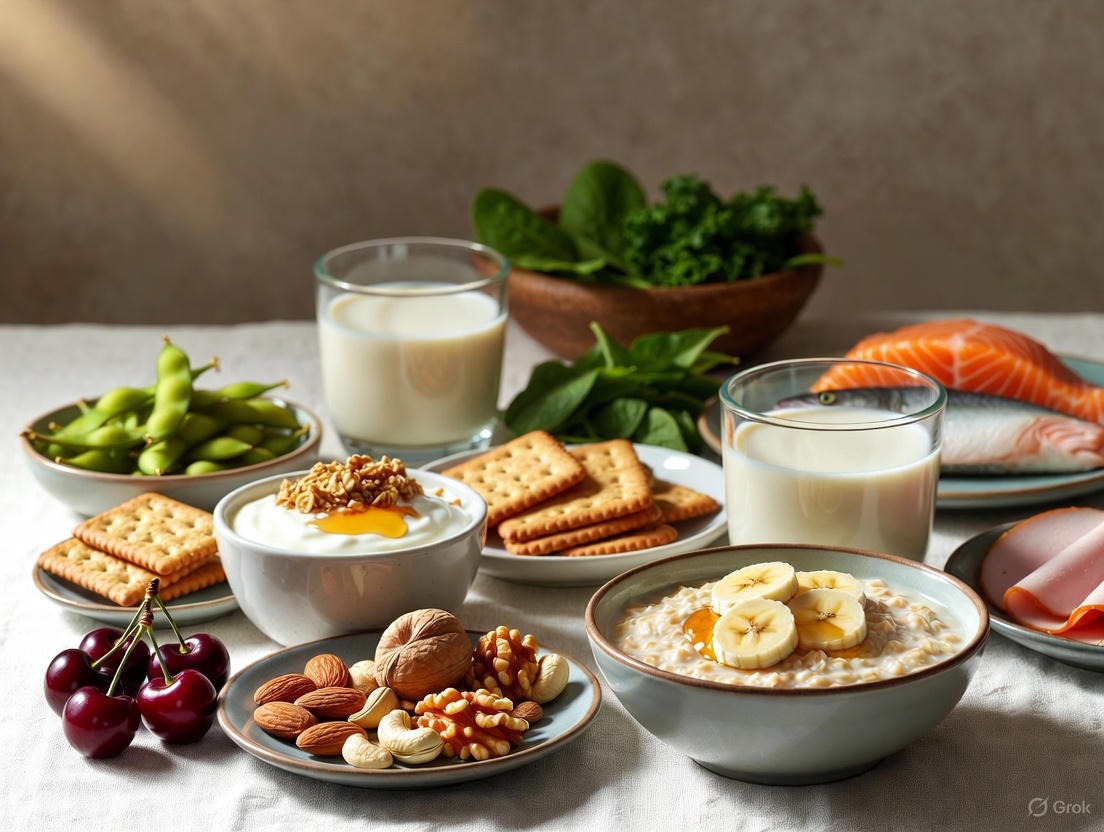
Food is more than fuel; it is information. Every bite sends instructions to your genes, turning them on or off, dialing inflammation up or down, and directly influencing the aging process at the cellular level. The goal of a longevity diet is not short-term weight loss but long-term cellular nourishment and protection. It’s about eating in a way that minimizes metabolic damage and maximizes repair.
The Hallmarks of Aging and Your Plate
Modern longevity science identifies key “hallmarks of aging”—biological mechanisms that deteriorate over time. Several are directly influenced by nutrition:
Building a Longevity Plate: Principles Over Dogma
Forget rigid, unsustainable diets. Focus on these core principles you can adapt for life:
Listening to Your Body’s Unique Responses
Nutrition is not one-size-fits-all. A food that energizes one person may cause bloating or brain fog in another. This is where personal biometrics become a game-changer. By monitoring markers like resting heart rate, HRV, and sleep quality after meals, you can identify foods that are inflammatory for you. You might discover, for instance, that a supposedly healthy brown rice bowl at dinner spikes your resting heart rate and disrupts your deep sleep, while a meal with sweet potatoes does not. This level of personalization is the future of nutrition, moving you from following generic rules to becoming the expert on your own body. For more personalized insights and guidance, you can always reach out with your questions via our FAQ.
The human body is designed for varied, regular movement. A sedentary lifestyle is a direct path to accelerated aging, contributing to muscle atrophy, joint stiffness, bone density loss, and metabolic slowdown. Conversely, the right kind of movement is perhaps the most potent “drug” we have for extending healthspan. It builds resilience in every system: cardiovascular, muscular, skeletal, and even cognitive.
The key is strategic balance. An optimal longevity movement protocol isn’t about grinding yourself into the ground with daily high-intensity workouts. It’s about a holistic mix that addresses strength, stability, cardiovascular health, and recovery.
The Four Pillars of Longevity Movement
Listening to Your Body’s Recovery Signals
More is not always better. Overtraining is a form of extreme stress that increases allostatic load and accelerates aging. This is where biometric feedback is critical. A device like the Oxyzen ring provides a daily “Readiness” or “Recovery” score based on your HRV, resting heart rate, sleep, and temperature. On a day when your score is low, it’s a clear signal from your nervous system to prioritize gentle movement, walking, or even complete rest instead of an intense workout. This prevents the boom-bust cycle and leads to sustainable, lifelong progress. Understanding these signals is part of the comprehensive support we believe in, which you can learn more about in our company mission.

Stress is an inevitable part of life. In acute doses, it’s even beneficial—it’s the mechanism behind hormesis and growth. The enemy of healthy aging is not stress itself, but chronic, unmanaged stress. When your body’s “fight-or-flight” (sympathetic) system is perpetually activated, cortisol remains elevated. This chronic state contributes to hypertension, suppresses immune function, impairs digestion, breaks down muscle tissue, and shrinks key brain areas involved in memory and emotional regulation.
Therefore, the goal is not to eliminate stress, but to become more resilient to it—to experience the stressor, then efficiently return to a state of calm and recovery (the parasympathetic, or “rest-and-digest” state). This quick recovery is the hallmark of a resilient nervous system and is one of the strongest predictors of long-term health.
Measuring the Immeasurable: HRV as Your Resilience Metric
Heart Rate Variability (HRV) is the single most powerful, accessible biomarker for measuring your nervous system balance and stress resilience. It’s the subtle variation in time between each heartbeat. A higher HRV generally indicates a more resilient, adaptable system that can handle stress and recover well. A lower, less variable HRV suggests a system stuck in a state of stress or fatigue.
By tracking your HRV trend over time (especially your nighttime average, which is most stable), you get an objective report card on your lifestyle. You can see the direct impact of a poor night’s sleep, a hard workout, a difficult conversation, or, positively, the effect of a meditation practice or a relaxing weekend.
Building Your Resilience Toolkit
You need practical, go-to methods to downshift your nervous system. These are not luxuries; they are essential maintenance.
Using technology, you can close the feedback loop. After a stressful event, you can use a breathing exercise and watch in real-time as your heart rate drops and your HRV begins to stabilize on your device’s screen. This tangible feedback reinforces the positive behavior, turning stress management from an abstract concept into a trainable skill. The story of modern wellness is about this fusion of ancient wisdom and new technology, a journey you can discover more about in our brand’s story.
Humans are not meant to age in isolation. We are an inherently social species, and the quality of our relationships has a staggering impact on our health and longevity. Groundbreaking research, like the Harvard Study of Adult Development—which has tracked lives for over 80 years—consistently finds that warm, nurturing relationships are the single strongest predictor of long-term health, happiness, and life satisfaction. They are more predictive than social class, IQ, or even genetics.
Social isolation and chronic loneliness, on the other hand, are not just feelings; they are biological stressors. They are associated with a significantly increased risk of heart disease, stroke, dementia, depression, and premature mortality. The health risk of prolonged loneliness is equivalent to smoking 15 cigarettes a day. Investing in your social world is not a soft, optional extra; it is a core component of your healthy aging strategy.
The Three Dimensions of Vital Connection
Building and Maintaining Your Social Fitness
Like muscle, social connections can atrophy if not used. “Social fitness” requires intentional effort, especially as life gets busy or as we age and social structures (like work or children’s activities) change.
Interestingly, the journey to better health through connection is often a shared one. Many users of wellness technology find that sharing their data and goals with a partner or a supportive community creates accountability and deepens their understanding. It turns a personal quest into a shared adventure in well-being, a principle that is at the heart of our vision and values at Oxyzen.

A long healthspan is meaningless without a mind that remains sharp, curious, and capable. Cognitive decline is not an inevitable fate. The concept of cognitive reserve explains why some people’s brains show signs of physical aging (like plaques or small vascular changes) yet they experience few, if any, symptoms. Their brains have built a robust, well-connected network that can withstand damage and find alternative pathways. You build this reserve throughout your lifetime, and it is never too late to start.
The health of your brain is inextricably linked to the health of your body. The pillars we’ve already discussed—sleep, nutrition, movement, and stress management—are the foundational prerequisites for cognitive longevity. Poor sleep allows toxic waste to accumulate. A Standard American Diet high in sugar and processed foods promotes brain inflammation. Sedentary living reduces blood flow and the production of brain-derived neurotrophic factor (BDNF), a fertilizer for brain cells.
Beyond Sudoku: The Pillars of Active Brain Building
Monitoring the Brain-Body Link
While we can’t directly measure neural connections with a wearable, we can track the physiological conditions that either support or degrade brain health. For example:
By using a tool that monitors these biomarkers, you get an indirect but powerful dashboard for your brain’s operating environment. You can correlate a week of poor sleep with feeling mentally foggy, or see how a period of consistent meditation improves both your HRV and your ability to concentrate. It turns the abstract goal of “brain health” into a tangible, daily practice. For more insights on harnessing technology for holistic health, visit our main resource hub.
Your genes load the gun, but your environment pulls the trigger. The spaces you inhabit—your home, your workplace, your community—are a constant, silent dialogue with your biology. From the air you breathe and the light you see to the chemicals you touch and the sounds you hear, your environment is a 24/7 input signal that either promotes healthy aging or stealthily accelerates decline. Proactively curating this ecosystem is a non-negotiable pillar of modern longevity.
This goes beyond mere cleanliness. It’s about creating surroundings that are actively supportive, reducing toxic load and enhancing your body’s natural rhythms. You can’t control every environmental factor, but you can master your immediate micro-environments, especially your home.
The Key Domains of Environmental Health
Using Data to Validate Your Environment
How do you know if your environmental changes are working? Your biometric data provides the proof. After improving your bedroom air quality and light hygiene, you should see measurable improvements in your sleep score, resting heart rate, and HRV. A quieter, calmer environment should reflect in lower stress indicators. This creates a virtuous cycle: you make a change, the data confirms its benefit, which motivates you to continue. It transforms your home from a passive living space into an actively engineered sanctuary for rejuvenation. Understanding and optimizing this personal ecosystem is part of the comprehensive wellness approach we advocate, and you can explore more about this philosophy on our about page.
This is the grand unifying principle that makes all the previous sections work. In the pursuit of healthy aging, the most brilliant goal is worthless without a system to achieve it. A goal is an outcome you wish to achieve (e.g., “get healthier,” “live to 100”). A system is the collection of daily habits and processes you follow that inevitably lead to those outcomes (e.g., “walk 30 minutes after lunch,” “prepare a vegetable-rich meal each night,” “meditate for 10 minutes before bed”).
When you focus on goals, you’re happy only when you reach the distant finish line. When you focus on systems, you find satisfaction in the daily practice itself. You are a person who engages in healthy behaviors, not someone who is perpetually “trying to be healthy.” This identity-level shift is what creates lasting change.
Building Atomic Habits for Lifelong Health
James Clear, in his book Atomic Habits, brilliantly outlines the laws of behavior change. We can apply them directly to longevity:
Embracing the Compound Effect
Healthy aging is the ultimate example of the compound effect. Small, seemingly insignificant choices, repeated consistently over time, create massive differences. Drinking one more glass of water today won’t change your life. Drinking one more glass of water every day for 30 years absolutely will. Walking for 20 minutes today is nice. Walking for 20 minutes most days for decades is transformative.
Your biometric data is the ledger where this compound interest is recorded. You won’t see the interest daily, but when you look back at your HRV trendline over 6 months and see it steadily climbing, or see your average resting heart rate declining over a year, you are witnessing the literal graph of your accumulating health capital. It’s the proof that your system is working, long before any major biological milestone is reached.
The traditional healthcare model is fundamentally reactive. You feel a symptom, you see a doctor, you get a diagnosis, and you receive treatment for a disease that has already taken hold. The longevity model flips this script. It is proactive, preventative, and focused on optimization rather than just the absence of disease. It uses data to identify subtle deviations from your personal baseline long before they blossom into clinical symptoms.
This is the promise of the “quantified self” movement, now made elegant and accessible through devices like smart rings. You are no longer a patient visiting a doctor once a year for a snapshot; you are the CEO of your own health, with a continuous stream of data to inform your decisions.
Key Biomarkers for Proactive Aging
While a smart ring doesn’t diagnose diseases, it tracks proxies for system-wide health that are powerful early-warning signals:
Creating Your Personal Health Baseline
The power of this data is not in any single number, but in the trends and patterns unique to you. What is your normal HRV? What does your optimal sleep look like? How does your body respond to alcohol, a late meal, or a high-stress day? By establishing this baseline over a few weeks, you create a personal health fingerprint. Any significant, sustained deviation from this baseline is a signal worth paying attention to.
Partnering with Your Healthcare Provider
This data empowers you to have a different, more productive conversation with your doctor. Instead of saying “I’m tired,” you can say, “Over the past three months, my average resting heart rate has increased by 5 beats per minute and my deep sleep has decreased by 20%, despite my efforts to improve sleep hygiene. What could we explore?” You become an engaged, data-informed partner in your own care.
This proactive approach demystifies your body. It turns health from a black box into an open-book exam. You have the tools to study, understand, and ultimately, to excel. For further resources on how to interpret and use this data effectively, our blog is a great place to start.
We have woven the thread of technology throughout each pillar for a reason: in the modern age, it is the force multiplier that makes personalized, proactive healthy aging not just possible, but practical. A device like the Oxyzen smart ring is the central hub in this new paradigm. It is the silent observer, the objective reporter, and the gentle nudge that keeps your daily systems aligned with your long-term vision.
The ideal wellness technology isn’t another source of distraction or anxiety; it’s a seamless, intuitive tool that integrates into your life and provides clarity. It should answer three core questions: How is my body functioning right now? How did my lifestyle choices affect me? What can I do today to improve tomorrow?
The Seamless Feedback Loop in Action
Imagine a typical journey:
This loop—action, measurement, insight, adjusted action—is the engine of sustained behavior change. It turns abstract health principles into personal, lived truth.
Beyond Tracking: The Rise of Personalized Insights
The future of this technology lies not just in collecting data, but in generating actionable, personalized insights. Advanced algorithms can learn your unique patterns and provide increasingly tailored guidance:
This is the culmination of all the pillars: a holistic, data-informed, personalized roadmap to a longer, healthier life. It represents a partnership between human wisdom and machine intelligence, all focused on the single goal of extending your healthspan. To see how this integrated technology comes to life and the vision behind it, you can discover the full story of Oxyzen.
Ultimately, the most important tip for healthy aging is the meta-tip: adopt the right mindset. This is not a 30-day challenge or a race to a finish line. It is a gentle, persistent, and compassionate direction of travel that lasts a lifetime. It requires letting go of perfectionism and embracing the concept of “better, not perfect.” There will be weeks of stellar sleep and pristine nutrition, and there will be weeks of travel, stress, and holiday feasts. This is normal. This is life.
The longevity mindset is non-linear. It’s about your trajectory. Did you bounce back more quickly from a period of stress this year than last? Has your average energy level slowly trended upward over five years? Do you feel more resilient, more capable, more alive in your daily experience? These are the true metrics of success.
Cultivating Ageless Curiosity
One of the hallmarks of those who age vibrantly is an undimmed curiosity about the world and about themselves. They are lifelong learners. They experiment. They are willing to try a new vegetable, a new movement practice, or a new piece of technology that might offer deeper self-understanding. This article, and the technology we’ve discussed, are tools for that curiosity. They allow you to ask your body questions and get answers.
Your Legacy of Health
The journey of healthy aging is also profoundly unselfish. By investing in your own vitality, you are not just giving yourself more good years; you are giving your family, your friends, and your community more of you. You are building a legacy of health that can inspire those around you. You are ensuring that your later years are characterized by contribution and presence, not by being a burden.
This is the grand invitation: to start today, at any age, with any small step. Drink the extra glass of water. Take the ten-minute walk. Breathe deeply for one minute. Track one night’s sleep. Each positive action is a vote for the person you are becoming—a person defined not by the years in their life, but by the life in their years. The data, the habits, the systems—they are all in service of this single, beautiful aim: to live fully, for as long as you live.
Moving beyond the basic longevity plate, we enter the realm of strategic nutrition—using food and feeding patterns as deliberate tools to trigger specific, protective genetic pathways. This isn't about restriction; it's about timing, diversity, and feeding the trillions of microorganisms that govern much of our health.
The Nuances of Time-Restricted Eating (TRE) and Autophagy
TRE’s benefits extend far beyond calorie restriction. By aligning your eating window with your circadian rhythm (e.g., 10 a.m. to 6 p.m.), you improve metabolic flexibility. But the more profound mechanism is the upregulation of autophagy (from Greek: “self-eating”). This is the body’s innate recycling program. During fasted states, cells break down old, damaged proteins and cellular components, using them for energy or building new, healthy parts. This cellular spring cleaning is crucial for preventing the accumulation of dysfunctional components that lead to senescence, neurodegeneration, and cancer.
The Rainbow Pharmacy: Targeting Phytonutrients
Each color in a plant represents a different family of phytonutrients, each with unique protective properties. Advanced nutritional longevity involves intentionally “eating the rainbow” to pharmacologically support your systems.
The Second Brain: Cultivating Your Gut Microbiome for Longevity
Your gut microbiome—the ecosystem of bacteria, viruses, and fungi in your digestive tract—is a primary regulator of inflammation, immune function, and even mood and cognition via the gut-brain axis. A diverse, robust microbiome is a hallmark of healthy aging.
Tracking the impact of these dietary shifts is where personal technology shines. As you increase fiber and fermented foods, you might notice improved digestion and even a more stable mood. As you hone your TRE window, your sleep and morning resting heart rate data may provide positive reinforcement. This feedback loop turns advanced nutrition from a theoretical exercise into a tangible, self-directed experiment. For more detailed guides on implementing these strategies, our blog offers a wealth of related articles.
The paradoxical secret to building a resilient, aging-resistant body is to subject it to the right kind of stress. This beneficial stress is called hormesis. It’s the biological principle that a low-dose exposure to a stressor that is damaging at high doses activates an adaptive, overcompensatory response, making the organism stronger and more resilient. Think of it like lifting weights: you create tiny tears in muscle fibers (stress), and the body repairs them to be stronger than before. Hormesis applies this concept far beyond the gym, to nearly every system in your body.
Hormetic Stressors in Practice:
The Goldilocks Principle: Finding Your Hormetic Zone
The key to hormesis is the dose. Too little, and there’s no stimulus. Too much, and it becomes damaging chronic stress (high allostatic load). The “sweet spot” is acute, intermittent, and followed by adequate recovery.
Hormesis teaches us to not fear all stress, but to become strategic stress architects. By intentionally applying the right stresses in the right doses, we don’t just avoid breakdown—we actively trigger upgrades. Understanding and applying this principle is a core part of a sophisticated longevity practice, reflecting a deep commitment to self-mastery that aligns with our mission to empower proactive health.
We evolved in tribes. Our biology expects connection, shared purpose, and mutual support. While we’ve touched on the health risks of loneliness, the flip side is that a pro-social, health-oriented community is a potent longevity accelerant. It provides accountability, shared knowledge, emotional buffering against stress, and a powerful sense of meaning.
The Multiplier Effect of Shared Habits
Health behaviors are socially contagious. The famous Framingham Heart Study showed that obesity, smoking cessation, and even happiness spread through social networks. When you embed yourself in a community that values healthy aging, those values and behaviors reinforce your own.
Accountability and The Mastermind Principle
Going it alone is hard. A community provides natural accountability. When you know your walking partner is waiting at the park at 7 a.m., you’re more likely to show up. Beyond simple accountability, a “health mastermind” group—where members share goals, challenges, and insights—can problem-solve in ways you can’t alone. Someone might share a recipe, a recovery technique, or an insight from their own biometric data that unlocks a solution for you.
Technology as a Community Connector
Modern wellness technology can deepen these connections, not replace them.
The journey toward a long healthspan can sometimes feel solitary, especially when making lifestyle changes that others in your immediate circle may not understand. Finding your tribe—whether locally or virtually—provides the encouragement, normalcy, and shared joy that makes the journey sustainable and enjoyable. It turns the pursuit of health from a personal project into a collective celebration of human potential.
Healthspan and financial security are inextricably linked in a long life. The stress of financial precarity is a massive, chronic burden on your physiological systems, elevating cortisol and undermining every other healthy habit you try to build. Conversely, financial stability provides the freedom to make healthy choices—access to quality food, gym memberships, wellness care, stress-reducing experiences, and time for exercise and connection. Planning for a 100-year life requires a 100-year financial mindset.
The Longevity Premium and Your Career
If you are likely to work into your 70s or beyond, the traditional linear path of “learn, earn, retire” is obsolete. The new model is a multi-stage life, likely featuring career changes, sabbaticals for retraining, and periods of part-time work or entrepreneurship.
The Health-Wealth Feedback Loop
This is a powerful, self-reinforcing cycle:
Practical Financial Foundations for Longevity
The peace of mind that comes from financial stability is a profound anti-aging therapy. It lowers the background hum of existential stress, freeing your nervous system to focus on growth, repair, and engagement. Just as you track your physiological biomarkers, regularly tracking your financial “vitals”—net worth, savings rate, debt level—is a critical part of a holistic longevity plan. Making informed choices in all areas of life is part of the empowered approach we champion, and you can learn more about our holistic vision on our about page.
To live a long life without a curious, agile mind is to miss the point entirely. Cognitive health is the capstone of healthspan. We’ve established the lifestyle prerequisites (sleep, nutrition, movement). Now, we focus on active, deliberate cognitive training to build and maintain a resilient, flexible, and creative brain—a brain that not only remembers but innovates.
Beyond “Brain Games”: The Need for Novelty and Complexity
Commercial brain-training apps often promise much but deliver narrow skill improvements that don’t necessarily transfer to real-world cognition. The brain thrives on novelty, complexity, and struggle. Learning to speak Italian in your 60s, mastering the guitar in your 40s, or taking up ceramics in your 30s forces your brain to form entirely new neural networks, strengthening global connectivity and cognitive reserve.
The Power of Deep Focus and “Flow”
In a world of infinite distraction, the ability to focus without interruption on a single complex task is a superpower. This state of intense immersion, called flow, is associated with peak performance, happiness, and cognitive growth. It’s a full-system workout for the brain.
Nurturing Creativity and Divergent Thinking
Creativity isn’t just for artists; it’s the ability to generate novel and useful solutions to problems—a critical skill at any age. Engaging in creative pursuits builds cognitive flexibility.
Social Cognition: The Ultimate Brain Workout
Rich, meaningful conversation is one of the most complex cognitive tasks we perform. It requires real-time language processing, empathy, memory recall, emotional regulation, and theory of mind (understanding others’ perspectives). Prioritizing deep, engaging dialogue is a fantastic way to keep your social brain circuitry sharp.
Monitoring the Brain-Body Link, Revisited
While you can’t directly measure neural connections with a wearable, you can optimize the environment for cognitive health and watch for red flags:
By combining challenging new learning, deep work, creative play, and rich social engagement, you build a brain that is not only resistant to decline but capable of growth and adaptation at any age. It’s the ultimate expression of a lifelong growth mindset. For stories of how others are integrating these principles into their lives, you can find inspiration in our user testimonials.
Why do you get out of bed in the morning? The answer to that question may be more predictive of your healthspan than your cholesterol level. A strong sense of purpose in life—a feeling that your life has direction, meaning, and that you contribute to something larger than yourself—is consistently linked to longer life, better mental health, sharper cognition, and faster recovery from disease. It is the psychological keystone that aligns all other healthy behaviors.
Purpose acts as a buffer against stress. Challenges are reframed as meaningful obstacles rather than threats. It provides a reason to take care of yourself—not just for you, but so you can continue to fulfill your role and contribute your gifts.
Cultivating Purpose at Any Life Stage
Purpose is not a single, monumental discovery; it’s a tapestry woven from threads of interests, values, and connections. It can evolve over decades.
Purpose and Social Connection
Purpose and social ties are deeply intertwined. Our purpose often involves other people, and strong social connections give our purpose an audience and an impact. Joining a cause, a club, or a volunteer organization combines both pillars, creating a powerful health synergy.
The Role of Technology in Supporting Purpose
While no device can give you purpose, the right tools can help you align your daily energy with your deeper goals.
A life lived with intention and contribution creates a positive feedback loop. The better you feel, the more you can give. The more you give in alignment with your purpose, the more meaningful and resilient you become. This is the soul of healthy aging—not just adding years, but ensuring those years are rich with significance. This holistic view of wellness, encompassing both data and meaning, is central to the story and vision behind Oxyzen.
As you take greater agency over your health through lifestyle and technology, your relationship with the traditional healthcare system should evolve. You move from a passive recipient of care to an informed, proactive partner. The goal is to use medical science not as a last resort, but as a periodic validation and deep-dive tool to complement your daily self-care.
From Annual Physicals to Periodic Deep Dives
Instead of a once-a-year, checklist-style physical, consider a strategy of periodic, comprehensive biomarker testing (e.g., every 1-3 years, depending on age and risk). This goes beyond standard cholesterol panels to include:
Integrating Your Data with Your Doctor
This is where you become a powerful collaborator. Come to appointments prepared.
Preventative Screening with Context
Understanding your continuous data can also help you contextualize preventative screening results. For instance, a slightly elevated blood pressure reading at the doctor’s office (“white coat hypertension”) can be compared against your at-home, relaxed readings tracked by your device, providing a more accurate picture.
A Note on Supplementation
The supplement industry is vast and poorly regulated. The mantra should be “test, don’t guess.” Use comprehensive blood work to identify genuine deficiencies (like Vitamin D or B12) before supplementing. For other supplements touted for longevity (like NMN, resveratrol), the science is emerging but not conclusive. A foundational strategy of a nutrient-dense diet, good sleep, and managed stress will provide 95% of the benefit for most people. Any supplementation should be discussed with a knowledgeable healthcare provider and viewed as an experimental add-on, not a substitute for fundamentals.
This partnership model empowers you. It uses the medical system for its unique strengths—diagnostics, treatment of disease, and expert guidance—while you manage the day-to-day landscape of prevention, optimization, and lifestyle. It’s a respectful, bidirectional flow of information aimed at one goal: preserving your healthspan. For any questions on how wearable data integrates with health conversations, our FAQ can be a helpful starting point.
In a culture obsessed with performance and output, the true secret weapon of healthy aging is often the most neglected: strategic recovery. Recovery is not the absence of work; it is the active, biological process during which adaptation and strengthening occur. If stress (exercise, work, life) is the stimulus for growth, recovery is when the growth actually happens. Ignoring recovery is like constantly withdrawing from a bank account without ever making a deposit—eventually, you face bankruptcy, which in physiological terms is injury, illness, or burnout.
Recognition: The Signs You Need to Recover
Your body sends signals long before you crash. Learn to decode them:
The Recovery Toolkit: Beyond Just Rest
Recovery is multi-faceted. Different tools address different types of fatigue.
Quantified Recovery: Using Data as Your Guide
This is where personal technology transforms recovery from a guessing game into a science. A device like the Oxyzen ring integrates multiple data streams to provide a holistic Recovery Score or Readiness Score each morning.
The Cycle of Strain and Supercompensation
True fitness and resilience are built in the cycle: apply a hormetic stressor (a good workout, a mentally taxing project), then allow for full recovery. During recovery, your body not only repairs the damage but overcompensates, building back slightly stronger and more resilient than before—this is supercompensation. Without adequate recovery, you miss the “super” part of the cycle and merely accumulate strain.
Mastering the art of recovery is the mark of a sophisticated health practitioner. It requires humility, self-awareness, and the willingness to sometimes do less in the short term to achieve vastly more in the long term. It is the ultimate strategy for sustainable performance over a lifetime. To see how others are successfully using this data-driven approach to balance effort and ease, you can explore real-world stories from our community.
You are now armed with a comprehensive landscape of knowledge—from cellular biology to community building, from nutrition to financial planning. The final step is the most personal: synthesizing this information into a sustainable, personalized protocol that fits your unique life, preferences, and goals. This is not about doing everything perfectly all at once. It’s about thoughtful integration, constant experimentation, and patient refinement.
The “Start Here” Hierarchy
If you feel overwhelmed, follow this priority sequence:
The Power of Habit Stacking and Keystone Habits
Look for habits that create positive ripple effects—keystone habits. For many, a consistent morning routine is a keystone habit. It might include morning sunlight, hydration, a short meditation, and planning the day. This one routine positively impacts circadian rhythm, hydration, stress management, and productivity.
Creating Your Own Feedback Loops
This is your personal scientific method:
Embracing the Long Game with Compassion
Your protocol is a living document. It will change with the seasons of your life—through career changes, family demands, travel, and aging itself. Some weeks you’ll nail it; others will be a wash. This is normal. The goal is the overall trajectory. When you look back over a year of data, are you trending in the right direction? That’s true success.
You have the knowledge and, with tools like a comprehensive smart ring, you have the personalized feedback system. The journey of healthy aging is the most important project you will ever undertake, because it is the project of your one, precious life. It is a journey not of fear about decline, but of excitement about potential. It’s about crafting a life that is not only long, but wide and deep with experience, connection, and vitality. Start today, with your very next choice.
Your Trusted Sleep Advocate: Sleep Foundation — https://www.sleepfoundation.org
Discover a digital archive of scholarly articles: NIH — https://www.ncbi.nlm.nih.gov/
39 million citations for biomedical literature :PubMed — https://pubmed.ncbi.nlm.nih.gov/
Experts at Harvard Health Publishing covering a variety of health topics — https://www.health.harvard.edu/blog/
Every life deserves world class care :Cleveland Clinic - https://my.clevelandclinic.org/health
Wearable technology and the future of predictive health monitoring :MIT Technology Review — https://www.technologyreview.com/
Dedicated to the well-being of all people and guided by science :World Health Organization — https://www.who.int/news-room/
Psychological science and knowledge to benefit society and improve lives. :APA — https://www.apa.org/monitor/
Cutting-edge insights on human longevity and peak performance:
Lifespan Research — https://www.lifespan.io/
Global authority on exercise physiology, sports performance, and human recovery:
American College of Sports Medicine — https://www.acsm.org/
Neuroscience-driven guidance for better focus, sleep, and mental clarity:
Stanford Human Performance Lab — https://humanperformance.stanford.edu/
Evidence-based psychology and mind–body wellness resources:
Mayo Clinic — https://www.mayoclinic.org/healthy-lifestyle/
Data-backed research on emotional wellbeing, stress biology, and resilience:
American Institute of Stress — https://www.stress.org/


