How Accurate Are Sleep Scores From Wearable Devices?
Wearables are reasonably accurate for estimating sleep/wake times but less precise for specific sleep stages; they are best for tracking trends.
How Accurate Are Sleep Scores From Wearable Devices?
You wake up feeling refreshed after a solid eight hours. You reach for your phone, open your health app, and your wearable device delivers its verdict: a Sleep Score of 78. "Fair," it declares. But you feel great. Conversely, there are mornings you drag yourself out of bed after a night of tossing, only to be greeted by a triumphant "92 – Excellent!" score. This dissonance between how you feel and the number on your screen is a modern mystery, leaving millions to wonder: just how much can we trust these digital sleep arbiters?
In our relentless pursuit of quantified self-optimization, sleep has become the ultimate metric. Once a private, subjective experience, it's now dissected into stages, scored, and graphed by sleek devices on our wrists and fingers. Brands promise the power of a sleep lab on your body, offering insights that claim to unlock better health, sharper focus, and even longevity. The global wearable technology market, heavily driven by health and fitness tracking, is projected to reach billions, with sleep analysis being a cornerstone feature. But beneath the polished interfaces and persuasive marketing lies a complex scientific and technological landscape.
The critical question isn't just whether these devices can track something—it's whether the "Sleep Score" they generate, that singular, powerful number simplifying a night of complex biology, is accurate, meaningful, and actionable. This inquiry takes us from the gold-standard confines of the polysomnography lab to the messy reality of your bedroom, through the limitations of consumer-grade sensors, and into the opaque algorithms that transform movement and heart rate into a judgment of your night's rest.
Understanding this accuracy isn't an academic exercise; it's fundamental to using the data responsibly. Relying on an inaccurate score can lead to unnecessary anxiety, misdirected efforts to "fix" non-existent problems, or a false sense of security that overlooks genuine sleep disorders. This deep dive will separate the science from the sales pitch, empowering you to become an informed interpreter of your own data. We'll explore what goes into these scores, how they stack up against medical standards, and how to use them as one piece—not the entire puzzle—of your wellness journey. For those seeking to integrate this technology thoughtfully, platforms like Oxyzen.ai/blog offer ongoing insights into making data work for you, not the other way around.
The Rise of the Quantified Sleeper: From Sandmen to Smart Rings
Sleep tracking is not a 21st-century invention. Humans have long been obsessed with the enigmatic third of our lives spent unconscious. Ancient civilizations tracked sleep through the position of stars. The 19th century saw the first systematic studies, and the 1920s introduced the electroencephalogram (EEG), allowing scientists to see the electrical ballet of the brain during sleep. This culminated in the development of polysomnography (PSG) in the 1950s and 60s—the undisputed gold standard for sleep analysis still used in sleep clinics today. PSG is a comprehensive, multi-parameter test involving electrodes on the scalp (EEG for brain waves), around the eyes (EOG for eye movements), and on the chin (EMG for muscle tone), plus sensors for heart rate, breathing effort, blood oxygen, and more. It's complex, intrusive, and expensive.
The consumer sleep tracking revolution began humbly. The first mainstream devices were actigraphs—simple accelerometer-based monitors, often used in clinical research, that could broadly distinguish wakefulness from sleep based on movement. The logic was straightforward: when you're still, you're probably asleep. The dawn of the smartphone era brought apps like Sleep Cycle, which used the phone's own accelerometer (placed on the mattress) or microphone to detect movement and snoring. While innovative, these methods were notoriously prone to error—a partner's movement or a passing car could skew the data.
The game-changer was the integration of photoplethysmography (PPG) into wearable devices. PPG uses tiny green LED lights on the underside of a device to measure blood volume changes in the capillaries, which in turn allows for continuous heart rate monitoring. By analyzing heart rate variability (HRV)—the subtle variations in the time interval between heartbeats—and combining it with accelerometer data, companies claimed they could now estimate sleep stages: light, deep, and REM sleep. This catapulted wearables from simple sleep/wake detectors to pseudo-sleep stage analysts.
Today, the ecosystem is vast and varied:
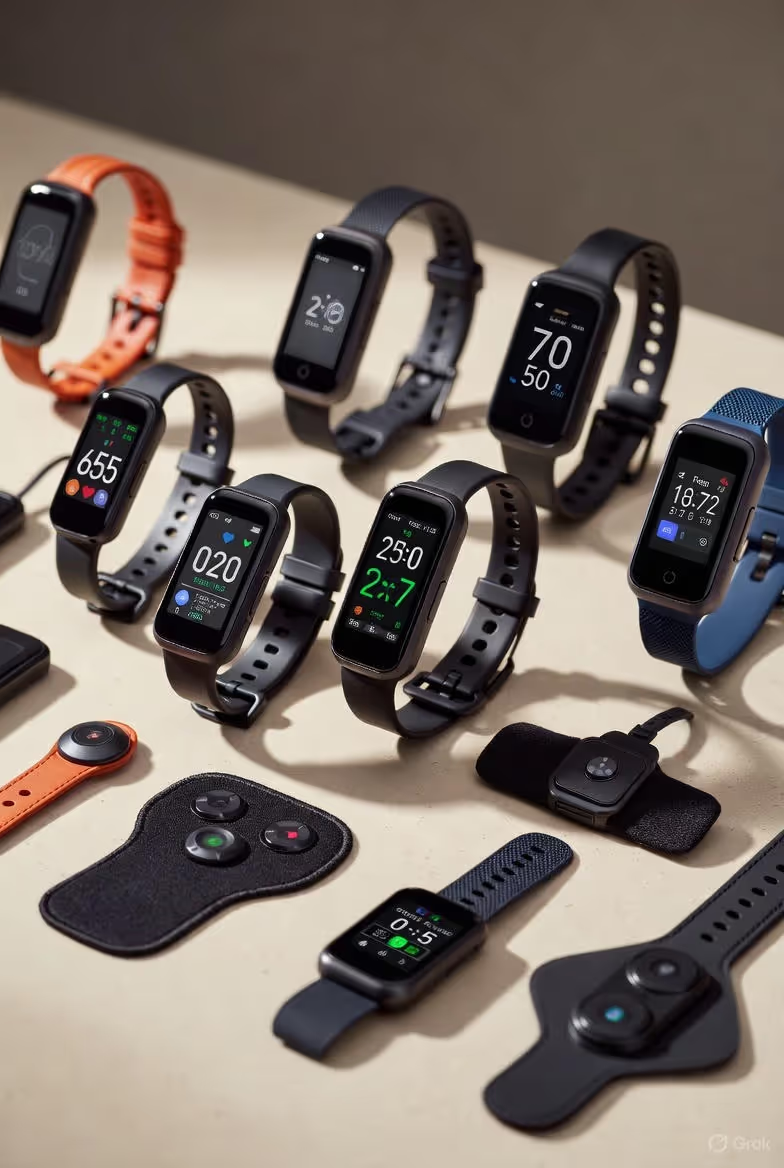
Wrist-Worn Devices: Dominated by Fitbit, Apple Watch, Garmin, and Whoop. They combine PPG, accelerometers, and sometimes skin temperature sensors.
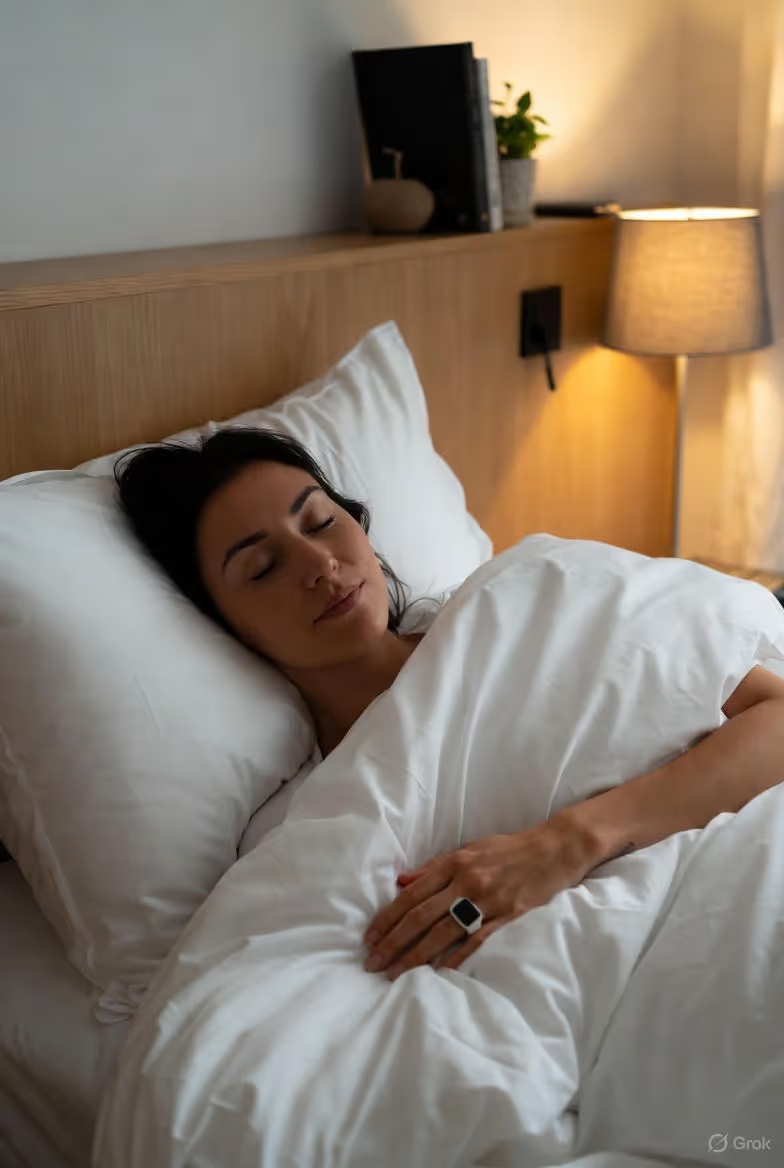
Smart Rings: A growing category led by brands like Oura, Ultrahuman, and our own vision at Oxyzen.ai. Rings offer a potential advantage: consistent finger placement, which can yield a stronger PPG signal than the wrist, and the ability to be worn comfortably all night without the bulk of a watch.
Nearables & Bed Sensors: Devices placed under the mattress (Withings Sleep Analyzer) or on the bedside table (sleep-tracking radars) that claim to track without physical contact.
EEG Headbands: Consumer-grade devices like Dreem (now discontinued) and Philips SmartSleep that use simplified EEG to get closer to the brain-based truth of sleep stages.
The driving philosophy is the quantified self: the idea that by measuring our biometrics, we can gain knowledge, self-awareness, and ultimately, control over our health. A single Sleep Score is the ultimate expression of this—a distilled, shareable, gamified metric that promises to tell you, at a glance, the quality of your most fundamental biological process. But to understand if it does that truthfully, we must first dissect what exactly that number is trying to tell us.
Decoding the Sleep Score: What's In a Number?
A Sleep Score is not a direct measurement like weight or temperature. It is a composite algorithm-generated metric, a proprietary formula each brand creates to synthesize various data points into one digestible number. While the exact algorithms are closely guarded secrets, we can break down the common components that feed into this score. Think of it as a recipe: the ingredients are similar, but each chef (brand) uses different proportions and cooking methods.
Core Ingredients of a Typical Sleep Score:
Sleep Duration (Total Sleep Time): This is often the heaviest weighted factor. Most algorithms have a "sweet spot" target, typically 7-9 hours for adults, and penalize you for sleeping significantly less or, interestingly, sometimes even for sleeping too much.
Sleep Efficiency: This is the percentage of time you were actually asleep while in bed. If you spend 9 hours in bed but only sleep 7.2 hours, your efficiency is 80%. High efficiency (typically >85%) is a positive contributor, reflecting less restless lying awake.
Sleep Stages Breakdown: The proportion of time spent in Light, Deep, and REM sleep. Algorithms compare your nightly percentages to age-normative benchmarks. For example, consistently low deep sleep (critical for physical restoration) or REM sleep (critical for memory and mood) will pull your score down.
Restlessness / Sleep Disruptions: Measured by the accelerometer, this counts major movements, bouts of wakefulness after sleep onset, and sometimes an inferred "tossing and turning" metric. Fewer disruptions mean a higher score.
Timing & Consistency: Going to bed and waking up at consistent times (maintaining circadian rhythm) is a major factor for many scores. Additionally, sleeping during your body's ideal circadian window (e.g., not going to bed at 3 AM) can be rewarded.
Physiological Signals (Advanced Devices): For wearables with PPG and other sensors, the quality of the signals themselves can factor in. This includes:
Resting Heart Rate (RHR): A lower-than-your-baseline overnight RHR is often associated with good recovery.
Heart Rate Variability (HRV): A higher overnight HRV generally indicates a well-functioning, resilient nervous system and is a strong positive contributor in scores from devices like Whoop and Oura.
Respiratory Rate: The number of breaths per minute during sleep; stability is key.
Skin Temperature: Deviations from your personal baseline can indicate physiological strain or the onset of illness.
How It All Comes Together: The device collects raw data all night. In the morning, its algorithm assigns points or weights to each category, sums them, and maps the total to a scale (e.g., 0-100). A score of 90+ is "Excellent," 80-89 is "Good," and so on. Crucially, different brands prioritize different factors. Device A might weigh sleep duration at 40% of the score, while Device B might prioritize HRV and restlessness. This is why you can wear two different devices and get two meaningfully different scores from the same night of sleep—they are literally measuring different concepts of "good sleep."
The score's purpose is to provide trend-based insight, not a nightly absolute judgment. A single night's score of 65 is less meaningful than observing that your 7-day average has dropped from 85 to 70, prompting you to ask why (stress, illness, change in schedule?). It's a conversation starter with your own body. For a deeper look at how one platform synthesizes this data, you can explore the philosophy behind Oxyzen, which emphasizes holistic trend analysis over nightly fixation.
Ultimately, the Sleep Score is a useful shorthand, but it is an estimate of an estimate. It estimates sleep stages from heart rate and movement (which are themselves estimates of underlying physiology), and then estimates an overall quality score from those stages. The chain of inference is long, and every link has potential for error. To gauge the true accuracy, we must compare these consumer estimates to the medical gold standard.
The Gold Standard vs. The Gadget: Polysomnography Under the Microscope
To assess the accuracy of any sleep tracker, we must use a benchmark. In medicine and sleep science, that benchmark is in-lab polysomnography (PSG). It's essential to understand what PSG measures with such high fidelity to see where wearables inevitably fall short.
What PSG Actually Measures: PSG doesn't infer sleep; it directly measures the neurophysiological signatures of it.
EEG (Electroencephalography): Electrodes on the scalp record brain wave activity. This is the only definitive way to identify sleep stages. The characteristic slow waves of deep sleep (N3) and the rapid, desynchronized waves of REM are unmistakable to a trained sleep technologist.
EOG (Electrooculography): Electrodes near the eyes measure eye movements. The rapid eye movements that give REM sleep its name are a key diagnostic feature.
EMG (Electromyography): Electrodes on the chin and limbs measure muscle tone. Muscle activity plummets during REM sleep (a state known as atonia), helping distinguish it from wakefulness.
This multi-channel data is scored in 30-second epochs by a human expert according to the rigorous AASM (American Academy of Sleep Medicine) Manual. Each epoch is labeled as Wake, N1 (lightest sleep), N2 (light sleep), N3 (deep sleep), or REM. From this precise scoring, all other metrics—sleep latency, efficiency, stage durations—are derived with extremely high accuracy.
How Wearables Compare in Clinical Validation Studies:
When researchers put consumer wearables to the test against PSG, a consistent pattern emerges:
High Accuracy for Sleep vs. Wake (Time Asleep): This is where wearables excel. By combining movement and heart rate, most modern devices can correctly distinguish whether you are asleep or awake with about 90-95% accuracy for the total night. They are very good at knowing when you went to bed and when you got up.
Moderate to Poor Accuracy for Specific Sleep Stages: This is the major weakness. No consumer wearable can directly measure brain waves.
Deep Sleep (N3): Devices tend to overestimate deep sleep. They often misclassify quiet, still periods of light sleep (N2) as deep sleep because the accelerometer detects no movement and the heart rate is relatively low and steady.
REM Sleep: Accuracy for REM is generally the poorest. REM sleep is physiologically complex: the brain is active, the eyes dart, but the body is paralyzed. Wearables struggle with this paradox. Periods of wakefulness or light sleep with elevated heart rate (due to a dream or minor disturbance) can be falsely labeled as REM.
Light Sleep (N1/N2): This often becomes the "catch-all" category. Errors in classifying deep and REM sleep directly inflate or deflate the reported light sleep duration.
A Telling Example from Research: A 2020 study published in Sleep Medicine Reviews analyzed data from 15 validation studies on consumer wearables. It concluded that while sleep/wake detection was reliable, the performance in staging sleep was "not yet on a level similar to PSG." The mean accuracy for identifying N3 sleep was around 50%, and for REM sleep around 60-70%—barely better than a coin toss for some devices.
The "Apples to Oranges" Problem: It's also critical to note that device algorithms and PSG are not using the same clock. A wearable might process data in 1-minute or 5-minute bins and use its own proprietary definitions of "deep sleep" that are correlated with, but not identical to, the AASM's N3 stage. They are measuring a proxy, not the thing itself.
This doesn't render wearables useless. It frames their purpose. They are excellent relative tracking tools for your personal trends. If your wearable shows a consistent drop in its estimated deep sleep over a week, it's likely indicating a real change in your sleep pattern, even if the absolute number of minutes is wrong. The trend is meaningful; the absolute value should be taken with a grain of salt. For users seeking to understand these nuances, resources like the Oxyzen.ai/faq can provide clarity on how to interpret such data trends in context.
The Silent Saboteurs: Key Factors That Skew Your Sleep Data
Even if the algorithms were perfect, the data feeding them is collected in an imperfect world—your bedroom. Numerous factors can interfere with the sensors, leading to inaccurate data collection that then gets processed into an inaccurate score. Knowing these saboteurs is the first step to getting cleaner data.
Physical & Environmental Factors:
Device Fit and Placement: This is paramount, especially for PPG sensors. A wrist-worn device that is too loose will allow external light ("optical noise") to seep in, corrupting the heart rate signal. A ring that is too tight can restrict blood flow, while one that is too loose can shift, losing contact with the capillaries. Consistent, snug (but comfortable) placement is key.
Skin Tone and Tattoos: PPG technology has a documented bias. The green light used is more easily absorbed by melanin, and can be scattered or absorbed by tattoo ink. Several studies have shown that PPG heart rate monitoring can be less reliable on darker skin tones and over inked skin, which directly impacts sleep stage estimation and HRV data. The industry is working on this, but it remains a significant issue.
Temperature Extremes: Very cold skin causes vasoconstriction (narrowing of blood vessels), making it harder for the PPG sensor to get a strong signal.
Excessive Movement During Sleep: While algorithms account for some movement, a very restless sleeper or someone with a sleep disorder like Periodic Limb Movement Disorder can generate so much "noise" that the sensor and algorithm struggle to find the underlying physiological signal.
Physiological & Behavioral Factors:
Cardiovascular Conditions: Arrhythmias like atrial fibrillation can produce heart rate patterns that confuse sleep staging algorithms.
Medications: Beta-blockers lower heart rate, which an algorithm might misinterpret as increased deep sleep. Stimulants or antidepressants can alter sleep architecture and HRV.
Alcohol Consumption: Alcohol is a major confounder. It often leads to initial deep sleep suppression followed by rebound, fragmented sleep later in the night. It also dramatically suppresses REM sleep and alters heart rate patterns. A device might record a deceptively "good" score for the first half of the night while missing the turmoil of the second half.
Sleep Disorders: Ironically, the people who might benefit most from tracking are often those whose data is hardest to interpret accurately. Sleep apnea (pauses in breathing) causes repeated arousals and oxygen dips, creating a chaotic heart rate and movement signature. Insomnia, characterized by long periods of still wakefulness, can be easily mis-scored as light sleep.
The "Observer Effect" of Tracking:
The very act of tracking can change what you're tracking—a phenomenon known as orthosomnia. Coined by sleep researchers in 2017, it describes the anxiety and preoccupation with achieving perfect sleep data. Individuals may spend more time in bed trying to "fix" their score, or experience genuine insomnia fueled by anxiety over a poor score from the previous night. The tool meant to aid sleep becomes its enemy. This highlights the importance of a healthy relationship with your data, a principle central to the approach at Oxyzen.ai, which focuses on empowering users without fostering obsession.
By being aware of these saboteurs, you can take steps to mitigate them: ensure a proper fit, be mindful of alcohol's impact, and understand that your unique biology interacts with the technology. This leads you from being a passive recipient of a score to an active, informed collaborator in interpreting your data.
Brand Breakdown: How Different Wearables Approach Sleep Scoring
Not all sleep scores are created equal. Each major player in the wearable space uses a different blend of sensors, prioritizes different data points, and presents its score within a unique ecosystem. Understanding these differences is crucial for interpreting your data and choosing a device that aligns with your goals.
Fitbit (Google): The Mainstream Powerhouse
The Score: Fitbit's "Sleep Score" (0-100) is one of the most established. It's broken down clearly in the app: Sleep Duration (50% weight), Deep & REM Sleep (25%), and Restoration (25%, which includes sleep stages, restlessness, and nighttime heart rate).
Methodology: Relies on a combination of heart rate (PPG), movement (3-axis accelerometer), and, in newer models, skin temperature variation. Their algorithm, powered by massive datasets from millions of users, is continuously refined.
Strengths: User-friendly interface, excellent sleep/wake detection, detailed sleep stage maps, and a large community for comparison (though population norms have their own limitations).
Considerations: The heavy weighting on duration can make the score feel punitive for short sleepers, even if their sleep quality is high. The staging accuracy follows the general limitations of PPG-based systems.
Oura Ring: The Recovery-Focused Contender
The Score: Oura's "Sleep Score" (0-100) is deeply integrated with its broader "Readiness Score." It is composed of Total Sleep, Efficiency, Restfulness, REM Sleep, Deep Sleep, and Latency. Crucially, it places a very high value on nighttime HRV and body temperature.
Methodology: Uses PPG, a 3D accelerometer, and an infrared temperature sensor from the finger. The ring form factor aims for a stronger, more consistent PPG signal. Oura's algorithm is particularly known for its focus on HRV and temperature trends for overall recovery and illness prediction.
Strengths: The ring is comfortable for all-night wear, less prone to placement issues than a watch, and excels at tracking physiological trends (HRV, temperature). Its holistic "Readiness" approach contextualizes sleep within daily recovery.
Considerations: As a ring, it can't provide real-time notifications or daytime heart rate during activities as seamlessly as a wrist device. Its sleep staging faces the same fundamental PPG limitations.
Apple Watch: The Ecosystem Integrator
The Score: Apple doesn't provide a single composite "Sleep Score." Instead, in the Health app, it focuses on presenting core metrics visually: Time in Bed, Sleep Duration (with a weekly average target), Sleep Stages (Core, Deep, REM, Awake), and overnight wrist temperature (Series 8 & later).
Methodology: Uses PPG, accelerometer, and the microphone (indirectly, for environmental sound levels, not to listen). Its sleep staging algorithm was developed using PSG-validated data. A key feature is its focus on Wind Down and Wake Up routines to promote behavioral consistency.
Strengths: Seamless integration with the iOS ecosystem, clean data presentation without a single anxiety-inducing number, and strong sleep schedule tools. The lack of a score can be a benefit for those prone to orthosomnia.
Considerations: The absence of a composite score means users must self-interpret the interplay of multiple metrics. Battery life necessitates nightly charging, which can disrupt routine.
Whoop: The Athlete's Algorithm
The Score: Whoop's "Sleep Score" is a component of its flagship Recovery Score (0-100%). The sleep performance is assessed against a personalized, dynamic "Sleep Need" that changes daily based on strain and recovery.
Methodology: Uses PPG, accelerometer, and skin temperature. Whoop's differentiator is its Strain and Recovery model. It doesn't just tell you how you slept; it tells you how much sleep you needed based on yesterday's exertion and how well you met that need to determine your capacity for today.
Strengths: Highly personalized and adaptive. Excellent for athletes or highly active individuals whose sleep needs vary dramatically day-to-day. The coaching to time sleep based on circadian rhythms ("Sleep Planner") is advanced.
Considerations: The subscription model is unique (and ongoing). Its interface is data-dense and can be overwhelming for casual users. The accuracy of its ever-changing "Sleep Need" algorithm is debated.
Emerging Smart Ring Ecosystems: The smart ring category is rapidly evolving beyond a single player. Platforms like Oxyzen.ai are entering the space with a focus on integrating advanced sensor data into a user-centric wellness narrative, emphasizing not just the "what" of sleep but the "so what," helping users connect dots between sleep, daily activity, stress, and overall vitality. Exploring user testimonials across platforms can provide real-world insight into how different approaches resonate.
The takeaway is that your choice of device determines the type of sleep story you will hear. Do you want a simple duration-focused grade (Fitbit), a recovery-centered analysis (Oura, Whoop), or a set of discrete metrics to interpret yourself (Apple)? There is no universally "best" score—only the one that best fits your psychology and goals.
Beyond the Number: The Psychological Impact of Sleep Scoring
The sleep score does more than provide data; it exerts a powerful psychological influence. This digital judgment can shape our perceptions of our night, our day, and even our self-worth. Understanding this impact is essential for maintaining a healthy relationship with tracking technology.
The Gamification of Rest: Sleep scoring inherently gamifies a biological process. A rising score feels like winning; a falling score feels like failure. This can be motivating for some, providing a tangible goal and reinforcing good "sleep hygiene" behaviors like consistent bedtimes. However, it also risks externalizing our internal sense of rest. We may start to trust the number over our own bodily feelings—a phenomenon known as datafication of self. The question "How did you sleep?" shifts from a subjective feeling to a reported metric: "I got a 92."
Orthosomnia: When Tracking Breeds Trouble: As briefly mentioned earlier, orthosomnia is a non-clinical term describing insomnia or sleep anxiety perpetuated by the pursuit of perfect sleep data. Individuals may:
Spend excessive time in bed to increase "duration," potentially weakening the brain's association between bed and sleep.
Become hyper-focused on achieving certain amounts of "deep" or "REM" sleep, creating performance anxiety around an involuntary process.
Experience genuine distress, frustration, and worsened sleep after a "poor" score, creating a vicious cycle: anxiety over data -> poor sleep -> bad data -> increased anxiety.
The Tyranny of the Baseline and Comparison: Most apps compare your data to a population average. Seeing your deep sleep percentage in the "below average" red zone week after week can be demoralizing, even if you feel perfectly rested. It's crucial to remember these averages are broad and may not reflect your individual, genetically influenced sleep architecture. Furthermore, comparing scores with friends or online communities can foster unhealthy competition over an intimately personal function.
Fostering a Healthier Relationship with Your Sleep Data:
Prioritize Subjective Feelings: Start your day by asking yourself, "How do I feel?" before you look at the score. Let your energy, mood, and cognitive clarity be your primary metrics. Use the device data to explain your feelings, not to define them.
Focus on Long-Term Trends, Not Nightly Numbers: Zoom out. Look at your weekly or monthly averages. A single bad night is meaningless noise. A two-week downward trend is meaningful signal worth investigating (stress, diet, change in routine?).
Use the Data as a Guide, Not a Gospel: See the score as a hypothesis-generating tool. "My score was low last night. I also had a late, heavy dinner. Let me test if eating earlier improves my score and how I feel." This turns data into empowered experimentation.
Embrace "Good Enough" Sleep: Not every night can or needs to be a 90+. The human body is resilient and designed to handle sleep variability. Chasing perfection is a sure path to frustration.
Know When to Take a Break: If checking your score causes consistent anxiety, consider a "data detox." Stop wearing the device for a week or hide the score in the app. Reconnect with your natural sleep-wake rhythms.
The goal of sleep technology should be to enhance sleep awareness, not replace sleep intuition. A balanced approach recognizes the score as one valuable piece of information in a much larger mosaic of well-being. For those struggling to find this balance, seeking perspective from community experiences and shared stories can be a helpful way to reframe the role of data in a wellness journey.
Actionable Insights: How to Use Your Sleep Data Wisely (Despite the Imperfections)
Given the known limitations, how can you extract genuine value from your wearable's sleep data? The key is to shift from fixating on the absolute accuracy of the score to leveraging its consistency and trend data for personal insight and positive behavior change.
Step 1: Establish Your Personal Baseline. Forget population averages for a moment. Wear your device consistently for 2-4 weeks during a period of relatively stable, healthy routine. This will establish your personal baselines for duration, deep/REM percentages, resting heart rate, and HRV. This personal baseline is your most important reference point. All future data should be compared to you, not to a generic 30-year-old.
Step 2: Become a Sleep Detective with Trend Analysis. When you see a significant deviation from your baseline (e.g., a week of elevated resting heart rate or suppressed deep sleep), don't panic. Investigate. Correlate the data with your lifestyle log (most apps allow you to add notes).
Did the change coincide with a new workout regimen? (This can temporarily raise RHR and lower HRV).
Did it start during a period of high work stress or after consuming more alcohol?
Did you change your caffeine intake or evening screen time?
This detective work transforms raw data into self-knowledge. You might discover that even one glass of wine in the evening reliably truncates your REM sleep, or that on nights after you meditate, your sleep efficiency is 5% higher.
Step 3: Focus on Controllable Inputs, Not Outputs. You cannot will yourself into more deep sleep. But you can control the behaviors that influence it. Use your data to fine-tune your sleep hygiene:
Consistency: If your data shows better scores on days you wake up at the same time, double down on that habit.
Wind-Down Routine: Notice a correlation between late-night screen time and high restlessness? Let that be the catalyst for implementing a 60-minute screen-free buffer before bed.
Environment: If your data shows frequent awakenings, investigate your room environment (temperature, light, noise) with the same rigor your device investigates you.
Step 4: Integrate with Other Biomarkers for a Holistic Picture. Sleep does not exist in a vacuum. The most powerful use of wearable data is to see the interplay between sleep, activity, and stress.
Sleep & Strain: Did a day of very high physical exertion lead to longer, deeper sleep (as reflected in your data) the following night? Or did it lead to restless sleep—a sign you may have overreached?
Sleep & Recovery: Does a night of poor sleep data predict a day of lower HRV and higher RHR, suggesting you need to take it easy? Devices like Whoop and Oura build this directly into their models.
The Menstrual Cycle: For those who menstruate, sleep architecture changes dramatically across the cycle. Tracking sleep data alongside your cycle can reveal patterns (e.g., poorer sleep efficiency in the luteal phase) and foster self-compassion for natural fluctuations.
Step 5: When to Seek Professional Help. Your wearable is not a medical device. However, its trend data can be a powerful conversation starter with a healthcare provider. Red flags that warrant a professional sleep evaluation include:
Consistently loud, recorded snoring (some devices detect this) paired with high resting heart rate and frequent awakenings (potential sleep apnea signs).
Chronic, self-reported daytime fatigue and unrefreshing sleep despite your wearable showing 8+ hours of "good" scores. This disconnect is a major clue.
Your device consistently shows extremely low sleep efficiency (<70%) or excessive restlessness over months, which correlates with your experience of insomnia.
By following this framework, you move from being a passive consumer of a score to an active partner in your own wellness. The data becomes a mirror, reflecting the consequences of your daily choices, and a compass, pointing you toward behaviors that help you feel your best. For a deeper exploration of how to connect these data dots, the resources and guides available at Oxyzen.ai are designed to support this kind of integrated understanding.
The Cutting Edge: What's Next for Sleep Tracking Accuracy?
The current generation of wearables has brought us far, but the quest for more accurate, insightful, and less intrusive sleep tracking is accelerating. The next frontier is moving from better proxies to more direct measurements and from nightly summaries to real-time, adaptive feedback.
1. Next-Generation Sensor Fusion: The future lies not in a single sensor, but in the sophisticated fusion of multiple data streams to cross-validate signals and reduce error.
Advanced PPG: New PPG sensor designs using multiple wavelengths of light (not just green) aim to penetrate tissue differently and improve accuracy across diverse skin tones and in low-perfusion conditions.
Radar & Ultrawideband (UWB): Tiny chipsets that emit radio waves can detect subtle chest movements for respiration and even heartbeats without physical contact. Imagine a bedside device or smartphone that tracks your sleep simply by being in the room.
Electrodermal Activity (EDA): Already in devices like the Fitbit Sense and Apple Watch, EDA measures microscopic sweat changes, a direct indicator of sympathetic nervous system (stress) activation. Integrating EDA with sleep data could reveal how stress impacts sleep continuity and architecture.
Blood Oxygen (SpO2) as Standard: Once a specialized feature, continuous overnight SpO2 monitoring is becoming commonplace. It's critical for identifying potential sleep apnea events (breathing pauses that cause oxygen dips).
2. The Promise of Consumer-Grade, Simplified EEG: The holy grail is bringing brain wave monitoring out of the lab. Companies are developing earbuds, headbands, and even patches with dry-electrode EEG. While they won't match the 20+ electrode setup of a PSG, they can reliably distinguish broad brain states (Wake, Light, Deep, REM) with much higher accuracy than PPG. The challenge is making them comfortable and socially acceptable for nightly use. This technology could truly revolutionize consumer sleep staging within the next 5-10 years.
3. AI-Powered, Personalized Algorithms: Current algorithms are largely one-size-fits-all. The next step is machine learning models that personalize over time. Instead of comparing you to a population, the algorithm would learn your unique physiological signatures for different sleep stages, your personal HRV response to stress, and your ideal sleep-wake patterns. The device would get "smarter" about you, reducing individual error rates. The vision at platforms like Oxyzen.ai is oriented toward this kind of adaptive, personalized intelligence, moving beyond generic metrics to truly individualized insights.
4. Real-Time Biofeedback and Closed-Loop Systems: Imagine a device that doesn't just track but intervenes. Future systems could use gentle, phased stimuli to improve sleep in real time:
Sound & Stimulation: Using bone conduction or subtle sounds to enhance slow-wave (deep) sleep during specific phases, as seen in early research and products like Philips SmartSleep.
Thermoregulation: Wearables that gently warm or cool specific parts of the body (like the wrists) to help initiate sleep or stabilize sleep stages, leveraging the body's natural temperature-drop signal for sleepiness.
Smart Environment Integration: Your sleep tracker communicating with your smart thermostat to cool the room as you fall asleep, or with your smart lights to simulate a sunrise at the optimal point in your sleep cycle for a natural awakening.
5. The Integration of Subjective Experience: The most advanced system will be one that fuses objective biometrics with subjective input. Future apps might prompt you for a quick morning mood, energy, and focus rating, and then use AI to find patterns: "On nights when your HRV is above X and your deep sleep is below Y, you report the highest cognitive focus. Let's explore what leads to that pattern."
The trajectory is clear: sleep tracking is moving from a static, rear-view mirror report to a dynamic, personalized, and potentially interactive guide for one of life's most vital functions. The accuracy of the "score" will improve, but more importantly, its depth, context, and utility will transform it from a simple number into a comprehensive sleep health partner.
The Physiology of Sleep: What Are Wearables Actually Trying to Measure?
To critically evaluate a sleep score, we must first appreciate the profound physiological processes it attempts to quantify. Sleep is not a passive state of unconsciousness but an active, highly structured, and essential biological process composed of distinct stages that cycle throughout the night, each serving critical functions for brain and body restoration.
The Architecture of a Night's Sleep:
Sleep is architecturally organized into approximately 90-minute cycles, each containing two broad categories:
NREM (Non-Rapid Eye Movement) Sleep: Comprised of three progressive stages.
N1 (Light Sleep): The transition from wakefulness to sleep, lasting several minutes. Brain waves begin to slow (theta waves). Easily disrupted.
N2 (Light Sleep): The body enters a more subdued state: heart rate slows, body temperature drops. Characterized by "sleep spindles" and "K-complexes" in the brain waves, which are thought to play a role in memory consolidation and sensory gating (keeping you asleep despite minor noises). This stage constitutes about 50% of total sleep in adults.
N3 (Deep Sleep or Slow-Wave Sleep): The most restorative phase. Dominated by slow, synchronous delta waves. This is when the body focuses on physical repair: tissue growth, muscle repair, immune system strengthening, and energy restoration. It's very difficult to awaken someone from N3 sleep. This stage is most prevalent in the first half of the night and diminishes with age.
REM (Rapid Eye Movement) Sleep: The stage most associated with vivid dreaming. The brain becomes highly active, with brain wave patterns resembling wakefulness. However, the body experiences muscle atonia—a temporary paralysis that prevents you from acting out your dreams. REM is crucial for emotional regulation, memory processing, and cognitive function. REM periods lengthen with each successive cycle, dominating the latter half of the night.
The Vital Biomarkers Wearables Use as Proxies:
Since consumer wearables cannot measure brain waves, they rely on physiological correlates that loosely map to these stages:
For Deep Sleep (N3): Devices look for periods of very low and stable heart rate, minimal heart rate variability, and almost no physical movement. The assumption is that a still body with a slow, steady heart rate is in deep sleep. This is a decent proxy but can misclassify quiet wakefulness or calm light sleep.
For REM Sleep: This is trickier. REM sleep involves a brain-active, body-paralyzed state. Wearables look for a combination of elevated and more variable heart rate (similar to a waking state) coupled with a complete absence of gross limb movement (due to atonia). The paradox of an active mind in an inert body is the primary source of staging errors.
For Light Sleep (N2): Often defined as "everything else"—periods with some movement, moderate heart rate, and baseline HRV. It's the default category when signals don't fit the deep or REM patterns.
Crucial Functions Invisible to Most Wearables:
Herein lies a significant gap. The current generation of wearables misses or infers poorly several critical aspects of sleep physiology:
Sleep Spindles & K-Complexes: These micro-events within N2 sleep are biomarkers of cognitive health and memory consolidation. Only EEG can detect them.
Sleep-Dependent Hormone Release: The precise timing of growth hormone release (peaks in N3) or cortisol suppression is not measured.
Neural Glymphatic Clearance: The brain's waste-clearing system, which flushes out toxins like beta-amyloid (associated with Alzheimer's), is most active during N3 sleep. Its efficiency is inferred, not measured.
Respiratory Effort & Airflow: While some devices estimate respiratory rate, they cannot detect increased effort or partial airway obstructions indicative of sleep-disordered breathing.
This understanding frames the sleep score not as a definitive assessment of these deep physiological processes, but as a broad-strokes estimate of sleep architecture based on cardiac and motor activity. It tells you the outline of the story with reasonable reliability for sleep vs. wake, but the finer details—the very details that may matter most for long-term health—are often approximated or missing. For those interested in the science behind these biomarkers, resources like Oxyzen.ai/blog often explore the connection between measurable data and underlying physiology.
Real-World Case Studies: When the Score Gets It Right (and Very Wrong)
Theoretical limitations become concrete in the lived experience of users. Examining real-world scenarios and anonymized case studies illuminates the strengths, pitfalls, and proper contextualization of sleep scores.
Case Study 1: The "False Excellent" – The Night After Alcohol
The Data: Sarah, 34, goes out for drinks with friends. She has three glasses of wine over the evening. She goes to bed at 11 PM and sleeps heavily until 7 AM. Her wearable (a popular wrist-based model) reports: Sleep Score: 89 (Good). Duration: 7h 45m. High deep sleep, low REM, moderate restlessness.
Her Experience: Sarah wakes feeling groggy, foggy-headed, and unrefreshed. She's thirsty and feels like she slept "hard" but not well.
The Analysis: This is a classic example of alcohol's confounding effect. Alcohol is a sedative; it potentiates the initial deep N3 sleep in the first half of the night (which the device correctly detects, boosting the score). However, it severely suppresses and fragments REM sleep and causes increased awakenings and restlessness in the second half as the body metabolizes the alcohol. The device may miss the micro-awakenings or misclassify the disrupted, REM-suppressed later sleep. The score, weighted heavily on duration and deep sleep, looks decent, but the subjective experience and the missing REM tell the true story of non-restorative sleep. Takeaway: A "good" score can feel bad if the architecture is pharmacologically disrupted.
Case Study 2: The "Insomnia Misread" – Stillness vs. Sleep
The Data: David, 42, struggles with insomnia. He lies in bed from 10 PM to 2 AM, awake but immobile, trying to sleep. He finally falls asleep at 2:15 AM and sleeps solidly until 6:15 AM. His smart ring reports: Sleep Score: 70 (Fair). Total Sleep: 6h 30m. Long sleep latency noted.
His Experience: David feels exhausted. He knows he was awake for four hours, but only sees a 30-minute "awake" period in his app. The app credits him with several hours of "light sleep" during his prolonged, still wakefulness.
The Analysis: This highlights the fundamental challenge of distinguishing quiet wakefulness from light sleep using movement and heart rate alone. When David lies still, his heart rate may drop into a resting range. Without the brain wave data to show he's conscious, the algorithm defaults to classifying this as light sleep. It correctly identifies the long latency if he marks "lights out," but the sleep efficiency metric is artificially inflated. Takeaway: For individuals with insomnia, wearables can significantly overestimate total sleep time and underestimate sleep latency, potentially undermining the perceived severity of the condition to the user and even to a doctor reviewing the data.
Case Study 3: The "Trend is Truth" – Overtraining Revealed
The Data: Marcus, 29, is training for a marathon. He diligently tracks his sleep. Over three weeks, his data shows a clear trend: his nightly resting heart rate is creeping up by 3-4 bpm, his HRV is on a steady decline, and his deep sleep percentage is dropping from an average of 20% to 15%. His sleep scores drift from the mid-80s to the low 70s.
His Experience: Marcus feels increasingly fatigued, his workouts feel harder, and he's more irritable.
The Analysis: This is where wearables shine. While any single night's score or metric might be questionable, the consistent multi-week trend across multiple biomarkers (RHR, HRV, deep sleep) is a powerful signal. It strongly suggests his body is under sustained strain—likely from overtraining compounded by inadequate recovery. This objective data prompts him to incorporate a deload week, focus on nutrition and hydration, and prioritize sleep. Two weeks later, his metrics trend back toward baseline, and he feels better. Takeaway: The greatest power of wearables is not in absolutes but in revealing personal biometric trends that correlate with subjective states, enabling proactive adjustments.
Case Study 4: The "Medical Clue" – Undiagnosed Sleep Apnea
The Data: Linda, 57, uses a wearable with SpO2 tracking. She notices her sleep scores are consistently poor (60s-70s) with high restlessness. Reviewing her detailed data, she sees frequent, repeated dips in her blood oxygen saturation throughout the night, sometimes dropping below 90%. Her heart rate chart is also spiky and irregular.
Her Experience: Linda feels perpetually tired, snores loudly, and her partner notices she sometimes gasps at night. She assumed she was just a "bad sleeper."
The Analysis: The wearable is not diagnosing sleep apnea, but it is presenting highly suggestive red-flag data. The combination of poor sleep scores, frequent oxygen dips (a direct measurement, not an inference), and an erratic heart rate pattern is a clear indicator to seek a professional sleep study. At her subsequent PSG, she is diagnosed with moderate obstructive sleep apnea. Takeaway: While not diagnostic, wearables with advanced sensors (like SpO2) can provide life-saving clues that bridge the gap between subjective feelings and the decision to seek medical help.
These cases underscore that the intelligent use of sleep scores requires a triangulation of data: the objective score, the subjective feeling, and the context of lifestyle and health. The score is a data point, not a diagnosis. For many, sharing and comparing experiences with others on a similar journey, as seen in Oxyzen.ai testimonials, can provide valuable perspective on interpreting these complex data stories.
Expert Opinions: What Sleep Scientists and Doctors Really Think
To ground this discussion in professional authority, it’s essential to consider the perspectives of sleep researchers, neurologists, and pulmonologists who work with both gold-standard tools and see patients influenced by consumer technology.
The Consensus View: A Useful Tool with Important Caveats
Dr. Colleen Carney, a leading insomnia researcher, captures a common expert sentiment: "Consumer sleep trackers are excellent for promoting sleep awareness, but problematic when the data is taken as gospel. They are particularly poor at detecting wakefulness, which can be catastrophic for the insomnia patient who is then told they slept more than they did."
Experts generally agree on several key points:
Validity for Sleep/Wake is Strong, for Staging is Weak: "The agreement between actigraphy and PSG for total sleep time is good. For sleep staging, the error rate is too high for clinical use," states a review in the Journal of Clinical Sleep Medicine. They see the staging data as an interesting approximation for wellness purposes but emphasize it should never be used to self-diagnose a sleep disorder.
Concern Over Orthosomnia: Clinicians are reporting an increase in patients whose sleep anxiety is fueled by tracker data. "I now have patients who come in not to talk about their sleep, but to talk about their sleep data," says Dr. Barry Krakow, a sleep medicine specialist. "They are treating the number, not their body's needs." Experts advise using trackers for a limited time to establish patterns, not as a perpetual nightly report card.
The Potential as a Screening and Adherence Tool: There is optimism about the role of wearables in public health. "These devices can be powerful for identifying populations at risk for sleep disorders, like shift workers or those with irregular schedules, and prompting them to seek help," notes Dr. Conor Heneghan, a research lead at Fitbit. Furthermore, they can help patients adhere to treatment plans (like consistent wake times for insomnia therapy) by providing objective, though imperfect, feedback.
The Importance of the "Why" Behind the Data: Experts stress that the value lies in interpretation. "A low sleep score is meaningless without context. Was it stress? Alcohol? A late workout? The device can't tell you that. The human must be the interpreter," says Dr. Raphael Vallat, a sleep data scientist. They encourage users to focus on the behavioral levers they can pull, not the unchangeable output on the screen.
On the Horizon: Cautious Optimism for Integration
The medical community is cautiously exploring how to integrate patient-generated wearable data into clinical practice. The idea is not to replace PSG but to use long-term trend data from wearables to supplement the snapshot provided by a single night in the lab. For example, two weeks of pre-consultation wearable data showing consistently late sleep onset and low efficiency could help a sleep specialist quickly focus on circadian rhythm or insomnia issues.
However, major barriers remain: lack of standardization, proprietary algorithms, and data privacy concerns. "Until we have transparency in how these scores are generated and validation across diverse populations, it's difficult to incorporate them formally into diagnostic pathways," concludes a position paper from the American Academy of Sleep Medicine.
The expert verdict, therefore, is one of qualified utility. Wearables are a revolutionary tool for public sleep education and personal mindfulness, but they operate in a different realm of accuracy and purpose than medical-grade equipment. Their best use is in partnership with, not in replacement of, both subjective experience and professional medical advice.
Beyond the Wrist: Alternative Sleep Tracking Methods & How They Compare
The wearable ecosystem is diverse, but it's not the only game in town. Several alternative methods for tracking sleep exist, each with its own set of advantages, drawbacks, and accuracy profiles. Understanding these alternatives provides a fuller picture of the sleep-tracking landscape.
1. Smart Mattress Pads and Bed Sensors (e.g., Withings Sleep, Eight Sleep Pod)
How They Work: Thin pads placed under your mattress sheet or integrated into the mattress itself. They use ballistocardiography (BCG)—measuring the tiny vibrations caused by your heartbeat, respiration, and body movements transmitted through the mattress.
Accuracy Profile:
Strengths: Excellent for non-intrusive, partner-friendly tracking. Very good at measuring heart rate, respiratory rate, and gross body movements without any wearables. They are highly accurate for determining time in bed, sleep latency (based on stillness), and total sleep time. Some can even distinguish between two sleepers.
Weaknesses: Like wearables, they cannot measure sleep stages (N1, N2, N3, REM) with validated accuracy. They may infer "light" and "deep" sleep based on movement and respiration patterns, but this is an estimate. They can also be fooled by a still, awake person or miss data if you sleep very near the edge of the bed.
Best For: Individuals who don't like wearing devices, couples who want individual data without two wearables, or those who want seamless environmental integration (some adjust bed temperature).
How They Work: These are standalone devices placed on your nightstand. They use ultra-low-power radio waves or sonar to detect chest movement for breathing and subtle bodily motion. They are true "nearables"—no contact required.
Accuracy Profile:
Strengths: Completely non-contact and easy to use. Reasonably accurate for sleep vs. wake detection, sleep latency, and total sleep time. Some claim to estimate sleep stages using proprietary algorithms based on breathing patterns and movement.
Weaknesses: Can be affected by pets on the bed, a partner moving, or other objects in the signal path. The sleep stage estimation is even more indirect than PPG-based methods and is not clinically validated. They provide no data on heart rate or HRV.
Best For: Those averse to any form of body-worn sensor, travelers who want a portable solution, or individuals seeking a simple, low-commitment way to track basic sleep patterns.
How They Work: These leverage your phone's existing sensors. Placed on the mattress, they use the accelerometer to detect movement. Placed on the bedside table, they use the microphone to detect sounds like snoring, tossing, and turning.
Accuracy Profile:
Strengths: Extremely low barrier to entry (no extra hardware). Good for identifying gross sleep patterns and wake-up times within a window (using sound/movement to wake you during a light sleep phase). Can effectively track snoring.
Weaknesses: Very poor accuracy for sleep stages. Highly susceptible to environmental noise (a partner, traffic, a pet). The microphone cannot distinguish between your movement and your partner's. It provides almost no physiological data (heart rate, HRV, SpO2).
Best For: Casual users wanting a very basic understanding of their sleep/wake schedule or a smart alarm function, or as a first step before investing in dedicated hardware.
How They Work: These are the closest consumers can get to PSG at home. They use dry EEG electrodes built into a headband to measure brain waves directly, along with accelerometers and sometimes pulse oximeters.
Accuracy Profile:
Strengths: The most accurate consumer method for sleep staging (Light, Deep, REM) as it measures the source signal. Some devices use this real-time data to deliver audio stimulation intended to enhance slow-wave sleep.
Weaknesses: Can be uncomfortable for some users, may not be socially acceptable for all, and battery life can be an issue. While far better than PPG, the EEG signal from a few dry electrodes is not as comprehensive as a full clinical setup.
Best For: Tech enthusiasts and biohackers deeply interested in sleep architecture, individuals specifically focused on enhancing slow-wave sleep, or those who want the most accurate staging data outside a lab.
Comparative Summary: Think of it as a hierarchy of data richness and intrusion:
Phone Apps: Low intrusion, low data richness (basic timing, snoring).
Bed Sensors/Nearables: No wear intrusion, moderate data richness (timing, respiration, HR via BCG).
Wearables (PPG-based): Moderate intrusion (wearing a device), high data richness (timing, estimated stages, HR, HRV, SpO2, temperature).
EEG Headbands: High intrusion, very high data richness for staging.
The choice depends entirely on your priorities: convenience, comprehensiveness, accuracy for staging, or a complete lack of wearables. For a deep dive into the pros and cons of different form factors, including the smart ring approach that balances wearability with robust data, the Oxyzen.ai/faq offers detailed insights to guide your decision.
Building Your Sleep Intelligence: A Practical Framework
Armed with knowledge about accuracy, physiology, and the expert landscape, how do you build a sustainable, intelligent practice around sleep tracking? The goal is to move from data collection to sleep intelligence—the wise application of insights to improve your actual restedness and health.
Phase 1: The Setup & Baseline Period (Weeks 1-4)
Choose Your Tool Wisely: Align your device choice with your goals (see Section 9). Prioritize comfort for consistent wear.
Wear It Consistently: Put the device on every night. Consistency is more important than absolute accuracy for establishing trends.
Record Context Manually: Use the journal feature in your app or a simple notebook. Note: stress levels, exercise timing/intensity, caffeine/alcohol intake, medication changes, and subjective morning feeling (energy 1-10, mood).
Ignore the Score (Temporarily): For the first month, focus on gathering data without judgment. Your goal is to discover your normal.
Phase 2: The Analysis & Pattern Recognition (Week 4 onward)
Identify Your Personal Baselines: Calculate your average scores (Sleep Score, Duration, Deep %, REM %, RHR, HRV) over the baseline period. These are your numbers.
Look for Correlations, Not Just Scores: Use your context log. Ask:
"Do my sleep scores dip 24 hours after heavy strength training?"
"Does even one evening coffee after 2 PM affect my sleep latency?"
"Do my highest HRV nights follow days with high social connection or time in nature?"
"Does my deep sleep percentage drop during the week before my period?"
Focus on Multi-Metric Trends: A single metric moving is a hint. Three metrics moving in a concerning direction (e.g., RHR up, HRV down, sleep score down) is a strong signal. This is your body's "check engine" light.
Phase 3: The Experimentation & Optimization Loop
Form a Hypothesis: Based on your patterns, e.g., "I suspect my late dinners are causing high resting heart rate and lower deep sleep."
Run a Single-Variable Experiment: Change one thing. For two weeks, eat dinner at least 3 hours before bed. Keep everything else as constant as possible.
Analyze the Result: Did your relevant metrics improve? Did you feel better? If yes, you've found a lever you can control. If no, the hypothesis is rejected—move on.
Iterate: Systematically test other variables: wind-down routine, bedroom temperature, morning light exposure, etc.
Phase 4: The Maintenance & Mindful Detachment Phase
Establish Your Non-Negotiables: Based on your experiments, lock in 2-3 sleep-promoting habits that work for you (e.g., consistent wake time, no alcohol on weeknights, 30-minute no-screen buffer).
Reduce Checking Frequency: Once you understand your patterns, you don't need to analyze every morning. Check the app 1-2 times per week to ensure you're in your normal range.
Schedule Data Detoxes: Plan 1-2 weeks per quarter where you don't wear the device. Reconnect with your innate sense of tiredness and alertness. This prevents orthosomnia and keeps your relationship with the tool healthy.
Use the Data Proactively, Not Reactively: Instead of fretting over a bad score, use the data to plan your day. A low recovery score might mean you schedule your hardest mental work for later or prioritize a gentle walk over an intense workout.
This framework transforms your wearable from a judge into a coach and a research assistant. It works for you, providing clues for your own self-experimentation. The ultimate metric of success is not a higher sleep score, but improved daytime vitality, mood, and health outcomes. For continuous support in this journey, a platform's blog, such as Oxyzen.ai/blog, can be a source of new experiment ideas and community wisdom.
The Future of Sleep: Predictive Analytics, Integration, and Ethical Considerations
As we look ahead, the trajectory of sleep technology points toward a future that is more predictive, integrated, and personalized—but also one that raises significant ethical questions.
Predictive Health & Early Warning Systems The next leap is from descriptive tracking ("how you slept") to predictive analytics ("how you will sleep and feel"). By combining long-term sleep data with other biometrics (activity, continuous glucose monitoring, etc.) and lifestyle inputs, algorithms will be able to:
Predict Sleep Quality: Suggest that based on today's stress, activity, and caffeine intake, you're likely to have a poor sleep score unless you implement a specific wind-down protocol.
Forecast Illness: Trends in elevated resting heart rate, decreased HRV, and increased nocturnal respiratory rate have been shown to predict the onset of illnesses like the common cold or even COVID-19 before symptoms appear. Your wearable could provide an early, anonymous health alert.
Identify Chronic Disease Risk: Longitudinal deterioration in sleep metrics (increasing fragmentation, decreasing deep sleep) could serve as a digital biomarker for assessing risk of conditions like cardiovascular disease, depression, or cognitive decline, prompting earlier preventive action.
Seamless Integration into the "Digital Health Hub" The standalone sleep score will disappear into a holistic health dashboard. Your sleep data will automatically integrate with:
Fitness Platforms: Automatically adjusting tomorrow's workout intensity based on last night's recovery score.
Nutrition Apps: Suggesting foods that may support sleep recovery based on your metrics (e.g., magnesium-rich foods if you have high restlessness).
Smart Home Ecosystems: Triggering your thermostat to cool the bedroom 30 minutes before your predicted bedtime, or having your lights gradually simulate sunrise at the optimal moment in your sleep cycle.
Electronic Health Records (EHRs): With proper consent and standardization, longitudinal sleep trend data could be shared with your physician, providing a wealth of objective information far beyond "I'm tired."
Personalized Sleep Medicine and Algorithmic Transparency Future devices may offer validated, personalized sleep stage algorithms that learn your unique physiology. More importantly, there will be growing pressure for algorithmic transparency. Consumers and clinicians may demand to know what goes into a score: the weighting, the benchmarks, and the validation studies across diverse populations. This shift from "black box" to "glass box" scoring is essential for trust and clinical utility.
Ethical Frontiers and Necessary Safeguards This powerful future comes with profound responsibilities:
Data Privacy & Security: Sleep data is incredibly intimate, revealing not just health status but lifestyle patterns, possible relationships, and daily routines. Who owns this data? How is it stored, anonymized, and protected from breaches or unauthorized use (e.g., by insurers or employers)? Robust, transparent data governance policies will be non-negotiable.
Algorithmic Bias: If algorithms are trained on homogeneous populations (e.g., young, healthy, white males), they will be less accurate for others. Ongoing validation across ages, genders, ethnicities, and health conditions is an ethical imperative to ensure equitable health benefits.
The Diagnostic Grey Zone: As devices get better, the line between wellness tool and medical device blurs. Regulators (like the FDA) will need to create clear pathways for software-as-a-medical-device (SaMD) that empower users without making false diagnostic claims.
Psychological Impact and Equity: Will an over-reliance on "optimized sleep" create a new form of health anxiety? Furthermore, will access to this expensive technology exacerbate health disparities? The mission of companies in this space must encompass not just innovation, but accessibility and digital well-being. The vision for a human-centric approach to this technology, as discussed in Oxyzen.ai's story, often centers on navigating these very ethics.



%402x.svg)