How Accurate Is Sleep Tracking on Smart Rings vs Watches?
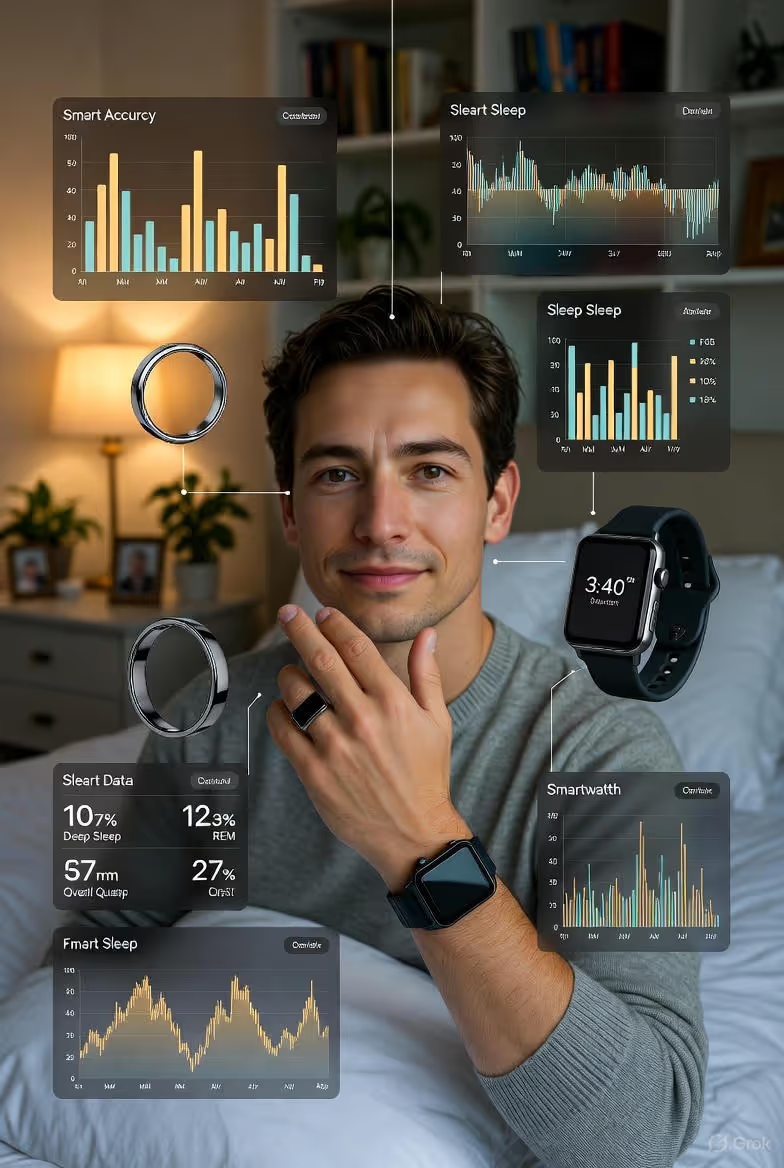
Smart rings versus smartwatches measure sleep with different accuracy levels due to placement, sensors, and algorithms. This technical comparison evaluates detection precision for sleep stages, heart rate variability, oxygen saturation, and movement to help you choose the most accurate monitoring device.
The Ultimate Guide to Sleep Tracking Accuracy: Smart Rings vs. Smartwatches
You wake up feeling groggy, reach for your wearable, and glance at the sleep data. "7 hours, 32 minutes," it says, with 1 hour 12 minutes of deep sleep and a readiness score of 72. But a nagging question lingers: Can you actually trust these numbers? In a world where one in three Americans now uses technology to monitor their sleep, the quest for perfect slumber has become intertwined with sensors, algorithms, and glowing screens. The data promises insight—a quantified path to feeling more rested, energetic, and healthy. Yet, this promise hinges entirely on a single, critical factor: accuracy.
The sleep tracking revolution is no longer confined to clunky laboratory studies. It has moved onto our wrists and fingers, with sleek smartwatches and minimalist smart rings vying to become our nocturnal biographers. These devices have evolved far beyond simple motion detectors. They now use green LED lights to peer beneath your skin, measuring heart rate and its subtle variations, all in an attempt to decode the mysterious architecture of your night. The appeal is undeniable: personalized, continuous sleep analysis from the comfort of your own bed, a stark contrast to the expensive, sensor-covered ordeal of a clinical polysomnography (PSG) study.
But herein lies the modern dilemma. When your Apple Watch, Fitbit, or Oura Ring reports your sleep stages, is it delivering a scientifically-valid portrait of your night, or merely an educated guess? The answer is complex, nuanced, and lies at the intersection of physiology, sensor technology, and proprietary algorithms. For instance, a major 2023 study analyzing 11 different consumer devices found a staggering range in performance, with accuracy scores for sleep stage classification varying from a high of 0.69 to a low of 0.26 when measured against the gold-standard PSG. Another 2024 study focusing on top wearables concluded that while all devices were reasonably good at detecting sleep versus wake, their ability to correctly identify specific stages like deep or REM sleep showed significant variation.
This article is the definitive deep dive into the science of sleep tracking accuracy. We will move beyond marketing claims and surface-level reviews to explore the core technologies, compare the leading devices head-to-head, and reveal the specific strengths and limitations of rings versus watches. You will learn not just which device might be more accurate, but why—understanding the role of sensor placement, the challenge of measuring "quiet wakefulness," and the very real psychological impact of tracking your sleep. Our goal is to empower you with the knowledge to interpret your own sleep data wisely, set realistic expectations, and choose the tool that best aligns with your personal health journey. For a deeper look at how this technology integrates into a holistic wellness system, you can explore our blog for more insights on health optimizationhttps://oxyzen.ai/blog.
The journey to better sleep begins with understanding the tools you use to measure it. Let’s begin by stepping back in time to see how we got here, tracing the evolution from simple movement logs to the biometric-powered devices we rely on today.
The Evolution of Sleep Tracking: From Sleep Diaries to Biometric Sensors
Long before the gentle glow of a smart ring signaled the end of a sleep cycle, our understanding of nightly rest was far more primitive. The quest to quantify sleep began not with technology, but with introspection. For decades, the primary tool was the sleep diary—a simple log where individuals would self-report bedtime, wake time, and perceived quality. While valuable for identifying broad patterns, this method was fraught with the inaccuracies of human perception and memory. We are notoriously poor judges of how long it takes us to fall asleep or how often we wake during the night.
The first major technological leap came with actigraphy. Developed for clinical and research use, an actigraph is a small, watch-like device containing an accelerometer. It detects motion, operating on the sensible premise that when you're asleep, you move less. By tracking periods of inactivity, it could provide an objective, long-term record of sleep-wake patterns over weeks or months, far surpassing the reliability of a diary. This was a revolution for sleep science, allowing studies outside the artificial confines of the lab.
However, actigraphy had—and still has—a fundamental flaw known as the "quiet wakefulness" problem. If you lie in bed perfectly still but wide awake (a common experience for those with insomnia), the device, detecting no motion, will incorrectly score that time as sleep. In technical terms, traditional actigraphy has high sensitivity (it correctly identifies sleep) but low specificity (it fails to correctly identify wakefulness). This almost always leads to an overestimation of total sleep time, a critical shortcoming for anyone seeking true insight into their sleep efficiency.
The limitations of motion-only tracking forced innovators to ask: what other signals could reveal the inner state of sleep? The answer was found in the rhythm of our most vital organ. Researchers discovered that heart rate and heart rate variability (HRV) follow predictable, stage-specific patterns throughout the night. As you transition from wakefulness to deep sleep, your heart rate gradually slows. During REM sleep, associated with dreaming, it becomes more variable and increases. These autonomic nervous system signatures provided a powerful new data layer.
The breakthrough that brought this science to our wrists was photoplethysmography (PPG). This is the technology behind the flashing green LEDs on the underside of your wearable. The LEDs shine light into your skin, and a sensor measures how much light is reflected back. When your heart beats, a pulse of blood absorbs more green light. Between beats, less light is absorbed. By flashing hundreds of times per second, the device detects these subtle changes to calculate heart rate and, by analyzing the intervals between beats, HRV.
The fusion of accelerometer-based actigraphy with PPG heart rate monitoring marked the birth of the modern consumer sleep tracker. Brands like Fitbit pioneered this hybrid approach, moving from simple motion sensors to devices that could make more informed guesses. This multi-sensor foundation is what powers today's advanced wearables, allowing them to move beyond the basic "sleep vs. wake" question and attempt the far more complex task of sleep stage estimation. Understanding this technological heritage is key to appreciating both the capabilities and the inherent compromises of the devices on the market today, a journey that reflects our broader mission to make advanced health insights accessiblehttps://oxyzen.ai/our-story.
How Consumer Sleep Trackers Actually Work: The Science Behind the Scores
When you strap on a smartwatch or slide on a smart ring at night, you're enlisting a sophisticated interpreter of biological signals. It's crucial to understand that no consumer device directly measures sleep. Instead, it acts as a data collector and algorithmic detective, piecing together clues from your body to reconstruct the story of your night. This process rests on two pillars: the sensors that gather raw data and the proprietary algorithms that translate that data into the sleep stages you see in your app.
The Sensor Suite: More Than Just Movement
Today's advanced wearables are equipped with a suite of sensors that work in concert:
Accelerometer/Gyroscope: These are the direct descendants of actigraphy. They measure motion and body position, identifying periods of restlessness and gross movement. This remains the primary method for detecting obvious awakenings and periods of getting out of bed.
PPG Optical Heart Rate Sensor: This is the core biometric sensor. By continuously monitoring heart rate and HRV, it provides the critical clues needed to differentiate between sleep stages. As noted, a downward trend in heart rate coupled with higher HRV suggests a drift into deep sleep, while a more variable pattern might indicate REM.
Temperature Sensors: Some devices, particularly smart rings like the Oura, include skin temperature sensors. Nocturnal body temperature is regulated by the circadian rhythm, and deviations from your personal baseline can offer additional context about sleep quality, onset, and even menstrual cycle phases.
Pulse Oximetry (SpO2): Increasingly common, this feature uses red and infrared LEDs to estimate blood oxygen saturation. While primarily used for detecting sleep apnea events in clinical settings, in consumer devices it can flag potential breathing disturbances or simply add another data point for overall wellness assessment.
The Algorithmic Black Box: From Signals to Stages
The raw sensor data—a stream of motion, heartbeats, and temperature readings—is meaningless to a user. This is where the manufacturer's secret sauce comes in: the machine-learning algorithm. These algorithms are "trained" on vast datasets where sensor readings from thousands of people are matched against the gold-standard readings from simultaneous PSG studies.
Through this training, the algorithm learns patterns. It learns that a specific combination of low motion, steadily declining heart rate, and rising HRV correlates with a high probability of deep sleep (N3) as scored by a sleep technician. It learns that minimal motion with a sudden, brief spike in heart rate likely indicates a micro-awakening.
It is this probabilistic, pattern-matching approach that defines the fundamental nature of consumer sleep stage data. As experts from the Better Sleep Clinic put it, "Sleep stages are an educated guess". The device is not reading your brain waves (EEG); it's making a very sophisticated inference based on correlated physiological signals.
The Inherent Challenge of Indirect Measurement
This indirect method explains the primary limitations highlighted in research:
The Persistence of the "Quiet Wakefulness" Problem: Even with heart rate data, if you are lying still but anxious and awake, your physiological state might resemble light sleep. Your heart rate may be lowered due to relaxation breathing, fooling the algorithm. This is why studies consistently show devices overestimate sleep time in individuals with insomnia.
Stage Confusion: The boundaries between sleep stages, especially between lighter N1 sleep and wakefulness, or between deep N3 sleep and REM sleep, can be blurry even on an EEG. For an algorithm relying on proxy signals, these distinctions are even harder. This is why accuracy varies significantly by stage, with most devices being better at identifying light sleep than accurately parsing deep and REM.
Understanding this "detective work" framework is empowering. It allows you to view your sleep data not as absolute truth, but as a highly informed estimate—a trend line rather than a precise measurement. This mindset is essential for using the technology effectively, a principle we emphasize when helping users interpret their wellness datahttps://oxyzen.ai/faq. With this foundation in how the technology works, we can now put the leading devices to the test and see how their real-world accuracy compares.
Head-to-Head Accuracy: What the Latest Research Reveals
Armed with an understanding of the underlying technology, we can now interrogate the most important question: which devices deliver the most reliable data? In recent years, several high-quality, independent studies have put popular wearables through rigorous testing, comparing their outputs directly against polysomnography (PSG) in controlled settings. The results provide a nuanced, evidence-based picture that often contradicts simplistic marketing claims.
The Benchmark Study: A Comprehensive 11-Device Comparison
A landmark 2023 study published in the JMIR journal provided one of the most comprehensive comparisons to date. It evaluated 11 consumer sleep trackers (CSTs), dividing them into wearables (like the Oura Ring 3 and Apple Watch 8), nearables (bedside devices), and airables (phone apps). The key finding was that performance varied substantially, not just between device types, but between individual brands and models.
The study used a metric called the macro F1 score (ranging from 0 to 1) to measure overall agreement with PSG across all sleep stages. The results were telling:
The highest score was 0.69.
The lowest score was 0.26.
This wide range underscores that not all sleep trackers are created equal. The study also found that different devices excelled in different areas. For example, some wearable watches showed strength in identifying deep sleep, while a phone app excelled at detecting wake and REM stages. This suggests that the ideal device may depend on which specific sleep metric is most important to the user.
The Top Contenders: Oura Ring vs. Apple Watch vs. Fitbit
A more focused 2024 study in the journal Sensors zeroed in on three market leaders: the Oura Ring (Gen3), Apple Watch Series 8, and Fitbit Sense 2. Conducted on healthy adults without sleep disorders, this research offers a clear head-to-head comparison under ideal conditions.
For detecting Sleep vs. Wake: All three devices performed excellently, with sensitivity scores at or above 95%. This means they are very good at correctly identifying when you are asleep. However, specificity (correctly identifying wake) is typically lower, which aligns with the historical "quiet wakefulness" challenge.
For discriminating between specific Sleep Stages: This is where differences emerged. The study reported sensitivity ranges for stage classification:
Oura Ring: 76.0–79.5%
Fitbit Sense 2: 61.7–78.0%
Apple Watch Series 8: 50.5–86.1%
Crucially, the study then compared the actual time estimated in each stage against PSG:
Oura Ring: "Was not different from PSG" in its estimates of wake, light, deep, or REM sleep duration. This is a strong result, indicating no significant statistical bias.
Fitbit Sense 2: Showed a pattern of overestimating light sleep (by 18 minutes) and underestimating deep sleep (by 15 minutes).
Apple Watch Series 8: Underestimated wake time (by 7 minutes) and deep sleep (by a substantial 43 minutes), while overestimating light sleep (by 45 minutes).
Interpreting the Results: What Does This Mean for You?
These findings have practical implications:
Trends Over Absolute Numbers: No device was perfect, but some showed less systematic bias than others. The Oura Ring's performance in this particular study suggests its algorithms may be well-calibrated for a healthy population, producing estimates that, on average, align closely with PSG without consistently over- or under-shooting.
Context is Everything: The Fitbit and Apple Watch's tendency to overestimate light sleep at the expense of deep sleep could lead a user to believe they are getting less restorative sleep than they actually are. Understanding this potential bias helps you interpret a "low deep sleep" score with appropriate skepticism.
The "Healthy User" Caveat: This study was conducted on healthy sleepers. Accuracy can degrade in populations with sleep disorders, where physiological patterns are more erratic and harder for algorithms to interpret.
This evidence-based analysis moves us from speculation to informed comparison. It validates that modern devices are powerful tools, but it also clearly defines their limits. The Oura Ring's strong performance in these studies is a key reason it has come to dominate the smart ring market, leveraging its accuracy as a primary competitive advantage. For those interested in how this level of precision is achieved, it's rooted in a commitment to research and clinical validationhttps://oxyzen.ai/about-us. Next, we'll delve into the fundamental engineering differences that might give one form factor an edge over the other.
The Form Factor Advantage: Why Sensor Placement Matters (Ring vs. Wrist)
The head-to-head data reveals differences in accuracy, but it doesn't fully explain why they exist. To understand that, we must examine the fundamental engineering and physiological differences between a device worn on your finger and one worn on your wrist. The form factor is not merely an aesthetic or comfort choice; it directly influences the quality of the primary biometric signal—the photoplethysmography (PPG) reading.
The Wrist: A Noisy Signal Environment
The wrist is a dynamic and challenging location for optical heart rate sensing. Throughout the day and night, the wrist and hand are involved in countless movements. Even during sleep, tossing, turning, or adjusting blankets can cause the watch to shift slightly. This movement creates "noise" in the PPG signal, as the distance between the LEDs and the blood vessels changes. Furthermore, the bones and tendons in the wrist can impede a consistent optical path to the capillaries.
To compensate, wrist-worn devices must employ more aggressive filtering and algorithmic smoothing to derive a clean heart rate signal from this noisy data. This process can sometimes obscure finer details, such as the subtle beat-to-beat variations that define HRV, which is a critical input for sleep staging.
The Finger: A Superior Vascular Highway
In contrast, the finger—particularly the index finger or the finger base where rings are worn—offers distinct advantages for PPG:
Denser Vascular Network: The fingertips are rich with superficial capillaries, providing a stronger, more direct blood flow signal for the optical sensors to capture.
Reduced Motion Artifact: During sleep, the hands and fingers generally move far less than the wrists and arms. A properly fitted ring stays securely in place, minimizing signal noise caused by device movement.
Consistent Sensor Contact: The cylindrical shape of a finger allows a ring to maintain consistent, 360-degree contact with the skin. This can lead to a more stable and reliable reading compared to a watch's flat back, which may only partially contact the curved wrist, especially if worn loosely for comfort at night.
Some research supports this theoretical advantage. A 2019 study noted that the arteries in the finger "can provide a cleaner PPG signal than the wrist". This fundamental signal quality difference is a compelling reason why a smart ring, in principle, could generate more accurate raw data for its algorithms to process.
The Practical and Psychological Dimension
Beyond pure signal acquisition, the form factor influences user experience in ways that indirectly affect data quality and utility.
Comfort for Sleep: Many users find a lightweight, smooth ring less obtrusive and more comfortable to wear all night than a bulkier watch. If a device is uncomfortable, you're more likely to take it off, creating data gaps. Industry analysts note that comfort during sleep is a key factor driving the adoption of smart rings.
Discreetness and Battery Life: The absence of a screen on a ring is not just a minimalist design choice. It eliminates a major source of battery drain and light disturbance. Rings like the Oura and RingConn are designed to be worn 24/7, charged only briefly every few days, ensuring continuous data collection without the daily charging routine of a smartwatch.
The "Unplugged" Benefit: For many, a smart ring provides the deep health insights of a wearable without the constant notifications and distractions of a smartwatch screen. This separation can reduce nighttime anxiety and promote better sleep hygiene, which is itself a valuable outcome.
In essence, the smart ring's design philosophy prioritizes passive, high-fidelity biometric monitoring, while the smartwatch is a multi-functional active companion. This core difference in purpose is reflected in their engineering. The ring's potential signal advantage is a major reason companies in this space focus intensely on sleep and recovery metrics, and why the most accurate devices, according to recent studies, often come in this smaller package. For those who value this discreet, continuous approach to health tracking, exploring the stories of users who have integrated it into their lives can be insightful https://oxyzen.ai/testimonials. However, a superior sensor location is meaningless without intelligent software. Let's now peel back the layer on the algorithms that turn this data into your morning report.
The Algorithmic Brain: How Machine Learning Decodes Your Sleep Data
If the sensors are the eyes and ears of your sleep tracker, the algorithm is its brain. This is where the raw stream of motion, heart rate, and temperature data is synthesized, interpreted, and transformed into the clean graphs and scores on your smartphone. The sophistication of this algorithmic brain is arguably more important than the hardware itself, and it's the arena where companies fiercely compete, continually refining their models with new data.
Training the Algorithm: The Gold-Standard Classroom
Consumer sleep algorithms are built using a branch of artificial intelligence called machine learning. The process begins with a "training set"—a massive collection of data from controlled studies. In these studies, participants wear both a consumer device (like a prototype ring or watch) and the full array of sensors for a clinical polysomnography (PSG) test.
For every 30-second interval (or "epoch") of the night, the algorithm is presented with two pieces of information:
The Input: All the sensor data from the wearable (heart rate, HRV, motion, etc.) for that epoch.
The Correct Answer: The sleep stage (Wake, N1, N2, N3, or REM) as determined by a certified sleep technician analyzing the simultaneous PSG.
By analyzing millions of these matched epochs, the algorithm begins to identify complex, multi-dimensional patterns. It learns that a specific combination of slightly elevated heart rate, minimal motion, and a particular HRV signature most often corresponds to the technician's "REM" label. It doesn't understand sleep physiology; it becomes exceptionally good at pattern recognition.
Beyond Simple Patterns: Context is King
The latest generation of algorithms incorporates more than just real-time sensor data. They use contextual layers to improve their guesses:
Circadian Rhythm Modeling: The algorithm knows that the probability of entering deep sleep is highest in the first half of the night, while REM periods typically lengthen in the second half. It uses this known architecture of sleep to inform its stage predictions.
Personal Baselines: Your device isn't just comparing you to a population average. Over time, it learns your personal baselines for resting heart rate, nighttime temperature, and movement patterns. A heart rate that is "low" for you might be different from what's "low" for someone else. This personalization is key to accuracy.
Longitudinal Trend Analysis: Advanced platforms, like Oura's, are shifting focus from nightly scores to long-term trends. They track how your "sleep score" or "readiness" changes over weeks and months, correlating it with lifestyle factors to provide more actionable insights, such as how alcohol intake or late workouts affect your recovery.
The Limits of Algorithmic Inference
Despite their sophistication, these algorithms face immutable challenges:
The EEG Barrier: As repeatedly emphasized, sleep stages are defined by electrical brain activity. Without an EEG, any algorithm is making a probabilistic inference. Two people with identical heart rate and motion patterns could, theoretically, be in different brain states. This is the fundamental ceiling on consumer sleep stage accuracy.
The "Unseen" Sleep Disruptions: Conditions like sleep apnea often involve brief cortical arousals (brain awakenings) with minimal body movement. As sleep researcher Hawley Montgomery-Downs notes, these events "rarely cause movement," meaning they can be invisible to both accelerometer and heart-rate-based algorithms. This is why trackers are not diagnostic tools for such disorders.
Understanding the role of the algorithm demystifies your sleep data. It explains why different brands can give you different readings for the same night—each has its own "brain" trained on different data and engineered with different priorities. It also highlights why software updates can meaningfully improve accuracy; a new algorithm version represents a retrained, smarter brain. This continuous software evolution is a core part of the value proposition for many devices. To see how this technology is applied to deliver personalized insights, you can learn more about our approach to wellness trackinghttps://oxyzen.ai/. With the technology fully laid bare, we must now confront its most significant and sobering limitation: its performance for those who need it most.
The Diagnostic Divide: How Accuracy Falters with Sleep Disorders
For the average healthy sleeper, modern wearables provide a fascinating and reasonably accurate window into their nights. However, this picture changes dramatically when the user has an underlying sleep disorder. This is the most critical limitation for consumers to understand: consumer sleep trackers are wellness devices, not medical diagnostic tools. Their algorithms, trained predominantly on data from healthy or broadly mixed populations, often struggle to interpret the atypical physiological patterns associated with sleep pathologies.
The Insomnia Paradox: Overestimating the Problem
Individuals with insomnia present a perfect storm of confounding factors for sleep trackers. Insomnia is frequently characterized by a state of hyperarousal—a mind racing with anxiety while the body lies still in bed. This creates the exact scenario where devices fail: prolonged periods of "quiet wakefulness."
Research is Consistent: Studies have shown that trackers "overestimate sleep time and efficiency in individuals with insomnia compared to good sleepers". The device, detecting minimal motion and a heart rate that may be lowered by deliberate relaxation attempts, incorrectly logs agonizing hours of wakefulness as light sleep.
A Vicious Feedback Loop: This inaccuracy can be psychologically harmful. A person with insomnia who sees their tracker report "7 hours of sleep" when they felt awake all night may feel invalidated or confused. Conversely, someone who sees a worse score than they expected may experience increased performance anxiety about sleep, a phenomenon known as orthosomnia.
Sleep Apnea and the Missing Signal
Obstructive sleep apnea (OSA) involves repeated pauses in breathing, leading to drops in blood oxygen and brief brain arousals meant to restart breathing. While this sounds like it should be easily detected by heart rate and SpO2 sensors, the reality is more complex.
Movement is Not the Marker: As an expert points out, sleep apnea arousals "rarely cause movement". The body's struggle is primarily respiratory. Therefore, the accelerometer is largely useless.
Consumer-Grade Limitations: While some high-end wearables and rings now include SpO2 sensors, they are not validated for diagnostic use. The readings are often taken less frequently (e.g., once per minute) than in medical devices and may not reliably capture the brief, sharp desaturations characteristic of OSA. They can serve as a potential screening flag—noting "many breathing disturbances"—but they cannot determine an Apnea-Hypopnea Index (AHI) or provide a diagnosis.
Other Disorders and Demographic Variables
Other factors can also impact accuracy:
Restless Legs Syndrome (RLS) or Periodic Limb Movement Disorder (PLMD): These would cause significant movement, likely leading the device to overestimate wake time and underestimate sleep efficiency—a different kind of inaccuracy.
Skin Tone and Tattoos: The PPG technology that uses green light can be less reliable on very dark skin tones or over dark wrist tattoos, as melanin absorbs the light, potentially weakening the signal. This is an important area where manufacturers must continue to improve inclusivity in their algorithm training data.
Body Composition and Fit: A very loose-fitting watch or ring will produce poor sensor contact and unreliable data. Device fit is paramount, which is why companies provide sizing kits and recommend a snug (but not tight) fit.
The Responsible Path Forward
This does not render sleep trackers useless for those with sleep concerns; it defines their appropriate use.
Identify Patterns, Not Provide Diagnoses: A tracker can help someone notice that their reported sleep is consistently poor or fragmented, providing objective reinforcement to seek professional help.
Track the Impact of Treatment: For someone diagnosed with insomnia undergoing Cognitive Behavioral Therapy (CBT-I), a tracker could help visualize gradual improvements in sleep efficiency over time, even if the absolute numbers are off.
The Golden Rule: If you constantly feel unrefreshed despite your tracker reporting "good" sleep, or if you have symptoms like loud snoring, witnessed breathing pauses, or excessive daytime sleepiness, consult a sleep physician. A professional evaluation with PSG or a home sleep apnea test is the only path to an accurate diagnosis.
Understanding this diagnostic divide is a crucial part of digital health literacy. It protects users from misplaced trust and guides them toward appropriate action, ensuring these powerful tools supplement, rather than substitute for, professional medical care. This principle of responsible and informed health tracking is central to our philosophy https://oxyzen.ai/faq. Next, we'll explore the psychological landscape these devices create, where data can empower or ensnare.
The Psychology of Tracking: Empowerment vs. Orthosomnia
The relationship between a user and their sleep data is profoundly psychological. For many, the numbers and graphs provide a sense of control, awareness, and motivation—a textbook example of empowerment. Yet, for a vulnerable subset, this same data can fuel anxiety, obsession, and behaviors that ironically degrade the very sleep they seek to improve. This double-edged sword is perhaps the most significant human factor in the sleep tracking equation.
The Empowerment Narrative: Knowledge is Power
When used with a healthy mindset, sleep tracking can be transformative. The data serves as an objective mirror, reflecting the consequences of lifestyle choices that we might otherwise ignore or underestimate.
Revealing Hidden Patterns: You might suspect that late-afternoon coffee affects your sleep, but seeing a chart where your resting heart rate is elevated and your deep sleep is reduced on those nights provides compelling evidence. This can motivate tangible, positive behavior change.
Validating Intuition and Success: On the flip side, after adopting a new wind-down routine, seeing your sleep consistency score improve provides positive reinforcement, confirming that your efforts are working.
Democratizing Self-Care: These devices put sophisticated health monitoring in the hands of the general public, fostering greater engagement with personal well-being. As one report notes, 78% of users find sleep trackers helpful, and 68% have changed their behavior based on the data.
The Rise of Orthosomnia: When Perfect Sleep Becomes the Problem
The dark side of this quantification is a modern condition dubbed "orthosomnia"—a term coined by sleep researchers to describe an unhealthy preoccupation with achieving perfect sleep data. It is not a formal medical diagnosis but an anxiety phenomenon observed in clinical practice.
Characteristics of orthosomnia include:
Unwavering Trust in Device Data: Placing more faith in the tracker's score than in one's own subjective feeling of rest. If the ring says sleep was "poor," the user feels poor, regardless of how they actually feel.
Performance Anxiety: Sleep becomes a test to be scored, not a natural process. The pressure to "achieve" a high sleep score or a specific amount of deep sleep can create the very anxiety that prevents relaxation.
Compensatory Behaviors: Engaging in counterproductive habits to improve the numbers, such as spending excessive time in bed (which reduces sleep efficiency) or becoming fearful of any nighttime awakening, which makes returning to sleep harder.
A person with orthosomnia might stare at their device's app first thing in the morning, letting a "Readiness Score of 65" dictate their mood and plans for the day, potentially overlooking how they genuinely feel.
Navigating the Middle Path: How to Use a Tracker Wisely
The goal is to harness the power of data without becoming enslaved by it. Experts suggest several strategies:
Focus on Trends, Not Nightly Scores: A single night of poor data is meaningless noise. Look at your weekly or monthly averages. Is your sleep efficiency gradually improving? Is your bedtime becoming more consistent? These long-term trends are far more valuable and less stressful than daily fluctuations.
Correlate, Don't Capitulate: Use the data as a correlation tool. "On nights I drink alcohol, my HRV drops 30%. On nights I exercise before 7 PM, I fall asleep faster." Let it inform your choices, not dictate your self-worth.
Listen to Your Body First: The ultimate sleep tracker is your own brain and body. As experts from Victoria University advise, "There is no commercially available sleep tracker that sends a stronger signal about whether you’re getting enough sleep than your own brain". If you feel alert, focused, and able to enjoy life, you are likely getting sufficient sleep—regardless of what the gadget says.
Know When to Take a Break: If you find yourself feeling more anxious about sleep since you started tracking, consider a "data detox." Put the device away for a week or a month. Reconnect with your natural sleep cues and subjective feelings.
By adopting this balanced perspective, you transform the sleep tracker from a judge into a coach—a tool that provides feedback, not a verdict. This mindful approach ensures that the quest for better sleep remains a journey of self-care, not a source of digital-age stress. For those curious about how others have struck this balance, reading about real user experiences and outcomes can be a valuable reference https://oxyzen.ai/testimonials. With a healthy psychological framework in place, we can now synthesize all we've learned to provide clear, actionable guidance for choosing the right device.
Choosing Your Tool: A Practical Guide to Smart Rings vs. Smartwatches for Sleep
After dissecting the technology, the accuracy studies, the form factor advantages, and the psychological impact, you are now equipped to make an informed decision. The choice between a smart ring and a smartwatch for sleep tracking isn't about which is universally "better"; it's about which is better for you, your lifestyle, and your specific goals. This final analysis provides a clear framework for evaluation.
Winner. Comprehensive with GPS, workout modes, voice coaching, and post-workout analysis.
Cost & Subscriptions
High upfront cost (~$300-$500). Some (like Oura) require a monthly subscription for full data access.
Wide range ($200-$800+). Advanced health features are typically included without extra fees.
Tailored Recommendations
Choose a Smart Ring if:
Your number one goal is to improve your sleep and understand your body's recovery.
You find wristwatches uncomfortable to sleep in and want a "set-and-forget" device.
You value discretion and want to avoid the digital distractions of a smartwatch screen.
You are willing to pay a premium for a device focused on deep biometric insights, even if it means a separate subscription.
You already wear a traditional watch and don't want to replace it.
Choose a Smartwatch if:
You want a versatile, all-in-one device for fitness, communication, and health.
Detailed GPS workout tracking (running, cycling, hiking) is a priority.
You want to receive and interact with notifications, use apps, or make payments directly from your wrist.
You prefer a larger screen to view your data and metrics at a glance.
You want to avoid ongoing subscription fees for core features.
The Final Verdict: A Convergence of Purpose
The landscape is evolving. Smartwatch makers are investing heavily in more advanced sleep algorithms and SpO2 sensors. Smart ring companies are exploring adding limited NFC payments and more detailed activity tracking. However, their core philosophies remain distinct.
For the pure pursuit of sleep insight, the evidence and design principles point to an advantage for the smart ring. Its form factor is intrinsically better suited to continuous, high-fidelity nocturnal monitoring, and the leading models have demonstrated excellent accuracy in clinical validation. It is a specialist tool for recovery.
The smartwatch, by contrast, is the ultimate generalist. Its sleep tracking is one feature in a vast suite of capabilities. For the person who wants a single device to track their morning run, pay for coffee, manage their calendar, and also get a rough picture of their sleep, it is the logical and more functional
The Data-to-Action Gap: What Your Numbers Actually Mean for Your Health
You've worn your device faithfully. You have weeks or months of sleep data: sleep scores, heart rate variability (HRV) graphs, sleep stage breakdowns, and readiness metrics. The charts are beautiful, but the critical question remains: How do you turn this ocean of data into a lighthouse—a practical guide for actually improving your life? This is the grand challenge of modern wearables: bridging the gap between information and transformation. Many users become "data-rich but insight-poor," collecting numbers without a clear path to change. To cross this bridge, you must learn to interpret the key metrics not as isolated scores, but as a interconnected story about your nervous system and recovery.
Decoding the Core Metrics: The Language of Your Body
Each primary metric tells a specific part of your recovery story. Understanding their physiological basis is the first step to action.
Resting Heart Rate (RHR): This is more than just a number; it's a barometer of autonomic nervous system balance. A lower RHR generally indicates higher cardiovascular fitness and a dominant "rest-and-digest" (parasympathetic) state. Watch for trends, not single days. A consistent, unexplained elevation of 5-10 beats per minute above your personal baseline can be a powerful early warning sign. It often signals that your body is under stress—whether from an oncoming illness, poor recovery from training, dehydration, or psychological strain. For example, if your RHR creeps up for three days in a row after starting a new high-intensity workout program, it's a clear signal to incorporate more rest or dial back the intensity.
Heart Rate Variability (HRV): HRV is the star metric for advanced recovery tracking, yet it is often misunderstood. It measures the subtle variations in time between each heartbeat. Higher HRV is generally better, indicating a resilient, adaptable nervous system that can switch efficiently between stress (sympathetic) and recovery (parasympathetic) states. A sharp, sustained drop in HRV is one of the clearest biometric signals that you are overreaching. It tells you your body is struggling to recover. The key is to track your own baseline and trends. Comparing your HRV to someone else's is meaningless. Use it as a daily guide: a higher-than-normal HRV might mean you're primed for a tough workout, while a lower score suggests you should prioritize gentle movement, hydration, and stress management.
Sleep Stages (Deep & REM): While the absolute accuracy of stage tracking has limits, the trends are invaluable. Deep sleep (N3) is physically restorative, crucial for tissue repair, immune function, and growth hormone release. REM sleep is mentally restorative, essential for memory consolidation, learning, and emotional processing. Don't fixate on hitting arbitrary targets (e.g., "I must get 2 hours of deep sleep"). Instead, look for what influences your personal patterns. Do your deep sleep percentages plummet on nights you have alcohol? Does your REM sleep increase after a day of intense cognitive work or learning? These personalized correlations are where the true insight lies.
Body Temperature: Nocturnal temperature, tracked by devices like the Oura Ring, is a direct window into your circadian rhythm. Your core body temperature naturally dips at night to initiate sleep and rises in the morning to promote wakefulness. A disrupted temperature rhythm (e.g., a higher nighttime baseline) can indicate circadian misalignment, which may be caused by late-night screen time, irregular sleep schedules, or an underlying inflammation. For women, tracking this metric can also reveal the predictable temperature shifts associated with the menstrual cycle, providing insight into hormonal phases.
From Correlation to Causation: Building Your Personal Insight Engine
The real power emerges when you stop looking at metrics in isolation and start connecting them to your life. This is the process of moving from observation to experimentation.
Establish Your Baselines: Spend two weeks observing your data without making major changes. Note your average RHR, HRV, and sleep duration. This is your "normal."
Introduce Single-Variable Experiments: Change one thing at a time for 3-4 days and observe the effect on your metrics.
Experiment: Stop screen use 90 minutes before bed.
Observe: Does your time to fall asleep decrease? Does your deep sleep increase?
Look for Compound Effects: Often, the impact is cumulative. One late night might not tank your HRV, but three in a row likely will. A single glass of wine might be fine, but three glasses will almost certainly suppress your REM sleep and spike your nighttime heart rate.
Listen to the Contradictions: Sometimes your data will conflict with how you feel. You might feel great with a low sleep score, or tired with a high one. Always privilege subjective feeling over the objective score. The data is a suggestion; your body's lived experience is the ultimate truth. Use contradictions as clues to dig deeper—maybe you're fighting off a virus (feeling tired despite good scores) or are emotionally energized (feeling great despite short sleep).
By learning this language, you transform your wearable from a sleep reporter into a personal recovery consultant. It provides the evidence you need to make supportive choices, whether that's scheduling an extra rest day, moving your workout to the morning, or committing to a digital curfew. For more detailed guidance on interpreting these complex data streams, you can always explore our blog for expert analysis and tipshttps://oxyzen.ai/blog. With this interpretive framework, we can now explore the practical, evidence-based lifestyle levers that most directly move these metrics in the right direction.
Lifestyle Levers: Evidence-Based Strategies to Improve Your Sleep Metrics
Armed with an understanding of what your data means, the next step is knowing what to actually do about it. Improving your sleep is not about a single magic trick; it's about systematically optimizing the key pillars of sleep hygiene and lifestyle that have the greatest downstream effect on your biometrics. These strategies are grounded in sleep science and have a direct, measurable impact on the metrics tracked by your wearable.
The Non-Negotiables: Foundational Sleep Hygiene
These practices form the bedrock of good sleep and will positively influence nearly every metric on your tracker.
Consistency is King (Regulating Your Circadian Rhythm): Your body's master clock thrives on predictability. Going to bed and waking up at roughly the same time every day—even on weekends—is the single most effective sleep habit. This regularity stabilizes your body temperature rhythm and melatonin release, making it easier to fall asleep and wake up naturally. Your wearable will reward this with higher sleep consistency scores and more stable HRV. A shifting sleep schedule is one of the fastest ways to see your HRV plummet and your RHR become erratic.
Master Your Light Environment (The Prime Driver of Circadian Biology): Light is the most powerful signal for your circadian rhythm. To improve sleep:
Morning Sunlight: Get bright, natural light exposure within 30-60 minutes of waking. This suppresses melatonin and firmly anchors your circadian clock, promoting alertness and earlier sleepiness in the evening.
Evening Darkness: In the 2-3 hours before bed, drastically reduce exposure to blue-wavelength light from screens (phones, TVs, laptops). This light suppresses melatonin production. Use device night modes, but better yet, adopt a "digital sunset." Consider wearing blue-blocking glasses if screen use is unavoidable.
Sleep in Darkness: Ensure your bedroom is pitch black. Even small amounts of light from chargers or streetlights can fragment sleep. Use blackout curtains or a quality sleep mask.
Optimize Your Sleep Sanctuary: Your bedroom environment should signal "safety and rest" to your nervous system.
Temperature: The science is clear: a cool room (~65°F or 18°C) is ideal for sleep initiation and quality. It facilitates the necessary drop in core body temperature.
Quiet & Comfort: Use white noise or earplugs to buffer disruptive sounds. Invest in a comfortable mattress and pillows. This reduces micro-awakenings caused by discomfort, which your tracker may log as restlessness.
The High-Impact Modifiers: Diet, Exercise, and Stress
These lifestyle factors directly manipulate your physiology and are clearly reflected in biometric data.
Mind Your Intake (Especially Before Bed):
Caffeine: Its half-life is 5-6 hours. Consuming caffeine even 6 hours before bedtime can significantly reduce total sleep time. If your tracker shows prolonged sleep latency (time to fall asleep), caffeine timing is the first suspect.
Alcohol: It is a sedative, not a sleep aid. While it may help you fall asleep faster, it severely fragments the second half of the night, suppressing REM sleep and leading to frequent awakenings. The data signature is unmistakable: a night with alcohol will typically show elevated nighttime heart rate and a deep trough in REM sleep.
Large Meals: Avoid heavy, rich meals within 3 hours of bedtime. Digestion elevates metabolism and core temperature, working against your body's natural cooling process.
Strategic Movement:
Regular Exercise: Consistent daily activity, especially aerobic exercise, is one of the best long-term prescriptions for deeper sleep and higher HRV. It increases "sleep drive" and helps regulate circadian rhythms.
Timing Matters: Intense exercise too close to bedtime (within 1-2 hours) can raise core temperature and stimulate the nervous system, making it harder to wind down. If you must exercise late, opt for gentle movements like yoga or stretching, which can actually promote relaxation.
Activate the Parasympathetic Nervous System (The Art of Wind-Down): You cannot go from "100 mph to zero." A dedicated wind-down routine is essential for shifting your nervous system from sympathetic (fight-or-flight) dominance to parasympathetic (rest-and-digest) dominance.
Tech Curfew: Implement a hard stop on work and stimulating media at least 60 minutes before bed.
Calming Practices: Engage in light reading (physical books), gentle stretching, meditation, deep breathing exercises (like 4-7-8 breathing), or taking a warm bath. The rise and subsequent drop in body temperature from a bath can actively promote sleepiness. These practices directly lower RHR and can boost HRV, setting the stage for more restorative sleep.
By methodically applying these levers and observing the results in your data, you engage in a powerful form of biofeedback. You learn what your unique body needs and how it responds, moving from generic advice to a personalized sleep optimization protocol. This journey of self-experimentation is at the heart of our vision for empowered, data-informed wellnesshttps://oxyzen.ai/our-story. Of course, the most advanced tracker and the best habits can be undone by one glaring pitfall: our relationship with our devices themselves.
The Dark Side of Optimization: When Tracking Becomes the Problem
In the diligent pursuit of perfect sleep data, a paradox can emerge: the very act of monitoring can become the greatest obstacle to achieving restful sleep. This is not a minor edge case; it's a clinically recognized phenomenon that highlights the complex psychological relationship we have with quantification. When healthy curiosity morphs into compulsive checking and performance anxiety, the tracker ceases to be a tool and becomes a source of stress—a phenomenon that directly contradicts its purpose.
Recognizing the Signs of Unhealthy Tracking
It's crucial to conduct an honest self-audit. Has your relationship with your sleep data become counterproductive? Warning signs include:
Pre-Sleep Anxiety: Lying in bed worrying about what your score will be in the morning, or feeling pressure to "perform" well in your sleep.
First-Thing-in-the-Morning Dependency: Your mood for the day is dictated by the number on your screen before you've even gotten out of bed. A low score puts you in a foul mood; a high score feels like a victory.
Compulsive Checking: Frequently opening the app throughout the day to stare at the graphs, or constantly refreshing to see if your "readiness" has changed.
Behavioral Contortions: Engaging in habits that are good for the score but bad for your life or natural sleep. Examples include going to bed when you're not tired just to hit a bedtime goal, or lying rigidly in bed afraid to move for fear of hurting your "restlessness" metric.
Dismissing Subjective Feelings: Ignoring the fact that you feel energetic and great because your device says you had a "poor" sleep, or conversely, pushing through clear fatigue because your "readiness" score is high.
The Orthosomnia Feedback Loop
This unhealthy dynamic creates a vicious cycle, often referred to in sleep clinics:
Poor Sleep: This arousal makes it harder to fall asleep and leads to lighter, more fragmented sleep.
Bad Data: The tracker records this poor sleep.
Validation & Increased Anxiety: The bad data validates the initial worry ("See, I am a bad sleeper!"), which increases anxiety for the next night, restarting the cycle.
This loop traps the user in a state of hypervigilance about sleep, where the goal is no longer feeling rested, but achieving a perfect data set. Sleep scientist Dr. Kelly Baron, who helped coin the term "orthosomnia," notes that patients often present with "sleep effort" as their primary problem—they are trying too hard to sleep, which is inherently incompatible with the passive, surrendering state required.
Recalibrating for Health: Strategies for a Balanced Relationship
If you recognize these patterns, it's time to intentionally redesign your relationship with your tracker. The goal is to return it to its proper role as a passive observer, not an active judge.
Implement a "Data Sabbath": Schedule regular breaks from wearing the device or checking the app. Start with one night a week, or a full weekend. This breaks the compulsive cycle and reconnects you with your innate bodily sensations. Do you feel different when you're not being scored?
Practice Subjective First Reporting: Before you look at your app in the morning, ask yourself: "How do I feel?" Rate your energy, mood, and mental clarity on a simple scale of 1-5. Write it down. Then look at the data. This practice reinforces that your lived experience is the primary metric.
Shift from Nightly to Weekly View: Force yourself to only look at weekly averages every Sunday. This immediately reduces the weight of any single night's "bad" data and helps you see meaningful trends instead of noise.
Use Data for Curiosity, Not Judgment: Reframe your internal dialogue. Instead of "My deep sleep was terrible last night," ask, "I wonder what influenced my deep sleep last night?" This moves you from a state of self-criticism to a state of scientific curiosity, which is far less stressful.
Consider the End Goal: Periodically ask: "Is this device helping me live and feel better, or is it adding a new layer of stress to manage?" If it's the latter, it may be time to stop using it altogether, at least for a season.
By mastering this psychological component, you ensure that technology serves your well-being rather than undermining it. The most accurate sleep tracker in the world is useless if its use makes you anxious. Finding this balance is a critical part of the modern wellness journey, and it's a topic we often address to help users get the most from their experience https://oxyzen.ai/faq. With a healthy mindset established, we can look forward to the next frontier, where the technology itself aims to become not just a monitor, but an active guide and interventionist.
The Future of Sleep Tech: From Tracking to Guiding and Treating
The current generation of wearables excels at passive monitoring—collecting data and presenting it for your interpretation. But the horizon of sleep technology is moving rapidly toward a more active, integrated, and intelligent role. The future is not just about knowing your sleep is poor; it's about devices and ecosystems that can diagnose underlying issues, guide real-time interventions, and even deliver personalized therapies. This shift transforms the wearable from a dashboard into a co-pilot for health.
The Diagnostic Frontier: From Wellness to Medical Grade
The line between consumer wellness and medical devices is beginning to blur, driven by more advanced sensors and algorithm validation.
Atrial Fibrillation (AFib) Detection: Already pioneered by Apple Watch and Fitbit with FDA-cleared features, this is the blueprint. Devices use PPG and algorithms to detect irregular heart rhythms suggestive of AFib and prompt users to seek medical care. This model will expand.
Sleep Apnea Screening: The next major frontier. While current SpO2 sensors can hint at disturbances, the future lies in multi-sensor fusion to estimate an Apnea-Hypopnea Index (AHI). This would involve sophisticated analysis of SpO2 dips, heart rate spikes following arousal, snoring sounds via a smartphone mic, and even breathing patterns via advanced motion analysis. Companies like Withings already have a FDA-cleared under-mattress device for this purpose. Wrist- or finger-worn devices with similar claims are on the cusp of regulatory approval. This would be a game-changer for public health, identifying millions of undiagnosed cases.
Circadian Rhythm Disorder Assessment: By combining long-term data on sleep timing, temperature rhythm, and light exposure, future algorithms could provide a formal assessment of circadian misalignment (e.g., Delayed Sleep Phase Disorder), guiding users toward targeted light therapy and chronotherapy.
The Intervention Frontier: Real-Time Guidance and Closed-Loop Systems
This is where sleep tech gets truly interactive, moving beyond morning reports to in-the-moment assistance.
Smart Alarm & Sleep Phase Wake-Up: Existing but evolving. Future alarms will use your sleep stage data more precisely, waking you from light sleep within a customizable window to reduce sleep inertia. They could also intelligently decide not to wake you during deep sleep if possible, promoting safer driving and better cognitive performance.
Integrated Environmental Control: Imagine your smart ring communicating with your smart home. As it detects you entering light sleep in the evening, it could automatically dim your lights and lower the thermostat. If it detects restlessness mid-night, it could trigger a gentle pulse of white noise or adjust the temperature by a degree.
Personalized Wind-Down Coaching: Your device, knowing your schedule and current stress levels (via HRV), could proactively suggest an optimal wind-down routine: "You have a high-stress day tomorrow. I recommend starting your meditation routine 15 minutes earlier tonight."
Closed-Loop Auditory Stimulation: The most cutting-edge area of research involves using sound to enhance deep sleep. Studies show that playing precisely timed, gentle "pink noise" or certain audio pulses in sync with slow-wave brain oscillations can increase the duration and amplitude of deep sleep. Future earbuds or bedside devices linked to your wearable could deliver this stimulation automatically when it detects you entering deep sleep, actively boosting sleep quality.
The Integration Frontier: The Central Hub of Holistic Health
Sleep data will no longer live in a siloed app. It will become the foundational layer for a unified health platform.
The "Digital Twin" for Health: Your long-term sleep, activity, and biometric data will create a dynamic model of your personal physiology—a "digital twin." This model could predict how you'll respond to a new medication, a different workout regimen, or a change in time zones, allowing for truly personalized health planning.
Seamless Healthcare Integration: With proper privacy controls and user consent, this rich longitudinal data could be shared directly with healthcare providers via electronic health records (EHRs). This gives doctors an objective, months-long view of a patient's sleep and recovery patterns, far superior to a one-time questionnaire. It enables better management of conditions like insomnia, depression, and hypertension, which are intimately tied to sleep.
AI-Powered Health Navigator: An AI coach, trained on massive population health datasets, could analyze your sleep data in the context of your diet (logged via another app), your workout performance, and your calendar. It could then provide synthesized, proactive advice: "Noticing your HRV is dropping and your RHR is up. Your recent increase in running mileage may be too aggressive. Consider a deload week, and prioritize protein intake after your workouts to aid recovery."
This future is not science fiction; components of it are in active development in research labs and tech companies right now. The trajectory is clear: sleep technology is evolving to become more proactive, integrated, and therapeutic. For a brand like ours, staying at the forefront of these innovations while ensuring they are accessible and user-centric is part of our core mission and vision for the future of healthhttps://oxyzen.ai/about-us. As we conclude this first third of our deep dive, we will solidify the core principles you need to navigate both the present and future of sleep tracking with confidence and clarity.
Conclusion: Becoming an Informed Navigator of Your Sleep Journey
We have traveled a considerable distance—from the foundational science of photoplethysmography and the nuances of algorithmic inference, through head-to-head accuracy comparisons and the psychological pitfalls of tracking, to a vision of an intelligent, interventional future. This journey underscores a central, empowering truth: you are not a passive recipient of sleep data; you are an active interpreter and decision-maker. The value of any device, whether a sophisticated smart ring or a versatile smartwatch, is not inherent in its hardware but is co-created by your informed engagement with it.
Let's crystallize the key takeaways that will serve as your compass:
Accuracy is a Spectrum, Not a Binary: No consumer device is as accurate as a medical polysomnogram, but modern wearables, particularly top-tier smart rings, have demonstrated impressive and clinically useful agreement with the gold standard. Their strength lies in tracking trends over time, not in the absolute precision of a single night's stage breakdown. Trust the direction, not just the data point.
Choose Your Tool Based on Primary Goal: Let your main objective guide your purchase.
For dedicated sleep and recovery optimization, the smart ring's form factor advantage, comfort, and demonstrated accuracy make it the specialist tool of choice.
For an all-in-one lifestyle device where sleep is one feature among many, a smartwatch offers unparalleled versatility and functionality.
Become a Biometric Detective: Move beyond simply reading scores. Learn the language of RHR, HRV, and temperature. Conduct personal experiments to see how alcohol, late meals, evening exercise, or screen time affect your unique physiology. This transforms data into actionable, personal knowledge.
Prioritize the Pillars, Not the Puck: The most advanced tracker cannot compensate for poor sleep hygiene. No algorithm can override the effects of caffeine at 4 PM, bright screens at 11 PM, or a chronically inconsistent sleep schedule. Use the data to reinforce and optimize your commitment to the foundational pillars: light management, consistency, a cool dark room, and a mindful wind-down routine.
Guard Your Mindset: Be the Master, Not the Servant: Vigilantly avoid letting a device-generated score dictate your self-perception or mood. Practice subjective check-ins, take data breaks, and focus on weekly trends. Remember that orthosomnia—an unhealthy obsession with perfect sleep data—is a real and counterproductive outcome. The goal is to feel better, not just to score better.
Look Forward with Informed Optimism: The future of sleep tech is bright, moving from passive tracking to active guidance and integrated health insights. Your engagement with today's technology lays the groundwork for benefitting from tomorrow's advances, from advanced screening to personalized auditory stimulation.
In the end, the quest for better sleep is a profoundly human one, rooted in our need for restoration, health, and vitality. Technology, at its best, is a powerful ally in this quest—a lantern that illuminates patterns we cannot see and provides feedback on choices we make. But the journey itself, the decisions to wind down, to prioritize rest, to listen to your body, remains yours alone.
We hope this comprehensive guide has equipped you to navigate the world of sleep tracking with confidence, skepticism, and hope. You now possess the knowledge to choose wisely, interpret critically, and act effectively, using data as a tool in service of the ultimate metric: a life lived with energy, clarity, and well-being. For those ready to take the next step in their personalized wellness journey, we invite you to discover how our technology and philosophy come together to support better sleep and better dayshttps://oxyzen.ai/. The path to more restorative sleep begins not with a perfect score, but with empowered understanding.



%402x.svg)