


How Age Affects Deep Sleep (And How to Compensate)
Learn how age affects deep sleep through biological changes and discover compensation strategies to maintain restorative rest throughout every life stage despite natural decline.
Learn how age affects deep sleep through biological changes and discover compensation strategies to maintain restorative rest throughout every life stage despite natural decline.
%402x.svg)
You know the feeling. You wake up after a full eight hours in bed, but instead of springing out with vitality, you feel foggy, slow, and unrefreshed. The coffee pot becomes a lifeline, and the afternoon slump feels like a gravitational force. For decades, we’ve blamed this on stress, poor diets, or just "getting older." But what if the real culprit is a silent, systematic change happening in the architecture of your sleep itself—specifically, the deep, nourishing waters of deep sleep?
Deep sleep, or slow-wave sleep, is not merely a state of unconsciousness. It is our biological maintenance mode, a non-negotiable physiological process where the body repairs tissues, builds bone and muscle, strengthens the immune system, and crucially, the brain engages in a nightly cleansing and memory-consolidation ritual. It’s the foundation of physical recovery, cognitive sharpness, and emotional resilience.
Yet, as the candles multiply on our birthday cakes, this foundational pillar of health begins to erode. The decline of deep sleep is one of the most predictable, yet least discussed, hallmarks of aging. It starts subtly in our 30s and accelerates with each passing decade, leaving us vulnerable to a host of age-related conditions, from memory lapses and weight gain to a weakened defense system.
But here is the critical, empowering shift in the narrative: This decline is not a life sentence. While we cannot stop the march of time, modern science and technology have unveiled a plethora of strategies to compensate, protect, and even enhance the deep sleep we still can get. The era of passive aging is over. Welcome to the era of optimized rest.
This exploration is your comprehensive guide to understanding exactly how age affects deep sleep, why it matters profoundly for your long-term health, and—most importantly—a detailed, actionable roadmap for fighting back. We will move from the microscopic changes in your brain to the lifestyle levers you can pull tonight, and introduce how cutting-edge tools like the Oxyzen smart ring are revolutionizing our ability to track and defend this precious sleep stage. The goal is not just to add years to your life, but to add life—vibrant, clear-headed, energetic life—to your years by reclaiming the deep sleep you deserve.
Before we can understand how deep sleep changes, we must first appreciate what it is and why it’s so indispensable. Imagine your sleep architecture as a nightly journey through different landscapes. You first drift through the light stages of N1 and N2 sleep—the gentle foothills. Then, you descend into the profound valley of deep sleep (N3), before ascending into the vibrant, dream-laden peaks of REM (Rapid Eye Movement) sleep. This cycle repeats every 90-120 minutes throughout the night, but the proportion of deep sleep is heavily weighted toward the first half.
Deep sleep is characterized by slow, high-amplitude brain waves called delta waves. Your breathing and heart rate reach their lowest, most regular rhythms. Your muscles are relaxed, and it becomes remarkably difficult to wake someone from this state—which is precisely why it’s so restorative. The body uses this window of minimal external distraction for critical work.
The Physical Restoration Factory: This is when growth hormone, essential for tissue repair, muscle growth, and cell regeneration, is primarily secreted. It’s your body’s natural anabolic state. The immune system also goes into overdrive, producing cytokines that help fight inflammation and infection. A study published in Pflügers Archiv - European Journal of Physiology notes that deep sleep is crucial for metabolic health, aiding in glucose regulation and energy balance.
The Brain’s Cleansing Cycle: Perhaps the most groundbreaking discovery of the last decade is the role of deep sleep in brain maintenance. The glymphatic system, the brain’s waste-clearance system, becomes up to 10 times more active during deep sleep. It flushes out metabolic toxins, including beta-amyloid proteins, which are implicated in Alzheimer’s disease. Think of it as a nightly power wash for your neurons.
Memory Consolidation and Learning: During deep sleep, the brain transfers short-term memories from the hippocampus (a temporary storage site) to the neocortex, where they become long-term knowledge. This process, known as memory consolidation, is vital for learning new skills and retaining information. It’s not just about remembering facts; it’s about solidifying motor skills and cognitive procedures.
Without sufficient deep sleep, these processes are truncated. We wake up with bodies that haven’t fully repaired, brains clouded with metabolic debris, and memories that feel slippery. It’s the difference between giving your car a full overnight service and just topping up the windshield wiper fluid. As we age, the challenge becomes protecting this vital service window from naturally shrinking. To learn more about the science of sleep stages and how devices like smart rings measure them, you can explore our dedicated resources on the Oxyzen.ai blog.
The relationship between age and deep sleep is one of the most robust findings in sleep science. It is a universal trend, observable across populations and demographics. This isn’t about poor sleep habits—though those can exacerbate it—it’s about fundamental neurobiological change.
The decline begins surprisingly early. Research indicates that the average reduction in slow-wave (deep) sleep activity is about 2% per decade throughout adulthood, starting as young as our mid-20s to 30s. By the time we reach age 60, many individuals may have lost 60-70% of the deep sleep they enjoyed as a teenager. This loss manifests in several concrete ways:
Why does this happen? The mechanisms are complex and multifaceted. They involve age-related changes in the brain structures that generate sleep, like the ventrolateral preoptic nucleus (VLPO). There’s also a reduction in the sensitivity to sleep-regulating neurotransmitters and hormones. Furthermore, the increased prevalence of other factors—pain, medication use, sleep disorders like sleep apnea (which becomes more common with age), and nocturia (frequent nighttime urination)—all serve as frequent saboteurs, prying us out of any deep sleep we might otherwise achieve.
Understanding this decline is not meant to be discouraging, but rather clarifying. It reframes the "I’m just getting older" fatigue. It’s not an imaginary ailment; it’s a measurable reduction in a core biological process. The good news? While we can’t reverse the neurobiological clock entirely, we can build a formidable defense. The strategies to come are designed to fortify your sleep architecture against this inevitable pressure, a topic we delve into further when discussing how Oxyzen works to track these subtle changes.
The impact of dwindling deep sleep extends far beyond daytime sleepiness or needing an extra cup of coffee. It acts as a slow-drip faucet, undermining foundational pillars of health over years and decades, accelerating the very aging process it accompanies. This is where the conversation moves from inconvenient to critical.
Cognitive Decline and Neurological Risk: The link between poor deep sleep and brain health is perhaps the most alarming. Remember the glymphatic system’s nightly cleanse? When deep sleep is compromised, the clearance of neurotoxic waste like beta-amyloid is inefficient. This allows these proteins to accumulate, forming the plaques associated with Alzheimer’s disease. Studies have shown that even a single night of disrupted deep sleep can lead to an observable increase in beta-amyloid in the brain. Chronically, this creates a permissive environment for neurodegeneration. Furthermore, the impaired memory consolidation directly affects learning and recall, contributing to the subjective feeling of "brain fog" and forgetfulness that many adults report.
Metabolic Dysfunction and Weight Gain: Deep sleep is a master regulator of hormones that control appetite and metabolism. With its decline, we see a dangerous shift:
This hormonal perfect storm drives increased hunger, particularly for high-carbohydrate, sugary foods, and promotes fat storage. It’s a key reason why chronic sleep loss is a major risk factor for obesity and Type 2 diabetes. The body, starved of its restorative phase, seeks quick energy and stores fuel inefficiently.
Compromised Immunity and Inflammation: Deep sleep is when the immune system releases proteins called cytokines, some of which help promote sleep and others which target infection and inflammation. Reduced deep sleep means reduced production of these protective cytokines. Simultaneously, levels of stress hormones like cortisol, which can suppress immune function, remain elevated. The result is a double-whammy: you become more susceptible to common illnesses like colds and flu, and your body enters a state of chronic, low-grade inflammation. This systemic inflammation is now recognized as a key driver of virtually every age-related disease, from arthritis to heart disease.
Cardiovascular Strain: During deep sleep, your heart rate and blood pressure dip significantly, giving your cardiovascular system a period of sustained rest. Fragmented sleep, lacking in deep stages, blunts this nocturnal dipping. The heart and vasculature remain under higher pressure for longer periods. Over time, this contributes to hypertension, stiffening of the arteries, and increased risk of stroke and heart attack.
Emotional and Mental Health: The brain’s emotional centers are recalibrated during deep sleep. Without it, the amygdala (the brain’s fear center) becomes hyper-reactive, while connections to the prefrontal cortex (which governs rational thought) are weakened. This neural imbalance makes us more prone to stress, anxiety, irritability, and a reduced ability to regulate our emotions. It’s not a personality change—it’s a physiological one.
In essence, deep sleep loss doesn’t just make you tired; it silently pressures the systems that keep you physically resilient, mentally sharp, and emotionally balanced. Protecting it becomes a proactive measure for long-term health preservation. For real-world accounts of how focusing on sleep quality has transformed daily health, the experiences shared in our Oxyzen.ai testimonials page are enlightening.
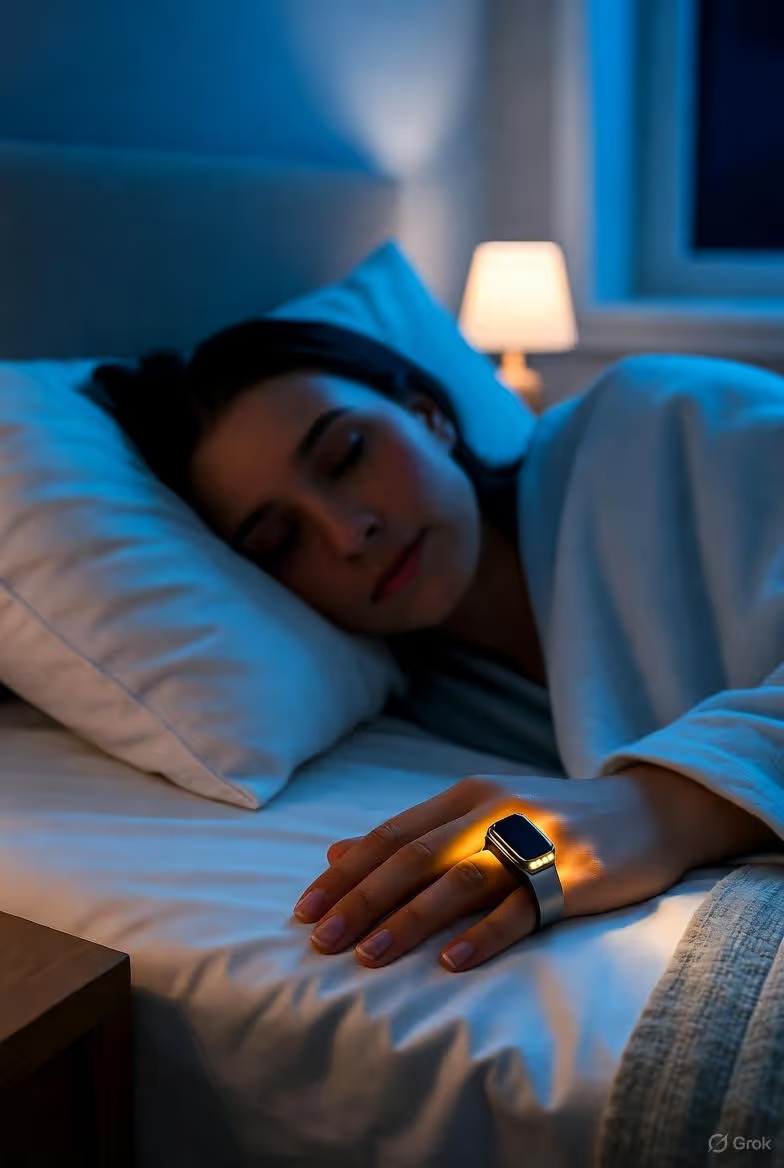
You don’t need a lab coat to suspect a deep sleep deficit. The signs are often present in your daily life, masquerading as general "aging" or "stress." Conducting a personal audit is the first step toward targeted action. Ask yourself if you regularly experience:
While these symptoms are strong indicators, the gold standard is measurement. This is where consumer technology has been a game-changer. Gone are the days when understanding your sleep required an expensive night in a clinic.
The Rise of the Sleep Tracker: Wearables like smart rings and watches use a combination of sensors—most commonly photoplethysmography (PPG) to measure heart rate and heart rate variability (HRV), and accelerometers to measure movement—to estimate sleep stages. Advanced algorithms interpret these signals to distinguish between light, deep, and REM sleep.
Why a Smart Ring? For sleep tracking specifically, a device like the Oxyzen smart ring offers distinct advantages. Worn on the finger, it often provides more consistent PPG data than wrist-worn devices, as the finger has a denser capillary network. It’s also less obtrusive, avoiding the potential discomfort of a watch during sleep. Most importantly, it collects data on key biomarkers like HRV and resting heart rate, which are direct proxies for autonomic nervous system recovery and are closely tied to deep sleep quality.
Interpreting Your Data: When you review your sleep data, don’t just look at total hours. Dive into the breakdown:
By combining subjective symptoms with objective data, you move from guessing to knowing. You can identify patterns—perhaps your deep sleep plummets after evening alcohol, or improves on nights you exercise before 2 pm. This creates a powerful feedback loop for change. To discover how this technology fits into a broader mission of accessible health insight, you can read about our foundational principles on Oxyzen.ai/about-us.
You cannot control your age, but you have immense control over your sleep environment and pre-sleep behavior. This is the realm of sleep hygiene—the non-negotiable foundation upon which all other deep sleep strategies are built. For an aging brain and body that are already fighting to generate deep sleep, a suboptimal sleep environment is like trying to fill a leaky bucket. Here’s how to seal the leaks.
The Sanctity of Darkness: Melatonin, the hormone that signals sleepiness, is exquisitely sensitive to light. As we age, the lens of the eye yellows and the pupil shrinks, reducing light intake by day and making us more sensitive to disruptive light at night. Prioritize pitch blackness:
The Power of Cool: A drop in core body temperature is a key signal to initiate sleep. Aging can impair thermoregulation. Optimize for cool:
The Rhythm of Routine: The aging brain benefits enormously from predictability. A consistent sleep schedule—waking up and going to bed at the same time every day, even on weekends—strengthens your circadian rhythm. This regularity makes sleep onset easier and helps consolidate sleep stages.
The Quiet Mind, Quiet Space: Noise fragmentation is a prime thief of deep sleep, and we become lighter sleepers with age.
The Pre-Sleep Wind-Down: You cannot sprint into sleep. Create a 45-60 minute buffer zone between your day and bedtime. This is for low-stimulus, calming activities: gentle stretching (like legs-up-the-wall pose), reading a physical book (not a thriller!), listening to calming music or a sleep story, or practicing a simple breathing meditation.
Mastering these fundamentals is the single most effective step you can take. It removes the obstacles your brain faces in trying to achieve deep sleep. For an in-depth collection of articles and tips on optimizing your sleep environment and routines, our Oxyzen.ai/blog is continually updated with the latest research and practical advice.

What you put into your body acts as either raw material for sleep-supportive neurotransmitters or as a disruptive force to your nervous system. Dietary choices become increasingly consequential as our sleep systems become more fragile. This isn’t about one magic food, but about strategic patterns and timing.
The Macronutrient Balance: Your evening meal can set the stage for the night.
Key Sleep-Supportive Nutrients & Foods:
The Supplement Conversation: While food first is the ideal, targeted supplementation can be a powerful tool, especially when dietary intake is insufficient or age-related absorption is a concern.
The Great Saboteurs:
Think of your evening nutrition as programming your internal pharmacy for the night shift. You are either providing the building blocks for restoration or sending in disruptive agents that will shut down the factory. For answers to common questions on how lifestyle factors interact with wearable data, our comprehensive Oxyzen.ai/faq provides detailed insights.
Physical activity is one of the most potent, evidence-based deep sleep enhancers we have at our disposal. It works through multiple mechanisms: reducing anxiety and arousal, promoting favorable shifts in body temperature, and driving adenosine buildup (a sleep-promoting chemical) in the brain. However, the type, intensity, and timing of exercise are critical, especially as we age.
Aerobic Exercise (Cardio): Steady-state cardio like brisk walking, cycling, swimming, or jogging is a cornerstone for sleep health. It has been shown to increase total sleep time and, specifically, the duration of deep sleep. The key is consistency and moderate intensity. The current guideline of 150 minutes of moderate-intensity aerobic exercise per week is a powerful sleep prescription.
Resistance Training (Strength): Building and maintaining muscle mass is crucial for metabolic health and, as it turns out, for sleep. Studies indicate that resistance training can improve sleep quality, reduce sleep onset latency, and decrease nighttime awakenings. The metabolic demand of repairing muscle tissue at night may help anchor you in deeper, more restorative sleep.
The Critical Importance of Timing: This is the fine-print that makes all the difference. Exercise is a potent stimulant that raises core body temperature, cortisol, and adrenaline—all great for the day, but counterproductive if too close to bedtime.
The Mind-Body Connection: Practices like yoga, tai chi, and qigong are uniquely valuable. They combine gentle movement with breath awareness and mindfulness, directly activating the parasympathetic nervous system (the "rest-and-digest" mode). This reduction in physiological arousal is a direct pathway to improved sleep depth and less fragmentation.
Listen to Your Data: This is where a sleep tracker becomes an invaluable coach. You can experiment: note how a 4 pm gym session affects your deep sleep percentage versus a 7 pm yoga session. You may find your personal tolerance is shorter or longer than the 3-hour guideline. The goal is to use movement as a tool, not a stressor. Overtraining or exercising too late will show up in your metrics as a elevated resting heart rate, lower HRV, and reduced deep sleep—a clear sign to adjust.
By moving your body strategically, you are not just building a healthier physique; you are actively strengthening the very systems that generate and protect your deep sleep. It’s a virtuous cycle: better sleep leads to more energy for exercise, and more exercise leads to better sleep.
If deep sleep is a still, deep pool, stress and anxiety are the pebbles tossed into it, creating ripples of arousal that fragment its surface. The relationship is bidirectional and vicious: poor sleep heightens emotional reactivity and stress, and chronic stress devastates sleep, particularly deep sleep. As we age, life stressors may change (career pressures shifting to health or family concerns), but the physiological impact on sleep remains severe.
The Biology of Bedtime Worry: When you are stressed or anxious, your body is in a state of sympathetic nervous system dominance—"fight-or-flight." This means elevated cortisol, adrenaline, heart rate, and mental alertness. This state is the polar opposite of the parasympathetic state required for deep sleep. Cortisol, in particular, has a natural diurnal rhythm; it should be low at night. Chronic stress flattens this rhythm, keeping cortisol elevated when it should be dropping, effectively blocking the gateway to deep, restorative sleep.
Cognitive Hyperarousal: This is the experience of a "racing mind" at bedtime. You replay conversations, worry about tomorrow’s to-do list, or ruminate on problems. This mental chatter activates the brain’s default mode network (DMN) and prevents the shift into the quieter, slower brainwave states of sleep onset and deep sleep.
Strategic Countermeasures:
The goal is not to eliminate stress—an impossible task—but to manage your reaction to it and create a clear buffer zone between the stresses of the day and the sanctuary of your sleep. By taming the mind, you send a clear signal to your nervous system: "The night is for rest, not for fight-or-flight." This signal is essential for granting your brain permission to descend into the vulnerable, restorative state of deep sleep. For more on the philosophy of using technology for holistic calm, not more data anxiety, the narrative behind our approach is detailed at Oxyzen.ai/our-story.
In the quest to defend deep sleep, knowledge is not just power—it’s precision. This is the era of biofeedback, where we no longer have to guess about our body’s inner workings. A sophisticated wellness tracker, particularly a smart ring like Oxyzen, transforms from a mere data collector into a proactive guardian of your restorative rest. Here’s how this technology bridges the gap between intention and actionable insight.
From Estimates to Personalized Insights: While consumer devices don’t measure brain waves like a clinical polysomnogram (PSG), the latest generation uses medically-validated algorithms that correlate heart rate, HRV, movement, and temperature data to estimate sleep stages with remarkable accuracy. More important than absolute perfection is the consistency of measurement and the trend data. Night-over-night, you get a reliable picture of what’s helping or hurting your deep sleep.
The Recovery Trinity: Deep Sleep, RHR, and HRV: A smart ring synthesizes three critical data points into a coherent story of your recovery:
Seeing these three metrics on a single dashboard allows you to connect dots. For example, a night with high alcohol intake might show a normal total sleep time but a dramatic plunge in deep sleep percentage and HRV, with a spike in RHR. The story is clear: you were unconscious, but not restorative.
The Power of the Longitudinal View: A single night’s data is a snapshot; weeks and months of data form a biography of your sleep health. You can identify long-term trends (e.g., is my deep sleep slowly declining this season?) and see the impact of lifestyle changes. Did starting a magnesium supplement nudge your HRV upward over two weeks? Did a period of work stress cause a sustained dip in deep sleep? This long view turns anecdotes into evidence.
Behavioral Experimentation & The Feedback Loop: This is the most empowering application. Use the ring to conduct structured experiments:
This process turns you into a scientist of your own well-being. You move beyond generic advice to personalized protocol. The ring provides the objective feedback that motivates lasting change—it’s harder to ignore that late-night glass of wine when you’ve seen its stark effect on your recovery metrics for the past three months.
By making the invisible visible, a tool like the Oxyzen smart ring empowers you to take deliberate, informed action to protect your deep sleep. It’s the difference between navigating a dark room and turning on the lights. To see how this technology integrates into daily life and the real results users are experiencing, the shared journeys on our Oxyzen.ai/testimonials page offer compelling evidence.
We often think of sleep as a brain-centric process, governed by neurotransmitters and hormones. But a revolutionary area of science is revealing a powerful two-way street between your gut and your sleep quality, particularly deep sleep. This communication network, known as the gut-brain axis, suggests that the trillions of bacteria residing in your digestive system—your microbiome—play a starring role in whether you achieve restorative slumber or fragmented rest. As we age, shifts in our microbiome composition may be a hidden factor exacerbating sleep decline.
The Microbial Messengers: Your gut bacteria are not passive passengers; they are active chemical factories. They produce a vast array of metabolites and neurotransmitters that directly influence brain function and sleep-wake cycles.
The Vicious Cycle of Age, Gut Health, and Sleep: Aging is associated with a natural decline in microbial diversity—a condition termed "microbial frailty." This can be accelerated by factors common in later life: decreased digestive enzyme production, changes in diet, increased medication use (especially antibiotics and PPIs), and reduced physical activity. This less robust microbiome may produce fewer sleep-supportive neurotransmitters and more inflammatory signals, directly undermining deep sleep. In turn, poor sleep increases stress hormones like cortisol, which can damage the gut lining and further alter the microbiome, creating a self-perpetuating loop of dysfunction.
Cultivating a Sleep-Supportive Microbiome: You can directly influence this internal ecosystem to favor better sleep.
The Timing of Meals Matters for Your Microbes: Your gut microbiome has its own circadian rhythm. Eating at erratic times or having late-night snacks can disrupt this microbial clock, which in turn sends confusing signals to your brain's master clock. Sticking to consistent meal times and allowing a 12-14 hour overnight fast (e.g., finishing dinner by 7 PM and breakfast at 7-9 AM) can help synchronize both your gut and sleep-wake cycles.
By nurturing your gut microbiome, you are essentially farming your internal pharmacy to produce the very chemicals that facilitate deep, restful sleep. It’s a long-game strategy that builds foundational health from the inside out. For more on the interconnected nature of bodily systems and holistic tracking, the philosophy behind our integrated approach is detailed at Oxyzen.ai/about-us.
Breathing is unique among autonomic functions—it happens automatically, yet we can consciously control it. This makes it the most direct and powerful tool we have to manually switch our nervous system from the stress-dominant "fight-or-flight" (sympathetic) state to the rest-and-restore (parasympathetic) state required for deep sleep. Moving beyond basic deep breathing, several advanced techniques can induce profound physiological shifts conducive to sleep initiation and maintenance.
The Physiological Shift: Slow, deliberate, exhale-focused breathing does the following:
Technique 1: The 4-7-8 Method (Dr. Andrew Weil)
This remains a gold standard for sleep onset. The extended hold and exhale are crucial.
Technique 2: Physiological Sigh (Cyclic Sighing)
Recently popularized by Dr. Andrew Huberman and backed by Stanford research, this is a rapid and potent method to reduce acute stress and arousal.
Technique 3: Box Breathing (Navy SEAL Technique) for Sleep Maintenance
For those who wake up anxious in the middle of the night and struggle to return to sleep, box breathing provides a structured, mentally engaging focus.
Integrating Breathwork into Your Routine:
Mastering your breath is like having a remote control for your nervous system. In a world filled with stressors we can't control, this is a tool that is always with you, requires no equipment, and has an almost immediate effect on your physiology, paving the neural pathway directly to deep sleep. For practical guides and step-by-step routines that incorporate these techniques, our Oxyzen.ai/blog offers a wealth of actionable content.
While melatonin is the sleep hormone we know best, it is just one actor in a complex endocrine orchestra that directs sleep architecture. Aging brings significant changes to this hormonal landscape, and these shifts are intimately tied to the decline in deep sleep. Understanding this broader picture opens up more nuanced avenues for support.
Growth Hormone (GH) and Deep Sleep: The Critical Partnership: The most profound hormonal link to deep sleep is with Growth Hormone. Approximately 70-80% of GH is secreted during deep sleep (N3), in a pulsatile manner, primarily in the first half of the night. GH is essential for:
Cortisol: The Stress Hormone's Diurnal Rhythm: Cortisol should follow a clear 24-hour pattern: highest in the morning to help us wake (cortisol awakening response), gradually declining throughout the day, and reaching its lowest point around midnight. Chronic stress and aging can dysregulate this rhythm, leading to elevated cortisol at night. High nighttime cortisol is antagonistic to both melatonin and GH secretion, directly suppressing deep sleep. Furthermore, the lack of deep sleep then leads to elevated cortisol the following day, creating another vicious cycle.
Sex Hormones (Estrogen, Progesterone, Testosterone): These hormones have modulatory effects on sleep.
Thyroid Hormones: Both hyperthyroidism (overactive) and hypothyroidism (underactive) can cause significant sleep disturbances, including insomnia and unrefreshing sleep. Thyroid function should be checked if sleep problems are accompanied by other symptoms like unexplained weight changes, temperature sensitivity, or hair loss.
Strategic Support for Hormonal Sleep Health:
The goal is not to chase the hormonal profile of a 25-year-old, but to support balanced function within your current life stage. By creating a lifestyle that promotes robust, deep sleep, you create the optimal environment for your endocrine system to function harmoniously, and in turn, balanced hormones support better sleep. It's a synergistic relationship that forms a core pillar of healthy aging. For user experiences related to tracking physiological changes during life transitions, the stories shared at Oxyzen.ai/testimonials can be deeply relatable.
Knowledge is only power when applied. With the comprehensive understanding we've built, it's time to synthesize everything into a actionable, personalized plan. This is not a one-size-fits-all prescription, but a framework for self-experimentation and iterative improvement. Think of it as building your personal sleep "stack"—a combination of habits, environment tweaks, and timing that works uniquely for you.
Phase 1: The Baseline Assessment (Week 1-2)
Phase 2: Foundational Fortification (Week 3-4)
Start with the non-negotiable basics that have the highest impact. Change only 1-2 things at a time to isolate effects.
Phase 3: Strategic Lifestyle Integration (Week 5-8)
Now layer in behavioral modifications based on your personal bottlenecks.
Phase 4: Advanced Optimization & Medical Consultation (Ongoing)
The Iterative Loop: Your plan is a living document. Life changes, stress levels fluctuate, and you age. Revisit your baseline every few months. Use your smart ring's long-term trends to spot deviations. The power lies in the feedback loop: Action -> Data -> Insight -> Adjusted Action.
This framework moves you from a passive victim of sleep changes to an active architect of your own restoration. For answers to common questions about implementing such a plan and using data effectively, our support resources at Oxyzen.ai/faq can provide clarity.
Optimizing deep sleep isn't a 30-day challenge; it's a lifelong practice of adaptation and preservation. The strategies that work in your 40s may need tweaking in your 60s, and the priorities in your 70s may differ from those in your 50s. This section provides a decade-by-decade perspective on protecting this vital resource, emphasizing that it's never too late to start, and the investments compound over time.
In Your 30s & 40s: The Prevention Phase
This is the critical window where decline begins subtly. The focus is on establishing robust habits to slow the natural attrition.
In Your 50s: The Compensation Phase
Hormonal shifts (menopause, andropause) and increased health issues become prominent. The strategy shifts toward active compensation.
In Your 60s & 70s+: The Optimization & Protection Phase
The goal is to protect the deep sleep you still produce and maximize its efficiency.
Universal Principles Across All Ages:
The long game is about graceful adaptation. It's about listening closely to the feedback from your body and your data, and responding with kindness and intelligence. By making sleep health a permanent pillar of your wellness philosophy, you directly invest in your cognitive reserve, physical resilience, and overall vitality for all the years to come. To see how this long-term philosophy is built into our product's mission, learn more at Oxyzen.ai/our-story.
Abstract advice gains tremendous power when grounded in reality. Let's examine three hypothetical but data-informed case studies that illustrate how the principles in this article can be applied to different challenges at different life stages. These stories show the integration of subjective experience with the objective data from a smart ring or tracker.
Case Study 1: David, 48 – "The Stressed Executive"
Case Study 2: Priya, 56 – "The Menopausal Professional"
Case Study 3: Henry, 72 – "The Early Morning Riser"
These cases illustrate that improvement is always possible. The key is a targeted approach informed by personal data, addressing the root cause—be it stress hormones, body temperature, or circadian timing. For more real-user transformations and experiences, the collection at Oxyzen.ai/testimonials provides further inspiration.
Embarking on this journey requires reliable tools and guidance. Below is a curated list of resources to support your quest for better deep sleep, from technology and professionals to books and communities. This is your toolkit for ongoing education and support.
Technology & Tracking:
When to Seek Professional Help:
Recommended Reading & Media:
Community and Support:
A Final Word on the Journey: Reclaiming your deep sleep is one of the most profound acts of self-care and long-term health investment you can make. It requires patience, self-experimentation, and sometimes, professional guidance. Start with one change, measure its impact, and build from there. Let the data be your guide and your improved vitality be your motivation. You have the science, the strategies, and now the resources. The path to more restorative nights and more vibrant days is clear.
Your Trusted Sleep Advocate: Sleep Foundation — https://www.sleepfoundation.org
Discover a digital archive of scholarly articles: NIH — https://www.ncbi.nlm.nih.gov/
39 million citations for biomedical literature :PubMed — https://pubmed.ncbi.nlm.nih.gov/
Experts at Harvard Health Publishing covering a variety of health topics — https://www.health.harvard.edu/blog/
Every life deserves world class care :Cleveland Clinic - https://my.clevelandclinic.org/health
Wearable technology and the future of predictive health monitoring :MIT Technology Review — https://www.technologyreview.com/
Dedicated to the well-being of all people and guided by science :World Health Organization — https://www.who.int/news-room/
Psychological science and knowledge to benefit society and improve lives. :APA — https://www.apa.org/monitor/
Cutting-edge insights on human longevity and peak performance:
Lifespan Research — https://www.lifespan.io/
Global authority on exercise physiology, sports performance, and human recovery:
American College of Sports Medicine — https://www.acsm.org/
Neuroscience-driven guidance for better focus, sleep, and mental clarity:
Stanford Human Performance Lab — https://humanperformance.stanford.edu/
Evidence-based psychology and mind–body wellness resources:
Mayo Clinic — https://www.mayoclinic.org/healthy-lifestyle/
Data-backed research on emotional wellbeing, stress biology, and resilience:
American Institute of Stress — https://www.stress.org/


