


How Blue Light Disrupts Natural Sleep Patterns
Blue light from screens in the evening suppresses melatonin production, tricking your brain into thinking it's daytime and disrupting your natural wind-down pattern.
Blue light from screens in the evening suppresses melatonin production, tricking your brain into thinking it's daytime and disrupting your natural wind-down pattern.
%402x.svg)
You’ve had a long day. After finally crawling into bed, you scroll through your phone for a few minutes of wind-down time. An hour later, you’re still awake, mind buzzing, staring at the ceiling, wondering why sleep feels so impossibly far away. The culprit might be hiding in plain sight, emanating from the very device in your hand. It’s not the content of your feed that’s to blame—it’s the light.
For millennia, human sleep was governed by a simple, powerful rhythm: the sunrise and sunset. Our biology evolved in sync with this natural cycle, using light as its primary conductor. But in just over a century, and explosively in the last two decades, we have rewritten the rules of night. We’ve flooded our evenings with artificial illumination, and most potently, with the blue-wavelength light emitted by LEDs, smartphones, tablets, and computers.
This isn’t merely an environmental change; it’s a biological hack. The blue light that boosts our attention and mimics the midday sun during the day is now a constant companion in the evening, sending conflicting signals to the ancient, light-sensitive systems deep within our brains. The result is a silent, global epidemic of disrupted sleep, with consequences that ripple far beyond mere tiredness, affecting our mood, metabolism, cognitive function, and long-term health.
This article is a deep exploration of that disruption. We will journey into the science of circadian biology, unpack how a specific wavelength of light acts as the master key to our internal clock, and trace the profound impact of its mistiming. We’ll move from the cellular mechanisms in your eyes to the societal structures enabling our always-on culture. This isn’t just a story of a problem; it’s the foundation for understanding a solution. By mastering our light environment, we can reclaim our natural sleep patterns and, by extension, our vitality. In this quest for better sleep hygiene, technology itself—when designed with intention—can become our ally, not our adversary. Innovative tools like the Oxyzen smart ring, for instance, help individuals track their sleep and recovery data, providing personalized insights to counteract these modern disruptions. You can discover how Oxyzen works to turn data into actionable sleep strategy.
We are at a crossroads between our evolutionary past and our digital future. Understanding how blue light disrupts our sleep is the first, critical step toward building a healthier relationship with the technology that illuminates our world.
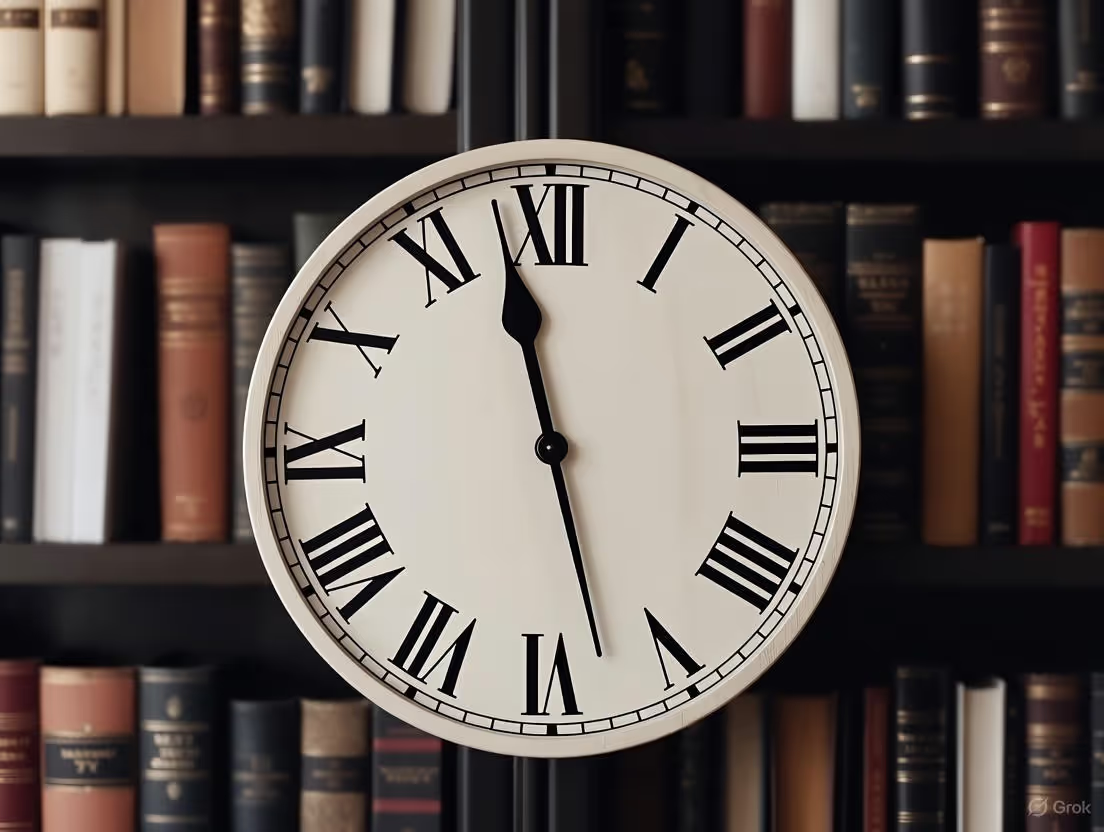
At the core of your being, in a tiny region of your brain called the suprachiasmatic nucleus (SCN), lies a meticulous timekeeper. This cluster of about 20,000 neurons is your body’s master circadian clock, and it dictates the intricate, 24-hour cadence of nearly every physiological process you experience. From the ebb and flow of hormones and body temperature to the timing of sleep and wakefulness, digestion, and even gene expression, the SCN is the conductor of your biological orchestra.
This rhythm isn’t a suggestion; it’s a fundamental imperative. Life on Earth evolved under the consistent rotation of the planet, and survival favored organisms that could anticipate and adapt to daily environmental changes—predicting when to be active to find food and when to rest to conserve energy and repair. Our circadian rhythm is that adaptive, predictive engine. It doesn’t just react to light and dark; it uses cues, primarily light, to stay perfectly synchronized with the outside world, a process known as entrainment.
Imagine your circadian rhythm as a precise, internal 24-hour wave. In the morning, as light is detected, the clock triggers a cascade of events: cortisol production rises to promote alertness, body temperature begins its climb from its nighttime low, and the production of the sleep hormone melatonin is sharply suppressed. As evening approaches and light fades, the clock initiates the wind-down: melatonin secretion increases, core body temperature drops, metabolism slows, and sleepiness descends. This elegant cycle ensures that sleep occurs during the safest, most restorative period and that wakefulness is powered by optimal alertness.
The stability of this rhythm is paramount. When it’s robust and well-entrained, we experience consolidated, restorative sleep, stable energy levels, sharp cognitive function, and balanced mood and appetite. However, this system is not foolproof. It is designed to be reset daily by the most reliable time-giver, or Zeitgeber: the light-dark cycle. Herein lies the vulnerability. When the timing, intensity, or spectral quality of light exposure deviates from natural patterns—like staring into a bright, blue-rich screen after sunset—the master clock receives conflicting data. It’s like resetting your wristwatch to the wrong time zone every single evening. The resulting state, where your internal clock is out of sync with your environment and your desired sleep-wake schedule, is known as circadian disruption or social jet lag.
This foundational understanding of our biological timekeeping is critical. It moves the conversation about sleep from one of simple choice (“I should go to bed earlier”) to one of biology. You are not fighting laziness or willpower; you are contending with a deep-rooted, light-sensitive system that is being deliberately misled by the modern world. As we’ll explore next, the specific key that fits the lock of this master clock is a narrow band of light in the blue spectrum.
Not all light is created equal in the eyes of your circadian system. While sunlight is a full-spectrum blend of every color of the rainbow, it is light on the blue end of the visible spectrum—specifically wavelengths between 460 and 480 nanometers—that holds unparalleled power over your internal clock. This is the biological trigger, the precise signal that tells your suprachiasmatic nucleus (SCN) that it is daytime.
The discovery of this mechanism revolutionized our understanding of light and health. For decades, scientists believed that the classic rods and cones responsible for vision were the only photoreceptors in the human eye. Then, in 2002, a groundbreaking discovery was made: a third type of photoreceptor cell was identified in the retina. These cells, called intrinsically photosensitive retinal ganglion cells (ipRGCs), are not involved in forming images. They have one dedicated job: to detect light intensity and, crucially, its spectral composition, and send that signal directly to the master clock in the SCN.
These ipRGCs contain a light-sensitive pigment called melanopsin, which is exquisitely tuned to be most sensitive to blue-cyan light. When light of this wavelength hits the retina, it stimulates the ipRGCs, which send a powerful “DAYTIME” signal up the retinohypothalamic tract to the SCN. The SCN, in response, acts like a central command station:
This system is a masterpiece of evolutionary design. In a natural environment, the composition of sunlight changes predictably throughout the day. Morning and evening light is richer in longer red and orange wavelengths (the “golden hour”), while the light from the midday sun is intense and dominated by short-wavelength blue. This blue peak is a flawless, reliable cue for the middle of the day, a time for peak alertness and activity.
The problem is starkly modern. The light sources that dominate our evening and night—the LEDs in our overhead lights, laptops, televisions, and most devastatingly, our handheld smartphones and tablets—are engineered for energy efficiency and brightness. They achieve this by emitting a strong peak of blue light. When we expose ourselves to this light after sunset, we are essentially administering a concentrated dose of a “biological daytime” signal directly to our master clock.
We are not just turning on a lamp; we are pharmacologically suppressing a key sleep hormone and shifting our entire circadian phase. The ipRGCs are indifferent to whether the blue light comes from the sun or a screen. They faithfully report, and the SCN obediently responds, delaying the onset of sleep and scrambling the precise timing of our biological night. For a deeper dive into the biology of sleep and recovery, explore our blog for more wellness tips and research.

To fully grasp the magnitude of the blue light problem, we must step back and view it not just as a biological phenomenon, but as a profound historical and cultural shift. The relationship between humanity and night has been utterly transformed in a blink of evolutionary time.
For 99.9% of human history, our light environment was dictated by the sun, the moon, and fire. The day ended with sunset, and the night was lit only by the faint glow of the moon, stars, and the flickering light of flames from torches, candles, or hearths. These natural and early artificial light sources share a crucial characteristic: they are spectrally warm. Firelight is extremely rich in long red, orange, and yellow wavelengths and contains virtually no short-wavelength blue light. This warm, dim light had minimal capacity to suppress melatonin or shift the circadian clock. It allowed for limited evening social activity or work, but it also permitted the natural rise of melatonin and the onset of sleepiness to proceed largely undisturbed.
The first major fracture in this pattern came with the advent of gaslight and, more significantly, Thomas Edison’s incandescent light bulb in the late 19th century. For the first time, night could be pushed back on a massive scale. Cities began to glow, and indoor activities extended deep into the evening. Yet, even this revolution had a built-in circadian buffer. The classic incandescent bulb, which creates light by heating a filament until it glows, is a modern cousin to firelight. Its spectrum is still heavily skewed toward the red and yellow end, with a relatively low output of blue light.
The true seismic shift began in the 21st century with the global transition to Light Emitting Diodes (LEDs). Driven by overwhelming advantages in energy efficiency, longevity, and cost, LEDs have rapidly replaced incandescent and fluorescent lighting everywhere—from streetlights and office ceilings to car headlights and home fixtures. This technological victory, however, came with a biological cost. White LED light is typically created by coating a blue LED chip with a yellow phosphor. This means the fundamental engine of an LED is a bright blue light source. Even “warm white” LEDs emit significantly more blue light than an incandescent bulb of the same color temperature.
Concurrently, we witnessed the dawn of the personal digital revolution. The proliferation of smartphones, tablets, and laptops placed powerful, blue-rich LED screens directly into our hands, often just inches from our faces, and at all hours. This created a perfect storm: our general ambient lighting became more circadian-disruptive, and we then voluntarily brought intensely disruptive light sources into our most intimate, pre-sleep spaces.
We have transitioned, in less than a generation, from a world where darkness was the default state of night to one where bright, blue-biased light is ubiquitous and constant. The boundary between day and night has been erased by technology. Our biology, however, is still running the ancient software programmed by firelight and starlight. It is wholly unprepared for the midnight sun we now carry in our pockets. This disconnect is the root cause of the modern sleep crisis, a silent epidemic with cascading consequences, as detailed in the stories shared by users who track their data and seek solutions. You can read real customer reviews to see how this awareness impacts real lives.
If the circadian rhythm is the sheet music for the sleep-wake cycle, then melatonin is the conductor’s baton that specifically cues the orchestra of sleep. Often called the “hormone of darkness,” melatonin is a potent, sleep-promoting neurohormone secreted by the pineal gland in the brain. Its nightly rise is the definitive biochemical signal that ushers in the state of sleep readiness—lowering core body temperature, reducing alertness, and promoting feelings of drowsiness.
The production and release of melatonin are exquisitely controlled by the master clock (SCN) and, by extension, by light. In a natural setting, as daylight fades and darkness falls, the SCN releases its inhibition on the pineal gland. Like a factory receiving the “start production” order, the pineal gland converts the neurotransmitter serotonin into melatonin, releasing it into the bloodstream. Levels typically begin to rise 2-3 hours before your natural bedtime, creating a gentle, physiological pressure to sleep that culminates in peak concentrations in the middle of the night before tapering off towards morning.
Blue light exposure in the evening acts as a malicious override of this system. When the ipRGCs in your retina detect blue wavelengths after sunset, they send an urgent message to the SCN: “Stop! It’s still daytime!” The SCN, in turn, immediately slams the brakes on the pineal gland. Melatonin production is suppressed, sometimes severely and rapidly.
Landmark research has quantified this effect. A seminal Harvard study demonstrated that exposure to 6.5 hours of bright blue light in the evening suppressed melatonin production for about twice as long as exposure to green light of comparable brightness, and shifted the circadian phase by up to 3 hours. More alarmingly, even short exposures matter. Studies have shown that just one hour of tablet use at maximum brightness can suppress melatonin levels by over 20%, while two hours of screen time before bed can suppress the melatonin surge by a staggering 23%.
The consequences of this biochemical sabotage are direct and personal:
This isn’t a minor hormonal tweak; it’s the deliberate disarming of the body’s primary sleep initiation system right when it’s needed most. We are, quite literally, pharmacologically keeping ourselves awake with light, then wondering why we can’t sleep. The suppression of melatonin is the most direct mechanistic link between blue light exposure and the experience of insomnia and poor sleep quality. Understanding this link is a core part of our mission at Oxyzen, where we focus on holistic wellness tracking. To learn more about our mission and approach, visit our page.

While the immediate frustration of lying awake at night is palpable, the true cost of chronic blue light exposure and circadian misalignment extends far beyond the bedroom. A master clock thrown out of sync doesn’t just affect sleep timing; it creates systemic chaos, as the peripheral clocks in your liver, pancreas, gut, heart, and fat cells lose their coordinated rhythm. This state of internal desynchrony is a significant risk factor for a alarming array of chronic health conditions.
Metabolic Mayhem and Weight Gain: Your metabolism is deeply circadian. Insulin sensitivity, glucose tolerance, and the hormones that regulate hunger (ghrelin) and satiety (leptin) all follow a 24-hour rhythm. Evening blue light exposure and the consequent sleep loss dysregulate this system. Studies show it leads to decreased insulin sensitivity the following day, impaired glucose metabolism (pushing you toward pre-diabetes), and a hormonal profile that increases appetite and cravings for high-calorie, carbohydrate-rich foods. This creates a perfect storm for weight gain and obesity.
Mood Disorders and Mental Health: The link between sleep disruption and mood is well-established. Chronic circadian disruption is a potent trigger for and exacerbator of depression, anxiety, and bipolar disorder. Melatonin itself has mood-stabilizing properties, and its suppression can directly impact emotional regulation. Furthermore, the stress hormone cortisol, which should follow a sharp morning peak and a gradual evening decline, can become flattened or inverted in its rhythm under circadian stress, contributing to feelings of constant fatigue and anxiety.
Impaired Cognitive Performance and Memory: Sleep is non-negotiable for cognitive function. The deep sleep stages are when the brain clears metabolic waste and consolidates memories from the day. Disrupted sleep from blue light leads to reduced attention, slower reaction times, impaired working memory, and diminished problem-solving ability. This “brain fog” has direct consequences for workplace productivity, academic performance, and even safety, as seen in increased errors and accident risk.
Cardiovascular Strain: Blood pressure and heart rate naturally dip during restful sleep, giving the cardiovascular system a reprieve. Circadian disruption and short sleep prevent this necessary dip, keeping the system under constant strain. This is associated with increased inflammation, higher resting heart rate, elevated blood pressure, and a greater long-term risk of hypertension, heart disease, and stroke.
Compromised Immune Function: The immune system is also under circadian control. Key immune cells are released and function on a schedule. Disrupted sleep from evening light exposure has been shown to reduce the production of infection-fighting cytokines and antibodies. This makes you more susceptible to common infections like colds and flu, and can even impair the effectiveness of vaccines.
Hormonal Imbalances and Reproductive Health: For both men and women, reproductive hormones are tied to circadian rhythms. In women, shift work (a severe form of circadian disruption) is linked to menstrual irregularities and increased risk of adverse pregnancy outcomes. In men, poor sleep can lower testosterone levels.
The Cancer Connection: Perhaps the most concerning long-term association is with cancer risk, particularly breast and prostate cancer. The World Health Organization has classified “shiftwork that involves circadian disruption” as a probable human carcinogen. The proposed mechanisms include the suppression of melatonin (which has demonstrated anti-cancer properties in laboratory studies) and the systemic inflammation and metabolic dysfunction caused by chronic circadian misalignment.
This cascade illustrates a vital point: sleep is not a luxury or a separate health category. It is a foundational pillar of biological function. By disrupting it with artificial light, we are not just causing tiredness; we are systematically undermining the rhythmic processes that maintain metabolic health, mental resilience, immune defense, and cellular repair. It is a public health issue of the first order.
In the modern lightscape, not all sources are equal offenders. Understanding the relative impact of different emitters is crucial for crafting an effective defense strategy. While the warm glow of an old incandescent bulb and the cool beam of a smartphone both provide illumination, their biological effects are worlds apart.
The key metrics for judging a light source’s circadian impact are its Color Temperature (measured in Kelvin, or K) and its Spectral Power Distribution (the graph of which wavelengths it actually emits).
Color Temperature – A Useful but Flawed Guide:
We often use correlated color temperature (CCT) to describe light. “Warm white” light (2700K-3000K) has more red/yellow, resembling sunset or incandescent light. “Cool white” (4000K-5000K) or “daylight” (6500K+) light is richer in blue, mimicking midday sun. As a rule, lower Kelvins are less disruptive in the evening. However, CCT can be misleading. Two lights rated at 3000K can have very different blue light content depending on their technology (e.g., LED vs. incandescent). CCT is a starting point, not the final word.
Spectral Power Distribution – The Truth in the Graph:
This is where the real story is told. An incandescent bulb produces a smooth, continuous spectrum across all visible wavelengths, with a gentle slope that peaks in the infrared (heat). Its blue light output is inherently low.
A white LED, however, has a spiky spectrum. It features a sharp, intense peak in the blue region (around 450nm) from its underlying LED chip, combined with a broader hump in the yellow/green from the phosphor coating. Even a “warm” 2700K LED has this characteristic blue spike, making it more potent at suppressing melatonin than an incandescent of the same color temperature.
The Proximity Problem: Digital Screens
This brings us to the most potent source: back-lit digital screens. Smartphones, tablets, laptops, and modern TVs use LED technology for their displays. They are:
The Numbers Tell the Story:
The Cumulative Dose:
The real danger is the cumulative dose. Consider a modern evening: You’re under cool-white LED ceiling lights in your kitchen (dose 1), watching a TV with an LED screen (dose 2), while intermittently checking a bright smartphone (dose 3), and finally reading in bed on a tablet (dose 4). This is not a single exposure but a prolonged bath in circadian-disrupting light that continues until moments before sleep.
This quantification leads to a clear, actionable insight: while ambient lighting matters, our personal handheld and near-eye devices are the primary vectors for acute, high-dose evening blue light exposure. Managing these sources is the single most effective step most people can take. For those seeking to quantify their own sleep disruption, tools like the Oxyzen smart ring provide personalized data to connect these exposures to actual sleep outcomes. If you have questions about how tracking works, our FAQ is a great resource.
The technological capability to emit blue light is only one half of the equation. The other half is the powerful suite of social, economic, and psychological forces that drive us to use these devices deep into the night. Blue light is the weapon, but our 24/7 lifestyle is the hand that wields it.
The Erosion of the Work-Life Boundary: The “always-on” work culture, supercharged by email, messaging apps like Slack, and cloud computing, has dissolved the physical and temporal boundaries of the office. The commute home is no longer a transition to personal time; it’s often just a change of venue for ongoing digital work. Checking emails after dinner or finishing a presentation at 10 p.m. has become normalized. This forces exposure to blue light during the very hours our biology demands darkness, and it couples that exposure with cognitive and emotional stimulation (stress, anxiety, problem-solving) that is itself antagonistic to sleep.
The Social Sphere Never Sleeps: Social media, streaming, and gaming are not passive activities; they are engagement engines designed to capture and hold our attention. Infinite scrolling, auto-play features, and notification ping create a potent psychological pull. Fear Of Missing Out (FOMO) drives us to check our phones continuously, ensuring we stay looped into social dynamics that now operate around the clock. This “time distortion” effect—where “just a few minutes” on social media easily becomes an hour—prolongs blue light exposure and keeps the mind in a state of high arousal when it should be winding down.
The Myth of Wind-Down Entertainment: Many of us use screens as our primary tool for relaxation. We believe watching a series, scrolling through videos, or playing a casual game is how we “unwind.” While the content may feel relaxing, the medium is physiologically activating. The blue light suppresses melatonin, and the engaging content—be it a thrilling plot, humorous clips, or interactive gameplay—stimulates dopamine release and cognitive engagement, the opposite of the quiet, calm state conducive to sleep onset.
The Parent Trap: For parents, evenings after children’s bedtime are often the only stretch of uninterrupted personal or couple time. This “second shift” is frequently spent catching up on chores, planning, or finally engaging in personal entertainment—all typically involving screens. The pressure to reclaim personal time directly conflicts with the biological need for early evening darkness.
Delayed Schedules and Social Jet Lag: Our social calendars—late dinners, evening events, nightlife—incentivize and normalize later bedtimes. When combined with fixed morning commitments (work, school), this creates a persistent sleep debt during the week, which many try to repay by sleeping in on weekends. This pattern, “social jet lag,” is a direct form of circadian misalignment, confusing the master clock with irregular light-dark and sleep-wake cues.
This constellation of factors creates a powerful feedback loop. We use blue-light devices to manage the demands of modern life, but in doing so, we degrade our sleep. Poor sleep then impairs our cognitive function, emotional regulation, and willpower the next day, making us less equipped to handle those same demands efficiently, often leading us to work later or seek more digital escape—perpetuating the cycle.
Breaking this cycle requires more than just knowing about blue light; it requires a conscious restructuring of our evening rituals and a reclaiming of our right to an offline, low-light wind-down period. It’s about creating a new culture of evening rest. The journey to this healthier relationship with technology and sleep is at the heart of our brand’s story and vision.
While blue light exposure poses a universal challenge in the modern world, its disruptive effects are not felt equally by all. Certain groups, due to developmental stages, lifestyle constraints, or occupational demands, face disproportionately high risks and more severe consequences from circadian disruption.
Children and Adolescents: This is perhaps the most vulnerable population. Their eyes’ lenses are clearer, allowing more short-wavelength light to reach the retina. They are also heavy users of tablets and smartphones for both school and entertainment, often with fewer enforced limits. Critically, during puberty, the circadian system undergoes a natural phase delay, making teens biologically prone to later sleep and wake times. Evening screen use exacerbates this shift, contributing to chronic sleep deprivation linked to poorer academic performance, increased risk of anxiety and depression, and behavioral issues. The American Academy of Pediatrics strongly recommends no screens in children’s bedrooms.
Shift Workers and Emergency Personnel: Nurses, factory workers, police officers, and others on rotating or permanent night shifts are in a constant state of war with their circadian biology. They are required to be alert and perform critical tasks during the biological night and attempt to sleep during the biological day, often in suboptimal light conditions. This severe and chronic misalignment puts them at the highest risk for the cascading health consequences discussed earlier, including metabolic syndrome, cardiovascular disease, and certain cancers. Managing light exposure—using bright light to stay alert on shift and wearing blue-blocking glasses or using blackout shades to sleep during the day—is a survival skill for this group.
Individuals with Pre-existing Sleep Disorders: Those already struggling with conditions like Delayed Sleep-Wake Phase Disorder (DSWPD) or insomnia are particularly sensitive. Evening blue light can dramatically worsen DSWPD by reinforcing the delay. For insomniacs, the anxiety-provoking nature of “trying to sleep” is often coupled with screen use in bed, creating a powerful association between the sleep environment and alerting stimuli (both cognitive and photonic).
The “Always-On” Professional: Knowledge workers, entrepreneurs, and individuals in high-stakes global roles who face relentless pressure to perform and be available across time zones. Their lifestyle inherently prioritizes productivity and connectivity over circadian hygiene, leading to habitual late-night work sessions and a normalized state of sleep debt.
Older Adults: While often using technology less intensively, older adults face a double challenge. The aging lens of the eye yellows and thickens, reducing the total amount of light (including blue light) that reaches the retina. This can weaken daytime Zeitgeber signals, making the circadian rhythm more fragile and prone to drifting. At the same time, they may still use TVs and devices in the evening, which can be sufficiently bright to cause suppression. Furthermore, age-related declines in sleep quality make them more susceptible to any additional disruptive factor.
Urban Dwellers: Those living in cities are bathed in light pollution at night, from streetlights, signage, and buildings. This ambient “skyglow” can infiltrate bedrooms even with curtains, providing a low-level, chronic circadian signal that can shallow sleep and fragment sleep architecture.
Understanding these risk profiles is essential for targeted public health messaging and personal intervention. It underscores that a one-size-fits-all approach to “screen time before bed” is insufficient. A teenager, a night-shift nurse, and a CEO all need different, tailored strategies to protect their circadian health within the constraints of their lives. The first step for anyone is awareness, and for many, that begins with data. Tracking sleep patterns can illuminate the specific impact of one’s lifestyle, a principle central to the design of wellness technology. To learn more about smart ring technology and how it provides personalized insights, visit our homepage.
The narrative of blue light disrupting sleep is not anecdotal; it is built upon a robust and growing edifice of scientific evidence from controlled laboratory studies, real-world epidemiological research, and mechanistic biological experiments. This body of work moves the concept from a plausible theory to an established fact of human physiology.
1. Controlled Laboratory Studies (The Gold Standard):
These studies place participants in tightly controlled environments, manipulating light exposure and measuring outcomes like melatonin levels, sleep architecture (via polysomnography), and cognitive performance.
2. Epidemiological and Population Studies (Real-World Patterns):
These studies survey large groups of people about their habits and correlate them with health outcomes.
3. Mechanistic and Intervention Studies (Proving the Pathway):
These studies test specific interventions to see if blocking the proposed pathway improves outcomes.
The convergence of evidence from these different scientific approaches is powerful. It tells us that the effect is real, measurable, and significant. It operates through a known biological pathway (ipRGCs → SCN → pineal gland). And it can be partially mitigated by practical interventions. This scientific backing is crucial for moving the issue from the realm of wellness trend to that of legitimate public health priority, guiding individuals to make informed choices about their evening light environment. For those looking to delve deeper into the research behind sleep and light, we regularly compile and explain the latest findings in our blog on wellness technology.
Awareness is the precursor to change. Before you can effectively manage your blue light exposure, you need to develop a concrete understanding of your personal “light diet.” How much are you really consuming, and when? This isn’t about precise scientific measurement, but about cultivating mindful observation and using available tools to gain insight.
Conduct a Personal “Light Audit”:
For one typical evening, become a detective of your own habits. From two hours before your target bedtime until you turn out the light, consciously note:
This audit will likely reveal patterns and “hot spots” of exposure you weren’t fully conscious of—like the habitual 30-minute phone scroll in bed.
Leverage Built-In Device Tools:
Your devices already hold valuable data and controls.
Consider a Sleep Tracker for Correlative Data:
While not a direct measure of light, a sleep tracker like a smart ring or wearable can provide powerful correlative evidence. By tracking your sleep objectively—measuring time to fall asleep (sleep latency), total sleep, restlessness, and sleep stages—you can begin to connect the dots. You might observe:
This biofeedback turns an abstract concept (“blue light is bad”) into a personal, data-driven insight (“My evening screen use disrupts my sleep”). Devices like the Oxyzen smart ring are designed to provide this exact kind of personalized, actionable feedback loop, helping you see the direct impact of your behaviors on your recovery. If you're curious about how this tracking translates to user experience, our testimonials page shares real stories.
Simple Environmental Checks:
This process of self-assessment is empowering. It moves you from a passive recipient of environmental light to an active manager of your circadian environment. The data you gather—whether from a simple log or a sophisticated tracker—becomes the foundation for the personalized intervention strategies we will explore next. Armed with this knowledge, you are ready to build a practical defense against the modern world’s perpetual electronic sunset.
Armed with the knowledge of how blue light disrupts sleep and an understanding of your personal exposure patterns, the next step is to construct a practical, personalized defense system. This isn’t about rejecting modern technology but about adopting a strategic approach to manage it, creating an evening environment that respects your biology. Think of it as "circadian hygiene"—a set of habits as important as brushing your teeth.
1. The 90-Minute Digital Sunset: Your Most Powerful Habit.
Establish a non-negotiable buffer zone between your last screen use and bedtime. Research suggests 90 minutes is ideal, but even 60 minutes can yield significant benefits. This allows melatonin to begin its natural rise and your nervous system to transition from stimulation to calm.
2. Master Your Light Environment: From Macro to Micro.
3. Redefine Your Wind-Down Ritual.
Replace screen-based relaxation with activities that promote a true parasympathetic ("rest and digest") state.
4. Optimize Your Sleep Sanctuary.
Your bedroom should be a temple for sleep, and light is its most invasive pollutant.
5. Adopt a "Light-Conscious" Mindset for Late-Night Needs.
If you must get up at night, avoid flooding your retina with bright white light.
Implementing these strategies requires intention, but the payoff is profound. You are not just avoiding a negative; you are actively cultivating a positive biological state conducive to restoration. This holistic approach to managing light is a cornerstone of modern wellness, a principle we embrace in our comprehensive view of health. For further reading on creating holistic wellness routines, our blog offers a wealth of resources.
Transitioning from personal habits, it’s important to acknowledge that the devices we use are not passive tools; their very design plays a pivotal role in this dynamic.
The conversation around blue light often frames technology as the antagonist. However, the same innovative capacity that created this challenge can be harnessed to mitigate it. Forward-thinking design, both in software and hardware, is evolving to build circadian awareness directly into our devices, transforming them from sleep disruptors into potential sleep guardians.
Software Solutions: Building Smarter Filters and Intelligence.
Hardware Innovations: Rethinking the Light Source.
The Integration of Wellness Tech: The Hub of Circadian Data.
This is where dedicated wellness technology becomes a powerful central command. A device like a smart ring acts as a 24/7 biometric sensor, measuring not just sleep, but also daytime activity, heart rate variability (HRV), and body temperature—all markers of circadian rhythm and stress.
The goal is a seamless, supportive ecosystem where technology respects human biology. Companies at the forefront of this movement recognize that true wellness tech isn’t just about tracking; it’s about integrating insights to foster healthier behavior. At Oxyzen, this philosophy of human-centric, data-informed design is central to our product development. To understand more about our vision and design principles, explore our story.
The potential is vast: from devices that gently guide us toward healthier habits to an interconnected home environment that automatically optimizes for our circadian well-being. This proactive design ethos is the necessary counterbalance to the disruptive potential of our digital world.
As we look toward these technological solutions, we must also equip ourselves with practical knowledge to navigate the present. The marketplace is full of products claiming to solve the blue light problem, but which ones truly work?
In a wellness landscape crowded with quick fixes, the topic of blue light has spawned its share of myths, overhyped products, and misleading marketing. Cutting through the noise is essential to invest your time and money wisely in strategies that have a genuine biological impact.
Myth 1: "All Blue Light is Bad."
The Truth: Blue light is not a toxin; it is a vital circadian signal. The problem is one of timing and dose. Exposure to bright blue light during the day is beneficial and necessary for robust circadian entrainment, boosting alertness, mood, and cognitive performance. The harm comes from inappropriate evening and nighttime exposure. The goal is not to eliminate blue light, but to manage its timing.
Myth 2: "Night Mode / Blue Light Filter Settings are a Complete Solution."
The Truth: These features are a helpful first step, but they are incomplete. They work by shifting the color balance of your screen toward warmer tones (reducing the blue/green and increasing red). However:
Myth 3: "Anti-Glare Screen Protectors Block Circadian Blue Light."
The Truth: Standard matte anti-glare protectors diffuse reflections to reduce eye strain, but they do not selectively filter specific wavelengths of blue light. They are ineffective for melatonin protection. Look for products specifically marketed as "blue light filtering" or "circadian" screen protectors, and check for independent spectral analysis data to verify their claims.
Myth 4: "All Blue-Blocking Glasses are Created Equal."
The Truth: This is a major area of buyer beware. The market is flooded with cheap, clear-lens glasses with minimal filtering.
Myth 5: "If I Get Enough Daylight, Evening Screen Time Won't Affect Me."
The Truth: While robust daytime light exposure strengthens your circadian rhythm and can provide some resilience, it does not grant immunity. The ipRGCs and the SCN respond to light in real-time. A strong "daytime" signal in the morning does not cancel out a conflicting "daytime" signal at night. They are cumulative. Bright daytime light is crucial, but it does not license unlimited evening screen use.
Evaluating Claims: A Consumer's Checklist
When considering a product or solution, ask:
The most effective strategy remains a holistic behavioral one: the 90-minute digital sunset, dim warm ambient lights, and a screen-free wind-down ritual. Technological aids like verified blue-blocking glasses and device settings are powerful supplements to this foundation, not replacements for it. For anyone navigating these choices and seeking reliable information, our FAQ page offers clear, research-backed guidance on many common questions about technology and sleep.
Understanding what works empowers you to take control. Yet, for some individuals, the struggle with sleep runs deeper, intersecting with diagnosed clinical conditions. The role of light management in these contexts is both nuanced and critically important.
For the millions living with clinical sleep disorders, the disruptive effects of blue light are not merely an inconvenience; they can be a significant exacerbating factor that complicates management and impedes recovery. Integrating circadian light hygiene into a treatment plan can be a powerful adjunct therapy.
Insomnia: Breaking the "Hyperarousal" Loop.
Chronic insomnia is characterized by a state of physiological and cognitive hyperarousal, making it difficult to fall and stay asleep. The bed and bedtime often become conditioned cues for anxiety and alertness.
Delayed Sleep-Wake Phase Disorder (DSWPD): Resetting a Stubborn Clock.
DSWPD is a circadian rhythm disorder where the individual's natural sleep window is shifted significantly later (e.g., 3 a.m. to 11 a.m.), making it extremely difficult to meet social or work obligations.
Shift Work Sleep Disorder: Surviving Against the Biological Tide.
As discussed, shift workers are in a constant battle. Managing light is their primary tool for adaptation and damage control.
Other Conditions:
For all these conditions, objective measurement is invaluable. Subjective sleep perception is often unreliable, especially in insomnia. Using a sleep tracker can help patients and clinicians objectively monitor the impact of light hygiene interventions, adjust protocols, and provide motivating feedback. It turns an abstract behavioral change into a data-driven experiment. This clinical application of personalized data is a driving force behind the development of precise wellness technology. You can discover how Oxyzen works to provide the kind of detailed, longitudinal data that supports deeper health insights.
The management of clinical sleep disorders underscores a vital principle: light is not just part of the environment; it is a potent biological drug. For those with circadian-based disorders, its timing must be prescribed and adhered to with as much care as medication.
Having established the profound impact of blue light on individual health, it’s crucial to zoom out and view this issue through a wider lens. The consequences aggregate into a significant public health and economic challenge.
The sleep disruption fueled by ubiquitous artificial light is not a collection of isolated personal struggles; it is a systemic societal issue with staggering public health and economic ramifications. When a significant portion of the population is chronically circadian-misaligned and sleep-deprived, the costs are borne by healthcare systems, workplaces, and public safety infrastructure.
The Healthcare Burden:
Sleep deprivation is a upstream risk factor for a host of expensive chronic diseases. By contributing to obesity, type 2 diabetes, cardiovascular disease, depression, and certain cancers, poor sleep drives massive and preventable healthcare expenditures. The American Academy of Sleep Medicine estimates that sleep disorders cost the U.S. healthcare system tens of billions of dollars annually in direct medical costs. This does not account for the indirect costs of managing the comorbidities that poor sleep exacerbates.
The Productivity Drain:
The cognitive impairment caused by poor sleep—reduced focus, impaired memory, slower reaction times, and poor decision-making—translates directly into lost workplace productivity.
Public Safety Crises:
The Educational Impact:
Adolescents, one of the most at-risk groups for evening screen use, are trying to learn during a developmental period critical for cognitive growth. School schedules that start early, combined with biologically delayed sleep phases exacerbated by blue light, create a population of chronically sleep-deprived students. This leads to poorer academic performance, reduced graduation rates, and impacts future economic potential.
A Problem of Equity and Environment:
Light pollution and circadian disruption are not evenly distributed. Shift work is more common in lower-income populations. Access to quieter, darker sleeping environments is a privilege. The constant hum of light and activity in dense urban areas creates an added layer of circadian challenge for city dwellers, potentially exacerbating health disparities.
Reframing the Solution: From Personal Responsibility to Systemic Change.
While individual habits are crucial, the scale of the problem demands systemic responses:
The economic argument is clear: investing in sleep—whether through individual technology, workplace wellness programs, or public health initiatives—pays a massive dividend in reduced healthcare costs, improved productivity, and enhanced safety. It is not a soft wellness perk; it is a hard economic imperative. The mission to address this goes beyond products; it's about fostering a cultural shift. You can learn more about our company's mission to be part of this broader solution.
Your Trusted Sleep Advocate: Sleep Foundation — https://www.sleepfoundation.org
Discover a digital archive of scholarly articles: NIH — https://www.ncbi.nlm.nih.gov/
39 million citations for biomedical literature :PubMed — https://pubmed.ncbi.nlm.nih.gov/
Experts at Harvard Health Publishing covering a variety of health topics — https://www.health.harvard.edu/blog/
Every life deserves world class care :Cleveland Clinic - https://my.clevelandclinic.org/health
Wearable technology and the future of predictive health monitoring :MIT Technology Review — https://www.technologyreview.com/
Dedicated to the well-being of all people and guided by science :World Health Organization — https://www.who.int/news-room/
Psychological science and knowledge to benefit society and improve lives. :APA — https://www.apa.org/monitor/
Cutting-edge insights on human longevity and peak performance:
Lifespan Research — https://www.lifespan.io/
Global authority on exercise physiology, sports performance, and human recovery:
American College of Sports Medicine — https://www.acsm.org/
Neuroscience-driven guidance for better focus, sleep, and mental clarity:
Stanford Human Performance Lab — https://humanperformance.stanford.edu/
Evidence-based psychology and mind–body wellness resources:
Mayo Clinic — https://www.mayoclinic.org/healthy-lifestyle/
Data-backed research on emotional wellbeing, stress biology, and resilience:
American Institute of Stress — https://www.stress.org/


