How Exercise Timing Affects Your Deep Sleep Tonight
Learn how exercise timing significantly affects your deep sleep tonight through temperature, hormonal, and circadian effects. Discover when workouts maximize restorative benefits versus disrupt rest.
The Deep Sleep Equation: How Your Workout Schedule Builds or Breaks Your Recovery Tonight
You've done the work. You've pushed through that final set of reps, crushed the last mile of your run, and stretched it out. As you collapse onto the couch, you're already anticipating the reward: a deep, restorative night's sleep. But what if the very timing of that sweat session is quietly sabotaging your rest?
The connection between exercise and better sleep is one of the most reliable pillars of wellness advice. Yet, for something so fundamental, the "when" is shrouded in contradictory advice. Is evening exercise a sleep thief or a secret weapon? Is 5 a.m. cardio the key to unlocking deeper rest, or just a brutal test of willpower?
Emerging science reveals that exercise timing is not a trivial detail—it's a powerful lever that directly manipulates your body's intricate sleep architecture. By aligning your movement with your biology, you can transform your nightly rest from a passive state into an active, optimized recovery process. This isn't about working harder; it's about working smarter for the sleep you deserve.
The Midnight Mechanics: What Happens in Your Body When You Sleep?
Before we can master the art of timing, we must first become fluent in the language of sleep itself. Sleep is not a monolithic state of unconsciousness but a meticulously choreographed cycle of distinct stages, each with its own physiological signature and purpose. Your night is a journey through light sleep, deep sleep, and REM (rapid eye movement) sleep, repeated in roughly 90-minute waves .
Deep sleep, or slow-wave sleep, is the star of the show for physical restoration. During this phase, your brainwaves slow to a synchronized, rhythmic pulse (delta waves), your body temperature drops, and your heart rate and breathing become remarkably steady. It’s here that the magic of repair happens: human growth hormone (HGH) is released at its peak levels, driving muscle repair, tissue growth, and cellular regeneration . Think of it as your body’s prime-time maintenance window.
This nightly repair cycle is governed by your circadian rhythm—an internal 24-hour master clock located in the brain’s hypothalamus. This clock regulates everything from hormone release (like melatonin for sleep and cortisol for wakefulness) to core body temperature. A key signal for sleep is the natural dip in core body temperature, which typically begins in the evening. Your goal with exercise is to work with these natural rhythms, not against them.
The stakes for quality sleep are extraordinarily high. Chronic sleep disruption doesn't just leave you groggy; it's linked to a cascade of health risks, including hypertension, a weakened immune system, and impaired cognitive function . Understanding this internal machinery is the first step to hacking it with your workout schedule.
The Morning Advantage: How Sunrise Sweat Primes Your Night
For many, the idea of morning exercise is a test of discipline. But what if it's also the most direct ticket to deeper sleep? Science suggests it might be. A pivotal study published in Vascular Health and Risk Management found that prehypertensive adults who completed 30 minutes of aerobic exercise at 7 a.m. experienced significantly more time in deep sleep compared to exercising at 1 p.m. or 7 p.m. .
The benefits appear to be rooted in a powerful cardiovascular reset. The same study showed that morning exercise invoked a greater "nocturnal dip" in systolic blood pressure—a healthy, restorative drop during sleep that reduces stress on the heart and vascular system . By jump-starting this calming process early, morning workouts essentially pre-program your body for a more relaxed, recovery-focused night.
Furthermore, morning exercise, especially outdoors, acts as a potent "zeitgeber"—a German term for an external cue that synchronizes your internal body clock. Exposure to natural light shortly after waking halts melatonin production and sharpens your cortisol awakening response, creating a clean, strong signal of "daytime." This sets in motion a more reliable cascade of events that culminates in an earlier, stronger melatonin release when darkness falls, making you sleepy at the right time .
Beyond sleep, the ripple effects are profound. You're not just setting your sleep clock; you're kickstarting your metabolism, enhancing mood and focus for the day ahead, and ensuring your workout is complete, eliminating the risk of evening conflicts or fatigue that might derail your plans. It’s a proactive strategy that pays a dividend hours later in the form of profound rest.
The Midday Movement Sweet Spot
If dawn patrol isn't for you, fear not. The afternoon—typically between 1 p.m. and 4 p.m.—presents a powerful physiological sweet spot for exercise that fuels sleep. During these hours, your body naturally hits its peak for core temperature, muscle strength, reaction time, and flexibility. This isn't a coincidence; it's your circadian rhythm optimizing you for performance.
Leveraging this natural peak means you can often work out more effectively and with lower perceived exertion. This is particularly beneficial for higher-intensity training, like HIIT, heavy resistance sessions, or sports practice. By scheduling demanding workouts here, you align with your body's readiness, which can lead to a more satisfying session and efficient recovery.
The sleep connection is twofold. First, a strenuous afternoon workout creates a significant rise in core body temperature. In the hours that follow, your body works to cool down, and this post-exercise temperature drop mimics the natural decline that signals sleep onset, making you feel drowsy at bedtime . Second, exercise is a powerful stress-buster. It reduces levels of cortisol and anxiety that may have accumulated during the day, clearing mental clutter that could otherwise keep you awake .
For parents, professionals, and students, the midday window can also be a logistical lifesaver. It breaks up sedentary work, re-energizes the mind for the second half of the day, and protects your evening for wind-down time. It’s a balanced approach that respects both performance biology and the realities of a modern schedule.
The Great Evening Exercise Debate: Friend or Foe of Sleep?
This is where the plot thickens. Conventional sleep hygiene has long warned against evening exercise, citing the stimulating effects of elevated heart rate, endorphins, and core temperature. But a more nuanced truth is emerging from the research, and it largely depends on two factors: intensity and proximity to bedtime.
The groundbreaking 2025 study in Nature Communications, analyzing over 4 million person-nights of biometric data, provides the clearest guide. It found that the negative impact of evening exercise follows a strict "dose-response" relationship. The closer you exercise to sleep and the higher the "strain" (intensity x duration), the greater the disruption: delayed sleep onset, shorter duration, lower quality, and higher nighttime heart rate .
Crucially, the study identified a critical threshold: concluding exercise at least 4 hours before bedtime. When light or moderate exercise ended more than 2-4 hours before sleep, sleep metrics were similar to non-exercise nights. However, maximal-intensity exercise ending just 2 hours before bed delayed sleep onset by an average of 36 minutes .
However, some research adds an intriguing twist. A 2014 study in Sleep Medicine found that in a group of healthy young adults, higher self-perceived exertion from evening exercise (completed about 1.5 hours before bed) was actually associated with better objective sleep efficiency, more deep sleep, and fewer awakenings . This suggests that for a conditioned population, a hard evening workout may simply deepen homeostatic sleep drive, overwhelming any stimulating effects.
So, who's right? Both. The key is self-awareness. For the general population, the 4-hour rule for strenuous activity is a safe bet. For fit individuals without sleep issues, a challenging evening workout may be fine or even beneficial, provided it's not a brand-new habit. The worst scenario for anyone is sporadic, high-intensity exercise done too close to lights-out.
The Cortisol-Melatonin Tango: How Timing Directs Your Sleep Hormones
Your sleep-wake cycle is a hormonal dance, led by the opposing forces of cortisol and melatonin. Exercise timing is the choreographer that influences their performance.
Cortisol, your primary stress and alertness hormone, naturally peaks in the morning to help you wake up and declines throughout the day. Long-term, regular exercise—particularly in the morning—can help moderate and regulate this rhythm, leading to a healthier, more pronounced decline in the evening . This is one reason consistent exercisers often report feeling more relaxed at night.
Melatonin, the "darkness hormone" that makes you sleepy, is where timing gets especially interesting. Exposure to bright light (especially blue light from screens) suppresses its production. Research indicates that exercise itself can act as a zeitgeber for melatonin. Aerobic exercise in the morning or afternoon may stimulate an earlier melatonin release, shifting your circadian rhythm forward and making you sleepy earlier .
However, the plot twist involves evening exercise. Late-night, high-intensity exercise can potentially blunt the natural evening rise of melatonin . Conversely, some studies suggest nighttime exercise can actually cause a phase delay, shifting your entire circadian clock later . This is why night owls might tolerate late workouts better than morning larks—their internal clocks are already set later.
By understanding this tango, you can strategically use exercise to correct a misaligned clock. Feeling sleepy too early? Try afternoon exercise to potentially push your rhythm later. Struggling to fall asleep at night? Consistent morning light exposure and exercise may be your best tool to shift your clock forward and reinforce an earlier schedule.
Measuring the Magic: How to Objectively Track Your Sleep-Exercise Feedback Loop
"You can't improve what you don't measure." This axiom is profoundly true for optimizing the exercise-sleep connection. Subjective feelings of "restedness" are important, but they can be misleading. Objective data reveals the hidden truth of your sleep architecture and how your body truly recovers.
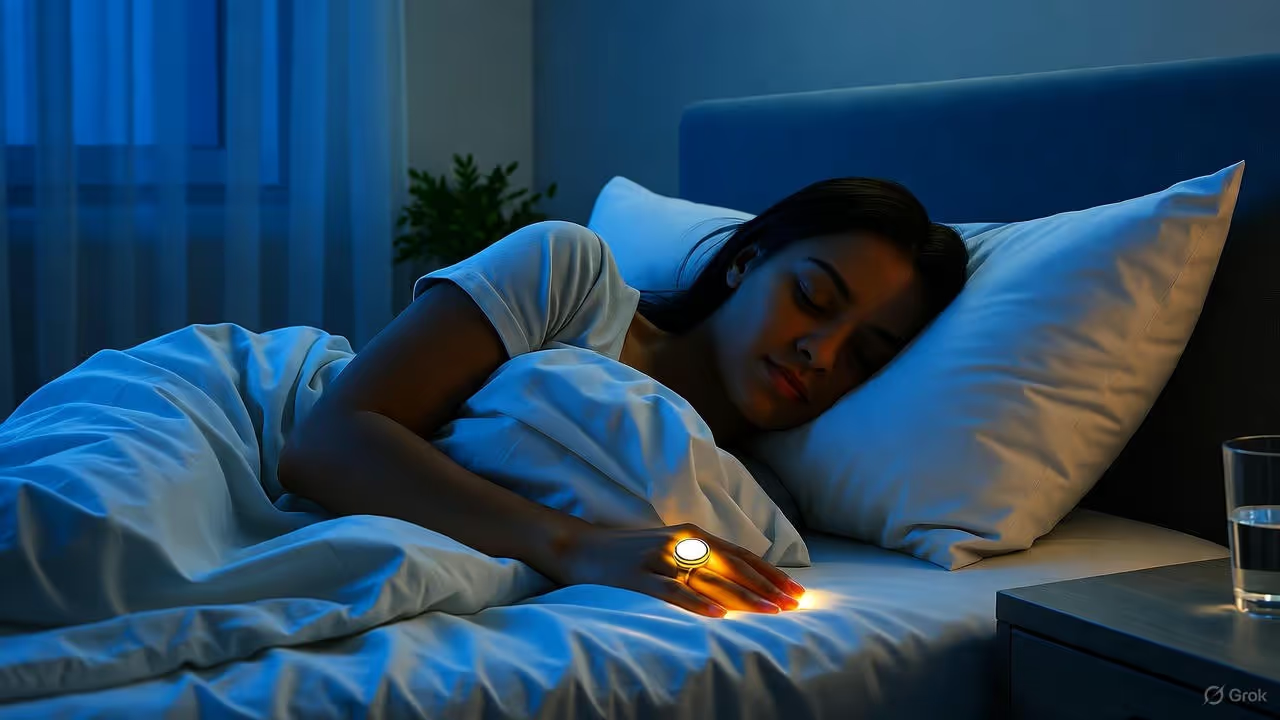
This is where modern wellness technology becomes invaluable. Advanced wearable devices, like the Oxyzen smart ring, move beyond simple step-counting to provide a window into your autonomic nervous system (ANS) during sleep—the very system that exercise timing so directly affects.
Two of the most critical metrics to track are:
Nocturnal Resting Heart Rate (RHR): During deep, restorative sleep, your heart rate should reach its lowest point of the day. The Nature Communications study found that high-strain evening exercise led to a significantly elevated nocturnal RHR, a clear sign of incomplete recovery and sympathetic (stress) nervous system activity lingering into the night .
Heart Rate Variability (HRV): This measures the subtle variations in time between heartbeats. A higher HRV generally indicates a strong, resilient parasympathetic ("rest-and-digest") nervous system and better recovery. The same study showed evening exercise, especially when strenuous, was "dose-dependently" associated with lower nocturnal HRV .
By wearing a device like Oxyzen, you can move from guesswork to precision. You can conduct personal experiments:
Test Morning vs. Evening: Do a week of 7 a.m. runs and note your deep sleep % and morning HRV. Then, switch to 7 p.m. runs (with the same intensity/duration) and compare the data.
Find Your Cutoff Time: If you prefer evening workouts, gradually move your finish time earlier by 30-minute increments and observe when your sleep metrics (onset latency, deep sleep, HRV) consistently improve.
Monitor Strain: See how a high-intensity interval training (HIIT) day affects your sleep data compared to a moderate, steady-state cardio day.
This personalized feedback loop is transformative. Instead of following generic advice, you become the expert on your own body, making informed decisions that directly enhance your recovery. To learn more about how this technology can guide your journey, you can explore our blog for detailed case studies and guides https://oxyzen.ai/blog.
Personalized Timing: It’s Not Just About the Clock, It’s About YOU
With all this science, it's tempting to search for a single, perfect time to exercise. The truth is more empowering: the optimal time is a personal formula based on your unique biology and life.
The most significant variable is your chronotype—your innate tendency to be a morning person (lark), evening person (owl), or somewhere in between (hummingbird). A night owl forcing a 5 a.m. spin class may suffer more from sleep deprivation than gain from the exercise. Research confirms that evening exercise may negatively affect sleep for early birds but not for night owls . Honor your type. Owls may find afternoon or even later evening workouts sync perfectly with their delayed rhythm.
Your age also plays a role. As we age, circadian rhythms often advance, making older adults naturally sleepier earlier in the evening. For this group, late-night exercise is more likely to be disruptive, while morning or early afternoon activity aligns better with their shifted clock.
Finally, your fitness level is a major filter. The fitter you are, the faster your body tends to recover from the physiological arousal of exercise—your heart rate returns to baseline quicker, and your core temperature regulates more efficiently . A seasoned athlete might do a hard 8 p.m. workout and sleep soundly by 11 p.m., while a beginner might feel wired for hours. The 2025 Nature study's findings on "exercise strain" underscore this: the dose makes the poison .
Listen to your body's signals. If you consistently lie awake after evening workouts, your system is telling you it needs more downtime. If morning exercise leaves you exhausted all day, you might be sacrificing quality sleep to get it done. The goal is to find the slot that makes both your workout and your sleep feel successful.
Beyond Timing: The Supporting Cast for Exercise-Induced Sleep
While timing is the director, a powerful supporting cast makes the performance of deep sleep truly stellar. Optimizing these other factors ensures your well-timed workout pays its full dividend.
Nutrition’s Role: What you eat post-workout can aid or impair sleep. Consuming a mix of protein and complex carbohydrates helps replenish glycogen and provide amino acids for repair. However, avoid large, heavy, or spicy meals within 2-3 hours of bed, as digestion can interfere with sleep onset. Be mindful of hidden caffeine and excessive alcohol, which are notorious sleep disruptors .
The Wind-Down Ritual: The hour before bed should be a sacred buffer zone. After an evening workout, actively transition your nervous system. Swap bright overhead lights for lamps, swap high-energy music or podcasts for calming sounds or a book, and consider gentle stretching or foam rolling instead of more stimulating activity. This signals to your brain that the "doing" part of the day is over.
Environment Optimization: Your bedroom should be a temple for sleep. A cool temperature (around 65°F or 18°C) is critical, as it supports the natural drop in core body temperature. Ensure it is as dark and quiet as possible. These conditions are non-negotiable for maximizing the deep, restorative sleep stages you've worked so hard to earn .
Think of these factors as the final, crucial adjustments that lock in the benefits of your perfectly timed exercise. They turn a good night's sleep into a great one.
The Long Game: How Consistent Timing Resets Your Biology
The effects we've discussed aren't just for one night. The true power of strategic exercise timing is revealed through consistency. When you repeatedly move your body at roughly the same time each day, you are doing far more than building fitness—you are entraining your circadian rhythm.
Regular exercise acts as a powerful, non-pharmacological zeitgeber, reinforcing the signal of when it's time to be awake and active and when it's time to wind down and sleep. This is especially valuable for those with irregular schedules, like shift workers, or those recovering from jet lag. A scheduled workout can help reset a confused internal clock faster than passive adjustment alone .
This long-term consistency builds what scientists call "sleep resilience." You're not just getting better sleep tonight; you're strengthening the underlying system that generates sleep, making it more robust against occasional disruptions like stress, a late night, or an unavoidable evening event. Your body learns the rhythm and begins to anticipate and prepare for deep recovery.
Ultimately, this isn't a quick fix but a lifestyle refinement. By aligning your active life with your internal clock, you stop fighting your biology and start partnering with it. The result is a virtuous cycle: better sleep fuels better workouts, and better-timed workouts fuel deeper, more restorative sleep.
The Athlete's Edge: Sport-Specific Timing for Optimal Recovery
For the dedicated athlete, sleep isn't just rest—it's a non-negotiable part of the training program. The timing of your workouts becomes a strategic variable as important as load, volume, and intensity. Different sports impose unique physiological and neurological demands, and tailoring your schedule to address these demands can unlock faster recovery and superior performance.
Endurance Athletes (Runners, Cyclists, Triathletes): For those in endurance sports, deep sleep is prime time for metabolic recovery. It’s when the body optimally replenishes muscle glycogen stores and repairs the microscopic cellular damage caused by long, steady-state efforts. Morning or early afternoon endurance sessions are often ideal. They align with the body's natural cortisol peak, which can enhance fat utilization and steady-energy performance. Crucially, finishing these long, thermogenic (heat-producing) workouts 4-6 hours before bed allows ample time for core temperature to normalize, preventing the sleep onset delays associated with late-day endurance work.
Power & Strength Athletes (Weightlifters, Sprinters): Power sports rely on the central nervous system (CNS) and fast-twitch muscle fibers. High-intensity resistance training or sprinting places a significant strain on the CNS. Late morning to mid-afternoon workouts (e.g., 11 a.m. - 3 p.m.) capitalize on the natural peaks in muscle strength, reaction time, and neural drive. This timing allows you to maximize your performance in the gym or on the track. More importantly, it provides a long runway for CNS recovery before sleep. An overtaxed nervous system from a late-night heavy lifting session can lead to a state of "hyper-arousal" at bedtime, where your body is exhausted but your mind is wired, severely compromising sleep quality and the neural recovery you need.
Skill & Precision Athletes (Golfers, Archers, Gymnasts): For athletes where fine motor control, balance, and technique are paramount, sleep is critical for motor memory consolidation—the process by which skills practiced during the day become encoded in the brain. Skill-based practice is highly effective in the morning when the mind is fresh and focused. Following this with a period of deep sleep the next night strengthens the neural pathways formed during practice. Intense physical training for these athletes is often best placed in the afternoon, separate from technical sessions, to avoid the fatigue that degrades precision.
Team Sport & HIIT Athletes: The intermittent, high-intensity nature of sports like soccer, basketball, or CrossFit creates a complex recovery challenge involving both metabolic waste clearance (like lactate) and neuromuscular repair. Afternoon sessions (2 p.m. - 5 p.m.) are the gold standard. This allows athletes to perform at their physiological peak while ensuring the intense sympathetic ("fight-or-flight") activation from the workout dissipates well before evening. The post-exercise temperature decline then synergizes with the body's natural circadian drop, promoting faster sleep onset. For a real-world look at how elite and everyday athletes use data to fine-tune this balance, the inspiring user experiences shared on our testimonials page are worth exploring https://oxyzen.ai/testimonials.
The Pro Tip: The Nap Strategy For athletes training twice a day, strategic napping is a secret weapon. A short, 20-30 minute nap after a morning skill or technique session can boost afternoon alertness for a strength or conditioning workout. Importantly, keep naps early and short to avoid interfering with the homeostatic sleep drive that builds throughout the day, which is essential for a solid night of deep, restorative sleep.
Your Body's Silent Language: Decoding Post-Workout Signals
In the quest for optimal timing, your body broadcasts clear signals about what's working and what's not. Learning to interpret this biofeedback is more personal—and often more immediate—than any wearable data. These signals are your innate guide to whether your exercise schedule is in harmony with your sleep biology.
Signs Your Timing is Working (The Green Lights):
Smooth Sleep Onset: You fall asleep within 15-20 minutes of turning out the light, feeling physically tired but mentally calm.
Solid Sleep Maintenance: You sleep soundly through the night with few, if any, awakenings, and if you do wake, you fall back asleep easily.
Morning Refreshment: You wake up feeling genuinely restored, not groggy or "hit by a truck." Muscle soreness feels like productive repair, not debilitating stiffness.
Stable Daytime Energy: You experience consistent energy and mood throughout the day, without a massive afternoon crash or feelings of irritable exhaustion.
Signs Your Timing is Off (The Red Flags):
The Tired-but-Wired Phenomenon: This is the cardinal sign of evening exercise misalignment. You feel physically exhausted after your workout, but as bedtime approaches, your mind races, you feel restless, and sleep just won't come. This indicates your sympathetic nervous system is still activated, overriding your physical fatigue.
Fragmented, Light Sleep: You fall asleep but wake up multiple times during the night, often feeling hot or with a racing heart. This suggests your core body temperature or heart rate hasn't fully descended into its nocturnal resting state.
Unrefreshing Sleep: You clock 7-8 hours but wake up feeling like you barely slept. This is a strong indicator that you're missing out on sufficient deep and REM sleep cycles.
Needing External Stimulants: If you find yourself increasingly reliant on caffeine to get through your workout or your day, it's a major sign that your sleep is not adequately restoring your systems.
Paying attention to these signals allows for intuitive adjustment. If you notice "tired-but-wired" after 7 p.m. workouts, systematically move your session 30 minutes earlier each week until the signal subsides. Your body's language is the most direct feedback loop you have.
The Circadian Reset: Using Exercise to Fix a Broken Sleep Schedule
What if you could use exercise not just to improve sleep, but as a therapeutic tool to actively reset a misaligned circadian rhythm? This powerful application is key for shift workers, frequent travelers, and chronic night owls.
The Phase-Response Curve of Exercise: Just as light exposure can shift your internal clock, so can exercise, following a predictable "phase-response curve." The direction of the shift depends on when you move your body:
Exercise in the Morning (6 a.m. - 10 a.m.): Acts like morning light. It provides a strong cue that "daytime has begun," helping to phase-advance your clock—making you sleepier earlier in the evening. This is the remedy for night owls who want to become earlier risers.
Exercise in the Late Evening/ Night (8 p.m. - 1 a.m.): Acts as a signal of late activity. It can phase-delay your clock—pushing your sleep time later. This can be strategically useful for someone preparing for a night shift, but detrimental for someone trying to fall asleep at 10 p.m.
A Practical Reset Protocol (For the Night Owl): If your goal is to shift your sleep schedule earlier, follow this consistent, multi-day protocol:
Set Your Wake-Up Anchor: Wake up at your target time (e.g., 6 a.m.) every single day, no matter what. Use bright light immediately.
Schedule Morning Exercise: Perform 30-60 minutes of moderate aerobic exercise (a brisk walk, light jog, or cycle) outdoors if possible, between 7 a.m. and 9 a.m. This combines the phase-advancing power of light and exercise.
Anchor Your Evening: Avoid bright screens and intense activity after 8 p.m. Keep lights dim.
Be Patient: Your clock may only shift by 15-30 minutes per day. Consistency over a week or two is required for a lasting change.
For those with highly irregular schedules, the challenge is greater. The goal becomes stability within the routine. If you work night shifts, consistently exercising before your shift (treating it like your "morning") can help anchor your unique rhythm and improve daytime sleep quality after your shift ends. The science behind such personalized health strategies is core to our mission at Oxyzen, which you can read more about on our about page https://oxyzen.ai/about-us.
Common Myths and Misconceptions: Separating Sleep Science from Sleep Folklore
The intersection of fitness and sleep is rife with well-intentioned but often misleading advice. Let's demystify some of the most persistent myths.
Myth 1: "Any exercise is good for sleep, no matter when you do it." The Reality: While consistent exercise universally benefits sleep health, the timing dictates the magnitude and consistency of that benefit. As the 2025 Nature study demonstrated, high-strain exercise within 2 hours of bedtime can objectively degrade sleep quality for most people. It's not "bad," but it's suboptimal if your primary goal is recovery.
Myth 2: "You must never exercise after 6 p.m." The Reality: This is an oversimplification. The cutoff is not a universal clock time but a biological window relative to your bedtime and your chronotype. For a night owl whose natural bedtime is 1 a.m., a 7 p.m. workout ends 6 hours before sleep—well outside the disruptive zone. The rule should be: "Conclude strenuous exercise at least 4 hours before your individual target bedtime."
Myth 3: "Evening yoga or stretching will always help you sleep." The Reality: It depends on the practice. Gentle, restorative yoga or focused stretching can be excellent wind-down activities. However, a vigorous vinyasa or hot yoga session is a significant physical and thermogenic stressor that may have the same stimulating effects as other late exercise for some individuals. Context and intensity matter.
Myth 4: "If I'm not sore, my workout didn't affect my sleep." The Reality: Sleep disruption from late exercise is primarily driven by autonomic nervous system arousal (elevated heart rate, core temperature, sympathetic activity), not muscle damage. You can have a completely non-soreness-inducing cardio session that still leaves your nervous system too activated for swift sleep onset.
Myth 5: "The more exhausted I am from my workout, the better I'll sleep." The Reality: There's a critical difference between physical fatigue and sleep drive. Extreme exhaustion can lead to a dysfunctional state where you feel "wired and tired." True sleep drive is built by consistent wakefulness and circadian timing. Over-exhaustion can sometimes fragment sleep and reduce its overall restorative quality.
By basing our decisions on physiology rather than folklore, we can create routines that are both effective and sustainable.
Creating Your Personalized Timing Blueprint: A Step-by-Step Guide
Now, it's time to synthesize everything into a actionable plan. Follow these steps to design your own evidence-based, personalized exercise timing strategy.
Step 1: Establish Your Baseline (1 Week) Before changing anything, observe. For one week, keep a simple log:
Workout time, type, and perceived intensity.
Bedtime, wake time, and subjective sleep quality (1-10 scale).
Note any "tired-but-wired" feelings or morning grogginess.
Step 2: Determine Your Non-Negotiables Identify the fixed points in your life that your schedule must work around:
Work/School Schedule: When are you absolutely unavailable?
Family & Social Commitments: What are your unmovable evening or morning obligations?
Natural Energy Peaks & Troughs: Are you sharp at 6 a.m. or 10 p.m.? Be honest.
Step 3: Choose Your Primary Goal Your optimal time shifts based on your primary objective. Select one:
Goal: Maximum Deep Sleep & Recovery: Prioritize morning or early afternoon workouts.
Goal: Maximum Performance & Strength: Aim for late morning to mid-afternoon sessions.
Goal: Consistency & Habit Formation: Choose the time you can most reliably protect in your schedule, even if it's not "perfect."
Goal: Resetting Your Sleep Schedule: Use strategically timed morning exercise to phase-advance, or evening exercise to phase-delay.
Step 4: Design and Test Your Protocol (2-3 Weeks per Test) Based on Steps 1-3, pick a primary workout window. Stick to this timing consistently for at least 2-3 weeks to allow your circadian rhythm to adapt. Track your sleep signals and, if possible, objective data (like HRV from a smart ring). If you have questions on how to interpret this data during your test, our FAQ is a great resource https://oxyzen.ai/faq.
Step 5: Evaluate and Iterate After the test period, ask: Did my sleep quality improve? Did my workout performance suffer or flourish? Did I adhere to the schedule easily? If the answer is "no" to your goals, adjust one variable at a time (e.g., move your session 60 minutes earlier, or switch from high-intensity to moderate-intensity in the evening) and test again.
A Sample Blueprint for a "9-to-5" Office Worker (Morning Lark Chronotype):
Goal: Improve deep sleep and reduce morning grogginess.
Primary Workout Window: 6:00 - 7:00 a.m.
Protocol: 30-minute brisk outdoor walk or jog, 3 days per week. Strength training at the gym on lunch break (12:30 p.m.) twice a week.
Evening Rule: No moderate/high-intensity exercise after 7 p.m. Gentle stretching or walking only.
Wind-Down: Lights dimmed by 9 p.m., in bed by 10:30 p.m.
Remember, this blueprint is a starting point, not a prison. The most effective schedule is the one you can consistently execute and that makes you feel better, not more restricted.
Conclusion of Section
We have now laid a comprehensive foundation, moving from the basic biology of sleep to the strategic application of exercise timing for athletes, intuitive biofeedback, circadian resets, and myth-busting. You now possess the knowledge to move beyond generic advice and start listening to the sophisticated conversation between your movement and your recovery.
The journey to mastering this relationship is one of curious self-experimentation. It requires treating your own life as the most important case study. In the next portion of this guide, we will dive into the advanced frontiers of this science, exploring the interplay of nutrition, technology, age, and environment. We'll examine how to build not just a night of good sleep, but a lifestyle architecture that sustains peak recovery, performance, and well-being for the long term, rooted in the foundational principles we've just established.
The Advanced Frontiers: Nutrition, Age, Environment, and the Long-Term Architecture of Recovery
We have now built a robust understanding of how exercise timing directly influences the core mechanisms of sleep—your circadian rhythm, body temperature, and autonomic nervous system. You possess a personalized blueprint. But to construct a truly resilient system for deep recovery, we must look at the broader ecosystem. The timing of your workout does not exist in a vacuum; it interacts powerfully with what you eat, how you age, and the world you live in. This is where we move from optimization to mastery, building a lifestyle architecture that sustains peak recovery for the long term.
The Fuel and The Flame: How Nutrition Timing Works With (or Against) Your Workout Schedule
Think of your body as a high-performance engine. Exercise timing sets the schedule for its maintenance window (sleep). Nutrition timing determines the quality of the fuel and tools available for that repair. Synchronizing these two is the secret to maximizing the return on your effort.
The Pre-Workout Meal: Setting the Stage for Energy and Recovery What and when you eat before exercise influences both your performance and your subsequent sleep.
Timing: A general rule is to allow 2-3 hours for a sizable mixed meal (carbs, protein, fat) to digest before intense training. A small, easily digestible snack (like a banana or a handful of raisins) 30-60 minutes before can top off glycogen for endurance sessions. Exercising on a completely empty fasted state may be beneficial for some metabolic adaptations, but it can also increase stress hormone (cortisol) release, which, if done too late in the day, might subtly interfere with the evening cortisol wind-down needed for sleep.
Composition: Prioritize complex carbohydrates (oats, sweet potato) for sustained energy and lean protein to start priming muscle repair. Avoid high-fat and high-fiber foods immediately before, as they digest slowly and can cause gastrointestinal discomfort.
The Post-Workout Window: The Critical Refuel for Overnight Repair This is the most direct link to your sleep quality. The goal is to replenish and provide building blocks for the repair that will occur during deep sleep.
The Anabolic Window: Consuming a combination of protein (20-30g) and carbohydrates within 1-2 hours after your workout is crucial. The carbs replenish muscle glycogen, and the protein provides amino acids like leucine that directly stimulate muscle protein synthesis. If you exercise in the evening, this becomes a delicate balance: you need to fuel recovery without eating a heavy meal too close to bed.
The Evening Exercise Solution: For a post-7 p.m. workout, opt for a lighter but targeted recovery meal. Examples include a protein smoothie with berries, Greek yogurt with a drizzle of honey, or a small portion of salmon with quinoa. The key is to provide high-quality nutrients without overtaxing digestion. A 2020 review in Nutrients highlighted that consuming casein protein (a slow-digesting protein found in milk and yogurt) before bed can enhance overnight muscle protein synthesis and metabolic rate without disrupting sleep, making it an excellent option for evening athletes.
Sleep-Sabotaging Substances: The Hidden Disruptors Your well-timed workout can be undermined by poorly timed consumption of common substances.
Caffeine: Its half-life is about 5-6 hours. This means if you have a coffee at 4 p.m., half the caffeine is still in your system at 9-10 p.m., potentially blocking adenosine (a sleep-promoting neurotransmitter) and reducing deep sleep. For good sleep hygiene, set a caffeine curfew of at least 8-10 hours before bedtime.
Alcohol: While it may induce sleepiness initially, alcohol is a potent REM sleep suppressant. It fragments the second half of your sleep, leading to frequent awakenings and drastically reducing sleep's restorative quality. It also exacerbates sleep apnea and snoring. For recovery, avoid alcohol in the 3-4 hours before sleep.
Large, Spicy, or High-Fat Meals: Consumed too close to bed, these force your digestive system to work overtime, elevating core body temperature and potentially causing discomfort or acid reflux, both enemies of continuous deep sleep.
By viewing food as recovery medicine and timing its delivery strategically, you turn your nutrition into a powerful co-conspirator with your exercise schedule, not an accidental antagonist.
The Aging Clock: How Exercise Timing Needs Evolve Over a Lifetime
Your circadian rhythm and sleep architecture are not static. They evolve from childhood through adolescence, adulthood, and into older age. A timing strategy that worked perfectly at 25 may be less effective at 45 or 65. Recognizing these shifts allows for graceful, intelligent adaptation.
Young Adulthood (20s-30s): The Peak of Flexibility
Sleep Pattern: Typically, the sleep drive is strong, and the circadian rhythm is stable but can tolerate more variability. Deep sleep is generally abundant.
Timing Strategy: This is the life stage most resilient to evening exercise. The body recovers quickly from physiological arousal. The primary focus can be on performance and consistency. However, establishing healthy morning or afternoon habits now pays massive dividends later, preventing the entrenched late-night patterns that become harder to break.
Middle Adulthood (40s-50s): The Great Shift
Sleep Pattern: This is often when noticeable changes begin. The production of growth hormone and melatonin starts to gradually decline. Sleep may become more fragile, with more frequent nighttime awakenings and a reduction in slow-wave deep sleep. The circadian rhythm often begins to phase-advance, meaning you may get sleepier earlier in the evening and wake earlier.
Timing Strategy: This is when optimizing timing becomes critical. The tolerance for late-evening high-intensity exercise often diminishes significantly. Prioritizing morning or early afternoon workouts becomes more important to protect sleep quality. Consistency is key—helping to reinforce a slightly advanced clock. This is also a prime time to leverage technology like a smart ring to get objective feedback on how different workout times affect your sleep depth and HRV, as the subjective feelings can become less reliable. Our story is rooted in solving these very real-life challenges, which you can discover more about here https://oxyzen.ai/our-story.
Older Adulthood (60s+): Prioritizing Rhythm and Consistency
Sleep Pattern: The circadian advance is more pronounced. The amplitude of the rhythm (the strength of the day-night signal) can weaken, leading to more fragmented sleep at night and daytime napping. Core body temperature rhythms may be blunted.
Timing Strategy: The goal is to amplify circadian signals. Morning exercise, ideally outdoors in natural light, is paramount. This combination provides the strongest possible cue to reset the master clock daily, improving nighttime sleep consolidation and daytime alertness. Resistance training becomes especially crucial to combat sarcopenia (muscle loss), and scheduling it for late morning ensures good energy and reduces fall risk. Strenuous activity should be avoided in the late evening entirely.
Across all ages, the principle remains: align your activity with your evolving internal rhythm. Respect the body's changing needs, and you can maintain superb sleep quality for decades.
The External Layer: How Light, Temperature, and Environment Amplify Your Timing
Your biology sets the stage, but your environment writes the final script. The most perfectly timed workout can be undone by a chaotic sleep environment. Conversely, a optimized environment can amplify the benefits of your strategic schedule.
Light: The Master Zeitgeber Light exposure is the most powerful cue for your circadian clock, even more potent than exercise. Managing light is non-negotiable.
Morning: Seek bright, blue-rich light (ideally sunlight) within 30-60 minutes of waking and after morning exercise. This firmly signals "DAY," boosts alertness, and sets the countdown for melatonin release later.
Evening: This is the critical period. Dim ambient lights 2-3 hours before bed. Aggressively manage blue light from screens (phones, tablets, TVs) by using night mode settings or wearing blue-blocking glasses. This protects your natural melatonin rise. If you must exercise indoors in the evening, choose a venue with warmer, dimmer lighting if possible.
Temperature: The Sleep Switch Core body temperature drop is a primary signal for sleep onset. You can harness this.
Post-Workout Cool-Down: After evening exercise, avoid hot showers or baths immediately before bed. While a hot bath 1-2 hours before bed can be helpful (you get out, your body cools, mimicking the natural drop), a shower right before bed elevates skin temperature and can be stimulating for some. A cool shower can actually aid the cooling process.
The Sleep Sanctuary: Your bedroom should be cool, around 65°F (18.3°C). Use breathable, moisture-wicking bedding. Consider a fan or climate control. A cool room supports your body's natural thermoregulation throughout the night, which is essential for maintaining deep sleep cycles.
The Wind-Down Ritual: Bridging Exercise and Sleep Create a consistent, 60-minute buffer zone between your last activity (be it work, intense exercise, or stimulating entertainment) and lights-out. This ritual tells your nervous system the day is done. This is especially crucial if your workout finishes less than 3 hours before bed.
Environment: Dim lights, quiet, perhaps with calming sounds or an audiobook.
Mindset: Use a journal to download worries or plan the next day, getting them out of your head.
By engineering an environment that is consistently dark, cool, and quiet, you remove obstacles to deep sleep, allowing the benefits of your well-timed exercise to be fully realized.
The Long-Term Architecture: Building a Sustainable, Adaptive Sleep-First Lifestyle
Optimization is a project. Mastery is a lifestyle. The ultimate goal is to weave these principles into a sustainable, resilient fabric of living—a Sleep-First Lifestyle. This isn't about being rigid; it's about having a default framework that supports your health, so you have the energy and resilience to enjoy life's variability.
The Pillars of the Architecture:
Rhythmicity: Consistency is the bedrock. Aim to wake, exercise, eat, and sleep at roughly the same times every day, even on weekends. This trains your circadian system to be robust.
Prioritization: Treat your sleep and workout schedule with the same respect as a critical business meeting. They are non-negotiable appointments with your future self.
Adaptation: Have a plan B. If you must work out late, know how to mitigate it: reduce intensity, extend your wind-down ritual, prioritize post-workout nutrition, and perhaps plan for a slightly later wake-up the next day. If you travel across time zones, use morning light and exercise as your primary tools to reset.
Holistic Integration: View exercise, nutrition, light, and temperature not as separate levers but as a unified control panel for your recovery. A change to one setting often requires a compensatory adjustment to another.
The Outcome: Resilience When this architecture is in place, you build sleep and recovery resilience. You can handle an occasional late night, a stressful period, or an unavoidable shift in schedule without your health collapsing. Your body has a strong, well-trained rhythm to return to. This is the true promise of mastering the exercise-sleep connection: freedom and vitality, built on a foundation of intelligent, personalized science.



%402x.svg)