


How Exercise Timing Influences Sleep Patterns
Exercising in the morning or afternoon can promote earlier sleep timing, while vigorous exercise too close to bedtime may disrupt sleep onset for some.
Exercising in the morning or afternoon can promote earlier sleep timing, while vigorous exercise too close to bedtime may disrupt sleep onset for some.
%402x.svg)
You’ve crushed the workout. You’ve eaten clean. You’ve even tried meditation. Yet, as you lie in the dark, mind racing while the clock ticks toward midnight, one critical factor remains out of sync: the when. In our relentless pursuit of better health, we obsess over the what and the how much—the type of exercise, the heart rate zones, the calories burned. But emerging science reveals a hidden conductor in the orchestra of well-being: timing. The precise synchronization of your physical activity with your body’s internal rhythms doesn't just optimize fitness; it fundamentally rewires your sleep architecture.
This isn't about generic advice like "avoid late-night workouts." This is a deep dive into chronobiology—the study of our innate circadian rhythms—and its powerful, two-way dialogue with movement. When you exercise is a potent signal, a zeitgeber, that tells your brain and body what time it is. Get this signal right, and you unlock deeper, more restorative sleep, enhanced overnight recovery, and a profound sense of daytime vitality. Get it wrong, and you might be inadvertently sabotaging the very rest you need to reap your workout's benefits.
Imagine a world where your wearable does more than count steps; it understands your personal circadian blueprint. This is the frontier of holistic health tracking, where devices like the Oxyzen smart ring move beyond metrics to insights, analyzing how your unique physiology responds to activity at different times. By correlating your movement data with continuous core temperature, heart rate variability (HRV), and sleep stage monitoring, a smart ring reveals your personal "exercise-sleep sweet spot." The goal of this exploration is to transform you from a passive participant in your health to a master conductor, aligning your activity with your biology for the ultimate prize: truly restorative sleep.

To master exercise timing, we must first understand the master clock. Nestled within the hypothalamus of your brain is the suprachiasmatic nucleus (SCN), a tiny region of about 20,000 neurons that acts as your body’s central pacemaker. This biological clock runs on a cycle slightly longer than 24 hours and requires daily calibration from external cues, primarily light. But light isn't the only zeitgeber; temperature, food intake, and social interaction—and critically, exercise—also play powerful roles in resetting and reinforcing this rhythm.
Your circadian rhythm orchestrates a breathtaking symphony of physiological changes over a 24-hour period. Core body temperature, hormone secretion (like cortisol and melatonin), neurotransmitter activity, digestion, and gene expression all ebb and flow in a predictable pattern. For instance, cortisol peaks in the early morning to promote alertness, while melatonin rises in the evening to induce sleepiness. Your muscle strength, flexibility, and even injury risk fluctuate throughout the day. Understanding this rhythm is not academic; it's the foundation for strategic living.
This internal timing creates distinct biological windows. Research consistently points to a period in the late afternoon, typically between 2 p.m. and 6 p.m., where the body may be primed for peak physical performance. Core body temperature is naturally at its highest, muscle flexibility is improved, reaction times are quickest, and strength and power output often peak. This is your body's natural "performance zone." Conversely, the early morning, before your circadian rhythm has fully "warmed up" your system, can be a time of higher cardiovascular strain and stiffer muscles, though it holds other advantages we will explore.
The critical link to sleep lies in the circadian drive for sleepiness and the sleep-wake homeostasis system (often called "sleep pressure"). Your circadian rhythm promotes wakefulness during the day, counteracting the building sleep pressure from the moment you wake. In the evening, as the circadian signal for wakefulness drops and melatonin rises, the floodgates of sleep pressure open. Exercise timing directly influences both these systems. It can raise body temperature, release stimulatory hormones, and alter melatonin production, thereby shifting the phase of your circadian clock itself. By tracking these subtle biometric shifts with a device like the Oxyzen smart ring, you move from guessing to knowing how your personal clock ticks, a principle central to our vision for personalized health.
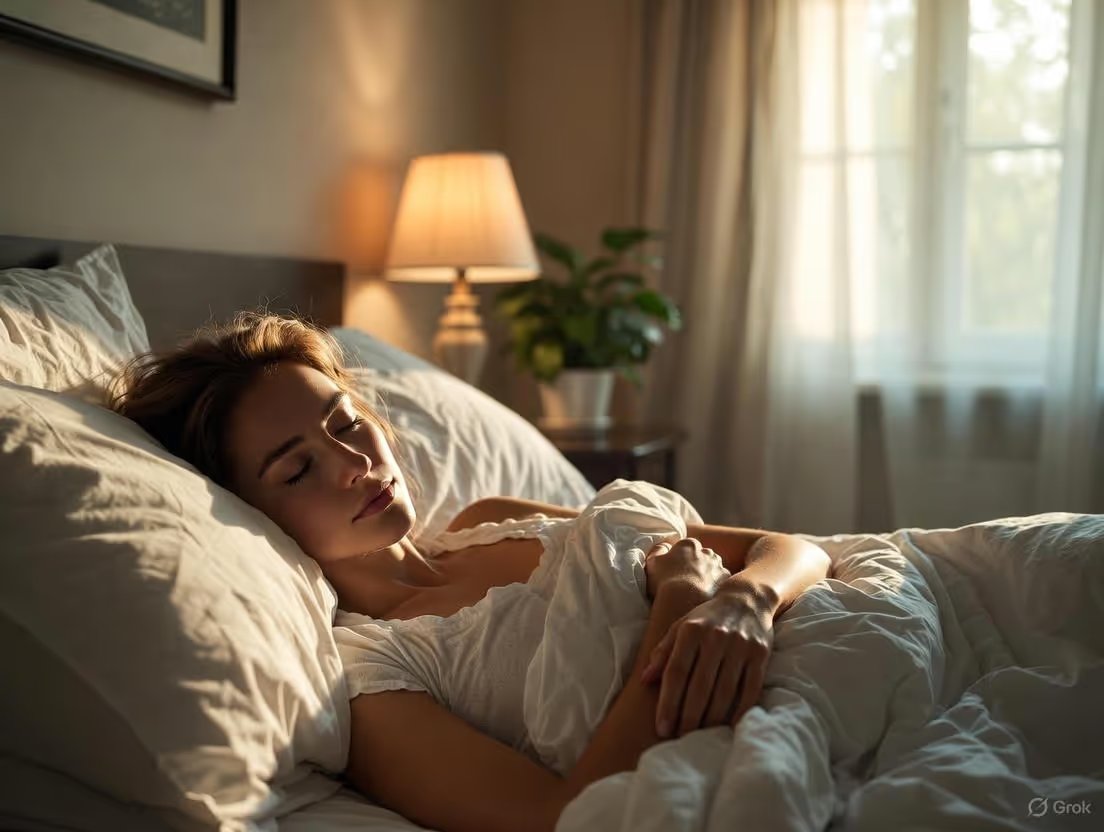
One of the most potent mechanisms linking exercise and sleep is core body temperature. Your circadian rhythm dictates a daily temperature curve, typically reaching its nadir in the early morning hours (around 4-5 a.m.) and peaking in the late afternoon. The process of falling asleep is intrinsically tied to a drop in core temperature. This decline signals the body to enter a state of energy conservation and repair, facilitating the release of melatonin and the onset of sleepiness. It’s a biological prerequisite for sleep initiation.
Exercise generates significant metabolic heat, raising your core body temperature sharply. This is followed by a compensatory, slower decline—a rebound cooling effect mediated by the dilation of blood vessels in your skin to dissipate heat. This post-exercise temperature drop mirrors the natural pre-sleep cooling and can powerfully reinforce sleep signals. Think of it as giving your body a clear, physiological command: "Initiate cooling protocol. Begin sleep sequence." The timing of this command is everything. If issued too close to bedtime, the initial heating phase may be too stimulating, leaving you alert when you wish to be drowsy.
The duration and intensity of exercise determine the magnitude and length of this thermal wave. A vigorous 60-minute session will create a larger and longer-lasting temperature perturbation than a gentle 20-minute walk. Therefore, the "cooling-off" period your body needs differs. Scientific literature often cites a 1-2 hour buffer between strenuous exercise and bedtime to allow for the heating phase to fully subside and the beneficial cooling phase to take hold. However, this is a generalized window. Your personal physiology, fitness level, and even the ambient temperature of your bedroom play crucial roles.
This is where advanced biometric tracking becomes indispensable. A smart ring, worn continuously, can monitor your distal body temperature (a strong proxy for core temperature rhythms) throughout the day and night. By analyzing your personal temperature curve, you can see precisely how a 7 p.m. HIIT session delays your temperature drop compared to a 4 p.m. session. You can move beyond rules of thumb and discover your personal thermal recovery profile. For a deeper analysis of how such data translates into actionable insights, our blog features ongoing research on thermoregulation and recovery.
For many, exercising in the morning is a non-negotiable ritual, a way to "win the day" before it begins. The science suggests this habit offers distinct advantages for sleep architecture, albeit through different pathways than evening exercise. Morning light exposure during an outdoor workout is a powerful circadian reset, suppressing melatonin and solidifying a healthy wake time. This sets a clear, strong signal for your SCN, making it easier to feel sleepy at the appropriate time that night.
From a hormonal perspective, morning exercise capitalizes on and influences your natural cortisol awakening response (CAR). While intense late-night exercise can disrupt the evening cortisol decline, morning activity aligns with your body's natural cortisol peak. It can enhance daytime alertness and energy, potentially leading to a more pronounced wind-down in the evening. Furthermore, studies indicate that consistent morning exercise may increase the amount of slow-wave sleep (deep sleep) you obtain later that night. This critical sleep stage is when physical repair, memory consolidation, and hormonal regulation occur.
However, the morning window has its nuances. As mentioned, the body is not yet at its performance peak. Muscles are cool, joints may be stiff, and the cardiovascular system transitions from a resting state. A thorough, dynamic warm-up is non-negotiable. The type of exercise matters, too. High-intensity workouts may feel more challenging and carry a slightly higher injury risk first thing. Conversely, low to moderate-intensity steady-state cardio (like brisk walking, light jogging, or cycling) or mindful movement like yoga can be exceptionally well-tolerated and set a calm, focused tone for the day.
Perhaps the greatest sleep benefit of morning exercise is psychological. It creates a substantial temporal buffer between exertion and bedtime, virtually eliminating any risk of exercise-induced sleep disruption for most people. It also instills a sense of accomplishment and reduces daytime stress, a significant sleep saboteur. For individuals who find that evening exercise leaves them feeling "wired," shifting activity to the morning can be a game-changer. Reading about real user experiences often reveals this pattern, as many discover their optimal timing through consistent biometric feedback.
If your body had an optimal time for setting personal records, the late afternoon would likely be it. This window, often called the "afternoon window of opportunity," is where your circadian-driven physiology most aligns with high performance. Here’s why: your core body temperature peaks, leading to warmer muscles with improved elasticity and force production. Reaction time and hand-eye coordination are often sharpest. Hormones like testosterone (important for muscle growth and repair) are naturally higher. Even perceived exertion can be lower, meaning workouts feel easier at the same intensity.
From a sleep perspective, afternoon exercise—concluded at least 3-4 hours before bedtime—is strategically brilliant. It allows you to harness the performance benefits of your circadian peak while providing ample time for the exercise-induced thermal wave to complete its cycle. The rise and subsequent fall in body temperature will occur squarely in the early to mid-evening, perfectly priming your body for the natural temperature drop required for sleep. This timing also helps in managing the stress hormone cortisol. By early afternoon, the morning's peak has passed, and exercise can provide a healthy, metabolically useful elevation that then has sufficient time to taper off before the evening's necessary decline.
This window is particularly advantageous for high-intensity interval training (HIIT), heavy strength sessions, or skill-based sports. The body is physiologically prepared to handle the load, which can lead to better adaptations and potentially lower risk of injury compared to forcing the same intensity at 6 a.m. Furthermore, for those with busy schedules, an afternoon workout can serve as a powerful psychological barrier, separating the stress of the workday from the relaxation of the evening. It's a moving meditation that helps "burn off" the mental clutter of the day.
Yet, the challenge is consistency. Work, family, and social commitments can easily invade this prime-time slot. The key is to treat it with the same importance as a critical meeting. Leveraging technology to understand the payoff can help. By using a device that tracks sleep depth, HRV recovery, and resting heart rate, you can objectively confirm if your 4 p.m. workouts yield better subjective sleep quality and faster physiological recovery than workouts at other times. This data-driven feedback loop, central to the mission behind Oxyzen, turns a hypothesis into a personal truth.
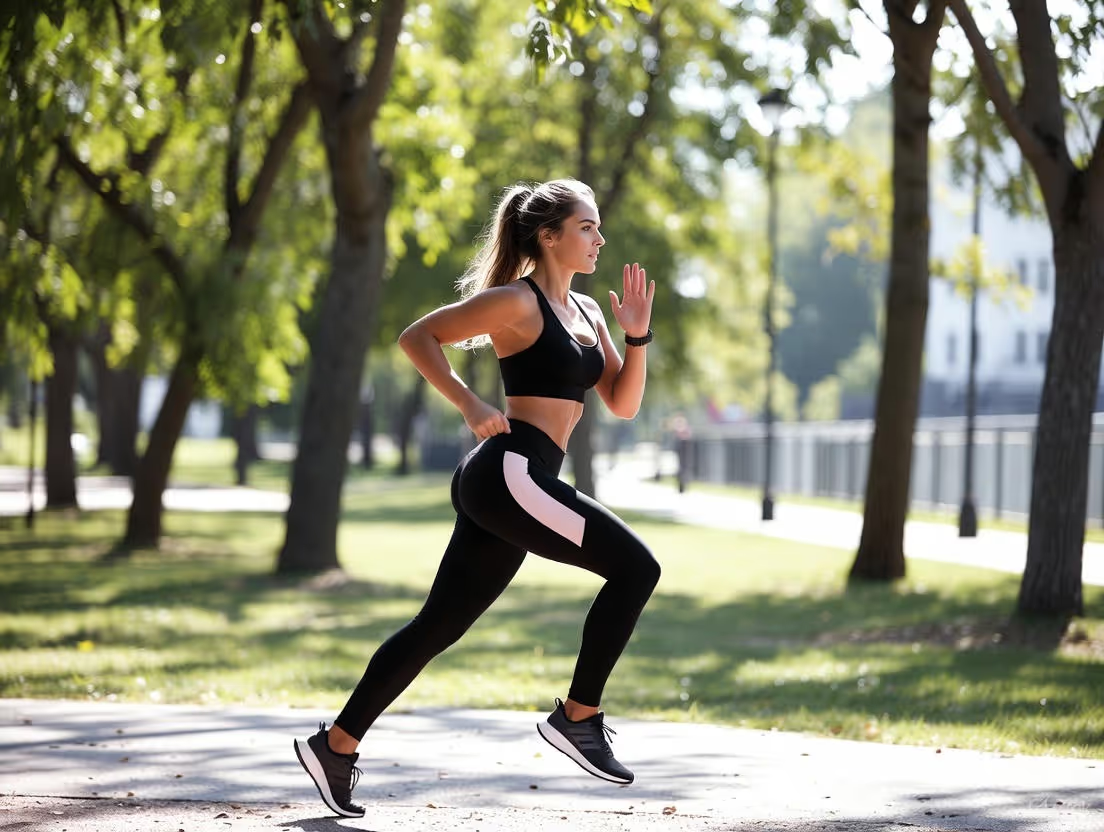
The conventional wisdom is clear: avoid exercise before bed. But reality is nuanced, and for many, the evening is the only viable time to train. The good news is that blanket bans are outdated. Recent research suggests that the relationship between evening exercise and sleep is highly individual and depends on exercise modality, duration, intensity, and one's own chronotype—whether you're naturally a morning lark or a night owl.
The primary concern with evening exercise is the potential for physiological overstimulation. Vigorous, heart-pounding activity within 60-90 minutes of bedtime can elevate core temperature, spike adrenaline and noradrenaline, and increase heart rate at a time when the body is trying to wind down. This can lead to difficulty falling asleep (increased sleep onset latency) and may fragment the early, crucial cycles of sleep. For individuals already prone to insomnia or anxiety, this effect can be pronounced.
However, not all exercise is created equal. The emerging consensus draws a critical distinction between vigorous, high-intensity exercise and moderate, low-impact activity. While a late-night sprint session or heavy lifting may be disruptive, a session of gentle yoga, tai chi, stretching, or even a leisurely walk may be beneficial for sleep. These activities promote relaxation, mild muscular fatigue, and can even initiate a gentle temperature decline. They serve as a deliberate ritual, signaling to the mind and body that the day is over and rest is imminent.
The concept of "cool-down" extends beyond the workout itself. Your post-evening exercise environment is crucial. Engaging in a hot shower or bath immediately after can prolong the elevated temperature. Instead, the strategy should be to use the exercise-induced heat rise wisely. Conclude your session with enough time (60-90 minutes minimum for moderate exercise) so that you can experience the subsequent cooldown while engaging in a calming pre-sleep routine—dim lights, no screens, perhaps light reading. Monitoring your readiness scores and sleep data after evening workouts is essential. If you see a pattern of disturbed sleep or poor recovery metrics, it's a clear sign to either adjust the timing, intensity, or type of your evening activity. For common questions on interpreting this data, our FAQ section provides detailed guidance.
Perhaps the most significant breakthrough in understanding the exercise-sleep relationship is the acknowledgment of chronotype diversity. Your chronotype is your genetically predisposed inclination for sleep and activity times within the 24-hour day. It’s not a choice or a discipline issue; it’s hardwired biology. The classic categories are morning types (larks), evening types (owls), and intermediate types (the majority). An extreme lark might feel peak energy at 6 a.m. and crash by 9 p.m., while an extreme owl might struggle to function before 10 a.m. and hit their stride at 10 p.m.
Your chronotype dictates your entire circadian phase. An owl's temperature minimum, melatonin onset, and cortisol peak are all shifted later compared to a lark's. Therefore, a 7 p.m. workout for a lark might be dangerously close to bedtime, while for an owl, it's still mid-afternoon in biological terms. Forcing a night owl into a 5 a.m. CrossFit class may not only be miserable but could chronically misalign their activity with their biology, leading to poor performance, subpar recovery, and sleep disturbances.
Identifying your chronotype is the first step to personalized exercise timing. Simple questionnaires like the Morningness-Eveningness Questionnaire (MEQ) can provide a baseline. However, biometric data offers an even more objective view. A smart ring tracking your around-the-clock temperature and HRV can literally graph your circadian phase. You can see when your body naturally starts to cool down and when your nervous system begins to shift into "rest and digest" mode.
Armed with this knowledge, you can tailor your schedule. Larks will likely find morning or early afternoon exercise most synergistic, with strict cutoffs for intense activity by early evening. Owls may discover that their performance and sleep are optimized with afternoon or even later evening workouts, as their sleep pressure build-up is naturally delayed. The goal is to sync exercise with your personal peak performance zone and allow for your personal required wind-down period. This level of customization is the future of wellness, moving us from one-size-fits-all advice to a model of truly individualized health optimization.
Just as timing matters, so does the "dose" of exercise. Intensity and modality interact with timing to produce distinct effects on sleep architecture. Think of it as a prescription: the drug (type of exercise), the dosage (intensity and duration), and the administration time (when you take it) all determine the outcome.
High-Intensity Interval Training (HIIT) & Vigorous Strength Training: This is potent medicine. It creates strong stimuli for adaptation but also significant systemic stress (elevated cortisol, epinephrine, core temperature). When timed well—ideally in the afternoon or, for some, morning—it can lead to improvements in sleep quality, particularly by increasing slow-wave sleep, which is crucial for physical repair. When timed poorly (too close to bedtime for most), it can act as a powerful sleep disruptor, over-activating the sympathetic nervous system.
Moderate-Intensity Steady-State (MISS) Cardio: Activities like jogging, brisk walking, swimming, or cycling at a conversational pace. This modality is generally more flexible. It provides robust cardiovascular benefits and a clear thermal response but with less neurological excitement. It can be conducive to sleep even when performed later in the evening, provided a reasonable buffer (60+ minutes) is given. Many people find an evening walk after dinner aids digestion and gently promotes sleepiness.
Low-Impact, Mind-Body, & Flexibility Work: Yoga (especially restorative or yin styles), Pilates, stretching, and tai chi. These are often excellent candidates for the pre-sleep period. They focus on parasympathetic activation (the "rest and digest" system), diaphragmatic breathing, and gentle movement that can relieve physical tension without spiking physiological arousal. They can effectively serve as an active extension of a wind-down routine.
The duration of your session also plays a role. A 30-minute moderate session is different from a 2-hour endurance grind. Longer sessions, regardless of intensity, deplete glycogen, elevate body temperature for extended periods, and increase overall fatigue. This can advance sleep pressure but also requires a longer cooldown window. The key is self-experimentation. Did that 45-minute evening spin class help you fall asleep faster, or did it leave you staring at the ceiling? Your biometric data provides the objective answer, helping you refine your personal formula for the perfect workout "dose."

Exercise is a powerful endocrine disruptor in the best sense—it intentionally and temporarily alters your hormonal landscape to stimulate adaptation. Two hormones are particularly pivotal in the exercise-sleep axis: cortisol and melatonin. Their delicate dance is easily influenced by the timing of your activity.
Cortisol, your primary stress hormone, follows a robust circadian rhythm, peaking around 30 minutes after waking (the CAR) and gradually declining throughout the day to reach its lowest point around midnight. Exercise is a potent acute stimulator of cortisol secretion; it's part of the body's normal mobilization of energy. Morning exercise synergizes with this natural peak. However, exercising too late in the evening can blunt the necessary nocturnal decline of cortisol. Elevated cortisol at bedtime is antagonistic to sleep; it promotes alertness and can suppress melatonin production, making it harder to fall and stay asleep.
Melatonin, the "darkness hormone," is the cornerstone of sleep initiation. Its secretion from the pineal gland begins in the evening, triggered by dim light and a dropping core temperature. Bright light (especially blue light) and elevated core temperature can suppress its production. This is the crux of the timing dilemma: vigorous evening exercise, by raising temperature and potentially exposing you to bright gym lights, can delay the melatonin surge, pushing your entire sleep schedule later—a phenomenon known as phase delay.
But what about "endorphins," often blamed for making people feel too good to sleep? Endorphins are neurotransmitters that reduce pain perception and create euphoria (the "runner's high"). Their effect is generally short-lived, measured in minutes to an hour or two post-exercise. For most people, they are not the primary culprit in sleep disruption; the thermal and cortisol effects are far more significant. In fact, the mood elevation from endorphins could reduce anxiety and aid sleep if the exercise concludes early enough.
The goal is to use exercise to reinforce, not fight, your natural hormonal tide. Aligning workouts to support a strong, early cortisol peak and an unimpeded evening melatonin rise is the hormonal path to perfect sleep. Tracking HRV, which is acutely sensitive to hormonal balance (especially the cortisol-to-melatonin ratio), can show you if your exercise timing is supporting or stressing your endocrine rhythm.
In the quest for the perfect exercise time, subjective feeling is important, but objective data is transformative. This is where modern wellness technology, specifically advanced wearables like smart rings, shifts from tracking activity to interpreting recovery. These devices measure key biomarkers that directly reflect how well your body is managing the stress of exercise and transitioning into rest.
Heart Rate Variability (HRV): This is the gold-standard, non-invasive metric for assessing autonomic nervous system (ANS) balance. A higher HRV (more variability between heartbeats) generally indicates strong parasympathetic ("rest and digest") tone and good recovery. A suppressed HRV indicates dominant sympathetic ("fight or flight") activity and systemic stress. By monitoring your nightly HRV trend, you can see which workout times lead to the best ANS recovery. Does a morning workout allow your HRV to climb to its peak by bedtime? Or does an evening workout suppress it, indicating your body is still in "stress processing" mode when you try to sleep?
Resting Heart Rate (RHR): While you sleep, your RHR should drop significantly below your daytime average. The magnitude and consistency of this drop are indicators of cardiovascular recovery and parasympathetic activation. If you notice your sleeping RHR is elevated on nights after late workouts, it's a clear biometric sign that the timing is causing physiological strain and impairing full recovery.
Sleep Stages & Disturbances: Beyond just total sleep time, the architecture matters. A good night's sleep cycles predictably through light, deep (slow-wave), and REM stages. Deep sleep is particularly sensitive to exercise timing and load. A well-timed workout often increases deep sleep percentage and reduces nighttime awakenings. A poorly timed one can truncate deep sleep and increase light, fragmented sleep. A smart ring that provides this breakdown can answer the question: "Did that 8 p.m. workout give me more restorative sleep, or just more time in bed?"
Core Body Temperature Trend: As discussed, the circadian temperature curve is fundamental. A ring that measures your continuous temperature can show you precisely how a workout bends your curve. You can visualize the thermal wave and its subsequent decline, confirming whether it harmonizes with your pre-sleep cooling phase or collides with it.
By correlating your workout logs (time, type, intensity) with these overnight recovery metrics, you embark on a process of N=1 experimentation. You cease following generic advice and start writing your own personal user manual. For those interested in the technical nuances of how these metrics are captured and analyzed, our technology blog delves into the science behind the sensors.
Theory is compelling, but application is king. How do you translate these principles into a chaotic, real life with work deadlines, family obligations, and social plans? The answer lies in strategic flexibility and intent, not rigid adherence to an ideal.
The Busy Professional (Desk-Bound, High Stress): For this person, exercise is often a critical stress-release valve. The worst thing they can do is add stress by rigidly forcing a 5 a.m. workout if they are an owl. Strategy: Use exercise strategically to segment the day. A morning walk or short yoga session (even 15 minutes) can set a calm tone. If the only consistent time is post-work, prioritize moderate intensity. A vigorous 6 p.m. session may be okay if followed by a deliberate 90-minute wind-down with no screens. Use the weekend for a longer, more intense session at an optimal biological time. The primary goal here is to use movement to dissipate the mental stress that is the true sleep killer.
The Shift Worker (Irregular Schedules): This group faces the greatest circadian challenge. Consistency is nearly impossible, so the focus must be on using exercise as a powerful tool to actively shift their circadian rhythm. Strategy: After a night shift, avoid bright light and vigorous exercise before daytime sleep, as this will signal "wakefulness." Instead, use light exercise before starting a night shift to increase alertness. When trying to re-adjust to a day schedule, morning light exposure coupled with morning exercise is the strongest reset signal. Tracking sleep metrics becomes essential to see what works.
The Performance Athlete: For those focused on gains, strength, and PRs, aligning training with the afternoon performance peak is ideal for maximizing output. Strategy: Schedule key, high-intensity sessions for the late afternoon. Prioritize sleep quality as part of the training program. This means being militant about the post-workout wind-down, even after a 6 p.m. session—dim lights, cool environment, no stimulating content. Use easy, recovery sessions in the morning or as very gentle evening movement if needed. Their recovery metrics (HRV, RHR, deep sleep) are direct feedback on training efficacy and sustainability.
The Wellness-Seeker (Primary Goal: Better Sleep & Energy): For this person, sleep is the outcome, not just a tool for better performance. Strategy: Experiment systematically. Start with a baseline week of no exercise close to bedtime. Then, try two weeks of consistent morning exercise (outdoors if possible). Note energy and sleep quality. Then try two weeks of afternoon exercise. Use a journal or, ideally, a smart ring to compare. The type of exercise may lean more toward moderate cardio and mind-body practices. The guiding principle is: which routine gives you the most refreshed feeling upon waking and the steadiest energy throughout the day?
Each of these paths benefits immensely from a feedback loop. This is the core value a device like the Oxyzen smart ring provides—it turns your life into a lab and gives you the data to become your own best health scientist. You're not just working out; you're conducting a continuous, personal optimization experiment where sleep is the most telling result.
Exercise never occurs in a vacuum. It is intertwined with two other powerful circadian influencers: nutrition and stimulant intake. To truly master the evening exercise window and its impact on sleep, we must consider the synergistic or antagonistic effects of what you consume before and after your workout. This creates a holistic "evening protocol" where timing is about more than just movement.
The Caffeine Conundrum: A pre-workout caffeine boost is a staple for many, enhancing focus, endurance, and pain tolerance. However, caffeine is a potent adenosine receptor antagonist. Adenosine is a neurotransmitter that builds up in the brain throughout the day, creating "sleep pressure." By blocking its receptors, caffeine effectively masks fatigue. The half-life of caffeine is approximately 5-6 hours, meaning that if you consume 200 mg of caffeine at 4 p.m., about 100 mg is still active in your system at 9 p.m. For a sensitive individual, this can significantly impair sleep initiation and architecture, even if the exercise itself was timed perfectly.
Strategic Application: If you exercise in the late afternoon or evening and are serious about sleep, consider your caffeine cutoff time carefully. A general rule is to avoid caffeine within 8-10 hours of bedtime. For a 7 p.m. workout, that means your last coffee should be before 10 a.m. If you rely on a pre-workout boost, explore non-stimulant options or ensure your session concludes with a much larger buffer—making a late-morning workout more suitable. Your sleep tracking data will tell the tale; if you see poor sleep efficiency after evening workouts despite good timing, caffeine is a prime suspect.
The Fuel and Recovery Window: Eating a substantial meal too close to bedtime can disrupt sleep through digestion, acid reflux, and an elevated metabolic rate. Conversely, exercising on an empty stomach late in the day can elevate stress hormones and make it harder to wind down. The key is to navigate the post-exercise recovery meal strategically.
The Ideal Scenario: A moderate-sized, balanced meal containing protein and complex carbohydrates consumed 2-3 hours before your evening workout. This provides fuel without gastrointestinal distress. Then, a smaller, easily digestible post-workout snack or shake within 30-60 minutes after your workout, ideally concluding at least 90 minutes before bed. This snack should include protein for muscle repair and a small amount of carbohydrates to replenish glycogen and aid in the transport of tryptophan—a precursor to serotonin and melatonin—to the brain. A banana with almond butter or a small protein shake can be perfect.
The Trap to Avoid: The "ravenous post-late-workout feast." Finishing a hard session at 8:30 p.m. and then consuming a large, heavy meal at 9 p.m. forces your digestive system into high gear during the very period your body is trying to shut down for repair. This can lead to fragmented sleep and reduced sleep quality, negating the potential benefits of the exercise. Planning is essential. For more on syncing nutrition with circadian biology, our blog offers dedicated deep dives.
For many, the weekend represents a departure from structure—a chance to sleep in, enjoy late-night socializing, and perhaps shift workouts to entirely different times. While this feels like a deserved break, chronobiologists call it "social jet lag." This misalignment between your social clock and your biological clock, even for just two days, can have a profound impact on your sleep and recovery, creating a weekly cycle of disruption that bleeds into Monday and beyond.
When you sleep in on Saturday and Sunday, you are effectively giving your body a strong signal that its circadian phase should shift later. You're asking it to become more of an "owl" for two days. When the alarm rings on Monday at 6 a.m., you are forcing a harsh shift back to "lark" time. This is physiologically identical to traveling west-to-east over a couple of time zones every weekend. The consequences include daytime sleepiness, poorer mood, and compromised cognitive function on Monday and Tuesday. It also disrupts the consistency of your circadian cues, including the timing of exercise.
The exercise component of this is critical. A vigorous Saturday afternoon workout fits the pattern. But what about the popular "Sunday Funday" long run or intense gym session that happens at 10 a.m.? If you've slept until 9 a.m., this workout is occurring at what your body perceives as 7 a.m. (two hours earlier in its rhythm). Not only might performance suffer, but the circadian signal sent is confusing. Even more disruptive is the late Saturday night social exercise, like a dance class or active event that ends at 11 p.m., followed by a late meal.
Strategic Harmonization: The goal isn't to forfeit weekend fun, but to manage transitions more gracefully. If you want to sleep in, try to limit the shift to no more than 60-90 minutes from your weekday wake time. Get bright light exposure immediately upon waking to reset your clock. If you have a key workout planned, try to schedule it at a time relatively close to your weekday exercise window. Most importantly, use Sunday evening to gently coax your rhythm back. A calming, early-evening walk or stretch, a slightly earlier dinner, and avoiding screens can help signal that the weekday schedule is returning. Pay close attention to your Oxyzen recovery metrics on Monday mornings; they provide an unfiltered report card on how well you managed the weekend transition.
The physiological effects of exercise—temperature, hormones, heart rate—are only half the story. The psychological impact is equally powerful in determining sleep outcomes. Exercise can be a potent mental stressor or a profound stress reliever, and your perception of your workout matters. Ending a session feeling frustrated, anxious about performance, or mentally agitated can activate the sympathetic nervous system in a way that lingers far longer than elevated body temperature.
This is where the concept of "exercise cessation" becomes as important as the exercise itself. How you end your workout session, especially in the hours leading up to bedtime, sets the psychological stage for sleep. A common mistake is to finish a hard effort, quickly shower, and immediately dive into stimulating activities: checking work emails, engaging in intense conversations, watching action-packed or stressful media, or even scrolling through conflict-filled social media. This sequence keeps the brain in a state of high alert, effectively erasing any relaxing benefits the exercise might have provided.
Crafting a Post-Exercise Wind-Down Ritual: The final 60-90 minutes before bed should be a sanctuary of deceleration. After an evening workout, this ritual is non-negotiable.
By reframing exercise as part of a broader relaxation sequence rather than an isolated high-energy event, you harness its full sleep-promoting potential. This mindful approach turns your workout from a potential sleep disruptor into the cornerstone of a powerful, holistic sleep ritual.
To fully map the landscape of activity and sleep, we must explore the edges: the gray areas where movement and rest intersect in unconventional ways.
The Post-Exercise Nap: A short nap (10-20 minutes) after an early morning or midday workout can be a powerful recovery tool without harming nighttime sleep. It can help clear adenosine, reduce sleep pressure temporarily, and consolidate motor learning. However, napping too long (entering deep sleep) or too late in the day (after 3 p.m. for most) can make it harder to fall asleep at night. If you exercise in the late afternoon and feel exhausted, a brief 10-minute mindful rest (even without sleeping) is preferable to a long nap that could blunt your sleep drive.
Overtraining and Sleep Architecture: This is the dark side of the exercise-sleep relationship. Overtraining syndrome (OTS) is a state of chronic imbalance where the load of exercise exceeds the body's recovery capacity. One of its earliest and most reliable signs is a disruption in sleep patterns. Individuals may experience:
This creates a vicious cycle: poor sleep impairs recovery, which worsens overtraining, which further degrades sleep. Monitoring trends in your biometrics is crucial for early detection. A consistently elevated sleeping heart rate, a progressively declining HRV trend over weeks (not just daily fluctuations), and a reduction in your deep sleep percentage are major red flags. In this state, the timing of exercise is almost secondary to the overwhelming need for rest. Recognizing this pattern through data can prevent months of stalled progress and health issues. For those navigating intense training regimens, understanding these signals is paramount, a topic we explore in depth in our resources for athletes.
Sex as Physical Activity: This is a frequently asked question in the context of sleep. Sex is a form of physical intimacy that can range from gentle to vigorous. Like exercise, it can cause a temporary increase in heart rate, core temperature, and the release of hormones like oxytocin and endorphins. However, for most people, the post-sex state is characterized by a powerful relaxation response, driven in part by prolactin and oxytocin, which promotes feelings of calm and bonding. This typically outweighs any stimulating effects, making it generally sleep-conducive, especially when it occurs as part of a natural wind-down in the hour before bed. It underscores the principle that not all "exercise" before bed is equal; the psychological and emotional context is transformative.
We stand at the precipice of a revolution in personalized health. The future of exercise timing is not in following generic guidelines, but in having a dynamic, AI-powered coach that reads your body's real-time signals and prescribes activity accordingly. This moves us from chronological timing (the clock on the wall) to biological timing (the clock inside your cells).
Multimodal Biomarker Integration: The next generation of insights will come from synthesizing multiple data streams. It won't just be your heart rate and temperature from a ring. It will be:
An AI platform would analyze these data points against your workout log, creating a constantly evolving model of your personal chronobiology. It could identify patterns invisible to the human eye: for example, that your deep sleep is most enhanced when you lift weights exactly 6 hours after waking, but your HRV crashes if you do cardio within 4 hours of bedtime.
Predictive Prescriptions: Instead of looking backward at what happened, the system would look forward. It could provide daily recommendations: *"Based on your elevated resting heart rate and low HRV this morning, today is not optimal for high-intensity work. A gentle movement session after 4 p.m. will best support your sleep tonight."* Or: "Your biomarkers indicate high recovery. Your biological peak performance window today is projected to be between 3:15 p.m. and 5:30 p.m. Schedule your key session then."
This is the logical endpoint of the journey from curiosity to data to wisdom. It turns the art of timing into a precise science. Companies at the forefront of this fusion, like Oxyzen, are building the foundation for this future—where your wearable doesn't just track, but truly understands and guides, making optimal exercise timing a seamless, automatic part of a healthier life. To see how this philosophy is being built from the ground up, you can explore our story and vision.
Knowledge is powerless without action. This final section is a practical blueprint for conducting your own personalized exercise timing audit over the next 4-6 weeks. The goal is to move from theory to a customized schedule that you know works for your body, your sleep, and your life.
Phase 1: Baseline Week (Week 1)
Phase 2: The Morning Experiment (Weeks 2 & 3)
Phase 3: The Afternoon Experiment (Weeks 4 & 5)
Phase 4: Synthesis and Personal Protocol (Week 6+)
Throughout this process, remember that you are both scientist and subject. The data from a device like the Oxyzen smart ring is your laboratory instrument, providing the objective feedback to validate or challenge your feelings. By committing to this self-experiment, you take ultimate ownership of your health, discovering the unique temporal rhythm that allows you to move, recover, and thrive at your highest potential. For support and to see how others have navigated this journey, our community and testimonials page can be a source of inspiration and shared learning.
Our exploration of exercise timing has so far assumed a universal human physiology, but a crucial layer of personalization involves biological sex. Emerging research reveals that circadian rhythms and sleep architecture are not identical between men and women, influenced by hormonal cycles, differences in thermoregulation, and even variations in the suprachiasmatic nucleus (SCN) itself. This means the "optimal" time to exercise for sleep can, and often should, differ between genders.
The Menstrual Cycle as a Dynamic Circadian Modulator: For pre-menopausal women, the menstrual cycle adds a powerful, ~28-day rhythmic layer on top of the 24-hour circadian cycle. Hormones like estrogen and progesterone fluctuate dramatically, and these hormones interact directly with core body temperature and sleep-regulating systems.
Thermoregulatory and Sleep Architecture Differences: Beyond the cycle, baseline differences exist. Women tend to have a slightly shorter intrinsic circadian period than men and often have an earlier phase preference—meaning they are more likely to be "larks." They also initiate sleep faster and spend more time in deep, slow-wave sleep in the first half of the night, but may experience more frequent awakenings in the second half. Men, on average, show a greater percentage of REM sleep. How does exercise timing interact with this? For women, exercise that fragments sleep or raises nighttime temperature may be more detrimental to their critical early-night deep sleep. For men, poor timing might more directly impact REM sleep, which is crucial for cognitive and emotional processing.
Strategic Implications:
The takeaway is profound: a one-size-fits-all timing prescription is inherently flawed. Personalization must account for the fundamental biological blueprint of the individual. A tool that tracks both circadian (24-hour) and infradian (>24-hour, like menstrual) rhythms provides the necessary data to navigate this complexity, empowering each person to work with their biology, not against it.
Just as our fitness goals and capabilities change from adolescence to our senior years, so too does the relationship between exercise timing and sleep. The circadian system and sleep architecture undergo significant maturation and aging, meaning the strategy that worked perfectly at 25 may be counterproductive at 55.
Adolescence and Young Adulthood: This group is often characterized by a pronounced evening chronotype delay. Biologically driven shifts in melatonin secretion make teenagers naturally inclined to stay up late and sleep in. Forcing early morning exercise can be a brutal mismatch, leading to sleep deprivation and resentment. For this group, afternoon or even early evening exercise (concluded by 7 or 8 p.m.) may be more physiologically aligned and can help regulate energy levels. The goal is to use exercise as a positive circadian signal, not a punitive one. Furthermore, the robust physiology of youth may allow for greater tolerance to late workouts without sleep disruption, though this is not a license for inconsistency.
Middle Adulthood (30s-50s): This is often the era of peak career and family demands, where time is scarce and stress is high. The circadian rhythm begins a gradual shift towards morningness. Sleep becomes more fragile and easier to disrupt. This is the life stage where the principles we've discussed—strategic afternoon timing, meticulous evening wind-downs, and the perils of social jet lag—are most acutely relevant. Exercise timing here is a critical tool for stress management and sleep protection. A missed workout or a poorly timed one can have immediate repercussions on sleep quality and next-day resilience. Data-driven insights become invaluable for maximizing the efficiency of limited time. Understanding your personal recovery metrics via a device like Oxyzen can help you decide if that 9 p.m. workout after the kids are in bed is truly restorative or secretly costly.
Older Adulthood (60+): Age-related changes include a pronounced advancement of circadian phase (becoming "larker"), a reduction in sleep consolidation (more nighttime awakenings), and a decrease in both slow-wave and REM sleep. Core body temperature rhythm can also become dampened. For this population, exercise timing serves two vital functions: 1) Reinforcing a strong circadian signal, and 2) Promoting deeper, more consolidated sleep.
Across all ages, the constant is the need for attunement. What your body needs from exercise—and when it needs it—is a moving target. Honoring these life-stage shifts is a form of self-respect and a strategy for lifelong health.
You can perfectly time your exercise, but if your environment contradicts the signal you're trying to send, you will lose the sleep battle. Exercise timing must be integrated with conscious environmental management, particularly in the hours before and after your session.
Light: The Master Zeitgeber: Light exposure is the single strongest cue for your SCN. Exercising outdoors in bright morning light is a phenomenal way to anchor your rhythm. Conversely, exercising in a brightly lit gym at 9 p.m. sends a powerfully confusing signal: your body is experiencing the physiological stress of exercise (which can mimic "daytime activity") under artificial daylight, directly suppressing melatonin. Strategy: For evening exercisers, seek out environments with warmer, dimmer lighting if possible. Wear blue-light-blocking glasses on your commute home from the gym. Most importantly, institute a strict "dim-light" protocol in your home after your workout to allow melatonin to rise unimpeded.
Ambient Temperature: The temperature of your exercise environment and your bedroom are active players in the thermoregulation story. Exercising in a hot, humid environment will exaggerate the core temperature increase and prolong the cooldown period. A cool, well-ventilated gym or an outdoor session in cooler weather will produce a less extreme thermal load. Post-exercise, your bedroom temperature is critical. The widely accepted optimal range for sleep is between 60-67°F (15.5-19.5°C). This cool environment facilitates the body's natural temperature drop. After an evening workout, ensuring your bedroom is cool is non-negotiable; it assists the post-exercise cooldown and supports sleep initiation.
Noise and Mental Clutter: The environment isn't just physical; it's sensory. Returning from a calming evening workout to a chaotic, noisy, or stressful home environment can instantly re-activate the sympathetic nervous system. Strategy: Control your auditory space. Use calming music or white noise during your wind-down. Have conversations that are connective, not conflict-oriented. The post-exercise period should be a sanctuary. This holistic view—where exercise is one part of a consciously crafted pre-sleep environment—is what turns a routine into a ritual. For troubleshooting common environmental sleep challenges, our FAQ offers practical solutions.
All the optimization in the world can be futile if an underlying sleep disorder is at play. It is crucial to recognize when poor sleep persists despite perfect exercise timing and excellent sleep hygiene. Exercise can improve sleep quality, but it is not a cure for clinical sleep disorders. In fact, certain disorders can be exacerbated by exercise, especially at the wrong time.
Sleep Disorders That Demand Attention:
The Role of Biometric Data: A sophisticated wellness tracker can be the canary in the coal mine. Consistently poor scores—like a high resting heart rate every night, extremely low and non-recovering HRV, or persistent oxygen desaturation spikes (a feature some advanced rings now measure)—can provide objective evidence that something is amiss. This data empowers you to have a more informed conversation with a healthcare professional. It moves the discussion from "I feel tired" to "My data shows my physiological recovery is impaired night after night."
The message is one of empowerment through discernment. Optimize what you can control—your exercise timing, your environment, your habits. But use the data to recognize when your efforts are being thwarted by a condition that requires professional intervention. Your journey to better sleep is a partnership between your own experimentation and expert medical insight.
The principles of exercise timing and sleep optimization are no longer confined to biohackers and wellness enthusiasts; they have entered the boardroom and the locker room. Forward-thinking corporations and elite sports teams are leveraging this science to enhance performance, reduce injury, and gain a competitive edge, demonstrating that this is far from a niche concern.
Corporate Wellness and Shift Work: Companies with 24/7 operations or high-stress knowledge workers are investing in sleep and circadian education. For shift workers, tailored guidelines are being developed: advising against vigorous exercise before a day sleep period, and recommending bright light exposure and activity before a night shift to boost alertness. Some corporations sponsor wearable technology for employees, using aggregated, anonymized data to design better workplace schedules, manage fatigue, and even time demanding cognitive work to match collective circadian peaks. The return on investment is measured in reduced healthcare costs, lower absenteeism, and improved decision-making.
Elite Sports: The Ultimate Laboratory: In professional sports, where marginal gains determine victories, exercise timing is meticulously planned.
The democratization of this knowledge is underway. The advanced biometric technology once reserved for million-dollar athletes is now available to the consumer. The Oxyzen smart ring, for example, brings a level of recovery tracking and insights to the individual that were previously the domain of sports institutes. This allows everyday athletes and health-conscious individuals to apply the same sophisticated principles to their own training and sleep, blurring the line between professional and personal optimization. To understand the philosophy driving this accessible, high-tech approach to wellness, you can learn more about our mission.
In our quest for optimization, a cautionary note must be sounded. It is possible to trade one stressor (poor sleep) for another (obsessive rigidity). Becoming so fixated on exercising at the "perfect" biological moment that you miss a workout entirely, or create anxiety around schedule disruptions, is counterproductive. The stress of perfectionism can raise cortisol more than a sub-optimally timed workout ever could.
The 80/20 Rule of Timing: Aim for consistency in your ideal pattern 80% of the time. This allows 20% of your life to be lived spontaneously—accepting a late dinner with friends that pushes your workout later, enjoying a sunrise hike on vacation, or simply listening to your body when it begs for rest instead of rigor. The foundation of good habits will protect your sleep through these variations. Your circadian rhythm is resilient; it can handle occasional misalignment if its core structure is strong.
Listening to Biofeedback Over the Clock: Your body gives you signals. If you're exhausted at 4 p.m. on a day you planned a vigorous session, a gentle walk or even a rest day may yield better sleep and recovery than forcing the workout. Conversely, if you feel energetic and alert at 8 p.m. and have the opportunity for movement, a calming yoga flow may be exactly what you need. The data from your wearable should be a guide, not a gospel. It should inform your intuition, not replace it.
Sustainable Health is Holistic Health: Exercise timing is a powerful lever, but it is one lever among many. It works in concert with nutrition, stress management, social connection, and purpose. The ultimate goal is not to become a slave to a chronogram, but to achieve a state of integrated well-being where sleep comes easily, energy is abundant, and movement is a joy, not a scheduled obligation. This balanced, sustainable approach is at the heart of a truly healthy lifestyle. Real stories from people who have found this balance, without obsession, are among the most compelling testimonials we receive.
We have journeyed from the microscopic neurons of the SCN to the broad strokes of lifestyle design, from the thermoregulatory waves in your core to the environmental light in your bedroom. The central thesis remains: exercise timing is a deliberate, powerful, and personal signal you send to your circadian system, with profound consequences for sleep architecture and overall recovery.
The key takeaways for crafting your practice are:
This knowledge empowers you to move from being a passive recipient of sleep quality to an active architect of it. You are no longer just "working out"; you are engaging in chrono-exercise—strategically placed physical activity designed to fortify your body's natural rhythms.
The journey continues. In the next portion of this comprehensive guide, we will delve even deeper into advanced protocols, including the use of technology for real-time feedback, case studies of successful timing transformations, and a detailed roadmap for building your own perfect week. We will explore how to adjust timing for specific goals like fat loss versus muscle gain, and how to integrate these principles seamlessly into a digital, always-on world.
The path to optimal sleep and recovery is one of personalized discovery. It begins with the simple, profound question: "When?" And with the right tools and knowledge, you are now equipped to find your perfect answer. To continue your research and explore related topics, a wealth of information awaits in our curated blog collection.
Your Trusted Sleep Advocate: Sleep Foundation — https://www.sleepfoundation.org
Discover a digital archive of scholarly articles: NIH — https://www.ncbi.nlm.nih.gov/
39 million citations for biomedical literature :PubMed — https://pubmed.ncbi.nlm.nih.gov/
Experts at Harvard Health Publishing covering a variety of health topics — https://www.health.harvard.edu/blog/
Every life deserves world class care :Cleveland Clinic - https://my.clevelandclinic.org/health
Wearable technology and the future of predictive health monitoring :MIT Technology Review — https://www.technologyreview.com/
Dedicated to the well-being of all people and guided by science :World Health Organization — https://www.who.int/news-room/
Psychological science and knowledge to benefit society and improve lives. :APA — https://www.apa.org/monitor/
Cutting-edge insights on human longevity and peak performance:
Lifespan Research — https://www.lifespan.io/
Global authority on exercise physiology, sports performance, and human recovery:
American College of Sports Medicine — https://www.acsm.org/
Neuroscience-driven guidance for better focus, sleep, and mental clarity:
Stanford Human Performance Lab — https://humanperformance.stanford.edu/
Evidence-based psychology and mind–body wellness resources:
Mayo Clinic — https://www.mayoclinic.org/healthy-lifestyle/
Data-backed research on emotional wellbeing, stress biology, and resilience:
American Institute of Stress — https://www.stress.org/


