


How Gardening and Plant Care Provide Stress Relief
Yoga combines physical postures, breath control, and meditation, addressing stress on physical, mental, and energetic levels.
Yoga combines physical postures, breath control, and meditation, addressing stress on physical, mental, and energetic levels.
%402x.svg)
In an era defined by digital overload and relentless productivity, our nervous systems are screaming for a reset. We track our steps, monitor our sleep, and quantify our heart rate variability, all in pursuit of a metric for calm. Yet, one of the most profound, data-backed antidotes to modern stress requires no battery, no subscription, and no algorithm—only soil, seeds, and a moment of attention. Welcome to the quiet revolution of therapeutic horticulture, where the simple acts of gardening and plant care are emerging as powerful, evidence-based tools for mental well-being.
This isn't merely about aesthetic houseplants or a hobby for retirees. It’s a fundamental reconnection with the biological rhythms that govern life itself. As we delve into the multifaceted science and soul of this practice, we’ll uncover how tending to green life can rewire stress responses, foster mindfulness, and create a sanctuary of resilience in our own homes and communities. And for those of us who love to quantify progress, this journey into the garden offers a beautiful parallel to the insights we gain from modern wellness technology. Just as a smart ring like those from Oxyzen provides a window into our physiological state, the garden offers a living, breathing biofeedback loop, teaching us patience, observation, and the deep satisfaction of nurturing growth.
So, whether you have a sprawling backyard, a sunny windowsill, or just a single succulent on your desk, prepare to discover how cultivating green life can cultivate profound inner peace.
To appreciate how gardening disarms stress, we must first understand the enemy. Our stress response, often called "fight-or-flight," is orchestrated by the sympathetic nervous system. When triggered by a perceived threat—a looming deadline, a difficult conversation, a traffic jam—the hypothalamus signals the adrenal glands to release a cascade of hormones, primarily cortisol and adrenaline. Your heart rate accelerates, blood pressure rises, muscles tense, and digestion halts. This brilliant system evolved to save us from saber-toothed tigers, but in the modern world, it’s chronically activated by pinging notifications and endless to-do lists.
The problem isn't acute stress, but chronic stress—the low-grade, persistent activation that keeps cortisol levels elevated. This state is corrosive, linked to anxiety, depression, impaired cognitive function, inflammation, heart disease, and a weakened immune system. Our bodies are stuck in "on" mode, with no reprieve to engage the parasympathetic nervous system—the "rest-and-digest" counterpart that promotes healing, relaxation, and recovery.
This is where the environment plays a critical role. Concrete jungles, screen saturation, and sensory noise constantly feed our stress loops. Nature, in stark contrast, provides what psychologists call "soft fascination." The gentle, rhythmic patterns of nature—rustling leaves, drifting clouds, the unfurling of a fern—capture our attention without demanding it. This involuntary attention allows the brain's directed-attention faculties, which are depleted by modern tasks, to rest and replenish.
Gardening is active engagement with this restorative environment. It isn't passive observation; it's a partnership. The initial act of stepping into a green space begins the shift. A 2021 meta-analysis in the International Journal of Environmental Research and Public Health concluded that just 20-30 minutes in nature significantly reduced cortisol levels. But gardening goes further. It adds layers of purposeful activity, sensory immersion, and a tangible sense of agency—all of which compound to quiet the alarm bells of the sympathetic nervous system and gently shepherd the body back into a state of parasympathetic calm. It’s a holistic biohack that has been at our fingertips for millennia.
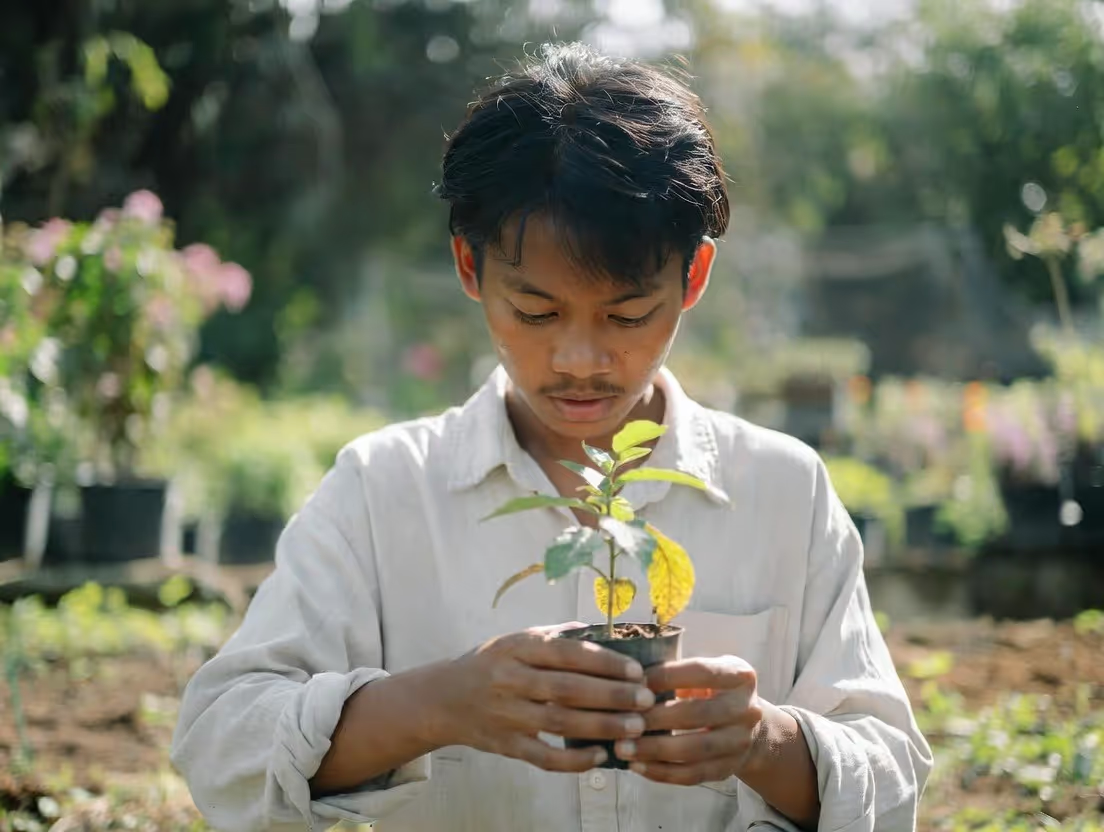
The healing power of plants is not anecdotal; it's a rigorous scientific discipline known as Horticultural Therapy (HT). HT is the engagement of a person in gardening and plant-based activities, facilitated by a trained therapist, to achieve specific therapeutic rehabilitation goals. Its applications are vast and well-documented, providing a robust framework for understanding why your weekend in the garden feels so transformative.
Clinical studies have shown HT to be effective in diverse populations:
The mechanisms behind these benefits are multi-faceted:
This scientific backbone validates the personal experiences of millions of casual gardeners. When you deadhead a flower or turn a compost pile, you are not just gardening; you are participating in a therapeutic intervention with millennia of evidence behind it. For those interested in tracking the physiological results of such interventions, many turn to wearable tech. It’s common to see users on our Oxyzen testimonials page share stories of how their stress metrics improve after spending time in nature, seeking a quantifiable correlation to the calm they feel.
In the relentless churn of thoughts about the past and future, the garden offers a powerful anchor: the eternal present. Plant care is a masterclass in applied mindfulness, the psychological practice of paying attention to the present moment without judgment. Every gardening task, when approached with intention, becomes a meditation.
Consider the act of repotting a plant. Your full attention is required. You feel the texture of the soil—is it moist and clumpy or dry and loose? You observe the root ball—is it root-bound, circling tightly, or healthy and white? You listen to the sound of soil pouring into the new pot, smell the earthy scent, and visually balance the plant as you center it. Your mind cannot simultaneously wander to a work email or a social drama. It is fully immersed in a multi-sensory, hands-on process. This is flow state—the psychological concept coined by Mihaly Csikszentmihalyi describing complete immersion in an activity.
Gardening naturally cultivates key pillars of mindfulness:
This mindful engagement breaks the cycle of rumination—the repetitive, negative thought patterns that fuel anxiety and depression. By grounding you in tangible, life-sustaining tasks, gardening creates a mental space where stress cannot easily take root. It’s a practice that complements other mindfulness tools. For instance, just as one might use a smart ring from Oxyzen to track heart rate during a seated meditation, one can observe how the same metrics stabilize during an hour of quiet gardening, providing concrete data on its calming effect.
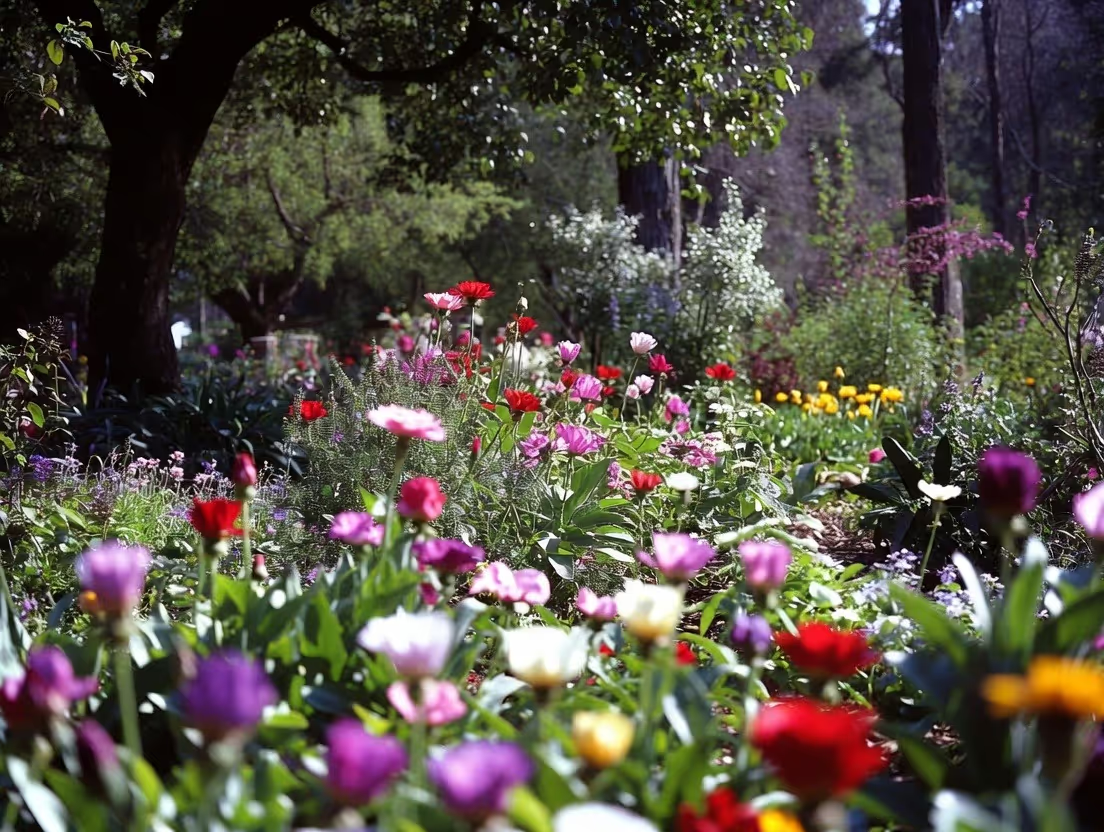
Modern stress is often a sensory assault: the bluish glare of screens, the jarring cacophony of city noise, the sterile smell of recycled air. The garden provides a profound sensory balm, engaging each of our senses in a harmonious, rather than overwhelming, way. This sensory immersion is a direct pathway to the parasympathetic nervous system.
Sight: The color green dominates the natural palette, and studies suggest green is inherently calming to the human psyche. But beyond color, it’s the visual complexity of nature—the fractal patterns in a head of broccoli, the dappled light through a canopy, the intricate vein structure of a leaf—that captivates our attention in a effortless way, reducing mental fatigue.
Touch: This is perhaps the most grounding sense activated in the garden. Tactile stimulation is profound:
Smell: The garden is an olfactory pharmacy. The scent of freshly turned earth (geosmin) is universally calming. Lavender and jasmine are proven to reduce anxiety and aid sleep. Rosemary has been linked to improved memory and concentration. These aren't just pleasant aromas; they are volatile plant compounds that interact directly with our limbic system, the emotional center of the brain.
Sound: The garden soundscape replaces mechanical noise with biological rhythm. The buzz of pollinators, the chirp of birds, the rustle of leaves in the wind, even the quiet patter of water from a can or feature—these are non-threatening, predictable sounds that signal safety to our primal brain.
Taste: The ultimate reward. The burst of flavor from a sun-warmed strawberry you grew yourself is a multisensory celebration. It ties the entire cycle of care and patience to a tangible, delightful outcome, reinforcing positive feedback loops in the brain.
This full-sensory engagement creates a powerful distraction from pain, worry, and cyclical thinking. It literally brings us to our senses, pulling us out of our abstract, anxious minds and into the rich, immediate reality of the physical world. For a deeper dive into how sensory environments affect wellness metrics, our blog at Oxyzen frequently explores the intersection of environment and biometric data.
At its core, gardening is an act of care. In a world where many feel powerless against global events or stuck in unfulfilling routines, tending to another living thing provides a profound sense of purpose and agency. You are responsible for the welfare of these plants. Your actions—watering, feeding, pruning—have direct, observable consequences. This relationship fosters a nurturing identity that boosts self-esteem and counteracts feelings of helplessness.
The cycle of gardening provides a master narrative of hope and resilience:
This nurturing role also fosters empathy and connection. You begin to see the world from the plant’s perspective—does it need more light? Is it crowded? This practice of attentive care can extend to more empathetic interactions with people and the broader environment. It reminds us we are part of an interconnected web of life, shifting perspective from a narrow, self-focused anxiety to a more compassionate, ecological worldview. Understanding this deep-seated need for nurturing and measurable growth is part of the Oxyzen story, which is rooted in creating technology that supports, rather than interrupts, these fundamental human experiences.
While ornamental gardening is deeply therapeutic, growing edible plants adds another potent layer of stress relief. The process of growing your own food transforms your relationship with one of life’s most basic necessities, embedding it with meaning, security, and visceral satisfaction.
Nutritional Psychiatry and Gut Health: The field of nutritional psychiatry establishes a clear link between diet and mental health. A diet rich in diverse, fresh plants supports a healthy gut microbiome, which in turn produces neurotransmitters like serotonin. When you grow your own food, you consume it at peak ripeness, maximizing its nutrient density. The pride and intention behind eating a meal you cultivated from seed enhances the positive psychological experience of eating, moving it from mere fuel to a celebration of accomplishment.
Food Security and Reducing Anxiety: In times of economic or social uncertainty, the ability to produce even a small portion of your own food provides a tangible sense of security and self-reliance. A patio container of lettuce or a tomato plant isn’t about surviving a crisis; it’s a psychological counterweight to the fragility of complex supply chains. It’s an act of quiet resilience that whispers, "I can contribute to my own well-being."
The Deep Satisfaction of the Harvest: There is a primal joy in foraging from your own plot. Picking a crisp cucumber, pulling a bright carrot from the earth, or gathering a handful of herbs is a direct, unmediated interaction with your sustenance. This act re-sacralizes food, connecting you to the seasons, the weather, and the literal fruits of your labor. The stress of a long day melts away during the mindful task of harvesting ingredients for dinner.
Reducing "Food Mile" Anxiety: For the environmentally conscious, growing food locally eliminates the carbon footprint associated with transportation, packaging, and industrial farming. This can alleviate the subtle, background anxiety of participating in a damaging food system, replacing it with the positive action of creating a personal, sustainable micro-system.
This connection to our sustenance is a foundational form of wellness. It represents a holistic cycle where the care for the plant directly translates to care for the self. It’s a practice that aligns perfectly with a proactive approach to health, much like using a device to understand your sleep patterns—a topic we cover in detail in our Oxyzen FAQ, where we discuss how data informs healthier daily choices.

You don’t need an acre of land to create a restorative green space. Intentional design can transform a balcony, windowsill, or small corner into a stress-relieving sanctuary. The principles of healing garden design focus on engaging the senses, fostering a sense of safety and enclosure, and encouraging interaction.
Key Design Elements for a Therapeutic Space:
Container Gardening & Small Spaces: For apartments and urban settings, think vertically. Use wall planters, hanging baskets, and railing boxes. A "green wall" of herbs or ferns can be incredibly immersive. A single, beautifully tended bonsai or orchid on a desk can serve as a potent micro-sanctuary, a living touchstone for calm during a workday.
The goal is to create a space that feels intentionally separate from daily demands—a green retreat dedicated to unwinding. It’s a personal project that evolves, much like your understanding of your own health. For inspiration on building holistic routines that incorporate such sanctuary spaces, you can learn more about Oxyzen's approach to integrating wellness into every facet of modern life.
While gardening can be a solitary refuge, its power to connect people is equally transformative. Community gardens are potent social incubators that address one of the modern world's most pernicious stressors: loneliness and social isolation. These shared plots are not just about growing food; they are about growing community.
The social benefits are well-documented:
The act of gardening side-by-side lowers social defenses. It’s a parallel activity where conversations can flow naturally without the intense eye contact of a formal social setting, making it less anxiety-provoking for those with social anxieties. The shared focus on a nurturing task creates a bond and a common identity as "gardeners." This social healing is a critical component of holistic wellness, reminding us that we are not meant to manage stress in isolation. Hearing how others integrate community and wellness is often a highlight on the Oxyzen about-us page, where community feedback shapes the journey.

Modern life, with its artificial lighting and global supply chains, has severed us from the natural rhythmic cycles of the planet. This disconnection may contribute to mood disorders like Seasonal Affective Disorder (SAD). Gardening forcibly and beautifully re-attunes us to the seasons, providing a meta-framework for understanding our own cycles of energy, productivity, and rest.
By aligning our activities with these cycles, we release the tyranny of the belief that we must be constantly productive at the same level. The garden gives us permission to have energetic winters and frenetic springs. It normalizes periods of apparent inactivity as essential phases of the growth cycle. This rhythmic living is inherently regulating for our nervous systems. It's a form of long-term, environmental stress management that aligns with a proactive wellness philosophy, something we deeply value in our mission at Oxyzen, which you can explore further on our story page.
The prospect of starting a garden can itself be stressful if approached with perfectionism. The key is to embrace the "beginner's mind"—a concept from Zen Buddhism that involves openness, eagerness, and a lack of preconceptions. Start small, expect mistakes, and learn from the plants themselves.
A Foolproof, Low-Stress Starter Plan:
Remember, every gardener has killed plants. It’s not failure; it’s data. The plant was communicating its needs, and you are learning its language. This journey of starting simple mirrors the journey of taking charge of any aspect of your wellness—the first step is the most important. For answers to common beginner questions in any new endeavor, our Oxyzen FAQ is always a helpful resource.
The ultimate goal is to move gardening from a sporadic hobby to an integrated strand of your daily wellness practice. This doesn't mean hours of labor each day, but rather mindful micro-interactions that serve as stress-resetting pauses.
Rituals for Integration:
Journaling Your Green Growth: Keep a simple garden journal. Note planting dates, first sprouts, what works, what doesn’t. But also note how you feel while gardening. "Felt anxious when I started, calm after 20 minutes of pruning." This creates a powerful personal record linking the activity to your emotional state, much like reviewing biometric data from a wellness tracker can reveal patterns.
By weaving these small acts of care into your routine, you build a resilient buffer against daily stress. The garden becomes a responsive partner in your well-being, a living system that thrives as you do. This philosophy of integrated, mindful care is at the heart of what we believe in, a sentiment echoed in the real-world experiences shared by our community on the Oxyzen testimonials page, where users often speak of finding harmony between technology and natural, daily rituals.
The quest for perfect sleep has become a modern obsession—and for good reason. It’s the foundation of mental clarity, emotional stability, and physical health. Yet, for many, the moment their head hits the pillow is when the mind races loudest. The sympathetic nervous system, activated by the day’s demands, refuses to hand over the reins to the parasympathetic system that governs deep, restorative sleep. This is where humming and chanting cease to be just a wellness practice and become a precise, non-pharmacological sleep aid.
Humming directly addresses the core sleep obstacle: an underactive vagal brake at bedtime. By stimulating the vagus nerve, you actively shift your physiology from "doing" to "being," creating the ideal internal environment for sleep to occur naturally.
Your sleep cycle, particularly the transition into deep (N3) sleep and REM sleep, is heavily influenced by autonomic balance. High vagal tone is strongly correlated with:
When you hum before bed, you are essentially "priming" your vagus nerve to maintain its calming influence throughout the night, leading to less nighttime awakenings and more coherent sleep cycles.
This protocol is designed to be a consistent signal to your body that the day is over.
Phase 1: The Digital Sunset & Physical Release (Minutes 0-5)
Phase 2: The Resonant Shift (Minutes 5-15)
If you wake up at 2 a.m. with a racing mind, avoid picking up your phone. Instead:
This is where your smart ring becomes an invaluable partner. By consistently following this protocol, look for these changes in your Oxyzen sleep data over 2-3 weeks:
The beauty of this protocol is its self-reinforcing nature. Better sleep improves your vagal tone the next day, which makes your evening humming practice more effective, which leads to even better sleep. It creates a virtuous cycle of recovery. For those struggling with sleep, combining this physiological approach with other insights can be transformative. Explore our blog for a holistic library of sleep optimization strategies.
Anxiety, in its many forms, is essentially the sympathetic nervous system sounding a false alarm. It's a state of perceived threat with no clear physical danger. While cognitive strategies are vital, they often struggle to gain traction when the body is already in a physiological storm. Humming and chanting offer a bottom-up approach: they calm the body first, which then sends the "all clear" signal to the anxious mind. This makes them effective both as an in-the-moment rescue tool and a long-term resilience builder.
During acute anxiety:
Humming intervenes at every point:
Use this when you feel panic rising, before a stressful event, or in the midst of overwhelming feelings.
To raise your baseline and reduce overall anxiety frequency and intensity, a daily practice is essential.
For those with anxiety, subjective feelings can be unreliable—you might feel calm but have a racing heart, or feel anxious while your physiology is stable. A smart ring provides objective truth.
Humming doesn't make life's challenges disappear, but it restores your capacity to face them from a state of physiological balance, not hijack. It returns agency to you. Many users have found this combination of ancient practice and modern feedback to be life-changing, as reflected in the personal stories shared in our user testimonials.
The concept of peak performance is evolving. It’s no longer just about grinding harder; it’s about optimizing the interplay between intense focus and profound recovery. The vagus nerve sits at the center of this dance. High vagal tone isn’t about being perpetually calm; it’s about having a highly responsive system—one that can ramp up sympathetic drive for a challenge and then swiftly downshift into parasympathetic recovery afterward. This is the biology of flow states and sustainable excellence. Humming and chanting are the training tools for this flexibility.
A flow state—that experience of being "in the zone"—is characterized by complete absorption, loss of self-consciousness, and effortless action. Neurologically, it involves a harmonious balance of brainwave states and autonomic regulation. Paradoxically, achieving this state of high-performance focus often requires an initial state of calm, centered awareness. This is where pre-task humming comes in.
Use this before an important work session, creative endeavor, athletic competition, or presentation.
During long sessions, performance degrades as mental fatigue and stress accumulate. Scheduled breaks are more effective than waiting until you’re depleted.
The true mark of an athlete or high-performer is not just their output, but the speed and quality of their recovery. Active recovery via vagal stimulation is far more effective than passive collapse.
Your wearable is your performance coach. Track these metrics to see the impact:
This approach reframes humming from a purely relaxation technique to a versatile performance-enhancing tool. It’s about mastering the rhythm of effort and ease. To delve deeper into the science of biometrics and performance optimization, our blog features ongoing analysis and guides.
The vagus nerve has a lesser-known but profoundly important function: it is the biological substrate of our social engagement system. This branch of the parasympathetic system (the ventral vagal complex) governs our ability to connect, communicate, empathize, and co-regulate with others. It’s why eye contact, a soothing voice, and facial expressions can calm us. When this system is strong, we feel safe to be social. Humming, especially in a group, is a direct and powerful way to tone this social vagus, enhancing our relationships and sense of belonging.
Co-regulation is the process by which one person’s nervous system influences another’s toward greater stability. A mother soothing her child is the primal example. Our polyvagal theory-informed understanding shows that this happens largely through vagal pathways. A calm, resonant voice and steady breathing in one person can literally help regulate the heart rate and emotional state of another.
When a group hums or chants together, they engage in a powerful, multi-layered form of co-regulation:
While harder to measure in a group setting, individual wearables can show the effect of social connection. After positive, resonant social interactions, you might see:
By consciously using humming to strengthen your social vagus, you invest in the quality of your relationships. It’s a practice that moves wellness from a solitary pursuit to a communal one, recognizing that our nervous systems are wired to connect. Our commitment at Oxyzen is to support not just individual well-being, but the health of the communities our users belong to—a vision you can learn more about in our company story.
The beauty of vagal nerve stimulation through vocalization is its universality and adaptability. It requires no special equipment, is low-risk, and can be modified for every age and ability. From soothing a colicky infant to supporting neurological health in older adults, the humming and chanting method offers benefits across the entire human lifespan.
Children are not born with fully developed self-regulation skills; they rely on co-regulation from caregivers. Humming is a primal, instinctual tool for this.
This age group faces academic pressure, social dynamics, and digital overload.
(This has been the focus of much of the article—managing career, family, and societal stress through targeted protocols for sleep, anxiety, and performance.)
As we age, vagal tone naturally tends to decline, which is associated with increased inflammation, slower recovery, and cognitive changes. Humming is a gentle, accessible practice with significant potential benefits.
Imagine a family where humming is a shared language of reset:
The practice scales because it taps into a fundamental human biology. It democratizes nervous system care, making it available to all, regardless of socioeconomic status or physical ability. For families looking to integrate technology with these timeless practices, understanding the tools available is key—our FAQ addresses many common questions about getting started.
As with any practice that bridges ancient wisdom and modern science, misconceptions arise. Let’s clarify common myths and answer frequently asked questions to ensure your humming practice is grounded, effective, and free from unnecessary mystery.
Myth 1: "You need a perfect pitch or a 'good voice' for this to work."
Myth 2: "It's a religious or cult-like practice."
Myth 3: "More is always better—louder and longer hums are best."
Myth 4: "The benefits are just placebo."
Q: How long until I feel results?
Q: What if I feel dizzy when I hum?
Q: Can humming replace medication for anxiety or high blood pressure?
Q: When is the best time of day to practice?
Q: I have a cold or sinus congestion. Should I still hum?
Q: How does this integrate with using my Oxyzen ring?
By dispelling myths and providing clear answers, we empower you to practice with confidence and clarity, focusing on the tangible, physiological benefits this ancient-modern tool provides.
In a culture obsessed with curated success and flawless outcomes, the garden is a mercilessly honest teacher. Leaves brown, seedlings dampen off, prized plants succumb overnight to unseen pests. For the novice, this can feel like a personal failure—a phenomenon jokingly termed “plant murder.” Yet, reframing these inevitable losses is one of gardening’s most profound psychological gifts. It decouples self-worth from perfect outcomes and cultivates a resilient, growth-oriented mindset where failure is not an end, but the richest source of data.
The Pedagogy of the Perished Plant: Every dead plant holds a lesson in systems thinking. It asks a series of diagnostic questions: Was it the water (too much or too little?), the light (too harsh or too dim?), the soil (too dense or infertile?), the temperature, or a pest? This forensic investigation shifts the perspective from “I have a black thumb” to “I am learning the specific needs of this organism in this environment.” It replaces a fixed mindset (“I’m just not good at this”) with a scientific, problem-solving approach. This cognitive shift is directly transferable to life’s other setbacks, teaching us to analyze contributing factors rather than defaulting to self-condemnation.
Detachment and Non-Attachment: Buddhist philosophy teaches non-attachment to outcomes as a path to peace. Gardening is a practical workshop for this principle. You can do everything “right” and still lose a plant to a freak hailstorm or a rabbit’s midnight feast. This teaches a gentle detachment—you invest effort and care, but you ultimately cannot control all variables. You learn to appreciate the process of care itself, regardless of the result. The joy is found in the daily tending, the observation, the learning, as much as in the perfect bloom. This reduces performance anxiety and allows you to engage with the activity for its intrinsic worth, not just its trophy harvest.
The Cycle of Compost: Transforming Loss into Life: The garden provides the ultimate metaphor for recycling failure: the compost pile. Dead plants, fallen leaves, and kitchen scraps—the “failures” and waste products—are not tragedies. They are raw materials. Through the alchemy of decomposition, they are transformed into black gold, the most fertile foundation for new growth. This visible, tangible cycle teaches that endings are necessary for rebirth, that decay is not waste but a phase of renewal. Applying this metaphor emotionally allows us to view personal failures, disappointments, and endings not as permanent stains, but as fertile compost for future growth and wisdom.
Building Resilience Through Iteration: Because gardening cycles are seasonal, it offers built-in opportunities for iteration. If your tomatoes got blossom end rot last summer, you research and add calcium to the soil this spring. If your lettuce bolted too quickly, you plant it in a shadier spot or choose a heat-tolerant variety next time. Each “failure” directly informs the next attempt. This rapid, low-stakes cycle of experiment, feedback, and adjustment builds tremendous creative and emotional resilience. It proves that competence is built through applied learning, not innate talent. For those navigating their personal wellness journey, this iterative process of learning what works for your unique body is familiar. Many find that using a tool like Oxyzen provides similar feedback, turning daily habits into data that informs smarter, more resilient health choices. You can discover how others have used this iterative approach in their stories on the Oxyzen testimonials page.
Beyond science and therapy, gardening is an act of pure creation. It is living sculpture, temporal painting, and landscape design rolled into one. For the mind burdened by logical, linear tasks, the garden offers a boundless arena for intuitive, aesthetic play. This engagement of the artist’s mind is a potent and often overlooked form of stress relief, tapping into the flow state and personal joy that comes from making something beautiful for its own sake.
Playing with Color, Form, and Texture: The gardener is a painter with a living palette. Will you create a monochromatic moon garden of silvers and whites that glows at dusk? A fiery border of red salvias, orange marigolds, and yellow sunflowers? A cool, calming retreat of blue hydrangeas and green ferns? You arrange plants not just by height, but by the shape of their leaves (spiky yuccas against round hostas), the texture of their blooms (fluffy astilbes next to smooth roses). This aesthetic decision-making is a right-brain activity that engages visual-spatial intelligence and intuitive feeling, providing a complete mental break from linguistic and analytical work.
Designing with Time: Unlike a static painting, a garden is a four-dimensional artwork that changes hourly, daily, and seasonally. The creative challenge includes planning for succession: ensuring that as spring bulbs fade, summer perennials rise to take their place, followed by autumn’s grasses and berries. This requires imagination and foresight—visualizing how the space will look in months you cannot yet see. It’s a creative practice rooted in hope and anticipation, a powerful counter to present-moment anxiety.
The Craft of Propagation and Cultivation: There is a deep, quiet satisfaction in the craftsman-like aspects of gardening. The precise slice of a grafting knife, the careful division of a perennial’s roots, the patient training of a vine along a trellis, the artful pruning of a bonsai. These skilled, hands-on activities produce a state of “hands-on flow,” where time dissolves and the mind is fully absorbed in the nuance of the task. This mastery of a tangible craft builds self-efficacy and pride that is independent of external validation.
Personal Sanctuary as Self-Portrait: Ultimately, your garden becomes an external reflection of your inner world. A wild, cottage-style garden may speak to a free-spirited, abundant personality. A minimalist Zen garden of raked gravel and moss may reflect a desire for order and contemplation. The choices you make—the plants you cherish, the paths you lay, the ornaments you place—all contribute to a living self-portrait. Creating and tending this space is an act of self-expression and identity affirmation. It is a dialogue between your inner vision and the outer world, a process that is inherently fulfilling and centering. For creative minds seeking to balance their expressive side with a data-informed understanding of their well-being, resources like the Oxyzen blog often explore this synergy.
While community gardens provide physical shared space, another layer of social healing exists in the decentralized, informal networks of gardeners. These networks—built on seed saving, plant swapping, and knowledge sharing—foster trust, generosity, and interconnectedness, combating the anonymity of modern life. They are a quiet, green underground economy of care.
The Intimacy of a Shared Cutting: When a gardener gives you a cutting from their beloved rosemary plant or a division of their hardy geranium, they are giving you more than a plant. They are giving you a living piece of their own history, a genetic legacy that has thrived under their care. This act of sharing creates a tangible, biological connection between people and places. As you nurture that cutting into a full plant, you are literally cultivating a friendship. It’s a slow, meaningful form of bonding that stands in stark contrast to the fleeting nature of digital connections.
Seed Saving as a Legacy Practice: Saving seeds from your best-performing plants is an ancient practice that connects you to generations of gardeners past and future. Swapping these seeds with others is an act of faith and shared hope. Heirloom seed networks are passionate about preserving genetic diversity and stories. The ‘Mortgage Lifter’ tomato, the ‘Dragon Tongue’ bean—each variety comes with a narrative. Participating in this exchange makes you a custodian of living history and a contributor to a collective, non-monetary wealth. It fosters a sense of belonging to a timeless community with a shared mission.
The Knowledge Commons: Gardening wisdom is traditionally passed down, not bought. The neighbor who shows you how to prune a rose, the online forum member who diagnoses a fungus, the elder at the community garden who teaches companion planting—this is knowledge shared freely for the common good. Engaging in this exchange positions you as both a student and, eventually, a teacher. It creates relationships based on mutual aid and respect, rebuilding social capital in an increasingly transactional world. This ethos of shared growth and support mirrors the community-focused vision behind many wellness platforms, including the philosophy you can read about in Oxyzen’s our-story.
A Buffer Against Loneliness: For those who are housebound, elderly, or in isolated areas, these networks can be a lifeline. A porch-side plant swap, a packet of seeds in the mail, a photo texted of a bloom from a shared cutting—these small acts forge threads of connection. They affirm that you are seen and that your passion matters to others. This sense of being part of an invisible, nurturing web can significantly alleviate the stress of social isolation, providing purpose and regular, low-pressure social contact.
Taking plant care a step further into the realm of native gardening—deliberately choosing plants that evolved in your local ecosystem—intensifies the stress-relief benefits by adding a powerful layer of ecological purpose. This practice moves beyond personal solace into active reciprocity: you care for the land, and in return, it offers a more vibrant, resilient, and mentally restorative sanctuary.
The “Rightness” of Right-Plant, Right-Place: Native plants, adapted to your local soil, rainfall, and climate over millennia, require less water, no chemical fertilizers, and minimal pest control. This eliminates a significant source of gardening stress—the constant battle to keep non-adapted plants alive. A native garden thrives with a kind of effortless grace. Watching plants flourish with minimal intervention teaches a lesson in working with natural forces rather than against them, reducing the friction and effort in your wellness practice.
Creating a Theater of Life: A lawn is a ecological desert. A garden of native plants is a bustling habitat. It attracts a symphony of native bees, butterflies, birds, and beneficial insects. Your garden becomes a daily source of wonder and entertainment—a hummingbird at the bee balm, a caterpillar on the milkweed, a chorus of songbirds in the berry-producing shrubs. This immersion in a thriving, complex ecosystem is the pinnacle of “soft fascination.” It provides endless, gentle distraction from ruminative thoughts and fosters a profound sense of being part of something alive and purposeful.
The Antidote to Eco-Grief: For those aching over habitat loss and species decline, planting a native garden is direct, tangible medicine. You become a steward of a micro-sanctuary. By providing food and shelter for pollinators and birds, you are directly increasing local biodiversity. You can measure your success not in just blooms, but in the number of butterfly species that visit or the nest built in your shrub. This turns passive grief into active healing, transforming anxiety into agency. The act of ecological restoration becomes inseparable from the act of self-restoration.
Rootedness and Sense of Place: In a mobile, globalized society, native gardening roots you deeply to your specific place on Earth. You learn the rhythms of your local biome—when the goldenrod blooms, which berries ripen first, how the soil feels after a winter frost. This deep, place-based knowledge fosters a unique sense of belonging and connectedness. You are not just living on the land; you are in a reciprocal relationship with it. This grounding identity can be an anchor during times of personal or global instability. This deep connection to our environment is a cornerstone of holistic health, a principle that aligns with a comprehensive approach to wellness, details of which are often explored in Oxyzen’s about-us section.
The therapeutic benefits of gardening are universal, yet they manifest in uniquely powerful ways for different demographics. Understanding these tailored impacts highlights the practice’s versatility as a tool for developmental support, crisis navigation, and graceful aging.
For Children and Adolescents:
For Working Adults & Professionals:
For Seniors and Aging Populations:
For individuals at any stage, integrating mindful practices like gardening with a curious approach to personal metrics can create a powerful feedback loop for well-being. Many find that pairing such activities with a tool for understanding their body's responses, like those discussed in the Oxyzen FAQ, enriches the journey.
Forward-thinking companies are now looking beyond the yoga room and meditation app to a more rooted solution: the corporate garden. Whether it’s rooftop beehives, courtyard vegetable plots, or sponsored community garden plots, these initiatives are proving to be high-ROI investments in human capital, reducing stress, fostering teamwork, and sparking innovation.
A Natural Stress Valve in the Work Environment: A garden on-site provides employees with a tangible, accessible escape from the intensity of the office. A 10-minute break spent watering seedlings or harvesting herbs is more effective at reducing acute stress than scrolling through a phone at a desk. It offers a true change of scenery and a multisensory reset that lowers cortisol levels and clears mental clutter, leading to improved concentration and productivity upon return.
Fostering Unscripted Collaboration and Breaking Down Silos: In the garden, hierarchical titles dissolve. The CEO and the intern might find themselves side-by-side, puzzling over a squash bug infestation or celebrating the first ripe strawberry. These informal, shared experiences build camaraderie, trust, and psychological safety in ways that forced team-building exercises often fail to do. It creates common ground and fosters conversations that would never happen in a meeting room, leading to more integrated and innovative teams.
Teaching Systems Thinking and Resilience: A garden is a complex, living system. Tending it teaches lessons directly applicable to business: patience, adaptability, learning from failure (a crop loss), understanding interconnectedness (companion planting), and investing in long-term health (soil building). These metaphors provide powerful, experiential learning for leadership and project teams.
Enhancing Corporate Social Responsibility & Brand Identity: A productive corporate garden can supply a company kitchen, donate fresh produce to a local food bank, or support pollinator health. This tangible contribution to community and environmental health boosts employee pride and aligns with the values of a workforce, particularly younger demographics. It transforms the company from an abstract entity into a tangible force for good in the local ecosystem.
A Perk That Promotes Holistic Health: Offering gardening as a wellness benefit signals that the company values long-term, sustainable health practices over superficial perks. It supports physical activity, nutrition (if edibles are grown), mental health, and social connection—all pillars of a robust corporate wellness strategy. As businesses seek comprehensive solutions for employee wellness, the integration of nature-based practices with holistic health monitoring is becoming a gold standard, a synergy explored in various case studies on wellness-forward platforms like Oxyzen’s blog.
Your Trusted Sleep Advocate: Sleep Foundation — https://www.sleepfoundation.org
Discover a digital archive of scholarly articles: NIH — https://www.ncbi.nlm.nih.gov/
39 million citations for biomedical literature :PubMed — https://pubmed.ncbi.nlm.nih.gov/
Experts at Harvard Health Publishing covering a variety of health topics — https://www.health.harvard.edu/blog/
Every life deserves world class care :Cleveland Clinic - https://my.clevelandclinic.org/health
Wearable technology and the future of predictive health monitoring :MIT Technology Review — https://www.technologyreview.com/
Dedicated to the well-being of all people and guided by science :World Health Organization — https://www.who.int/news-room/
Psychological science and knowledge to benefit society and improve lives. :APA — https://www.apa.org/monitor/
Cutting-edge insights on human longevity and peak performance:
Lifespan Research — https://www.lifespan.io/
Global authority on exercise physiology, sports performance, and human recovery:
American College of Sports Medicine — https://www.acsm.org/
Neuroscience-driven guidance for better focus, sleep, and mental clarity:
Stanford Human Performance Lab — https://humanperformance.stanford.edu/
Evidence-based psychology and mind–body wellness resources:
Mayo Clinic — https://www.mayoclinic.org/healthy-lifestyle/
Data-backed research on emotional wellbeing, stress biology, and resilience:
American Institute of Stress — https://www.stress.org/


