


How Light Exposure All Day Affects Nightly Recovery
Daytime light exposure, especially morning light, strengthens your circadian rhythm, leading to more consolidated and restorative sleep.
Daytime light exposure, especially morning light, strengthens your circadian rhythm, leading to more consolidated and restorative sleep.
%402x.svg)
You wake up, grope for your phone, and flood your retinas with blue light. You work under the glare of fluorescent office lighting, eat lunch scrolling through a sunlit screen, and unwind in the evening bathed in the warm glow of LEDs. From sunrise to long past sunset, you are marinating in an artificial luminous soup unlike anything our biology has ever known.
We meticulously track our macros, count our steps, and obsess over sleep duration, yet we ignore the most fundamental environmental input shaping our health: light. It is the invisible conductor of our body’s entire orchestra, dictating the tempo of our hormones, the rhythm of our cells, and the depth of our recovery. Yet, our modern light exposure—constant, chaotic, and chronically out of sync with nature—has become a primary antagonist in the story of our well-being.
This isn’t just about feeling tired. This is about a systemic breakdown in the body’s most crucial regenerative process: nightly recovery. Recovery is when tissue repairs, memories consolidate, metabolic waste is cleared from the brain, and hormones essential for vitality are replenished. It’s the non-negotiable foundation of cognitive sharpness, emotional resilience, and physical performance.
What if the very light that empowers our modern life is systematically dismantling this process? This article delves into the profound and often shocking science of how the light you experience from dawn until dusk doesn’t just affect your ability to fall asleep—it directly dictates the quality of every recovery phase your body attempts overnight. We’ll move beyond simple "blue light blocker" advice into a holistic understanding of your personal "light diet," and explore how next-generation technology, like the advanced sensors in a smart ring from Oxyzen, is essential for diagnosing this invisible problem and crafting a truly restorative lifestyle.
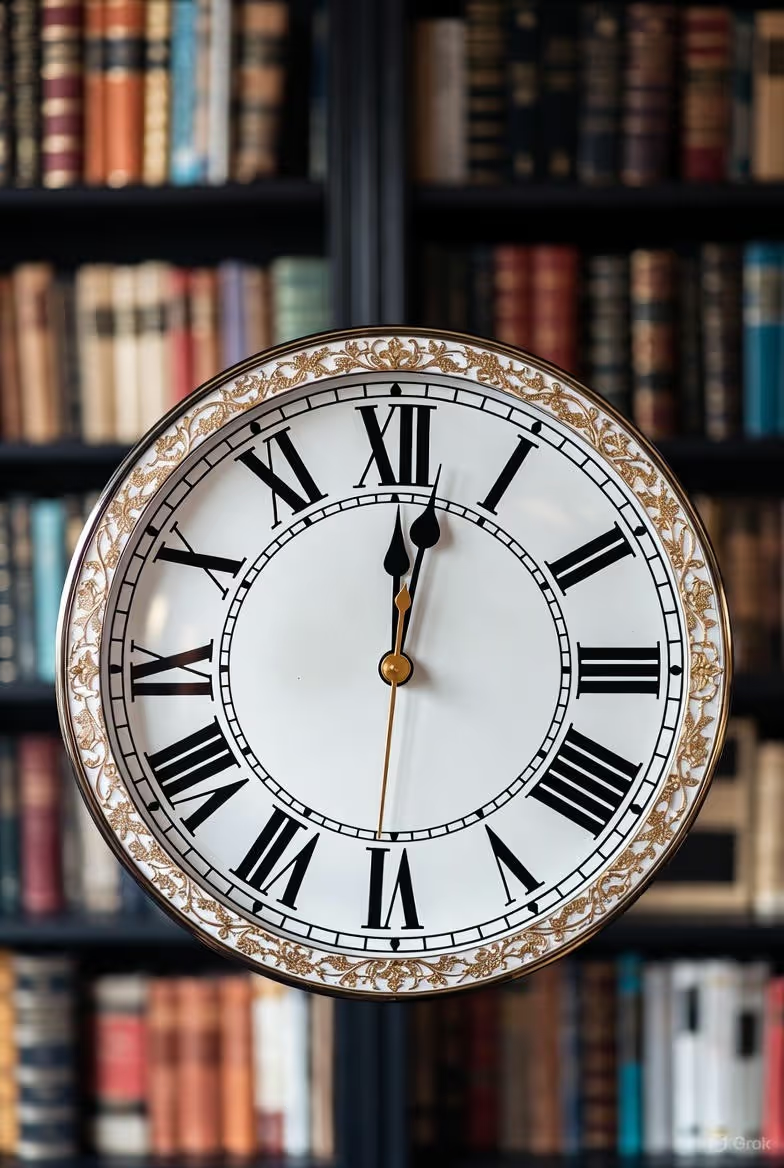
At the core of your existence ticks a primordial timepiece: your circadian rhythm. This isn't a metaphor; it's a physical cluster of about 20,000 neurons in your hypothalamus called the suprachiasmatic nucleus (SCN). This master clock orchestrates nearly every physiological process in your body on a roughly 24-hour cycle—from core body temperature and blood pressure to hormone secretion and gene expression.
But here's the critical twist: your internal clock is not perfectly set to 24 hours. For most humans, it runs slightly longer, about 24.2 hours. To stay in sync with the precise 24-hour solar day, it requires a daily cue. That cue is light, specifically the intensity and color spectrum of light entering your eyes.
Specialized photoreceptor cells in your retina, called intrinsically photosensitive retinal ganglion cells (ipRGCs), are uniquely tuned to detect short-wavelength blue light (around 480 nanometers). They have nothing to do with vision; their sole job is to report light data directly to the SCN.
When these cells detect high-intensity blue light in the morning, they send a powerful signal to the SCN: "It's daytime." The SCN then broadcasts this message throughout your body via neural and hormonal signals. It suppresses the sleep hormone melatonin, boosts cortisol (your natural alertness hormone), raises core body temperature, and primes your systems for activity, digestion, and cognition.
As daylight wanes and blue light exposure drops, the signal to the SCN weakens. Your pineal gland begins secreting melatonin, core temperature starts to drop, and a cascade of repair-oriented processes is initiated. This elegant system worked flawlessly for millennia, synchronized by the sun's reliable arc across the sky.
Today, our light environment is a study in contradiction. We spend over 90% of our time indoors, under light that is often dimmer than a cloudy day yet saturated with melatonin-suppressing blue wavelengths. Then, after sunset, we immerse ourselves in a sea of artificial light that tricks the SCN into believing it's perpetual afternoon.
"The greatest insult to our circadian biology is the sheer consistency of our light exposure," explains a chronobiologist from the Light and Health Research Center. "We've replaced a dynamic, high-contrast signal—bright, blue-rich days and dark nights—with a flat, monotonous light line that confuses the very machinery of timekeeping."
This confusion doesn't just cause "jet lag." It creates systemic circadian misalignment, where different organs—your liver, your gut, your muscles—receive conflicting timing signals. It's like an orchestra where the strings, brass, and percussion are all following different conductors. The result isn't just poor sleep onset; it's a fundamental degradation of the recovery symphony that is supposed to play each night.
Understanding this master clock is the first step. To see how its mistuning directly corrodes your sleep, we must look at the hormone most victimized by our luminous world: melatonin.

When you think melatonin, you likely think of a supplement bottle on a pharmacy shelf. But endogenous melatonin—the kind your body produces—is a far cry from a simple sleep trigger. It is a potent, ancient, and master regulatory hormone, and its suppression by light is the most direct link between your daily environment and failed recovery.
Melatonin secretion from the pineal gland is the body's definitive biochemical declaration of night. Its rise, typically beginning around 9 PM, is the starting pistol for the recovery race. But its function extends far beyond making you feel drowsy:
The ipRGCs in your retina that talk to your master clock are exquisitely sensitive to light when it comes to melatonin suppression. Studies show that even relatively dim room light (as low as 100 lux, about twice the level of a dimly lit restaurant) can begin to suppress melatonin production and shorten its duration.
The problem is spectral. The blue-rich LEDs that dominate our screens, overhead lights, and even some "warm" bulbs are precisely the wavelengths that trigger the strongest melatonin shutdown. A 2014 Harvard study found that blue light suppressed melatonin for about twice as long as green light and shifted circadian rhythms by twice as much.
"We think of light at night as an environmental nuisance, but from a circadian perspective, it's a biological catastrophe. You are, quite literally, telling every cell in your body that it is daytime during the period evolution designated for its most critical repair work." – Researcher, Division of Sleep Medicine.
When evening light suppresses or delays your melatonin peak, the entire recovery cascade is pushed back and compressed. You may still sleep for 7 hours, but the architecture of that sleep—the precise timing and duration of deep sleep and REM sleep cycles—is distorted. The critical repair work that depends on that specific hormonal milieu gets short-changed. You wake up having had "sleep," but not "recovery."
This hormonal sabotage sets the stage for the next critical phase of the night: the descent into deep, restorative sleep. As we'll see, light's disruption doesn't stop at melatonin; it physically blocks your entry into the most reparative state your body can achieve.
If melatonin is the conductor starting the recovery symphony, then deep sleep (slow-wave sleep) is the powerful, restorative crescendo. This is when human growth hormone (HGH) pulses, tissue repair accelerates, and the brain's glymphatic system kicks into high gear to flush out metabolic waste like beta-amyloid (associated with Alzheimer's disease). Achieving sufficient deep sleep is the cornerstone of physical and neurological recovery.
Light exposure, especially at the wrong times, erects a formidable barrier to this state through two intertwined mechanisms: cortisol dysregulation and physiological hyperarousal.
Cortisol has a healthy, natural rhythm. It should peak sharply about 30 minutes after you wake (the "cortisol awakening response"), providing alertness and energy, and then gradually decline throughout the day, reaching its lowest point around midnight. This decline is essential for sleep pressure to build and for the body to transition into rest-and-repair mode.
Evening light exposure, by signaling "daytime" to the SCN, can blunt this natural decline or even cause a secondary, unnatural rise in cortisol. You are biochemically thrust back into a state of alertness and stress readiness when your biology demands wind-down. High nighttime cortisol is like trying to fall asleep while being injected with low doses of adrenaline.
Beyond hormones, light directly stimulates the sympathetic nervous system—your "fight or flight" system. Research using heart rate variability (HRV) as a metric clearly shows that exposure to bright or blue-rich light, even during the day if inappropriate, increases sympathetic activity and decreases parasympathetic ("rest and digest") tone.
This creates a state of low-grade hyperarousal. Your body remains in a vigilant, slightly stressed state, making the profound letting-go required for deep sleep neurologically difficult. It's not just that your mind is racing; your nervous system is functionally too alert to descend into the deep, slow-wave realms.
The combined effect of suppressed melatonin, dysregulated cortisol, and a hyperaroused nervous system is a brutal one-two punch to sleep architecture:
The consequence is "shallow" sleep. You might check the box on sleep duration tracked by a basic device, but miss the quality entirely. This is where advanced biometric tracking becomes non-negotiable. A device like the Oxyzen smart ring, which tracks detailed HRV and sleep stage data, can reveal this hyperarousal and lack of deep sleep that basic trackers miss. By correlating your light exposure habits with these nighttime metrics, you can move from guessing to knowing. You can discover how Oxyzen works to uncover these hidden patterns and see tangible proof of how a late-night work session under bright lights literally flattens your deep sleep graph.
Understanding the barrier to deep sleep reveals a critical truth: light doesn't just affect your sleep; it reprograms your brain's very ability to cleanse and restore itself overnight.
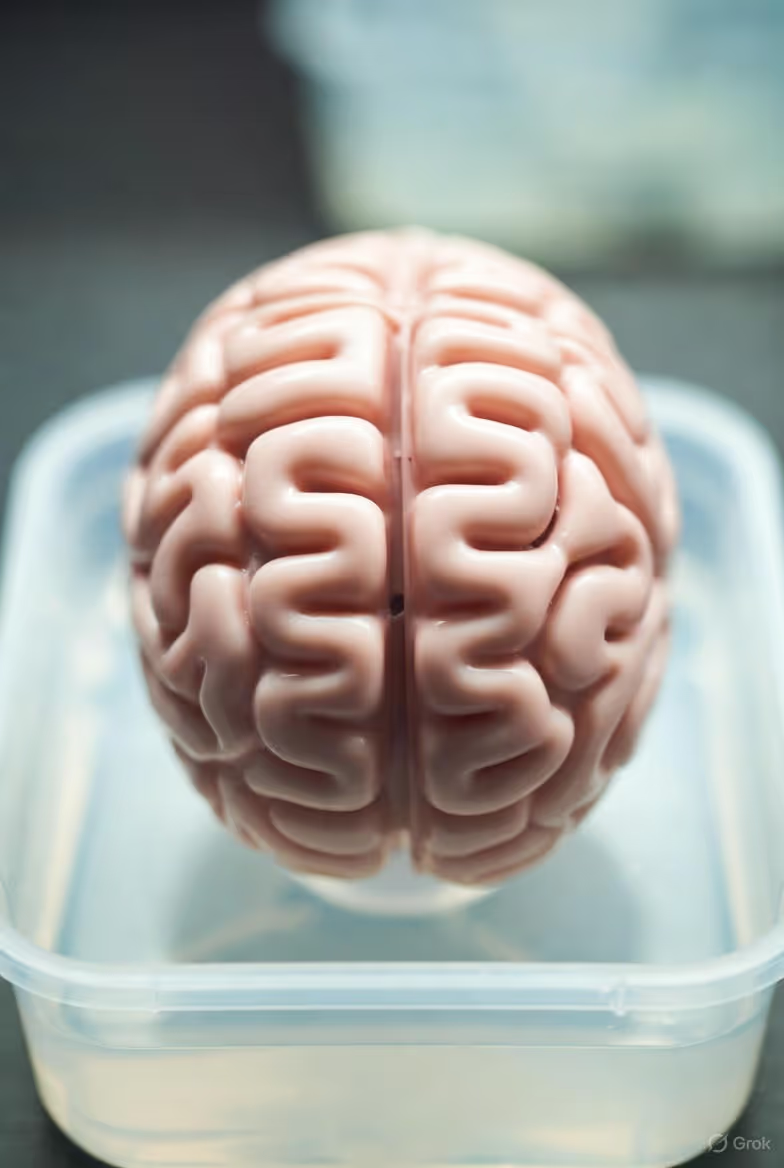
While your body repairs muscles and organs during deep sleep, your brain undertakes its most critical housekeeping project: glymphatic clearance. Discovered only in 2012, this system is the brain's unique waste-removal network. It uses cerebrospinal fluid to flush out toxic metabolic byproducts that accumulate between brain cells during waking hours.
The most infamous of these byproducts is beta-amyloid, the sticky protein that forms the plaques associated with Alzheimer's disease. Research from Boston University has shown that the glymphatic system is primarily active during deep, slow-wave sleep, and its efficiency drops by a staggering 60% in sleep-deprived states.
The link to light is indirect but powerful. Since light exposure—particularly in the evening—degrades the quality and quantity of deep sleep (as detailed in the previous section), it directly impairs glymphatic function. Less deep sleep means a shorter, less effective window for this cleansing cycle.
Think of it like your city's sanitation department only being allowed to work for two hours instead of eight. The trash (metabolic waste) starts to pile up. Chronic impairment of this system is now a leading hypothesis for the development of neurodegenerative diseases.
The immediate effects are felt every morning. Incomplete glymphatic clearance leads to:
This creates a pernicious cycle. Poor sleep from light exposure leads to cognitive deficits and stress, which makes you more likely to seek stimulating light (e.g., scrolling through your phone when you can't sleep), further degrading sleep. Breaking this cycle requires intentional action, starting from the moment you wake up.
If evening light is the villain in our recovery story, then morning light is the undisputed hero. It is the most powerful, natural, and cost-free tool you have to reset your circadian rhythm and set a strong foundation for nightly recovery. Viewing bright, outdoor light within the first hour of waking is not a wellness "hack"; it is a biological imperative.
Light affects your internal clock differently depending on the time of day. This is described by the "phase-response curve."
Getting bright light in the morning firmly anchors the "start" of your biological day, making your system more resilient to the inevitable low-grade light disruptions later on. It increases the amplitude of your circadian rhythm, creating a sharper contrast between day (alert) and night (sleepy) states, which is fundamental for robust sleep.
The intensity of morning light is key. Indoor lighting typically ranges from 100 to 500 lux. A cloudy day provides about 1,000 to 2,000 lux. A bright, sunny morning can be 50,000 to 100,000 lux. Your ipRGCs are designed for this massive signal.
This high-intensity light, rich in blue wavelengths at the appropriate time, optimally suppresses morning melatonin, boosts cortisol healthily, and increases daytime alertness and mood via serotonin production. It's a natural stimulant with no crash.
Getting this morning "light anchor" right is the first proactive step in taking control of your circadian health. It sets a strong, clear signal that makes everything else—including managing the minefield of indoor light—more manageable. For more actionable routines like this, our wellness blog at Oxyzen regularly explores science-backed habits for optimal recovery.
But what about the light you can't avoid—the all-day glow of your modern habitat? Its impact is more subtle but equally profound.
From the moment you leave your morning light anchor, you enter a photic environment that is, from a circadian perspective, profoundly abnormal. It’s a "grind" not of effort, but of constant, low-grade biological miscues that fatigue your system long before bedtime.
Modern indoor environments commit a double sin against our biology:
This creates a flat-line light experience. Instead of a robust peak of bright blue-rich light during the day and true darkness at night, we experience a moderate, blue-tinted glow for 16+ hours. This fails to provide a strong "day" signal, weakening circadian amplitude, while simultaneously providing enough of a "day" signal at night to be disruptive. It's the worst of both worlds.
While overhead lighting provides the background noise, screens—phones, computers, tablets—are the focused solos. Their impact is threefold:
A 2020 study in the Journal of Applied Physiology demonstrated that just two hours of evening tablet use reduced melatonin levels, delayed the circadian clock, and reduced the quality of deep sleep. Now, multiply that by a lifetime of all-day exposure.
This all-day exposure creates what some researchers call "circadian tension." Your biology is constantly receiving a weak but persistent "be alert" signal, preventing your nervous system from fully dipping into the restorative parasympathetic state even during daytime rest periods. It’s like idling a car engine all day long. By the time evening comes, the system is fatigued from the constant low-grade revving, yet paradoxically too wired to shut down properly. This tension directly undermines sleep drive and recovery capacity.
This understanding forces us to look beyond simple "night mode" settings. We need a strategic approach to managing light throughout the entire day to build sleep pressure correctly and reduce this tension. The most critical battleground, however, remains the hours before bed.
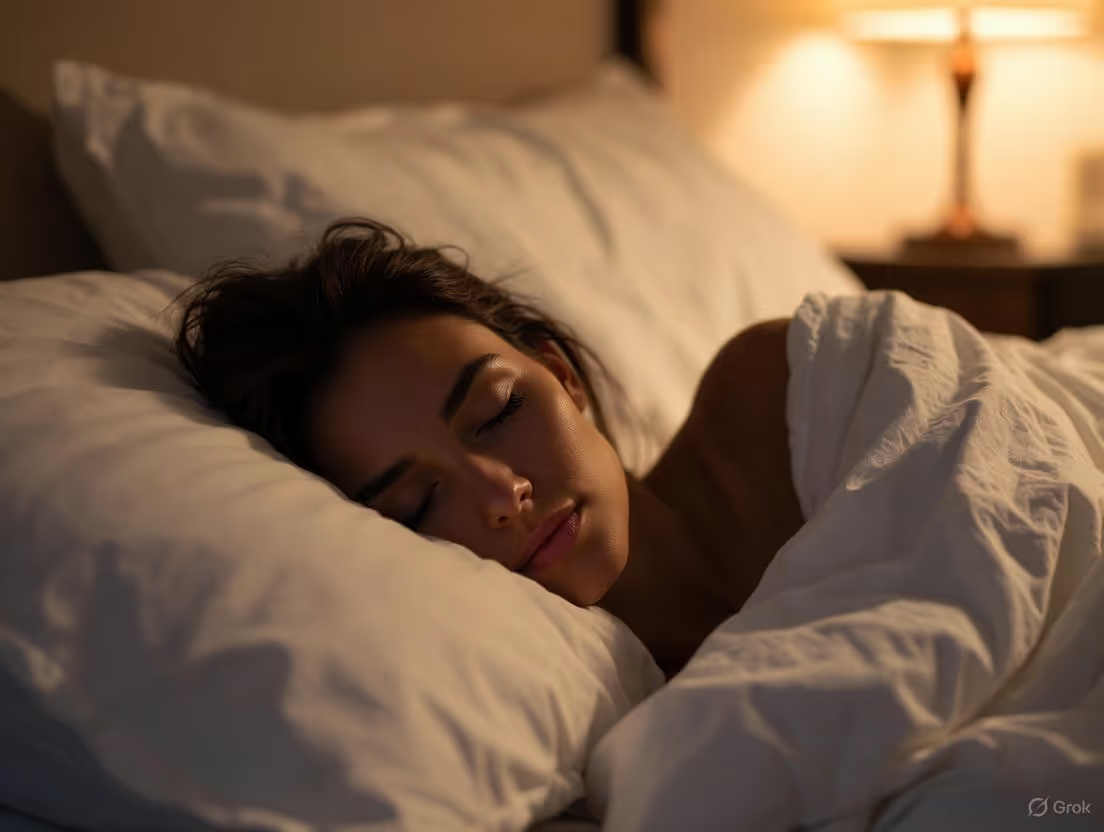
The two to three hours before bed are the most sensitive period for light’s impact on recovery. This is when your body expects and requires darkness to initiate the hormonal and neurological cascade leading to deep, restorative sleep. Transforming this period from a time of passive light exposure to an intentional "light hygiene" ritual is perhaps the single most effective change you can make.
The goal is not to sit in pitch blackness, but to dramatically reduce light intensity and shift its spectrum away from blue. Here’s how:
Don’t underestimate the primal power of flame-based light. Candlelight or fireplace light is extremely dim (10-100 lux) and dominated by long red/orange wavelengths. It provides enough light for quiet conversation or reflection while being virtually invisible to the circadian system. It also psychologically signals "unwind."
Your bedroom must be a sanctuary for darkness:
This sanctuary doesn't just improve sleep onset; it protects the integrity of your sleep cycles throughout the night. For individuals struggling to implement these changes, seeing the direct data correlation can be motivating. Many users of the Oxyzen smart ring share their testimonials about how tracking their sleep HRV and movement before and after creating a dark sanctuary provided the concrete evidence they needed to make it a permanent habit.
But our light environment isn't static. A powerful, often overlooked factor is its seasonal variation, which programs our biology in deep and unexpected ways.
Humans, like all life on Earth, evolved under a light regime that changed predictably with the seasons: long, bright days in summer and short, dim days in winter. Our biology is not designed for the 12-hour, climate-controlled, artificially lit day we've created. It expects and is programmed by these seasonal shifts, which in turn dictate different recovery demands.
Our modern lifestyle ignores this programming. We maintain summer-level social and work activity schedules year-round, while living in winter-like indoor light environments. In actual winter, when we need more recovery sleep the most, we get the least morning light anchor (waking in darkness) and are exposed to the same disruptive evening light. This mismatch is a key driver of seasonal affective disorder (SAD) and the general "slump" many feel.
Respecting seasonal light doesn't mean hibernating, but making intelligent adjustments:
This seasonal lens reveals that our recovery needs are dynamic, not static. A one-size-fits-all approach to "8 hours of sleep" fails to account for the fact that your body may need 8.5 hours of higher-quality sleep in January versus 7.5 hours in July, based on light cues. Tuning into this requires moving beyond fixed rules and towards a responsive, data-informed practice.
In the quest to optimize recovery, millions have turned to sleep trackers. However, most consumer-grade devices—particularly those relying solely on motion (actigraphy) or simple optical heart rate—paint a dangerously incomplete and often misleading picture of how light is affecting your recovery.
This is where advanced wearable technology, specifically the form factor of a smart ring, changes the game. A device like the Oxyzen ring, worn 24/7, provides a critical advantage:
The real power of this data is moving from generic advice ("avoid blue light") to personalized insight. You can run experiments:
This objective feedback is revolutionary. It turns the invisible impact of light into a visible, manageable variable. To learn more about the specific sensors and science behind this kind of tracking, you can explore the FAQ at Oxyzen, which details how continuous biometrics translate into actionable insights.
Armed with this understanding of our internal clock, the science of disruption, and the tools for measurement, we arrive at the practical synthesis: building a personal light protocol for optimal recovery.
Knowing the science is one thing. Implementing it in a world of deadlines, digital entertainment, and electric lighting is another. This is not about perfectionism or becoming a "light hermit." It's about creating smart, sustainable defaults that shield your recovery biology without sacrificing your modern life. Think of it as a "light diet"—being mindful of the quality and timing of your luminous intake.
Morning (Within 30-60 mins of waking):
Daytime (Throughout the workday):
Afternoon (2-3 hours before sunset):
Evening (2-3 hours before target bedtime):
The ultimate shift is to stop asking, "How can I sleep better?" and start asking, "How did I live my day?" Your recovery is manufactured in the 16 hours of light and activity that precede it. By managing your light exposure with the same intention you might manage your nutrition, you stop fighting your biology and start working with it.
This protocol is the foundation. In the next portion of this exploration, we will delve even deeper into the intersection of light with other lifestyle factors—how your diet and meal timing interact with your light schedule, the synergistic effects of light and temperature regulation, the unique challenges for shift workers and new parents, and the cutting-edge future of personalized light therapy. We'll also explore how companies like Oxyzen are driven by a deep mission and story to bring this level of nuanced, biological insight to everyone seeking true recovery, moving beyond simplistic step-counting to a holistic view of human health shaped by our fundamental connection to light and dark.
We champion exercise for its myriad benefits: stronger muscles, improved cardiovascular health, and mental clarity. But its relationship with recovery is a double-edged sword. Physical activity is a potent stressor that breaks down tissue, depletes energy stores, and elevates core temperature and sympathetic nervous system activity. The adaptation—the recovery and strengthening—happens afterward, during rest. When and under what light conditions you exercise can determine whether this process harmonizes with your circadian rhythm for optimal repair or clashes with it, leaving you in a state of perpetual strain.
Like light and food, exercise is a zeitgeber ("time-giver")—an external cue that can influence your internal clock. Timing is everything:
The light environment in which you exercise adds a critical layer:
The concept of Excess Post-exercise Oxygen Consumption (EPOC or "afterburn") is often celebrated for its calorie-burning effect. However, from a recovery standpoint, this metabolic elevation is a state of heightened energy expenditure and sympathetic tone. While beneficial after a morning workout, a significant "afterburn" extending into your sleep window is counterproductive to cellular repair and nervous system restoration. Timing your most intense sessions earlier allows this metabolic fire to burn mostly during your active day, not your regenerative night.
By aligning your exercise with both the solar cycle and intelligent light management, you transform physical activity from a potential recovery disruptor into one of its most powerful allies. This holistic approach naturally extends to the fuel you provide for both your workouts and your repair processes.
We touched on meal timing. Now, let's delve deeper into the composition of your diet and how specific nutrients can act as either stabilizers or destabilizers of your circadian clock, directly influencing how well you recover from both daily life and your exercise regimen.
Certain compounds in food can directly influence the expression of clock genes and support the hormonal environment for recovery:
Eating this way isn't just about weight management; it's about providing stable, timed energy for your day and the precise building blocks for repair at night, all while reinforcing your body's natural rhythms. For more on crafting a recovery-centric diet, our wellness blog offers ongoing research and recipes.
When the delicate balance of light, movement, and nutrition is disrupted, the consequences extend far beyond physical fatigue, deeply impacting the landscape of the mind.
The connection between light and the brain is intimate and profound. Your circadian rhythm governs not just sleep and hormones, but also neurotransmitter production, neuroplasticity, and emotional regulation. Chronic circadian disruption from improper light exposure is now recognized as a significant contributing factor in a spectrum of mental health conditions and cognitive decline.
The morning light anchor does more than reset your clock; it catalyzes the production of serotonin, a key neurotransmitter that stabilizes mood, promotes feelings of well-being, and is a precursor to melatonin. Low or mistimed light exposure leads to flatter serotonin rhythms.
The constant "alert" signal from all-day and evening artificial light keeps the sympathetic nervous system subtly engaged, fostering a baseline state of physiological hyperarousal. This state is the fertile ground for anxiety disorders. When your body is biologically stuck in a low-grade "fight or flight" mode, it becomes hypersensitive to stressors, and the mental experience of anxiety is amplified. Creating true darkness at night is, therefore, a form of nervous system sedation, allowing the parasympathetic system to regain dominance and lower the anxious baseline.
This is perhaps the most urgent long-term concern. As detailed earlier, the brain's waste-clearing glymphatic system is most active during deep sleep. Chronic light-induced sleep fragmentation and reduction in deep sleep mean incomplete nightly clearance of neurotoxic waste, including beta-amyloid and tau proteins.
Conversely, strategic light use can enhance daily brain function:
The mind is not separate from the body's rhythmic biology; it is its most sophisticated expression. By honoring the light-dark cycle, we create the internal conditions not just for a rested body, but for a balanced, resilient, and clear mind. For individuals using technology to manage mental wellness, seeing the direct impact of light habits on objective metrics can be empowering. Many users find that consulting the Oxyzen FAQ for insights on how recovery data correlates with mood provides a new sense of agency over their mental state.
This knowledge brings us to the practical tools that can correct our course: the world of advanced light therapy.
For those living against their natural rhythm or in light-deprived environments, simply avoiding bad light isn't enough. We need to proactively reintroduce the right light at the right time. This is the realm of light therapy—using specific wavelengths and intensities of light to treat circadian disorders, mood issues, and even enhance physical recovery. It's medicine, not just ambiance.
Armed with both foundational principles and advanced tools, we are now ready to synthesize everything into a transformative, actionable plan.
Knowledge without action is merely trivia. This 30-day plan is designed to systematically repair your relationship with light, rebuild your circadian rhythm, and unlock deeper, more restorative recovery. Each week builds upon the last, integrating new layers of habit without overwhelm.
Theme: Measure and Observe. No major changes yet.
Theme: Create the conditions for sleep.
Theme: Strengthen the signal and align fueling.
Theme: Refine based on your data.
By Day 30, these practices will have moved from conscious effort toward automatic habit. You will have a clear, data-backed understanding of what your body needs to recover. To share your journey and learn from others, you can explore real user testimonials and stories from those who have completed similar resets.
The 30-day reset is not an end; it is the beginning of a new, conscious relationship with your environment and your biology. Circadian hygiene is a lifelong practice, akin to dental hygiene—it requires daily maintenance to prevent decay (of energy, health, and cognition).
This isn't just a personal optimization strategy. As we collectively understand the impact of light pollution and 24/7 artificial living, we can advocate for healthier communities: later school start times for teenagers (whose clocks are naturally delayed), human-centric lighting in workplaces and hospitals, and dark-sky initiatives to preserve our connection to the natural night.
You become a node of influence, modeling a life where technology serves biology, not overrides it. You demonstrate that high performance is not about burning the candle at both ends, but about tending the flame with wisdom—providing it the right fuel, the right rhythm, and the right darkness to burn brightly and sustainably.
We have now constructed a comprehensive blueprint. We've moved from the cellular mechanics of the suprachiasmatic nucleus to the practical use of a red light panel in your living room. We've seen how light intertwines with every pillar of health: movement, nutrition, and mental well-being.
The central, unifying truth is this: Recovery is not something that happens to you while you are unconscious. It is an active process you cultivate during your waking hours. The most critical cultivation tool is your management of light.
You now possess the knowledge to:
This journey from ignorance to awareness to mastery is the path to reclaiming your energy, your focus, and your long-term vitality. It is the essence of modern wellness: using cutting-edge science and technology to return to the most fundamental rhythms of life.
In the final portion of this definitive guide, we will look ahead to the frontier—exploring the nascent science of light and genetics, the potential of personalized photon prescriptions, and how companies like Oxyzen, driven by a profound vision and mission, are building the integrated hardware and software to make this future accessible to all. We will also provide a master resource list: the definitive apps, devices, and tools for building your perfect recovery ecosystem.
Your Trusted Sleep Advocate: Sleep Foundation — https://www.sleepfoundation.org
Discover a digital archive of scholarly articles: NIH — https://www.ncbi.nlm.nih.gov/
39 million citations for biomedical literature :PubMed — https://pubmed.ncbi.nlm.nih.gov/
Experts at Harvard Health Publishing covering a variety of health topics — https://www.health.harvard.edu/blog/
Every life deserves world class care :Cleveland Clinic - https://my.clevelandclinic.org/health
Wearable technology and the future of predictive health monitoring :MIT Technology Review — https://www.technologyreview.com/
Dedicated to the well-being of all people and guided by science :World Health Organization — https://www.who.int/news-room/
Psychological science and knowledge to benefit society and improve lives. :APA — https://www.apa.org/monitor/
Cutting-edge insights on human longevity and peak performance:
Lifespan Research — https://www.lifespan.io/
Global authority on exercise physiology, sports performance, and human recovery:
American College of Sports Medicine — https://www.acsm.org/
Neuroscience-driven guidance for better focus, sleep, and mental clarity:
Stanford Human Performance Lab — https://humanperformance.stanford.edu/
Evidence-based psychology and mind–body wellness resources:
Mayo Clinic — https://www.mayoclinic.org/healthy-lifestyle/
Data-backed research on emotional wellbeing, stress biology, and resilience:
American Institute of Stress — https://www.stress.org/


