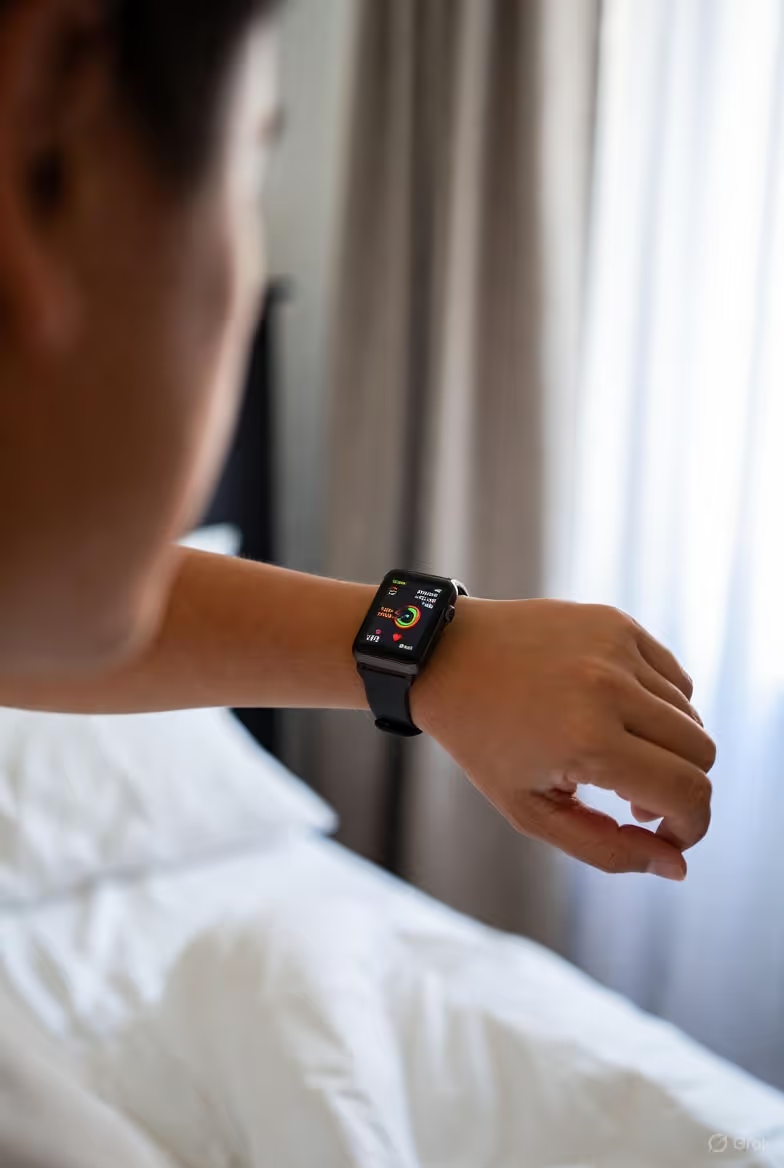
How Morning Sunlight Increases Tonight's Deep Sleep
Discover how morning sunlight increases tonight's deep sleep through circadian rhythm entrainment. Learn optimal morning exposure timing, duration, and intensity for measurably more restorative sleep.
The Unbreakable Chain: How Today’s First Light Determines Tonight’s Deepest Sleep
For most of human history, waking up was not a choice. It was a biological inevitability dictated by a single, powerful signal: the rising sun. Our ancestors didn’t need alarms; their internal clocks were perfectly synchronized with the solar day. They rose with the light, worked under the sky, and retired as darkness fell, their sleep deeply interwoven with the rhythms of the natural world.
Today, we’ve traded that solar synchronization for artificial control. We wake in dark rooms to the blare of a smartphone, spend our days under fluorescent office lights, and unwind at night under the glow of LED screens. This modern environment has severed the fundamental connection between our biology and the sun—and our sleep is paying the price. Millions struggle with insomnia, restless nights, and a pervasive feeling of fatigue, chasing solutions in supplements, apps, and elaborate bedtime routines, all while overlooking the most potent, freely available sleep aid in existence: morning sunlight.
The science is now unequivocal: the quality of your sleep tonight is largely determined by the light you expose yourself to within the first hour of waking up. It’s a process so foundational that sleep researchers liken it to “eating lunch at a regular time to prepare your body to be hungry for dinner at a predictable time”. Morning light is the master key that winds your internal clock, setting in motion a precise, hours-long cascade of hormonal and neurological events that culminate in deep, restorative sleep.
This isn’t just about feeling sleepy. It’s about triggering the specific, physiological state of deep sleep (or slow-wave sleep), the most restorative phase of the sleep cycle. This is when your body repairs tissues, consolidates memories, flushes metabolic waste from the brain, and strengthens the immune system. Without sufficient deep sleep, no amount of time in bed will leave you feeling truly refreshed.
This article will unravel the biological chain reaction that begins in your retina at dawn and ends in the profound silence of deep sleep at midnight. We’ll explore the precise mechanisms—from the suppression of melatonin and the cortisol awakening response to the alignment of your circadian midpoint—and translate the robust scientific evidence into a simple, actionable protocol. Furthermore, we’ll examine how modern technology, particularly smart health rings, can move you from guesswork to precision, allowing you to see the direct, quantifiable impact of your morning light habits on your sleep architecture.
The journey to better sleep doesn’t start at bedtime. It begins at sunrise.
Your Body's Master Clock: The Suprachiasmatic Nucleus and Circadian Rhythm
At the very core of your sleep-wake cycle lies a tiny, powerful structure in your brain’s hypothalamus, no larger than a grain of rice: the suprachiasmatic nucleus (SCN). Think of the SCN as the conductor of a grand, 24-hour biological orchestra. It doesn’t just manage sleep and wakefulness; it meticulously coordinates the timing of thousands of processes, from the release of hormones like cortisol and melatonin to fluctuations in body temperature, blood pressure, and digestive enzyme secretion.
This symphony of rhythms is your circadian rhythm (from the Latin circa diem, meaning “about a day”). For this internal timing system to be useful, it must be precisely synchronized with the external world. Left to its own devices in complete darkness, the human circadian clock would run on a cycle slightly longer than 24 hours. To avoid drifting out of sync with the solar day—a phenomenon painfully familiar to shift workers and international travelers—the SCN requires a daily reset.
The most powerful reset button, or zeitgeber (“time-giver” in German), is light. While other cues like meal timing, exercise, and social interaction play a role, light is the dominant force that aligns our internal clock with Earth’s rotation.
How Light Reaches the Clock: A Dedicated Neural Highway
The process of entrainment begins in your eyes, but not necessarily with “vision” as you know it. A dedicated neural pathway, separate from the one that creates images, carries light signals directly to the SCN. This is the retinohypothalamic tract (RHT).
When light enters the eye, specialized cells in the retina called intrinsically photosensitive retinal ganglion cells (ipRGCs) are activated. These cells contain a photopigment called melanopsin, which is particularly sensitive to short-wavelength, blue-rich light—the very spectrum that is abundant in the clear morning sky. Unlike rods and cones, which help you see color and detail, the ipRGCs are essentially light meters. Their primary job is to measure ambient light intensity and spectral quality, then send that critical timing information directly down the RHT to the SCN.
This pathway allows the SCN to answer a fundamental question: Is it day or night? Based on that answer, it sends humoral and neural signals throughout your body to either promote wakefulness and activity or initiate sleep and repair. The timing, intensity, and color of the light you see in the morning are the raw data your SCN uses to set the entire schedule for the next 24 hours, including the precise timing and depth of your sleep.
The Consequences of a Misaligned Clock
When this light input is absent or mistimed—such as when we wake in darkness, get insufficient daylight, or bombard our eyes with bright blue light from screens at night—the SCN’s schedule becomes unanchored. This misalignment is the root cause of circadian rhythm sleep-wake disorders (CRSWDs). The symptoms are widespread: difficulty falling asleep, non-restorative sleep, daytime sleepiness, and impaired cognitive function.
The implications go far beyond simple tiredness. Chronic circadian disruption is linked by a growing body of research to an increased risk for serious health conditions, including metabolic disorders like diabetes, cardiovascular disease, mood disorders like depression, and even certain cancers. In this context, getting morning light is not merely a lifestyle hack; it is a foundational health practice that stabilizes the central timing mechanism for virtually every system in your body.
By understanding the SCN as the master clock and light as its primary time-setter, we can begin to see the logical flow: a clear, bright signal in the morning leads to a well-timed, robust signal for sleep at night. The next step is to understand the two key hormonal levers that the SCN pulls to execute this plan: cortisol and melatonin.
The Cortisol Awakening Response: Your Natural Alarm System
If the SCN is the conductor, then cortisol is the opening note of your body’s daily symphony. Often misunderstood as solely a “stress hormone,” cortisol plays an essential and healthy role in your circadian rhythm. Its most critical surge is the cortisol awakening response (CAR)—a sharp, predictable increase in cortisol levels that occurs in the first 30 to 60 minutes after waking.
This spike serves as your internal alarm system. It helps mobilize energy stores, increases blood sugar to fuel your brain and muscles, enhances alertness, and primes your immune system for daytime activity. In essence, the CAR is your body’s physiological transition from a sleep state to an active, wakeful state.
How Morning Light Amplifies the Signal
While the CAR occurs naturally, its magnitude and timing are powerfully influenced by light exposure. Morning sunlight acts as a catalyst for this process. When ipRGCs in your retina detect bright light, they signal the SCN, which in turn stimulates the hypothalamus-pituitary-adrenal (HPA) axis to release cortisol more robustly.
This is a perfect example of a hormetic stressor—a mild, beneficial stress that makes the system more resilient. The light-triggered cortisol boost in the morning helps create a steeper, more defined decline in cortisol throughout the afternoon and evening. A robust morning peak leads to lower, more stable cortisol levels by bedtime, which is a prerequisite for falling asleep easily and entering deep sleep. Conversely, a blunted or delayed CAR, often seen in people who wake in darkness or under low light, can lead to morning grogginess, low daytime energy, and an ill-timed cortisol curve that interferes with evening relaxation.
The Real-World Impact: From Fog to Focus
The practical effect of harnessing your CAR with light is profound. Individuals who consistently practice morning light exposure report:
Faster transition to alertness: Feeling genuinely awake more quickly after getting out of bed.
Sustained daytime energy: Reduced reliance on caffeine and fewer afternoon energy crashes.
Improved mood and resilience: Cortisol works in concert with neurotransmitters like serotonin, contributing to a more stable and positive mood throughout the day.
A 2016 study published in Sleep Medicine provides compelling evidence of this shift. Researchers had elderly nursing home residents receive scheduled daylight exposure for one hour in the morning (9-10 a.m.). After six weeks, not only did their measured melatonin rhythms shift, but their subjective ratings on the Karolinska Sleepiness Scale (KSS) showed a significant decrease in sleepiness and increase in alertness during the daytime hours. This demonstrates that morning light doesn’t just affect hormones we can’t feel; it directly translates into perceptible changes in energy and vigilance.
By strengthening your CAR, morning sunlight does more than just wake you up. It sets the entire trajectory of your day’s energy and stress hormone profile, creating the necessary hormonal backdrop for sleep pressure to build effectively and for the next key player—melatonin—to make its timely entrance.
Suppressing Melatonin: The Daytime "Off-Switch" for Sleepiness
While cortisol is the daytime hormone of action, melatonin is the nighttime hormone of rest. Produced by the pineal gland in response to darkness, melatonin is often called the “hormone of sleep” or the “vampire hormone” because its levels are undetectable during the day and rise sharply after sunset, signaling to your body and brain that it’s time to wind down and prepare for sleep.
However, a lesser-known but equally critical role of morning light is its powerful effect on suppressing melatonin. If cortisol is about turning the “on” switch for the day, suppressing melatonin is about firmly turning the “off” switch for the night.
The Importance of a Clean Melatonin Shut-Off
Imagine a bathtub you’re trying to fill for the evening. If the drain isn’t fully closed, the tub will never fill completely, no matter how long you run the water. In this analogy, melatonin is the water in the tub, and daylight is the mechanism that closes the drain.
Upon waking, especially in winter or if you rise before the sun, melatonin levels can still be elevated. This residual melatonin is a biological carryover from the sleep period and contributes to that feeling of grogginess known as sleep inertia. Bright morning sunlight, particularly its blue wavelengths, sends an unambiguous signal via the ipRGCs and SCN to the pineal gland: “Stop production. The day has begun.” This rapid suppression clears melatonin from your system, helping you shake off sleep inertia and signaling that the clock for a new melatonin production cycle has been reset.
Resetting the Countdown Timer
This morning suppression is not an isolated event; it initiates a new countdown. The duration of melatonin suppression is part of what determines the melatonin onset in the evening. By providing a strong, clear “lights on” signal in the morning, you effectively tell your pineal gland when to start the countdown for “lights off” approximately 14-16 hours later. A 2025 cross-sectional study of over 1,700 adults found that increased morning sun exposure was significantly associated with an earlier overall sleep timing, demonstrating this phase-shifting effect in a large population.
The research is clear on the measurable impact of this reset. In the same 2016 nursing home study, researchers found that after six weeks of scheduled morning light exposure, participants’ morning melatonin levels measured at 7 a.m. had more than doubled, indicating a stronger, more defined rhythm. While the change in night melatonin levels was not statistically significant in this small study, the dramatic shift in morning levels points to a healthier, more robust circadian signal.
The Consequences of a Weak Signal
Failure to suppress melatonin adequately in the morning—by staying in dim indoor environments—results in a weak, ambiguous circadian signal. The melatonin drain isn’t fully closed. This can lead to:
Prolonged morning grogginess and brain fog.
A delayed and less pronounced melatonin rise in the evening, making it harder to fall asleep.
A shallower amplitude in the overall melatonin rhythm, which is linked to poorer sleep quality and fragmentation.
Therefore, the goal of morning light is twofold: to energize you via cortisol and to definitively end the night’s hormonal phase by suppressing melatonin. This clean break is the first decisive step in building what sleep experts call sleep pressure—the homeostatic drive for sleep that accumulates throughout the day and must reach a critical threshold for deep, restorative sleep to occur.
Building Optimal Sleep Pressure: The Homeostatic Sleep Drive
Sleep is governed by two primary, interacting systems: the circadian rhythm (Process C), which is the predictable, clock-dependent drive for wakefulness we’ve been discussing, and the homeostatic sleep drive (Process S), often called “sleep pressure”. While the circadian rhythm dictates when you should be asleep or awake, the homeostatic drive dictates how strong your need for sleep is.
Think of sleep pressure like an appetite for sleep. It starts at zero when you wake up from a full night’s rest and builds steadily throughout every waking hour. The longer you are awake, the more a neurochemical called adenosine accumulates in your brain. Adenosine binds to receptors, promoting drowsiness and inhibiting wake-promoting neurons. By the end of a 16-hour day, sleep pressure (adenosine levels) is high, the circadian drive for wakefulness is low, and the two processes converge to make falling asleep easy and inevitable.
How Morning Light Optimizes the Build-Up
This is where morning light’s role becomes even more fascinating. It doesn’t just set your clock; it ensures you build the right kind of sleep pressure. A well-timed circadian rhythm, initiated by morning light, creates an ideal backdrop for adenosine to accumulate in a linear, effective manner.
Promoting Vigilant Wakefulness: A strong CAR and suppressed melatonin result in higher daytime alertness and energy. This doesn’t just feel good—it means you are more likely to be mentally and physically active throughout the day. Cognitive engagement, physical movement, and sensory stimulation are all processes that accelerate the build-up of adenosine. In contrast, a day spent in a lethargic, low-energy state due to poor circadian signaling results in a weaker, less robust build-up of sleep pressure.
Preventing Premature Drowsiness: By properly aligning your circadian wakefulness drive, morning light helps keep sleep pressure at bay during the day. This prevents the common experience of an overwhelming wave of sleepiness in the mid-afternoon (distinct from the natural, mild post-lunch dip), which can lead to unplanned napping. Long or late naps can significantly discharge sleep pressure, sabotaging your ability to fall asleep at your desired bedtime.
Creating a Clear Transition: The ultimate goal is for sleep pressure to reach its peak just as your circadian rhythm is transitioning into its sleep-promoting phase (marked by rising melatonin and dropping core body temperature). When both processes are aligned—thanks to the morning’s reset—the transition into sleep is smooth and rapid. This is measured as sleep latency (the time it takes to fall asleep). Research consistently shows that proper light exposure is linked to shorter sleep latency, with the ideal being 10-20 minutes.
A large 2025 study corroborates this by showing that while morning sunlight strongly influenced sleep timing and quality, its benefits were most clearly seen in these regulatory parameters rather than just gross total sleep time. This underscores that morning light is about optimizing the architecture and timing of sleep, not just extending it. It ensures that when you finally go to bed, your sleep pressure is high enough to push you quickly into the deeper, more restorative stages of sleep, rather than lying awake with a restless mind.
To visualize this perfect alignment, we need to look at one of the most telling metrics of circadian health: the midpoint of sleep.
Aligning Your Sleep Midpoint: The Gold Standard of Circadian Health
If you could only track one number to gauge the alignment of your circadian rhythm, it should be your sleep midpoint. This is the simple, yet profoundly informative, halfway point between when you fall asleep and when you wake up. For example, if you fall asleep at 11 p.m. and wake at 7 a.m., your sleep midpoint is 3 a.m.
Your sleep midpoint is a direct reflection of your circadian phase. An early midpoint (e.g., between 2 a.m. and 4 a.m. for an average sleep schedule) typically indicates an earlier-aligned, or “morning-type,” rhythm. A later midpoint (e.g., 5 a.m. or later) suggests a delayed rhythm, often associated with “night owls,” social jetlag, and difficulty waking for morning commitments.
Morning Light as the Prime Shifter
The single most effective tool for shifting your sleep midpoint earlier is morning light exposure. The 2025 study of over 1,700 adults provides striking, quantifiable evidence of this. Researchers found that every additional 30 minutes of morning sun exposure (before 10 a.m.) was associated with a 23-minute earlier sleep midpoint. To put that in perspective: if you currently have a late midpoint of 5:30 a.m., adding just one hour of morning light to your routine could, over time, shift it to a much healthier 4:00 a.m.
This phase-advancing effect is the cornerstone of treating Delayed Sleep Phase Syndrome (DSPS) in clinical sleep medicine. Light therapy boxes, which mimic the spectrum and intensity of morning sunlight, are prescribed specifically to provide this critical signal and help patients’ clocks shift earlier.
Why the Midpoint Matters for Deep Sleep
An earlier, more stable sleep midpoint isn’t just about convenience. It is intrinsically linked to sleep quality and architecture, particularly deep sleep.
Maximizing the Deep Sleep Window: The majority of slow-wave deep sleep typically occurs in the first half of the night, during the first few sleep cycles. An earlier, more regular bedtime (facilitated by an earlier midpoint) ensures that this prime deep sleep window occurs when your circadian drive for sleep is strongest and least likely to be interrupted. A delayed midpoint often compresses this window or pushes it into a time when external disturbances (morning light, noise) are more likely.
Reducing Social Jetlag: A misalignment between your biological sleep midpoint and your socially required sleep schedule is termed “social jetlag.” This constant state of internal dissonance fragments sleep, reduces sleep efficiency, and is linked to a host of metabolic issues. By using morning light to align your midpoint with your life’s demands, you eliminate this drag on your system, allowing for more consolidated, efficient sleep.
Improving Overall Sleep Quality: The same 2025 study found that increased morning sun exposure was significantly associated with a lower (better) total score on the Pittsburgh Sleep Quality Index (PSQI), a comprehensive measure of sleep quality. This confirms that the phase-shifting effect of morning light translates directly into subjectively better sleep.
By focusing on your sleep midpoint, you move beyond just counting hours in bed. You start engineering the timing of your sleep to be in harmony with your biology. This harmony is the environment in which deep sleep thrives. But how do you know if you’re getting enough of that crucial morning light to make a difference? The answer lies in understanding the science of dosage—intensity, duration, and spectrum.
The Science of Sunlight Dosage: Intensity, Duration, and Spectrum
Getting morning light isn’t a vague suggestion to “go outside.” It’s a quantifiable intervention with specific parameters for maximum effect. The potency of light as a circadian signal depends on three key factors: intensity (how bright it is), duration (how long you’re exposed), and spectral quality (the color of the light).
1. Intensity: Lux Matters
Light intensity is measured in lux. To appreciate the dose you need, consider these benchmarks:
Indoor office/room lighting: ~200-500 lux.
Overcast winter morning: ~1,000-2,000 lux.
Clear sunrise/sunset: ~10,000 lux.
Full daylight (not direct sun): ~25,000 lux.
Direct sunlight: Up to 100,000 lux.
Your circadian system requires a relatively high threshold of intensity to trigger a strong reset. This is why sitting by a sunny window is good, but being outside is exponentially better. Stanford neuroscientist Dr. Andrew Huberman popularized a clear protocol based on this science: aim for 5-10 minutes of exposure on a clear, sunny morning, and 15-20 minutes on a cloudy or overcast day. If you live in a dark climate or it’s winter, he recommends turning on as many bright indoor lights as possible as a secondary measure, though this is far less effective than true outdoor light.
2. Spectral Quality: The Blue Light Advantage
The spectrum, or color, of light changes dramatically throughout the day. The morning sky is rich in short-wavelength blue light (around 480 nanometers). This is precisely the wavelength to which the melanopsin in your ipRGCs is most sensitive, making it the most powerful signal for suppressing melatonin and phase-advancing your clock.
As the sun sets, the atmosphere scatters the shorter blue wavelengths, leaving the longer red and orange wavelengths dominant. This warmer light has a minimal effect on melatonin suppression, which is why sunset light can help initiate the wind-down process. Mimicking this natural progression—bright, blue-rich light in the morning and dim, warm light in the evening—is the ideal strategy for circadian health.
3. Consistency Over Perfection
Perhaps the most important principle is consistency. A perfect 20-minute walk every sunny Saturday is less effective than a consistent 5-10 minute effort every single day, rain or shine. The SCN thrives on regularity. Making morning light exposure a non-negotiable part of your daily routine, like brushing your teeth, ensures a steady, reliable time cue that your clock can depend on.
The evidence for a consistent “dose” is compelling. In the 2016 study with elderly participants, the intervention was a very consistent and manageable 30 minutes of scheduled daylight exposure each morning. This consistent, modest dose was enough to produce significant changes in melatonin rhythms and subjective alertness.
By understanding dosage, you can tailor the practice to your life. You don’t need to climb a mountain at dawn. A short walk, drinking your coffee on the balcony, or even just facing an eastern window while you stretch can deliver the required dose. The key is to be intentional about seeking brightness first thing in the morning. But what happens when modern life, with its roofs, walls, and screens, gets in the way?
The Modern Light Dilemma: Why We're All Chronically Underexposed
Our ancestors lived their lives immersed in the natural light-dark cycle. Today, the average person spends over 90% of their time indoors. This represents a fundamental and dramatic shift in our environmental context, creating what researchers call “chronic circadian underexposure.” We are living in a state of biological twilight, and our sleep is suffering for it.
The Indoor Life and the "Lux Gap"
The core of the problem is the vast intensity gap between indoor and outdoor light. As noted, even a brightly lit office (~500 lux) is a fraction of the intensity of a cloudy day (~1,000-2,000 lux), let alone a sunny one (10,000+ lux). Our indoor environments simply do not provide the luminous intensity required for a robust circadian reset. We wake up in dark bedrooms, commute in cars or subways, work under artificial lights, and return home as the sun is setting. This pattern fails to provide the clear “ON” signal in the morning and the clear “OFF” signal at night that our biology expects.
The Double Whammy: Artificial Light at Night
While underexposure to bright light during the day is problem one, the second, equally damaging issue is overexposure to artificial light at night. The same ipRGCs that crave blue light in the morning are ruthlessly hijacked by the blue-rich LEDs from our smartphones, tablets, computers, and televisions in the evening.
Evening screen exposure acts as a “counterfeit dawn,” telling your SCN it’s still daytime. This:
Delays melatonin onset: Suppressing the natural evening rise, making it harder to feel sleepy.
Phase-delays your rhythm: Pushing your sleep midpoint later, in the opposite direction of where morning light tries to pull it.
Fragments sleep: Leading to more nighttime awakenings and less time in deep sleep.
This combination—dim days and bright nights—completely scrambles the SCN’s data set. It’s no wonder rates of insomnia and poor sleep quality are so high. The COVID-19 pandemic, with its shift to remote work and reduced outdoor activity, likely exacerbated this “light famine” for many, creating long-lasting disruptions to sleep patterns.
The Seasonal Challenge
This modern dilemma is intensified by seasonality. In winter, at higher latitudes, the available window of morning sunlight is short, and its intensity is often reduced by cloud cover. This can lead to or worsen Seasonal Affective Disorder (SAD), where the lack of a strong circadian signal contributes to depression, fatigue, and hypersomnia (excessive sleepiness). The morning light protocol is, in fact, a foundational element in the treatment and prevention of SAD.
The solution is not to abandon modern life but to become strategic within it. We must intentionally create a new “light diet” that bridges the gap between our built environment and our biological needs. This starts with defending the first and most important hours of the day for light intake and the last hours for darkness.
The Ideal Morning Light Protocol: A Step-by-Step Guide
Translating the complex science of circadian entrainment into daily practice is refreshingly simple. The goal is to provide your ipRGCs and SCN with a strong, clear, and consistent light signal as soon as possible after waking. Here is a step-by-step protocol based on the consensus from neuroscience and sleep medicine research.
Step 1: Timing is Everything (The 30-60 Minute Window)
The most critical factor is speed. Your circadian system is most sensitive to light roughly within the first hour after your usual wake-up time. This is when the phase-advancing effects are strongest. Make it a priority to get light exposure within 30-60 minutes of waking. Don’t wait until mid-morning; the closer to waking, the better.
Step 2: Go Outside (No Exceptions, If Possible)
Outdoor light is non-negotiable for optimal effect. Even on a completely overcast day, the light intensity outside (1,000-2,000 lux) dwarfs that of any indoor setting. If you can step outside, even onto a porch, balcony, or backyard, you are getting a therapeutic dose.
Step 3: Calculate Your Dose
Use this simple guideline, popularized by Dr. Andrew Huberman and supported by light intensity data:
Bright, sunny morning: 5-10 minutes.
Cloudy or overcast morning: 15-20 minutes.
Heavily overcast or rainy morning: 25-30 minutes.
Important: Do not look directly at the sun, especially as it rises higher and becomes brighter. You are aiming for ambient light exposure, not sun gazing, which can damage your retina.
Step 4: Optimize the Conditions
Skip the sunglasses: Clear lenses are fine, but sunglasses, especially those with UV or significant tint, will block the crucial light signal. If you have light sensitivity, consult your eye doctor.
Get peripheral exposure: You don’t need to stare at the sky. A walk where light hits your face and eyes from all angles is perfect. The ipRGCs are distributed across the retina.
Combine with a healthy habit: “Habit stack” to ensure consistency. Take your morning walk, do your mobility routine outside, drink your coffee or tea on the porch, or take a work call while pacing outdoors.
Step 5: The Indoor Contingency Plan
For days when going outside is genuinely impossible (severe weather, safety concerns, etc.):
Sit by the brightest window you have, ideally facing east. The more sky you can see, the better.
Turn on ALL the artificial lights in the room. Overhead lights, lamps, everything. While even bright indoor lighting (~500 lux) is a poor substitute for outdoors, maximizing your indoor illuminance is the next best thing.
Consider a light therapy box: For those in perpetually dark climates or with diagnosed SAD or DSPS, a 10,000-lux light therapy box used for 20-30 minutes after waking can be a clinically effective alternative.
Step 6: Reinforce with Afternoon Light
For an even stronger circadian signal, get another dose of natural light in the late afternoon, around sunset. The low-angle, orange/yellow light at this time helps consolidate your circadian timing and can trigger the early, gentle release of melatonin, priming you for sleep. Think of it as the “second anchor” of your day.
By following this protocol, you are giving your biology exactly what it evolved to expect. But how do you know it’s working? In the past, you’d have to rely on vague feelings of improved sleep. Today, wearable technology like the Oxyzen smart ring can provide objective, granular data to close the feedback loop.
Measuring the Impact: How Technology Validates the Light-Sleep Connection
For centuries, the connection between morning habits and night-time sleep was anecdotal. Today, advanced wearable technology allows us to see this biological chain reaction in high-definition data. Devices like the Oxyzen smart ring act as personal sleep labs, moving the morning light protocol from an article of faith to an evidence-based practice.
Closing the Feedback Loop: From Behavior to Biomarker
Modern smart rings and fitness trackers measure the very outcomes that morning light is designed to influence. By tracking your behavior (light exposure) and correlating it with your physiology (sleep data), you can build a powerful, personalized feedback loop.
Key metrics a device like the Oxyzen ring can track include:
Sleep Latency: The time it takes to fall asleep. Morning light aims to shorten this. As the Oura ring blog notes, an ideal sleep latency is within 10-20 minutes.
Sleep Stages: The breakdown of light, deep (slow-wave), and REM sleep. The ultimate goal is to increase the duration and quality of deep sleep.
Sleep Efficiency: The percentage of time in bed actually spent asleep. Better circadian alignment leads to less tossing and turning and higher efficiency.
Resting Heart Rate (RHR) & Heart Rate Variability (HRV): These biomarkers of recovery and autonomic nervous system balance typically improve with more consistent, deeper sleep.
Sleep Midpoint: As discussed, one of the most telling circadian metrics, which should gradually shift earlier with consistent morning light.
The Power of Tags and Correlation
Advanced platforms take this a step further. For instance, Oura’s “Tags” feature allows users to manually log habits like “Morning Sunlight” or “Evening Walk.” Over time, the app’s algorithms can show you personalized correlations: On days you log morning sunlight, your deep sleep increases by an average of 12%, or your sleep midpoint is 22 minutes earlier.
This transforms self-experimentation. You are no longer guessing. You can:
Establish a baseline: Wear your ring for a week or two without changing your light habits.
Implement the protocol: Consistently log your morning light exposure for 3-4 weeks.
Analyze the trend: Review your sleep data to see the objective impact on your deep sleep, latency, and midpoint.
This data-driven approach is incredibly motivating. It turns an abstract health tip into a tangible, visual result. Seeing a graph where your deep sleep bars get taller on the days marked with a “sun” tag provides irrefutable proof that the practice is working for you.
A Tool for Personalization and Problem-Solving
Technology also helps you personalize the protocol. Maybe you discover that 10 minutes of light works, but 20 minutes is your sweet spot. Perhaps you see that morning light helps, but late screen use is still undermining your results. The data illuminates these interactions, allowing you to fine-tune not just your mornings, but your entire 24-hour light hygiene routine.
By leveraging a smart health ring, you become an active participant in your own circadian health. You can learn more about how this technology provides insights into your daily rhythms by exploring the resources available on the Oxyzen blog, which features articles on sleep science, habit formation, and optimizing recovery.
The journey through the science of morning light brings us to a powerful conclusion: this free, simple, and ancient practice is perhaps the most underutilized tool in modern sleep medicine. By understanding and respecting the biological chain that links dawn to deep sleep, we can reclaim one of the most fundamental pillars of human health.
The Final Links: From Dawn’s Signal to Deep Sleep’s Reality
The journey from a photon of morning light hitting your retina to the profound, restorative embrace of deep sleep hours later is a masterpiece of biological engineering. We’ve traced the path: the signal travels via the ipRGCs to reset the master clock (SCN), which orchestrates a robust cortisol awakening response and a definitive suppression of melatonin. This sets the stage for optimal sleep pressure to build throughout the day, culminating in a well-timed, seamless transition into sleep with an earlier, healthier sleep midpoint.
This final third of our exploration moves from the preparatory stages to the main event: sleep itself. Here, we will descend into the science of the sleep cycle, demystifying what deep sleep actually is and why it’s non-negotiable for health. We’ll then see how the morning’ light-initiated cascade directly dictates the quality and architecture of your night. Finally, we’ll equip you with a comprehensive, 24-hour protocol for light hygiene, troubleshoot common obstacles, and explore how this practice integrates with other pillars of wellness. By the end, you will have a complete, actionable blueprint for harnessing the sun to transform your sleep and, by extension, your waking life.
Understanding the Sleep Cycle: Where Deep Sleep Reigns
Sleep is not a monolithic state of unconsciousness. It is a dynamic, cyclical journey through distinct stages, each with its own unique brainwave patterns and physiological purpose. A full cycle lasts about 90 minutes, and a healthy adult typically completes 4-6 of these cycles per night.
The stages are broadly categorized as Non-Rapid Eye Movement (NREM) sleep and Rapid Eye Movement (REM) sleep. NREM sleep is further divided into three stages:
N1 (Light Sleep): The transition from wakefulness to sleep, lasting several minutes. Muscle activity slows, and you can be easily awakened.
N2 (Light Sleep): A period of light sleep before entering deeper stages. Your heart rate slows, body temperature drops, and the brain produces sleep spindles and K-complexes—bursts of activity believed to be crucial for memory consolidation and sensory disconnection.
N3 (Deep Sleep / Slow-Wave Sleep): The most restorative phase. Brainwaves slow to their lowest frequency (delta waves), making it very difficult to awaken. This is the peak time for physical repair, growth hormone release, immune system strengthening, and cerebrospinal fluid washing metabolic waste from the brain.
Following NREM, the cycle enters REM sleep. Here, the brain becomes highly active (resembling wakefulness), dreaming is vivid, and the body experiences temporary muscle paralysis (atonia) to prevent acting out dreams. REM is critical for emotional processing, memory consolidation, and creativity.
The Architecture of a Perfect Night
The proportion of time spent in each stage is not equal across the night. This is known as sleep architecture.
First Half of the Night: Dominated by deep N3 sleep. The initial cycles contain the longest, most intense periods of slow-wave sleep. This is when the physical restoration prioritized by the sleep pressure built all day is executed.
Second Half of the Night: REM sleep periods become longer, while deep sleep diminishes and may disappear entirely in later cycles. This shift reflects a change in priority from physical to mental and emotional restoration.
Therefore, the integrity of the first half of your sleep—particularly the duration and unbroken quality of your deep sleep—is paramount. This is precisely the window that a well-timed circadian rhythm, set by morning light, is designed to protect and maximize.
How Morning Light Directly Improves Deep Sleep Metrics
With an understanding of sleep architecture, we can now draw the direct, causal lines from the morning’s actions to the night’s outcomes. A strong circadian signal doesn’t just help you fall asleep; it actively engineers a night rich in deep, restorative slow-wave sleep.
1. Enhancing Slow-Wave Activity (SWA)
The gold standard for measuring deep sleep intensity in a lab is slow-wave activity (SWA)—the power or amplitude of the slow delta brainwaves. Higher SWA indicates more potent, restorative deep sleep. Research shows that a stable, well-entrained circadian rhythm is a key driver of robust SWA. When your sleep onset is aligned with your circadian trough (the lowest point of your core body temperature rhythm, which typically occurs in the early morning hours), you enter sleep when the drive for deep, slow-wave sleep is strongest. Morning light, by advancing and strengthening this rhythm, ensures you hit this optimal window.
2. Increasing Deep Sleep Duration and Efficiency
By promoting a faster sleep onset and a more stable sleep architecture (less fragmentation), morning light directly increases the time available for deep sleep. You spend less time tossing in light sleep (N1/N2) and more time cycling efficiently into N3. A 2020 study in the journal Sleep found that stronger circadian rhythmicity was associated with a higher percentage of N3 sleep and less night-to-night variability in sleep duration. This consistency is a hallmark of circadian health.
3. Protecting Deep Sleep from Fragmentation
One of the greatest enemies of deep sleep is arousal—brief awakenings or shifts to lighter sleep stages. These can be caused by internal factors (stress, an unaligned circadian rhythm causing a "wake signal" at night) or external ones (noise, light, temperature). A robust circadian rhythm acts as a stabilizing force, reinforcing sleep continuity throughout the night, especially during the deep-sleep-rich first half. The SCN sends stronger "sleep-maintaining" signals, making you less susceptible to being pulled out of N3 by minor disturbances.
4. Optimizing the Sleep Spindle Connection
Recall that N2 sleep features sleep spindles. These bursts of brain activity are not just filler; they are thought to play a "protective" role, shielding the deepening sleep of N3 from being disrupted by external stimuli. The generation of sleep spindles is influenced by thalamocortical rhythms, which are modulated by the circadian system. There is emerging evidence that proper circadian entrainment supports healthy spindle activity, which in turn safeguards the integrity of the deep sleep that follows.
In essence, morning light builds a sturdy, well-timed circadian framework. Your sleep cycles are then constructed within this framework, resulting in an architecture that is primed for depth, stability, and restoration. It ensures that the sleep pressure you diligently built all day is "spent" on the most valuable currency: deep, slow-wave sleep.
The Complete 24-Hour Light Hygiene Protocol
Mastering morning light is the most critical step, but it is only one part of a holistic 24-hour light hygiene strategy. To fully support your circadian rhythm, you must manage light exposure across the entire day, creating a clear contrast between bright days and dark nights. This protocol turns the science into a daily practice.
Morning (Within 60 Minutes of Waking): The Reset
Primary Goal: Strong circadian reset and cortisol boost.
Action: Follow the dosage protocol from earlier: 5-30 minutes of outdoor light without sunglasses.
Pro Tip: If you exercise in the morning, do it outdoors. The combination of light and movement is a potent dual-signal for your clock and metabolism.
Daytime (Late Morning to Late Afternoon): The Reinforcement
Goal: Sustain high light levels to maintain alertness and continue suppressing melatonin.
Action:
Seek bright, indirect light throughout the day. Take walking meetings, eat lunch outside, or position your desk near a window.
On dark winter days or if you work in a dim environment, consider a bright light therapy lamp (10,000 lux) on your desk for a 30-60 minute session during the morning or early afternoon. This can help bridge the "lux gap."
Avoid prolonged darkness or dimness during daytime hours, as this sends conflicting signals.
Evening (2-3 Hours Before Bed): The Wind-Down
Goal: Initiate the natural rise of melatonin and prepare the body for sleep.
Action:
Dim the lights in your home. Use lamps with warm-white bulbs (2700K or lower) instead of overhead lights.
Implement a "digital sunset":
90 minutes before bed: Stop using computers, tablets, and major screens for entertainment.
60 minutes before bed: Put phones on night mode (which shifts colors to warmer tones) and use them only if necessary, or ideally, put them away.
If you must use screens, wear blue-light blocking glasses that filter light below 500nm. Research shows they can be effective in preserving melatonin levels.
Embrace candlelight or salt lamps: Their very low intensity and warm glow have minimal circadian impact and create a relaxing atmosphere.
Night (During Sleep): The Sanctuary
Goal: Protect the sanctity of melatonin release and deep sleep.
Action:
Make your bedroom pitch black. Use blackout curtains or a sleep mask. Even small amounts of light from streetlights or electronic LEDs can fragment sleep and suppress melatonin.
Remove or cover all light sources: Digital clocks, charger LEDs, router lights. Use electrical tape if needed.
Keep it cool and quiet: A temperature of 65-68°F (18-20°C) is ideal for sleep, and white noise can mask disruptive sounds.
This 24-hour rhythm mimics the natural progression of the sun. It provides the clear, unambiguous cues your SCN needs to run its orchestra with precision. For more detailed guidance on creating the perfect sleep environment, you can find a wealth of actionable tips on the Oxyzen blog.
Troubleshooting Common Challenges and Obstacles
Even with the best intentions, real life presents hurdles. Here’s how to adapt the morning light protocol to common challenges.
Challenge 1: "I Wake Up Before the Sun (e.g., for Work)"
Solution: Use artificial light to simulate dawn.
Dawn Simulator Alarm Clock: This device gradually increases light intensity over 30-60 minutes before your wake time, mimicking a natural sunrise. This has been shown to improve morning alertness and mood, especially in winter.
Immediate Artificial Light: Upon waking, turn on all the bright, cool-white lights in your bathroom and kitchen. While inferior to sunlight, this provides a stronger signal than darkness. Follow this with outdoor light exposure as soon as the sun is up, even if it's on your commute or during a morning break.
Challenge 2: "It's Winter/Always Cloudy Where I Live"
Solution: Maximize exposure and use technology.
Commit to the outdoor time, even on cloudy days. Remember, the duration needs to be longer (20-30 minutes).
Invest in a high-quality light therapy box (10,000 lux). Use it for 20-30 minutes within the first hour of waking, positioned at an angle (not staring directly) about 16-24 inches from your face. This is a clinically validated treatment for Seasonal Affective Disorder and circadian misalignment.
Take a midday "light break" to get whatever daylight is available.
Challenge 3: "My Schedule is Irregular (Shift Work, Parenting)"
Solution: Anchor your rhythm relative to your wake time.
The rule remains: light within 60 minutes of waking, regardless of whether that's at 5 a.m. or 2 p.m. For night shift workers, this means wearing dark sunglasses on the commute home to protect your "night" (your sleep period) and then using bright light exposure at the start of your "day" (your work shift).
Be extra vigilant about darkness during your sleep period. Blackout curtains and a sleep mask are essential for daytime sleepers.
Challenge 4: "I Have Light Sensitivity or Eye Conditions"
Solution: Prioritize safety and consult a professional.
Do not look at bright light if you have conditions like macular degeneration or are on photosensitizing medications. You can still benefit from peripheral light exposure outdoors with your eyes directed downward.
Consult your ophthalmologist for personalized advice. They can recommend safe practices.
The key is flexible consistency—consistently applying the principle (strong light soon after waking) in a way that fits your unique constraints. For additional support and community experiences in overcoming these hurdles, the Oxyzen FAQ page is a valuable resource.
Integrating Morning Light with Other Sleep Hygiene Pillars
Morning light is the keystone habit for circadian alignment, but it works best in concert with other evidence-based sleep hygiene practices. Together, they form a synergistic system for sleep optimization.
Nutrition: Timing Your Fuel
Meal Timing: Try to align eating with daylight hours. Avoid large meals 2-3 hours before bedtime, as digestion can raise core body temperature and disrupt sleep. A consistent breakfast time, especially after morning light, reinforces the circadian signal.
Caffeine & Alcohol: Caffeine has a half-life of 5-6 hours. Establish a caffeine curfew (e.g., before 2 p.m.). Alcohol may induce sleepiness but severely fragments sleep and suppresses REM sleep in the second half of the night.
Exercise: The Right Time to Move
Morning/Afternoon Exercise: This is ideal. It further amplifies the cortisol awakening response (in a healthy way), raises body temperature, and promotes a deeper temperature drop later—a key sleep signal.
Evening Exercise: Vigorous exercise too close to bedtime (within 1-2 hours) can be overstimulating for some people due to elevated heart rate and core temperature. If evening is your only option, opt for gentle movement like yoga or stretching.
Stress Management and the Wind-Down Routine
The 1-Hour Buffer: Create a mandatory, screen-free buffer zone before bed. This is for relaxing activities: reading a physical book, light stretching, meditation, listening to calming music, or taking a warm bath. A bath is particularly effective because the rise and subsequent drop in core body temperature post-bath mimics the natural circadian temperature drop, promoting sleepiness.
Mindfulness & Gratitude: Practices like a brief meditation or jotting down a few things you're grateful for can calm the "monkey mind" and reduce sleep-disrupting anxiety.
The Role of the Oxyzen Smart Ring: The Integrator
A device like the Oxyzen ring is the ultimate tool for integration. It doesn't just track sleep; it shows you how these pillars interact.
You can tag "Morning Light," "Evening Workout," "Late Dinner," and "Meditation."
Over time, the data will reveal your personal patterns: *Does morning light plus a 2 p.m. caffeine cut-off yield your highest deep sleep scores? Does evening exercise help or hinder your sleep latency?*
This biofeedback allows you to move from generic advice to a personalized sleep protocol that is uniquely optimized for your biology and lifestyle. To see how real users have integrated this technology into their wellness journeys, you can read their stories in the Oxyzen testimonials.
Conclusion: Reclaiming Your Birthright to Restorative Sleep
We began this exploration by reflecting on our ancestors, whose lives were inextricably linked to the rising and setting of the sun. Their sleep was a natural, unforced segment of the solar cycle. In our modern world of limitless artificial light and 24/7 connectivity, we have unintentionally abandoned this fundamental rhythm, and our health has suffered the consequences.
The science, however, offers a clear and empowering path back. The connection between morning sunlight and tonight's deep sleep is not mystical; it is a rigorously documented biological chain reaction. By providing your suprachiasmatic nucleus with the clear, bright signal it evolved to expect, you initiate a cascade that optimizes hormone release, builds robust sleep pressure, aligns your sleep architecture, and ultimately unlocks the door to the most physically restorative stage of sleep.
This practice is democratically simple, universally accessible, and completely free. It requires no subscription, no special equipment (though a light box can help in specific scenarios), and only a small investment of time. Its return on investment—measured in deep, restorative sleep, daytime energy, cognitive clarity, and long-term health resilience—is immeasurable.
Implementing this is an act of reclaiming agency over your biology. It is a statement that you will no longer let the chaotic light of the modern world dictate the quality of your rest and recovery. Start tomorrow. Set your alarm 10 minutes earlier, step outside with your coffee, and face the morning sky. Let that light hit your eyes. You are not just watching the sunrise; you are instructing your internal clock, programming your physiology for a night of profound renewal.
Tonight's deep, healing sleep begins at today's dawn. The sun has kept its appointment for billions of years. It’s time we kept ours.
Ready to See the Difference? The journey to better sleep is both an art and a science. While feeling the subjective improvement is rewarding, seeing the objective data is transformative. The Oxyzen smart ring provides the missing link between your daily habits and your nightly recovery, offering precise insights into your sleep stages, readiness, and circadian alignment. To learn more about how Oxyzen can help you personalize and perfect your light hygiene protocol, visit our homepage or read our founding story to understand the mission behind the technology. Your deepest sleep awaits.
Your Questions, Answered: The Morning Sunlight and Deep Sleep Guide
After learning about the science of morning light and deep sleep, practical questions often arise. This final portion of our comprehensive article addresses the most common inquiries with clear, actionable answers based on the latest scientific understanding.
Can I get my morning light through a window?
The short answer is yes, but it’s significantly less effective. A standard windowpane can block a substantial portion of the full-spectrum daylight, especially the crucial short-wavelength blue light that your circadian system relies on most. While sitting by a sunny window is infinitely better than sitting in a dim room, the light intensity (lux) you receive is drastically reduced.
The Data: Bright outdoor light can exceed 10,000 lux on a clear morning. Behind a window, even on that same morning, the intensity might drop to 1,000-3,000 lux. To get a comparable circadian signal indoors, you would need to extend your exposure duration considerably. If you cannot go outside, a south- or east-facing window is your best indoor option. For consistent and reliable results, however, making the effort to step outside—even briefly—is the most powerful choice.
What if it's cloudy or rainy?
Absolutely. Getting outside is still essential on cloudy days. While the intensity is lower than on a sunny day, natural daylight on an overcast morning (typically 1,000-2,000 lux) still far surpasses the brightness of any normal indoor lighting (200-500 lux). The key is to adjust your duration.
The Protocol: As outlined earlier, if you aim for 5-10 minutes on a bright day, extend that to 15-20 minutes on a cloudy day, and 25-30 minutes on a heavily overcast or rainy day. Your ipRGCs are still detecting the full spectrum of skylight, just at a lower intensity. Consistency is far more important than waiting for perfect weather.
Do I need to look directly at the sun?
NO. You should NEVER look directly at the sun, even at sunrise. This can cause permanent damage to the light-sensitive cells in your retina. The goal is ambient light exposure, not sun gazing.
What to Do Instead: Go outside and face the general direction of the sky. Allow the light to enter your eyes from all angles. You can walk, stretch, or have your coffee while looking at the horizon or your surroundings. The light receptors (ipRGCs) that set your clock are distributed across your entire retina, so they will capture the signal perfectly without any risk.
Is evening sunlight bad for sleep?
Quite the opposite—it can be beneficial. The low-angle, warm-toned light of the late afternoon or sunset contains far less melatonin-suppressing blue light than morning light or screens. This gentle, orange-rich light can actually serve as a valuable second circadian cue.
How it Helps: Exposure to evening sunlight can help signal the beginning of your body’s natural wind-down process. It can reinforce the timing set by your morning light and help initiate the early, gradual rise in melatonin. A 10-15 minute walk as the sun is setting is an excellent practice to bookend your day with natural light cues.
Can I use a smartphone or tablet light instead?
This is not a viable substitute for morning sunlight. While the screens on our devices are bright, they are problematic for two key reasons:
Intensity: Even at full brightness, a phone screen typically emits only about 300-600 lux when held at a normal distance. This is far below the therapeutic threshold for a robust circadian reset.
Proximity and Focus: To use a screen as a light source, you have to stare at it directly and closely, which is not how we experience ambient daylight. This focused, near-field light is also more likely to cause eye strain.
For a reliable indoor alternative, a dedicated 10,000 lux light therapy box is the only device proven to be effective for circadian entrainment and Seasonal Affective Disorder (SAD).
How long until I see improvements in my sleep?
This depends on your starting point, but most people report noticing subjective changes within 3-7 days. You may feel a reduction in morning grogginess, an easier time waking up, and a slightly stronger drive for sleep at your bedtime.
Objective, measurable changes in your sleep architecture—such as increased deep sleep duration, a shorter time to fall asleep (sleep latency), and an earlier sleep midpoint—typically take 2-4 weeks of consistent practice to become clearly evident. Your circadian rhythm is a deeply ingrained pattern, and resetting it requires patience and daily reinforcement. For those tracking their sleep with a device like the Oxyzen ring, seeing the data trend in the right direction can be a powerful motivator during this period.
Can this help if I'm a "night owl"?
Yes, morning light exposure is the primary behavioral treatment for Delayed Sleep-Wake Phase Disorder (DSWPD), the clinical term for being a chronic "night owl." The key is consistency and gradual adjustment.
The Strategy: Start by getting morning light at your current wake-up time, even if it's late. Once you are consistent with that for a few days, try to wake up 15-20 minutes earlier and get light immediately. Continue this gradual shift every 3-4 days. The morning light will actively help phase-advance (shift earlier) your internal clock, making it easier to wake earlier over time. Combining this with strict darkness in the evening (avoiding screens and bright lights) is crucial for success.
What about using a sleep mask? Doesn't that block all light?
Sleep masks are excellent tools for protecting sleep at night, but they should be removed upon waking. Their purpose is to ensure your sleep period is in complete darkness, which is vital for maintaining high-quality melatonin production and preventing sleep fragmentation.
The Rule: Darkness at night, light in the morning. Remove your sleep mask as soon as you intend to start your day, and seek out bright light. The two practices work hand-in-hand to create a stark contrast between your night and day, which is exactly what your circadian rhythm needs.
We hope this guide has illuminated the profound yet simple connection between your morning routine and your nightly rest. By understanding and respecting this biological rhythm, you hold one of the most powerful keys to unlocking consistent, restorative sleep and enhanced daytime vitality.
Have more questions? Explore a wider range of topics and dive deeper into the science of sleep and circadian health on our comprehensive resource hub, the Oxyzen blog. If you're curious about the team and mission behind this work, you can learn more about us here.



%402x.svg)