


How Nature Exposure Enhances Calm Mind Practices
Spending time in nature without distraction lowers stress hormones and brain activity associated with rumination, enhancing calm practices.
Spending time in nature without distraction lowers stress hormones and brain activity associated with rumination, enhancing calm practices.
%402x.svg)
In the perpetual hum of modern life—a symphony of pinging notifications, back-to-back video calls, and the relentless pressure to optimize every minute—a profound, quiet hunger grows within us. It’s a yearning not for more stimulation, but for less. Not for sharper focus, but for gentle awareness. This is the call for a calm mind, a state of being that feels increasingly elusive, locked away behind the glass screens that dominate our waking hours.
Yet, the antidote is not a new app or a more complex productivity system. It is ancient, abundant, and waiting just outside your door. It is nature.
This article delves into the profound and scientifically-validated synergy between nature exposure and the cultivation of a calm mind. We will move beyond the vague suggestion to "go for a walk in the park" and into a deep exploration of how and why natural environments act as a potent, non-pharmaceutical reset for our overstimulated nervous systems. We'll examine the physiological mechanisms at play, from the damping of cortisol to the activation of the parasympathetic "rest and digest" system. We'll explore how nature doesn't just provide a pretty backdrop for mindfulness but actively primes our brain for deeper, more effortless meditative states.
In an era where we quantify our steps, monitor our heart rate variability, and track our sleep cycles, understanding this connection becomes more than philosophy—it becomes a crucial component of a data-informed wellness practice. Devices like smart rings from innovators like Oxyzen are revealing, in real-time, how a walk in the woods translates into lowered stress readings and improved recovery scores. This measurable feedback loop turns an intuitive feeling of peace into a tangible, optimizable pillar of health.
Our journey will span from the micro (the impact of phytoncides on your white blood cells) to the macro (how awe-inspiring landscapes rewire our sense of self). We will provide actionable frameworks to integrate "nature doses" into urban living, and show how calm mind practices—from breathwork to guided meditation—are exponentially more effective when rooted in the natural world.
This is more than an article; it is an invitation to remember a part of yourself that the digital world has quieted but never silenced. Let's begin the journey back to calm.
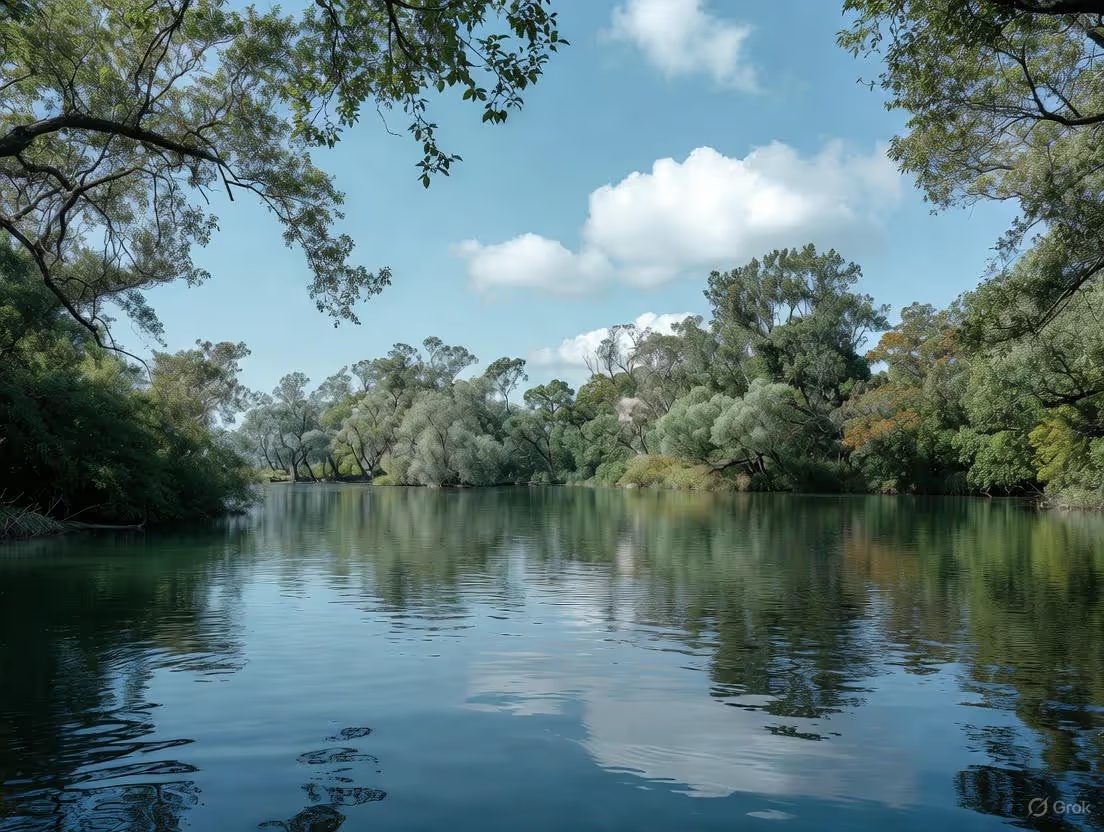
Before we can understand how nature builds calm, we must first define what a "calm mind" truly is. It is not merely the absence of anxiety, nor is it a state of passive lethargy. A calm mind is an active, resilient, and optimally functioning system. It is characterized by:
Neurologically, a calm mind is associated with a decrease in activity in the Default Mode Network (DMN), the brain network responsible for self-referential thought, mind-wandering, and the infamous "monkey mind." When the DMN is overactive, we are trapped in cycles of worry and narrative. Simultaneously, calm is linked to increased activity in the prefrontal cortex (governing executive function) and a harmonious balance between the sympathetic (fight-or-flight) and parasympathetic (rest-and-digest) branches of the autonomic nervous system.
The modern obstacle to this state is cognitive overload. Our brains are evolutionarily unprepared for the constant barrage of information, decisions, and digital interruptions. This creates a state of chronic low-grade stress, or "allostatic load," which erodes the very architecture of calm. We become chronically sympathetic-dominant, our DMN runs unchecked, and our perception narrows to a survival-oriented tunnel vision.
This is where intention meets intervention. Calm mind practices—meditation, breathwork, yoga nidra, mindful movement—are the deliberate training regimens for this mental architecture. They are the exercises that strengthen the prefrontal cortex, quiet the DMN, and stimulate the vagus nerve, the command center of the parasympathetic nervous system. Yet, for many, starting these practices in a distracting, artificial environment feels like trying to meditate in the middle of a busy intersection. The environment itself is working against you.
This is the pivotal insight: The environment is not a neutral container for your practice; it is an active participant. And no environment is more fundamentally aligned with the goal of calm than the natural world. As we will explore, nature doesn't just provide silence; it provides a specific quality of attention—soft fascination—that effortlessly guides the brain toward the state we try so hard to cultivate through willpower alone. To understand this shift, tracking your physiological data with a device like the Oxyzen smart ring can be revelatory. Seeing your stress graph dip and your HRV rise after time in nature offers concrete proof of the calm being built, a topic we often explore in depth on the Oxyzen blog.
The feeling of peace we get in a forest or by the ocean is not a poetic fancy; it is a measurable, biological cascade. Decades of research in the fields of environmental psychology, psychoneuroimmunology, and forest medicine have mapped the precise pathways through which nature exposure directly dials down the stress response.
The Cortisol Cascade: Cortisol, our primary stress hormone, is essential for acute challenges but corrosive in chronic doses. Studies consistently show that time in natural environments, particularly those with greenery and water, significantly reduces cortisol levels. A seminal Japanese practice, Shinrin-yoku or "forest bathing," has produced robust data. Participants on a 40-minute forest walk show markedly lower salivary cortisol compared to those walking the same amount of time in an urban setting. Nature doesn't just relax the mind; it directly tells the adrenal glands to stand down.
The Nervous System Reset: Our autonomic nervous system is the dial between stress and calm. Nature gently turns the dial toward the parasympathetic side. Heart rate decreases, blood pressure lowers, and Heart Rate Variability (HRV) increases. HRV—the variation in time between heartbeats—is a key metric of nervous system resilience and recovery. A high HRV indicates a flexible, responsive system that can adapt to stress and then recover effectively. It is a premier biomarker for a calm mind. Smart wearable technology, like that developed by Oxyzen, now puts this tracking in the palm of your hand, allowing you to see in real-time how a walk in the park improves your physiological markers of calm.
The Immune Boost from Air: Trees don't just exhale oxygen; they emit volatile organic compounds called phytoncides—essential oils with antimicrobial properties that protect the tree from germs and insects. When we breathe in these phytoncides during a forest walk, our bodies respond by increasing the number and activity of natural killer (NK) cells, a type of white blood cell that fights viruses and cancer. This remarkable link shows that nature's calming effect extends deep into our immune function, combating the immunosuppressive effects of chronic stress.
The Visual Pathway to Relaxation: Our visual cortex, processing vast amounts of data every second, finds unique rest in nature. Urban environments are filled with hard edges, stark contrasts, and demanding stimuli (like traffic signs and advertisements) that require "directed attention." This cognitive resource is finite and depletes rapidly, leading to attention fatigue. Natural scenes, however, are characterized by "soft fascination." The gentle movement of leaves, the play of light on water, the complex but repetitive patterns of a fern—these elements hold our attention effortlessly, allowing the brain's directed attention circuits to rest and replenish. This is a visual brain break on a profound level.
Consider a simple experiment: track your stress and HRV after 20 minutes of scrolling social media in a cramped room versus 20 minutes sitting under a tree. The data would tell a stark story. One environment depletes, the other restores. This scientific foundation explains why we feel better. But nature's influence goes deeper than stress reduction; it fundamentally alters the quality of our attention, setting the stage for deeper mental work.
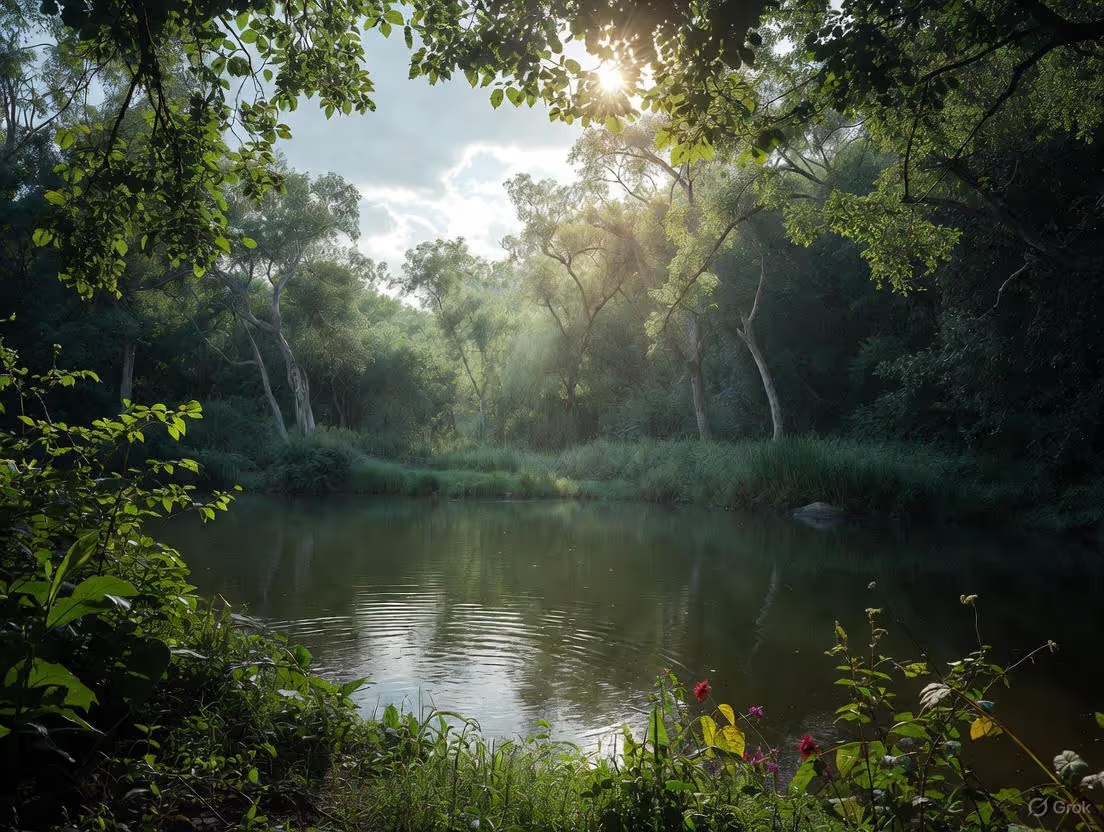
We live in an economy of attention, yet most of us are bankrupt. The modern workday is a marathon of directed attention: forcing focus onto spreadsheets, emails, and digital tasks despite a world of competing alerts. This effortful focus is governed by a top-down, prefrontal cortex-driven system. Like a muscle, it fatigues. The result is "attention fatigue," manifesting as irritability, difficulty concentrating, and impulsive behavior—the very antithesis of a calm mind.
Nature offers the cure not by demanding more focus, but by requiring less. The concept of Soft Fascination, introduced by attention restoration theory (ART) pioneers Rachel and Stephen Kaplan, is the key. Natural environments are rich in inherently fascinating stimuli that effortlessly capture our attention without depleting cognitive resources. The flicker of a butterfly, the sound of a babbling brook, the shapes of clouds—these engage what's called "involuntary attention." They are interesting enough to hold us, but not so demanding that they require effort.
This shift from directed to involuntary attention allows the brain's executive function networks to go "off-duty" and restore themselves. It's akin to rebooting a overtaxed computer. Studies using EEG and fMRI show that after exposure to nature, people perform significantly better on tasks requiring directed attention and cognitive control. Their focus isn't just restored; it's often sharper than before.
This has monumental implications for calm mind practices. Meditation, at its core, is an exercise in attention regulation—gently guiding focus back to an anchor (the breath, a mantra) when it wanders. For a brain suffering from attention fatigue, this can feel like an exhausting battle. The mind wanders relentlessly because the very system needed to rein it in is depleted.
Enter nature. By placing your meditation or breathwork practice in a natural setting, you are starting from a baseline of already restored attention. The environment itself does half the work. Instead of forcing your focus onto your breath against a tide of mental noise, your attention is already softly held by the rustling leaves. You then gently align your awareness with that natural rhythm. The practice becomes less about control and more about attunement.
This is why a mindful walk in the woods can feel more accessible than seated meditation for beginners. The walking and the scenery provide a gentle, fascinating anchor, making the state of mindful awareness a natural byproduct rather than a strenuous achievement. For those tracking their wellness metrics, this often translates to longer, more consistent meditation sessions and lower stress scores during the practice—something users of the Oxyzen ring frequently note when they share their experiences. The data confirms what the mind intuits: the environment matters.
A core tenet of almost every calm mind practice is present-moment awareness. The instruction is simple: "Be here now." Yet, for a brain wired for threat detection and future planning, this is notoriously difficult. Our thoughts pull us into the past (regret, nostalgia) or propel us into the future (anxiety, planning). We become lost in abstraction, disconnected from the reality of our immediate experience.
Nature acts as the ultimate grounding wire, channeling our awareness away from the abstract and into the tangible, sensory present. It does this by engaging our senses in a way that is inherently non-conceptual.
When you sit by a stream and practice mindfulness, you are not just focusing on your breath. You are feeling the sun's warmth, hearing the water's melody, smelling the wet stones. Your senses are fully occupied with real-time, present-moment data. This multisensory anchor makes it exponentially harder for the mind to wander into anxiety loops. The "now" is too rich, too engaging to leave.
This sensory grounding is the perfect primer for formal meditation. Before you even close your eyes to focus inward, nature has already gathered your scattered awareness into the present. You are already mindful. The formal practice then becomes a deepening of a state you've already entered, rather than a struggle to attain it from a place of distraction. This principle is at the heart of our philosophy at Oxyzen, where we believe technology should enhance, not replace, these fundamental human connections to our environment.
Sometimes, nature does more than calm us; it transforms us. Standing on a mountain ridge, gazing at the Milky Way, or witnessing the relentless power of the ocean can evoke a profound emotion: awe. Defined as the feeling of encountering something vast that transcends our current understanding, awe is a potent psychological reset button with direct implications for cultivating a calm mind.
Psychologists Dacher Keltner and Jonathan Haidt identify two core facets of awe: perceived vastness (something larger than the self) and the need for accommodation (the experience challenges our mental frameworks, forcing us to adjust). Nature is one of the most reliable and universal elicitors of this state.
The impact of awe on the mind is remarkable:
For calm mind practices, integrating awe is like moving from the micro level of breath awareness to the macro level of existential awareness. A meditation conducted after an awe-inspiring hike starts from a baseline of an already expanded, humble, and connected mind. The practice is no longer just about managing stress, but about exploring a newfound sense of peace and perspective.
You don't need the Himalayas to experience this. Awe can be found in the intricate architecture of a spiderweb glistening with dew, the towering form of a thunderhead, or the silent fall of snow that transforms a familiar street. The key is to intentionally seek out experiences of natural vastness and mystery, to allow yourself to be humbled and expanded. This practice of seeking awe can be a cornerstone of a deeper wellness journey, a theme we explore in resources available on our blog.
The calming effect of nature is not merely a learned cultural preference; it is woven into our biological heritage. This is the core of the Biophilia Hypothesis, popularized by biologist E.O. Wilson, which proposes that humans possess an innate, genetically-based affinity for the natural world and other living systems. Over 99% of human history was spent in adaptive response to natural, not human-made, forces. Our nervous systems evolved in concert with the rhythms, patterns, and cues of the natural environment.
Therefore, calmness in nature isn't an accident; it's a homecoming. Our biology expects certain inputs:
When we engage in calm mind practices within natural settings, we are not just adding a pleasant backdrop. We are aligning our practice with our deepest biological programming. The breathwork session is synchronized with fresh, phytoncide-rich air. The meditation is accompanied by the fractal geometry of a forest canopy. The yoga is performed on grass, reconnecting us to the grounding electrical frequency of the earth.
This biophilic alignment reduces the friction of practice. It feels "right" because, on a cellular level, it is. Companies that understand this, like Oxyzen, are built on the vision of re-integrating this biological wisdom with modern technology, using data to guide us back to these essential rhythms, rather than further away from them.

The ideal of a week-long wilderness retreat is wonderful, but not practical for daily life. The transformative power of nature, however, lies in consistent, accessible exposure. The concept of "nature micro-dosing"—short, frequent, intentional engagements with the natural world—is backed by science. Studies indicate that even 20 minutes in an urban park can significantly boost well-being and cognitive performance.
Here are actionable, tiered strategies to weave nature into the fabric of a busy, possibly urban, life to enhance your calm mind practice:
Tier 1: The 5-Minute Reset (The Desk/Balcony Break)
Tier 2: The 20-Minute Immersion (The Lunchtime Protocol)
Tier 3: The 90-Minjee Deep Dive (The Weekend Ritual)
Tier 4: Bringing Nature Indoors (The Biophilic Habitat)
Track these interventions. Note how you feel after a 5-minute sky-gaze versus 5 minutes of social media scrolling. Use a smart ring to observe changes in your overnight HRV after a weekend hike. This data turns intuition into strategy, allowing you to personalize your nature prescription for maximum calm.
Nature exposure and formal calm mind practices are not separate items on a wellness checklist; they are synergistic elements that multiply each other's benefits. When combined, they create a holistic container for well-being that is greater than the sum of its parts.
Nature-Infused Breathwork:
Breathwork is the most direct tool to influence the autonomic nervous system. Performing it in nature supercharges its effects.
Nature as the Meditation Object:
Instead of focusing solely on the breath, use nature itself as your anchor.
Yoga and Mindful Movement in Nature:
Yoga is the union of breath, movement, and awareness. Performing it outdoors completes the union by integrating the environment.
For those navigating the questions of how to start or optimize these combined practices, our FAQ page offers guidance on using technology as a supportive tool, not a distraction, in your journey.
While forests and mountains often take center stage, a growing body of research highlights the exceptional restorative power of "blue spaces"—environments featuring visible water, such as oceans, lakes, rivers, and even fountains. The human attraction to water is powerful and primal, and its impact on a calm mind is distinct and profound.
The Psychology and Physiology of Blue:
Calm Mind Practices Enhanced by Blue Spaces:
Whether it's a weekly trip to a lake, installing a small tabletop fountain in your home office, or even just listening to high-quality recordings of water sounds during your meditation, integrating blue spaces into your regimen adds a potent, uniquely calming dimension to your pursuit of a calm mind. It's a testament to the diversity of nature's pharmacy, a concept aligned with our mission at Oxyzen to help you discover all the facets of your personal well-being.

In our pursuit of a calm mind, subjective feeling is paramount—the sense of peace is the goal itself. However, in a world filled with wellness trends, objective data serves as a crucial compass. It validates our efforts, reveals hidden patterns, and personalizes our approach. This is where modern wearable technology bridges the ancient wisdom of nature with the precision of biofeedback.
Key Metrics to Correlate with Nature Exposure:
Creating a Personal Feedback Loop:
This empirical approach turns "I think this helps" into "I know this helps, and here's exactly how much." It builds motivation and turns nature connection into a non-negotiable part of your wellness protocol. For those curious about how smart rings like Oxyzen facilitate this kind of insightful tracking, you can learn more about the technology and its applications directly. Seeing the hard data mirror your felt experience is a powerful confirmation, deepening your commitment to the path of natural calm.
Even with the best intentions and clear data, life gets in the way. Urban living, busy schedules, poor weather, and even a simple lack of motivation can become barriers. The key is to anticipate these obstacles and have compassionate, practical strategies to overcome them.
Barrier 1: "I live in a concrete jungle. There's no real nature nearby."
Barrier 2: "I don't have time."
Barrier 3: "The weather is bad."
Barrier 4: "I feel silly or bored just sitting/walking in nature."
Barrier 5: "My mind is too busy to relax, even in nature."
The journey to a calm mind through nature is not about achieving perfection in exposure. It's about building a resilient, adaptable relationship with the natural world, one that can withstand the realities of modern life. It's about progress, not perfection, a value that guides our community at Oxyzen, as you can see from our story and user journeys. Every small connection is a step toward reclaiming your innate birthright of peace.
A profound but often overlooked dimension of nature’s influence on calm is its cyclical nature. Our modern, temperature-controlled, perpetually-lit existence insulates us from the fundamental rhythms of the planet: the daily arc of the sun, the lunar cycle, and the turning of the seasons. Re-attuning our calm mind practices to these cycles doesn’t just add variety; it creates a powerful, resonant harmony between our internal state and the external world, reducing the friction of practice and deepening its effects.
Spring: Cultivation and New Beginnings
Summer: Expansion and Peak Energy
Autumn: Release and Letting Go
Winter: Deep Rest and Inward Reflection
By syncing our practices with these cycles, we stop fighting the natural energy of the moment. We practice with nature, not in spite of it. This alignment reduces the willpower needed to practice and creates a sense of being held by a larger, wiser rhythm—a deeply calming feeling in itself. For those tracking their data with a device like the Oxyzen ring, observing how your optimal HRV or sleep patterns might subtly shift with the seasons offers a fascinating layer of personal insight, a topic we often discuss in our community resources on the Oxyzen blog.
For the urban resident, accessing vast wilderness is a luxury. Yet, the principles of nature connection are not nullified by concrete. The advanced urban naturalist learns to perceive, access, and leverage the wildness that persists and even thrives in the city, transforming it into a sanctuary for calm.
1. Cultivating "Rooftop Awareness":
Look up and out. The sky is the most universally accessible natural element. Practices include:
2. Finding "Micro-Wildernesses":
These are tiny, resilient pockets of untamed life that ignore human design.
3. The Sensory Scavenger Hunt:
Turn a mundane walk into a deep noticing practice. Set a goal to find:
4. Commuting as a Nature Pilgrimage:
Re-frame your daily route.
The urban calm seeker becomes a skilled perceiver. The goal is not to escape the city, but to see it anew—as a habitat that still obeys natural laws, filled with opportunities for connection, awe, and grounding. This mindset shift, from being in the city to being of a broader ecosystem that includes the city, is inherently calming. It’s about building a personal practice that is robust and portable, a principle that guides the design philosophy behind tools like the Oxyzen smart ring—meant to support your wellness anywhere, as highlighted in our company mission.
A discussion on nature and calm is incomplete without addressing the elephant in the room: the smartphone in your pocket. Bringing a digital device into a nature experience isn't simply an addition; it's a fundamental alteration of the context. The constant potential for interruption fractures attention and prevents the deep immersion required for maximal psychological restoration. A deliberate digital detox, even a short one, within your nature practice is not a puritanical rule—it’s a neurobiological necessity.
The Cost of the "Third Screen":
When you are in nature with your phone, you exist in a hybrid space. Your visual cortex is processing the soft, fractal patterns of the forest, while your prefrontal cortex remains partially engaged in the "task" of potential social connection and information intake. This prevents the full disengagement of the directed attention network. The mere presence of the phone, even if silenced, creates a "brain drain" known as "attention residue," where part of your cognitive resources remains allocated to the device and its potential notifications.
The Benefits of a Full Sensory Unplug:
Practical Unplugging Strategies:
The act of putting the phone away becomes the first and most powerful breathwork of your practice—a deep exhale of digital obligation. It signals to your nervous system that for this period, your only task is to be. This unimpeded connection is where nature’s calm penetrates most deeply, resetting not just your mood, but your very mode of attention.
A common frustration in calm mind practices, even in nature, is the "wandering mind." You sit to meditate by a stream, and within moments you’re mentally drafting an email. The instinct is to judge this as a failure. However, nature offers a profound reframe: the wandering mind is not broken; it is exploring. And nature provides the perfect landscape for a healthier, more productive kind of exploration.
From Rumination to Natural Curiosity:
In an urban, problem-saturated context, mind-wandering typically defaults to rumination—repetitive, negative thought loops about the past or future. This is the DMN in its pathological mode. In nature, the quality of mind-wandering can shift. The stimuli around you—a bird call, the shape of a rock, the direction of the wind—can pull your thoughts away from self-referential loops and toward curiosity and exploration. Your mind may wander from your breath to wonder what type of bird that is, to the memory of a childhood treehouse, to a feeling of gratitude for the shade. This is a associative, generative form of mind-wandering.
Practice: "Noticing the Wander"
Instead of harshly pulling your attention back to the breath, try this nature-informed method:
This transforms the practice from one of rigid concentration to one of flexible awareness. You are building meta-awareness—the ability to watch your own mind wander without getting lost in it. This skill is more valuable in daily life than forced, brittle focus. It’s the difference between being hijacked by anxiety and being able to observe, "Ah, I'm starting to feel anxious," and then having the space to choose a response.
Nature supports this reframe because the "distractions" it provides are themselves wholesome, fascinating, and often beautiful. The wandering mind is being pulled toward life, not away from it. This practice builds a calm mind that is not empty, but richly aware, resilient, and curiously engaged with the present moment. For many on this path, sharing these nuanced experiences of progress—not perfection—is a key part of the journey, as echoed in the real user testimonials we see.
While calm is often sought in solitude, there is a unique and potent magic in shared calm within nature. Group practices—a silent hike, an outdoor meditation circle, a forest bathing guide—leverage social synchrony and the natural environment to create a collective calm that can be deeper and more accessible than what we achieve alone.
The Science of Shared Experience:
When humans engage in synchronous activities—breathing together, walking in rhythm, chanting—our brainwaves and heart rhythms can begin to entrain, or synchronize. This is coupled with the release of neurochemicals like oxytocin (the bonding hormone). In a natural setting, this social synchrony is layered onto the biophilic and sensory calming effects, creating a powerful multi-layered experience.
Forms of Social-Nature Calm Practices:
Participating in these groups breaks the illusion that the pursuit of calm is a solitary, burdensome task. It becomes a shared human ritual, reconnecting us not only to nature but to each other in a restful, positive way. It reinforces that a calm mind is not an isolated state, but one that exists within a web of connections. For organizations like Oxyzen, fostering this sense of community and shared journey is integral to our vision of holistic wellness.
There is a qualitative difference between a 20-minute walk in a park and spending 48 hours camping in a forest. Longer, deeper immersion in nature—devoid of modern comforts and distractions—can catalyze a transformative shift in mental state, often referred to as the "three-day effect." This is the point where the cognitive noise of modern life truly fades, and a different, older mode of consciousness emerges.
The Neurology of Deep Immersion:
Research suggests that after approximately three days in wilderness settings, measurable changes occur:
Practices for Deep Immersion:
If you have the opportunity for a multi-day backpacking trip, a camping retreat, or even a long stay in a remote cabin, structure your calm mind practice to leverage this profound shift.
The outcome of such an immersion is not just a temporary calm, but a recalibration. You return not just relaxed, but with a subtly altered baseline—a quieter internal critic, a heightened appreciation for simplicity, and a visceral memory of a slower, more attuned way of being. This baseline becomes a touchstone you can access even back in the urban world. It proves that the calm mind is not a distant fantasy, but a latent state waiting for the right conditions to emerge. Documenting the physiological data from such a trip—seeing your HRV reach its highest sustained levels—can be a powerful motivator to make immersion a regular part of your wellness regimen, a use case we often hear about from advanced users of wellness technology.
The narrative of nature as a universal haven of calm, while largely true, is incomplete. For some, or in certain moments, nature can evoke feelings of boredom, anxiety, fear, or even panic. Insects, weather, darkness, isolation, or a fear of the unknown can trigger the very stress response we seek to calm. Ignoring this "shadow side" undermines the practice. True calm is built not by avoiding discomfort, but by learning to navigate it with awareness.
Common Challenges and Mindful Responses:
Building Tolerance Gradually:
Don’t start with a solo overnight in the wilderness. Begin in safe, familiar, and comfortable natural settings. As your "calm muscle" strengthens, gradually increase the challenge—a walk at dusk instead of midday, a hike on a slightly more rugged trail. Each small encounter with managed discomfort builds confidence and proves to your nervous system that you can be calm even when conditions aren’t perfectly curated.
Navigating these challenges is where calm mind practices move from relaxation techniques to profound inner training. You are not creating a bubble of calm, but cultivating a calm that can withstand the unpredictability of life itself. Nature, in its full spectrum—from the gentle to the fierce—becomes the perfect teacher for this. For those with specific questions about using mindfulness or technology to manage such moments, our support resources can offer further guidance.
We have journeyed from the cellular level—where phytoncides boost our immune function—to the existential, where awe reshapes our sense of self. We've seen how nature isn't just a location for calm, but an active, engaged participant in co-creating it. It provides the sensory anchor, the perceptual reset, the neurological quiet, and the evolutionary belonging that our overstimulated minds and bodies crave.
The key takeaway is integration, not escape. The goal is not to live permanently in the woods, but to weave the threads of nature’s wisdom into the fabric of your daily life. It is the 5-minute sky gaze, the mindful commute, the plants on your desk, the weekend immersion, and the seasonal alignment of your practices.
This integration is where purpose-built technology finds its highest purpose: not as a distraction, but as a bridge. A device like the Oxyzen smart ring serves as a gentle guide, offering objective feedback on how your nature doses affect your stress, sleep, and recovery. It turns intuition into insight, helping you personalize your "nature prescription" for optimal calm. You can discover more about this integrated approach to wellness technology.
The path to a calm mind is not a straight line of increasing stillness. It is a cyclical, rhythmic dance with the living world. It involves moments of deep peace alongside moments of managed discomfort. It is both a solitary journey and a shared human experience.
As you move forward, let your practice be guided by curiosity, not dogma. Experiment. Track what works. Notice how a winter meditation differs from a summer one. See if the sound of water calms you more than the silence of a forest. The data from your body and the wisdom of your own felt experience are your ultimate guides.
The remainder of this comprehensive guide will delve into even more specialized applications and future-facing concepts. We will explore nature's role in sleep optimization, creativity, and trauma recovery. We will examine how emerging technologies like virtual nature and biomimetic design might play a role. And we will provide a complete, actionable framework for building your lifelong, personalized Nature-Calmmind Protocol. The journey continues, deeper into the synergy between the world outside and the peace within.
Your Trusted Sleep Advocate: Sleep Foundation — https://www.sleepfoundation.org
Discover a digital archive of scholarly articles: NIH — https://www.ncbi.nlm.nih.gov/
39 million citations for biomedical literature :PubMed — https://pubmed.ncbi.nlm.nih.gov/
Experts at Harvard Health Publishing covering a variety of health topics — https://www.health.harvard.edu/blog/
Every life deserves world class care :Cleveland Clinic - https://my.clevelandclinic.org/health
Wearable technology and the future of predictive health monitoring :MIT Technology Review — https://www.technologyreview.com/
Dedicated to the well-being of all people and guided by science :World Health Organization — https://www.who.int/news-room/
Psychological science and knowledge to benefit society and improve lives. :APA — https://www.apa.org/monitor/
Cutting-edge insights on human longevity and peak performance:
Lifespan Research — https://www.lifespan.io/
Global authority on exercise physiology, sports performance, and human recovery:
American College of Sports Medicine — https://www.acsm.org/
Neuroscience-driven guidance for better focus, sleep, and mental clarity:
Stanford Human Performance Lab — https://humanperformance.stanford.edu/
Evidence-based psychology and mind–body wellness resources:
Mayo Clinic — https://www.mayoclinic.org/healthy-lifestyle/
Data-backed research on emotional wellbeing, stress biology, and resilience:
American Institute of Stress — https://www.stress.org/


