


How Nighttime Routines Signal Your Body It's Time to Sleep
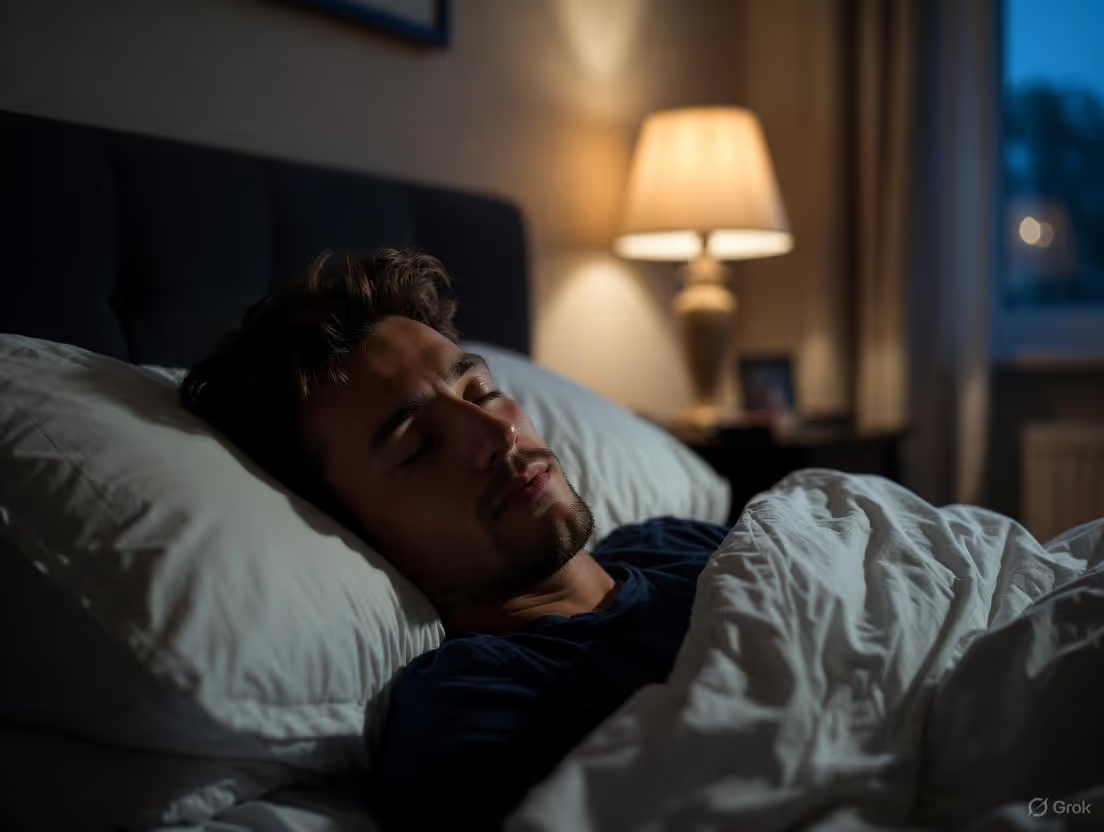
The routine itself acts as a powerful cue, training your circadian rhythm and nervous system to prepare for sleep.
The routine itself acts as a powerful cue, training your circadian rhythm and nervous system to prepare for sleep.
%402x.svg)
Do you ever feel like you’re fighting your own biology when bedtime rolls around? You dim the lights, crawl under the covers, and close your eyes, but your mind races like it’s high noon. You’re physically exhausted, yet a restless energy hums through your veins. The frustration is palpable because, in our modern world, the simple, ancient act of falling asleep can feel like a lost art.
This nightly struggle isn’t just about willpower. It’s a profound miscommunication between your conscious choices and your body’s deepest, most primal operating system. Your physiology runs on rhythms and signals, a language written not in words but in hormones, temperature shifts, and neural patterns. When we bombard our systems with artificial light, digital notifications, and erratic schedules, we’re speaking gibberish to our internal clock.
The solution lies not in stronger sleeping pills, but in clearer conversation. A consistent, intentional nighttime routine is more than just a checklist of calming activities; it’s your body’s native language for sleep. It’s a series of deliberate, sensory cues that tell your complex biological machinery, in no uncertain terms, to power down the systems for wakefulness and initiate the sacred sequence of restoration.
This article is your masterclass in that language. We’ll dissect the elegant science of how routines shift your physiology from “go” to “slow,” moving beyond generic advice into the precise mechanisms that make rituals so powerful. We’ll explore how everything from the fading light to your evening cup of tea sends a direct memo to your brainstem. This isn’t just about getting more sleep; it’s about aligning with your innate chronobiology to achieve deeper, more restorative rest. You’ll learn to construct a routine that doesn’t just happen before bed, but one that actively and persuasively orchestrates the symphony of sleep within you.

Deep within the hypothalamus of your brain, a tiny region no larger than a grain of rice called the suprachiasmatic nucleus (SCN) serves as the undisputed conductor of your body’s orchestra. This is your master biological clock. It doesn’t merely influence your sleep-wake cycle; it meticulously orchestrates it, governing the intricate timing of thousands of cellular processes across every organ and tissue—from the production of digestive enzymes in your gut to the release of melatonin from your pineal gland. This 24-hour cycle is your circadian rhythm, a genetically programmed cadence that evolved in sync with the Earth’s rotation.
For most of human history, the SCN’s primary timekeeper was clear and unwavering: sunlight. Specialized photoreceptor cells in your eyes, entirely separate from those used for vision, detect the intensity and, crucially, the color spectrum of ambient light. As the sun sets, the light becomes longer in wavelength, bathing the world in warm oranges and reds. These photoreceptors communicate this “evening light” data directly to the SCN via the retinohypothalamic tract. Upon receiving this signal, the SCN interprets it as the starting gun for the sleep sequence. It begins suppressing alertness-promoting hormones like cortisol and sends a message down a neural pathway to the pineal gland, whispering: Start producing melatonin.
Melatonin is not a sleeping pill in hormonal form. Think of it instead as the chemical embodiment of darkness—a “darkness signal” that floods your system, lowering core body temperature, promoting feelings of drowsiness, and signaling to all peripheral clocks in your organs that the night shift is beginning. The entire process is a beautifully timed, light-driven cascade. However, our modern environment presents a fundamental problem: we have decoupled ourselves from the sun. The invention of electric light, and later blue-light-emitting screens, gave us the power to turn night into day, effectively blinding our SCN to the true time.
When you scroll through your phone or work under bright LEDs at 10 PM, those same photoreceptors scream “HIGH NOON!” to your confused master clock. The SCN halts melatonin production, tells cortisol to stick around, and keeps core temperature elevated. You are now biochemically jet-lagged in your own bedroom. A consistent nighttime routine’s first and most critical job is to restore the SCN’s authority by reinstating the natural environmental cues—primarily light and darkness—it was designed to obey. By dimming lights and eliminating blue light, you aren’t just creating a “cozy vibe”; you are sending a time-stamped, physiological memo to the conductor of your entire system that the performance of sleep is about to begin.
For a deeper exploration of how technology can be used to track and understand these biological rhythms instead of disrupting them, you can learn more about smart ring technology like the one developed by Oxyzen, which monitors subtle physiological shifts indicative of your circadian state.
Beyond the hardwired biology of the circadian rhythm lies a powerful layer of learned behavior: the psychological architecture of habit. The brain, always seeking efficiency, loves to automate repeated sequences. This is the domain of cue-based routines, where a specific trigger automatically initiates a behavioral cascade. Your nighttime routine is essentially a carefully crafted series of cues designed to trigger one ultimate outcome: sleep.
The neurological magic behind this is rooted in a loop within the basal ganglia, a brain region central to habit formation. The loop involves a Cue (e.g., dimming the house lights), a Routine (e.g., brushing your teeth, reading a book), and a Reward (e.g., the feeling of relaxation and, eventually, falling asleep easily). When this cycle repeats consistently, the brain begins to link the initial cue directly to the reward, cementing the pathway. Over time, the cue alone can initiate a physiological pre-sleep response—a drop in heart rate, a sigh of relaxation—even before the routine is complete.
This is why consistency is non-negotiable. Performing the same actions in the same order each night strengthens these neural pathways. The ritual itself becomes a potent signal. For example, the act of brewing a cup of caffeine-free herbal tea isn’t just about the soporific properties of chamomile; it’s about the ritual. The sound of the kettle, the warmth of the mug in your hands, the familiar aroma—these sensory cues become a multi-layered announcement to your brain that the workday is over and the shift into rest mode has commenced.
An effective sleep ritual leverages multiple sensory channels:
By engaging multiple senses, you create a redundant, fail-safe signaling system. Even if one cue is occasionally missed, the others can still trigger the sleep-prep sequence. This psychological conditioning works in concert with your biology. The routine starts the wind-down process psychologically, which then allows the physiological melatonin release and temperature drop to occur unimpeded. It’s the bridge between your conscious intention and your autonomic nervous system. You can discover how Oxyzen works to track the effectiveness of your routines by monitoring physiological markers like heart rate variability, offering tangible feedback on how well your rituals are truly signaling your nervous system to shift states.

Light is the single most potent external Zeitgeber (“time-giver”) for your circadian rhythm. To design a routine that effectively signals sleep, you must become the curator of your own light environment. This goes far beyond simply “turning off bright lights.”
The key player is blue light, which sits in the 460-480 nanometer range on the visible spectrum. This is the dominant wavelength in midday sunlight, and it’s exceptionally effective at suppressing melatonin. It’s also the primary emission from LEDs, fluorescent bulbs, and the screens of our phones, tablets, and computers. When your eyes are exposed to blue light after sunset, it’s as if you’ve injected a shot of alertness directly into your master clock.
An effective nighttime routine must therefore include a strategic “light diet”:
1. The 90-Minute Sunset Simulation: Begin your light transition 60-90 minutes before your target bedtime. This is your artificial sunset.
* Dim Overhead Lights: Switch bright overhead lights to low-wattage, warm-toned lamps. Smart bulbs that can shift to a warm amber hue are ideal.
* Screen Curfew: Implement a strict digital sunset. If you must use devices, enable “Night Shift” or “Blue Light Filter” settings to maximum warmth at least 60 minutes prior. Even better, use blue-light-blocking glasses that filter wavelengths below 500nm.
* Embrace Candlelight or Salt Lamps: These light sources emit almost zero blue light, creating a biologically appropriate evening ambiance.
2. Bedroom as a Light Sanctuary: Your sleep environment should be pitch black. Even small amounts of light from a charging LED, a streetlamp, or a crack under the door can be detected by your closed eyelids and fragment sleep architecture.
* Blackout is Non-Negotiable: Invest in high-quality blackout curtains or a comfortable sleep mask. The goal is a darkness so complete you cannot see your hand in front of your face.
* Eliminate Internal Light Pollution: Cover or remove all electronic light indicators. Use a red or amber nightlight if needed for safety, as these longer wavelengths have the least impact on melatonin.
3. The Critical Morning Chaser: Signaling “wake time” is just as important for setting a strong circadian rhythm that will make evening wind-down easier. Within 30-60 minutes of waking, seek out bright, blue-rich light. Morning sunlight is ideal (even on cloudy days), as it provides the high-intensity, full-spectrum light needed to firmly reset your SCN, suppress any lingering melatonin, and boost cortisol to its healthy daytime peak.
Mastering this light-dark cycle creates a powerful, dual-anchor rhythm for your day. Your body learns to anticipate the transitions, making the evening drop into sleepiness feel natural and inevitable. For more actionable tips on creating the perfect sleep environment and other wellness strategies, be sure to explore our blog for more wellness tips at Oxyzen's blog.
While light cues your master clock, temperature directs the physiological engine of sleep. The relationship between core body temperature and sleep is a precise dance, governed by your circadian rhythm. Throughout the day, your temperature fluctuates, peaking in the late afternoon and beginning its steady decline about 1-2 hours before your natural bedtime. This decline is not a passive cooling; it’s an active process where your body increases blood flow to the extremities (hands and feet) to radiate heat away from the core. A lower core temperature is a fundamental requirement for initiating and maintaining sleep.
Your nighttime routine can powerfully leverage this thermoregulatory system:
1. The Warm Bath Paradox: One of the most effective pre-sleep rituals is taking a warm bath or shower 60-90 minutes before bed. This works through a clever mechanism called “passive body heating.” The warm water raises your body temperature slightly, but when you step out, the rapid cooling effect is dramatic. This mimics and amplifies the body’s natural pre-sleep temperature drop, sending a stronger “cool-down” signal to the brain. Studies have shown this can significantly shorten sleep onset latency—the time it takes to fall asleep.
2. Optimize the Sleep Environment: Your bedroom should be cool. The consensus among sleep scientists is an ambient temperature between 60-67°F (15.6-19.4°C). This cool environment supports your body’s natural cooling process. Use breathable, moisture-wicking bedding (like cotton, linen, or advanced performance fibers) to prevent overheating, which is a common cause of nighttime awakenings.
3. The Foot Factor: Since heat dissipation happens through the extremities, warm feet can actually promote faster cooling. If you have chronically cold feet, wearing socks to bed can help dilate blood vessels and facilitate the heat-release process. The key is ensuring your core remains cool while your extremities are comfortable.
4. Avoid Late Exercise: While daily exercise is fantastic for sleep quality, vigorous activity too close to bedtime (within 1-2 hours) raises core temperature and stimulates the sympathetic nervous system, counteracting the wind-down process. Your routine should favor calming, gentle movement like yoga or stretching if done in the evening.
By strategically managing temperature, you move from simply feeling cozy to directly enabling a core biological driver of sleep. You’re helping your body execute its natural cooling protocol efficiently, removing a major physiological barrier to falling and staying asleep. Many users of the Oxyzen smart ring have shared in real customer reviews how tracking their nighttime skin temperature trends helped them identify an overheated sleep environment, leading to simple changes that drastically improved their sleep continuity.

Modern life is a chronic, low-grade activator of the sympathetic nervous system—our “fight-or-flight” response. Emails, news alerts, stressful conversations, and even stimulating entertainment keep this system subtly engaged. Sleep, however, is the ultimate state of the parasympathetic nervous system—the “rest-and-digest” counterpart. A purposeful wind-down routine is the essential bridge between these two states; it’s a deliberate decompression sequence.
An effective wind-down is about subtraction as much as addition. It involves creating a buffer zone between the demands of the day and the vulnerability of sleep.
1. The Mental Taper:
* The Brain Dump: Perform a “download” of your mind 30-60 minutes before bed. Write down tomorrow’s to-do list, lingering worries, or creative ideas in a notebook. This act externalizes mental clutter, signaling to your brain it can stop rehearsing and problem-solving.
* Consume Calm Media: Replace stimulating content (thriller shows, intense news, social media debates) with calming input. This could be reading a physical book (fiction is often a better escape than non-fiction), listening to a soothing podcast, or gentle music.
* Practice Gratitude or Reflection: Briefly journaling three things you’re grateful for or simply reflecting on a positive moment from the day can shift emotional tone from anxiety or striving to contentment and safety—a state far more conducive to sleep.
2. The Digital Quarantine: This is a non-negotiable element of nervous system wind-down. Screens are hyper-arousal machines, offering cognitive stimulation, emotional triggers, and melatonin-suppressing light. Your wind-down must include a physical separation from your phone. Charge it outside the bedroom. Use an old-fashioned alarm clock. This single act removes the temptation for “one last check” and eliminates sleep-disrupting EMF and notification anxiety.
3. The Physical Transition:
* Gentle Movement: Light stretching, restorative yoga poses (like legs-up-the-wall), or tai chi can release physical tension and direct awareness inward, away from external stressors.
* Breathing Techniques: Practices like the 4-7-8 breath (inhale for 4, hold for 7, exhale for 8) or simple diaphragmatic breathing directly stimulate the vagus nerve, the command center of the parasympathetic nervous system, triggering a relaxation response that lowers heart rate and blood pressure.
This 60-90 minute wind-down is not wasted time; it’s productive sleep preparation. It’s the process of lowering the “engine RPMs” of your mind and body so that when your head hits the pillow, the transition into sleep is a smooth glide rather than a jarring, frustrated crash. The founding team at Oxyzen understood this struggle intimately; their journey to create a tool that illuminates these physiological transitions is detailed in their brand journey and vision.
Every substance you put into your body is a chemical message. Your evening routine includes the crucial window of time where you must stop sending “alertness” messages and start sending “rest” messages through your diet and consumption habits.
The Evening Timeline of Consumption:
1. Caffeine: The Long Shadow. Caffeine’s half-life is 5-6 hours, meaning 6 hours after your last cup, half the caffeine is still active in your system. For good sleep hygiene, institute a hard caffeine curfew of at least 8 hours before bedtime. This includes coffee, black/green tea, many sodas, and dark chocolate.
2. Alcohol: The Deceptive Depressant. While alcohol is sedating and can help you fall asleep faster, it metabolizes into aldehydes that fragment sleep architecture, suppressing crucial REM sleep and causing nighttime awakenings. It’s a major contributor to non-restorative sleep. Limit consumption and avoid it within 3 hours of bed.
3. The Last Meal: A large, heavy, or spicy meal too close to bedtime forces your digestive system to work overtime, raising core temperature and potentially causing discomfort or acid reflux. Aim to finish your last major meal 2-3 hours before bed. If you need a small snack closer to bedtime, choose options that support sleep biochemistry:
* Tryptophan-Rich Foods: This amino acid is a precursor to serotonin and melatonin. Pair it with a complex carbohydrate for better uptake (e.g., a small bowl of oatmeal, a banana with a dab of almond butter, whole-grain crackers with turkey).
* Tart Cherry Juice: A natural source of melatonin.
* Magnesium-Rich Foods: Magnesium is a muscle relaxant and supports GABA function (e.g., a handful of pumpkin seeds, a square of dark chocolate >90%).
4. Hydration Strategy: Balance hydration needs with sleep disruption. Drink plenty of water throughout the day, but start tapering intake 1-2 hours before bed to minimize disruptive nighttime trips to the bathroom.
5. The Power of Herbal Allies: Certain herbal teas can be wonderful ritualistic and mild pharmacological cues:
* Chamomile: Contains apigenin, an antioxidant that binds to GABA receptors, promoting mild sedation.
* Valerian Root: Shown in some studies to improve sleep quality and reduce sleep latency.
* Passionflower & Lemon Balm: Often used to reduce anxiety and promote calm.
By being mindful of dietary and chemical cues, you ensure that your body’s internal chemistry is primed for sleep, not working against it. You align your fuel intake with your sleep goal. If you have questions about how specific habits might interact with your personal physiology, our comprehensive FAQ and support page addresses many common queries on sleep optimization and wellness tracking.
You can have the perfect collection of wind-down activities—dim lights, a warm bath, meditation, and herbal tea—but if you perform them at wildly different times each night, their signaling power is drastically diluted. Consistency in timing is the keystone that locks the entire arch of your sleep routine into place.
Your SCN thrives on predictability. It learns patterns. When you wake up, eat, see bright light, and begin your wind-down at the same time each day (yes, even on weekends), you are providing it with a reliable, multi-faceted time map. This allows it to pre-emptively prepare your physiology for upcoming transitions. If you always start dimming lights at 9:30 PM, your SCN will begin the initial processes for melatonin secretion closer to 9:30 PM, making you feel naturally drowsier at that time.
The Two-Anchor Principle: The most robust circadian rhythms are set by two firm anchors:
The time you wake up is actually more powerful for setting your clock than the time you go to bed. A fixed wake-up time, even after a poor night’s sleep, helps normalize your rhythm. Staying in bed late on weekends creates “social jet lag,” forcing your body to shift time zones every Monday.
Implementing Consistency:
This discipline of timing transforms your routine from a series of nice suggestions into a potent temporal cue. It builds a rhythm so strong that sleep begins to feel like an inevitable tide rolling in, rather than a distant shore you have to swim desperately toward. Our mission at Oxyzen is rooted in empowering this kind of consistent, data-informed self-care, providing the feedback needed to stay committed to these powerful temporal rhythms.
Ivan Pavlov famously conditioned dogs to salivate at the sound of a bell by repeatedly pairing the bell with food. You can use the same principle of classical conditioning to create powerful, automatic sleep triggers for yourself. By consistently pairing specific, neutral sensory stimuli with the state of drowsiness and sleep, those stimuli alone can eventually induce relaxation.
This is where you can get creative and personalized with your routine, designing a suite of sensory anchors unique to you.
Building Your Sleep Conditioning Toolkit:
The Process: The conditioning happens through unwavering repetition. You perform your wind-down routine while experiencing these sensory anchors, and then you fall asleep. After dozens of repetitions, your brain learns the association: [This smell + this sound + this feeling] = the pre-sleep state. Eventually, introducing the anchors can initiate drowsiness even on stressful nights when the mental wind-down is harder to achieve.
These anchors become portable sleep cues, useful for travel or stressful times. Bringing your pillow spray or listening to your sleep playlist on headphones can help recreate the conditioned sleep environment anywhere. For inspiration on building these kinds of personalized wellness rituals, our blog features numerous related articles on creating environments for optimal recovery and rest.
Even the most beautifully crafted routine will face challenges. Life happens: stress spikes, you have a late social event, you get sick, or you travel across time zones. The goal is not perfection, but resilience—having a routine robust enough to withstand disruption and strategies to recalibrate quickly.
Strategy 1: The “Minimum Viable Routine” (MVR)
Identify the absolute core, non-negotiable elements of your routine that can be done in 10-15 minutes. This is your emergency protocol for nights when time or circumstances are severely limited. For example, your MVR might be: Dim lights + 4-7-8 breathing for 5 minutes + olfactory anchor (spray on pillow). Having an MVR prevents the “all-or-nothing” thinking that leads to abandoning the routine entirely on a busy night.
Strategy 2: Managing Acute Stress and Anxiety
When your mind is racing, passive routines can fail. You need active interventions:
Strategy 3: Handling Social Events and Late Nights
Strategy 4: Travel and Time Zones
Building resilience means your routine is a flexible toolkit, not a rigid prison. It allows you to navigate real life while always guiding you back to the fundamental signals your body needs for sleep. For personalized troubleshooting and to see how others have overcome similar hurdles, our community’s user experiences and reviews offer a wealth of real-world insights and solutions.
In the quest for better sleep, subjective feeling (“I slept okay”) is important, but objective data is transformative. How do you know if your new, consistent 9:30 PM wind-down is actually causing a physiological shift? Is that warm bath truly lowering your core temperature at the optimal time? This is where modern biofeedback technology, particularly from wearable devices like smart rings, closes the loop.
A smart ring like Oxyzen acts as a continuous, passive translator of your body’s internal signals. It provides tangible, objective metrics on how your routines are affecting your autonomic nervous system and readiness for sleep:
The Optimization Loop:
This data-driven approach removes the mystery and empowers you to become the expert on your own sleep biology. It transforms your routine from a static set of actions into a dynamic, responsive dialogue with your body. You’re not just sending signals; you’re listening intently to the reply. To read our complete guide on interpreting this data and using it for holistic wellness, visit the resources available at Oxyzen.
The classic advice of “go to bed at 10 PM” is not just simplistic; it’s biologically inappropriate for a significant portion of the population. Your chronotype—your inherent predisposition for sleeping and waking at certain times—is a genetic trait that dictates your ideal sleep-wake schedule. Forcing a night owl into an early bird’s routine is an uphill battle against their own DNA. Personalization starts here.
Understanding the Major Chronotypes:
Tailoring the Routine to Your Type:
Lifestyle Integration: A CEO, a shift nurse, and a freelance artist have vastly different daily structures. Your routine must be pragmatic.
The core principles are universal, but their timing, duration, and emphasis must bend to the reality of your innate wiring and daily demands. Respecting your chronotype reduces the friction in your routine, making it sustainable. For those curious about how technology can help identify personal patterns, the team behind Oxyzen’s smart ring designed it to uncover these individual chronobiological insights through long-term trend analysis.
Let’s synthesize the science into a practical, timed sequence. This is a detailed blueprint for the critical hour before your target bedtime. Consider this a template you can adapt using your personalized elements from the previous section.
T-60 Minutes: The Signal to Transition
T-45 Minutes: Engage the Body
T-30 Minutes: Sensory Wind-Down
T-20 Minutes: Cognitive Quieting
T-5 Minutes: Final Signals
Lights Out.
This protocol isn’t meant to be rigid but to illustrate the progression: from external disconnection to physical relaxation to sensory engagement to mental quietude. Each step layers a new signal upon the last, creating an irresistible tide of sleepiness. For variations and more ideas on crafting this sacred hour, you’ll find a wealth of inspiration in the detailed guides on Oxyzen’s wellness blog.
Your nighttime routine doesn’t exist in a vacuum. The quality of your wakefulness dictates the quality of your sleep. Strong, clear circadian rhythms are built on robust daily habits that reinforce the difference between day and night. Think of these as the foundational supports that make your evening signaling far more effective.
1. Morning Light Exposure: The Prime Anchor. This cannot be overstated. Viewing bright, outdoor light within 30-60 minutes of waking is the single most powerful action to set your master clock. It suppresses melatonin sharply, boosts cortisol (healthily) to promote alertness, and starts a precise 14-16 hour countdown until the next melatonin release. Even 10-15 minutes on a cloudy day is exponentially more effective than indoor lighting.
2. Daytime Movement & Exercise: Regular physical activity, particularly when done outdoors or earlier in the day, deepens sleep drive by increasing adenosine (a sleep-pressure chemical) buildup and promoting a more robust temperature rhythm. It also reduces anxiety and stress, which are primary enemies of sleep. Avoid vigorous exercise within 2 hours of bedtime.
3. Strategic Caffeine & Nutrition Timing:
* Caffeine: Confine consumption to the morning and early afternoon. Its long half-life means afternoon coffee can still be interfering with sleep architecture even if you fall asleep.
* Meal Timing: Regular meal times are secondary Zeitgebers for peripheral clocks in your organs. A consistent breakfast time, in particular, helps synchronize your metabolism with your master clock. Avoid large, heavy dinners late at night.
4. Stress Management Throughout the Day: Chronic, unmanaged daytime stress leads to elevated evening cortisol, which directly blocks melatonin and keeps the sympathetic nervous system engaged. Incorporating micro-practices of recovery during the day—such as short walks, mindful breathing breaks, or moments of disconnection—prevents stress from accumulating to toxic levels by bedtime.
5. The Afternoon Dip Strategy: A natural circadian dip in alertness occurs in the early afternoon (often 1-3 PM). Instead of fighting it with caffeine, you can leverage it:
* Take a Short Walk: Exposure to afternoon light can help reinforce the rhythm.
* Power Nap: A nap of 10-20 minutes can be restorative without entering deep sleep and causing sleep inertia. Keep it early and short.
By building a rhythmically strong day, you arrive at your evening wind-down already primed for the transition. You’ve spent the day clearly signaling “DAY” to your body, so the switch to “NIGHT” is a clear, distinct, and easily executed change of state. This holistic approach is central to the philosophy at Oxyzen, where we view sleep not as an isolated metric, but as the outcome of a well-orchestrated 24-hour cycle.
You’ve built a consistent, personalized routine grounded in science, yet sleep remains elusive or fragmented. This is a critical moment for diagnostic thinking, not despair. When signals fail, it’s time to play detective with your own biology and environment.
Step 1: Investigate with Data. Subjective feeling is misleading. Objective data is your truth-teller. If you’re using a device like the Oxyzen ring, scrutinize the trends:
Step 2: Audit for Hidden Disruptors.
Step 3: Consider Sleep Disorders. If your data shows severe fragmentation, very high resting heart rates during sleep, or you exhibit symptoms like loud snoring, gasping for air, or irresistible daytime sleepiness, consult a healthcare professional. No routine can overcome untreated sleep apnea, restless leg syndrome, or other medical conditions.
Step 4: Reset with Radical Consistency. If you’ve gotten off track, sometimes the best solution is a “circadian reset.” Commit for one week to: waking at the exact same time every day (no sleeping in), getting 15+ minutes of morning sunlight immediately, and performing your full wind-down routine at the exact same time, even if you don’t feel sleepy. This strictness can often recapture a lost rhythm.
Remember, troubleshooting is an iterative process. Change one variable at a time and observe the results for at least 3-4 nights. This methodical approach turns frustration into a solvable puzzle. For common questions on interpreting data or optimizing device use during this process, our detailed FAQ section is an excellent resource.
Implementing a nighttime routine is not a quick fix; it’s a long-term investment in your sleep health, or what scientists call “sleep plasticity.” Just as muscles adapt to consistent training, your sleep systems become more robust and resilient with consistent signaling. The benefits compound over weeks and months, transforming not just your nights, but your overall health landscape.
1. Increased Sleep Efficiency: This is the ratio of time spent asleep to time spent in bed. A strong routine reduces sleep onset latency (the time it takes to fall asleep) and minimizes nighttime awakenings. Over time, you spend more of your time in bed actually sleeping, making your sleep more consolidated and restorative.
2. Deepened Sleep Architecture: With reliable cues and a well-tuned circadian rhythm, your body can confidently allocate more time to the most restorative stages: deep sleep (N3) for physical repair and immune function, and REM sleep for memory consolidation and emotional processing. You may not just sleep longer; you sleep deeper and smarter.
3. Enhanced Circadian Amplitude: A robust routine strengthens the contrast between your daytime and nighttime biological states. Your daytime cortisol peak becomes sharper, promoting better energy and focus. Your nighttime melatonin surge becomes stronger and more sustained, promoting deeper sleep. This greater amplitude makes your system more stable and less prone to disruption from minor schedule variations.
4. Reduced Sleep Reactivity: This refers to how much your sleep is disrupted by stress. Individuals with high sleep reactivity have one bad night after a stressful day. By conditioning a powerful wind-down and strengthening the nervous system’s ability to shift states, you build “sleep resilience.” Stressful events become less likely to derail your sleep entirely, as the conditioned cues and strong rhythm provide a buffer.
5. Systemic Health Benefits: The downstream effects are profound. Improved sleep regulates hunger hormones (leptin and ghrelin), supporting healthier eating choices. It enhances glucose metabolism and insulin sensitivity. It improves mood regulation and emotional resilience. It bolsters immune function. By securing your sleep, you are laying the foundation for virtually every other aspect of physical and mental well-being.
This long-term perspective is vital for motivation. The first week might bring slightly faster sleep onset. The first month may show more consistent sleep scores. After six months, you may find your energy, mood, and health markers shifting in ways that feel transformative. This journey of compounding returns is reflected in the stories shared by long-term users, many of whom detail their progress in the testimonials and experiences shared by the Oxyzen community.
Once your foundational routine is solid, you can explore advanced tools that provide more nuanced signals or feedback. This is the realm of deliberate biohacking, where technology serves to enhance, not disrupt, your natural biology.
1. Dynamic Lighting Systems: Smart lighting systems (e.g., Philips Hue, Circadian) can be programmed for an automated “sunset and sunrise” simulation. They gradually dim and shift to amber/red over 30-60 minutes in the evening, and gradually brighten to cool, blue-rich light in the morning. This provides a perfectly timed light cue without any conscious effort.
2. Targeted Temperature Regulation: Beyond a cool room, advanced solutions include:
* Bed-Cooling Systems: Devices like the ChiliPad or Ooler allow you to precisely control the temperature of your sleeping surface, facilitating the critical temperature drop and maintaining it throughout the night.
* Weighted Blankets: Providing Deep Pressure Stimulation (DPS), they increase serotonin and melatonin production and lower cortisol, offering a powerful tactile and neurological signal of safety.
3. Neurosensory Tools:
* Binaural Beats & Isochronic Tones: Audio tracks that use specific frequencies to encourage brainwave states associated with relaxation (Alpha waves) and sleep (Theta/Delta waves). Used consistently with headphones during wind-down, they can become a powerful auditory cue.
* CES (Cranial Electrotherapy Stimulation) Devices: FDA-cleared, low-current devices that can reduce anxiety and improve sleep onset for some individuals by modulating brainwave activity.
4. Data-Driven Feedback Loop (The Ultimate Biohack): This is where a device like the Oxyzen smart ring moves from a tracker to an active optimization tool.
* Experiment Tracking: Use the journal feature to tag nights with specific variables: “Evening bath,” “Late dinner,” “New herbal tea.” Correlate these tags with your sleep and readiness scores to see what objectively works for you.
* HRV-Guided Training: Your daytime HRV trends can indicate overall stress load. Learning to adjust your day (e.g., taking it easy on a low-HRV day) prevents you from arriving at bedtime already in a depleted, hyper-stressed state.
* Sleep Stage Alarm: Some devices allow you to set a wake-up window during which an alarm will gently vibrate when you are in a light sleep stage. This can reduce morning grogginess.
The key with advanced technology is intentionality. Each tool should have a clear purpose: to deliver a more precise signal, to remove a barrier, or to provide actionable feedback. It should simplify and enhance your routine, not add complexity. The story of integrating such technology thoughtfully is part of the broader vision and innovation narrative at companies like Oxyzen, which seek to merge human wisdom with actionable data.
Your life is not static. Your sleep routine cannot be a monument; it must be a living, adaptable practice. The seasons change, you age, your job shifts, your family grows. A lifetime of good sleep requires the willingness to periodically reassess and adapt your signals.
Seasonal Adaptations: In winter, with shorter days, you may need to use a bright light therapy lamp in the morning to compensate for lack of sunlight. In summer, with longer evenings, you may need to be more diligent about artificial light management. Your ideal bedroom temperature might shift slightly with the seasons.
Life Stage Transitions: Sleep needs and patterns evolve.
The Quarterly Review: Set a calendar reminder every 3-4 months to conduct a brief “sleep routine audit.”
This mindset of gentle, informed adaptation ensures your routine remains a faithful servant to your current biology, not a relic of a past life. It’s a practice of self-awareness and self-care that pays dividends across your entire lifespan. For ongoing support and new insights as you navigate these changes, the content and community found through Oxyzen’s online resources can be a valuable companion.
We began with the frustration of lying awake, feeling at odds with your own body. We’ve journeyed through the intricate science of the circadian rhythm, the psychology of habit loops, and the practical art of crafting sensory signals. The central truth that emerges is profound yet simple: Sleep is not a passive state you fall into, but an active state you cultivate.
A consistent, intentional nighttime routine is the cultivation tool. It is the deliberate practice of speaking your body’s native language of rest—a language of fading light, descending temperature, rhythmic breath, and predictable ritual. When you learn this language and speak it faithfully each night, you move from being a passive victim of your wakefulness to an active architect of your sleep.
The power lies in the signaling. Each dimmed light, each page turned in a book, each deep breath is a word in a sentence that tells your nervous system, your hormone factories, and your master clock: “The work of the day is complete. The repair of the night can now begin.” This conversation transforms sleep from a hoped-for occurrence into a reliable, welcome guest.
This journey does not end. It is a lifelong dialogue with yourself, one that deepens in reward as you persist. You will have nights where the signals seem to fail, but now you possess the map to find your way back. You have the understanding to troubleshoot, the permission to personalize, and the wisdom to adapt.
Start tonight. Not with a complete overhaul, but with one clear signal. Perhaps it’s a digital sunset 60 minutes before bed. Maybe it’s five minutes of writing down tomorrow’s tasks. Choose one cue, perform it with intention, and observe. You are speaking the first word in a new language—the language of your own restoration. As you build this practice, you may find that the most profound signal of all is the quiet confidence that comes from knowing you hold the keys to your own rejuvenation. For those ready to deepen this practice with precise feedback and guidance, exploring tools like the Oxyzen smart ring can be the next step in mastering this lifelong conversation.
This toolkit is designed to be interactive. Approach it not as a final exam, but as a collaborative workshop for your well-being.
Take stock of your current landscape before building your new routine.
Current Sleep & Wind-Down Reality:
Current Signal Assessment (Rate 1-5, 5=Excellent):
Primary Sleep Challenge (Circle one):
Falling Asleep / Staying Asleep / Waking Too Early / Non-Restorative Sleep / Inconsistent Timing
Biggest Disruptor (What most often derails your sleep?):
Use this to design your personalized sequence. Mix and match from the options or add your own.
T-60 MINUTES: THE TRANSITION SIGNAL
T-45 MINUTES: BODY PREP
T-30 MINUTES: SENSORY WIND-DOWN
T-20 MINUTES: COGNITIVE QUIETING
T-5 MINUTES: FINAL SIGNALS
LIGHTS OUT. TARGET TIME: ______ PM/AM
Create a menu of cues to condition your relaxation response.
Olfactory (Smell) – Choose 1-2 for exclusive evening/bedroom use:
Auditory (Sound) – Choose a consistent track or type:
Tactile (Touch) – Identify comforting physical sensations:
Visual (Sight) – For wind-down only:
Use this to methodically solve sleep problems and test new variables.
Date
Variable Changed (ONE thing)
Hypothesis (Expected Effect)
Data Observed (HRV, Sleep Score, How I Felt)
Verdict (Keep/Discard)
Ex: 10/26
Moved dinner 1 hour earlier
Less digestive load, lower sleep temp
HRV +3ms, Deep sleep +12 min, felt less bloated
Keep
______
__________________________
__________________________
__________________________________________
__________
______
__________________________
__________________________
__________________________________________
__________
______
__________________________
__________________________
__________________________________________
__________
Common Variables to Test:
Your sleep routine emergency protocol for stressful, busy, or atypical nights. Write this on a notecard or in your phone.
MY NON-NEGOTIABLE 10-MINUTE WIND-DOWN
When everything else falls apart, I will:
This abbreviated sequence protects the core habit and sends a basic but clear signal.
Note: This is an educational resource. We do not endorse specific brands, but provide categories for your research.
Light Management:
Temperature Regulation:
Sleep Environment:
Tracking & Feedback:
Educational & Support Resources:
We often approach sleep with a transactional mindset: we go to bed to get something—energy, health, clarity. But the journey through this article invites a shift in perspective: sleep as a practice. Like meditation, mindfulness, or physical fitness, it is a dedicated, daily return to a foundational state of being.
Your nighttime routine is the practice session. Each evening, you are not just “going through the motions” to achieve an outcome. You are engaging in the deliberate, respectful practice of transitioning from doing to being, from external engagement to internal restoration. Some nights the practice will feel deep and effortless; other nights it will feel shallow and distracted. The value lies in the commitment to show up for the practice itself.
This reframe removes the performance anxiety from sleep. The goal is not a perfect “100” sleep score every night; the goal is the faithful execution of the signals, the attentive dialogue with your body. The quality of your sleep becomes a natural byproduct of the quality of your practice.
You now hold a map of remarkable detail—from the cellular mechanisms of the suprachiasmatic nucleus to the psychological power of a conditioned cue. This knowledge is not merely academic; it is operational. It empowers you to:
The journey to reclaiming your sleep is a journey of reclaiming a conversation with yourself that modern life has often shouted down. It is a quiet, persistent, and profoundly powerful act of self-respect.
Start not with everything, but with one thing. Let that one clear signal be the first word in a new, lifelong dialogue of restoration. Your body is listening. It has been waiting for you to speak its language.
For ongoing updates on sleep science and practical wellness strategies, the editorial team at Oxyzen's blog consistently reviews and translates the latest research into actionable guidance.
Your Trusted Sleep Advocate: Sleep Foundation — https://www.sleepfoundation.org
Discover a digital archive of scholarly articles: NIH — https://www.ncbi.nlm.nih.gov/
39 million citations for biomedical literature :PubMed — https://pubmed.ncbi.nlm.nih.gov/
Experts at Harvard Health Publishing covering a variety of health topics — https://www.health.harvard.edu/blog/
Every life deserves world class care :Cleveland Clinic - https://my.clevelandclinic.org/health
Wearable technology and the future of predictive health monitoring :MIT Technology Review — https://www.technologyreview.com/
Dedicated to the well-being of all people and guided by science :World Health Organization — https://www.who.int/news-room/
Psychological science and knowledge to benefit society and improve lives. :APA — https://www.apa.org/monitor/
Cutting-edge insights on human longevity and peak performance:
Lifespan Research — https://www.lifespan.io/
Global authority on exercise physiology, sports performance, and human recovery:
American College of Sports Medicine — https://www.acsm.org/
Neuroscience-driven guidance for better focus, sleep, and mental clarity:
Stanford Human Performance Lab — https://humanperformance.stanford.edu/
Evidence-based psychology and mind–body wellness resources:
Mayo Clinic — https://www.mayoclinic.org/healthy-lifestyle/
Data-backed research on emotional wellbeing, stress biology, and resilience:
American Institute of Stress — https://www.stress.org/


