


How Sleep Improvement Reduces Need for Caffeine
As sleep quality improves, your need for artificial stimulation from caffeine decreases because your body generates natural, sustainable energy.
As sleep quality improves, your need for artificial stimulation from caffeine decreases because your body generates natural, sustainable energy.
%402x.svg)
The morning ritual is almost sacred. The groggy fumble for the off button on the alarm, the shuffle to the kitchen, the sound of grinding beans or the hiss of a kettle. That first sip of coffee is more than a beverage; it’s a promise—a promise of alertness, of clarity, of becoming human. It’s the fuel for modern life. But what if this daily necessity is not the solution to our exhaustion, but a sophisticated trap born from its cause? What if our deep-seated reliance on caffeine is, in fact, a loud symptom of a silent epidemic: chronic sleep deprivation?
We live in a culture that glorifies busyness and wears sleep deprivation as a badge of honor, all while quietly consuming over 1.6 billion cups of coffee daily worldwide. The cycle is self-perpetuating: we sleep poorly, so we need caffeine to wake up. The caffeine disrupts our sleep architecture later, leading to poorer rest, which demands more caffeine the next day. It’s a vicious, energy-draining loop that millions mistake for normal.
But a paradigm shift is underway. Groundbreaking research in sleep science and neurobiology is revealing a powerful, liberating truth: By fundamentally improving the quality and architecture of our sleep, we can dramatically reduce—and for many, virtually eliminate—the physiological need for caffeine. This isn’t about sheer willpower or enduring painful withdrawals. It’s about addressing the root cause of our fatigue, thereby allowing the body’s own exquisite, evolved systems for energy regulation to come back online.
This journey into the symbiotic relationship between sleep and stimulants will explore the hidden mechanisms of both. We’ll dissect how caffeine actually works in your brain (it’s not giving you energy; it’s hijacking a system meant for sleep). We’ll map the devastating impact of poor sleep on your hormones, cognition, and metabolism—the very deficits caffeine tries, and fails, to patch. Most importantly, we will provide a science-backed blueprint for using actionable sleep hygiene and cutting-edge biofeedback, like that from smart wearables, to break the cycle, reclaim natural energy, and discover what true, sustainable vitality feels like.
The goal is not necessarily to make you quit coffee forever—it’s to transform it from a lifeline you need into a pleasure you choose. It’s about moving from dependence to freedom. And it all starts with understanding the first and most critical player in this dance: the profound, non-negotiable biology of sleep itself.

We often think of sleep as a simple binary state—you’re either awake or asleep. This perception couldn’t be further from the truth. Sleep is a highly active, complex, and orchestrated physiological process, a nightly renovation project for your brain and body. To understand why good sleep makes caffeine redundant, we must first appreciate what "good sleep" actually entails.
Sleep is architecturally divided into two main types: Non-Rapid Eye Movement (NREM) sleep and Rapid Eye Movement (REM) sleep. These cycle every 90-120 minutes throughout the night in a precise pattern essential for restoration.
NREM Sleep is further broken into three stages (often now classified as N1, N2, N3):
REM Sleep is the stage most associated with vivid dreams. Your brain activity surges to near-waking levels, but your voluntary muscles are paralyzed (a state called atonia). This is the brain’s cognitive and emotional workshop. REM sleep is vital for:
A full night of quality sleep isn’t just about duration; it’s about completing multiple, uninterrupted cycles that contain balanced proportions of deep N3 and REM sleep. Disrupt this architecture—with caffeine, stress, light, or poor habits—and you miss out on specific, irreplaceable restorative benefits. It’s like building a house but skipping the foundation (deep sleep) or the roof (REM sleep). The structure is incomplete and unstable.
This architectural marvel is managed by your body’s two-process model of sleep regulation: the homeostatic sleep drive (Process S, which builds the longer you’re awake) and the circadian rhythm (Process C, your internal 24-hour biological clock). When these two systems are in harmonious sync, you fall asleep easily, cycle through the stages effectively, and wake up refreshed. Modern life, and caffeine, are the primary wrecking balls to this delicate synchronization. For a deeper exploration of sleep stages and their impact on daily performance, our resource library at the Oxyzen.ai blog offers a wealth of detailed guides.
Understanding this intricate process makes one thing clear: sleep is not passive downtime. It is an active, vital, and non-negotiable pillar of health. When you compromise its architecture, you create deficits that no amount of daylight can fully remedy. You create the very conditions that make a chemical stimulant seem like a reasonable answer.
To see why sleep improvement renders caffeine less necessary, we must pull back the curtain on caffeine’s true mechanism. The popular belief is that caffeine "gives you energy." This is a fundamental misconception. Caffeine doesn’t produce energy; it manufactures the sensation of energy by executing a clever neurochemical heist.
The star of this story is a neurotransmitter called adenosine. Throughout your waking hours, as your brain cells fire, adenosine steadily accumulates in your brain. It binds to adenosine receptors, slowing down neural activity and promoting feelings of drowsiness and fatigue. This is the biological basis of your "sleep drive"—adenosine is the sand in the hourglass, telling your brain it’s time to rest and recover. When you sleep, your brain clears out this built-up adenosine.
Caffeine is an adenosine receptor antagonist. Its molecular structure is similar enough to adenosine that it can fit into the brain’s adenosine receptors, but it doesn’t activate them. It simply blocks the door. By occupying these receptors, caffeine prevents adenosine from binding and transmitting its "you are tired" signal. The result? The feeling of fatigue is temporarily masked. Meanwhile, the blocking of adenosine receptors indirectly leads to increased release of other neurotransmitters like dopamine (promoting feelings of pleasure) and norepinephrine (increasing alertness and heart rate).
This is the grand illusion: you feel alert not because you have more resources, but because you are temporarily deaf to your body’s signals that resources are depleted. The adenosine hasn’t disappeared; it’s still accumulating in the background, waiting. When the caffeine eventually metabolizes and clears from the receptors, all that pent-up adenosine floods in—a phenomenon known as the "caffeine crash." The fatigue you experience then is often greater than the original fatigue, because it’s the original debt plus accrued interest.
Furthermore, the brain is adaptive. With chronic caffeine use, it responds to the constant blockade by creating more adenosine receptors (a process called upregulation). This is a classic hallmark of tolerance. Now, you need more caffeine to block the increased number of receptors to achieve the same effect. It also means that when you don’t have caffeine, you experience heightened fatigue and withdrawal symptoms (headaches, irritability, brain fog) because there are now more receptors for adenosine to activate. You’ve chemically altered your brain’s baseline perception of tiredness.
The takeaway is critical: Caffeine does not replace sleep. It medicates the symptom of sleep debt while exacerbating its underlying cause. It’s a short-term, deficit-spending model for alertness. It borrows from your future vitality, creating a neurochemical IOU that must eventually be paid back—with interest, and often, in the currency of your next night’s sleep. To move beyond this cycle, we must confront the true cost of the sleep debt we’re trying to mask.
If caffeine is the loan shark for your energy, then sleep debt is the crippling debt itself. "Sleep debt" refers to the cumulative effect of not getting enough restorative sleep. It’s a deficit that builds over time, and its impact extends far beyond simple yawning. It systematically degrades the very systems that generate natural, sustainable energy, forcing you to seek external stimulants. Let’s examine the specific physiological deficits created by poor sleep that caffeine attempts—and ultimately fails—to address.
1. Hormonal Chaos: Cortisol, Insulin, and Hunger Cues
Sleep is the master regulator of your endocrine system. Skimp on it, and the following happens:
2. Cognitive Impairment: The Brain Begging for a Boost
The prefrontal cortex—the brain’s CEO, responsible for executive functions like focus, decision-making, and emotional control—is exceptionally vulnerable to sleep loss.
3. Metabolic Slowdown and Cellular Fatigue
During deep sleep, your body repairs cells, clears metabolic waste from the brain (via the glymphatic system), and restores energy stores in the form of adenosine triphosphate (ATP). Chronic sleep debt means:
In essence, sleep debt creates a body and brain that are biochemically primed to seek out stimulants and quick-energy fixes. The morning coffee isn’t just a preference; it’s a physiological craving driven by low cortisol, imbalanced hunger hormones, a sluggish metabolism, and a foggy, impaired prefrontal cortex. You are, quite literally, trying to pharmacologically treat a condition caused by a lack of sleep. For those curious about tracking these subtle physiological shifts, modern tools like the Oxyzen smart ring offer insights into markers like nighttime heart rate variability and sleep stage distribution, which correlate strongly with these metabolic and hormonal states. Discover more about this technology at Oxyzen.ai.
The relationship between caffeine and poor sleep is not a one-way street; it’s a destructive feedback loop. We’ve seen how sleep debt creates a need for caffeine. Now, we must confront the uncomfortable truth: the very caffeine used to cope with fatigue is often the primary agent sabotaging the sleep you desperately need. This cycle is self-perpetuating and often invisible to those trapped within it.
Caffeine’ primary disruptive power lies in its long half-life—the time it takes for your body to eliminate half of the consumed dose. For the average adult, caffeine’s half-life is 5-6 hours. This means if you have a standard coffee containing 100mg of caffeine at 3:00 PM, approximately 50mg is still active in your system at 8:00 or 9:00 PM. For individuals who are slower metabolizers (a genetic trait), this half-life can extend to 8-10 hours or more.
This lingering caffeine has several devastating effects on sleep architecture:
The insidious part is the self-deception. You may fall asleep "fine" after an afternoon coffee, leading you to believe it doesn’t affect you. However, the damage is often not in the ability to fall asleep, but in the hidden degradation of sleep quality that follows. You sleep, but you do not restore. The next morning, you assess your state: still fatigued, foggy, unrecovered. The diagnosis? "I didn’t get enough sleep," or "I need a stronger coffee." Rarely is the connection made to the quality of sleep undermined by yesterday’s coping mechanism.
Thus, the cycle tightens: Poor Sleep → Daytime Fatigue & Cognitive Impairment → Afternoon Caffeine to Compensate → Degraded Sleep Architecture → Worse Sleep → Greater Morning Fatigue → Stronger/Morning Caffeine... This is the engine of dependency. Breaking it requires a strategic, data-informed approach, not just willpower. It requires first becoming aware of your own personal sleep data, a mission that guides the vision at Oxyzen.ai/about-us.
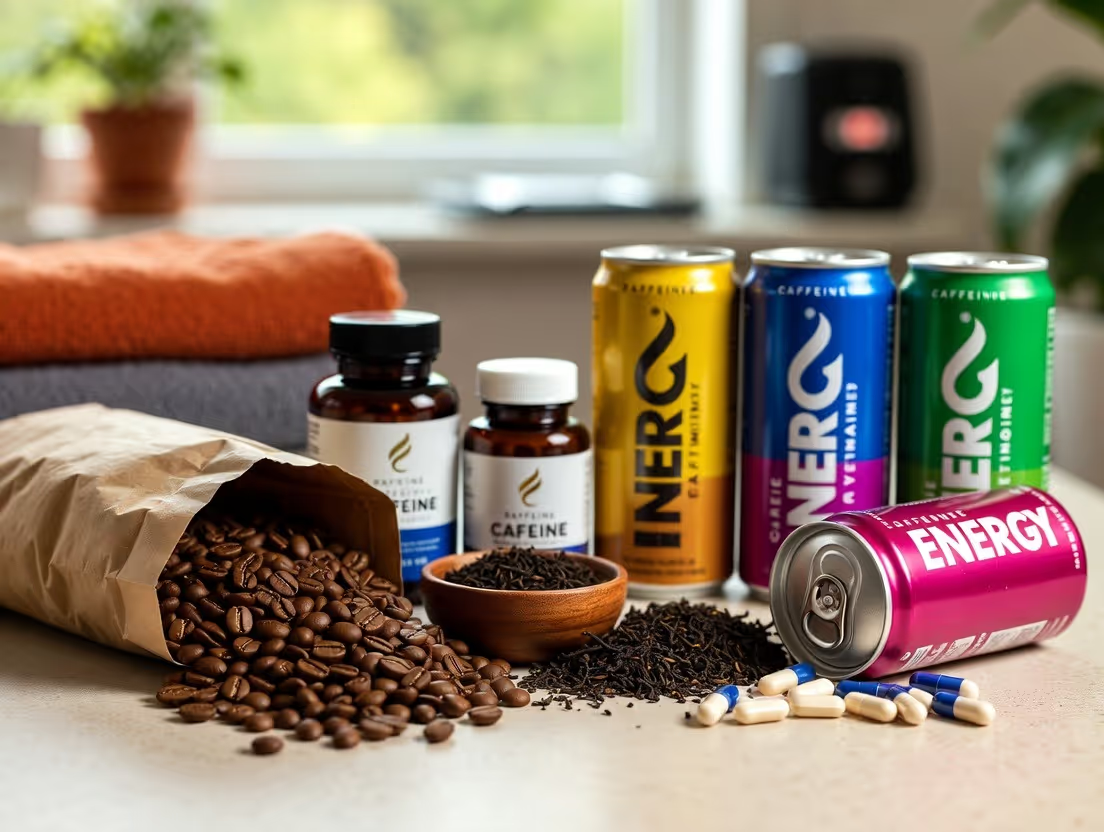
When we think of caffeine, coffee, tea, and energy drinks immediately come to mind. However, a significant factor perpetuating the sleep-caffeine cycle is the hidden, cumulative caffeine consumption throughout the day. This "caffeine creep" can sabotage sleep even when you feel you’re being moderate, making it essential to audit your total intake.
Caffeine is a surprisingly ubiquitous additive. Beyond the expected sources, consider:
The problem is one of dose stacking. Your day might look like this:
Total: ~586mg of caffeine. Even if the last conscious caffeine source was at 3:30 PM, the massive pre-workout dose at 6:00 PM is a sleep-wrecking missile that many don’t even categorize as "caffeine" in the same way as coffee.
This hidden intake makes sleep improvement efforts feel futile. You may follow perfect sleep hygiene—cool, dark room, no screens before bed, consistent schedule—but if you’re unknowingly consuming a pharmacologically active dose of a stimulant in the late afternoon or evening, you are undermining your own progress. The first step in using sleep to reduce caffeine need is to become a meticulous detective of your total daily intake, understanding that every source contributes to the adenosine receptor blockade that ultimately steals your sleep quality. For common questions on how wearables can help correlate intake with sleep metrics, our Oxyzen.ai/faq provides detailed answers.
Our culture has conflated "energy" with "stimulation." We speak of caffeine as an "energy boost," but true biological energy is something far more profound and sustainable. It’s the feeling of vitality, resilience, and ready engagement with the world—not the jittery, anxious alertness that follows a double espresso. To break the caffeine dependency, we must redefine our goal and understand that sleep is the primary generator of this authentic energy.
Authentic energy is multi-dimensional:
Sleep is the foundational investment that pays dividends across all three domains. It is compound interest for your biology. A night of high-quality sleep doesn’t just remove sleepiness; it actively deposits resources into your physical, mental, and emotional energy accounts.
In contrast, caffeine is a high-interest payday loan on mental energy. It provides a temporary, artificial influx of focused alertness by hijacking the adenosine system, but it does nothing to replenish your physical or emotional energy reserves. It often drains them further by increasing stress hormones and disrupting the restorative processes that would otherwise refill them.
The paradigm shift is this: Don’t seek to mask low energy with stimulation. Seek to generate abundant, natural energy through superior restoration. When you make this shift, the desire for caffeine changes. It moves from a need ("I cannot function without this") to, at most, a want ("I enjoy the taste and mild focus of this tea with my breakfast"). The goal of sleep improvement is not to create a life devoid of pleasure, but to create a physiological state so robust that you are no longer pharmacologically dependent on a substance to get through your day. Hearing how others have made this shift can be powerful motivation; real user journeys are captured in our Oxyzen.ai/testimonials page.
If we aim to use sleep as our primary energy source, we must first synchronize with our body’s innate timekeeper: the circadian rhythm. This internal 24-hour clock regulates not only sleepiness and wakefulness but also body temperature, hormone secretion, digestion, and cellular repair. Aligning with it is the single most powerful step you can take to improve sleep quality and, consequently, reduce your need for chemical stimulation.
The Power of Consistency
Your circadian rhythm thrives on predictability. The most effective tool for strengthening it is a consistent sleep-wake schedule, even on weekends. Going to bed and waking up at the same time every day anchors your rhythm. A fluctuating schedule is like constantly changing time zones—it induces a state of low-grade jet lag, confusing your internal systems and degrading sleep quality. This inconsistency often leads to brutal Monday morning fatigue, demanding extra caffeine to compensate.
Harnessing Light: The Prime Zeitgeber
Light is the most potent external cue ("zeitgeber") for your circadian clock. Specifically, blue-wavelength light detected by specialized cells in your eyes signals to the suprachiasmatic nucleus (SCN) in your brain that it is daytime.
Timing Food and Exercise
By mastering this pillar—waking with light, sleeping in darkness, and keeping a rock-solid schedule—you reinforce a robust circadian rhythm. The result is falling asleep more easily, experiencing more consolidated deep sleep, and waking up naturally with greater alertness. This innate morning clarity is the beginning of the end for your dependency on caffeine as an alarm clock in a mug. It’s about working with your biology, not against it. The journey to developing products that honor this biology is part of our story at Oxyzen.
Your sleep environment is the theater where the nightly restoration drama unfolds. If the stage is set poorly—too loud, too bright, too uncomfortable—the performance (your sleep) will suffer, no matter how strong your circadian rhythm or sleep drive. Optimizing your bedroom is a direct investment in sleep quality, and by extension, a direct reduction in next-day sleep debt and caffeine cravings.
The Holy Trinity: Darkness, Coolness, and Quiet
The Bed Itself: Your Sleep Sanctuary
Your mattress and pillows are not just furniture; they are ergonomic tools for recovery. An unsupportive mattress can cause pain, pressure points, and frequent tossing and turning, preventing sustained periods of deep and REM sleep.
The Mental Association
Your brain should associate your bed with two things only: sleep and intimacy. If you work, watch thrilling movies, or scroll through stressful news in bed, you weaken that association, making it harder for your brain to "switch off" when you finally want to sleep. This can lead to lying awake, feeling anxious about not sleeping, which further cements the poor association.
By transforming your bedroom into a cave-like sanctuary—cool, dark, quiet, and comfortable—you remove environmental barriers to high-quality sleep. You make it easy for your body to do what it’s designed to do. When you consistently achieve deep, uninterrupted sleep in such an environment, you wake up with a level of refreshment that makes the idea of needing caffeine feel foreign. You’ve created the physical conditions for self-sustaining energy.

You cannot expect your mind to shift from the high-speed cognitive processing of modern life to the restorative state of sleep instantaneously. The transition requires a bridge—a deliberate, consistent wind-down ritual. This "cognitive hygiene" practice is essential for quieting the alerting systems of the brain (the sympathetic nervous system) and activating the rest-and-digest system (the parasympathetic nervous system). Without it, you may be physically in bed, but your mind is still at the office, ensuring fragmented, light sleep and a foggy, caffeine-craving morning.
The 60-90 Minute Buffer Zone
Designate the last hour before your target sleep time as a screen-free, stress-free zone. This is non-negotiable for cognitive preparation.
Key Components of an Effective Wind-Down:
Managing the "Bedtime Brain"
For those with anxiety or racing thoughts, the quiet of bedtime can be especially challenging. Techniques like mindfulness meditation (simply observing thoughts without judgment) or progressive muscle relaxation (tensing and releasing muscle groups) can anchor the mind in the present body and away from future worries.
A disciplined wind-down ritual solves the problem of "tired but wired." It ensures that by the time your head hits the pillow, your sleep drive is high, your circadian clock is signaling "sleep now," and your mind is prepared to surrender to it. The sleep that follows is more likely to be swift and deep. Waking from such sleep, you’ll find your mind is clear and calm from the moment you open your eyes—a state that drastically reduces the reflexive reach for a stimulant. For more ideas on crafting personalized wind-down routines, explore the curated content on the Oxyzen.ai/blog.
Sleep is not just a nighttime event; it is the direct result of how you spend your waking hours. The homeostatic sleep drive (Process S) builds the longer you are awake. However, not all wakefulness is created equal. Certain daytime habits can strengthen this drive naturally and healthily, leading to a deeper, more compelling sleepiness at night, while others can deplete your mental resources without building the right kind of physical sleep pressure. Let’s explore the proactive, daytime strategies that construct robust sleep.
1. Strategic Light Exposure (Revisited with Purpose)
We discussed morning light for circadian alignment. Daytime light exposure, particularly outdoors, has a dual role. Bright daylight continues to suppress melatonin, keeping you alert and awake during the day, which in turn helps build a stronger sleep drive for the evening. It also reinforces your circadian rhythm. Aim for at least 30 minutes of outdoor light exposure during the day, especially in the morning and early afternoon.
2. Physical Activity: The Natural Energy Regulator
Exercise is a potent, two-pronged tool for sleep improvement:
The key is consistency over intensity. Regular moderate exercise (e.g., brisk walking, cycling, swimming) is often more beneficial for sleep than sporadic, intense workouts that can be overly stressful for some. Timing, as mentioned, is individual, but finishing exercise at least 2-3 hours before bed is a safe rule for most.
3. Mindful Consumption: Fueling Wakefulness and Sleep
4. Strategic Rest: Avoiding the "Second Wind"
The modern tendency is to power through afternoon fatigue with caffeine or sugar. This often backfires by disrupting evening sleep. A more sleep-supportive approach is to acknowledge the natural post-lunch dip in circadian alertness (around 2-3 PM).
By engaging in these proactive daytime habits—soaking in light, moving your body, nourishing it well, and resting strategically—you construct a powerful, natural sleep drive. You spend your wakefulness in a way that earns deep sleep. When you climb into bed after such a day, sleep feels like a reward, not an escape. The quality of that earned sleep is what gradually rewires your brain to expect natural energy, diminishing the perceived utility of caffeine as a necessary tool for managing your day. This holistic view of wellness—where day and night are interconnected—is central to our philosophy at Oxyzen.ai.
Armed with the four foundational pillars—Circadian Rhythm, Sleep Environment, Wind-Down Ritual, and Daytime Habits—you possess the knowledge to revolutionize your sleep. But knowledge alone is not transformation. In the quest to break the caffeine cycle, a critical gap often exists between knowing what to do and understanding what works specifically for you. This is where the fifth pillar, Objective Measurement and Biofeedback, transitions you from guesswork to precision.
For generations, sleep was a black box. We judged its quality by a single, flawed metric: how we felt in the morning. "Morning grogginess" could be blamed on a poor night's sleep, but also on dehydration, stress, or the lingering effects of yesterday's caffeine. This subjective fog makes it impossible to pinpoint true cause and effect. Did that 4 PM green tea actually reduce your deep sleep? Does your new meditation app truly help you fall asleep faster? Without data, you're navigating in the dark.
Modern sleep-tracking technology, particularly advanced wearables like smart rings, has illuminated this black box. By providing objective, physiological data, these tools allow you to see the direct impact of your behaviors on your sleep architecture. This creates a powerful feedback loop that is essential for sustainable change.
Key Metrics That Matter:
This data transforms you from a passive participant to an active sleep scientist. You can run personalized experiments:
The insights gleaned are profoundly motivating. Seeing a graph that clearly shows your best sleep follows your most disciplined days creates a powerful incentive to maintain those habits. It also provides compassion on "off" days—you can see the physiological reason you feel drained, which is more useful than self-criticism. For those ready to begin this journey of precise self-discovery, exploring the capabilities of a device like the Oxyzen ring is a logical next step. Learn more about its specific tracking features at Oxyzen.ai.
This data-driven approach is the final piece that locks the foundational pillars into place. It removes the doubt, provides the proof, and empowers you to tailor the universal principles of sleep science to your unique biology. With this pillar active, you are no longer just hoping for better sleep; you are engineering it. And as your sleep quality ascends, your reliance on caffeine begins its inevitable descent.
Attempting to quit caffeine cold turkey while still sleep-deprived is a recipe for misery and relapse. It's like trying to repair the foundation of a house while you're still living in it during a storm. The intelligent, sustainable approach is to use your improving sleep as a stabilizing force, then gradually and strategically reduce your caffeine intake. This method minimizes withdrawal, maximizes success, and allows you to feel the benefits of each positive change.
Phase 1: Fortify the Foundation (Weeks 1-2)
Phase 2: The Strategic Pushback (Week 3)
Phase 3: The Dilution Method (Week 4)
Phase 4: Dose Reduction & Substitution (Weeks 5-6)
Phase 5: Liberation & Choice (Ongoing)
Managing Withdrawal Symptoms:
Headaches, fatigue, and irritability are common but manageable. They are signs of your brain recalibrating.
By tethering your caffeine reduction to measurable sleep improvement, each step feels grounded and purposeful. You're not just taking something away; you're trading a short-term loan for long-term equity in your own energy systems. For personalized support and community stories on navigating this transition, our Oxyzen.ai/faq and testimonials page can offer valuable insights and encouragement.
As the cycle breaks and your sleep-derived energy becomes your primary fuel, the benefits cascade into every corner of your life. This isn't just about feeling less tired; it's about upgrading your baseline state of being. The replacement of caffeine dependency with sleep-powered vitality yields profound dividends that reinforce the new, healthier cycle.
1. Stable, All-Day Energy
Say goodbye to the jagged energy rollercoaster of peaks and crashes. Sleep provides a steady, renewable current of energy. You'll notice a calm, focused alertness that persists from mid-morning through the afternoon without the desperate 3 PM craving. Your energy becomes a predictable resource, not a fluctuating mystery.
2. Enhanced Emotional Regulation and Mental Clarity
With consistent, architecture-rich sleep, your prefrontal cortex is fully powered and your amygdala is kept in check. The results are tangible:
3. Metabolic and Physical Health Renaissance
4. Financial and Time Savings
Consider the cost: daily specialty coffees, energy drinks, and the "extra" snacks driven by caffeine crashes add up significantly over a month or a year. Beyond the direct cost, there's the time spent in line, preparing drinks, and dealing with the mental fog of poor sleep that reduces efficiency. Investing in better sleep (perhaps with blackout curtains or a tracking device) has a high return on investment in both money and time recouped.
5. The Rediscovery of Natural Rhythms and Tastes
Perhaps one of the most subtle yet beautiful benefits is the re-sensitization of your own body's signals. You begin to wake naturally near your alarm. You feel true hunger and true satiety. You perceive subtle energies and dips in your day and can respond to them appropriately—with a walk, a rest, or a glass of water, not a chemical override. Furthermore, when you do choose to enjoy a cup of coffee or tea, you can actually savor its complex flavor profile, not just gulp it down as medicine.
This cascade of benefits creates a powerful new narrative. The motivation to maintain excellent sleep hygiene is no longer the abstract avoidance of future health risks; it's the daily enjoyment of a clearer mind, a calmer spirit, a more resilient body, and a liberated relationship with your own energy. It's the experience of living at your potential. Reading about others who have achieved this state can be incredibly inspiring; many share their transformative journeys in their own words at Oxyzen.ai/testimonials.

The sleep-caffeine cycle is not merely a personal struggle; it is a societal paradigm. We have built economies and cultures around the presumption that chemical stimulation is a necessary adjunct to human capability. The "hustle" culture glorifies sleeplessness, while a multi-billion dollar industry sells us the cure for the fatigue it induces. Breaking free on an individual level is an act of quiet rebellion. But what happens when this shift begins to scale?
The Ripple Effects of a Well-Rested Population:
The Role of Technology as an Enabler, Not a Crutch
This is where the promise of thoughtful wellness technology shines. The goal of devices like advanced smart rings is not to make us obsessed with metrics or dependent on gadgets. It is to use technology as a bridge back to our biology. It provides the objective feedback that re-attunes us to our body's innate signals—signals that have been drowned out by artificial light, constant stimulation, and yes, caffeine.
This technology empowers the individual, providing the personal data needed to advocate for one's own health in a world filled with counterproductive norms. It turns abstract sleep advice into a personalized, visual story of cause and effect. In doing so, it supports the larger societal shift from treating symptoms (with more caffeine, more medication) to addressing foundational causes.
The journey from caffeine dependence to sleep-powered vitality is, therefore, more than a personal health optimization. It is a step toward reclaiming a natural human rhythm in an artificial world. It is a vote for a different kind of energy—one that is renewable, clean, and inherently yours. As you improve your sleep, you not only transform your own life but also contribute, in a small way, to changing a culture. You demonstrate that the most powerful stimulant isn't found in a bean or a leaf; it's manufactured every night, in the silent, restorative dark, within you.
This concludes the first third of our comprehensive exploration. The foundation is now set: we understand the intricate biology of sleep, the illusory mechanics of caffeine, the vicious cycle that binds them, and the practical, data-informed pillars for breaking free. We've seen the compound benefits and the broader implications. In the next portion, we will dive even deeper into advanced optimization strategies, address specific populations and challenges, explore the nuanced science of caffeine timing for those who choose to keep it, and provide a long-term framework for maintaining your sleep-powered life. The journey to sustainable energy is just beginning
As we solidify the paradigm of sleep as our primary energy source, it’s time to address caffeine with a new lens: not as a necessary enemy, but as a potentially useful tool that must be understood and wielded with extreme precision. For many, the end goal is not a life devoid of coffee’s rich aroma or tea’s comforting ritual, but a relationship where you are in control. This requires mastering the nuanced science of caffeine timing, pharmacokinetics, and individual response.
The Cortisol Awakening Response (CAR) and the "Caffeine Ceiling"
Your body has a built-in, powerful waking mechanism: the Cortisol Awakening Response (CAR). In the first 30-60 minutes after waking, your adrenal glands release a surge of cortisol, your natural stimulant, to help increase blood pressure, alertness, and energy. This is your biological "first cup of coffee."
Introducing caffeine during this peak cortisol period is not only redundant but counterproductive. It raises your baseline stimulation unnecessarily and can blunt the natural efficiency of your CAR over time, making you more reliant on the external compound. Furthermore, because cortisol and caffeine both stimulate the body, consuming them together can increase tolerance to both.
The "90-Minute Rule": A Strategic Delay
The most effective strategy for those who choose to consume caffeine is to wait 90-120 minutes after waking. This allows your natural CAR to do its job, lets your adenosine levels begin to naturally rise from their overnight low, and ensures you’re not using caffeine to replace a biological function. When you finally consume caffeine, it acts on a clearer playing field, providing a noticeable lift without overriding your innate rhythms. You’ll often find you need less to achieve the desired effect.
Understanding Your Personal Half-Life and Metabolism
Caffeine metabolism is governed primarily by the CYP1A2 enzyme in your liver. Genetic variations make people "fast" or "slow" metabolizers.
While genetic testing can reveal this, a simple self-experiment is telling: if a single morning coffee significantly affects your sleep or makes you feel overly anxious, you’re likely a slow metabolizer and need to be more stringent with timing and dose.
The Absolute, Non-Negotiable Cutoff
Regardless of metabolism, establishing a personal caffeine cutoff is critical for protecting sleep architecture. Using the 10-12 hour half-life rule:
Synergistic Pairing: L-Theanine
For those who enjoy caffeine’s focus but dislike its jittery side effects, pairing it with L-Theanine, an amino acid found abundantly in green tea, is a well-researched strategy. L-Theanine promotes alpha brain waves (associated with relaxed focus) and mitigates the stimulant’s negative effects. This creates a state of "calm alertness." You can achieve this by drinking high-quality green tea (which naturally contains both) or by supplementing with L-Theanine alongside your coffee.
Caffeine as a Performance Enhancer, Not a Deficit Mask
When used strategically by a well-rested individual, caffeine can shift from a deficit mask to a legitimate performance enhancer. Studies show it can improve athletic performance, muscular endurance, and cognitive task performance. The key distinction is the baseline: using it from a position of rested strength to gain a slight edge is fundamentally different from using it to crawl out of a sleep-deprived hole.
In this refined relationship, caffeine becomes like a specialized tool in a well-stocked workshop. You don’t use a power saw to hammer in a nail, and you don’t use caffeine to replace sleep. You use it deliberately, sparingly, and with full knowledge of its impact on your unique biology. This mastery is the hallmark of true energy autonomy. For further exploration of biohacking and strategic supplementation, resources are available on our Oxyzen.ai/blog.
The journey to sleep-powered energy is not one-size-fits-all. Specific life stages, health conditions, and professions present unique hurdles that can intensify the sleep-caffeine cycle. Recognizing and strategically addressing these challenges is crucial for success.
For Parents of Young Children:
Interrupted sleep is a given, making caffeine a seemingly essential lifeline. The strategy here must focus on maximizing sleep quality and efficiency during available windows.
For Shift Workers:
Those working night shifts are fighting directly against their circadian rhythm, a profoundly challenging scenario.
For Individuals with Anxiety or ADHD:
The relationship between caffeine, sleep, and these conditions is complex and bidirectional.
For Peri- and Post-Menopausal Women:
Hormonal fluctuations can severely disrupt sleep (hot flashes, night sweats) and alter caffeine metabolism.
For the "I’ve Tried Everything" Individual:
Some may have underlying, undiagnosed sleep disorders like Sleep Apnea, Upper Airway Resistance Syndrome (UARS), or Periodic Limb Movement Disorder (PLMD). No amount of sleep hygiene will fully resolve fatigue caused by these conditions. Symptoms like loud snoring, gasping for air, unrefreshing sleep despite long duration, or daytime exhaustion warrant a sleep study. Treating an underlying disorder can be the single most transformative step in ending caffeine dependency.
The message for special populations is one of tailored strategy, not surrender. The core principles remain, but they must be adapted with greater intention and self-compassion. The obstacle is the path. For support and community from others navigating similar challenges, our community forums and Oxyzen.ai/faq can be valuable resources.
Once the foundational pillars are solid, you can explore advanced levers to fine-tune sleep quality and depth. These strategies move beyond hygiene into the realm of optimization, further solidifying your body’s ability to generate its own profound, sustainable energy.
1. The Thermodynamics of Sleep: Mastering Core Temperature
The drop in core body temperature is one of the strongest signals for sleep onset. We can manipulate this deliberately.
2. Nutritional Biochemistry for Sleep
3. Technological Biofeedback and Neuromodulation
4. The Power of Mindset and Sleep Confidence
An often overlooked advanced technique is addressing sleep performance anxiety—the stress about not sleeping, which itself prevents sleep. Cognitive Behavioral Therapy for Insomnia (CBT-I) techniques are gold-standard here.
These advanced strategies are for those who have mastered the basics and seek to push their restorative capacity to its natural peak. They represent a deep partnership with your physiology, using science and technology not as crutches, but as amplifiers of your body’s innate wisdom. The company behind Oxyzen is built on this very principle of deep partnership, a story you can explore at Oxyzen.ai/our-story.
Transforming your relationship with sleep and caffeine is not a 30-day challenge with a clear finish line; it is a fundamental, lifelong upgrade to your operating system. Like any major lifestyle shift, long-term success depends not on perfection, but on a resilient system for maintenance and a compassionate strategy for navigating inevitable setbacks.
Building a Maintenance Mindset
Navigating Setbacks with Compassion
You will have bad nights. A stressful event, travel, illness, or a social evening will disrupt your sleep. You may have a day where you succumb to an afternoon coffee. This is not failure; it is data and an opportunity to practice resilience.
The Evolution of Your "Why"
Your initial motivation might have been to quit caffeine crashes or lose weight. Over time, as you experience the benefits, your "why" will deepen and evolve. It becomes about:
This long-term perspective turns the journey into a sustainable lifestyle. You are no longer "on a sleep program"; you are a person who prioritizes restoration because you have directly experienced its transformative power. The daily choices become easier because they are aligned with a deeply valued identity: someone who is powered by sleep. For ongoing inspiration and to see how this long-term philosophy plays out, the real-world experiences shared at Oxyzen.ai/testimonials are continually updated.
We have journeyed from the microscopic—blocked adenosine receptors and suppressed delta waves—to the macroscopic: societal shifts and lifelong personal transformation. The central argument is now complete and robust: Improving sleep architecture is the most effective, sustainable, and health-promoting method to reduce and eliminate the physiological need for caffeine.
The evidence is layered:
The path forward is one of empowerment, not deprivation. It begins with a single, compassionate audit of your current sleep and a commitment to one small change—perhaps delaying your morning coffee by 30 minutes, or installing a blue-light filter on your phone. Each positive step reinforces the next.
You now possess the map. You understand the terrain of your own neurochemistry and the tools to cultivate it. The goal is within reach: to greet each day with an alertness that is earned, not borrowed; with a clarity that is natural, not manufactured; and with a vitality that is truly, deeply your own.
This concludes the core, substantive argument of this long-form exploration. In the final third of this comprehensive guide, we will move into actionable implementation, providing detailed toolkits, 30-day plans, worksheets, and resources to turn this knowledge into tangible, daily practice. We will also explore the future of sleep science and answer the most frequently asked questions in a detailed FAQ. The journey from theory to practice begins now.
Your Trusted Sleep Advocate: Sleep Foundation — https://www.sleepfoundation.org
Discover a digital archive of scholarly articles: NIH — https://www.ncbi.nlm.nih.gov/
39 million citations for biomedical literature :PubMed — https://pubmed.ncbi.nlm.nih.gov/
Experts at Harvard Health Publishing covering a variety of health topics — https://www.health.harvard.edu/blog/
Every life deserves world class care :Cleveland Clinic - https://my.clevelandclinic.org/health
Wearable technology and the future of predictive health monitoring :MIT Technology Review — https://www.technologyreview.com/
Dedicated to the well-being of all people and guided by science :World Health Organization — https://www.who.int/news-room/
Psychological science and knowledge to benefit society and improve lives. :APA — https://www.apa.org/monitor/
Cutting-edge insights on human longevity and peak performance:
Lifespan Research — https://www.lifespan.io/
Global authority on exercise physiology, sports performance, and human recovery:
American College of Sports Medicine — https://www.acsm.org/
Neuroscience-driven guidance for better focus, sleep, and mental clarity:
Stanford Human Performance Lab — https://humanperformance.stanford.edu/
Evidence-based psychology and mind–body wellness resources:
Mayo Clinic — https://www.mayoclinic.org/healthy-lifestyle/
Data-backed research on emotional wellbeing, stress biology, and resilience:
American Institute of Stress — https://www.stress.org/


