


How Sleep Score Correlates With HRV and Recovery
Higher HRV and lower resting heart rate during sleep often correlate with a higher sleep score, indicating better recovery.
Higher HRV and lower resting heart rate during sleep often correlate with a higher sleep score, indicating better recovery.
%402x.svg)
You wake up. Before you even open your eyes, a feeling washes over you. It’s not quite a thought; it’s a deep, bodily knowing. Today, you feel restored. Your mind is clear, your energy is steady, and a sense of readiness hums beneath the surface. On other mornings, the fog is thick, your coffee demand is urgent, and you feel like you’re starting the day already in deficit.
For centuries, this assessment of our morning state was purely subjective—a guess based on groggy intuition. But a quiet revolution is happening on our fingers. With the advent of sophisticated wearable technology like smart rings, we are no longer guessing. We are being given a precise, data-driven report card of our night: the Sleep Score. Yet, this single number is not an isolated metric. It is the crescendo of a complex, invisible symphony played by two of your body’s most powerful orchestrators: Heart Rate Variability (HRV) and Recovery.
This article is your backstage pass to that symphony. We will embark on a deep exploration of how your nightly Sleep Score is intricately and causally correlated with your HRV and overall recovery status. This isn't just about tracking sleep; it's about understanding the fundamental language of your nervous system and how it dictates your capacity for health, performance, and resilience. By the end, you won't just see numbers on an app—you'll understand the profound story they tell about the state of your being.
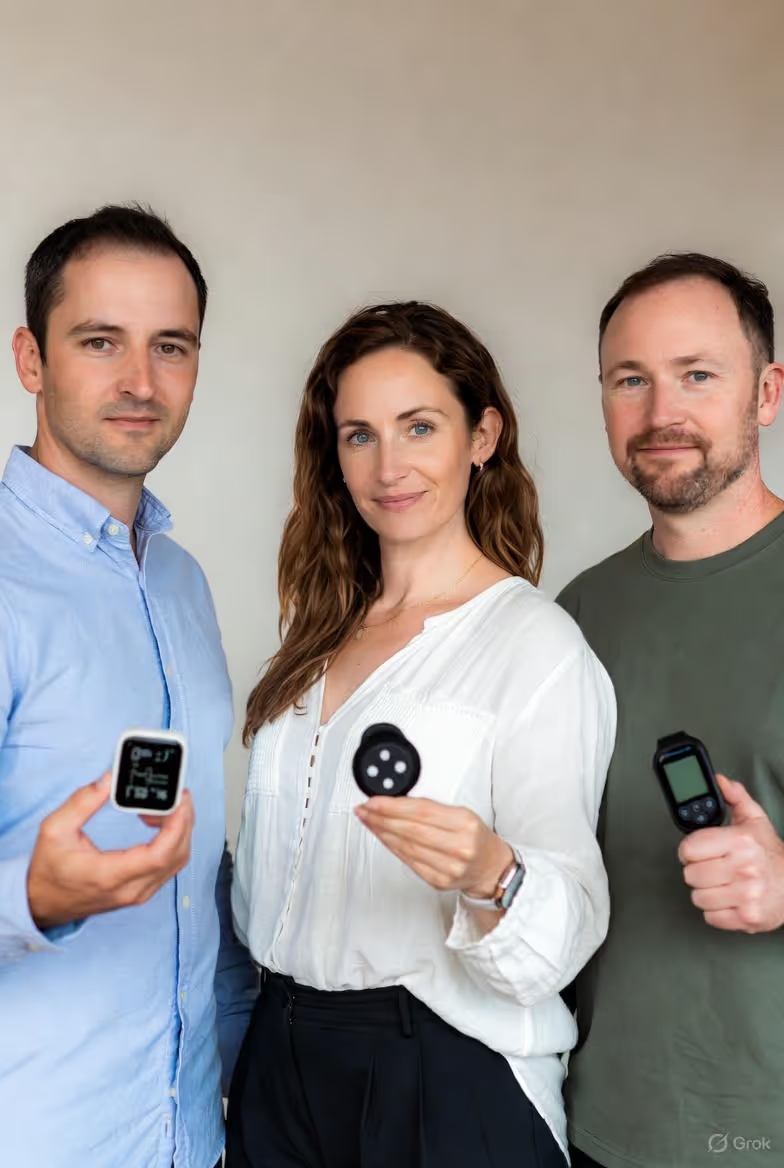
To understand how they dance together, we must first meet each performer individually. In the realm of quantified health, Sleep Score, Heart Rate Variability (HRV), and Recovery form a holy trinity, each offering a unique but interconnected lens into your well-being.
Sleep Score: The Nightly Performance Review
Your Sleep Score is a composite metric, typically on a scale of 0-100, generated by your wearable device. It is not a direct measurement but an algorithmically derived evaluation of your sleep’s quality and architecture. Think of it as a smart, automated analysis of your night’s performance. Key ingredients that feed into this score include:
A high Sleep Score indicates your body successfully navigated the complex, restorative processes it must complete under the cloak of darkness. It’s the headline, but the real news is in the subtext—the biological processes that made that headline possible.
Heart Rate Variability (HRV): The Master Metric of Your Nervous System
If Sleep Score is the headline, HRV is the investigative journalism behind it. Contrary to what the name might imply, HRV is not about your heart rate itself, but the variation in time between each heartbeat. This variation, measured in milliseconds, is controlled by your autonomic nervous system (ANS).
Your ANS has two primary branches: the sympathetic ("fight-or-flight") and the parasympathetic ("rest-and-digest"). A higher HRV generally indicates a strong, resilient parasympathetic tone and a balanced ANS—your body is adaptable, recovered, and ready to handle stress. A lower HRV suggests dominant sympathetic activity, meaning your body is under strain, fatigued, or not fully recovered. It is a profound, non-invasive window into your body’s internal stress response and its capacity for restoration. As we will explore, it is both a predictor of sleep quality and a consequence of it.
Recovery: The State of Your Readiness
Recovery is the ultimate outcome—the goal state. It is your body’s return to homeostasis (baseline) after the stress of wakefulness, exercise, mental work, and life. Recovery isn’t passive; it’s an active physiological process of repair, adaptation, and replenishment that occurs primarily during sleep. Modern wearables like the Oura Ring or devices analyzed on platforms like Oxyzen.ai synthesize data—including HRV, resting heart rate, body temperature, and previous night’s sleep—to produce a daily Recovery Score. This score answers the critical question: "Am I physiologically prepared to take on stress today, or do I need to prioritize restoration?"
The correlation between these three is not linear but a continuous, dynamic feedback loop. Last night’s recovery status influences tonight’s sleep potential. Tonight’s sleep quality directly impacts tomorrow morning’s HRV and recovery score. Understanding this loop is the first step toward taking conscious control of it. For a deeper dive into how technology interprets these signals, you can always learn more about smart ring technology on our comprehensive resource page.
Every symphony needs a conductor. For the nightly performance of restoration, the conductor is your Autonomic Nervous System (ANS). To truly grasp why HRV is such a powerful metric and how it intertwines with sleep, we must step back and appreciate the maestro’s role.
The ANS operates below the level of conscious thought, regulating critical functions like heart rate, digestion, respiratory rate, and pupillary response. Its two main branches are in a constant, delicate dance:
Sleep, particularly deep sleep, is a parasympathetic-dominant state. It is when the PNS takes the lead to orchestrate physical repair, memory consolidation, and metabolic cleanup. HRV is our best real-time indicator of which branch is leading the dance at any given moment. High HRV reflects strong PNS influence and flexibility between the two systems—the conductor can seamlessly cue the strings to soften and the brass to swell. Low HRV indicates the SNS is stuck "on," creating a rigid, monotonous rhythm—the physiological signature of stress, fatigue, or illness.
When you prepare for sleep, a healthy ANS should initiate a "parasympathetic shift." Your heart rate begins to dip, your body temperature drops slightly, and your HRV ideally rises as your body transitions into recovery mode. The quality of your sleep—your Sleep Score—is fundamentally a report on how successfully this parasympathetic concert was performed. Disruptions in sleep (insomnia, apnea, frequent awakenings) are often manifestations of a sympathetic intrusion—the fight-or-flight system interrupting the rest-and-digest concert.
Therefore, your HRV trend is not just another data point; it is a direct readout of your conductor’s baton. Monitoring it provides insight into whether your nervous system is primed for restoration before you even close your eyes, and how effectively it maintained that state throughout the night. This foundational understanding of the ANS is key to interpreting all the data that follows, a topic we frequently explore in detail on the Oxyzen.ai blog.
Now that we understand the conductor, let’s examine the sheet music: HRV itself. While it may seem like an esoteric metric reserved for biohackers and elite athletes, its implications are universal. It is a biomarker of aging, resilience, and overall health.
The Science of the Beat-to-Beat Interval
Your heart does not tick like a metronome. The time between one heartbeat (R-R interval) and the next varies constantly. If your heart rate is 60 beats per minute, it doesn’t beat exactly once per second. The intervals might be 1.1 seconds, then 0.9 seconds, then 1.05 seconds. This subtle, millisecond-level variation is HRV. It is influenced by your breathing (inhalation temporarily speeds the heart, exhalation slows it—a phenomenon called respiratory sinus arrhythmia), hormones, brain activity, and of course, the ANS.
What Does Your HRV Tell You?
A higher HRV in a resting state (especially during sleep, which provides a controlled environment for measurement) is almost universally associated with positive health outcomes:
Conversely, a lower HRV or a sudden drop from your personal baseline can be a warning sign:
The Critical Importance of Personal Baselines
This is the most crucial point about HRV: It is a highly individual metric. Comparing your HRV to someone else’s is meaningless. A "good" HRV is one that is optimal for you. A marathon runner might have a resting HRV of 120ms, while a healthy, fit person in their 40s might have a baseline of 50ms. What matters is your trend over time. Is your weekly average increasing, indicating improved fitness and resilience? Did it plummet last night, suggesting you might be fighting off a bug or are emotionally drained?
Your wearable device, when used consistently, establishes this personal baseline. The real power lies in noticing deviations from your norm and connecting them to lifestyle factors: Was the drop due to a hard workout, a late-night meal, an argument, or poor sleep? This process of correlation is where self-knowledge transforms into actionable insight. For those just beginning their journey with this data, visiting the Oxyzen.ai FAQ can help answer common questions about tracking and interpreting these personal biomarkers.
With a firm grasp on the ANS and HRV, we can now deconstruct the Sleep Score with greater sophistication. That number on your app is the result of a complex algorithm interpreting raw physiological signals captured throughout the night. Let’s pull back the curtain on what’s being measured and why each component matters for your recovery.
The Pillars of Sleep Architecture:
Sleep is not a monolithic state. It’s a cyclical journey through distinct stages, each with a unique physiological purpose. Your wearable uses a combination of accelerometry (movement) and photoplethysmography (PPG)—using light to measure blood flow changes at your finger—to estimate these stages.
A high Sleep Score reflects not just adequate time in each stage, but a healthy cycling between them throughout the night. Typically, we cycle through these stages every 90-120 minutes, with deep sleep dominating the first half of the night and REM sleep the second half.
Beyond Stages: The Supporting Cast of Metrics
The algorithm also weighs other critical factors:
In essence, your Sleep Score is a holistic grade on your body’s nighttime restorative processes. A high score means you provided the conditions, and your nervous system executed the plan, to complete the essential work of deep and REM sleep. To see how real users interpret and act on this nightly data, you can read their experiences in our collection of real customer reviews and testimonials.
Here is where the magic of correlation becomes clear. The relationship between HRV and sleep is not merely associative; it is bidirectional and causal. They influence each other in a continuous dialogue.
HRV as a Predictor of Sleep
Your HRV pattern in the hours leading up to bedtime is a powerful crystal ball. If your daytime stress has been high, keeping your sympathetic nervous system engaged, your HRV will likely be suppressed. This state of physiological arousal makes it difficult for the parasympathetic system to initiate the sleep process. You may experience "tired but wired" syndrome—feeling exhausted but unable to quiet your mind and body for sleep. Consequently, you might experience longer sleep latency, more restless light sleep, and a lower overall Sleep Score. Monitoring your daytime or evening HRV can therefore serve as an early warning system, prompting you to engage in calming practices (like meditation, gentle yoga, or breathing exercises) to facilitate the necessary parasympathetic shift for sleep.
HRV as a Reflection of Sleep
Once asleep, HRV provides a minute-by-minute commentary on the depth and quality of your sleep. During deep sleep, HRV typically reaches its nightly peak, showcasing maximal parasympathetic activity. This is when the most intense physical repair occurs. During REM sleep, HRV becomes more variable, mirroring the brain’s active state. A healthy sleep architecture will show a recognizable, cyclical pattern of HRV fluctuation in sync with sleep stages.
When sleep is disrupted—by sleep apnea (which causes repeated oxygen drops and sympathetic surges), alcohol (which fragments sleep and suppresses REM), or environmental disturbances—the HRV graph tells a stark story. Instead of smooth, high-amplitude waves, you see a chaotic, flattened pattern. The sympathetic nervous system is being repeatedly activated, preventing sustained parasympathetic depth. The next morning, a low Sleep Score and a low or unstable nightly HRV average will confirm the story: your body was in a state of conflict all night, not restoration.
The Morning After: HRV and the Recovery Score
This brings us to the final act of the nightly cycle: the morning assessment. Your device’s Recovery Score is heavily influenced by your sleeping HRV (not a daytime spot-check). A high average HRV during sleep, combined with a low resting heart rate and healthy temperature trend, will yield a high Recovery Score. This tells you that your nervous system successfully completed its restorative work. You invested in recovery, and the dividend is physiological readiness.
Conversely, even if you slept for 8 hours, a low nightly HRV will often drag down your Recovery Score. It’s the body’s way of saying, "The quantity was there, but the quality was lacking. The repair work is incomplete." This nuanced understanding—that sleep duration without sleep quality is an empty calorie—is the superpower granted by tracking HRV. It moves us beyond simply counting hours to truly assessing the restorative value of those hours. For more insights on optimizing this entire cycle, our blog features a wealth of related articles and further reading.

The Recovery Score is the executive summary, the bottom line. It takes the complex narrative written by your sleep stages, HRV, RHR, and temperature and distills it into a single, actionable directive: Go, Yield, or Stop.
How the Recovery Algorithm Thinks
While each platform has its proprietary formula, the logic is consistent. The algorithm looks for signals of physiological stress versus restoration:
The score isn’t just about last night; it’s often contextualized against your recent strain. For example, after an intense day of training or mental exertion, your body needs deep recovery. A moderately good night’s sleep might still yield only a moderate Recovery Score because the demand for repair was so high. The algorithm is assessing whether you met the recovery demand created by previous stress.
Interpreting Your Daily Readiness
This synthesis is the ultimate value of the data trio. The Sleep Score tells you what happened. HRV gives you the physiological why. The Recovery Score tells you what to do about it today. It transforms data from a curiosity into a daily guide for sustainable performance and health. This philosophy of guided, data-informed well-being is at the core of our mission at Oxyzen, which you can learn more about on our about us page.
You are not a passive observer of this HRV-Sleep-Recovery loop. You are the composer and stage manager. Your daily choices directly tune your nervous system, setting the stage for the night’s performance. Let’s examine the big three levers: stress, diet, and exercise.
The Double-Edged Sword of Stress
Psychological stress is perhaps the most potent suppressor of HRV and disruptor of sleep. When your brain perceives a threat (deadline, argument, financial worry), it activates the SNS, releasing cortisol and adrenaline. This acute response is adaptive. Chronic, unresolved stress, however, leads to a perpetually elevated sympathetic tone. This makes the parasympathetic shift into sleep difficult, reduces deep sleep, and results in a lower, more chaotic nightly HRV. Managing stress isn’t a luxury for high performance; it’s a biological necessity for recovery. Techniques like mindfulness, box breathing, and spending time in nature are not just "relaxing"—they are direct interventions to stimulate the vagus nerve and boost PNS activity, improving both daytime HRV and subsequent sleep.
Nutrition: Fueling Recovery, Not Disruption
What and when you eat plays a dramatic role in your autonomic balance. A large, heavy, or high-sugar meal close to bedtime forces your body to focus on digestion (a parasympathetic process) while also potentially causing blood sugar spikes and inflammation that can disrupt sleep architecture. Alcohol is a major culprit—while it may induce sleep onset, it severely fragments the second half of the sleep cycle, obliterating REM sleep and trashing HRV. Conversely, balanced nutrition that stabilizes blood sugar, provides key nutrients for neurotransmitter production (like magnesium, tryptophan), and supports gut health creates a stable internal environment conducive to both high HRV and restorative sleep.
Exercise: The Dose Makes the Poison (or the Cure)
Exercise is a hormetic stressor—a controlled dose of stress that, when followed by adequate recovery, makes you stronger. It profoundly affects our trinity:
The art lies in balancing strain and recovery. Your HRV and Recovery Scores are the perfect tools for this, allowing you to practice listening to your body rather than blindly following a rigid schedule. Was your HRV high this morning? Maybe it’s a day for a challenging session. Is it in the tank? A walk or a rest day is the wiser prescription. This personalized approach to wellness is a journey we’ve been passionate about since the beginning, as detailed in our brand journey and founding story.
To capture this symphony accurately, you need a world-class recording studio. This is where the form factor and technology of the smart ring shine, particularly for nocturnal measurement. Unlike wrist-worn devices, the ring has distinct advantages for capturing the data we’ve been discussing.
The Ideal Anatomical Position
The finger hosts a rich vascular bed, allowing for a strong photoplethysmography (PPG) signal with minimal motion artifact. During sleep, your hands are generally still, especially compared to your wrists, which can move frequently. This reduces "noise" in the data, leading to cleaner, more reliable measurements of heart rate, HRV, and blood oxygen variation. The finger is also an excellent site for measuring peripheral body temperature, a key circadian and recovery biomarker that is harder to measure accurately on the wrist.
Continuous, Unobtrusive Monitoring
A ring is comfortable to wear 24/7, including during sleep. This allows for seamless, continuous data collection without the need to charge daily (most rings have multi-day batteries) or remember to put on a device at night. This continuity is critical for establishing true personal baselines and noticing subtle trends over time. You get a complete picture of your circadian rhythm, from your waking activity and stress to your deepest sleep and morning readiness.
From Raw Data to Intelligent Insight
The raw PPG and accelerometer data is just the beginning. The true value is in the sophisticated algorithms that process this data. Advanced machine learning models are trained on vast datasets to accurately identify sleep stages, filter out motion artifact, and calculate derived metrics like Sleep Score and Recovery Score. The best devices don’t just show you numbers; they provide context, trends, and personalized insights. For example, they might note: "Your resting heart rate was 8% higher than usual last night, and your HRV was low. This is often linked to late alcohol consumption. Try finishing your last drink 3 hours before bed."
This seamless integration of medical-grade sensing, comfortable design, and intelligent software is what makes modern smart rings like those analyzed through platforms like Oxyzen.ai such powerful tools for health empowerment. They turn the invisible symphony of your nervous system into a visible, understandable score that you can learn to conduct. If you’re curious about the specifics of how this technology works, our FAQ page is a great resource for support and detailed questions.
Theory is essential, but the true "aha!" moments come from seeing these principles play out in real life. Let’s walk through a hypothetical but data-rich week for "Alex," a health-conscious professional, to see the dynamic interplay of lifestyle, sleep, HRV, and recovery.
Day 1 (Monday): Alex starts the week strong. A good weekend of relaxation has his baseline Recovery Score at 85 (Green). He has a productive workday, a balanced dinner early, does a 45-minute strength training session after work, and follows a calming pre-bed routine. His sleep data shows: 7h 45m total sleep, 1h 25m deep sleep, 1h 50m REM, low restlessness. His average sleep HRV is high (at his personal baseline), and his RHR is low. Result: Sleep Score: 88. Morning Recovery: 87. A virtuous cycle begins.
Day 2 (Tuesday): Energized by his high recovery, Alex pushes hard in a HIIT class after work. The workout is intense—a positive stressor. That night, his body is in repair mode. His sleep data shows even more deep sleep (1h 40m) as his body focuses on physical repair. His sleeping HRV is slightly lower than the previous night (normal post-intense exercise), but still robust. Result: Sleep Score: 85. Morning Recovery: 82. A slight dip, but still in the green—his body effectively managed the strain.
Day 3 (Wednesday): A major work crisis hits. Alex is mentally fried and stressed, skipping his workout to manage the issue. He eats a late takeout dinner. His pre-sleep HRV, measured by his ring in the evening, is noticeably suppressed (sympathetic arousal). He takes a long time to fall asleep. His sleep data shows: long sleep latency, frequent awakenings, significantly reduced deep sleep, and a fragmented, flattened HRV graph throughout the night. Result: Sleep Score: 72. Morning Recovery: 65 (Yellow). The lifestyle stress directly corrupted the sleep architecture, despite adequate time in bed.
Day 4 (Thursday): Waking in the yellow, Alex feels off. He ignores his body’s signal and decides to "push through" with his planned run. It feels harder than usual. That night, the cumulative stress (physical from Tuesday, mental from Wednesday, exercise on low recovery Thursday) manifests. His sleep data is poor: restless, light-dominant sleep, very low and chaotic HRV. His body temperature is also slightly elevated. Result: Sleep Score: 68. Morning Recovery: 48 (Red). The system is now shouting for a break.
Day 5 (Friday): Alex heeds the red signal. He cancels social plans, eats a light, early dinner, takes an Epsom salt bath, and goes to bed early. His sleep data tells the story of recovery: long sleep duration, a huge rebound in deep sleep, a slow but steady climb in HRV throughout the night. Result: Sleep Score: 90. Morning Recovery: 75. He’s climbing out of the hole by honoring his body’s data-driven request for rest.
This narrative week illustrates the power of correlation. By reading the data chain—Lifestyle Stress → Impaired Sleep → Low HRV → Low Recovery → Altered Capacity for Stress—Alex can learn to make proactive, not reactive, choices. This is the essence of biofeedback, turning your body into its own guide. For more real-world examples of this learning curve, explore the user experiences shared in our testimonials.
While daily scores provide immediate feedback, the true transformation—and the most profound insights—lie in the long-term trends. A single night of poor sleep and low HRV is a data point; a three-month trend of declining baselines is a story. It’s the difference between weather and climate. Understanding your longitudinal data is where you move from reactive symptom management to proactive health optimization.
The Power of the Moving Baseline
Your body’s systems operate on rhythms longer than 24 hours. The menstrual cycle, training adaptation periods, seasonal changes, and chronic stress all unfold over weeks and months. Your wearable’s 90-day (or longer) averages for metrics like Sleep Score, resting HRV, and resting heart rate create a personalized “climate” baseline. This is your new normal.
Correlating Trends with Life Phases
The narrative becomes powerful when you overlay these biometric trends with your life calendar. Look back at your data from three months ago.
This exercise creates powerful cause-and-effect learning. You stop seeing a low score as a failure and start seeing it as information: “When my life looks like this, my body responds like that.” This self-knowledge is invaluable for making sustainable lifestyle choices. Tracking these long-term trends is a core focus of the analysis and insights provided by platforms like Oxyzen.ai, helping users see beyond the daily noise.
The Recovery Balance Graph
Many advanced platforms visualize this strain-recovery balance over time. Imagine a graph with two lines: one representing your daily “Strain” (a composite of activity, exercise, and physiological stress) and the other representing your daily “Recovery” score. The goal is not to have zero strain, but to see a positive correlation—hard days should be followed by adequate recovery, creating a sawtooth pattern. A dangerous pattern is when the Strain line is consistently high and the Recovery line is consistently low, with a widening gap. This is the signature of unsustainable effort leading to breakdown.
By adopting a longitudinal view, you shift from being a passenger reacting to daily scores to becoming the pilot, reading the instrument panel to navigate toward your long-term health destination.
Our exploration would be incomplete without acknowledging that the symphony of sleep and recovery is composed on different sheet music for different people. Biological factors like age, sex, and innate circadian predisposition (chronotype) set the stage, establishing unique personal benchmarks that must be respected, not fought against.
The Aging Conductor: How Metrics Shift Over a Lifetime
Aging is, physiologically, a gradual decline in system flexibility and reserve—and this is vividly reflected in our core metrics.
Gender-Specific Rhythms: Hormones and the Monthly Cycle
For individuals who menstruate, the hormonal cycle is a powerful, predictable modulator of the ANS, sleep, and recovery—a factor historically ignored in health research.
Ignoring these cycles can lead to frustration. The enlightened approach is to sync your expectations and activities with your cycle, using your HRV and Recovery Score as objective guides to confirm your subjective experience. This is the pinnacle of personalized health.
Chronotype: Your Inner Schedule
Are you a morning lark or a night owl? Your chronotype is genetically influenced and dictates your natural preference for sleep and wake times. It also influences your circadian rhythm of core body temperature and hormone secretion (like melatonin and cortisol).
Acknowledging these biological realities fosters self-compassion and smarter strategy. It moves the goalpost from chasing arbitrary, universal numbers to optimizing your unique, personal physiology. For a deeper understanding of how personalization is built into modern wellness technology, you can discover more about our vision and values.
You can have perfect habits, but if your sleep environment is working against you, your scores will reflect the conflict. Your bedroom is the theater for the night’s restorative performance. Every element—light, temperature, sound, and even air quality—is a variable you can control to set the stage for parasympathetic dominance.
Light: The Master Circadian Cue
Light exposure is the most powerful external regulator of your circadian rhythm. Blue light, in particular, suppresses melatonin production.
Temperature: The Goldilocks Principle
Your core body temperature needs to drop by about 1-3 degrees Fahrenheit to initiate and maintain sleep. An environment that’s too warm disrupts this signal.
Sound and Silence: Minimizing Sympathetic Triggers
Noise pollution, even if it doesn’t fully wake you, can cause micro-arousals and shift you into lighter sleep stages, fragmenting sleep architecture and impacting HRV.
Air Quality and Allergens
Poor air quality (high CO2, VOCs, allergens) can impair sleep quality and increase inflammation, subtly dragging down recovery metrics.
By systematically auditing and optimizing these four pillars of your sleep sanctuary, you remove external obstacles to high-quality sleep. This allows your intrinsic biology—your ANS and HRV—to perform at its best, unimpeded. This holistic approach to environmental design is a topic we often expand upon in resources available on our blog for further reading.
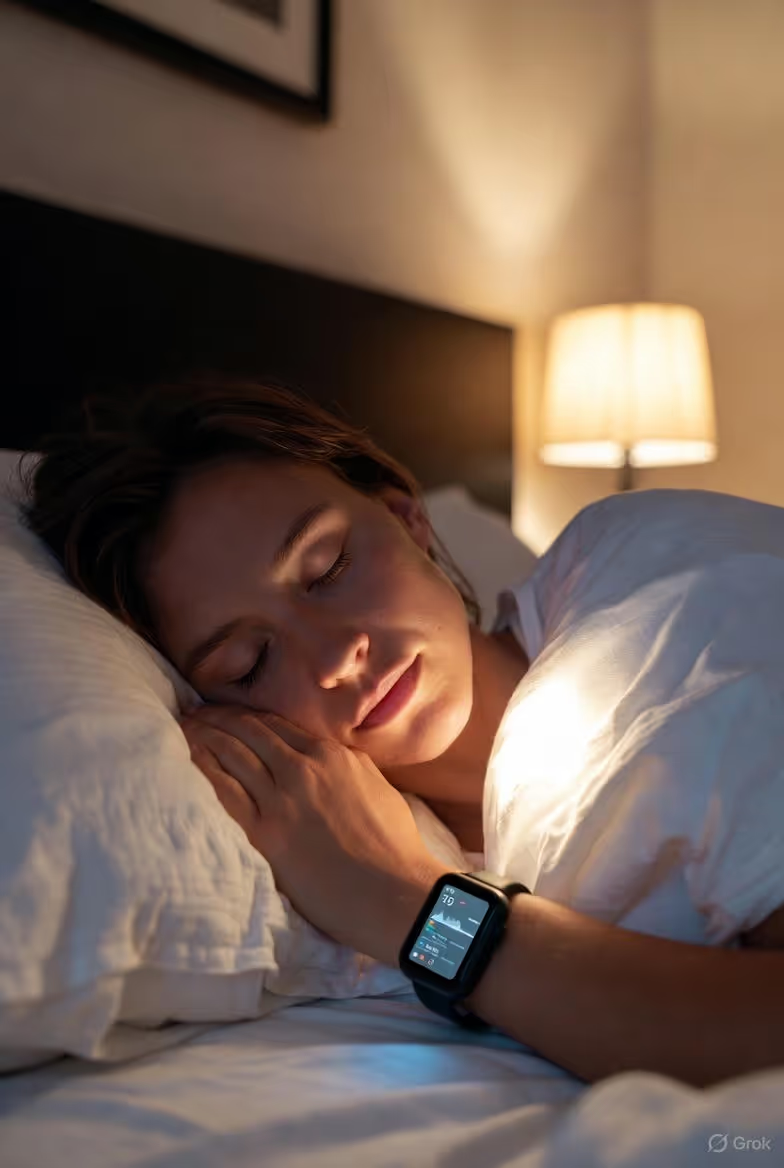
Technology provides the what; wisdom provides the how. The most advanced smart ring is merely a mirror. The real work comes from the behavioral and psychological practices you employ to improve what you see reflected. These practices are direct levers on your autonomic nervous system, designed to amplify parasympathetic activity and build resilience.
Breath as a Remote Control for the ANS
Conscious breathing is the fastest, most direct way to influence your HRV and shift from sympathetic to parasympathetic dominance. Unlike your heart rate, which is mostly autonomic, you can voluntarily control the rhythm and depth of your breath, which in turn influences your heart’s rhythm through the vagus nerve.
Meditation and Mindfulness: Training Nervous System Flexibility
Regular meditation is like strength training for your parasympathetic nervous system. It enhances your ability to observe stress without being hijacked by it, creating space between stimulus and reaction.
Gratitude and Positive Emotion Reframing
Emotions have a direct physiological signature. Chronic anxiety, resentment, and anger are associated with low HRV and sympathetic arousal. Cultivating positive emotions like gratitude, compassion, and awe has the opposite effect.
Digital Detox and Cognitive Unloading
The constant cognitive bombardment of modern life—emails, news, social media—keeps the brain in a state of high-frequency beta waves, antagonistic to the theta and delta waves of sleep.
Integrating even one or two of these practices consistently can create a noticeable upward shift in your longitudinal HRV and Sleep Score trends. They are the human element that turns cold data into warm, lived well-being. For support on starting these practices, our community and FAQ section offer helpful guidance.
With great data comes great responsibility—the responsibility to interpret it correctly. It’s easy to become “data-obsessed,” where the score itself becomes a source of stress, ironically degrading the very metrics you’re trying to improve. Let’s navigate the common cognitive traps and misconceptions.
The Obsession with a Single Night’s Score
This is the most frequent pitfall. You have one night with a Sleep Score of 65 and you feel like a failure. But remember: One night is noise. Life happens. A late meal, a stressful day, a single drink, a change in schedule—all can cause temporary dips. The health of your system is defined by its resilience and ability to return to baseline, not by its perfection every single night. Focus on the weekly average and the long-term trend, not the daily fluctuation.
Misunderstanding the “More is Better” Fallacy
This applies to several metrics:
Ignoring Context and Subjective Feelings
Data is a guide, not a gospel. If your Recovery Score is 85 but you feel exhausted and run-down, listen to your body. The algorithm doesn’t know about your emotional heartache, your lingering headache, or the strange meal you ate. Your subjective feeling (how you feel) is the ultimate validation of the objective data (the scores). Use them in dialogue. If they disagree, investigate. Don’t dismiss your lived experience for a number.
The Comparison Trap
As emphasized, HRV and Sleep Scores are personal. Comparing your 45ms HRV to your friend’s 100ms is as pointless as comparing your shoe size. Genetics, age, gender, and even past medical history play enormous roles. Your only meaningful comparison is you-from-three-months-ago.
Over-Reliance on Technology
The ring is a tool, not a crutch. The end goal is to develop such a refined interoceptive awareness—the ability to sense your body’s internal state—that you often know what the data will show before you look. Use the data to educate your intuition, not replace it. Periodically, try a day or two without checking your scores, just tuning into how you feel. Then check to see how well your intuition matched the data. This builds self-trust.
By avoiding these pitfalls, you maintain a healthy, empowered relationship with your biometric data. It remains a helpful coach, not a harsh critic. Learning to navigate this relationship is part of the journey we support, as shared in the real user experiences and social proof from our community.
The convergence of wearable technology, advanced biometrics, and artificial intelligence is not just creating better gadgets; it is forging the path toward a new paradigm of truly personalized, predictive, and preventive medicine. The correlation between Sleep Score, HRV, and Recovery is the foundational model for this future.
From Descriptive to Predictive and Prescriptive Analytics
Current devices are largely descriptive: they tell you what happened last night. The next generation is predictive and prescriptive.
Integration with Healthcare and Clinical Research
The data from these devices is becoming too valuable for the healthcare system to ignore.
The Rise of the Digital Phenotype
Your unique pattern of sleep, activity, and HRV over time forms your “digital phenotype”—a biometric fingerprint of your health. Comparing these phenotypes across large populations (with proper privacy safeguards) will uncover new insights into disease risk, aging, and the efficacy of lifestyle interventions. We may discover that certain sleep-HRV patterns are prodromal indicators for specific conditions, allowing for unprecedentedly early intervention.
Personalized Nutrient and Intervention Timing
Imagine a system that knows your circadian rhythm, your stress load, and your sleep architecture. It could then personalize not just what you do, but when you do it for maximum benefit:
This is the horizon: a world where your wearable is less of a fitness tracker and more of an always-on, AI-powered health guardian, using the intimate correlation between your sleep, your nervous system, and your recovery to guide you toward a longer, healthier, more vibrant life. This future is what drives our passion for this field, a vision you can learn more about in our company’s story and mission.
Knowledge without action is merely trivia. Having explored the profound depths of how these metrics interlink, it’s time to translate theory into transformative practice. This 30-day plan is a structured, yet adaptable, framework designed to move you from passive observer to active conductor of your own health symphony. It’s broken into four weekly phases, each building upon the last.
Week 1: The Observation Phase – Establish Your Baseline Without Judgment
This week is for data collection and mindful awareness, without any pressure to change.
Week 2: The Environmental & Habit Audit Phase – Identify One Key Lever
Armed with a week of data, you can now begin to experiment.
Week 3: The Nervous System Training Phase – Introduce Active Recovery
Now, add a practice directly aimed at boosting parasympathetic tone and HRV.
Week 4: The Integration & Personalization Phase – Create Your Protocol
Synthesize your learnings into a sustainable, personalized pre-sleep and daily routine.
This structured approach prevents overwhelm and creates a powerful feedback loop where you become an expert on your own body. For additional resources and guides to support such a journey, the Oxyzen.ai blog is a continually updated repository of actionable insights.
While wearables are powerful self-awareness tools, they are not medical devices. Their true power in healthcare is as a screening and communication aid. Certain persistent patterns in your sleep and HRV data should not be self-managed but rather used as objective evidence to start a conversation with a healthcare professional.
Persistent, Unexplained Low HRV & Poor Recovery
If your HRV remains consistently below your personal baseline for more than two weeks despite prioritizing sleep, managing stress, and dialing back training, it could be a sign of:
Consistently Poor Sleep Scores with Specific Markers
Pay attention to these patterns in your sleep data:
Using Your Data as a Communication Tool
Walking into a doctor’s office with subjective complaints like “I’m always tired” can be nebulous. Walking in with trend graphs showing a 40% decline in your 7-day average HRV over the past month, coupled with a chart of elevated nighttime heart rate, provides objective, compelling data. It shifts the conversation from “It’s all in your head” to “Let’s investigate the cause of this physiological stress.”
Your wearable data empowers you to be a proactive, informed participant in your healthcare. It provides clues, not diagnoses. Sharing these clues with the right professional—a sleep specialist, cardiologist, endocrinologist, or sports medicine doctor—can lead to faster, more accurate solutions. For common questions about how data from wellness devices intersects with professional healthcare, our FAQ section offers helpful context and support.
We began this exploration with a simple morning feeling—that intuitive sense of restoration or depletion. We have journeyed through the complex, invisible systems that generate that feeling: the delicate dance of the autonomic nervous system, the millisecond poetry of heart rate variability, the architecturally profound stages of sleep, and the ultimate synthesis of recovery.
The central, powerful truth is this: Your Sleep Score, your HRV, and your Recovery are not isolated metrics on an app. They are intimately correlated notes in a continuous, dynamic symphony of your physiology. The Sleep Score is the audience’s applause—the immediate reaction to the performance. HRV is the skill and harmony of the orchestra—the underlying competency of your nervous system. Recovery is the critics’ review—the informed assessment of whether the performance has left the musicians (your cells, your organs, your mind) prepared for the next show.
Understanding this correlation is the first step toward mastery. It moves us from being passive recipients of our health to active participants. The smart ring, the app, the scores—they are merely the sheet music and the conductor’s baton. You are the composer. Your daily choices—what you eat, how you move, how you manage stress, when you sleep—are the notes you write.
This is not a call to a life of obsessive biohacking, chained to daily scores. It is an invitation to a more resonant, responsive, and empowered way of living. It’s about learning the language of your body so you can have a dialogue with it. A low score becomes a curious question: “What’s going on, body?” A high score becomes a confirmation: “We’re on the right track.”
By harmonizing your lifestyle with the innate rhythms of your biology, you don’t just improve numbers on a screen. You cultivate sustained energy, emotional balance, mental clarity, and physical resilience. You build a foundation from which true performance—in work, in creativity, in relationships, in life—can sustainably flourish.
The symphony is always playing. You now have a front-row seat and access to the orchestral score. Listen closely, interpret wisely, and conduct boldly. Your well-being is the masterpiece in progress.
Ready to Deepen Your Practice?
This article is the beginning of a deeper conversation. To continue your journey:
Your Trusted Sleep Advocate: Sleep Foundation — https://www.sleepfoundation.org
Discover a digital archive of scholarly articles: NIH — https://www.ncbi.nlm.nih.gov/
39 million citations for biomedical literature :PubMed — https://pubmed.ncbi.nlm.nih.gov/
Experts at Harvard Health Publishing covering a variety of health topics — https://www.health.harvard.edu/blog/
Every life deserves world class care :Cleveland Clinic - https://my.clevelandclinic.org/health
Wearable technology and the future of predictive health monitoring :MIT Technology Review — https://www.technologyreview.com/
Dedicated to the well-being of all people and guided by science :World Health Organization — https://www.who.int/news-room/
Psychological science and knowledge to benefit society and improve lives. :APA — https://www.apa.org/monitor/
Cutting-edge insights on human longevity and peak performance:
Lifespan Research — https://www.lifespan.io/
Global authority on exercise physiology, sports performance, and human recovery:
American College of Sports Medicine — https://www.acsm.org/
Neuroscience-driven guidance for better focus, sleep, and mental clarity:
Stanford Human Performance Lab — https://humanperformance.stanford.edu/
Evidence-based psychology and mind–body wellness resources:
Mayo Clinic — https://www.mayoclinic.org/healthy-lifestyle/
Data-backed research on emotional wellbeing, stress biology, and resilience:
American Institute of Stress — https://www.stress.org/


