


How Sleep Score Validates What You Already Feel
Your sleep score should generally validate how you feel; if you feel great with an 80, that's more important than the number.
Your sleep score should generally validate how you feel; if you feel great with an 80, that's more important than the number.
%402x.svg)
You know the feeling. It’s 6:17 AM. The alarm’s shriek slices through the silence, and your hand slams the snooze button with a practiced, desperate reflex. As you pry your eyes open, a single, groggy thought dominates your consciousness: I am still so tired. Your body feels heavy, your mind is foggy, and the idea of facing the day seems like a monumental, almost cruel, task. You dragged yourself through seven, maybe eight hours in bed, so why do you feel like you barely slept at all?
Conversely, there are those magical mornings. You wake up just before the alarm, feeling rested, clear-headed, and quietly energized. The world seems sharper, your mood is lighter, and you feel ready. You know it was a good night. But what made it different? Was it the earlier bedtime? The cooler room? Not checking your phone? Or was it just random luck?
For generations, our understanding of sleep quality was trapped in this subjective, frustratingly vague realm of "I feel terrible" or "I feel great." We lacked a common language, a quantifiable measure to bridge the gap between our internal experience and the biological reality of what happened in the silent, dark hours of the night. That disconnect ends now. Enter the Sleep Score—a single, powerful number generated by advanced wearable technology, like the smart rings from Oxyzen, that doesn't just track your sleep; it translates it. It validates your gut feeling with hard data, turning that intangible sense of exhaustion or refreshment into an objective, understandable metric.
This number is more than a digital badge; it’s a key. A key to unlocking the deepest patterns of your health, a Rosetta Stone for decoding your body’s nightly narrative. This article is the beginning of a deep exploration into how that Sleep Score works, why it’s revolutionary for personal wellness, and how it finally gives you the evidence-based confirmation—or the crucial, data-driven contradiction—to what you already feel. We’ll journey from the science of sleep staging to the psychology of validation, and ultimately, to the empowerment of taking true control over your recovery and health. Welcome to the new era of understood rest.

"Sleep well?" It’s one of the most common pleasantries we exchange, yet it asks us to perform a complex internal audit we’re fundamentally unequipped to handle. Our answer is almost always a gross oversimplification, a best guess based on a hazy recall of the night. This is the Subjective Fog—the murky space where feeling and fact blur, and where our perception of sleep can be wildly misleading.
Consider the last time you had a stressful dream. You might wake with your heart racing, feeling anxious and unrested, even if your tracking device showed you achieved solid periods of deep sleep. Or recall a night you slept in a strange hotel bed: you may have felt you were tossing and turning all night, yet you woke up surprisingly refreshed because your sleep architecture was actually efficient. Our perception is filtered through a lens of emotion, memory bias, and immediate physical sensation upon waking.
The Limitations of Recall
Human memory for sleep is notoriously flawed. We primarily remember the moments right before we fell asleep and the periods when we were awake or semi-awake during the night. The five or six hours of actual, continuous sleep in between? They’re often a black box. A study in the Journal of Sleep Research found that people consistently misestimate their sleep onset latency (how long it takes to fall asleep) and total sleep time. We are terrible witnesses to our own slumber.
The "I Slept Like a Log" Fallacy
This phrase is a classic example of the fog. It implies motionless, deep, uninterrupted sleep. But from a physiological standpoint, a complete absence of movement can sometimes indicate a problem, not perfection. Restless Leg Syndrome or sleep apnea can cause frequent micro-arousals that we don’t consciously remember, but which fragment sleep architecture. You might feel you were "out cold," while your body was actually struggling for air hundreds of times a night. The subjective feeling of solid sleep can tragically mask serious health issues.
The Coffee Mask
Then there’s the great modern masquerade: caffeine. You can drag yourself out of bed, mainline a strong coffee, and by 10 AM declare, "I actually feel pretty good today!" The subjective fog has been artificially lifted by a stimulant, masking the underlying sleep debt. The body’ need for recovery hasn’t changed, but your perception of your alertness has. This disconnection allows poor sleep habits to accumulate into chronic debt, all while you subjectively feel you’re "managing."
This fog is why so many people live for years with undiagnosed sleep disorders or suboptimal sleep hygiene. They may report "fine" sleep to their doctor because they lack the vocabulary and the evidence to say otherwise. They are navigating by feel in a dense mist, with no instruments. The Sleep Score is the radar that cuts through that fog. It provides the objective data point that either confirms your subjective experience—Yes, you feel terrible because your deep sleep was 40% below your baseline—or alerts you to a disconnect—You feel okay, but your sleep efficiency was poor and your resting heart rate was elevated, suggesting your body is under stress.
By moving the conversation from "I think I slept poorly" to "My Sleep Score was 62, driven by low REM sleep," we escape the fog. We gain clarity. And as you’ll see on our blog, where we explore topics like sleep hygiene myths, this clarity is the non-negotiable first step toward meaningful change. It transforms sleep from a mysterious, passive state into a measurable, manageable pillar of health.
So, how does a sleek piece of technology like the Oxyzen ring peer into the black box of your night? It’s not magic—it’s sophisticated biosensing. While you’re lost in dreams, your ring is quietly collecting a symphony of physiological data. The Sleep Score is the conductor, interpreting each instrument’s part to compose the final piece. Let’s meet the orchestra.
1. Heart Rate (HR) & Heart Rate Variability (HRV): The Rhythm Section
These are the foundational metrics. Your resting heart rate typically drops as you fall asleep and reaches its lowest point during deep sleep. An unusually high or erratic nighttime HR can signal stress, illness, or poor recovery. HRV, however, is the star soloist. It measures the subtle, millisecond variations between each heartbeat. A higher HRV generally indicates a more resilient, relaxed nervous system (parasympathetic dominance), which is crucial for restorative sleep. A plummeting HRV overnight can be a sign your body is fighting something or is overly stressed. Your ring tracks this delicate rhythm continuously, painting a picture of your autonomic nervous system’s state throughout the night.
2. Blood Oxygen Saturation (SpO2): The Breath Monitor
Measured via red and infrared LEDs, SpO2 indicates the percentage of oxygen carried by your red blood cells. During healthy sleep, it should remain stable and high (typically above 95%). Significant, repeated dips—a condition known as nocturnal oxygen desaturation—can be a key indicator of sleep-disordered breathing, like sleep apnea. This is a critical health metric that moves far beyond simple sleep tracking, offering life-changing insights.
3. Body Temperature: The Metabolic Gauge
Your core body temperature follows a circadian rhythm, dropping to initiate sleep and reaching its nadir in the early morning hours before rising to wake you. A smart ring with a precision temperature sensor (like the Oxyzen ring) can track this distal temperature trend. An abnormal temperature curve—such as a elevated nighttime temperature—can point to inflammation, the onset of illness, hormonal fluctuations, or a sleep environment that’s too warm.
4. Movement & Accelerometry: The Motion Tracker
This isn't just about counting tosses and turns. A 3-axis accelerometer detects gross body movement to help determine sleep phases (light sleep typically has more movement than deep or REM) and identify periods of wakefulness after sleep onset. More importantly, consistent patterns of excessive movement can point to restless sleep or periodic limb movement disorder.
The Symphony of Sleep Staging
The ring’s algorithm synthesizes all this live data—HR, HRV, SpO2, temperature, and movement—to infer your sleep stages: Wake, Light Sleep, Deep Sleep (Slow-Wave Sleep), and REM (Rapid Eye Movement) Sleep.
Each stage is vital. The algorithm doesn’t just tally minutes; it assesses the architecture—the timing, duration, and cyclical progression of these stages. A healthy sleep architecture looks like a rolling series of deep and REM waves throughout the night. Disruption or deficiency in any stage impacts the final score.
This intricate measurement is the backbone of trust. It’s how a device goes from being a simple pedometer for sleep to a clinical-grade insights engine. For a deeper look at the technology that makes this possible, you can learn more about Oxyzen's precise sensors and research-backed algorithms. This isn't guesswork; it's a detailed physiological report, generated nightly.

A dashboard full of numbers—HRV: 42ms, Deep Sleep: 1h 12m, SpO2 Avg: 96%—can be overwhelming. This is where the genius of the Sleep Score shines. It performs a critical function: data synthesis and weighted interpretation. It takes multi-dimensional, complex biometric data and distills it into a single, actionable number on a scale (typically 0-100). But how? It’s not an average; it’s a calculated grade.
The Scoring Rubric
Think of it like a professor grading a multi-part exam. Each section (sleep duration, efficiency, structure, and restoration) is worth a certain percentage of the final grade, based on its importance to overall sleep quality.
A night with perfect duration but low HRV and frequent SpO2 dips will not score a 90. Conversely, a slightly shorter night with superb efficiency, great structure, and excellent restoration metrics can still score very high. The score reflects outcome over simple duration.
The Power of Personal Baselines
The true sophistication lies in personalization. A generic algorithm is less useful. Advanced systems, like the one powering the Oxyzen ring, learn your personal baselines over time. Your ideal HRV or deep sleep percentage is unique to you. The score isn't comparing you to a 25-year-old athlete; it's comparing you to yourself from your best, most rested nights. This means a "85" for you means the same quality of outcome as an "85" for someone else, even if your raw numbers differ. It’s a personalized report card.
Bridging the Correlative Gap
This science bridges the gap between correlation and actionable insight. Decades of sleep research have correlated poor deep sleep with next-day cognitive impairment, and low HRV with higher stress. Your Sleep Score diagnoses these states in you, nightly. It moves from "studies show deep sleep is important" to "your deep sleep was 22% below your personal baseline last night, which likely explains your brain fog this morning."
This transformation of raw data into a contextual, weighted, and personalized score is what makes the metric so powerful and, finally, validating. It provides the "why" behind the feeling. For those curious about the rigorous research and development behind such scoring systems, our about us page details the scientific commitment at the core of our mission. The score is the end product of a deep, scientific process designed to make your health comprehensible.
This is the moment of truth. You wake up, feel that familiar leaden fatigue, and glance at your phone. Sleep Score: 58. A wave of vindication washes over you. I knew it. The data confirms your lived experience. This is Validation—and its psychological impact is profound.
The Power of "I Told You So" (To Yourself)
Validation ends the argument you have with yourself. It stops the dismissive internal monologue: "Maybe I'm just being lazy," or "I should be able to power through." The number is an impartial, scientific witness. It says, "Your feeling is legitimate. Your body is signaling a real deficit." This external confirmation can be incredibly liberating, reducing anxiety and self-doubt. It turns a vague sense of malaise into a defined, addressable issue: "I have a low Sleep Score due to sleep fragmentation."
However, the more transformative—and sometimes unsettling—experience is The Surprise. This is when you feel great, but your score is a 72. Or you feel dreadful, and it’s an 85. This dissonance is not a failure of the technology; it’s one of its most valuable features. It reveals the blind spots in your subjective fog.
Scenario 1: The "False Good" Feeling
You party late, have a few drinks, and crash into a deep, dreamless slumber. You wake up feeling "fine," even bold. But your score is low. Why? Alcohol is a sedative; it knocks you out but annihilates REM sleep and fragments the second half of your night as your body metabolizes it. It also raises your resting heart rate and crushes your HRV. You subjectively feel you slept hard, but the objective data shows it was non-restorative, chemically-induced sedation. The score surprises you by revealing the hidden cost.
Scenario 2: The "False Bad" Feeling
You go to bed anxious about a morning meeting. You wake up recalling a night of fitful, dream-filled sleep. You feel weary. But your score is an 88. The data shows that after a slightly longer sleep onset, you cycled through robust, healthy sleep stages with excellent physiological restoration. The anxiety likely spiked your cortisol at wake-up, coloring your initial feeling, and you remembered the stressful dreams, but your body did its repair work efficiently. The score surprises you with good news, encouraging you to trust your body's resilience.
Embracing the Dissonance
The surprise is a learning opportunity. It prompts investigation:
This dynamic interaction between feeling and data creates a feedback loop of self-awareness. You start to calibrate your perceptions. You learn to distinguish between bodily fatigue and mental anxiety, between a true sleep deficit and a bad mood. The score becomes a trusted coach, sometimes congratulating you, sometimes calling you out, but always guiding you toward a more accurate understanding of your own health. For real-world examples of this "a-ha" moment, our testimonials page is filled with stories from users whose assumptions about their sleep were completely rewritten by the data.

Our cultural obsession has long been with quantity: "Did you get your 8 hours?" This fixation is understandable but incomplete. It’s like judging a meal solely by its calorie count, ignoring its nutritional balance, digestibility, and how it makes you feel. The Sleep Score forces a paradigm shift from sleep quantity to sleep quality.
The Myth of the Magic 8 Hours
The "8-hour rule" is a population average, not a personal prescription. Some people thrive on 7; others need 9. More critically, eight hours of fragmented, shallow, restless sleep is inferior to six hours of solid, efficient, well-architected sleep. A high Sleep Score can be achieved on a slightly shorter night if the quality is exceptional. Conversely, a long night spent mostly in light sleep with poor physiological restoration will yield a low score. The metric redefines "enough."
Quality: The Multi-Dimensional Construct
The Sleep Score embodies quality through its composite nature. Let's break down what "quality" truly means in this context:
The Ripple Effects of Prioritizing Quality
When you start chasing a higher Sleep Score, you are inherently chasing higher-quality sleep. This changes your behavior in profound ways:
Making quality your True North metric, as quantified by your Sleep Score, aligns your actions with the outcomes that truly matter: recovery, cognitive function, and long-term health. It’s a smarter, more nuanced goal. For a wealth of actionable strategies on how to improve these quality pillars, our comprehensive blog is dedicated to translating this data into daily habits.
The Sleep Score is not a post-mortem to be filed away. It’s a prognostic tool, a forecast for your coming day. Checking your score each morning initiates a powerful feedback loop that connects your night to your day, creating a closed circuit of awareness and adjustment.
Predictive Power: The Data-Driven Forecast
A low score (say, below 70) is a warning flare. It predicts:
Armed with this forecast, you can adapt your day strategically. You know to schedule demanding cognitive tasks for your predicted peak (if you have one), to avoid unnecessary stressful conversations, to prioritize hydration and nutritious food over quick fixes, and perhaps to incorporate a strategic caffeine nap or a walk in natural light. You’re not blindly walking into a foggy day; you’re navigating it with a map.
The Positive Reinforcement Loop
Conversely, a high score (85+) is a green light. It predicts:
This knowledge is empowering. It gives you permission to trust your energy, to lean into challenging projects, or to push a workout a little harder. It also provides positive reinforcement for the good habits that led to that score. You see the direct cause-and-effect: "The early dinner and no screens after 10 PM really paid off with an 89!" This reinforcement makes you more likely to repeat those behaviors.
From Reactive to Proactive Living
Without this loop, we live reactively. We snap at a colleague and wonder, "Why am I so on edge?" We fog out in a meeting and blame it on boredom. We reach for a third coffee without asking why we need it. The morning score shifts you into a proactive mode. You understand the root cause of your state before the day’s events layer on top of it. You can craft your environment and schedule to support your capacity, rather than constantly fighting against your limits.
This daily ritual of checking the score and planning accordingly turns sleep from a passive, behind-the-scenes process into the active director of your daily performance. It fosters a mindset of informed self-management. For those who have questions about how to best interpret their daily score and apply it, our FAQ provides clear guidance on getting the most from this feedback loop.
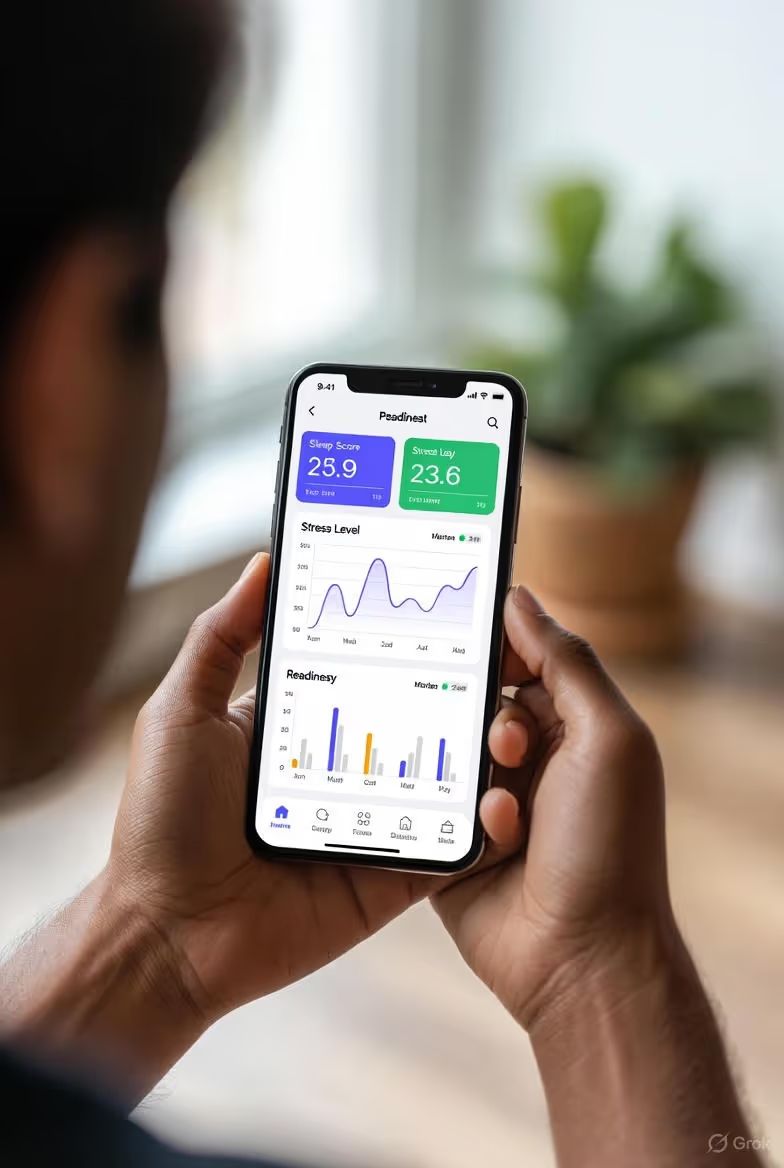
The Sleep Score’s value magnifies exponentially when you stop viewing it as an isolated daily data point and start seeing it as the central node in a network of interconnected health metrics. It doesn’t exist in a vacuum; it has a dynamic, bidirectional relationship with your daytime Stress and Readiness scores, and its trends over time tell the most important story of all.
The Sleep-Stress Seesaw
Sleep and stress are locked in a vicious—or virtuous—cycle.
Your smart ring’s ecosystem shows this seesaw in real time. Seeing a poor Sleep Score after a high-stress day validates the connection. Seeing a high Stress Score after a poor sleep explains your short fuse. This awareness allows you to break the cycle: after a stressful day, you might double down on your wind-down routine. After a poor sleep, you might consciously incorporate more stress-modulating activities like meditation or gentle movement.
Sleep as the Foundation of Readiness
Most advanced systems distill your recovery status into a Readiness or Recovery score for the day ahead. This score is not a guess; it is heavily—often primarily—influenced by your previous night’s Sleep Score and its underlying data (HRV, resting HR). A high Sleep Score is the bedrock of a high Readiness score. It’s your body’s way of saying, "Systems are go. We have recovered from yesterday’s work and are prepared for today’s."
The Trifecta of Insight:
Viewing these three scores together—Sleep, Stress, Readiness—provides a holistic, 24/7 picture of your load, recovery, and capacity. It’s the ultimate biofeedback system.
The Long-Term Narrative: Spotting Trends
The single-night score is informative, but the trend line is transformative. Over weeks and months, your Sleep Score history reveals patterns invisible to the daily glance:
This longitudinal view turns your sleep data into a personal health journal. It empowers you to have informed conversations with healthcare providers, not with vague complaints, but with charts and data. It shows the profound impact of lifestyle choices over time. The story of our commitment to providing this kind of deep, trend-based insight is part of our story, a journey rooted in empowering individuals with knowledge about their own bodies.
The journey from living in the subjective fog to living with a daily Sleep Score catalyzes a profound psychological shift. It moves you along the spectrum from passive frustration to active empowerment. This shift changes your relationship with your own body and health.
The End of Helplessness
Before objective data, poor sleep often bred a sense of helplessness and victimhood. "Why does this keep happening to me?" The problem felt amorphous, uncontrollable. The Sleep Score, by defining the problem with precision, automatically suggests avenues for control. It replaces "I’m a bad sleeper" (a fixed identity) with "My sleep was inefficient last night due to late eating and high heart rate" (a temporary, addressable state). This is the foundation of an internal locus of control.
The Language of Cause and Effect
You begin to speak a new language—the language of biometric cause and effect. This reframes your self-talk and your conversations:
The Motivation of Measurable Progress
Human psychology is wired for progress. We are motivated by visible improvement. The Sleep Score provides a clear, numeric benchmark for progress in a domain that once felt abstract. The act of working toward a higher average score, of seeing a "Personal Best" notification, or of breaking a streak of poor scores triggers dopamine release—the brain’s reward chemical. This positive reinforcement makes healthy sleep behaviors stick. It gamifies wellness in the best possible way, where the "points" you earn are literal vitality and healthspan.
Reducing Sleep Anxiety (Paradoxically)
It may seem counterintuitive that more data could reduce anxiety, but for many, it does. "Sleep performance anxiety" is real—the pressure to fall asleep, which ironically keeps you awake. The Sleep Score can alleviate this by shifting focus from the process (trying to force sleep) to the outcome (managing the inputs that lead to good sleep). You learn to trust the process: "If I manage my schedule, environment, and routine, the score (and the feeling) will follow." You let go of the nightly struggle and instead focus on the controllable daily habits.
This psychological shift is perhaps the most valuable outcome of all. It fosters a mindset of curiosity, experimentation, and self-compassion. You become a scientist in your own life, with your sleep data as your laboratory notebook. For those inspired by this vision of empowered, data-informed wellness, the journey begins at the source. You can discover how Oxyzen is designed to facilitate this exact shift, providing not just data, but the clarity and tools for lasting change.
The validation provided by your Sleep Score does more than just confirm a feeling—it initiates a cascade of positive changes that reverberate through every hour you are awake. This is the Ripple Effect, where a single, trusted metric about your night becomes the cornerstone for optimizing your entire day. When you stop questioning your fatigue, you can start engineering your energy.
Cognitive Clarity and the End of Brain Fog
One of the most immediate and tangible ripples is in cognitive function. A validated low score explains the mental quicksand. You know your working memory is impaired, your ability to concentrate is fragmented, and your creative thinking is offline. With this knowledge, you can strategically navigate intellectual demands.
Emotional Equilibrium and Resilience
Sleep is the bedrock of emotional regulation. The amygdala, your brain’s threat center, becomes hyperreactive on poor sleep, while the prefrontal cortex, which moderates emotional responses, weakens. A validated low Sleep Score is your early warning system for emotional volatility.
This allows for preemptive emotional hygiene. You might:
Conversely, a validated high score grants you permission to trust your positive mood. It’s not just a "good day"; it’s a physiologically supported state. This confidence allows you to engage more fully, connect more deeply, and lead more effectively.
Physical Performance and Recovery Optimization
For the athlete, the weekend warrior, or anyone who uses their body, the Sleep Score is the ultimate recovery metric. It validates soreness, predicts injury risk, and dictates training load.
Social and Interpersonal Dynamics
Even your relationships benefit from this clarity. “I’m sorry, I’m just tired” transforms from a hollow cliché into a shared, understood reality when you can say, “My sleep data has been poor this week, so I’m a bit off my game. I need some space to recharge.” It fosters honesty and reduces interpersonal friction by externalizing the cause of irritability.
The ripple effect turns sleep from a private, solitary act into a public health tool. It improves the quality of your work, the stability of your emotions, the safety of your physical pursuits, and the health of your connections. It makes you a more predictable, capable, and compassionate human being. As we explore in various case studies on our blog, this holistic transformation is the most common testimonial from long-term users—it’s not about the sleep; it’s about the life that better sleep makes possible.
Armed with validation and an understanding of the ripple effect, the next step is moving from insight to action. A generic list of "sleep tips" is far less powerful than a personalized sleep strategy built on the forensic evidence of your own data. Your Sleep Score and its underlying metrics provide the blueprint. This is where you become the architect of your own recovery.
Conducting a Personal Sleep Audit
Start by investigating the correlations. For one week, note your pre-sleep behaviors and compare them to your morning score. Look for patterns, not single events.
Targeting Specific Score Components
Instead of a vague goal of "sleep better," target the weak links in your score composition.
Leveraging the Trend Data
Your long-term trends are your strategic guideposts. If you see a gradual decline over a season, investigate larger lifestyle factors: Has work stress crept up? Has your training volume increased without adequate nutrition? Have you neglected your social connections or mindfulness practice?
This personalized, data-driven approach turns sleep hygiene from a one-size-fits-all prescription into a tailored protocol. It’s iterative and experimental. You hypothesize ("I think late eating hurts my score"), intervene (finish dinner by 7 PM), observe (track scores for a week), and conclude. This process itself is empowering. For common questions on how to interpret data for personal strategy, our FAQ serves as a great technical resource to support your experimentation.
Data is compelling, but human stories resonate. The true power of the Sleep Score is witnessed in the lives it changes. These aren't just anecdotes; they are case studies in validation and empowerment. Here are echoes of stories you’ll find in our collection of real customer testimonials.
Story 1: Maria, 42, Project Manager – "It Wasn't in My Head"
Maria spent years feeling exhausted. Doctors ran standard tests, found nothing wrong, and suggested she was "just stressed" or "getting older." She internalized this, believing her low energy and brain fog were a personal failing. When she started using a smart ring, her Sleep Scores consistently lingered in the low 60s, with frequent SpO2 dips she couldn’t explain. This data gave her the evidence to push for a sleep study. She was diagnosed with moderate sleep apnea. With treatment, her average Sleep Score jumped to the mid-80s. "Seeing that number change was vindication," she says. "It wasn't in my head. I had a real, measurable condition. Now, the score validates my treatment is working every single night."
Story 2: Ben, 29, Amateur Triathlete – "From Overtraining to Optimizing"
Ben trained relentlessly, believing more was always better. He was chronically fatigued, irritable, and his performance plateaued. He blamed his diet, his form, everything but his recovery. His smart ring showed a glaring pattern: after intense training days, his Sleep Score and HRV would crash, and his resting heart rate would stay elevated. The data visualized the overtraining syndrome his coach had warned him about. "I was burning the candle at both ends and wondering why it was dark," Ben jokes. He used the data to periodize his training, incorporating mandatory recovery days when his Readiness score was low. His Sleep Scores stabilized in the 80s, his race times improved, and his enjoyment of the sport returned. "The ring didn't just track my sleep; it taught me respect for recovery."
Story 3: The Johnson Family – "Solving the Sunday Night Mystery"
Parents Mark and Lisa were baffled by their 8-year-old son’s dreadful Monday morning moods. He claimed he slept fine, but weekly, the school reported meltdowns. They let him wear a non-invasive smart ring (designed for kids) for a few weeks. The data revealed a crystal-clear pattern: fantastic Sleep Scores (90+) Friday and Saturday night, followed by a steep decline Sunday night into Monday. The culprit? Unlimited weekend screen time and later bedtimes completely disrupted his circadian rhythm. The Sunday night "crash" into an earlier, enforced bedtime resulted in poor-quality, inefficient sleep. The data, not parental suspicion, drove the change. They implemented a consistent, screen-light weekend schedule. The Sunday night Sleep Scores improved, and the Monday morning meltdowns vanished. "We weren't the bad guys enforcing arbitrary rules anymore," Lisa says. "We were just helping him get back to the green zone on his own chart."
These stories underscore a universal theme: the Sleep Score provides the objective common ground needed to solve subjective problems. It mediates between patient and doctor, athlete and coach, parent and child. It replaces argument with analysis, and frustration with a clear path forward. For more inspiring journeys of discovery, the full tapestry of user experiences is woven into our story of creating technology that serves human needs.
The validation offered by a personal Sleep Score has implications that extend far beyond individual wellness. As this technology becomes more widespread and its metrics more standardized, it is poised to reshape our collective understanding of health, performance, and even societal structures.
Revolutionizing Preventative Healthcare
Imagine a world where your primary care physician reviews your 90-day Sleep Score trend alongside your blood pressure. Consistent, unflagged low scores or patterns of SpO2 dips could trigger early, low-cost interventions for sleep apnea, depression, or anxiety disorders long before they escalate into crises. This shifts the model from sick care to true health care. Patients arrive with data, enabling more productive consultations. As a company dedicated to this preventative vision, you can learn more about Oxyzen’s role in this health paradigm shift.
Workplace Wellness and Productivity
The corporate world is waking up to the enormous cost of sleep-deprived employees—in lost productivity, errors, accidents, and healthcare expenses. Forward-thinking companies are beginning to incorporate sleep education and even provide sleep-tracking devices as part of wellness programs. A team’s aggregate, anonymized Sleep Score data could inform smarter work policies: discouraging late-night emails, designing more restorative workspaces, or allowing for circadian-aligned flexible hours. The validation of fatigue by a hard number makes it a legitimate occupational health concern, not a sign of weak character.
Athletic Performance and the Future of Sports Science
In professional sports, sleep tracking is already integral. Teams use Sleep and Readiness scores to make daily decisions on who is fit to play, who needs rest, and how to adjust training loads. This data-driven approach maximizes performance and minimizes injury, extending careers. For the rest of us, it democratizes the science of peak performance, allowing anyone to train and recover like a pro.
Challenges and Ethical Considerations
This quantified future is not without its shadows. It raises critical questions:
Navigating these challenges requires transparent ethics, robust data ownership policies, and a focus on empowerment over surveillance. The goal must always be to provide individuals with knowledge to advocate for their own health, not to create new systems of judgment.
The broader implication is clear: by validating the subjective experience of sleep with objective data, we are not just improving individual nights; we are building a foundation for a more rested, resilient, and health-literate society. It begins with a single number on your screen, but its echo can be felt in doctors' offices, boardrooms, locker rooms, and homes everywhere. This is the promise of moving from feeling to knowing. For those ready to be part of this change and to start their own journey of validation, the path begins with a simple step to explore the technology designed for this purpose.
To trust the validation, we must trust the instrument. The journey from raw photoplethysmography (PPG) signals and accelerometer data to a simple, clean Sleep Score is a feat of modern biomedical engineering and data science. Understanding this architecture—not as a user, but as an informed advocate for your own health—builds deeper confidence in the number that guides your days.
From Analog Signals to Digital Insights: The Data Pipeline
The process begins the moment you put on your ring. While you sleep, it collects continuous, analog physiological signals.
The Staging Engine: Building the Hypnogram
This is the core intellectual challenge. Unlike a polysomnogram (PSG) in a lab, which uses brain waves (EEG), eye movements (EOG), and muscle tone (EMG) to definitively stage sleep, a wearable must infer these stages from cardio-respiratory and movement signals. It does this using machine learning models trained on massive datasets.
These models have been taught that certain patterns correspond to certain stages:
The algorithm doesn't just look at snapshots; it considers the transitional probabilities. It knows that you typically cycle from Light to Deep to Light to REM, not from Wake directly to REM. This contextual logic dramatically improves accuracy.
The Scoring Rubric: Where the "Score" is Born
Once the night's hypnogram is built and the physiological metrics (HRV, SpO2, temp) are summarized, they are fed into the scoring algorithm. This is not a simple formula but a weighted, multi-variable evaluation system.
Think of it as an elite judging panel. Each judge (metric category) gives a score, but their influence on the final outcome varies.
The final Sleep Score is the consensus of this panel. It is a holistic grade, not an average. This is why two people with the same 7 hours of sleep can get wildly different scores—their physiological restoration and sleep continuity were different.
Accuracy vs. Clinical PSG: Understanding the Benchmark
It is crucial to understand the relationship between consumer wearable scores and the clinical gold standard, the in-lab PSG. Leading devices like the Oxyzen ring are validated against PSG studies. The results typically show:
This architectural understanding fosters informed trust. You're not relying on a black box; you're leveraging a sophisticated, validated biosensing system designed to translate the complex language of your body into a simple, actionable truth. For the latest research and deep dives into the science behind these algorithms, our blog serves as an ongoing resource.
Your Sleep Score doesn't exist in a temporal vacuum. It is profoundly influenced by an intrinsic, often overlooked factor: your chronotype. This is your body's natural predisposition for sleeping and waking at certain times—whether you're a morning lark, a night owl, or somewhere in between. Ignoring your chronotype is like trying to grow a shade-loving plant in full sun; you can force it, but it will never thrive. The Sleep Score validates this struggle.
The Genetic Basis of Bedtime
Chronotype is not a preference or a bad habit. It is genetically influenced, governed by variations in your "clock genes" (like PER3) that dictate the length and timing of your circadian rhythm. Your circadian rhythm is your internal 24-hour master clock, regulating not just sleep, but hormone release (cortisol, melatonin), core body temperature, digestion, and cognitive function.
How Chronotype Sabotages (or Supports) Your Score
When your sleep schedule is misaligned with your chronotype—a condition known as social jetlag—your Sleep Score will bear the evidence, even if you're "getting enough hours."
Using Your Score to Discover and Honor Your Chronotype
Your long-term Sleep Score data is a powerful tool for chronotype discovery. Look for patterns:
Armed with this self-knowledge, you can negotiate with your life, not just surrender to it. An owl might:
A lark might:
The Sleep Score validates the reality of your biological clock. It moves the conversation from "You should go to bed earlier" to "Your biology is optimized for a later schedule. Let's figure out how to make that work." This is a profound step in personalized wellness, aligning societal expectations with biological truth. To see how our vision for personalized health embraces these individual differences, you can explore our story of building technology that adapts to you.
In the quest for a perfect Sleep Score, a paradoxical danger can emerge: the very act of measuring can become a source of stress that degrades sleep. This is orthosomnia—a term coined by sleep researchers to describe an unhealthy preoccupation with achieving perfect sleep data. The pursuit of a high score, if not managed with perspective, can undermine its own purpose.
When Tracking Becomes Trapping
The signs of sleep data anxiety are recognizable:
This turns the tool of empowerment into a tool of oppression. The score, meant to reduce anxiety by providing clarity, instead becomes a new benchmark for anxiety.
Cultivating a Healthy Relationship with Your Data
The goal is to be data-informed, not data-obsessed. Here’s how to keep the score in its proper, supportive role:
The Sleep Score is a servant, not a master. Its validation is meant to free you from the fog of subjective doubt, not chain you to a new set of digital expectations. For those struggling to find this balance, our supportive community and resources, accessible through our FAQ and blog, often address this very journey from obsession to integration.
The Sleep Score of today is revolutionary, but it is merely the first chapter. The convergence of sensor technology, artificial intelligence, and personalized medicine is accelerating toward a future where sleep validation becomes predictive, prescriptive, and seamlessly integrated into holistic health management.
Hyper-Personalized Biomarkers and Predictive Insights
Future algorithms will move beyond generic staging models to identify personalized sleep biomarkers. What does your specific pulse wave shape indicate about your sleep pressure? What are the unique micro-patterns in your HRV that predict a migraine or a flare-up of an autoimmune condition 48 hours in advance? Machine learning will detect these ultra-personalized signatures, turning your sleep data into an early-warning system for your individual health vulnerabilities.
Two-Way Integration with the "Smart" Environment
The future Sleep Score won't just be a readout; it will be a command center. Imagine a system where:
Longitudinal Health Integration and the "Sleep-Genome"
The ultimate frontier is the integration of sleep data with other lifelong health records—genetic, epigenetic, blood biomarker, and microbiome data. Researchers will be able to ask: For people with a specific genetic variant, what sleep architecture pattern is most protective against neurodegenerative disease? Your personal "Sleep-Genome" profile could inform not just your nightly habits, but your long-term preventative health strategy, recommended by your physician.
Non-Contact and Ambient Sensing
Technology will become even less obtrusive. Advanced radar, ultrasonic, and thermal imaging sensors embedded in your bedroom environment will be able to capture heart rate, respiration, and sleep stages without you wearing anything at all. This will democratize access and provide validation for populations who can't or won't wear a device, like the very young or elderly.
The Ethical and Societal Evolution
As this technology grows more powerful, the ethical framework must evolve in tandem. We will need clear standards for:
The future of sleep validation is not just a higher number on a screen. It is a future where your night’s data flows seamlessly into a circular ecosystem of personalized insights and automated interventions, all with the goal of optimizing not just sleep, but your entire healthspan. It is a future where the question "How did you sleep?" is answered not with a vague feeling, but with a comprehensive, actionable health report. This future is being built now by companies committed to this vision, and you can discover how Oxyzen is contributing to this next wave of intelligent, integrated wellness.
We began in the subjective fog, with the desperate slam of a snooze button and the gnawing, unvalidated feeling of exhaustion. We have journeyed through the science of measurement, the psychology of validation, the strategy of personalization, and the ethics of data. We arrive now at a new archetype: The Empowered Sleeper.
The Empowered Sleeper is not defined by perfect scores. They are defined by a transformed relationship with their own rest and recovery. They have moved through distinct phases of understanding:
This journey from frustration to empowerment is the core promise of the Sleep Score. It validates what you already feel, yes. But more importantly, it explains it, contextualizes it, and gives you the tools to improve it. It turns the silent, mysterious third of your life into your most powerful ally for the other two-thirds.
The path forward is one of curious self-discovery. It invites you to become the leading expert on your own well-being. As you continue this exploration, remember that this knowledge is a living, breathing practice. For continued learning, inspiration from others on the same path, and the latest insights on turning data into a better life, a wealth of resources awaits on our blog.
The next time you wake up feeling a certain way, you won't have to wonder. You'll know. And with that knowledge, you can build not just a better night, but a better day, and ultimately, a more vibrant, resilient life. The validation is just the beginning. The transformation is yours to create.
Your Trusted Sleep Advocate: Sleep Foundation — https://www.sleepfoundation.org
Discover a digital archive of scholarly articles: NIH — https://www.ncbi.nlm.nih.gov/
39 million citations for biomedical literature :PubMed — https://pubmed.ncbi.nlm.nih.gov/
Experts at Harvard Health Publishing covering a variety of health topics — https://www.health.harvard.edu/blog/
Every life deserves world class care :Cleveland Clinic - https://my.clevelandclinic.org/health
Wearable technology and the future of predictive health monitoring :MIT Technology Review — https://www.technologyreview.com/
Dedicated to the well-being of all people and guided by science :World Health Organization — https://www.who.int/news-room/
Psychological science and knowledge to benefit society and improve lives. :APA — https://www.apa.org/monitor/
Cutting-edge insights on human longevity and peak performance:
Lifespan Research — https://www.lifespan.io/
Global authority on exercise physiology, sports performance, and human recovery:
American College of Sports Medicine — https://www.acsm.org/
Neuroscience-driven guidance for better focus, sleep, and mental clarity:
Stanford Human Performance Lab — https://humanperformance.stanford.edu/
Evidence-based psychology and mind–body wellness resources:
Mayo Clinic — https://www.mayoclinic.org/healthy-lifestyle/
Data-backed research on emotional wellbeing, stress biology, and resilience:
American Institute of Stress — https://www.stress.org/


