How Sleep Tracking Validates Your Sleep Complaints
Sleep tracking validates sleep complaints with objective data when subjective reports need verification. This advocacy-focused guide explains how monitoring provides evidence for medical consultations, supports diagnosis, tracks treatment effectiveness, and strengthens communication with healthcare providers about rest problems.
How Sleep Tracking Validates Your Sleep Complaints
Do you ever drag yourself out of bed feeling like you’ve barely slept, only to have someone say, “You got eight hours, you should be fine!”? Or perhaps you spend your nights in a frustrating cycle of tossing and turning, convinced your sleep is broken, yet you have no tangible proof to explain your daytime exhaustion. For the one in three adults who don’t get enough sleep, this experience of having your fatigue dismissed or minimized is all too common.
Your complaints are real. The brain fog, the short temper, the overwhelming desire for a nap by mid-afternoon—these are not signs of weakness or imagination. They are the biological consequences of disrupted sleep. Yet, in a world that often prioritizes hustle over rest, subjective feelings of tiredness can be hard to validate. This is where modern sleep tracking technology steps in, transforming your vague feelings of unrest into clear, actionable data.
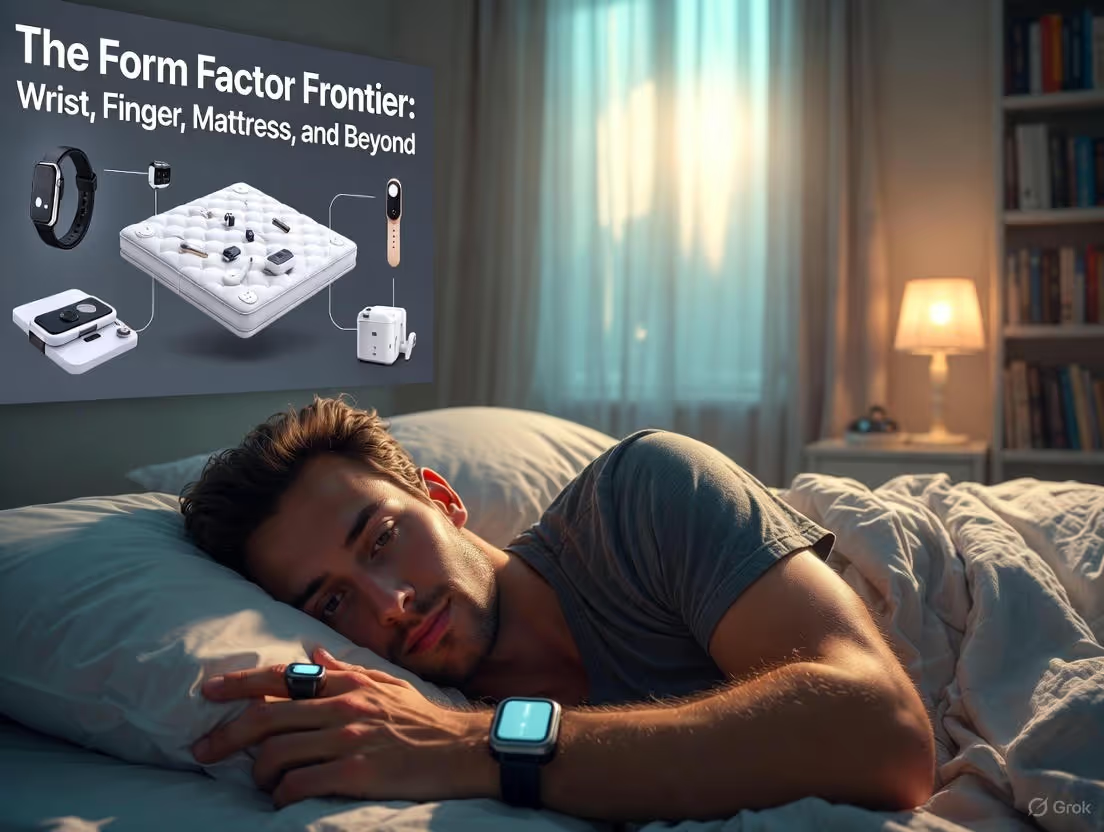
We are in the midst of a quiet revolution in personal health. Once confined to sleep laboratories, the ability to monitor the intricate details of our nightly rest is now available at our fingertips—or more accurately, on our wrists, fingers, and nightstands. Approximately 26% of American adults now use a smartphone or wearable device to track their sleep. This boom in consumer technology is driven by a powerful desire to understand one of the most fundamental human experiences. These devices do more than just count hours; they decode the architecture of your sleep, offering validation for your experiences and a roadmap to better rest.
This article is the beginning of a deep exploration into how sleep tracking moves beyond simple data collection to become a powerful tool for personal validation and empowerment. We will journey through the science of sleep, the mechanics of tracking, and the profound psychological shift that occurs when you can finally prove what your body has been telling you all along. This is not just about technology; it’s about reclaiming your right to restful sleep and the vitality that comes with it.
The Modern Sleep Struggle: More Than Just Feeling Tired
The alarm clock blares, and a familiar sense of dread washes over you. Your body feels heavy, your mind is foggy, and the idea of facing the day seems like a monumental task. You know you were in bed for a sufficient number of hours, so why do you feel like you haven’t slept at all? This paradox lies at the heart of the modern sleep struggle. It’s a conflict not just between rest and wakefulness, but between your subjective experience and the objective measure of time.
National survey data paints a stark picture: only 25-50% of U.S. adults consistently obtain the recommended 7-8 hours of sleep. Even more telling, between 20-35% of adults report consistent sleep difficulties. This isn't a minor inconvenience; it's a widespread public health concern. The feeling of being perpetually underslept has become a cultural norm, a badge of honor in some busy circles, but its impacts are profoundly personal and physical. Half of all Americans report feeling sleepy three to seven days a week.
When you try to articulate this struggle, you often hit a wall. You might say, “I sleep terribly,” or “I’m always tired.” The responses are often unhelpful clichés: “Just go to bed earlier,” “Try drinking chamomile tea,” or the most dismissive, “Everyone’s tired.” Without concrete evidence, your sleep complaints can feel amorphous, leaving you doubting your own perception. Is this just how life is supposed to feel? Am I not as resilient as others? This internal doubt is exacerbated when seeking help, as the first question a doctor will often ask is, “How are you sleeping?” Your answer, based on hazy memory and fatigue, is rarely precise.
The consequences of poor sleep extend far beyond yawning. Research consistently links insufficient sleep to:
Weakened immune function, leaving you more susceptible to illness.
Impaired cognitive performance, including reduced focus, memory, and decision-making ability.
Emotional dysregulation, leading to increased irritability, anxiety, and stress.
Long-term health risks, such as a heightened chance of weight gain, diabetes, heart disease, and stroke.
Therefore, the quest to validate your sleep complaints is not about winning an argument or being proven right. It is the essential first step in addressing a legitimate health issue. It’s about moving the conversation from “I think I have a problem” to “The data shows I have a problem.” This shift is crucial for taking effective action, whether through personal lifestyle changes or by providing a doctor with meaningful information. To learn more about the foundational importance of sleep for holistic health, you can explore resources on our blog, which delves into the science of wellness.
In the following sections, we will explore how sleep tracking technology bridges this gap between feeling and fact, providing the validation that has been missing for so many tired souls.
What Is Sleep Tracking? From Subjective Feeling to Objective Data
For generations, understanding sleep was an exercise in guesswork and subjective recall. You’d wake up and try to piece together the night based on fleeting memories of dreams or moments of wakefulness. Sleep tracking has fundamentally changed this relationship, offering a window into the hidden third of our lives. At its core, sleep tracking is the process of monitoring and recording physiological and behavioral data during sleep to quantify its duration, structure, and quality.
Think of it as a personal sleep auditor. Instead of relying on your tired brain’s imperfect summary in the morning, a tracker collects continuous, objective data throughout the night. This data transforms sleep from a mysterious black box into a charted landscape with distinct features and patterns.
Modern devices, particularly advanced wearables like smart rings and watches, track a comprehensive suite of metrics that go far beyond simple motion detection. They build a multi-layered picture of your night by monitoring:
Heart Rate and Heart Rate Variability (HRV): Your heart rate naturally dips during sleep, and its variability (the subtle changes in time between beats) is a key indicator of nervous system recovery and sleep depth.
Respiratory Rate: The number of breaths you take per minute. Significant deviations or pauses can be important signs to note.
Body Movement: Tracking periods of restlessness, tossing, and turning helps determine sleep interruptions and overall restfulness.
Skin Temperature: Circadian rhythms cause your body temperature to fluctuate at night; tracking this can provide insights into sleep stage progression and overall cycle regulation.
Blood Oxygen Levels (SpO2): Some advanced devices can estimate blood oxygen saturation, which can be useful for identifying potential breathing disturbances.
By synthesizing these data points, sleep trackers estimate your journey through the sleep cycle—a series of stages we move through every 90-110 minutes:
Light Sleep (Stages 1 & 2): The gateway to sleep, where the body begins to relax and brain waves slow. This stage is crucial for memory consolidation and making up a significant portion of the night.
Deep Sleep (Stages 3 & 4): The most physically restorative phase. It’s harder to be awakened, and this is when tissue growth and repair, immune function boosting, and energy restoration occur.
REM (Rapid Eye Movement) Sleep: The mentally restorative phase, characterized by brain activity similar to being awake, rapid eye movements, and vivid dreaming. This stage is essential for learning, memory processing, and mood regulation.
A good night’s sleep isn’t just about total time; it’s about successfully cycling through these stages multiple times, with adequate amounts of both deep and REM sleep. A sleep tracker’s primary job is to map this journey for you, providing the objective evidence of what “good” or “bad” sleep actually looks like in your own body. This is the foundational data that begins the process of validation.
The Validation Effect: How Data Confirms Your Experience
There is a profound psychological moment that occurs when you first sync your sleep tracker in the morning. You wake up feeling groggy and unrested, bracing for another day of fatigue. You open the app, and there it is: a detailed graph showing frequent awakenings, a long period of restless “light sleep,” and a conspicuously short deep sleep segment. In that instant, a powerful shift happens. Your subjective feeling is no longer just a feeling—it is a data-backed reality.
This is the Validation Effect. It’s the immense relief and empowerment that comes from having your internal experience confirmed by external, objective evidence. For anyone who has ever been told “it’s all in your head” or has begun to believe their tiredness is a personal failing, this data serves as a crucial correction. It replaces doubt with clarity and self-blame with understanding.
Consider these common scenarios and how sleep tracking provides validation:
The “Tired Despite Hours” Complaint: You were in bed for 8.5 hours but feel wrecked. The tracker shows your actual “sleep duration” was only 6 hours and 20 minutes, with over 90 minutes of “awake” or “restless” time you didn’t consciously remember. The data validates that you didn’t, in fact, get 8.5 hours of quality rest.
The “I Never Dream” Complaint: You believe you don’t get REM sleep. The tracker reveals you are getting some, but it’s highly fragmented and occurs in very short bursts, likely causing you to forget your dreams and not feel mentally restored. This validates that your sleep architecture is disrupted.
The “My Sleep is Fragile” Complaint: You feel like the slightest noise or stress ruins your night. The tracker’s “sleep consistency” score shows wildly variable bedtimes and wake times, and your HRV graph is consistently low on high-stress days. This validates the direct link between your daily life and your sleep quality.
This validation is more than just emotional comfort; it is the catalyst for change. When a problem is vague, solutions are hard to pinpoint. When a problem is specific—“my deep sleep is consistently below 45 minutes”—the path to addressing it becomes clearer. The data gives you and any healthcare professional you consult a common language and a starting point. It transforms you from a passive sufferer into an informed observer of your own health. For a deeper look at how this data-driven approach forms the core of modern wellness, you can learn more about our philosophy and mission at Oxyzen.
From Data to Diagnosis: Recognizing Patterns and Red Flags
While consumer sleep trackers are not medical diagnostic devices, they are exceptionally powerful tools for pattern recognition and early detection. Their true value often lies not in a single night’s data, but in the trends that emerge over weeks and months. This longitudinal view can illuminate the hidden rhythms and potential red flags in your sleep that you might otherwise miss.
Wearing a tracker consistently turns it into a personal sleep biographer. It begins to answer questions you may not have even known to ask:
What’s My Personal Rhythm? The data might show you naturally fall asleep later and wake later on weekends, suggesting a delayed circadian rhythm. Or, it could reveal that you sleep most soundly when the room temperature is below 68°F. These are personalized insights no generic sleep tip can provide.
How Do My Habits Affect Me? By cross-referencing your sleep data with lifestyle logs (like caffeine intake, alcohol consumption, or late meals), you can see direct correlations. You might discover that a glass of wine with dinner, while helping you fall asleep faster, consistently decimates your deep sleep after 2 AM. This turns a guess into a documented cause-and-effect.
Are There Concerning Trends? This is where trackers can play a vital role in proactive health. While they cannot diagnose conditions like sleep apnea, they can flag symptoms that warrant a professional evaluation. For instance, if your tracker shows:
Repeated, significant dips in nightly blood oxygen levels (SpO2).
Consistently high resting heart rates during sleep.
Patterns of very fragmented sleep with frequent, brief awakenings you weren’t aware of.
Chronic, severe snoring detected by a microphone (on some devices).
These patterns are valuable pieces of evidence. As sleep medicine specialist Dr. Brian Chen notes, “While digital apps and devices can’t replace formal testing, they can give your doctor a general idea of your total sleep time, your sleep/wake cycle and how disrupted your sleep may be”. Bringing these trends to a doctor moves the conversation from “I’m tired” to “Here is a month of data showing frequent oxygen dips and restless sleep. Should we investigate further?”
This ability to spot red flags and document patterns empowers you to be an active participant in your healthcare, using data to advocate for the deeper investigation your body may need. For answers to common questions about how this data is used and its limitations, our FAQ provides clear and helpful guidance.
The Rise of the Smart Ring: Unobtrusive, All-Night Tracking
For all the benefits of sleep tracking, traditional wrist-worn devices have a fundamental flaw: many people find them uncomfortable to wear at night. A bulky smartwatch can dig into your wrist, get caught on sheets, or simply serve as a distracting reminder of the world you’re trying to escape. This is where the smart ring has emerged as a game-changer, offering a seamless and unobtrusive form factor for 24/7 health monitoring, with a particular emphasis on sleep.
Smart rings, like the market-leading Oura Ring, represent a paradigm shift in wearable design. By moving sensors from the wrist to the finger, they solve several key problems that can interfere with both sleep and consistent tracking:
Comfort for Continuous Wear: A well-sized ring is easy to forget you’re wearing. There’s no buckle or band to adjust, no screen to emit light, and no bulk to interfere with your sleep position. As one reviewer noted, “I wear my Oura Ring every day, and I often forget I even have it on”. This comfort ensures you’ll actually wear it every single night, which is critical for gathering consistent, long-term data.
Rich, Finger-Based Data: The finger is an excellent site for measurement. It has strong blood flow for reliable heart rate and HRV readings. Furthermore, because a ring sits snugly at the base of the finger, it can maintain consistent skin contact for temperature sensing—a key metric for tracking circadian rhythm and predicting illness—even if it rotates slightly.
Long Battery Life: Freed from the power demands of a bright screen, smart rings boast impressive battery life. Most last between four to eight days on a single charge, with some like the RingConn Gen 2 Air lasting up to 10.5 days in testing. This means you can wear them for multiple full sleep cycles without worrying about nightly charging routines that create data gaps.
The result is a device purpose-built for sleep insight. It doesn’t interrupt your rest; it quietly documents it. In the morning, you get a comprehensive report on your night: a sleep score, time spent in each sleep stage, resting heart rate, HRV, and respiratory rate. The best devices then synthesize this data into a “readiness” or “recovery” score, advising you on how prepared your body is for the day’s demands based on how well it recovered overnight.
This elegant, always-on approach makes the smart ring arguably the most effective consumer tool for validating sleep complaints. It removes the barriers to consistent tracking and provides a level of comfort that encourages you to make it a permanent part of your wellness toolkit. To understand the vision behind creating such intuitive health technology, you can read about our founding story and the values that drive our product development.
How Accurate Are Sleep Trackers? Understanding the Science
A natural and essential question arises when your well-being is being measured by a consumer device: Can I trust this data? The field of sleep tracking has evolved dramatically, and the science behind its accuracy is both promising and nuanced. Understanding what these devices do well—and where they have limitations—is key to using them effectively as a validation tool, not a medical arbiter.
Let’s start with the gold standard: the in-lab polysomnography (PSG) study. This medical test uses electrodes on the scalp (EEG) to measure brain waves, along with sensors for eye movement, muscle activity, heart rate, and breathing. It is the only way to definitively diagnose sleep stages and disorders. No consumer tracker can match this level of precision for stage detection.
However, research shows that modern, multi-sensor wearables are remarkably good at answering the fundamental question: Was I asleep or awake? A 2024 review indicated that consumer sleep trackers perform as well as, or even better than, actigraphy—a clinical-grade wrist-worn motion sensor used by doctors for sleep assessment. This is a significant endorsement. Where trackers can struggle slightly is in their sensitivity to wakefulness, meaning they may sometimes count you as asleep when you are briefly awake but very still, potentially overestimating total sleep time.
When it comes to distinguishing between light, deep, and REM sleep, accuracy varies. Trackers use sophisticated algorithms that combine movement, heart rate, and HRV data to make educated estimates. While these estimates are informative and excellent for spotting personal trends, they are not as precise as an EEG. As Dr. Chen clarifies, “If you want to track the stages of sleep, you’ll need to have an electroencephalogram (EEG)”.
So, what does this mean for validation?
For Sleep/Wake Patterns and Duration: The data is highly reliable for confirming whether you had a consolidated night of sleep or a fragmented one. If your tracker shows 25 awakenings, you can be confident your sleep was disrupted, even if the exact number is an estimate.
For Sleep Stage Trends: While the exact minutes in REM might be an approximation, the trends are valid. If your deep sleep percentage is consistently low for a month, it’s a strong indicator that your sleep is lacking in physical restoration, regardless of the precise minute count.
For Biometric Trends: Metrics like resting heart rate, HRV, and respiratory rate are measured directly from your physiology and are very accurate for tracking your own baselines and changes over time.
The consensus from experts is clear: Use trackers for trends, not absolutes. Their immense power lies in showing you how your sleep changes in response to your lifestyle, and in providing consistent, objective evidence of disturbances. As one systematic review concluded, these devices are “a practical, cost-effective tool for monitoring individual sleep habits for personal use”. They provide the validation you need to take the next step, whether that’s changing a habit or scheduling a doctor’s appointment with valuable data in hand. For a closer look at how real people have used this data to transform their sleep, our testimonials page shares their firsthand experiences.
The First Step to Better Sleep: Awareness Through Tracking
You cannot change what you do not measure. This fundamental principle is the engine of progress in everything from fitness to finance, and it applies with equal force to sleep. For many, the journey to better sleep begins not with a drastic intervention, but with simple, non-judgmental awareness. Sleep tracking is the tool that makes this awareness possible, shining a light on behaviors and patterns that have been operating in the dark.
Before a tracker, your pre-bed routine might be a vague sequence: watch TV, get in bed, scroll on your phone, try to sleep. With a tracker, you begin to see the consequences of that routine. The data creates a feedback loop that transforms unconscious habits into conscious choices. You might notice that on nights you have a late, heavy dinner, your “time to fall asleep” metric doubles and your deep sleep percentage plummets. Or you may see that on days you skip your afternoon walk, your sleep is noticeably more restless.
This awareness is empowering because it makes the abstract concrete. “Don’t use screens before bed” becomes, “On the three nights I used my phone in bed, my sleep score averaged 72. On the four nights I read a book instead, it averaged 89.” The tracker helps you run personal experiments:
Experiment with Temperature: Try lowering your thermostat by 3 degrees for a week and observe the change in your sleep stability score.
Experiment with Caffeine: Cut off caffeine after 2 PM and track the effect on your sleep latency (time to fall asleep).
Experiment with Wind-Down Routines: Compare a week of late-night work emails to a week of gentle stretching or meditation before bed.
As the team at Sleepme notes, “By understanding these metrics, you can make more informed decisions about your sleep habits and take steps to improve the quality and duration of your sleep”. This data-driven experimentation removes the guesswork. You are no longer following generic advice blindly; you are becoming a scientist of your own sleep, using objective data to discover what truly works for your unique biology.
This phase of awareness and personal experimentation is where sleep tracking delivers its most immediate and accessible value. It validates not only your complaints but also your power to address them. It turns the overwhelming project of “fixing your sleep” into a series of small, manageable, and measurable adjustments. The knowledge you gain here forms the essential foundation for any future step, whether it’s optimizing your sleep hygiene or seeking professional guidance.
Building a Case for Your Health: When to Take Data to a Professional
Sleep tracking data reaches its highest and most critical utility when it moves from a personal journal to a component of your medical history. While these devices empower self-management, they also serve as a powerful communication tool between you and your healthcare provider. Knowing how and when to present your data can transform a routine doctor’s visit into a targeted investigation.
You should consider scheduling a consultation with your doctor or a sleep specialist if your tracker consistently shows any of the following patterns over several weeks:
Chronic Short Sleep Duration: Consistently logging less than 6 hours of actual sleep per night, despite adequate time in bed.
Extremely Low Sleep Efficiency: A consistently low percentage of time actually asleep versus time spent in bed (normal is around 85% or higher).
Severe Sleep Fragmentation: Nightly reports showing dozens of awakenings or long periods of restless sleep.
Symptoms of Sleep Disordered Breathing: This includes observations from a partner (loud snoring, gasping), or data from a tracker that records frequent snoring, significant dips in blood oxygen saturation (SpO2), or an unusually elevated resting heart rate during sleep.
Unrefreshing Sleep Despite Adequate Duration: Getting 7-8 hours of tracked sleep but still experiencing severe daytime sleepiness, as validated by your consistent fatigue and low daily “readiness” scores.
When you go to your appointment, come prepared. Don’t just say, “My sleep tracker says I sleep badly.” Instead, be a prepared advocate:
Bring Visual Summaries: Screenshot weekly or monthly trend graphs showing your sleep duration, deep/REM sleep percentages, and resting heart rate. Graphs are more impactful than numbers alone.
Note Correlations: Mention clear patterns you’ve observed. For example: “My data shows my sleep is significantly worse and my nighttime heart rate is 10 BPM higher on the two nights a week I work late.”
Describe Your Experience in Data Terms: Say, “I show an average of 22 awakenings per night, and my deep sleep is consistently under 10%. This aligns with how unrefreshed I feel.”
Ask Informed Questions: Use your data to ask specific questions like, “Given my consistently low deep sleep and high resting heart rate at night, could this be related to sleep apnea or another issue we should explore?”
This approach is immensely valuable to a clinician. As noted by health experts, sleep trackers “give you information you can bring directly to your doctor”. You are providing them with a long-term log of symptoms recorded in your natural environment, something a one-night in-lab study cannot capture. Your data helps differentiate between occasional poor sleep and a chronic disorder, guiding the professional toward the most appropriate next steps, which may include a referral for a formal sleep study.
By building a data-backed case, you ensure your health complaints are taken seriously and investigated efficiently. It’s the ultimate form of validation, turning personal observation into a collaborative diagnostic tool. For support on how to interpret your data and prepare for a doctor’s visit, our resources and blog offer continued guidance.
Conclusion of Part One: The Power of Knowing
We have journeyed through the landscape of modern sleep, from the fog of subjective fatigue to the clarifying light of objective data. The central truth that emerges is this: your sleep complaints are valid. The exhaustion, the brain fog, the frustration—they are not character flaws or figments of your imagination. They are the signals your body sends when one of its most vital processes is disrupted.
Sleep tracking technology, particularly in the elegant form of the smart ring, has given us a revolutionary tool to listen to these signals. It translates the mysterious nighttime journey into a comprehensible report, providing the validation that so many tired people have been seeking. It moves the conversation from “I feel tired” to “My data shows 60% sleep efficiency and fragmented REM cycles.” This shift is profound. It replaces doubt with evidence, and helplessness with agency.
This first portion of our exploration has laid the essential groundwork. We’ve seen how tracking validates your experience, reveals hidden patterns, and equips you with the knowledge to advocate for your own health. We’ve understood that while not a medical device, a quality sleep tracker is an incredibly accurate tool for measuring trends and providing the consistent evidence needed to take the next step.
But validation and awareness are only the beginning. They are the “what” and the “why.” The logical and necessary progression is to the “how.” How do you use this newfound knowledge to actually improve your sleep?
In the next portion of this comprehensive guide, we will dive into the actionable world of sleep optimization. We will explore how to interpret your data to create a personalized sleep hygiene plan, how to use trends to adjust diet, exercise, and stress management for better rest, and how to navigate the journey from tracking to truly transformative sleep habits. The power of knowing is immense, but it is the power of doing that ultimately leads you to wake up refreshed, restored, and ready to embrace your days fully.
The path to better sleep starts with believing your own body. Now that you have the data to back it up, the real transformation can begin.
Part Two: From Data to Transformation – Optimizing Your Sleep
The quiet hours of the night hold a profound power over our days. In the first part of this exploration, we uncovered how sleep tracking technology validates our most personal complaints—transforming the vague feeling of being “tired all the time” into a data-backed reality. We’ve seen the relief that comes when a graph confirms your restless night, and the empowerment of spotting long-term patterns in your sleep architecture. This validation is the crucial first step, the moment you stop doubting your body and start listening to it.
But data alone is not a destination; it is a compass. It points the way but does not walk the path for you. Now that you have the evidence—the low sleep scores, the fragmented deep sleep, the elevated nighttime heart rate—the essential question emerges: What do you do with this knowledge? How do you move from being an observer of your sleep patterns to an architect of your own restoration?
This next portion of our guide is dedicated to that journey of transformation. We move beyond diagnosis and into the realm of daily practice, habit refinement, and personalized optimization. Here, we will explore how to translate the cold, hard numbers from your sleep tracker into a warm, actionable plan for better rest. We will delve into the science of sleep hygiene, not as a set of rigid rules, but as a customizable framework you can adapt using your own data. We’ll examine how diet, exercise, light, and stress don’t just affect your waking life but are the very pillars upon which your sleep is built.
The goal is to help you build a bridge—a bridge from the insightful “what” provided by your tracker to the effective “how” of lasting change. This is where you learn to become an expert on your own sleep, using objective feedback to craft a nighttime ritual and daytime lifestyle that guides you consistently toward more restorative rest and more vibrant days.
Interpreting Your Sleep Data: A Guide to Key Metrics
Your sleep tracker presents you with a dashboard of numbers and graphs each morning. To the untrained eye, it can look like a confusing medical report. But each metric is a vital sign, a piece of the puzzle explaining how you slept. Learning to interpret them is like learning a new language—the language of your own recovery. Let’s decode the most common and critical metrics, moving beyond the simple “sleep score” to understand the components that create it.
Sleep Stages: The Architecture of Your Night Your sleep is not a monolithic block of unconsciousness. It’s a cyclical journey through distinct stages, each with a unique purpose. Your tracker estimates your time in each, providing a blueprint of your night’s architecture.
Light Sleep (N1 & N2): This is the gateway and the most abundant stage, often comprising 50-60% of your night. It’s essential for memory consolidation and mental recovery. A healthy amount is good, but consistently excessive light sleep might indicate frequent, subtle disruptions preventing you from sinking into deeper stages.
Deep Sleep (N3 or Slow-Wave Sleep): This is the physically restorative phase. During deep sleep, your body repairs tissues, builds bone and muscle, and strengthens the immune system. It’s typically concentrated in the first half of the night. A consistent shortage of deep sleep (often below 15-20% of total sleep for adults) is a major red flag your tracker can highlight, validating feelings of physical exhaustion and poor recovery.
REM Sleep: The mentally restorative phase, characterized by dreaming. REM is crucial for emotional processing, learning, and memory. It becomes longer in the cycles toward morning. Fragmented or insufficient REM sleep can correlate with brain fog, emotional volatility, and poor concentration.
The Vital Signs of Sleep: Beyond Movement Modern trackers use advanced sensors to capture biometrics that tell a deeper story than motion alone.
Resting Heart Rate (RHR): Your heart rate should naturally dip during sleep, reaching its lowest point (your “sleeping RHR”) during deep sleep. A consistently high or elevated sleeping RHR can be a sign of physical stress, illness, insufficient recovery from exercise, or an underlying sleep disorder like apnea.
Heart Rate Variability (HRV): This measures the subtle variation in time between heartbeats and is one of the best single metrics for tracking your nervous system’s recovery. A higher HRV generally indicates a more resilient, recovered state and better stress adaptation. Your nightly average HRV trend is more important than any single number. A downward trend over days or weeks is a strong signal from your tracker that cumulative stress (physical, mental, or emotional) is taking a toll and your recovery is compromised.
Respiratory Rate: The number of breaths you take per minute. It should be slow and steady during sleep. Significant, consistent increases in your sleeping respiratory rate can sometimes signal the onset of illness, an allergic reaction, or a response to high altitude. Tracking your baseline allows you to spot these deviations.
Sleep Latency: The time it takes you to fall asleep. While a very short latency (under 5 minutes) can indicate severe sleep deprivation, an ideal range is generally between 10-20 minutes. Consistently long latency (over 30 minutes) validates the complaint “I lie awake for hours,” and points directly to issues with your wind-down routine, circadian timing, or anxiety.
By understanding what each metric represents, you stop seeing a random score and start reading a story—the story of how your body recovered last night. This knowledge turns data into a guide for targeted action.
Creating Your Personalized Sleep Hygiene Plan
Armed with an understanding of your data, you can now build a sleep hygiene plan that is uniquely tailored to address your specific weak points. Generic advice like “avoid screens” becomes powerful when you can see on your tracker that on nights you used your phone in bed, your sleep latency spiked and your REM sleep dropped by 15%. Personalization is the key to effectiveness.
Start by using your tracker’s trends to conduct a self-audit over a two-week period. Look for clear correlations:
Do your deep sleep percentages plummet on nights after you have alcohol with dinner?
Does your HRV consistently dip and your resting heart rate rise on high-workload days?
Does your sleep score improve when you consistently finish eating 3 hours before bed?
Once you identify one or two of the strongest patterns, you can build a targeted plan. Let’s construct a framework based on common data insights:
If Your Data Shows: High Sleep Latency & Frequent Awakenings
Actionable Wind-Down Protocol: Create a 60-minute buffer zone before your target bedtime. Use your tracker to test different activities: perhaps reading a physical book (not a tablet) lowers your latency more than listening to a podcast. Introduce a "tech curfew" where all screens go into Do Not Disturb mode and are placed outside the bedroom.
Environmental Optimization: Your tracker’s temperature correlation data is gold here. Experiment by lowering your bedroom temperature to the range of 60-67°F (15-19°C). Use blackout curtains or a sleep mask to achieve total darkness, which cues melatonin production. Consider a white noise machine if your data shows disturbances at consistent times (e.g., due to traffic or household noises).
If Your Data Shows: Low Deep Sleep & High Resting Heart Rate
Daytime Movement Strategy: Focus on timing and intensity. Your data may reveal that vigorous exercise too close to bedtime elevates your sleeping heart rate. Shift workouts to earlier in the day. Conversely, consistent, moderate daytime activity is strongly linked to increased deep sleep.
Evening Nutrition Tweaks: Alcohol is a notorious deep sleep disruptor. Test a "no alcohol" week and observe the direct impact on your deep sleep graph. Similarly, experiment with moving your last large meal or sugary snack earlier in the evening.
Stress Management Integration: High stress directly suppresses deep sleep. Since your tracker measures the outcome (high RHR, low HRV), use it to validate the effect of stress-reduction practices. Try incorporating 10 minutes of guided breathing or meditation before bed and watch for improvements in your overnight HRV trend over the next week.
If Your Data Shows: Fragmented Sleep & Poor Sleep Consistency
Circadian Rhythm Anchoring: This is about consistency. Use your tracker’s bedtime and wake time data to set a firm schedule, even on weekends. A variation of more than an hour can cause "social jet lag." Get bright, natural light exposure within 30 minutes of waking to firmly set your circadian clock.
The Bed-Body Connection: Reinforce that the bed is for sleep (and intimacy) only. If you lie awake for more than 20 minutes, get up and do a quiet, dimly lit activity until you feel sleepy. This helps break the association between bed and anxiety/alertness that your tracker is revealing.
Remember, the goal is not perfection but progressive refinement. Use your sleep tracker as a feedback loop to see what moves the needle for you. For a wealth of ideas and deeper dives into perfecting your sleep environment and routines, our blog is a continually updated resource full of expert tips and user experiences.
The Day-Night Connection: How Daytime Habits Dictate Nighttime Rest
One of the most powerful revelations from long-term sleep tracking is that sleep quality is not created at night; it is earned during the day. Your tracker’s nightly report is essentially a receipt for your daytime choices. Understanding this bidirectional relationship is fundamental to optimizing your rest. Every major lifestyle pillar—light, movement, nutrition, and stress—sends direct signals to your sleep-regulating systems.
Light: The Master Clock Regulator Light is the most potent cue for your circadian rhythm. Your tracker’s sleep consistency score is a direct reflection of how well you’re managing light exposure.
Morning Light: Seeking bright, preferably natural, light within the first hour of waking signals to your suprachiasmatic nucleus (your brain’s master clock) that the day has begun. This starts a timer for the release of melatonin roughly 14-16 hours later. Consistent morning light exposure, as tracked by improved sleep onset regularity, is non-negotiable for robust sleep.
Evening Darkness: Conversely, minimizing blue and bright light in the 2-3 hours before bed is critical. The blue light from screens directly inhibits melatonin production. If your data shows long sleep latency, scrutinize your evening light hygiene. Using blue-light blocking glasses or enabling night shift modes on devices can be simple interventions to test.
Movement: The Dual-Phase Catalyst Exercise is a profound sleep modulator, but its effects are finely tuned by timing and intensity.
Morning/Afternoon Exercise: Regular aerobic exercise is correlated with increased deep sleep and greater sleep efficiency. It helps dissipate physiological stress and raise your body’s sleep drive. Your tracker can show you this: look for nights after a day with a good workout to see if your deep sleep percentage is higher or your sleep is less fragmented.
Evening Exercise: Vigorous exercise too close to bedtime (within 1-2 hours) can raise core body temperature and stimulate the nervous system, leading to a higher resting heart rate during sleep, which your tracker will clearly display. If you must exercise late, opt for gentle movement like yoga or stretching, which may actually aid relaxation.
Nutrition: The Fuel for Recovery What and when you eat sends metabolic signals that ripple into the night.
Timing: A large, heavy, or spicy meal too close to bedtime forces your digestive system to work overnight, which can increase body temperature and cause discomfort, leading to restless sleep and awakenings. Your tracker’s “restlessness” graph will bear this out.
Substances: Caffeine has a half-life of 5-6 hours, meaning 50% of it is still in your system at that point. It can fragment sleep architecture even if you don’t feel it. Alcohol, while sedative initially, is a known disruptor of REM and deep sleep in the second half of the night. Experiment with cut-off times for both and watch the direct impact on your sleep stage graphs and HRV.
Stress & Mindset: The Silent Sleep Thief Chronic stress keeps your sympathetic nervous system (fight-or-flight) subtly activated, which is measurable through elevated resting heart rate and suppressed HRV on your tracker. This state is the antithesis of the relaxed parasympathetic state required for sleep initiation and maintenance.
Data-Backed Relaxation: Use your HRV and RHR metrics to test different de-stressing techniques. You might find that 10 minutes of mindfulness meditation, journaling to “download” worries from your mind, or a warm bath 90 minutes before bed (which aids the natural temperature drop for sleep) leads to a measurable improvement in your nighttime biometrics.
The Anxiety Loop: Worrying about poor sleep itself is a major cause of insomnia. Here, your tracker can be a therapeutic tool. On a night where you feel you slept poorly, check the data. Sometimes, it shows you got more sleep than you thought, or decent deep sleep, which can help break the cycle of sleep-related anxiety.
By viewing your daytime not as separate from your night but as its foundation, you empower yourself to make choices that build toward better rest. Your sleep tracker becomes your accountability partner, showing you the direct, often immediate, consequences of these choices.
Advanced Optimization: Using HRV and Readiness Scores
As you become more fluent in the language of sleep data, two metrics stand out for their predictive and holistic power: Heart Rate Variability (HRV) and Readiness/Recovery Scores. These are not just measurements of last night’s sleep; they are indicators of your body’s overall capacity to handle today. Moving from simply tracking sleep to interpreting these advanced metrics is the frontier of personalized wellness.
Heart Rate Variability: Your Body’s Honest Communication HRV measures the subtle variations in the milliseconds between your heartbeats. A higher HRV indicates a flexible, resilient autonomic nervous system—one that can smoothly transition from stress (sympathetic activity) to recovery (parasympathetic activity). A lower HRV suggests your system is under strain, possibly from physical overtraining, emotional stress, illness, or poor recovery.
How to Use Your HRV Trend: The absolute number is less important than your personal baseline and the direction of the trend. A sustained downward trend over several days is your body’s clear signal that it is struggling to recover. This is a cue to prioritize rest, dial back intense training, manage stress, and double down on sleep hygiene—even if your sleep duration looks normal.
The HRV-Sleep Feedback Loop: Poor sleep lowers HRV. Low HRV makes you more susceptible to stress and impairs recovery, which can then lead to poorer sleep. Tracking both allows you to spot this vicious cycle early. Conversely, when you see your HRV trend upward alongside improvements in your sleep data, you have concrete proof that your lifestyle adjustments are working at a systemic level.
Readiness/Recovery Scores: Your Daily Prescription Many advanced platforms (like Oura, Whoop, or Garmin) synthesize sleep data, HRV, RHR, and sometimes body temperature into a single “Readiness” or “Recovery” score. This is the ultimate tool for listening to your body.
Beyond Guesswork: Instead of guessing if you’re ready for a hard workout or if you need a rest day, this score provides a data-driven recommendation. A high score suggests your body is well-recovered and primed for performance or stress. A low score is a directive to take it easy.
Actionable Intelligence: On a low-readiness day, you might:
Swap a high-intensity interval training (HIIT) session for gentle mobility work or a walk.
Prioritize an earlier bedtime.
Practice more deliberate stress-management techniques.
Ensure nutrition is focused on anti-inflammatory foods.
Validation of Lifestyle Integration: When you follow these recommendations and see your score improve subsequent nights, it validates a holistic approach to health. It proves that sleep, activity, and recovery are not isolated components but an interconnected system.
Using these advanced metrics shifts the paradigm from reactive to proactive health management. You’re no longer just solving last night’s poor sleep; you’re forecasting your body’s needs for today and making informed choices to build resilience for tomorrow. This is the pinnacle of using data for personalized wellness. For those curious about the technology and science that makes this possible, our story delves into the journey of integrating these sophisticated metrics into accessible, user-friendly devices.
Troubleshooting Common Sleep Tracking Challenges
Even with the best intentions and technology, the path to sleep optimization isn’t always smooth. You may encounter periods where the data seems confusing, inconsistent, or fails to improve despite your efforts. This is a normal part of the process. Let’s troubleshoot some common challenges to keep you moving forward effectively.
“My Data is All Over the Place – I Can’t See a Pattern!”
The Issue: High night-to-night variability can be masking true trends.
The Solution: Focus on weekly averages, not daily numbers. Sleep is influenced by dozens of factors; a single night’s poor score is noise. Look at your average sleep duration, deep sleep percentage, and HRV over a rolling 7-day period. This smooths out the noise and reveals the underlying signal. Also, ensure you’re wearing your device consistently and correctly (e.g., a smart ring should be snug but comfortable) for reliable data.
“I’m Doing Everything ‘Right,’ But My Sleep Isn’t Improving!”
The Issue: This plateau is frustrating and common. It can mean you’ve addressed the low-hanging fruit and now face more subtle or entrenched issues.
The Solution: First, revisit your personal audit with fresh eyes. Are there hidden stressors, dietary sensitivities, or medication side effects you haven’t considered? Second, consider a “reset.” Adhere strictly to foundational habits—consistent sleep schedule, perfect light hygiene, no alcohol/caffeine—for two solid weeks to establish a new baseline. Third, remember that sleep need changes. Stress, age, and training load all shift your requirements. You may simply need more time in bed than you think.
“The Tracker Says I Slept Well, But I Feel Terrible.”
The Issue: A discrepancy between subjective feeling and objective data.
The Solution: Trust the feeling, but investigate with the data. This scenario is why trackers measure more than just sleep stages.
Check your HRV and resting heart rate. Even with good sleep structure, a low HRV or high RHR indicates poor autonomic recovery, explaining the tired feeling.
Consider sleep quality versus quantity. You may have met your time-in-bed goal but had poor sleep efficiency due to many unremembered micro-awakenings.
Rule out other causes of fatigue that are unrelated to sleep architecture, such as nutrient deficiencies (e.g., iron, Vitamin D), thyroid issues, or chronic stress. Your tracker data becomes a powerful tool to show your doctor: “My sleep data looks decent, but I am consistently fatigued with low HRV. Can we explore other causes?”
“I’ve Become Obsessed with the Numbers.”
The Issue: Sleep anxiety, or “orthosomnia,” where the pursuit of perfect data harms your ability to relax and sleep.
The Solution: Use the tool, don’t let the tool use you. Set boundaries. Perhaps check your data only three times a week instead of every morning. Hide the sleep score and focus on one simple metric, like bedtime consistency. Remember, the goal is to feel better, not to achieve a perfect score. The data should serve your well-being, not become another source of stress. If anxiety is significant, consider a break from tracking for a week or two to reconnect with your natural sleep instincts.
Navigating these challenges is part of becoming a savvy user. The tracker is a guide, not a guru. Your lived experience is the ultimate metric. For further support and community insights on overcoming these common hurdles, our community forums and FAQ section are valuable resources.
Building a Sustainable Sleep-Optimized Lifestyle
The final stage of this journey is integration. It’s about moving beyond a “sleep improvement project” and weaving these principles into the fabric of your daily life, creating a sustainable, sleep-optimized lifestyle. This is where short-term experiments become lifelong habits, and where the benefits compound, leading not just to better sleep, but to better energy, mood, and overall health.
The Pillars of a Sleep-Optimized Life Sustainability comes from building on a few core, non-negotiable pillars that support sleep naturally:
Rhythm First: Your consistent sleep-wake schedule is the bedrock. It trains your body to expect sleep at a certain time, making the process more automatic and efficient. Protect this rhythm as you would an important meeting.
Light as Medicine: Proactively manage light. Get morning sunlight. Seek bright light during the day. Dim lights and eliminate blue light at night. This simple, free practice is perhaps the most powerful circadian regulator you have.
Stress Recovery is Non-Optional: Incorporate daily practices that promote parasympathetic “rest-and-digest” activation. This could be meditation, deep breathing, time in nature, or a hobby that absorbs you. Your tracker’s HRV will show you what works.
Movement with Intelligence: Stay active, but let your recovery metrics (HRV, Readiness Score) guide your intensity. Listen to your body’s need for movement, but also its need for rest.
The 80/20 Rule: Aim for consistency 80% of the time. A perfect sleep night every night is unrealistic and stressful. Allow for the 20%—the social events, the late nights, the travel. The resilience built by your 80% consistency will allow you to bounce back quickly.
The Long-Term View: Tracking as a Wellness Compass Over months and years, your sleep data evolves from a nightly report into a priceless long-term health log.
Baselining Health: You establish your personal norms for RHR, HRV, and sleep duration. This makes any future deviation—a sign of potential illness, overtraining, or chronic stress—immediately apparent.
Lifespan Transitions: Your sleep needs and patterns will change with age, hormonal shifts, and life circumstances. Having years of your own data helps you navigate these transitions intelligently, distinguishing between normal changes and potential problems.
Empowerment Through Knowledge: You become the world’s leading expert on your own body. You no longer rely solely on external advice; you have an internal feedback system that tells you what you need.
This sustainable approach turns sleep from a chore into a cherished ritual, and your tracker from a critic into a companion. It validates not just your complaints, but your capacity for change. The story of your sleep becomes a foundational chapter in the larger story of your health. To see how this philosophy translates into real-world experiences and long-term success, the journeys shared by our users in their testimonials are a constant source of inspiration.
Conclusion of Part Two: The Bridge to Better Days
We began this section with a question: What do you do with the knowledge your sleep tracker provides? We have built the answer, piece by piece. You use it to interpret, personalize, and optimize. You learn the language of your metrics, craft a hygiene plan that speaks directly to your weaknesses, understand how your days build your nights, and harness advanced data like HRV to guide your daily choices.
This process builds a bridge—a sturdy, data-informed bridge from a state of fatigue and frustration to a state of recovery and vitality. The other side of that bridge is not just better sleep, but a better life. It’s mornings where you wake up before the alarm, feeling restored. It’s days marked by stable energy, clearer focus, and greater emotional resilience. It’s the quiet confidence that comes from knowing you are actively caring for one of your most fundamental health assets.
You have moved from validation to transformation. You are no longer a passive victim of poor sleep but an active participant in crafting your rest. The data from your tracker is the tool that makes this agency possible, providing the feedback loop necessary for intelligent, personalized change.
Yet, our exploration does not end here. The journey into sleep is deep and multifaceted. In the final portion of this comprehensive guide, we will look outward and forward. We will examine the future of sleep technology, exploring what emerging sensors and AI promise for personalized sleep medicine. We will delve into specialized populations, understanding the unique sleep challenges faced by shift workers, new parents, and athletes, and how tracking can be adapted for them. Finally, we will consolidate everything into a master framework—a step-by-step action plan you can return to again and again on your lifelong path to optimal sleep.
The power is now in your hands—and on your finger, or wrist—to not only understand your sleep but to master it. The bridge is built. The path to better days is clear.
Part Three: The Future of Rest – Mastering Your Sleep for Life
In the first two parts of this journey, we have equipped you with knowledge and power. We began by validating your deepest sleep complaints, proving that your fatigue was never "all in your head" but etched in the biometric data of restless nights. We then built a bridge from that validation to transformation, providing the tools to interpret your sleep data and craft a personalized, optimized lifestyle for recovery. You are no longer a passive observer of poor sleep; you are an active architect of your own restoration.
Now, we look outward to the horizon and inward to the specific challenges of modern life. This final portion is about mastery and context. Mastery of the long-term journey, understanding how to adapt your sleep wisdom as your life evolves. And context for the unique situations that strain our sleep most: the erratic schedules of shift work, the beautiful chaos of new parenthood, the physical demands of athletic performance, and the rapid advancements in the technology that guides us.
We will also explore the cutting edge—the future of sleep science and wearable technology that promises even deeper, more predictive insights, bringing the power of a sleep lab into our daily lives. Finally, we will consolidate every lesson into a clear, actionable framework: a step-by-step plan you can use to navigate any sleep challenge, now and in the future.
The goal here is to ensure that your new relationship with sleep is not a fleeting experiment but a lasting pillar of your health. This is about building resilience, adapting to change, and leveraging technology to not just sleep better, but to live with more energy and intention every single day.
Sleep Tracking for Special Populations: Shift Workers, Parents, and Athletes
While the principles of good sleep are universal, the realities of life often demand specialized adaptations. For some populations, the standard 11 PM–7 AM paradigm is impossible or irrelevant. Your sleep tracker is not a rigid judge in these scenarios; it is a flexible tool for survival and optimization. Let’s explore how to use it under extraordinary circumstances.
For the Shift Worker: Navigating a Hostile Circadian World Shift work is a profound circadian challenge. Fighting your body’s natural drive for sleep at night or alertness during the day leads to what’s aptly called "shift work sleep disorder," characterized by excessive sleepiness and insomnia.
The Tracker’s Role: Your primary goal is to measure and protect your sleep quantity and quality against all odds. Use your tracker to fiercely guard your main sleep block, regardless of when it occurs.
Strategic Adaptation:
Darkness is Your Shield: After a night shift, use blackout curtains, a sleep mask, and quiet to mimic nighttime for your daytime sleep. Your tracker’s sleep depth data will show the direct benefit of a pitch-black room.
Light is Your Tool: Use bright light exposure (from a light therapy lamp or natural sun) at the start of your shift to signal "wake time" to your confused internal clock.
Consistency Within Chaos: Try to keep your sleep schedule consistent across consecutive shifts (e.g., always sleeping 8 AM–4 PM after night shifts). Your tracker’s consistency score will be a struggle, but look for stability within each shift cycle.
Monitor Cumulative Debt: Shift work often leads to chronic, unrecoverable sleep debt. Your tracker’s long-term trends in sleep duration and resting heart rate are critical for knowing when you are hitting a dangerous deficit, signaling the need for a concerted recovery period on days off.
For the New Parent: Survival Mode with Data New parents operate in a state of profound sleep fragmentation. The goal here is not perfect sleep architecture, but strategic recovery and partnership.
The Tracker’s Role: It provides objectivity in a fog of exhaustion. It can help you and your partner manage shifts fairly and identify micro-opportunities for rest.
Strategic Adaptation:
Tag-Teaming with Data: If both parents wear trackers, you can use the data to make informed decisions. ("Your data shows you got 2 hours of deep sleep last night while I got none; I need the next nap opportunity.")
Sleep When the Baby Sleeps – Quantified: That classic advice is hard to follow. Use your tracker to see if you are actually falling asleep during those daytime naps. It validates whether this strategy is working for you.
Focus on Recovery Metrics, Not Duration: Obsessing over total sleep will be disheartening. Instead, watch your HRV and resting heart rate trends. Even with broken sleep, a supportive partner, good nutrition, and moments of relaxation can help keep these metrics from completely crashing, which is a win.
It’s a Phase, Tracked: Seeing the data gradually improve as your baby’s sleep stretches lengthen provides a light at the end of the tunnel, validating that the extreme deprivation is temporary.
For the Athlete and Fitness Enthusiast: Sleep as Performance Enhancement For athletes, sleep is not merely rest; it is a non-negotiable part of the training program. It’s when muscles repair, human growth hormone is released, and neural pathways for skill are solidified.
The Tracker’s Role: It moves sleep from a subjective feeling to a quantifiable component of fitness, directly linked to performance readiness and injury risk.
Strategic Adaptation:
Correlate Sleep with Performance: Note how your speed, strength, or mood in workouts changes after nights with high vs. low deep sleep or REM sleep. You’ll likely see a direct line from sleep architecture to gym performance.
Let HRV and Readiness Guide Training: This is critical. A low recovery score or a dipping HRV trend, even after 8 hours in bed, is a clear signal from your body to deload or take an active recovery day. Pushing through leads to overtraining and injury. The best coaches now use this data to periodize athlete training.
Optimize Timing for Adaptation: Some research suggests that extending sleep, particularly before and after intense training or competition, enhances physiological adaptation and recovery. Use your tracker to ensure you’re hitting your maximum sleep capacity during heavy training blocks.
Track the Impact of Travel: For competing athletes, jet lag is a performance killer. Use your tracker’s circadian markers (body temperature, resting heart rate pattern) to monitor your adjustment to a new time zone and time light exposure and meals to accelerate the process.
In all these cases, the sleep tracker stops being a simple sleep diary and becomes a sophisticated context-aware health monitor. It provides the objective evidence needed to make intelligent, compassionate, and high-performance decisions in non-ideal circumstances.
The Future of Sleep Technology: From Tracking to Prediction and Intervention
We are on the cusp of a revolution in personal sleep health. The current generation of trackers excels at telling us what happened last night. The next generation, powered by more sophisticated sensors, artificial intelligence, and integrated systems, will tell us what will happen and how to prevent it. The future is moving from descriptive analytics to predictive and prescriptive insights.
Next-Generation Sensors: A Deeper Look Inside Future wearables will incorporate medical-grade sensors that capture a far more comprehensive physiological picture:
Core Body Temperature: More accurate and continuous core temperature monitoring (via non-invasive patches or advanced earpieces) will provide the gold-standard signal for circadian rhythm phase, far surpassing skin temperature. This could predict your ideal personalized sleep window each day.
Electrodermal Activity (EDA): Already in some devices, EDA measures subtle skin conductance changes linked to stress and emotional arousal. This could help distinguish between stress-induced insomnia and other sleep disorders, offering targeted relaxation prompts.
Advanced Biomarkers: Research is ongoing into devices that can non-invasively track sleep-related biomarkers like cortisol patterns or inflammatory markers from sweat or interstitial fluid, painting a complete picture of sleep’s impact on systemic health.
AI and Machine Learning: Your Personal Sleep Scientist Artificial intelligence will transform raw data into hyper-personalized wisdom.
Predictive Modeling: AI will learn your unique patterns and predict poor sleep nights before they happen based on your daytime activity, stress, diet, and calendar. It could send an alert: "Based on your high stress and late caffeine today, your sleep efficiency is projected to drop by 22%. Consider a 20-minute meditation tonight."
Prescriptive Action: Beyond identification, AI will offer tailored interventions. Imagine your device syncing with your smart home: after detecting prolonged sleep latency, it automatically dims the lights further and plays your most effective wind-down soundscape. It could integrate with your calendar to suggest an earlier meeting time when it detects a trend of sleep debt.
Symptom Pattern Recognition: AI algorithms will get better at identifying potential disorder signatures from consumer data—not to diagnose, but to provide highly confident suggestions like: "Your breathing pattern, oxygen dips, and heart rate spikes show a high-probability signature of sleep-disordered breathing. It is strongly recommended you share this 30-day report with your physician."
Integrated Sleep Ecosystems: The Connected Bedroom The tracker will not work alone. It will be the hub of a connected sleep ecosystem:
Smart Bed Integration: Synchronizing with a mattress that adjusts firmness or temperature based on your sleep stage (e.g., cooling during deep sleep, gentle warming to cue wakefulness).
Environmental Control: Directly controlling lighting, sound, and temperature in your bedroom in real-time to maintain optimal sleep conditions throughout the night.
Closed-Loop Intervention: The ultimate goal: a system that detects a rising heart rate or restlessness signifying a nightmare or apnea event, and responds with a subtle, soothing stimulus (like a gentle pulse of sound or light bed vibration) to stabilize your sleep without fully waking you.
This future transforms the wearable from a reporter into a coach and guardian. It promises a world where sleep problems are not just validated, but anticipated and seamlessly mitigated. This visionary approach to holistic, data-informed wellness is at the heart of what drives innovation in this field, a journey you can explore further in our story about the mission to make advanced health insights accessible.
Your Action Plan: A Step-by-Step Guide from Tracking to Mastery
Having journeyed through validation, optimization, and future horizons, let’s crystallize everything into a practical, actionable framework. This is your master plan, a step-by-step guide you can follow, revisit, and adapt throughout your life.
Phase 1: The Foundation of Awareness (Weeks 1-2)
Step 1 – Gather Data, No Judgment: Wear your tracker consistently. Do not try to change your habits yet. The goal is to establish your unvarnished baseline. Go to bed and wake up as you normally do.
Step 2 – Learn Your Metrics: Spend time each morning not just looking at your score, but understanding the components. What is your average deep sleep? What’s your resting heart rate trend? What’s your typical sleep latency?
Step 3 – Identify One Correlative Insight: After two weeks, look for one clear pattern. The strongest link between a habit and a poor metric. (e.g., "Alcohol = destroyed deep sleep," or "Screen time after 10 PM = long sleep latency").
Phase 2: Targeted Intervention (Weeks 3-6)
Step 4 – Execute a Single Change: Based on your insight, implement one change. If alcohol was the issue, commit to a 21-day "no alcohol" experiment. If it was screens, institute a strict tech curfew 60 minutes before bed.
Step 5 – Measure the Impact: After 7-10 days of the new habit, review your weekly averages. Did your target metric improve? Did other metrics (like HRV) follow? This validates the effectiveness of your intervention.
Step 6 – Lock In the Habit: If it worked, cement this change as a new non-negotiable rule. You have now personally proven its value with your own data.
Phase 3: Systematic Optimization (Weeks 7-12+)
Step 7 – Layer in a Second Habit: Once your first change is automatic, add another. This might be consistent wake time, morning light exposure, or a wind-down routine.
Step 8 – Incorporate Advanced Metrics: Start monitoring your HRV trend and readiness score. Use them to guide your activity intensity and stress management. On a low-readiness day, choose recovery.
Step 9 – Conduct Quarterly Audits: Every 3 months, spend a week being hyper-vigilant with your tracking and hygiene. Compare this "best behavior" data to your baseline from Phase 1. This shows you how far you’ve come and resets your standards.
Phase 4: Lifelong Adaptation and Mastery
Step 10 – Adapt to Life Changes: When you become a parent, change jobs, start intense training, or enter a new life stage, return to Phase 1. Re-establish your baseline under the new conditions and adapt your habits accordingly.
Step 11 – Use Data for Advocacy: If persistent issues emerge (chronic low deep sleep, oxygen dips, unrefreshing sleep), compile 30-60 days of trend data into a concise report to take to a healthcare professional.
Step 12 – Teach and Share: Mastery is solidified by teaching. Share your process and insights with a partner, friend, or community. Helping others validate their sleep struggles reinforces your own understanding and commitment.
This plan is cyclical, not linear. You will move through these phases repeatedly as your life evolves. The constant is your tracker, providing the objective feedback that makes this journey intelligent, personalized, and empowering.
Conclusion: Reclaiming Your Right to Rest
We began with a person in the dark—perhaps that was you—feeling exhausted, misunderstood, and doubting their own experience. We end with a person empowered, equipped with the light of knowledge and the tools for change.
Sleep tracking validates your most fundamental biological need. It silences the external noise and the internal doubt, replacing them with the clear, unambiguous language of data. It proves that your fatigue is real, your struggle is measurable, and your desire for better rest is not a luxury, but a medical and physiological imperative.
This journey from complaint to data, from data to insight, and from insight to transformation is the core of modern self-care. It represents a shift from passive patienthood to active partnership in your own health. You have learned to decode the architecture of your night, to see how your day builds your sleep, and to use advanced biomarkers like HRV as a daily guide. You are prepared to adapt this knowledge to the unique challenges of shift work, parenting, or athletic pursuit, and you are ready for a future where technology will act not just as a monitor, but as a proactive guardian of your rest.
The ultimate validation is no longer found in an app notification or a sleep score. It is felt in the quiet confidence of waking up restored. It is seen in the sustained energy of your afternoons and the resilience of your mood. It is lived in the days that are no longer obstacles to be overcome, but opportunities to be embraced.
Your right to rest is innate. For too long, a culture of burnout and dismissive advice may have made you forget that. Let your sleep data be the reminder. Use it to set boundaries, to advocate for your health, and to build a life where sleep is not the first sacrifice you make, but the foundation upon which everything else is built.
Take this knowledge, trust your data, and claim the rest you deserve. The path to better sleep, and therefore a better life, is now clearly marked. You have the map. The journey is yours.



%402x.svg)