


How Stress Impacts Your Sleep Score (The Direct Connection)
High stress directly lowers sleep scores by increasing restlessness, reducing deep sleep, and causing more awakenings.
High stress directly lowers sleep scores by increasing restlessness, reducing deep sleep, and causing more awakenings.
%402x.svg)
You know the feeling. It’s 2:17 AM. The world is silent, but your mind is a roaring stadium of tomorrow’s to-dos, yesterday’s regrets, and a low, humming anxiety about things you can’t even name. You glance at your smart ring or sleep tracker, already dreading the morning’s verdict: a dismal Sleep Score. You followed the “rules”—no blue light, a cool room, a consistent bedtime. So why does your data tell a story of restless nights and groggy mornings? The culprit, often invisible in the cold metrics of sleep stages and heart rate, is stress. It’s not just a psychological nuisance; it’s a physiological tyrant that hijacks your nervous system and directly, measurably, dismantles the architecture of restorative sleep.
This article isn’t another list of sleep hygiene tips. It’s a deep forensic analysis into the direct biochemical and neurological connection between stress and your Sleep Score. We’ll move beyond clichés to explore the precise mechanisms—from cortisol’s nocturnal sabotage to the silencing of deep-sleep brainwaves—that transform a tense day into a fractured night. By understanding this connection through the lens of modern biometric tracking, you can move from feeling victimized by your data to becoming its master, using tools like the Oxyzen smart ring to identify your unique stress-sleep patterns and intervene with precision. The path to a perfect Sleep Score doesn’t start at bedtime; it begins the moment you wake up.
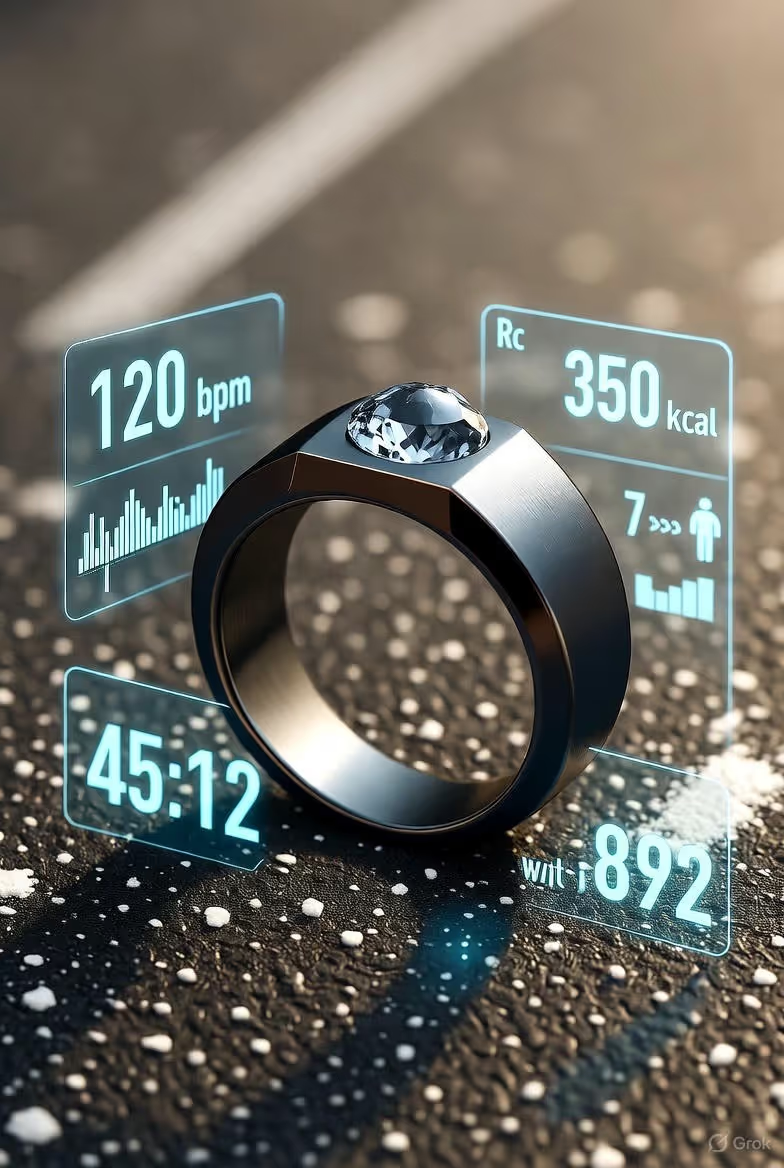
Before we can unpack how stress vandalizes your sleep, we must understand what a “Sleep Score” truly represents. It’s not a random number or a simple count of hours. It’s a sophisticated algorithmic verdict on the quality of your sleep’s architecture. Think of it as a building inspector’s report on a house. The total time spent on the property (duration) is important, but far more critical is the integrity of the foundation, the electrical wiring, and the plumbing. A Sleep Score evaluates the structural soundness of your night.
Modern wellness wearables, especially advanced devices like the Oxyzen smart ring, synthesize multiple data streams to generate this score. While the exact formulas vary, they universally assess several key pillars:
A high Sleep Score tells a story of physiological peace: a smooth descent into deep sleep, ample time for cellular repair and memory consolidation, a vibrant REM phase for emotional processing, and a calm, coherent autonomic nervous system throughout. A low score is a narrative of disruption. And very often, the antagonist in that story is stress, which leaves its fingerprints all over this biometric data. For a deeper dive into how this technology translates raw data into actionable insights, you can always explore our detailed guides on the Oxyzen blog.

We throw the word “stress” around casually, but to understand its assault on sleep, we must define it with physiological precision. Stress is not the event itself—the looming deadline, the difficult conversation, the financial worry. It is your body’s ancient, automated survival response to that perceived threat or challenge. This is the Hypothalamic-Pituitary-Adrenal (HPA) axis in action, a primal cascade designed for life-or-death situations.
When your brain’s amygdala perceives a threat (be it a saber-toothed tiger or an angry email), it sends a distress signal to the hypothalamus. This command center activates the pituitary gland, which in turn signals the adrenal glands, perched atop your kidneys, to release a cocktail of stress hormones. The two most critical for sleep are:
Sleep is not an on/off switch. It is a carefully orchestrated neurological process of letting go. It requires a decisive shift from the alert, vigilant, energy-expending state of the sympathetic nervous system (“fight or flight”) to the restorative, calming, energy-conserving state of the parasympathetic nervous system (“rest and digest”). Stress, by its very definition, forcibly blocks this transition. Here’s how, step by step:
This is the experience of “racing thoughts.” A stressed mind is a problem-solving mind, stuck in a loop of rehearsal, rumination, and worry. The prefrontal cortex, responsible for executive function and worry, remains abnormally active, preventing the neural “switch” from flipping to sleep-initiating regions of the brain. You are literally trying to solve problems at a time when your brain needs to be offline for maintenance.
While your mind races, your body is on the same page. Elevated evening cortisol and adrenaline directly cause:
This creates a self-reinforcing negative feedback loop. You get into bed stressed. Your mind races, your body is tense. Minutes tick by. You notice you’re not asleep. You begin to worry about not sleeping (“I’ll be wrecked tomorrow!”). This “sleep performance anxiety” is a secondary layer of stress, further amplifying physiological arousal. Now, your bed—a place meant for calm—has become a conditioned cue for anxiety and effort. This is why so many find themselves sleeping better on vacation or in a different environment; the associative chain is broken.

If stress manages to hijack the onset of sleep, its most insidious work is done during the night, systematically corrupting the very structure of your sleep cycles. Normal sleep architecture follows a predictable 90-minute rhythm, cycling through Light (Stages 1 & 2), Deep (Stage 3, Slow-Wave Sleep), and REM sleep. Each plays a unique restorative role, and stress disrupts them all.
Deep sleep is the most physically restorative phase. It’s when tissue growth and repair occur, energy is restored, and the immune system is strengthened. Critically, it’s also when the brain’s glymphatic system “washes” away metabolic waste, including toxins linked to neurodegenerative diseases. Cortisol is the enemy of deep sleep. High evening cortisol levels actively suppress the production of slow, synchronous delta brainwaves that characterize this stage. The result? You may spend adequate time in bed, but your tracker will show fragmented, shallow, or absent deep sleep. You wake up feeling physically unrefreshed, no matter the hours logged.
REM sleep, often associated with vivid dreams, is crucial for emotional regulation, memory consolidation, and creative problem-solving. Stress doesn’t necessarily reduce REM time; it often fractures and dysregulates it. You may experience earlier onset of REM (a phenomenon called REM pressure), more intense and stressful dreams or nightmares, and more frequent awakenings from REM. This leads to an emotionally chaotic sleep experience, preventing the necessary processing of the day’s emotional events and leaving you feeling psychologically raw in the morning.
With deep sleep compromised and REM disturbed, what’s left? An over-reliance on light sleep. Light sleep (Stage 2) is important for memory and learning, but it is not profoundly restorative. A sleep architecture dominated by light sleep is like a diet consisting only of snacks—it fills time but doesn’t nourish. Your tracker will reflect this as a disproportionate pie chart, with deep and REM slices looking pitifully small. This imbalance is a classic biometric signature of chronic stress.
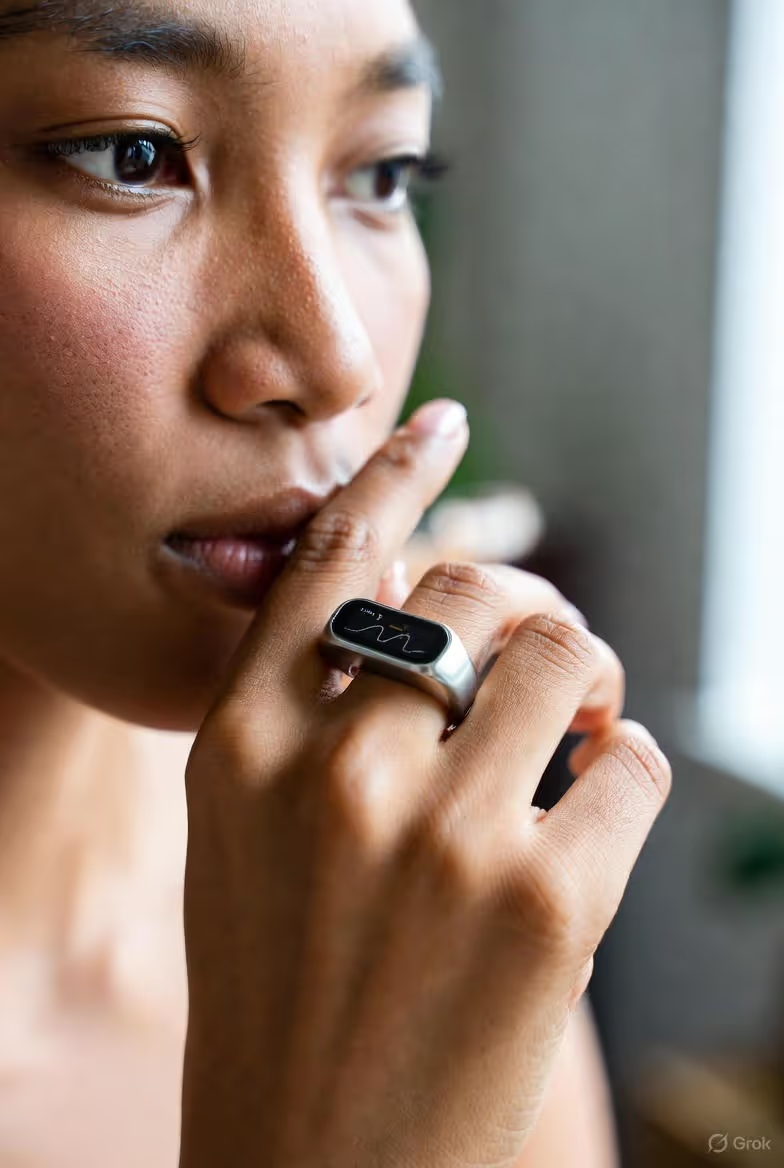
This is where modern technology transforms from a passive tracker into an active diagnostic tool. You don’t need to guess if stress is affecting your sleep; the data will show you. A device like the Oxyzen smart ring acts as a continuous, non-invasive monitor of your autonomic nervous system, providing clear, objective biomarkers of stress’s impact.
HRV is the subtle variation in the milliseconds between your heartbeats. Contrary to intuition, a higher HRV is better. It indicates a flexible, resilient nervous system that can smoothly transition between effort (sympathetic) and recovery (parasympathetic) states. Chronic stress crushes HRV. A consistently low HRV, especially a downward trend over weeks, is one of the clearest biometric signals that your body is under persistent strain. Observing your nightly average HRV on your Oxyzen dashboard can tell you more about your stress load than your own subjective feelings sometimes can, as the body keeps a physiological score.
While you sleep, your RHR should dip to its lowest point of the day. Stress, through the actions of cortisol and adrenaline, keeps your cardiovascular system in a state of readiness, preventing this healthy dip. If your tracker shows your sleeping RHR is 5-10+ BPM higher than your personal baseline, it’s a strong indicator that your body is struggling to achieve a state of true physiological rest, often pointing directly to stress as the cause.
Your device meticulously times how long it takes you to fall asleep (sleep onset latency). Consistently long latencies (e.g., >20-30 minutes) are a direct readout of cognitive and physiological hyperarousal. Furthermore, frequent periods of “restlessness” or “awake” time logged throughout the night, even if you don’t consciously remember them, indicate micro-awakenings driven by a nervous system on high alert.
The true magic lies not in a single night’s data, but in the trends. By reviewing your Oxyzen data over weeks and months, you can start to see clear patterns: a stressful work project correlates with a week of suppressed HRV and elevated RHR; a relaxing weekend away shows a beautiful rebound. This evidence-based feedback is invaluable, moving you from speculation (“I feel tired”) to causation (“My deep sleep dropped 40% during that stressful period”). For common questions on interpreting this data, our comprehensive FAQ resource can be an excellent guide.
The relationship between stress and sleep is not a one-way street; it’s a brutal, self-perpetuating cycle. Poor sleep doesn’t just leave you tired—it actively makes you more psychologically and physiologically vulnerable to stress the following day, setting the stage for another bad night.
A single night of poor sleep, particularly lost REM and deep sleep, impairs the function of the prefrontal cortex—the brain’s CEO, responsible for rational decision-making, emotional regulation, and impulse control. Simultaneously, it amplifies the reactivity of the amygdala—the brain’s fear and emotion center. The result? You become emotionally brittle. Minor irritations feel like crises. Patience evaporates. Your capacity to cope with daily hassles is dramatically reduced, making you perceive the world as more threatening, which in turn triggers more stress.
Sleep deprivation also has direct physical consequences that fuel the stress response:
So, a stressful day leads to a poor sleep night. That poor sleep night leads to a brain and body that are hyper-reactive, emotionally volatile, and physiologically primed for stress the next day. This creates more stress, which leads to another poor night of sleep. The cycle becomes a spiral. Breaking it requires a deliberate, data-informed intervention at one or more points in the loop. Seeing this cycle reflected in your own biometrics can be the powerful motivator needed to make a change, a sentiment echoed by many users who share their experiences in Oxyzen testimonials.
Our stress-sleep system evolved in a simpler world. Today, it is bombarded by novel, persistent stressors that our biology is ill-equipped to handle, creating a perfect storm for sleep disruption.
Digital stress is two-fold:
The erosion of boundaries between work and home, accelerated by remote work, means the psychological “gear” of work stress is rarely fully disengaged. The laptop on the kitchen table, the notifications on your phone, make it nearly impossible for the nervous system to make the clear transition into rest mode. The mental rehearsal of work problems easily spills into the pre-sleep hours.
The COVID-19 pandemic was a prolonged, pervasive trauma that altered baseline anxiety levels for millions. The lingering effects—health anxiety, social fragmentation, economic insecurity—have created a background hum of “ambiguous threat” that is particularly corrosive to sleep. This type of existential or “free-floating” anxiety lacks a clear target, making it harder to cognitively resolve and therefore more likely to manifest as physiological arousal at night.
Let’s move from theory to a tangible, data-driven narrative. Consider “Alex,” a project manager wearing an Oxyzen smart ring. Here’s how a typical stressful week maps onto his sleep biometrics:
This story isn’t hypothetical; it’s a composite of real user patterns. It vividly illustrates the cause-and-effect relationship and, most importantly, the capacity for recovery when the stressor is removed and intentional relaxation is introduced. Seeing this data empowers Alex to connect specific daytime events with sleep outcomes, making stress management tangible. For more real-world examples of this data-in-action, you can discover stories from our community.
Breaking the cycle requires proactive daytime action. The goal is to lower your overall “stress load” and increase your nervous system resilience before you get into bed. This isn’t about eliminating stress (an impossible task) but about changing your relationship to it and giving your body more opportunities to recover.
Exercise is a paradoxical stressor (eustress) that, when applied correctly, builds resilience. It helps metabolize excess stress hormones and stimulates the release of endorphins. The key is timing and type:
Breathing is the only autonomic function we can easily consciously control, making it a direct gateway to influencing stress physiology. Diaphragmatic breathing (deep “belly breathing”) stimulates the vagus nerve, triggering the parasympathetic “rest and digest” response.
What you eat can either inflame or soothe your stress response.
This is non-negotiable for modern sleep. Establish a “Digital Sunset” 60-90 minutes before bed. This means:
This boundary creates a sacred psychological space between the demands of the world and the sanctuary of sleep. It tells your nervous system, “The workday is over. It is safe to rest.” Implementing these practices consistently, and observing their positive impact on your Sleep Score, turns wellness from a concept into a data-validated lifestyle. For continued learning and new strategies, our blog is regularly updated with expert insights.
Your daytime actions set the stage, but the final act of uncoupling stress from sleep happens in the hours immediately preceding it. This is where intention meets environment. You can't force sleep, but you can architect conditions so conducive to it that your stressed nervous system has no choice but to surrender. Think of this not as a routine, but as a deliberate, sensory-rich "bridge" from the sympathetic state to the parasympathetic state.
The goal of this period is to actively lower core body temperature and increase melatonin production while signaling safety to the brain.
A racing mind is a stressed mind. The goal here is to externalize your worries, effectively "parking" them until the next day.
Rituals are powerful because they are predictable and signal a change in state. Your pre-sleep ritual tells your body, "This is what we do before sleep. Sleep always follows."
This is where modern wellness technology transcends simple tracking and becomes an interactive coaching tool. With a device like the Oxyzen smart ring providing continuous, medical-grade biometrics, you can move from passive observation to active biofeedback—using your body's signals in the moment to guide it back to calm.
While nightly averages are diagnostic, the real power lies in spotting acute stress spikes as they happen during the day. By checking your live or short-term HRV reading on the Oxyzen app after a stressful meeting or a tense interaction, you get objective proof of your physiological state. This awareness alone can be transformative—it stops the story of "I'm fine" and replaces it with data: "My nervous system is in fight-or-flight." This pause creates a critical window for intervention.
Many advanced platforms offer guided breathing exercises that use your real-time heart rate data as feedback. You follow a pacer on your screen (e.g., breathe in for 4 seconds, out for 6), and the app shows you how your heart rate coherence improves in response. This is powerful operant conditioning: you see that your conscious breathing directly calms your physiology. Practicing this for just 3-5 minutes during a stressful moment not only reduces that moment's stress but also trains your nervous system to respond more resiliently over time, which will reflect in your improved nightly Sleep Score metrics.
Many smart systems compile morning biometrics (last night's HRV, RHR, sleep quality) into a single "Readiness" or "Recovery" score. This isn't just a number; it's a prescription for the day. A low Readiness Score is a direct instruction to prioritize stress management. It tells you, "Based on your physiology, your system is depleted. Today, choose gentle exercise, say no to extra commitments, double down on breathing and boundaries." Honoring this data prevents you from digging a deeper stress-sleep hole.
By reviewing your timeline in the Oxyzen app, you can start to play detective. Look at days with poor sleep scores and low HRV, then scroll back to see what your day looked like. Was it the day you had back-to-back video calls? The day you skipped lunch? The day you consumed news after 8 PM? Over time, you'll identify your unique, non-obvious stress triggers—the ones that don't feel dramatically stressful in the moment but have a measurable biochemical fallout. This allows for hyper-personalized lifestyle tweaks. For more on how to interpret and act on this data, our support and FAQ section offers detailed guidance.
While stress is the most common saboteur of sleep, it's crucial to recognize when your persistently poor Sleep Score might be pointing to a clinical sleep disorder. Stress can both cause and exacerbate these disorders, creating a complex chicken-or-egg scenario. Knowing the red flags empowers you to seek the right help.
Everyone has a bad night. Insomnia Disorder is characterized by chronic difficulty (occurring at least 3 nights per week for 3 months) initiating or maintaining sleep, despite adequate opportunity, causing significant daytime distress or impairment. The key differentiator from typical stress sleep is the intense focus on and anxiety about sleep itself, which becomes a self-fulfilling prophecy. If your pre-sleep anxiety has morphed into a pervasive dread of bedtime itself, it may be clinical insomnia, often best treated with Cognitive Behavioral Therapy for Insomnia (CBT-I), the gold-standard non-drug treatment.
Obstructive Sleep Apnea (OSA) is a condition where breathing repeatedly stops and starts during sleep. It is a massive physiological stressor, causing nightly cortisol spikes, oxygen desaturation, and fragmented sleep. The symptoms—loud snoring, gasping for air, morning headaches, and unrelenting daytime fatigue—can be mistaken for stress exhaustion. Crucially, a smart ring can provide hinting biomarkers:
These sensorimotor disorders create an irresistible urge to move the legs (RLS) or involuntary limb jerks during sleep (PLMD). The discomfort can prevent sleep onset and cause frequent micro-awakenings, severely impacting sleep architecture. Stress and anxiety are known aggravators of RLS. If your sleep tracker shows high restlessness and you have creeping, crawling sensations in your legs at rest, this warrants medical evaluation.
If your lifestyle interventions and stress management yield no improvement in your biometric data or subjective feeling after 2-3 months, or if you observe the red flags above, consult a healthcare professional. Start with your primary care physician and consider a referral to a sleep specialist or a psychologist specializing in behavioral sleep medicine. Bring your long-term Oxyzen data with you—it provides an objective record far more reliable than subjective recall, making you an informed partner in your own care. Understanding this full spectrum of sleep health is part of our commitment to holistic wellness at Oxyzen.
The ultimate goal is not to manage stress-sleep cycles reactively, but to build a foundational lifestyle that elevates your baseline resilience. This turns you into a person who experiences stress but is not destabilized by it—whose sleep architecture remains robust through life's inevitable storms. This is the work of months and years, compounded from daily habits.
Your circadian rhythm is your master internal clock, governing not just sleep but hormone release, digestion, and cellular repair. A strong, entrained rhythm is your greatest defense against stress.
Mindfulness meditation is not about emptying the mind; it's about training the brain to observe thoughts and sensations without immediately reacting to them with stress. Regular practice (even 10 minutes daily) has been shown to:
Loneliness and social isolation are profound psychological stressors with direct physiological consequences, including elevated cortisol and inflammation. Nurturing positive, supportive relationships is not a luxury; it's a core component of stress resilience. Face-to-face connection (which releases oxytocin, a bonding hormone that dampens stress) acts as a buffer, making challenges feel more manageable and less sleep-disruptive.
Engaging in activities that provide a sense of mastery, purpose, or sheer joy activates different neurological pathways than those associated with stress. Whether it's a hobby, creative pursuit, volunteering, or playing a sport, these activities build psychological resources and positive emotions. They remind the nervous system that life is not solely about threat and obligation, creating a healthier emotional landscape that carries into the night. Seeing the positive impact of these lifestyle pillars on long-term wellness data is a journey many of our users share when they tell their Oxyzen story.
Knowledge is only power when applied. Now that we understand the mechanisms, signs, and solutions, it's time to synthesize this into a living, breathing, personalized action plan. Use your Oxyzen data as the blueprint and feedback mechanism.
For two weeks, live normally but consistently wear your tracker. Do not try to change anything yet. At the end, analyze:
Choose ONE high-impact daytime intervention from Section 9. For example: Implement a daily 5-minute morning sunlight viewing and a 5-minute afternoon breathing exercise. Commit to this for three weeks without changing anything else dramatically.
At the end of three weeks, look at your data trends. Has your average HRV nudged up? Has your Sleep Score variability decreased? Did you have fewer "crash" nights? Use this objective feedback. If it helped, solidify this habit. If not, choose a different lever (e.g., adjusting exercise timing, enforcing a digital sunset).
Once your daytime habit is solid, add one nighttime element. For example: Institute the "brain dump" journal 20 minutes before bed. Monitor for another 2-3 weeks. See how it affects your Sleep Onset Latency and Restlessness metrics.
Every three months, do a macro review. Zoom out on your Oxyzen data trends. Is your baseline HRV on a gentle upward slope? Is your deep sleep more consistent? This long-view prevents discouragement from single bad nights and shows the powerful cumulative effect of lifestyle change. For ongoing inspiration and new research-backed strategies to incorporate into your plan, our blog is a continually updated resource.
The final piece of the puzzle is perspective. The Oxyzen smart ring or any advanced tracker is a phenomenal tool, but it is not the goal. The goal is restorative sleep and a peaceful mind. The technology's purpose is to illuminate the path and confirm you're walking it, not to become another source of performance anxiety.
A trap for the diligent biohacker is "orthosomnia" – a coined term for an unhealthy preoccupation with achieving perfect sleep data. If you find yourself feeling more anxious about your Sleep Score than about how you actually feel, or if a "bad" score ruins your next day, it's time to recalibrate.
The most powerful approach combines cutting-edge insight with ancient wisdom. Your ring tells you your HRV is low (tech), so you choose to spend 30 minutes walking in nature (ancient wisdom). It shows fragmented deep sleep (tech), so you prioritize a weekly digital Sabbath (ancient wisdom). This integration respects the intelligence of both the machine and the body.
Sleep and stress management are lifelong practices, not a problem to be permanently solved. There will be weeks of perfect scores and weeks of turmoil. The resilience built from understanding the connection, having tools at your disposal, and trusting the process of returning to balance is the real victory. This journey of empowerment, of moving from victim of stress to architect of your own recovery, is at the very heart of the Oxyzen mission. It’s not just about better sleep data; it’s about building a more conscious, resilient, and vibrant life—one restful night at a time.
The fundamental stress-sleep connection is universal, but its expression is not one-size-fits-all. Hormonal shifts, life-stage specific pressures, and neurological changes mean that the battle for a good Sleep Score looks different across a lifetime. Understanding your demographic profile allows for a more targeted, compassionate, and effective defense strategy.
For younger adults, stress often wears a digital face. The pressure to perform, coupled with the "always-on" culture of social media and gig economy instability, creates a unique sleep disruption profile.
Ages 35-55 often represent the peak of career and caregiving responsibilities—a potent cocktail for stress. This is also when hormonal changes begin for many, adding a biological layer to the psychological strain.
Later in life, while some stressors may recede, new ones emerge. The sleep-stress dynamic shifts from psychological to a more physiological interplay.
The connection between what you eat and how you sleep is profound, mediated heavily by stress. Your gut is often called your "second brain," producing about 95% of your body's serotonin—a key precursor to melatonin. A stressed gut means a stressed mind and poor sleep.
A diet high in processed sugars, refined carbs, and unhealthy fats promotes systemic inflammation. Inflammation is a powerful physiological stressor that activates the immune system and the HPA axis, leading to elevated cortisol that can rage into the night.
Specific nutrients act as co-factors for calming neurotransmitters and sleep-regulating hormones.
The when is as important as the what. A large, heavy meal too close to bedtime forces your digestive system to work overtime, raising core body temperature and metabolic activity—the opposite of what’s needed for sleep. Aim to finish your last substantial meal at least 3 hours before bed. If you need a snack, opt for a combination of tryptophan and complex carbs, like a small bowl of oatmeal with almonds or a banana with a spoonful of nut butter.
When diet and lifestyle aren’t enough, many turn to supplements. The market is vast and often confusing. The goal here is not to replace foundational habits but to provide targeted, temporary support while you build long-term resilience. Always consult with a healthcare provider before starting any new supplement regimen.
Melatonin is a hormone, not a herb. It’s most effective for circadian rhythm reset (jet lag, shift work) or in very low doses (0.3-1 mg) for sleep onset. Chronic, higher-dose use can potentially downregulate your body’s own production and does little to address the underlying stress or sleep architecture issues. It’s a tool for specific situations, not a nightly sleep aid.
This is where your biometrics shine. If you decide to trial a supplement like magnesium glycinate under a doctor’s guidance, monitor your Oxyzen data closely for 2-4 weeks. Look for:
We are on the cusp of a revolution in personalized wellness. The next generation of technology, embodied by platforms like Oxyzen, will move beyond describing what happened to predicting what will happen and suggesting what to do about it.
Future algorithms will analyze your longitudinal data—sleep, activity, HRV, menstrual cycle, logged stressors—to identify your personal pre-sleep stress signatures. Your device might send a midday alert: *"Your stress biomarkers are elevated today. Your predicted Sleep Score is at risk. Consider your 8-minute evening breathing session tonight."* This shifts the model from reactive to proactive.
The ring is a powerful form factor, but the future is seamless sensor fusion. Imagine your ring data syncing with:
The horizon holds true closed-loop systems. For example, a device that detects elevated heart rate and sympathetic arousal during early sleep could trigger a subtle, soothing sonic frequency or command your smart bed to initiate a gentle cooling cycle to bring you back into deep sleep without ever waking you. The technology intervenes in real-time, based on your physiology, to protect your sleep architecture.
This journey from awareness to prediction to automated support is the logical endpoint of our quest to master the stress-sleep connection, and it’s a future being actively built by innovative teams who you can learn more about here.
We have journeyed from the microscopic—the cortisol molecule binding to a receptor—to the macroscopic—the lifelong habits that build resilience. The connection between stress and your Sleep Score is direct, measurable, and, most importantly, actionable. Let’s synthesize this knowledge into a final, enduring blueprint.
Tonight, and every night after, you are not a passive victim of stress. You are an architect. You have the tools:
Start not with everything, but with one thing. Perhaps tonight, it’s leaving your phone to charge in another room after you’ve done your “brain dump” journal. Tomorrow morning, it’s drinking your coffee outside for five minutes to get that circadian light anchor. One intervention, observed in your data, creates a positive feedback loop of empowerment.
The goal is not a lifetime of perfect 90 Sleep Scores. That is an illusion. The goal is a lifetime of resilient sleep—sleep that may bend under life’s storms but does not break; sleep that you understand, nurture, and trust. It is the foundation upon which a vibrant, conscious, and healthy life is built.
Your journey to mastering the stress-sleep connection begins with a single, informed choice. To continue exploring, refining, and learning, remember that a wealth of evolving knowledge and community support is always available to you—whether through the latest research on our blog, the experiences of others, or by reaching out with your specific questions. The path to better sleep and less stress is a personal one, but you don’t have to walk it alone.
Specific nutrients act as co-factors for calming neurotransmitters and sleep-regulating hormones.
The when is as important as the what. A large, heavy meal too close to bedtime forces your digestive system to work overtime, raising core body temperature and metabolic activity—the opposite of what’s needed for sleep. Aim to finish your last substantial meal at least 3 hours before bed. If you need a snack, opt for a combination of tryptophan and complex carbs, like a small bowl of oatmeal with almonds or a banana with a spoonful of nut butter.
When diet and lifestyle aren’t enough, many turn to supplements. The market is vast and often confusing. The goal here is not to replace foundational habits but to provide targeted, temporary support while you build long-term resilience. Always consult with a healthcare provider before starting any new supplement regimen.
Melatonin is a hormone, not a herb. It’s most effective for circadian rhythm reset (jet lag, shift work) or in very low doses (0.3-1 mg) for sleep onset. Chronic, higher-dose use can potentially downregulate your body’s own production and does little to address the underlying stress or sleep architecture issues. It’s a tool for specific situations, not a nightly sleep aid.
This is where your biometrics shine. If you decide to trial a supplement like magnesium glycinate under a doctor’s guidance, monitor your Oxyzen data closely for 2-4 weeks. Look for:
We are on the cusp of a revolution in personalized wellness. The next generation of technology, embodied by platforms like Oxyzen, will move beyond describing what happened to predicting what will happen and suggesting what to do about it.
Your Trusted Sleep Advocate: Sleep Foundation — https://www.sleepfoundation.org
Discover a digital archive of scholarly articles: NIH — https://www.ncbi.nlm.nih.gov/
39 million citations for biomedical literature :PubMed — https://pubmed.ncbi.nlm.nih.gov/
Experts at Harvard Health Publishing covering a variety of health topics — https://www.health.harvard.edu/blog/
Every life deserves world class care :Cleveland Clinic - https://my.clevelandclinic.org/health
Wearable technology and the future of predictive health monitoring :MIT Technology Review — https://www.technologyreview.com/
Dedicated to the well-being of all people and guided by science :World Health Organization — https://www.who.int/news-room/
Psychological science and knowledge to benefit society and improve lives. :APA — https://www.apa.org/monitor/
Cutting-edge insights on human longevity and peak performance:
Lifespan Research — https://www.lifespan.io/
Global authority on exercise physiology, sports performance, and human recovery:
American College of Sports Medicine — https://www.acsm.org/
Neuroscience-driven guidance for better focus, sleep, and mental clarity:
Stanford Human Performance Lab — https://humanperformance.stanford.edu/
Evidence-based psychology and mind–body wellness resources:
Mayo Clinic — https://www.mayoclinic.org/healthy-lifestyle/
Data-backed research on emotional wellbeing, stress biology, and resilience:
American Institute of Stress — https://www.stress.org/


