


How to Adjust Your Nighttime Routine as You Age
As you age, you may need to adjust timing, incorporate more comfort measures for aches, or shift routines earlier.
As you age, you may need to adjust timing, incorporate more comfort measures for aches, or shift routines earlier.
%402x.svg)
Imagine a tool that could listen to the silent language of your sleep. Not just the hours logged, but the subtle symphony of your heartbeat, your breath, your core temperature—all whispering secrets about the quality of your rest. This isn’t science fiction; it’s the reality of modern wellness technology, and it’s revolutionizing how we understand our most fundamental health pillar: sleep. As we journey through life, our relationship with sleep undergoes a profound transformation. The deep, oblivious slumber of our youth gives way to lighter, more fragmented rest. What worked at 25 often fails at 45, and by 65, the rulebook seems completely rewritten. But here’s the empowering truth: while the need for quality sleep never diminishes, the method to achieve it must evolve. This comprehensive guide is your roadmap for that evolution. We’ll delve deep into the physiological shifts that occur decade by decade, and provide a science-backed, actionable framework for adapting your nighttime routine. We’ll also explore how leveraging precise data—like that provided by advanced wearable technology from innovators like Oxyzen.ai—can move you from guessing about your sleep to strategically optimizing it, ensuring you wake up refreshed and resilient at any age.
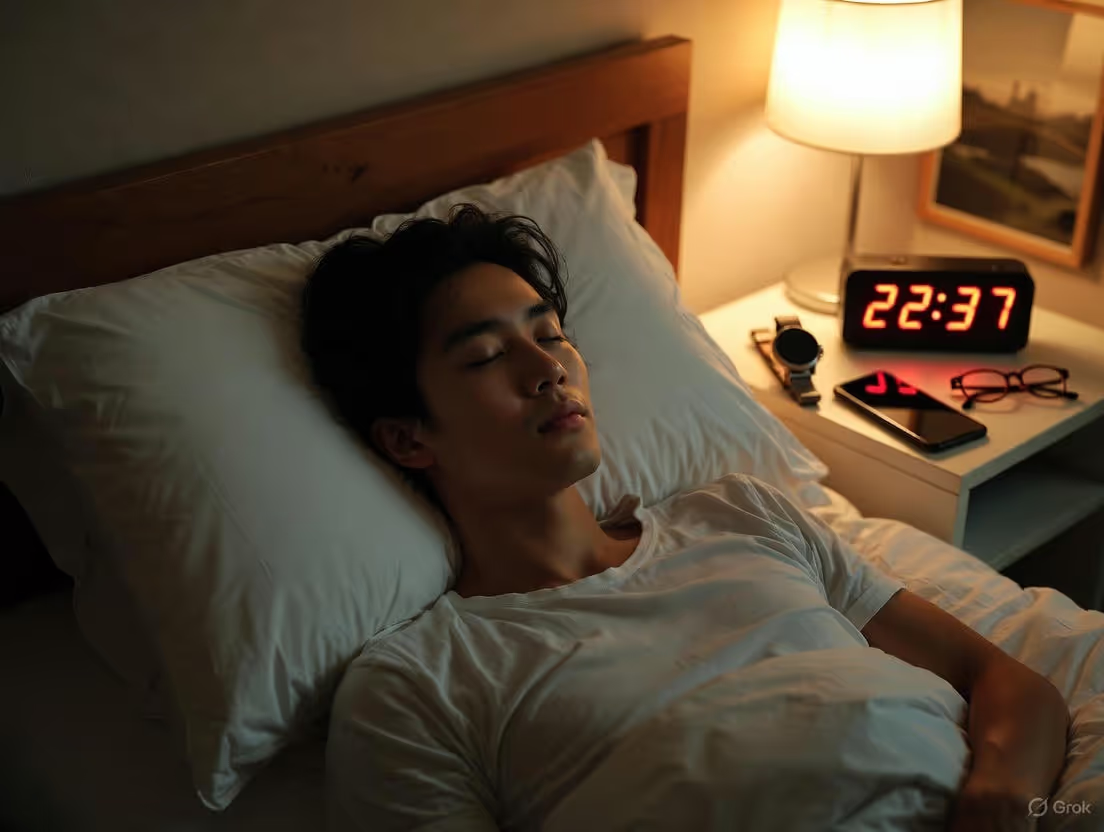
We often associate aging with external changes, but the most significant transformations happen under the cover of darkness. Sleep is not passive downtime; it’s a state of intense biological activity essential for repair, consolidation, and regulation. During deep sleep, growth hormone is released, facilitating tissue repair and muscle growth. The glymphatic system—the brain’s waste-clearing mechanism—kicks into high gear, flushing out toxic proteins like beta-amyloid, which are associated with cognitive decline. Memories are sorted and stored, the immune system is fortified, and hormones regulating appetite (leptin and ghrelin) are balanced.
As we age, this intricate process faces headwinds. Sleep architecture changes: we spend less time in deep, restorative slow-wave sleep and rapid eye movement (REM) sleep. Our circadian rhythm—the internal 24-hour clock—can advance or become blunted, leading to earlier evening sleepiness and earlier waking. The production of melatonin, the key sleep-signaling hormone, often decreases. Furthermore, age-related health conditions, medications, and even natural changes in bladder capacity can conspire to fragment sleep.
The cost of poor sleep in midlife and beyond is steep. It’s linked to accelerated biological aging, increased systemic inflammation, a higher risk of cardiovascular disease, type 2 diabetes, and obesity. Crucially, it’s a major modifiable risk factor for cognitive impairment. A study from the Harvard-affiliated Nurses’ Health Study found that older women who slept poorly showed a more rapid decline in cognitive function equivalent to being two years older than their chronological age. Conversely, protecting and optimizing sleep is one of the most powerful levers we have for preserving physical health, mental acuity, and emotional balance. It’s the foundation upon which a vibrant, healthy later life is built. For a deeper dive into the science of sleep and longevity, our resource library at Oxyzen.ai/blog offers continuous updates on the latest research.
To adapt your routine effectively, you must first understand the "why" behind the changes. The evolution of sleep is not a flaw; it’s a natural, albeit challenging, adaptation.
In Your 30s: The first subtle shifts begin. The robust sleep of your 20s starts to wane. You may notice it’s harder to burn the midnight oil and bounce back. The onset of family and career pressures can introduce significant sleep debt and stress-related insomnia. Physiologically, the decline in deep sleep begins, though it may not be perceptible yet. This is the critical decade for establishing protective habits.
In Your 40s & 50s: Perimenopause and menopause bring dramatic changes for women, with night sweats and hormonal fluctuations severely disrupting sleep continuity. For men, declining testosterone can affect sleep quality. For all genders, the prevalence of sleep apnea increases significantly. The circadian rhythm often starts to shift forward ("phase advance"), making you feel sleepy earlier in the evening and wakeful in the very early morning. This is when many people first confront chronic, frustrating sleep issues.
In Your 60s and Beyond: Sleep becomes markedly lighter and more fragmented. Time spent in deep sleep can decrease by over 60-70% compared to young adulthood. The circadian rhythm weakens, leading to less distinct sleep-wake cycles and a tendency for napping. Bladder changes lead to more frequent nocturia (nighttime bathroom trips). There’s also an increased sensitivity to environmental disruptors like light, noise, and temperature.
This isn’t a fate to be accepted, but a landscape to be navigated with intelligence. The goal is no longer to chase the sleep of your youth, but to cultivate the most restorative sleep possible for your current biology. This requires moving from generic sleep advice to a personalized, data-informed approach. Understanding your unique physiology is the first step, a mission that drives the team at Oxyzen.ai/about-us to create tools that deliver personal, actionable insights.
Your circadian rhythm is the master conductor of your sleep orchestra. As it changes with age, you must become its meticulous tuner.
Master the Light-Dark Cycle: Light is the most powerful zeitgeber (time-giver) for your internal clock. As we age, the lens of the eye yellows and the pupil shrinks, reducing light intake by up to 70% by age 70. This can confuse the circadian signal. The remedy is intentional light exposure.
Fix Your Sleep Schedule: Variability is the enemy of the aging circadian clock.
Strategic Use of Melatonin: The body’s natural production declines, but supplementing isn’t a one-size-fits-all solution. For age-related rhythm issues, timing is everything. A very low dose (0.3mg to 1mg) taken 3-4 hours before your natural bedtime can help gently advance or reinforce your rhythm. This is different from using it as a high-dose "sleeping pill" at bedtime. Always consult your physician before starting any supplement.
The challenge, of course, is knowing your rhythm’s precise status. Is your bedtime drifting? Is your sleep fragmented because of a weakened signal? This is where objective data becomes invaluable. A device that tracks circadian biomarkers like continuous body temperature—a core signal of your rhythm—can show you the direct impact of your light and schedule interventions, moving you from theory to practice.
The hour before bed must transform from a time of cognitive engagement to one of physiological calm. The aging nervous system is less forgiving of last-minute stress and stimulation.
Create a Ritual, Not a Rush: Your wind-down should be a predictable, sensory sequence that cues your body for sleep. It should last a minimum of 45 minutes.
The Digital Detox Revisited: It’s worth reiterating because it’s that important. The engaging content on screens triggers dopamine and emotional arousal, while the blue light directly suppresses melatonin. The pre-bed period is for disconnection. Charge your phone outside the bedroom. If you use your phone as an alarm, the mission at Oxyzen.ai/our-story was inspired by this very problem: creating elegant, user-focused tech that supports wellness without intrusion, encouraging these essential boundaries.
The Power of Breath: The 4-7-8 breathing technique is a direct line to your parasympathetic (rest-and-digest) nervous system. Inhale quietly through your nose for 4 seconds, hold your breath for 7 seconds, and exhale forcefully through your mouth for 8 seconds. Repeat 4-6 times. This can lower heart rate and blood pressure, counteracting the age-related tendency for heightened nighttime arousal.
You can’t control your changing biology, but you can exert absolute control over your sleep environment. For the lighter sleep of later years, this control is paramount.
The Trinity of the Perfect Sleep Cave: Dark, Cool, and Quiet.
Your Bed is for Sleep (and Sex Only): A powerful psychological association must be preserved: bed = sleep. If you cannot fall asleep within 20-25 minutes, get out of bed. Go to another dimly lit room and do a quiet, boring activity until you feel sleepy again. This prevents the bed from becoming an arena for anxiety and frustration, a common issue for older adults struggling with sleep onset.
The Mattress and Pillow Audit: Your support needs change. Joint pain or acid reflux may require different positioning. Reevaluate your mattress every 7-10 years. Your pillow should keep your neck in a neutral alignment, whether you sleep on your back or side. This isn’t indulgence; it’s orthopedic necessity for preventing pain that wakes you up.
What and when you consume in the evening has a magnified impact as you age due to slower digestion, changing metabolism, and fluid balance issues.
The Caffeine Cliff: Caffeine has a half-life of 5-6 hours, meaning half of it is still in your system after that time. With age, liver metabolism slows, extending this effect. Establish a firm "caffeine curfew" by 2 PM. Be mindful of hidden sources: chocolate, some medications, and decaf coffee (which still contains small amounts).
Alcohol: The Deceptive Sedative: Alcohol may help you fall asleep faster, but it’s a profound disruptor of sleep architecture. It suppresses REM sleep in the first half of the night and causes rebound arousal, withdrawals, and fragmented sleep in the second half. It also relaxes throat muscles, worsening sleep apnea. For optimal sleep, limit alcohol and avoid it within 3-4 hours of bedtime.
The Timing and Composition of Your Last Meal: Finish eating at least 3 hours before bed. A large, heavy, or spicy meal too close to bedtime forces your digestive system to work overtime, raising core body temperature and potentially causing reflux. If you need a small snack before bed, choose a combination of a complex carbohydrate and a little protein or healthy fat (e.g., a small banana with almond butter, a few whole-grain crackers with cheese). This can help stabilize blood sugar through the night.
The Hydration Tightrope: Dehydration can cause nighttime leg cramps and wake you up, but drinking too much fluid late leads to disruptive bathroom trips. The solution is front-loading: consume the majority of your daily water earlier in the day. Taper off liquids 1-2 hours before bed. If you take evening medications that require water, take just the necessary sip.
Navigating these nuances can feel like a complex puzzle. Many of our users at Oxyzen.ai/testimonials have shared how seeing the direct data correlation between a late glass of wine or a heavy meal and a plummeting sleep score provided the motivation they needed to finally optimize these evening habits.
Sleep is not an isolated event. It is the culmination of your day. Two of the most powerful daytime levers are physical activity and stress management.
Exercise: Timing and Type Matter: Regular exercise is one of the best evidence-based ways to improve sleep depth and continuity. It helps regulate circadian rhythms, reduces anxiety, and promotes daytime alertness so you’re truly tired at night.
Stress Inoculation Through Mindfulness: Chronic stress elevates cortisol, a wake-promoting hormone that should be at its lowest at night. With age, the HPA axis (which governs stress response) can become dysregulated.
Sunlight and Socialization: Don’t underestimate the sleep-promoting power of daytime social engagement and natural light exposure. Both are potent regulators of mood and circadian health, combating the isolation and irregular routines that can worsen sleep in later years.
This is the reality for many adults: health conditions and their treatments directly interfere with sleep. A proactive approach is required.
The Medication Audit: Many common medications have side effects that disrupt sleep.
Pain Management Protocol: Chronic pain is a brutal sleep thief. Breaking the pain-insomnia-pain cycle is key.
Managing Specific Conditions:
Having objective data can turn a vague complaint into a specific discussion with your doctor. Being able to show a graph of your nightly restlessness, oxygen saturation dips, or heart rate variability can be invaluable in diagnosing and managing these conditions. For common questions on how wearable data can support these conversations, Oxyzen.ai/faq provides detailed insights.
In the quest for better sleep, technology can be either the problem or the solution. The key is to use it intentionally.
The Data Advantage: A basic sleep tracker tells you what happened: you slept 6.5 hours. An advanced biometric device helps you understand why. By tracking metrics like:
From Insight to Action: Data is useless without interpretation and action. The best systems don’t just show graphs; they provide contextual, personalized feedback. "Your sleep latency improved by 15 minutes after you started the 4-7-8 breathing this week," or "Your deep sleep was lower last night, which correlates with your higher afternoon stress levels and later dinner."
Choosing Your Tool: Look for a device focused on clinical-grade sensors and meaningful analysis, not just step counting. It should be comfortable enough to wear nightly without disruption—a primary reason smart rings have gained popularity for sleep tracking. They provide consistent, proximal artery data without the bulk of a wrist device. To learn more about the specific technology and approach behind this method of tracking, you can discover how Oxyzen works.
The Red Flag Rule: Consumer devices are powerful wellness tools, but they are not medical diagnostic devices. Use them to identify patterns and trends to discuss with a healthcare professional, not to self-diagnose conditions like sleep apnea or arrhythmias.
Perhaps the most profound adjustment in your nighttime routine is the one that happens between your ears. Fighting against the natural changes of aging creates stress and worse sleep. The goal is strategic acceptance and empowered adaptation.
Redefining "Good Sleep": Release the rigid ideal of 8 hours of unbroken slumber. For many healthy older adults, 6.5 to 7.5 hours of total sleep (including time awake in bed) is normal and sufficient. Focus on sleep quality (how restorative it feels) over a perfect sleep quantity number. Did you wake feeling restored? That’s the true metric.
Combatting Sleep Anxiety: Worrying about sleep is a guaranteed way to prevent it. If you lie awake, practice cognitive restructuring. Instead of "I’m never going to sleep, tomorrow will be ruined," try "My body is resting quietly. This is still beneficial. Sleep will come when it’s ready." Get out of bed if anxiety escalates, as per the stimulus control rule.
Embrace Your New Rhythm: If you naturally wake at 5 AM feeling refreshed, don’t fight it. Structure your evening to accommodate an earlier bedtime. Use the quiet morning hours for a peaceful, productive activity. You are not failing at sleep; you are syncing with your body’s authentic rhythm.
This journey of adaptation is deeply personal. It requires curiosity, patience, and the right tools. The vision behind our work, which you can explore at Oxyzen.ai/our-story, is to empower every individual with the kind of personalized, actionable intelligence that turns the science of sleep into the lived experience of restful nights and vibrant days. The following sections will continue to build on this foundation, providing even more detailed protocols for specific challenges and advanced optimization strategies.
Knowledge is power, but implementation is victory. With a deep understanding of why your sleep changes, the next critical phase is building a personalized, non-negotiable sleep protocol. This is not a rigid set of rules, but a flexible framework of rituals and responses designed to work with your unique physiology. Think of it as training a new skill: consistency is the currency of success. For the next 28 days, commit to this process of observation and adjustment, using data not as a judge, but as a guide. The goal is to create a routine so ingrained that it signals sleep to your brain and body as reliably as dusk signals to the natural world.
Transformation happens through focused, sustained effort. A 28-day challenge provides the perfect timeline to establish new neural pathways and objectively measure progress. Here’s how to structure it:
Week 1: The Foundation Week (Observation & Basics)
Week 2: The Environmental & Ritual Week (Tuning Your Cave)
Week 3: The Lifestyle Integration Week (Day for Night)
Week 4: The Refinement & Personalization Week
Throughout this process, remember that the community and shared experiences of others can be a powerful motivator. Reading about real-world adjustments and successes, like those shared by users at Oxyzen.ai/testimonials, can provide both inspiration and practical ideas for your own 28-day journey.
Precision beats vagueness. For the aging nervous system, a predictable sequence is calming. Here is a sample template for the critical two hours before lights out:
T-120 Minutes (2 Hours Before Bed): The Final Fuel
T-90 Minutes: The Digital Sunset
T-60 Minutes: The Physiological Shift
T-30 Minutes: The Mental Unwind
T-5 Minutes: The Final Cue
Lights Out: The goal is not to be asleep instantly, but to be in a state of calm surrender. If sleep doesn't come within 20-25 minutes, get up and repeat a quiet activity in dim light until drowsy.
Once your foundation is solid, you can explore advanced techniques that directly target the physiological drivers of sleep.
Thermoregulation Hacking: The body’s temperature drop is a primary sleep signal. We can enhance it.
Breathwork for Vagal Tone: The vagus nerve is the superhighway of the parasympathetic nervous system. Strengthening its tone (vagal tone) improves your body’s ability to shift into rest mode.
The Nuanced World of Supplements: Important: Always consult your physician before adding any supplement, especially due to potential interactions with medications.
For ongoing discussions about the practical application of these biohacks and how to measure their efficacy, our community often shares insights and findings on Oxyzen.ai/blog, where we separate the hype from the evidence-based strategies.
This is one of the most challenging but transformative behavioral techniques for insomnia, especially for age-related sleep maintenance issues. The principle is simple: break the association between the bed and wakeful anxiety.
The 25-Minute Rule: If you are not asleep, or if you wake up and cannot return to sleep within approximately 25 minutes, you must get out of bed. The time is not meant to be clock-watched; estimate it. The feeling is one of growing frustration or alertness, not quiet restfulness.
The Correct "Out of Bed" Protocol:
Why This Works So Powerfully:
This technique requires commitment and can feel counterintuitive in the middle of the night, but it is a cornerstone of Cognitive Behavioral Therapy for Insomnia (CBT-I), the gold-standard non-drug treatment. For persistent struggles, seeking a therapist trained in CBT-I is a highly recommended step.
Let’s apply the principles to specific, frustrating situations.
Scenario 1: "I Fall Asleep Fine, But I’m Wide Awake at 3 AM."
Scenario 2: "I’m Exhausted by 8 PM, Asleep by 9, But Then Awake at 4 AM."
Scenario 3: "Pain (Arthritis, Backache) Wakes Me Up and I Can’t Get Comfortable."
Scenario 4: "My Partner’s Snoring/Restlessness Is Destroying My Sleep."
For more nuanced questions on integrating sleep tech in a shared bedroom or managing dual biosignals, our Oxyzen.ai/faq covers many practical partnership scenarios.
The afternoon nap is a double-edged sword, especially after age 60. Done correctly, it’s a performance-enhancing tool. Done poorly, it erodes nighttime sleep drive.
The Golden Rules of the Age-Appropriate Nap:
When to Avoid Napping:
The Power of the "Non-Sleep Deep Rest" (NSDR) Alternative: If napping is problematic, a 20-minute guided NSDR protocol (like Yoga Nidra or a body scan meditation) can provide similar brainwave and recovery benefits without entering sleep, leaving your sleep drive intact for the night.
Sleep is often a team sport. Misaligned routines can create tension and mutual disruption.
Open Communication is Key: Have a calm, daytime conversation about sleep needs. Frame it as a collaborative project for mutual health, not a list of complaints. "I want us both to feel great. How can we make our bedroom and routines work better for both of us?"
Compromise on Environment:
Staggered Routines are Okay: You don’t have to go to bed at the same time. The later person can have their wind-down in another room before joining their partner, using minimal light. The key is respect for the sleeping person’s environment.
Leverage Shared Data: If both partners use biometric tracking, it can depersonalize issues. "Look, both our sleep graphs show a dip in efficiency on the nights we watch that intense show right before bed. Maybe we should schedule it earlier?" This turns "you're keeping me up" into "our data shows this habit affects us both."
Building a life and a home that prioritizes wellness is at the core of our vision. Understanding the intricate dance of shared biology is part of that journey, a topic we explore from different angles in our resources at Oxyzen.ai/about-us.
Your sleep quality tonight is largely determined by the choices you made 12-16 hours ago. The waking hours are your preparation phase.
The First 60 Minutes: Anchoring Your Rhythm
Daytime Stress Management: Chronic, low-grade cortisol leakage is a silent sleep killer.
The Afternoon Slump Strategy: Between 2-4 PM, instead of reaching for sugar or more caffeine, try:
By viewing your entire 24-hour cycle as an integrated system, you stop fighting against your biology and start working with it. Each day becomes an opportunity to build the sleep pressure and circadian strength that will culminate in a restorative night.
This concludes the first third of our comprehensive guide. You now possess a deep understanding of the why behind age-related sleep changes and a robust, actionable framework for the how—from mindset and environment to advanced biohacks and troubleshooting. The journey continues as we delve into the intersection of sleep with specific health conditions, long-term tracking for lifespan health, and the cutting-edge future of personalized sleep science. The goal remains: to equip you with the knowledge and tools to claim your right to restful sleep, a cornerstone of aging not just longer, but better.
We've built a fortress of habits and optimized our environment, but for many adults, a silent saboteur lies within: chronic health conditions. Sleep is not an isolated pillar of wellness; it is deeply entwined with our cardiovascular, metabolic, cognitive, and immune health. In fact, the relationship is a two-way street: poor sleep worsens chronic conditions, and chronic conditions disrupt sleep, creating a vicious cycle that accelerates decline. Breaking this cycle is one of the most powerful acts of preventative medicine you can undertake. This section moves beyond general optimization to address the specific interplay between sleep and common age-related health issues, providing a strategic plan for using sleep as a therapeutic tool. With precise data—the kind gathered by advanced biometric wearables—you can move from managing symptoms to understanding root causes and measuring the impact of interventions in real time.
Your heart never clocks out, but the quality of its work at night is a direct predictor of its long-term health. During deep sleep, heart rate and blood pressure naturally dip by 10-20%—a phenomenon known as "nocturnal dipping." This respite is crucial for cardiovascular repair and reducing strain on the arterial walls.
The Risks of Non-Dipping and Disruption: A blunted or absent nocturnal dip is a significant risk factor for hypertension, stroke, and heart disease. Fragmented sleep, often caused by conditions like sleep apnea or nocturia, keeps the sympathetic nervous system ("fight or flight") engaged, preventing this vital dip. Each arousal causes a spike in heart rate and blood pressure.
Action Plan for Cardio-Protective Sleep:
The link between poor sleep and metabolic dysregulation is profound and multifaceted. After just one night of restricted sleep, your body's insulin sensitivity can drop significantly, mimicking a pre-diabetic state. This happens because sleep loss alters the hormones that regulate hunger (increasing ghrelin, the "hunger hormone," and decreasing leptin, the "satiety hormone").
The Vicious Cycle of Sleep Loss and Metabolism:
Action Plan for Metabolic-Friendly Sleep:
Perhaps the most compelling reason to protect sleep as we age lies in its role as the brain's nightly janitorial service. The glymphatic system, a recently discovered waste-clearance network, becomes highly active during deep non-REM sleep. It uses cerebrospinal fluid to flush out metabolic debris that accumulates between brain cells during the day.
The Toxic Buildup: One of the key proteins cleared is beta-amyloid, which forms the sticky plaques associated with Alzheimer's disease. Chronic poor sleep is associated with higher beta-amyloid accumulation in the brain. Think of it as skipping a night of trash removal; the waste starts to pile up and can become toxic.
Sleep for Memory Consolidation: Beyond cleaning, sleep is when memories are transferred from the short-term storage of the hippocampus to the long-term storage of the neocortex, a process essential for learning and memory retention. Fragmented sleep severely disrupts this process.
Action Plan for Neuro-Protective Sleep:
Understanding this profound connection can reframe sleep from a luxury to a non-negotiable defense mechanism for your mind. For more on the frontier of sleep and brain health research, our team curates the latest studies at Oxyzen.ai/blog.
The mid-life hormonal shifts of menopause and andropause (age-related decline in testosterone in men) are not just daytime challenges; they are among the most potent disruptors of nighttime peace.
For Women in (Peri)Menopause:
Action Plan for Menopausal Sleep:
For Men Experiencing Andropause:
Action Plan for Andropause-Related Sleep:
In both cases, having objective sleep data helps separate the subjective feeling of fatigue from objective sleep disruption, providing a clearer picture to discuss with an endocrinologist or gynecologist.
Chronic pain and sleep exist in a punishing feedback loop. Pain makes it difficult to fall asleep and stay asleep. The resulting sleep deprivation then lowers your pain threshold, increases systemic inflammation, and reduces your ability to cope, making the pain feel worse.
How Sleep Loss Worsens Pain:
Action Plan to Break the Pain-Sleep Cycle:
Seeing the tangible proof that a good night's sleep leads to a less painful morning is a powerful incentive to stick with the protocol, even on difficult nights. Our users often share these "aha" moments in their journey, which you can explore at Oxyzen.ai/testimonials.
Polypharmacy (taking multiple medications) is common in later life, and many prescriptions have unintended consequences for sleep.
Common Culprits:
Your Action Plan for a Medication Audit:
For common questions on how biometric data can inform these conversations with doctors, our resource at Oxyzen.ai/faq offers guidance on preparing for such appointments.
The link between mental health and sleep is arguably the most intimate. It's often impossible to tell where one ends and the other begins. Anxiety can cause racing thoughts at bedtime (psychophysiological insomnia). Depression can cause early morning awakening or hypersomnia (sleeping too much). The sleep loss from either then exacerbates the underlying condition.
Key Strategies for a Calmer Mind at Night:
Optimizing sleep isn't a one-time project; it's a lifelong practice of listening and adapting. This is where long-term biometric tracking transitions from a curiosity to a powerful health dashboard.
What to Watch Over Months and Years:
The Power of the Health Journal: Pair your digital data with a few notes. How did you feel? Stressed? Coming down with a cold? Tried a new medication? This context turns lines on a graph into a meaningful story about your body.
Proactive, Not Reactive: This long-view approach allows you to be proactive. If you see your HRV trending down for a week, you can choose to dial back intensity, prioritize relaxation, and check in with your health—before you get sick or injured. It turns sleep data into a predictive tool for overall well-being.
This journey of deep health integration is what motivates our commitment at Oxyzen.ai/about-us. By providing clear, meaningful, long-term data, we aim to empower individuals to see the patterns in their own biology and take informed action.
Walking into a doctor's appointment and saying "I sleep badly" often leads to a generic pamphlet or a prescription for a sleep aid. Walking in with data leads to a collaborative investigation.
How to Prepare for the Appointment:
Finding the Right Professional: Consider seeing a sleep specialist (often a pulmonologist, neurologist, or psychiatrist with specialized training). For insomnia, seek a psychologist trained in CBT-I. A good professional will welcome your data as a valuable piece of the puzzle.
We are on the cusp of a revolution in sleep health that moves far beyond tracking to true personalization and intervention.
The Rise of the "Digital Sleep Twin": Advanced AI will soon be able to take your unique biometric data (genetics, metabolism, ongoing physiology) and create a model of your personal sleep biology. It could run simulations: "If you take this supplement, go to bed 30 minutes later, and exercise at 4 PM, here's the predicted impact on your deep sleep and next-day cognition."
Closed-Loop Environmental Systems: Imagine your bedroom environment automatically responding to your real-time physiology. Your smart mattress pad gently cools as your core temperature needs to drop. The lighting in your home subtly shifts throughout the evening to perfectly guide your circadian rhythm based on your personal phase. Sound environments adapt to dampen noises during your lightest sleep stages.
Precision Nutrition and Supplementation: Instead of guesswork, nutrigenomic testing combined with nightly biometrics could provide hyper-specific recommendations: "Your data shows low REM sleep and a specific genetic variant. Increasing your intake of choline-rich foods (eggs, liver) at dinner may improve REM latency."
Integrated Health Platforms: Your sleep data won't live in a silo. It will be seamlessly integrated with your electronic health record, your continuous glucose monitor data, and your fitness tracker. Your doctor will see a holistic, real-time picture of your health, with sleep as the central pillar.
These advancements are not about more technology for its own sake; they are about creating a seamless, intelligent support system that works invisibly to honor our fundamental biological need for restorative rest. It's a future where understanding and optimizing sleep is accessible, personalized, and powerfully effective—a future we are actively building towards in our mission, detailed at Oxyzen.ai/our-story.


