


How to Create Peaceful Relationships: Communication and Conflict Resolution
Creating peaceful relationships through better communication.
Creating peaceful relationships through better communication.
%402x.svg)
In an age of constant digital connection, genuine human harmony feels increasingly elusive. We have more ways to communicate than ever before, yet so many relationships—romantic, familial, professional, and platonic—are strained by misunderstanding, unresolved conflict, and emotional static. The yearning for peaceful, resilient connections is universal. This deep-dive exploration is your comprehensive guide to transforming how you relate to others. We will move beyond simplistic tips and into the science, psychology, and practical skills required to build relationships that are not merely functional, but truly flourishing and peaceful.
Peaceful relationships are not conflict-free relationships. That is a critical distinction. They are relationships with a robust infrastructure—a foundation of trust, a toolkit for repair, and a shared language of respect that allows conflict to become a catalyst for deeper understanding rather than a source of destruction. The journey begins with a radical shift: viewing communication not as a simple exchange of information, but as the primary architect of your relational world.
Imagine a tool that could provide real-time, objective feedback on your stress levels during a difficult conversation. Technology like the Oxyzen smart ring is bringing this from the realm of science fiction into daily life, offering biometric insights that help us understand our physiological responses to conflict. It’s a powerful example of how self-awareness, even technologically assisted, is the first step toward mastery.
This guide is structured to take you from the inner groundwork of self-awareness, through the mechanics of skillful communication, into the heart of conflict navigation, and finally to the practices that sustain peace long-term. By the end, you will have a actionable framework to create and nurture the peaceful relationships you deserve.
We often diagnose relationship problems at surface level: "We fight about money," "They never listen," "We've grown apart." But these are symptoms, not the cause. The root of most relational discord lies in an unstable foundation—the unseen architecture upon which all interactions are built. To create peace, we must first inspect and reinforce this base.
This foundation is constructed from three core pillars: Individual Self-Awareness, Shared Meaning, and Safety. Without these, even the most sophisticated communication techniques will crumble under pressure.
The Pillar of Individual Self-Awareness: You cannot navigate a relationship landscape if you are a mystery to yourself. Self-awareness involves understanding your own emotional triggers, core values, attachment style, and communication habits. What specific words or tones send you into "fight or flight"? What unmet childhood needs might you be unconsciously asking your partner or friend to fulfill? This isn't about self-blame; it's about gathering data. For instance, using a device like the Oxyzen ring to notice your heart rate variability (HRV) dipping during certain discussions provides objective, non-judgmental feedback. It tells you, "This topic is physiologically taxing," before your emotions fully hijack your rational brain. You can then choose a response rather than react from a place of stress. This kind of biofeedback is a game-changer for emotional regulation, a topic we explore in depth on our wellness and technology blog.
The Pillar of Shared Meaning: Conflict often erupts not from disagreement on facts, but from a clash of meanings. For example, "money" isn't just currency. For one person, it means security and freedom. For another, it represents control or validation. "Family time" might mean quiet presence for one and adventurous outings for another. Peaceful relationships invest time in excavating these personal meanings. They operate from a mindset of curiosity: "What does this really mean to you?" This builds a shared dictionary, preventing you from talking past each other.
The Pillar of Safety (Psychological & Emotional): This is the non-negotiable bedrock. Neuroscientist John Gottman's research identifies defensiveness, contempt, stonewalling, and criticism as the "Four Horsemen" that destroy relationship safety. Safety means both parties believe:
When safety is breached, the brain perceives a threat. The higher-order functions needed for empathy, logic, and compromise literally go offline, and we regress to primal, defensive states. Rebuilding starts with conscious, consistent acts of safety-making: acknowledging the other's feelings, apologizing for missteps, and reaffirming commitment.
Storytelling Example: Consider Maya and Ben. They constantly argued about household chores. The surface problem was task distribution. The foundation issue? For Maya, raised in a chaotic home, a clean house meant safety and order. For Ben, being nagged about chores felt like criticism and control, echoing his demanding father. Their fight wasn't about dishes; it was a trauma-triggered clash of meanings. Only by exploring their foundational pillars could they reframe the issue: "How can we create a home that feels safe and respectful for us both?" This shifted the conversation from blame to co-creation.
Building this foundation is a continuous, intentional practice. It requires looking inward as much as outward. As the team at Oxyzen often shares in their story, their mission to create technology that fosters well-being started with a deep understanding of human stress and the need for objective data to guide personal growth. Similarly, understanding the data of your own inner world is the first step toward peaceful coexistence.
If listening is about receiving, then speaking is about transmitting with clarity and compassion. The words we choose, and the way we deliver them, can either build bridges or detonate bombs. Moving from blame-oriented language to responsibility-oriented language is the single most effective upgrade you can make to your relational communication.
The default language of conflict is "You" language: accusatory, global, and focused on character assassination. "You always interrupt me!" "You never think about my feelings!" "You're so irresponsible!" This language triggers immediate defensiveness because it attacks the person's core being.
The language of peace is "I" language and "We" language: specific, behavioral, and focused on impact and shared needs.
Crafting Powerful "I-Statements": A Four-Part Framework
A robust "I-Statement" has four components, moving from observation to collaborative invitation:
This structure works because it:
The Critical Role of Tone and Non-Verbals: Research by Dr. Albert Mehrabian suggests that in emotional communication, only 7% of the meaning is derived from the words themselves. 38% comes from tone of voice, and 55% from body language. You can deliver a perfect "I-Statement" with a sarcastic tone, crossed arms, and a rolling eye, and it will be perceived as an attack. Your physiology must align with your intent. This means softening your facial expressions, maintaining an open posture, and regulating your vocal tone to one of curiosity, not condemnation.
Speaking for the "We": Beyond "I" statements lies the powerful framework of "We" language. This frames the issue as a shared challenge to be solved together, reinforcing the team identity.
This shift moves you from adversaries on either side of a problem to allies side-by-side, looking at the problem together. It’s a subtle linguistic change with profound psychological consequences. For more insights on managing shared stressors and improving collective well-being, explore our blog for articles on co-regulation and family wellness.
Mastering this language is not about being inauthentic or walking on eggshells. It is about being intentional and skillful. It is choosing words that are precise enough to convey your truth and compassionate enough to protect the safety of the connection. It is the verbal embodiment of respect.
Beneath every communication breakdown and conflict lies a complex emotional landscape of triggers, attachment styles, and unmet core needs. Learning to map this landscape—for yourself and your partner—is like being given a terrain map in the middle of a confusing forest. It doesn't remove the trees, but it shows you the paths, the pitfalls, and the way forward.
Emotional Triggers: The Past in the Present
A trigger is an intense emotional reaction that is disproportionate to the present event because it's connected to an unresolved wound from the past. When your partner's casual criticism feels like a searing humiliation, or their momentary distance feels like utter abandonment, you are likely triggered.
Attachment Styles: Your Relational Blueprint
Developed in infancy, our attachment style forms a blueprint for how we expect relationships to work. Understanding yours and your partner's can explain countless cyclical arguments.
Conflict often manifests as an "anxious-avoidant trap": The more the anxious partner pursues for connection (e.g., wanting to talk it out now), the more the avoidant partner retreats to regain safety (e.g., needing space), which further fuels the anxious partner's fear of abandonment. Knowing this dance allows you to name it and change the music: "I notice I'm going into my anxious 'pursue' mode, and you might be needing space. Can we agree I'll give you an hour, and then we'll talk calmly for 20 minutes?"
Core Needs: The Engine of Behavior
Beneath every position in an argument is an unmet core need. Psychologist Marshall Rosenberg's Nonviolent Communication framework identifies universal needs: autonomy, respect, connection, safety, play, meaning.
The work here is to become a detective of needs—for yourself and your partner. During discord, ask: "What is the need behind that statement? What are we really fighting for?" Meeting at the level of needs opens up countless more solutions than battling at the level of positions. This journey of self-discovery and understanding interpersonal dynamics is core to the vision and values we uphold at Oxyzen, where technology is designed to illuminate the unseen patterns in our lives, from sleep to stress to social interaction.
By mapping this emotional landscape, you depersonalize the conflict. You stop seeing your partner as a malicious opponent and start seeing them as a fellow traveler, wrestling with their own history and needs. This cultivates empathy—the oxygen of peaceful relationships.
Conflict is inevitable. Therefore, the goal of a peaceful relationship is not to avoid conflict, but to transform it from a destructive fight into a constructive dance—a collaborative process of problem-solving. This requires shifting from a "win-lose" mentality (where someone must be right and someone wrong) to a "win-win" or "win-learn" mentality, where the relationship itself wins through deeper understanding.
The Four Destructive Horsemen vs. The Four Constructive Knights
As identified by the Gottman Institute, the Four Horsemen predict relationship failure. Their antidotes are the "Four Knights":
A Step-by-Step Framework for Collaborative Problem-Solving
When both parties are regulated and ready, follow this structured dance:
This process turns conflict into a project you manage together. It builds relational muscle and trust. Each successful navigation proves that the relationship can withstand disagreement and emerge stronger. For real-world examples of how individuals and couples have navigated personal challenges through greater self-awareness, our testimonials page shares stories of transformation.

No relationship, no matter how skillful, avoids missteps, ruptures, and outright failures in communication. The hallmark of a peaceful relationship is not perfection, but superior repair mechanisms. A repair attempt is any statement or action—silly, heartfelt, or practical—that prevents negativity from escalating out of control and reconnects partners.
Failed repairs lead to resentment, emotional distance, and the erosion of trust. Successful repairs build resilience, creating what researcher Dr. John Gottman calls a "positive sentiment override," where you view your partner's actions through a generally positive filter because you trust that ruptures can and will be mended.
Why Repairs Fail:
The Anatomy of a Powerful Repair: The "3R" Model
Receiving a Repair Gracefully: The dance requires two. When a repair is offered, your job is to accept it if it is genuine. You can acknowledge the effort: "Thank you for saying that. It means a lot to me that you understand how it felt. I accept your apology." If the repair feels incomplete, you can gently guide: "I appreciate you apologizing. For me to feel fully resolved, I need to know you understand how [specific action] impacted me. Can we talk about that?"
Proactive Repair & Rituals: Don't wait for major blowouts. Build micro-repairs into your relationship: a gentle touch after a tense moment, a silly inside joke to break the ice, a cup of tea brought without asking. Create rituals after arguments: "Our rule is we always hug for at least 30 seconds before bed, no matter what happened during the day." These rituals re-establish physical and emotional connection, signaling that the relationship is bigger than the conflict.
Mastering repair makes your relationship antifragile—it grows stronger from stressors. It teaches you that trust can be broken and rebuilt, often into something even more robust. It is the ultimate practice of forgiveness, not as a one-time event, but as a continuous cycle of understanding, amends, and renewed commitment. For questions on how tools can support emotional regulation during these critical repair conversations, our comprehensive FAQ offers guidance.
A common misconception is that peaceful relationships involve limitless accommodation and the erosion of self. The opposite is true. Sustainable peace requires clear, compassionate, and well-maintained boundaries. Think of boundaries not as walls to keep people out, but as the property lines and gates that define where you end and another begins. They are essential for preserving individual integrity, preventing resentment, and fostering mutual respect.
What Boundaries Are (And Are Not):
Types of Essential Boundaries:
The Art of Setting and Holding a Boundary:
Navigating Pushback: When you set a new boundary, especially in a dynamic where none existed, expect pushback. The other person may test it, guilt-trip you, or accuse you of being selfish. Hold firm with compassionate consistency. "I understand this is a change, and it might be hard. My need for [autonomy/respect/rest] is important to me, and this boundary is how I care for myself. I hope you can support that."
Boundaries are not selfish; they are the framework that allows generosity to be sustainable and authentic. They prevent the quiet buildup of resentment that eventually explodes. A relationship with clear boundaries is a relationship where both parties can relax, knowing the rules of engagement and trusting that their core self will be respected. It creates the container within which deep trust and peace can flourish. Understanding this balance between self and system is part of the holistic approach to wellness we discuss in our about us section, which details our philosophy on integrated health.
Our relational landscape is now inextricably intertwined with technology. Smartphones, social media, and constant connectivity present unprecedented challenges—and opportunities—for creating peace. Digital interactions lack tone, body language, and immediate feedback, making them ripe for misunderstanding. Yet, they also offer tools for connection across distances. The key is intentionality.
Major Digital Conflict Zones & Solutions:
Using Technology for Good:
Technology, when used mindfully, can enhance relationships. Shared calendars sync lives. Playlists and photo albums build shared history. Video calls bridge distances. Apps like Gottman Card Decks or shared journaling apps can facilitate connection. Even wellness technology can be a shared project; couples using devices like the Oxyzen ring can compare stress and recovery data, sparking conversations like, "We both had high stress Wednesdays—what's happening mid-week and how can we support each other?" This turns data into a dialogue for mutual care, a principle central to the tools we develop, as you can learn more about here.
The digital dimension requires a new set of agreements—a "Digital Relationship Constitution." Co-create yours. Discuss: What are our values around tech use? How do we want to feel in each other's presence? By bringing consciousness to this ubiquitous part of our lives, we prevent it from becoming the silent third party eroding our peace.
Peace is not just the absence of conflict; it is the active presence of goodwill, fondness, and admiration. Dr. John Gottman's research found that stable marriages have a "magic ratio" of 5:1—five positive interactions for every one negative interaction during conflict. In daily life, that ratio of positivity needs to be even higher. A culture of appreciation is the daily glue that binds you together, building a reservoir of positive sentiment that you can draw from during inevitable tough times.
Why Appreciation Fades (And How to Revive It):
In the honeymoon phase, we naturally notice and vocalize what we adore. As relationships mature, we adapt to the good ("habituation") and focus on what needs fixing (the "manager" mode). This is a neurological and practical trap. To fight it, we must be deliberate about turning appreciation from a feeling into a disciplined practice.
Moving Beyond "Thank You": The Levels of Deep Appreciation
Practical Rituals to Weave Appreciation into Daily Life:
The Neuroscience of Appreciation: When we express and receive genuine appreciation, our brains release dopamine and serotonin—neurochemicals associated with pleasure, bonding, and well-being. This literally strengthens the neural pathways associated with viewing our partner positively. It's a self-reinforcing cycle: the more you look for the good, the more good you find, and the better you feel.
This culture acts as a protective buffer. It makes small irritations feel minor and large conflicts feel surmountable because the fundamental view of the relationship is, "This is a good person who loves me." It’s the everyday, proactive work of peace. For inspiration on building positive habits and rituals, our blog offers a wealth of resources on creating sustainable wellness practices, both individually and together.
Having laid the essential groundwork—the foundation of safety, the skills of listening and speaking, the maps of our emotional landscapes, and the frameworks for conflict and repair—we now turn our focus to the architecture that sustains peace over a lifetime. This is the art of moving beyond managing individual conflicts to designing a relationship ecosystem that is resilient, respectful, and deeply fulfilling. It involves navigating the profound differences that define us, building shared meaning, and committing to a journey of mutual growth. This is where peaceful relationships evolve from a hopeful goal into a lived reality.
The concept of psychological safety, introduced earlier as a foundational pillar, deserves its own deep exploration as an active, dynamic practice. A "Circle of Safety," a term popularized by leadership expert Simon Sinek, is an environment where individuals feel safe to be their full selves—to express doubts, admit mistakes, share wild ideas, and show vulnerability without fear of punishment or humiliation. In a romantic, familial, or even close friendship context, this circle is the sacred space where love and trust truly flourish.
The Behaviors That Build the Circle:
Recognizing and Repairing Breaches in the Circle:
Even with the best intentions, breaches happen. A harsh word, a broken promise, a moment of contempt. The integrity of the Circle of Safety is defined not by its impermeability, but by the speed and sincerity of its repair.
This process turns a breach into a powerful demonstration of the circle's strength. It proves that the safety can withstand real-world failures. For many, using objective data can help depersonalize these breaches. Noticing on your wellness tracker that your stress levels were elevated all day can help you contextualize a snappish response: "My data shows I was really on edge all day, which isn't your fault, but it probably contributed to me being short with you. I'm sorry." This is just one way the integration of technology and emotional intelligence, a core part of Oxyzen's mission, can facilitate understanding.
The Outcome of a Strong Circle of Safety: Within this circle, individuals don't just survive; they thrive. They take healthy risks, pursue personal growth, and express themselves authentically because they know they have a secure base to return to. The relationship becomes a source of strength that fuels each person's journey in the world, not a drain on their energy.

Not all conflict is about communication breakdowns; some arises from genuine, fundamental differences in who we are and what we want from life. These are the "perpetual problems" identified by relationship researchers—the differences in personality, core values, or life aspirations that may never be fully resolved, only managed. Peace is found not in eliminating these differences, but in learning to navigate them with grace and respect.
Common Arenas of Fundamental Difference:
The Gridlock vs. Dialogue Framework:
When facing a fundamental difference, couples often fall into "gridlock"—repeating the same frustrating argument with no movement. Each person digs into their position, seeing the other's stance as an obstacle to their happiness. The shift to "dialogue" involves moving from problem-solving to understanding.
The Art of Navigating Differences: A Four-Step Process
The goal shifts from resolution to understanding and accommodation. You learn to hold the tension of difference with love, rather than trying to eliminate it. This is where the depth of a relationship is truly forged—in the space where two unique worlds meet, not in spite of their differences, but with a profound respect for them. Sharing and navigating these personal journeys is part of the shared human experience we see reflected in the stories of our users, who often discover new layers of understanding in their relationships through greater self-awareness.
Every peaceful relationship is underpinned by a powerful, co-authored story—the "We" Story. This narrative is more than a collection of memories; it's the overarching meaning you assign to your journey together. It answers the questions: "Who are we as a team?" "What have we overcome?" "What do we stand for?" In times of stress, this shared narrative acts as an anchor, reminding you of your identity and purpose beyond the present conflict.
Elements of a Strong "We" Story:
How to Actively Build and Strengthen Your "We" Story:
When Conflict Threatens the Narrative: During a serious argument, the "We" Story can feel shattered. You might think, "We're not a good team. Maybe we never were." This is when explicitly invoking the narrative is most powerful. A repair attempt can be: "This fight is really hard. But I want us to remember that we are the team that survived [X challenge]. I believe we can get through this, too." This reconnects you to your shared history of resilience.
A strong "We" Story provides a sense of purpose and identity that transcends daily friction. It makes the relationship feel larger than the sum of its parts—a meaningful project that you are both dedicated to authoring. For further exploration on building meaningful habits and connections that shape your life's story, our blog offers numerous resources on intentional living.
No skill is more critical in the heat of conflict than the ability to hit the "pause button." When emotional flooding occurs—that sensation of being overwhelmed, heart racing, thoughts spinning—your body is in a physiological state of threat. In this state, the prefrontal cortex (responsible for rational thought, empathy, and problem-solving) is effectively offline. Continuing a conversation while flooded is like trying to perform delicate surgery while being electrocuted; it causes nothing but damage.
The Physiology of Flooding and the Case for the Time-Out:
When triggered, your sympathetic nervous system activates the fight-flight-freeze response. Cortisol and adrenaline surge. Your heart rate can exceed 100 beats per minute. In this state, you are biologically incapable of practicing the skillful communication techniques we've discussed. Dr. Gottman's research is clear: when your heart rate is 10+ beats above your resting rate, you need a break. A time-out is not avoidance; it is a biologically necessary reset.
How to Call a Effective, Non-Punitive Time-Out:
Making it a Joint Agreement: Discuss and agree on this protocol during a calm moment. "Hey, I read about how physiological flooding works. Can we agree that if either of us says 'I need a time-out,' we'll respect it, take 30 minutes apart to calm down, and come back to the kitchen table at a set time?" This removes the stigma and makes it a tool for the team, not a weapon of one.
Mastering the pause button is the ultimate act of care for the relationship. It says, "This connection is so important that I will stop myself from destroying it with words I can't take back." It is the practical application of the old adage: "Don't speak in anger." By regulating your individual nervous systems, you preserve the safety of the shared space, allowing for true resolution to eventually occur. For technical support on using wellness tools to identify your personal stress signatures, you can always visit our support page.
The hustle of modern life pulls our attention in a thousand directions. True peace in relationships requires the deliberate practice of returning our focus to the shared present moment—to move from parallel existence to genuine co-presence. This is the practice of "Shared Mindfulness," where you cultivate attention not just inwardly, but toward the connection itself.
The Enemy of Presence: Autopilot and Distraction
Relationships stagnate when interactions become transactional and routine—conversations about logistics, eyes on screens, minds on tomorrow's to-do list. This autopilot mode starves the relationship of the nourishing energy of focused attention. The antidote is intentional, regular doses of undivided presence.
Practical Rituals for Cultivating Shared Presence:
The Role of Breath and Physiology: Shared mindfulness can start at the biological level. When tensions rise, agreeing to pause and take three slow, deep breaths together before speaking can synchronize your nervous systems and bring you into a more regulated, present state. Couples who use biometric wearables sometimes make a game of trying to lower their mutual heart rates through synchronized breathing—turning co-regulation into a connected, almost playful practice. It’s a tangible example of how understanding our biology, a principle at the heart of Oxyzen's design, can directly enhance relational harmony.
The Outcome of Shared Presence: These practices combat the entropy of distraction. They fill the "emotional bank account" with positive, present-moment interactions, making withdrawals during conflict less destabilizing. They reinforce that the relationship is a living entity that requires your active, attentive energy. It transforms coexistence into communion.
A peaceful relationship is not a static monument; it is a living, growing garden. Two individuals will inevitably change over months, years, and decades. The relationship must not only accommodate this change but actively foster it. The goal shifts from simply "staying together" to "growing together"—supporting each other's individual evolution while ensuring the relationship itself evolves in a congruent, fulfilling direction.
The Danger of Growing Apart:
When personal growth is pursued in isolation or, worse, stifled by a partner, resentment and distance are inevitable. One partner may embark on a new career path, spiritual journey, or fitness mission, while the other feels left behind, threatened, or irrelevant. The relationship story becomes one of divergence, not partnership.
Principles for Cultivating Mutual Growth:
Navigating Asynchronous Growth: It's rare for both partners to grow in the same direction at the exact same pace. When one is in a rapid growth phase (a new career, parenthood, healing work) and the other is in a consolidation phase, friction can occur.
A relationship committed to mutual growth is dynamic and exciting. It views the future not with fear of change, but with anticipation for the people you will each become and the new chapters you will author together. This philosophy of continuous evolution and supportive partnership mirrors the journey we've been on as a company, detailed in our founding story.
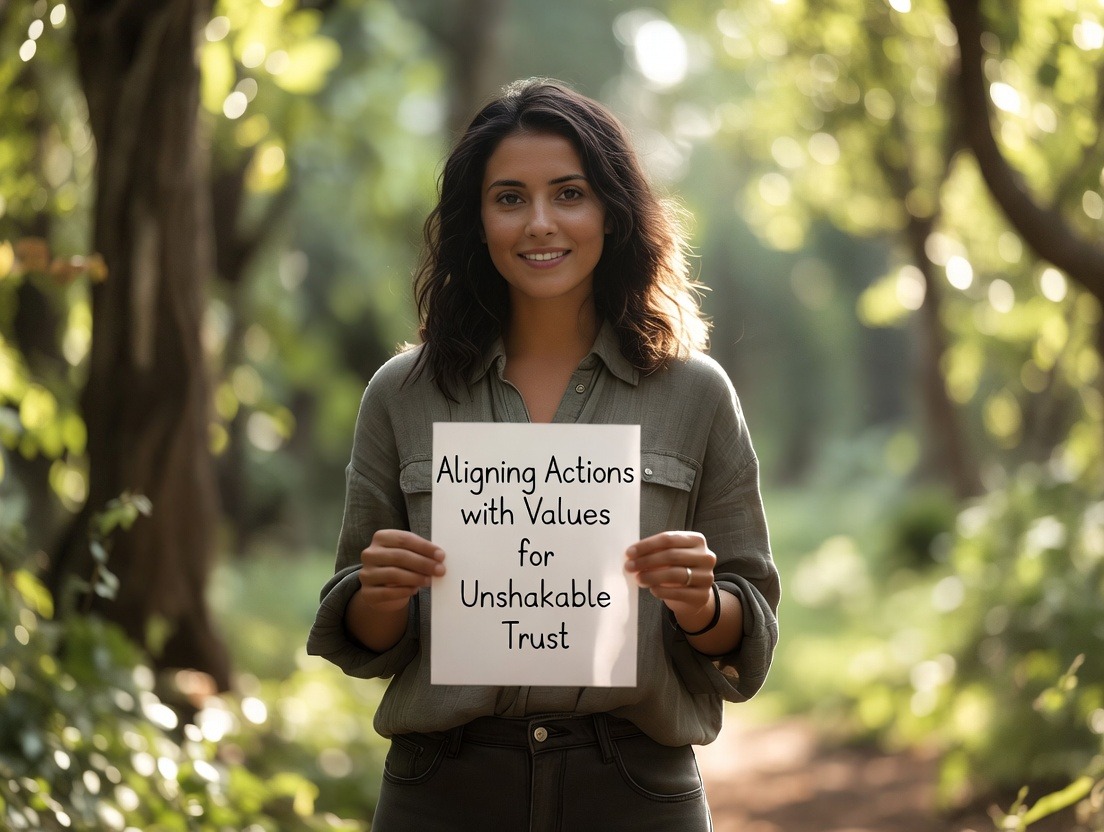
At the deepest level, the peace in a relationship is a reflection of the integrity with which both individuals live—both separately and together. Integrity here means the alignment of actions with professed values and promises. It is the consistency between what you say and what you do. When this alignment is strong, trust is unshakable. When it is weak, no amount of communication skill can create lasting peace, as the foundation itself is cracked.
The Three Pillars of Relational Integrity:
How Integrity Breaks Down (And Erodes Peace):
Erosion is often gradual. A pattern of small, unaddressed broken promises ("I'll call you at 7," then forgetting) creates a background of unreliability. Larger breaches—a financial secret, an emotional affair, a betrayed confidence—can shatter trust instantly. In both cases, the victim's narrative becomes: "I can no longer believe your word. My reality is unstable."
Rebuilding the Foundation of Integrity:
A relationship grounded in integrity is profoundly peaceful because it is predictable and safe. There is no energy wasted on suspicion, mind-reading, or anxiety about hidden agendas. The compass of shared and individual values guides your actions, creating a relationship where both people can rest in the certainty of each other's character. For those seeking to understand how commitment to core values shapes a mission, you can learn more about ours on the Oxyzen about page.
This concludes the first third of our comprehensive guide to creating peaceful relationships. We have journeyed from the inner work of self-awareness and emotional mapping, through the essential skills of listening, speaking, and navigating conflict, and into the architectural principles that sustain peace: safety, navigating differences, shared narrative, presence, mutual growth, and integrity.
The forthcoming sections will delve into the application of these principles across specific relationship contexts, explore advanced communication models, examine the role of physical and mental health in relational harmony, and provide a practical roadmap for implementation and lifelong practice. The path to peace is continuous, but each step taken with intention fortifies the connection you are building.
With a robust toolkit of principles and skills now in hand, the journey toward peaceful relationships moves from theory into the art of nuanced application. True mastery is demonstrated not in a vacuum, but within the complex, varied contexts of real life—across different relationship types, amidst external stressors, and in the face of deep-seated patterns. This section will explore how to apply your foundational knowledge to specific scenarios, introduce advanced communication frameworks, and examine the critical, often overlooked link between individual well-being and relational harmony. Peace is not a one-size-fits-all formula; it is a flexible practice that adapts to the unique terrain of each connection.
The core principles of safety, communication, and respect are universal, but their application must be tailored to the specific nature of the bond. The way you navigate conflict with a romantic partner will differ from how you handle a dispute with a colleague, a parent, or a close friend. Understanding the unique expectations, boundaries, and goals of each relationship type is crucial for effective peacemaking.
1. Romantic/Partnership Relationships:
2. Parent-Child Relationships (Adult or Minor):
3. Friendships:
4. Professional/Collegial Relationships:
In all contexts, the adaptable thread is intentionality. By consciously considering "What is the nature of this bond, and what does peace look like here?" you move from generic advice to skillful, context-aware action. For more on navigating specific interpersonal dynamics in the context of holistic wellness, our blog features a range of expert insights.
When foundational skills are in place, advanced frameworks can help navigate particularly complex, entrenched, or high-stakes situations. These models provide a structured way to dissect problems and generate solutions when emotions are high or issues are multifaceted.
1. The "Dialectical" Framework: Finding Synthesis
Dialectics is the art of holding two seemingly opposite truths simultaneously to find a higher synthesis. In relationships, this often means moving past "either/or" thinking.
2. Nonviolent Communication (NVC) - The Full Model:
We've touched on needs and requests. The full NVC model by Marshall Rosenberg is a four-part process for clear, compassionate exchange:
3. The "Six Thinking Hats" (Edward de Bono) for Relationship Problem-Solving:
This parallel thinking tool prevents chaotic arguments by structuring a discussion where you "wear" one thinking mode at a time.
4. The "Five Whys" Technique for Root Cause Analysis:
For recurring arguments, this technique helps drill down past surface issues to the core need or fear.
Implementing these models requires practice and mutual agreement. Suggest them during calm times: "I read about this structured way to talk about complex issues. Would you be willing to try it with me for our next big discussion?" Framing them as tools for the team, not weapons, is key. Many of our users at Oxyzen find that using objective data from their wellness tracker can provide the "White Hat" facts in a discussion about stress or lifestyle, creating a neutral starting point for these advanced models.
Our relationships do not exist in a separate sphere from our physical and mental well-being. They are profoundly interconnected. Chronic stress, sleep deprivation, anxiety, depression, poor nutrition, and a sedentary lifestyle act as constant background noise, lowering our threshold for patience, impairing our emotional regulation, and distorting our perception of our partner's actions. To ignore this is to try to build a beautiful house on a foundation of sand.
The Neurobiology of Stress and Connection:
Key Health Pillars That Directly Impact Relationship Peace:
The Role of Biofeedback and Co-Regulation:
This is where modern wellness technology transcends the individual and enters the relational space. Imagine both partners using devices that track stress and recovery.
Taking a "Relationship Health Inventory": Periodically, assess not just your emotional connection, but your shared health habits. Are you both getting enough sleep? Are you moving your bodies? Are you eating meals together without screens? Investing in your individual and collective biology is not secondary to your relationship; it is the essential infrastructure that allows peace to be possible. For support on integrating wellness tracking into your life, our comprehensive FAQ is a great resource.

Relationships are stress-tested not only by internal dynamics but by external life events: financial strain, job loss, illness, family crises, moving, or the demands of parenting. These stressors can either fracture a relationship or forge it into something unbreakable. The difference lies in whether you face the storm as adversaries—blaming each other for the stress—or as a unified team battling the problem together.
The "Triangle of Stress": Under external pressure, it's easy to fall into a dysfunctional triangle. The problem (e.g., a sick parent) is at the top. One partner becomes the "Persecutor" (blaming: "You're not doing enough!"), the other the "Victim" ("Nothing I do is ever right!"), and both may seek a "Rescuer" outside the relationship (a friend, an affair, substance use). This triangle destroys teamwork.
Strategies for Team-Based Crisis Navigation:
The Opportunity of Post-Traumatic Growth: While no one welcomes hardship, research shows that couples who navigate major stressors as a cohesive team often experience "post-traumatic growth." They emerge with a stronger "We" Story, deeper trust, and a proven sense of their own resilience. The narrative becomes: "If we survived that together, we can survive anything."
The key is the conscious, daily choice to turn toward each other under pressure, not away. It is the ultimate test and validation of your Circle of Safety. Our own journey as a company, detailed in our story, involved navigating significant challenges by holding fast to a shared mission—a principle that applies equally to personal partnerships.
While verbal communication is vital, a profound layer of relational peace is built and maintained beneath words. This is the language of rituals, non-verbal cues, affectionate touch, and shared experiences. These elements create a fabric of connection that can hold a relationship steady even when communication falters.
The Power of Rituals of Connection:
Rituals are repeated, meaningful actions that carry emotional significance. They provide predictability, create belonging, and offer touchpoints for reconnection.
The Neuroscience of Touch:
Affectionate, non-sexual touch (holding hands, a shoulder squeeze, a hug, a back rub) is a direct line to the nervous system.
Shared Experiences & "Bids for Connection":
Psychologist John Gottman's concept of "bids" is fundamental. A bid is any attempt for attention, affection, or engagement. "Look at that beautiful sunset!" is a bid. Turning toward the bid ("Wow, you're right, that's amazing") builds connection. Turning away (silence) or against it ("I'm busy") erodes it.
The Silent Repair:
Sometimes, after a conflict, words are still too hard. A silent offer of a cup of tea, making the bed, or a gentle, prolonged hug can be a powerful repair attempt that says, "I care. I'm here. The 'us' is bigger than this fight." Recognizing and accepting these non-verbal repairs is a skill in itself.
This silent language forms the emotional substrate of the relationship. It's why couples who have shared decades can communicate volumes with a glance. By intentionally cultivating these non-verbal channels, you build a reservoir of goodwill and connection that makes the verbal work of conflict resolution feel less perilous. For ideas on creating meaningful wellness rituals, our blog has many suggestions to inspire you.
We previously discussed digital boundaries. Now, we elevate the concept to a proactive, relational practice: the Digital Detox for Two. This is a periodic, intentional disconnection from devices to reconnect with each other and the physical world, deepening presence and breaking the cycle of continuous partial attention.
Why a Shared Detox is Necessary:
Individual efforts often fail due to social pressure and the "fear of missing out" (FOMO). Doing it as a team provides mutual accountability, shared purpose, and transforms it from deprivation into a shared adventure in presence. It is a tangible way to prioritize your Circle of Safety over the digital noise.
Designing Your Detox: Levels of Engagement
Choose a level that fits your lifestyle, with the goal of gradually increasing the challenge.
What to Do During Your Detox: Filling the Void with Connection
The detox will feel empty and unsettling at first. Have a plan to fill the time with positive connection.
The Aftermath: Integrating Insights
When you reconnect to the digital world, do so mindfully. Discuss:
This practice is a powerful testament to putting your relationship first. It declares that the person in front of you is more fascinating, more valuable, and more deserving of your attention than the infinite scroll. In a world engineered to distract, choosing mutual presence is a radical act of love and a cornerstone of modern relational peace. To learn more about the impact of technology on well-being and how to manage it, explore the resources on our main site.
Knowledge without application is merely trivia. This final section of our deep dive is about synthesis and action—taking the principles, skills, and models we've explored and weaving them into a Personalized Relationship Operating System (ROS). This is your unique, living framework for maintaining and growing peace in your most important connections.
Step 1: The Joint Audit – Where Are We Now?
In a calm, connected moment, sit down with your partner (or reflect individually for a friendship/family relationship) and gently assess. Use a scale of 1-10.
Step 2: Define Your "Peace Protocols"
Based on your audit, co-create simple, clear agreements—your ROS code.
Step 3: Integrate Your Tools
Choose which models fit your style.
Step 4: Schedule Maintenance & Review
Your ROS is not static. Put your weekly check-in and any deeper quarterly "relationship visioning" talks on the calendar as non-negotiable appointments. During these, review your protocols. Are they working? Do they need adjustment? Celebrate the progress you've made in areas you audited.
The Role of Technology in Your ROS:
Wisely used, technology can support your system, not undermine it.
Starting Solo: Even if your partner isn't ready to engage in full system-building, you can create your Personal ROS. You can commit to your own listening skills, your own "I" statements, your own regulation practices, and your own rituals of appreciation. Your changed behavior will inevitably shift the dynamic of the relationship.
Creating your ROS transforms abstract concepts into lived reality. It provides a roadmap back to peace when you get lost. It is the ultimate act of taking responsibility for the climate of your relationships. As you build this system, remember that the journey is iterative and requires compassion—for yourself and your partner. For ongoing support and inspiration as you build your personalized path to peace, remember that a wealth of information is available on our blog and resource pages.
Your Trusted Sleep Advocate (Sleep Foundation — https://www.sleepfoundation.org/)
Discover a digital archive of scholarly articles (NIH — https://www.ncbi.nlm.nih.gov/
39 million citations for biomedical literature (PubMed — https://pubmed.ncbi.nlm.nih.gov/)
experts at Harvard Health Publishing covering a variety of health topics — https://www.health.harvard.edu/blog/)
Every life deserves world class care (Cleveland Clinic -
https://my.clevelandclinic.org/health)
Wearable technology and the future of predictive health monitoring. (MIT Technology Review — https://www.technologyreview.com/)
Dedicated to the well-being of all people and guided by science (World Health Organization — https://www.who.int/news-room/)
Psychological science and knowledge to benefit society and improve lives. (APA — https://www.apa.org/monitor/)
Cutting-edge insights on human longevity and peak performance
(Lifespan Research — https://www.lifespan.io/)
Global authority on exercise physiology, sports performance, and human recovery
(American College of Sports Medicine — https://www.acsm.org/)
Neuroscience-driven guidance for better focus, sleep, and mental clarity
(Stanford Human Performance Lab — https://humanperformance.stanford.edu/)
Evidence-based psychology and mind–body wellness resources
(Mayo Clinic — https://www.mayoclinic.org/healthy-lifestyle/)
Data-backed research on emotional wellbeing, stress biology, and resilience
(American Institute of Stress — https://www.stress.org/)


