How to Create Peaceful Spaces in Small Apartments and Homes
Creating peaceful spaces within small living areas.
The Sanctuary Scale: Crafting Peaceful Spaces in Small Apartments and Homes
In the gentle hum of the city at dusk, or the quiet stillness of a suburban evening, there is a universal longing that transcends the square footage of our living spaces. It is the desire for peace—a tangible, breathable calm that we can step into at the end of the day. For the millions living in compact apartments, cozy condos, and modest homes, this quest for tranquility is not a luxury of space, but an artful practice of intentionality. The perceived limitation of smaller square footage is, in truth, a powerful catalyst for creativity. It compels us to distill our environments down to their most essential, nourishing elements, stripping away the chaotic and the superfluous to reveal a haven of rest.
Modern life, with its constant digital pings and relentless pace, has made our need for a personal sanctuary more acute than ever. Our homes must now serve as multi-functional hubs for work, creativity, socializing, and, most critically, deep recovery. Peace is no longer just an aesthetic; it is a physiological necessity. Science tells us that cluttered, chaotic environments elevate cortisol, our primary stress hormone, while orderly, sensory-friendly spaces can lower heart rate, improve focus, and facilitate mental restoration.
This comprehensive guide is designed to move beyond simple decluttering tips and generic decor advice. We will embark on a holistic exploration of how to architect peace from the inside out, transforming every corner of your compact living space into a contributor to your well-being. From the philosophy of spatial psychology to the precise placement of a single candle, we will cover the principles and practices that allow serenity to flourish within any four walls.
The journey to a peaceful home is deeply personal, yet universally rooted in our human response to light, texture, sound, and space. It is about aligning your environment with your internal rhythm. As we delve into these foundational sections, remember that the goal is not a minimalist showroom, but a living, breathing space that feels uniquely and profoundly yours—a true sanctuary scaled perfectly to your life.
The Philosophy of Peace: Understanding the Psychology of Your Space
Before we move a single piece of furniture or choose a paint color, we must first lay the philosophical groundwork. Creating a peaceful space is an exercise in environmental psychology—the study of how our surroundings directly influence our mind, emotions, and behaviors. In a small home, this relationship is intensified; every element is in close proximity, making each design choice profoundly impactful.
Peace is not merely the absence of noise or clutter. It is the active presence of elements that signal safety, permission to rest, and a respite from demand. Our nervous systems are constantly scanning our environments for cues. A jumbled entryway subconsciously signals chaos. A dark, cramped corner can evoke feelings of neglect. Conversely, a clear surface, a soft texture, or a well-placed plant can cue our brain to relax, telling us, "You are in a place of control and comfort."
The Core Psychological Principles of a Peaceful Space:
Perceived Control: One of the greatest predictors of stress is a lack of control. In your home, you have the ultimate agency. Designing an environment where everything has a purpose and a place fosters a deep sense of mastery and order, directly counteracting the chaos of the outside world.
Cognitive Ease: Our brains have limited processing power. Visual clutter—too many patterns, colors, or objects in a sightline—creates "cognitive load," forcing our brain to work overtime to process it all. A peaceful space reduces this load, allowing the mind to settle. This is why minimalist and organized spaces often feel so calming.
Sensory Appropriateness: Peace is sensory. It’s found in the quality of light, the ambient soundscape, the textures underfoot. A peaceful space carefully curates these inputs to be gentle, coherent, and supportive rather than jarring or conflicting.
Prospect and Refuge: A theory rooted in evolutionary biology, this concept suggests we feel most at ease in places where we can observe our surroundings (prospect) while feeling protected and enclosed (refuge). In a small apartment, this might translate to arranging a reading chair in a corner that looks out over the room, or creating a cozy nook by a window.
Understanding this psychology transforms design from a decorative task into a therapeutic one. You become the architect of your own nervous system’s restoration. For those seeking to deepen this mind-environment connection, tools like the Oxyzen smart ring can offer fascinating insights. By tracking physiological markers like heart rate variability and sleep stages, you can begin to see tangible data on how different spaces and routines within your home affect your body’s state of calm or stress. It turns abstract feeling into actionable understanding, allowing you to fine-tune your sanctuary for maximum restorative effect. You can learn more about this personalized approach to environmental wellness on our blog, where we explore the intersection of space, technology, and well-being.
This philosophical foundation informs every practical step that follows. When you understand the why, the how becomes a more intuitive and meaningful process.
Decluttering with Intention: The Art of Conscious Subtraction
If the philosophy of peace is our blueprint, then decluttering is the essential first act of construction. In a small space, physical clutter is the single greatest thief of peace. It consumes visual bandwidth, creates tangible obstacles, and perpetuates a low-level background anxiety of "things to manage." Decluttering is not about creating a sterile, empty cell; it is the intentional art of subtraction to make room for what truly matters—both physically and mentally.
This process goes far beyond tidying up. It's a dialogue with your possessions and, by extension, with your past, present, and future self. The goal is to curate a collection of items that are either functional (they serve a clear, regular purpose) or beautiful (they spark genuine joy and elevate your spirit). Ideally, many items will be both.
A Methodical Framework for Lasting Clarity:
Shift Your Mindset: See this not as a chore of loss, but as a creative act of gaining space, peace, and freedom. You are not "getting rid of" things; you are selecting what gets to stay in your sanctuary.
The Zone Defense: Don't try to conquer your entire home in one paralyzing marathon. Break it down into small, manageable zones: a single drawer, one shelf, the top of your dresser. Complete one zone fully before moving to the next. This creates momentum and a sense of accomplishment.
The Three-Pile (or Box) System: As you tackle each zone, have three destinations for every item:
Keep: For items that are essential, regularly used, or deeply meaningful.
Donate/Sell: For items in good condition that no longer serve you but could serve someone else.
Discard/Recycle: For items that are broken, expired, or beyond use.
(Optional) A "Maybe" Box: For items you feel stuck on. Seal the box, date it six months from now, and if you haven't needed to open it by then, donate it unopened.
The Question Protocol: Hold each item and ask:
Do I use this regularly?
Does this item support the life I want to live now?
If I saw this in a store today, would I buy it again?
Does it make me feel light or heavy when I consider it?
Create Instant "Homes": As you designate "Keep" items, immediately assign them a specific, logical home. This is the cornerstone of maintaining a clutter-free space. A home is not a vague area ("somewhere in the kitchen") but a precise spot (the third cabinet on the left).
Sentimental Clutter: The Gentle Approach
This is often the hardest category. Photographs, childhood memorabilia, gifts from loved ones—they carry emotional weight. The key here is not necessarily to discard, but to curate and contain.
Digitize: Convert photos, letters, and children's artwork into digital files. Create a digital photo frame that cycles through memories.
Select the Best: From a box of souvenirs, choose the one or two that most powerfully evoke the happy memory. Let those stand proudly, and release the rest.
Use it or Honor it: If you're keeping a sentimental item (like your grandmother's teacup), commit to using it or displaying it beautifully. Let it live as part of your sanctuary, not hidden in a box.
The result of intentional decluttering is a space that feels lighter, both literally and energetically. You’ve removed the visual noise, creating a blank canvas upon which to build your peace. It’s the most profound reset available, and it costs nothing but your time and attention. For those navigating this process and wondering how a simplified environment impacts well-being metrics, many users find that pairing this physical declutter with data from a wellness tracker creates a powerful feedback loop. You can read real customer experiences on how environmental changes influenced their rest and recovery for added inspiration.
The Zen of Zoning: Designing for Flow and Function in Limited Square Footage
Once you have cleared the canvas through decluttering, the next step is to intentionally redraw the lines. In a small home, you cannot afford undefined, multi-purpose chaos. Every square foot must earn its keep. This is where the concept of "zoning" becomes your most powerful tool. Zoning is the practice of dividing your open floor plan or small rooms into distinct, purpose-driven areas—not with walls, but with psychological and visual boundaries.
The goal is to create a sense of order and predictability. Your body and mind should intuitively know, "This is where I work," "This is where I relax," and "This is where I create." This segmentation reduces mental friction, enhances focus for specific activities, and makes a small space feel larger and more sophisticated because it has a clear, functional logic.
Key Principles for Effective Zoning:
Define the "Why" of Each Zone: Start by listing the essential activities that must happen in your home: Sleep, Work, Dine, Relax, Create, Bathe, etc. Be realistic about what your space can accommodate.
Use the "Room Within a Room" Technique: For studio apartments or great rooms, use area rugs to anchor different zones. A large rug under your sofa and coffee table defines the living area; a separate, smaller rug under your desk and chair carves out the office.
Leverage Furniture as Architecture: Strategic furniture placement is your primary tool for creating implied walls.
Sofas and Bookshelves: Positioning a sofa with its back to the rest of the room, or using a low-backed sofa, creates a subtle division without blocking light. A tall, open bookshelf can act as a room divider that allows light and air to pass through while providing storage and visual separation.
Screens and Curtains: A beautiful folding screen or a ceiling-mounted curtain track with sheer panels can be drawn to temporarily hide a workspace or sleeping area, transforming the function of the room in seconds.
Play with Levels and Lighting: Differentiating zones through elevation and light source is highly effective.
A platform can elevate a sleeping nook.
Use a specific floor lamp to illuminate a reading chair, a pendant light over a dining table, and dedicated task lighting at a desk. When you turn on the "reading light," your brain receives the cue to shift into relaxation mode.
Example Zoning Strategies:
The Studio Apartment Sanctuary: Imagine a 500-square-foot studio. Enter and see a clear path. To the left, a daybed with a deep, textural rug and a floor lamp defines the "Sleep/Lounge" zone. A tall, slender bookshelf placed perpendicular to the wall behind the daybed creates a visual headboard and separates this zone from the "Living" zone, which features a small sofa and a media console on the opposite wall. Near the window, a compact dining table set acts as both a "Dining" and "Work" zone, distinguished by the change in chair and accessories.
The Multifunctional Living Room: In a small one-bedroom, the living room often must serve as office, hobby space, and entertainment center. Create a "Work Corner" with a small, aesthetically pleasing desk against a wall, with shelving above for supplies. Use a cohesive color palette for storage boxes to keep it looking integrated, not like an afterthought. The main seating area is kept clean for relaxation.
The magic of zoning is that it creates ritual and rhythm. It allows you to be fully present in one activity without the visual reminder of another. This intentional design reduces the "background anxiety" of unfinished tasks and creates a flowing, efficient, and peaceful environment where every activity has its own sacred, dedicated space. This holistic approach to designing for well-being is central to our philosophy at Oxyzen. To understand the deeper mission behind creating integrated environments for health, you can explore our story and vision here.
The Light Cure: Mastering Natural and Artificial Light for Mood and Space
Light is the silent conductor of our internal orchestra. It regulates our circadian rhythms, dictates our mood, and fundamentally alters our perception of space. In the quest for a peaceful home, mastering light is non-negotiable. For small spaces, the right lighting strategy can make rooms feel airy, expansive, and serene, while poor lighting can render them cave-like and claustrophobic.
We must think in two complementary layers: harnessing natural light to its fullest potential, and designing a compassionate artificial light scheme for when the sun sets.
Harnessing Natural Light: The Ultimate Peace-Bringer
Natural light is a potent antidepressant and space-expander. Your first mission is to invite as much of it in as possible and let it dance through your rooms.
Window Wisdom: Treat your windows as the treasures they are.
Keep it Clean: Regularly clean both inside and outside glass (if possible). The difference in light transmission is remarkable.
Dress Lightly: Opt for light-filtering window treatments over heavy, light-blocking ones. Sheer linen or cotton curtains, Roman shades in a light fabric, or minimalist roller blinds allow you to maintain privacy while bathing the room in a soft, diffused glow. Reserve blackout curtains only for bedrooms, and consider mounting the rod wider than the window frame so curtains can be drawn completely aside during the day.
Mirror, Mirror on the Wall: Strategically placing a mirror opposite or adjacent to a window is the oldest and most effective trick for doubling natural light. A large mirror leaning against a wall or a mirrored furniture piece can bounce light deep into a room.
The Color & Reflectance Factor: Light-colored walls, especially in soft whites, pale grays, and gentle pastels, act as reflective surfaces. Matte or eggshell finishes are ideal as they diffuse light softly without the glare of high-gloss. Similarly, light-colored flooring (pale wood, light laminate, a light rug) will lift the entire space.
Crafting Your Artificial Lightscape: The Layered Approach
When night falls, a single overhead ceiling light is the enemy of peace. It’s harsh, creates unflattering shadows, and flattens a room. Instead, adopt a layered lighting plan that mimics the nuance of natural light.
Ambient Lighting (The Foundation): This is the gentle, general fill light that replaces the sun. It should be soft and indirect.
Sources: Recessed ceiling lights (with warm-temperature bulbs), central pendant lights with a diffuser (like a paper or fabric shade), or uplighting that bounces light off the ceiling and walls.
Task Lighting (The Purposeful Light): This is focused light for specific activities, providing clarity and preventing eye strain.
Sources: A dedicated desk lamp for work, a sturdy reading lamp next to your armchair, under-cabinet lighting in the kitchen, or a pendant light over a dining table.
Accent Lighting (The Emotional Light): This is the layer that creates magic, warmth, and depth. It’s about highlighting, creating mood, and adding a twinkle.
Sources: Table lamps on sideboards, floor lamps in corners, wall sconces washing light over artwork, and—most importantly—candlelight and string lights. The gentle, flickering light of candles (real or quality battery-operated flameless ones) is irreplaceable for instantly creating a peaceful, intimate atmosphere.
The Critical Factor: Color Temperature
Measured in Kelvins (K), this determines if light appears "warm" (yellow/amber) or "cool" (blue/white).
For Peace & Evening: Stick to warm white (2700K - 3000K). This range mimics the cozy, relaxing light of sunset or candlelight. It signals to your brain that the day is winding down, preparing you for rest. Avoid cool white (3500K+) in living and bedroom areas, as it can feel sterile and stimulating.
Smart Control: Dimmable switches and smart bulbs are invaluable allies. They allow you to adjust the intensity of light throughout the evening, gradually lowering it to support your body’s natural melatonin production.
By becoming the maestro of light in your home, you create a dynamic environment that supports your biology and soothes your psyche. The transformation from a bright, energizing morning space to a soft, cocooning evening sanctuary becomes a daily ritual that honors your natural rhythm. For those interested in the data behind light’s impact on sleep and recovery, our FAQ section dives into how wellness wearables track these environmental interactions.
A Palette for Peace: Choosing Colors, Textures, and Materials that Soothe the Soul
Color is not merely decorative; it is vibrational. It has a direct, physiological impact on our mood, energy levels, and even perception of temperature. In a small space, color choices are amplified—they surround you completely. The same is true for texture and material. The tactile experience of your home—the brush of a linen curtain, the cool solidity of a stone side table, the plush give of a wool rug—contributes profoundly to the feeling of peace. Together, color and texture create a multi-sensory embrace.
The Psychology of a Peaceful Palette:
The most serene spaces typically employ a restricted, cohesive color palette. This doesn't mean everything must be beige, but rather that the colors chosen work in harmonious concert, reducing visual noise and creating a unified, intentional feel.
The Foundation: Neutrals: Walls, large upholstery pieces, and rugs in soft, warm neutrals create a calm, expansive backdrop. Think beyond stark white to:
Gentle Greys: With warm undertones (greige) - Sophisticated and grounding.
Earthy Beiges & Taupes: - Organic and cozy.
The Accents: Nature's Hues: Introduce color through accents in shades drawn directly from the natural world, which our brains are wired to find soothing.
Soft Greens: (Sage, eucalyptus, muted olive) - Evoke renewal, balance, and the forest.
Serene Blues: (Dusty blue, airy sky blue, deep navy for depth) - Connote calm, stability, and the sky or water.
Earthy Tones: (Terracotta, ochre, burnt sienna) - Provide warmth, grounding, and a connection to the earth.
The Rule of 60-30-10: A classic design principle for balance.
60% Dominant Color: Your neutral walls and large furniture.
30% Secondary Color: Your upholstery, area rugs, drapery.
10% Accent Color: Throw pillows, artwork, small decor items in your nature-inspired hue.
The Critical Role of Texture: The Touch of Tranquility
In a monochromatic or neutral space, texture is what creates depth, interest, and that crucial feeling of softness. A room without texture feels flat and institutional. A room rich in texture feels layered, inviting, and deeply comforting.
The Power of Plants: Living plants are the ultimate texture multi-tasker. They add vibrant green color, fascinating organic shapes, and a texture that is uniquely alive. They also humidify and purify the air, contributing to physical well-being.
Material Mindfulness: Choosing What Surrounds You
Be intentional about the materials you bring in. Opt for natural materials where possible—wood, cotton, linen, wool, stone, ceramic. They age beautifully, have a inherent warmth, and connect your indoor space to the natural world outside. They also tend to be more sustainable, adding an ethical peace of mind to your environmental peace.
By thoughtfully curating your palette and textures, you craft an environment that feels like a gentle, reassuring hug. It is visually quiet yet sensorially rich, a place where the eyes can rest and the hands can find comfort. This mindful approach to our surroundings is part of a larger movement towards intentional living, a topic we frequently explore for those looking to discover more resources on holistic wellness.
The Sound of Silence: Curating Your Home's Acoustic Environment for Deep Calm
We have addressed the visual and the tactile; now we must address the auditory. Sound is an often-overlooked yet critical dimension of a peaceful space. Unwanted noise—street traffic, neighboring conversations, the hum of appliances, or even an oppressive, hollow silence—can be a major source of subconscious stress. The goal is not absolute silence, which can feel eerie, but a curated soundscape that masks jarring noises and provides a gentle, consistent auditory backdrop conducive to relaxation and focus.
The Problem with Noise: Chronic exposure to low-level environmental noise elevates cortisol levels, disturbs concentration, and fragments sleep. In small homes, where sounds aren't absorbed by large volumes of space or plush furnishings, this effect is magnified.
Strategies for Acoustic Peace:
Soft Surfaces are Sound Absorbers: This is where your textural choices serve a double duty.
Rugs and Carpets: A large area rug with a good pad underneath is one of the best sound-dampening investments. It absorbs impact noise (footsteps) and reduces reverberation.
Upholstered Furniture: Plush sofas, armchairs, and even upholstered headboards absorb sound waves.
Curtains and Drapes: Heavy, thick curtains (like velvet or triple-weave linen) do more than block light; they are excellent at dampening sound from windows, especially in urban environments.
Textile Wall Hangings: Tapestries, macramé, or even a large quilt hung on a wall can act as artistic sound absorption panels.
Strategic Furniture Placement: Bookshelves filled with books (of varying sizes and textures) are fantastic natural sound diffusers. Placing a bookshelf against a shared wall with neighbors can help muffle sound transmission.
The Magic of White Noise & Nature Sounds: To actively mask disruptive, unpredictable noises, introduce a constant, pleasant sound.
White Noise Machines: These produce a consistent "shhh" sound that effectively masks everything from chatter to traffic. They are particularly invaluable for light sleepers.
Nature Soundscapes: The sound of gentle rain, a babbling brook, ocean waves, or a forest breeze is inherently calming to our nervous systems. Use a high-quality speaker or a dedicated app to play these sounds at a low volume.
A Simple Fan or Air Purifier: The consistent hum of a fan or a HEPA air purifier provides both white noise and improved air circulation.
Mindful Tech Sounds: Be aware of the auditory pollution from devices. Turn off unnecessary notifications on phones and tablets. Choose appliances known for quiet operation. Consider the sound of your mechanical clock or ticking watch—is it soothing or anxiety-inducing?
Creating Rituals with Sound:
Sound can also be used proactively to create peaceful rituals. The deliberate act of putting on a record of calming classical music, the ritual of striking a singing bowl to begin meditation, or the comforting whistle of a tea kettle can become anchors of tranquility in your day.
By taking control of your acoustic environment, you build a sonic buffer between yourself and the outside world. You create a cocoon of predictable, gentle sound that allows for deeper thought, easier relaxation, and more restorative sleep. This holistic attention to environmental well-being—light, sound, space—is at the core of designing for modern life, a principle that guides everything from our interior choices to the technology we choose to live with. To see how others have integrated this kind of holistic awareness into their daily routines, you can explore real user stories and experiences.
Biophilic Design: Weaving Nature into Your Urban Sanctuary
Humans possess an innate, biologically wired need to connect with nature—a concept known as biophilia. When this connection is severed, as it often is in urban apartment living, we can experience a sense of unease, anxiety, and fatigue known as "nature deficit disorder." Biophilic design directly addresses this by intentionally integrating natural elements, patterns, and processes into the built environment. For a small apartment, it is the secret to creating a space that feels alive, vibrant, and deeply restorative, rather than static and synthetic.
Incorporating nature isn't just about adding a potted plant (though that’s a great start). It's a multi-sensory approach that engages sight, sound, touch, and even smell.
Core Principles of Biophilic Design for Small Spaces:
Direct Nature: The Living Element
Plants, Plants, and More Plants: This is the most direct connection. Go beyond a single succulent. Create groupings of varying heights and leaf shapes. Use hanging planters, wall-mounted terrariums, or a tall fiddle-leaf fig tree as a living room divider. Herbs in the kitchen add fragrance and function.
Water Features: The sound of moving water is profoundly calming. A small tabletop fountain or a self-contained water wall can introduce this element without requiring major renovation.
Natural Light & Air: As discussed, maximizing natural light and fresh air flow is a foundational biophilic act. Open those windows whenever possible.
Indirect Nature: The Representations
Natural Materials: Use wood, stone, cork, bamboo, rattan, wool, cotton, and linen in your furniture, flooring, and accessories. The grain of wood, the veining in stone, the weave of a basket—these patterns are subtly complex and soothing.
Natural Colors and Shapes: Employ the color palette of nature: greens, browns, blues, and earthy tones. Incorporate organic, non-linear shapes in decor—a free-form ceramic vase, a river-rock-shaped soap dish, a mirror with an irregular edge.
Images of Nature: Artwork depicting landscapes, forests, or seascapes can provide a visual escape. Botanical prints or detailed illustrations of leaves and flowers are classic choices.
The Human-Nature Relationship:
Prospect & Refuge: This concept, mentioned earlier, is a biophilic principle. Creating that cozy nook (refuge) with a view of the room or window (prospect) taps into an innate sense of safety.
Mystery & Journey: In a small space, this can be achieved by creating a slight sense of discovery. A sheer curtain that partially obscures a balcony, a winding path created by furniture placement, or a piece of art placed at the end of a hallway that draws the eye forward.
The Tangible Benefits:
The research on biophilic design is compelling. Spaces that incorporate these elements have been shown to:
Reduce stress and blood pressure.
Improve cognitive function and creativity.
Enhance mood and feelings of well-being.
Improve perceived air quality.
For the small apartment dweller, biophilic design transforms a generic box into a personalized ecosystem. It grounds you, provides daily moments of natural beauty to notice (the new leaf on your pothos, the way the afternoon light filters through a monstera), and creates a dynamic, ever-changing environment. This deep alignment with our biological needs is a cornerstone of creating not just a peaceful space, but a nourishing one. It reflects a commitment to living in harmony with natural principles, a value that resonates with our own mission to blend technology with innate human wellness.
Furniture as a Force for Good: Selecting Pieces that Maximize Space and Serenity
In a small home, every piece of furniture is a major commitment. It occupies significant visual and physical real estate. Therefore, your furniture strategy must be ruthless in its efficiency and deliberate in its contribution to peace. The goal is to select pieces that are proportional, multi-functional, visually lightweight, and inherently calming in their form.
The Golden Rules for Peaceful, Space-Savvy Furniture:
Scale is Everything: Oversized, bulky furniture is the nemesis of a small space. It instantly makes a room feel crowded and clumsy. Seek out pieces designed for apartments, condos, or "right-sized" collections.
Sofas: Look for shallow depth, low arms, and exposed legs. A sofa on legs allows light and sightlines to pass underneath, making the floor space appear larger.
Tables: Opt for a coffee table with a slender profile or a nesting set that can be tucked away. Consider transparent materials like glass or acrylic that visually disappear.
Beds: A platform bed with integrated storage eliminates the need for a bulky bed frame and box spring, while providing valuable hidden space.
The Multi-Function Mandate: Every piece should, ideally, earn its keep by serving more than one purpose. This is the heart of efficient, peaceful small-space living.
Storage Ottomans: Provide seating, a footrest, and hidden storage for blankets or magazines.
Sofa Beds or Daybeds: Transform a living room into a guest room.
Dining Tables: Can double as spacious desks or crafting stations.
Console Tables: Behind a sofa, they offer surface space and drawer storage without eating into the room.
Bookshelves/Room Dividers: As discussed, they store, display, and define space simultaneously.
Visual Weight & Transparency: "Visual weight" refers to how heavy or light an object feels to look at.
Lighten Up: Choose furniture with open bases, slender legs, and raised profiles. Light-colored woods (oak, ash, maple) feel lighter than dark woods (walnut, mahogany).
The Invisible Trick: Acrylic or glass chairs, Lucite shelving units, or glass tabletops occupy physical space without creating a visual block, maintaining an airy, open sightline.
Coherence Over Cacophony: A room furnished with many different wood tones, metal finishes, and conflicting styles will feel chaotic, not calm. Strive for cohesion.
Limit Your Materials: Choose 2-3 primary materials (e.g., light oak, black metal, white linen) and repeat them throughout the space.
Streamline Silhouettes: While mixing styles can be done well, in a very small space, sticking to furniture with clean, simple lines (from mid-century modern, Scandinavian, or Japanese-inspired design) often creates a more instantly serene foundation. You can add personality through softer accessories.
The Investment Mindset:
In a small space, you will likely have fewer pieces of furniture. This allows you to adopt a "buy once, buy well" philosophy. Invest in a few key, high-quality, versatile pieces that you truly love and that are built to last, rather than filling the space with many inexpensive, temporary items. This approach reduces clutter, increases daily satisfaction, and is ultimately more sustainable.
Your furniture should feel like quiet, reliable allies in your daily life—supporting your activities, storing your belongings gracefully, and contributing to an overall sense of order and spaciousness. They are the anchors of your zones and the stage upon which your peaceful life unfolds. Choosing them wisely is an act of self-care and spatial intelligence. For more guidance on creating harmonious living environments that support every aspect of wellness, from sleep to stress management, our blog is a continually updated resource.
The Ritual of Reset: Daily and Weekly Practices to Maintain Your Peaceful Haven
Creating a peaceful space is a magnificent achievement, but the true test—and the true reward—lies in maintaining it. Without consistent habits, clutter creeps back in, surfaces become buried, and the carefully crafted serenity can quickly unravel. The solution is not periodic marathons of cleaning, but the integration of small, sustainable rituals of reset into your daily and weekly rhythm. These rituals are not chores; they are acts of reverence for your sanctuary and for yourself.
The Daily Micro-Resets (5-10 minutes):
These are tiny habits that prevent the buildup of disorder, performed at natural transition points in your day.
The Morning Fluff: Upon waking, take two minutes to make your bed. This single act instantly organizes the largest object in your bedroom, sets a tone of accomplishment, and makes the room look and feel cared for. Open the curtains to let in light.
The One-Touch Rule: As you move through your morning, commit to dealing with items immediately. Put clothes in the hamper, the coffee mug in the dishwasher, the book back on the shelf. Don't set things down "for now."
The Evening Wind-Down: 10-15 minutes before you plan to sleep, do a "clutter sweep." Carry a basket or tray through the main living areas and collect anything that is out of place. Return each item to its designated home. Light a candle, dim the lights, and signal to your brain that the day's work is done. This practice is profoundly linked to sleep quality, a connection many explore through detailed recovery metrics. For common questions on how environment impacts tracked sleep data, our FAQ provides helpful insights.
Kitchen Closing: After dinner, don't leave dishes "to soak overnight." Take the 10 minutes to fully clean the kitchen. Wipe counters, start the dishwasher, and put away ingredients. Waking up to a clean, clear kitchen sets a peaceful tone for the entire day.
The Weekly Sanctuary Refresh (30-60 minutes):
Designate a consistent time each week (Sunday evening is popular) for a slightly deeper reset.
Surface Sanctification: Dust all surfaces, wipe down mirrors and glass, vacuum and sweep floors. This isn't about deep cleaning, but about restoring shine and removing the physical layer of the week's dust.
Fabric Refresh: Fluff couch cushions, straighten throws and pillows, wash frequently used linens like kitchen towels and bathroom mats.
Digital Declutter: A modern essential. Take 5 minutes to clear unnecessary notifications from your phone, delete downloaded files you no longer need, and tidy your computer desktop. A cluttered digital space contributes to mental clutter.
The "Five-Minute Fix-It": Grab a screwdriver and a rag. Tighten that loose cabinet knob, change that lightbulb, finally hang that picture that's been leaning against the wall.这些小问题, when left unaddressed, subconsciously nag at us.
The Monthly Mindful Review:
Once a month, do a quick walk-through with a notepad. Has a new clutter hotspot emerged? Is a zone not functioning as intended? Is there an item that consistently ends up out of place, meaning it needs a better "home"? This is the time for small tweaks and system adjustments, not major overhauls.
By embedding these small rituals, the maintenance of your peaceful space becomes effortless and automatic. It transforms from a burdensome task into a caring practice, a way of honoring the sanctuary you have created. This cyclical process of creation and maintenance is a metaphor for holistic well-being itself—an ongoing practice, not a fixed destination. It reflects the journey we all undertake, a story of continuous growth and intention that you can learn more about in our founding narrative.
The foundation has been laid. We’ve explored the psychology of space, cleared the clutter, established functional zones, mastered light and sound, woven in nature, chosen our furniture wisely, and built rituals to sustain it all. Now, we move from architecture to artistry—from building the sanctuary to imbuing it with the unique spirit that makes it yours. A home can be perfectly designed yet still feel like a beautiful hotel room. True peace blossoms when a space resonates with your personal history, passions, and dreams. This next phase is about depth, personality, and creating layers of meaning that nourish you on a soul level.
The Soul of the Space: Personalizing Your Sanctuary Without Clutter
Personalization is the antidote to sterility. It is what transforms a space into a place—your place. However, in a compact home, the fear of reverting to visual noise can make us shy away from personal touches. The key is to shift from quantity to meaningful quality. Every personal item should be a conscious choice, a touchpoint of joy, memory, or inspiration that earns its visual weight.
Principles of Curated Personalization:
The Gallery Wall, Reimagined: Instead of a haphazard collage of many small frames, consider a more deliberate approach.
The Statement Piece: One large, beautiful piece of art that you absolutely love can have more impact and create more calm than a dozen smaller ones. Invest in a single print, painting, or photograph that speaks to you.
Themed Grouping: Create a small, cohesive cluster. For example: three black-and-white family photographs in identical simple frames. Or a set of botanical prints in similar wood frames. The uniformity provides order, while the subject matter provides personality.
The Shelfscape: Use a floating shelf to display a rotating collection of a few special objects: a found feather, a beautiful stone, a vintage camera, a small sculpture. This allows for change without commitment.
The Power of the "Vignette": A vignette is a small, composed arrangement on a surface like a console table, bookshelf, or bedside table. It tells a tiny story.
The Rule of Three: Group items in odd numbers, typically three, for visual appeal.
Vary Height and Texture: Combine a tall item (a vase with a single branch), a medium item (a stack of two beautiful books), and a small item (a ceramic bowl). Mix materials—wood, ceramic, metal, a candle.
Make it Meaningful: Let your vignettes reflect you. A travel vignette might hold a small globe, a shell from a favorite beach, and a candle that smells of pine. A reading vignette could feature a stack of beloved novels, a classic reading lamp, and a comfortable pair of glasses.
Functional Items as Decor: The most elegant personalization is when useful things are also beautiful.
Books: Your book collection is a direct window into your mind. Organize them with care—by color for a calm rainbow effect, or by subject for a more scholarly feel. Let their spines be part of your decor.
Textiles: A throw blanket from a grandmother, a hand-woven pillow from a memorable trip, a rug with a pattern you adore—these add layers of texture, color, and story.
Everyday Rituals: A beautiful ceramic teapot on the stove, a well-made leather notebook on your desk, a hand-thrown mug on your shelf—these elevate daily routines into small moments of appreciation.
Handling Sentimental Items with Strength:
This is where intention is paramount. You are not your possessions. The memory is within you, not the object.
The "One Memory Box" Rule: Designate a single, attractive storage box (not a giant plastic bin) for flat, paper-based memorabilia: letters, tickets, certificates. When it’s full, it’s full. To add something new, you must let something else go.
Display or Release: If you love it, find a way to display it respectfully. If you keep it buried in a closet, ask yourself if you are keeping it out of love or out of guilt. Honor the memory, then consider photographing the item and letting the physical object find a new home where it might be used and loved.
Personalizing with this level of curation ensures your space feels deeply connected to you without feeling crowded. It’s a dialogue between you and your environment, where every object has a reason to be seen. This mindful selection process mirrors the way we might choose tools for our well-being—prioritizing intentionality and personal resonance over accumulation. For those seeking to apply this curated approach to their wellness technology, exploring the story behind our product reveals a similar philosophy of purposeful design.
The Sensory Deep Dive: Engaging Smell, Touch, and Taste for Holistic Calm
We have crafted a sanctuary for the eyes and ears. Now, let’s complete the sensory journey by consciously engaging the often-neglected senses of smell, touch, and even taste. These are the intimate, visceral senses that create immediate, powerful emotional responses and anchor us firmly in the present moment. A truly peaceful space is a fully immersive sensory experience.
1. The Olfactory Atmosphere: Crafting Your Home's Scent Signature
Smell is the most direct pathway to the brain's limbic system, the seat of emotion and memory. A intentional scent strategy can instantly shift the mood of a room and your own nervous system state.
The Goal: Subtle, natural, and intermittent. Avoid overpowering, synthetic plug-ins or sprays that can trigger headaches and feel invasive.
Natural Diffusers:
Essential Oil Diffusers (Ultrasonic): Use high-quality, pure essential oils. For peace, consider lavender (calming), chamomile (soothing), sandalwood (grounding), or frankincense (centering). Use them intermittently, not constantly, to avoid olfactory fatigue.
Reed Diffusers: Offer a gentle, constant whisper of scent. Look for ones with natural essential oil blends and non-toxic carrier oils.
The Art of the Candle: A candle engages multiple senses—sight (the flame), smell (the scent), and even sound (the soft crackle of a wood-wick). Choose soy or beeswax candles with cotton wicks and natural fragrances. Lighting a candle is a powerful ritual to mark the transition into evening relaxation.
Simmer Pots: A beautiful, ancient practice. In a small pot on the stove, simmer water with citrus slices, cinnamon sticks, cloves, and fresh rosemary. It fills your home with a wholesome, comforting, culinary aroma.
Fresh Air & Plants: Never underestimate the power of opening a window. The smell of rain, fresh air, or even crisp cold can reset the indoor atmosphere. Certain plants like jasmine or gardenia can add a natural, delicate fragrance.
2. The Tactile Landscape: Prioritizing Touchpoints
Your skin is your body's largest organ. Throughout the day, you are in constant physical contact with your home. Make those touchpoints consciously comforting.
Textile Texture Mapping: Think of every surface that interacts with your body.
Underfoot: A soft, plush rug by your bed so your feet land on comfort every morning.
Seating: Cushions and upholstery that invite you to sink in—soft velvet, chunky knits, smooth, cool linen for summer.
Resting: High-thread-count cotton or silky linen bedsheets. The weight and feel of a good blanket (a weighted blanket can be profoundly calming for some).
Surfaces: A smooth, cool marble countertop for rolling out dough; the warm, solid feel of a wooden dining table; the soft patina of a well-used leather journal cover.
The Bathing Ritual: Transform your bathroom into a spa. A thick, absorbent cotton bath sheet, a gentle, naturally-scented bar soap, a wooden bath mat. These small upgrades turn a functional routine into a sensory retreat.
3. The Taste of Peace: Nourishing Rituals
While not a permanent feature of your decor, the rituals of preparing and consuming food and drink are central to the feeling of home peace.
The Tea Ceremony: Dedicate a small corner or tray to the ritual of making tea. A beautiful ceramic teapot, a favorite mug, a small tin of high-quality loose-leaf tea. The act of boiling water, steeping, and waiting is a meditation in itself.
The Mindful Coffee Corner: Similarly, if coffee is your ritual, create a dedicated, tidy station. A sleek brewer, a hand grinder, a special cup. This prevents kitchen counter chaos and honors the practice.
Visible Nourishment: A simple wooden bowl on the counter holding fresh fruit is a visual and tactile reminder of simple, healthy nourishment. A glass canister of pretty pasta or grains can be both functional and sculptural.
By engaging these deeper senses, you move from looking at a peaceful space to inhabiting it with your whole being. The home becomes an active participant in your well-being, offering comfort that is felt in your bones, your skin, and your breath. This holistic perspective is at the heart of modern wellness, a topic for which we offer a wealth of additional resources and reading.
Tech Harmony: Integrating Technology Seamlessly (and Mindfully) for Support, Not Distraction
The modern home is undeniably a digital home. Technology is a double-edged sword: it can be a tremendous source of stress (incessant notifications, blue light, the pressure of constant connectivity) or a powerful tool for cultivating peace (ambient soundscapes, smart lighting, wellness tracking). The challenge—and the opportunity—is to achieve Tech Harmony. This means making technology serve your sanctuary, not invade it.
The Philosophy: Invisible, Intentional, or Integrated.
Your tech should either be invisible (hidden), intentionally placed for use (and then put away), or so beautifully integrated that it enhances the space aesthetically.
Strategies for a Techno-Serenne Home:
The Digital Declutter & Notification Diet:
Device-Free Zones: Establish sacred spaces where screens are not allowed, most importantly the bedroom. Use a traditional alarm clock. Charge your phone in another room.
Notification Purge: On all devices, turn off non-essential notifications. Allow only the most critical people and apps to break through your peace. The constant "ding" is a major disruptor of cognitive calm.
Wire Management Chaos Control: Tangled cables are the visual equivalent of digital screeching. Use cable sleeves, zip ties, and adhesive clips to bundle cords neatly. Use furniture with built-in cord management. A power strip mounted inside a desk drawer or cabinet can make charging stations disappear.
Choosing Tech that Serves Peace:
Smart Lighting Systems: As discussed, these are paramount. The ability to dim lights, change color temperature (to warmer tones at night), and set schedules (like a gradual sunrise wake-up) allows technology to actively support your circadian rhythm.
Smart Speakers for Soundscapes: Used wisely, a smart speaker can be a hub for peace. Voice-command a nature soundscape, play a calming playlist, or set a gentle sleep timer. The key is to keep it out of sight when not in use, perhaps on a shelf, and to use it with intention, not as constant background chatter.
Air Quality Monitors & Purifiers: In a small, sealed apartment, air quality can quickly degrade. A quiet, attractive air purifier with a HEPA filter, paired with a simple monitor, uses tech to create a healthier, fresher physical environment.
Discreet Wellness Tech: This is where devices like smart rings shine. Unlike a watch that lights up and buzzes on your wrist, a ring is unobtrusive. It can gather data on your sleep, recovery, and daily stress passively, without demanding your attention or adding to your screen time. It provides insights to help you tune your environment (e.g., "My sleep score is lower when my room is above 72 degrees") without being a visible, distracting gadget. To understand how such a device can integrate quietly into a mindful lifestyle, you can explore how it works in our FAQ.
The Aesthetic Integration:
The "TV Problem": A large black rectangle is often the focal point of chaos. When not in use, consider camouflaging it. A Samsung Frame TV that displays art is one high-tech solution. A simpler one is mounting it and using a sliding panel of artwork or a tapestry to cover it.
Hide the Hub: Routers, modems, and game consoles don't need to be on display. Place them in a woven basket with holes for ventilation, inside a cabinet with a mesh panel, or simply in a dedicated closet.
Technology, when mastered, becomes the silent butler of your peaceful home—managing the environment, providing insights, and facilitating relaxation, all while staying respectfully in the background. It’s about moving from being connected to your devices to being supported by them. For a deeper look at how thoughtful technology is designed to enhance, not detract from, personal well-being, we invite you to learn more about our approach.
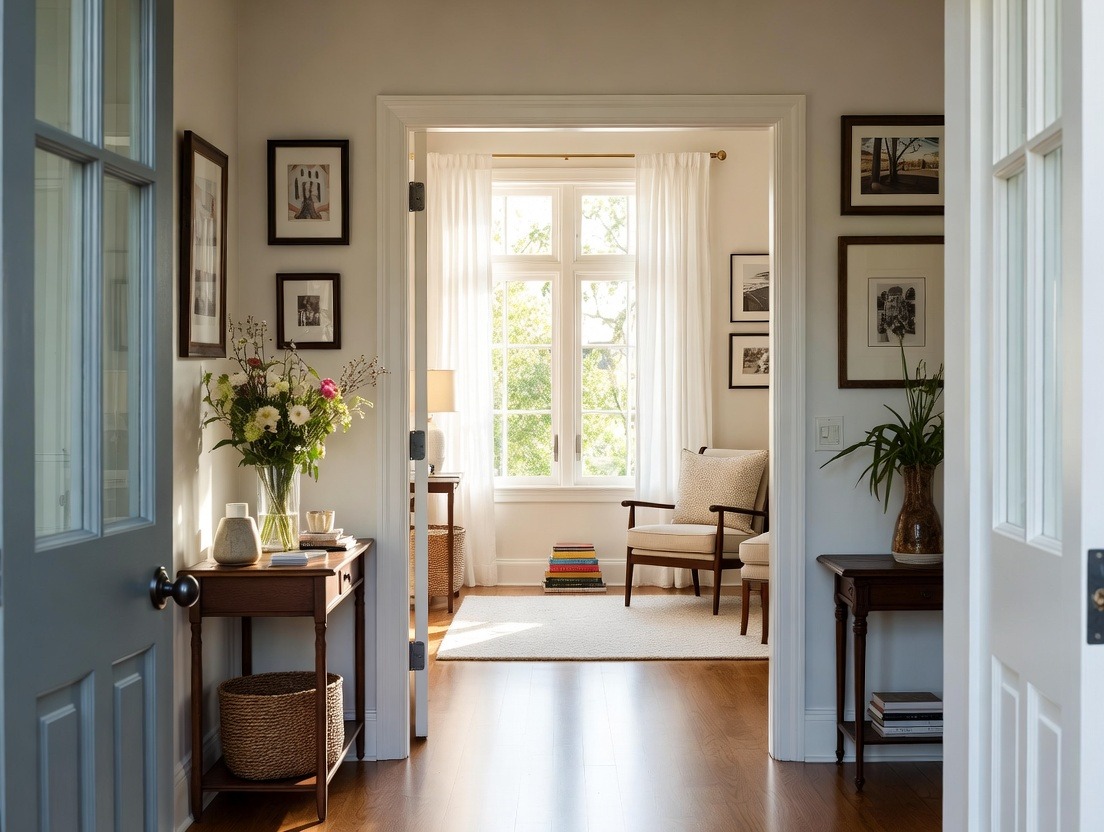
The Peaceful Entryway: Creating a Transitional Gateway from Chaos to Calm
Your entryway, foyer, or even the space just inside your front door is the most critical transition zone in your entire home. It is the psychophysical threshold between the external world—with all its demands, noise, and pace—and your internal sanctuary. A chaotic, cluttered entryway forces you to bring the stress of the day directly into your living space. A peaceful, intentional one acts as a decompression chamber, allowing you to shed the outer world and cross into calm.
In a small apartment, this area might be no more than a square foot of wall by the door. Its small size makes its design even more crucial.
The Three Functions of a Peaceful Entry:
A Landing Pad for the Outside World: A designated place for everything you carry in.
A Launching Pad for the Day Ahead: An organized station for what you need to leave with.
A Sensory Signal of Shift: An immediate visual and olfactory cue that you are now "home."
Creating Your Mini-Decompression Chamber:
The Absolute Essentials Only: This is not a storage closet. It is a high-functioning micro-zone.
For Outerwear: A single, beautiful hook or a very small coat rack for the coat you use daily. Out-of-season coats belong in a closet.
For Bags & Briefcases: A single shelf or a dedicated cubby for your everyday bag. A small stool or bench underneath can also serve as a place to sit while removing shoes.
For Shoes: A streamlined shoe rack or tray that holds only 2-3 pairs of frequently worn shoes. All others go in a closet.
The "In/Out" System:
A small bowl, tray, or basket for keys, wallet, and pocket change. This is non-negotiable. Everything goes here, every time. No searching.
A wall-mounted letter holder or a single small basket for incoming mail. Process it immediately—recycle junk, place bills in their designated spot elsewhere.
The Sensory Welcome:
Sight: A small piece of art, a mirror (to check yourself before you leave), or a tiny vase with a single sprig of greenery.
Smell: A small reed diffuser with a clean, uplifting scent like lemon or eucalyptus. It should smell fresh, not heavy.
Touch: A pleasant doormat outside and a soft, small rug just inside.
The "One-Minute Reset" Habit: Every time you walk in, take 60 seconds. Hang your coat. Place your keys in the bowl. Put your shoes on the rack. This tiny ritual is the first act of caring for your sanctuary and a powerful signal to your brain that work mode is off.
Even if your "entryway" is just the wall beside your apartment door, defining it with a floating shelf (bowl for keys above, hook for coat below) and a small piece of art creates that vital psychological boundary. This thoughtful zoning ensures the peace you've cultivated in your living space isn't breached at the threshold. It's a principle of intentional living that users often find complements a data-aware approach to wellness, as discussed in real user testimonials about building holistic routines.
The Bedroom as a True Sanctum: Optimizing the One Room Dedicated to Rest
Of all the zones in your home, the bedroom deserves the most stringent and loving attention. Its singular, non-negotiable purpose is rest and restoration. Every design choice here must be evaluated through that lens: "Does this help or hinder my sleep and my sense of deep peace?" This room should be a temple to slumber, a sensory-deprivation chamber for stress, and a cocoon of safety.
The Non-Negotiable Foundations of a Sleep Sanctuary:
The Priority of Darkness: Light is the primary regulator of your sleep-wake cycle. Even small amounts of ambient light from streetlights or electronics can disrupt melatonin production.
Invest in Blackout: High-quality blackout curtains or shades are essential. Ensure they fit snugly within the window frame or extend beyond it to block all light leaks. Consider a blackout roller shade behind a softer daytime curtain.
Eliminate Electronic Lights: Cover or remove all LED indicator lights on chargers, electronics, or smoke detectors. Use an eye mask if complete darkness isn't possible.
The Sound of Silence (or Consistent Sound): Follow the acoustic principles, but be even stricter here.
A white noise machine or fan is highly recommended to mask unpredictable noises (traffic, neighbors, pipes).
If you share walls, placing a large bookshelf or wardrobe on the shared wall can help dampen sound.
The Temperature Sweet Spot: Science shows the optimal temperature for sleep is around 65°F (18.3°C), a range most find cool but not cold.
Use fans, open windows, or air conditioning to achieve this. Breathable, natural-fiber bedding (cotton, linen) helps regulate body temperature.
The "Bedroom is for Sleep (and Sex) Only" Rule: This is the hardest but most powerful psychological rule. If possible, remove desks, exercise equipment, and televisions. You must sever the mental association between your bed and work, stress, or stimulation.
The 20-Minute Rule: If you can't fall asleep within 20 minutes, get out of bed. Go to another room and do something quiet and boring in dim light until you feel sleepy. This reinforces the bed = sleep connection.
Designing for Serene Sleep:
The Color Palette: Stick to the most calming, recessive colors. Deep, muted blues; soft, warm grays; gentle greens; and creamy whites are all excellent. Avoid stimulating reds or bright oranges.
Minimalist Surfaces: Nightstands should hold only the essentials: a lamp, perhaps a book, a glass of water. The less clutter on surfaces, the less there is for your mind to subconsciously "process" in the dark.
Bedding as an Investment: Your mattress, pillows, and sheets are where you spend a third of your life. Invest in the best you can afford. High-quality, natural materials feel better and are more breathable. Make your bed every morning—it's a promise to your future self.
A Pre-Sleep Ritual Corner: If space allows, create a tiny corner with a comfortable chair for reading (with a warm, dimmable light), a small side table for a cup of herbal tea, and a blanket. This gives you a place to wind down outside the bed, making the act of getting into bed the final cue for sleep.
Your bedroom should feel like a cave—in the best possible sense. Cool, dark, quiet, and profoundly protective. It is the inner sanctum of your sanctuary, the place where the most vital repair of your body and mind occurs. Honoring this space is the ultimate act of self-care. For those tracking the quantitative impact of such an environment, the data on sleep architecture and resting heart rate can be revealing, a subject covered in our blog's deep dives into recovery science.
Compact Kitchen Serenity: Cultivating Calm in the Heart of the Home
The kitchen, especially in a small home, is often a hub of chaos—a collision of function, food, mess, and frequent traffic. Yet, it is also a place of nurturing, creativity, and daily ritual. Transforming it into a serene space requires a focus on extreme order, sensory pleasure, and efficient workflow. A calm kitchen makes the act of preparing food a meditative practice rather than a stressful chore.
Principles of the Peaceful, Petite Kitchen:
The Countertop Creed: Clear is King.
The "Clear Counter" Goal: Strive to have nothing on your counters except for 1-3 items you use multiple times daily (e.g., a coffee maker, a knife block, a beautiful wooden fruit bowl). Small appliances like toasters, blenders, and mixers should be stored in cabinets or on a dedicated appliance shelf.
Visual Rest: A clear countertop is visual breathing room. It makes a small kitchen feel larger, cleaner, and instantly more peaceful. It’s also easier to clean.
The "Triangle" in Miniature: The classic kitchen work triangle (sink, fridge, stove) should be as efficient as possible. In a galley kitchen, it becomes a simple line. Ensure the path between these points is always unobstructed.
Intentional, "Quiet" Storage:
Uniform Containers: Decant dry goods (pasta, rice, flour, oats) into clear, uniform glass or ceramic containers with airtight seals. This eliminates visual clutter from colorful, mismatched packaging, looks beautiful, and keeps food fresh.
Cabinet Organization: Use shelf risers, turntables (Lazy Susans), and drawer dividers to maximize every cubic inch. A place for everything means everything can be put away instantly.
Open Shelving with Care: If you have open shelves, curate them like a display. Only keep beautiful, frequently used items: matching ceramic bowls, a set of glasses, a row of cookbooks. Keep it sparse and symmetrical.
Engage the Senses Pleasurably:
Sight: A small vase of fresh herbs (which you can also cook with) or a single piece of art.
Smell: Keep a small bowl of lemons on the counter or simmer citrus peels on the stove after cooking to clear cooking odors. Use natural cleaning products with simple scents like citrus or thyme.
Touch: Invest in a beautiful wooden cutting board, a comfortable knife with a good handle, and a tactile dish towel in a natural fiber.
The Clean-as-You-Go Ritual: This is the golden habit of kitchen peace. While cooking, fill the sink with soapy water and wash tools as you finish with them. Wipe spills immediately. Put ingredients away as you use them. By the time the meal is ready, the kitchen is already 80% clean. The post-meal cleanup then takes mere minutes, preserving the evening's peace.
Embracing "Enough":
In a small kitchen, you cannot store every gadget. Embrace a minimalist kitchen toolkit. One excellent chef's knife, a good pan, a sturdy pot, a baking sheet, a few wooden utensils. High-quality basics outperform a cupboard full of unitaskers. This philosophy of sufficiency and quality over quantity reduces decision fatigue and physical clutter, creating a more graceful cooking experience.
A serene kitchen turns meal preparation from a task into a mindful practice. It becomes a place where you care for yourself and others with efficiency and a touch of beauty, ensuring that the heart of your home pulses with calm intention. This focus on creating functional, peaceful systems is part of a broader lifestyle approach, one that we explore through various lenses on our platform's main hub.
The Bathroom Retreat: Transforming Utility into a Personal Spa
Often the smallest room in the home, the bathroom is typically designed purely for utility. But it holds unique potential as a private retreat for cleansing and renewal. With a few intentional shifts, you can transform this functional space into a micro-spa that supports daily rituals of self-care, turning necessities into nourishing pauses.
Creating the Ambiance of Retreat:
Declutter the Vanity: The sink area is ground zero for visual chaos.
The "Daily Use" Rule: Only items used every single day should be on the counter (e.g., hand soap, toothbrush in a holder, maybe a daily moisturizer). Everything else—makeup, haircare, lotions, potions—goes in drawers or cabinets.
Tray Magic: Corral the few countertop items on a small, beautiful tray (stone, wood, or metal). This instantly creates order and intention.
Consolidate and Conceal:
Use drawer organizers for every item. Group like with like.
Use attractive baskets or bins inside open shelving or under the sink to hide spare toilet paper, cleaning supplies, and backups.
Medicine Cabinet Edit: Regularly discard expired medications. Keep only current, necessary items.
Elevate the Sensory Experience:
Lighting: Eliminate harsh, overhead lighting. Use wall sconces on either side of the mirror for even, flattering light. Ensure you have a dimmer or a candle for bath time.
Textiles: Invest in the best towels you can afford—plush, absorbent, and in a calming color. A soft bath mat underfoot. A waffle-weave shower curtain feels more spa-like than vinyl.
Scents: Avoid synthetic air fresheners. Use a small diffuser with relaxing scents like eucalyptus or lavender, or simply keep a bar of high-quality, naturally-scented soap on display. A candle is perfect for a long bath.
Sound: A small, waterproof Bluetooth speaker can allow you to play calming music or a guided meditation while you shower or bathe.
The Bath/Shower as Ritual:
Shower Simplicity: Use a caddy to keep shampoo bottles off the floor and ledges. Consider switching to bar shampoo and conditioner stored in a soap dish to reduce plastic clutter.
Bath Rituals: If you have a tub, dedicate a shelf or basket to bath amenities: Epsom salts, a natural bristle brush, a bath pillow. Make taking a bath a deliberate event, not a rushed afterthought.
The Green Touch: Bathrooms with natural light are perfect for humidity-loving plants like ferns, pothos, or air plants. They purify the air and add a vital, living element.
Maintaining the Retreat:
The bathroom requires diligent maintenance to feel peaceful. A quick daily wipe-down of surfaces and a weekly deep clean are non-negotiable. The reward is a space that feels clean, fresh, and dedicated to your care—a private oasis that bookends your day with moments of purposeful calm.
By reimagining these core functional spaces—the entry, bedroom, kitchen, and bath—you ensure that every single part of your small home is contributing to a holistic atmosphere of peace. There are no leftover "chaos zones." Every room has a clear, serene purpose. This completes the interior transformation, setting the stage to consider the final, crucial element: how your personal sanctuary interacts with the world beyond its walls. To see how others have woven these principles into the fabric of their daily lives, you can read about their integrated experiences here.
We have journeyed from the foundational philosophy of space to the intricate, sensory details of personal retreats. Our homes now function as cohesive ecosystems of calm, with each zone thoughtfully designed to support restoration and intention. Yet, a sanctuary does not exist in a vacuum. It is nestled within a building, a neighborhood, and a community. The final layer of creating enduring peace involves navigating shared environments, fostering resilience against external pressures, and allowing your space to evolve gracefully with you over time. This is where the art of cultivating peace matures into a sustainable practice.
Navigating Shared Walls: Cultivating Peace in Apartments and Multi-Unit Dwellings
For the urban or suburban apartment dweller, the quest for peace includes a unique dimension: the close proximity of neighbors. Shared walls, floors, and ceilings mean that your sanctuary is acoustically and vibrationally connected to the lives of others. This reality can feel like the ultimate obstacle to peace, but it can be managed—and even turned into an opportunity for mindful community—with proactive strategies and a shift in perspective.
The Proactive Sound Strategy (Beyond Absorption):
While rugs and curtains absorb sound within your space, dealing with transmitted noise requires additional tactics.
Identify and Fortify Weak Points: Sound travels most easily through rigid connections and air gaps. The biggest culprit is often the space under and around doors.
Door Seals: Install a door sweep on your main entry door and bathroom/room doors if needed. Use adhesive weatherstripping around the door frame to create a tighter seal.
Outlet Insulation: A surprising amount of sound travels through electrical outlets on shared walls. Simple, fire-retardant foam gaskets behind outlet and switch plate covers can make a noticeable difference.
Mass and Dampening: Sound is energy. To stop it, you need mass to block it or dampening to dissipate it.
Furniture as Buffer: As mentioned, placing a large, heavy bookshelf filled with books against a shared wall adds mass and creates a diffusing surface.
Acoustic Panels Artfully: If noise is a significant issue, consider attractive acoustic panels. Modern options come in beautiful fabrics, prints, or even as felt sculptures that can be arranged artistically on a wall.
The White Noise Ally: A consistent, gentle background sound remains your best friend. A white noise machine, a fan, or a smart speaker playing ambient sounds (like steady rain) will mask a wider range of disruptive neighbor noises than music, which has variable volume and silence.
The Mindset of the Good Neighbor:
Peace is a two-way street. Cultivating it often involves contributing to a respectful ecosystem.
Be the Change: Adopt quiet hours conscientiously. Use rugs and felt pads under chair and table legs. Keep TV and music volumes at respectful levels, especially during evening hours. Your considerate behavior often encourages reciprocity.
Smart Communication: If a neighbor's noise becomes a persistent issue, approach the conversation with empathy and a collaborative spirit. Assume positive intent ("I know you probably aren't even aware...") and offer a solution ("Would you mind if we discussed a good time for practicing your drums?"). A small gift, like a note and a pair of wireless headphones as a peace offering, can work wonders.
Community Spaces: Engage positively with shared spaces like lobbies, laundries, or gardens. Keeping them tidy and pleasant contributes to a collective sense of pride and order, which subtly enhances your own feeling of being in a peaceful environment.
Embracing the reality of shared living doesn't mean surrendering your peace. It means becoming a savvy diplomat of your own serenity, using both technology and tact to build buffers and goodwill. This nuanced approach to one's environment reflects a mature understanding of well-being—one that balances personal needs with communal harmony, a balance we value deeply in our own company mission and values.
The Digital Perimeter: Managing External Energy and Information Flow
Our homes have a new kind of wall: the digital perimeter. Peace can be shattered not by a neighbor’s stereo, but by a breaking news notification, a stressful work email arriving at 9 PM, or the endless scroll of social media comparison. Protecting your sanctuary now requires you to actively manage the flow of information and external energy that enters through your devices.
Establishing Digital Boundaries:
Physical Device Zones: Reinforce the rule of device-free zones, especially the bedroom. Consider charging stations in a hallway closet, a kitchen drawer, or a home office—anywhere but your nightstand.
Notification Nuclear Option: Conduct a ruthless audit. Does your shopping app need to notify you of a sale? Does your social media app need to tell you someone liked your post? Turn off all non-essential notifications. Allow only direct communication (phone, text, perhaps a messaging app) and critical alerts to break through.
Email & Work Communication Cut-off: If you work from home, this is critical. Establish a firm end time for checking work email and messaging apps. Use "Do Not Disturb" modes or even uninstall work apps from your personal phone after hours. Your home office, if you have one, should be physically closed off or covered when the workday is done.
Curating Your Digital Intake:
Your peace is influenced by what you consume mentally, not just physically.
Social Media Hygiene: Unfollow or mute accounts that trigger anxiety, envy, or irritation—even if they are friends or family. Curate your feeds to include accounts that inspire calm, beauty, education, or genuine connection.
News Consumption Rituals: Instead of allowing news alerts to bombard you throughout the day, designate one or two specific, short times to catch up on current events from trusted sources. Never consume news right before bed.
The Purposeful Pause: Before unlocking your phone or opening a laptop, ask, "What is my intention here?" Is it to connect with a friend, find a recipe, or learn something specific? Mindless picking up of a device is a major disruptor of domestic peace.
Leveraging Tech for a Digital Curfew:
Use Built-in Tools: Both iOS and Android have robust "Screen Time" and "Digital Wellbeing" features that allow you to set app limits, schedule "Bedtime Mode" (which turns the screen grayscale), and activate "Focus Modes" that silence interruptions.
The "Sunset" Schedule for Lights: Use smart lighting to not only warm your lights in the evening but to gradually dim them as bedtime approaches. This physical cue supports your body's wind-down and signals the end of the "digital day."
By taking sovereign control over your digital perimeter, you prevent the chaos and demands of the outside world from having a 24/7 key to your sanctuary. You decide when and how to engage, reclaiming your attention and your home's atmosphere. For those seeking to understand the quantifiable impact of such digital boundaries on physiological stress and sleep, our FAQ section delves into the data behind recovery and environmental factors.
Sustaining the Sanctuary: Routines for Long-Term Peace and Adaptability
A peaceful home is not a static museum piece you build once and forget. It is a living system that requires gentle, consistent stewardship. Life is dynamic—seasons change, new hobbies emerge, relationships evolve, and we ourselves grow. The final skill in the art of the peaceful home is building routines for maintenance and developing the flexibility to allow your space to adapt alongside you.
The Rhythms of Maintenance:
We discussed daily and weekly rituals. Now, consider the seasonal rhythm.
The Seasonal Reset: With each change of season, conduct a slightly deeper review.
Rotate/Edit Decor: Swap out heavier blankets for lighter throws. Change cushion covers. Bring in seasonal elements—a bowl of pinecones in winter, fresh citrus in summer.
Deep Clean One Zone: Each season, pick one area for a deeper clean/organization (e.g., spring: windows and closets; summer: under sinks; fall: bookshelves and electronics; winter: bedding and linens).
Edit Your Wardrobe: A seasonal capsule wardrobe not only simplifies your life but drastically reduces closet clutter and decision fatigue.
The Annual "Sanctuary Audit": Once a year, walk through your home with a notebook as if you were a first-time visitor. Does the flow still work? Has a piece of furniture become an obstacle? Is there a new source of clutter? Is the color palette still bringing you joy? This is the time for more significant, thoughtful changes—a new coat of paint, replacing a rug, or rethinking a dysfunctional zone.
The Grace of Adaptability:
Your home must serve the person you are becoming, not the person you were.
Life Stage Shifts: A new work-from-home job, a baby, a newfound passion for painting—these all demand space to be made, literally and figuratively. Be willing to re-zone. Perhaps the dining table becomes a dedicated daytime desk, with meals shifted to the coffee table. Maybe a reading nook transforms into a bassinet station for a few months. Peace comes from the graceful accommodation of life, not rigid resistance to it.
The "One In, One Out" Rule (Revisited): As your life changes, this rule prevents entropy. If a new hobby brings in supplies, an old one’s supplies must be released. This maintains equilibrium without requiring constant expansion.
Embracing Imperfection and "Lived-In" Peace: A peaceful home is not a perfect home. It is a home where a blanket is rumpled from use, a book lies open on the sofa, and a cup sits on the counter. The goal is not sterile perfection, but a base level of order that allows for life to happen without tipping into chaos. The peace is in knowing that resetting to that base level is a simple, 10-minute ritual away.
This long-term view transforms your relationship with your home from one of constant management to one of partnership. You care for it, and in return, it provides a stable, adaptable container for your life’s journey. This philosophy of sustainable, evolving well-being is a thread that runs through our work, and you can discover more about its application in our broader content.
Beyond the Walls: Extending Your Sanctuary to Your Local Environment
True peace within can be bolstered by a sense of peace and connection just outside your door. Your sanctuary doesn’t end at your property line. Extending a sense of care and belonging to your immediate local environment—your building, your street, your neighborhood park—can deepen your own rootedness and reduce the "fortress mentality" that can sometimes develop in dense living situations.
Micro-Actions for Macro Peace:
Cultivate a "Third Place": Identify a local spot that isn't home or work where you can feel relaxed and connected. A quiet corner of a library, a specific bench in a park, a local café with a comfortable chair. Having this external anchor expands your sense of peaceful territory.
Practice "Neighborhood Mindfulness": On your daily walk, practice truly seeing your surroundings. Notice the changes in a garden, the architecture of a building, the way the light filters through certain trees. This practice grounds you in your physical community and cultivates appreciation.
Contribute to Shared Beauty: Even in an apartment, this is possible. Keep your doorstep clean and tidy. If you have a balcony, make it a beautiful extension of your sanctuary with plants (which benefits neighbors’ views as well). Participate in a community garden or a building clean-up day. These actions foster collective pride and a shared sense of order.
Support Local, Calm Businesses: Choose the local bookstore over the chaotic mega-store, the quiet family-run café over the bustling chain. By investing in peaceful local establishments, you help cultivate those oases in your community and create a more serene ecosystem around your home.
This outward extension is the final, holistic step. It recognizes that while our personal sanctuary is vital, we are not islands. Feeling connected to and positively engaged with our immediate surroundings completes the circle of peace, ensuring our inner calm is supported by a respectful and appreciated external world. It’s a testament to the idea that well-being is both an internal and communal project, a perspective shared in the narratives of our user community.
Conclusion: The Peaceful Home as a Living Practice
We have traversed the full spectrum of creating peaceful spaces in small apartments and homes—from the initial, philosophical spark to the enduring, evolving practice. This journey reveals that crafting a sanctuary is far more than an interior design project. It is a profound form of self-knowledge and self-care. It is the ongoing practice of aligning your external environment with your internal needs for rest, focus, creativity, and connection.
The constraints of a small space, once seen as limitations, reveal themselves as gifts. They force clarity, intentionality, and creativity. They ask us the essential questions: What do I truly need to thrive? What objects, colors, sounds, and rituals genuinely nourish me? In answering these questions through our living spaces, we learn about ourselves.
Remember the core tenets that bind this entire guide together:
Peace is Psychological: It starts with understanding how your environment affects your nervous system and designing to support it.
Subtraction Precedes Addition: Creating space—physical, visual, and mental—is always the first and most powerful step.
Function is the Foundation of Serenity: A home that works effortlessly for your life is a home that eliminates daily friction and stress.
The Senses are Your Guides: Peace is not just seen; it is heard, smelled, touched, and felt in the body.
Maintenance is a Ritual, Not a Chore: The small, daily acts of care are what sustain peace over time.
Your Sanctuary is Allowed to Grow With You: It is a living partner in your life, not a frozen monument.
Your peaceful home is not a final destination to be reached, but a gentle practice to be lived. Some days the practice will be effortless; the systems will hum, the light will be perfect, and serenity will feel deeply ingrained. Other days, life will spill over, clutter will accumulate, and peace will feel like a distant memory. This is not failure. This is the rhythm of a lived-in life. The skill lies in knowing that you possess the blueprint and the simple rituals to return to your center, to reset your space, and to once again step into the calm you have intentionally built.
May your home, however compact, be a true sanctuary—a faithful container for your dreams, a soft landing for your weariness, and a quiet space where your best and most peaceful self can unfold. For continued inspiration and exploration on this journey of intentional living and holistic wellness, we invite you to discover more resources and stories with us.



%402x.svg)