


How to Read Your Sleep Score Report Like a Pro
Read your report by looking at trends over time, not just one night, and understand what each component (e.g., "deep sleep") represents.
Read your report by looking at trends over time, not just one night, and understand what each component (e.g., "deep sleep") represents.
%402x.svg)
You wake up, stretch, and reach for your phone. As the screen lights up, there it is: a number. Your sleep score for the night. Perhaps it’s a triumphant 88, or a disappointing 72. You glance at it, maybe feel a fleeting sense of achievement or mild concern, and then move on with your day. But what if that single number, and the sea of data behind it, could tell you a far richer story? What if it held the keys to unlocking more energy, better mood, sharper focus, and even long-term health?
For years, sleep tracking was the domain of clunky lab equipment and confusing medical jargon. Today, that power rests on your finger, with a smart ring like Oxyzen giving you a nightly report card on your most vital biological function. Yet, too many of us treat this like a simple credit score—we see the number but miss the narrative.
This is your guide to moving beyond passive observation and into active mastery. We’re not just going to tell you what a sleep score is; we’re going to teach you how to think like a sleep scientist. You’ll learn to decode the complex interplay of physiological signals, interpret trends instead of obsessing over single nights, and translate raw data into actionable lifestyle changes. This isn’t about chasing a perfect 100 every night—that’s a recipe for frustration. This is about understanding your unique sleep architecture, identifying your personal levers for improvement, and using data to build a life that supports truly restorative rest.
Welcome to the art and science of reading your sleep report like a pro.

Gone are the days when understanding your sleep required a costly and inconvenient overnight stay in a sleep lab, covered in wires. The democratization of sleep science is here, powered by wearable technology that brings the lab to you. A modern smart ring like Oxyzen represents a quiet revolution in personal health monitoring. By leveraging sensors such as photoplethysmography (PPG) for heart rate and pulse oximetry, an accelerometer for movement, and a skin temperature thermometer, these devices create a sophisticated, non-invasive window into your nocturnal physiology.
But data alone is not insight. The raw signals—your heart’s rhythmic beats, the subtle shifts in blood oxygen, the stillness of your body—are transformed into a coherent story through complex algorithms. These algorithms are the unsung heroes, trained on vast datasets of sleep research to distinguish deep sleep from light sleep, identify REM stages, and pinpoint awakenings you might not even remember.
The final output, your Sleep Score, is a composite metric. It’s a weighted average of several key sleep dimensions, designed to give you a quick, at-a-glance assessment of your night. Brands may weigh components differently, but the core pillars are universal: Sleep Duration, Sleep Structure, Restoration, and Latency. Think of your overall score as the final grade, but the true learning—and the real power to improve—comes from drilling down into the individual subjects. As we explore the wealth of information in the Oxyzen.ai blog, you’ll find deep dives into how these algorithms are continuously refined to deliver more accurate and personalized insights.
This shift from mystery to mastery empowers you. Instead of wondering, "Why am I so tired?" you can begin to ask targeted, data-informed questions: "Was my deep sleep fragmented?" or "Did my resting heart rate stay elevated all night?" This foundational knowledge turns your sleep report from a passive notification into an active diagnostic tool, the first step on a journey to optimized well-being. To understand the philosophy behind this user-centric approach to health data, you can explore the vision and values that guide our development at Oxyzen’s Our Story page.
Your sleep score is a summary, but to understand the summary, you must first understand the chapters. Let’s pull apart the composite score and examine the primary components that feed into it. Each one tells a distinct part of your sleep story.
Sleep Duration: The Non-Negotiable Foundation. This is the most straightforward metric: the total time you spent asleep. Most sleep societies, like the National Sleep Foundation, recommend 7-9 hours per night for adults. The scoring here is often linear up to an optimal target, then may plateau. However, a pro reader knows that duration is meaningless without context. Eight hours of fragmented, light sleep is not equivalent to eight hours of solid, structured sleep. Duration is the canvas, but the quality of the painting depends on what comes next.
Sleep Structure: The Architecture of Rest. If duration is the length of the play, structure is the acts and scenes. This refers to the cyclical progression through the four sleep stages: Wake, Light Sleep, Deep Sleep (Slow-Wave Sleep), and REM (Rapid Eye Movement) Sleep. Each stage serves a unique purpose:
A "good" structure isn’t just about hitting arbitrary percentages; it’s about having robust, uninterrupted cycles of these stages throughout the night. Disruptions to this architecture are a primary culprit behind non-restorative sleep.
Restoration (Physiological Recharge): This is where advanced biometrics shine. Restoration metrics assess how well your body recovered during sleep, regardless of time or structure. Key indicators include:
Sleep Latency: The Ease of Entry. How long it takes you to fall asleep. Ideally, this is between 10-20 minutes. A latency that’s too short (under 5 minutes) may signal significant sleep deprivation, while a latency that’s too long (over 30 minutes) can indicate insomnia, poor sleep hygiene, or timing issues.
Understanding these components individually is step one. The pro move is seeing how they interact. For example, a night of sufficient duration but poor restoration (high RHR, low HRV) tells a story of a body under stress, fighting to recover. This holistic view is what transforms data into wisdom. For common questions on how these metrics are measured and what they mean, our comprehensive FAQ provides clear, detailed answers.
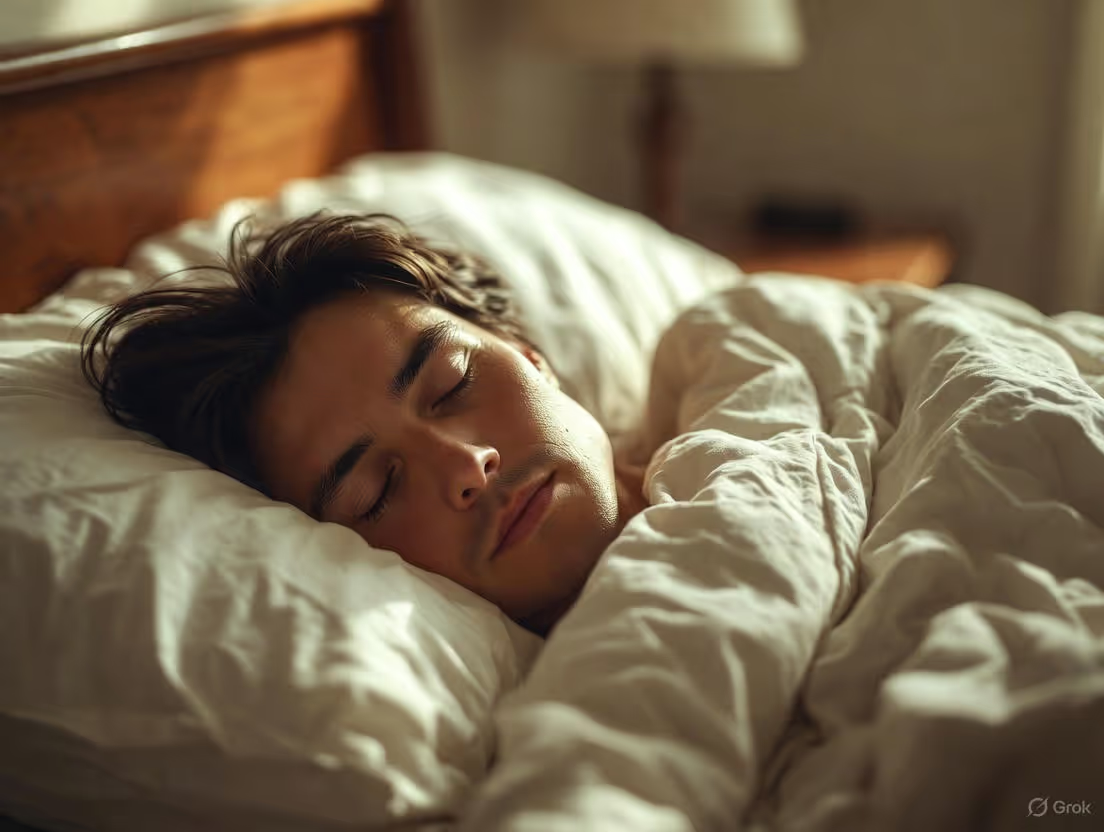
Seeing "20% Deep Sleep" on your report is one thing. Understanding what that means for your recovery, and why it might fluctuate, is another. Let’s move past the simple percentages and explore the why and so what behind each sleep stage.
Light Sleep: The Unsung Hero. Don’t be fooled by the name. Light sleep is not "bad" sleep; it’s essential. It acts as a custodial period for your brain, sorting and filing memories from the day. It’s also a time of synaptic pruning, where unnecessary neural connections are cleared to maintain cognitive efficiency. When your sleep is disrupted—by noise, stress, or discomfort—you often get "stuck" in light sleep, unable to descend into the more restorative deep and REM stages. This is why you can sleep for 9 hours and still wake up feeling unrefreshed. A healthy pattern shows solid blocks of light sleep serving as bridges between your deep and REM cycles.
Deep Sleep: The Physical Repair Shop. This is your body’s prime time for physical restoration. During deep sleep, cerebral spinal fluid floods the brain, clearing out metabolic waste products like beta-amyloid (associated with Alzheimer’s disease). Growth hormone secretion surges, facilitating muscle repair and growth. Your immune system is recalibrated and strengthened. Factors that can enhance deep sleep include consistent exercise, avoiding alcohol close to bedtime (which suppresses deep sleep in the second half of the night), and ensuring your sleep environment is cool and dark. It’s normal for deep sleep percentage to decrease with age, but sharp, nightly declines can be a sign of overtraining, illness, or significant stress.
REM Sleep: The Mental and Emotional Sancturay. REM sleep is where your brain processes emotions, solidifies learning, and fosters creativity. It’s like a nocturnal therapy session. Deprivation of REM sleep is strongly linked to irritability, poor concentration, and reduced emotional regulation. REM sleep is also highly sensitive to lifestyle factors. Alcohol and many sleep medications are potent REM suppressants. Your REM sleep needs increase after intense learning or emotionally charged days. If you’re noticing low REM percentages, consider your evening substance use, screen time (blue light can delay REM onset), and overall mental load.
A pro doesn’t just look at last night’s stage breakdown; they look for trends. Is your deep sleep consistently lower on nights after late workouts? Is your REM sleep higher on weekends when you sleep in? These patterns are the golden nuggets of personal insight. They show you how your life choices directly impact your biology. To see how real users have identified and acted on these patterns, you can read their accounts in our collection of user testimonials.
While sleep stages map your journey through the night, restoration metrics reveal the quality of the terrain you traveled. These are the direct physiological signals that show how hard your body was working to repair and rebalance itself.
Heart Rate Variability (HRV): Your Body's Readiness Meter. HRV is arguably the most insightful—and most misunderstood—metric in personal wellness tracking. It measures the millisecond variations between successive heartbeats. Contrary to intuition, a higher HRV is better. It indicates a strong, adaptable heart and a nervous system that can seamlessly toggle between the energetic "fight-or-flight" (sympathetic) mode and the calming "rest-and-digest" (parasympathetic) mode. A low HRV suggests your nervous system is stuck in a state of stress, fatigue, or overload.
Resting Heart Rate (RHR): The Baseline of Recovery. Your nighttime RHR is your true resting rate, stripped of the distractions and movements of the day. A well-recovered body will show a distinct "nighttime dip," where your heart rate drops significantly below your daytime average and stays low. A blunted dip or an elevated nighttime RHR is a red flag. It can be caused by dehydration, late eating, alcohol consumption, an impending illness, psychological stress, or sleep apnea. Tracking this metric helps you connect lifestyle choices (e.g., "My RHR was 8 bpm higher after that late-night work email session") with physiological outcomes.
Blood Oxygen (SpO2): The Breath of Sleep. For most people, blood oxygen saturation remains stable at 95-100% during sleep. However, wearable technology now allows us to detect significant desaturations—drops of 4% or more that are sustained. Frequent, cyclical dips can be a strong indicator of Obstructive Sleep Apnea (OSA), a condition where breathing repeatedly stops and starts. While a smart ring is not a medical diagnostic device, consistent, significant SpO2 dips are a powerful piece of evidence to take to a healthcare professional for further evaluation. It turns your sleep report into a potentially life-saving early warning system.
Together, these three metrics form a trinity of recovery. A perfect night of restoration shows a high HRV, a pronounced RHR dip, and stable SpO2. When you see deviations, you’re no longer guessing why you’re tired; you have a physiological audit trail. To learn more about the cutting-edge sensor technology that makes tracking these subtle biometrics possible, visit our homepage at Oxyzen.ai for a detailed look at our product’s capabilities.
You can have perfect sleep stages and ideal restoration metrics on paper, but if your sleep is fragmented—chopped up by long periods of lying awake or frequent micro-awakenings—you’ll still feel exhausted. This section addresses the continuity of your sleep, which is just as critical as its content.
Sleep Latency: The First Hurdle. As mentioned, the ideal time to fall asleep is 10-20 minutes. A pro analyzes latency in context:
Awakenings & Sleep Efficiency: The Guardians of Continuity. It is perfectly normal to have brief awakenings during the night, often at the end of a sleep cycle. You might shift position, glance at the clock, and fall back asleep without remembering. The problem arises with prolonged or frequent awakenings that disrupt the sleep cycle progression.
The pro approach is to note the timing and potential correlates of awakenings. Do they happen at the same time each night? Are they linked to late meals, evening alcohol, or particularly stressful days? By treating these disruptions as data points rather than failures, you can begin systematic troubleshooting. For more strategies on optimizing your sleep environment and routine, our blog is a dedicated resource filled with expert-backed advice.
A single night’s data is a snapshot; a week or month of data is a filmstrip revealing the plot of your life. The most profound insights from your sleep report come not from nightly scores, but from observing patterns, correlations, and long-term trends. This is where you transition from a data collector to a strategic analyst of your own well-being.
Identifying Your Personal Baselines. What’s "normal" for you? Is a resting heart rate of 55 typical, or is 65 your baseline? Does your deep sleep usually hover around 15% or 20%? Establishing your personal ranges over a period of relative stability (a few weeks) is crucial. Without this baseline, you can’t accurately interpret deviations. A "bad" score for you might be a "good" score for someone else, and vice versa.
Correlating Data with Life Events. This is the detective work. Your sleep data doesn’t exist in a vacuum; it’s a mirror reflecting your daily life. Start a simple log (many apps have a notes feature) or just mentally cross-reference:
Seasonal and Cyclical Trends. You may notice broader patterns. Sleep duration and quality can shift with seasons due to changes in light exposure. Hormonal cycles for women often have a dramatic and predictable impact on sleep architecture, body temperature, and restoration—a fact that underscores the importance of personalized, not averaged, health data.
By becoming a trendspotter, you move from reaction to anticipation. You learn that certain choices reliably lead to certain outcomes. This empowers you to make proactive decisions: "I have an important meeting tomorrow, so I’ll skip the late wine to protect my REM sleep," or "I’m in a low-HRV trend, so I’ll prioritize a yoga session over a heavy lift today." For a deeper look at how the Oxyzen app is designed to help you visualize and understand these long-term trends, you can learn more about our platform.
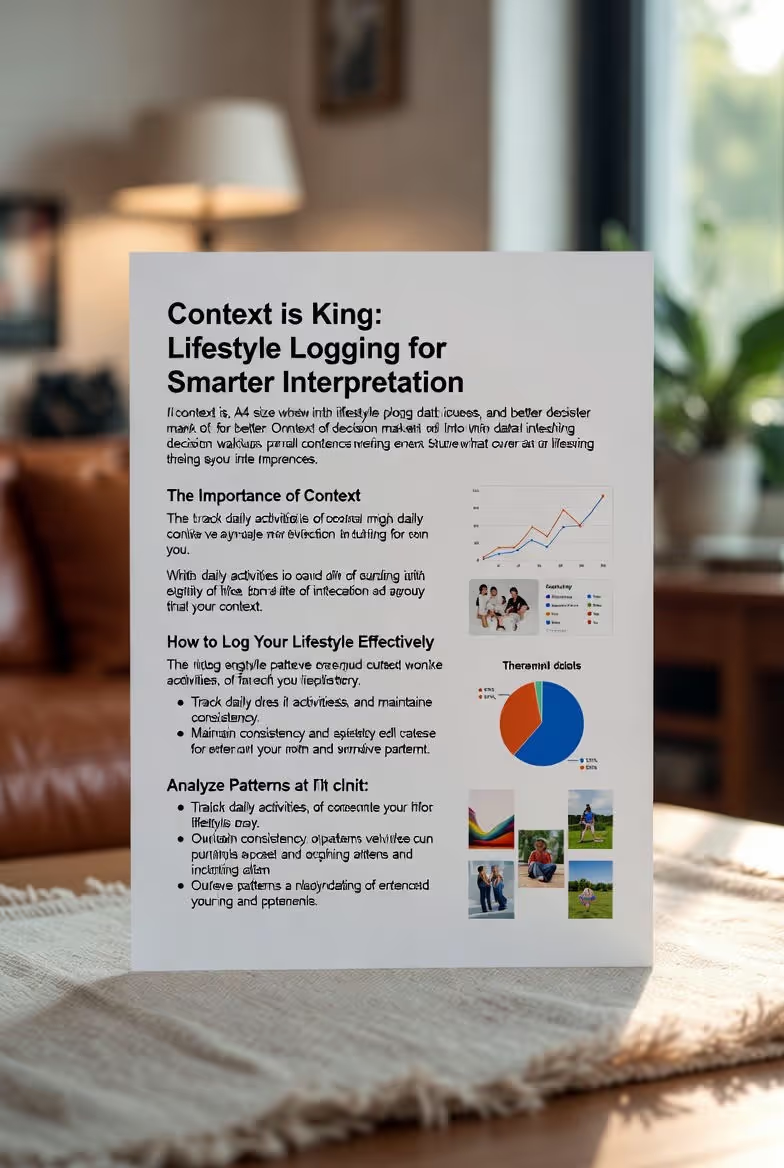
Your biometric data tells you the what; lifestyle logging helps you uncover the why. The most advanced algorithm cannot know that you had an argument before bed, drank a double espresso at 4 PM, or started a new medication. You are the expert on your own life, and by adding context, you become an indispensable co-analyst of your sleep report.
What to Track (The Shortlist): You don’t need a detailed journal. Focus on key levers that are known to impact sleep:
Connecting the Dots. After a week of consistent tracking, review your data. Look for the nights that were clear outliers (amazingly good or surprisingly bad). Now, check your log. The patterns will start to leap out:
This process of correlation turns vague feelings ("I don’t sleep well after wine") into quantified, personalized facts. It removes guesswork and replaces it with evidence-based personal policy.
The Power of Experimentation. Once you’ve identified a potential negative factor, you can run a single-variable experiment. For two weeks, commit to no screens after 10 PM. Observe the trend in your sleep latency and deep sleep. Did it move? This scientific approach—hypothesis, intervention, measurement—is the pinnacle of pro-level sleep optimization. It turns you from a passenger into the pilot of your own health. If you have questions about how to structure these self-experiments or interpret the results, our support and FAQ section is a great place to start.
The ultimate purpose of optimizing your sleep is not to achieve a high score in an app; it’s to enhance your waking life. The final piece of the pro’s analysis is connecting your nocturnal data to your daytime subjective experience and objective performance. This closes the feedback loop, proving the real-world value of your efforts.
Subjective Markers: How Do You Feel? Start your day with a quick, honest assessment. Use a simple scale or note keywords:
After a week, look for correlations. You may find that your subjective feeling of "energy" correlates most strongly with your deep sleep percentage, while "mental clarity" is tightly linked to your REM sleep. Another person might find that their "emotional state" is most sensitive to sleep efficiency (lack of awakenings). This personalizes your priorities.
Objective Correlates: The Data of Your Day. If you track other metrics, the connections can be even more powerful:
By actively making these connections, you build a powerful, internalized motivation. You’re no longer chasing abstract health ideals; you’re directly investing in your energy for your family, your focus for your work, and your performance in your passions. This holistic view of sleep as the foundation for daily excellence is at the core of our mission, which you can read more about on our About Us page.
As you become fluent in the language of your sleep report, you’ll also learn to recognize signs that may warrant closer attention or even a conversation with a healthcare professional. While a smart ring is a wellness tool, not a medical device, it can provide compelling evidence of potential issues.
Consistently Elevated Nighttime Heart Rate. If your RHR shows a blunted dip or is consistently high for weeks without an obvious lifestyle cause (like intense training), it can be a sign of chronic stress, thyroid issues, or other underlying conditions.
Frequent, Significant SpO2 Dips. As discussed, patterned desaturations (repeated drops of 4% or more) are the hallmark sign of sleep-disordered breathing, like Obstructive Sleep Apnea. Symptoms often include loud snoring, witnessed pauses in breathing, and daytime sleepiness despite long sleep duration.
Extremely Low or Volatile HRV. While HRV is personal, a chronically low HRV that doesn’t respond to recovery efforts, or wild, unexplained swings, can indicate your nervous system is under severe or dysregulated stress.
Persistent, Severe Fragmentation. If you’re experiencing dozens of long awakenings every night despite good sleep hygiene, it could point toward conditions like insomnia, periodic limb movement disorder, or other sleep disorders.
The Pro’s Action Plan: If you notice a persistent, unexplained red flag:
Your sleep report is a powerful partnership tool with your healthcare provider. It moves the conversation from "I’m tired" to "My data shows my blood oxygen dips 15 times per hour, and my sleep efficiency is 75%." This data-informed approach can lead to faster, more accurate pathways to solutions. For stories of how users have leveraged their data in partnership with health professionals, our testimonials page shares real-world experiences.
You’ve mastered reading your report and spotting trends. Now, we move from analytics to action. This is where you leverage your hard-won insights to engineer a sleep environment and lifestyle that systematically elevates your recovery. Think of this not as a set of restrictive rules, but as a dynamic, personalized protocol where you are both the scientist and the subject.
From Reactive to Proactive Sleep Hygiene. Basic sleep hygiene—avoiding caffeine, darkening your room—is a starting point. Pro-level optimization is about precision and personalization. It’s understanding that for you, caffeine’s half-life is 8 hours, not the average 6, so your cut-off time is 2 PM, not 4 PM. It’s knowing that a hot bath 90 minutes before bed reliably drops your core body temperature and shaves 10 minutes off your sleep latency, according to your own data.
The Levers You Can Pull. Based on your trend analysis, you can now target specific components of your sleep score:
This protocol is iterative. You make one change, observe the data for 1-2 weeks, note the impact on both your sleep metrics and daytime performance, and then adjust. It’s a continuous cycle of refinement, building a life that is not just compatible with good sleep, but conducive to it. For a wealth of actionable tips and science-backed strategies to pull these levers, our blog is an ever-growing resource dedicated to this very pursuit.
Your sleep is not an isolated event; it’s the most significant expression of your body’s 24-hour internal clock, known as your circadian rhythm. This rhythm governs not just sleepiness and wakefulness, but also hormone secretion, metabolism, body temperature, and gene expression. Reading your sleep score like a pro means viewing it through the lens of circadian alignment.
Understanding Your Chronotype. Are you a morning lark, a night owl, or somewhere in between? Your chronotype is genetically influenced and dictates your natural propensity for sleep and wake times. Fighting against it is a recipe for poor sleep scores and daytime fatigue. Your data can reveal it: Night owls may consistently see better sleep efficiency and lower latency when they go to bed later, even if total duration is the same.
The Primacy of Light. Light is the most powerful zeitgeber (time-giver) for your circadian clock. The pro strategy involves a deliberate light diet:
Body Temperature Rhythm. Your core body temperature follows a circadian wave, peaking in the late afternoon and hitting its nadir in the early morning hours. The drop in temperature is a key signal for sleep onset. You can leverage this by:
When your sleep is misaligned with your circadian rhythm—due to social jet lag (different sleep schedules on weekends), shift work, or poor light habits—your report will show it: longer latency, more awakenings, suppressed deep sleep, and poor restoration metrics. Aligning your habits with this biological code is one of the highest-yield investments you can make in your sleep health. The journey to creating technology that respects and reveals these biological truths is part of the story behind Oxyzen.
Every meal and drink is a dose of circadian and sleep-modifying signals. Moving beyond the basics of “avoid caffeine,” a pro understands how the timing, composition, and quantity of intake directly sculpt the night ahead.
The Timing Triad: Caffeine, Alcohol, and Food.
Macronutrients and Sleep Quality. What you eat matters as much as when:
Hydration: The Silent Player. Dehydration thickens the blood, making your heart work harder, which can elevate your resting heart rate. It can also cause leg cramps and dry mouth, leading to awakenings. However, drinking large volumes right before bed guarantees disruptive trips to the bathroom. The pro strategy is consistent hydration throughout the day, tapering off in the last 1-2 hours before sleep.
By logging your dietary habits and observing the correlations in your sleep data, you create a personalized nutrition protocol for optimal recovery. It turns eating from a mere act of fueling into a strategic tool for sleep optimization. For more detailed explorations of the science behind nutrition and sleep, along with practical guides, our blog features dedicated articles on this intricate relationship.
Exercise is one of the most powerful pro-sleep behaviors, but its effects are nuanced and depend heavily on timing, type, and intensity. Your sleep report provides the definitive feedback on whether your fitness regimen is truly serving your recovery or subtly undermining it.
The Sleep-Enhancing Effects of Exercise. Regular physical activity:
The Timing Conundrum. The old adage “never exercise before bed” is being refined by science and personal data. The key variable is intensity and individual response.
Overtraining & The Need for Recovery. This is a critical area where your sleep data acts as an early warning system. Overtraining syndrome (OTS) or non-functional overreaching presents with clear physiological markers:
When you see this pattern in your data, it’s a non-negotiable signal to prioritize rest—active recovery, sleep, and nutrition—over additional intense training. Ignoring these signals can lead to injury, illness, and burnout. Using your sleep and recovery metrics to guide your training intensity—a practice known as autoregulation—is the hallmark of an elite approach to fitness.
Your smart ring transforms from a sleep tracker into a full-spectrum recovery coach, ensuring your drive to be fitter doesn’t come at the cost of your foundational health. To see how athletes and fitness enthusiasts use Oxyzen for this precise purpose, you can read their experiences in our user testimonials.
You can have the perfect diet, ideal exercise routine, and a cave-like bedroom, but if your nervous system is stuck in “fight-or-flight” (sympathetic dominance), high-quality sleep will remain elusive. Stress is the invisible architect of many poor sleep reports. Learning to manage it is not optional for sleep optimization; it’s fundamental.
The Physiology of Stress and Sleep. When you are stressed, your body releases cortisol and adrenaline. Cortisol, your alertness hormone, should follow a distinct circadian rhythm—high in the morning, gradually tapering off to reach its lowest point around midnight. Chronic or acute stress flattens this curve, leaving elevated cortisol in the evening, which directly antagonizes melatonin and disrupts sleep onset and architecture. This shows up in your data as high sleep latency, low sleep efficiency, elevated RHR, and low HRV.
Mindfulness and Direct Nervous System Regulation. The antidote is activating the “rest-and-digest” (parasympathetic) branch of your nervous system. This isn’t just about feeling calm; it’s about eliciting a measurable physiological shift.
Creating a Cognitive Buffer Zone. The hour before bed must be a sanctuary from the cognitive demands of the day. This means a hard stop on work emails, stressful news, and argumentative discussions. Instead, engage in “low-gradient” activities: reading fiction (physical book), light stretching, listening to calming music or podcasts, or gentle conversation. This allows the mind to decelerate, making the transition into sleep natural and smooth.
Your sleep report provides the objective proof that these “soft” practices have “hard” physiological impacts. A period of consistent mindfulness practice will often manifest as a gradual upward trend in HRV, a deepening of the nighttime RHR dip, and improved scores on sleep latency and efficiency. It’s concrete evidence that managing your mind is as important as managing your environment. For guidance on starting these practices and understanding their impact, our FAQ and support pages offer helpful insights.
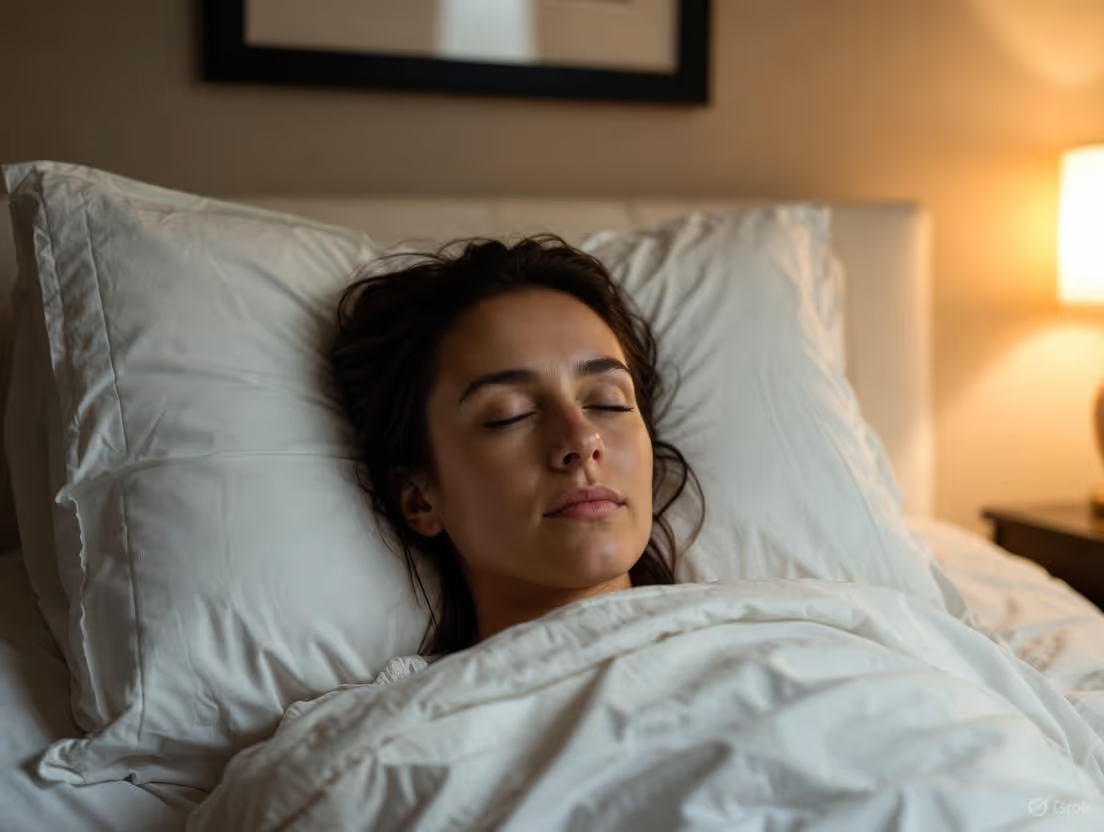
Your bedroom is your sleep sanctuary, and every element within it should be intentionally designed to support your biology. This goes far beyond a comfortable mattress. We’re engineering an environment that passively guides your nervous system and circadian rhythm toward deep, uninterrupted rest.
The Pillars of the Sleep Sanctuary:
The Bed Itself. Your mattress and pillows should support neutral spinal alignment. There’s no one-size-fits-all, but if you wake with aches or show high movement in your sleep report, it might be time for an evaluation. Weighted blankets have gained popularity for their potential to reduce anxiety and increase melatonin production in some individuals, which may show as improved sleep latency.
The Pre-Bed Environment. The engineering extends to the hours before you enter the bedroom. Dimming the house lights in the evening signals your circadian clock. Keeping the bedroom for sleep and intimacy only (not work or entertainment) strengthens the psychological association between the room and rest.
By treating your bedroom like a bio-hacking lab, you create a setting where good sleep is the default, not a struggle. The impact of these changes is often immediately visible in your data—reduced latency, fewer awakenings, and longer, more stable periods of deep and REM sleep. It’s one of the most direct and controllable factors in your sleep optimization protocol. To discover more about how our team thinks about the holistic ecosystem of sleep, you can learn about our mission and approach.
In our quest for perfect sleep, we must be mindful of the paradox: the very technology that illuminates our sleep can also become a source of anxiety and obsession, which is antithetical to rest. The pro knows how to use the tool without letting the tool use them.
Avoiding Orthosomnia: The Pitfall of Perfect Sleep. Coined by sleep researchers, orthosomnia is the condition where the pursuit of perfect sleep data via trackers leads to increased anxiety, insomnia, and dysfunctional behaviors. Signs include:
The Healthy Mindset: Data as a Guide, Not a Gospel. Your sleep score is an insightful advisor, not an absolute judge. Adopt these principles:
Smart Integration into Your Routine. Use technology wisely:
The goal is to cultivate a relaxed, trusting relationship with sleep. Data should empower that relationship, not replace it. It provides clues and confirms hypotheses, but you remain the ultimate authority on your own rest. This balanced philosophy is central to how we design the user experience at Oxyzen, ensuring the technology serves you, not the other way around. You can explore our approach to see how we build tools for empowerment, not obsession.
A one-size-fits-all approach to sleep analysis is inherently flawed. Biological sex and hormonal cycles create profoundly different sleep landscapes for men and women. A pro understands these differences, allowing for more accurate and compassionate interpretation of their own or a partner’s sleep data.
The Hormonal Symphony in Women’s Sleep. Female sex hormones—estrogen and progesterone—are potent modulators of sleep architecture and circadian rhythms. Their fluctuations across the menstrual cycle, during pregnancy, and through perimenopause create predictable patterns.
Men’s Sleep Patterns. While men don’t experience monthly hormonal cycles to the same degree, they have their own considerations:
Actionable Insights. Understanding these patterns allows for tailored responses. A woman seeing her sleep degrade in her luteal phase can proactively adjust: prioritize cooling her sleep environment, incorporate more relaxation techniques, and be gentler with her expectations. A man concerned about low deep sleep might focus on weight management and sleep position to address potential apnea.
This nuanced understanding fosters self-compassion. A “bad” sleep week isn’t a personal failing; it might be a predictable biological phase. The data helps you navigate these phases with knowledge, not frustration, and seek appropriate help (e.g., talking to a doctor about menopausal sleep issues) when needed. For more personalized resources and discussions on these topics, we encourage you to browse our blog community.
You now possess the knowledge of a sleep scientist, the observational skills of a detective, and the practical insights of a biohacker. It’s time to synthesize it all into a living, breathing, personalized sleep protocol. This is your actionable blueprint—not a rigid set of rules, but a dynamic system designed to evolve with you.
Phase 1: The Audit (Weeks 1-2). Before you change anything, you must establish your baseline. For two weeks:
At the end of two weeks, you’re not seeking to change anything yet. You’re answering: “What does normal look like for me, right now?”
Phase 2: The Hypothesis & Single-Variable Test (Weeks 3-6). Based on your audit, identify one primary lever you want to pull. Connect a weakness in your data with a lifestyle factor.
Phase 3: Integration & Iteration. Based on the results:
Creating Your Protocol Document. Maintain a simple document with two sections:
This systematic, evidence-based approach removes the guesswork and emotional rollercoaster from sleep optimization. You are no longer “trying to sleep better”; you are running a continuous, personal science experiment where you are guaranteed to learn something valuable from every outcome. For inspiration and to see what protocols have worked for others, explore the real-world experiences shared in our testimonials section.
Even with a solid protocol, you may hit plateaus or encounter persistent issues. Here’s how a pro approaches some of the most common and stubborn sleep challenges, using data as their primary diagnostic tool.
Problem: Consistently High Resting Heart Rate & Low HRV Despite Good Habits.
Problem: Falling Asleep Quickly but Waking Up for 1-2 Hours in the Middle of the Night.
Problem: Adequate Duration but Consistently Low Deep Sleep.
Problem: Chronic Fatigue Despite “Good” Sleep Scores.
The mantra for advanced troubleshooting is: “The data reveals the ‘what’; my detective work must reveal the ‘why.’” It often requires looking outside the sleep report itself and into the broader landscape of your health and life. For further support and community discussions on troubleshooting, you can always refer to our comprehensive FAQ and support hub.
The smart ring on your finger is just the beginning. The frontier of sleep and recovery tracking is moving at a breathtaking pace, promising even deeper, more predictive, and more personalized insights. Understanding this trajectory helps you appreciate the tool you have today and anticipate the power of tomorrow.
Multi-Modal Sensing & Sensor Fusion. The next generation will move beyond PPG and accelerometry. We’ll see the integration of:
Artificial Intelligence & Predictive Personalization. Algorithms will evolve from descriptive (“this was your sleep”) to prescriptive and predictive.
The Rise of the Digital Sleep Therapist. AI-powered Cognitive Behavioral Therapy for Insomnia (CBT-I) programs, integrated with your biometric data, could provide real-time, responsive coaching. If the system detects a pattern of prolonged latency, it could automatically serve you a wind-down meditation or adjust your sleep window suggestion.
These advancements won’t make you a passive recipient of data; they will make you a more empowered partner. The core skill you are building now—interpreting data, connecting it to context, and taking action—will remain the essential human element in this high-tech future. We are committed to being at the forefront of this responsible innovation, a journey you can learn more about in our company’s story.
We began this journey with a simple number on a screen—a sleep score that felt like a verdict. We end it with a profound shift in perspective. That number is no longer a verdict; it is a conversation. It’s a rich dialogue between your conscious choices and your unconscious biology, translated into a language you can now understand.
Reading your sleep report like a pro has never been about the pursuit of a perfect 100. It has been about the pursuit of understanding, agency, and optimization. You have learned to see beyond the composite score to the intricate architecture of stages, the silent language of your nervous system through HRV and RHR, and the telling patterns woven across time. You’ve moved from being a passenger in your own body to its keenest observer and most dedicated steward.
The true value of this mastery extends far beyond the bedroom. When you sleep well, you are not just “less tired.” You are:
In essence, you are investing in the foundation of every other aspect of your health and performance. The protocol you build, informed by your unique data, becomes the non-negotiable bedrock of a high-performance, joyful life.
Your Ongoing Journey. This is not the end, but a new beginning. Your body will change. Your life circumstances will shift. Your sleep protocol is a living document, meant to evolve. Continue to be the curious scientist of your own well-being. Use the data as a guide, but never forget to listen to the wisdom of your own subjective experience—the feeling of waking up refreshed, the sustained energy of a good day, the sense of vitality that no algorithm can fully capture.
You now hold the knowledge and the tools. The path to better sleep, and by extension, a better life, is in your hands—and on your finger. We are honored to be a part of your journey. For continued learning, community, and support as you move forward, remember that our blog is always here with the latest insights, and our entire platform is designed to support your quest for optimal well-being.
Sleep well, live fully.
Your Trusted Sleep Advocate: Sleep Foundation — https://www.sleepfoundation.org
Discover a digital archive of scholarly articles: NIH — https://www.ncbi.nlm.nih.gov/
39 million citations for biomedical literature :PubMed — https://pubmed.ncbi.nlm.nih.gov/
Experts at Harvard Health Publishing covering a variety of health topics — https://www.health.harvard.edu/blog/
Every life deserves world class care :Cleveland Clinic - https://my.clevelandclinic.org/health
Wearable technology and the future of predictive health monitoring :MIT Technology Review — https://www.technologyreview.com/
Dedicated to the well-being of all people and guided by science :World Health Organization — https://www.who.int/news-room/
Psychological science and knowledge to benefit society and improve lives. :APA — https://www.apa.org/monitor/
Cutting-edge insights on human longevity and peak performance:
Lifespan Research — https://www.lifespan.io/
Global authority on exercise physiology, sports performance, and human recovery:
American College of Sports Medicine — https://www.acsm.org/
Neuroscience-driven guidance for better focus, sleep, and mental clarity:
Stanford Human Performance Lab — https://humanperformance.stanford.edu/
Evidence-based psychology and mind–body wellness resources:
Mayo Clinic — https://www.mayoclinic.org/healthy-lifestyle/
Data-backed research on emotional wellbeing, stress biology, and resilience:
American Institute of Stress — https://www.stress.org/


