
The Unspoken Epidemic: A Modern Guide to Reducing Separation Anxiety in Adults

You’ve just pulled out of the driveway, off on a week-long business trip. A familiar, cold dread begins to pool in your stomach. Your partner waves from the porch, but you’re already mentally ticking through a checklist of catastrophic “what-ifs.” Your phone pings—a mundane email—and your heart leaps, half-expecting, half-fearing it’s news that something has gone terribly wrong back home. The physical distance feels less like miles and more like a chasm of anxiety. Or perhaps it’s not a person, but a place or a routine. The digital detox your therapist suggested feels impossible; the mere thought of being without your phone triggers a wave of disproportionate panic. This isn't just "missing someone." This is a pervasive, often debilitating, experience shared by millions: adult separation anxiety.

For too long, separation anxiety has been relegated to the domain of childhood psychology—a phase to be outgrown, epitomized by teary goodbyes at the school gate. The reality is starkly different. Adult Separation Anxiety Disorder (ASAD) is a clinically recognized condition, yet it operates in the shadows of our collective awareness, often mislabeled as co-dependency, clinginess, or even an endearing sign of deep love. It’s the silent engine behind the compulsive need to text "everything okay?" multiple times a day. It's the underlying reason for avoiding promotions that require travel, for sleepless nights when a loved one is out, or for a profound sense of disintegration when a daily ritual is disrupted.

In our hyper-connected yet paradoxically isolated modern world, the triggers have evolved and multiplied. Our attachment objects are no longer just primary caregivers; they can be romantic partners, close friends, children, pets, or even our digital devices and the constant stream of validation they provide. The rise of remote work and digital nomadism, while offering freedom, can also fray the threads of physical connection, amplifying these fears. The core wound, however, remains the same: an overwhelming fear of abandonment and loss, rooted in the primal need for attachment security, which manifests in acute distress when separation occurs or is anticipated.

This article is a lifeline and a roadmap. We will dismantle the stigma, explore the profound neurobiology behind the anxiety, and provide you with a comprehensive, practical toolkit for building emotional resilience. This journey is not about becoming emotionally detached or independent to the point of isolation. It is about cultivating secure autonomy—the ability to be comfortably and confidently yourself, connected to others from a place of wholeness rather than fear. We will integrate modern psychology, mindfulness practices, lifestyle design, and even cutting-edge technology to help you rewrite your internal narrative. The goal is to transform that chasm of anxiety into a manageable space where trust, in yourself and others, can grow.

The path to reducing separation anxiety is a journey back to the self. It begins with understanding, is paved with compassion, and leads to a newfound sense of freedom. Let’s take the first step.

Understanding the Roots: It’s Not Just "Clinginess"

To effectively address separation anxiety in adulthood, we must first excavate its origins. Dismissing it as a simple character flaw or an excess of love does a profound disservice to the complex interplay of biology, early experience, and neurochemistry at its core. This is a condition wired into our very operating systems.

At its most fundamental level, separation anxiety is an attachment issue. Attachment theory, pioneered by John Bowlby and Mary Ainsworth, posits that our earliest bonds with caregivers create an internal "working model" for all future relationships. A secure attachment, formed through consistent, responsive care, becomes an internal safe haven—a psychological home base from which we can explore the world confidently, knowing we can return for comfort. An insecure attachment, resulting from unpredictable, neglectful, or frightening care, can leave this model unstable. For the adult with separation anxiety, the working model whispers a terrifying warning: "If they leave, you will not be okay. You cannot cope alone. Loss is imminent."

This isn't merely philosophical. Neuroimaging studies reveal that separation anxiety activates the same primal brain regions associated with physical pain and threat detection—the amygdala (our fear center) and the anterior cingulate cortex. The brain doesn't neatly distinguish between the threat of emotional abandonment and the threat of physical danger. It sounds the same alarm. Furthermore, research points to the role of neurotransmitters. Dysregulation in systems involving serotonin (a key mood and anxiety regulator) and GABA (the brain’s primary calming chemical) can lower the threshold for experiencing separation distress, making the nervous system more reactive to perceived abandonment cues.

Modern life has added new layers to this ancient neural circuitry. We now form attachments to our digital devices—a phenomenon some researchers term "digital attachment." Our smartphones have become modern-day transitional objects, offering a constant, albeit synthetic, connection to our social world. The anxiety experienced during a "phone-free" hour can mirror classic separation distress, driven by the fear of missing out (FOMO) and the withdrawal of dopamine-driven social validation. Similarly, the culture of constant connectivity creates an expectation of immediate responsiveness. When a text goes unanswered for an hour, the anxious mind can spiral, interpreting silence not as busyness, but as rejection or catastrophe.

The triggers are deeply personal, yet often follow patterns:

  • Anticipatory Anxiety: The intense dread in the hours or days before an inevitable separation (a partner's work trip, a child leaving for college).
  • Situational Distress: Panic attacks, nausea, or unbearable worry during the separation itself.
  • Hypervigilance: The compulsive need to check in, track locations, or seek reassurance to quell the fear.
  • Avoidance Behavior: Sabotaging opportunities (jobs, social events, personal growth) that might require time apart from the attachment figure.

Recognizing these roots is the first act of empowerment. It moves the issue from a moral failing ("I'm too needy") to a manageable psychological pattern ("My attachment system is in a heightened state of alert"). This reframe is critical, for we cannot change what we do not first understand with compassion. To learn more about the science of stress and the body's response, which is deeply intertwined with anxiety, you can explore related resources on our wellness and research blog.
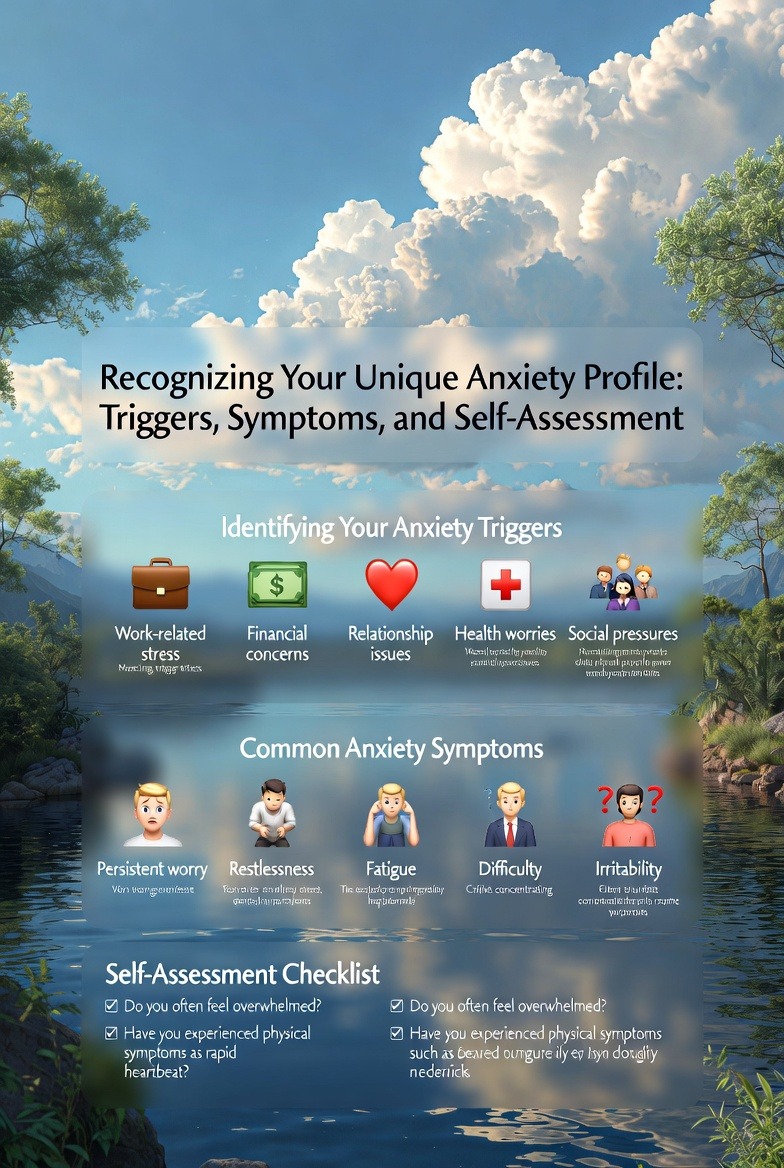
Recognizing Your Unique Anxiety Profile: Triggers, Symptoms, and Self-Assessment

Separation anxiety is not a monolith. It wears a thousand different disguises, blending seamlessly into your personality, your relationships, and your daily rhythms. One person may experience it as a quiet, persistent hum of worry in the background of their mind. For another, it is a series of sharp, debilitating panic attacks. Learning to recognize your unique "anxiety profile"—your specific triggers, physical symptoms, and behavioral patterns—is like obtaining a detailed map of a previously uncharted and frightening territory. With this map in hand, you are no longer blindly lost; you can begin to navigate.

The Manifestations: More Than a Feeling
The symptoms operate across four key domains: cognitive, emotional, physical, and behavioral.

  • Cognitive Symptoms: This is the "worry engine." It involves intrusive, catastrophic thoughts ("They're going to get into a car accident," "I'll never see them again," "They're leaving because I'm not enough"), difficulty concentrating on anything else, and persistent mental rehearsal of disaster scenarios. The mind becomes a prison of pessimistic forecasting.
  • Emotional Symptoms: This is the raw feeling layer: overwhelming fear, sadness, loneliness, and a deep sense of vulnerability. There's often a pervasive feeling of emptiness or a numbness when separated, as if a part of yourself is missing. Anger and irritability can also surface, often directed unfairly at the very person you miss, or inward as self-criticism.
  • Physical Symptoms: The body keeps the score. Anxiety screams through physiology: a racing heart, tightness in the chest or throat, shortness of breath, dizziness, stomach aches, nausea, headaches, muscle tension, and profound fatigue. Sleep is almost always disrupted—either through insomnia or fitful, unrestorative sleep filled with anxiety dreams.
  • Behavioral Symptoms: These are the actions you take to soothe or avoid the distress. They include excessive texting/calling, "cyber-stalking" or location-checking, pleading or creating conflict to prevent departure, avoiding being alone at all costs, and in severe cases, refusing to allow the other person to engage in independent activities.

Conducting Your Personal Audit:
Begin a non-judgmental observation practice. For one week, keep a simple "Anxiety Log." When you feel a spike of separation-related distress, note:

  1. The Situation: What was happening? What triggered the thought? (e.g., Partner said they have a late meeting; I left my phone in another room).
  2. The Thought: What exact catastrophic narrative did my mind spin? (e.g., "They're lying, they don't want to see me," "An emergency is happening and I can't be reached").
  3. The Feeling/Sensation: What did I feel emotionally and where did I feel it in my body? (e.g., Dread, sadness; knot in stomach, tight chest).
  4. My Action: What did I do to cope? (e.g., Sent three "check-in" texts; drove back home to get my phone).

This log will reveal your personal patterns. You may discover your primary trigger isn't romantic separation, but separation from your daily routine or work identity. Or you may see that your anxiety peaks at specific times of day. This data is gold—it forms the basis for every intervention that follows.

Understanding your profile also means acknowledging its impact. It can strain relationships, create dependency, hinder career advancement, and erode your sense of self. But this awareness is not a condemnation; it is the starting point for building a more secure, autonomous you. For many, the journey of self-discovery is supported by tools that provide objective data. Technologies like the Oxyzen smart ring can help you identify physiological stress patterns—like elevated nighttime heart rate or disrupted sleep before a planned separation—offering concrete, biometric validation of your experience that goes beyond subjective feeling. You can discover how Oxyzen works to provide these kinds of insights.

Rewiring the Anxious Brain: Cognitive and Behavioral Techniques

With your unique anxiety profile in hand, you now have the blueprint for change. The goal here is not to eliminate all worry or desire for connection—that would be both impossible and undesirable. The goal is to retrain your brain's overzealous alarm system, teaching it to distinguish between a true threat and a feared thought. This work happens in the space between the trigger and your reaction, and it is built on two powerful, evidence-based pillars: Cognitive Behavioral Therapy (CBT) principles and graduated exposure.

Cognitive Restructuring: Challenging the Catastrophic Narrative
Your thoughts are not facts, but your nervous system believes they are. Cognitive restructuring is the process of becoming a curious, gentle investigator of your own thinking.

  1. Identify the Thought: Catch the automatic negative thought (ANT). From your log, it might be: "If my partner enjoys their time away with friends, it means they don't need me and will eventually leave."
  2. Examine the Evidence: Treat this thought like a hypothesis. What is the evidence for it? (They are choosing to spend time away). What is the evidence against it? (They consistently return, they express love, they plan future activities with you, healthy relationships are built on both togetherness and individuality).
  3. Generate Alternative Perspectives: Develop a more balanced, realistic thought. This isn't about forced positivity, but about accuracy. "My partner enjoying their independent time is a sign of a healthy, whole individual. Our connection is secure enough to allow for this. Their return is a reaffirmation of our bond, not a rescue from my loneliness."
  4. Practice and Repeat: This feels artificial at first. With consistent practice, these new neural pathways become the default. Carry a "thought challenge card" with your most common catastrophic thoughts and their balanced alternatives.

Behavioral Experiments and Graduated Exposure
Avoidance is the fuel for anxiety. The only way to extinguish the fear is to safely prove to your brain that you can survive—and even thrive—during separation. This is done through graduated exposure, a step-by-step process of facing feared situations.

  • Create a Fear Ladder: List separation-related situations from least anxiety-provoking (e.g., partner goes to another room for 30 minutes) to most terrifying (e.g., partner goes on a week-long international trip without constant contact).
  • Start at the Bottom: Begin with the easiest step. While your partner is in another room, engage in a pleasurable, absorbing solo activity. Notice the anxiety rise, peak, and eventually fall. This teaches your nervous system the critical lesson: The anxiety is temporary. You are safe.
  • Systematically Move Up: Once a step creates minimal anxiety, move to the next. This could be: a solo walk around the block, an evening alone at home, a weekend where you limit check-ins to one per day.
  • Reward Courage: Celebrate each step! This positive reinforcement strengthens the new learning.

The Role of Mindfulness and Grounding:
When anxiety floods the system, cognitive techniques can feel out of reach. This is where mindfulness acts as an anchor. Practices like the 5-4-3-2-1 grounding technique (Name 5 things you see, 4 you can touch, 3 you can hear, 2 you can smell, 1 you can taste) pull you out of the catastrophic future and into the safety of the present moment. Simple breathwork—like extending your exhale to be longer than your inhale—directly calms the physiological panic response by activating the parasympathetic nervous system.

These techniques are the foundational work of building secure autonomy. They require patience and self-compassion. Progress is rarely a straight line, but a spiral where you revisit lessons at deeper levels. For additional support and a community exploring similar journeys, consider exploring our blog for more wellness tips and practical guides.

Building Your Secure Base: Cultivating Self-Attunement and Internal Safety

The previous section equipped you with tools to manage the symptoms of separation anxiety. This section addresses the core: building a stable, reliable, and nurturing relationship with yourself. For many with separation anxiety, the external person becomes the primary source of comfort, regulation, and identity. The work of building a "secure base" is the process of internalizing those functions. It’s about becoming your own primary attachment figure—not in a narcissistic sense, but in a nurturing, parental way. When you are attuned to your own needs and can provide yourself with fundamental safety, the absence of another becomes less threatening.

The Practice of Self-Attunement:
Self-attunement is the skill of noticing your internal state—your emotions, physical sensations, and needs—with curiosity rather than criticism. It’s the opposite of the anxious dissociation that says, "Just ignore the feeling, it’s stupid."

  • Daily Body Scans: Set a timer for 5 minutes. Lying down or sitting comfortably, mentally scan from your toes to the crown of your head. Simply notice sensations without judgment: tension, warmth, coolness, tingling, pain. This re-establishes the mind-body connection that anxiety often severs.
  • Emotional Naming: When anxiety arises, move beyond the label "anxious." Drill deeper. Is it fear? Sadness? Loneliness? Abandonment? Shame? The act of precise naming, studied in neuroscience as "affect labeling," has been shown to dampen amygdala activity. "I am feeling a deep sense of loneliness in my chest right now."
  • Identifying Needs: Once you name the emotion, ask: "What do I need in this moment to feel a degree of safety or comfort?" The answer is rarely "my partner here immediately." It might be: a warm blanket, a glass of water, to stretch, to look at a photograph that brings joy, or to speak a kind word to yourself.

Creating Internal Safety Through Ritual:
Safety is not just a feeling; it can be a cultivated environment. Design personal rituals that signal to your nervous system: "You are home. You are safe."

  • A Morning Anchor: Begin the day with a 3-minute practice that is entirely for you. This could be sipping tea while looking out the window, stating three intentions, or gentle stretching. This sets a tone of self-connection before engaging with the world.
  • An Evening Sanctuary: Create a wind-down routine that doesn't involve screens. This could involve light reading, journaling (focusing on "What did I do well for myself today?"), listening to calming music, or a skincare routine done with presence. This becomes your internal safe haven to return to each night.
  • The "Comfort Kit": Assemble a physical box or basket filled with items that engage your senses and provide solace: a soft scarf, a essential oil roller, a smooth stone, a playlist of calming songs, a list of comforting affirmations, a favorite book. When separation feels overwhelming, go to your kit. It is a tangible reminder that you have the resources to care for yourself.

This work of building an internal secure base is at the heart of our philosophy at Oxyzen. We believe true wellness emerges from a deep, data-informed connection to oneself. By understanding your unique biometric patterns of stress and recovery, you can learn to anticipate your needs and create safety from within, making external validation a pleasant addition rather than a desperate necessity. To understand the mission behind this approach, you can read more about our story and vision.

The Role of Lifestyle and Physiology: Sleep, Nutrition, and Movement

Separation anxiety exists in the mind, but it is fought and won in the body. A nervous system that is already stressed, depleted, and dysregulated from poor lifestyle choices has no buffer against the additional storm of separation distress. Think of your baseline resilience as a bank account. Sleep, nutrition, and movement are your primary deposits. Anxiety is a withdrawal. If your account is consistently overdrawn, even a small withdrawal (a minor separation) can trigger a crisis. The goal here is to build such a robust reserve of physiological stability that your system can handle the emotional withdrawals without collapsing into panic.

Sleep: The Non-Negotiable Foundation for Emotional Regulation
Sleep deprivation is like pouring gasoline on the fire of anxiety. It directly impairs the prefrontal cortex—the brain's executive center responsible for rational thought and emotional regulation—while simultaneously heightening amygdala reactivity. This creates a perfect storm: heightened fear and a diminished capacity to calm it.

  • The Strategy: Prioritize sleep hygiene not as a luxury, but as critical medicine. Aim for 7-9 hours of consistent, quality sleep. Create a cool, dark, and tech-free bedroom environment. Establish a relaxing pre-sleep ritual (see "Evening Sanctuary" above). For those whose anxiety spikes at night, consider a "worry dump" journal session an hour before bed to empty anxious thoughts from your mind onto paper.
  • The Tech Angle: This is where a device like the Oxyzen smart ring becomes a powerful ally. It can objectively track your sleep stages, resting heart rate, and Heart Rate Variability (HRV)—a key biomarker of nervous system resilience. You might discover that on nights before a planned separation, your deep sleep plummets and your nighttime heart rate elevates, confirming the physiological impact. With this data, you can proactively intensify your wind-down routine on those nights, or use calming techniques to improve your sleep quality, directly strengthening your resilience for the next day.

Nutrition: Fueling Calm, Not Catastrophe
What you eat directly influences neurotransmitter production and inflammation levels, both of which play key roles in anxiety.

  • Blood Sugar Stability: Dramatic spikes and crashes in blood sugar can mimic and exacerbate anxiety symptoms (shakiness, irritability, rapid heart rate). Prioritize complex carbohydrates, fiber, healthy fats, and protein at each meal to ensure a slow, steady release of energy.
  • Gut-Brain Axis: The gut produces about 95% of the body's serotonin. A diet high in processed foods, sugar, and low in fiber can disrupt the gut microbiome, potentially influencing mood and anxiety. Incorporate fermented foods (yogurt, kefir, sauerkraut), prebiotic fibers (garlic, onions, bananas), and omega-3 fatty acids (fatty fish, walnuts) to support a healthy gut-brain connection.
  • Anxiety-Exacerbating Substances: Caffeine and alcohol are common but problematic self-medications. Caffeine can increase heart rate and trigger jitteriness that feels identical to anxiety. Alcohol, while initially sedating, disrupts sleep architecture and can lead to rebound anxiety as it leaves your system.

Movement: The Anxiety Energy Converter
Anxiety is energy—specifically, energy mobilized for a "fight-or-flight" response that has nowhere to go. Physical activity is the most direct way to metabolize that energy and recalibrate your nervous system.

  • The Calming Effect of Rhythmic Movement: Activities like walking, running, swimming, and cycling have a meditative, rhythmic quality that can help break the cycle of ruminative thoughts. They also release endorphins and help regulate stress hormones like cortisol.
  • Embodied Practices: Yoga, Tai Chi, and Qigong are exceptionally powerful for separation anxiety. They combine gentle movement with breath awareness and mindfulness, directly teaching you to inhabit your body with safety and presence—the exact opposite of the dissociative panic of anxiety.
  • The "Exercise Snack" Strategy: You don't need an hour at the gym. A 10-minute brisk walk around the block, 5 minutes of stretching, or dancing to one song can be enough to shift your physiological state and interrupt an anxiety spiral.

By treating your body as the foundational infrastructure for your mental health, you stop fighting anxiety with sheer willpower and start supporting your entire system in a state of greater balance and strength. For practical answers on integrating wellness technology with these lifestyle changes, our FAQ page offers detailed guidance.

Leveraging Technology Wisely: From Enabler to Empowerer

For the adult with separation anxiety, technology is a double-edged sword. In one mode, it is the primary enabler of the condition—a tool for constant checking, seeking reassurance, and feeding the fear of missing out. Used differently, it can become one of the most powerful instruments for empowerment, self-knowledge, and even connection on healthier terms. The key is conscious, intentional use.

The Pitfall: When Tech Fuels the Fire
The anxious brain craves certainty. Technology offers the illusion of certainty through constant updates. This creates a vicious cycle:

  1. Anxiety Spike: You feel a pang of worry.
  2. Compulsive Action: You send a "You okay?" text or check their location.
  3. Temporary Relief: You get a response or see they are safe. Anxiety dips.
  4. Negative Reinforcement: Your brain learns, "The way to reduce anxiety is to check." This strengthens the compulsive behavior, making it the default, faster, and more addictive each time.

This cycle not only entrenches the anxiety but can also strain relationships, creating pressure and a sense of surveillance for the other person.

The Empowerment: Tech as a Tool for Self-Regulation and Insight
Flip the script. Use technology to build secure autonomy, not reinforce insecure attachment.

  • Biometric Feedback for Self-Awareness: This is the game-changer. Wearable devices like the Oxyzen smart ring move the focus from externally monitoring others to internally understanding yourself. By tracking Heart Rate Variability (HRV), sleep quality, and stress indicators, you gain an objective, real-time readout of your nervous system state.
    • Example: You see your stress levels rising mid-afternoon. Instead of reflexively texting your partner, you pause. You check your app, see the data, and think, "Ah, my body is stressed. This feeling is a physiological state, not necessarily a truth about my relationship." You then might do a 3-minute breathing exercise guided by the app and watch the metrics reflect your calm-down. This builds agency: "I have the data, and I have the tools to affect my own state."
  • Structured, Healthy Connection: Use technology to create boundaried connection, not constant connection. Schedule a daily video call when a partner is traveling, rather than sporadic, anxiety-driven texting. Use shared photo albums to post updates, allowing connection on your own time. Turn off non-essential notifications to break the cycle of dopamine-driven interruption.
  • Digital Tools for Practice: Use meditation apps (like Calm, Headspace) for guided mindfulness and sleep stories. Use journaling apps to conduct your thought records and anxiety logs. Use calendar apps to schedule and commit to your self-care practices—treating them as unbreakable appointments with your wellbeing.

Technology, when used with intention, can close the loop between feeling and understanding, between symptom and solution. It provides the missing piece: objective data that validates your subjective experience and measures the efficacy of your coping strategies. Reading about real user experiences can illustrate how others have made this transformative shift, using data not to fuel worry, but to foster profound self-trust and independence.

Communicating Your Needs Without Fear: The Art of the Vulnerability Talk

A common, painful side-effect of separation anxiety is the strain it places on relationships. You may fear expressing your needs, worrying you'll be seen as "needy" or "crazy." Conversely, you may express them in ways that feel demanding or accusatory, leading to conflict and further distance. Learning to communicate from a place of vulnerable clarity, rather than fearful control, is essential. This isn't about getting the other person to manage your anxiety for you (that's your job from the previous sections), but about creating a shared understanding and collaborative support system.

Shifting from Blame to Personal Responsibility:
The goal of communication is not to say, "You leaving causes me pain, so you must stop." The goal is to say, "I experience intense anxiety around separation. I am working on it, and here’s how we can both help our relationship thrive during these times."

  • Use "I" Statements: This is the cornerstone. Compare:
    • Anxiety-Driven: "You never check in when you're out! You make me so worried!" (Blame, accusation)
    • Vulnerable-Clarity: "I notice my anxiety spikes when I haven't heard from you for a long time. I'm working on managing that feeling myself. Would you be open to a quick check-in text halfway through your night out? That would help me a lot." (Ownership, specific request)
  • Timing is Everything: Do not have this conversation in the heat of an anxiety attack or during a tense goodbye. Choose a calm, connected moment. "Hey, can we talk about something that's been on my mind? I want to share something I'm working on."

Co-Creating a "Connection Plan":
Work with your partner, friend, or family member to design a plan that respects both your need for reassurance and their need for autonomy and space.

  1. Define "Check-ins": What does a reassuring check-in look like? Is it a simple "👍" emoji? A quick "Having fun, talk later!" text? Agree on a style that feels low-pressure for them and meaningful for you.
  2. Set Gentle Boundaries: Discuss what feels overwhelming. "I know you worry, but getting 15 texts in an hour makes me feel like I can't breathe and actually makes it harder for me to enjoy my time so I can return to you recharged." This is a fair and healthy boundary to set.
  3. Plan for Reconnection: Often, the moments of reunion can be charged. The anxious person may be emotionally flooded, while the returning person may be tired. Agree on a simple reconnection ritual: "When we see each other after work/a trip, let's hug for a full minute before we dive into the day's stories." This physical reconnection can soothe the nervous system more than words.
  4. Celebrate Progress: Share your wins! "I practiced being alone today and used my grounding techniques instead of calling. It was hard, but I did it." This invites your loved one to be a cheerleader for your growth, rather than a warden of your anxiety.

This kind of communication transforms the dynamic from a parent-child (one managing the other's emotions) to an adult-adult partnership. It builds trust and intimacy because it is rooted in honesty and mutual respect. For more insights on building healthy, balanced relationships in our modern world, our blog offers ongoing discussion and resources.

Designing a Life of Secure Autonomy: Routines, Passions, and Social Ecosystems

Ultimately, reducing separation anxiety is not just about surviving time apart; it's about building a life so rich, engaging, and authentically yours that your sense of self is no longer precariously tied to another person's presence. This is the practice of secure autonomy—a state where you are confidently independent and also capable of deep, healthy interdependence. You achieve this by intentionally designing your daily life, your interests, and your social world to reflect and reinforce your own identity.

Crafting an Identity-Building Daily Routine:
When someone is your primary source of meaning, their absence creates a vacuum. Fill that vacuum proactively with routines that are about you.

  • The "Me Hour": Block out non-negotiable time each day, especially during times you know you'll be alone, for an activity that is purely for your own enjoyment or growth. This could be learning a language on an app, working on a creative project, cooking an elaborate meal, reading, or exercising. The key is that it is something you value.
  • Contribution and Mastery: Engage in activities that give you a sense of competence and purpose outside of your relationships. Volunteer work, a side project, mastering a skill (like playing an instrument, coding, gardening). These pursuits build self-esteem from the inside out, based on your own capabilities.
  • Physical Environment as Anchor: Make your living space a true reflection of your tastes and comfort. Decorate it, organize it, and create nooks that you love to inhabit. Your home should feel like a sanctuary for you, not just a waiting room for someone else's return.

Cultivating a Diversified Social Ecosystem:
Putting all your emotional eggs in one basket is a recipe for anxiety. A robust social life provides multiple sources of connection, validation, and support.

  • The Circles of Connection: Visualize your social world as concentric circles.
    • Inner Circle: Your primary attachment figure(s).
    • Middle Circle: Close friends, family members, a therapist. These are people you can call for support, share joys with, and rely on.
    • Outer Circle: Acquaintances, hobby groups, online communities, colleagues. These provide lower-stakes social interaction and a sense of belonging to a wider world.
  • The Strategy: Consciously nurture all three circles. Make regular plans with friends. Join a book club, a hiking group, or a class. Engage in online forums about your interests. When your primary person is away, you have a whole network to turn to, diluting the intensity of the separation.

Rediscovering Passion and Flow:
Psychologist Mihaly Csikszentmihalyi's concept of "flow"—a state of complete immersion and engagement in an activity—is the antithesis of anxious rumination. When in flow, you lose track of time and self-consciousness.

  • Identify Flow Activities: What did you love to do as a child before the world told you what was "practical"? What activity makes you forget to check your phone? It could be painting, writing, solving puzzles, playing music, coding, or even organizing data.
  • Schedule Flow Time: Treat these activities with the same importance as a work meeting. When you know you have a flow activity scheduled for your alone time, the separation begins to look less like a threat and more like an opportunity.

Building this life is an active, creative process. It is the ultimate statement of self-worth: I am worth building a fulfilling life for, with or without someone by my side every moment. This journey of self-creation is central to the vision and values we hold at Oxyzen, where we aim to empower individuals with the knowledge and tools to craft their own holistic wellbeing.
When to Seek Professional Help: Therapy, Medication, and Support Networks

While the strategies outlined so far are powerful and transformative for many, it is crucial to recognize that separation anxiety exists on a spectrum. For some, it is a manageable pattern of thinking. For others, it is a severe, clinically significant disorder that deeply impairs functioning. There is no shame in seeking professional help; in fact, it is a profound act of self-care and courage. Think of a therapist as an expert guide for the journey you've already begun—someone with a map, tools, and experience you don't have.

Signs It's Time to Seek Professional Support:

  • Your anxiety causes significant distress or impairment in your work, social, or relationship functioning.
  • Your avoidance behaviors are causing you to miss out on major life opportunities or goals.
  • Your reliance on safety behaviors (excessive checking, pleading) is straining or damaging your important relationships.
  • You experience panic attacks or persistent physical symptoms (chronic insomnia, digestive issues) related to separation.
  • You have thoughts of harming yourself or others due to the fear of abandonment.
  • You've tried self-help strategies consistently for several months with little to no improvement.

Effective Therapeutic Modalities:
A qualified mental health professional can offer structured, evidence-based treatments.

  • Cognitive Behavioral Therapy (CBT): As discussed, this is the gold standard for anxiety disorders. A therapist will help you refine your thought-challenging skills, design and support you through exposure exercises, and provide accountability.
  • Acceptance and Commitment Therapy (ACT): This approach focuses less on eliminating anxious thoughts and more on changing your relationship with them. It teaches you to accept the presence of anxiety without being ruled by it, and to commit to living a values-based life in spite of the anxiety.
  • Dialectical Behavior Therapy (DBT): Originally developed for Borderline Personality Disorder (which has high comorbidity with separation anxiety), DBT is excellent for teaching intense emotion regulation, distress tolerance, and interpersonal effectiveness skills—all crucial for managing separation distress.
  • Attachment-Based Therapy: This therapy focuses directly on healing insecure attachment patterns by exploring early relationships and creating new, corrective emotional experiences within the therapeutic relationship itself.

The Role of Medication:
For some, medication can be a vital tool, especially when anxiety is so severe that it blocks the ability to engage in therapy or lifestyle changes. Selective Serotonin Reuptake Inhibitors (SSRIs) are commonly prescribed for anxiety disorders and can help lower the overall volume of the anxiety, creating the "space" needed to do the psychological work. A consultation with a psychiatrist is necessary to evaluate this option.

Finding Your Support Network:
Beyond one-on-one therapy, consider:

  • Support Groups: Connecting with others who share your struggle can reduce feelings of shame and isolation. Look for in-person or online groups focused on anxiety or adult attachment issues.
  • Couples or Family Therapy: If separation anxiety is significantly impacting a primary relationship, this can be an invaluable space to improve communication and dynamics with a neutral guide.

Remember, seeking help is a sign of strength, not weakness. It means you are taking your wellbeing seriously and are committed to creating a freer, more joyful life. For answers to common questions about integrating wellness technology with a therapeutic journey, our support FAQ is a helpful resource.

Navigating Relationships with Separation Anxiety: Building Secure Bonds

The journey toward reducing separation anxiety is profoundly personal, yet it inevitably touches every relationship in your life. It is within the crucible of our closest bonds—romantic partnerships, friendships, and family ties—that our attachment patterns are most vividly activated and where the opportunity for the greatest healing exists. Transforming these relationships from sources of triggered anxiety into secure bases of support is the critical next phase of your work. This involves moving from a dynamic of anxious-preoccupied attachment toward secure attachment, a shift that requires conscious effort, new skills, and reciprocal understanding.

The anxious-avoidant trap is a common destructive cycle in relationships where one person has separation anxiety. The anxious partner, craving closeness and reassurance, may pursue, cling, or seek constant contact. This very pursuit can trigger the other person (who may have a more avoidant style) to feel smothered, leading them to withdraw, create distance, or become less responsive. This withdrawal then confirms the anxious partner’s deepest fear—“See, they are pulling away!”—intensifying their pursuit. The cycle escalates, leaving both partners feeling misunderstood and resentful.

Breaking this cycle requires stepping off the dance floor and changing the music. It starts with you, the person experiencing the anxiety, because you are the only one you can control in this dynamic.

The Four Pillars of a Secure-Functioning Relationship:
Dr. Stan Tatkin’s Psychobiological Approach to Couples Therapy (PACT) offers a powerful framework. Secure-functioning relationships are built on:

  1. Mutual Protection: Both partners actively protect each other’s physical and emotional safety. For the partner with anxiety, this means learning to self-soothe so your demands don’t feel like threats to your partner’s autonomy. For the supporting partner, it means offering reassurance in ways that feel genuine and sustainable.
  2. Justice and Fairness: Conflicts are resolved with an eye toward fairness, not winning. This means communicating needs without accusation and being willing to hear your partner’s experience without becoming defensive.
  3. Collaboration: You operate as a team, especially during stress. Instead of “You vs. Me,” it’s “Us vs. The Problem.” The problem is the anxiety cycle, not each other.
  4. Mutuality of Care: Both partners are equally responsible for the care and maintenance of the relationship and each other’s wellbeing.

Practical Tools for Relationship Repair:

  • Create a Shared Glossary: Often, arguments stem from different definitions. Agree on what phrases mean. “Needing space” might mean “I need one hour of quiet to recharge so I can be fully present with you later,” not “I don’t want to be around you.” “Feeling connected” might mean “a 20-minute uninterrupted chat about our days,” not “constant texting.”
  • Implement the “Pause” Button: During a conflict or a tense goodbye, either partner should be able to call a respectful, time-limited “pause” (e.g., “I’m too flooded to talk well. Can we pause for 20 minutes and come back?”). This prevents the toxic escalation of the anxious-avoidant cycle.
  • Schedule “Worry Meetings”: Instead of voicing anxious thoughts randomly throughout the day, which can exhaust a partner, contain them. Agree on a 15-minute window each day where you can share your fears and receive focused reassurance. This contains the anxiety, gives it a time and place, and frees up the rest of the day from its intrusion.

The objective data from a device like the Oxyzen smart ring can actually aid this process. By sharing (with permission) relevant, non-judgmental data—“See how my stress spiked and my sleep was poor the night before your trip? It helps me to see it’s a physiological pattern I can work on”—you can depersonalize the issue. It becomes a shared challenge to understand and manage, rather than a character flaw to resent. Reading about real user experiences of couples using data to improve communication can provide powerful inspiration.

The Mind-Body Bridge: Somatic Practices for Grounding and Regulation

Separation anxiety is not just a thought pattern; it is a full-body experience. The mind races, the heart pounds, the stomach churns. Talking yourself out of anxiety when your body is in full fight-or-flight mode is often futile. To truly manage separation distress, you must learn to speak the language of the nervous system. Somatic practices—therapies and exercises that focus on the connection between mind and body—are your direct line to calming the physiological storm, creating safety from the inside out.

Understanding Your Nervous System States:
Polyvagal Theory, developed by Dr. Stephen Porges, provides an essential map. It describes three primary states:

  1. Ventral Vagal (Safe and Social): The optimal state. You feel connected, calm, engaged. Your heart rate is regulated, your breath is easy.
  2. Sympathetic (Fight-or-Flight): The state of mobilization. This is where anxiety lives. Your body is ready for action—heart racing, muscles tense, thoughts rapid.
  3. Dorsal Vagal (Shutdown/Freeze): The state of immobilization. In extreme separation distress, this can manifest as numbness, dissociation, collapse, or profound fatigue—the body’s last-ditch effort to conserve energy when fight-or-flight seems hopeless.

The goal of somatic work is to consciously guide your system from sympathetic or dorsal vagal states back to the ventral vagal state of safety and connection.

Somatic Practices for Real-Time Regulation:

  • Orienting: This simple, powerful practice tells your nervous system, “You are safe here, in this environment.” Stand or sit comfortably. Slowly and without moving your head, allow your gaze to softly wander around the room. Notice colors, textures, objects. Then, slowly turn your head from side to side, taking in the space. This activates the social engagement system and pulls you out of internal panic into external awareness.
  • Resourcing: Find a “resource” in your body—a place that feels neutral, strong, or calm. It could be the feeling of your feet firmly on the ground, the solidity of your back against a chair, or the warmth in your palms. When anxiety hits, drop your attention into this resource. Spend 60 seconds feeling into that sensation. This builds an internal anchor of stability.
  • Voo Breathing: A potent vagus nerve stimulator. Take a deep inhale. On the exhale, make a long, low “Voo” sound (as in “vote”), letting it vibrate in your chest. Feel the resonance. Do this 5-6 times. This can rapidly slow heart rate and induce calm.
  • Shake It Off: Animals in the wild literally shake to discharge the energy of a stressful event. Try it. Put on some music and allow your body to jiggle and shake for a few minutes. It may feel silly, but it can release trapped tension and cortisol from your muscles.

Integrating Somatic Awareness into Daily Life:
Use technology as a prompt for these practices. If your Oxyzen ring alerts you to a period of high stress or shows a low HRV reading, don’t just note it—act on it. Let that alert be your cue to stop and do 90 seconds of orienting or resourcing. This creates a powerful biofeedback loop: data triggers a practice, the practice changes the physiology, and the next data point reflects the improvement. This builds self-efficacy—the proven belief that you can regulate your own state.

The mind-body bridge is where theory becomes lived experience. By learning to down-regulate your nervous system, you build a portable safe haven that is always with you, making physical separation from others feel less existentially threatening. For more techniques and a deeper dive into the science of somatic healing, our blog features ongoing research and guides.

Reframing Alone Time: From Panic to Sanctuary

For the individual with separation anxiety, alone time is not solitude; it is loneliness, abandonment, and a terrifying void. This perception is the very heart of the distress. Therefore, one of the most potent interventions is the conscious, gradual reframe of alone time from a state of lack (lack of the other person) to a state of presence (presence with yourself). This is the practice of transforming isolation into solitude—a chosen, nourishing, and even sacred space for self-connection.

The Critical Difference Between Loneliness and Solitude:

  • Loneliness is a painful, subjective feeling of social disconnection. It is characterized by lack, longing, and a focus on what is missing.
  • Solitude is the conscious, enjoyable choice to be alone with yourself. It is characterized by presence, replenishment, and a focus on what is being gained.

Your mission is to rehabilitate your relationship with being alone, teaching your nervous system that it is not a threat, but an opportunity.

Building a "Solitude Menu":
Create a list of activities that are not only possible alone but are better alone. This becomes your go-to plan when separation is planned or occurs. Your menu should have options for different energy levels and timeframes.

  • Micro-Solitude (5-15 minutes): Savor a cup of tea mindfully, listen to one song with full attention, step outside and feel the sun/wind on your skin, do a quick sketch or journal entry.
  • Medium Solitude (30 mins - 2 hours): Take a walk in nature without headphones, cook a new recipe, visit a museum or gallery, work on a creative project, give yourself a spa treatment at home.
  • Macro-Solitude (Half-day or more): Plan a solo date (movie, nice restaurant), go on a day hike, take a workshop or class, have a digital detox afternoon, tackle a home organization project.

The Practice of Deliberate Solo Dates:
Schedule time alone as you would a coveted appointment. Start small. Book a table for one at a café for lunch. Go see a movie by yourself. The first few times, anxiety will be your companion. Observe it, use your grounding techniques, and stay. The goal is not to eliminate anxiety instantly, but to prove to yourself through repeated experience: “I can do this. The anxiety passes. And there is pleasure to be found here.”

Cultivating an Inner Dialogue of Companionship:
How do you talk to yourself when you’re alone? Is it a critical, fearful monologue? Begin to cultivate the voice of a kind, encouraging inner companion.

  • Instead of: “I hate this, I’m so lonely. When will they be back?”
  • Try: “This is my time now. I get to choose exactly what I want to do. I’m going to take good care of myself until we reconnect.”

This reframe is deeply supported by biometric awareness. When you choose to engage in a solo activity and your Oxyzen data later shows a lower stress reading or improved sleep following that time, you have concrete proof that solitude is beneficial, not harmful. It turns an abstract concept into a data-backed lifestyle choice. Understanding the mission behind integrating technology with mindful practice can deepen this approach.

Managing Setbacks and Building Long-Term Resilience

Progress in healing separation anxiety is not a linear ascent. It is a spiral. You will have weeks of remarkable growth, feeling confident and autonomous, followed by a day where an unexpected trigger sends you spiraling back into familiar patterns of panic and neediness. This is not failure; it is an intrinsic part of the healing process. A setback is not an erasure of progress, but a call to integrate your learnings at a deeper level. Building long-term resilience is about developing a compassionate and strategic relationship with these inevitable setbacks.

The Anatomy of a Setback:
A setback often follows a predictable pattern: a trigger (e.g., a delayed flight, an unanswered call during a vulnerable moment) leads to an emotional avalanche (the old catastrophic thoughts and physical panic return in full force), which can lead to old behavior (excessive calling, pleading). Afterwards, comes the shame spiral: “I thought I was over this. I’m back to square one. I’m hopeless.”

How to Navigate a Setback with Wisdom:

  1. Normalize and De-Shame: The first and most important step is to tell yourself, “This is a setback. It is normal. It does not define me or my progress.” Separate your identity from the anxiety episode. You are not a “needy person”; you are a person experiencing a wave of neediness.
  2. Conduct a Compassionate Post-Mortem: Once the wave has passed, investigate with curiosity, not criticism. Look at your Anxiety Log. What was the trigger? What was the specific thought? What need was underneath the panic? Was I tired, hungry, or already stressed? This turns the setback into valuable data.
  3. Identify the Learning: Every setback contains a lesson. Perhaps it revealed an unaddressed trigger. Perhaps it showed that you need a more robust self-soothing toolkit for specific situations. Perhaps it indicated you’ve been neglecting your foundational lifestyle pillars (sleep, nutrition).
  4. Practice Radical Self-Forgiveness: Speak to yourself as you would to a dear friend who had a hard day. “That was really tough. You felt so scared. It’s okay. You’re learning, and you’ll handle it differently next time.”

Building Resilience Through Ritual and Review:
Resilience is a muscle built through consistent practice and reflection.

  • Weekly Resilience Review: Set aside 20 minutes each week to review your data, your log, and your feelings. Acknowledge wins, no matter how small (“I felt anxious on Tuesday but I waited 10 minutes before texting”). Note patterns. Adjust your plans for the coming week.
  • The “Bank Account” Metaphor: Regularly “deposit” into your resilience account through sleep, nutrition, movement, therapy, and positive social connections. When a setback (a withdrawal) happens, a healthy balance prevents a crash.
  • Create a “Setback First-Aid Kit”: Have a pre-written note to yourself for bad days. Include reminders of your progress, a list of quick somatic practices, and the numbers of supportive friends or your therapist. Have it accessible on your phone or in a drawer.

Long-term management means shifting from a goal of “curing” your anxiety to a practice of skillful relationship with your anxiety. It becomes a signal, not a sentence. A device like the Oxyzen ring can be a crucial partner in this phase, providing longitudinal data. Over months, you can see the objective trend: fewer stress spikes, higher average HRV, better sleep metrics—even though the line on the graph will have dips (setbacks). That big-picture view is the antidote to the despair of a single bad day. For support and answers during challenging phases, our comprehensive FAQ is always available.

The Role of Spirituality and Meaning-Making in Finding Wholeness

For many, the deepest root of separation anxiety is an existential one: a feeling of fundamental aloneness in the universe, a fear of existential abandonment. While psychological and somatic tools address the mechanism of the anxiety, spirituality and meaning-making can address its foundation. This is not about religion per se, but about cultivating a sense of connection to something larger than oneself—whether that is nature, humanity, a creative force, the universe, or a personal sense of purpose. This connection can become an unwavering, permanent secure base that no human can ever leave.

Transcending the Ego’s Fear of Abandonment:
From a spiritual perspective, separation anxiety can be seen as the ego’s terror of its own insignificance and fragility. The ego identifies solely with the individual self and its attachments. When a primary attachment is threatened, the ego feels it is facing annihilation. Spiritual practices aim to cultivate an awareness that is larger than the ego—a witnessing consciousness or a sense of being part of a vast, interconnected whole. From this vantage point, no physical separation can touch your essential nature.

Practices for Cultivating Transcendent Connection:

  • Awe Walks: Intentionally seek out experiences that inspire awe—vast landscapes, starry skies, ancient forests, monumental architecture. Awe shrinks the personal ego and expands your sense of being part of something magnificent and enduring. Research shows awe directly reduces stress and promotes wellbeing.
  • Loving-Kindness Meditation (Metta): This practice directly counteracts the fear of isolation. You systematically cultivate feelings of love and goodwill, first for yourself, then for a loved one, a neutral person, a difficult person, and finally for all beings. The mantra “May I be safe, may I be happy, may I be healthy, may I live with ease” can be extended to “May all beings be safe…” This practice rewires the brain for connection and dissolves the illusion of separateness.
  • Service and Contribution: Volunteering your time or skills to a cause bigger than yourself is a powerful antidote to self-absorbed anxiety. It shifts your focus from “What am I not getting?” to “What can I give?” This generates meaning, connection, and a profound sense of belonging to the human community.
  • Connecting with Nature: Regular, mindful immersion in nature—forest bathing, gardening, walking barefoot on the earth (grounding)—has proven physiological and psychological benefits. It reminds us we are part of a living, breathing ecosystem, not isolated units.

Finding Meaning in the Journey Itself:
Your struggle with separation anxiety can become a source of profound meaning. It can be the catalyst for a deeper journey of self-discovery, compassion, and spiritual awakening than you might have ever undertaken otherwise. The very vulnerability that causes you pain can become the wellspring of empathy for others, creative expression, or a life dedicated to authentic connection.

This search for wholeness and connection is at the core of the human experience. At Oxyzen, we believe technology can support this journey not as a distraction, but as a lens to see yourself more clearly—to see the stress of separation, yes, but also to witness the calm that arises from connection to self and purpose. To understand the deeper vision driving this integration of tech and holistic wellbeing, you can explore our founding story and values.

Advanced Integrative Strategies: Blending Technology, Therapy, and Lifestyle

As you advance in your management of separation anxiety, the goal shifts from applying discrete tools to weaving a seamless, personalized tapestry of strategies. This is the integrative phase, where you become the expert conductor of your own wellbeing orchestra, blending insights from data, therapy, somatic awareness, and daily life into a harmonious symphony of resilience. Here, technology moves from being a simple tracker to a central hub in your holistic healing ecosystem.

Creating Your Personal Integration Protocol:

  1. Data-Informed Therapy: Bring your biometric data to your therapy sessions. Show your therapist the graphs. “See this dip in HRV every Sunday night? That’s my anticipatory anxiety about the work week. Let’s design an exposure for Sunday afternoons.” Or, “My sleep depth plummets when my partner travels. Can we work on a specific bedtime ritual for those nights?” This makes therapy incredibly precise and actionable.
  2. Scheduled Tech-Assisted Practices: Use the reminders or stress alerts from your Oxyzen ring as non-negotiable cues for practice. Don’t just dismiss the alert. Let it prompt a 3-minute breathing exercise, a grounding technique, or a moment of orienting. This builds discipline and creates conditioned calm responses.
  3. Lifestyle Experimentation: Use data to run experiments. For one month, commit to a 10 p.m. digital curfew and track your sleep score. Next month, add a 20-minute morning walk and observe its impact on your daytime stress baseline. This turns self-care into an exciting, evidence-based exploration of what your unique system needs to thrive.

The Concept of "Pre-Hab" vs. Rehab:
Most interventions are reactive—we try to calm down once we’re already anxious. Integration is about pre-hab: building your system’s resilience proactively so it’s less reactive to begin with.

  • Identify Your Vulnerability Factors: Through data and self-observation, learn what depletes your resilience bank account: poor sleep, skipped meals, high caffeine, conflict at work, certain times of your hormonal cycle.
  • Implement Pre-Hab Routines: On days when you know you have a vulnerability factor (e.g., a poor night’s sleep), you automatically enact a “gentle day” protocol: extra hydration, a nourishing lunch, a somatic practice at lunchtime, an early wind-down. You don’t wait for the anxiety attack; you fortify your defenses in advance.

Building a Supportive Digital Environment:
Curate your technology to support integration.

  • Use Apps Intentionally: Use a meditation app for daily practice, a journal app for thought records, and your Oxyzen app for biometric review. Avoid doom-scrolling on social media, which can heighten anxiety and FOMO.
  • Digital Boundaries for Connection: With your partner or loved ones, use technology to create quality connection, not just quantity. A scheduled 10-minute video call with full attention can be more bonding and security-building than 100 scattered, anxious texts throughout the day.

This advanced integration is where you move from managing a disorder to engineering a lifestyle of optimal wellbeing. The separation anxiety becomes one data point in a much richer picture of your health, not the defining narrative of your life. To see how others have successfully woven these strands together, the stories shared in our testimonials section offer real-world blueprints for success.

Looking Forward: Maintaining Progress and Embracing a Life of Freedom

The culmination of this journey is not a final destination where separation anxiety vanishes forever. It is the arrival at a new, sustainable way of being—a life characterized by secure autonomy and emotional freedom. You have moved from a place of fear-driven reaction to one of choice-driven action. The work now becomes maintenance: tending to the garden of your wellbeing so that old weeds of anxiety cannot easily take root again. This final section is about solidifying your gains and envisioning a future unconstrained by fear.

The Pillars of Maintenance:
To maintain your progress, regularly audit these four key areas:

  1. Self-Connection: Are you maintaining your practices of self-attunement, somatic awareness, and scheduled solitude? Is your inner dialogue still compassionate?
  2. Relationship Health: Are you communicating from vulnerability, not fear? Are you and your important others still collaborating as a team? Are you nurturing your diversified social ecosystem?
  3. Physiological Foundation: Are you protecting your sleep, nutrition, and movement? Are you using your data to stay aware of your baseline, not just acute crises?
  4. Meaning and Growth: Are you continuing to engage in activities that provide flow, awe, and a sense of contribution to something larger?

The "Freedom List":
Create a tangible document called your Freedom List. This is a list of all the things you can now do, or are working toward doing, that your separation anxiety once made impossible or terrifying.

  • Take a solo vacation.
  • Support my partner’s week-long trip with genuine excitement for them.
  • Enjoy a silent, phone-free afternoon without panic.
  • Pursue a career opportunity that requires occasional travel.
  • Be fully present with friends without needing to check my phone.

Review and add to this list regularly. It is your living testament to your courage and growth.

Embracing the Gift of Sensitivity:
A profound reframe is to see your capacity for separation anxiety not as a curse, but as the shadow side of a tremendous gift: your profound capacity for attachment, love, and depth of feeling. Your nervous system is exquisitely tuned to connection. The work has been to calibrate it, not destroy it. This sensitivity, when wisely managed, can make you an incredibly empathetic friend, a passionate partner, and a deeply present human being. Your journey gives you a wisdom about the human heart that others may not possess.

A Final Word on Continuous Evolution:
Your relationship with yourself and your anxiety will continue to evolve. New life stages—having children, career changes, aging, loss—will present new attachment challenges. But now, you are not a prisoner to those challenges. You have a toolkit, a understanding of your nervous system, and a proven track record of resilience. You have become the secure base you once sought externally.

This journey, from the first cold dread of separation to the empowered embrace of a full and free life, is one of the most courageous you can undertake. It is about reclaiming your wholeness. At Oxyzen, we are honored to support such journeys, providing the clarity of data to illuminate the path of self-discovery. For continued learning and inspiration as you move forward, we invite you to explore our blog for more wellness tips and stories of growth. Your freedom is not just a possibility; it is your birthright, waiting to be claimed.

The Science of Attachment: How Adult Bonds Are Formed and Healed

To master separation anxiety, we must first become fluent in the language of attachment. This invisible force shapes our earliest cries and our adult fears, the architecture of our relationships, and the very physiology of our stress response. Attachment science provides the master key to understanding why separation feels, for some, like a threat to survival itself. By delving into its mechanisms, we move from battling symptoms to healing the source.

Attachment: The Blueprint for Connection
Attachment theory, pioneered by psychiatrist John Bowlby, posits that humans are born with an innate, biological drive to form strong emotional bonds with primary caregivers. This isn't about sentimentality; it’s an evolutionary imperative. An infant’s survival depends on proximity to a caregiver for food, protection, and regulation. Our brain develops a sophisticated "attachment behavioral system" designed to maintain this crucial bond. When the bond feels threatened (by separation, unresponsiveness), the system activates—protesting with cries in an infant, or with anxiety, panic, and pursuit behaviors in an adult.

The Four Attachment Styles and Their Adult Manifestations:
Through repeated interactions with caregivers, we develop an "internal working model"—a set of expectations about how relationships work. This crystallizes into one of four primary attachment styles, which persist into adulthood:

  • Secure Attachment: Formed from consistent, responsive care. Adults feel comfortable with intimacy and autonomy. They can seek support and give space with ease. Separation is manageable; trust is inherent.
  • Anxious-Preoccupied Attachment: Formed from inconsistent or intrusive care. Adults are hyper-vigilant to threat, crave extreme closeness, fear abandonment, and often feel unworthy of love. This is the home of clinical separation anxiety. Their working model screams: "Others are unreliable. I must cling to ensure they stay."
  • Dismissive-Avoidant Attachment: Formed from emotionally distant or rejecting care. Adults prioritize independence, suppress attachment needs, dismiss intimacy as weakness, and may withdraw under stress. Their model states: "I can only rely on myself. Connection is dangerous."
  • Fearful-Avoidant (Disorganized) Attachment: Formed from frightening or abusive care. Adults are caught in a push-pull dynamic, craving closeness but terrified of it. They desire love yet expect pain, leading to chaotic relationships.

The Neurobiology of Attachment and Separation:
This is not merely psychological; it is etched into our biology. Key brain structures are involved:

  • Amygdala: The threat detector. In anxious attachment, it is often overactive and hypersensitive to social cues of rejection or distance.
  • Anterior Cingulate Cortex (ACC): Processes emotional pain. Social rejection and physical separation activate the ACC similarly to physical pain. The phrase "heartache" is neurologically real.
  • Prefrontal Cortex (PFC): The executive regulator. It helps soothe the amygdala's alarm. Under the stress of separation, the anxious brain shows reduced PFC activity, impairing its ability to rationally calm fear.
  • HPA Axis: The body's central stress response system (Hypothalamic-Pituitary-Adrenal). Insecure attachment can lead to a hyper-reactive HPA axis, flooding the body with cortisol (the stress hormone) at the slightest perceived threat of abandonment.

Oxytocin and Vasopressin: The "Attachment Neurochemicals”
These hormones play a crucial role in bonding and anxiety.

  • Oxytocin, the "cuddle hormone," promotes trust, calming, and social bonding. Positive physical contact (hugs, holding hands) releases oxytocin, which can directly dampen amygdala activity and reduce cortisol. For those with separation anxiety, a deficit in oxytocin receptor sensitivity or a craving for oxytocin-releasing contact may be at play.
  • Vasopressin is linked to long-term pair bonding, territoriality, and protective behaviors. An imbalance may contribute to the obsessive "guarding" of a partner seen in severe anxiety.

Healing Attachment Wounds: The Power of Neuroplasticity
The hopeful core of this science is neuroplasticity—the brain's ability to rewire itself through experience. Your attachment style is not a life sentence. By consciously creating new, corrective emotional experiences, you can build new neural pathways toward security. This is "earned secure attachment."

How Therapy Rewires the Brain:
A secure therapeutic relationship can act as a direct corrective experience. The consistent, empathetic, and boundaried presence of a therapist provides a new model: "I am here for you, and you are worthy of care, even when we are apart between sessions." Techniques like Mentalization-Based Therapy (MBT) help you observe your own and others' mental states, building the PFC's capacity to regulate the amygdala's fear.

Self as Secure Base: The Ultimate Healing Goal:
The pinnacle of healing is internalizing the secure base. This means developing the capacity to self-soothe, self-validate, and provide yourself with the safety you once sought only from others. The practices of self-attunement, somatic regulation, and cognitive restructuring outlined earlier are the practical tools of building this internal secure base neuron by neuron.

Understanding this science transforms your struggle from a personal failing into a predictable pattern of human development gone awry. It offers a clear map for repair. For those who find data affirming, using a tool like the Oxyzen ring to track physiological markers of stress (like HRV, which reflects HPA axis regulation) can provide concrete evidence of this rewiring over time, as your body's stress response becomes more resilient in the face of separation cues. For a deeper exploration of the body-mind connection in healing, our wellness blog offers ongoing insights.

The Digital Dilemma: How Technology Warps and Can Heal Our Attachment Systems

We are the first generation to navigate adult attachment in an ecosystem of perpetual, digital connection. This has fundamentally altered the landscape of separation anxiety, acting as both an unprecedented accelerant and a potential novel remedy. Understanding this duality is critical for managing anxiety in the 21st century.

When Technology Becomes a "Prosthetic Attachment Figure":
For the anxiously attached brain, the smartphone is not just a tool; it becomes a transitional object—a digital security blanket. It offers the illusion of constant proximity and control.

  • The Reassurance Loop: Anxiety spikes > send a text > get a reply > anxiety temporarily drops. This operant conditioning strengthens the compulsive behavior. The brain learns that the only way to regulate emotion is through external digital validation.
  • The Quantified Relationship: Social media and messaging apps provide a constant, quantifiable stream of social proof (likes, read receipts, last-seen timestamps). For the anxious mind, this data becomes fodder for obsession and catastrophic interpretation ("They read my message 20 minutes ago and haven't replied. They're angry. They're with someone else.").
  • The Erosion of Tolerance for Uncertainty: Pre-digital era, separations involved natural gaps in communication. We built a capacity to tolerate "not knowing." Constant connectivity has eroded this muscle, making every minute of silence feel like evidence of danger.

Digital Behaviors That Fuel Anxiety:

  • Location Sharing & Digital Tracking: While practical, for anxiety this can become a compulsive monitoring tool, feeding hypervigilance without providing true peace.
  • "Phubbing" (Phone Snubbing): The act of ignoring a present partner in favor of your phone can trigger primal attachment fears ("I am not as important as that device"), even as you simultaneously do it to others.
  • Curated Social Comparison: Scrolling through curated highlights of others' "perfect" relationships can exacerbate feelings of insecurity and lack in your own.

Flipping the Script: Technology as a Tool for Secure Autonomy
The same technology that fuels anxiety can be harnessed to build security, when used with intention.

  1. Use Tech for Scheduled Connection, Not Constant Reassurance: Agree with loved ones on planned "connection points" (e.g., a goodnight call, a daily check-in text at lunch). This creates predictable security and frees both parties from the anxiety-driven text stream in between.
  2. Employ Apps for Self-Regulation, Not Other-Monitoring: Redirect your screen time toward apps that build your internal secure base:
    • Meditation Apps (Calm, Headspace): For building mindfulness muscle.
    • Journaling Apps (Day One, Journey): For thought records and emotional processing.
    • Biofeedback Devices: This is where wearables like Oxyzen become transformative. Instead of using your phone to check on someone else, you use it to check in with yourself. Seeing your real-time stress data empowers you to self-regulate before reaching out compulsively.
  3. Create Digital Boundaries that Foster Real-World Security:
    • Designate "Phone-Free" Zones/Times: The bedroom, the dinner table. Protect physical connection spaces.
    • Turn Off Non-Essential Notifications: This breaks the cycle of dopamine-driven interruption that keeps you in a state of hyper-alertness.
    • Practice "Digital Sunsets": Wind down screen use 60-90 minutes before bed to protect sleep, your foundational pillar of emotional resilience.

The Oxyzen Model: From External Seeking to Internal Knowing
The paradigm shift offered by biometric wearables is profound. When you feel anxiety rising, the old pattern is: Feel anxiety -> Seek external validation (text/call).
The new, empowered pattern is: Feel anxiety -> Check biometric data (e.g., Oxyzen app shows elevated stress) -> Apply a self-regulation technique (breathing, grounding) -> Observe biometric data shift toward calm. This loop builds self-efficacy. It proves, with data, that you are the agent of your own calm. The attachment figure becomes your own capacity for self-regulation. Reading real user testimonials can illustrate how this shift plays out in daily life, moving individuals from digital dependency to empowered self-awareness.

The Impact of Life Transitions: Navigating Anxiety During Change

Separation anxiety often lies dormant during periods of stability, only to roar to life during major life transitions. These transitions, by their nature, involve profound changes in attachment structures—the very systems an anxious person relies on for safety. Understanding these trigger points allows you to anticipate, prepare, and navigate them with grace rather than panic.

Why Transitions Trigger Anxiety:
Transitions force us into a liminal space—the "in-between" where the old structure is gone and the new one isn't yet secure. This ambiguity is kryptonite to an anxious attachment system that craves predictability and proximity. The working model interprets change itself as a threat of loss.

Common High-Risk Transitions:

  • The Launching of Children ("Empty Nest"): For parents, particularly those whose identity is heavily invested in the caregiver role, a child leaving home can trigger a severe separation anxiety episode. The primary attachment relationship undergoes a massive, necessary shift, which can feel like an amputation.
  • Relocation or a Partner's New Job: Moving away from established social networks or a partner starting a demanding new job (with longer hours or travel) disrupts daily connection rituals and can activate fears of being left behind or growing apart.
  • Marriage or Moving In Together: Paradoxically, this "closer" transition can trigger anxiety. The stakes feel higher; the fear of losing this now-centralized source of security becomes more potent. The transition may also surface subconscious fears of engulfment or enmeshment.
  • Loss and Bereavement: The ultimate, irreversible separation. For someone with pre-existing separation anxiety, grief can be particularly complex, intertwined with traumatic fear and potentially leading to prolonged grief disorder.
  • Career Changes or Retirement: Leaving a workplace can mean losing a daily structure, a sense of purpose, and a social community—all secondary attachment systems that provide stability.

Strategic Navigation of Transitions:

  1. Anticipate and Normalize: Simply knowing that a transition will likely spike your anxiety reduces secondary shame ("Why am I freaking out about my kid going to college? It's normal!"). Label it: "This is my attachment system reacting to change."
  2. Maintain Rituals While Creating New Ones: If a child leaves for college, keep your weekly call ritual, but also immediately institute a new solo ritual for that time slot—a yoga class, a coffee with a friend. This builds new neural associations alongside the old.
  3. Graduated Exposure in Advance: Before a big transition, practice smaller ones. Before a child leaves, encourage (and endure) their longer trips away. Before a partner starts a travel-heavy job, practice weekends with limited contact.
  4. Strengthen Your Social Ecosystem BEFORE the Crisis: Do not wait until you're in the empty nest to build a friend network. Proactively nurture other relationships and interests during stable times, so your support system is robust when a primary attachment shifts.
  5. Use the Transition for "Identity Auditing": Ask: "Who am I beyond this role (parent, employee, caregiver)?" Use the transition energy to consciously explore parts of yourself that have been dormant. This is the work of building a self-based identity.

The Role of Data in Transition Management:
During a turbulent life transition, your subjective feelings can be overwhelming and confusing. Objective biometric data from a device like the Oxyzen ring serves as a stabilizing anchor. You can observe: "My sleep score dropped 20% the week my son left, and my resting heart rate is up 5 BPM. This isn't just in my head; my whole body is adjusting." This validation is calming. Then, you can track your recovery: "After starting my new art class, my weekly stress average is slowly improving." The data tells the story of your resilience in real-time, providing hope and proof that you are adapting. For support in using technology through life's chapters, our FAQ page provides practical guidance.

Separation Anxiety in Specific Contexts: Work, Travel, and Long-Distance

While separation anxiety often centers on romantic or familial bonds, it can powerfully infiltrate other domains of life, creating unique challenges in professional settings, during travel, and within long-distance relationships (LDRs). Tailoring your strategies to these specific contexts is essential for full-spectrum management.

1. Separation Anxiety in the Workplace:
Here, the "attachment figure" may be your sense of competency, routine, or a specific mentor. Anxiety can manifest as:

  • Difficulty with Business Travel: Panic attacks before or during trips, obsessive calling home, inability to focus on work.
  • Fear of Job Loss or Change: An irrational terror of being fired or laid off, interpreting normal feedback as rejection.
  • Over-dependence on a Boss or Mentor: Needing excessive reassurance, feeling destabilized by their absence or criticism.
  • Inability to Delegate: Micromanaging out of a fear that things will fall apart without your direct presence/control.

Strategies for the Workplace:

  • Create a "Transition Ritual" for Travel: A specific playlist for the airport, a familiar item in your luggage, a scheduled daily video call with family (not constant texting). Structure creates predictability.
  • Develop a "Work Self" Mantra: A phrase that embodies professional competence and autonomy, separate from your relational self. e.g., "I am capable and resourceful. I can handle this trip."
  • Practice Strategic Disclosure: If travel anxiety is severe, a limited, professional disclosure to a trusted manager or HR can secure accommodations (e.g., direct flights, certain hotel arrangements) without detailing your private struggle.
  • Use Breaks for Regulation, Not Reassurance: On a stressful day, instead of texting a partner, take 5 minutes for a breathing exercise or a walk outside. Redirect the need for regulation inward.

2. Managing Anxiety Around Travel (Your Own or a Loved One's):
Travel represents the ultimate uncontrolled separation—involving unfamiliar places, transit risks, and broken routines.

  • For the Anxious Traveler: Focus on what you can control: a meticulously planned itinerary, downloading offline maps, packing comfort items. Use somatic grounding techniques during takeoff or in transit. Remember, the goal is not to eliminate anxiety, but to function alongside it.
  • For the Partner Staying Home: Create a "Project Independence" plan for the duration. This is a curated list of activities, home projects, and social visits you've been wanting to do. Frame the time as a "personal retreat," not a waiting period. Limit location checking; agree on one or two daily check-in times.

3. Long-Distance Relationships (LDRs): The Ultimate Test and Opportunity:
LDRs can be a crucible that either exacerbates separation anxiety to a breaking point or becomes a powerful training ground for building secure autonomy.

  • The Pitfalls: Falling into constant, low-quality digital contact (all-day texting that lacks depth), using technology for surveillance, letting anxiety poison limited in-person visits with clinginess or conflict.
  • The Opportunities: LDRs force the development of clear communication, intentionality, and trust. They provide built-in practice periods for cultivating an independent, fulfilling life.

Blueprint for a Secure Long-Distance Relationship:

  • Quality Over Quantity Communication: Schedule substantial video calls (e.g., twice weekly for an hour) where you are fully present. Replace all-day "check-in" texts with sharing photos or voice notes about your day, without expectation of immediate reply.
  • Develop Shared Rituals: Watch the same movie simultaneously while on video chat. Read the same book. Have virtual dinner dates. These create shared experiences despite distance.
  • Plan the Next Reunion, Then Live in the Present: Having the next visit on the calendar provides security. But once it's planned, consciously shift focus back to building your present, local life. The relationship should be a part of your life, not the placeholder for it.
  • Use Technology for Intimacy, Not Anxiety: Send surprise digital gifts (a playlist, an ebook), use couple's apps for sharing lists or countdowns, but mute constant location-sharing features that can feed obsession.

In all these contexts, the integration of biometric feedback is uniquely helpful. Seeing that your stress levels during a business trip are lower than you subjectively feel can boost confidence. Observing that your sleep normalizes a few days into a partner's absence provides objective proof of your adaptive capacity. This journey of applying principles across life domains is central to the holistic vision we champion at Oxyzen.

The Intersection with Other Mental Health Conditions

Separation anxiety in adults rarely exists in a vacuum. It frequently co-occurs with, and can be exacerbated by, other mental health conditions. Understanding these intersections is crucial for effective treatment, as addressing only the separation anxiety while ignoring a comorbid condition is like fixing a leak in a pipe while the basement is already flooding. A holistic diagnosis and treatment plan is essential.

Common Comorbidities:

  1. Generalized Anxiety Disorder (GAD): This is perhaps the most common overlap. GAD involves persistent, excessive worry about a wide range of everyday things. Separation anxiety can be a specific, intense subset of this broader worry pattern. The relentless "what-if" thinking about a loved one's safety is fueled by the same cognitive machinery as GAD.
  2. Panic Disorder: Separation can be a potent trigger for panic attacks—sudden episodes of intense fear accompanied by physical symptoms like heart palpitations, shortness of breath, and dizziness. The fear of having a panic attack when alone or away from a "safe person" can then fuel further avoidance and anxiety, creating a vicious cycle.
  3. Depression (Major Depressive Disorder): The chronic stress, loneliness, and perceived helplessness associated with separation anxiety can lead to depression. Conversely, depression can amplify feelings of worthlessness and fear of abandonment ("Why would anyone stay with me?"). The two conditions often feed each other in a debilitating loop.
  4. Social Anxiety Disorder (Social Phobia): Here, the fear is often bidirectional. Someone may fear being separated from their "safe person" because that person acts as a social buffer or lifeline in anxiety-provoking situations. The thought of attending events alone is terrifying. The safe person's absence exposes the underlying social anxiety.
  5. Borderline Personality Disorder (BPD): A core feature of BPD is a pervasive fear of real or imagined abandonment, leading to frantic efforts to avoid it. Separation anxiety in BPD is often more intense, unstable, and accompanied by other symptoms like identity disturbance, impulsivity, and intense anger. The treatment approach (often Dialectical Behavior Therapy) is specialized for this level of dysregulation.
  6. Post-Traumatic Stress Disorder (PTSD): If past trauma involved abandonment, sudden loss, or betrayal, separation cues can trigger traumatic memories and flashbacks. The anxiety is not just about the present separation but is layered with the terror of past trauma.

Implications for Treatment and Management:

  • Accurate Diagnosis is Key: It is vital to work with a mental health professional to untangle the primary from secondary conditions. Is the separation anxiety driving the depression, or is a depressive episode making you more clingy and fearful?
  • Integrated Treatment Plans: Therapy must address the full spectrum. CBT might target the catastrophic thoughts of separation anxiety while also addressing the broader worry patterns of GAD. Medication (like an SSRI) can often help lower the overall "volume" of anxiety, making therapeutic work on all fronts more accessible.
  • The Importance of Trauma-Informed Care: If trauma is part of the picture, somatic therapies (like Somatic Experiencing) or Eye Movement Desensitization and Reprocessing (EMDR) may be necessary to process the traumatic memories before cognitive techniques for separation anxiety can fully take hold.
  • Self-Compassion for Complexity: Having multiple conditions can feel overwhelming. It’s important to practice extra self-compassion. Your journey may be more complex, and progress may involve managing a dynamic system of symptoms rather than a single issue.

The Role of Biometric Monitoring in Comorbid Management:
When dealing with multiple conditions, subjective reporting can be confusing. Biometric data from a tool like the Oxyzen ring provides an objective baseline. You and your therapist can see: How does a panic attack manifest in your HRV and heart rate data? Does depressive fatigue correlate with extremely low activity levels and poor sleep architecture? This data helps tailor interventions more precisely and provides an unbiased measure of progress across the intertwined conditions. For those navigating this complex terrain, finding a supportive community and resources is key; our blog often covers these interconnected topics.

Cultivating Compassion: From Self-Judgment to Self-Acceptance

The inner landscape of separation anxiety is often ravaged by a harsh, critical voice: "You're too needy." "You're pathetic." "You're going to drive them away." This voice of self-judgment is not just an unpleasant side effect; it is a core perpetuating factor of the anxiety itself. It creates a secondary layer of suffering—shame—that amplifies the primary fear of abandonment. Therefore, cultivating radical self-compassion is not a feel-good bonus; it is a fundamental, non-negotiable component of healing. You cannot scare yourself into security. You can only love yourself into it.

Why Self-Judgment Fuels the Fire:

  1. It Activates the Threat System: Self-criticism triggers the same brain regions (amygdala, anterior cingulate cortex) as physical threat and social rejection. You become both the attacker and the attacked, keeping your nervous system in a chronic state of alarm.
  2. It Confirms the Core Belief: The thought "I am unlovable" is both the fear and the self-judgment. When you berate yourself for being anxious, you are essentially agreeing with your deepest wound: "See? I am defective. No wonder they might leave."
  3. It Blocks Self-Soothing: How can you possibly comfort the part of you that is terrified if you are simultaneously attacking it? Self-judgment sabotages your ability to be your own secure base.

The Three Core Components of Self-Compassion (Dr. Kristin Neff):

  1. Self-Kindness vs. Self-Judgment: Treating yourself with warmth and understanding when you suffer, fail, or feel inadequate, rather than ignoring your pain or flagellating yourself with criticism.
  2. Common Humanity vs. Isolation: Recognizing that suffering and personal inadequacy are part of the shared human experience – something we all go through rather than being something that happens to "me" alone.
  3. Mindfulness vs. Over-Identification: Holding your painful thoughts and feelings in balanced awareness, without suppressing or exaggerating them. It is observing "I am having the thought that I am unlovable," not "I am unlovable."

Practical Exercises for Cultivating Self-Compassion:

  • The Self-Compassion Break: In a moment of anxiety, place a hand on your heart (a calming, oxytocin-releasing touch). Acknowledge your pain mindfully: "This is a moment of suffering." Connect to common humanity: "Suffering is a part of life. Others feel this way too." Speak a kind phrase to yourself: "May I be kind to myself. May I accept myself as I am. May I be strong."
  • Compassionate Letter Writing: Write a letter to yourself from the perspective of an unconditionally loving, wise friend. What would they say about your struggle with separation anxiety? How would they validate your pain and remind you of your strengths? Read this letter when the critical voice is loud.
  • Reframe the "Anxious Part": Instead of seeing your anxiety as a monster to be eradicated, try visualizing it as a terrified, young part of you—the child who first learned that separation was dangerous. In your mind's eye, what does that part need to hear? How can you, as your adult self, comfort and reassure that inner child? This Internal Family Systems (IFS) inspired approach can be profoundly healing.

Compassion as the Bridge to Secure Autonomy:
When you respond to your anxiety with compassion, you are doing the work of the secure caregiver you may have lacked. You are saying, "I see your fear. It's okay. I am here with you. We will get through this." This internal relationship becomes your secure base. It is the ultimate antidote to the existential aloneness at the root of separation anxiety.

This journey of turning inward with kindness is one we deeply respect. Tools that promote self-awareness, like the Oxyzen ring, are designed not to foster self-critique ("My HRV is low today, I'm failing"), but to prompt self-compassionate action ("My body is showing signs of stress; what gentle care do I need right now?"). To understand the human-centered philosophy behind this approach, you can learn more about our story and values.

Creating Your Personalized, Sustainable Action Plan

Knowledge, insight, and compassion are the essential raw materials. Now, it is time to architect the blueprint for your new life. A personalized action plan synthesizes everything you've learned into a living, breathing, flexible guide that you can follow daily, weekly, and monthly. This plan is not a rigid set of rules, but a compassionate map that honors your unique profile, triggers, and pace of growth. Its sustainability lies in its adaptability and its foundation in self-care, not self-punishment.

Step 1: Consolidate Your Self-Knowledge.
Gather the insights from your Anxiety Log, your understanding of your attachment style, your known triggers, and your somatic patterns. Write a one-page "Personal Profile" summarizing: "My anxiety typically shows up when... My thoughts tend to... My body feels... My most effective calming tools so far are..."

Step 2: Design Your Daily Non-Negotiables (The Foundation).
These are the lifestyle deposits that keep your resilience bank account solvent. Choose 3-5 that are non-negotiable, like brushing your teeth.

  • Sleep Hygiene: e.g., In bed by 10:30 p.m., phone outside room.
  • Morning Anchor: e.g., 5 minutes of mindful breathing before checking phone.
  • Movement Snack: e.g., A 15-minute walk after lunch.
  • Nutrition Foundation: e.g., Eat a protein-rich breakfast.
  • Evening Sanctuary: e.g., No screens 30 minutes before bed, read instead.

Step 3: Build Your Weekly Practice Schedule.
These are the intentional exercises that rewire your brain and nervous system.

  • Therapy/Counseling: If applicable, schedule and protect this time.
  • Formal Practice: 3x per week, 20 minutes of a formal practice (yoga, meditation, journaling using thought records).
  • Exposure Ladder Work: 1-2 planned "practice separations" per week, working your way up your fear ladder.
  • Social Ecosystem Nurturing: 1 planned activity with someone from your middle social circle (friend, family).
  • Solitude Date: 1 scheduled block of alone time for a "Solitude Menu" activity.

Step 4: Integrate Your Technology Toolkit.
Define how you will use tech to support, not undermine, your plan.

  • Oxyzen Data Check-In: Review stress and sleep data every morning as part of your anchor, not to judge, but to inform your day. ("My HRV is low, I'll prioritize a gentle day.")
  • Use Alerts as Cues: When a stress alert pops up, that is your cue to pause and do a 90-second grounding technique.
  • Digital Boundaries: Set app limits for social media, turn off non-essential notifications, schedule "Do Not Disturb" periods.

Step 5: Establish Your Maintenance and Setback Protocols.

  • Weekly Review: Every Sunday evening, spend 20 minutes reviewing your week. What went well? Where did you struggle? Adjust the upcoming week's plan with compassion.
  • Setback First-Aid Kit: Have your pre-written self-compassion note and list of crisis tools easily accessible. Rehearse the mantra: "Setbacks are data, not destiny."
  • Quarterly "Big Picture" Review: Every 3 months, look at your long-term biometric trends in your Oxyzen app. Look for progress in your baseline, not just daily fluctuations. Celebrate the upward trajectory.

The Plan as a Living Document:
Your action plan should be revisited and revised monthly. It is a contract with yourself, written in pencil, not stone. Some weeks you will follow it to the letter. Other weeks, life will happen, and you will do the bare minimum. That is okay. The plan is there to guide you back, not to condemn you for straying.

This proactive, personalized approach is the embodiment of taking back your authority. It moves you from being a passive victim of your anxiety to being the active author of your wellbeing. For continued inspiration and to see how others structure their journeys, we invite you to explore our blog for more wellness tips and user-shared strategies. Your plan is your path to freedom—one compassionate, intentional step at a time.

Citations:

Your Trusted Sleep Advocate (Sleep Foundation — https://www.sleepfoundation.org/)

Discover a digital archive of scholarly articles (NIH — https://www.ncbi.nlm.nih.gov/

39 million citations for biomedical literature (PubMed — https://pubmed.ncbi.nlm.nih.gov/)

experts at Harvard Health Publishing covering a variety of health topics — https://www.health.harvard.edu/blog/)

Every life deserves world class care (Cleveland Clinic -

https://my.clevelandclinic.org/health)

Wearable technology and the future of predictive health monitoring. (MIT Technology Review — https://www.technologyreview.com/)

Dedicated to the well-being of all people and guided by science (World Health Organization — https://www.who.int/news-room/)

Psychological science and knowledge to benefit society and improve lives. (APA — https://www.apa.org/monitor/)

Cutting-edge insights on human longevity and peak performance

 (Lifespan Research — https://www.lifespan.io/)

Global authority on exercise physiology, sports performance, and human recovery

 (American College of Sports Medicine — https://www.acsm.org/)

Neuroscience-driven guidance for better focus, sleep, and mental clarity

 (Stanford Human Performance Lab — https://humanperformance.stanford.edu/)

Evidence-based psychology and mind–body wellness resources

 (Mayo Clinic — https://www.mayoclinic.org/healthy-lifestyle/)

Data-backed research on emotional wellbeing, stress biology, and resilience

 (American Institute of Stress — https://www.stress.org/)
