


How to Understand Your HRV Baseline (And Why It's Personal)
How to understand your personal HRV baseline and why it's unique.
How to understand your personal HRV baseline and why it's unique.
%402x.svg)
Heart Rate Variability. Three words that sound clinical, complex, and perhaps a little intimidating. For decades, this metric was confined to the realms of cardiology clinics and high-performance sports labs, a secret language spoken by doctors and elite coaches. Today, it’s accessible to anyone with a smart ring, a wearable, or a smartphone app. But this democratization of data has birthed a critical, often overlooked problem: we’re drowning in numbers but starved for meaning.
You wake up, glance at your wearable’s app, and see your HRV: 42. A quick search tells you that’s “average” for your age. Another day it’s 38, and a pang of anxiety hits—are you slipping? You see a friend post about their HRV of 85, and a quiet sense of competition or confusion sets in. This is the trap of comparison, the noise that drowns out the single most important signal in your personal health data: your unique, personal baseline.
Your HRV is not a score. It is not a trophy to be compared on social media. It is a profound, real-time conversation between your brain and your heart—a whisper of your nervous system’s state. Understanding it begins not with chasing a higher number, but with learning the language of your own body. This article is your guide to that intimate dialogue. We will move beyond the generic charts and one-size-fits-all advice to explore how you can establish, interpret, and truly understand what your HRV is telling you about your stress, recovery, and overall well-being. It’s a journey from data to wisdom, from comparison to self-knowledge.
To understand your baseline, you must first understand what you’re measuring. Heart Rate Variability is exactly what it sounds like: the variation in time between each heartbeat. If your heart beats at exactly 60 beats per minute, you might assume there is a perfect, metronomic one-second gap between each beat. But in a healthy, resilient body, that’s not the case. The gaps are constantly changing—perhaps 0.98 seconds, then 1.05, then 0.99. This inconsistency is not a flaw; it is the hallmark of a robust, responsive system.
Think of it as the conductor of your body’s internal symphony. Two major branches of your autonomic nervous system (ANS) are the musicians: the sympathetic nervous system (SNS), your "gas pedal" or fight-or-flight response, and the parasympathetic nervous system (PNS), your "brake pedal" or rest-and-digest state. The SNS generally accelerates heart rate and decreases variability (preparing for action), while the PNS slows heart rate and increases variability (promoting restoration).
HRV is the dynamic interplay between these two forces. A higher HRV typically indicates a strong parasympathetic influence and a nervous system that can adapt fluidly to demands—you can press the gas when needed and hit the brakes effectively to recover. A lower HRV can suggest sympathetic dominance—a system stuck in a state of high alert, lacking flexibility.
“HRV is the single most powerful, non-invasive window we have into the functioning of the autonomic nervous system. It tells a story of balance, resilience, and biological capacity that a simple heart rate number cannot.” — Dr. Stephen Porges, Polyvagal Theory pioneer.
But here’s the crucial nuance: HRV is exquisitely personal and context-dependent. It is influenced by a vast array of factors:
Therefore, an HRV of 42 for a 55-year-old lifelong meditator might be a sign of extraordinary resilience, while the same number for a stressed 25-year-old athlete might indicate profound fatigue. The number alone is meaningless without the context of you. This is why the obsession with a single, daily number is futile. The true power lies in the trend—the story your data tells over time against the backdrop of your own life. This foundational understanding is the first step in moving from being a passive data collector to an active interpreter of your own biological narrative. For those looking to dive deeper into the science of biomarkers, our blog features a series of articles on autonomic nervous system health.

You’ve likely seen them: those colorful HRV charts with age-band averages. While well-intentioned, these charts can be dangerously misleading. They present a fictional "normal" that can create unnecessary anxiety or complacency. Your meaningful benchmark is not a population average; it is your own historical data.
Establishing a personal baseline is the process of learning your body’s unique "set point" or normal operating range during a period of relative stability—free from illness, extreme stress, or drastic lifestyle changes. This baseline becomes your North Star. It’s the reference point from which all deviations are measured. A drop of 20% below your baseline is a significant signal, regardless of whether that number is still "above average" for your age group. Conversely, a number that seems "low" on a public chart but is perfectly normal for you is no cause for alarm.
Consider two fictional individuals:
The lesson is undeniable: Comparison is the thief of insight. Chasing someone else’s number is a futile and demotivating endeavor. Your mission is to discover your own pattern. This requires consistent measurement (ideally under standardized conditions, like upon waking) and, most importantly, patience. A true baseline isn’t established in a day or a week; it emerges over weeks and months of tracking. At Oxyzen, we designed our smart ring and analytics platform with this exact philosophy in mind—to help you tune out the noise and focus on your unique physiological story, not a crowd-sourced score.
If you only measure your HRV once a day, when should it be? The consensus among physiologists, athletes, and biohackers is clear: the first few minutes after waking. This measurement, often called your morning HRV or waking reading, is considered the gold standard for assessing recovery and readiness.
Why is this moment so potent? During sleep, especially deep sleep, parasympathetic (rest-and-digest) activity dominates. Your body is in repair mode, free from the conscious stresses of the day. Your waking HRV reading is a snapshot of your system’s recovery status after this nightly reset. It tells you how well you recharged your batteries and what your physiological "starting line" is for the day ahead.
To make this data reliable and actionable, consistency in your measurement protocol is non-negotiable. Variability in how you measure will create noise that obscures the true signal. Here is a simple, effective morning ritual to adopt:
This simple, 60-second ritual transforms your HRV from a random data point into a strategic tool. A reading significantly below your personal baseline might be a sign to prioritize recovery: take a rest day, focus on hydration and nutrition, or employ stress-management techniques. A reading at or above your baseline suggests your body is ready for physical or mental exertion. Integrating this practice is the first concrete step in moving from observation to application. For practical guidance on establishing daily routines with wearable tech, our FAQ section covers common setup and usage questions.
Your HRV baseline is not a fixed monument; it’s a living, responsive river, fed by countless tributaries from your daily life. To interpret its flow, you must become a detective of your own habits. The daily fluctuations around your baseline are clues, pointing directly to the positive and negative inputs you’ve provided your system. Let’s investigate the primary suspects.
Sleep: The Master Reset
Sleep is the most powerful lever on your HRV. It’s not just about duration, but quality and consistency. A night of poor, fragmented sleep or significant sleep deprivation will almost certainly result in a depressed morning HRV. Your body hasn’t completed its parasympathetic-led repair work. Deep sleep (N3) and REM sleep are particularly important for nervous system recovery. Conversely, a series of nights with abundant, high-quality sleep is the fastest track to raising your baseline. Think of sleep as the foundation—without it, everything else is built on shaky ground.
Training Load: The Double-Edged Sword
Exercise is a controlled stressor (hormetic stress). The right dose strengthens your system and, over time, can elevate your HRV baseline by improving cardiovascular fitness and autonomic flexibility. However, the relationship is immediate and inverse: an intense training session will cause a temporary dip in HRV later that day and the following morning. This is normal and expected—it’s a sign of the physiological strain you imposed. The problem arises when you don’t allow for adequate recovery. Consistently training hard without sufficient rest leads to a chronically suppressed HRV, the hallmark of overreaching or overtraining. The art lies in balancing stress and recovery, using HRV as your guide.
Psychological Stress: The Silent Suppressor
Your brain doesn’t distinguish between a looming work deadline and a physical threat—both activate the sympathetic nervous system. Chronic work stress, relationship turmoil, or financial anxiety can keep your system in a low-grade fight-or-flight state, grinding down your HRV over time. This is why mindfulness practices like meditation and deep, coherent breathing (e.g., 5-6 breaths per minute) are so potent for HRV. They directly stimulate the vagus nerve, strengthening your parasympathetic “brake” and helping to buffer the effects of psychological stress.
Nutrition & Hydration: The Fuel and the Fluid
What you put in your body directly affects its operational state. A heavy, inflammatory meal, excessive alcohol (a known nervous system depressant), or dehydration can all lead to a lower HRV reading. Alcohol, in particular, can disrupt HRV for up to 48 hours. On the flip side, balanced nutrition, proper hydration (electrolytes matter), and avoiding large meals close to bedtime support stable autonomic function. Many users find that their HRV data provides powerful, immediate feedback on how their body reacts to different foods and drinks, making it a powerful tool for personalized nutrition insights.
By starting to log these factors alongside your HRV, you begin to connect cause and effect. Did my HRV drop 15% today? Let me check my log: “Poor sleep, hard interval session yesterday, and two glasses of wine with dinner.” The story becomes clear, and with that clarity comes the power to make informed choices.
The single biggest mistake newcomers make with HRV is overreacting to a single day’s number. HRV is inherently variable. A one-day dip is noise; a multi-day or weekly trend is a signal. Your focus must shift from the daily snapshot to the moving picture.
Instead of asking, “Is my HRV good today?” start asking:
These are the questions that reveal true patterns. A rolling average smooths out the daily randomness, letting you see the underlying direction. A sustained downward trend, even if each day’s number is only slightly lower than the last, is a robust indicator of accumulating fatigue, heightened stress, or the onset of illness. Many people notice their HRV begins to drop 24-48 hours before they feel the symptoms of a cold—the body’s early warning system.
This longitudinal view also reveals what “normal” variation looks like for you. Some people have very stable HRV; others have a wider natural swing. By observing over months, you learn your own rhythm. You might notice a predictable dip on Monday mornings (the “stress of the week starting”) or a gentle rise on weekends. This self-knowledge is empowering—it allows you to differentiate between a normal, expected fluctuation and an anomalous warning sign that requires attention. The goal is not to have a perfectly flat, high HRV line. That’s impossible and unnatural. The goal is to understand the contours of your own landscape so you can navigate it wisely. Seeing how real people use these trends to transform their health can be incredibly motivating; you can read their stories in our testimonials.

Raw HRV data is like a weather reading without knowing the season. Is 55°F cold or warm? It depends entirely on whether it’s January or July. Similarly, an HRV of 38 means nothing without the story of your day.
This is where the simple practice of correlative journaling becomes your most powerful tool. It’s the act of pairing quantitative data (your HRV number) with qualitative context (your life). You don’t need a novel; brief, consistent notes are enough.
What to Log Alongside Your Morning HRV:
After just a few weeks, you can start to play detective. Sort your data to see all the days your HRV was >10% above your baseline. What do those days have in common? Maybe you slept 8+ hours, didn’t drink alcohol, and had a rest day. Now look at the days it was >15% below baseline. The pattern might reveal: late nights, high work stress, or intense two-a-day workouts.
This process moves you from passive tracking to active experimentation. It turns your life into a personal laboratory. You can test hypotheses: “If I prioritize 8 hours of sleep this week, what happens to my average?” or “How does my HRV respond when I meditate before bed?” The insights you gain are hyper-personalized, actionable, and far more valuable than any generic wellness advice. It’s the embodiment of the mission that drives us at Oxyzen, a principle you can learn more about in our company’s story and vision.
To know thyself, you must measure thyself—and how you measure is critical. The recent explosion in HRV popularity is directly tied to the advent of accessible, reliable consumer technology. While chest-strap heart rate monitors (using ECG) are considered the clinical gold standard for accuracy, the breakthrough for daily baseline tracking has been the rise of continuous, unobtrusive wearables, with the smart ring leading the charge.
Why is a device like a smart ring particularly well-suited for establishing a true personal baseline?
This technological foundation is what makes personal baseline tracking not just a theoretical concept, but a practical daily reality. It provides the consistent, high-fidelity data stream needed to see beyond the noise. When choosing a device, prioritize consistency, comfort, and a robust analytics platform that helps you visualize trends, not just daily numbers. The right tool should feel like a seamless part of your life, quietly gathering the insights you need to understand your unique physiology. To explore how one such platform is designed for this purpose, you can discover the technology behind Oxyzen.
Inevitably, you will have days—or strings of days—where your HRV falls below your personal baseline. This is not a failure; it is feedback. The crucial skill to develop is not preventing all dips (impossible), but in how you respond to them. A low HRV reading is your body’s request for attention. Ignoring it is like ignoring a low fuel light.
First, Don’t Panic. Recall the wisdom of the trend. A single low reading may be an anomaly. Check your context from the previous day. Did you have a late night? A hard workout? A stressful event? Often, the reason is obvious and no cause for concern.
If You See a Sustained Downtrend, Engage Your Recovery Toolkit: Treat a multi-day dip as a yellow caution light. It’s time to proactively prioritize recovery instead of pushing through.
The mindset shift here is profound. Instead of viewing a low HRV as a “bad score,” you learn to see it as a constructive dialogue: “My body is telling me it’s dealing with a lot. Thank you for the signal. I will adjust my plan today to support you.” This responsive, collaborative relationship with your own physiology is the ultimate goal of tracking. For a comprehensive list of recovery strategies and user experiences, our blog offers a wealth of practical resources.
While daily fluctuations are normal, the long-term direction of your baseline—the gradual slope of your rolling average over months—is a powerful indicator of your overall health trajectory. A gently rising baseline suggests improving autonomic resilience, while a declining one may warrant a deeper look at lifestyle or health. You can’t force it upward overnight, but you can create the conditions for it to grow.
Think Lifestyle Soil, Not Quick Fixes: Elevating your baseline is about consistently improving the foundational “soil” of your health, not applying tactical “fertilizer” for a quick spike.
Patience is Non-Negotiable: Expecting your baseline to jump in a week is like expecting to build muscle in a day. Look for subtle shifts over 4-6 week periods. The journey of understanding your HRV baseline is ultimately a journey of self-compassion and long-term commitment, a philosophy that is central to who we are and why we do this work.
As you build familiarity with your HRV data, it’s equally important to understand the cliffs you shouldn’t walk off. Enthusiasm can sometimes lead to misinterpretation, turning a tool for self-knowledge into a source of unnecessary stress. Let’s navigate the most common pitfalls so you can use your data with confidence, not anxiety.
Mistake #1: The Comparison Trap (Revisited and Deepened)
We’ve established that comparing to population charts is useless. But a more insidious form of comparison can emerge: comparing your own numbers against different devices or algorithms. You wear your smart ring, but at the gym, you strap on a chest monitor for a workout and see a wildly different HRV value. Panic or confusion ensues. Remember: HRV is not a single, universal number. It is a physiological phenomenon measured and calculated in different ways. The most common metrics are:
Your smart ring likely uses RMSSD. A chest strap might report SDNN. They are correlated but numerically different. Even two devices using RMSSD can apply different filters or measurement windows. The absolute number is only meaningful within the context of the same device and measurement protocol. Your ring’s 45 is your benchmark. A chest strap’s 65 is irrelevant to your personal trend. Trust one ecosystem for your trend analysis.
Mistake #2: Over-Reacting to a Single Data Point
This bears repeating with emphasis. HRV is a noisy signal. A single low day is a blip, not a catastrophe. The human body is not a machine; it has natural, unexplained fluctuations. Attributing profound meaning to every tiny dip leads to “data neurosis,” where the tool meant to reduce stress becomes its primary source. Always default to the trend—the 7-day rolling average is your anchor in a sea of daily waves.
Mistake #3: Ignoring the “Why” Behind a High Reading
We focus on low readings as warnings, but a surprisingly high reading can also be a signal, not just a trophy. A morning HRV that is dramatically above your baseline can sometimes indicate:
The key is context. A high reading with no obvious positive cause (e.g., fantastic sleep, a rest day after hard training) is worth a gentle inquiry into how you feel, not a celebration.
Mistake #4: Chasing a Number Instead of a Feeling
This is the cardinal sin of biohacking. The goal is not to maximize your HRV at all costs. The goal is to use HRV as one guide to support a life that feels vibrant, energetic, and resilient. If you’re forcing yourself into an extreme sleep schedule, eliminating all social activities, or following a restrictive diet solely to see a higher number, you’ve missed the point. The data should serve your lived experience, not replace it. If you feel great but your HRV is “low,” trust the feeling first and investigate the data second. The body’s wisdom often precedes the metric’s reflection of it. For balanced perspectives on integrating data with lived experience, our blog often features discussions on this very topic.
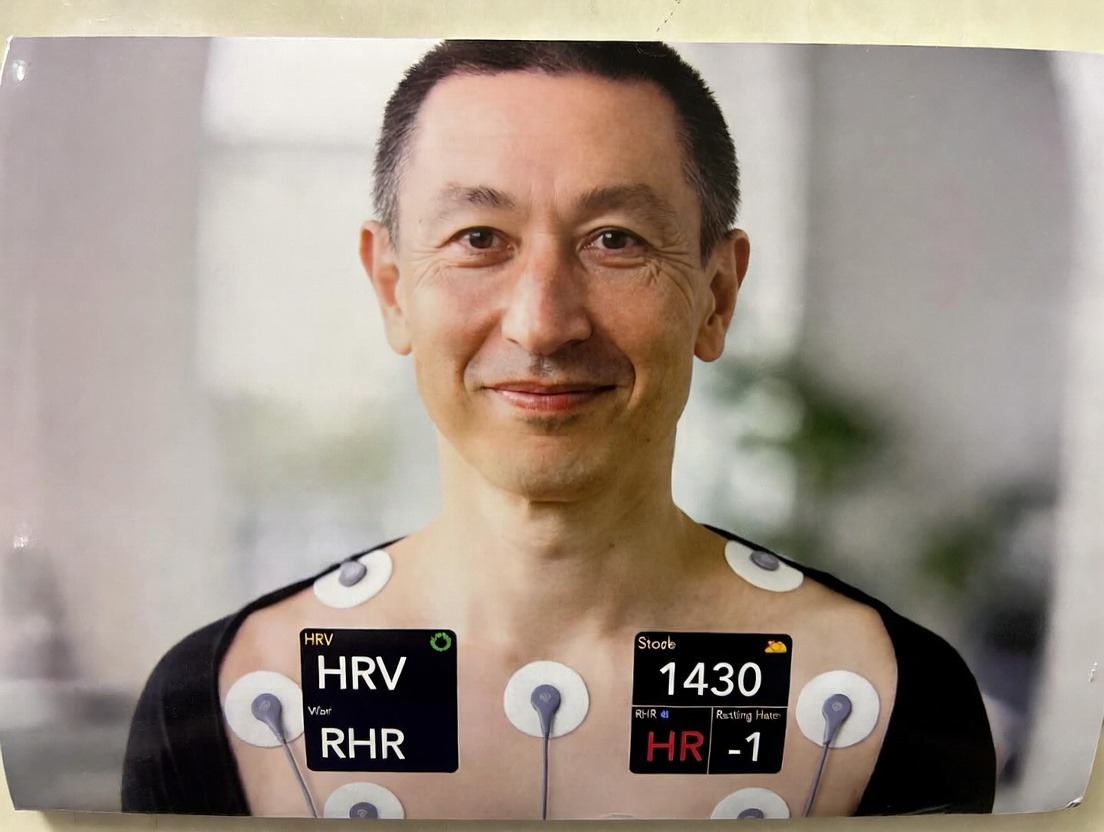
Once you’re comfortably tracking your morning RMSSD and observing trends, you can deepen your insight by exploring other HRV-derived biomarkers that many advanced platforms provide. These are not different numbers to obsess over, but complementary lenses that bring different parts of your physiological picture into focus.
Resting Heart Rate (RHR) and HRV: The Dynamic Duo
RHR and HRV are best interpreted together. Generally, a lower RHR indicates higher cardiovascular fitness. But the relationship tells the real story:
HRV During Sleep: The Unedited Story
Your nighttime HRV trace is a candid film of your nervous system’s journey through the night, unpolluted by conscious thought or movement. Key things to observe:
HRV Recovery After Stress: The Resilience Test
This is perhaps the most advanced and insightful application: how quickly does your HRV bounce back after a stressor? You can test this by:
Fast recovery (within minutes) indicates high autonomic flexibility and resilience. Slow recovery suggests your system is labored or already under load. Over time, as you get fitter and less stressed, your recovery speed should improve. This is a powerful way to see the tangible benefits of your lifestyle changes beyond just a static morning number.
Your HRV does not exist in a vacuum. It is part of a symphony of biomarkers that, when read together, create a high-definition picture of your health. A modern smart ring or wearable platform provides this multi-signal approach. Here’s how to interpret HRV in concert with its most common companions.
Skin Temperature: The Inflammation and Rhythm Gauge
Sleep Stages & Quality: The Recovery Engine
HRV tells you if you recovered; sleep data tells you how you recovered.
Blood Oxygen (SpO2) and Breathing Rate: The Respiratory Window
The Power of Correlation: The true magic happens in the dashboard view. Seeing a cluster of negative signals—HRV down, RHR up, skin temp up, sleep poor—is an unambiguous, multi-layered message from your body to hit the brakes. Conversely, a cluster of positive signals validates that your healthy habits are working on a systemic level. This integrated view moves you far beyond the limitations of any single metric. Learning to navigate this dashboard is a skill, and our FAQ section provides guidance on interpreting multiple data streams.
Theory is essential, but application is where understanding crystallizes. Let’s walk through three detailed, anonymized case studies from real user data (inspired by collective trends observed in wellness communities) to see how personal baselines and trends play out in messy, real life.
Case Study 1: The Stressed Executive (Managing Chronic Load)
Case Study 2: The Dedicated Athlete (Optimizing Training)
Case Study 3: The Lifestyle Experimenter (The Impact of Moderation)
These cases illustrate the universal principle: HRV is a mirror. It reflects your unique life, stressors, and habits back at you with objective clarity. The interpretation and action are where the personal journey lies.

Now, let’s synthesize everything into a practical, actionable protocol. This is your playbook for moving from curiosity to mastery.
Phase 1: The Foundation Month (Weeks 1-4)
Phase 2: The Detective Phase (Months 2-3)
Phase 3: The Integration Phase (Month 4 Onward)
Essential Tools:
This protocol isn’t about adding more work; it’s about building a structured approach to self-awareness. The goal is to eventually internalize these insights so that you can often feel what the data will later confirm. For support at any step of this journey, from technical setup to interpretation, our comprehensive FAQ is a great resource.
Understanding your personal HRV baseline does more than optimize your training or sleep; it fundamentally changes your relationship with your health. It fosters a shift from a disease-care model (“I go to the doctor when I’m sick”) to a true health-care model (“I actively steward my well-being every day”). This has profound broader implications.
A New Language for Health: HRV gives you a quantifiable language for previously vague concepts like “resilience,” “stress,” and “recovery.” You can now say, “My nervous system capacity is low today,” with the same objectivity as saying, “I have a fever.” This empowers clearer communication with healthcare providers, coaches, and even family about your needs.
Preventive Health & Early Detection: A consistent, unexplained deviation from your baseline—especially a downward trend in HRV coupled with elevated RHR and skin temperature—can be one of the earliest signs of physical or mental imbalance, often preceding overt symptoms. It’s a call to investigate and intervene early, whether that means resting to avert a cold or addressing mounting burnout before it leads to collapse. This proactive agency is the future of personalized health.
The Antidote to Hustle Culture: In a world that glorifies “pushing through,” HRV provides undeniable, physiological counter-evidence. It objectively shows the cost of chronic stress and sleep deprivation. It validates the need for rest. By honoring the data from your own body, you build a personal defense against toxic productivity norms. You learn that strategic recovery is not laziness; it’s the foundation of sustained performance and health.
A Path to Self-Compassion: Perhaps most importantly, tracking HRV can cultivate self-compassion. Seeing the direct impact of a hard day or a poor night’s sleep on your physiology can replace self-criticism with understanding. Instead of “Why am I so tired and grumpy?” you see, “My nervous system is under load, I need to be gentle with myself.” This data-driven self-kindness is a powerful tool for mental well-being.
This journey of understanding your HRV baseline is, at its heart, a journey of listening. It’s about tuning out the noise of external standards and tuning in to the subtle, powerful language of your own body. It is the ultimate personalization, a partnership with your physiology to build a more resilient, vibrant, and conscious life. This philosophy of empowered, personalized health is the core of our story and what drives us forward.
As we embrace the power of personal HRV data, it is imperative to step back and acknowledge its boundaries. No metric, no matter how insightful, is a panacea or a perfect oracle. A wise practitioner understands both the capabilities and the limitations of their tools. Furthermore, this deep dive into our own physiology raises important ethical and psychological questions we must navigate.
The Limitations of HRV Data:
The Ethical and Psychological Landscape:
The goal is informed intuition. Use the data to educate your gut feeling, not replace it. The most advanced health dashboard is still subordinate to the wisdom of the lived experience in the body it is measuring.
Your HRV baseline is not static across your lifetime. It evolves, shaped by both biological aging and the distinct chapters of your life. Understanding these broader trends can provide comforting context and help you set realistic, age-appropriate expectations.
The Biological Arc: Aging and HRV
It is a well-established physiological fact: HRV has a general tendency to decline with age. This is part of the natural process of “autonomic aging,” where the nervous system’s flexibility and responsiveness gradually diminish. A 20-year-old and a 60-year-old in peak health for their age will have very different typical baselines. This is why age-band charts exist—not for you to compare against, but to understand the large-scale biological trend. However, this decline is not a deterministic freefall. Lifestyle is a powerful modulator. A 60-year-old who exercises regularly, manages stress, and sleeps well can have a higher HRV—and greater autonomic resilience—than a sedentary, stressed 30-year-old. The trajectory can be flattened and optimized at any stage.
Life Stages and Major Transitions:
Beyond aging, specific life phases bring unique HRV influencers.
Understanding your data within the context of your life stage fosters self-compassion. It helps you differentiate between a natural, expected shift and an anomalous warning sign that requires attention.
We are on the cusp of a revolution in personalized health, and HRV is poised to be a central player. The future lies not in you manually cross-referencing graphs, but in intelligent systems that learn your unique patterns and deliver hyper-personalized insights. This is where artificial intelligence and machine learning transform data into proactive guidance.
From Tracking to Forecasting:
Next-generation platforms will move beyond telling you what happened yesterday. By analyzing your long-term HRV trends in the context of your sleep, activity, and lifestyle logs, AI models will begin to predict.
Truly Personalized Baselines and Ranges:
Instead of comparing you to a population, AI will define “normal” and “optimal” entirely within the context of you. It will learn that your ideal sleep for next-day HRV is 7h 15m, not 8 hours. It will learn that your system takes precisely 48 hours to recover from heavy leg training. It will understand your menstrual or seasonal cycles. The baseline becomes a dynamic, multi-dimensional model of you.
Prescriptive and Adaptive Guidance:
The final frontier is moving from insight to action. An AI health coach, built on your data, could offer tailored suggestions:
This future turns the wearable from a data logger into a true partner in health. It’s a future we are actively building towards, where technology handles the complex pattern recognition, freeing you to focus on living well. You can explore the cutting edge of this philosophy in action by discovering the technology behind platforms like Oxyzen.
Knowledge is only power if it’s applied. The ultimate goal of understanding your HRV baseline is to weave that understanding into the fabric of your daily life in a sustainable, non-obsessive way. Here’s how to make it stick.
Design Your Environment for Resilience:
Use your insights to shape your world, not just your reactions.
Build a Flexible, Not Fragile, Routine:
A rigid routine breaks under life’s pressure. A resilient routine bends and adapts. Let HRV guide that adaptation.
The Quarterly Review:
Every three months, conduct a formal review of your long-term trends.
This process turns health into a continuous, curious, and personal experiment—a lifelong journey of getting to know the most fascinating subject you’ll ever study: yourself.
We began this exploration by distinguishing between the noise of comparison and the signal of your personal baseline. We’ve journeyed through the science, the practice, the pitfalls, and the future of Heart Rate Variability. The thread that ties it all together is a simple yet profound shift: from seeing your body as a machine to be optimized with generic inputs, to engaging with it as a deeply intelligent, communicative partner in a lifelong dialogue.
Your HRV baseline is your partner’s unique voice in that dialogue. It’s not shouting instructions or handing down grades. It’s whispering nuanced feedback about balance, load, and capacity. Learning its language—its normal tone, its stressed inflections, its joyful peaks—is the work of a lifetime. Some days the conversation will be clear; other days it will be confusing. That’s okay. The act of listening itself is transformative.
This journey with HRV teaches patience. It teaches self-compassion. It grounds abstract concepts like “wellness” and “resilience” in the tangible, rhythmic reality of your own heartbeat. It gives you agency, not by offering a simple answer, but by providing a deeply personal question: “What is my body telling me today, and how can I honor that?”
So, take your number—whether it’s 30 or 130—and let it be just the beginning. Let it be the first word in a richer, more attentive relationship with the incredible, self-regulating system that carries you through every moment of your life. The goal was never a perfect score. The goal was always the conversation. And that is a conversation worth having, every single day.
Ready to begin your own journey of discovery? The first step is consistent, comfortable measurement. Explore how modern technology can facilitate this unending conversation by visiting Oxyzen to learn more about a wearable designed for this very purpose. For ongoing learning and to dive deeper into topics like sleep optimization, stress management, and metabolic health, our blog is a continually updated resource. And if you have questions, our community and support team are here to help—start by checking our comprehensive FAQ.
Your Trusted Sleep Advocate (Sleep Foundation — https://www.sleepfoundation.org/)
Discover a digital archive of scholarly articles (NIH — https://www.ncbi.nlm.nih.gov/
39 million citations for biomedical literature (PubMed — https://pubmed.ncbi.nlm.nih.gov/)
experts at Harvard Health Publishing covering a variety of health topics — https://www.health.harvard.edu/blog/)
Every life deserves world class care (Cleveland Clinic -
https://my.clevelandclinic.org/health)
Wearable technology and the future of predictive health monitoring. (MIT Technology Review — https://www.technologyreview.com/)
Dedicated to the well-being of all people and guided by science (World Health Organization — https://www.who.int/news-room/)
Psychological science and knowledge to benefit society and improve lives. (APA — https://www.apa.org/monitor/)
Cutting-edge insights on human longevity and peak performance
(Lifespan Research — https://www.lifespan.io/)
Global authority on exercise physiology, sports performance, and human recovery
(American College of Sports Medicine — https://www.acsm.org/)
Neuroscience-driven guidance for better focus, sleep, and mental clarity
(Stanford Human Performance Lab — https://humanperformance.stanford.edu/)
Evidence-based psychology and mind–body wellness resources
(Mayo Clinic — https://www.mayoclinic.org/healthy-lifestyle/)
Data-backed research on emotional wellbeing, stress biology, and resilience
(American Institute of Stress — https://www.stress.org/)


