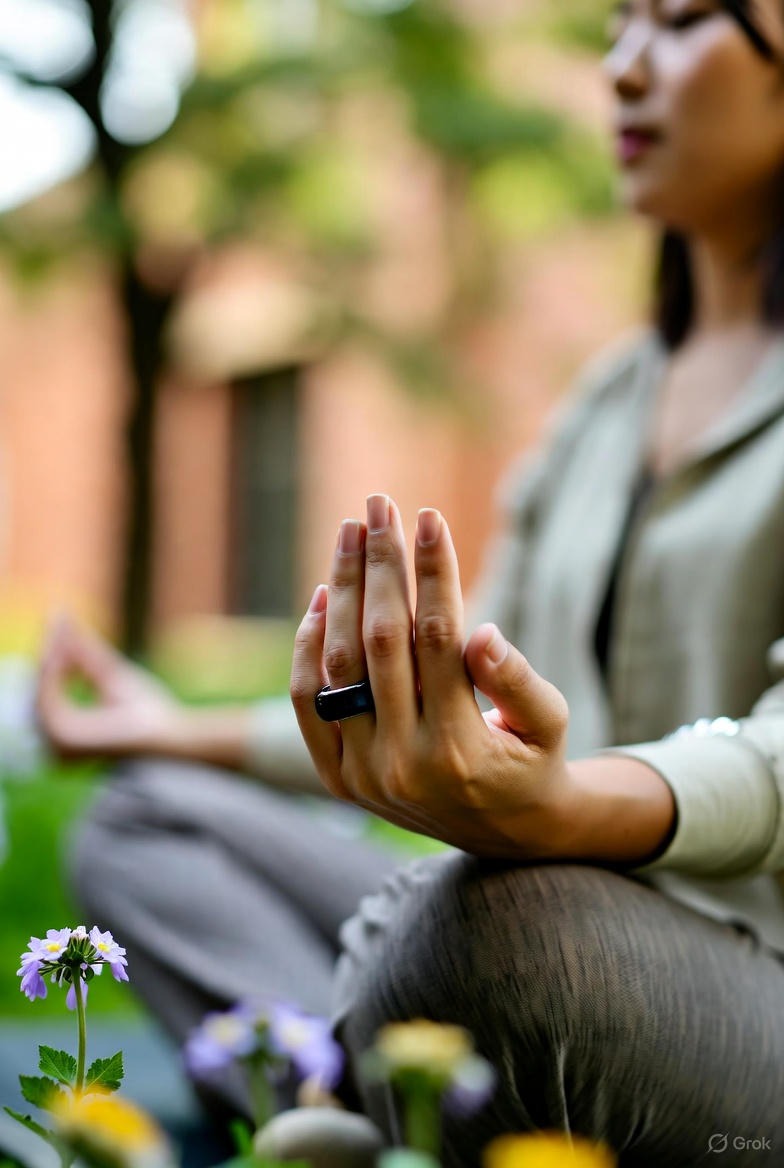
How Yoga Increases HRV: Poses and Practices Your Ring Will Track
How yoga increases HRV, with specific poses and practices your ring can track.
How Yoga Increases HRV: Poses and Practices Your Ring Will Track
Your smart ring tells a story written in the silent language of your nervous system. It whispers the data of your days—your stress, your recovery, your readiness. But one of its most profound, yet underrated, metrics is Heart Rate Variability (HRV). For years, HRV was a secret language understood only by elite athletes and researchers. Now, it’s on your finger, a daily report card on your body’s resilience and balance.
If you’ve ever glanced at your wellness dashboard and wondered why your HRV is low, or how to nudge it higher, you’re asking the right question. A higher HRV generally signals a robust, adaptable nervous system—one that can swing gracefully from the energized focus of your workday to the deep, restorative calm of sleep. It’s the physiological signature of resilience.
And there is one ancient practice that modern science and your smart ring agree is a master key to unlocking this state of fluid adaptability: yoga.
This isn’t just about stretching. This is about using deliberate movement, breath, and awareness to directly dial into your autonomic nervous system, shifting the balance from stress (sympathetic dominance) to restoration (parasympathetic tone). Your smart ring, like the Oxyzen ring, isn't just a spectator; it’s your biofeedback coach, quantifying the subtle changes each pose, each breath, and each practice session creates.
In this guide, we will bridge the timeless wisdom of yoga with cutting-edge biometrics. You’ll learn not only why yoga is perhaps the most effective tool for boosting HRV, but exactly which poses and practices create the greatest impact. More importantly, you’ll learn how to use the data from your ring to personalize your practice, track your progress from session to session, and build a sustainable ritual that transforms your nervous system. This is where intuition meets data, and where your journey to a higher, more harmonious HRV begins.
The HRV Blueprint: Understanding Your Body's Score of Resilience
Before we step onto the mat, we must understand the metric we’re aiming to improve. Heart Rate Variability is often misunderstood. A common assumption is that a healthy, steady heartbeat is like a metronome: perfectly even. The truth is the opposite. A healthy heart is subtly irregular.
HRV measures the millisecond variations in the time intervals between consecutive heartbeats (known as R-R intervals). If your heart beats at exactly 60 beats per minute, it would tick once every second. But in reality, the interval might be 1.05 seconds, then 0.95 seconds, then 1.02 seconds. This variability is a very good thing.
Why Variability Equals Vitality
This ebb and flow is governed by your autonomic nervous system (ANS), which has two primary branches engaged in a constant, delicate dance:
The Sympathetic Nervous System (SNS): Your "accelerator." It prepares you for action—increasing heart rate, blood pressure, and mobilizing energy. It's essential for focus, performance, and dealing with challenges.
The Parasympathetic Nervous System (PNS): Your "brake." Spearheaded by the vagus nerve, it promotes "rest and digest"—slowing the heart, aiding recovery, and fostering calm.
A high HRV indicates that your ANS is flexible and balanced. Your body can powerfully engage the accelerator when needed (like during a work presentation or a workout) and then efficiently hit the brakes to recover afterwards. A chronically low HRV suggests a nervous system stuck in a state of high alert—the accelerator is pressed down, and the brakes are weak. This is associated with stress, burnout, fatigue, and a higher risk for numerous health issues.
How Your Smart Ring Deciphers the Signal
Your ring uses photoplethysmography (PPG) sensors—tiny LEDs that measure blood flow changes at your capillary level—to detect each heartbeat with remarkable accuracy. Advanced algorithms then calculate HRV, often reporting it as rMSSD (the root mean square of successive differences), a time-domain measure particularly sensitive to parasympathetic (vagal) activity. This is the number you see trend upwards as your resilience improves.
Think of your HRV reading not as a single, judgmental score, but as a conversation. It’s your body’s response to everything: last night's sleep, today's coffee, that difficult conversation, and yes, your yoga practice. By observing how specific activities change this number, you move from guessing to knowing. For a deeper dive into the science of how devices like these capture your vital signs, you can explore our blog for more detailed explanations.
The ultimate goal is not to chase an arbitrary high number every day, but to widen your range of adaptability. And as we’ll see, yoga is uniquely equipped to train this very capacity.
The Neurophysiology of Om: How Yoga Directly Rewires Your Nervous System
Yoga is more than physical exercise; it is a precise technology for nervous system regulation. While a runner might see an HRV boost from improved cardiovascular fitness, a yogi earns it through direct access to the autonomic control panel. Let’s break down the primary mechanisms.
1. Breath: The Remote Control for the Vagus Nerve Pranayama, or yogic breathing, is the most direct lever you have to influence HRV. The simple act of elongating the exhalation stimulates the vagus nerve, the superhighway of the parasympathetic system. Practices like Ujjayi (Victorious Breath) and Nadi Shodhana (Alternate Nostril Breathing) create coherent, rhythmic breathing patterns that directly increase respiratory sinus arrhythmia—a primary component of HRV. Your ring can track the calm, steady heart rhythm that results from just five minutes of focused breathwork, often showing a tangible rise in rMSSD in real-time.
2. The Pressure System: Baroreceptors and Gentle Inversion When you move into poses like Legs-Up-the-Wall (Viparita Karani) or a gentle Forward Fold, you subtly alter blood pressure dynamics. This stimulates baroreceptors—sensors in your arteries—which send signals to the brain to lower heart rate and promote relaxation, thereby enhancing PNS activity and HRV.
3. The Relaxation Response: From Stress to Rest The sustained, mindful holds of yoga asana, especially restorative poses, counter the fight-or-flight response. By consciously relaxing muscles and focusing inward, you send a cascade of safety signals to the brain. This lowers cortisol and adrenaline, allowing the parasympathetic system to regain dominance. This shift is precisely what your ring tracks as your nightly HRV begins to climb after a consistent practice.
4. Interoception: The Mind-Body Feedback Loop Yoga cultivates interoception—your sense of the internal state of your body. This heightened awareness allows you to recognize early signs of stress (shallow breath, tight shoulders) and consciously intervene with a calming technique before your stress response goes into overdrive. This preemptive regulation prevents the drastic HRV suppression that comes from chronic stress cycles.
Scientific literature corroborates this. A 2020 meta-analysis in Frontiers in Psychiatry concluded that yoga interventions consistently lead to significant increases in HRV, highlighting its role as an effective, non-pharmacological modulator of autonomic function. It’s a trainable skill. Just as you build strength in Chaturanga, you build "vagal tone" through consistent practice. And unlike subjective feelings of calm, the effect is objectively quantifiable on your wearable. Seeing this data can be profoundly motivating, a sentiment echoed by users who share their wellness journeys and the role of data in their practice.
Setting Up Your Biometric Lab: Preparing Your Ring for Yoga Tracking
To turn your practice into a revealing experiment, you need to set up your tracking correctly. Not all wearables handle the dynamic heart rate changes of yoga equally well. Here’s how to ensure your ring captures the full story.
Optimal Ring Placement and Settings While smart rings are designed for 24/7 wear, for dedicated session tracking, ensure a snug but comfortable fit on your finger (usually the index finger is recommended for best signal accuracy). Avoid wearing it on a finger you bear significant weight on during poses like Downward Dog. The ring should be clean and free of significant moisture. Before you begin, open your companion app and manually initiate a "mindfulness" or "workout" session if the feature is available. This tells the device to prioritize heart rate and HRV sampling frequency for the next period.
What to Track: Beyond the HRV Number While the post-session HRV reading is a key outcome, the journey there holds equal insight:
Real-time Heart Rate: Observe how it fluctuates between a vigorous Sun Salutation and a still Savasana. A good practice shows variability—peaks and valleys.
Heart Rate Recovery (HRR): After a challenging peak pose sequence, note how quickly your heart rate drops in the following restorative pose. Faster recovery indicates better parasympathetic pull, a precursor to higher HRV.
Session vs. Baseline: Compare your HRV measurement during or immediately after your practice to your daily morning baseline (usually taken by your ring during sleep). An acute boost is a positive sign.
Long-Term Trends: The real magic is in the trends. Use your app’s weekly or monthly view to see if your resting HRV (especially your sleep average) is gradually increasing.
Creating a Consistent Measurement Protocol For clean data, try to practice at a similar time of day (morning is excellent for setting a tone). Hydrate well beforehand, as dehydration can affect readings. Note other factors in your app’s journal: duration of practice, style of yoga (e.g., Vinyasa vs. Yin), and even your subjective mood. Over time, you’ll see clear patterns: "60-minute Yin sessions on Tuesday nights correlate with a 10% higher sleep HRV."
This data-driven approach transforms your practice from a routine to a responsive dialogue with your body. It answers questions like, "Is a 20-minute morning flow better for my nervous system than a 60-minute evening one?" or "Which rest day activities support my HRV the most?" This philosophy of personalized, data-informed wellness is at the core of what we believe in, part of a larger mission to empower individuals with actionable health insights.
Foundation Poses: The HRV-Boosting Asanas Accessible to Everyone
You don’t need to be a contortionist to reap the HRV benefits of yoga. In fact, the most powerful poses are often the simplest, focusing on release, restoration, and breath. These foundation poses form the bedrock of a nervous-system-nourishing practice. Your ring will love them.
1. Legs-Up-the-Wall Pose (Viparita Karani) This is arguably the crown jewel of HRV-enhancing asanas.
How to Practice: Sit sideways with one hip touching the wall. Gently swing your legs up as you lie back, resting your heels on the wall. Keep arms relaxed by your sides, palms up. Hold for 5-15 minutes.
The HRV Mechanism: It combines gentle inversion (baroreceptor stimulation) with profound muscular relaxation. The passive, supported nature signals absolute safety to the nervous system, triggering a strong parasympathetic response. It’s common to see a noticeable dip in real-time heart rate and a spike in post-session HRV readings.
Smart Ring Insight: Track your heart rate as you hold this pose. Watch it slowly descend, a visual proof of your "brakes" engaging.
2. Supported Child’s Pose (Balasana) A sanctuary of surrender.
How to Practice: Kneel, then fold forward, resting your torso on a bolster or stack of pillows. Turn your head to one side, arms relaxed. Hold for 3-5 minutes, then switch head position.
The HRV Mechanism: This forward fold creates a protective, cocoon-like shape, calming the mind and softening the diaphragm to allow for fuller, easier breaths—direct vagus nerve stimulation.
Smart Ring Insight: Notice how your breath naturally deepens in this pose. This coherent breathing is the engine of HRV improvement.
3. Reclining Bound Angle Pose (Supta Baddha Konasana) A heart-opener that encourages release, not effort.
How to Practice: Lie on your back, soles of feet together, knees falling out to sides. Place supports under each thigh for comfort. One hand on heart, one on belly.
The HRV Mechanism: This pose releases tension in the inner thighs, groin, and abdomen—areas where we often hold stress. The hand placement fosters interoceptive awareness and heart-brain coherence, a state linked to optimal HRV.
Smart Ring Insight: Use this pose at the end of practice. Its effect is often reflected in your next morning’s HRV reading, showing improved recovery.
4. Corpse Pose (Savasana) with Leg Support The ultimate integration pose, often skipped but most critical for HRV.
How to Practice: Lie flat, but place a bolster or rolled blanket under your knees. This slight knee bend relieves lower back tension and deepens relaxation. Cover yourself with a blanket for warmth.
The HRV Mechanism: Savasana is where the nervous system integrates the benefits of the entire practice. It’s a state of non-doing, where parasympathetic activity can truly flourish. The physical support minimizes micro-muscle contractions that can keep the SNS subtly engaged.
Smart Ring Insight: Don’t cut this short. A full 5-10 minute Savasana can be the difference between a good and a great HRV response from your session. Your ring will show a stabilized, low heart rate if you are truly resting.
Begin your exploration here. Practice these poses for a week, using your ring to observe the acute effects. You’ll gather the first compelling evidence that your practice is working from the inside out.
The Power of Breath: Pranayama Techniques Your Ring Will Quantify
If poses are the hardware of your yoga practice, pranayama is the operating system. By consciously regulating breath, you issue direct commands to your brainstem, altering heart rate, blood pressure, and emotional state. These techniques are the fastest way to create an acute, measurable shift in your HRV.
1. Coherent or Resonant Breathing (≈ 5 breaths per minute) This is the foundational HRV biofeedback breath.
The Practice: Inhale smoothly for 5 seconds, then exhale smoothly for 5 seconds. Repeat for 5-10 minutes. The goal is a gentle, wave-like breath without strain.
The Science: This 5.5-second cycle (5.5 breaths per minute) often coincides with the natural resonance frequency of the human cardiovascular system. It creates perfect synchrony between heart rate oscillations and breathing cycles, maximizing HRV amplitude. Studies show it rapidly increases vagal tone.
Ring Data Story: Practice this while wearing your ring and watching the real-time heart rate graph. You will likely see a clear, sinusoidal wave pattern emerge—your heart rate rising gently on the inhale and falling on the exhale. This is high HRV in action. The rMSSD score from a session like this can be strikingly high.
2. Extended Exhalation Breathing (4-in, 6-out or 4-in, 8-out) Amplifying the relaxing power of the exhale.
The Practice: After a comfortable inhale, gently prolong the exhale to make it longer than the inhale. A 1:1.5 or 1:2 ratio is a great start (e.g., inhale 4 counts, exhale 6 or 8 counts).
The Science: The vagus nerve fires primarily on the exhalation. Lengthening it directly stimulates more parasympathetic activity, slowing the heart and boosting HRV.
Ring Data Story: Your heart rate will gradually decline during this practice. Compare your pre- and post-practice HRV (using a quick mindfulness session on your app). The increase can be immediate and significant.
3. Alternate Nostril Breathing (Nadi Shodhana) For balancing the nervous system and calming mental chatter.
The Practice: Using your right thumb and ring finger, gently close the right nostril, inhale through the left. Close the left, open the right, exhale through the right. Inhale through the right, close it, exhale through the left. This is one cycle.
The Science: While the research is evolving, it’s believed to balance hemispheric brain activity and create smooth, regulated breathing patterns, reducing stress and promoting autonomic balance.
Ring Data Story: Track your Heart Rate Variability during a 5-minute Nadi Shodhana session versus 5 minutes of sitting quietly. The structured breathing often yields a more pronounced calming effect, reflected in a higher rMSSD.
Using Your Ring as a Biofeedback Device This is the most powerful application. Sit quietly, start a breathing exercise, and periodically glance at your app’s heart rate graph. Your goal is to smooth out the jagged lines into harmonious waves. The ring provides instant feedback: if your mind wanders and your breath becomes ragged, the graph will show it. This turns pranayama from an abstract exercise into a tangible, skill-building game. For those curious about the technology that makes this possible, the FAQ section details how the sensors capture these subtle physiological shifts.
Sequencing for Stress Resilience: Building a Practice That Maximizes HRV Impact
A haphazard collection of poses is good; a strategically sequenced practice is transformative. The right order can guide your nervous system on a journey from mild activation to deep restoration, creating the ideal conditions for an HRV surge. Here is a blueprint for a 45-minute HRV-optimized sequence.
Goal: Signal safety and transition from doing to being.
Practice: Begin supine or seated. Supine Twist (Supta Matsyendrasana), Cat-Cow (Marjaryasana-Bitilasana) at a very slow pace, focusing purely on the connection between breath and movement.
Ring Insight: Your starting heart rate will begin to settle from your pre-practice state. This phase should not elevate it.
Phase 2: Soft, Flowy Movement (10-15 mins)
Goal: Create gentle cardiovascular coherence and warm the body, not exhaust it.
Practice: A slow, breath-linked Sun Salutation (Surya Namaskar), perhaps pausing in Downward Dog for a few breaths. Incorporate fluid, standing poses like Warrior II (Virabhadrasana II) and Triangle (Trikonasana) with an emphasis on stability over depth.
Ring Insight: Your heart rate will rise moderately, showing a healthy, adaptable sympathetic response. The key is that it should rise and fall with your breath.
Phase 3: Supported Holding & Deep Release (15 mins)
Goal: Shift decisively into the parasympathetic state.
Practice: Move to the floor for the foundation poses: Supported Child’s Pose, Reclining Bound Angle, a gentle Supine Spinal Twist, and finally Legs-Up-the-Wall. Use props generously. Hold each for 3-5 minutes.
Ring Insight: This is where you should see your real-time heart rate graph begin a steady, stair-step descent. This is the visual proof of your nervous system downshifting.
Phase 4: Integration & Stillness (5-10 mins)
Goal: Lock in the relaxation response.
Practice: A fully supported Savasana, followed by 5 minutes of Coherent Breathing or silent meditation.
Ring Insight: Your heart rate should reach its practice low. The post-session HRV score you capture now will reflect the depth of this integration phase.
What Your Data Will Show: A well-sequenced practice will have a "rollercoaster" heart rate graph: a small, gentle peak in Phase 2, followed by a sustained and significant decline through Phases 3 and 4. The HRV measurement taken at the end will be substantially higher than when you began. Contrast this with a high-intensity power yoga session, which may show a sharp, sustained peak and a slower recovery—still beneficial for fitness, but less acutely potent for HRV enhancement. This nuanced understanding of how different activities affect your biomarkers is a topic we often explore in-depth on our blog for holistic wellness.
The Restorative Deep Dive: Yoga Nidra and Yin for Vagal Tone
For times when even a gentle flow feels like too much effort, or when your ring shows chronically low HRV and high stress, it’s time to go passive. Restorative Yoga and Yoga Nidra are not "easy" yoga; they are advanced practices in conscious relaxation, offering perhaps the most potent direct stimulation for the vagus nerve and parasympathetic system.
Yin Yoga: Stress Release Through Fascial Surrender Yin targets the deep connective tissues (fascia, ligaments) through passive, long-held floor poses (typically 3-5 minutes).
HRV Mechanism: The prolonged, gentle stress on the fascia triggers a parasympathetic-dominant "relaxation rebound" effect. As you mentally surrender to the mild discomfort, you practice neurological letting go, directly damping SNS overactivity. Poses like Supported Dragon Pose, Sphinx, and Butterfly are classics.
Ring Data Story: A Yin session may not show much heart rate fluctuation, but the recovery after is profound. Track your sleep HRV on nights you do Yin. You will often see it elevated, indicating superior nervous system recovery. The long holds teach your body to stay calm under sustained, low-grade sensation—a metaphor for life's stressors.
Yoga Nidra: Non-Sleep Deep Rest (NSDR) Yoga Nidra, or "yogic sleep," is a guided systematic relaxation practice performed lying in Savasana. It brings you to the threshold of sleep while maintaining awareness.
HRV Mechanism: It works by systematically rotating awareness through the body and using sankalpa (intention), which appears to synchronize brainwave patterns (increasing alpha and theta waves) and dramatically reduce cortisol. This state is a playground for the parasympathetic nervous system.
Ring Data Story: This is where data gets fascinating. A 20-minute Yoga Nidra session can produce a deeper drop in heart rate than several hours of normal sleep. Your HRV during the practice can skyrocket. More importantly, the carry-over effect is powerful. Consistent practice recalibrates your nervous system baseline, leading to a sustained rise in your daily HRV readings. It is a master reset button.
Creating a Ritual: Pair these practices with your ring’s data. When you see a streak of low HRV, skip the vigorous workout. Instead, commit to a 30-minute Yin sequence or a 20-minute Yoga Nidra guided audio. Your ring will provide irrefutable feedback on its effectiveness, moving these practices from "nice ideas" to non-negotiable tools in your resilience toolkit. The profound impact of such consistent, data-validated rituals is something our users frequently share in their personal testimonials and stories.
Beyond the Mat: Integrating Yogic Principles for All-Day HRV Support
The true test of your practice isn't just the HRV spike on your mat; it's how you carry that state into the chaos of daily life. This is where yoga transcends physical postures and becomes a lens for living. Your smart ring becomes the bridge, showing you how daily choices support or undermine your hard-earned nervous system balance.
1. Mindful Transitions: The Mini-Savasana The nervous system hates abrupt shifts. Build "buffer zones" into your day.
Practice: After finishing a work task, before starting the car, or when you first get home, take 60 seconds. Sit, close your eyes, and take 5 coherent breaths (5-second inhale, 5-second exhale).
Ring Insight: This micro-practice can prevent the cumulative stress spikes that keep your nervous system on edge and suppress all-day HRV. Notice if days with conscious transitions lead to a smoother, less "jagged" heart rate graph.
2. Cultivating Santosha (Contentment) & Aparigraha (Non-Grasping) Stress often stems from craving what we don't have or resisting what is. These niyamas (ethical observances) are direct antidotes.
Practice: When you feel frustration rising, pause. Acknowledge the feeling without judgment. Can you find one small thing to be content with in this moment? Can you let go of your tight grip on a specific outcome?
Ring Insight: Chronic frustration and anxiety create sympathetic tone. Practicing these principles reduces the frequency and intensity of those stress spikes, which will be reflected in a more stable, higher daily HRV average over time.
3. Conscious Communication & Right Speech (Satya) Heated arguments and passive-aggressive exchanges are HRV killers. They trigger fight-or-flight physiology.
Practice: Before reacting, take one full breath. Aim to speak truthfully and kindly. Listening fully is a yogic practice that activates the social engagement system, linked to vagal tone.
Ring Insight: Check your ring's stress score or heart rate graph after a difficult conversation. With practice, you'll see your physiological reactivity lessen—your heart rate may rise less and recover faster, protecting your HRV.
4. Pranayama in the Wild Don't save your breathwork for the cushion.
Practice: Use extended exhalation (4-in, 6-out) when stuck in traffic. Use coherent breathing while waiting in line or before a meeting. It’s a stealth reset for your nervous system.
Ring Insight: These are in-the-moment HRV rescues. You can literally watch a rising heart rate or stress alert fall back down with a minute of focused breathing. It turns your ring into a real-time biofeedback monitor for life.
By weaving these principles into your day, you create a perpetual, low-grade "yoga practice" that supports your nervous system. Your mat time then becomes a deep-tune session, rather than the only time you find calm. This holistic integration is the essence of sustainable wellness, a principle that guides our vision for how technology can support a balanced life.
How Yoga Increases HRV: Poses and Practices Your Ring Will Track
Continued from the previous sections covering Foundation Poses, Pranayama, Sequencing, Restorative Yoga, and Yogic Living...
Decoding the Data: How to Interpret Your Ring's HRV Response to Yoga
You’ve practiced. Your ring has captured the session. Now, a dashboard of numbers and graphs awaits. This is where many people falter, misinterpreting noise for signal or missing the profound insights hidden in the data. Let’s become fluent in the language of your biometrics to understand what a successful, HRV-boosting yoga practice truly looks like in the data.
The Acute Response: What a Great Session Looks Like A single session designed for nervous system regulation should paint a clear picture on your heart rate graph:
Initial Settling (5 mins): Your starting heart rate (influenced by pre-practice activity) begins to descend as you center and begin gentle movement.
Gentle, Coherent Peak (10-15 mins): During your soft, flowy movement phase, heart rate rises. The key is that it should rise and fall in a wave-like pattern, synchronized with your breath (inhale up, exhale down). This “coherent peak” is not a spike; it’s a rhythmic swell.
Sustained Descent (15-20 mins): As you transition to supported, restorative holds and pranayama, your heart rate should begin a steady, stair-step decline. This is the visual signature of parasympathetic activation.
Baseline/Minimum (Final 5-10 mins): In Savasana or meditation, your heart rate should reach its lowest point of the session. A smooth, low-variability line here indicates deep stillness.
Post-Session HRV: The rMSSD or HRV score logged at the end of the session should be significantly higher (often 20-50% or more) than your pre-practice resting value. This is the acute “boost.”
The Long-Term Trend: The True Measure of Success While the session-by-session boost is gratifying, the ultimate goal is to shift your baseline. This is tracked in two primary ways:
Sleeping/Nightly HRV: This is your gold standard, as it measures your nervous system’s state in its most unencumbered, recovery-focused mode. A successful yoga practice consistently shows a gradual upward trend in your weekly or monthly average sleeping HRV. This indicates you are building genuine, resilient vagal tone.
Morning Readiness Score: Many apps synthesize HRV, heart rate, sleep, and temperature into a single “readiness” or “recovery” score. As your HRV improves, you should see more frequent high readiness scores, indicating your body is better prepared for stress and adaptation.
Navigating the Confusing Days: Context is Everything Not every session will yield a perfect graph or a higher number. It’s critical to contextualize:
Low Pre-Session HRV: If you start your practice already stressed, fatigued, or dehydrated, your HRV may be suppressed. A “successful” practice on such a day might simply be preventing it from dropping further or creating a smaller acute boost. The act of practicing despite low energy is itself a win.
The Lag Effect: Some practices, particularly deep Yin or Yoga Nidra, may not show a dramatic acute HRV spike immediately after. Their magic often appears in your sleep data that night. Always check the next morning’s HRV reading.
Inflammation & Illness: Your body diverts resources to fight infection, which can lower HRV. Practicing very gently during this time supports recovery without expecting performance gains. For more on how biomarkers interact, our blog covers topics like HRV during illness.
The Pitfall of Obsession: Data as a Guide, Not a God It is possible to become so fixated on raising a number that you create a new form of performance anxiety—the opposite of yoga’s aim. If you find yourself feeling discouraged by a “low” score, remember:
Variability is Normal: Daily fluctuations of 10-30% are standard.
The Trend is Your Friend: Zoom out to the weekly or monthly view.
Subjective Feeling Trumps All: Do you feel more centered, resilient, and calm? That is the ultimate metric. The data should validate your experience, not invalidate it.
Using your ring this way transforms it from a passive tracker to an interactive guide. It answers questions like, “What type of practice do I actually need today?” and provides undeniable proof that your time on the mat is changing your biology.
Advanced Asanas for Autonomic Balance: Poses That Challenge and Calm
Once your foundation is solid and you’ve built a consistent dialogue with your nervous system through basic poses and breath, you can carefully introduce more challenging asanas. The goal here isn’t achievement; it’s using moderate physical stress as a training tool for autonomic flexibility. These poses ask your system to engage (sympathetic) and then, crucially, to release and recover (parasympathetic) efficiently.
1. Supported Backbends: Heart Openers with a Safety Net Backbends are inherently stimulating but can create anxiety if approached with force. Using props makes them powerful HRV tools.
Supported Bridge Pose (Setu Bandhasana Sarvangasana): Lie with a block or bolster under your sacrum, not your lower back. Arms rest by your sides. Hold for 2-4 minutes.
HRV Mechanism: This gentle backbend can release stored tension in the chest and diaphragm, areas linked to the “freeze” stress response. By supporting the body, you allow the PNS to stay engaged even while in a vulnerable, open position. It teaches the nervous system to stay calm under mild physical vulnerability.
Ring Insight: Monitor your heart rate. If it climbs and stays high, you’re straining—add height to your support. The ideal response is a slight initial increase followed by stabilization or a gradual decrease.
2. Gentle Inversions: Changing Perspective, Literally Inversions like Headstand (Sirsasana) and Shoulderstand (Sarvangasana) are advanced and require proper preparation. For HRV focus, we look at their preparatory stages.
Dolphin Pose (Ardha Sirsasana): A forearm-downward dog. Builds strength for inversions while combining an inversion element with calming forward-fold qualities.
Legs-Up-the-Chair: A more accessible inversion than full shoulderstand. Lie on your back, place your calves on the seat of a chair, hips close to the chair legs.
HRV Mechanism: Safe, supported inversions can calm the baroreceptor reflex and improve cerebral blood flow, which can have a downstream calming effect on the stress centers of the brain. They require trust and surrender.
Ring Insight: Track your Heart Rate Recovery (HRR) immediately after coming out of the pose. A quick return to baseline indicates good autonomic regulation.
3. Balancing Poses: The Neuroscience of Steadiness Poses like Tree Pose (Vrksasana) or Eagle (Garudasana) are not just physical tests.
HRV Mechanism: Balancing requires intense focus (prefrontal cortex engagement) while managing micro-muscle corrections. This integrated brain-body challenge, when approached with a calm breath, trains the nervous system to handle cognitive-physical stress without tipping into panic. The moment you find steadiness amidst wobbling is a direct lesson in nervous system equilibrium.
Ring Insight: Practice balancing on days when your morning HRV is high (good readiness). You’ll likely hold longer and with more ease. On low HRV days, use a wall for support—the neural training is similar without the frustration that could spike stress hormones.
The Golden Rule of Advanced Practice: Effort with Ease (Sthira Sukham Asanam) The Patanjali Yoga Sutras define asana as a balance of steadiness (Sthira) and ease (Sukha). In HRV terms, this is the perfect balance of sympathetic engagement and parasympathetic modulation. You should feel the pose, but your breath should remain smooth and audible (Ujjayi). If you’re grunting, grimacing, or holding your breath, you’ve tipped into pure stress response. Your ring will show it as a sharp, sustained heart rate spike with poor variability. Back off, use a prop, and find the “edge” where challenge and calm coexist. This mindful approach to advancement reflects the core philosophy behind creating tools for sustainable wellness, much like the thoughtful design journey behind our own products.
Crafting Your Personal Yoga-HRV Protocol: A 28-Day Data-Driven Plan
Knowledge becomes power through consistent, personalized application. This 28-day plan is designed not as a rigid prescription, but as a framework for experimentation. Your smart ring is your lab partner, helping you discover what uniquely works for your physiology.
Week 1: The Baseline & Foundation Week
Goal: Establish tracking habits and baseline response data.
Practice (Days 1-6): 20-minute evening practice. 5 mins of Coherent Breathing, 10 mins of Foundation Poses (Legs-Up-the-Wall, Supported Child’s), 5 mins of Savasana.
Data Mission: Do not judge the numbers. Simply log: pre-practice HRV (from your app’s daily reading), post-session HRV (use a mindfulness session), and next morning’s sleeping HRV. Note subjective energy/mood.
Ring Action: Ensure your ring is charged and fitted. Use the journal feature to note “Y20” each practice day.
Week 2: Introducing the Wave
Goal: Observe the effect of gentle, coherent movement.
Practice (Days 1,3,5): 30-minute practice. 5-min breath, 15-min slow Sun Salutations (3 rounds, pausing in Downward Dog for 5 breaths each), 10-min restorative (choose 2 foundation poses).
Practice (Days 2,4,6): Repeat 20-min foundation practice from Week 1.
Data Mission: Watch your real-time heart rate graph on movement days. Do you see the wave-like pattern? Compare the post-session HRV boost on movement days vs. restorative-only days. Which led to a better sleep HRV?
Week 3: Exploring Intensity & Depth
Goal: Test different styles and find your “Goldilocks Zone.”
Practice (Day 2): Restorative Day. 30-min foundation practice.
Practice (Day 3): Coherent Flow Day. 40-minute sequenced practice as outlined in Section 6.
Practice (Day 4): Rest or gentle walk.
Practice (Day 5-6): Repeat any two of the above that you enjoyed most.
Data Mission: This is your comparative week. Which practice yielded the highest acute HRV boost? Which led to the deepest sleep and highest morning HRV? Is there a lag effect? Your data will start pointing to your ideal “dose.”
Week 4: Integration & Personalization
Goal: Design your own weekly template based on your data insights.
Task: Review your 3-week data. Answer: On high-stress/low-HRV days, which practice was most effective at resetting me? On high-energy days, which practice felt supportive without being depleting?
Create Your Protocol: Draft a weekly schedule. Example: Mon (Coherent Flow), Tue (Restorative), Wed (Pranayama + Yin), Thu (Coherent Flow), Fri (Restorative/Yoga Nidra), Sat (Optional fun movement), Sun (Long Foundation Practice).
Data Mission: Live by your protocol this week. At the end, check your weekly average sleeping HRV. Has it increased from Week 1? Has your HRV variability (the difference between your high and low days) decreased, indicating more stability?
Sustaining the Practice: The 90-Day Checkpoint The true recalibration of the nervous system occurs over months. At 90 days, conduct a full review:
Export or view your 90-day HRV trend. Is the slope pointing up?
Recalibrate: Has your practice become routine? Introduce one new element—a different pranayama, a workshop, a new advanced pose to explore mindfully.
This data-informed, self-directed approach ensures your yoga practice remains a living, evolving conversation with your body, not a static routine. It embodies the principle of svadhyaya (self-study), one of the core tenets of yoga. For continued inspiration and to see how others structure their wellness journeys, our community often shares insights and further reading on sustainable practices.
Troubleshooting: When Your HRV Isn't Budging (Or Drops)
You’ve been consistent, but the numbers are stagnant. Or worse, they’ve dipped. Before feeling discouraged, understand that this is a critical part of the data dialogue. A low or stuck HRV is not a failure; it’s a message. Here are the common culprits and how to address them.
1. Overtraining & Under-Recovering: The Most Common Pitfall More yoga is not always better. If you’ve added intense Vinyasa or Ashtanga sessions 6 days a week on top of other training, you may be in a state of chronic sympathetic overload.
The Signs: Stagnant/low HRV, elevated resting heart rate, poor sleep despite fatigue, feeling irritable or “wired and tired.”
The Yoga Fix: Immediately switch to a Restorative or Yin-only week. Prioritize Savasana and Yoga Nidra. Think “nourish” not “accomplish.” Use your ring to confirm your resting heart rate is dropping and sleep HRV is recovering.
2. Poor Sleep Hygiene: Undermining Your Practice You can’t yoga your way out of chronic sleep deprivation. The deep nervous system recovery that boosts HRV happens during sleep.
The Signs: Low sleep HRV correlates directly with poor sleep scores (short duration, frequent wake-ups).
The Yoga Fix: Move your practice to the morning or early evening. A vigorous practice right before bed can keep some people alert. Implement a 10-minute pre-bed ritual: Legs-Up-the-Wall, followed by gentle supine twists and a short Yoga Nidra. This directly prepares your nervous system for sleep, which your ring will track via improved sleep metrics.
3. Chronic Life Stress: The Mat Can’t Contain It All If you’re in a period of intense emotional, financial, or relational stress, your nervous system is under a legitimate, sustained load. Expect HRV to be lower.
The Signs: HRV is low and “spiky” (high variability day-to-day, indicating poor stability). You feel on edge even after practice.
The Yoga Fix: Shift focus from changing your state to being with it. Practice Yin and Restorative yoga with an emphasis on interoception. Use poses to feel and acknowledge the physical sensations of stress (tight jaw, knotted stomach) without trying to force them away. This acceptance paradoxically reduces the secondary stress about being stressed. Support this with professional guidance if needed.
4. Dietary & Hydration Influences Heavy meals, alcohol, dehydration, and excessive caffeine can all acutely suppress HRV.
The Signs: You see a pattern of low HRV on days after late dinners or social events with alcohol.
The Yoga Fix: Practice agnisar kriya (gentle stomach pumping) or seated twists in the morning to aid digestion. Ensure you are well-hydrated before your practice. Notice if a vigorous practice on a full stomach affects your metrics negatively.
5. The Adaptation Dip Sometimes, a temporary dip in HRV can occur when your body is adapting to a new, positive stressor (a new job, a new training regimen). It’s a sign of initial strain before supercompensation.
The Signs: A short-term dip (3-7 days) after starting a new, challenging but manageable life change or yoga style, followed by a rebound to higher than previous levels.
The Yoga Fix: Stay the course, but prioritize recovery. Don’t add more stress. Trust the process and monitor for the rebound.
When to Consult a Professional: If you have addressed all lifestyle factors, have been consistent with a balanced practice for 3+ months, and your HRV remains chronically and inexplicably low (and you feel unwell), it’s wise to consult a healthcare provider. It could indicate an underlying issue like sleep apnea, hormonal imbalance, or a chronic infection. Your ring’s data is a powerful tool to start that conversation. For questions on how specific metrics work, our FAQ is a great resource for technical understanding.
The Future of Biofeedback Yoga: Where Wearables and Ancient Practice Converge
We are standing at the precipice of a revolution in personalized wellness. The simple act of quantifying our inner state is changing our relationship with practices like yoga from generic to genomic in its specificity. The future of “biofeedback yoga” is not science fiction; it’s the logical next step in the integration we’ve begun with today’s smart rings.
Real-Time Haptic Guidance: The Silent Guru on Your Finger Imagine your ring sensing the jagged heart rate pattern of stress during a busy day. It gives a gentle vibration, prompting you to take three coherent breaths. As you begin, it vibrates in sync with your ideal inhale/exhale rhythm, guiding you into coherence. During your practice, it nudges you when your heart rate suggests you’re straining in a pose beyond your optimal edge, or confirms with a soft pulse when you’ve found perfect breath-movement synchrony in your flow.
AI-Powered, Adaptive Yoga Sequences Your wearable will analyze weeks of your data: when you sleep best, when your HRV peaks, how you respond to backbends vs. forward folds. It will then generate a unique 15-minute audio-guided sequence for that morning, designed to address your current physiological state (e.g., “High resting heart rate, low HRV. Sequence focus: Parasympathetic activation via supported forward folds and extended exhalation pranayama.”). The sequence evolves with you.
Emotional Biomarker Integration Future sensors may measure skin temperature variability, electrodermal activity (subtle sweat), and even blood oxygen changes with greater precision. Combined with HRV, this could allow your device to identify not just “stress,” but the physiological signature of frustration, sadness, or anxiety. Your yoga practice could then be tailored to your emotional state, offering a sequence to soothe agitation or gently energize melancholy.
The Quantified Sangha (Community) Anonymous, aggregated data from millions of practitioners could answer profound questions: “What is the most statistically effective sequence for improving sleep HRV in men over 40?” or “Which pranayama technique yields the greatest acute HRV increase for new mothers?” This collective intelligence would elevate the entire practice, grounding ancient wisdom in massive, modern datasets.
The Ethical Imperative: Data Sovereignty and Wisdom With this power comes responsibility. The core of yoga is self-awareness (svadhyaya) and non-attachment (vairagya). The future must protect user data fiercely and design systems that empower inner wisdom, not create dependency on external devices. The goal is to use technology as a mirror until the inner feeling becomes so clear that the mirror is no longer needed. This balanced, human-centric approach to innovation is at the heart of our vision for the future of wellness technology.
This future is not a departure from tradition, but its fulfillment. Patanjali’s Yoga Sutras are a systematic, investigatory framework. The yogi is urged to observe the modifications of the mind. What is a smart ring if not a tool for extraordinarily precise observation? It brings us full circle, allowing us to practice the ultimate yoga: the yoga of knowing ourselves, with unprecedented clarity and compassion.
The Meditation Connection: Deepening HRV Impact Beyond Movement
While the physical postures of yoga are a powerful gateway, the practice’s deepest influence on Heart Rate Variability often flows from the still, silent space of meditation. Dhyana, or meditation, is the seventh limb of Patanjali’s eight-limbed path, and it represents a state of sustained, effortless focus. This state is neurologically and physiologically distinct from even the deepest Savasana, and its impact on your autonomic nervous system—and thus your HRV—is profound. Your smart ring can be the bridge that helps you understand and access this state more reliably.
The Neurological Shift: From Default Mode to Present Moment Modern neuroscience shows that a wandering mind—caught in the “Default Mode Network” (DMN) of reminiscing and worrying—is often a stressed mind. Meditation practices cultivated in yoga, such as mindfulness (focus on breath or body sensations) and loving-kindness (metta), directly quiet the DMN.
HRV Mechanism: This quieting reduces the constant, low-grade cognitive stress that keeps the sympathetic nervous system subtly engaged. As mental chatter subsides, so does its physiological counterpart. The brain’s frontal cortex (associated with regulation) becomes more active, fostering a top-down calming effect on the amygdala (the fear center), which directly translates to increased parasympathetic tone and higher HRV.
Types of Meditation & Their Unique HRV Signatures Different meditation styles can produce subtly different physiological responses, which your ring can help you discern:
Focused Attention (e.g., on the breath or a mantra):
Practice: Gently returning attention to a single anchor each time it wanders.
Expected Ring Data: This often produces the most coherent HRV pattern. The rhythm of the breath (if used as an anchor) creates a clean, wave-like heart rate oscillation. You may see a steady, moderate HRV reading that reflects calm, engaged focus without drowsiness.
Open Monitoring (e.g., mindfulness, Vipassana):
Practice: Observing all sensations, thoughts, and emotions without attachment or reaction.
Expected Ring Data: The HRV pattern may be less rhythmically tied to breath and show slightly higher variability as attention broadens. However, the overall trend should be toward lower heart rate and a higher average rMSSD as equanimity deepens. The key metric is how quickly the heart rate returns to baseline after a distracting thought arises.
Practice: Generating feelings of compassion and warmth for oneself and others.
Expected Ring Data: Fascinating research suggests this practice may create a unique blend of physiological arousal (slight HR increase from emotional engagement) coupled with strong parasympathetic activity (high HRV). Your ring might show a higher heart rate than in other meditations, but with excellent variability—a signature of positive, connected emotional arousal.
Using Your Ring as a Meditation Biofeedback Tool This is where technology can accelerate an ancient practice:
Pre- and Post-Session Snapshots: Take a 1-minute HRV reading before and after a 10-20 minute meditation. The acute change can be dramatic and is immediate positive reinforcement.
Real-Time Coherence Training: Some advanced wearables and apps provide “coherence” scores. You can use this in real-time: sit to meditate, and aim to keep the coherence score high. It turns an abstract practice into a tangible game of maintaining physiological calm.
Identifying “Busy” vs. “Quiet” Sessions: Not all meditations feel deep. On days your mind is busy, you might assume it was ineffective. But your ring’s data may tell a different story: even with mental chatter, your HRV may have risen significantly. This separates the feeling of meditation from its physiological effect, preventing discouragement.
The Synergy of Asana and Meditation The postures prepare the body for sitting—releasing physical tension that would distract the mind. The breathwork (pranayama) bridges the two, regulating the nervous system to make a meditative state more accessible. Your ring can trace this continuum: watch how a 20-minute asana practice lowers and smooths your heart rate, making the transition into a still, high-HRV meditation state faster and deeper. This holistic approach to building resilience is a theme we explore regularly for those seeking a deeper understanding of integrated wellness.
Yoga for Specific Populations: Tailoring HRV-Boosting Practices
The beauty of yoga is its adaptability. The core principles that boost HRV—breath regulation, mindful movement, and nervous system balance—can be tailored to anyone’s life stage or circumstance. Here’s how the practice and its measurable benefits can be customized.
For the Chronically Stressed or Anxious:
Primary Goal: Downregulate an overactive sympathetic nervous system and strengthen the vagal brake.
Key Practices: Restorative yoga is primary. Emphasis on long exhalations (1:2 ratio) in supported poses like Child’s Pose with bolster, Legs-Up-the-Wall, and Supported Reclining Bound Angle. Yoga Nidra is non-negotiable. Avoid vigorous vinyasa initially.
Ring Data Insight: The focus should be on Heart Rate Recovery (HRR). After a mild stressor (even just sitting up), how fast does the heart rate drop? Improvement here is a more sensitive marker than HRV initially. Look for the stress score to decrease during and after practice.
For the Endurance Athlete:
Primary Goal: Improve parasympathetic recovery to enhance training adaptation and reduce injury risk from chronic sympathetic dominance.
Key Practices: Legs-Up-the-Wall post-run/ride. Yin yoga for fascial release and deep relaxation. Coherent Breathing (5.5 breaths/min) for 5-10 minutes post-workout to guide the body into recovery mode. Focus on hip and shoulder openers to counter repetitive motion.
Ring Data Insight: Track sleep HRV on hard training days vs. recovery days. The goal is to minimize the dip after intense training. Use yoga on recovery days to actively pull HRV back up. The correlation between high resting HRV and peak athletic performance is well-documented.
For Peri/Menopausal Women:
Primary Goal: Mitigate the HRV-suppressing effects of hormonal fluctuation, night sweats, and sleep disruption.
Key Practices: Cooling pranayama like Sheetali (cooling breath). Supported forward folds to soothe the nervous system. Gentle, non-heating flows to manage stress without spiking cortisol. Emphasis on evening restorative routines to promote sleep onset.
Ring Data Insight: Use the ring’s temperature trend data alongside HRV. See how evening yoga affects both nocturnal temperature regulation and sleep HRV. The practice may help flatten out extreme physiological fluctuations.
For Older Adults:
Primary Goal: Maintain autonomic flexibility, which is linked to longevity and cognitive health. Improve balance and interoceptive awareness.
Key Practices: Chair yoga for accessibility. Seated pranayama with a focus on gentle, rhythmic breathing. Supported standing balances using a wall or chair. Slow, mindful movement sequences to connect breath and body.
Ring Data Insight: Monitor for consistency over magnitude. A stable, non-declining HRV trend is a significant victory. Watch for improvements in night-time HRV stability (less erratic fluctuations), indicating better sleep and nervous system regulation.
For Desk Workers & Those with Sedentary Lifestyles:
Primary Goal: Counteract the low-grade, all-day sympathetic arousal from poor posture, screen time, and mental fatigue.
Key Practices: Micro-practices: 5 rounds of Cat-Cow every hour. Desk-based Eagle Arms to release upper back tension. Evening poses that reverse the seated posture: Heart-opening backbends over a bolster, twists, and Hamstring stretches.
Ring Data Insight: Use the ring’s daytime stress or recovery score. Can a 5-minute desk breathwork session pull you out of “stress” (red) into “balanced” (blue)? This turns yoga into an all-day HRV management tool.
In every case, the smart ring moves the practice from a generic “yoga is good for you” to a precise, personalized feedback loop. It answers: “Is this practice, at this time, in this way, good for me?” This commitment to personalization is fundamental to our approach, as we believe in providing tools that adapt to the individual, not the other way around—a principle evident in our story and product development journey.
The Synergy of Nutrition and Yoga: Fueling Your Nervous System for Higher HRV
You cannot meditate or stretch your way out of a diet that dysregulates your nervous system. What you eat provides the raw materials for neurotransmitters, impacts inflammation, and directly affects gut health—which is intimately connected to brain function and stress response via the gut-brain axis. To maximize the HRV benefits of your yoga practice, your nutrition must be an ally.
Foods and Habits That Support High HRV (The Sattvic Diet) The yogic concept of sattva—representing clarity, balance, and harmony—applies perfectly to food that supports a resilient nervous system.
Anti-Inflammatory Foundation: Chronic inflammation is a silent HRV suppressor. Emphasize:
Omega-3 Fatty Acids: Found in fatty fish (wild salmon), walnuts, flaxseeds, and chia seeds. They support cell membrane fluidity in neurons and have direct anti-inflammatory effects.
Colorful Phytochemicals: Berries, leafy greens, and brightly colored vegetables are packed with antioxidants that combat oxidative stress, a byproduct of chronic sympathetic arousal.
Magnesium-Rich Foods: Magnesium is nature’s relaxation mineral, crucial for muscle relaxation and nervous system calm. It’s a cofactor for GABA, a calming neurotransmitter. Include: spinach, pumpkin seeds, almonds, black beans, and avocados.
Probiotic & Prebiotic Foods for the Gut-Brain Axis: A healthy gut microbiome produces neurotransmitters like serotonin and GABA. Support it with fermented foods (yogurt, kefir, sauerkraut, kimchi) and fiber-rich prebiotics (asparagus, garlic, onions, oats).
Consistent Hydration: Even mild dehydration increases cortisol and reduces blood volume, forcing the heart to work harder and reducing HRV. Sip water throughout the day; don’t gulp large amounts before practice.
Foods and Habits That Can Suppress HRV
High Glycemic Load Meals & Sugar: Spikes in blood sugar trigger inflammation and sympathetic stress responses. The subsequent crash can also dysregulate energy and mood.
Excessive Caffeine: While it may boost acute performance, chronic high intake can keep the nervous system in a heightened state, blunt parasympathetic activity, and disrupt sleep—all HRV killers.
Alcohol: It is a central nervous system depressant that severely disrupts sleep architecture (particularly REM sleep) and leads to markedly lower HRV the following night, as evidenced clearly on most wearables.
Large Meals Close to Practice or Bedtime: Digesting a big meal demands significant energy (parasympathetic “rest and digest”), which can compete with the subtle energetic demands of yoga or sleep, muddying your physiological signals.
Timing Your Nutrition for Optimal Practice
Pre-Yoga (2-3 hours before): A light, balanced snack if needed. Think: a small apple with almond butter, or a handful of nuts. Avoid heavy fats and proteins that require vigorous digestion.
Post-Yoga (within 60 minutes): This is a prime window to support recovery. A combination of protein and complex carbs helps repair tissues and replenish glycogen stores, supporting overall recovery that benefits the nervous system. A smoothie with plant-based protein, berries, and spinach is ideal.
Evening (for Sleep HRV): The last meal should be at least 2-3 hours before bed. A small, magnesium-rich snack (like a few squares of dark magnesium-rich dark chocolate or a banana) can be calming if needed.
Using Your Ring to Conduct Food Experiments This is where you become a nutritional scientist:
The Test: Keep other factors constant (sleep, stress, yoga routine). One evening, have a glass of wine with dinner. The next week, skip it.
The Data: Compare your sleeping HRV and resting heart rate on those two nights. The contrast is often startling and provides more motivation than any generic health advice.
The Insight: You might find that dairy before bed disrupts your personal HRV, or that a high-sodium meal causes noticeable inflammation (higher resting HR, lower HRV). This bio-individuality is key.
When your nutrition supports your nervous system, your yoga practice becomes more effective at regulating it. They work in a virtuous cycle: yoga improves digestive function and reduces stress-eating impulses, while good nutrition provides the stable energy and building blocks for a calm, resilient mind and body. This integrated view of wellness is why we provide resources that look at the whole picture, which you can explore further in our curated blog content.
Beyond the Ring: Corroborating Your HRV Journey with Other Biomarkers
While HRV is a superstar metric for nervous system health, it doesn’t tell the whole story. A comprehensive view of your well-being comes from triangulating HRV data with other key biomarkers. Modern smart rings and wearables are beginning to track these in parallel, giving you a multi-dimensional picture of how your yoga practice is transforming your health.
1. Resting Heart Rate (RHR): The Steady Companion
What it is: The number of times your heart beats per minute while at complete rest (best measured during deep sleep).
The Yoga Connection: As your parasympathetic tone improves through consistent yoga and breathwork, your resting heart rate typically decreases. A lower RHR generally indicates greater cardiovascular efficiency and stronger vagal influence.
The Combined Insight: The ideal trend is rising HRV with falling or stable RHR. This is a classic sign of improved autonomic fitness. If both are low, it could indicate overtraining or fatigue. If HRV is high but RHR is also high, it might suggest an active stressor (like an illness).
2. Sleep Stages & Quality: The Foundation of Recovery
What it is: The breakdown of light, deep, and REM sleep, along with sleep duration and disturbances.
The Yoga Connection: Yoga, especially evening restorative practices and Yoga Nidra, promotes faster sleep onset, increases deep (slow-wave) sleep (critical for physical recovery and hormonal regulation), and can improve sleep continuity.
The Combined Insight: Your sleeping HRV is deeply entangled with sleep quality. Look for correlations: On nights with greater deep sleep duration, is your sleeping HRV higher? A successful yoga-for-HRV protocol should show improvements in both metrics over time. This synergy is why many users report that the data from their wearable helps them see the tangible results of their wind-down rituals.
3. Body Temperature (Circadian Rhythm):
What it is: Continuous core temperature estimation (via the finger) reveals your circadian rhythm—the predictable dip at night and rise in the morning.
The Yoga Connection: A stable, robust circadian rhythm supports all other biomarkers. Chronic stress and poor sleep can flatten this rhythm. Relaxing yoga before bed can aid the natural temperature drop needed for sleep onset. Conversely, a vigorous morning practice in sunlight can help reinforce the daily rise.
The Combined Insight: An aligned circadian rhythm (clear temperature curve) often accompanies higher and more stable HRV. If your temperature rhythm is flat or erratic, your HRV will likely struggle to improve, pointing to the need for stricter sleep hygiene alongside your yoga.
4. Heart Rate Recovery (HRR): The Dynamic Test
What it is: How many beats per minute your heart rate drops in the first minute after peak exercise (or after a stressful event).
The Yoga Connection: This is a direct, dynamic measure of parasympathetic reactivation. Yoga trains this “vagal brake” explicitly. After a challenging pose sequence or a stressful work call, a yoga-trained nervous system should snap back faster.
The Combined Insight: You can test this informally. Note your heart rate after a peak in your practice, then see how much it drops after one minute in Child’s Pose. Improving HRR is a leading indicator that your HRV will soon follow in its upward trend.
5. Respiratory Rate: The Breath Metric
What it is: The number of breaths you take per minute, often measured during sleep.
The Yoga Connection: A lower resting respiratory rate (e.g., 12-14 breaths/min vs. 16-20) is associated with better fitness and greater parasympathetic activity. Pranayama directly trains you to breathe slower and more efficiently.
The Combined Insight: Over months of pranayama practice, you may see your sleeping respiratory rate gently decrease. This is a powerful, objective sign that your breath training is translating into automatic, healthier breathing patterns 24/7, providing a constant background boost to your HRV.
Creating Your Holistic Dashboard Don’t look at HRV in isolation. Once a week, review your key metrics together:
Sleep Score (Duration, Quality)
Resting Heart Rate (Trend)
HRV (Sleep Average & Trend)
Temperature Stability
Ask: “Is my yoga and lifestyle routine moving all these needles in a positive direction?” This holistic view prevents hyper-fixation on one number and gives you a true measure of your systemic well-being. It’s this comprehensive understanding of human physiology that informs the design of integrated systems like the one we’ve detailed in our FAQ for users seeking deeper technical knowledge.
Comparing Modalities: How Yoga Stacks Up Against Other HRV-Boosting Activities
Yoga is a powerful tool, but it’s not the only path to a higher HRV. Understanding how it compares to other evidence-based practices can help you build a balanced, synergistic wellness regimen. Each modality affects the autonomic nervous system in slightly different ways, and your smart ring can help you determine the ideal mix for your physiology.
Yoga vs. Cardiovascular (Cardio) Exercise:
Cardio (Running, Cycling, Swimming): Primarily improves HRV through structural and functional adaptations of the heart and vascular system. It increases stroke volume and cardiovascular efficiency, which over time allows for greater beat-to-beat variability. The acute effect of a hard cardio session, however, is often a temporary suppression of HRV due to sympathetic stress, followed by a “supercompensation” rebound during recovery if adequate rest is given.
Yoga: Improves HRV primarily through direct neuromodulation—training the nervous system to shift states efficiently. Its acute effect is often an immediate increase in HRV, especially in restorative sessions.
The Ring-Verified Insight: Cardio builds the “engine” for long-term HRV capacity; yoga fine-tunes the “brakes and steering” for daily regulation. The synergy is profound. Your data will likely show that combining days of cardio with days of yoga leads to a higher and more stable baseline HRV than either alone. A runner who adds yoga often sees faster post-run HRV recovery.
Yoga vs. Strength Training:
Strength Training (Weightlifting, Resistance Bands): Creates significant sympathetic demand and metabolic stress. Acute HRV response is typically a sharp decrease. The long-term benefit comes from the powerful anabolic recovery process and the improvement in overall metabolic health, which reduces systemic inflammation—a known suppressor of HRV.
Yoga: Counters the sympathetic dominance of strength training. Yoga’s focus on mobility and parasympathetic activation makes it the perfect active recovery on non-lifting days or a calming finisher post-workout (e.g., 10 minutes of legs-up-the-wall).
The Ring-Verified Insight: If you strength train hard, your HRV will likely dip on those days. A restorative yoga session the day after can be a strategic tool to actively pull your HRV back up, preparing your nervous system for the next session. Track your readiness score: does post-lifting-day yoga lead to a “high readiness” score more often?
Yoga vs. Mindfulness-Only Meditation:
Seated Meditation: Offers a purer, more direct form of the mental training components of yoga (concentration, mindfulness, equanimity). Its HRV benefits are potent and similar to yoga’s meditative aspects, often producing strong, coherent HRV patterns during practice.
Yoga: Provides the added benefits of physical release (releasing stored tension in fascia), proprioceptive feedback (the body informing the mind), and vasovagal stimulation from specific poses (like inversions). For many, the physical component makes accessing a meditative state easier.
The Ring-Verified Insight: Try two separate 20-minute sessions on different days: one of pure seated breath-focused meditation, and one of gentle, mindful movement (like a slow floor flow). Compare the acute HRV boost and the carry-over to your next sleep. You may find your body responds better to one, or that you need both.
Yoga vs. Cold Exposure & Heat Therapy (Sauna):
Cold Exposure (Cold showers, ice baths): A potent sympathetic stressor followed by a powerful parasympathetic rebound. Acute HRV often plummets during exposure, then can soar above baseline afterwards. It trains autonomic flexibility through hormesis (positive stress adaptation).
Heat Therapy (Sauna, hot baths): Promotes relaxation and mimics a fever, which can reduce inflammation. Acute response is increased heart rate (like mild exercise), often with a calming effect that can boost HRV post-session.
The Ring-Verified Insight: These are fantastic adjuncts to yoga. A sauna session followed by gentle stretching and coherent breathing can produce an exceptional HRV spike. Conversely, a calming yoga practice can help modulate the intense sympathetic jolt of cold exposure. Use your ring to sequence them: does yoga before a cold plunge help you stay calm during it?
The Verdict: Yoga as the Integrative Hub While other modalities are specialists, yoga is the ultimate generalist and integrator. It uniquely combines physical movement, breath regulation, and cognitive focus to address the nervous system from multiple angles. Your smart ring data will likely confirm that a weekly routine incorporating Yoga (for daily regulation), Cardio (for capacity), Strength (for metabolic health), and Meditation (for mental clarity) creates the most robust, resilient, and high-HRV profile. This balanced, evidence-based approach to holistic health is what we champion, a philosophy rooted in a broader mission to empower through knowledge and technology.



%402x.svg)