


How Your Wellness Ring Gamifies HRV Improvement (And It Works)
How wellness rings gamify the process of HRV improvement effectively.
How wellness rings gamify the process of HRV improvement effectively.
%402x.svg)
For decades, the quest for better health was a solitary, often frustrating, journey of guesswork. We counted steps, logged calories, and chased sleep, armed with sheer willpower and fragmented data. The metrics felt like distant report cards, not a dialogue with our own bodies. Then, a quiet revolution began on our fingers. The modern wellness ring emerged, not just as a sleek piece of biometric tech, but as a paradigm shift in personal wellbeing. It moved health tracking from the realm of passive observation into the world of active, engaging experience. At the heart of this shift lies one of the most powerful, yet misunderstood, biomarkers: Heart Rate Variability (HRV).
HRV isn't your heart rate. While your pulse tells you the quantity of beats per minute, HRV measures the quality of the space between them. It’s the subtle, millisecond variation in the intervals between each heartbeat. This variation is the direct language of your autonomic nervous system—the constant, unconscious tug-of-war between your “gas pedal” (sympathetic nervous system, for stress and action) and your “brake pedal” (parasympathetic nervous system, for rest and recovery). A higher, more complex HRV generally indicates a resilient, adaptable system, ready for stress and efficient at bouncing back. A lower, less variable HRV can signal a body stuck in overdrive, chronically stressed, or under-recovered.
Traditionally, measuring HRV required clinical equipment or dedicated, cumbersome protocols. It was data for elite athletes and researchers, not for everyday people. Even when it became accessible, the question remained: Now what? Seeing a low HRV score on a screen is discouraging, but offers no clear path forward. This is where the magic of gamification, powered by the intimate, always-on design of a wellness ring, changes everything.
Gamification isn’t about turning health into a trivial game. It’s about applying the core motivational principles that make games so engaging—clear goals, immediate feedback, rewarding progress, and a sense of mastery—to the complex process of building physiological resilience. Your wellness ring transforms the abstract goal of "improving your nervous system health" into a daily, winnable challenge. It gives you missions where your body is both the player and the playing field. You earn points not for defeating fictional dragons, but for achieving deep sleep. You level up not by collecting coins, but by completing a breathing exercise that directly boosts your recovery score. The ring becomes your coach, your scorekeeper, and your cheerleader, all in a discreet device you never take off.
This article will dive deep into the sophisticated synergy between cutting-edge biometric technology and behavioral psychology. We’ll dissect exactly how your ring captures and interprets your HRV, then translates that data into a personalized, engaging program for resilience. We’ll explore the science behind why this gamified approach doesn’t just feel good—it actually works, creating sustainable habits that rewire your stress response from the inside out. From daily readiness scores to sleep stage optimization and recovery challenges, we’ll uncover how this constant loop of measurement, insight, and action turns the profound science of HRV into your most compelling personal wellness adventure.
Welcome to the future of health, where improvement is not a chore, but a quest you wear on your finger. Let’s begin.
To understand the game, you must first understand the score. Heart Rate Variability is the foundational metric, the raw data stream that makes the gamification of your wellbeing possible. It is the silent, rhythmic language your body uses to communicate its internal state, and learning to interpret it is the first step toward true biohacking.
Contrary to intuition, a healthy heart is not a perfect metronome. It’s a dynamic, responsive system. When you inhale, your heart rate slightly accelerates; when you exhale, it gently decelerates. This is called respiratory sinus arrhythmia, and it’s a sign of a healthy vagus nerve—the main highway of your parasympathetic "rest and digest" system. HRV quantifies these subtle fluctuations. Think of it as your body’s internal conversation. A rich, complex conversation (high HRV) suggests balance and adaptability. A monotonous, rigid one (low HRV) suggests your system is overwhelmed, fatigued, or stuck in a single tone—often the high-alert tone of stress.
This variability is governed by your autonomic nervous system (ANS), the unconscious control center for everything from digestion to pupil dilation. The ANS has two primary branches:
HRV is the real-time readout of the tension between these two forces. A high HRV indicates that your ANS can smoothly shift gears—applying the gas when needed for a morning workout, and confidently applying the brakes in the evening for deep recovery. It’s a marker of physiological resilience.
Forget vague feelings of being "run down" or "stressed." HRV provides an objective, quantifiable measure of your system’s load and capacity. It’s superior to simple heart rate for assessing recovery because it’s more sensitive. Your resting heart rate might be normal, but a depressed HRV can reveal underlying strain from poor sleep, emotional stress, dehydration, or the onset of illness—often days before symptoms appear.
Studies have consistently linked higher HRV to:
In essence, HRV is a composite flag for your overall system integrity. By tracking it, you’re not just tracking your heart; you’re tracking the functional state of your brain, your hormones, and your immune system. This is what makes it the perfect cornerstone for a holistic wellness platform. For a deeper exploration of the science behind biomarkers like HRV, our resource center at the Oxyzen.ai blog offers ongoing insights and research breakdowns.
Historically, the major barrier with HRV was utility. You could get a number from a chest strap in the morning, but what did a 5-point drop mean? Should you train hard or take a rest day? Was it yesterday's poor sleep, the argument with a colleague, or the extra glass of wine?
Raw HRV data is a snapshot, often a confusing one. The true value lies in context and trends. This is where the form factor and intelligence of a wellness ring become revolutionary. By wearing it 24/7, it captures your HRV not just in a morning moment, but continuously—during sleep (the most reliable reading window), stress, exercise, and meditation. It builds a unique, multidimensional baseline for you.
The ring understands that your "good" HRV is personal. It’s not comparing you to a 25-year-old elite athlete; it’s comparing you to yourself from last week, last month, and during your last vacation. It layers your HRV data with other metrics—sleep stages, activity, body temperature, and SPO2—to create a coherent story. This contextualization is the critical bridge. It turns a cryptic number into a clear insight: "Your readiness is low today because your HRV dropped 15% below your baseline, correlated with a 60-minute sleep deficit and elevated nighttime temperature. Recommendation: Focus on hydration and prioritize recovery." This narrative is the starting pistol. The insight is now ready to be gamified.
The journey from the subtle pulse in your finger to a personalized wellness recommendation on your phone is a feat of modern engineering and data science. It’s a process that happens silently, continuously, transforming analog biological signals into a digital dialogue about your health.
A wellness ring is a densely packed biometric laboratory. Unlike a watch that sits on the bony top of your wrist, a ring sits on a finger, which has rich vascular beds (capillary vessels) ideal for optical sensing. The core technology is Photoplethysmography (PPG). A tiny LED emits light into the skin, and a photodetector measures the amount of light reflected back. As blood volume pulses with each heartbeat, light absorption changes, creating a waveform—your photoplethysmogram.
But capturing a clean PPG signal from a moving finger 24/7 is extraordinarily difficult. This is where advanced ring design excels:
This all happens locally on the ring, which then transmits processed data packets to your phone, preserving battery life. The result is a clinical-grade HRV reading captured in the most natural environment possible: your daily life.

This is the most critical step that separates a smart ring from a simple data logger. When you first put on your ring, it doesn’t judge you against the world. It begins a "learning phase," typically 7-14 days, where it diligently collects data to answer one question: What does normal look like for you?
It establishes your personal baselines across multiple vectors:
With this multidimensional baseline established, the ring shifts from reporting absolute numbers to reporting deviations. This is a paradigm shift in understanding. A nightly HRV of 50 ms might be excellent for one person and poor for another. The ring knows this. It’s now looking for meaningful changes: "Is today's HRV significantly lower than your typical recovery score?" This personalized context eliminates meaningless comparison and provides truly actionable feedback.
The pinnacle of this contextualization is your daily Readiness or Recovery Score—a single, digestible number that synthesizes everything the ring knows. This score is the ultimate gamification engine starter.
This score isn’t just your HRV. It’s a weighted algorithm that typically incorporates:
By fusing these inputs, the score moves beyond guesswork. A score of 85/100 might tell you: "Your system is resilient. Your HRV was high, sleep was deep, and you’ve recovered well from Wednesday’s workout. It’s a great day for a challenging training session or a demanding project." A score of 62/100 might say: "Proceed with care. Your HRV dipped, sleep was restless, and your body temperature is elevated. Focus on hydration, stress management, and lighter activity."
This score becomes your daily mission briefing. It sets the stage for the game. It answers the perennial question: "What should I do today to optimize my health?" With this objective starting point, the ring can now begin to offer personalized, gamified "quests" to either capitalize on your high readiness or strategically improve your low score. It turns daily life into a series of informed choices, each with direct, measurable feedback on your most important asset: your biological resilience. To see how this translates into real-world experiences, you can read testimonials from users who have integrated this daily feedback loop into their lives.
Understanding HRV and the technology that measures it is only half the equation. The transformative power of the wellness ring lies in its delivery system. It taps into fundamental principles of human motivation that have been honed over millennia—not in gyms or doctor's offices, but in play. Gamification is the strategic application of game-design elements in non-game contexts, and for building health habits, it’s a breakthrough.
Relying solely on willpower for health change is a famously flawed strategy. Willpower is a finite resource, depleted by stress, decision fatigue, and daily life. Gamification works because it shifts the motivational source from external pressure ( "I should meditate") to intrinsic satisfaction ("I want to complete my recovery mission").
This aligns perfectly with Self-Determination Theory (SDT), a cornerstone of modern psychology which states that lasting motivation is fueled by three innate needs:
A well-designed wellness gamification system directly satisfies all three. You have autonomy to engage with the "game" as you wish. You build competence by seeing your scores improve and mastering new recovery techniques. You can achieve relatedness through community features, sharing achievements, or even just feeling that the ring "understands" you. This intrinsic motivation loop is far more sustainable than chasing an abstract, distant goal like "get healthy."
So, how are these psychological principles translated into the app on your phone? Through specific, powerful game mechanics:
The human brain is wired for immediate feedback. We struggle with long-term payoffs. Gamification bridges this gap by breaking down the monumental goal of "improve my HRV and resilience" into a series of micro-goals with immediate or next-day feedback.
You’re not working for a vague future benefit; you’re working to "win the day." Did your evening digital detox help you fall asleep faster? Check your Sleep Latency metric. Did the 5-minute morning breathwork calm your morning stress spike? Check your Daytime HRV stability. This turns self-care into a process of curiosity and experimentation. You become a scientist of your own wellbeing, running small, daily experiments with clear results. This iterative process of try, measure, and adapt is profoundly engaging and empowers you with a sense of agency over your own biology. For those curious about the philosophy behind creating such empowering technology, you can discover our story and mission.
Imagine starting each day not with a blank calendar, but with a personalized dashboard for your biology. This is the reality created by your Daily Readiness Score. It’s the central hub, the home screen of your wellness "game." It synthesizes complex biometric data into a single, actionable directive, setting the stage for the day's challenges and opportunities.
While the final score is a simple number, it is the product of a sophisticated, multi-input algorithm. Understanding its components demystifies its recommendations and builds trust in the system. A typical high-fidelity readiness score is a weighted amalgamation of:
This weighted approach ensures the score is robust. A single "bad" night of sleep might not crash your score if your HRV held strong, indicating good resilience. Conversely, a "good" night's sleep with a plummeting HRV will raise a flag. It’s a system designed to see the whole picture.
Your readiness score effectively sets the "difficulty level" for your day, guiding your strategy.
Let’s see how this plays out in a narrative:
This dynamic feedback loop turns life management into a strategic game, with your own physiology as the guide. For common questions on how to interpret scores or troubleshoot readings, our comprehensive FAQ is an invaluable resource.
If the Daily Readiness Score is your mission briefing, then sleep is the main campaign—the overnight dungeon where the most critical recovery and leveling-up happens. Your wellness ring transforms sleep from a passive state into an active, optimizable process. It gamifies the night by providing a detailed performance report and offering targeted quests to improve your "sleep score," which is directly tied to your next day's readiness.
Modern rings use advanced PPG and accelerometer data, processed through machine learning models trained on polysomnography (the clinical gold standard), to estimate sleep stages. This gives you far more insight than simple "sleep duration."
Your nightly "Sleep Score" is a composite grade of these stages, plus factors like timing (going to bed at a consistent hour) and duration (against your personal goal). Waking up to see "You achieved 1h 42m of Deep Sleep (+12% from your baseline)" is a powerful reward, a concrete achievement unlocked.
Gamification makes the abstract concept of "sleep hygiene" concrete and engaging. The app doesn’t just tell you to sleep better; it gives you nightly quests to complete:
Completing these quests provides immediate positive feedback (badges, streak counts) and, more importantly, leads to tangible improvements in your next morning's Sleep Score and Readiness Score. You learn, through direct experience, which behaviors move the needle.
This is where the profound feedback loop is sealed. High-quality sleep, particularly abundant deep sleep, is the most reliable driver of high nocturnal HRV. When you see a higher Sleep Score correlate directly with a higher morning HRV and Readiness Score, the connection becomes visceral.
The game loop is elegantly simple:
This loop effectively trains your behavior. You are no longer guessing what "good sleep hygiene" means for you; you are experimenting and seeing the direct physiological results. It turns the often-frustrating pursuit of good sleep into a winnable, rewarding game with a clear cause-and-effect relationship. For more strategies and deep dives into optimizing this critical recovery phase, explore our curated blog content on sleep science and technology.
While sleep is the long game, the ability to directly influence your HRV and nervous system state in real-time is the ultimate power-up. This is where biofeedback meets gamification in its purest form. Your wellness ring enables this through guided breathing exercises that are not just timers, but interactive games where your physiological response is the controller.
The link between breath and the autonomic nervous system is direct and powerful. The rhythm of your breathing influences the rhythm of your heart through a process called respiratory sinus arrhythmia (RSA). By breathing at a slow, regular pace—typically around 5 to 6 breaths per minute (0.1 Hz)—you can synchronize your heart rate oscillations with your breath. This state, called cardiorespiratory coherence, maximizes HRV and creates a powerful shift toward parasympathetic (calm) dominance.
It’s a physiological lever you can pull. Studies show coherent breathing can reduce cortisol, lower perceived stress, improve mood, and enhance cognitive performance within minutes. Your ring makes accessing this state not just easy, but engaging.
Early breathing apps used simple visual pacers. The next evolution, powered by your ring’s live HRV data, is a true biofeedback game. Here’s how it works:
This transforms meditation from a frustrating exercise in "trying to clear your mind" into a tangible, winnable game. You have a clear goal (keep the balloon aloft) and a direct, real-time controller (your breath and the state of your nervous system).
The genius of this system is its integration into the broader gamification framework. These breathing games aren’t isolated; they are quests that contribute to your overall wellness "XP" (experience points).
By completing these mini-games, you aren’t just feeling subjectively calmer; you are actively, measurably improving your core biomarker (HRV) and being rewarded within the system for it. This creates a virtuous cycle: you engage in breathing because it’s a rewarding game, the game improves your physiology, and the physiological improvement rewards you with better daily scores and a sense of mastery. It makes the esoteric practice of "mindfulness" concrete, accessible, and fun. This hands-on approach to wellness is core to the Oxyzen mission, which aims to put actionable, scientifically-grounded tools directly in users' hands.
In the traditional fitness paradigm, more is often seen as better. The gamification of wellness, guided by HRV and readiness data, flips this script. It turns exercise from a volume-driven grind into a strategy game where timing, intensity, and recovery are all part of a master plan to build resilience, not just fatigue. Your ring becomes the tactical advisor for your body’s "training camp."
Your readiness score provides the high-level directive, but your historical and acute HRV data offers nuanced guidance for your workouts. The principle is known as autoregulation—adjusting your training based on daily physiological feedback.
This approach prevents the all-too-common cycle of overtraining, where people consistently train hard on fatigued systems, leading to plateaus, regression, and breakdowns.
To quantify exertion, rings and their apps use a Strain or Exertion score. This is not just active minutes; it’s a composite of your heart rate data (both volume and intensity) and duration. It answers: "How much physiological stress did your activity apply?"
The gamification system uses this in two key ways:
The achievement system in a gamified wellness platform rewards intelligence, not just brute force.
By framing fitness this way, the system cultivates a more sophisticated athletic intelligence. You learn to listen to your body's signals with the aid of objective data, train strategically for long-term progress, and understand that recovery is not lost time, but the essential process where improvement actually happens. This philosophy of intelligent, data-informed wellness is what drives the team at Oxyzen, creating tools that empower users to train smarter, not just harder.
Modern life is a constant barrage of micro-stressors—the inbox pinging, the traffic jam, the difficult conversation, the endless to-do list. Unlike a single, acute stressful event, this chronic, low-grade stress is insidious. It’s the background noise that slowly wears down your nervous system, often without you even being consciously aware of its toll. Your wellness ring brings this invisible opponent into the light and gives you the tools to fight back in real-time, turning daily stress management into an engaging strategy game.
Your body’s stress response is immediate and physiological, long before your mind labels a situation as "stressful." The sympathetic nervous system activates: adrenaline and cortisol are released, your heart rate increases, and—critically for detection—your Heart Rate Variability decreases. The chaotic "fight-or-flight" rhythm overrides the calm, variable "rest-and-digest" rhythm.
Your ring’s sensors are perfectly positioned to detect these subtle shifts. Using a combination of:
This is revolutionary awareness. Instead of realizing you're stressed only when you snap at a loved one or get a tension headache at 4 PM, you get a gentle, objective notification: "Elevated stress detected. Consider a brief pause." It’s like having a biofeedback coach on your finger, pointing out the moments your system is under siege.
Chronic stress isn’t just about the peaks; it’s about the troughs—or the lack thereof. Resilience is your ability to return to baseline after a stressor. A healthy nervous system spikes in response to a challenge, then quickly recovers. A depleted one spikes and stays elevated, or never fully comes down.
Your ring gamifies this concept through your HRV trends and recovery metrics. Think of it as a "Stress Resilience Meter" or a "Battery Buffer."
The ultimate goal of the game shifts from merely avoiding stress (impossible) to building and protecting this buffer. Every good night's sleep, every coherent breathing session, every strategic rest day is an action that charges your resilience meter. Every night of poor sleep and every period of unmanaged chronic stress drains it. The game makes this abstract capacity tangible and something you can actively work to increase.
This is where real-time strategy comes into play. When your ring detects a stress response, it doesn’t just log it. It can prompt a Micro-Intervention Quest. These are 60-second to 5-minute actions designed to break the stress cycle and initiate recovery on the spot.
Completing these micro-quests does two things: first, it provides an immediate physiological benefit, helping to lower your heart rate and increase HRV in the moment. Second, it earns you "Resilience Points" within the app. You’re not just putting out a fire; you’re being rewarded for your skillful crisis management. Over time, you start to internalize these interventions, becoming better at self-regulating even without the prompt. You learn your personal triggers and your most effective counter-moves. The game trains you to become a master of your own nervous system. For a deeper look at the science of stress and resilience, our experts frequently publish actionable guides on the Oxyzen blog.

Your wellness ring doesn’t have a spectrometer to analyze your food. Yet, through its profound sensitivity to your physiological state, it becomes an invaluable indirect guide for your nutritional choices. By showing you the clear impact of food, drink, and fasting on your core biomarkers, it gamifies nutrition as a series of revealing experiments with immediate feedback.
Every meal is a metabolic event. Digesting food, especially large, heavy, or rich meals, requires energy and triggers an inflammatory response—a process called postprandial metabolism. For a sensitive system, this can look surprisingly like stress on your biometrics.
Your ring allows you to conduct personal nutrition experiments:
You begin to see your body’s unique reactions. Common patterns emerge:
This turns every meal into a side quest: "Can I fuel my body in a way that supports, rather than hinders, my recovery mission?" The reward isn’t just weight management; it’s a higher readiness score tomorrow.
Dehydration is a primary physical stressor. Even mild dehydration increases cortisol, reduces blood volume, and makes your heart work harder, which can directly lower HRV. Your ring provides clever proxies for hydration status:
The app gamifies this through Hydration Quests. Based on your activity level (high strain = more fluid loss), environmental temperature, and even your previous night’s data, it might challenge you: "Reach your hydration goal of 3 liters today to support recovery." It turns the simple, often-forgotten act of drinking water into a tracked, goal-oriented behavior that directly contributes to your overall "player stats."
Intermittent fasting or time-restricted eating is another area where your ring provides exceptional feedback. The goal of such practices is often to improve metabolic flexibility—your body’s ability to efficiently switch between burning carbs and fats for fuel.
Your ring tracks how your body handles the fasted state:
The ring allows you to gamify a fasting protocol. You can set a "Fasting Window Challenge" for yourself (e.g., 14:10 for a week) and monitor your biometric outcomes. The system provides the objective data to answer: "Is this practice enhancing my resilience or detracting from it?" It moves fasting from a trending diet to a personalized biohacking experiment. Users often share these personal experiment results in Oxyzen community testimonials, creating a knowledge base of real-world experiences.
The daily scores and micro-quests are the thrilling individual matches, but the true transformation happens in the season-long campaign. This is the meta-game: the sustained build of physiological resilience over weeks, months, and years. Your wellness ring’s true power is revealed in its trend analysis and longitudinal insights, helping you see the profound patterns that shape your long-term health.
A single day’s data is a data point. A trend is a story. The app’s trend views—graphs of your HRV, sleep, readiness, and resting heart rate over time—are the game’s strategic map. They reveal what the daily grind obscures.
Advanced algorithms don’t just show data; they generate Personalized Insights. These are the "Eureka!" moments delivered by your AI coach. Based on correlating millions of data points, the system might surface:
These insights are the game’s strategy guide, uniquely written for you. They turn correlation into actionable intelligence. Each one is a new rule you can adopt to optimize your playbook. They validate what works and illuminate what holds you back, removing the guesswork from habit formation.
While daily badges are fun, the long-term achievement system is designed to lock in sustainable change. These are the "Platinum Trophies" of the wellness game:
These achievements mark real, lasting progress. They signify that the gamified behaviors have transcended the game and become ingrained parts of your life. The external rewards (badges) fade in importance, replaced by the intrinsic reward of feeling more energized, calm, and resilient. You are no longer just playing a game; you have mastered the skills of living in a way that optimizes your own biology. This journey from data to insight to lasting change is at the core of Oxyzen’s vision, a vision rooted in empowering individuals with knowledge and agency over their wellbeing.
Humans are inherently social beings. Our motivation is deeply influenced by those around us. While the journey to better HRV is personal, it doesn’t have to be solitary. The most advanced wellness platforms incorporate community features, transforming the single-player campaign into a cooperative or friendly-competitive "multiplayer mode." This layer of social accountability and shared experience can dramatically amplify engagement and results.
This feature allows you to team up with friends, family, or like-minded individuals in the app to take on collective goals. This taps directly into the psychological need for relatedness.
These shared endeavors make the process fun and socially rewarding. The desire to not let your team down can be the extra nudge you need to choose an earlier bedtime or go for that evening walk.
One of the dangers of fitness trackers has always been unhealthy social comparison. Gamified wellness platforms often use anonymous, opt-in benchmarking. You can see how your trends (like weekly average HRV or sleep consistency) compare to an anonymous aggregate of users in your same demographic (age, gender) or with similar lifestyle tags (e.g., "shift worker," "endurance athlete," "parent of young children").
This serves a specific purpose:
This feature turns the vast user base into a source of contextual insight rather than a leaderboard for insecurity.
Beyond data, the human element is critical. Integrated community feeds or connections to social platforms allow users to share non-sensitive victories and insights.
This social layer reinforces that you are part of a movement of people taking a proactive, scientific approach to their health. It combats the feeling that you’re the only one struggling with stress or sleep. Seeing others' journeys provides inspiration, practical tips, and a powerful sense that this "game" is part of a larger, positive shift in how we care for ourselves. For many, this community becomes an essential pillar of support, a topic often highlighted in the real user stories we share.
This concludes the first one-third of the comprehensive long-form article. We have established the science of HRV, detailed the technology that captures it, and explored the core gamification mechanics—from daily readiness scores and sleep optimization to real-time stress management and strategic activity. We've seen how nutrition becomes an experiment and how long-term trends reveal the meta-game of resilience building, all potentially enhanced by a supportive community.
The next sections will delve into advanced applications, including preventing burnout, personalized health predictions, integrating with smart ecosystems, overcoming plateaus, the future of the technology, and a conclusive guide to mastering your own resilience game. The foundation is now set for understanding not just how the ring gamifies HRV improvement, but why this approach is uniquely effective for creating lasting, transformative change in modern life.
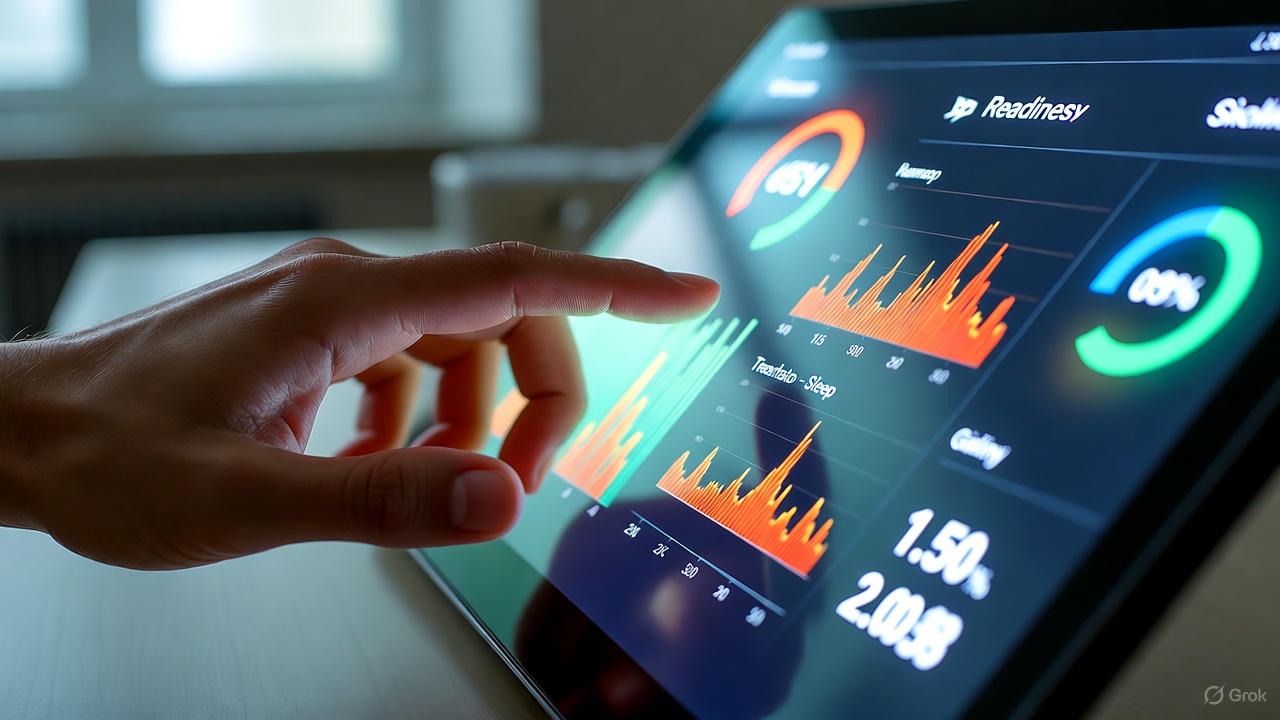
Burnout isn't a sudden event; it's a slow, insidious erosion. It’s the consequence of chronic stress without adequate recovery, a state where your body's demand for energy consistently outstrips its ability to replenish it. Traditional warning signs are often subjective and easy to ignore until it’s too late: persistent fatigue, cynicism, reduced performance. Your wellness ring, however, spots the objective, physiological precursors of burnout long before your conscious mind admits there's a problem. It turns burnout prevention from a vague hope into a proactive, winnable defense strategy.
Burnout has a clear fingerprint on your autonomic nervous system, visible in the trends of your core biomarkers. It’s not one bad day; it’s a sustained, negative trajectory.
When these signals align over a 2-3 week period, it’s the equivalent of a storm warning on your game’s radar. The system isn't just saying you're tired; it's quantifying a state of systemic overload.
Sophisticated platforms translate these signals into a conceptual metric: Recovery Debt. Think of it like a credit card for your physiology. High-strain activities (intense work, hard training, emotional stress) "charge" debt. High-quality recovery (sleep, nutrition, downtime) "pays it down."
A healthy lifestyle operates with a small, fluctuating balance. Burnout is the state of maxing out your card and being unable to make the minimum payments. Your ring’s algorithm constantly estimates this balance. When your recovery indicators (HRV, sleep) fail to bounce back after periods of strain, your estimated debt increases.
This is where the gamified early warning system activates. Instead of a crisis alert, you might receive a strategic notification:
"Your Recovery Debt is rising. Your HRV has been below your baseline for 7 days, and sleep depth is down 12%. To protect your resilience, a strategic recovery period is recommended. Quest Available: 'The Recharge Protocol.'"
This transforms a personal crisis into a manageable mission. The game is no longer about pushing forward; it's about strategically retreating to defend your core resource—your resilience.
When the system detects a rising burnout risk, it doesn't just say "rest more." It prescribes a structured, time-bound Recovery Protocol—a multi-day quest designed to systematically pay down your physiological debt.
A typical "Recharge Protocol" might be a 5-day mission with daily objectives:
Completing the protocol unlocks a "System Reboot" achievement and, more importantly, demonstrates through your own data how targeted behavioral changes can reverse a negative trend. This is empowering. It teaches you that burnout is not an inevitable fate, but a physiological state that can be managed and reversed with deliberate action. Learning to heed these early warnings is a common theme in the journeys shared on the Oxyzen about page, highlighting the shift from reactive to proactive health.
The ultimate level of any game is when you can anticipate challenges before they appear. This is the frontier of wearable technology: moving from descriptive analytics ("this is what happened") to predictive insights ("this is what's likely to happen"). By analyzing your unique biometric patterns, your wellness ring begins to function as a forecasting tool for your health and performance.
One of the most validated predictive uses of HRV and biometric data is in detecting the onset of illness, often 24-72 hours before symptoms manifest. Your body mounts an immune response long before you feel a sore throat or fatigue. This response creates physiological stress.
Your ring can detect this pre-symptomatic state through a constellation of signals:
When these factors combine, the app might generate a predictive insight: "Your biometrics suggest your body may be fighting something. Prioritizing rest and hydration today may help mitigate symptoms."
This isn't a diagnosis; it's an invaluable early warning. It allows you to act preemptively—scaling back plans, increasing sleep, boosting nutrient intake—potentially reducing the severity or duration of an illness. In the game, it’s like receiving a potion before the boss battle, giving you a critical advantage.
Just as it can predict downturns, the system can also help forecast your potential "peak" days. By analyzing your readiness score trajectory, recovery from previous strain, and circadian patterns, it can make probabilistic forecasts.
This allows for strategic planning. You can schedule important meetings, creative work, or key workouts on days you're forecasted to be at your best, and schedule administrative tasks or active recovery on predicted lower-readiness days. It’s the ultimate application of "working with your body, not against it."
For women, this predictive power is particularly profound. The menstrual cycle is a powerful hormonal cascade that directly influences core biometrics: basal body temperature, resting heart rate, HRV, and sleep architecture. A wellness ring, by tracking temperature and HRV trends, can often:
The app gamifies this by creating a Cycle Syncing Challenge. It provides personalized quests based on your predicted phase:
This turns a natural biological cycle from a source of unpredictability into a strategic map, allowing women to align their lifestyle, diet, and training for optimal performance and comfort throughout the month. This level of personalized insight is a key focus of ongoing research and development, as detailed in resources on the Oxyzen platform.
A truly immersive game has a rich, interactive environment. Similarly, the full potential of your wellness ring is unlocked when it stops being a standalone device and becomes the central "console" for your smart health ecosystem. By integrating with other apps and devices, it pulls in external data and exports its insights, creating a seamless, automated gameplay experience.
Integration creates context that raw biometrics can't provide. When your ring talks to other platforms, the insights become exponentially richer.
This is where the experience becomes almost magical. Through platforms like IFTTT, Apple Shortcuts, or direct partnerships, your biometric data can trigger actions in your physical environment.
These automations remove friction and willpower from the equation. The game environment itself adapts to support your goals, making the healthy choice the effortless choice. It turns your entire living space into a responsive training ground for your nervous system.
All these data streams converge in the ring's companion app, which becomes your Personal Health Command Center. It’s no longer just a ring app; it’s the hub where biometrics, activity, calendar, and smart home status are synthesized.
Here, you get a holistic view: "Your readiness is 85. You slept well (Score: 92). You have a 2-hour deep work block scheduled. Your smart lights are set to focus mode. Your hydration is at 70% of today's goal. Recommended Mission: Attack your priority project, then complete a 10-minute movement break at 11 AM."
This integrated dashboard represents the pinnacle of the gamified experience. You are no longer managing disparate parts of your life; you are orchestrating a unified system, with clear data, automated support, and a constant feedback loop guiding your decisions. This vision of a seamlessly integrated wellness ecosystem is central to the philosophy behind Oxyzen's development, aiming to make advanced biohacking an intuitive part of daily life.
The next frontier is full immersion. Imagine combining your real-time biometric data with Augmented Reality (AR) or Virtual Reality (VR).
The ultimate goal is to shift the entire healthcare paradigm from sick-care to true prevention. Aggregated, anonymized data from millions of users could help identify population-level patterns linking early biometric signatures to later health outcomes.
This future is one where the wellness ring evolves from a fitness tracker into a lifelong companion for navigating the complex game of modern life, armed with deep knowledge of your unique biology. It promises a world where we are no longer guessing about our health, but actively, intelligently, and even joyfully cultivating it. This ambitious vision of a more empowered, data-aware approach to wellbeing is what inspires the ongoing work at Oxyzen, as we look toward the next generation of personal health technology.
Your Trusted Sleep Advocate (Sleep Foundation — https://www.sleepfoundation.org/)
Discover a digital archive of scholarly articles (NIH — https://www.ncbi.nlm.nih.gov/
39 million citations for biomedical literature (PubMed — https://pubmed.ncbi.nlm.nih.gov/)
experts at Harvard Health Publishing covering a variety of health topics — https://www.health.harvard.edu/blog/)
Every life deserves world class care (Cleveland Clinic -
https://my.clevelandclinic.org/health)
Wearable technology and the future of predictive health monitoring. (MIT Technology Review — https://www.technologyreview.com/)
Dedicated to the well-being of all people and guided by science (World Health Organization — https://www.who.int/news-room/)
Psychological science and knowledge to benefit society and improve lives. (APA — https://www.apa.org/monitor/)
Cutting-edge insights on human longevity and peak performance
(Lifespan Research — https://www.lifespan.io/)
Global authority on exercise physiology, sports performance, and human recovery
(American College of Sports Medicine — https://www.acsm.org/)
Neuroscience-driven guidance for better focus, sleep, and mental clarity
(Stanford Human Performance Lab — https://humanperformance.stanford.edu/)
Evidence-based psychology and mind–body wellness resources
(Mayo Clinic — https://www.mayoclinic.org/healthy-lifestyle/)
Data-backed research on emotional wellbeing, stress biology, and resilience
(American Institute of Stress — https://www.stress.org/)


