Is Sleep Tracking Worth It? Honest Pros and Cons for 2025
Deciding if sleep tracking is worth the investment requires weighing pros and cons honestly. This balanced 2025 assessment evaluates benefits including awareness, motivation, and insights against potential downsides including cost, anxiety, and accuracy limitations to help you make informed decisions.
Is Sleep Tracking Worth It? Honest Pros and Cons for 2025
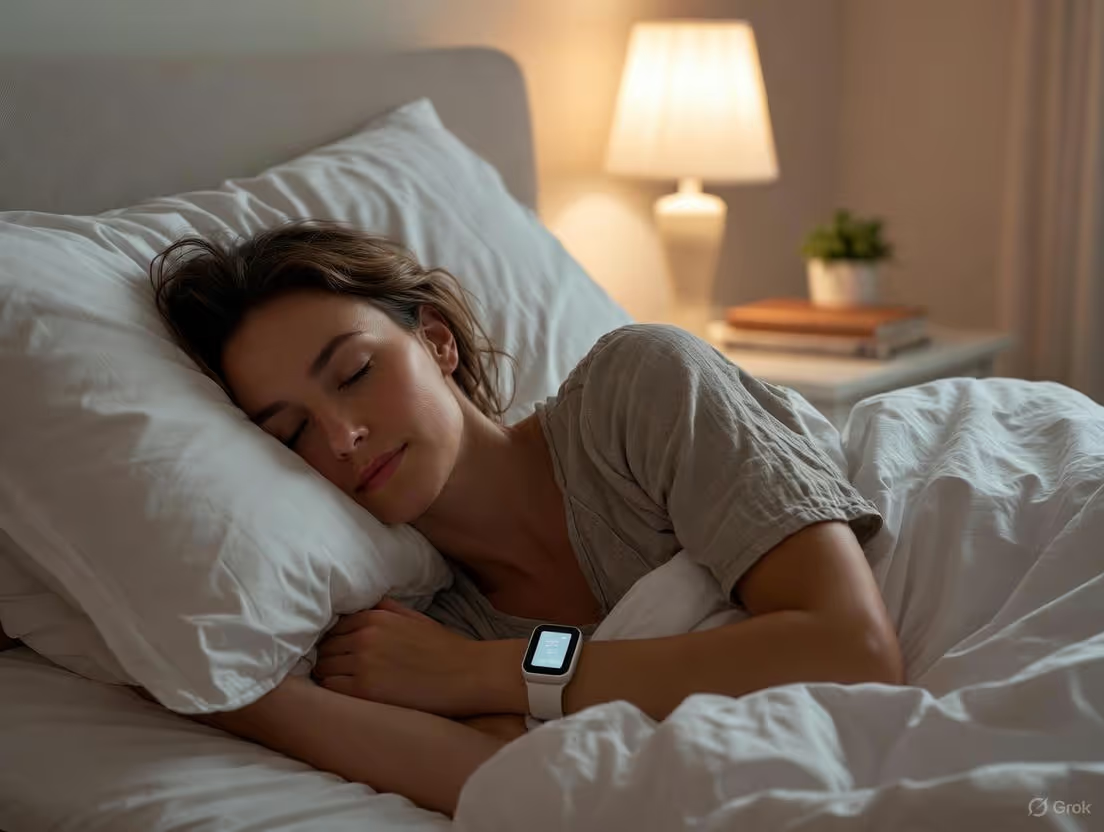
Do you really know what happens when you close your eyes each night? For most of human history, sleep has been a mysterious black box—a necessary but poorly understood part of our daily routine. Today, technology has cracked that box open. An estimated one in three Americans has now used a digital sleep tracker. Of those users, 78% find them helpful, and 68% report changing their behavior based on the data they receive.
We live in a world increasingly obsessed with optimization. We track our steps, count our calories, and monitor our heart rates. Yet, we spend roughly a third of our lives doing something most of us have never measured: sleeping. Sleep tracking promises to change that, offering a detailed report card on the one activity most crucial to our physical recovery, mental well-being, and long-term health.
But is sleep tracking truly worth it, or is it just another source of data anxiety? This article cuts through the hype to deliver an honest, comprehensive assessment for 2025. We’ll explore what sleep tracking really measures, weigh its proven benefits against its surprising limitations, and help you determine if this technology is a valuable wellness tool or an unnecessary distraction.
The Rise of Sleep Tech: Why We're Obsessed with Tracking Our Slumber
Our modern fascination with sleep tracking didn't emerge from a vacuum. It’s the product of a perfect storm: groundbreaking sleep science revealing just how critical rest is to every facet of health, combined with rapid advancements in sensor miniaturization and data analytics.
For decades, the gold standard for measuring sleep was polysomnography (PSG), an in-lab test requiring a bewildering array of wires and electrodes. It was inaccessible, expensive, and far from a natural sleeping environment. Then, in the 2010s, the first consumer fitness bands began incorporating basic movement-based sleep tracking. The technology was primitive, but the seed was planted: people wanted to understand their rest.
The market exploded. According to industry analysis, the sleep technology devices market was valued at over $12.5 billion USD in 2020, with projections soaring past $40 billion by 2027. Tech giants like Apple, Samsung, and Google entered the arena alongside dedicated health startups. What began as simple movement detection evolved into sophisticated systems monitoring heart rate, heart rate variability (HRV), blood oxygen, body temperature, and respiratory rate.
This evolution was fueled by a stark reality check from the medical community. Pioneers like Dr. William C. Dement, often called the "father of sleep science," spent decades highlighting how chronic sleep problems constitute a major public health risk. Research has now definitively linked poor sleep to a higher risk of obesity, diabetes, heart disease, stroke, and mood disorders. When the National Heart, Lung, and Blood Institute states that sleep deficiency can lead to "physical and mental health problems, injuries, loss of productivity, and even greater risk of death", people start paying attention.
But why the turn to technology for a solution? In short, because we are terrible at intuitively judging our own sleep. You might feel you slept eight hours, but have no idea if they were eight hours of restorative, high-quality sleep or eight hours of fragmented, shallow rest. Sleep tracking promises to replace guesswork with data, offering a window into the nocturnal processes that our conscious minds cannot access.
The popularity of these devices suggests a profound cultural shift. We are no longer willing to accept being "just tired." We want to know why, and we want a data-driven path to feeling better. As one user of the Oura Ring put it, the device became their "daily compass, keeping me on the right track". In a society where half of all Americans report feeling sleepy three to seven days a week, this quest for better sleep is more than a trend—it’s a public health imperative.
What Exactly Are You Tracking? Decoding the Metrics of Modern Sleep
Before you can decide if sleep tracking is worthwhile, you need to understand what these devices are actually measuring. The dashboard of a modern sleep tracker can look intimidating, filled with specialized terms and scores. Let's decode the key metrics that form the backbone of your nightly report.
At the most basic level, every tracker aims to answer two questions: how long did you sleep, and how well did you sleep? To get there, they synthesize data from various sensors.
Core Duration and Quality Metrics:
Sleep Latency: This is the time it takes you to fall asleep after getting into bed. Consistently high latency (e.g., regularly over 30 minutes) can be a sign of insomnia or poor sleep hygiene.
Total Sleep Time (TST): The actual time spent asleep, as opposed to just time in bed.
Wake After Sleep Onset (WASO): The total amount of time you spend awake after initially falling asleep. Frequent or long awakenings fragment your sleep, reducing its restorative power.
Sleep Efficiency: A crucial percentage calculated as (Total Sleep Time / Time in Bed) x 100. An efficiency of 85% or higher is considered good, while rates far below that (like 63%) indicate you're spending a lot of time in bed awake.
The Biometric Symphony: Heart Rate, HRV, and Breath
Beyond timing, advanced trackers use physiological signals to infer the quality of your sleep.
Resting Heart Rate (RHR): Your heart rate typically drops and stabilizes during sleep. A lower overnight RHR is generally associated with better cardiovascular fitness and recovery.
Heart Rate Variability (HRV): This measures the tiny variations in time between your heartbeats. Contrary to what you might think, a higher HRV indicates a healthier, more resilient nervous system that can adapt to stress. It's a key marker of recovery, and trackers monitor it closely.
Respiratory Rate: The number of breaths you take per minute during sleep. Significant deviations from your baseline can signal disruptions or health issues.
The Sleep Stages: Light, Deep, and REM
Most trackers attempt to break your night into the cyclical stages of sleep. It's important to know this is an estimate; true sleep stage measurement requires an EEG in a lab. However, by combining movement, heart rate, and HRV patterns, devices make educated guesses.
Light Sleep: This is typically the most abundant stage. It acts as a transition between wakefulness and deeper sleep.
Deep Sleep (Slow-Wave Sleep): This is the most physically restorative phase. It's crucial for tissue repair, immune function, and memory consolidation. Your heart rate and breathing are at their slowest and most regular.
REM (Rapid Eye Movement) Sleep: This is the stage most associated with vivid dreams, emotional processing, and cognitive functions like learning and creativity. Your brain is highly active, but your body is essentially paralyzed.
The Frontier Metrics: Blood Oxygen and Temperature
The latest generation of trackers adds even more layers of insight.
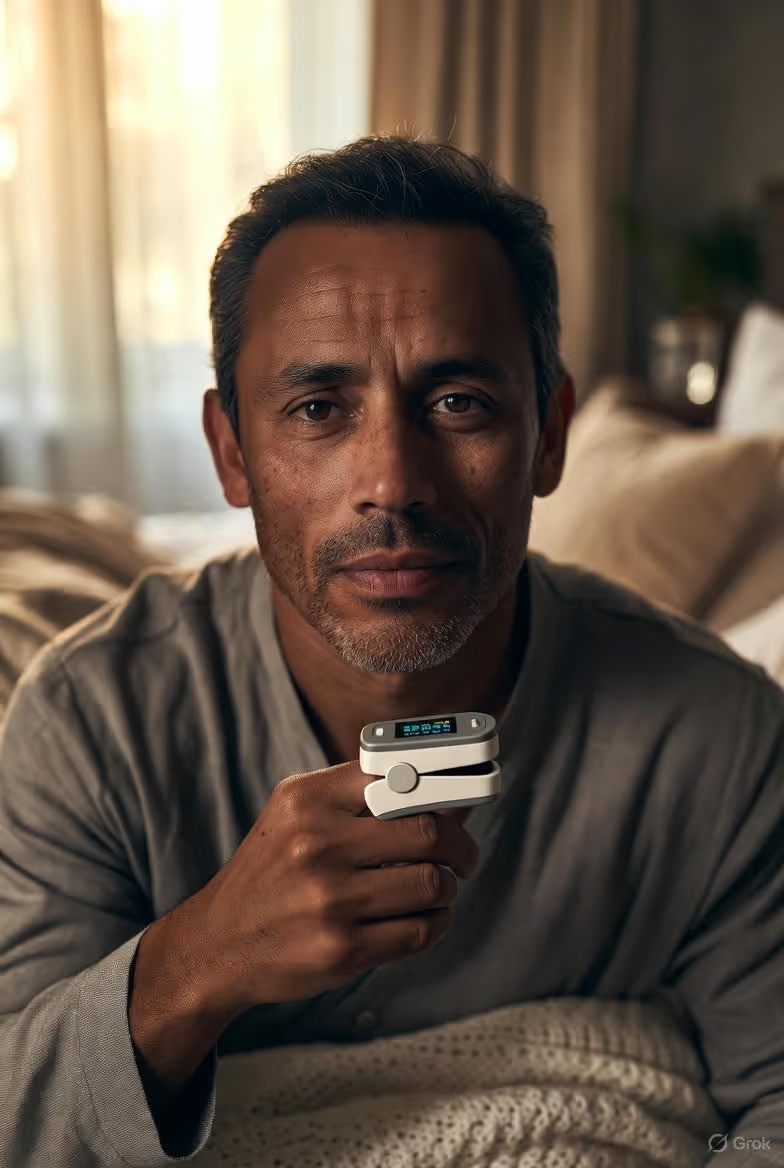
Blood Oxygen (SpO2): Trackers use an optical sensor to estimate the saturation of oxygen in your blood. Significant, repeated dips in overnight SpO2 can be a key indicator of sleep apnea, a serious disorder where breathing repeatedly stops and starts. An estimated 22 million Americans have sleep apnea, and many are unaware.
Body Temperature: Your core body temperature follows a circadian rhythm, dropping to initiate sleep and rising toward morning. Some smart rings, by sitting on a finger full of blood vessels, are particularly good at tracking this distal body temperature, which can provide insights into circadian health, illness onset, and menstrual cycle phases.
Finally, to make sense of this data deluge, most apps now provide a simplified Sleep Score. This single number distills your various metrics into an overall grade for the night, helping you quickly see trends without getting lost in the details.
Understanding these metrics is the first step. The real question is: how well do these devices actually capture them? The answer, as we'll see next, is a nuanced mix of impressive capability and important limitation.
The Accuracy Question: How Reliable Are Your Sleep Data?
This is the multi-billion-dollar question at the heart of the sleep tracking debate. You’re making lifestyle changes based on colorful charts and scores—but can you trust them? The answer is not a simple yes or no, but rather, "it depends on what you're looking at."
First, the encouraging news. For detecting the basic sleep/wake cycle, consumer devices have become remarkably proficient. A 2024 review noted that these trackers perform as well as, or even better than, actigraphy. Actigraphy is a clinical method where patients wear a research-grade wrist device, often for weeks, to help diagnose sleep disorders like insomnia. The fact that a device you can buy online is now in the same league as this medical tool is a significant achievement.
However, the moment you zoom in from "asleep vs. awake" to the specific architecture of sleep stages, the certainty drops. The technology’s current limitation is sensitivity to wakefulness. Research has consistently shown that commercial trackers are good at detecting sleep but less effective at pinpointing brief awakenings. This means they often overestimate total sleep time and sleep efficiency because short periods of wakefulness are logged as light sleep.
How significant is the stage-tracking inaccuracy? A landmark 2023 study published in the Journal of Medical Internet Research put 11 popular devices to the test against polysomnography (PSG) in a hospital setting. The results were a sobering reminder of the technology's limits. The study found "substantial performance variation" in sleep stage classification. The best-performing device achieved a macro F1 score (a statistical measure of accuracy) of 0.69, while the worst scored only 0.26. As one expert bluntly states, "If you want to track the stages of sleep, you’ll need to have an electroencephalogram (EEG)" in a lab.
But not all data is created equal. The same 2023 study found that performance varied by metric and device type. For example:
Wearables (like rings and watches) showed high accuracy in detecting deep sleep but had a "high proportional bias" in estimating sleep efficiency.
Nearables (bedside devices) struggled more with sleep latency (the time to fall asleep).
Devices are also more accurate for some people than others. The study found variations in accuracy based on factors like Body Mass Index (BMI) and sleep efficiency.
What about medical-grade features like sleep apnea detection? This is a rapidly advancing frontier. In recent years, Samsung and Apple have received FDA clearance for features that use their watch's sensors to look for signs of sleep apnea by monitoring blood oxygen and breathing patterns over time. This represents a major step forward, moving tracking from pure wellness into the realm of potential early health screening.
The Verdict on Accuracy: Think of your sleep tracker not as a medical diagnostic device, but as a highly educated observer. It gives you a consistent, data-rich trend line. While the absolute number for "REM minutes" last Tuesday might be off, the fact that your deep sleep has been trending downward for two weeks, or that your resting heart rate is creeping up, is a meaningful and actionable signal. As the Cleveland Clinic advises, these devices "shouldn’t be used to self-diagnose," but they "can clue you in if something is off". Their greatest power lies not in perfect single-night precision, but in revealing patterns over time.
The Tangible Benefits: How Sleep Tracking Can Truly Improve Your Life
When used with the right mindset, sleep tracking transitions from a passive data collection hobby to a powerful agent of positive change. The benefits extend far beyond simply knowing your sleep score; they foster awareness, enable targeted interventions, and can even serve as an early warning system for your health.
1. From Guesswork to Awareness: Discovering Your Personal Patterns The most immediate benefit is objective insight. Sleep is a "practical suspension of consciousness". Without tracking, you're guessing. A tracker reveals your personal sleep signature: Are you a night owl with a naturally delayed rhythm? What is your actual, average sleep efficiency? This baseline awareness is the essential first step for any improvement. As noted by experts, understanding your unique sleep habits and needs is crucial, and that starts with observation.
2. The Science of Sleep Hygiene: From Theory to Personalized Practice We all know the standard advice: keep your bedroom dark, cool, and quiet; avoid screens before bed; establish a relaxing routine. A sleep tracker transforms these generic tips into a personalized experiment. You can test hypotheses:
Did reading a book instead of scrolling through my phone improve my sleep latency?
Did using a white noise machine reduce my nighttime awakenings (WASO)?
Did that late-afternoon coffee or evening glass of wine disrupt my deep sleep? The data provides clear, immediate feedback, allowing you to build a sleep hygiene regimen that works for your body, not just textbook advice.
3. The Ripple Effect on Daytime Performance and Mood Sleep tracking creates a direct feedback loop between your nights and your days. You can start to correlate a high HRV and a good sleep score with feeling energetic, focused, and emotionally resilient the next day. Conversely, you might see how a night of poor sleep efficiency leads to brain fog and irritability. This connection reinforces the value of good sleep, making it easier to prioritize. The data proves that sleep isn't lost time; it's the foundation of daily performance.
4. The Potential for Early Health Screening This is arguably one of the most significant benefits of modern devices. By monitoring trends in key biometrics, trackers can raise "yellow flags".
Sleep Apnea: Persistent, significant dips in overnight blood oxygen (SpO2) or irregular breathing patterns can be a strong indicator to consult a doctor about sleep apnea.
Illness Onset: A sustained elevation in your resting heart rate or body temperature deviation from your personal baseline is a classic early sign of your body fighting an infection or under significant stress.
Cardiovascular and Metabolic Health: Long-term trends in resting heart rate, HRV, and sleep consistency are linked to overall cardiovascular fitness and metabolic health.
5. Motivation and Accountability There’s a powerful psychological effect in measurement. The simple act of tracking can make you more mindful of your sleep choices. Seeing a "sleep debt" accumulate or a "readiness" score dip provides a tangible incentive to make a better choice—to wind down earlier, to skip that last episode, or to manage daytime stress more effectively. For many, the device becomes an accountability partner.
In essence, sleep tracking shifts you from a passive sleeper to an active participant in your rest and recovery. It provides the evidence you need to make informed, impactful changes to your lifestyle. However, this relationship with data has a darker side, which leads us to the critical cons of this technology.
The Hidden Costs and Pitfalls: When Tracking Does More Harm Than Good
For all its potential, sleep tracking is a double-edged sword. Without the right approach, the very tool meant to improve your rest can become its greatest saboteur. The pitfalls aren't just about inaccurate data; they're psychological and behavioral.
1. The Onset of Orthosomnia: Perfectionism as the Enemy of Sleep The most significant risk is developing what sleep specialists call orthosomnia—a preoccupation with achieving perfect sleep data. This term, a play on "orthorexia" (an obsession with healthy eating), describes individuals who become so anxious about optimizing their sleep scores that their anxiety itself destroys their sleep. The tracker ceases to be a guide and becomes a judge. You might lie in bed, stressed about your elevated heart rate, watching your sleep latency tick upward in real time—a self-fulfilling prophecy of a bad night. As one article on the cons of trackers warns, "The mere act of buying and learning to use a sleep tracker is more than enough to make some users overthink their sleep".
2. Data Anxiety and the Temptation to "Check In" Closely related is the temptation to check your device in the middle of the night if you wake up. Glancing at a screen to see a poor sleep score or low SpO2 reading can trigger anxiety that makes it impossible to fall back asleep. This behavior turns a normal, brief awakening (which everyone experiences) into a prolonged period of wakefulness fueled by data-induced stress.
3. The Tyranny of the Score and Misplaced Focus When your morning starts with a single number—a Sleep Score or Recovery Percentage—it’s easy to let it dictate your entire day. A "bad" score can become a self-limiting belief, convincing you that you’ll perform poorly before you even try. Furthermore, you might focus on optimizing for the metric (e.g., chasing more "deep sleep") rather than focusing on how you actually feel. The goal should be restorative sleep that leaves you feeling refreshed, not a high score on an imperfect algorithm.
4. The Financial and Time Investment Quality sleep tracking isn't free. The leading devices often come with a hefty upfront cost and, increasingly, a mandatory monthly subscription to access the full insights (e.g., Oura requires a $5.99/month membership). Beyond money, it requires a time investment to consistently wear the device, review the data, and thoughtfully implement changes. For some, this ongoing commitment feels more burdensome than beneficial.
5. The Limitations of "One-Size-Fits-All" Algorithms Your body is unique, but the algorithms interpreting your data are built on population averages. A tracker might label your 6.5 hours of sleep as "insufficient" based on a generic 8-hour target, but that might be perfectly optimal for your genetics and lifestyle. The advice generated—like a suggested bedtime—may not align with your individual circadian rhythm or life responsibilities, leading to frustration.
6. A False Sense of Security or Diagnosis On one hand, a tracker might give you a false sense of security ("My score is good, so I must be healthy") when an underlying issue is present. On the other, it might lead to dangerous self-diagnosis. While trends can be helpful, only a medical professional can diagnose conditions like sleep apnea or insomnia. Relying solely on consumer device data to diagnose or rule out a serious health condition is a significant risk.
The key to avoiding these pitfalls is to establish a healthy relationship with your tracker from the start. It should be a tool for curiosity and empowerment, not a source of anxiety or a definitive verdict on your health. Remember, you are more than your data.
Wearables vs. Nearables vs. Airables: Choosing Your Sleep Tracking Weapon
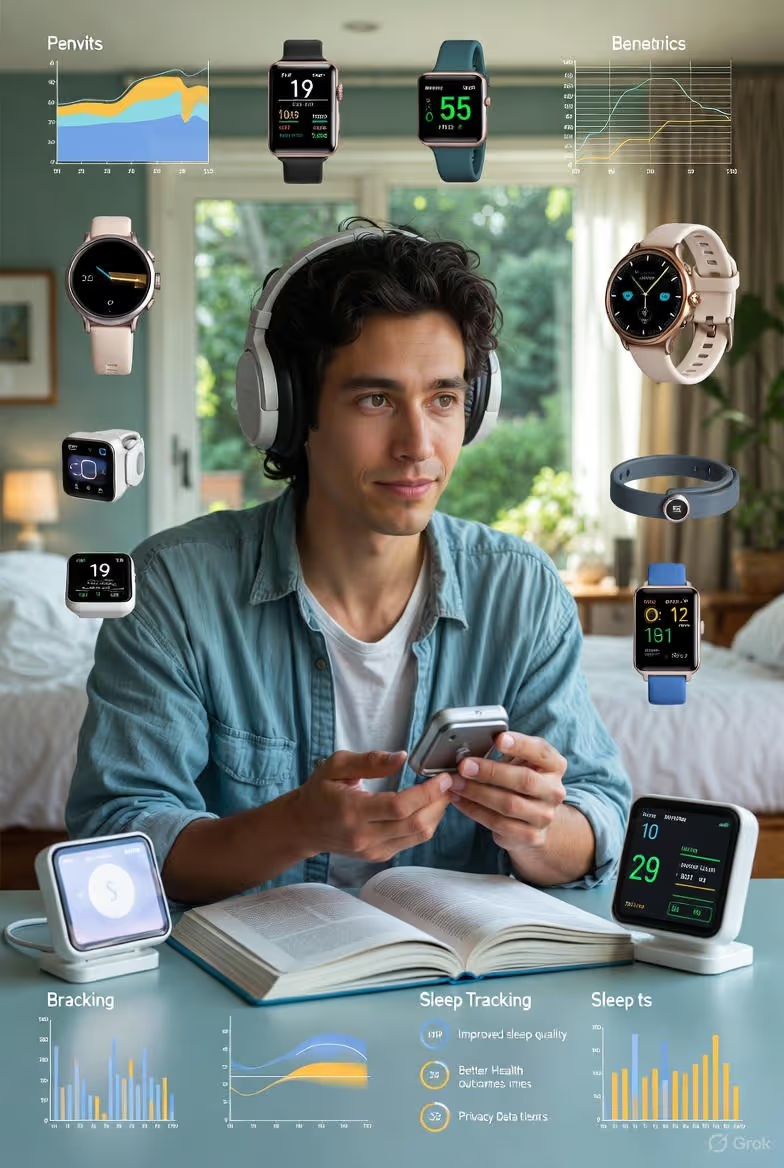
Once you've decided to explore sleep tracking, you're faced with a fundamental choice: what type of device is right for you? The market has diversified into three main categories, each with distinct strengths, weaknesses, and philosophies of measurement. Understanding these differences is crucial to finding a tool you'll actually use and trust.
Wearables: The Biometric Powerhouses
Wearables are devices you wear on your body, most commonly as a smartwatch or a smart ring.
How They Work: They use sensors like photoplethysmography (PPG) to optically measure heart rate, HRV, and blood oxygen from your wrist or finger, combined with accelerometers to detect movement.
Pros: They offer the most comprehensive biometric data because they are in direct contact with your skin. They can track 24/7 trends in resting heart rate, HRV, and body temperature, providing a holistic picture of readiness and recovery, not just sleep. Smart rings, like the Oura Ring, are often praised for being unobtrusive and comfortable to sleep in, making compliance easy.
Cons: They can be bulky (watches) or easy to scratch (rings). The data, especially for sleep stages, can be influenced by how tightly the device is worn. They also require regular charging.
Best For: Individuals who want the most detailed physiological data, who also care about daytime activity and recovery tracking, and who don't mind wearing a device consistently.
Nearables: The Unobtrusive Bedside Monitors
Nearables are devices you place in your sleeping environment, such as under-mattress pads (e.g., Withings Sleep Analyzer) or bedside radar units (e.g., Google Nest Hub).
How They Work: They use ballistocardiography (under-mattress) or radar/sonar (bedside) to detect micromovements caused by your heartbeat and breathing. They can also monitor environmental factors like room temperature, light, and noise.
Pros: Completely unobtrusive. You don't have to wear or remember to charge anything on your body. They excel at measuring sleep/wake patterns and respiratory effort without any physical contact. They are ideal for people who find wearables uncomfortable.
Cons: They cannot measure core biometrics like detailed heart rate, HRV, or blood oxygen levels. They only track you in bed, so they miss the daytime data that informs "readiness" scores. Their accuracy can be affected if you share a bed.
Best For: People who want simple, contact-free sleep tracking focused purely on time asleep, awakenings, and environment, without the complexity of wearables.
Airables: The Accessible App-Based Trackers
Airables are typically smartphone apps that use your phone's built-in sensors.
How They Work: You place your phone on your mattress, and it uses the accelerometer and microphone to detect movement and sound (like snoring) to estimate sleep patterns.
Pros: Extremely low cost or free, and require no extra hardware if you already have a smartphone. Good for initial curiosity.
Cons: The least accurate category. They have no direct physiological measurements and are highly susceptible to error from a partner's movement or other noises in the room. They provide very limited, low-fidelity data.
Best For: Casual users who want to dip a toe into sleep tracking with zero financial commitment, understanding the data will be approximate.
Making the Choice: Your decision should hinge on your priorities:
For holistic health and recovery insights: Choose a wearable, with a smart ring being a top choice for sleep-specific comfort.
For simple, no-hassle sleep logging: Choose a nearable under-mattress pad.
For basic curiosity on a budget: Try an airable app first.
Consider your lifestyle. If you're an active person who wants to connect sleep with workout recovery, a wearable is essential. If you just want to know if you're getting 7-8 hours regularly, a nearable may suffice. The "best" device is the one whose form factor and data presentation you will engage with consistently and healthily.
The Smart Ring Revolution: Why Your Finger Might Be the Best Place to Track Sleep
Among wearables, one category has surged in popularity for sleep tracking: the smart ring. While smartwatches dominate the daytime, devices like the Oura Ring and Samsung Galaxy Ring are making a compelling case that the finger is the ideal location for nocturnal monitoring. Let's explore why this form factor is winning over sleep enthusiasts and experts alike.
The Comfort and Consistency Advantage The single biggest benefit of a smart ring for sleep is unobtrusive comfort. As noted in multiple reviews, a ring is "more comfortable to wear at night than any other wearable". You can forget you're wearing it. This leads to better compliance—you're more likely to wear it every night, which is critical for gathering consistent long-term data. There's no bulky watch face to dig into your wrist when you sleep on your side.
A Sensor-Rich, Stable Platform The finger provides unique physiological advantages. It has a rich network of capillaries close to the surface, allowing optical sensors to get a strong signal for heart rate, HRV, and blood oxygen. Furthermore, because a well-fitted ring doesn't move much, the sensor maintains consistent contact with the skin. The latest Oura Ring 4, for example, was redesigned to maintain accuracy even as the ring naturally rotates, avoiding data gaps. This stable platform also makes it excellent for tracking distal body temperature trends, a key metric for circadian rhythm and overall health.
Long Battery Life: Forget Nightly Charging Unlike most smartwatches that need daily charging, smart rings boast impressive battery life. The Oura Ring lasts "up to seven days," and the RingConn Gen 2 Air lasted a class-leading 10.5 days in testing. This means you can wear it continuously for sleep tracking without the hassle of finding a charging window every evening.
The 2025 Competitive Landscape The smart ring market is no longer a one-horse race. Here’s a snapshot of the top contenders:
Oura Ring 4: Still considered the overall gold standard by many reviewers, praised for its accurate data, well-organized app, and personalized guidance. Its main drawback is the required monthly subscription fee to unlock its insights.
Samsung Galaxy Ring: A major player that leverages Samsung's ecosystem. It offers strong health insights, snore detection, and no monthly subscription, but its best features are unlocked when paired with a Samsung Galaxy phone.
RingConn Gen 2 Air: Positioned as the most affordable competent ring with no subscription, making it a great value entry point.
Ultrahuman Ring Air: Focuses on unique metrics like metabolic fuel sources and circadian rhythm mapping, appealing to data enthusiasts.
Are There Downsides to Rings? Yes. They are primarily wellness devices with limited screen-free workout tracking capabilities compared to a GPS smartwatch. They can be easily scratched, and getting the right fit is crucial for accuracy. They also represent a significant upfront investment.
For the specific use case of sleep tracking, however, the smart ring's benefits are hard to ignore. It offers a nearly perfect blend of clinical-grade sensor data, unparalleled comfort for nighttime wear, and long battery life. As one Oura user shared, it "was the first step in improving my sleep. It was the start of my healing journey". For anyone serious about sleep who finds wristwear bothersome, a smart ring is undoubtedly worth strong consideration. To learn more about how this form factor can integrate into a holistic wellness strategy, you can explore the technology behind modern smart rings.
Who Stands to Benefit the Most? Is Sleep Tracking Right for YOU?
Sleep tracking isn't a universally essential tool. For some, it's transformative; for others, it's an unnecessary complication. Your personality, goals, and current sleep situation are the best guides. Let's break down who will likely get the highest return on investment from a sleep tracker.
The Prime Candidates:
The Curious Biohacker and Data-Driven Individual: If you love optimizing your health, enjoy experimenting, and find motivation in metrics, a sleep tracker is a playground. You'll appreciate testing how variables like diet, exercise timing, and bedtime routines affect your biometrics.
The Struggling Sleeper Seeking Patterns: If you consistently wake up feeling unrefreshed, struggle with insomnia, or wake up frequently at night, a tracker can be a powerful diagnostic ally. It can help you identify patterns—like high latency or frequent WASO—and correlate them with daily habits or environmental factors (e.g., that late-week work stress or street noise). This objective data is invaluable to bring to a conversation with your doctor.
The Performance-Oriented Athlete or Professional: For anyone whose livelihood or passion depends on peak cognitive or physical performance, sleep is non-negotiable fuel. Trackers like Whoop or Garmin are designed for this audience, directly linking sleep data (HRV, deep sleep) to recovery scores and readiness for strain. They answer the critical question: "Am I recovered enough to train hard today, or do I need a rest day?"
The Individual with Specific Health Risk Factors: If you are a loud snorer, are overweight, or have a family history of sleep apnea or heart disease, a tracker with SpO2 monitoring can provide crucial early indicators. Noticing persistent blood oxygen dips is a legitimate reason to seek a professional sleep study. Similarly, those managing chronic conditions like anxiety or hypertension can use HRV and sleep consistency as barometers of their nervous system state.
The Person Needing Accountability and Structure: If you know your sleep habits are poor but lack the motivation to change, a tracker provides external accountability. Seeing your "sleep debt" accumulate or receiving a bedtime reminder from an AI coach can be the nudge needed to build better habits.
Who Might Want to Think Twice?
The Anxiety-Prone or Perfectionist: If you are prone to health anxiety or obsessive tendencies, a sleep tracker can be a trigger. The risk of developing orthosomnia is real. If you suspect seeing a "poor" score will ruin your day or keep you up at night, a tracker may do more harm than good.
The Naturally Good Sleeper Who Feels Fine: If you consistently fall asleep easily, sleep through the night, and wake up feeling energized, a tracker may offer little beyond confirmation. You might not need data to tell you what your body already communicates clearly.
The Technophobe or Minimalist: If you dislike charging devices, navigating apps, or feel overwhelmed by data, the friction of using a tracker will likely outweigh its benefits. The time expenditure to review and act on data is a real cost.
A Tool, Not a Tyrant The most important factor is your mindset. Approach a sleep tracker as a tool for exploration and empowerment, not an absolute authority. Its data should inform your choices, not dictate your self-worth. As sleep experts advise, "It’s important to be patient, as improvements in sleep quality may not be immediate. Your body needs time to adapt". If you can maintain this balanced perspective, a wide range of people can find tremendous value in peeking behind the curtain of their nightly rest.
Best Practices: How to Use a Sleep Tracker Without Losing Your Mind
Adopting a sleep tracker successfully is less about the device and more about your strategy. To reap the benefits while avoiding the pitfalls of anxiety and obsession, you need a game plan. These best practices, drawn from expert recommendations and user experience, will help you build a healthy, productive relationship with your sleep data.
1. Prioritize Consistency Over Perfection Wear (or use) your tracker every night. Inconsistent data creates a fragmented, misleading picture. Long-term trends are where the real insights live—a single "bad" night is meaningless noise. Focus on your weekly and monthly averages, not your daily score.
2. Look at Trends, Not Nightly Numbers This is the golden rule. Never judge your sleep based on one night. Did your deep sleep drop? Look at the last two weeks. Is your resting heart rate trending upward? That’s a meaningful signal; a one-night spike probably isn't. Use the tracker to answer broad questions: "Is my sleep improving overall?" not "Why did I only get 12 minutes of REM last Tuesday?"
3. Correlate Data with How You Feel (The "So What?" Test) When you wake up, check in with your body before you check your phone. Rate your energy, mood, and mental clarity on a simple scale. Then look at your data. Do the numbers align with your subjective feeling? Sometimes they will; sometimes you'll feel great despite a mediocre score. Let your lived experience be the ultimate metric. The data should explain your feelings, not define them.
4. Use Data to Run Experiments, Not for Self-Judgment Frame your use of the tracker around curiosity. Treat it like a personal science lab.
Hypothesis: "If I stop drinking caffeine after 2 PM, my sleep latency will improve."
Experiment: Try it for a week.
Review Data: Did the trend change? This objective, experimental mindset removes emotion and self-criticism from the process. For more ideas on lifestyle experiments and wellness strategies, you can find additional resources on our blog.
5. Set It and (Mostly) Forget It Avoid the temptation to check your tracker during the night. The blue light from the screen is sleep-disruptive, and seeing a poor score will only cause anxiety. Charge your device away from your bed if needed. Let it work in the background as a passive observer.
6. Understand the Limits and Contextualize Advice Remember the accuracy limitations, especially regarding sleep stages. When the app gives you a suggestion (e.g., "Go to bed at 10:17 PM"), view it as a data-informed recommendation, not a command. Your tracker doesn't know you have a deadline, a sick child, or a social event. You are in charge.
7. Know When to Take a Break If you find yourself feeling anxious, compulsive, or discouraged by your tracker, take a break. Put it in a drawer for a week or a month. Reconnect with listening to your body's natural signals. You can always come back to it later with a fresh perspective. The device should serve you, not the other way around.
8. Use Data as a Bridge to Professionals, Not a Replacement If your tracker reveals persistent, concerning trends—like chronic low sleep efficiency, very high resting heart rate, or frequent blood oxygen drops—use that data as a conversation starter with your doctor. Export the weekly reports or show them the trends on your app. It provides objective evidence that can lead to a referral for a professional sleep study or other medical evaluation. For common questions about how to interpret data for health professionals, our FAQ page can be a helpful starting point.
By following these guidelines, you transform the sleep tracker from a potential source of stress into a powerful ally. It becomes a lens that brings the blurry picture of your sleep into focus, giving you the clarity you need to make positive, lasting changes.
Conclusion of Part One: Setting the Stage for Informed Choices
We've covered substantial ground in our exploration of modern sleep tracking. We've moved from the cultural phenomenon driving its popularity, through the intricate metrics it measures, and arrived at a clear-eyed view of its impressive capabilities and important limitations. The core tension is now apparent: sleep tracking offers unprecedented personal insight and the potential for real health improvement, but it also carries the risk of data anxiety and misplaced focus.
The evidence suggests that for the right person with the right mindset, sleep tracking is unequivocally worth it. The ability to move from subjective guesswork to objective awareness, to run personalized experiments on your sleep hygiene, and to spot early warning trends in your health is profoundly empowering. As noted by the Cleveland Clinic, these devices "offer a wonderful, relatively inexpensive way to become more engaged in your overall health".
However, its value is not automatic. It hinges on your ability to use the tool wisely—to focus on long-term trends over nightly scores, to correlate data with how you actually feel, and to maintain a sense of curiosity rather than perfectionism. The goal is better sleep and better days, not a perfect algorithmically-generated report.
In the next portion of this deep dive, we will move from the theoretical to the intensely practical. We will put the leading devices of 2025 under the microscope, conducting a detailed feature-by-feature comparison of the top smart rings, watches, and nearables. We'll explore how to build a complete sleep-friendly lifestyle that extends far beyond what any device can measure, and we'll hear directly from long-term users about what this journey has truly been like. The ultimate question isn't just whether sleep tracking is worth it, but how to make it worth it for you.
This journey is about more than technology; it's about understanding a fundamental pillar of human health. To learn more about the philosophy of holistic wellness that guides this approach, you can read about our mission and values.
Part Two: The 2025 Device Showdown and Building Your Sleep Sanctuary
If the first part of our exploration answered the "why" of sleep tracking, this section tackles the practical "how" and "with what." You've decided the potential benefits outweigh the risks—now you face the dizzying array of devices vying for a place on your wrist, finger, or bedside table. Choosing the right tool is critical, as the wrong one can lead to frustration and abandoned efforts.
But the device is just the beginning. True sleep transformation happens when technology meets environment and behavior. The most advanced ring or watch is powerless against a chaotic bedroom, poor daily habits, and unmanaged stress. This section provides a clear roadmap through the 2025 tech landscape and equips you with evidence-based strategies to build a holistic foundation for restorative sleep.
The 2025 Sleep Tech Showdown: In-Depth Reviews & Comparisons
Navigating the sleep tech market requires moving beyond marketing claims. We’ve evaluated the leading contenders across wearables and nearables based on sensor accuracy, comfort, actionable insights, and overall value to help you make an informed choice.
The Smart Ring Elite: Comfort Meets Clinical-Grade Data
Smart rings have solidified their position as the premier form factor for dedicated sleep and recovery tracking. Their unobtrusive design leads to superior compliance, and the finger provides a stable, vasculature-rich platform for sensors.
Oura Ring Gen 4: The Comprehensive Wellness Coach
The Verdict: Remains the undisputed all-around leader for those willing to invest in a subscription model. It’s not just a tracker; it’s a personalized guidance system.
Key Features & Performance:
Accuracy: Consistently tops third-party validation studies for sleep staging and physiological metrics. Its temperature sensor is particularly precise, offering unique insights into circadian rhythm and ovulation tracking.
The Oura App Experience: This is where Oura truly shines. The app doesn't just show data; it interprets it. Its "Readiness Score" synthesizes sleep, activity, and physiological strain into a single, actionable metric. The "Daytime Insights" feature provides live HRV and stress tracking, and its new AI-powered "Oura Advisor" offers contextual, conversational advice.
Sleep Analysis: Goes beyond stages to provide granular details like timing of deep/REM sleep, sleep regularity scoring, and detailed sleep latency/wake-up analysis.
The Catch: Requires a $5.99/month membership to access nearly all insights. The upfront cost is also high.
Best For: The data-driven individual who wants the most polished, insightful, and coach-like experience and doesn’t mind the ongoing fee. For a deeper look at the people behind this technology, you can explore our story of innovation and user focus.
Samsung Galaxy Ring: The Ecosystem Power Play
The Verdict: A formidable subscription-free contender that leverages Samsung’s massive ecosystem for a seamless, holistic health picture.
Key Features & Performance:
Ecosystem Integration: If you use a Galaxy phone, watch, and tablet, the Ring’s data flows effortlessly into the Samsung Health app, creating a unified dashboard for all your health metrics. It enables unique features like using the ring for camera shutter control or phone unlocking.
Advanced Sensors: Features a robust PPG sensor, skin temperature monitoring, and a skin conductance sensor for potential stress detection. Its sleep apnea detection feature received regulatory approval in several markets.
Battery Life: Advertises up to 7 days, competitive with the market.
The Catch: Its most seamless and powerful features are optimized for Samsung Galaxy device users. The app experience and insights may feel less mature than Oura’s for non-Samsung users.
Best For: Existing Samsung Galaxy users who want a powerful, subscription-free ring that integrates deeply with their devices.
Ultrahuman Ring Air: The Metabolic and Circadian Specialist
The Verdict: Carves a niche as the ring for biohackers and fasters, with a unique focus on metabolic health and circadian alignment.
Key Features & Performance:
Unique Metrics: Tracks "Metabolic Score" and "Movement Score," and uses temperature data to map your circadian rhythm phase. It provides feedback on how meal timing and composition affect your sleep and recovery.
Platform Agnostic: Works well with both Android and iOS.
No Subscription: All insights are included in the purchase price.
The Catch: Its interface can feel more technical and less intuitive. The sleep staging algorithm has faced questions about accuracy in some independent tests.
Best For: Individuals deeply interested in metabolic health, intermittent fasting, and circadian biology who enjoy digging into complex data.
The Smartwatch Dilemma: Jack of All Trades, Master of None?
Smartwatches offer unparalleled versatility. The question is whether that comes at the cost of sleep-specific optimization.
Apple Watch Series 10 (Projected): The Connected Health Hub
Sleep Tracking Features: Uses a combination of accelerometer, heart rate, and now-pulse oximetry (with FDA-cleared sleep apnea feature) to provide sleep stages, respiratory rate, and blood oxygen. Sleep data integrates tightly with the iPhone’s Health app.
Cons for Sleep: Battery life remains the Achilles' heel. Most users must charge daily, often in the evening, which is the worst time for sleep tracking consistency. The form factor is less comfortable for side sleepers. Its sleep coaching is less developed than dedicated platforms.
Best For: iPhone users who prioritize a do-it-all wearable and are disciplined about establishing a daytime charging routine.
Garmin Venu 3 / Forerunner 965: The Athlete's Readiness Monitor
Sleep Tracking Features: Garmin’s latest algorithms, powered by Firstbeat Analytics, provide detailed sleep staging, Pulse Ox, HRV status, and a critical metric: Sleep Score and Body Battery.
Pros: Industry-leading battery life (5+ days), exceptional GPS and workout tracking, and the Body Battery is a brilliantly simple synthesis of sleep, stress, and activity data that genuinely helps users pace their energy.
Cons: The interface can be complex. Sleep tracking accuracy, while improved, can still be quirky, especially for non-athletes or those with irregular schedules.
Best For: Runners, cyclists, and multi-sport athletes who need best-in-class sports tracking and want sleep data to inform their training readiness.
Whoop 4.0: The Subscription-Based Recovery Specialist
The Model: Whoop is not a watch; it’s a strap worn 24/7, often with minimalistic apparel.
Sleep Tracking Features: Focuses intensely on Sleep Performance and Recovery (a score based on HRV, RHR, and sleep). It provides a "Sleep Coach" that recommends a personalized sleep need each night.
Pros: Extremely comfortable for sleep, superb battery life with a clever on-device battery pack, and a community/coaching model that motivates many users.
Cons: Expensive monthly subscription ($30/month) with no ownership option. No screen means you must use your phone for all data interaction.
Best For: Competitive athletes and recovery-focused individuals who are motivated by community and personalized strain/recovery feedback.
The Nearable Niche: Effortless Environment & Habit Tracking
For those who refuse to wear anything to bed, nearables offer a compelling, zero-friction alternative.
Withings Sleep Analyzer (Under-Mattress Pad):
How it Works: A slim pad placed under your mattress that uses ballistocardiography to detect heart rate, breathing, and movement. It also detects snoring and room temperature.
Pros: Completely invisible and automatic. Excellent at detecting sleep/wake patterns and apnea risk via breathing disturbance analysis. No charging ever.
Cons: Provides no daytime data (HRV, activity). Less accurate on very thick mattresses or with two restless sleepers. Cannot measure blood oxygen.
Best For: Individuals who want simple, automatic sleep logging and snoring/apnea risk screening without any wearable.
Google Nest Hub (2nd Gen):
How it Works: Uses Soli radar technology to sense your movement and breathing without a camera. Provides a simple sleep summary (light/deep/REM estimates, coughing/snoring, environmental metrics).
Pros: Doubles as a smart home controller and photo frame. The radar-based approach is privacy-respecting. Provides helpful ambient metrics (light, temperature).
Cons: Very basic sleep stage data (low accuracy). Only tracks the person closest to the device.
Best For: Someone who wants a basic, non-contact sleep log and values the device's other smart home functionalities.
Final Tech Recommendation: Your choice hinges on one question: Do you want holistic 24/7 readiness insights or simple, automatic sleep logging? For the former, choose a ring (Oura for coaching, Samsung for ecosystem, Ultrahuman for metabolism). For the latter, an under-mattress pad like Withings is ideal. Smartwatches are best for those who value daytime functionality above all and can manage charging schedules.
Beyond the Device: Building Your Sleep Sanctuary (Environment & Routine)
A sleep tracker can diagnose a problem, but it cannot fix a bad sleep environment or poor habits. This is the critical work that happens off the wrist. Optimizing your sleep hygiene is about creating consistent cues that tell your brain and body it’s time to wind down.
The Physical Sanctuary: Optimizing Your Bedroom Your bedroom should have one primary function: sleep. Every element should promote calm and signal safety to your nervous system.
Temperature: The science is clear: a cool room (~65°F or 18.3°C) is optimal for initiating sleep, as it facilitates the necessary drop in core body temperature. Consider a smart thermostat or a dedicated bed cooling system if you run hot.
Darkness: Complete darkness is non-negotiable. Even small amounts of light can disrupt melatonin production and sleep architecture. Invest in blackout curtains, cover or remove all LED lights from electronics, and consider a comfortable sleep mask.
Quietness & Sound: Sudden noises cause micro-awakenings. Use white noise, pink noise, or brown noise machines (or apps) to create a consistent, masking soundscape. These can also be helpful for tinnitus sufferers.
The Bed Itself: Your mattress and pillows should provide proper support. There’s no universal "best," but if you wake up with aches, it’s time for an evaluation. The lifespan of a quality mattress is typically 7-10 years.
The Pre-Sleep Ritual: The 60-Minute Wind-Down You cannot sprint into sleep. Your brain needs a transition period from the alertness of the day to the quiet of the night.
Digital Sunset: Enforce a strict, device-free buffer zone 60 minutes before bed. The blue light from screens suppresses melatonin. If you must use a device, enable night shift/blue light filters at maximum strength. Better yet, charge your phone outside the bedroom.
The Light-Dark Cycle: In the evening, dim overhead lights and use lamps. Exposure to bright light tells your brain it’s still daytime. In the morning, seek bright light (especially sunlight) immediately upon waking to set your circadian clock.
Calming Activities: Replace scrolling with activities that promote a state of "quiet wakefulness": reading a physical book (non-stimulating content), light stretching or yoga (no vigorous exercise), listening to calming music or podcasts, or practicing a mindfulness meditation. Journaling can be powerful for offloading anxieties from the day.
Diet & Substance Timing: Fueling for Sleep What you consume has a direct pharmacological effect on your sleep systems.
Caffeine: It has a half-life of 5-6 hours. This means if you have a coffee at 3 PM, half the caffeine is still in your system at 8-9 PM. Establish a hard caffeine curfew of 12-2 PM.
Alcohol: While it may induce sleepiness, alcohol is a sedative that severely fragments the second half of the night, suppressing REM sleep and leading to frequent awakenings. It also relaxes throat muscles, worsening snoring and apnea.
Food: Avoid large, heavy, or spicy meals within 3 hours of bedtime. The energy required for digestion can disrupt sleep. A small, sleep-promoting snack (e.g., banana, almonds, tart cherry juice) 60-90 minutes before bed is okay if you’re hungry.
Hydration: Stay hydrated throughout the day, but taper fluid intake 60-90 minutes before bed to minimize disruptive nighttime trips to the bathroom.
Consistency is King: Locking In Your Schedule Your circadian rhythm thrives on predictability. This is the single most effective behavioral change you can make.
Set Fixed Wake-Up and Bedtimes: Aim to wake up at the same time every single day, even on weekends. A consistent wake time is the most powerful lever for setting your internal clock. Your bedtime will naturally follow.
Manage Naps: If you must nap, keep it short (20-30 minutes max) and before 3 PM. Long or late naps can steal pressure from your nighttime sleep drive.
Building this sanctuary and routine creates the fertile ground in which your sleep tracker’s insights can take root and flourish. It turns passive observation into active, effective change.
The Daytime Connection: How Your Waking Hours Dictate Your Sleep
Sleep is not an isolated event; it’s the culmination of your day. Your choices in sunlight, movement, and stress management directly program the quality of your night.
Light: Your Master Circadian Zeitgeber Light is the most powerful signal for your internal clock, or suprachiasmatic nucleus (SCN).
Morning Light: Get bright light exposure within 30-60 minutes of waking, ideally outdoors for 10-15 minutes. This firmly sets your circadian rhythm, boosting daytime alertness and strengthening the subsequent drive for sleep at night. On dark mornings, a 10,000-lux light therapy lamp can be an effective substitute.
Daytime Light: Seek bright light throughout the day. This reinforces the wake signal and builds healthy sleep pressure.
Evening Darkness: As discussed, protect yourself from blue and bright light after sunset. This allows the natural rise of melatonin.
Exercise: The Right Dose at the Right Time Physical activity is a potent sleep promoter, but timing and intensity matter.
The Overall Benefit: Regular exercise increases deep sleep, helps regulate circadian rhythms, and reduces stress and anxiety. It’s one of the best long-term investments for sleep health.
Timing Matters: Morning or afternoon exercise is ideal. It raises body temperature, and the subsequent drop hours later can help initiate sleep. Vigorous exercise within 2-3 hours of bedtime can be overly stimulating for some people due to the release of cortisol and epinephrine. However, gentle movement like walking or stretching in the evening can be beneficial.
Listen to Your Data: Use your sleep tracker! Experiment with workout timing and see how it affects your sleep latency, deep sleep, and HRV. Your personal response is the best guide.
Stress & The Nervous System: Calming the Monkey Mind Chronic stress activates the sympathetic nervous system (fight-or-flight), which is the antithesis of the parasympathetic state (rest-and-digest) required for sleep.
HRV as Your Biofeedback Tool: This is where your tracker’s HRV metric becomes invaluable. A higher HRV indicates better parasympathetic tone and resilience. Use your tracker to identify activities that boost your HRV.
Daytime De-Stressing Practices:
Mindfulness & Meditation: Even 10 minutes daily can lower baseline cortisol and improve emotional regulation.
Breathwork: Simple techniques like 4-7-8 breathing (inhale 4, hold 7, exhale 8) or box breathing can activate the parasympathetic system in moments of stress.
Nature Exposure: "Green time" or "forest bathing" has been shown to lower cortisol and heart rate.
The Wind-Down (Revisited): Your evening ritual is essentially a dedicated stress-offloading period. Treat it as sacred time to transition your nervous system from sympathetic to parasympathetic dominance.
By viewing your day as preparation for sleep, you create a positive, self-reinforcing cycle. Good days foster good nights, and good nights enable good days. Your sleep tracker serves as the feedback loop, showing you the direct impact of your daytime choices on your nocturnal recovery.
Advanced Insights: Interpreting Trends and Avoiding Data Traps
With your device chosen and your lifestyle tuned, you now face the ongoing task of interpreting the data stream. This is where advanced users separate themselves from the anxious novices. The goal is to move from reactive score-checking to strategic trend analysis.
Spotting Meaningful Patterns (The Signal vs. The Noise)
The Weekly & Monthly View: Live in the trend graphs, not the daily dashboard. Ask strategic questions:
Is my average resting heart rate trending down (a sign of improving fitness) or up (a sign of stress, illness, or overtraining)?
Is my HRV finding a new, higher baseline, or is it volatile and suppressed?
Is my sleep consistency (bedtime/wake-time deviation) improving?
What is my personal optimal sleep duration? It’s not 8 hours for everyone. Find the amount that consistently yields high readiness scores and good subjective feeling.
Correlation Analysis: Use your tracker’s journal or notes feature (or a separate app) to log potential disruptors. After a few weeks, look for correlations.
Do days with afternoon meetings correlate with worse sleep?
Does a late meal with friends show up as reduced deep sleep?
Does a day of hiking in nature correlate with a boosted HRV?
Understanding Key Physiological Relationships
HRV & RHR: These are your north stars for autonomic nervous system health. HRV should generally trend upward with fitness and good recovery, while RHR should trend downward. A simultaneous drop in HRV and rise in RHR is a classic sign of systemic stress (from illness, excessive training, or psychological strain).
Body Temperature & Sleep: A gradual decline in distal body temperature (as measured by a ring) helps initiate sleep. A rise signals wake-up. A flatter, more disrupted temperature curve can indicate circadian misalignment or illness.
Sleep Stages Are Not Targets: You cannot directly "get more deep sleep." It’s an output, not an input. Chasing a specific number of REM minutes is futile. Focus on the inputs (consistent schedule, dark/cool room, managed stress) and let your body allocate the stages as it needs.
Avoiding the Final Data Traps
The Comparison Trap: Your data is yours alone. Comparing your "Sleep Score" or "HRV" to a friend’s or an online forum is meaningless and often demoralizing. Genetics, age, fitness level, and lifestyle create vast individual differences.
The Over-Attribution Trap: Not every poor night has a clear cause. Sometimes sleep is simply more fragmented or lighter. Don’t waste energy concocting elaborate explanations for normal biological variation.
When to Ignore the Device: If you feel fantastic but your score is low, trust your feeling. If you feel terrible but your score is high, also trust your feeling. The device is a measuring tool, not the truth itself.
By mastering this level of interpretation, you become the expert on your own body. The tracker provides the raw data, but you provide the wisdom and context to make it truly actionable. For further exploration of these concepts and community discussions, our blog is a dedicated resource for ongoing learning.
Special Populations: Sleep Tracking for Athletes, Parents, Shift Workers & More
The "average" sleep advice often fails for those with non-standard schedules or demands. Tailoring the principles of sleep tracking to your specific life context is key to making it work.
For the Serious Athlete: Sleep as Performance Enhancement For athletes, sleep is the ultimate performance-enhancing drug. It’s when muscle repair, memory consolidation of skills, and hormonal regulation occur.
Key Metrics: HRV and Resting Heart Rate (RHR) are critical. A significant drop in HRV or rise in RHR overnight is a strong indicator of insufficient recovery, suggesting the need for a light training day or complete rest. Deep sleep is prioritized for physical repair.
The Routine: Absolute consistency is paramount, even more so than for the general population. Naps can be strategically used, but kept short (<30 min) and early. The post-workout window is also crucial—allowing time to wind down and cool off before bed is essential.
Device Choice: Whoop and Garmin are purpose-built for this audience, with their direct focus on recovery and readiness scores. Oura is also an excellent choice for its detailed physiological insights.
For New Parents: Tracking Amidst the Chaos Sleep tracking with a newborn or infant is a different game. The goal shifts from optimizing your own sleep to simply understanding and surviving the fragmentation.
Adjust Your Expectations: Your sleep graphs will look like a disaster zone—short sleep blocks, massive amounts of wake time (WASO), and low efficiency. That’s normal. The goal here is compassionate observation, not optimization.
Useful Insights: Trackers can help you and a partner tag-team efficiently by showing who had the most disrupted sleep. They can also help you identify if you’re getting any meaningful deep sleep in your short windows. Monitoring your own HRV/RHR can be a warning sign if your recovery is completely bottoming out, indicating a need for more support.
Device Choice: A comfortable ring (won’t scratch the baby) or a nearable pad (no wearable to worry about) is ideal here.
For Shift Workers: Defending Sleep Against Biology Working nights or rotating shifts puts you in direct conflict with your circadian rhythm. The goal is damage control and strategic adaptation.
Light Manipulation is Your Primary Tool: After a night shift, wear blue-blocking sunglasses on your commute home to prevent morning sunlight from resetting your clock. Sleep in a pitch-black, cool room. Before your next night shift, seek bright light exposure (or use a light therapy lamp) to promote alertness.
Tracking for Consistency: Even if your schedule rotates, try to keep your sleep episodes consistent in duration and timing relative to your shift. Use your tracker to find the sleep window that yields the best possible quality, even if it’s split into two segments.
Monitor for Health Risks: Shift work is associated with higher risks for metabolic and cardiovascular issues. Use your tracker to vigilantly monitor trends in RHR, HRV, and sleep regularity as key health indicators.
For Individuals Managing Chronic Conditions (e.g., Anxiety, Insomnia) For this group, the risk of orthosomnia is highest, but the potential benefit of objective data is also great.
Work With a Professional: Ideally, use a tracker in collaboration with a sleep psychologist or therapist. They can help you interpret the data without catastrophizing. The data can challenge false beliefs (e.g., "I didn’t sleep at all last night") with objective evidence (e.g., "You got 5 hours of fragmented sleep").
Focus on Behavior, Not Numbers: Use the tracker to reinforce positive behaviors, not to judge sleep. Did sticking to your bedtime window, even if you read awake in bed, improve your sleep consistency score over time? That’s a win.
Device Choice: Simplicity is key. A device with a gentle, non-judgmental app (some find Oura’s tone helpful) or a simple nearable that provides basic logs without a "score" may be less triggering.
By adapting the technology and principles to your unique challenges, sleep tracking becomes a flexible tool for resilience, not another source of pressure.
The Future of Sleep Tech: AI, Personalization, and Integration
The technology we see today is just the foundation. The next five years will bring transformations that make current devices look primitive. The future of sleep tech is moving from tracking to true prediction, prevention, and seamless integration.
The Rise of the AI Sleep Coach Currently, most apps provide generic insights ("your deep sleep was low"). The next generation will feature context-aware, conversational AI that acts as a personal sleep coach.
Predictive Guidance: Instead of telling you what happened, AI will analyze your upcoming calendar, historical data, and current physiological state to prescribe a personalized sleep plan: "You have a big presentation tomorrow. Based on your current stress levels, I recommend starting your wind-down ritual at 9:15 PM tonight and aiming for 8 hours in bed."
Causal Inference: Advanced algorithms will get better at identifying the probable cause of a poor night. Instead of just "low HRV," it might say, "Your elevated resting heart rate and low HRV are highly correlated with the two alcoholic drinks you logged last night. Your sleep apnea events also increased by 30%."
Multimodal Sensing and True Sleep Staging To overcome the accuracy ceiling of current wearables, future devices will combine data streams in new ways.
EEG-Integrated Wearables: Companies like Muse and Dreem have already explored consumer headbands with dry-EEG electrodes. The challenge is comfort. The holy grail is non-contact EEG via advanced radar or other technologies that can accurately measure brainwaves from a bedside device or even a pillow.
Hybrid Home Systems: Your under-mattress pad, bedside radar, and wearable will communicate, creating a fused data model that is more accurate than any single sensor. The pad detects breathing disturbances, the radar detects宏观 movements, and the ring provides precise heart data—together, they can paint a near-polysomnography-quality picture.
Seamless Integration with the Smart Home and Healthcare Sleep will no longer be a siloed data set.
Proactive Environment Control: Your sleep tracker will communicate with your smart home. As your wind-down time begins, it will automatically dim the lights, lower the thermostat, and mute notifications. If it detects you’re having a night of restless sleep, it might subtly adjust the room temperature or start playing a soothing soundscape.
Clinical Integration and Remote Patient Monitoring (RPM): The line between wellness and medical devices will blur further. Doctors will be able to prescribe FDA-cleared sleep trackers for patients with insomnia or sleep apnea, and receive validated, long-term trend data directly into electronic health records. This enables truly personalized and continuous care outside the single-night lab study.
Longitudinal Biomarkers and Disease Risk Prediction The ultimate promise is moving from tracking sleep to predicting health.
Sleep as a Digital Biomarker: Researchers are discovering that subtle, long-term patterns in sleep stability, heart rate during sleep, and circadian rhythm are powerful digital biomarkers for neurodegenerative diseases (like Parkinson’s and Alzheimer’s), cardiovascular risk, and mood disorders years before clinical diagnosis.
Your Sleep Data as a Prevention Tool: In the future, your annual physical might include a review of your year-long sleep and physiology trends. A slowly degrading sleep efficiency or circadian rhythm instability could be one of the earliest signs to intervene with lifestyle or medical support.
The trajectory is clear: sleep technology is evolving from a passive recorder of the past into an active, intelligent partner in building a healthier future. It promises a world where our environment adapts to support our rest, and our rest provides an early warning system for our long-term health. For those interested in being at the forefront of this personalized wellness journey, learning more about the vision driving these innovations can be inspiring. You can discover the mission behind companies shaping this future.



%402x.svg)